
Editor's Choice: Scroll below for our monthly blend of mainstream and alternative January 2025 news and views
Note: Excerpts are from the authors' words except for subheads and occasional "Editor's notes" such as this.
Jan. 6
Top Headlines
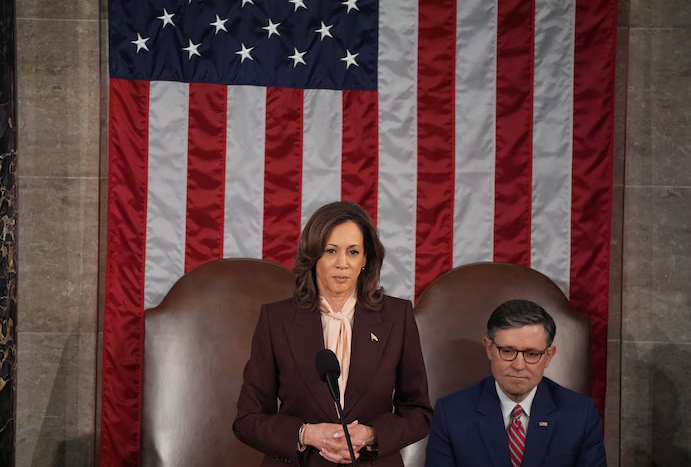 Washington Post, Elections Live updates: Congress counts, certifies Trump’s electoral college victory over Harris

 Lance's Substack, Political Commentary: What Is Trump Doing With A January 19th Rally? Lance F Rosen
 Washington Post, Elon Musk goes global with his playbook for political influence
 New York Times, Russia Targets West With Drones, Exploding Parcels and Sabotage
More On U.S. Presidential Vote Certification
Mass Terror Attacks, Threats In U.S.

Trump / GOP Transition News, Commentary

More U.S. Legal News

More U.S. Politics, Governance, Elections
 Meidas Touch Network, Commentary: President Biden Signs Social Security Fairness Act; The bipartisan legislation enhances benefits for millions of Americans , Aaron Parnas
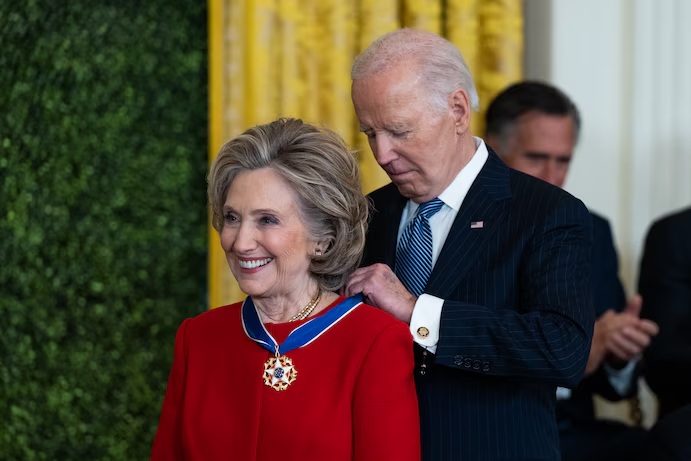 Washington Post, Biden awards Medal of Freedom to Soros, Ralph Lauren and others

More On Carter Life, Legacy

 New York Times, ‘Hanging Out With Jimmy Carter,’ Biden Faces the Echoes of History, Peter Baker
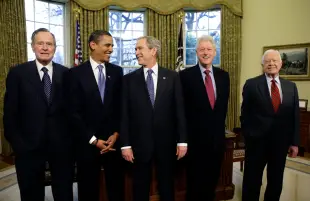 New York Times, Carter the Critic Didn’t Spare His Successors
Trump's Cases, Allies, Vengence, Threats, Opponents

 New York Times, Trump Loses Appeal of Carroll’s $5 Million Award in Sex-Abuse Case
U.S. Public Health, RFK Jr., Healthcare CEO's Murder

President-elect Donald Trump with Robert F. Kennedy Jr., Trump's nominee to become U.S. Secretary of Health and Human Services (Photo via Getty Images)

 New York Times, U.S. Surgeon General Calls for Cancer Warnings on Alcohol
More On Middle East Crises: Syria, Israel, Lebanon
 Washington Post, Gaza didn’t get enough winter shelters. Now babies are dying in the cold
More On U.S. Foreign Policy, Defense, Tariffs
 Politico, Canada’s Parliament to shut down until March 24
 Washington Post, U.S. Treasury says it was hacked by China-backed intruder
More On Presidential Pardons, Cases

Russia, Russian War Against Ukraine
Global Politics, War, Famine, Human Rights
Washington Post, Gaza didn’t get enough winter shelters. Now babies are dying in the cold
U.S. Defense, Foreign Policy, Security
 Daily Mail, Disturbing new details show how CIA drugged and tortured Americans in secret mind control program MKUltra, Stacy Liberatore
U.S. Immigration

Sex Assault, Trafficking, #MeToo, Abortion, Women's Health
New York Times, Trump Loses Appeal of Carroll’s $5 Million Award in Sex-Abuse Case  Associated Press, Top-ranking NYPD officer abruptly resigns amid sexual misconduct allegations
U.S. Economy, Jobs, Pensions
Energy, Environment, Transportation, Climate Change, Disasters
Media, High-Tech, Culture, Education, Sports
 Steady, Political Opinion: Take This Billionaire, Please, Dan Rather and Team Steady, Dan Rather and Team Steady
Top Stories
 Washington Post, Elections Live updates: Congress counts, certifies Trump’s electoral college victory over Harris, Vice President Kamala Harris on Jan. 6 announced the certified vote total of the 2024 presidential election during a joint session of Congress.
Congress convened Monday to count electoral college votes and certify President-elect Donald Trump’s victory over Vice President Kamala Harris in the November presidential election. Harris, in her constitutional role as president of the Senate, presided over the joint session that lasted less than an hour. It comes four years after a violent mob of Trump supporters stormed the Capitol on Jan. 6, 2021, delaying the tally of votes showing that Joe Biden had defeated Trump in the 2020 election.
Follow Transition to 47Pinned postPinned‘Today, America’s democracy stood,’ Harris says after certifying Trump’s winReturn to menuMariana AlfaroVice President Kamala Harris presides over a joint session of Congress to certify the results of the 2024 presidential election. (Demetrius Freeman/The Washington Post)
After finalizing the certification of Donald Trump’s 2024 presidential win — and her loss — Vice President Kamala Harris told reporters that, by performing her constitutionally mandated duty to oversee the certification process as president of the Senate, she “did what I have done my entire career, which is take seriously the oath.”
Unlike Trump and many Republicans in 2020, Harris and Democrats accepted the results of the 2024 election. On Monday, nobody contested Trump’s victory and the certification unfolded quickly and peacefully.
Harris, who has not given an interview since the election, told reporters gathered in the Capitol that Monday’s process “was about what should be the norm and what the American people should be able to take for granted, which is that one of the most important pillars of our democracy is that there will be a peaceful transfer of power.”
“I do believe very strongly that America’s democracy is only as strong as our willingness to fight for it,” Harris said. “Every single person, their willingness to fight for and respect the importance of our democracy. Otherwise, it is very fragile and it will not be able to withstand moments of crisis. And today, America’s democracy stood.”Live coverage contributors
Amazon will release a new documentary about Melania Trump on its Prime Video streaming service, the company said Sunday. Directed by Brett Ratner and executive produced by Trump herself, the film will give viewers an “unprecedented behind-the-scenes look” at the former first lady’s life, Amazon spokesperson Jenna Klein said in statement. The announcement comes as Donald Trump prepares to take the oath of office and amid mounting public scrutiny about Amazon founder Jeff Bezos’s relationship to the incoming president. (Bezos also owns The Washington Post.)
Four years after the Jan. 6, 2021, attack at the Capitol that sparked widespread condemnation and bipartisan disapproval, public sentiment toward the deadly insurrection appears to have softened.
According to a new CBS News/YouGov poll, 80 percent of Americans overall and 70 percent of Republicans disapprove of the actions of those who forced their way into the U.S. Capitol, but “strong” disapproval has fallen from 51 percent four years ago to 30 percent.
The Bulwark, Political Opinion: Our National Day of Shame,William Kristol and Andrew Egger, Jan. 6, 2025. Four years later, the shock of that day is replaced by the shock of how that day has become  accepted.
Washington Post, Biden urges Americans not to rewrite, or forget, Jan. 6, 2021, Matt Viser, Jan. 6, 2025. The president sought to contrast the peaceful transfer of power this year with what happened in 2021.
President Joe Biden, who has attempted to oversee a smooth transition by withholding criticism of President-elect Donald Trump, has grown more animated about their differences ahead of the anniversary of the Jan. 6, 2021, insurrection.Get the latest election news and results
“I think it should not be rewritten. I don’t think it should be forgotten,” he told reporters at the White House on Sunday afternoon. He expanded upon the remarks at an evening event and in a new opinion piece published Sunday night by The Washington Post.
 “But I don’t think we should — if you notice, I’ve reached out to make sure the smooth transition, we’ve got to get back to basic, normal transfer of power. I don’t think we should pretend it didn’t happen,” he said, referring to the mob of Trump supporters who assaulted the U.S. Capitol in an effort to overturn the results of the 2020 election.
Speaking about Trump specifically, Biden added: “I think what he did was a genuine threat to democracy, and I’m hopeful that we’re beyond it.”
It was his latest effort to remind Americans of how imperiled he views the country’s democratic norms. He also in recent days awarded the Presidential Citizens Medal to former Republican congresswoman Liz Cheney, honoring her for speaking out against Trump and for investigating his actions in the Jan. 6 attack. Trump attacked Cheney on social media over the award and has suggested that she and other members of the House committee that investigated the Capitol assault “should go to jail.”
Proof, Investigtive Commentary: Elon Musk Aims to Start a Race War in the United Kingdom. Is the United States His Next Target? Seth Abramson, left, Jan. 6,  2025. Somehow this message isn’t crossing international boundaries with the alacrity or the urgency it needs to: Elon Musk is now a global threat, and his actions will cause mass violence in the near term.
The amount of gall required for a South African-born Canadian-American with no meaningful liberal arts education—no background in History, Political Science, or Law—to blithely declare that “civil war is inevitable” in the United Kingdom, and to send that hyperventilating warning to literally hundreds of millions of people worldwide on a social media platform he’s rigged to elevate his voice above others is staggering.
 Historically, those few with a significant enough global profile to influence politics in nations not their own avoid doing so at all costs—first, because it’s not their business to do otherwise, and second because interfering with foreign countries may harm the efforts of the U.S. government to conduct international diplomacy.
For this reason, we generally associate public or illicit attempts to meddle in the affairs of other nations with conduct that is not just improper but possibly illegal, and usually the province of hostile intelligence agencies exclusively.
One of the only men on Earth with the gall to ignore this basic precept of being part of a civilization and species is Elon Musk, who Proof has in the past covered as he derangedly went to war with the nation of Brazil. Again, such conduct is even more gall-encrusted and galling when the perpetrator, as with Musk, knows virtually nothing at all about the countries he tries to meddle with.
This staggering quantity of gall makes it even more likely that the dire warning (some would say threat) Mr. Musk has lately issued about a civil war in the United Kingdom is wildly inaccurate. The more evidently someone is a malignant narcissistic sociopath with delusions of grandeur, a martyr complex, and a streak of fascist cruelty that runs through almost every word they utter, the more likely they have also fallen short in yet another watchword of a successfully completed liberal arts education: media literacy.
Simply put, even if Elon Musk were finally willing to educate himself on the domestic politics of other nations, it’s not clear that he has the temperament, patience, wisdom, or information-science skills to actually do so. It’s for these and other reasons that he has become the world’s largest firehose of disinformation—a fact, not a supposition; see here, here, here, here, here, here, here, here, here, here, here, here, here, and here—and in very short order his actions are going to accrue a massive worldwide death toll.
Will it be in the United Kingdom, where Musk is trying to stoke a race war in which non-white immigrants are murdered by the tens of thousands by roving Christofascist mobs whose leaders and enablers and advocates he’s openly cheering on? Will it be in the United States, where Musk is about to become co-president and routinely spreads lies about race relations (see here, here, here, here, here, here, here, here, and here)?
Will it be in Germany, where Musk is now an open advocate of that nation’s neo-Nazi political party? Will it be in Ukraine, where Musk’s products are being used to kill innocents as the Starlink chief himself (a) does nothing to stop it in a timely fashion and (b) secretly communicates with the author of these war crimes, Vladimir Putin, on a regular basis?
We don’t know. Maybe all of these places will see a sudden additional death-toll spike that Elon Musk is uniquely responsible for and—in a world with rule of law—would face consequences for, also.
But we live in this world, where Musk even appearing in court when ordered to do so is wholly optional for him, so seven things are perfectly clear, now: (1) Musk is going to get people killed; (2) he knows he’s going to get people killed; (3) he’s not going to take any time whatsoever to educate himself on the issues he insists on writing about without any relevant expertise; (4) he’s not going to stop trying to enflame passions and spread disinformation on these subjects, because he ultimately doesn’t care at all about the issues themselves—not child rape or war crimes or government spending in the United States—except to the extent that his taking the positions he takes accrues geopolitical power and influence to him (partly directly, partly indirectly, through the implicit threat of his inciting involvement in any future conflagrations) and pleases his apparently superheated, quivering personal animus toward women, non-whites, Jews, migrants, and the LGBTQIA2S+ community; (5) he won’t face consequences for his actions in the United States or anywhere else; (6) he’s well aware that he won’t face any consequence for his actions, which is precisely why they’ll continue unabated no matter how many people they kill; (7) and there’s nothing natively inside the man—no humility, leadership skills, empathy, temperance, patience, or generosity of spirit—that will organically cause him to stop what he’s doing once the mass killing starts
.Those who don’t understand yet that Musk is an unscrupulous bad actor on the world stage whose only aims are wealth and authority—the exact opposite of the mythos his fawning amanuensis Walter Isaacson is now pushing—are going to learn in the next few weeks and months what it means for Earth’s most powerful nation to transfer its powers wholesale to someone who not only wants to control all of Earth but actually has a scheme and the resources to accomplish it.
Musk’s ostensible focus is manned missions to Mars—a planet humans will never occupy in any significant numbers, but which fiction gives Musk a way to rally support for and attention to himself and divert resources from helping those on Earth who need help but who Musk doesn’t wish to see helped—when in fact his supposed Mars focus is simply the most chilling example yet of grifting MAGA influencers’ abiding “every accusation is a confession” principle.
Elon says he’s focused on control of Mars because he’s actually focused on control of Earth. It’s likely Musk cares little about Mars at all, given that he has been told again and again and again by scientists—each and every day, for the last twenty years—that the planet is uninhabitable and can never be made otherwise at scale. While Mars may yet be a useful outpost for scattered scientific research—if still not the best use (at all) of precious research resources—and while it could host mining operations designed solely to make Musk the world’s first centi-trillionaire (indeed, the Boring Company exists only for that prospective purpose, not the terrestrial purposes Mr. Musk falsely claimes), it will never harbor a significant human civilian settlement, nor should it.
The money Musk is funneling from U.S. taxpayers and, soon enough, directly from the federal budget using DOGE as his instrument, is money that would be infinitely more valuable here on Earth—for instance, to ensure that our ecosystem doesn’t collapse, killing over a billion humans on Earth in an entirely foreseeable way. So we must see the broader “project” of Elon Musk as one whose endgame enriches him and harms or actively endangers everyone who’s not him. The non-MAGA argument for his plans being a net positive for humanity has in recent years not just dimmed, but evaporated.
Yet the fact that Musk spent almost 300 million to elect Trump and his allies through PACs, and another $44 billion for the purchase of Twitter—which he now admits was a purchase with political aims (contrary to everything he told Americans at the time)—means that the Republican Party will more or less give him the keys to America now.
Those who thought that the GOP doing so would only endanger America are learning now that in fact this Republican cowardice and venality is going to endanger—indeed, already is endangering—the whole world.
The Bulwark, Political Opinion: Mike Johnson Acts Like a CHILD as Kamala Patriotically Certifies the Election, Tim Miller, Jan. 6, 2025. Tim Miller reacts to VP Kamala Harris presiding over the peaceful transfer of power as she certifies the election results on the fourth anniversary of the violent attack on the Capital.
 New York Times, Giuliani Is Held in Contempt of Court in Defamation Case, Stefanos Chen, Jan. 6, 2025. Rudy Giuliani, the former mayor of New York City, has failed to turn over his assets to two Georgia poll workers who won a defamation lawsuit against him.
A federal judge on Monday held Rudolph W. Giuliani in contempt of court for failing to cooperate in the handover of $11 million of his personal assets to Georgia poll workers he falsely accused of helping to steal the 2020 presidential election.
Mr. Giuliani, the former mayor of New York City, has so far failed to turn over the bulk of his personal assets as a down payment on the $148 million judgment the poll workers, Ruby Freeman and her daughter, Shaye Moss, won in a defamation lawsuit.
The judge, Lewis J. Liman of U.S. District Court in Manhattan, has yet to detail what specific sanctions Mr. Giuliani faces. But being held in contempt could possibly hinder the former mayor’s attempts to hang onto his Palm Beach, Fla., condo.
Mr. Giuliani’s assets include a 10-room apartment on the Upper East Side of Manhattan; a 1980 Mercedes-Benz convertible; a collection of 26 designer watches; and rare Yankees collectibles, the most valuable of which might be a signed and framed Joe DiMaggio jersey.your times access
He is due back in federal court in Manhattan on Jan. 16 to argue that his Palm Beach condo should be exempt from the seizure, because it is his primary residence. But Mr. Giuliani has failed repeatedly to answer questions that could prove his residency.
The court ruled that Mr. Giuliani had obstructed the election workers’ attempts to determine Mr. Giuliani’s real primary residence, which for years had been the cooperative apartment on East 66th Street in Manhattan.
Judge Liman, who has appeared frustrated at Mr. Giuliani’s shifting rationale for the omissions, ruled that his failure to comply will permit the court to draw negative conclusions about his Florida residency status, which could hobble his defense.
“The defendant has been attempting to run out the clock,” Judge Liman said, adding that he was unmoved by the former mayor’s argument that he was overwhelmed with court requests, including charges in two criminal cases and several other civil actions. “The fact that he is a busy person and relied on others is not an excuse,” he said.President Joe Biden delivers a speech on the U.S. economy and “Bidenomics”, Thursday, September 14, 2023, at Prince George’s Community College in Largo, Maryland. (Official White House Photo by Adam Schultz) image caption
Washington Post, The New Administration Exclusive:Trump aides ready ‘universal’ tariff plans — with one key change, Jeff Stein, Jan. 6, 2025. Aides are looking at universal import duties, but only on certain sectors, among the first big moves of the presidency.
President-elect Donald Trump’s aides are exploring tariff plans that would be applied to every country but only cover critical imports, three people familiar with the matter said — a key shift from his plans during the 2024 presidential campaign.
If implemented, the emerging plans would pare back the most sweeping elements of Trump’s campaign plans but still would be likely to upend global trade and carry major consequences for the U.S. economy and consumers.
As a candidate, Trump called for “universal” tariffs of as high as 10 or 20 percent on everything imported into the United States. Many economists warned that such plans could cause price shocks, and many Republicans in Congress might have criticized them.
Two weeks before Trump takes office, his aides are still discussing plans to impose import duties on goods from every country, the people said. But rather than apply tariffs to all imports, the current discussions center on imposing them only on certain sectors deemed critical to national or economic security — a shift that would jettison a key aspect of Trump’s campaign pledge, at least for now, said the people, who cautioned that no decisions have been finalized and that planning remains in flux. The people spoke on the condition of anonymity to describe private conversations.
The potential change reflects a recognition that Trump’s initial plans — which would have been immediately noticeable in the price of food imports and cheap consumer electronics — could prove politically unpopular and disruptive. But consideration of universal tariffs of some kind still reflects the Trump team’s determination to implement measures that can’t be easily circumvented by having products shipped via a third country.

New York Times, Congress Is Set to Certify Trump’s Victory as Memory of Riot Looms, Annie Karni, Jan. 6, 2025. A joint session of Congress is set to convene on Monday afternoon to certify President-elect Donald J. Trump’s victory in the 2024 election, a basic ritual of democracy that was brutally disrupted four years ago by a violent pro-Trump mob inflamed by his lie about a stolen election.
There is no hint of a similar scene this time, although security has been stepped up at the Capitol. Unlike Mr. Trump back then, Vice President Kamala Harris has not disputed her loss in November, and unlike Republicans in the aftermath of the 2020 balloting, Democrats have given no hint that they plan to challenge the counting of the Electoral College votes when lawmakers convene at 1 p.m. Eastern time.
Still, there are reminders everywhere of the violence that played out on this day four years ago. The Capitol is on heavy lockdown, with tall black metal fencing around the building, and increased federal, state and local security resources are on hand. For the first time, the day has been designated by the Homeland Security Department as a “national special security event.”
It may all seem like overkill on what is expected to be a peaceful and orderly day. But lawmakers and law enforcement officials are determined to be prepared after the violence on Jan. 6, 2021, when protesters egged on by Mr. Trump’s false claim that he had won the election stormed the Capitol, wreaking havoc in a riot tied to the deaths of seven people, including three police officers.
New York Times, The Jan. 6 Rioters, 4 Years Later, Alan Feuer, Jan. 6, 2025. Hundreds accused of nonviolent crimes during the attack on the Capitol have wrapped up their cases.
In the past four years, nearly 1,600 people have been prosecuted in connection with the storming of the Capitol on Jan. 6, 2021. Some were accused of felonies like assault or seditious conspiracy and are still in prison. But hundreds charged with lesser crimes have wrapped up their cases and returned to their lives.
Jan. 6 was a turning point for everyone involved. In breaching the Capitol, a mob of Trump loyalists caused millions of dollars in damage, injured more than 140 police officers and, for the first time in American history, chased lawmakers away from their duty to certify a presidential election.
The attack also prompted the largest single investigation the Justice Department has ever undertaken, leading to arrests in all 50 states. Ever since, the defendants have been held to account in Washington’s federal courthouse, blocks away from the Capitol itself, for their roles in undermining a bedrock of democracy, the peaceful transfer of power.
While some have come to regret their actions on that day, others do not. At best, they say they have seen the realities of the criminal justice system, becoming more sympathetic to the plights of others facing prosecution. At worst, they remain convinced that the system treated them unfairly, hardened by their brushes with the law.
Washington Post, The fate of nearly 1,600 Jan. 6 defendants depends on Trump, Robert Klemko, Spencer S. Hsu, Tom Jackman, Sarah Cahlan, Clara Ence Morseand Hannah Dormido, Jan. 6, 2025. The incoming president has pledged to pardon many defendants accused or convicted of crimes related to the attack on the U.S. Capitol.
Washington Post, U.S. Capitol Police chief opposes pardons for assaults against police, Spencer S. Hsu, Jan. 6, 2025. Pardoning people who assault police would send a message that the safety of officers does not matter and could risk politicizing the law enforcement of violent protests, U.S. Capitol Police Chief J. Thomas Manger said in an exclusive interview Sunday on the eve of the fourth anniversary of the Jan. 6, 2021, Capitol attack.
Manger declined to comment about President-elect Donald Trump’s promise to grant clemency to many of the nearly 1,600 Jan. 6 defendants, about 600 of whom were charged with felony assault or obstruction of police during a civil disorder. But in his first public remarks as chief of the 2,300-member department on the broader subject, he decried what he said was the wiping away of accountability for attacks against law enforcement.
“What message does that send? What message does that send to police officers across this nation, if someone doesn’t think that a conviction for an assault or worse against a police officer is something that should be upheld, given what we ask police officers to do every day?” Manger said after swearing in officers to help secure Congress’s certification of the 2024 election on Monday.
New York Times, Harris Faces an Awkward Election Task: Certifying the Vote She Lost, Peter Baker, Jan. 6, 2025. The vice president will preside over Congress on Monday as it counts the Electoral College votes finalizing her defeat by Donald J. Trump.
The vice presidency comes with plenty of indignities, but probably none greater than the one Kamala Harris will endure on Monday when she presides over the certification of her defeat.
Under the Constitution, the vice president takes the gavel when the two houses of Congress meet to formally count the Electoral College votes for president. While not every vice president has chosen to fulfill the duty, Ms. Harris has indicated that she will carry out the task, no doubt painful, of declaring that Donald J. Trump beat her.
Awkward and unpleasant as it may be for Ms. Harris, whose own political future remains uncertain, it is set to be a calmer and less death-defying experience than four years ago when Mr. Trump refused to accept defeat and struggled to hold on to power after voters decided to throw him out of office. A mob he inspired marched on the Capitol and stormed the building to stop Vice President Mike Pence from fulfilling the duty that now falls to Ms. Harris.
Unlike Mr. Trump, Ms. Harris has made no effort to cast doubt on the election but has instead accepted defeat graciously. Neither she nor President Biden has sought to pressure the Justice Department, members of Congress, governors, state legislators or election officials to reverse the vote she lost, as Mr. Trump did four years ago.
New York Times, Trump Transition: ‘A Day of Love’: How Trump Inverted the Violent History of Jan. 6, Dan Barry and Alan Feuer, Jan. 6, 2025 (print ed.). President-elect Trump and his allies have spent four years reinventing the Capitol attack, spreading conspiracy theories and weaving a tale of martyrdom.
In two weeks, Donald J. Trump is to emerge from an arched portal of the United States Capitol to once again take the presidential oath of office. As the Inauguration Day ritual conveying the peaceful transfer of power unfolds, he will stand where the worst of the mayhem of Jan. 6, 2021, took place, largely in his name.
Directly behind Mr. Trump will be the metal-and-glass doors where protesters, inflamed by his lie that the 2020 election had been stolen from him, stormed the Capitol with clubs, chemical irritants and other weapons. To his left, the spot where roaring rioters and outnumbered police officers fought hand to hand. To his right, where the prostrate body of a dying woman was jostled in the bloody fray.
And before him, a dozen marble steps descending to a lectern adorned with the presidential seal. The same steps where, four years earlier, Trump flags were waved above the frenzied crowd and wielded like spears; where an officer was dragged facedown to be beaten with an American flag on a pole and another was pulled into the scrum to be kicked and stomped.
In the wake of the attack on the Capitol, Mr. Trump’s volatile political career seemed over, his incendiary words before the riot rattling the leaders of his own Republican Party. Myriad factors explain his stunning resurrection, but not least of them is how effectively he and his loyalists have laundered the history of Jan. 6, turning a political nightmare into a political asset.
What began as a strained attempt to absolve Mr. Trump of responsibility for Jan. 6 gradually took hold, as his allies in Congress and the media played down the attack and redirected blame to left-wing plants, Democrats and even the government. Violent rioters — prosecuted, convicted and imprisoned — somehow became patriotic martyrs.
This inverted interpretation defied what the country had watched unfold, but it neatly fit the persecution narrative that binds Mr. Trump to many of his faithful. Once he committed to running again for president, he doubled down on flipping the script about the riot and its blowback, including a congressional inquiry and two criminal indictments against him, as part of an orchestrated victimization.
That day was an American calamity. Lawmakers huddled for safety. Vice President Mike Pence eluded a mob shouting that he should be hanged. Several people died during and after the riot, including one protester by gunshot and four police officers by suicide, and more than 140 officers were injured in a protracted melee that nearly upended what should have been the routine certification of the electoral victory of Mr. Trump’s opponent, Joseph R. Biden Jr.
But with his return to office, Mr. Trump now has the platform to further rinse and spin the Capitol attack into what he has called “a day of love.” He has vowed to pardon rioters in the first hour of his new administration, while his congressional supporters are pushing for criminal charges against those who investigated his actions on that chaotic day.
Politico, Canada’s Parliament to shut down until March 24, Mike Blanchfield, Jan. 6, 2025. The announcement adds chaos to uncertainty in Ottawa ahead of Donald Trump’s return to the White House.Justin Trudeau waits on the front steps of Parliament Hill.
 Canada’s Justin Trudeau era is coming to an end.
Abandoned by a majority of his caucus, the three-term prime minister, right, announced Monday that he plans to step down as prime minister and  as the leader of his party, the latest in a global line of sinking incumbents.
Trudeau also announced that Canada’s Parliament would shut down until March 24, and that he has asked the Liberal party to begin the search for a new leader.
The announcement adds chaos to uncertainty in Ottawa ahead of Donald Trump’s return to the White House and a looming trade war.
Washington Post, Elon Musk goes global with his playbook for political influence, Cat Zakrzewski, Jan. 6, 2025 (print ed.). The X owner and tech billionaire has boosted far-right figures in Britain, Germany and Canada with a blizzard of social media posts in recent days.
In the first three days of 2025, Elon Musk commandeered global politics through dozens of rapid-fire, often inflammatory posts to his 210 million followers on X.
The world’s richest person called for the release of a jailed British far-right extremist. He shared a post pressing King Charles III to dissolve Parliament and order a new general election, as he posted memes and a flurry of attacks directed at Prime Minister Keir Starmer. Musk accused Starmer of failing to prosecute“rape gangs” more than a decade ago, a child exploitation scandal that has prompted Britain’s Conservative Party to call for a full national inquiry.
Musk reposted a message from Rupert Lowe, a politician in the Reform UK party who serves in Parliament and who said he spent Friday talking to rape gang victims.
“Victims, past and present, don’t need ‘thoughts and prayers’ from politicians, they need justice,” Lowe said. “We will fight for that in Parliament.”
Musk also briefly turned his attention to the United States’ northern neighbor and praised an interview with Pierre Poilievre, a populist firebrand who leads Canada’s Conservative Party. Musk said that next week he would live-stream a conversation with Alice Weidel, the chancellor candidate for the Alternative for Germany, a far-right political party he has endorsed ahead of that country’s snap elections in February.
Last year, Musk dominated U.S. politics, using his deep war chest and X microphone to boost Donald Trump and other Republicans in the 2024 elections. As the GOP prepares to retake control of the White House and both chambers of Congress, Musk has emerged more powerful than ever. His fortune has exploded, and he has a perch as Trump’s right-hand man, weighing in on his Cabinet choices and joining his conversations with global leaders.
In the new year, Musk is flexing his political muscle on the global stage as well. He appears to be applying a playbook similar to the one he used to disrupt American politics, now boosting conservative politicians in the governments of the United States’ top allies. But his disregard for the veracity of his posts and his elevation of far-right and extremist figures have alarmed liberal leaders around the world.
“Elon Musk is an American citizen and perhaps ought to focus on issues on the other side of the Atlantic,” Health Minister Andrew Gwynne said during a Friday interview with the British radio station LBC.
The long-running British child exploitation scandals that Musk has seized on have become a rallying point for Reform UK, a right-wing populist party. An independent review in 2022 found that local government agencies in the town of Oldham, England, had left children vulnerable to sexual exploitation.
That review followed an earlier probe in 2014 that found an estimated 1,400 children had been sexually exploited in Rotherham, England, over 15-plus years. According to the report, most perpetrators were of Pakistani origin, and some in the town said they were nervous about identifying the ethnic origins of perpetrators for fear of being seen as racist.
Although these historical cases of abuse go back decades, right-leaning outlet GB News laid blame this week with the ruling Labour Party, reporting that minister Jess Phillips had recently rejected a request for the national government to conduct a further investigation into the Oldham “grooming gangs.”
Meidas Touch Network, GOP faces INSTANT KARMA over Trump’s DAY 1 PLAN, Ben Meiselas
New York Times, Trump Seeks to Halt His Criminal Sentencing in New York
 Hopium Chronicles, Political Commentary, January 6th - Another Day That Will Live In Infamy, Simon Rosenberg
Politico, Elon Musk’s European political meddling is ‘worrying,’ says Norway’s PM
Meidas Touch Network, Commentary: Pete Hegseth Claims the Pledge of Allegiance Is a Forgery Used to Replace God, J.D. Wolf
Politico, Elon Musk’s European political meddling is ‘worrying,’ says Norway’s PM, Ketrin Jochecová, Jan. 6, 2025. European backlash grows against billionaire ally of U.S. President-elect Donald Trump.
Norwegian Prime Minister Jonas Gahr Støre said Monday he found it “worrying” that a billionaire social media owner like Elon Musk is inserting himself into the politics of other countries.
 Musk, a key ally of U.S. President-elect Donald Trump, has been on a social media rampage over the holidays, endorsing the far-right Alternative for Germany (AfD) party, repeatedly denouncing the U.K.’s Labour Prime Minister Keir Starmer and even torpedoing his relationship with British hard-right chief Nigel Farage.
“I find it worrying that a man with enormous access to social media and large financial resources is so directly involved in the internal affairs of other countries. This is not how it should be between democracies and allies,” Støre told public broadcaster NRK.
Støre was responding to a question on whether he is worried about potential interference from Musk in Norwegian elections.
“If we were to see it in Norway, I hope and assume that a united Norwegian political environment would warn and distance itself from it,” Støre added.
Støre’s comments are part of a mainstream political backlash against Musk, in which German political leaders have argued that the Tesla entrepreneur’s AfD endorsement amounted to election interference.
Musk has announced he will hold a live discussion this week with the AfD’s chancellor candidate, Alice Weidel, on X ahead of Germany’s snap election on Feb. 23.

Former President Donald J. Trump, in a blue suit, sits with his attorneys shortly before arraignment in New York City's state court on 34 felony charges of falsifying business records related to the 2016 presidential campaign season, involving in part hush money to women (Associated Press photo by Seth Wong).
New York Times, Trump Seeks to Halt His Criminal Sentencing in New York, Ben Protess, Jan. 6, 2025. A Manhattan judge has already indicated that he will spare Donald Trump from jail time, but the president-elect is seeking to avoid the criminal proceeding.
President-elect Donald J. Trump has signaled that he plans to mount a full-scale legal offensive to stave off his criminal sentencing in New York, seeking a last-minute reprieve before becoming the first president who is a convicted felon.
With the sentencing scheduled for Friday, just 10 days before the presidential inauguration, Mr. Trump’s lawyers have implored the judge overseeing his case to postpone the proceeding, according to a court filing unsealed on Monday.
Although that request is most likely doomed — the judge, Juan M. Merchan, was the one who scheduled the sentencing — Mr. Trump’s lawyers disclosed in the filing that they planned to escalate their effort. If the judge does not pause the sentencing by 2 p.m. on Monday, the filing said, Mr. Trump will “seek an emergency appellate review.”
Hoping to persuade a New York appeals court to intervene, Mr. Trump’s lawyers plan to file a civil action against Justice Merchan and seek to freeze the sentencing, according to the filing. It is unclear when they will file that action with the appellate court, but it could come as soon as Monday.
New York Times, Trump Sees the U.S. as a ‘Disaster.’ The Numbers Tell a Different Story, Peter Baker, Jan. 6, 2025 (print ed.). President Biden is bequeathing his successor a nation that by many measures is in good shape, even if voters remain unconvinced.
To hear President-elect Donald J. Trump tell it, he is about to take over a nation ravaged by crisis, a desolate hellscape of crime, chaos and economic hardship. “Our Country is a disaster, a laughing stock all over the World!” he declared on social media last week.
But by many traditional metrics, the America that Mr. Trump will inherit from President Biden when he takes the oath for a second time, two weeks from Monday, is actually in better shape than that bequeathed to any newly elected president since George W. Bush came into office in 2001.
For the first time since that transition 24 years ago, there will be no American troops at war overseas on Inauguration Day. New data reported in the past few days indicate that murders are way down, illegal immigration at the southern border has fallen even below where it was when Mr. Trump left office and roaring stock markets finished their best two years in a quarter-century.
Jobs are up, wages are rising and the economy is growing as fast as it did during Mr. Trump’s presidency. Unemployment is as low as it was just before the Covid-19 pandemic and near its historic best. Domestic energy production is higher than it has ever been.
The manufacturing sector has more jobs than under any president since Mr. Bush. Drug overdose deaths have fallen for the first time in years. Even inflation, the scourge of the Biden presidency, has returned closer to normal, although prices remain higher than they were four years ago.
“President Trump is inheriting an economy that is about as good as it ever gets,” said Mark Zandi, chief economist of Moody’s Analytics. “The U.S. economy is the envy of the rest of the world, as it is the only significant economy that is growing more quickly post-pandemic than prepandemic.”
Those positive trends were not enough to swing a sour electorate behind Vice President Kamala Harris in the November election, reflecting a substantial gap between what statistics say and what ordinary Americans appear to feel about the state of the country. And the United States clearly faces some major challenges that will confront Mr. Trump as he retakes power.
Excerpt Continued Below.

New York Times, Trump Has Reeled in More Than $200 Million Since Election Day, Kenneth P. Vogel, Maggie Haberman and Theodore Schleifer, Jan. 5, 2025 (print ed.). The president-elect has boasted about the donations for his inauguration, library and political activities from those seeking favor or perhaps in some cases, atonement.
Since his victory in November, President-elect Donald J. Trump’s allies have raised well over $200 million for a constellation of groups that will fund his inauguration, his political operation and eventually his presidential library, according to four people involved in the fund-raising.
It is a staggering sum that underscores efforts by donors and corporate interests to curry favor with Mr. Trump ahead of a second presidential term after a number of business leaders denounced him following the violence by his supporters at the Capitol on Jan. 6, 2021.
Mr. Trump has promised to gut the “deep state” and made various promises to industry supporters. Among the pledged donors for the inaugural events are Pfizer, OpenAI, Amazon and Meta, along with cryptocurrency firms.
The total haul for the committee financing his inaugural festivities — at least $150 million raised, with more expected — will eclipse the record-setting $107 million raised for his 2017 inauguration, according to three people briefed on the matter who requested anonymity because they were not authorized to share internal financial information.
The Hartmann Report, Political Commentary: 2025: The year American Oligarchy officially begins? Thom Hartmann, Jan. 4, 2025. I’m an unpaid volunteer  member of the board of directors of a nonprofit that’s making use of a multi-million-dollar endowment, and working with their professional investment advisors over the years has given me insight into some of the ways the morbidly rich get richer, faster, and in ways impossible for average people: there are multiple types of investments and investment advisors that are only accessible to people or organizations that can pony up millions or hundreds of millions of dollars at a time.
Thus, according to the Institute for Policy Studies, Elon Musk (for example) went from being worth $25 billion in 2020 to $428 billion a few weeks ago. During that same time, Jeff Bezos (who apparently just censored a Washington Post comic showing him bowing down and handing a bag of money to Trump) reportedly went from $113 billion to $235 billion; similarly, three heirs to the Walmart fortune reportedly went, during the same period, from $161 billion to $317 billion. We see a similar phenomenon with members of Congress using inside information to trade stocks, something that would land you or me in jail.
Thus (as I often note here at Hartmann Report), the rich are truly getting richer while average working people have been in a downward spiral ever since Ronald Reagan’s “Revolution” changed the rules (particularly the tax rules, but also around monopolies, etc.) that once kept obscene wealth in check. Now we have a convicted criminal billionaire about to be sworn in as president with the richest cabinet in American (and, perhaps, world) history, all with an agenda of making the rich even richer. (It’s worth noting — something almost always ignored by the mainstream press — that Trump’s conviction was for using his fortune for election interference leading to a stolen 2016 election; by hiding his affair with Stormy Daniels he kept information away from the public that he believed could have led to his loss that year.)
Oligarchy is generally defined as a form of governance in which the state has been captured by the morbidly rich and the powers and institutions of government are then turned to make the rich even richer while insulating oligarchs from legal strictures, at the same time impoverishing and punishing working people and the poor. As I detailed in my book The Hidden History of American Oligarchy, the biggest problem with oligarchy is that it’s an extremely unstable form of government and usually is only transitional (typically lasting fewer than two generations). Average people, realizing they’re being robbed blind, rise up and demand change, sometimes causing oligarchy to flip back to democracy (as happened here in the 1860s and the 1930s) or flipping the nation into tyranny when the oligarchs decide to use the military and police powers of government to hold onto their wealth and power (Chile, Hungary, Russia, Iraq, Egypt, Philippines, Singapore, Turkey, etc.).
The big question for Americans as we enter this new period of full-blown oligarchy is whether this generation’s oligarchs will have more success than those in the 1930s and 1850s. They seem to have learned the lessons of history and are now emulating Putin, Orbán, etc., in using lawfare and big money to intimidate or purchase outright the media; this will make a transition back to democracy — like the ones Lincoln and Roosevelt led when the media landscape (and its ownership) was far more diverse — far more difficult. And, as we just saw with the election of Mike Johnson as Speaker, nothing happens in the House without the approval of the billionaires.
The next four years — and, in particular, the next two — will probably decide the fate of America’s form of government for the next several generations. This is no time to check out; to the contrary, it’s the most important moment in our lifetimes to stand up, speak out, and build progressive political institutions while supporting the few brave progressive politicians still standing after the billionaire and AIPAC attacks in the last election.
New York Times, Russia Targets West With Drones, Exploding Parcels and Sabotage, Lara Jakes, Jan. 5, 2025 (print ed.). Russia has become increasingly brazen in adopting “gray zone” attacks against Europe and the U.S., leaving officials with a dilemma: How to respond?
When mysterious drones began appearing over oil rigs and wind farms off Norway’s coast about three years ago, officials were not certain where they came from.
But “we knew what they were doing,” Stale Ulriksen, a researcher at the Royal Norwegian Naval Academy, said in a recent interview. “Some of it was espionage, where they are charting a lot of things. Some of it, I think, was positioning in case of a war or a deep crisis.”
The drones were suspected of being launched from Russian-controlled ships in the North Sea, Mr. Ulriksen said, including some ships that were near underwater energy pipelines. Norway could not do much to stop them, he added, given that they were flying over international waters.
 In recent weeks, reports of drone swarms over the United States’ East Coast have brought fears of hybrid warfare to widespread attention. Only 100 out of 5,000 drone sightings there required further examination, U.S. officials said, and so far none are believed to have been foreign surveillance drones. But it is a different story for the drones spotted in late November and early December over military bases in England and Germany where American forces are stationed.
Military analysts have concluded those drones may have been on a state-sponsored surveillance mission, according to one U.S. official familiar with the incidents, who spoke on the condition of anonymity to discuss an open investigation. British and German defense officials declined to discuss details of the sightings.
Experts said the drones’ presence was indicative of a so-called hybrid or “gray zone” attack against the West, where a range of tactics — military, cyber, economic and even psychological — are used to covertly attack or destabilize an enemy.
As Russia, Iran and other hostile states become increasingly brazen in their hybrid attacks on Western countries — such as the hacking of sensitive computer systems and alleged assassination plots — defense officials face a thorny challenge. How to deter such acts without touching off a broader and potentially deadly conflict? And how to assign blame against the attacker when the strikes are designed to evade culpability?
Washington Post, Trump sentencing sets up an unusual scene ahead of his inauguration, Marianne LeVine, Jan. 5, 2025 (print ed.). Just 10 days before he is sworn in as the nation’s 47th president, Donald Trump will have to appear before a judge to be sentenced on his 34 felony convictions.
Days before his second inauguration, President-elect Donald Trump faces the uncomfortable prospect of appearing — in person or virtually — before a New York state judge to be sentenced for his 34 felony convictions for falsifying business records to cover up a hush money payment to an adult-film actress.Get the latest election news and results
The court appearance, scheduled for Friday, offers yet another reminder of the legal woes that dogged Trump as he mounted his third bid for the White House. It also cements a distinction that he shares with none of his predecessors: He will be the first serving president who is also a felon. No previous president has been convicted of a felony, let alone summoned before a judge just days before their inauguration.
While New York Supreme Court Justice Juan Merchan said he will not sentence Trump to jail time, the appearance will be an opportunity for the judge to denounce what he has called the “premeditated and continuous deception by the leader of the free world.”
“It’s a reminder that we live, politically speaking, in a split-screen America,” said Tim Naftali, senior research scholar at Columbia University’s School of International and Public Affairs. “For some Americans, [Trump’s] legal difficulties were a reason to vote for him because it deepened their sense that they, like him, were victims.”
“The fact that the procession to the inauguration will include yet another trip to court, it’s consistent with the peculiarities of Donald Trump’s return to power,” Naftali added.
In the hours after Merchan upheld Trump’s conviction and scheduled his sentencing, the president-elect railed against the judge, his political opponents, and the federal justice system that his appointees will soon oversee.
At 8:43 p.m. Friday, Trump complained on social media that he was “the only Political Opponent in American History not allowed to defend myself.” At 7:29 Saturday morning, he was back at it, describing Merchan as “corrupt” and “crooked” and calling for him to be “disbarred.”
New York Times Magazine, Ukraine Was Outgunned. Its Solution: Small, Cheap Suicide Drones, C.J. Chivers, Photographs and Video by David Guttenfelder, Jan. 5, 2025 (print ed.). Outnumbered and desperate, the nation began hacking cheap consumer drones with explosives — bringing a brutal new form of violence to 21st-century warfare.
 Known as first-person-view drones, or FPVs, the weapons have altered the human experience of war and flooded the internet with footage chronicling the desperate last seconds of lives ended by miniaircraft that transmit video of the people they pursue, then smack into them and explode.
Its camera revealed a surprise: a Russian T-80 tank parked in the foliage. A $3 million military machine had been discovered by a $400 repurposed toy.
The tank was well defended. Its crew had backed the 44-ton vehicle into undergrowth, blocking access to its vulnerable exhaust grate. Slats of reactive armor, which can thwart armor-piercing charges, bedecked its sloped front end. Its rotating turret carried a metal frame and netting, a combination derisively referred to as a cope cage, designed to snag drones and prevent warheads from making direct strikes on hulls. All its hatches were closed, blocking Prorok from flying the warhead inside.
In the past, attacking an armored vehicle with such a warhead typically required a soldier to risk exposure to take a hasty shot with a rocket-propelled grenade, sending a projectile at almost 1,000 feet per second that may not hit the vehicle at all. Weaponized FPV drones have created a new way. In the field south of Belgorod, the combination of the tank’s defensive measures and the drone’s peculiar characteristics made for an exercise that was almost surreal. Time seemed to slow down. The little drone hovered patiently before the massive military machine, rising and falling, swaying on the breeze, emitting its high-pitched buzz while Prorok flew it safely from afar, deciding his attack’s best place, which he could strike with uncanny precision.
Prorok selected the turret’s base, where armor was thinner. “Yes, yes,” Buryi said. Prorok leaned forward as he pushed the flight controller and the drone plunged into the spot. The screen went blank. Watching from the surveillance drone, Andy called out. “I see an explosion!” he said.
More U.S. Political Commentary
The Bulwark, Political Opinion: It’s January 6th. Trump Won, William Kristol, Jan. 6, 2025. George Orwell wrote that in our day “restatement of the  obvious is the first duty of intelligent men.”
So let me restate the obvious: January 6, 2021 is a day that should live in infamy.
But for the next four years January 6th won’t live in infamy. Because in two weeks the man who incited January 6th, the man who now excuses it—no, celebrates it—will be sworn in as our next president.
So the obvious if unpleasant fact is that today we as a nation are in a worse condition, facing a more ominous future, than we faced four years ago.
The mob violence of January 6th was awful. That it was incited by the president of the United States made it worse. That it was the capstone of a more comprehensive effort by President Trump and his apparatchiks to overturn the election results and to stay in power made the date even more deserving of infamy.
 But the attempted auto-coup failed. We made it through the dangerous period from November 3, 2020, to January 20, 2021. The guardrails held. President Trump left office. President Biden succeeded him, and tried to restore normalcy.
To his credit, he’s still trying. The outgoing president has an op-ed in today’s Washington Post lamenting that “an unrelenting effort has been underway to rewrite—even erase—the history” of January 6th, and urging us not to forget what happened.
But the fact is that the unrelenting effort of Trump and his supporters has, as of now, succeeded. It’s telling that nowhere in his article does President Biden mention the name of the person who has been behind the effort to “rewrite—even erase” the history of January 6th. Presumably he thought it uncivil or inappropriate to attack his successor by name two weeks before he takes over.
But Biden’s silence about Trump merely brings home the extent of Trump’s success. The January 6th truther-in-chief will be our next commander-in-chief. And his administration will be staffed by individuals who range from January 6th apologists to January 6th celebrators.
Meanwhile, the ranks of Trump’s party are full of such people, as is suggested by the fact that the leadership of the Republican House has refused to install a plaque honoring Capitol Police officers for their brave actions on January 6th, as required by a federal law signed in March 2023.
It is in a way fitting that one of the first acts of the new Trump administration will be presidential pardons or commutations for many of the January 6th felons. Why not? Their leader will be president. Why should they languish in prison?
Some of the more respectable supporters of the new administration are aware of how distasteful this will be. The Wall Street Journal editorial page frets that “pardoning such crimes would send an awful message about [Trump’s] view of the acceptability of political violence done on his behalf.”
But that is Trump’s view. Indeed, it’s his oft-expressed view. Indeed, he ran for office on this view—and won. The fact that some establishment types have chosen to close their eyes to this isn’t his fault.
What can be done? Here in the United States, there are thankfully many sources of possible resistance, ranging from others in government—at both the federal and state level—to institutions in the private sector and civil society. They all have a role to play in the fight against the whitewashing of history and the erasure of truth.
But in the near term, it is the Senate of the United States that can do the most to help. It is the Senate that has to choose whether to confirm Trump’s cabinet and sub-cabinet nominees. It is Senate committees that can hold hearings and get those nominees on the record on January 6th.
All senators have to do is to ask the nominees whether they agree with what President Trump said on January 7, 2021—that what happened on January 6th was a “heinous attack” and that “the demonstrators who infiltrated the Capitol have defiled the seat of American democracy.”
Senators can ask this of all nominees. And Senators can refuse to confirm at least some of the January 6th deniers, especially those nominated to important positions in law enforcement and national security.
One nominee particularly deserving of decisive rejection is Kash Patel, selected to head the Federal Bureau of Investigation. In an important article this morning, Tom Joscelyn and Norm Eisen lay out evidence that clearly shows why Patel is unfit to serve as FBI director. They show in great detail that Patel has embraced and promulgated false conspiracy theories not just about January 6th in general, but about the very organization he’s been nominated to lead.
The authors conclude, “That is not only an insult to the memory of that day; it should be disqualifying for him to helm the bureau.”
Will it be? Will the United States Senate permit Trump to install a full-on January 6th truther as head of the FBI? Or will some Republican senators put country before party, enabling the Senate to set up some roadblocks to our steep descent on a path towards an Orwellian and authoritarian future?
To fight for the future of democracy, we need pro-democracy news media. That’s what we’re building here. Help us grow by becoming a Bulwark+ member.
The Bulwark, Political Opinion: How ‘My Kevin’ Helped, Andrew Egger, right, Jan. 6, 2025. As Bill notes, Trump’s successful retcon of January 6th was the long, slow work of a lot of willing contributors. But it’s worth taking a moment today to look back on one of the most crucial links in that chain: then-GOP leader Kevin McCarthy’s 2021 decision not to cooperate with establishing an independent commission to investigate the ransacking of the Capitol by Trump’s mob.
In the months immediately following the attack, Republicans were still having trouble letting go of the horror they’d felt as they watched that day unfold. There was considerable talk of a bipartisan commission, modeled on the one empaneled after 9/11. As leader, McCarthy, right, blessed Rep. John Katko, the GOP ranking member on the House Homeland Security Committee, to strike a deal with  committee chair Bennie Thompson on forming just such a committee.
Katko, a moderate New York Republican with a prosecutorial background and a national security focus, had been among the handful of House Republicans who voted to impeach Trump in the aftermath of the attack. The deal he and Thompson struck spoke to a desire to present a united front against the lawlessness of that day. It also contained significant incentives for Republicans. Democrats were then in power in the House, but the commission would not have made the GOP junior partners: Pelosi and McCarthy would appoint an equal number of members, and Republicans would have equal access to investigative tools like subpoenas.
“We must do everything we can to ensure nothing like this can ever happen again,” Katko said in a statement at the time. “An independent, bipartisan commission will remove politicization of the conversation and focus solely on the facts and circumstances surrounding the security breach at the Capitol as well as other instances of violence relevant to such a review.”
But while Katko and Thompson were negotiating, McCarthy’s spine was bending. Just a few months after the attack, it was already becoming plain to him that the Republican base’s devotion to Trump was going to outlast their momentary horror over the attempted insurrection. Rep. Liz Cheney, previously his third-in-command in House leadership, had already been ousted over her refusal to stop clearly and loudly prosecuting the case against Trump; after initially supporting her, McCarthy ultimately played along as Republicans kicked her to the curb.
Meidas Touch Network, Commentary: Pete Hegseth Claims the Pledge of Allegiance Is a Forgery Used to Replace God, J.D. Wolf, Jan. 5, 2025. Trump’s nominee to run the military believes the flag and the Pledge were used to boot God from schools.
 In June 2022, Pete Hegseth, Trump’s nominee for Secretary of Defense, made remarks at the Ronald Reagan Library suggesting that the Pledge of Allegiance and the American flag were used by “progressives” to replace God and biblical truths in schools with nationalism.
Hegseth argued that the flag and the Pledge of Allegiance were used as a "forgery" by progressives to substitute allegiance to the state for faith:
“The progressives had the targeting of our youngest minds on their mind from the very beginning.
They knew they had to remove the one immovable object inside American civic life and in Western civilization if their schemes were to ever catch on.
And they understood that a moveable object was God, was faith and that it was at the centerpiece of the American classroom since the founding, and they had to replace it. The way we describe it is, to keep the Indiana Jones analogy going, it's like when you're trying to grab a precious artifact, but it's on a pressure plate. And if you're gonna, if you take that artifact off the pressure plate, the alarm bells go off.
If they had removed God immediately a hundred years ago, the parents, the culture, the communities, the churches would have revolted.
And so they openly wrote in The New Republic and other publications, and this is the research that David did, they openly discussed how do we remove God from the classrooms?
That's the immovable object, and they ultimately landed on a forgery, which the culture, at the time, was willing to accept, which effectively was allegiance to the state.
It was the flag. It was a new pledge, a pledge of allegiance written by a socialist that didn't say under God when it was originally written.
I love the flag. I've proudly said the Pledge of Allegiance today at the beginning. I revere it.
For them, it was a new idea around which they could get society cohere that was more malleable than nationalism being more malleable than biblical truth, because when you have biblical truth and objective truth, you can't move people off of that.
Hegseth officeLiquor Stash Photos Bolster NBC Report on Pete Hegseth Drinking AllegationsRead More
However, the historical timeline doesn’t support this view. The Pledge of Allegiance, written in 1892 by Christian minister Francis Bellamy, was designed to promote patriotism, not to secularize schools or replace religious practice.Pete Hegseth at the Ronald Reagan Library
Pete Hegseth at the Ronald Reagan Library
C-SPAN
At the time, public schools still included prayer, and it wasn’t until the early 1960s that the Supreme Court ruled against state-sponsored prayers and Bible readings. Meanwhile, the Pledge was adopted by Congress in 1942 and was used in schools beforehand.
Hopium Chronicles, Political Commentary, January 6th - Another Day That Will Live In Infamy, Simon Rosenberg, right, Trump The Felon, Incoherent GOP Economic Plans Already Falling.
Morning all. We’ve talked about how the road ahead is going to be full of hard days. This is one of them. Stay strong.
On Friday Trump posted this on Truth Social:
Biden gave Liz Cheney a Medal yesterday, even though she has proven to be totally corrupt. She, “Bennie” Thompson, and the rest of the Unselect Committee, destroyed and deleted all evidence from their crooked investigation of January 6th. Cheney has the distinction of losing her Congressional seat by the largest margin in History! The people of Wyoming understood how bad for our Country she was, but Biden rewarded her only because she hated “TRUMP.” She’s a Warmonger of low intelligence. All she wants to do is kill people in “Endless Wars,” with no gain other than to defense companies. Liz Cheney, Cryin’ Adam Kinzinger, Bennie Thompson, and the rest of these dishonest Thugs have gotten away with horrible things under the pretense of January 6th. Nancy Pelosi refused to accept the help which was offered for security. She is responsible, and admitted as much, for all to see, on her daughter’s tape. They have destroyed the lives of many people, and are rewarded by getting Biden Fake Medals. This is not America. January 20th cannot come fast enough. MAKE AMERICA GREAT AGAIN!
Here is how she responded:
Here’s what I wrote to you in my very first post after the 2024 election:
While I am going to go slow, listen, and take my time I do have a few initial thoughts this morning about where we are now and where we are going, together……
Over the past few years we, our country, our leaders, Merrick Garland, the Harris SuperPAC and many, many others failed to adequately indict Trump and explain what an unprecedented threat he was. A rapist, fraudster, traitor and 34 times felon was just elected President. The relentless normalization of his extremism, madness and ugliness, the legacy media’s complicity in reporting on the race not the stakes, was a collective failure of enormous consequence.
Related to point one, I still think many on our side and in the establishment simply do not understand the nature of the conflict America finds itself in today. Trump and his global allies are playing a different game than we are used to. They have invented a whole new deeply illiberal game with all sorts of new pieces and rules. We have been slow, dangerously and recklessly, slow in recognizing how the rules of the game have changed.
It’s why whatever happens next, it is time for the Democratic Party’s generational wheel to turn and for new leaders who are not steeped in and hobbled by old ways to take the helm. We are facing a new battlefield, and more contemporary strategies, tactics, alliances and leaders are required in this next stage of the fight. Now is a time for re-invention, re-imagination, and risk-taking. We need to build a new politics for the American center-left, a more modern one, one more suited to the opportunities and challenges in front of us, a more “networked” one as my friend Joe Trippi would say.
The Washington Post is reporting this morning that Trump is likely to scale back his reckless, inflationary tariff plans:
President-elect Donald Trump’s aides are exploring tariff plans that would be applied to every country but only cover critical imports, three people familiar with the matter said — a key shift from his plans during the 2024 presidential campaign.
If implemented, the emerging plans would pare back the most sweeping elements of Trump’s campaign plans but still would be likely to upend global trade and carry major consequences for the U.S. economy and consumers….
The potential change reflects a recognition that Trump’s initial plans — which would have been immediately noticeable in the price of food imports and cheap consumer electronics — could prove politically unpopular and disruptive.
This is a significant development for Republicans have been counting on the revenue of broad, across the board tariffs to make up revenue lost from their plutocratic tax cutting plans. Less revenue means higher deficits and much more trouble inside his already deeply unstable governing coalition. Trump’s team is working furiously to try to prevent Trump’s incoherent and reckless economic agenda from being implemented as he promised, for it’s inherent dangers are already starting to unravel the strong economy he’s inheriting; which in turn is putting the entire early Trump 2.0 project at risk.
Meidas Touch Network, Commentary: GOP faces INSTANT KARMA over Trump’s DAY 1 PLAN, Ben Meiselas, Jan. 6, 2025. MeidasTouch MeidasTouch host Ben Meiselas reports on Republicans in panic mode that they can’t make good on Donald Trump’s campaign promises.
Donald J. Trump, who has described himself in semi-religious terms and imagry as "The Chosen One."
Lance's Substack, Political Commentary: What Is Trump Doing With A January 19th Rally? Lance F Rosen, Jan. 4, 2025. Just what you would expect of a  stochastic terrorist.
It should be obvious. He is calling in his movement of extremists comprised of QAnons and Nazis, psychotic fundamentalists and bonkers conspirophiles in an outdoor version of his pre-election Madison Square Garden hate-fest.
And his purpose? To essentially deliver the threat of a mailed fist to Congress, not just to the Democrats but to any lingering dissidents within his own party.
Lance’s Substack is a reader-supported publication. To receive new posts and support my work, consider becoming a free or paid subscriber.
What he is conveying as his message with this rally is, in effect, "If you dare to oppose me on the deportations, the budget, my plans to use the military domestically, or try anything to obstruct my nominees, I will send my mob after you and they will get you, wherever you are."
That is his purpose. It's not a photo op. It's not to prove he can draw big crowds. It is a message to all, including the January 18th pro-democracy rally attendees, that there will be blood.
You will see it in the faces of the people there. Don't be surprised if there is violence, though I expect Presidential security and reinforcements will be there in force, therefore not likely. The relevant point is that he now has official immunity, and will be pardoning the January 6th criminals to augment his private army of Brownshirts.
The media has dropped any reference to the Madison Square Garden Nazi rally which Trump organized because for the most part they have been broken by a barrage of terroristic threats from Trump to pull their licenses and shut them down, to use government agencies to investigate and destroy them, to acquire them through hostile takeovers, or to incite stochastic terrorism against their ownership and editors. That is why you've heard nothing about the Madison Square Garden version of Trump, and instead are getting drowned by mindless coverage of the juvenile squabbles within the GOP.
So, if you were curious about this rally, now you know what it is. He is taking a page from his mentor who used to have them at Nuremberg. And don't be surprised if the staging of it looks eerily similar to this.
New York Times, As Democrats Reel, Two Front-Runners Emerge in a Leadership Battle, Reid J. Epstein, Jan. 6, 2025 (print ed.). The race to lead the Democratic National Committee centers on the favorites, Ken Martin and Ben Wikler, but the party’s infighting over them looks nothing like a broad reckoning with its 2024 defeats.
Days before Republicans take full control of Washington, the Democratic National Committee is mired in an intramural fight that is less about how the  party found itself locked out of power than about disputes over donor influence, personality conflicts and past slights and jealousies.
The two candidates who have emerged as front-runners to become D.N.C. chair, Ken Martin of Minnesota and Ben Wikler of Wisconsin, are both middle-aged white men from the upper Midwest and chair of their state parties whose politics are well within the Democratic mainstream.
 Yet, as is common during internal Democratic squabbles, fault lines in the race have formed not over ideological differences but over arguments about party mechanics.
Mr. Martin, 51, is campaigning on a platform of returning power and resources to state parties, while his supporters are attacking Mr. Wikler, 43, as a tool of major donors and Democratic consultants in Washington.
New York Times, Trump Sees the U.S. as a ‘Disaster.’ The Numbers Tell a Different Story, Peter Baker, Jan. 5, 2025. President Biden is bequeathing his successor a nation that by many measures is in good shape, even if voters remain unconvinced.
To hear President-elect Donald J. Trump tell it, he is about to take over a nation ravaged by crisis, a desolate hellscape of crime, chaos and economic hardship. “Our Country is a disaster, a laughing stock all over the World!” he declared on social media last week.
But by many traditional metrics, the America that Mr. Trump will inherit from President Biden when he takes the oath for a second time, two weeks from Monday, is actually in better shape than that bequeathed to any newly elected president since George W. Bush came into office in 2001.
For the first time since that transition 24 years ago, there will be no American troops at war overseas on Inauguration Day. New data reported in the past few days indicate that murders are way down, illegal immigration at the southern border has fallen even below where it was when Mr. Trump left office and roaring stock markets finished their best two years in a quarter-century.
Jobs are up, wages are rising and the economy is growing as fast as it did during Mr. Trump’s presidency. Unemployment is as low as it was just before the Covid-19 pandemic and near its historic best. Domestic energy production is higher than it has ever been.
The manufacturing sector has more jobs than under any president since Mr. Bush. Drug overdose deaths have fallen for the first time in years. Even inflation, the scourge of the Biden presidency, has returned closer to normal, although prices remain higher than they were four years ago.
“President Trump is inheriting an economy that is about as good as it ever gets,” said Mark Zandi, chief economist of Moody’s Analytics. “The U.S. economy is the envy of the rest of the world, as it is the only significant economy that is growing more quickly post-pandemic than prepandemic.”
Those positive trends were not enough to swing a sour electorate behind Vice President Kamala Harris in the November election, reflecting a substantial gap between what statistics say and what ordinary Americans appear to feel about the state of the country. And the United States clearly faces some major challenges that will confront Mr. Trump as he retakes power.
Excerpt Continued From Above.
The terrorist attack by an American man who said he had joined ISIS that killed 14 people in New Orleans early on New Year’s Day served as a reminder that the Islamic State, which Mr. Trump likes to boast he defeated during his previous term, remains a threat and an inspiration to radicalized lone wolves. The wars in Ukraine and Gaza are daunting challenges even without U.S. troops engaged in combat there.
Thanks in part to Covid relief spending by both Mr. Trump and Mr. Biden, the national debt has ballooned so much that it now represents a larger share of the economy than it has in generations, other than during the pandemic itself. Families remain pressed by the cost of living, including housing, health care and college tuition. The cost of gasoline, while down from its peak, is still about 70 cents per gallon higher than when Mr. Biden took office.
Moreover, Americans remain as divided as they have been in many years — politically, ideologically, economically, racially and culturally. As healthy as the country may be economically and otherwise, a variety of scholars, surveys and other indicators suggest that America is struggling to come together behind a common view of its national identity, either at home or abroad.
Indeed, many Americans do not perceive the country to be doing as well as the data suggests, either because they do not see it in their own lives, they do not trust the statistics or they accept the dystopian view promoted by Mr. Trump and amplified by a fragmented, choose-your-own-news media and online ecosphere.
The Hartmann Report, Political Commentary: Is the “Scarlet F” coming to Trump? Thom Hartmann, right, Jan. 4, 2025. What is the legal significance of Trump being a convicted felon? Most of America’s laws punishing convicted felons long after they’ve gotten out of jail or otherwise finished their sentences date back to the use of felony convictions in the old South to disenfranchise Black people. These include losing your ability to vote, to hold certain types of jobs, and even to own a gun. (Almost all of the states where ex-felons can’t vote are former Confederate states, which have disenfranchised over 5 million people, most nonwhite, this way.)
It appears that a loophole in Florida’s law, which forbids felons with unpaid fines from voting, will let Trump continue to cast a ballot in that state because he was convicted out-of-state (NY) rather than by a Florida court. Will he have to surrender the gun he reportedly owns? Will there be any consequence at all for him? Judge Merchan will have the first final say (I say “first” because Trump will appeal) and it’ll be interesting to see if the press focuses on Trump’s response or Merchan’s opinion, which is virtually certain to point out that Trump’s conviction is for criminally manipulating the 2016 election. I’m betting they won’t use the phrase “election interference” at all, but stay tuned…
Letters from an American, Historical Commentary: January 3, 2025, Heather Cox Richardson, Jan. 4, 2025. Today a new Congress, the 119th, came into session. As Annie Karni of the New York Times noted, Americans had a rare view into the floor action of the House because the party in control sets the rules for what parts of the House floor viewers can see. Without a speaker, there is no party in charge to set the rules, so the C-SPAN cameras recording the day could move as their operators wished.
Republicans took control of both chambers of Congress: the House of Representatives and the Senate. All eyes were on the House, where Republicans will hold 219 seats. Initially, though, that number will be 218: The seat to which Matt Gaetz (R-FL) was elected will be empty since he resigned from the previous Congress and, after the House Ethics Committee released a report saying there was “substantial evidence” that Gaetz had broken state and federal laws, apparently decided to focus on his new media show rather than return to the House. When the clerk announced that Gaetz would not take a seat in the 119th Congress, applause broke out.
The Democrats hold 215 seats, and everyone showed up to opening day, including Dwight Evans (D-PA), who has been absent since suffering a stroke last May, and Nancy Pelosi (D-CA), who fell and broke her hip on a congressional trip to Luxembourg in mid-December. Scott MacFarlane reported that Pelosi, who received a hip replacement at the U.S. military's Landstuhl Regional Medical Center in Germany, entered the chamber smiling. C-SPAN reported that she had replaced her trademark high heels with flats.
Notably, there are fewer women in the 119th Congress than in the previous one, and there will be no women chairing committees in the Republican-dominated House.
The first problem for the Republicans to solve was the election of a House speaker. It took 15 ballots to elect Speaker Kevin McCarthy (R-CA) when the Republicans took control of the House in 2023, and McCarthy had made so many concessions to the far right that they were able to remove him from office just ten months later, the first time in history that a party removed its own speaker in the middle of a session. Then they cycled through four candidates and four votes before settling on backbencher Mike Johnson (R-LA) for speaker. But while Johnson’s evangelical Christianity and support for Trump’s Big Lie about having won the 2020 presidential election indicated he was an extremist, Johnson immediately infuriated the far-right wing of the Republican Party by agreeing to fund the government without incorporating their extreme demands.
Far-right members want to use the need to fund government operations as leverage to get what they want. In a memo before today’s vote, they claimed that Trump and the Republicans hold a “historic mandate,” although in fact Trump won less than 50% of the vote in one of the smallest margins in U.S. history. They have said publicly they would not vote for Johnson as speaker again, likely to extract concessions that give them more power, but Johnson vowed not to make any concessions to them.
Trump was mad at Johnson for backing the passage just before Christmas of a continuing resolution to fund the government without getting rid of the debt ceiling as Trump demanded. But, likely recognizing that the House needs to be organized before it can count the electoral votes that will make him president, Trump endorsed Johnson on social media and worked the phones to support him before today’s vote.
In the first ballot today, all 215 Democrats voted for Democratic minority leader Hakeem Jeffries (D-NY), with him and former House speaker Pelosi sharing a hug when she voted for him. A number of Republicans declined to vote initially, then 216 voted for Johnson while three others voted for someone else, leaving Johnson two votes short of the 218 he needed to be elected.
It was a dramatic rejection not only of Johnson, but also of Trump, who had posted that “[a] win for Mike today will be a big win for the Republican Party, and yet another acknowledgment of our 129 year most consequential Presidential Election!!—A BIG AFFIRMATION, INDEED. MAGA!” But his candidate still could not get the votes he needed from within his own party to run the House.
Scenes like this explain why I remain astonished by the persistence of the narrative that the Democrats are divided while the Republicans are in lockstep.
Mass Terror Attacks, Threats In U.S.
Man killed in Cybertruck explosion, Sgt. Matthew Alan Livelsberger, an Army master sergeant, was active-duty U.S. Army soldier, officials say (Alcides Antunes photo via Reuters and PBS).
New York Times, New Details Emerge in Cybertruck Explosion, but Motive Is Still Unclear, Jacey Fortin and Jesus Jiménez, Jan. 3, 2025 (print ed.). Officials said they used data from Tesla charging stations to chart the driver’s dayslong journey from Colorado to the Trump Hotel in Las Vegas.
It was difficult, at first, for the authorities to identify the driver of the Tesla truck that exploded outside the Trump International Hotel in Las Vegas on Wednesday morning. By the time the flames were extinguished, he had been burned beyond recognition.
But as investigators pored over the charred remains of his ruined rented vehicle, a 2024 Cybertruck, they discovered some clues to the driver’s background and his intentions: some guns, a military ID, fuel and many fireworks.
And on Thursday, the authorities said that they had found something else: The cause of death was a self-inflicted gunshot wound to the driver’s head, the county coroner ruled.
“Am I comfortable calling it a suicide mission?” Sheriff Kevin McMahill of the Las Vegas Metropolitan Police Department said in response to a reporter’s question at a Thursday news briefing. “I’m comfortable calling it a suicide, with a bombing that occurred immediately thereafter. I’m not giving it any other labels.”
New York Times, Cybertruck Driver Shot Himself in Head Before Vegas Blast, Jacey Fortin, Jan. 3, 2025 (print ed.). Military officials identified the driver as an Army master sergeant who had been on leave from active duty.
The man who was driving a Tesla Cybertruck that exploded outside the Trump International Hotel in Las Vegas on Wednesday morning shot himself in the head immediately before the vehicle was engulfed by fire, the authorities said on Thursday.
Earlier on Thursday, military officials identified the driver as an Army master sergeant who had been on leave from active duty.
The authorities are still working to determine exactly what happened, and what the motivation was for the incident, which injured seven people. Here is what we know so far.
What happened on the morning of the explosion?
At about 8:40 a.m. local time on Wednesday, the Las Vegas Metropolitan Police Department received a report of an explosion at the Trump International Hotel in Las Vegas, a 64-story tower on Fashion Show Drive, which is just off the Las Vegas Strip. A rented 2024 Tesla Cybertruck had “pulled up to the glass entrance doors of the hotel,” according to Sheriff Kevin McMahill, before it exploded. Witnesses saw the vehicle engulfed in flames as it sat in front of the hotel.
After firefighters extinguished the blaze, the authorities said that they found gasoline canisters, camp fuel canisters and large firework mortars in the back of the truck; they said they did not know how the explosion had been ignited.
Elon Musk, Tesla’s chief executive, said in a statement on X that “the explosion was caused by very large fireworks and/or a bomb carried in the bed of the rented Cybertruck,” and said the vehicle had been functioning properly.
Mr. Musk has cultivated a close relationship with President-elect Donald J. Trump, whose name adorns the hotel where the Tesla exploded. Federal filings showed that Mr. Musk spent more than $250 million in the final months of the presidential campaign to help Mr. Trump win the White House.
Mr. Trump is set to take office on Jan. 20, and he has selected Mr. Musk to serve as a co-leader of a new government efficiency commission.EWho was the driver?
In a statement sent to reporters on Thursday, the Army identified the driver as Matthew Alan Livelsberger, an Army master sergeant.
According to the Army, Sergeant Livelsberger enlisted as a Special Forces trainee and served on active duty from January 2006 to March 2011, then served in the National Guard from March 2011 to July 2012, and in the Army Reserve from July 2012 to December 2012.
Sergeant Livelsberger was a 37-year-old from Colorado Springs, Sheriff McMahill said on Thursday. He added that in addition to the gunshot wound, Sergeant Livelsberger’s body had been burned “beyond recognition.”Was anybody hurt?
Sergeant Livelsberger was the only person in the truck, the authorities said, and died inside the vehicle. At least seven other people suffered minor injuries.
Washington Post, As Jan. 6 anniversary approaches, the black security fences are up again, Joe Heim and Olivia George, Jan. 5, 2025. While some want to move on, the violent attack on the Capitol four years ago still stirs anger and sadness.
Local and federal law enforcement agencies have been placed on full alert. Five-hundred soldiers with the D.C. National Guard stand ready to assist if called.
If the preparations are any indication, the certifying of the presidential election at the U.S. Capitol on Monday will not be a repeat of Jan. 6, 2021.Get concise answers to your questions. Try Ask The Post AI.
That afternoon, the United States and much of the world watched in horror as the nation’s seat of power was overwhelmed by a violent mob of Donald Trump supporters intent on overturning Joe Biden’s election. Thousands of men and women swarmed through the Capitol and its grounds, some attacking police officers, smashing windows, trashing offices and threatening to hang Vice President Mike Pence, who had refused Trump’s entreaties to not certify the election results.
Four years later, the vivid memories of the attack on the Capitol may have faded in the minds of many Americans. But for those caught in the direct wake of Jan. 6, it remains a day marked by both fear and heroism, by despair for the country as well as determination that the attack not define it.
Washington Post, Investigation: How ISIS inspires violence, from a Taylor Swift concert plot to New Orleans carnage, Souad Mekhennet and Joby Warrick, Jan. 3, 2025. In the Bourbon Street rampage, a foiled attack on a European pop concert and other attacks, a pattern of self-radicalization breeds terrorists influenced by ISIS.
By the time he came up with the idea of bombing a Taylor Swift concert, Beran Aliji’s young life had completely broken down. In July, amid a self-described mental crisis, the 19-year-old Austrian abruptly quit his job as a factory apprentice and isolated himself in his apartment, obsessing, as he later told police, about his own death.Sign up for Fact Checker, our weekly review of what's true, false or in-between in politics.
With no money or prospects, and in lieu of close friendships, he began to immerse himself in a virtual world of violent videos and secret chatrooms devoted to the Islamic State. According to phone records seized by police, he began looking to the extremist group first for inspiration and then for practical advice about planning an attack.
“My operation is to take place at a big concert,” he wrote in a text message to a stranger he believed to be a member of the Islamic State, according to Austrian records exclusively obtained by The Washington Post. “I will try to get a gun and bombs. If that doesn’t work, I will use big knives. Or I will kill a police officer and take his rifle.”
The planned attack on Taylor Swift’s Aug. 9 concert in Vienna was foiled when police arrested Aliji, whose online messages were being monitored by at least one foreign intelligence agency. Months later, hundreds of text messages and multiple police reports offer insight into that plot, while also shedding light on how the group continues to inspire violence five years after its self-proclaimed caliphate was destroyed.
The trove, details of which have not been previously reported, reveal a path toward radicalization that bears striking similarities to what police have observed in other recent terrorism cases, including the New Year’s Day rampage in New Orleans that killed at least 14 people.
Like the Austrian suspect, the man accused of ramming a vehicle through crowds of New Year’s revelers on Bourbon Street appears to have self-radicalized after a string of personal crises, including divorces, a job loss and financial insolvency. Like Aliji, Houston resident Shamsud-Din Jabbar was described as being “inspired” by the Islamic State and pledged allegiance to the group in a self-made video. Whether the extremist group was directly involved in either plot is as yet unclear.
The Islamic State’s Afghanistan affiliate, known as ISIS-K, is believed to have orchestrated complex attacks with multiple casualties in Iran and Russia this past year.
Jabbar’s precise motivations are currently unknown. But in many of the recent cases, the perpetrators appear to have been driven less by ideology or politics than by rage over personal failings, terrorism experts say. The suspects may have little or no direct contact with the Islamic State. Yet the group is still a potent source of radicalization — and a convenient excuse, in the attacker’s mind, to justify violence.
Washington Post, New Orleans victims included a doting mom, a former Princeton football player, Jonathan Edwards, Annie Gowen, Daniel Wu, Lauren Weberand Vivian Ho, Jan. 3, 2025. Among the 14 killed by a truck-driving assailant were parents of young children, a Superdome worker and a former Ivy League football player.
Fourteen people were killed in the early hours of New Year’s Day when a man drove a pickup truck through a crowd of revelers on New Orleans’s Bourbon Street. The attack, which authorities said also injured dozens and is being investigated as an act of terrorism, turned a joyful scene on the famed nightlife corridor into one of terror and mayhem just hours after the new year began.
The attacker, identified by the FBI as 42-year-old Shamsud-Din Jabbar, an Army veteran from Texas, died in a shootout with police.
His victims included parents of young children, a Superdome worker and a former Ivy League football player, who were among the crowd that flocked the streets to celebrate the new year and an upcoming College Football Playoff game. Among those injured are two Israeli citizens, according to Israel’s Ministry of Foreign Affairs, and a University of Georgia student who is in critical condition, university president Jere Morehead said.
Washington Post, 14 killed, 30 injured in New Orleans as vehicle plows into crowd, city says, Victoria Bisset, Jan. 2, 2024 (print ed.). The emergency preparedness agency of New Orleans said the mass casualty incident took place on Bourbon Street overnight. Trump suggested the suspect was an immigrant, but officials later said he was born in the U.S.
Around 3:15 a.m. local time, a man drove down Bourbon Street “at a very face pace” and “was trying to run over as many people as he possibly could,” New Orleans Police Superintendent Anne Kirkpatrick said Wednesday. “This is not a DUI situation.”
Kirkpatrick said 35 injured people were taken to hospitals, but said there could be more taken to other hospitals. The city’s emergency preparedness agency, NOLA Ready, said on its website earlier that 30 people were injured in the mass casualty incident that took place on Canal and Bourbon Street.
The suspect, who went around barricades to crash into the crowd, also fired on officers after he crashed the vehicle, Kirkpatrick said; 2 officers were shot. “He was hell bent on creating the carnage and the damage that he did,” Kirkpatrick said, noting the FBI would be taking over the investigation.
FBI Special Agent in Charge for New Orleans, Alethea Duncan, said that “this is not a terrorist event." "What it is right now is improvised explosive devices that was found and we are working on confirming if it was a viable device.”
New York Times, Suspect in New Orleans Attack Is Identified as a Texan and Had an ISIS Flag With Him, Mike Baker, Shannon Sims, Maria Jimenez Moya and J. David Goodman, Jan. 2, 2024 (print ed.). an. 1, 2025. In a YouTube video from 2020, the man identified as the suspect said he had been born and raised in Beaumont, Texas, and had served in the U.S. military.
The man killed in a shootout with the police after ramming into dozens of revelers in New Orleans early on New Year’s Day was Shamsud-Din Jabbar, 42, a native of Texas who had served with the U.S. Army, officials confirmed on Wednesday as they sought to determine a motivation for the attack.
The Federal Bureau of Investigation said that it was examining an Islamic State flag that was found in the truck used in the attack and that it believed the Mr. Jabbar “was not solely responsible.” Several improvised explosive devices were found and disposed of, officials said.
Mr. Jabbar, who officials confirmed was honorably discharged from the Army, had converted to Islam at some point, according to Dwayne Marsh, who is married to Mr. Jabbar’s ex-wife Nakedra Charrlle. Mr. Jabbar and Ms. Charrlle had two daughters, ages 15 and 20, Mr. Marsh said, adding that “the girls are a mess” after the attack.
In recent months, he said, Mr. Jabbar had been acting erratically, “being all crazy, cutting his hair” after converting, Mr. Marsh said. Mr. Marsh and his wife then stopped allowing the daughters to spend time with Mr. Jabbar, he said.
In a YouTube video from 2020 that appears to have been posted by Mr. Jabbar, he spoke positively about his skills in real estate. He said he had been born and raised in Beaumont, Texas, and had served in the U.S. military.
Washington Post, Va. man had largest homemade bomb stockpile in FBI history, prosecutors say, Salvador Rizzo, Jan. 1, 2024 (print ed.). An informant said Brad K. Spafford used photographs of President Joe Biden for target practice.
A Virginia man was arrested on Dec. 17 after federal agents seized 150 pipe bombs from his home on a 20-acre farm outside Newport News, the largest stockpile of homemade explosives ever found by the FBI, prosecutors said.
Brad K. Spafford, 36, was arrested and charged with possessing an unregistered short-barrel rifle, though U.S. officials may pursue additional counts. His friend and former neighbor, according to court records, was a government informant who chatted with Spafford for years and wore a wire to secretly record one visit in October.
According to prosecutors, the informant described how Spafford voiced support for political assassinations, boasted of keeping unregistered firearms, used photographs of President Joe Biden for target practice and had blown off three of his own fingers years earlier, while working on a homemade explosive device.
A law enforcement search of Spafford’s farm in Isle of Wight County turned up 150 homemade pipe bombs, “assessed as the largest seizure by number of finished explosive devices in FBI history,” federal prosecutors said in a court filing.
Prosecutors said Spafford lives with his wife and two children, and that his wife thought the firearms were registered and was not aware of the explosives stockpile. Authorities detonated most of the explosive devices at the scene and tested a subset, according to court filing from prosecutors.Washington Post, U.S. Treasury says it was hacked by China-backed intruder.

Secret Service agents surround then-GOP presidential candidate Donald Trump after an assassination attempt in Butler, PA on July 14, 2024.
Washington Post, Investigation: Years of inaction on ‘crisis’ at Secret Service set stage for Trump shooting in Butler, Carol D. Leonnig and Emmanuel Martinez,, Jan. 2, 2024 (print ed.). An exodus of veteran agents over the past 10 years forced the agency to rely even more on less experienced agents, a Post analysis revealed.
In the days before Donald Trump’s July 13 rally in Butler, Pennsylvania, the Secret Service needed a member of his protective detail to develop a security plan to keep the former president safe as he addressed a crowd of thousands at an open-air fairground.You are what you read. Reveal your 2024 reader type with Newsprint.
 With agents stretched thin by the presidential campaign, the agency turned to a “junior” member of the detail, according to an independent review panel commissioned by the Department of Homeland Security.
In the past, the Secret Service would have trained new agents in a field office for a minimum of five years and had them work at least two more in a protective detail before assigning them to oversee such a large public event, multiple former agents told The Washington Post. The agent put in charge of security at Butler had joined the Secret Service four years earlier and only started in the protective detail in 2023, the panel found.
“If an agent with this little experience was responsible for planning Butler, that means there was nobody else,” said Jonathan Wackrow, a security executive and former supervisor on then-President Barack Obama’s Secret Service detail. “Now we are introducing hope as a strategy. And that is just plain dangerous. ”
The July 13 shooting, in which the agency’s failure to block sight lines from a nearby rooftop allowed a gunman with limited firearms training to come close to killing Trump, stunned many Americans and prompted lawmakers to ask what had happened to an agency long charged with keeping sitting and former presidents safe. Besides a bullet that grazed Trump’s ear, the shooting left one spectator dead and two injured.
The causes of the mistakes in Butler, the Secret Service’s biggest security failure since the 1981 attempted assassination of President Ronald Reagan, had been years in the making, a Post review found.
Spurred by a string of humiliating security lapses during the Obama administration, the White House and Congress launched separate investigations in 2014 that diagnosed the Secret Service as being in crisis and stretched beyond its abilities. The investigative panels recommended sharp increases in agent training and the hiring of fresh leadership to disrupt an insular culture that the probes said tended to cover up problems rather than own and fix them.
But three presidents and Congress have failed to fix the major vulnerabilities in the Secret Service that were identified a decade ago, the Post review has found. Instead, some problems have grown worse and left the agency weaker on key measures. For instance, the agency was never able to hire enough staff to spare agents for routine training; instead its mission expanded and was shouldered by an overworked workforce, leading to burnout and low morale.
Trump / GOP Transition News
Axios, Mike Johnson reelected as speaker after brief revolt, Andrew Solender, Jan. 3-4, 2025. Rep. Mike Johnson (R-La.) was reelected as the speaker of the House on Friday, securing the gavel on the first ballot.
 Why it matters: Johnson appeared imperiled as three Republicans initially voted against him — enough to sink him on the first ballot.
After a roughly 45-minute standoff, Reps. Ralph Norman (R-S.C.) and Keith Self (R-Texas) switched to voting for Johnson, giving him the 218 votes he needed to secure the gavel without a multi-ballot fight. Rep. Thomas Massie (R-Ky.) was the lone defector, voting for Majority Whip Tom Emmer (R-Minn.), while all Democrats voted for Minority Leader Hakeem Jeffries (D-N.Y.).
Politico, Judge turns down Jan. 6 felon’s request to attend Trump inauguration at invitation of GOP lawmakers, Kyle Cheney, Jan. 3, 2025. It’s the second time a federal judge has denied a Jan. 6 defendant’s request to attend Trump’s inauguration.A bird flies framed by security fencing in front of the U.S. Capitol.
A federal judge has denied a Jan. 6 felony defendant’s request for permission to attend Donald Trump’s inauguration, despite a personal invitation from members of the Utah congressional delegation.
U.S. District Judge Royce Lamberth said Russell Taylor’s “unusually grave” conduct at the Capitol — which included recruiting “fighters” to descend on the Capitol, wearing armor, carrying weapons and helping others push past a police line — did not warrant the “immense privilege” of attending an inauguration.
“It would not be appropriate for the Court to grant permission to attend such a hallowed event to someone who carried weapons and threatened police officers in an attempt to thwart the last Inauguration, and who openly glorified ‘[i]nsurrection’ against the United States,” Lamberth wrote in a five-page decision.
Lamberth, a Reagan appointee, is the second federal judge to deny a Jan. 6 defendant’s request to attend Trump’s inauguration. U.S. District Judge Tim Kelly, a Trump appointee, turned down a request Thursday from a felony defendant charged with unleashing chemical spray at a police officer.
U.S. District Judge Tanya Chutkan, an Obama appointee, approved a misdemeanor defendant’s request to attend the inauguration, and several other requests are pending. The Justice Department has largely opposed such requests, saying it would be improper to subject Capitol police to facing the very people who stood against them four years ago.
Taylor’s is the only request that was publicly endorsed by members of Congress.
Former Utah representative Chris Stewart, who wrote to Lamberth on behalf of three current members of Utah’s congressional delegation, asked the judge’s permission for Taylor to attend as their guest.
“He is [a] caring father and reveres his family, his faith, and his love of our Country as his highest priority in life,” Stewart wrote last month. “I am honored to extend this invitation for him to attend the Inauguration as my guest.”
Despite the charges against him, Taylor’s case was complex. He quickly pleaded guilty for his crimes, acknowledged his wrongdoing and became an early cooperator with prosecutors, even testifying at the trial of an alleged co-conspirator. Lamberth sentenced Taylor to a term of probation and praised him as a model defendant. Under the terms of Taylor’s three-year probation, he must receive permission to travel to Washington.
Lamberth acknowledged Stewart’s praise for Taylor, but said he had already considered those factors when he gave Taylor a lenient sentence.
Washington Post, Biden awards Liz Cheney a presidential medal for challenging Jan. 6 attack, Maeve Reston, Jan. 4, 2025 (print ed.). The president honored one of Donald Trump’s most outspoken critics less than three weeks before Trump is set to take office a second time.
President Joe Biden on Thursday awarded the Presidential Citizens Medal to former Republican congresswoman Liz Cheney, honoring one of President-elect Donald Trump’s most outspoken critics at a White House ceremony less than three weeks before Trump is set to reclaim the presidency.Get the latest election news and results
The medal, given to those who have performed exemplary deeds of service for their country, is the nation’s second-highest award, after the Presidential Medal of Freedom. Biden also gave the medal to Rep. Bennie G. Thompson (D-Mississippi), who along with Cheney led the House committee that investigated the Jan. 6, 2021, assault on the U.S. Capitol.
The attendees at the ceremony in the East Room — composed largely of Democratic lawmakers and aides, along with friends and relatives of the honorees — rose to give Cheney a standing ovation as she took the stage to accept the medal, later doing the same for Thompson. Biden alluded to the Jan. 6, 2021, attack and pointedly mentioned the “free and fair election of 2020” in his brief remarks before bestowing the medals, but did not mention Trump by name.
Biden noted that he has previously honored “law enforcement officers who defended our Capitol on January 6th and the state and local election officials, elected leaders who defended the free and fair election 2020.”
“Today we celebrate a new group of Americans who dedicated their careers to serving our democracy in other essential ways.”
He spoke of the deep polarization within America, saying the country’s courage and optimism have been tested but have endured. “Our empathy that fuels our common project of our willingness to see each other not as enemies, but as fellow Americans,” he said.
Eighteen other Americans were honored as well at Thursday’s ceremony, but the inclusion of two lawmakers who were so vocal in attacking Trump’s efforts to overturn the 2020 election made the event especially notable. It took place in the same White House that Trump vacated and will soon reoccupy, and was hosted by the president whose victory Trump sought to challenge.
Washington Post, Investigation: How ISIS inspires violence, from a Taylor Swift concert plot to New Orleans carnage, Souad Mekhennet and Joby Warrick, Jan. 3, 2025. In the Bourbon Street rampage, a foiled attack on a European pop concert and other attacks, a pattern of self-radicalization breeds terrorists influenced by ISIS.
New York Times, Biden Blocks Japanese Bid for U.S. Steel, Alan Rappeport, Jan. 3, 2025. President Biden is said to believe the sale poses a threat to national security. The decision would be an extraordinary use of executive power.
President Biden moved to block the $14 billion takeover of U.S. Steel by Nippon Steel of Japan in an announcement on Friday based on grounds that the sale posed a threat to national security.
The decision was an extraordinary use of executive power, particularly for a president who is just weeks from leaving office. It is also a departure from America’s long-established culture of open investment, one that could have wide-ranging implications for the U.S. economy. Although the politics of the move were clear, Mr. Biden emphasized that he was acting to protect national security.
“It is my solemn responsibility as president to ensure that, now and long into the future, America has a strong domestically owned and operated steel industry that can continue to power our national sources of strength at home and abroad,” Mr. Biden said in a statement on Friday morning. “And it is a fulfillment of that responsibility to block foreign ownership of this vital American company.”
Mr. Biden’s move to stop the transaction could cause foreign investors to rethink the wisdom of acquiring American firms in sensitive industries that are based in politically important states. It could also roil relations with Japan, a close ally of the United States and one of America’s largest sources of foreign investment.
The president’s decision to block the deal came after a federal committee reviewing the transaction opted to not make a formal recommendation about whether the takeover should be allowed to proceed, according to letters sent to the companies and the White House last month.
New York Times, John Thune Takes Charge in the Senate, Ushering in a New Leadership Era, Carl Hulse, Jan. 3, 2025. The South Dakota conservative is the first new chief of the Senate G.O.P. in nearly 20 years. He will have to manage President-elect Trump’s demands.
John Thune won election to the Senate in 2004 by conquering Senator Tom Daschle, the powerful Democratic majority leader, only to quickly face a 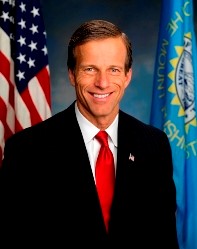 mortal threat to his political future when a major Air Force base in his state was threatened with closure.
He beat back the effort and saved Ellsworth Air Force Base, a financial engine in his largely rural state, keeping his job and learning valuable lessons that have helped power his rise in the Senate.
Now the South Dakota Republican has ascended to the top and will become majority leader in the new Congress that convenes on Friday, but he is again facing an early challenge and a major threat to his political standing.
Mr. Thune’s task this time is to juggle President-elect Donald J. Trump’s demands, the competing desires of 53 G.O.P. senators and a formidable legislative agenda. It starts with shepherding multiple baggage-laden Trump nominees to confirmation in the closely divided Senate, where he can afford to lose no more than three Republican votes if Democrats hold together in opposition.
Politico, House rules would make it harder to oust speaker in next Congress, Jordain Carney and Meredith Lee Hill, Jan. 2, 2024 (print ed.). The rules package raises the threshold for triggering a vote from one GOP member to nine.Republicans will make it harder to remove the speaker in the 119th Congress under a rules package unveiled Wednesday.
The proposed rules package would require nine GOP members to back making a motion to vacate to trigger a vote on ousting the speaker. That’s an  increase from the current rule, which allows any single GOP member to force a vote.
The deal to increase the threshold was negotiated in November by members of the House Freedom Caucus and the small business-oriented Main Street Caucus last year — an agreement that was first reported by POLITICO. Even after a vote is triggered, it still requires the support of a majority of the House in order for a speaker to be removed.
The release of the rules package, which includes proposed changes to the House’s general order of operations, comes ahead of Friday’s start to the new Congress. Republicans will need to formally adopt the package on the House floor, which they can’t do until they elect a speaker. In addition to the change to the motion to vacate, the rules package also tweaks the names of two House committees, allows committees to adopt rules on electronic voting, and tees up votes on 12 GOP bills including legislation related to immigration, voter ID and transgender student athletes. Inclusion of one of those bills, related to the International Criminal Court, is already drawing pushback from some members of the House GOP’s right flank.
Speaker Mike Johnson, during a recent Fox News interview, predicted that he will have the votes to become speaker despite his party’s thin margin. But Johnson has yet to lock down the votes he’ll need from his conference. Republicans are expected to have a 219-215 majority at the start of the new Congress, meaning Johnson must have nearly unanimous support from GOP lawmakers to win the gavel.
Washington Post, Trump endorses Mike Johnson ahead of what could be a prolonged House speaker fight, Marianna Sotomayor, Mariana Alfaro and Meryl Kornfield, Dec. 31, 2024 (print ed.). House Republicans have said for weeks that Donald Trump would have the final say on whether Johnson keeps the gavel or is replaced.
President-elect Donald Trump gave House Republican lawmakers a directive on Monday, days before what is expected to become an embattled speakership fight: Support Mike Johnson’s reelection.
In a lengthy post on his social media platform, Truth Social, Trump argued that Republicans should “NOT BLOW THIS GREAT OPPORTUNITY WHICH WE HAVE BEEN GIVEN” by voters to immediately govern, which would require Johnson (R-Louisiana), right, to be swiftly reelected as House speaker on Friday.Get the latest election news and results
“Speaker Mike Johnson is a good, hard working, religious man. He will do the right thing, and we will continue to WIN. Mike has my Complete & Total Endorsement,” Trump wrote.
But not all Republicans are following Trump’s directive, testing the GOP’s narrow majority and foreshadowing a prolonged fight on the House floor Friday.
“I respect and support President Trump, but his endorsement of Mike Johnson is going to work out about as well as his endorsement of Speaker Paul Ryan,” Rep. Thomas Massie (R-Kentucky) posted on X. “We’ve seen Johnson partner with the democrats to send money to Ukraine, authorize spying on Americans, and blow the budget.”
Recent Relevant Headlines
 The Hartmann Report, Commentary: Americans are sick of the Grinches stealing healthcare, Thom Hartmann
 Thinking about....Commentary on Tyranny: Why is Musk-Trump the 'Mump Regime'? Timothy SnyderThe Hartmann Report, Commentary: Depressing the Vote with Money in Politics, Thom Hartmann
 Washington Post, Opinion: Democrats shouldn’t try to find ‘common ground’ with Trump, Jennifer Rubin
More U.S. Legal News
Proof, Investigative Commentary: New Q&A Series, No. 1: Answering Some Extremely Easy Questions Asked By the Worst-Informed and Most Disingenuous Far-Right Billionaires on Earth, Seth Abramson, left, author, attorney and former professor, Jan. 4, 2025. Bill Ackman, above, asks, “How can someone with 53 prior arrests continue to be on the NYC streets?” It’s a child’s question—or anyone with no knowledge of criminal justice—but here an expert answers it.
Seth AbramsonJan 4 QUESTION from far-right billionaire BILL ACKMAN: “How can someone with 53 prior arrests continue to be on the NYC streets?”
We know this question is asked in bad faith, because a billionaire like Ackman has lawyers and other advisers who could answer this extremely basic question for him almost immediately.
There’s no reason to broadcast the question to his 1.6 million Twitter followers other than to spread three far-right canards that every criminal justice professional knows to be false: New York City is a dangerous large city (it is actually a very, very safe large city); prosecutors are by and large progressive (by and large, prosecutors are extremely conservative by instinct, politics, and professional-advancement planning); and violent crime is now out of control (it is plummeting).
Nevertheless here’s an ANSWER from criminal defense attorney Seth Abramson:
On a criminal record, each charge a person has ever faced is a separate arrest entry—so if, on a single date of offense, a person is arrested on ten charges, that may well show as ten arrests even though all of those arrests were for a single course of conduct.
Because over 95% of criminal cases are resolved by a defendant taking responsibility for their actions and accepting a plea deal—that’s right, the overwhelming majority of those arrested aren’t like Donald Trump and seek no more than a just punishment for what they are accused of doing—police and prosecutors prepare in advance for this known eventuality by habitually wildly overcharging cases. The theory behind this is that the more charges you can pile on someone, the more likelihood (because each charge carries its own penalty, which can be assessed consecutively to all other penalties) they will enter into a plea agreement with the government and thus spare taxpayers the cost (and government agents the time) of a full-blown criminal trial.
The result of this is that even a rather minor incident will often lead to a very large number of more-or-less redundant charges and an extremely filled-up arrest record.
I’ve seen and personally represented defendants with 50+ arrests from just two dates of offense—meaning just two actions that were deemed by the arresting officers to be criminal. Bill Ackman is also aware of such a situation, given that his political hero, Donald Trump, technically was arrested on 34 felonies as part of a single course of conduct (though in Trump’s case these crimes spanned months, which is actually far worse than what we see with unpremeditated street crimes born of transient anger).
And of course arrests aren’t convictions. While arrests show up on an arrest record, many arrests result in nolle prosequi withdrawals of the charges by prosecutors for reasons ranging from a witness recantation to a plea deal that involves some charges being withdrawn, from the evidence ultimately gathered by police not sustaining the charges the arresting officers originally believed could be sustained to a prosecutor deciding (but this is rare) that the case was overcharged and that is was unfair to the defendant.
Short of charges being withdrawn voluntarily by the government, they may also be “kicked” (dismissed) by judges because (say) witnesses fail to appear in court, certain evidence was illegally seized, the government has botched the collection or testing of the evidence in a way that infringes upon the defendant’s constitutional rights, or a whole host of other reasons—including, notably, a “not guilty” verdict by a jury of the defendant’s peers after a trial.

New York Times, Rudy Giuliani, Slow to Give Up His Belongings, Tests Patience of Court, Stefanos Chen, Jan. 3, 2025. He could be held in contempt of court after failing to fully comply with orders to surrender millions of dollars in assets to election workers he defamed.
After several missed deadlines and extensions, Rudolph W. Giuliani, the former mayor of New York, could be found in contempt of court on Friday for failing to deliver assets worth $11 million to two poll workers he defamed after the 2020 presidential election.
If he is held in contempt, he could face steep penalties, including jail time.
Mr. Giuliani, 80, was set to appear in federal court in Lower Manhattan to justify the stalled handover of some of his most prized possessions, including a penthouse apartment in Manhattan, a collection of Yankees memorabilia, luxury watches and a vintage Mercedes-Benz convertible. (It is unclear whether Mr. Giuliani will appear in person; his lawyers have indicated that he might attend the hearing remotely, citing health problems.)
The transfer was originally scheduled to take place in October, as a down payment on a $148 million judgment that he was ordered to pay to two Georgia election workers, Ruby Freeman and her daughter, Shaye Moss. Mr. Giuliani had claimed, without evidence, that the women had helped steal the presidential election from Donald J. Trump more than four years ago.
But one deadline after another has passed, and lawyers for the women said they have received only a fraction of the property.
Mr. Giuliani has argued that he has largely complied with the handover request and said that some of the items sought by the plaintiffs are not in his possession.

Deputies lead Ian Cramer out of a courtroom Monday at the Mercer County Courthouse in Stanton, N.D. (Jack Dura photo via Associated Press).
Washington Post, Sen. Kevin Cramer’s adult son sentenced to 28 years in prison, Azi Paybarah, Jan. 1, 2024 (print ed.). Ian Cramer led law enforcement in North Dakota on a high-speed chase, crashing into a vehicle and killing a sheriff’s deputy.
Ian Cramer, the 43-year-old son of Sen. Kevin Cramer (R-North Dakota), was sentenced Monday to 28 years in prison for leading police on a high-speed car chase in North Dakota that ended when he crashed into another vehicle and killed a sheriff’s deputy.Get the latest election news and results
The sentencing came after Ian Cramer pleaded guilty in September to charges that included homicide while fleeing a peace officer, fleeing a peace officer, preventing arrest, reckless endangerment, driving under suspension, possession of methamphetamine, possession of cocaine, unlawful possession of drug paraphernalia and possession of marijuana, the Associated Press reported.
The sentence from Judge Bobbi Weiler of the South Central Judicial District of North Dakota included 38 years in prison, with 10 years suspended, followed by three years of probation.
“You had resources, more resources than 99 percent of the people that I’ve seen,” Weiler said in a video published by the Bismarck Tribune.
The senator, who did not immediately respond Tuesday to a request for comment from The Washington Post, said in a statement issued in December 2023 that his son “suffers from serious mental disorders which manifest in severe paranoia and hallucinations.”
The younger Cramer struggled with substance abuse and mental health issues for years, according to the judge and statements from his family.
On Dec. 6, 2023, Cramer’s mother drove him to a hospital for mental health care. But when she got out of the car, he jumped into the driver’s seat and drove away, according to the senator’s statement.
Law enforcement officials pursued Cramer for several miles as he reached speeds of over 100 mph, the outlet NewsDakota reported.
The pursuit ended when Cramer crashed into an unoccupied patrol vehicle, behind which Deputy Sheriff Paul Martin was trying to deploy a tire-deflation device, the outlet reported. Later in court, state prosecutors showed body-cam footage of officers rushing to the scene to try to save Martin, KFYR-TV reported.
Meidas Touch Network, Commentary: GOP Senator EXPOSED after Son SENTENCED to 35 YEARS, Ben Meiselas, Dec. 31, 2024. NY MeidasTouch host Ben Meiselas reports on a MAGA GOP Senator who led the charge against Hunter Biden but whose own son was just sentenced to 35 years in prison.
Reader Comments: Kevin Cramer's son Isaac died at 35 from alcoholism and his older son Ian (45) killed a cop while out of his mind on drugs. Like how the hell were these kids raised and yet Senator Cramer gets to tell us how to raise ours? Cramer's son will likely serve a fourth of his sentence or less. He should be in for life....When is Matt Gaetz getting arrested for not disclosing his drug use on his gun registration?
Politico, Trump will be sentenced for hush money conviction on Jan. 10 — but won’t get jail time, Kyle Cheney, Josh Gerstein and Erica Orden, Jan. 3, 2025. Incarceration is not a practical option given Trump’s imminent return to the White House, Justice Juan Merchan wrote.Former President Donald Trump appears in court for his hush money trial at Manhattan Criminal Court.
A New York judge plans to sentence Donald Trump on Jan. 10 for his criminal hush money conviction, rejecting efforts by the president-elect to sweep aside a jury’s verdict that found him guilty of 34 felony counts.
But Justice Juan Merchan indicated he will not sentence Trump to prison time, acknowledging that incarceration is not a “practicable” option. And the judge said Trump may attend the sentencing virtually rather than reporting to court in person.
Politico, ‘Lawless’: Trump’s TikTok brief asks Supreme Court to overreach, legal experts say, Brendan Bordelon, Jan. 2, 2024 (print ed.). Lawyers believe the president-elect’s request for the Supreme Court to delay the TikTok law lacks a legal basis — and they fear it’s an early sign that Trump plans to blow past precedent. President-elect Donald Trump is asking the Supreme Court to exceed its authority with his unprecedented request in the case over the federal TikTok ban, legal experts say.
Trump filed a brief Friday asking the high court to suspend the law’s critical Jan. 19 deadline until after he takes office. The law — if the justices allow it to take effect — will effectively ban TikTok in the United States if the social media platform fails to cut ties with its Beijing-based owner by that date.
Experts said Trump had no grounds to ask to pause the TikTok law before he takes office as president, and they faulted him for requesting a “stay” of the law without taking a stance on whether the law is unconstitutional.
“The fact that the law goes into effect the day before Trump is inaugurated is just too bad for Trump, but a future president cannot ask a court to delay a law,” said Alan Rozenshtein, a former official at the Department of Justice who now teaches at the University of Minnesota Law School. He said the Supreme Court “does not have the authority to pause a law that was written by Congress and enacted” without considering its constitutionality.
The high court, of course, is weighing a constitutional challenge from TikTok, which says the law violates the First Amendment. But legal experts criticized Trump’s unconventional attempt to intervene in the dispute before taking office.
Washington Post, Rapist behind ‘Gone Girl’ kidnapping charged in more crimes — 15 years later, Jonathan Edwards, Jan. 2, 2024 (print ed.). A man convicted of kidnapping and raping a California woman, whom police initially accused of staging her abduction, has been charged in two similar crimes. Matthew Muller, seen at  right in a 2015 booking photo, was behind what became known as the “Gone Girl Hoax” kidnapping and is now charged in two similar crimes.
Matthew Muller, a U.S. Marine turned Harvard University-educated lawyer, was still six years away from gaining national infamy for the abduction that would later become known as the “Gone Girl Hoax” kidnapping.
The driver of the pickup truck in New Orleans was killed in a police shootout, officials said, and the attack is being investigated as an act of terrorism.But in 2009, he was already honing his craft as a kidnapper and rapist by breaking into women’s homes and drugging them, prosecutors now allege.
More than 15 years later, Muller has been charged with breaking into two women’s houses in the San Francisco Bay Area, tying them up, forcibly drugging them and threatening to rape them, prosecutors said Monday.
Muller, now 47 and incarcerated in Tucson, gained national attention in 2015 when he was accused of kidnapping and raping a physical therapist in an attack that Vallejo, California, police first called an elaborate hoax as they tried to get her boyfriend to admit that he had killed her and dumped her body somewhere.
Muller pleaded guilty in 2016 to kidnapping Denise Huskins and was sentenced to 40 years in prison. He later was convicted of two counts of forcible rape, for which he was sentenced to 31 years.
Santa Clara District Attorney Jeff Rosen on Monday addressed the 2009 attacks. “The details of this person’s violent crime spree seem scripted for Hollywood, but they are tragically real,” Rosen said in a statement.
On Monday, Muller was arraigned on two counts of committing sexual assault during a home invasion. Prosecutors accuse him of breaking into a woman’s home in Mountain View, California, early on Sept. 29, 2009, and forcing her to drink a cocktail of medications. He threatened to rape her, but she persuaded him not to, prosecutors said Monday in a statement. Instead, he allegedly suggested she get a dog before fleeing her home.
Less than a month later, on Oct. 18, Muller broke into a different woman’s home in neighboring Palo Alto, California, prosecutors said. He allegedly bound and gagged the woman, who was in her 30s, forced her to drink NyQuil and then assaulted her. The woman persuaded him to stop, prompting Muller to give her crime prevention advice and then bolt, prosecutors allege.

Washington Post, Investigtation: Scouring social media, a firm fights NFL settlement payouts, Will Hobson, Dec. 30, 2024 (print ed.). Despite vowing to act fast, the firm that oversees the NFL settlement still delays and denies claims, The Post found, including because of players’ online activity.
It took five years, three doctor’s visits, two federal lawsuits and countless emails with his lawyers, but Reggie Brown finally got word in February: Heofficially had dementia. Which meant, he believed, it was time for the NFL to pay up.
Brown, 64, had been fighting for years to get paid by the landmark NFL concussion settlement, which promised to compensate every former player with dementia or a brain disease linked to head trauma. Under the rules of the settlement, Brown’s lawyers told him, his diagnosis entitled him to about $200,000.
All that stood between him and a check was BrownGreer, the independent administrative firm that examines all claims. He had heard stories about the firm taking months, even years, to review claims, but he hoped his would move quickly. After all, his diagnosis had come from a board-certified settlement doctor who had been vetted by BrownGreer and lawyers for the NFL.
Then, in July, Brown received an email from the firm. It had reviewed his tax returns and scoured his social media activity, and it wanted to know:
If Brown had dementia, how had he managed to work part-time, earning about $30,000 annually the past five years?
Why did he claim online he worked as a motivational speaker?
And what about the Facebook posts that showed him attending his daughter’s graduate school graduation, traveling with his wife and going to the gym?
When lawyers for the NFL and thousands of former players struck the historic settlement a decade ago, they entrusted the crucial role of managing it to BrownGreer, one of the most experienced firms in the country focused on settlement administration. And BrownGreer’s founding partner, Orran Brown Sr., publicly assured former players that his firm would work to make the process as efficient and fair as possible
It was building a nationwide network of settlement-approved doctors whose diagnoses would quickly lead to payments, Brown said. And while the firm would consult a panel of expert review doctors on some claims, he said, it would rarely — if ever — deny claims involving diagnoses made by those settlement doctors.
“We do not take orders from the NFL,” he said then. His firm, he added, wanted to “get this done correctly and get it done quickly.”
But seven years later, BrownGreer has denied hundreds of claims involving diagnoses made by settlement doctors, and the firm has spent months — and, in some cases, years — scouring players’ social media and scrutinizing medical records, sparking an outcry from former players and causing some doctors to quit the settlement’s languishing network, a Washington Post investigation found.
 SCOTUSblog, In year-end report, chief justice defends judiciary’s independence, Amy Howe, right, Jan. 1, 2025. At the end of an eventful year at the Supreme Court that included a ruling giving former President Donald Trump broad immunity from criminal prosecution for his conduct while in office, reporting that
 controversial flags had flown at the homes of Justice Samuel Alito, and an ethics inquiry from Senate Democrats that found more gift trips that Justice Clarence Thomas had failed to disclose, Chief Justice John Roberts’ annual report, released on Tuesday evening, focused on what he sees as the threats to judicial independence.
One of those threats, Roberts wrote, is disinformation from abroad fomented by foreign countries. Although Roberts did not mention any of the “hostile foreign state actors” responsible for such disinformation by name, the justices will hear oral arguments next week in a challenge to a federal law that would require social media giant TikTok to shut down in the United States unless its parent company can sell it off by Jan. 19.
A federal appeals court upheld the law earlier this month, calling it part of “a broader effort to counter a well-substantiated national security threat posed by the People’s Republic of China.” Roberts’ discussion of disinformation in his report seemed to suggest that he may be sympathetic to the TikTok ban.
The chief justice traditionally releases his year-end report on the federal judiciary every year on New Year’s Eve. Roberts’s 2023 report discussed the legal profession and the role of artificial intelligence. His 2022 report, in the aftermath of the court’s decision overturning the constitutional right to abortion, stressed the importance of judicial security.
New York Times, Chief Justice Roberts Condemns Threats to Judicial Independence, Adam Liptak, Dec. 31, 2024. In his year-end report on the federal judiciary, John Roberts decried violence, intimidation and disinformation and warned against defiance of court rulings.
SCOTUSblog, Biden asks justices to allow enforcement of anti-money-laundering law, Amy Howe, right, Jan. 1, 2025. Biden asks justices to allow enforcement of anti-money-laundering law.
The Biden administration came to the Supreme Court on Tuesday afternoon, asking the justices to let it enforce an anti-money-laundering law while the government appeals to the U.S. Court of Appeals for the 5th Circuit and, if necessary, the Supreme Court. U.S. Solicitor General Elizabeth Prelogar told the justices that an order by a federal judge barring the government from enforcing the Corporate Transparency Act “impedes efforts to prevent financial crime and protect national security” and “undermines the United States’ ability to press other countries to improve their own anti-money laundering regimes.”
More broadly, Prelogar suggested that the justices could weigh in on the propriety of so-called “universal injunctions” – orders barring the government from enforcing the law anywhere in the country. Some of the court’s conservative justices – Clarence Thomas, Neil Gorsuch, and Brett Kavanaugh – have indicated in the past that the Supreme Court should address whether such injunctions are proper.
Universal injunctions have been used (as in this case) to block laws and policies during both the Biden and Trump administrations.
The case is a challenge to the constitutionality of the Corporate Transparency Act, a 2021 law intended to prevent crimes like money laundering and the financing of terrorism by requiring businesses to report information about their owners. A rule issued by the Department of the Treasury originally required companies created before 2024 to submit initial reports by Jan. 1, 2025.
On Dec. 3, U.S. District Judge Amos L. Mazzant III, in Sherman, Tex., agreed that the law is likely unconstitutional and entered an order barring the government from enforcing the law anywhere in the country.
The Biden administration went to the 5th Circuit, asking that court to put Mazzant’s order on hold while it appealed. A three-judge panel initially granted the government’s request, but a different panel of judges reinstated Mazzant’s order and scheduled oral arguments in the case for March 25.
Prelogar then came to the Supreme Court on Tuesday afternoon, asking the justices to intervene and allow the government to enforce the law while its appeals move forward.
The reporting requirements imposed by the law, she wrote, “fall comfortably within Congress’s authority under the Commerce Clause to regulate economic activities (here, the anonymous operation of business entities) that substantially affect interstate commerce.”
Congress also has the power to impose the reporting requirements, Prelogar continued, because they are “necessary and proper” to carry out some of the powers that the Constitution gives it, such as the power to regulate commerce, to collect taxes, and to oversee foreign affairs.
Prelogar noted that three other federal district courts had rejected similar requests to block the law – two because they concluded that the law is likely constitutional and one on the ground that the challengers had not shown that they would be permanently harmed if the law were allowed to go into effect. She acknowledged that a district court in Alabama had ruled that the law is unconstitutional, but she emphasized that the court’s order in that case only barred the government from enforcing the law against the challengers.
At the very least, Prelogar told the justices, the Supreme Court should “narrow the district court’s vastly overbroad” order. Universal injunctions like the one issued by Mazzant in this case, Prelogar contended, exceed the power of federal courts, which can only provide a remedy for the injuries suffered by the specific plaintiffs in the case. Moreover, she added, universal injunctions create “other legal and practical problems” – for example, encouraging forum shopping and allowing one district court to effectively cut off other litigation on the same issue. Universal injunctions also operate “asymmetrically,” she continued, so that although “the government must prevail in every suit to keep its policy in force,” “plaintiffs can block a federal statute or regulation nationwide with just a single lower-court victory.”

New York Times, Investigation: How Shen Yun Tapped Religious Fervor to Make $266 Million, Michael Rothfeld and Nicole Hong, Dec. 30, 2024 (print ed.). The dance group has accumulated enormous wealth, in large part by getting followers of the Falun Gong religious movement to work for free and pay its bills.
Over the past decade, the dance group Shen Yun Performing Arts has made money at a staggering rate.
The group had $60 million in 2015.
It had $144 million by 2019.
And by the end of last year, tax records show, it had more than a quarter of a billion dollars, stockpiling wealth at a pace that would be extraordinary for any company, let alone a nonprofit dance group from Orange County, N.Y.
Operated by Falun Gong, the persecuted Chinese religious movement, Shen Yun’s success flows in part from its ability to pack venues worldwide — while exploiting young, low-paid performers with little regard for their health or well-being.
But it also is a token of the power that Falun Gong’s founder, Li Hongzhi, has wielded over his followers. In the name of fighting communism, and obeying Mr. Li’s mystical teachings, they have created a global network to glorify him and enrich his movement.your times access
Former President and President-elect Donald Trump is shown in a photo collage with columnist E. Jean Carroll, who won civil suits against him in New York City on claims of sexual battery and defamation.
New York Times, Trump Loses Appeal of Carroll’s $5 Million Award in Sex-Abuse Case, Lola Fadulu, Dec. 30, 2024. The president-elect had asked a court to overturn the defamation judgment against him in the case, which centered on E. Jean Carroll’s account of a sexual attack in a dressing room.President-elect Donald J. Trump on Monday failed to overturn a $5 million judgment that he sexually abused the writer E. Jean Carroll in a Bergdorf Goodman dressing room in the mid-1990s and later defamed her.
Mr. Trump’s lawyers argued to a federal appeals panel that a lower court in Manhattan had erred by allowing two women to testify in the Carroll trial that he had also sexually assaulted them. The lawyers also argued that the court should not have allowed Ms. Carroll’s lawyers to play the recording of the “Access Hollywood” conversation in which Mr. Trump bragged in vulgar terms about grabbing women by the genitals.
The appeals court rejected Mr. Trump’s request for a new trial in the case, which produced the smaller of two defamation judgments against him. “Mr. Trump has not demonstrated that the district court erred in any of the challenged rulings,” the opinion by the U.S. Court of Appeals for the Second Circuit said. It was unsigned but issued by a three-judge panel made up of Denny Chin and Susan Carney — appointed by President Barack Obama — as well as Myrna Perez, appointed by President Biden.
“Both E. Jean Carroll and I are gratified by today’s decision,” Roberta Kaplan, Ms. Carroll’s lawyer, said in a statement. “We thank the Second Circuit for its careful consideration of the parties’ arguments.”
New York Times, Investigation: The Men Who Use Instagram to Groom Child Influencers, Jennifer Valentino-DeVries and Michael H. Keller, Dec. 30, 2024. Photographers and other men offer to build online followings for young girls, but some are pedophiles who work with parents to sexualize them.
Everyone had an idea about how the 12-year-old girl should pose in a G-string bikini as they assembled in an Airbnb rental home in a small Louisiana town.
The photographer was new to the business of shooting child influencers, so he welcomed suggestions, he later explained in an interview.
The girl’s mother, swiping through images of women from men's magazines on her phone, recommended that she stand with one leg raised provocatively on a bed, he recalled. The girl, he said, proposed imitating a scene from an erotic film she had watched — she would lie on her back with her hands grasping for the bedposts.
In the end, several shots positioned her “head on a pillow and her buttocks raised in the air,” and in one, the camera focused on her “barely covered” genitals. That was the description in court documents, written by federal authorities who charged the photographer and mother with crimes related to child sexual abuse material.
New York Times, Social Media Companies Face Global Tug-of-War Over Free Speech, Cecilia Kang and Adam Satariano, Dec. 30, 2024. Donald Trump’s picks for the F.C.C. and F.T.C. have vowed to remove censorship online. That conflicts with European regulators pushing for stricter moderation.
President-elect Donald J. Trump and his allies have vowed to squash an online “censorship cartel” of social media firms that they say targets conservatives.
Already, the president-elect’s newly chosen regulators at the Federal Communications Commission and the Federal Trade Commission have outlined plans to stop social media platforms like Facebook and YouTube from removing content the companies deem offensive — and punish advertisers that leave less restrictive platforms like X in protest of the lack of moderation.
“The censorship and advertising boycott cartel must end now!” Elon Musk, the owner of X, whom Mr. Trump has appointed to cut the federal budget, posted on his site last month.
In Europe, social media companies face the opposite problem. There, regulators accuse the platforms of being too lax about the information they host, including allowing posts that stoked political violence in Britain and spread hate in Germany and France.
New York Times, Chinese Companies Have Sidestepped Trump’s Tariffs. They Could Do It Again, Ana Swanson, Dec. 31, 2024. The companies have found plenty of new channels to the U.S. market, demonstrating the potential limits of the tariffs Donald Trump has promised to impose.
After President Donald J. Trump slapped tariffs on Chinese bicycles in 2018, Arnold Kamler, then the chief executive of the bike maker Kent International, saw a curious trend play out in the bicycle industry.
Chinese bicycle factories moved their final manufacturing and assembly operations out of China, setting up new facilities in Taiwan, Vietnam, Malaysia, Cambodia and India. Using parts mostly from China, those companies made bicycles that they could export directly to the United States — without paying the 25 percent tariff had the bike been shipped straight from China.
“The net effect of what’s going on with these tariffs is that Chinese factories in China are setting up Chinese factories in other countries,” said Mr. Kamler, whose company imports some bicycles from China and makes others at a South Carolina factory.
Pushing those factories into other countries resulted in additional costs for companies and consumers, without increasing the amount of manufacturing in the United States, Mr. Kamler said. He said he had been forced to raise his prices several times as a result of the tariffs.
“There’s no real gain here,” said Mr. Kamler, whose bikes are sold at Walmart and other retailers. “It’s very inflationary.”
New York Times, Drugs, Scams and Sin: Myanmar’s War Has Made It the Global Crime Capital, Hannah Beech, Dec. 31, 2024. The chaotic country is now a magnet for criminal syndicates, particularly from China, destabilizing law enforcement across much of Asia.
Since descending into a full-blown civil conflict nearly four years ago, after the military overthrew the elected government, Myanmar has cemented its status as a hotbed of transnational crime. It is a playground for warlords, arms dealers, human traffickers, poachers, drug syndicates and generals wanted by international courts.
Recent Relevant Headlines
New York Times, Trump Loses Appeal of Carroll’s $5 Million Award in Sex-Abuse Case
More U.S. Political News
President Joe Biden awards the Presidential Medal of Freedom to Hillary Clinton on Saturday. (Washington Post photo by Annabelle Gordon).
Washington Post, Biden awards Medal of Freedom to Soros, Ralph Lauren and others, Maeve Restonand Rachel Tashjian, Jan. 5, 2025 (print ed.). The star-studded list of recipients includes several philanthropists, Democratic politicians and high-profile donors.
President Joe Biden awarded the Presidential Medal of Freedom to a star-studded list of celebrities, donors and former politicians on Saturday, bestowing the nation’s highest civilian honor on some of the country’s best-known names and others who were integral in securing the victory of Biden and other Democrats in recent elections.Get the latest election news and results
Several of the medal recipients have been outspoken critics of President-elect Donald Trump, and Biden’s decision to honor them is yet another way in which he is trying to affirm institutions central to democracy. The honorees included 2016 presidential nominee Hillary Clinton, billionaire donor George Soros, actor Michael J. Fox and Democratic political icons including Robert F. Kennedy, who was assassinated in 1968.
“You inspire. You bring healing and joy to so many lives that otherwise wouldn’t be touched,” Biden said during the ceremony at the White House. “You answer the call to serve and lead others to do the same thing, and you defend the values of America, even when they’re under attack, which they have been as of late.”Biden awards Medals of Freedom0:45President Joe Biden awarded the Presidential Medal of Freedom on Jan. 4 to 19 celebrities including Bono, José Andrés, Hillary Clinton and Magic Johnson. (Video: The Washington Post)
The medal is the highest civilian honor, given to individuals who have “made exemplary contributions to the prosperity, values, or security of the United States, world peace, or other significant societal, public or private endeavors.”
Politico Magazine, ‘Dark Money’ Is Tainting Washington Think Tanks. A New Report Shows It’s Worse Than You Think, Michael Schaffer, Jan. 3, 2025. Foreign governments are throwing millions at D.C. think tanks.
Washington’s think-tank industry, which sets the terms of debate for so much of American policymaking, is floating on a sea of foreign-government and Pentagon-contractor dollars.
That’s the conclusion of a brand-new report out this morning and shared with me by a pair of scholars at the Quincy Institute for Responsible Statecraft, a think tank that officially eschews foreign-government money — and delights in tweaking the Beltway foreign-affairs establishment.
Among other things, the paper says that the top 50 think tanks took in some $110 million over the past five years from foreign governments and related entities, including nearly $17 million from the United Arab Emirates, the largest single foreign donor. Leading Pentagon contractors, meanwhile, kicked in nearly $35 million over the same period.
 The Atlantic Council and the Brookings Institution topped the list of foreign-government beneficiaries, taking in nearly $21 million and over $17 million, respectively. All in all, 54 different governments contributed to the industry, a list largely made up of pro-western democracies but also including fantastically wealthy authoritarian regimes like Saudi Arabia and Qatar.
Most disturbingly, the report makes clear that the numbers it cites may only be partial: Unlike traditional PACs or registered foreign agents, think tanks don’t have to disclose where their money comes from. Researching the study, co-authors Ben Freeman and Nick Cleveland-Stout told me, meant poring through the organizations’ annual reports in hopes that information would be voluntarily shared.
“More than a third of the top foreign policy think tanks in the US don’t disclose any donor information,” said Freeman. The category encompasses 18 of the 50 biggest think tanks, including highly-regarded Beltway stalwarts like the American Enterprise Institute or the Washington Institute for Near East Policy. “We really have no clue whatsoever who is funding them. We call these organizations dark money think tanks.”
That particular loaded term — lifted from the secretive political groups legalized by the Supreme Court’s Citizens United decision — is no accident.
According to Freeman and Cleveland-Stout, the typical think tank in 2024 looks a lot more like an advocacy group than a university. The paper doesn’t get into analyzing whether specific white papers were bought and paid for, but the implication is clear: Between media appearances, Congressional testimony and serving as mini governments-in-waiting for whatever party is out of power, the organizations do a lot to shape the political conversation, or at least set the boundaries of what views Washington deems respectable.
As such, they say, Americans have a vested interest in knowing who’s underwriting the opinions.
There are a couple of problems with that ask. One is the U.S. Constitution, which rightly makes it hard for the government to simply order a private organization to open up its books. The second is the self-conception of a lot of think tanks, which often cast themselves as high-minded research organizations rather than outfits involved in the grubby business of lobbying. This mindset underlies some of the reluctance to just lay out the finances voluntarily.
I think it’s time to get over that. In a low-trust moment where the policy views of many think tanks are about to face unprecedented assault, they should be going above and beyond to demonstrate that they’re legit. Hiding behind their researchers’ PhDs — as if they were ivory-tower philosophy professors who couldn’t even find their way to the bursar’s office — won’t cut it.
If the end result is that think tanks’ scholarly self-conception gets muddied up a bit, that’s probably good news for Washington’s culture, even if it dents a few researchers’ egos.
New York Times, Guest Essay: James Carville: I Was Wrong About the 2024 Election. Here’s Why, James Carville is veteran of Democratic presidential campaigns, including Bill Clinton’s in 1992, and a consultant to American Bridge, a Democratic super PAC,.Jan. 3, 2025 (print ed.).
I thought Kamala Harris would win. I was wrong. While I’m sure we Democrats can argue that the loss wasn’t a landslide or take a little solace in our House performance, the most important thing for us now is to face that we were wrong and take action on the prevailing “why.”
I’ve been going over this in my head for the past two months, all the variables, all the what-ifs, all the questions about Joe Biden’s re-election decisions and what kind of Democrat or message might have worked against Donald Trump. I keep coming back to the same thing. We lost for one very simple reason: It was, it is and it always will be the economy, stupid. We have to begin 2025 with that truth as our political north star and not get distracted by anything else.
Although the U.S. economy remains the strongest in the world, with G.D.P. soaring and inflation subsiding, the American people did not settle for us being better than the rest or take that as good enough. Mr. Trump, for the first time in his political career, decisively won by seizing a swath of middle-class and low-income voters focused on the economy. Democrats have flat-out lost the economic narrative. The only path to electoral salvation is to take it back. Perception is everything in politics, and a lot of Americans perceive us as out to lunch on the economy — not feeling their pain or caring too much about other things instead.
To win back the economic narrative, we must focus on revving up a transformed messaging machine for the new political paradigm we now find ourselves living in. It’s about finding ways to talk to Americans about the economy that are persuasive. Repetitive. Memorable. And entirely focused on the issues that affect Americans’ everyday lives.your times access.
This starts with how we form our opposition. First of all, we have got to stop making Mr. Trump himself our main focus; he can’t be elected again. Furthermore, it’s clear many Americans do not give a rat’s tail about Mr. Trump’s indictments — even if they are justified — or about his antidemocratic impulses or about social issues if they cannot provide for themselves or their families.
Mr. Trump won the popular vote by putting the economic anger of Americans front and center. If we focus on anything else, we risk falling farther into the abyss. Our messaging machine must sharply focus on opposing the unpopular Republican economic agenda that will live on past him. Vocally oppose the party, not the person or the extremism of his movement. I don’t always agree with Wall Street, but Jamie Dimon was right when he said that Democrats’ railing against “ultra-MAGA” was insulting and politically tone-deaf. Denouncing other Americans or their leader as miscreants is not going to win elections; focusing on their economic pain will, as will contesting the Republican economic agenda.
There will be plenty to oppose. Our central message must revolve around opposing Republicans’ tax cuts for the wealthiest Americans. It is deeply unpopular, and we know they want to do it again. And then we attack the rest. We know Republicans will most likely skyrocket everyday costs with slapstick tariffs; they will almost certainly attempt to slash the Affordable Care Act, raising premiums on the working class; and they will probably do next to nothing to curb the cost of prescription drugs. In a truly stunning display of inhumanity, the speaker of the House, Mike Johnson, has already lacerated health care funding for Sept. 11 emergency workers and survivors. There will be much, much worse to come.
But of course, opposition is only half the coin.
While Democrats have next to no chance of passing a bold, progressive economic agenda in the next four years, what we can do is force Republicans to oppose us. We must be on the offensive with a wildly popular and populist economic agenda they cannot be for.
Let’s start by forcing them to oppose a raise in the minimum wage to $15 an hour. Let’s make Roe v. Wade an economic messaging issue and force them to block our attempts to codify it into law. And let’s take back the immigration issue by making it an economic issue and force the G.O.P. to deny bipartisan reform that expedites entry for high-performing talent and for those who will bring business into our nation. This year the Democratic Party leadership must convene and publish a creative, popular and bold economic agenda and proactively take back our economic turf. Go big, go populist, stick to economic progress and force them to oppose what they cannot be for. In unison.
Finally, Democrats must trudge headfirst with this economic agenda into the new media paradigm we now live in. I am an 80-year-old man and can see clearly that we are barreling toward a nontraditional and decentralized media environment. Podcasts are the new print newspapers and magazines. Social platforms are a social conscience. And influencers are digital stewards of that conscience. Our economic message must be sharp, crisp, clear — and we must take it right to the people. To Democratic presidential hopefuls, your auditions for 2028 should be based on two things: 1) How authentic you are on the economy and 2) how well you deliver it on a podcast.
The road ahead will not be easy, but there are no two roads to choose from. The path forward could not be more certain: We live or die by winning public perception of the economy.
Thus it was, thus it is, and thus it forever shall be.
Lance's Substack, Political Opinion: Biden's Worst Decision, Lance F Rosen, Jan. 1, 2024. Will Bunch of the Philly Inquirer nails it. The biggest and most tragic mistake by Joe Biden was his pick of Merrick Garland for Attorney General.
Thanks to Will Bunch (published here) we now know why President Biden picked Merrick Garland and so regrets his decision. Former White House Chief Of Staff Ron Klain led the faction which pushed Garland. This is according to his commentary based upona Washington Post report detailing Biden's extreme regret over his choice.
Not mentioned by Bunch about Klain is that he's the tag team partner of corrupt corporate centrist Biden advisor Anita Dunn, left, who  sabotaged his presidency and campaign by abandoning progressives and traditional Democratic constituencies in favor of appeals to "moderate MAGAs" from the white suburbs. Dunn had top down control over the campaign press shop and messaging, and did everything possible to prevent Biden from attacking Trump, or even using hisname. He was advised to call him "the other guy," and tripped all over himself trying to distinguish between the misnamed "regular" MAGA, and "Ultra-MAGA," which he described as "semi-fascist."
The Dunn-Klain combo was the source of the awful triangulation strategy, which infected many aspects of the administration, costing the President whole chunks of his program (in conjunction with fellow Democratic corporate centrists Manchin and Sinema, with whom they worked) and large drops in his approval ratings among youth, black and Muslim minorities, Latinos, and progressives of all stripes. This is the actual reason why the so-called "Blue Wall" collapsed in November, and we now have a full clown-car of escaped mental patients being given the keys to the government to go joyriding around in for four or more years.
 Also not mentioned by Bunch was that Klain and Dunn were exposed as the pair who sabotaged Biden's debate prep which contributed to sinking his candidacy, the reason FLOTUS Dr. Jill Biden and son Hunter (shown above in a June 2024 photo) demanded the President fire them both immediately after the disaster when they all met at Camp David (which he wouldn't).
I suspected that the reasoning behind Garland's appointment was a futile and deluded plan to seek bipartisanship with MAGA, which included a "hands off or go slow" approach to prosecuting Trump's crimes, so as to not overly antagonize Trump's Congressional allies and base. Maybe a great idea on paper, but they were always going to be "antagonized" over everything. They incited and assisted a violent mob attack our Capitol, and the White House hoped for civilty and cooperation with Nazis who organized a coup against them? Seriously?
Bunch's background commentary on the Garland appointment seems to point in the same direction, raising similar questions, and is sounding an alarm to prevent similar failures in judgment.
Excerpt continued below.
Washington Post, D.C. Mayor Bowser goes to Mar-a-Lago, says she had ‘great meeting’ with Trump, Meagan Flynn and Martin Weil, Jan. 1, 2024 (print ed.).  Bowser said the two had met “to discuss our shared priorities” for Donald Trump’s second term as president.
D.C. Mayor Muriel E. Bowser (D) met with President-elect Donald Trump at Mar-a-Lago on Monday, saying in a late-night statement that they discussed “shared priorities” involving the federal workforce, buildings and park space during the “great meeting.”

Washington Post, Russia’s gas supply to Europe halted after Ukraine transit deal expires, Francesca Ebel and David L. Stern, Jan. 1, 2024. Ukraine, which had allowed Russian oil and gas to cross its territory to serve Europe while fighting Moscow’s invasion since 2022, refused to renew the deal.
 Despite a brutal Russian invasion that has killed tens of thousands of Ukrainian soldiers and civilians and laid waste to swaths of the country since 2022, Ukraine continued to allow Russian oil and gas to cross its territory to serve its European neighbors — generating revenue for Kyiv and Moscow and illustrating how hard it is for the bitter enemies to cut ties.
More Political News, Commentary
New York Times, Guest Essay: What’s the Matter With Chicago? Andrew G. Biggs (senior fellow at the American Enterprise Institute, serving since 2016 as a presidentially appointed member of the Financial Oversight and Management Board for Puerto Rico, which has overseen the Puerto Rico government’s bankruptcy.), Dec. 31, 2024 (print ed.).
The word bankruptcy has been hanging over Chicago like a storm cloud about to burst.
Mayor Brandon Johnson is the latest leader to attempt to close Chicago’s gaping fiscal gap: He proposed a $300 million property tax increase to partly fill Chicago’s $982 million projected budget deficit, only to be unanimously rejected by the City Council. The City Council narrowly passed a budget on Dec. 16, with far less in tax increases than the mayor had initially demanded.
The Windy City’s woes are the product of decades of fiscal profligacy and a cautionary tale to policymakers in every region and at every level of government: Retirement benefits are like free junk food to politicians — everyone loves them, and the bills don’t arrive until later. They can be ruinous for a city’s long-term fiscal health.
At the heart of Chicago’s deficit are decades of increasingly generous retirement benefits offered by Chicago’s leaders to more than 30,000 public employees, a politically powerful constituency. Today, a city employee retiring after 35 years with a final salary of $75,000 would receive combined pension and retiree health benefits of about $77,000.
The City government has failed to fund those pension promises fully and the bill has come due. Retirement benefits and debt service together made up 43 percent of Chicago’s budget in 2022, the highest rate of any U.S. city. Chicago spends more on debt and pensions than it does on the police and infrastructure, according to an analysis from the Illinois Policy Institute, a libertarian-leaning policy group. In other words, Chicago is paying for the past, not investing for the future.your times access
Chicago’s pension actuary warned in a letter to the plan’s leadership last year that “the Fund is still at risk of potential insolvency if an economic recession or investment market downturn were to occur in the near term.” (He wrote it in boldface to get policymakers to take notice.)Sign up for the Opinion Today newsletter Get expert analysis of the news and a guide to the big ideas shaping the world every weekday morning. Get it sent to your inbox.
Chicago owes bondholders almost $29 billion. It also faces $35 billion in unfunded pension liabilities and almost $2 billion in unfunded retiree health benefits. And these figures do not include an additional $14 billion in unfunded benefits owed to Chicago’s teachers. The watchdog group Truth in Accounting gives Chicago a grade of “F” for fiscal responsibility, ranking it 74 out of 75 cities. (New York City is last.)
City leaders may continue to ignore these warnings. If the pension fund does get close to insolvency, Chicago can most likely keep the pension checks flowing by suspending payments to bondholders. Illinois has no legal provision for Chicago to declare bankruptcy, meaning the state would be forced to rush legislation into place to prevent financial chaos.
Judging by the experience of places such as Detroit and Puerto Rico, where I serve on a federally appointed board overseeing the island government’s bankruptcy, pensions would largely be protected in the event of fiscal chaos, followed by core government operations. Nonessential government services would be reduced, and bondholders would receive what remains.
Even if Chicago can contain the political fallout locally, the economic impact would reach far beyond the city limits. Chicago is the largest city in the Midwest and the third largest nationwide. The state of Illinois, which faces vast debts of its own, is not in a position to bail out its largest city, so Congress or the Federal Reserve might have to step in to help.
Policymakers in other big American cities ought to be paying attention. Truth in Accounting gave San Francisco a fiscal grade of D, while New York’s largest-in-the-nation debt burden of $61,800 per taxpayer caused it to share a failing grade with Chicago. New York and San Francisco each already devote more than 22 percent of their total budgets to retirement benefits and debt.
One reason it’s easy to allow pension-fueled deficits to keep growing is that there are very few guardrails. State and local government pensions are unregulated by the federal government, so they operate with much lower funding standards than federal government pensions or those offered by private companies.
Like private pensions, state and local governments should be required to assume conservative returns on pension investments and to address unfunded liabilities quickly, rather than letting funding shortfalls fester over decades.
If, as in Chicago, decades of fiscal recklessness are allowed to go unchecked, changing course can be extremely painful. Chicago has increased its pension contributions significantly. But the city must pay for its $927 million in additional pension contributions by reducing other essential government functions.
The consequence is a lower level of public services for everyone. With the city police force down by over 1,600 officers since 2018, the city’s inspector general found that 49 percent of 911 calls appear to go unanswered. Chicago is already seeing the effects of this deterioration. Companies such as Boeing, United Airlines, Tyson Foods and the hedge fund Citadel have all moved operations away from Chicago in recent years, citing the business environment, public safety and governance quality among their reasons.+Andrew G Biggs is a senior fellow at the American Enterprise Institute.

U.S. House Speaker Mike Johnson (R-LA), left, basks in the presence of Elon Musk, center, and President-elect Donald Trump
Letters from an American, Historical Commentary: December 21, 2024 [U.S. Government Shutdown Avoided], Heather Cox Richardson, Dec. 22, 2024.  Shortly after midnight last night, the Senate passed the continuing resolution to fund the government through March 14, 2025. The previous continuing resolution ran out at midnight, but as Bloomberg’s congressional budget reporter Steven Dennis explained, “midnight is NOT a hard deadline for a government shutdown. A shutdown occurs only when [the Office of Management and Budget] issues a shutdown order, which they traditionally will NOT issue if a bill is moving toward completion.”
President Joe Biden signed the bill this morning, praising the agreement for keeping the government open, providing urgently needed disaster relief, and providing the money to rebuild the Francis Scott Key Bridge in Baltimore after a container ship hit it in March 2024, causing it to collapse.
Washington Post, D.C. Mayor Bowser goes to Mar-a-Lago, says she had ‘great meeting’ with Trump, Meagan Flynn and Martin Weil, Jan. 1, 2024 (print ed.). Bowser said the two had met “to discuss our shared priorities” for Donald Trump’s second term as president.
D.C. Mayor Muriel E. Bowser (D) met with President-elect Donald Trump at Mar-a-Lago on Monday, saying in a late-night statement that they discussed “shared priorities” involving the federal workforce, buildings and park space during the “great meeting.”
New York Times, Trump Weighs In on Immigrant Visa Debate but Offers Little Clarity, Ken Bensinger, Dec. 29, 2024 (print ed.). President-elect Trump said he had used the visas for skilled workers “many times.” But he has mainly used visas for unskilled workers like housekeepers.
President-elect Donald J. Trump appeared to weigh in on Saturday on a heated debate among his supporters over the role of skilled immigrant workers in the U.S. economy, saying he had frequently used the visas for those workers and backed the program.
“I have many H-1B visas on my properties,” he told The New York Post. “I’ve been a believer in H-1B. I have used it many times. It’s a great program.”
But his comments — which were enthusiastically embraced by the technology industry as an endorsement — may muddy the waters because Mr. Trump appears to have only sparingly used the H-1B visa program, which allows skilled workers like software engineers to work in the United States for up to three years and can be extended to six years.
Instead, he has been a frequent and longtime user of the similarly named, but starkly different, H-2B visa program, which is for unskilled workers like gardeners and housekeepers, as well as the H-2A program, which is for agricultural workers. Those visas allow a worker to remain in the country for 10 months. Federal data show Mr. Trump’s companies have received approval to employ over 1,000 workers through the two H-2 programs in the past 20 years.
New York Times, Trump Previews Second Term in Sprawling Speech to Conservative Conference, Michael D. Shear, Dec. 22, 2024. President-elect Trump repeated false claims about immigration and the border and discussed the Panama Canal in the 90-minute address.
President-elect Donald J. Trump delivered a sprawling address on Sunday that he called a “small preview of the common-sense revolution” his administration will bring, pledging to slam shut the nation’s borders, end federal regulations, lower taxes, prosecute his rivals, “stop woke” and “end the transgender lunacy.”
In a 90-minute speech at a conservative conference in Phoenix, Mr. Trump offered a triumphant view of his election victory in which he described his liberal adversaries as “befuddled” and promised that a new “golden age in America” had begun.
“We will end the occupation, and Jan. 20 will truly be liberation day in America,” Mr. Trump told thousands of people at AmericaFest, a four-day conference run by the conservative group Turning Point USA.
The president-elect’s speech was a familiar mash-up of false assertions, self-praise, fierce attacks on his adversaries and promises about how his return to power would change the country for the better.
Recent Relevant Headlines
 Everyone's Entitled To My Own Opinion, Commentary: Oh look, Elderly Golfer is a geopolitical madman, Jeff Tiedrich
 Politico, Lara Trump removes herself from Florida Senate sweepstakesLetters from an American, Historical Commentary: December 21, 2024 [U.S. Government Shutdown Avoided], Heather Cox Richardson
 Egberto Off The Record, Opinion: Spineless greedy parasitic CEOs are sucking up to Trump, a clear and present danger to all, Egberto Willies
More On Carter Life, Legacy
President Jimmy Carter and Senator Joseph R. Biden Jr. in 1978. Both saw themselves as straight shooters in a world of spinners (Photo:
Barry Thumma/Associated Press
New York Times, ‘Hanging Out With Jimmy Carter,’ Biden Faces the Echoes of History, Peter Baker, Jan. 1, 2024 (print ed.). President Biden is another Democrat hurt by inflation and struggling to free hostages. But Mr. Carter’s enhanced reputation post-presidency offers hope.
When President Biden appeared on camera to pay tribute to former President Jimmy Carter, he sounded almost as if he were thinking of himself in these final days in office.
“In today’s world, some look at Jimmy Carter and see a man of a bygone era — with honesty and character, faith and humility,” Mr. Biden said in breaking away from his Caribbean vacation on Sunday after the former president’s death. “It mattered. But I don’t believe it’s a bygone era.”
Mr. Biden, too, has been dismissed as a man of a bygone era, an old-school politician in a new-school world, an octogenarian president playing by rules he learned in the 1970s when he served in the Senate and Mr. Carter was in the White House, rules that did not help him in today’s fast-paced, smash-mouth political arena. He is, in this view, a man out of time — Mr. Carter’s time.
Washington Post, Jimmy Carter: They wrote obituaries about Carter — but died before him, Laura Wagner, Jan. 1, 2024 (print ed.). Carter’s longevity meant that some of his obit writers have by now not only left journalism but also their mortal coils.
New York Times, In Carter’s Hometown, a Long Vigil Ends With Sorrow, but Also Uplift, Rick Rojas, Christina Morales and Christian Boone, Jan. 1, 2024 (print ed.). Plains, Ga., had been bracing for the inevitable through Jimmy Carter’s ailments and nearly two years of hospice care. Still, his death “doesn’t seem real.”
The Georgia town known first and foremost as the home of Jimmy Carter had steeled itself time and again for an existence without him. First, there was his cancer diagnosis in 2015, and then the fall that broke a hip, and the disclosure almost two years ago that he had entered hospice care.
But sure enough, every time, he held on.
And so, Plains, a speck of a community tied to the 39th president for the better part of a century, awoke on Monday to a reality that, strangely enough, seemed almost as inconceivable as it was inevitable. Mr. Carter, 100, was gone. He died on Sunday at his home, the modest ranch house hidden behind the security fencing and guard stations in the center of town.
“Honestly, it doesn’t seem real,” said Philip Kurland, the owner of the Plains Trading Post, an overstuffed emporium of political memorabilia in the strip of businesses that makes up downtown. “It was inevitable, but there’s still sadness. There’s also a feeling of: Let’s celebrate a life well lived.”
Former U.S. President Jimmy Carter (New York Times photo by Damon Winter )
New York Times, Jimmy Carter, Peacemaking President Amid Crises, Is Dead at 100, Peter Baker and Roy Reed, Dec. 30, 2024 (print ed.). Jimmy Carter, who rose from Georgia farmland to become the 39th president of the United States on a promise of national healing after the wounds of Watergate and Vietnam, then lost the White House in a cauldron of economic turmoil at home and crisis in Iran, died on Sunday at his home in Plains, Ga. He was 100.
The Carter Center in Atlanta announced his death, which came nearly three months after Mr. Carter, already the longest-living president in American history, became the first former commander in chief to reach the century mark. Mr. Carter went into hospice care 22 months ago, but held on longer than even his family expected.
Tributes poured in from presidents, world leaders and many everyday people from around the world who admired not only Mr. Carter’s service during four years in the White House but his four decades of efforts since leaving office to fight disease, broker peace and provide for the poor. President Biden ordered a state funeral to be held and was expected to deliver a eulogy.
“To all of the young people in this nation and for anyone in search of what it means to live a life of purpose and meaning — the good life — study Jimmy Carter, a man of principle, faith and humility,” Mr. Biden, the first Democratic senator to endorse Mr. Carter’s long-shot 1976 bid for the presidency, said in a statement. “He showed that we are great nation because we are a good people.”
President-elect Donald J. Trump, who often denigrated Mr. Carter on the campaign trail and in recent days spoke of unraveling one of the former president’s signature accomplishments, the transfer of the Panama Canal to Panama, issued a gracious statement. “The challenges Jimmy faced as president came at a pivotal time for our country, and he did everything in his power to improve the lives of all Americans,” Mr. Trump said. “For that, we owe him a debt of gratitude.”
Mr. Carter was no fan of Mr. Trump and family members said he was holding on in part to vote for Vice President Kamala Harris. The former president cast his absentee ballot for her in mid-October after making his final public appearance on his birthday when he was rolled out to his yard in a wheelchair to watch a flyover of military jets in his honor.
Other than interludes in the White House and the Georgia governor’s mansion, he and his wife, the former first lady Rosalynn Carter, lived in the same simple home in Plains for most of their adult lives and each of them passed away there, Mrs. Carter in November last year.
A lifelong farmer who still worked with his hands building houses for the poor well into his 90s, Mr. Carter had long defied death and outlived not only his wife but his vice president, most of his cabinet, key aides and allies as well as the Republican president he defeated and the Republican challenger who later defeated him. Over the years, he beat back a series of health crises, including a bout with the skin cancer melanoma, which spread to his liver and brain, and repeated falls, one giving him a broken hip.
The Carter Center announced in February last year that Mr. Carter, “after a series of short hospital stays,” had decided to forgo further life-prolonging medical treatment and would receive hospice care at home.
News that he seemed to be in his final days prompted a wave of tributes and remembrances of his extended and eventful life, but even then he upended expectations by hanging on for nearly two years. He lived long enough to bid farewell to Mrs. Carter, who died at 96, culminating a marriage of 77 years.
Jimmy Carter, furthest right, is standing in the Oval Office with four of his successors. From left to right: George H.W. Bush, Barack Obama, George W. Bush and Bill Clinton. Former President Jimmy Carter, furthest right, in a group photo of his successors in January 2009 (New York Times photo by Doug Mills)
New York Times, Carter the Critic Didn’t Spare His Successors, Linda Qiu, Dec. 30, 2024 (print ed.). Jimmy Carter defied the unwritten rule of former presidents: Don’t criticize the occupant of the Oval Office.
Former President Jimmy Carter grinned in the Oval Office in January 2009 for a photograph, a visible gap separating him from four of his successors. As the others stood shoulder to shoulder, he positioned himself off to the side, a hand in one pocket, as if to distance himself just slightly from that most exclusive club.
Mr. Carter had no qualms about breaking one of that club’s unwritten rules, namely that former presidents restrain their critiques of the current occupant of the Oval Office. In the four decades after leaving the White House following the 1980 election, he caused regular stirs with pointed opinions about his successors.
“He was in fights with everyone, Democrats, Republicans,” said Julian E. Zelizer, the author of “Jimmy Carter” and a historian at Princeton University, who called Mr. Carter “a maverick through and through.”
Stuart Eizenstat, a former adviser to Mr. Carter, said the former president wasn’t the type of person to just go back to Plains, Ga., and “work on carpentry and painting.”
“When he left office, he was in his mid 50s,” Mr. Eizenstat said. “He didn’t want his voice to be unheard.”
Washington Post, Carter to lie in state at Capitol, with state funeral to follow on Jan. 9, Azi Paybarahm, Dec. 30, 2024. Former presidents and other dignitaries are expected to attend the service at Washington National Cathedral where President Joe Biden will deliver the eulogy.
The death of former president Jimmy Carter touched off an American mourning ritual that requires quickly coordinating a sprawling group of federal officials, local partners and law enforcement, as well as elected leaders from across the political spectrum.Get the latest election news and results
Services to honor Carter will begin Jan. 4 in his home state of Georgia and conclude Jan. 9 with a state funeral at Washington National Cathedral, where President Joe Biden will deliver the eulogy. Carter will lie in state in the Rotunda of the U.S. Capitol for three days, which will give members of Congress and everyday Americans the opportunity to pay their respects.
The events require a complicated choreography of protocol, ceremony and security at which official Washington excels, but the timing of Carter’s funeral presents some particular challenges. The former president died Sunday at the age of 100.
The tributes to Carter come after the New Year’s Day holiday and as Washington is experiencing a political transition, with Biden preparing to hand power to President-elect Donald Trump. Separately, a fractured House Republican majority will try to elect a speaker on Jan. 3, a process that previously took the GOP dozens of rounds of votes spread over several days of public feuding.
New York Times, After Jimmy Carter Won the Presidency, Democrats Lost the South, Richard Fausset, Dec. 30, 2024. On the day he was sworn in as governor of Georgia, Jimmy Carter, an ambitious white peanut farmer from rural Sumter County, announced that “the time for racial discrimination is over.”
The declaration landed like the carefully calculated bomb it was intended to be in the South of 1971 — and landed Mr. Carter on the cover of Time magazine, along with the blurb, “Dixie whistles a different tune.”
But in his ensuing half-century of public life, Mr. Carter, the one-term Democratic president who died Sunday at 100, would be forced to listen rather helplessly as Republicans mostly called the tune in his native South, supported by white voters who were uncomfortable with the Democrats’ embrace of racial inclusion and abortion rights, and were attracted to the small-government, low-tax promises of the party of Ronald Reagan.
Indeed, after Mr. Carter’s ascension to the White House, the states of the old Confederacy would go on to become, with a few exceptions, a crucial base of support for Republican presidential candidates. Much of that support came from Mr. Carter’s fellow Southern evangelicals, who turned sharply away from him and the Democrats during his presidential term. They became one of the most loyal Republican voting blocs and remain so to this day.
That was part of a shift that had begun in the early 1960s, as Republicans found a way to chip and then blast away at what had been a solidly Democratic South since the end of Reconstruction. Southerners’ fealty to the party had been based on their appreciation for Roosevelt’s New Deal, and their bitterness over the 19th century Republicanism of Lincoln that helped erode the region’s strict racial hierarchies.
Yet Mr. Carter also helped to create a model for Democratic success in a South that has become increasingly Republican‚ a model that remains workable to varying degrees today. The election of 1976 was one of a number of times that a Democratic candidate has emerged with just the right balance of rhetoric and policy promises, uniting just enough white Southern progressives and white moderates in a successful coalition with Black and other minority voters.
Recent Relevant Headlines
Trump's Cases, Allies, Threats, Opponents
Lance's Substack, Political Opinion: Biden's Worst Decision, Lance F Rosen, Jan. 1, 2024. Will Bunch of the Philly Inquirer nails it. The biggest and most tragic mistake by Joe Biden was his pick of Merrick Garland for Attorney General.
Thanks to Will Bunch (published here) we now know why President Biden picked Merrick Garland and so regrets his decision. Former White House Chief Of Staff Ron Klain led the faction which pushed Garland. This is according to his commentary based upona Washington Post report detailing Biden's extreme regret over his choice.
Not mentioned by Bunch about Klain is that he's the tag team partner of corrupt corporate centrist Biden advisor Anita Dunn, left, who sabotaged his presidency and campaign by abandoning progressives and traditional Democratic constituencies in favor of appeals to "moderate MAGAs" from the white suburbs. Dunn had top down control over the campaign press shop and messaging, and did everything possible to prevent Biden from attacking Trump, or even using his name. He was advised to call him "the other guy," and tripped all over himself trying to distinguish between the misnamed "regular" MAGA, and "Ultra-MAGA," which he described as "semi-fascist."
The Dunn-Klain combo was the source of the awful triangulation strategy, which infected many aspects of the administration, costing the President whole chunks of his program (in conjunction with fellow Democratic corporate centrists Manchin and Sinema with whom they worked) and large drops in his approval ratings among youth, black and Muslim minorities, Latinos, and progressives of all stripes. This is the actual reason why the so-called "Blue Wall" collapsed in November, and we now have a full clown-car of escaped mental patients being given the keys to the government to go joyriding around in for four or more years.
Also not mentioned by Bunch was that Klain and Dunn were exposed as the pair who sabotaged Biden's debate prep which contributed to sinking his candidacy, the reason FLOTUS Dr. Jill Biden and son Hunter (shown above in a June 2024 photo) demanded the President fire them both immediately after the disaster when they all met at Camp David (which he wouldn't).
I suspected that the reasoning behind Garland's appointment was a futile and deluded plan to seek bipartisanship with MAGA, which included a "hands off or go slow" approach to prosecuting Trump's crimes, so as to not overly antagonize Trump's Congressional allies and base. Maybe a great idea on paper, but they were always going to be "antagonized" over everything. They incited and assisted a violent mob attack our Capitol, and the White House hoped for civilty and cooperation with Nazis who organized a coup against them? Seriously?
Bunch's background commentary on the Garland appointment seems to point in the same direction, raising similar questions, and is sounding an alarm to prevent similar failures in judgment.
Excerpt continued from above.
I'm going to state publicly what I have suspected all along but have not yet divulged until now. This is my personal speculation, but I believe that a deal was made by Biden to get Trump to leave the White House and relinquish power in 2021, provided he would not be prosecuted aggressively. This, in my mind, is the only thing which solves the mystery of why did Trump even leave, and why did he agree to a transition? And I should state for the record that while I always remained critical in a principled way, I have been a strong and vocal defender of Joe Biden since he launched his candidacy in 2017, and I am not writing this to bash him. In a way, if a deal was made I understand it and his motives.
That said, all indications were that Trump would make some desperate effort at a last stand, because he stood to lose his Presidential legal shield and go to jail if he didn't. He even tried to get Netanyahu's help in launching a war with Iran at the end to fabricate a national emergency and void the election. General Milley actually called it Trump's "Reichstag Fire" and blocked it. Despite his desperation, Trump relented, and it has always been puzzling to me as to why. If there were a deal, that would explain it. We know that everything with Trump is a transaction, devoid of any motive other than self-preservation. I am certainly open to discussion if others have thoughts on it, because it is just my opinion and nothing more.
So, on our timeline, Biden came in, pledged bipartisanship and healing in his inaugural, appointed Garland under pressure from Dunns's flunky Klain, left.  He (Garland) was a former DOJ prosecutor and federal judge, a plodding GOP bureaucrat and proceduralist, guaranteed to not do anything which could remotely be considered "political" in order to protect the DOJ from charges of "weaponizing Justice. Therefore when it came to not antagonizing MAGA, he was right on board with Klain's and Dunn's program.
Remember also that this was the guy who prosecuted the Oklahoma City bombers McVeigh and Nichols, but the religious cult and militia networks (the neo-Nazi "Christian Identity," and the Michigan militia) which housed them and actively supported their anti-government plot were let off the hook. There was a network, not just two guys, and Garland chose to not go after all of them for sedition conspiracy, only the two mentioned for the crime of the bombing. (It should be mentioned that the same Michigan militia networks that supported them were caught plotting a "citizen's arrest" of Governor Gretchen Whitmer 26 years later, which was in fact a plot to kidnap her and her cabinet, conduct mock trials and summary executions for treason, right after they were incited by Trump to storm the Michigan Capitol in Lansing to oppose covid lockdown)
Garland, once sworn in after the usual obstruction in the Senate by McConnell, (the second go-round for him after he was Obama's failed nominee for SCOTUS) did nothing for month after month about the stolen documents or J-6. Instead of going after the planners and the ringleaders, he was preoccupied with rounding up and prosecuting the thousand or so zombies used as cannon-fodder for the riot, which was just cover for the actual coup plot of Trump's Congreseional allies boiding Biden's electors. Not Trump,Meadows, Bannon, Stone, especially not Ginni Thomas. No, it was more important to nail the “horny” QAnon guy than the people who were responsible for bring the mob which left five dead DC cops and hundreds more injured.
Then the J-6 committee did such a thorough job documenting Trump's coup attempt, that Garland was literally forced to abort the "hands off" policy and started a grand jury. And once it was finally underway, all of his foot-dragging led to his "cover your ass" move of appointing a special prosecutor, Jack Smith.
Then there were shocking revelations that Trump's stolen documents included nuclear secrets which he was showing off to guests and donors at his golf club, and Biden's national security team raised the roof to convince him to pressure Garland to go after them. Garland started another investigation he didn't want in order to force Trump to give the documents up. Trump said "fuck you," ordered his lawyers to lie to the FBI, he was allowed to stall, hide some of what he had, possibly sell some of it, so Garland was forced to get a search warrant for Mar-a-Lago and start a second grand jury (which again he never wanted) and Biden went along with him on all of it.
And to top it off, Garland incredibly insisted that Smith convene the grand jury and try the stolen documents case in Ron DeSantis' fascist hellscape of Florida, not Washington DC where the judges are more balanced than Florida's Republican hack federal appointees. No credible reason for Garland to insist Smith go to trial in Florida was ever given, aside from the fact the documents were there. He personally oversaw packing up in Washington, and had no immunity the moment Biden was sworn in. It would have been a slam dunk.
The only possible explanation is that bringing the case in Trump's home state was a sop, a buy-off to mitigate the rage and retribution factor from the Congressional MAGAts. Remember that after the Mar-aLago FBI search warrant was executed, a Trump supporter assassinated an FBI agent in Cincinnati, and there was a pattern of threats against their offices nationwide. Therefore Florida is what they went with, and almost predictibly a Trump appointed "fan-girl" known as Aileen "Loose Cannon" got jurisdiction, stalled, delayed, and after the SCOTUS immunity ruling threw out the case entirely.
This bought Trump the time he needed to let the SCOTUS step in and give him his blank check to cancel all of his cases and start making plans to deploy Seal Team Six to assassinate his political opponents. All of the cases were then pronounced DOA, including the state criminal charges in Georgia and New York.
As a consequence of Garland's malfeasance and incompetence, we now have a Führer, not a President, coming in with list in hand of his targets for bloody retribution, a person with the mental map and personality disorders of the movie character Patrick Bateman from the bloody horror novel "American Psycho." And the worst thing is that some of us wanted to believe the same thing President Biden believed, that this collection of vengeance-seeking bloodthirsty fascists who belong to a violent cult led by a psychopath could be bargained with. Or, for that matter cared even a whit about the national interest, and were really just normal good people who would come around when we got some bills passed that would mean job security and putting money in the pockets of their voters.
It is beyond me that someone with Joe's battle-tested life experiences and history of political wars in the Senate and as VP could actually have believed this. He once told Putin to his face that he had no soul. Did he really think he could horse-trade with people who were bought or sold, or had their lives threatened? Did he really believe that Trump would honor his side of any deal that was made, if one was made? I believe in redemption, but I don't cry over Hallmark movie happy endings which I know to not be real,
The intention, in my view, was never to prosecute or jail Trump, despite Jack Smith's committment to do just that. It was to use the prosecutions as leverage to contain Trump and force him to eventually drop out of the campaign. And instead he turned around and did the exact opposite. And Biden went along with the deal and Garland's do-nothingism because his "Rasputin" Anita Dunn was in his ear telling him that if Trump went on trial he would lose the "moderate MAGA" vote and therefore the whole election, and our democracy along with it.
Biden never realized how tragic his error was until Garland went after his son, then after him personally on his decade old collection of useless memorabilia in his garage, and Garland's choice for Special Prosecutor, Republican hack prosecutor Robert Hur (approved of by Gym Jordan and James Comer) wrote a long report on how there was no crime, but Biden seemed senile. All this of course to prove himself fair and non-partisan when it came time to testify in Jordan's committee to grovel for budget crumbs and defend his turf. Joe never saw it coming, like a character in a Shakespeare tragedy.
That is my reading from the outside, fwiw. Like I said it is speculation. And the tragedy regardless is that Biden's awful pragmatic decision born of a 50 year long career of centrist dealmaking with Republicans came back to haunt him because Garland offered up his son Hunter as a sacrifice to the MAGA carnivores, hoping that would "balance things out" for his Trump cases, (which again, I believe he never wanted) and prove his department was apolitical in order to keep them out of his business running the DOJ. Well...how did that all work out?
That is what I believe actually happened. At some point I think more will come out that points toward this scenario as being likely.
So, one mystery solved, which is why Biden picked Garland. Another one still remains open, which is why did Trump leave the White House in 2021, a decision he has said he regretted all along. Whatever the case, we will pay the price for President Biden's unfortunate decisions reminiscent of Shakespeare's King Lear. He only found out at the tragic end who his real friends were, and who were his enemies, because he saw what he wanted to see and placed his trust in the wrong people at the worst possible time. He wanted to believe that McConnell and Lindsey Graham were still his friends and that they would work with him. He didn't want to see how they and others were broken by Trump.
Former President and President-elect Donald Trump is shown in a photo collage with columnist E. Jean Carroll, who won civil suits against him in New York City on claims of sexual battery and defamation.
New York Times, Trump Loses Appeal of Carroll’s $5 Million Award in Sex-Abuse Case, Lola Fadulu, Dec. 31, 2024 (print ed). The president-elect had asked a court to overturn the defamation judgment against him in the case, which centered on E. Jean Carroll’s account of a sexual attack in a dressing room.President-elect Donald J. Trump on Monday failed to overturn a $5 million judgment that he sexually abused the writer E. Jean Carroll in a Bergdorf Goodman dressing room in the mid-1990s and later defamed her.
Mr. Trump’s lawyers argued to a federal appeals panel that a lower court in Manhattan had erred by allowing two women to testify in the Carroll trial that he had also sexually assaulted them. The lawyers also argued that the court should not have allowed Ms. Carroll’s lawyers to play the recording of the “Access Hollywood” conversation in which Mr. Trump bragged in vulgar terms about grabbing women by the genitals.
The appeals court rejected Mr. Trump’s request for a new trial in the case, which produced the smaller of two defamation judgments against him. “Mr. Trump has not demonstrated that the district court erred in any of the challenged rulings,” the opinion by the U.S. Court of Appeals for the Second Circuit said. It was unsigned but issued by a three-judge panel made up of Denny Chin and Susan Carney — appointed by President Barack Obama — as well as Myrna Perez, appointed by President Biden.
“Both E. Jean Carroll and I are gratified by today’s decision,” Roberta Kaplan, Ms. Carroll’s lawyer, said in a statement. “We thank the Second Circuit for its careful consideration of the parties’ arguments.”
Steven Cheung, Mr. Trump’s chief campaign spokesman, who is set to be his White House communications director, said Mr. Trump was re-elected with an “overwhelming mandate,” and he said the American people “demand an immediate end to the political weaponization of our justice system and a swift dismissal of all of the witch hunts, including the Democrat-funded Carroll hoax, which will continue to be appealed.”
Mr. Trump was represented in the appeal by D. John Sauer, his pick for U.S. solicitor general.
Huff Post, Investigation: Trump’s Jan. 6 Pardon Promise Would Put Police-Assaulters Back On The Streets, S.V. Date and Arthur Delaney, Dec. 27, 2024. A  HuffPost analysis of Jan. 6 cases finds that 83% of those given a year or more in prison committed acts of violence.
Andrew Taake pepper-sprayed police officers defending the Capitol on Jan. 6, 2021, and hit one with a metal whip. He is serving 74 months at a federal prison in Beaumont, Texas.
 Christopher Alberts carried a loaded 9 mm pistol onto Capitol grounds that day and hit police officers with a wooden pallet. He is serving an 84-month sentence at the federal prison in Milan, Michigan.
Steven Cappuccio held his cellphone in his mouth so he could beat an officer using both of his hands, including with the officer’s own baton. He is doing 85 months at the federal prison in Forrest City, Arkansas.
All three will be back on the streets if Donald Trump, the man who incited them and some 2,000 others to attack the Capitol in the first place, follows through on his oft-repeated pledge to pardon the Jan. 6 insurrectionists.
“LET THE JANUARY 6 PRISONERS GO. THEY WERE CONVICTED, OR ARE AWAITING TRIAL, BASED ON A GIANT LIE, A RADICAL LEFT CON JOB,” Trump wrote on social media on March 7, 2023.
“It will be my great honor to pardon the peaceful January 6 protesters, or as I often call them, the hostages,” Trump said in a speech this past May. “There has never been a group of people treated so harshly or unfairly in our country’s history.”
Trump’s claims that a large number of “peaceful” protesters are being held behind bars, however, is demonstrably false.
A HuffPost analysis of sentencing data shows that in the vast majority of cases, the people serving substantial prison time are those who committed violent crimes that day. And conversely, the vast majority of those prosecuted for nonviolent offenses either never went to jail in the first place or had such short sentences that they are already out.
Of those serving a year or more in prison, a full 57% are there following a conviction in cases involving an assault on a police officer. In all, 83% serving a year or more were convicted of committing an act of violence.
All of which means that, with few exceptions, the only people Trump could release from prison with his pardons are those who attacked a police officer, possessed weapons or explosives, or were convicted of some other violent felony.
“People who will be pardoned will be the violent ones. That’s who’s left to pardon. ... Those who went to jail were the most violent that day,” said Harry Dunn, a former Capitol police officer who was among the hundreds assaulted on Jan. 6.
In all, more than 140 members of the Capitol and the Washington, D.C., police departments were wounded by Trump’s followers that day. One died hours later and four others died by suicide over the coming months. Trump, though, has never acknowledged their injuries and deaths.
Trump’s aides, presented with HuffPost’s findings, would not address them directly, and instead referred to his comments to NBC News on the topic earlier this month in which he promised to start the pardon process on “Day 1,” would look at the cases individually but was inclined to pardon everyone except those who had acted “radical” or “crazy.”
But in that interview, Trump also provided indications that he was not particularly knowledgeable about the details of the prosecutions.
Trump, for example, said that Jan. 6 insurrectionists had been incarcerated “three or four years” in a “filthy, disgusting place that shouldn’t even be allowed to be open.”
In fact, it has not yet been four years since the Capitol assault, and the majority of the defendants were not arrested until many months later. And Trump’s “filthy, disgusting” description appears to refer to the District of Columbia jail, which at any given time has only held a couple of dozen defendants who are either awaiting trial or are about to be transferred to a federal prison after their conviction.
U.S. Rep. Matt Gaetz, left, a Florida Republican who was President-elect Trump's's first nominee to become U.S. Attorney General in a second Trump administration, is shown with Trump in a file photo via Facebook.
New York Times, Trump Transition Updates: Ethics Panel Report Accuses Gaetz of ‘Regularly’ Paying for Sex and Using Drugs, Luke Broadwater, Maggie Haberman and Robert Draper, Dec. 24, 2024 (print ed.). Former Representative Matt Gaetz has been under investigation over allegations including sexual misconduct and illicit drug use.
A report (here) by the House Ethics Committee accused former Representative Matt Gaetz, Republican of Florida, of regularly paying for sex, using illegal drugs and having sexual relations with a 17-year-old girl. The report concluded that the actions by Mr. Gaetz — President-elect Donald J. Trump’s former pick for attorney general — violated state sexual misconduct laws, including Florida’s statutory rape law, and violated House rules. But the committee said it did not find conclusive evidence that he violated federal sex trafficking laws. Read more ›
President Biden commuted the sentences of nearly all prisoners on federal death row, sparing the lives of 37 men just a month before Mr. Trump returns to the Oval Office with a promise to restart federal executions. Only three men, who each carried out notorious mass killings, will remain on federal death row. Mr. Biden campaigned in 2020 on ending the federal death penalty, but legislation to that effect failed to advance in Congress during his administration.
An ethics panel report concluded that Gaetz violated state laws and House rules.
The House Ethics Committee accused former Representative Matt Gaetz, Republican of Florida, President-elect Donald J. Trump’s former pick for attorney general, of regularly paying for sex, possessing illegal drugs and having sexual relations with an underage girl, according to a draft of the panel’s report.
The report, which was released on Monday, found that from at least 2017 to 2020, Mr. Gaetz “regularly paid women for engaging in sexual activity with him”; and, in 2017, “engaged in sexual activity with a 17-year-old girl,” the report said.

U.S. Rep. Matt Gaetz (R-FL), center, in a 2017 Facebook photo with friends and fellow ardent Trump supporters Roger Stone and Joel Greenberg, the latter a former Florida tax collector now imprisoned on multiple federal felony charges for sex trafficking, allegedly in part with Gaetz.
Politico, Gaetz report renews debate about how he escaped federal charges, Josh Gerstein, Betsy Woodruff Swan and Kyle Cheney, Dec. 24, 2024 (print ed.). The Justice Department applies federal sex-trafficking laws narrowly.
The House Ethics Committee report about former Rep. Matt Gaetz offers some hints about why the Justice Department decided not to prosecute the former Florida congressman after a wide-ranging federal investigation into whether he committed sex trafficking.
The decision likely stemmed from concerns about the strength of the evidence and the department’s history of applying sex-trafficking laws narrowly, former prosecutors said Monday.
The modern federal sex trafficking law is limited to cases involving coercion, fraud or the interstate or international movement of minors for sex. Despite its damning evidence of wide-ranging violations of law and House rules by Gaetz, the Ethics Committee report did not find those factors.
An older statute, known as the Mann Act, sweeps more broadly, but the Justice Department as a matter of discretion limits its application to particularly egregious acts of trafficking.Jeffries on Gaetz Report: 'Sunlight is the best disinfectant'
The most egregious allegation Gaetz faces is having sex with a 17-year-old. But the Ethics Committee report does not say that he transported or arranged for transport of the alleged victim across state lines — an important point because some connection to interstate commerce is required for it to become a federal sex-trafficking crime. The report also says the then-17-year-old told investigators she did not tell Gaetz her age at the time, and that he didn’t ask.
The report does bluntly accuse Gaetz of having violated Florida’s statutory rape law. But it concluded that a state prosecution is impossible at this point because he allegedly had sex with the 17-year-old in 2017, and the state’s statute of limitations has expired.
The report also found “substantial evidence” that Gaetz committed other illegal conduct, including hiring prostitutes and using illicit drugs. Some of that conduct was connected to interstate commerce — but federal prosecutors likely felt it did not rise to the level of what is typically prosecuted under the relevant federal statutes.
The Mann Act is traditionally reserved “for situations where there’s severe forms of trafficking and exploitation of the victims,” said Margaret Gandy, a former federal prosecutor.
Because Gaetz’ alleged interstate and international conduct involved women over 18 and there was no suggestion of violence or duress, DOJ may not have thought it was an appropriate Mann Act case to charge, Gandy said.
“When it is exploitative and abusive, when there’s obviously physical force, coercion, duress, all those things, that makes it easy,” Gandy said. “There’s more of a gray area sometimes around some more transactional sex with consenting adults that warrants that additional pause and consideration.”
Another former federal prosecutor, Robert Bittman, agreed that the department rarely brings sex-trafficking charges in cases of consensual sex between adults, even if money changed hands.
“It’s a crime, it’s a statute on the books that they can prosecute — but it’s not a high-priority thing,” he said. “It’s not something that’s often prosecuted, and really would only be prosecuted if there are significant, other aggravating factors.”
Federal prosecutors have also historically hesitated to bring cases that involve quid-pro-quos for sex that involve things other than an explicit payment.
The Justice Department concluded its investigation into Gaetz last year. A Justice Department spokesperson declined to comment.
However, a law enforcement official said all DOJ decisions about Gaetz were made by career prosecutors. The official, who was granted anonymity because they were not authorized to discuss the case publicly, added that this has been the standard practice for the Public Integrity Section, which handles sensitive investigations into political figures.
An attorney for Gaetz did not respond to a request for comment, and Gaetz directed reporters seeking comment to his social media posts.
“There is a reason they did this to me in a Christmas Eve-Eve report and not in a courtroom of any kind where I could present evidence and challenge witnesses,” Gaetz wrote on X, contending that many of the claims in the report were inaccurate. He has repeatedly denied having sex with anyone under 18 and said money he transferred to women was to compensate girlfriends or ex-girlfriends for their travel.MOST READbiden-37249.jpg

New York Times, Trump’s Suit Over Iowa Poll Is His Latest Action Against News Media, Zolan Kanno-Youngs, Maggie Haberman, David Enrich and Alan Feuer, Dec. 18, 2024 (print ed.). Donald J. Trump sued The Des Moines Register for running a poll before the election that showed him trailing Vice President Kamala Harris, escalating his threats to seek retribution against the mainstream media and his political enemies.
Lance's Substack, Political Commentary and Opinion: Why Biden must issue Sweeping Preemptive pardons For Trump Retribution Targets, Lance F. Rosen, right, Dec. 15, 2024. Kash Patel Is A Lunatic.
This MSNBC article by author and writer Jay Michaelson makes a strong case for Biden to carry out sweeping pre-emptive pardons to protect those targeted for revenge prosecutions by Trump and his incoming "Himmler," Kash Patel, left.
The counterarguments by legalists, MAGA fascists and several Biden-bashing liberal media pundits are fairly well refuted, and in fact shown to be bogus in each example.
Americans by and large are letting their fears affect their judgment, and are either blocking out the Trump/Patel threat to our constitutional system and targeted individuals, or have resigned themselves to it and are retreating into a psychological bunker mentality.
The only remedy is effective political action. Throwing junk memes up against your Facebook wall is no solution and represents a net negative as far as wasted time and energy. Facebook is part of the apparatus which will be deployed to identify us and pick us off, one by one. Be clear that this is a devolving Orwellian type of platform designed to neutralize Trump's political opposition.
I should not have to make this case. You all saw what Facebook did with their algorithm to spike most of the posts about Project 2025 when that became the leading issue in the campaign. And of course it was soon determined that the corporate figure who designed that algorithm in charge of so-called “community guidelines” was a Trump guy.
 And now you have Zuckerberg crawling to Mar-a-Lago to kiss Trump's bone spurs, then funding his inaugural to the tune of 1 million, with who knows what other kinds of backroom deals were struck to keep Trump off his back. Same with Bezos.
My days here are numbered. You also saw this week that my page was hijacked and I lost all but a handful of my 1400 readers. My wife posted a notice on my timeline to notify everyone that I have a new page, and how to find it. That message was removed, either by Facebook or the hijacker.
So this place is a dead end for those resisting the regime. That is where we are. I'm taking steps this weekend to backup and safeguard my Substack archive of a 1000 articles going back six years. Others who are writers and posters should consider taking similar steps to preserve their data.
Don't block on this, we are headed into dark territory.
Former President Donald J. Trump, in a blue suit, sits with his attorneys shortly before arraignment in New York City's state court on 34 felony charges of falsifying business records related to the 2016 presidential campaign season, reportedly involving in part hush money to women ((Associated Press photo by Seth Wong). Below, the presiding judge in the case was Juan Merchon, below left.

New York Times, Judge Denies Trump’s Bid to Throw Out Conviction Over Immunity Ruling, Ben Protess and Kate Christobek, Dec. 16, 2024. Justice Juan Merchan thwarted one of several attempts by President-elect Trump to clear his record of 34 felonies before returning to the White House.
Relevant Recent Headlines
 Deadline, Donald Trump, On ‘Meet The Press,’ Again Pledges To Pardon January 6th Rioters, Says Liz Cheney And Other Committee Members “Should Go To Jail
Public Health, RFK Jr., Healthcare CEO's Murder
New York Times, U.S. Surgeon General Calls for Cancer Warnings on Alcohol, Roni Caryn Rabin, Jan. 3, 2025. Dr. Vivek Murthy’s report cites studies linking alcoholic beverages to malignancies, including breast cancer. But to label them, Congress would have to act.
Alcohol is a leading preventable cause of cancer, and alcoholic beverages should carry a warning label as packs of cigarettes do, the U.S. surgeon general, above, said on Friday.
 It is the latest salvo in a fierce debate about the risks and benefits of moderate drinking as the influential U.S. Dietary Guidelines for Americans are about to be updated. For decades, moderate drinking was said to help prevent heart attacks and strokes.
That perception has been embedded in the dietary advice given to Americans. But growing research has linked drinking, sometimes even within the recommended limits, to various types of cancer.
Labels currently affixed to bottles and cans of alcoholic beverages warn about drinking while pregnant or before driving and operating other machinery, and about general “health risks.”
But alcohol directly contributes to 100,000 cancer cases and 20,000 related deaths each year, the surgeon general, Dr. Vivek Murthy, said.
He called for updating the labels to include a heightened risk of breast cancer, colon cancer and at least five other malignancies now linked by scientific studies to alcohol consumption.
“Many people out there assume that as long as they’re drinking at the limits or below the limits of current guidelines of one a day for women and two for men, that there is no risk to their health or well-being,” Dr. Murthy said in an interview.
“The data does not bear that out for cancer risk.”
Only Congress can mandate new warning labels of the sort Dr. Murthy recommended, and it’s not clear that the incoming administration would support the change.
Still, President-elect Donald J. Trump does not drink, and his choice to head the Health and Human Services Department, Robert F. Kennedy Jr., swore off alcohol and drugs decades ago, and says he regularly attends AA meetings.
Excerpt Continued From Above.
There is no question that heavy consumption is harmful. But supporters of moderate drinking — including makers of wine, beer and spirits, and some physicians and scientists — argue that a little alcohol each day may reduce cardiovascular disease, the No. 1 killer in the United States.
Newer scientific studies have criticized the methodology of earlier studies, however, and have challenged that view, which was once a consensus.
While most cancer deaths occur at drinking levels that exceed the current recommended dietary guidelines, the risk for cancers of the breast, the mouth and the throat may rise with consumption of as little as one drink a day, or even less, Dr. Murthy said on Friday.
Overall, one of every six breast cancer cases is attributable to alcohol consumption, Dr. Murthy said. More recent studies have also linked moderate alcohol consumption to certain forms of heart disease, including atrial fibrillation, a heart arrhythmia.
Two scientific reviews will be used to inform the updated recommendations about alcohol consumption in the federal dietary guidelines.
Five years ago, the scientific report that informed the writing of the 2020-2025 dietary guidelines acknowledged that alcohol is a carcinogen and generally unhealthy and suggested “tightening guidelines” by capping the recommendation for men at one standard drink, or 14 grams of alcohol a day.
When the final guidelines were drafted, however, there was no change in the advice that moderate drinking of up to two drinks a day for men was acceptable.
President-elect Donald Trump with Robert F. Kennedy Jr., Trump's nominee to become U.S. Secretary of Health and Human Services (Photo via Getty Images).
New York Times, Research Finds Vaccines Are Not Behind the Rise in Autism. So What Is? Emily Baumgaertner, Dec. 24, 2024 (print ed.). There is no one factor that causes autism — or explains its growing prevalence. Researchers are seeking explanations for the surge. Here are some possibilities.
When President-elect Donald J. Trump mused in a recent television interview about whether vaccines cause autism — a theory that has been discredited by dozens of scientific studies — autism researchers across the country collectively sighed in frustration.
But during the interview, on NBC’s “Meet The Press,” Mr. Trump made one passing comment with which they could agree: “I mean, something is going on,” he said, referring to skyrocketing rates of autism. “I think somebody has to find out.”
What is going on? Autism diagnoses are undeniably on the rise in the United States — about 1 in 36 children have one, according to data the Centers for Disease Control and Prevention collected from 11 states, compared with 1 in 150 children in 2000 — and researchers have not yet arrived at a clear explanation. They attribute most of the surge to increased awareness of the disorder and changes in how it is classified by medical professionals. But scientists say there are other factors, genetic and environmental, that could be playing a role too.
Autism spectrum disorder, as it is officially called, is inherently wide-ranging, marked by a blend of social and communication issues, repetitive behaviors and thinking patterns that vary in severity. A mildly autistic child could simply struggle with social cues, while a child with a severe case could be nonverbal. There is no blood test or brain scan to determine who has autism, just a clinician’s observations.
The Bulwark, Political Opinion: Preferring Not to See, Andrew Egger, Dec. 19, 2024. Robert F. Kennedy Jr. hasn’t exactly hidden his anti-vaccine views over the years, as hundreds of hours of video footage, numerous books, and many documentaries show. And yet, on the cusp of being considered for the top health post in the country, Senate Republicans are suggesting they’re reassured Kennedy has moderated his views based on their brief, one-on-one conversations.
“I think he’s done a good job of answering a lot of the questions about his views on vaccines,” incoming Senate Majority Leader John Thune (R-S.D.) told CNN after meeting with Kennedy this week. “I think he understands the values and benefit that vaccines play and have played through the years preventing disease.”
We don’t know exactly what Thune and Kennedy discussed. (Neither party opted to fill me in, although I did ask.) But come on!
Kennedy may well have denied—as he has in public for years—that he is truly “anti-vaccine.” Like many other anti-vaxxers, Kennedy prefers to be thought of as a stickler for vaccine safety.
But one would have to be deliberately obtuse or willingly naïve to think that Kennedy has suddenly seen the light about the benefits of vaccines. He has spent years arguing that the vaccines currently on the market are harming more people than they help. And he’s actively campaigning against their continued use, pending a brand-new regimen of placebo-controlled testing.
In one interview, Kennedy made the case against the measles vaccine by noting what a great time he had when he and his siblings caught the disease, which can have gruesome complications including brain swelling (you don’t say?), gastrointestinal issues and fever, sepsis, and septicemia.
“My 11 brothers and sisters, we all had measles and it was a great week” he said, describing the cure for measles as “chicken soup and vitamin A.”
He has declared that “the polio vaccine does not work” and argued that it in fact could be responsible for a wave of cancers “that killed many, many, many, many, many more people than polio ever did.”
In 2021, he told podcaster Alec Zeck that he tries to actively convince people not to get their kids vaccinated. “I see somebody on a hiking trail carrying a little baby and I say to him, ‘Better not to get him vaccinated.’”
Last year, he went further while speaking to podcaster Lex Fridman: “There is no vaccine that is safe and effective.”
A few months later, in a CNN appearance, he tried to clean those comments up:
"What I meant—which was a bad use of words in this—none of the vaccines that are currently on the mandated schedule for children, the 72 vaccines for children, have ever been tested in a pre-licensing safety study. What that means is that we do not know what the risk profile is for those products."
When Kennedy argues that he just wants to “test” vaccines—or when Donald Trump says, as he did last weekend, that “there are problems” surrounding pediatric vaccination and “we’re going to find out what those problems are”—what he is saying is actually quite drastic.
The Bulwark, Political Opinion: Never Trumpers Were Right, Actually, Jonathan V. Last, right, Dec. 18, 2024. A response to Bret Stephens. Plus drone talk from the  front lines.
Bret Stephens has a column today in which he renounces his Never Trump patrimony and castigates Trump critics for being overheated and wrong about so many things.
You should read his piece to get the full breadth of his argument. But I’ll give you a taste:
Never Trumpers also overstated our case and, in doing so, defeated our purpose. We warned that Trump would be a reckless president who might stumble into World War III. If anything, his foreign policy in his first term was, in practice, often cautious to a fault. We hyperventilated about his odd chumminess with Vladimir Putin. But the collusion allegations were a smear, and Trump’s Russia policy — whether it was his opposition to the Nord Stream 2 pipeline or his covert aid to Ukraine — was much tougher than either Barack Obama’s or (at least until Russia invaded Ukraine) President Biden’s.

New York Times, Suspect in C.E.O.’s Killing Withdrew From a Life of Privilege and Promise, Corey Kilgannon, Mike Baker, Luke Broadwater and Shawn Hubler, Dec. 10, 2024 (print ed.). Luigi Mangione, above, charged in the death of an executive in New York, was an Ivy League graduate who had recently suffered physical and psychological pain.
Luigi Mangione, the online version of him, was an Ivy League tech enthusiast who flaunted his tanned, chiseled looks in beach photos and party pictures with blue-blazered frat buddies.
He was the valedictorian of a prestigious Baltimore prep school who earned bachelor’s and master’s degrees at the University of Pennsylvania and served as a head counselor at a pre-college program at Stanford University.
With his credentials and connections, he could have ended up one day as an entrepreneur or the chief executive of one of his family’s thriving businesses. Instead, investigators suspect, he took a different path.
The police now believe that Mr. Mangione, 26, is the masked gunman who calmly took out a pistol equipped with a suppressor on a Midtown Manhattan street last week and assassinated Brian Thompson, the chief executive of UnitedHealthcare. He was arrested in Altoona, Pa., on Monday after an employee at a McDonald’s recognized him and called the police. Officers said they found him with fake identification, a weapon similar to the one seen in video of the killing and a manifesto decrying the health care industry.
Later on Monday, Mr. Mangione was charged in Manhattan with murder, along with additional counts of forgery and illegal weapons possession. And in the hours after his apprehension, his baffling journey from star student to murder suspect began to come into focus.
Washington Post, Person of interest in UnitedHealthcare shooting arrested in Pa., police say, Mark Berman and Shayna Jacobs, Dec. 10, 2024 (print ed.). Luigi Mangione faces gun charges and other counts. He was denied bail after his arraignment in Altoona, Pa.police commissioner, said at a news briefing.
 Thompson, 50, right, the chief executive of UnitedHealthcare, was shot and killed Wednesday outside a Hilton hotel in Midtown Manhattan, a stunning act of early-morning violence in one of New York’s busiest areas.
Police said it appeared that the suspect they were seeking escaped the city shortly after the shooting. Law enforcement officials said they were scouring reams of video footage and tips, but they pleaded with the public for more help, sharing several images of a person they said was wanted in connection with the killing.
ABC News, What we know about Luigi Mangione, Ivy League grad and suspect in CEO's murder, Aaron Katersky, Mark Crudele, Josh Margolin, and Meredith Deliso, Dec. 9, 2024. Mangione, above, was located in Pennsylvania nearly a week after Brian Thompson's death.
Salon, Alleged UnitedHealthcare assassin praised Elon Musk for battle against “woke mind virus," Russell Payne, Dec, 9, 2024. Not so fast, what kind of "anti-capitalist" is praising Elon Musk and retweeting Peter Thiel?
 On Monday afternoon, police announced that they had arrested a person of interest in the investigation into the killing of UnitedHealthcare chief executive Brian Thompson, who was shot outside his hotel in midtown Manhattan last week.
According to police, Luigi Mangione was arrested around 9:15 a.m. in Altoona, Pennsylvania with a ghost gun and suppressor that New York Police Commissioner Jessica Tisch said was “consistent with the weapon used in the murder.”
Recent Relevant Headlines

New York Times, Suspect in C.E.O.’s Killing Withdrew From a Life of Privilege and PromiseABC News, What we know about Luigi Mangione, Ivy League grad and suspect in CEO's murder,
More On Presidential Pardons
Huff Post, Investigation: Trump’s Jan. 6 Pardon Promise Would Put Police-Assaulters Back On The Streets, S.V. Date and Arthur Delaney, Dec. 27, 2024. A HuffPost analysis of Jan. 6 cases finds that 83% of those given a year or more in prison committed acts of violence.
Andrew Taake pepper-sprayed police officers defending the Capitol on Jan. 6, 2021, and hit one with a metal whip. He is serving 74 months at a federal prison in Beaumont, Texas.
Christopher Alberts carried a loaded 9 mm pistol onto Capitol grounds that day and hit police officers with a wooden pallet. He is serving an 84-month sentence at the federal prison in Milan, Michigan.
Steven Cappuccio held his cellphone in his mouth so he could beat an officer using both of his hands, including with the officer’s own baton. He is doing 85 months at the federal prison in Forrest City, Arkansas.
All three will be back on the streets if Donald Trump, the man who incited them and some 2,000 others to attack the Capitol in the first place, follows through on his oft-repeated pledge to pardon the Jan. 6 insurrectionists.
“LET THE JANUARY 6 PRISONERS GO. THEY WERE CONVICTED, OR ARE AWAITING TRIAL, BASED ON A GIANT LIE, A RADICAL LEFT CON JOB,” Trump wrote on social media on March 7, 2023.
“It will be my great honor to pardon the peaceful January 6 protesters, or as I often call them, the hostages,” Trump said in a speech this past May. “There has never been a group of people treated so harshly or unfairly in our country’s history.”
Trump’s claims that a large number of “peaceful” protesters are being held behind bars, however, is demonstrably false.
A HuffPost analysis of sentencing data shows that in the vast majority of cases, the people serving substantial prison time are those who committed violent crimes that day. And conversely, the vast majority of those prosecuted for nonviolent offenses either never went to jail in the first place or had such short sentences that they are already out.
Of those serving a year or more in prison, a full 57% are there following a conviction in cases involving an assault on a police officer. In all, 83% serving a year or more were convicted of committing an act of violence.
All of which means that, with few exceptions, the only people Trump could release from prison with his pardons are those who attacked a police officer, possessed weapons or explosives, or were convicted of some other violent felony.
“People who will be pardoned will be the violent ones. That’s who’s left to pardon. ... Those who went to jail were the most violent that day,” said Harry Dunn, a former Capitol police officer who was among the hundreds assaulted on Jan. 6.
In all, more than 140 members of the Capitol and the Washington, D.C., police departments were wounded by Trump’s followers that day. One died hours later and four others died by suicide over the coming months. Trump, though, has never acknowledged their injuries and deaths.
Trump’s aides, presented with HuffPost’s findings, would not address them directly, and instead referred to his comments to NBC News on the topic earlier this month in which he promised to start the pardon process on “Day 1,” would look at the cases individually but was inclined to pardon everyone except those who had acted “radical” or “crazy.”
But in that interview, Trump also provided indications that he was not particularly knowledgeable about the details of the prosecutions.
Trump, for example, said that Jan. 6 insurrectionists had been incarcerated “three or four years” in a “filthy, disgusting place that shouldn’t even be allowed to be open.”
In fact, it has not yet been four years since the Capitol assault, and the majority of the defendants were not arrested until many months later. And Trump’s “filthy, disgusting” description appears to refer to the District of Columbia jail, which at any given time has only held a couple of dozen defendants who are either awaiting trial or are about to be transferred to a federal prison after their conviction.
Trump in that interview also repeated favorite right-wing conspiracy theories about Jan. 6 ― that “Antifa” was behind the violence and that a man named Ray Epps actually instigated the attack.
What’s more, Trump said his pardons would also extend to those who actually pleaded guilty to assaulting officers because, in his view, the justice system is “corrupt,” and the accused were coerced into taking pleas. “Because they had no choice,” he said.
Further, the “radical” and “crazy” qualifiers for those who might not get pardons conflicts with dozens of statements at his rallies over the past three years in which he has promised to pardon all the Jan. 6 defendants.
Relevant Recent Headlines
 Emptywheel, Analysis: Judge Mark Scarsi’s Umbrage: Do Not Go Gentle into that Good Night, Emptywheel (Marcy Wheeler)
Middle East Wars, Reactions
New York Times, In Damascus, Syrians Reclaim Freedoms Off Limits Under Bashar al-Assad, Raja Abdulrahim, Photographs by Laura Boushnak, Jan. 5, 2025. Residents of Syria’s capital are picnicking on a once-forbidden mountaintop and trading dollars and imported Nescafe. They say the city seems theirs again.
Across Damascus, as in much of the country, Syrians are reclaiming, and in some cases embracing anew, spaces and freedoms that had been off limits for years under the Assad regime. There were places ordinary Syrians were not allowed to go and things that they were not permitted to say when the Assad family was in power. The country, many said, increasingly felt as if it did not belong to them.
But with the newfound sense of freedom comes some trepidation about the future under a government formed by Islamist rebels, and whether with time it might institute new restrictions and limitations.
Many Syrians are watching each decision and announcement as a harbinger of how their new rulers may govern. Last week, Syria’s de facto new leader, Ahmed al-Shara, said it could take two to three years to draft a new Constitution and up to four years to hold elections, alarming Syrians who fear they may have traded one authoritarian leader for another.New York Times, Saudi Arabia and U.A.E. Tread Cautiously With Syria’s New Leaderssing money from the drivers who contribute to it. The plan will help generate $15 billion for crucial upgrades to the region’s mass transit system.
New York Times, As Hopes Rise for Gaza Cease-Fire, Conditions There Have Only Worsened, Aryn Baker and Abu Bakr Bashir, Dec. 28, 2024. Israel says that it tries to limit the loss of civilian life. But the dire humanitarian situation has prompted condemnation from human rights organizations.
Even as mediators try to secure a cease-fire deal between Israel and Hamas, Palestinians and human rights organizations say the humanitarian situation is getting more desperate.
In the 14 months since Israel launched its invasion of Gaza in response to the Hamas-led terror attack on Israel, military bombardments have turned cities into rubble-filled wastelands and 90 percent of the population of about 2.1 million has been displaced at least once. Winter is adding to the misery. A doctor at a hospital in Khan Younis, in southern Gaza, said that four infants in tent encampments had died from the cold in the past week.
Israel says that its target is Hamas and that it does everything possible to limit the loss of civilian life. But the increasingly dire humanitarian situation has prompted a particularly scathing chorus of condemnation from the United Nations and international human rights organizations.
Here is a closer look at three parts of Gaza’s humanitarian crisis.
Washington Post, U.S. amplifies strikes on Yemen’s Houthis as tensions with Israel flare, Missy Ryan, Jan. 1, 2024 (print ed.). The latest round of strikes occurred as the United States and its ally Israel struggle to halt a campaign of regional assaults by the Iranian-backed militant group.
The Biden administration directed new airstrikes on Houthi targets in Yemen on Tuesday, as the United States and its ally Israel struggle to halt a campaign of regional assaults by the Iranian-backed militant group.Sign up for Fact Checker, our weekly review of what's true, false or in-between in politics.
U.S. Central Command, which oversees military operations in the Middle East, said the attacks struck targets in coastal Yemen and the capital, Sanaa, including a command node and facilities used for manufacturing and storing weapons. The operations, which also included strikes on Monday, destroyed radar positions and one-way aerial drones, Centcom said in a statement.
Video provided by Centcom showed aircraft taking off from the USS Harry S. Truman, an aircraft carrier positioned in the Red Sea.
The strikes mark the latest salvo in a year-long U.S.-led campaign aimed at halting ongoing attacks by the Houthis, a militant group that functions as the de facto government in much of Yemen, on commercial ships and military vessels in nearby waters. The Houthis’ campaign has impaired global shipping and taken a major toll on U.S. allies reliant on related revenue.
New York Times, Investigation: Israel Loosened Its Rules to Bomb Hamas Fighters, Killing Many More Civilians, Patrick Kingsley, Natan Odenheimer, Bilal Shbair, Ronen Bergman, John Ismay, Sheera Frenkel and Adam Sella (The reporters interviewed more than 100 soldiers and officials in Israel, dozens of victims of the strikes in Gaza, and experts on the rules of armed conflict), Dec. 27, 2024 (print ed.).
 Fearful of another Oct. 7-style attack, Israel weakened safeguards meant to protect noncombatants. One of the deadliest attacks of the 21st century followed.
At exactly 1 p.m. on Oct. 7, 2023, Israel’s military leadership issued an order that unleashed one of the most intense bombing campaigns in contemporary warfare.
Effective immediately, the order granted mid-ranking Israeli officers the authority to strike thousands of militants and military sites that had never been a priority in previous wars in Gaza. Officers could now pursue not only the senior Hamas commanders, arms depots and rocket launchers that were the focus of earlier campaigns, but also the lowest-ranking fighters.
In each strike, the order said, officers had the authority to risk killing up to 20 civilians.
The order, which has not previously been reported, had no precedent in Israeli military history. Mid-ranking officers had never been given so much leeway to attack so many targets, many of which had lower military significance, at such a high potential civilian cost.
It meant, for example, that the military could target rank-and-file militants as they were at home surrounded by relatives and neighbors, instead of only when they were alone outside.
In previous conflicts with Hamas, many Israeli strikes were approved only after officers concluded that no civilians would be hurt. Sometimes, officers could risk killing up to five civilians and only rarely did the limit rise to 10 or above, though the actual death toll was sometimes much higher.
On Oct. 7, the military leadership changed its rules of engagement because it believed that Israel faced an existential threat, according to a senior military officer who answered questions about the order on the condition of anonymity.
New York Times, Here Are 8 Ways Israel Weakened Civilian Protections, Samuel Granados, Patrick Kingsley and Natan Odenheimer, Dec. 26, 2024. Here are some of the main takeaways from the investigation.The Israeli military said its air force had struck a vehicle overnight in Nuseirat with a “terrorist cell” from the militant group Palestinian Islamic Jihad inside. Reports about journalists being targeted were “fake claims,” Nadav Shoshani, an Israeli military spokesman, said on social media.
The media office of Gaza’s Hamas-run government said five journalists from Al Quds Today, a Palestinian television channel, were killed in an Israeli strike on their broadcast vehicle. The channel has regularly featured Islamic Jihad leaders and promoted the group’s ideology.
The office said this brought the number of journalists killed in Gaza to 201 since the start of the war in October last year.
The vehicle, bearing the word “Press” in red letters, was hit near the gates of Al Awda Hospital, according to a post on social media from Quds News Network, another Palestinian news outlet. The Israeli military has previously said that it has never deliberately targeted journalists but that it considers members of “an organized armed group,” such as the military wing of Hamas, or those who participate in hostilities, as lawful targets.
Recent Relevant Headlines
Washington Post, Israeli government approves plan to expand settlements on occupied Golan
More Global News
Washington Post, Russia’s gas supply to Europe halted after Ukraine transit deal expires, Francesca Ebel and David L. Stern, Jan. 1, 2024. Ukraine, which had allowed Russian oil and gas to cross its territory to serve Europe while fighting Moscow’s invasion since 2022, refused to renew the deal.
Despite a brutal Russian invasion that has killed tens of thousands of Ukrainian soldiers and civilians and laid waste to swaths of the country since 2022, Ukraine continued to allow Russian oil and gas to cross its territory to serve its European neighbors — generating revenue for Kyiv and Moscow and illustrating how hard it is for the bitter enemies to cut ties.
New York Times, Elon Musk Doubles Down on Support for German Far-Right Party, Christopher F. Schuetze, Dec. 28, 2024. The world’s richest man, a key adviser to President-elect Trump, ridiculed critics over his backing of the extremist party AfD, as Germany prepares for elections.
Elon Musk, the world’s richest man and a close adviser to President-elect Donald J. Trump, shocked many in Germany last week by endorsing its far-right Alternative for Germany party, which is under surveillance by domestic intelligence for being extremist.
This week, Mr. Musk entangled himself even more in the country’s snap election, explaining in a newspaper opinion essay why he believes the far-right party is the “last spark of hope” for Germany.
“The traditional parties have failed in Germany,” Mr. Musk wrote in comments published online by the daily Welt on Saturday. “Their policies have led to economic stagnation, social unrest, and the erosion of national identity.”
Mr. Musk’s opinion piece comes as Germany girds itself for an intense winter election after Chancellor Olaf Scholz’s three-party coalition collapsed in November. On Friday President Frank-Walter Steinmeier of Germany officially announced the disbandment of Parliament and set Feb. 23 as the date for new elections.
With four mainstream and three extremist parties on the left and right vying for seats in Parliament and government participation, polls are favoring the conservative Christian Democratic Union. However, the AfD, with its anti-immigrant platform, is polling in second place, with roughly 20 percent.
Mr. Musk’s commentary was printed in the Sunday edition of the Welt, a conservative daily owned by the Axel Springer media group, which also owns Politico in the United States. Many of the paper’s journalists protested the printing of the commentary, according to reports. Eva Marie Kogel, who had been the paper’s head of opinion, resigned from her post after the printing, she confirmed on X.
In an apparent acknowledgment that Mr. Musk’s thoughts on the AfD could be controversial, the paper printed a response by Jan Philipp Burgard, the editor in chief-designate on the same page.
Relevant Recent Headlines

 New York Times, Trump Threatens 25% Tariff on Canada and Mexico, Potentially Crippling Trade
 New York Times, Taiwan Says China Has Deployed Largest Fleet of Ships in Decades
More On U.S. Foreign Policy, National Security, Tariffs
New York Times, U.S. Weighs Ban on Chinese Drones, Citing National Security Concerns, Ana Swanson, Jan. 3, 2025 (print ed.). The Commerce Department requested that companies comment on the implications of the rule by March. The final decision will fall to the Trump administration.
The Biden administration said on Thursday that it was considering a new rule that could restrict or ban Chinese drones in the United States out of national security concerns.
In a notice, the Commerce Department said the involvement of foreign adversaries — notably China and Russia — in the design, development, manufacture and supply of drones could pose “undue or unacceptable risk to U.S. national security.”
The notice requested private companies to comment on the scope and implications of the rule by March 4. The decision of what restrictions to impose, if any, on Chinese and Russian drones will fall to the Trump administration.
China and Russia have shown a willingness to compromise U.S. infrastructure and security through cyberespionage, the Commerce Department said, adding that the governments could leverage their laws and political situations to “co-opt private entities for national interests.”
Beyond the use of drones by hobbyists, the devices are employed in a variety of U.S. industries. They help farmers monitor crops and spray for pests, inspect pipelines for the chemical industry, survey bridges and construction sites, and aid firefighters and other emergency responders.
But drones have evolved over the past decade to include sophisticated cameras, receivers and artificial intelligence abilities, fueling concerns that they could be turned into a useful tool for an adversarial government.
Relevant Recent Headlines
New York Times, Trump Threatens 25% Tariff on Canada and Mexico, Potentially Crippling Trade The Bulwark, Political Opinion: Trade Wars Are Good, And Easy to Win, Andrew Egger
Trump Legal Cases, Strategies, Allies
 The Hartmann Report, Commentary: Weiner went to prison but Gaetz won’t? Thom Hartmann, Dec. 28, 2024. Remember when Democratic Congressman Anthony Weiner, right, served 18 months in prison for texting a dick pic to an underage girl he never met or touched or paid or anything else?
 Now comes Matt Gaetz and, according to a new report from the House Ethics Committee, the Republican Congressman actually paid an underage girl for sex that he then had with her in such a public part of a party house that multiple people witnessed it.
Will Gaetz similarly go to prison? Don’t count on it; Republicans are generally immune from prosecution for such crimes, particularly when their fathers are major and morbidly rich Republican movers-and-shakers and Trump is trying to pack his administration with accused rapists and predators…
Meidas Touch Network, Commentary: WHOA! DOJ Drops BOMBSHELL FILING in Trump Case, Michael Popok, Dec. 31, 2024. Dec 31, 2024 Special Counsel Jack Smith and President Biden just gave Trump a New Year’s surprise, handing off the Mar a Lago appeal to the main Miami federal prosecutor, rather than dismiss it, in hopes that the 11th Circuit Court of Appeals rules against Judge Cannon and her ruling that the Special Counsel is unconstitutional before the inauguration. reports.
New York Times, Guest Essay: What Judges Can Do for the Rule of Law Under Trump, Nancy Gertner, right,and Joel Cohen (Ms. Gertner is a retired federal judge. Mr. Cohen is a former federal prosecutor), Dec. 27, 2024 (print ed.).
 President-elect Trump recently threatened to lock up political foes, like Liz Cheney, as well as members of Congress who investigated his role in the Jan. 6 attack. “For what they did,” he said, “honestly, they should go to jail.”
On the campaign trail, Mr. Trump said repeatedly that he would encourage the Justice Department and the F.B.I. to go after his enemies. His picks for attorney general (Pam Bondi) and F.B.I. director (Kash Patel) have echoed these remarks. Mr. Patel even compiled an enemies list, which includes Christopher Wray and retired Gen. Mark Milley.
This impulse could reach beyond leadership and may well trickle down in significant part to the 94 federal district courts around the nation. Each United States attorney will have been appointed by Mr. Trump and will be subject to his whim — meaning their potential firing if he does not approve of their performance.
 If these confirmed public servants can’t stand up to the pressure from above to serve not an individual person but justice as a principle, who will? It will have to be the judges.
Judges simply can’t be blind to what Mr. Trump, Ms. Bondi and Mr. Patel have said. They can’t ignore their words if the Justice Department under Mr. Trump or the F.B.I. goes after those on an enemies list who have committed no crime beyond opposing the president-elect.Sign up for the Opinion Today newsletter Get expert analysis of the news and a guide to the big ideas shaping the world every weekday morning. Get it sent to your inbox.
Suppose a federal district judge is asked to sign off on an eavesdropping warrant under Title III of the federal criminal law. He or she will receive one-sided (“ex parte”) submissions from prosecutors applying for search warrants (for a physical search or a wiretap), an application that the target’s attorney will not know about nor have the ability to contest.
In previous administrations, federal trial judges have had generally well-founded confidence that the Justice Department and the post-Hoover F.B.I., under presidents from either party, have not been employed to attack political enemies. Most district judges — especially those who have served as federal prosecutors, as most have — believe that the prosecutors appearing before them act with integrity, that their offices are not being manipulated to undermine those who challenged the current administration or its leader.
A judge could assume that the warrant has gone through layers of approval within the Justice Department, even reaching the assistant attorney general in charge of the criminal division, an extremely high ranking official in the department. That judge could also be reasonably confident that very little, if anything, would be amiss after passing through the layers of the approval process, including senior department officials.
But with the astonishing comments from the president-elect and his appointments, it is reasonable to ask if judges can still assume that level of confidence in the review process. The previous assumption that prosecutions would be undertaken only against individuals suspected of committing crimes may be wrong.Editors’ PicksLin-Manuel Miranda on ‘Mufasa’ and the Secret to a Disney HitThe Trinidadian Christmas Staple Worth the Yearlong WaitHow ‘Rudolph the Red-Nosed Reindeer’ (and Its Writer) Went Down in History
Now, when judges are asked to review warrant applications, or any other ex parte submissions from the government, they should do so through a different lens, much more scrupulously than ever before.
Or consider a motion to dismiss an indictment based on selective prosecution. In the usual case, prosecutors are given broad discretion, so long as there is probable cause to believe a crime has been committed and the prosecution does not run afoul of constitutional protections.
A selective prosecution motion alleges that criminal charges were brought for reasons forbidden by the Constitution. The defendant must prove that he was singled out for prosecution when those similarly situated were not and that the prosecution was based on an impermissible reason, such as race, religion or political affiliation.
Since courts presume that the government undertakes a prosecution in good faith, the defendant’s burden of proof is typically quite heavy. The motion rarely succeeds — for example, Hunter Biden’s motion to dismiss his gun case on selective prosecution grounds failed.
But what if, in Mr. Trump’s second term, the object of the prosecution is on Mr. Patel’s list, or is expressly targeted in a Trump speech? Judges should obviously not assume that prosecutors in the Trump administration are always acting in bad faith. But they should consider accusations of selective prosecution differently than they have in the past.
If a defendant in a political case raises legitimate concerns about the integrity of a case in Mr. Trump’s second term, federal judges can’t bury their heads in the sand and ignore the attorney general’s clear intentions or those of the proposed F.B.I. director.
When these individuals announce that political affiliation will influence their prosecution decisions, judges should believe them — and act accordingly.
Nancy Gertner, a retired federal judge, teaches law, neuroscience and sentencing at Harvard Law School and is the author of “In Defense of Women: Memoirs of an Unrepentant Advocate” and the forthcoming “Incomplete Sentences.” Joel Cohen, a former federal prosecutor, is a senior counsel at Petrillo Klein & Boxer and the author of “Blindfolds Off: Judges on How They Decide.”
Politico Magazine, Trumpian Revenge, Campus Revolts and the Collapse of a Presidency: 24 Stories That Explain a Chaotic Year, Staff Report, Dec. 25, 2024. It has been a year of unprecedented headlines — even for an election year.
The conviction of Donald Trump. An assassination attempt just weeks later. An abrupt end to Joe Biden’s candidacy, followed by the rise and fall of Kamala Harris. It was a historically chaotic and consequential year on the campaign trail, and beyond. America saw intense protests on campus colleges over the Israel-Hamas war, a rising gender divide among the youth and the kind of widening polarization that can even fracture families.
It might have been too many events to fully process in one year, so POLITICO Magazine has you covered. Check out these 24 stories — many of them our top reads of the year — that will help you understand what just happened and what’s to come under Trump 2.0.

New York Times, Devin Nunes, Pugnacious Trump Loyalist, to Lead Espionage Advisory Board, Charlie Savage, Dec. 15, 2024 (print ed.). As chair of the House Intelligence Committee (shown above), he attacked the Russia inquiry and Donald J. Trump’s first impeachment. Now, Mr. Nunes runs Mr. Trump’s social media company.
President-elect Donald J. Trump announced on Saturday that he would appoint Devin Nunes, a former member of Congresswho had used his role as chairman of the House Intelligence Committee to try to delegitimize the Trump-Russia investigation, to head an independent advisory board on espionage policy.
The organization — the President’s Intelligence Advisory Board — dates back to the early Cold War and consists of private citizens with top-level security clearances who are supposed to help the White House analyze spy agency effectiveness and planning. Its members do not need Senate confirmation, so presidents can pick whomever they want for it.
In a statement, Mr. Trump praised Mr. Nunes — who is currently the chief executive of the Trump Media & Technology Group, which runs the Truth Social platform — for his counterinvestigation into the Trump-Russia inquiry in 2017-18, when Mr. Nunes led the House Intelligence Committee as a Republican congressman from California.
“While continuing his leadership of Trump Media & Technology Group, Devin will draw on his experience as former chairman of the House Intelligence Committee, and his key role in exposing the Russia, Russia, Russia Hoax, to provide me with independent assessments of the effectiveness and propriety of the U.S. Intelligence Community’s activities,” Mr. Trump wrote in his announcement.
New York Times, Trump Names Richard Grenell for ‘Special Missions’ Role, Elizabeth Williamson, Dec. 15, 2024 (print ed.). A combative loyalist and the president-elect’s former ambassador to Germany, Mr. Grenell had hoped to be secretary of state.
 President-elect Donald J. Trump named Richard Grenell, his former ambassador to Germany and former acting director of national intelligence, as his “envoy for special missions,” Mr. Trump wrote on his Truth Social platform on Saturday.
A loyalist known for unbridled social media attacks on Mr. Trump’s perceived critics and many others, Mr. Grenell led a shambolic effort to challenge the 2020 election results in Nevada after Mr. Trump’s loss, and he has lobbied assiduously for a diplomatic job in the new administration.
He got his start in government before Mr. Trump’s rise, as a spokesman for the U.S. mission to the United Nations under multiple presidents. But his online toxicity, foreign business contacts and tendency toward biting personal attacks on political opponents and the media turned off many centrist conservatives, helping propel him toward Mr. Trump, a man he denounced in 2016 as “dangerous.”
“Ric will continue to fight for Peace through Strength, and always put AMERICA FIRST,” Mr. Trump wrote in his announcement.
Mr. Grenell did not immediately reply to a texted question about his priorities for the role, which does not currently exist. Mr. Trump outlined it as: “Ric will work in some of the hottest spots around the World, including Venezuela and North Korea.”
The role is a far cry from secretary of state, the job Mr. Grenell coveted, but to which Mr. Trump plans to appoint Senator Marco Rubio, the Republican from Florida. Being named for a lower-profile White House envoy job could help Mr. Grenell avoid persistent questions about his paid work for foreign clients, including luxury hotel development projects he has pursued in the Balkans with Jared Kushner, the president-elect’s son-in-law.
During the first Trump administration, Mr. Grenell was ambassador to Germany. His abrasiveness and partisanship alarmed diplomats on both sides of the Atlantic, particularly after he told Breitbart London that he planned to “empower” German conservatives opposing “the failed policies of the left.”
In 2020, Mr. Trump named Mr. Grenell to temporarily replace the acting director of national intelligence, Joseph Maguire, whom Mr. Trump had fired.
New York Times, An Epidemic of Vicious School Brawls, Fueled by Student Cellphones, Natasha Singer (Natasha Singer reported from Revere, Mass., and reviewed more than 400 student fight videos from schools in 15 states), Dec. 15, 2024. Cafeteria melees. Students kicked in the head. Injured educators. Technology is stoking cycles of violence in schools.
Ricardo Martinez, an 11th grader, was in his high school lunchroom in April when a mass brawl erupted.
He watched, horrified, as a dozen teenage boys rampaged through the cafeteria, pummeling and kicking one another, overturning tables and chairs. Other students jeered and jostled to film the fight on their phones.
“It was like a stampede of videos,” said Mr. Martinez, now 18 and a senior. “Everyone was trying to get the best angle.”
But the pandemonium at Revere High School in Revere, Mass., was just beginning.
Within minutes, students in other parts of the building began receiving text messages about the lunchroom brawl. Suddenly, teachers said, dozens of riled-up teenagers started racing down hallways and careening down stairways with their phones to get to the fight.
New York Times, How Will the Rebels Rule Syria? Their Past Offers Clues, Neil MacFarquhar and Justin Scheck, Dec. 15, 2024. The Islamist rebels who ousted Syria’s dictator ran a pragmatic and disciplined administration in the territory they controlled. They also jailed their critics.
Since 2017, Hayat Tahrir al-Sham and its affiliated organizations, driven by a hunger for broader power, created a certain level of stability in Idlib, governing with pragmatism and discipline. While the group retained overall control, it governed through a civilian authority with 11 ministries, which allowed it to concentrate on rebuilding its militia as a more structured force.
In Idlib, Hayat Tahrir al-Sham maintained a robust internal security force to confront other military factions and domestic critics, prompting regular protests against what were seen as authoritarian methods and against harsh jail conditions.
The primary question is whether these rebels, who are now trying to form a national government, can scale up what they achieved in Idlib, a poor, agrarian region with a relatively small population.
In Idlib, ministers who dealt with outside aid organizations could never make a decision on the spot, they always had to consult first with Hayat Tahrir al-Sham leaders, according to one representative of a humanitarian organization who asked not to be named because of the sensitivity of aid operations in the area. Such tight control might work in a small governorate, but could prove unwieldy in a large country.
With its roots in the Islamic State and Al Qaeda, Hayat Tahrir al-Sham modified and moderated its own jihadist orientation starting around 2016. While it enforced some conservative Islamic practices, they did not resort to the strictures imposed by the Islamic State terrorist group when it ruled parts of Syria.
Still, Hayat Tahrir al-Sham remains designated as a terrorist organization by the United States, the United Nations, Turkey and others. Because that designation blocked overt outside support, the group found new ways to sustain itself financially and militarily.
It levied fees on all kinds of goods and enterprises, including crops, border crossings, construction, trade, shopkeeping and craftwork. In addition, companies linked to the group enjoyed a monopoly on providing fuel, electricity, water and garbage collection.
“H.T.S. exemplifies adaptability in conflict economics,” said Mark Nakhla, the chief research officer at Kharon, an open-source analytics firm that advises companies on complying with sanctions against armed groups and other hostile actors.
He has been tracking Hayat Tahrir al-Sham since its jihadist days, and has watched it go through what he called a “strategic rebranding” and a shift from relying financially on wealthy foreign donors to sustaining military and civilian operations through local taxation and governance.
New York Times, Man Found in Syria Appears to Be a Missing American, Ben Hubbard and Amelia Nierenberg, Dec. 12, 2024. The man told reporters that his name was Travis Timmerman and that he had entered Syria on a religious pilgrimage. He said that he had been detained for months.
The Syrian authorities said on Thursday that a foreign man who had been imprisoned while Bashar al-Assad was in power had been found outside Damascus and handed over to the rebel group that now controls the capital.
In interviews with international news media, the man appeared to identify himself as Travis Timmerman, an American who is believed to have gone missing from Budapest, Hungary, this year. In a video aired on Thursday by the news channel Al Arabiya, someone is heard asking the man if his name is Travis Timmerman. The man says, “That’s right.”
Hisham al-Eid, the mayor of Al-Thihabiyeh, a poor, partly rural town east of Damascus, said that the man had been found on Thursday morning on a main road. He was barefoot and cold but otherwise seemed to be in good health, Mr. al-Eid said.
The man told reporters that he had entered Syria from Lebanon on a Christian pilgrimage, and had been detained for several months. He said he had received food and water while in detention, and was allowed to go to the bathroom three times a day.

Justice Department Special Prosecutor Jack Smith, left, and former President Donald Trump, shown in a collage via CNN.
Washington Post, Special counsel Jack Smith moves to dismiss Trump’s D.C. prosecution, Perry Stein and Spencer S. Hsu, Nov. 26, 2024 (print ed.). The special counsel filed a motion to dismiss Donald Trump’s election-obstruction case without prejudice, which means the case could be revived in the future.
Special counsel Jack Smith asked U.S. District Judge Tanya S. Chutkan on Monday to dismiss the federal election interference charges against President-elect Donald Trump, putting an end to a lengthy investigation that never made it to trial.Sign up for Fact Checker, our weekly review of what's true, false or in-between in politics.
Smith’s motion seeks to dismiss the case without prejudice, acknowledging that Justice Department policy prohibits prosecuting a sitting president. If she does that, it leaves open the possibility that prosecutors could again bring charges once Trump leaves office after his second White House term.
But legal experts said it’s possible that once Trump is in office, he could try to do something that has never been tested before: pardon himself to foreclose the possibility of legal jeopardy in the future.
Trump faces four counts related to conspiring to obstruct the 2020 election results. Smith’s filing acknowledges that the Justice Department has longed believed a sitting president cannot stand trial, and says prosecutors conferred with Trump’s attorneys and that they did not oppose the request to dismiss the case.
Russia, Russian War Against Ukraine

Alexander Dugin, a far-right writer and ideologue known as “Putin’s brain,” is seen in 2016 in his studio in Moscow (Photo by Francesca Ebel of the Associated Press).
Washington Post, U.S. imposes Russia, Iran sanctions over attempted election interference, Jeff Stein, Jan. 1, 2024 (print ed.). The Treasury Department accused a Russian entity of having “manipulated a video” about a vice-presidential candidate.
The Treasury Department announced new sanctions Tuesday on Iranian and Russian entities accused of trying to interfere with the U.S. 2024 elections, including by allegedly using artificial intelligence to disseminate false information.Sign up for Fact Checker, our weekly review of what's true, false or in-between in politics.
 In its statement, Treasury said it was imposing sanctions on both a subsidiary of Iran’s Islamic Revolutionary Guard Corps and an affiliate of Russia’s military intelligence agency over their efforts to “stoke sociopolitical tensions and influence the U.S. electorate during the 2024 election.”
Treasury’s statement also said the Russian entity used AI tools to “quickly create disinformation that would be distributed across a massive network” of fake news websites and produced “baseless accusations” about a 2024 vice-presidential candidate, whom Treasury declined to identify.
Although the sanctions target relatively minor entities and are unlikely to have major economic effects, they reflect the deteriorating relationship between the United States and two of its chief geopolitical adversaries. President Joe Biden is weighing much more far-reaching sanctions against Russia’s energy sector, while President-elect Donald Trump is expected to try to significantly increase economic pressure on Tehran.
“The Governments of Iran and Russia have targeted our election processes and institutions and sought to divide the American people through targeted disinformation campaigns,” Bradley Smith, Treasury’s acting undersecretary for terrorism and financial intelligence, said in a statement. “The United States will remain vigilant against adversaries who would undermine our democracy.”
Sanctions were imposed on the Center for Geopolitical Expertise (CGE), a Moscow-based group founded by Aleksandr Dugin, whom Treasury had  already sanctioned in 2015. Treasury accused the center of working closely with the Russian military intelligence service that “oversees sabotage, political interference operations and cyberwarfare” against the West. Dugin's daughter, Darya Dugina, shown in an image circulated on X by @AlexKokcharov, was another ultra nationalist killed in car bomb attack that some suspect was aimed at her father.
In its statement, Treasury said the intelligence service both directed and provided financial support to the center to influence the 2024 presidential election. With that support, Treasury said, the center maintained a network of “at least 100 websites” for its “disinformation operations,” through which it pushed false information.
“CGE and its personnel used generative AI tools to quickly create disinformation that would be distributed across a massive network of websites designed to imitate legitimate news outlets to create false corroboration between the stories, as well as to obfuscate their Russian origin,” the Treasury statement said.
The Russian center also “manipulated a video” to “produce baseless accusations concerning a 2024 vice-presidential candidate,” Treasury said. Treasury did not identify the video, but The Washington Post and other news organizations reported in October that, according to U.S. intelligence officials, Moscow was behind a faked video and other material smearing Democratic vice-presidential nominee Tim Walz with abuse allegations. Separately, Microsoft researchers said this fall that Russian entities had circulated false videos on social media in which an actor accused Vice President Kamala Harris of a nonexistent hit-and-run.
The sanctions also target the Cognitive Design Production Center, a subsidiary of the Iranian Revolutionary Guard, over its “influence operations,” according to the Treasury Department. The Justice Department previously charged three men with an alleged hack-and-leak attack against Trump’s presidential campaign.
Washington Post, Putin says he saved Russia, but a year of challenges suggests Moscow’s position is precarious, Mary Ilyushina, Jan. 1, 2024 (print ed.). Marking 25 years in office, Vladimir Putin says he has remade Russia as a sovereign power and will prevail in Ukraine, but economic and strategic setbacks complicate the picture.
When Russia’s first democratically elected president, Boris Yeltsin, resigned on New Year’s Eve in 1999, he publicly implored Vladimir Putin, his handpicked but little-known successor, to “take care of Russia.”A quarter-century later, Putin insists he has done just that — and more.
As he wrapped up his marathon year-end news conference on Dec. 19, Putin boasted that he had thwarted efforts by the United States and its Western allies to subjugate Russia after the Soviet Union fell apart.
“I have not just taken care of it, but I believe we have stepped back from the edge of the abyss,” he declared, in response to a question about Yeltsin’s remark.
“I have done everything so that Russia can be an independent and sovereign state that is capable of making decisions in its interests,” Putin said, “rather than in the interests of the countries that were dragging it toward them, patting it on the back, only to use it for their own purposes.”
But as 2024 draws to a close, Russia is in a far more precarious place than Putin’s rhetoric and bravado suggest. His forces are making slow but steady advances in Ukraine, but estimates by some NATO countries suggest hundreds of thousands of Russian troops have been killed or wounded in the war, which has dragged on for nearly three years.
Washington Post, U.S. Treasury says it was hacked by China-backed intruder, Pranshu Verma and Ellen Nakashima, Dec. 31, 2024 (print ed.). The department told lawmakers that the breach gained access to government workstations and unclassified documents.
The U.S. Treasury Department said Monday that it was hacked by a Chinese state-sponsored actor who gained access to government workstations and unclassified documents, according to a letter reviewed by The Washington Post.Get concise answers to your questions. Try Ask The Post AI.
The department was notified Dec. 8 by a third-party software provider, BeyondTrust, that a hacker had gained access to a security key, which allowed the intruder to override certain security protocols and access some Treasury Department office workstations and unclassified documents stored on them, according to the letter notifying the Senate Banking Committee leadership of the breach.
The Treasury Department labeled the breach a “major incident,” in line with department policy that, according to the letter, categorizes nation-state intrusions as “major.” Once Treasury was alerted to the issue, it contacted the Cybersecurity and Infrastructure Security Agency (CISA), and it has taken the BeyondTrust service offline, according to a Treasury spokesperson. There is no evidence the hacker still has access to Treasury systems, the spokesperson said.
New York Times, Putin Apologizes for Kazakhstan Crash but Stops Short of Taking Responsibility, Anatoly Kurmanaev, Dec. 28, 2024.President Vladimir Putin of Russia called his Azerbaijani counterpart, the Kremlin said, to apologize for the crash of an Azerbaijan Airlines plane.
President Vladimir V. Putin of Russia on Saturday apologized for the crash of an Azerbaijan Airlines plane this past week, breaking the Kremlin’s three-day silence on the accident that killed 38 people. He did not explicitly acknowledge Russia’s responsibility for the crash.
Mr. Putin “offered his apologies” for the crash in a phone call to his Azerbaijani counterpart, Ilham Aliyev, the Kremlin said in a statement. Mr. Putin initiated the phone call, according to the statement, and told Mr. Aliyev “that the tragic incident took place in Russian airspace.”
Mr. Putin said that as the plane approached its scheduled destination of Grozny, in southern Russia, Russian air defenses had begun to repulse an attack by Ukrainian drones on the Grozny airport and others nearby, according to the Kremlin.
Aviation experts and U.S. officials believe a Russian air-defense missile may have mistakenly downed the passenger jet. The Kremlin statement stopped short of attributing the crash to a Russian missile, but in its own statement acknowledging the apology, Azerbaijan’s presidential office suggested that was indeed the cause.
New York Times, Plane Crash Investigators Focus on Russian Air Defenses as Possible Cause, Ivan Nechepurenko, Dec. 27, 2024 (print ed.).Russian aviation authorities said the Azerbaijan Airlines plane had hit a flock of birds. But some experts cast doubt on that account, pointing to footage showing apparent holes in the fuselage.Listen to this article · 5:51 min Learn more
As authorities in several countries tried to determine what caused the deadly crash of a passenger airplane in Kazakhstan, investigators and experts on Thursday were focusing on the possibility that a Russian air defense system had struck the plane.
Aviation experts cast doubt on a Russian agency’s contention that the Azerbaijan Airlines jet had hit a flock of birds, saying images of the crash site show holes in the plane’s fuselage that appeared unlikely to have been caused by them.
The jet had been flying on Wednesday morning from Baku, the capital of Azerbaijan, to Grozny, in Russia’s Chechnya republic, at a time when drone strikes were taking place around Grozny and Russian air defense systems were responding, according to residents and local news media reports.
Two Azerbaijanis briefed on a government inquiry said that Azerbaijani officials now believe that a Russian Pantsir-S defense system damaged the plane. They spoke on condition of anonymity because the investigation was ongoing. Caliber, a news outlet in Azerbaijan that is close to the government, also reported that the country’s investigators believe a Russian Pantsir system was responsible.-
New York Times, Analysis: Has Russia’s Shadow Fleet, Built to Evade Sanctions, Engaged in Sabotage? Michael Schwirtz, Dec. 28, 2024. Russia has assembled a fleet of hundreds of vessels to covertly ship its oil. The idea of using some to cause havoc may be proving irresistible to the Kremlin.
Western officials have long been concerned about Moscow’s so-called shadow fleet, an assemblage of aged tankers created to covertly carry Russian crude oil around the world. Since Russia invaded Ukraine, the worry primarily concerned the use of such off-the-books ships to circumvent Western sanctions and generate revenue to fuel the Kremlin’s war machine.
But Russia’s shadow fleet may now present a more pressing danger to the West.
This week, Finnish commandos boarded an oil tanker that officials suspect had cut through vital underwater cables in the Baltic Sea, including one that carries electricity between Finland and Estonia. The ship, the Eagle S, bears all the hallmarks of vessels belonging to Russia’s shadow fleet, officials said, and had embarked from a Russian port shortly before the cables were cut.
If confirmed, it would be the first known instance of a shadow fleet vessel being used to intentionally sabotage critical infrastructure in Europe — and, officials and experts said, a clear escalation by Russia in its conflict with the West.
New York Times, Finland Says Vessel Suspected of Cutting Cable May Be Part of Russia’s ‘Shadow Fleet,’ Johanna Lemola and Lynsey Chutel, Dec. 27, 2024 (print ed.). Finland seized an oil tanker after the latest in a series of disruptions to undersea infrastructure.
The Finnish authorities seized an oil tanker on Thursday on the suspicion that it was involved in cutting vital undersea cables and said the ship might have been part of Russia’s “shadow fleet,” aimed at evading Western sanctions.
In a statement, the police in Finland said the authorities had boarded the Eagle S tanker in Finnish waters. The ship, which is registered in the Cook Islands in the South Pacific, had been sailing from St. Petersburg, Russia, to Port Said, Egypt, when it was detained. The police said they were investigating whether the vessel was involved in the latest suspected act of sabotage on undersea infrastructure: the cutting on Wednesday of the Estlink 2 submarine cable, which carries electricity between Finland and Estonia. The Finnish authorities said Thursday that four other cables carrying data also had been damaged. The police called the latest cable cuts “aggravated vandalism.”
The Finnish authorities said the tanker might be part of Russia’s shadow fleet, which emerged as a way to circumvent Western-imposed price caps on Russian oil transported by sea. The caps were introduced several months after President Vladimir V. Putin of Russia ordered the full-scale invasion of Ukraine in February 2022.
Washington Post, In major shift, Zelensky appears open to negotiating an end to the war, Isabelle Khurshudyan and Ellen Francis, Dec. 24, 2024 (print ed.). A new U.S. president and battlefield realities appear to be pushing Ukraine’s leader, who had long insisted on fighting for every inch of occupied land, to the table.
As Ukrainian forces struggle to hold off Russia’s army on the battlefield and President-elect Donald Trump looks to broker a peace deal, President Volodymyr Zelensky has in recent weeks signaled a greater willingness for negotiations to end the war — a major shift for the Ukrainian leader, who had long vowed to fight for every last inch of his country’s land.Get concise answers to your questions. Try Ask The Post AI.
Zelensky’s messaging has been careful; he has not explicitly said Kyiv would agree to concessions — territorial or otherwise — even while Russia occupies more than 20 percent of Ukraine and would probably retain control of that land after any ceasefire. But after previously stating that negotiations could begin only once Moscow withdrew all its troops, Zelensky is now emphasizing the need for long-term security rather than the immediate return of territory.
Zelensky’s change in rhetoric — something Ukrainian and Western officials have noticed — can probably be attributed to a worsening situation on the front line and an incoming U.S. administration that has put future security assistance for Kyiv in doubt. Ukrainian officials throughout the first year of the war stressed the importance of reclaiming all of Ukraine’s land, including Crimea and other areas Russia has effectively ruled since 2014, as a condition for any deal.
In recent meetings with Trump and European leaders, however, Zelensky has focused more on what he has referred to as “lasting peace” for Ukraine. The top priority is securing an invite to the NATO military alliance and other security guarantees, such as the possible presence of Western peacekeepers, to prevent future Russian attacks.
Officials and analysts said Zelensky’s tone shift is probably an attempt to be more in line with Trump’s emphasis on halting the conflict. But the Ukrainian leader is also trying to ensure his country doesn’t come out empty-handed.
Recent Relevant Headlines
Global Politics, War, Famine, Human Rights
Politico, Driver Rams Christmas Market in Germany, Killing at Least 2 in Suspected Attack, Christopher F. Schuetze, Dec. 20, 2024. Video showed a car plowing into a large crowd in the city of Magdeburg. The driver, identified as a 50-year-old Saudi Arabian citizen who worked as a doctor, was arrested
A driver plowed a vehicle into a Christmas market in the central German city of Magdeburg on Friday evening, killing an adult and a small child and injuring dozens of other people in what officials indicated was a targeted attack.
 The driver was arrested, the authorities said. He was identified as a 50-year-old Saudi Arabian citizen who first came to Germany in 2006 and worked as a doctor in a small town 25 miles south of Magdeburg, officials said.
Saudi Arabia condemned the attack in a statement by its Foreign Ministry that did not mention the suspect. “The Kingdom expresses its solidarity with the German people and the families of the victims,” the statement said.
More than 65 people were injured, 14 of them severely, said Michael Reif, the spokesman for Magdeburg. The authorities say they believe it was a deliberate attack. They are working to determine a motive, said Reiner Haseloff, the governor of Saxony-Anhalt state, where Magdeburg is the capital.your times accessHave a moment? Play these games.Connections
Group words that share a common thread.PlaySpelling Bee
Make as many words as you can with 7 letters.PlayThe Crossword
Crack the clues in today’s puzzle.Play
“Every human life lost in this attack is a terrible tragedy and one human life too many,” a visibly shaken Mr. Haseloff told reporters on Friday night.200 mi.300 km.© Mapbox © OpenStreetMap
Nancy Faeser, who as Germany’s interior minister is responsible for public safety, said in a statement: “The shocking act in Magdeburg a few days before Christmas hits us in the heart. We continue to fear for the lives of the seriously injured and mourn the people who were torn from life by this terrible act.”
Before leaving his post in November, the head of Germany’s domestic intelligence agency, Thomas Haldenwang, warned that the country’s threat level was higher because of the war in Middle East.
“The danger is real and more acute than it has been in a long time,” he said at the time.
More than 1,000 temporary Christmas markets pop up every year in Germany, and they have been the target of terrorists in the past. Last month, the police in Germany arrested two teenagers suspected of exchanging plans about attacking a Christmas market, but those alleged plans appear to have nothing to do with the attack on Friday.Editors’ PicksMy Neighbor Won’t Stop Praying for Me. What Should I Do?A Woman on Our Girls’ Trip Has Grown Snarky. Can We Stop Inviting Her?Skiing’s Budget Secret: It Can Be Cheaper in Europe
In 2016, an extremist rammed a truck into a crowd in Berlin, killing 13. Since then, the police have secured many Christmas markets with temporary barriers.
It remains unclear how the driver in Magdeburg was able to circumvent the barriers that were protecting the market. The car drove some 1,200 feet before it stopped, officials said.
The authorities said the driver had rented a car before plowing it into the market on the last Friday before Christmas, when it was especially crowded with visitors. Many police officers were at the site. The area around the market was closed after the episode, a police spokeswoman said.
The attack in Germany inspired additional security measures around Christmas markets thousands of miles away, in New York City.
The New York Police Department said in a statement on Friday: “The N.Y.P.D. has been closely monitoring recent events in Germany and coordinating with federal and international partners. While we have not identified any specific/credible threats to New York City at this time, resources have been deployed to various Christmas markets and other locations throughout the city out of an abundance of caution.”
The city of Magdeburg, population 240,000, used to be part of Communist East Germany. The year’s Christmas market is in the old market square, just in front of City Hall.
Surveillance footage circulating on social media and verified by The New York Times on Friday shows a car plowing into a large crowd at the Christmas market. The car then turns right onto another crowded street. Video of the aftermath shows people helping the wounded as cries are heard.
“The reports from Magdeburg are alarming,” Chancellor Olaf Scholz said in social media post. “My thoughts are with the victims and their families.”
Recent Relevant Headlines
 New York Times, Syrian Rebels Breach City of Aleppo, in Biggest Advance in Years
Sex Assault, Trafficking, #MeToo, Abortion, Women's Health
NYPD Chief Jeffrey Maddrey attends a news conference outside New York City Police Department 40th Precinct, July 17, 2023, in New York. (AP File photo by Jeenah Moon).
 Associated Press, Top-ranking NYPD officer abruptly resigns amid sexual misconduct allegations, Philip Marcelou, Dec. 22, 2024. The highest-ranking uniformed officer in the New York Police Department has resigned amid allegations he demanded sex from a subordinate in exchange for opportunities to earn extra pay.
Police Commissioner Jessica Tisch accepted Chief of Department Jeffrey Maddrey ’s resignation Friday night, effective immediately, according to a department statement Saturday.
Chief of Patrol John Chell will take over as interim chief of department, and Philip Rivera will assume Chell’s duties as the head of the patrol division, the NYPD said.
Late Saturday, Tisch replaced the head of the internal affairs bureau, which investigates alleged police misconduct, saying in a statement that the unit “must always be dedicated to preserving integrity and rooting out corruption in all its forms.” She appointed Edward Thompson as interim chief after Miguel Iglesias was relieved of his command.
The NYPD declined to comment on the allegations against Maddrey other than to say it “takes all allegations of sexual misconduct seriously and will thoroughly investigate this matter.”
A lawyer for his accuser, Lt. Quathisha Epps, said the move was overdue.
New York Times, Texas Attorney General Sues New York Doctor for Mailing Abortion Pills, J. David Goodman and Pam Belluck, Dec. 14, 2024 (print ed.). The lawsuit appeared to be among the first attempts to stop doctors from mailing the medication to states that ban abortions.
The Texas attorney general opened a new front in the contentious battle over access to abortion this week by suing a New York doctor for sending abortion pills into Texas. It appeared to be among the first attempts to stop the mailing of such medication into states that ban abortion.
The lawsuit from Attorney General Ken Paxton — filed on Thursday in state court in Collin County, north of Dallas — pits the laws of Texas, which has a near-total ban on abortion, against those of New York, where lawmakers have taken steps to shield doctors from out-of-state prosecution.
 Under shield laws, states like New York will refuse to cooperate with attempts by other states to prosecute or sue abortion providers who prescribe and send pills across state lines. Such laws exist in eight states and have allowed doctors there to send more than 10,000 abortion pills per month to women in states with bans.
But legal experts say they expect Texas to try to pursue its case even if it is rebuffed by New York’s law. Such an effort could wind up in federal court, potentially imperiling the ability of women in other states with bans to receive abortion pills by mail, and becoming a major test of whether states can enforce contradictory laws across state lines.
“It’s a huge deal,” said Mary Ziegler, a law professor at the University of California, Davis. “Shield doctors mailing pills into ban states was always going to be, I think, both the most consequential in terms of access to abortion and the highest risk.”
Recent Relevant Headlines
U.S. Immigration
Washington Post, Trump says he backs H-1B visas, aligning with Musk on immigration, Will Oremus, Dec. 29, 2024 (print ed.). President-elect Donald Trump on Saturday threw his weight behind H-1B visas, taking the side of Elon Musk in the squabble among conservatives over the program that allows foreigners with technical skills to temporarily work in the United States.Get concise answers to your questions.
Washington Post, Trump’s top border adviser says he will bring back family detention, Nick Miroff, Dec. 27, 2024 (print ed.)..Tom Homan oversaw implementation of the “zero tolerance” policy that separated more than 4,000 children from their parents during the president-elect’s first term.
Washington Post, For some Latinos, ‘prosperity gospel’ led them to Trump, Michelle Boorstein, Dec. 27, 2024 (print ed.). The belief system has overtaken traditional theologies centered on the poor. Some experts say that helps explain a shift among Latino Christians to Donald Trump.
Recent Relevant Headlines
U.S. Jobs, Investment, Economy, Pensions
Meidas Touch Network, Commentary: United States Stock Market On Pace For Best Two Year Period This Century, Aaron Parnas, Dec. 31, 2024. The Biden Administration's economic policy is working.
The United States stock market is expected to have its best two year stretch this entire century, achieving a feat that has only happened a few times in history. According to latest numbers, the S&P 500 is set to gain over 20% this year.
This comes one year after the index rose 24%. Should these results hold, which they will for all intents and purposes, it would be the best performance for the index since 1997 and 1998.
According to statistics over the past two centuries, this type of performance by the index has only occurred three other times, in 1927 and 1928, in 1935 and 1936, and again in 1954 and 1955. This would mean that the current pace for the market is one that has been achieved only four other times in our nation's history.
In total, the S&P 500 is now up over 60% of the past two years, marking significant gains from 2022 which saw the index fall about 20%. Today's news is a testament to the Biden-Harris Administration's economic policy which has successfully ushered the United States out of the COVID-19 pandemic.
It is now almost certain that the economy will achieve the vaunted soft landing, ensuring that the United States stays out of a recession following extremely high inflation. It also means that the incoming Trump Administration will now be inheriting a booming, record breaking economy.
Recent Relevant Headlines

 New York Times, Opinion: Crony Capitalism Is Coming to America, Paul KrugmanThe Hartmann Report, The Great Dismantling: Trump’s Coming Attack on America’s Economic Backbone, Thom HartmannPolitico, DNC chair hits back at Sanders over party criticism: 'Straight up BS'
Energy, Transportation, Climate Change, Environment, Space
New York Times, Congestion Pricing Begins in New York City After Long Delay, Ana Ley and Winnie Hu, Jan. 5, 2025. The tolling plan, the first of its kind in the U.S., finally started after being halted just weeks before its original start date last summer.
After decades of delays and challenges, including a failed, last-ditch effort by the State of New Jersey to stop it in court, congestion pricing has arrived in the heart of New York City.
For the better part of a century, supporters of the tolling program have sold it as a way to reduce paralyzing gridlock while rai
New York Times, Biden Expected to Permanently Ban Oil Drilling in Some Federal Waters, Lisa Friedman, Jan. 3, 2025 (print ed.). The move by President Biden, expected as early as Monday, relies on a 70-year-old law that could make it difficult for the Trump administration to reverse it.
President Biden is expected to permanently ban new oil and gas drilling in large sections of the Atlantic and Pacific oceans, as well as other federal waters, in a way that could be difficult for the Trump administration to unwind, according to two people familiar with the plans.
Mr. Biden intends to invoke an obscure provision of a 1953 law, the Outer Continental Shelf Lands Act, that would give him wide latitude to withdraw federal waters from future oil and gas leasing, said the people. They spoke on the condition of anonymity because they were not authorized to discuss the policy publicly.
The ban would be a significant victory for environmental advocates who have long argued that new drilling is inconsistent with the need to sharply reduce greenhouse gas emissions from burning oil and gas that are dangerously warming the planet. The year that just ended was the hottest in recorded history.
The move would also cement Mr. Biden’s legacy on climate change as he prepares to leave the White House after a single term. President-elect Donald J. Trump has pledged to reverse virtually every law and regulation aimed at curbing carbon dioxide emissions, and to make it easier for companies to produce and burn more coal, oil and gas.
While section 12(a) of the Outer Continental Shelf Lands Act gives a president wide leeway to bar drilling, it does not include language that would allow Mr. Trump or any future president to revoke a ban.
That was tested after President Barack Obama banned offshore drilling in parts of the Arctic Ocean and dozens of canyons in the Atlantic Ocean. During his first term in office Mr. Trump tried to revoke the ban. In 2019, U.S. District Court Judge Sharon Gleason in Alaska ruled that Mr. Obama’s ban could not be undone without an act of Congress.
The order could box in Mr. Trump politically as well. One area Mr. Biden intends to permanently protect is a stretch of coastal waters from North Carolina to Florida, according to the two people knowledgeable about the plan. Mr. Trump himself had imposed a 10-year moratorium on oil and gas exploration in that region by using the Outer Continental Shelf Lands Act. He took that step while he was courting voters in those states during his unsuccessful bid for re-election in 2020.
Recent Relevant Headlines
Media, High Tech, Culture, Education
Steady, Political Opinion: Take This Billionaire, Please, Dan Rather and Team Steady, Dan Rather and Team Steady, Jan. 6, 2025. Why  is Jeff Bezos (shown above in a photo via Getty Imagaes) hurting, not helping, journalism?
When a journalistic institution is the one making headlines, it’s rarely good news. Such is the case for a revered American newspaper, The Washington Post. A mothership of American journalism, whose reporters helped topple an American president and inspired generations of young reporters, is listing and taking on water.
 As Donald Trump and his army of “alternate” truth-tellers get ready to take the reins of government again, the country desperately needs the best and brightest journalists watching and reporting on their every move. And yet we wake to news that the Post is expected to lay off dozens more staffers the very month Trump returns to power.
The 147-year-old newspaper is apparently bleeding money, a problem of its own making. When billionaire Post owner Jeff Bezos pulled the newspaper’s endorsement of Kamala Harris just days before the election, a reported 250,000 readers cancelled their subscriptions in protest. That accounts for 10% of the paper’s online audience.
“I just cancelled my Washington Post subscription. The web site asked why, and the closest option was ‘concern with the content.’ There was no option about surrendering to fascism, but that’s the real reason,” a former subscriber posted on X.
For Bezos, founder of Amazon, the Post’s financial losses are peanuts considering his $200 billion plus net worth. But his love of the paper and his passion for quality journalism seem to be shrinking.
Back in 2013, when Bezos bought the Post from the family of venerated publisher Katharine Graham, he said he wanted to transform it from a regional newspaper to a global one. He provided money — big money — to expand the newsroom and encouraged reporters to extend their reach by embracing the “gifts of the internet.”
Over the ensuing decade, his interest in the paper ebbed and flowed, but he mostly stayed out of the editorial decision-making. Then he pulled the Harris endorsement causing an exodus of top editors, opinion writers, and reporters.
But Bezos wasn’t done burnishing his rep with the former president. After the election, he pledged $1 million to help pay for Trump’s inauguration and agreed to stream it live on Amazon Prime (an additional $1 million in-kind contribution). Just before Christmas, he was seen at Mar-a-Lago, kissing the ring with fellow super-rich guy Elon Musk. And he has green-lit a documentary about Melania Trump to air on Prime. I’m guessing it will be what’s known in the trade as a “sweetheart profile.”
While it isn’t great that the owner of one of the most important papers in the country is cozying up to an incoming president who says he will be a dictator on “day one,” Bezos’s actions aren’t surprising. He didn’t become a billionaire by being selfless.
 But on Friday, things took another turn at the Post. Pulitzer Prize-winning editorial cartoonist Ann Telnaes (shown above) quit in protest after a cartoon of hers (shown in draft form) was killed.
In a piece she published on Substack, Telnaes explained that “there have been instances where sketches have been rejected or revisions requested, but never because of the point of view inherent in the cartoon’s commentary. That’s a game changer…and dangerous for a free press.”
Daily Mail, Disturbing new details show how CIA drugged and tortured Americans in secret mind control program MKUltra, Stacy Liberatore, Jan. 6,2025. Newly declassified bombshell records of an infamous CIA mind control program, MKUltra, reveal how Americans were drugged and tortured more than 60 years ago.
The collection of more than 1,200 pages detail how the CIA used induced sleep, electroshocks and 'psychic driving' on drugged subjects who were psychologically tortured for weeks or months to reprogram their minds .
The subjects included criminals, mental patients and drug addicts, but also Army soldiers and average citizens who were given drugs without their knowledge.
 A total of 144 projects were conducted from 1953 to 1964, aimed at developing procedures and drugs that could be used during interrogations, weakening individuals and forcing confessions through brainwashing and psychological torture.
The newly declassified pages detail how the CIA used methods such as induced sleep, electroshocks, and 'psychic driving,' under which drugged subjects were psychologically tortured for weeks or months to reprogram their minds .
While it has long been said that subjects only included prisoners, mental patients and drug addicts, one report showed that some CIA and Army officials and 'subjects in normal life settings' were 'unwittingly' given LSD over the decade-long experiment.
In a newly unsealed document from 1956, researchers were developing 'an anti-interrogation drug' by testing 'materials capable of producing alterations in the human central nervous system which are reflected as alterations in human behavior.'
A memo about a classified meeting showed that the CIA contemplated the possibility of testing on foreign nationals,' but decided that 'unwitting testing on American citizens must be continued' instead.Gangster James 'Whitey' Bulger, a former organized crime boss, was used as a test subject in 1957 while an inmate at the Atlanta penitentiary. He explained he was one of eight convicts in a panic and paranoid state while in MKUltra
 Gangster James 'Whitey' Bulger, a former organized crime boss shown in 1953 mug shorts, was used as a test subject in 1957 while an inmate at the Atlanta penitentiary.
He explained he was one of eight convicts in a panic and paranoid state while in MKUltra.
'Total loss of appetite. Hallucinating. The room would change shape. Hours of paranoia and feeling violent,' Bulger penned.
'We experienced horrible periods of living nightmares and even blood coming out of the walls. Guys turning to skeletons in front of me. I saw a camera change into the head of a dog. I felt like I was going insane.'
The National Security Archive (NSA) said in a statement: 'The CIA conducted terrifying experiments using drugs, hypnosis, isolation, sensory deprivation, and other extreme techniques on human subjects, often US citizens, who frequently had no idea what was being done to them or that they were part of a CIA test.
'These records also shed light on an especially dark period in the history of the behavioral sciences in which some of the top physicians in the field conducted research and experiments usually associated with the Nazi doctors who were tried at Nuremberg.'
A total of 20 documents with more than 1,200 pages were declassified on December 23, published by the NSA and ProQuest.
'Despite the Agency's efforts to erase this hidden history, the documents that survived this purge and that have been gathered together here present a compelling and unsettling narrative of the CIA's decades-long effort to discover and test ways to erase and reprogram the human mind,' shared NSA.
Former US Deputy Director of the CIA Allen Dulles ordered the agency to develop mind-controlling drugs to be used against the Soviets during the Cold War.The CIA was testing drugs and other techniques on American citizens during the 1950s and 60s to develops new interrogation processes such as mind control. Former US Deputy Director of the CIA Allen Dulles (pictured) ordered the agency to develop mind-controlling drugs
'We in the West, are somewhat handicapped in brain warfare,' he said.
A memorandum dated November 15, 1954 details how the CIA's Technical Services Section (TSS) requested funding for a project at Georgetown University Hospital that would provide cover for research under the agency's 'biological and chemical warfare program.'
Using a philanthropic organization as a 'cut-out,' the CIA partially funded 'a new research wing' of the hospital (the Gorman Annex) and used part of it to conduct 'Agency-sponsored research in these sensitive fields.'
MKULTRA, the memo states, provided research and development funding 'for highly sensitive projects in certain fields, including covert biological, chemical and radiological warfare' but did not specifically authorize funds to establish cover for these programs.The program, which ran from 1953 to 1973, performed 144 projects aimed at developing procedures and drugs that could be used during interrogations,weakening individuals and forcing confessions through brainwashing and psychological torture
In 1955, the secret program listed 17 'materials and methods' that the division was working on, including substances that 'promote illogical thinking, would help individuals to endure 'privation, torture and coercion during interrogation' and attempts at 'brain-washing.'
The list also featured substances that would 'produce physical disablement, including paralysis, and others that alter personality structure' or that 'produce 'pure' euphoria with no subsequent let-down.'
A 'knockout pill' was also to be developed, which would be used in 'surreptitious druggings and to produce amnesia, among other things.'
Another declassified document dated June 7, 1956, discusses an MKUltra subproject to be led by Carl Pfeiffer of Emory University who was known to conduct experiments on prisoners.
Pfeiffer was approved to develop 'an anti-interrogation drug' and 'tests in human volunteers.'
The objectives included administering 'large doses of LSD-25 in normal human volunteers.'In 1955, the secret program listed 17 'materials and methods' that the division was working on, including substances that 'promote illogical thinking, would help individuals to endure 'privation, torture and coercion during interrogation' and attempts at 'brain-washing'The list also featured substances that would 'produce physical disablement, including paralysis, and others that alter personality structure' or that 'produce 'pure' euphoria with no subsequent let-down'
The document does not specify the amount given, but taking large doses of the drug can induce terrifying hallucinations.
Another point was 'to evaluate the threshold dose levels in humans of a particular natural product to be supplied by [deleted].'
The supplier's name was redacted from the report, but pharmaceutical company Eli Lilly developed a process to streamline the manufacture of LSD in late 1954.
'[The] CIA had [LSD] in abundance thanks to Eli Lilly, which had developed the capacity to produce the drug in 'tonnage quantities' and had agreed to become the agency's supplier,' according to NSA.
The documents also show that the CIA established safehouses in 1956, which were run by narcotics agent George White 'for conducting experiments involving the covert administration of physiologically active materials to unwitting subjects.'
Sidney Gottlieb, a chemist and spymaster who headed the CIA in the 50s and 60s, admitted in the report that activities were 'highly unorthodox nature.'
Because of that 'it [was] 'impossible to require that they provide a receipt for these payments of that they indicate the precise manner in which the funds were spent,' he wrote.
One of the last documents of the program, published in 1963, revealed researchers involved with MKUltra used radiation, electro-shock, various fields of psychology, psychiatry, sociology, and anthropology, graphology, harassment [sic] substances, and paramilitary devices and materials' during the secret initiative.
It focused on drug experiments conducted at CIA safehouses, using suspect criminals as test subjects, but also 'unwitting subjects drawn from all walks of life.'
'It was noted earlier that the capabilities of MKUltra substances to produce disabling or discrediting effects or to increase the effectiveness of interrogation of hostile subjects cannot be established solely through testing on volunteer populations,' it reads.
As of 1960, however, the CIA was unable to develop a knockout pill, truth serum, aphrodisiac or recruitment pill.
Also during that time, the report noted that 25 of the 144 projects 'remained in existence at present' - 1960.
While most of the documents were destroyed in 1973, the US Church Committee chaired by Senator Frank Church opened an investigation into MKUltra in 1975.
'The United States must not adopt the tactics of the enemy. Means are as important as ends,' Frank's 1977 report stated.
'Crises make it tempting to ignore the wise restraints that make men free. But each time we do so, each time the means we use are wrong, our inner strength, the strength which makes us free, is lessened.'
That report found that there were at least six subprojects that involved testing on unwitting subjects and other projects researcher 'drugs, toxins and biologicals in human tissue.'
The then-director of the CIA, Adam Stansfield Turner spoke during the investigation, saying the MKUltra's activities were more than 12 years old following the investigation.
'They in no way represent the current activities or policies of the Central Intelligence Agency,' he added.
The investigation brought MKUltra to light, sparking public outcry and widespread criticism of the CIA's unethical practices.
That led to the establishment of the Senate Select Committee on Intelligence and the House Permanent Select Committee on Intelligence which provided ongoing oversight of intelligence agencies.
Status, Paper Cuts: The Washington Post is expected to lay off dozens of staffers this week, Status has learned, Oliver Darcy, Jan. 5, 2025. Layoffs are expected to rock The Washington Post this week, according to people familiar with the matter.
The layoffs are slated to hit the Jeff Bezos-owned and Will Lewis-led newspaper's business division, I’m told. One person familiar with the matter said that the cuts will be deep, impacting many dozens of employees.
The layoffs will surely deplete morale further inside the beleaguered newspaper, which has suffered a talent exodus over the last several weeks. As I reported earlier, star reporter Josh Dawsey will exit The Post for a job at The Wall Street Journal. His departure comes on the heels of other top staffers fleeing, including Matea Gold, Ashley Parker, Michael Scherer, Charles Lane, Tyler Pager, and Amanda Katz.
A spokesperson for The Post didn’t have an immediate comment. But The Post has been in poor financial shape in recent years, a fact that management has not hidden from employees. Those financial problems were exacerbated when Bezos blocked The Post’s planned endorsement of Kamala Harris ahead of the November election, a move that led to more than 250,000 readers canceling their subscriptions.
Poynter Center, Opinion: The new year looks the same as last year at The Washington Post, Tom Jones, Jan. 6, 2025. The Post again faces uncomfortable controversy, this time with a Pulitzer Prize-winning cartoonist quitting in protest.
Good morning, and Happy New Year. The Poynter Report is back after a holiday break. We jump right back in where we left off. That’s to say it would appear that 2025 is starting the same way 2024 ended for The Washington Post — with uncomfortable controversy.
Pulitzer Prize-winning cartoonist Ann Telnaes posted a message on Substack that she was quitting the Post because the publication refused to publish her cartoon that showed several billionaire tech and media chief executives genuflecting at a statue of President-elect Donald Trump. One of those executives clearly was Amazon owner Jeff Bezos, who also owns The Washington Post.
Telnaes wrote, “I have had editorial feedback and productive conversations — and some differences — about cartoons I have submitted for publication, but in all that time I’ve never had a cartoon killed because of who or what I chose to aim my pen at. Until now.”
Telnaes added, “While it isn’t uncommon for editorial page editors to object to visual metaphors within a cartoon if it strikes that editor as unclear or isn’t correctly conveying the message intended by the cartoonist, such editorial criticism was not the case regarding this cartoon. To be clear, there have been instances where sketches have been rejected or revisions requested, but never because of the point of view inherent in the cartoon’s commentary. That’s a game changer … and dangerous for a free press.”
She also wrote, “As an editorial cartoonist, my job is to hold powerful people and institutions accountable. For the first time, my editor prevented me from doing that critical job. So I have decided to leave the Post. I doubt my decision will cause much of a stir and that it will be dismissed because I’m just a cartoonist. But I will not stop holding truth to power through my cartooning, because as they say, ‘Democracy dies in darkness’.”
“Democracy dies in darkness” is the Post’s slogan.
In a statement to NPR media writer David Folkenflik, Post editorial page editor David Shipley said he disagreed with Telnaes’ “interpretation of events.” Shipley said, “Not every editorial judgment is a reflection of a malign force. My decision was guided by the fact that we had just published a column on the same topic as the cartoon and had already scheduled another column — this one a satire — for publication. The only bias was against repetition.”
While that all might be true, why not just run the cartoon anyway, especially because much of the public believes there is a lot of truth in Telnaes’ cartoon? Not publishing it only reinforces that narrative.
After all, Bezos nixed a Post editorial that would endorse Kamala Harris for president, publicly congratulated Trump following his victory and had dinner with Trump and Elon Musk at Mar-a-Lago after the election. Killing the cartoon does come off as fishy, seeing as how news organizations, including the Post, routinely run several opinion pieces about the same topic.
The cartoon depicted Bezos, Meta founder Mark Zuckerberg, OpenAI chief Sam Altman, Los Angeles Times owner Patrick Soon-Shiong and Mickey Mouse.
The New York Times’ Benjamin Mullin wrote, “Mr. Shipley added that he had spoken with Ms. Telnaes by phone on Friday and had asked her to reconsider resigning. During the call, Mr. Shipley said he wanted to speak with Ms. Telnaes on Monday, after they had taken the weekend to think things over. He later encouraged her to hold off on quitting to see if they could work out the situation in accordance with her principles.”
Telnaes has been with the Post since 2008. She won the Pulitzer Prize for editorial cartooning in 2001.
In a statement, the Association of American Editorial Cartoonists called the Post’s decision to kill the cartoon “craven censorship” and “political cowardice.” They added, “The AAEC condemns the Post and their ethical weakness. Editorial cartooning is the tip of the spear in opinion, and the Post’s cowering further soils their once-stellar reputation for standing up and speaking truth to power. We weep for the loss of this once great newspaper.”
The recent past has not been good at The Washington Post. Newsroom leadership has been uncertain since Sally Buzbee stepped down last June. The Post still hasn’t come up with a permanent plan for how its leadership structure will work, and is still reeling from the nixed editorial mess that resulted in staff resignations, internal criticism from some of its most respected journalists and digital subscription cancellations that Folkenflik reported totaled 300,000.More bad news at the Post
Here’s a little more bad news for the Post. They are losing three respected political reporters.
Two high-profile reporters announced they would leave the Post to join The Atlantic: Ashley Parker, a senior national political correspondent, and Michael Scherer, a national political reporter. And The New York Times’ Benjamin Mullin reports that The Atlantic might hire more Post reporters.
Parker is a three-time Pulitzer Prize winner who joined the Post in 2017. Before that, she spent 11 years at The New York Times. Scherer also has been at the Post since 2017.
The Post’s loss is very much The Atlantic’s gain.
Jeffrey Goldberg, The Atlantic’s editor-in-chief, told Mullin, “We believe in accountability journalism. We want to cover the incoming administration rigorously. I want to build our team with the best political reporters and editors I can find.”
Mullin added, “The magazine, which in recent years has become a success in the realm of digital subscriptions, is preparing to hire roughly a dozen new reporters and editors to beef up its politics coverage, a spokeswoman for The Atlantic said.”
Meanwhile, Puck’s Dylan Byers reported that Josh Dawsey is leaving the Post for The Wall Street Journal. Byers wrote that Dawsey would be a political investigations reporter and join a new Wall Street Journal D.C. reporting team that includes former Politico reporters Meridith McGraw, Olivia Beavers and Gavin Bade.
Dawsey is currently on leave from the Post to work on a book about the 2024 election. Media reporter Oliver Darcy wrote in his Status newsletter that Dawsey will start at the Journal in February.
Dawsey previously worked at the Journal and Politico before joining the Post in 2017. Another big loss for the Post.And even worse news at the Post …
Media reporter Oliver Darcy reported late Sunday night, “Layoffs are expected to rock The Washington Post this week, according to people familiar with the matter.”
Darcy added, “The layoffs are slated to hit the Jeff Bezos-owned and Will Lewis-led newspaper’s business division, I’m told. One person familiar with the matter said that the cuts will be deep, impacting many dozens of employees.”One more …
This is sort of Post-related. Well, it involves Amazon and it has raised some eyebrows.
Incoming first lady Melania Trump will be the subject of a new documentary directed by Brett Ratner and distributed by Amazon Prime Video.
Fox News’ Brooke Singman reported, “Amazon Prime has exclusively licensed a documentary film for global theatrical and streaming release that will give viewers an ‘unprecedented behind-the-scenes look’ at First Lady Melania Trump’s life, Fox News Digital has learned. Fox News Digital has learned that the project is expected to be released globally in theaters and for streaming use in the second half of 2025. Filming for the upcoming documentary began in December 2024. The documentary will be executive produced by First Lady Melania Trump and Fernando Sulichin of New Element Media, with Brett Ratner of RatPac Entertainment serving as director.”
The Associated Press’ Lindsey Bahr writes, “The film is the latest connection between Amazon founder Jeff Bezos and Donald Trump. The company in December announced plans to donate $1 million to the President-elect’s inauguration fund, and said that it would also stream Trump’s inauguration on its Prime Video service, a separate in-kind donation worth another $1 million.”
Perhaps the most controversial part of this isn’t that Amazon is teaming up with Melania Trump, but that the director will be Brett Ratner. As The Hollywood Reporters’ Alex Weprin and Aaron Couch note, “Ratner has been in Hollywood exile since 2017, when six women accused him of sexual misconduct as part of a Los Angeles Times report. He was dropped by his agency and has not made a film since, though in recent months, he attempted to stir up interest in a fourth Rush Hour movie as a comeback vehicle, multiple sources told The Hollywood Reporter in August. Ratner denied accusations of misconduct in 2017, and no criminal charges were brought.”A troubling anniversary
Supporters of then-President Donald Trump climb the west wall of the U.S. Capitol in Washington on Jan. 6, 2021. (AP Photo/Jose Luis Magana, File)
Today is Jan. 6 — the fourth anniversary of the insurrection at the U.S. Capitol. A mob of Donald Trump supporters stormed the Capitol building and attacked law enforcement in an effort to stop Congress from certifying Joe Biden’s victory in the 2020 presidential election.
While it’s a chapter in U.S. history that many would prefer to forget, it was a dark day that should never be forgotten, especially with Trump set to become president again in just two weeks.

BBC News, Elon Musk changes his name to Kekius Maximus on X, Tom Bayly and Patrick Jackson, Jan. 1, 2025. The world's richest man, Elon Musk, has sparked speculation after changing his name on his social media platform X to "Kekius Maximus."
 The tech mogul - and close confidant of US President-Elect Donald Trump - offered no immediate explanation for the name or his new profile image which depicts the character Pepe the Frog - a meme that has been used by far-right groups.
The move has sent ripples through the cryptocurrency world, sending the value of a memecoin - a digital currency inspired by internet memes - that shares the same name skyrocketing.
In the past, Mr Musk has influenced crypto prices with his social media commentary, but it was not immediately clear if he had any involvement in this particular memecoin.Elon Musk A picture of Elon Musk's X profile with a picture of Kekius MaximusElon Musk
"Kekius" appears to be a Latinisation of "kek", a word roughly equivalent to "laugh out loud" popularised by gamers but now often associated with the alt right.
"Kek" is also the name of the ancient Egyptian god of darkness, who is sometimes depicted with the head of a frog.
Many people would link "Maximus" to the name of Russell Crowe's heroic character in the film Gladiator, Maximus Decimus Meridius.
Mr Musk's new profile image depicts Pepe in Roman military dress holding what appears to be a game console.
Relevant Recent Headlines
 Talking Feds Substack, Commentary: No Middle Ground: Reflections on My Resignation from the LA Times Three Weeks Later, Harry Litman
 White House Chronicle, Opinion: The Crisis in Journalism — More Reporting Needed , Llewellyn King
Jan. 5
Top Headlines
Washington Post, Elon Musk goes global with his playbook for political influenceNew York Times, Russia Targets West With Drones, Exploding Parcels and Sabotage
More U.S. Political Commentary
Mass Terror Attacks, Threats In U.S.
Trump / GOP Transition News, Commentary
More U.S. Legal News
More U.S. Politics, Governance, Elections
More On Carter Life, Legacy
New York Times, ‘Hanging Out With Jimmy Carter,’ Biden Faces the Echoes of History, Peter BakerNew York Times, Carter the Critic Didn’t Spare His Successors
Trump's Cases, Allies, Vengence, Threats, Opponents
New York Times, Trump Loses Appeal of Carroll’s $5 Million Award in Sex-Abuse Case
U.S. Public Health, RFK Jr., Healthcare CEO's Murder
President-elect Donald Trump with Robert F. Kennedy Jr., Trump's nominee to become U.S. Secretary of Health and Human Services (Photo via Getty Images)
New York Times, U.S. Surgeon General Calls for Cancer Warnings on Alcohol
More On Middle East Crises: Syria, Israel, Lebanon
More On U.S. Foreign Policy, Defense, Tariffs
Washington Post, U.S. Treasury says it was hacked by China-backed intruder
More On Presidential Pardons, Cases
Russia, Russian War Against Ukraine
Global Politics, War, Famine, Human Rights
U.S. Defense, Foreign Policy, Security
New York Times, Departing Air Force Secretary Will Leave Space Weaponry as a Legacy
U.S. Immigration
Sex Assault, Trafficking, #MeToo, Abortion, Women's Health
New York Times, Trump Loses Appeal of Carroll’s $5 Million Award in Sex-Abuse Case Associated Press, Top-ranking NYPD officer abruptly resigns amid sexual misconduct allegations
U.S. Economy, Jobs, Pensions
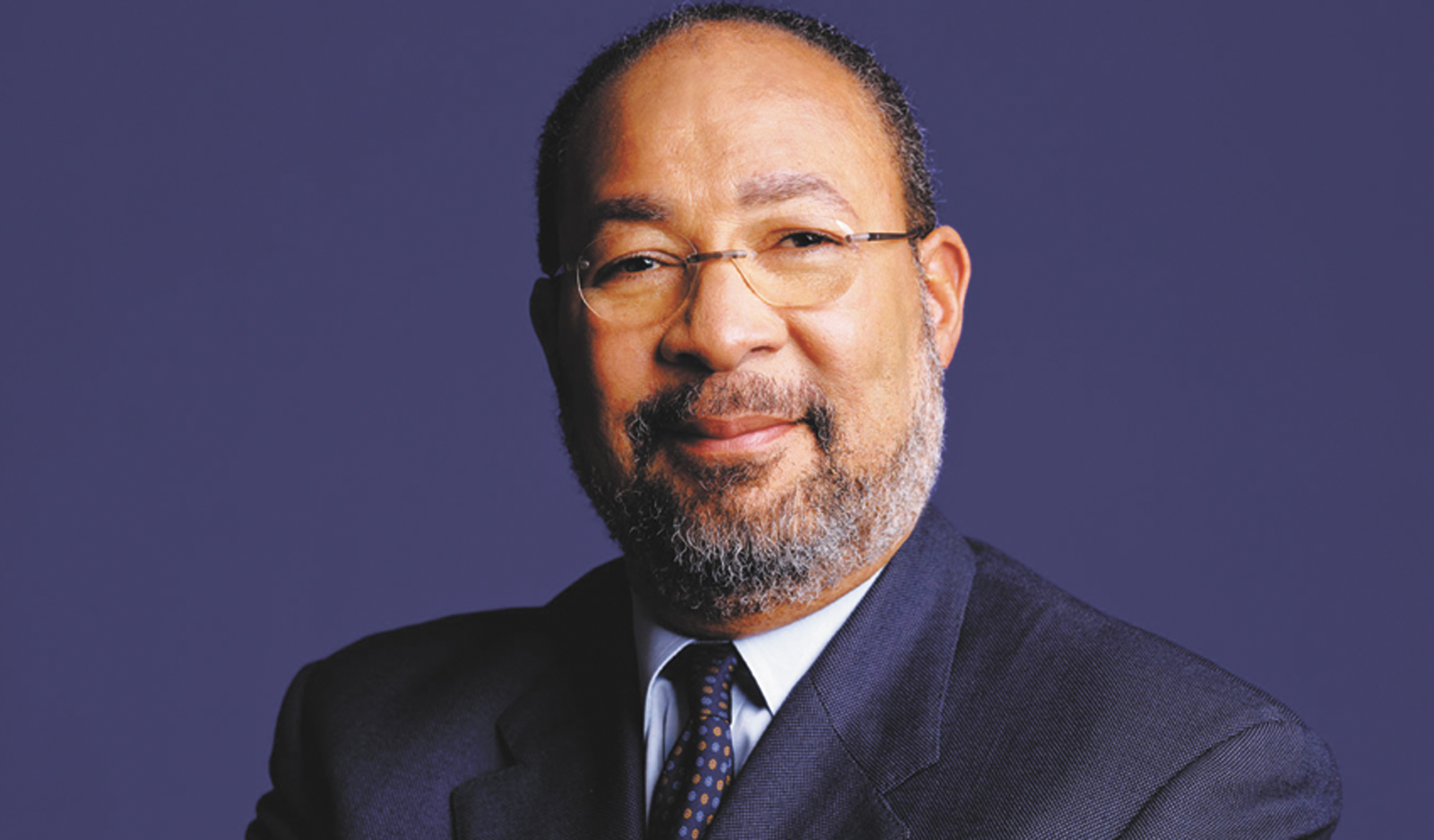 New York Times, Richard Parsons, Serial Fixer of Media and Finance Giants, Dies at 76Washington Post, Skyrocketing car-insurance premiums are pushing inflation higher
Energy, Environment, Transportation, Climate Change, Disasters
Media, High-Tech, Culture, Education, Sports
Top Stories
New York Times, Trump Transition: ‘A Day of Love’: How Trump Inverted the Violent History of Jan. 6, Dan Barry and Alan Feuer, Jan. 5, 2025. President-elect Trump and his allies have spent four years reinventing the Capitol attack, spreading conspiracy theories and weaving a tale of martyrdom.
In two weeks, Donald J. Trump is to emerge from an arched portal of the United States Capitol to once again take the presidential oath of office. As the Inauguration Day ritual conveying the peaceful transfer of power unfolds, he will stand where the worst of the mayhem of Jan. 6, 2021, took place, largely in his name.
Directly behind Mr. Trump will be the metal-and-glass doors where protesters, inflamed by his lie that the 2020 election had been stolen from him, stormed the Capitol with clubs, chemical irritants and other weapons. To his left, the spot where roaring rioters and outnumbered police officers fought hand to hand. To his right, where the prostrate body of a dying woman was jostled in the bloody fray.
And before him, a dozen marble steps descending to a lectern adorned with the presidential seal. The same steps where, four years earlier, Trump flags were waved above the frenzied crowd and wielded like spears; where an officer was dragged facedown to be beaten with an American flag on a pole and another was pulled into the scrum to be kicked and stomped.
In the wake of the attack on the Capitol, Mr. Trump’s volatile political career seemed over, his incendiary words before the riot rattling the leaders of his own Republican Party. Myriad factors explain his stunning resurrection, but not least of them is how effectively he and his loyalists have laundered the history of Jan. 6, turning a political nightmare into a political asset.
What began as a strained attempt to absolve Mr. Trump of responsibility for Jan. 6 gradually took hold, as his allies in Congress and the media played down the attack and redirected blame to left-wing plants, Democrats and even the government. Violent rioters — prosecuted, convicted and imprisoned — somehow became patriotic martyrs.
This inverted interpretation defied what the country had watched unfold, but it neatly fit the persecution narrative that binds Mr. Trump to many of his faithful. Once he committed to running again for president, he doubled down on flipping the script about the riot and its blowback, including a congressional inquiry and two criminal indictments against him, as part of an orchestrated victimization.
That day was an American calamity. Lawmakers huddled for safety. Vice President Mike Pence eluded a mob shouting that he should be hanged. Several people died during and after the riot, including one protester by gunshot and four police officers by suicide, and more than 140 officers were injured in a protracted melee that nearly upended what should have been the routine certification of the electoral victory of Mr. Trump’s opponent, Joseph R. Biden Jr.
But with his return to office, Mr. Trump now has the platform to further rinse and spin the Capitol attack into what he has called “a day of love.” He has vowed to pardon rioters in the first hour of his new administration, while his congressional supporters are pushing for criminal charges against those who investigated his actions on that chaotic day.
Donald J. Trump, who has described himself in semi-religious terms and imagry as "The Chosen One."
Lance's Substack, Political Commentary: What Is Trump Doing With A January 19th Rally? Lance F Rosen, Jan. 4, 2025. Just what you would expect of a stochastic terrorist.
It should be obvious. He is calling in his movement of extremists comprised of QAnons and Nazis, psychotic fundamentalists and bonkers conspirophiles in an outdoor version of his pre-election Madison Square Garden hate-fest.
And his purpose? To essentially deliver the threat of a mailed fist to Congress, not just to the Democrats but to any lingering dissidents within his own party.
Lance’s Substack is a reader-supported publication. To receive new posts and support my work, consider becoming a free or paid subscriber.
What he is conveying as his message with this rally is, in effect, "If you dare to oppose me on the deportations, the budget, my plans to use the military domestically, or try anything to obstruct my nominees, I will send my mob after you and they will get you, wherever you are."
That is his purpose. It's not a photo op. It's not to prove he can draw big crowds. It is a message to all, including the January 18th pro-democracy rally attendees, that there will be blood.
You will see it in the faces of the people there. Don't be surprised if there is violence, though I expect Presidential security and reinforcements will be there in force, therefore not likely. The relevant point is that he now has official immunity, and will be pardoning the January 6th criminals to augment his private army of Brownshirts.
The media has dropped any reference to the Madison Square Garden Nazi rally which Trump organized because for the most part they have been broken by a barrage of terroristic threats from Trump to pull their licenses and shut them down, to use government agencies to investigate and destroy them, to acquire them through hostile takeovers, or to incite stochastic terrorism against their ownership and editors. That is why you've heard nothing about the Madison Square Garden version of Trump, and instead are getting drowned by mindless coverage of the juvenile squabbles within the GOP.
So, if you were curious about this rally, now you know what it is. He is taking a page from his mentor who used to have them at Nuremberg. And don't be surprised if the staging of it looks eerily similar to this.
Washington Post, Elon Musk goes global with his playbook for political influence, Cat Zakrzewski, Jan. 5, 2025. The X owner and tech billionaire has boosted far-right figures in Britain, Germany and Canada with a blizzard of social media posts in recent days.
In the first three days of 2025, Elon Musk commandeered global politics through dozens of rapid-fire, often inflammatory posts to his 210 million followers on X.
The world’s richest person called for the release of a jailed British far-right extremist. He shared a post pressing King Charles III to dissolve Parliament and order a new general election, as he posted memes and a flurry of attacks directed at Prime Minister Keir Starmer. Musk accused Starmer of failing to prosecute“rape gangs” more than a decade ago, a child exploitation scandal that has prompted Britain’s Conservative Party to call for a full national inquiry.
Musk reposted a message from Rupert Lowe, a politician in the Reform UK party who serves in Parliament and who said he spent Friday talking to rape gang victims.
“Victims, past and present, don’t need ‘thoughts and prayers’ from politicians, they need justice,” Lowe said. “We will fight for that in Parliament.”
Musk also briefly turned his attention to the United States’ northern neighbor and praised an interview with Pierre Poilievre, a populist firebrand who leads Canada’s Conservative Party. Musk said that next week he would live-stream a conversation with Alice Weidel, the chancellor candidate for the Alternative for Germany, a far-right political party he has endorsed ahead of that country’s snap elections in February.
Last year, Musk dominated U.S. politics, using his deep war chest and X microphone to boost Donald Trump and other Republicans in the 2024 elections. As the GOP prepares to retake control of the White House and both chambers of Congress, Musk has emerged more powerful than ever. His fortune has exploded, and he has a perch as Trump’s right-hand man, weighing in on his Cabinet choices and joining his conversations with global leaders.
In the new year, Musk is flexing his political muscle on the global stage as well. He appears to be applying a playbook similar to the one he used to disrupt American politics, now boosting conservative politicians in the governments of the United States’ top allies. But his disregard for the veracity of his posts and his elevation of far-right and extremist figures have alarmed liberal leaders around the world.
“Elon Musk is an American citizen and perhaps ought to focus on issues on the other side of the Atlantic,” Health Minister Andrew Gwynne said during a Friday interview with the British radio station LBC.
The long-running British child exploitation scandals that Musk has seized on have become a rallying point for Reform UK, a right-wing populist party. An independent review in 2022 found that local government agencies in the town of Oldham, England, had left children vulnerable to sexual exploitation.
That review followed an earlier probe in 2014 that found an estimated 1,400 children had been sexually exploited in Rotherham, England, over 15-plus years. According to the report, most perpetrators were of Pakistani origin, and some in the town said they were nervous about identifying the ethnic origins of perpetrators for fear of being seen as racist.
Although these historical cases of abuse go back decades, right-leaning outlet GB News laid blame this week with the ruling Labour Party, reporting that minister Jess Phillips had recently rejected a request for the national government to conduct a further investigation into the Oldham “grooming gangs.”
New York Times, Trump Sees the U.S. as a ‘Disaster.’ The Numbers Tell a Different Story, Peter Baker, Jan. 5, 2025. President Biden is bequeathing his successor a nation that by many measures is in good shape, even if voters remain unconvinced.
To hear President-elect Donald J. Trump tell it, he is about to take over a nation ravaged by crisis, a desolate hellscape of crime, chaos and economic hardship. “Our Country is a disaster, a laughing stock all over the World!” he declared on social media last week.
But by many traditional metrics, the America that Mr. Trump will inherit from President Biden when he takes the oath for a second time, two weeks from Monday, is actually in better shape than that bequeathed to any newly elected president since George W. Bush came into office in 2001.
For the first time since that transition 24 years ago, there will be no American troops at war overseas on Inauguration Day. New data reported in the past few days indicate that murders are way down, illegal immigration at the southern border has fallen even below where it was when Mr. Trump left office and roaring stock markets finished their best two years in a quarter-century.
Jobs are up, wages are rising and the economy is growing as fast as it did during Mr. Trump’s presidency. Unemployment is as low as it was just before the Covid-19 pandemic and near its historic best. Domestic energy production is higher than it has ever been.
The manufacturing sector has more jobs than under any president since Mr. Bush. Drug overdose deaths have fallen for the first time in years. Even inflation, the scourge of the Biden presidency, has returned closer to normal, although prices remain higher than they were four years ago.
“President Trump is inheriting an economy that is about as good as it ever gets,” said Mark Zandi, chief economist of Moody’s Analytics. “The U.S. economy is the envy of the rest of the world, as it is the only significant economy that is growing more quickly post-pandemic than prepandemic.”
Those positive trends were not enough to swing a sour electorate behind Vice President Kamala Harris in the November election, reflecting a substantial gap between what statistics say and what ordinary Americans appear to feel about the state of the country. And the United States clearly faces some major challenges that will confront Mr. Trump as he retakes power.
Excerpt Continued Below.
New York Times, Washington Post Cartoonist Quits After Jeff Bezos Cartoon Is Nixed, Benjamin Mullin, Jan. 4, 2025 (print ed.). Ann Telnaes, a Pulitzer Prize-winning cartoonist for The Washington Post, said on Friday evening that she was resigning after the newspaper’s opinions section rejected a cartoon depicting The Post’s owner, Jeff Bezos, genuflecting toward a statue of President-elect Donald J. Trump.
In a brief statement posted to Substack, Ms. Telnaes — who has worked at The Post since 2008 — called the newspaper’s decision to kill her cartoon a “game changer" that was “dangerous for a free press.”
“In all that time I’ve never had a cartoon killed because of who or what I chose to aim my pen at,” she wrote. “Until now.”
Ms. Telnaes included a draft of her cartoon in her Substack post. In addition to Mr. Bezos, the founder of Amazon, the cartoon depicted Meta’s founder, Mark Zuckerberg; Patrick Soon-Shiong, the owner of The Los Angeles Times; and Mickey Mouse, the corporate mascot of the Walt Disney Company.your times access
David Shipley, The Post’s opinions editor, said in a statement that he respected Ms. Telnaes and all she had given to The Post “but must disagree with her interpretation of events."
“Not every editorial judgment is a reflection of a malign force,” Mr. Shipley said in the statement. “My decision was guided by the fact that we had just published a column on the same topic as the cartoon and had already scheduled another column — this one a satire — for publication. The only bias was against repetition.”
Mr. Shipley added that he had spoken with Ms. Telnaes by phone on Friday and had asked her to reconsider resigning. During the call, Mr. Shipley said he wanted to speak with Ms. Telnaes on Monday, after they had taken the weekend to think things over. He later encouraged her to hold off on quitting to see if they could work out the situation in accordance with her principles.
Ms. Telnaes did not respond to requests for comment.
Matt Wuerker, a Pulitzer Prize-winning cartoonist for Politico, called the decision to kill Ms. Telnaes’s cartoon “spineless,” adding that the storied Post cartoonist Herbert Block, known as Herblock, and Ben Bradlee, a former editor of The Post, were “spinning, kicking and screaming in their graves.”The cartoon, by Ann Telnaes, depicted the owner of The Post, Jeff Bezos, and other billionaires genuflecting toward a statue of President-elect Trump.
New York Times, Trump Has Reeled in More Than $200 Million Since Election Day, Kenneth P. Vogel, Maggie Haberman and Theodore Schleifer, Jan. 5, 2025 (print ed.). The president-elect has boasted about the donations for his inauguration, library and political activities from those seeking favor or perhaps in some cases, atonement.
Since his victory in November, President-elect Donald J. Trump’s allies have raised well over $200 million for a constellation of groups that will fund his inauguration, his political operation and eventually his presidential library, according to four people involved in the fund-raising.
It is a staggering sum that underscores efforts by donors and corporate interests to curry favor with Mr. Trump ahead of a second presidential term after a number of business leaders denounced him following the violence by his supporters at the Capitol on Jan. 6, 2021.
Mr. Trump has promised to gut the “deep state” and made various promises to industry supporters. Among the pledged donors for the inaugural events are Pfizer, OpenAI, Amazon and Meta, along with cryptocurrency firms.
The total haul for the committee financing his inaugural festivities — at least $150 million raised, with more expected — will eclipse the record-setting $107 million raised for his 2017 inauguration, according to three people briefed on the matter who requested anonymity because they were not authorized to share internal financial information.
The Hartmann Report, Political Commentary: 2025: The year American Oligarchy officially begins? Thom Hartmann, Jan. 4, 2025. I’m an unpaid volunteer member of the board of directors of a nonprofit that’s making use of a multi-million-dollar endowment, and working with their professional investment advisors over the years has given me insight into some of the ways the morbidly rich get richer, faster, and in ways impossible for average people: there are multiple types of investments and investment advisors that are only accessible to people or organizations that can pony up millions or hundreds of millions of dollars at a time.
Thus, according to the Institute for Policy Studies, Elon Musk (for example) went from being worth $25 billion in 2020 to $428 billion a few weeks ago. During that same time, Jeff Bezos (who apparently just censored a Washington Post comic showing him bowing down and handing a bag of money to Trump) reportedly went from $113 billion to $235 billion; similarly, three heirs to the Walmart fortune reportedly went, during the same period, from $161 billion to $317 billion. We see a similar phenomenon with members of Congress using inside information to trade stocks, something that would land you or me in jail.
Thus (as I often note here at Hartmann Report), the rich are truly getting richer while average working people have been in a downward spiral ever since Ronald Reagan’s “Revolution” changed the rules (particularly the tax rules, but also around monopolies, etc.) that once kept obscene wealth in check. Now we have a convicted criminal billionaire about to be sworn in as president with the richest cabinet in American (and, perhaps, world) history, all with an agenda of making the rich even richer. (It’s worth noting — something almost always ignored by the mainstream press — that Trump’s conviction was for using his fortune for election interference leading to a stolen 2016 election; by hiding his affair with Stormy Daniels he kept information away from the public that he believed could have led to his loss that year.)
Oligarchy is generally defined as a form of governance in which the state has been captured by the morbidly rich and the powers and institutions of government are then turned to make the rich even richer while insulating oligarchs from legal strictures, at the same time impoverishing and punishing working people and the poor. As I detailed in my book The Hidden History of American Oligarchy, the biggest problem with oligarchy is that it’s an extremely unstable form of government and usually is only transitional (typically lasting fewer than two generations). Average people, realizing they’re being robbed blind, rise up and demand change, sometimes causing oligarchy to flip back to democracy (as happened here in the 1860s and the 1930s) or flipping the nation into tyranny when the oligarchs decide to use the military and police powers of government to hold onto their wealth and power (Chile, Hungary, Russia, Iraq, Egypt, Philippines, Singapore, Turkey, etc.).
The big question for Americans as we enter this new period of full-blown oligarchy is whether this generation’s oligarchs will have more success than those in the 1930s and 1850s. They seem to have learned the lessons of history and are now emulating Putin, Orbán, etc., in using lawfare and big money to intimidate or purchase outright the media; this will make a transition back to democracy — like the ones Lincoln and Roosevelt led when the media landscape (and its ownership) was far more diverse — far more difficult. And, as we just saw with the election of Mike Johnson as Speaker, nothing happens in the House without the approval of the billionaires.
The next four years — and, in particular, the next two — will probably decide the fate of America’s form of government for the next several generations. This is no time to check out; to the contrary, it’s the most important moment in our lifetimes to stand up, speak out, and build progressive political institutions while supporting the few brave progressive politicians still standing after the billionaire and AIPAC attacks in the last election.
New York Times, Russia Targets West With Drones, Exploding Parcels and Sabotage, Lara Jakes, Jan. 5, 2025 (print ed.). Russia has become increasingly brazen in adopting “gray zone” attacks against Europe and the U.S., leaving officials with a dilemma: How to respond?
When mysterious drones began appearing over oil rigs and wind farms off Norway’s coast about three years ago, officials were not certain where they came from.
But “we knew what they were doing,” Stale Ulriksen, a researcher at the Royal Norwegian Naval Academy, said in a recent interview. “Some of it was espionage, where they are charting a lot of things. Some of it, I think, was positioning in case of a war or a deep crisis.”
The drones were suspected of being launched from Russian-controlled ships in the North Sea, Mr. Ulriksen said, including some ships that were near underwater energy pipelines. Norway could not do much to stop them, he added, given that they were flying over international waters.
In recent weeks, reports of drone swarms over the United States’ East Coast have brought fears of hybrid warfare to widespread attention. Only 100 out of 5,000 drone sightings there required further examination, U.S. officials said, and so far none are believed to have been foreign surveillance drones. But it is a different story for the drones spotted in late November and early December over military bases in England and Germany where American forces are stationed.
Military analysts have concluded those drones may have been on a state-sponsored surveillance mission, according to one U.S. official familiar with the incidents, who spoke on the condition of anonymity to discuss an open investigation. British and German defense officials declined to discuss details of the sightings.
Experts said the drones’ presence was indicative of a so-called hybrid or “gray zone” attack against the West, where a range of tactics — military, cyber, economic and even psychological — are used to covertly attack or destabilize an enemy.
As Russia, Iran and other hostile states become increasingly brazen in their hybrid attacks on Western countries — such as the hacking of sensitive computer systems and alleged assassination plots — defense officials face a thorny challenge. How to deter such acts without touching off a broader and potentially deadly conflict? And how to assign blame against the attacker when the strikes are designed to evade culpability?
Washington Post, Trump sentencing sets up an unusual scene ahead of his inauguration, Marianne LeVine, Jan. 5, 2025 (print ed.). Just 10 days before he is sworn in as the nation’s 47th president, Donald Trump will have to appear before a judge to be sentenced on his 34 felony convictions.
Days before his second inauguration, President-elect Donald Trump faces the uncomfortable prospect of appearing — in person or virtually — before a New York state judge to be sentenced for his 34 felony convictions for falsifying business records to cover up a hush money payment to an adult-film actress.Get the latest election news and results
The court appearance, scheduled for Friday, offers yet another reminder of the legal woes that dogged Trump as he mounted his third bid for the White House. It also cements a distinction that he shares with none of his predecessors: He will be the first serving president who is also a felon. No previous president has been convicted of a felony, let alone summoned before a judge just days before their inauguration.
While New York Supreme Court Justice Juan Merchan said he will not sentence Trump to jail time, the appearance will be an opportunity for the judge to denounce what he has called the “premeditated and continuous deception by the leader of the free world.”
“It’s a reminder that we live, politically speaking, in a split-screen America,” said Tim Naftali, senior research scholar at Columbia University’s School of International and Public Affairs. “For some Americans, [Trump’s] legal difficulties were a reason to vote for him because it deepened their sense that they, like him, were victims.”
“The fact that the procession to the inauguration will include yet another trip to court, it’s consistent with the peculiarities of Donald Trump’s return to power,” Naftali added.
In the hours after Merchan upheld Trump’s conviction and scheduled his sentencing, the president-elect railed against the judge, his political opponents, and the federal justice system that his appointees will soon oversee.
At 8:43 p.m. Friday, Trump complained on social media that he was “the only Political Opponent in American History not allowed to defend myself.” At 7:29 Saturday morning, he was back at it, describing Merchan as “corrupt” and “crooked” and calling for him to be “disbarred.”
Politico, Trump will be sentenced for hush money conviction on Jan. 10 — but won’t get jail time, Kyle Cheney, Josh Gerstein and Erica Orden, Jan. 3, 2025. Incarceration is not a practical option given Trump’s imminent return to the White House, Justice Juan Merchan wrote.Former President Donald Trump appears in court for his hush money trial at Manhattan Criminal Court.
A New York judge plans to sentence Donald Trump on Jan. 10 for his criminal hush money conviction, rejecting efforts by the president-elect to sweep aside a jury’s verdict that found him guilty of 34 felony counts.
But Justice Juan Merchan indicated he will not sentence Trump to prison time, acknowledging that incarceration is not a “practicable” option. And the judge said Trump may attend the sentencing virtually rather than reporting to court in person.
President Joe Biden awards the Presidential Medal of Freedom to Hillary Clinton on Saturday. (Washington Post photo by Annabelle Gordon).
Washington Post, Biden awards Medal of Freedom to Soros, Ralph Lauren and others, Maeve Restonand Rachel Tashjian, Jan. 5, 2025 (print ed.). The star-studded list of recipients includes several philanthropists, Democratic politicians and high-profile donors.
President Joe Biden awarded the Presidential Medal of Freedom to a star-studded list of celebrities, donors and former politicians on Saturday, bestowing the nation’s highest civilian honor on some of the country’s best-known names and others who were integral in securing the victory of Biden and other Democrats in recent elections.Get the latest election news and results
Several of the medal recipients have been outspoken critics of President-elect Donald Trump, and Biden’s decision to honor them is yet another way in which he is trying to affirm institutions central to democracy. The honorees included 2016 presidential nominee Hillary Clinton, billionaire donor George Soros, actor Michael J. Fox and Democratic political icons including Robert F. Kennedy, who was assassinated in 1968.
“You inspire. You bring healing and joy to so many lives that otherwise wouldn’t be touched,” Biden said during the ceremony at the White House. “You answer the call to serve and lead others to do the same thing, and you defend the values of America, even when they’re under attack, which they have been as of late.”Biden awards Medals of Freedom0:45President Joe Biden awarded the Presidential Medal of Freedom on Jan. 4 to 19 celebrities including Bono, José Andrés, Hillary Clinton and Magic Johnson. (Video: The Washington Post)
The medal is the highest civilian honor, given to individuals who have “made exemplary contributions to the prosperity, values, or security of the United States, world peace, or other significant societal, public or private endeavors.”
New York Times Magazine, Ukraine Was Outgunned. Its Solution: Small, Cheap Suicide Drones, C.J. Chivers, Photographs and Video by David Guttenfelder, Jan. 5, 2025 (print ed.). Outnumbered and desperate, the nation began hacking cheap consumer drones with explosives — bringing a brutal new form of violence to 21st-century warfare.
Known as first-person-view drones, or FPVs, the weapons have altered the human experience of war and flooded the internet with footage chronicling the desperate last seconds of lives ended by miniaircraft that transmit video of the people they pursue, then smack into them and explode.
Its camera revealed a surprise: a Russian T-80 tank parked in the foliage. A $3 million military machine had been discovered by a $400 repurposed toy.
The tank was well defended. Its crew had backed the 44-ton vehicle into undergrowth, blocking access to its vulnerable exhaust grate. Slats of reactive armor, which can thwart armor-piercing charges, bedecked its sloped front end. Its rotating turret carried a metal frame and netting, a combination derisively referred to as a cope cage, designed to snag drones and prevent warheads from making direct strikes on hulls. All its hatches were closed, blocking Prorok from flying the warhead inside.
In the past, attacking an armored vehicle with such a warhead typically required a soldier to risk exposure to take a hasty shot with a rocket-propelled grenade, sending a projectile at almost 1,000 feet per second that may not hit the vehicle at all. Weaponized FPV drones have created a new way. In the field south of Belgorod, the combination of the tank’s defensive measures and the drone’s peculiar characteristics made for an exercise that was almost surreal. Time seemed to slow down. The little drone hovered patiently before the massive military machine, rising and falling, swaying on the breeze, emitting its high-pitched buzz while Prorok flew it safely from afar, deciding his attack’s best place, which he could strike with uncanny precision.
Prorok selected the turret’s base, where armor was thinner. “Yes, yes,” Buryi said. Prorok leaned forward as he pushed the flight controller and the drone plunged into the spot. The screen went blank. Watching from the surveillance drone, Andy called out. “I see an explosion!” he said.
More U.S. Political Commentary
New York Times, As Democrats Reel, Two Front-Runners Emerge in a Leadership Battle, Reid J. Epstein, Jan. 5, 2025. The race to lead the Democratic National Committee centers on the favorites, Ken Martin and Ben Wikler, but the party’s infighting over them looks nothing like a broad reckoning with its 2024 defeats.
Days before Republicans take full control of Washington, the Democratic National Committee is mired in an intramural fight that is less about how the party found itself locked out of power than about disputes over donor influence, personality conflicts and past slights and jealousies.
The two candidates who have emerged as front-runners to become D.N.C. chair, Ken Martin of Minnesota and Ben Wikler of Wisconsin, are both middle-aged white men from the upper Midwest and chair of their state parties whose politics are well within the Democratic mainstream.
Yet, as is common during internal Democratic squabbles, fault lines in the race have formed not over ideological differences but over arguments about party mechanics.
Mr. Martin, 51, is campaigning on a platform of returning power and resources to state parties, while his supporters are attacking Mr. Wikler, 43, as a tool of major donors and Democratic consultants in Washington.
New York Times, Trump Sees the U.S. as a ‘Disaster.’ The Numbers Tell a Different Story, Peter Baker, Jan. 5, 2025. President Biden is bequeathing his successor a nation that by many measures is in good shape, even if voters remain unconvinced.
To hear President-elect Donald J. Trump tell it, he is about to take over a nation ravaged by crisis, a desolate hellscape of crime, chaos and economic hardship. “Our Country is a disaster, a laughing stock all over the World!” he declared on social media last week.
But by many traditional metrics, the America that Mr. Trump will inherit from President Biden when he takes the oath for a second time, two weeks from Monday, is actually in better shape than that bequeathed to any newly elected president since George W. Bush came into office in 2001.
For the first time since that transition 24 years ago, there will be no American troops at war overseas on Inauguration Day. New data reported in the past few days indicate that murders are way down, illegal immigration at the southern border has fallen even below where it was when Mr. Trump left office and roaring stock markets finished their best two years in a quarter-century.
Jobs are up, wages are rising and the economy is growing as fast as it did during Mr. Trump’s presidency. Unemployment is as low as it was just before the Covid-19 pandemic and near its historic best. Domestic energy production is higher than it has ever been.
The manufacturing sector has more jobs than under any president since Mr. Bush. Drug overdose deaths have fallen for the first time in years. Even inflation, the scourge of the Biden presidency, has returned closer to normal, although prices remain higher than they were four years ago.
“President Trump is inheriting an economy that is about as good as it ever gets,” said Mark Zandi, chief economist of Moody’s Analytics. “The U.S. economy is the envy of the rest of the world, as it is the only significant economy that is growing more quickly post-pandemic than prepandemic.”
Those positive trends were not enough to swing a sour electorate behind Vice President Kamala Harris in the November election, reflecting a substantial gap between what statistics say and what ordinary Americans appear to feel about the state of the country. And the United States clearly faces some major challenges that will confront Mr. Trump as he retakes power.
Excerpt Continued From Above.
The terrorist attack by an American man who said he had joined ISIS that killed 14 people in New Orleans early on New Year’s Day served as a reminder that the Islamic State, which Mr. Trump likes to boast he defeated during his previous term, remains a threat and an inspiration to radicalized lone wolves. The wars in Ukraine and Gaza are daunting challenges even without U.S. troops engaged in combat there.
Thanks in part to Covid relief spending by both Mr. Trump and Mr. Biden, the national debt has ballooned so much that it now represents a larger share of the economy than it has in generations, other than during the pandemic itself. Families remain pressed by the cost of living, including housing, health care and college tuition. The cost of gasoline, while down from its peak, is still about 70 cents per gallon higher than when Mr. Biden took office.
Moreover, Americans remain as divided as they have been in many years — politically, ideologically, economically, racially and culturally. As healthy as the country may be economically and otherwise, a variety of scholars, surveys and other indicators suggest that America is struggling to come together behind a common view of its national identity, either at home or abroad.
Indeed, many Americans do not perceive the country to be doing as well as the data suggests, either because they do not see it in their own lives, they do not trust the statistics or they accept the dystopian view promoted by Mr. Trump and amplified by a fragmented, choose-your-own-news media and online ecosphere.
The Hartmann Report, Political Commentary: Is the “Scarlet F” coming to Trump? Thom Hartmann, right, Jan. 4, 2025. What is the legal significance of Trump being a convicted felon? Most of America’s laws punishing convicted felons long after they’ve gotten out of jail or otherwise finished their sentences date back to the use of felony convictions in the old South to disenfranchise Black people. These include losing your ability to vote, to hold certain types of jobs, and even to own a gun. (Almost all of the states where ex-felons can’t vote are former Confederate states, which have disenfranchised over 5 million people, most nonwhite, this way.)
It appears that a loophole in Florida’s law, which forbids felons with unpaid fines from voting, will let Trump continue to cast a ballot in that state because he was convicted out-of-state (NY) rather than by a Florida court. Will he have to surrender the gun he reportedly owns? Will there be any consequence at all for him? Judge Merchan will have the first final say (I say “first” because Trump will appeal) and it’ll be interesting to see if the press focuses on Trump’s response or Merchan’s opinion, which is virtually certain to point out that Trump’s conviction is for criminally manipulating the 2016 election. I’m betting they won’t use the phrase “election interference” at all, but stay tuned…
Letters from an American, Historical Commentary: January 3, 2025, Heather Cox Richardson, Jan. 4, 2025. Today a new Congress, the 119th, came into session. As Annie Karni of the New York Times noted, Americans had a rare view into the floor action of the House because the party in control sets the rules for what parts of the House floor viewers can see. Without a speaker, there is no party in charge to set the rules, so the C-SPAN cameras recording the day could move as their operators wished.
Republicans took control of both chambers of Congress: the House of Representatives and the Senate. All eyes were on the House, where Republicans will hold 219 seats. Initially, though, that number will be 218: The seat to which Matt Gaetz (R-FL) was elected will be empty since he resigned from the previous Congress and, after the House Ethics Committee released a report saying there was “substantial evidence” that Gaetz had broken state and federal laws, apparently decided to focus on his new media show rather than return to the House. When the clerk announced that Gaetz would not take a seat in the 119th Congress, applause broke out.
The Democrats hold 215 seats, and everyone showed up to opening day, including Dwight Evans (D-PA), who has been absent since suffering a stroke last May, and Nancy Pelosi (D-CA), who fell and broke her hip on a congressional trip to Luxembourg in mid-December. Scott MacFarlane reported that Pelosi, who received a hip replacement at the U.S. military's Landstuhl Regional Medical Center in Germany, entered the chamber smiling. C-SPAN reported that she had replaced her trademark high heels with flats.
Notably, there are fewer women in the 119th Congress than in the previous one, and there will be no women chairing committees in the Republican-dominated House.
The first problem for the Republicans to solve was the election of a House speaker. It took 15 ballots to elect Speaker Kevin McCarthy (R-CA) when the Republicans took control of the House in 2023, and McCarthy had made so many concessions to the far right that they were able to remove him from office just ten months later, the first time in history that a party removed its own speaker in the middle of a session. Then they cycled through four candidates and four votes before settling on backbencher Mike Johnson (R-LA) for speaker. But while Johnson’s evangelical Christianity and support for Trump’s Big Lie about having won the 2020 presidential election indicated he was an extremist, Johnson immediately infuriated the far-right wing of the Republican Party by agreeing to fund the government without incorporating their extreme demands.
Far-right members want to use the need to fund government operations as leverage to get what they want. In a memo before today’s vote, they claimed that Trump and the Republicans hold a “historic mandate,” although in fact Trump won less than 50% of the vote in one of the smallest margins in U.S. history. They have said publicly they would not vote for Johnson as speaker again, likely to extract concessions that give them more power, but Johnson vowed not to make any concessions to them.
Trump was mad at Johnson for backing the passage just before Christmas of a continuing resolution to fund the government without getting rid of the debt ceiling as Trump demanded. But, likely recognizing that the House needs to be organized before it can count the electoral votes that will make him president, Trump endorsed Johnson on social media and worked the phones to support him before today’s vote.
In the first ballot today, all 215 Democrats voted for Democratic minority leader Hakeem Jeffries (D-NY), with him and former House speaker Pelosi sharing a hug when she voted for him. A number of Republicans declined to vote initially, then 216 voted for Johnson while three others voted for someone else, leaving Johnson two votes short of the 218 he needed to be elected.
It was a dramatic rejection not only of Johnson, but also of Trump, who had posted that “[a] win for Mike today will be a big win for the Republican Party, and yet another acknowledgment of our 129 year most consequential Presidential Election!!—A BIG AFFIRMATION, INDEED. MAGA!” But his candidate still could not get the votes he needed from within his own party to run the House.
Scenes like this explain why I remain astonished by the persistence of the narrative that the Democrats are divided while the Republicans are in lockstep.
Mass Terror Attacks, Threats In U.S.
Man killed in Cybertruck explosion, Sgt. Matthew Alan Livelsberger, an Army master sergeant, was active-duty U.S. Army soldier, officials say (Alcides Antunes photo via Reuters and PBS).
New York Times, New Details Emerge in Cybertruck Explosion, but Motive Is Still Unclear, Jacey Fortin and Jesus Jiménez, Jan. 3, 2025 (print ed.). Officials said they used data from Tesla charging stations to chart the driver’s dayslong journey from Colorado to the Trump Hotel in Las Vegas.
It was difficult, at first, for the authorities to identify the driver of the Tesla truck that exploded outside the Trump International Hotel in Las Vegas on Wednesday morning. By the time the flames were extinguished, he had been burned beyond recognition.
But as investigators pored over the charred remains of his ruined rented vehicle, a 2024 Cybertruck, they discovered some clues to the driver’s background and his intentions: some guns, a military ID, fuel and many fireworks.
And on Thursday, the authorities said that they had found something else: The cause of death was a self-inflicted gunshot wound to the driver’s head, the county coroner ruled.
“Am I comfortable calling it a suicide mission?” Sheriff Kevin McMahill of the Las Vegas Metropolitan Police Department said in response to a reporter’s question at a Thursday news briefing. “I’m comfortable calling it a suicide, with a bombing that occurred immediately thereafter. I’m not giving it any other labels.”
New York Times, Cybertruck Driver Shot Himself in Head Before Vegas Blast, Jacey Fortin, Jan. 3, 2025 (print ed.). Military officials identified the driver as an Army master sergeant who had been on leave from active duty.
The man who was driving a Tesla Cybertruck that exploded outside the Trump International Hotel in Las Vegas on Wednesday morning shot himself in the head immediately before the vehicle was engulfed by fire, the authorities said on Thursday.
Earlier on Thursday, military officials identified the driver as an Army master sergeant who had been on leave from active duty.
The authorities are still working to determine exactly what happened, and what the motivation was for the incident, which injured seven people. Here is what we know so far.
What happened on the morning of the explosion?
At about 8:40 a.m. local time on Wednesday, the Las Vegas Metropolitan Police Department received a report of an explosion at the Trump International Hotel in Las Vegas, a 64-story tower on Fashion Show Drive, which is just off the Las Vegas Strip. A rented 2024 Tesla Cybertruck had “pulled up to the glass entrance doors of the hotel,” according to Sheriff Kevin McMahill, before it exploded. Witnesses saw the vehicle engulfed in flames as it sat in front of the hotel.
After firefighters extinguished the blaze, the authorities said that they found gasoline canisters, camp fuel canisters and large firework mortars in the back of the truck; they said they did not know how the explosion had been ignited.
Elon Musk, Tesla’s chief executive, said in a statement on X that “the explosion was caused by very large fireworks and/or a bomb carried in the bed of the rented Cybertruck,” and said the vehicle had been functioning properly.
Mr. Musk has cultivated a close relationship with President-elect Donald J. Trump, whose name adorns the hotel where the Tesla exploded. Federal filings showed that Mr. Musk spent more than $250 million in the final months of the presidential campaign to help Mr. Trump win the White House.
Mr. Trump is set to take office on Jan. 20, and he has selected Mr. Musk to serve as a co-leader of a new government efficiency commission.EWho was the driver?
In a statement sent to reporters on Thursday, the Army identified the driver as Matthew Alan Livelsberger, an Army master sergeant.
According to the Army, Sergeant Livelsberger enlisted as a Special Forces trainee and served on active duty from January 2006 to March 2011, then served in the National Guard from March 2011 to July 2012, and in the Army Reserve from July 2012 to December 2012.
Sergeant Livelsberger was a 37-year-old from Colorado Springs, Sheriff McMahill said on Thursday. He added that in addition to the gunshot wound, Sergeant Livelsberger’s body had been burned “beyond recognition.”Was anybody hurt?
Sergeant Livelsberger was the only person in the truck, the authorities said, and died inside the vehicle. At least seven other people suffered minor injuries.
Washington Post, As Jan. 6 anniversary approaches, the black security fences are up again, Joe Heim and Olivia George, Jan. 5, 2025. While some want to move on, the violent attack on the Capitol four years ago still stirs anger and sadness.
Local and federal law enforcement agencies have been placed on full alert. Five-hundred soldiers with the D.C. National Guard stand ready to assist if called.
If the preparations are any indication, the certifying of the presidential election at the U.S. Capitol on Monday will not be a repeat of Jan. 6, 2021.Get concise answers to your questions. Try Ask The Post AI.
That afternoon, the United States and much of the world watched in horror as the nation’s seat of power was overwhelmed by a violent mob of Donald Trump supporters intent on overturning Joe Biden’s election. Thousands of men and women swarmed through the Capitol and its grounds, some attacking police officers, smashing windows, trashing offices and threatening to hang Vice President Mike Pence, who had refused Trump’s entreaties to not certify the election results.
Four years later, the vivid memories of the attack on the Capitol may have faded in the minds of many Americans. But for those caught in the direct wake of Jan. 6, it remains a day marked by both fear and heroism, by despair for the country as well as determination that the attack not define it.
Washington Post, Investigation: How ISIS inspires violence, from a Taylor Swift concert plot to New Orleans carnage, Souad Mekhennet and Joby Warrick, Jan. 3, 2025. In the Bourbon Street rampage, a foiled attack on a European pop concert and other attacks, a pattern of self-radicalization breeds terrorists influenced by ISIS.
By the time he came up with the idea of bombing a Taylor Swift concert, Beran Aliji’s young life had completely broken down. In July, amid a self-described mental crisis, the 19-year-old Austrian abruptly quit his job as a factory apprentice and isolated himself in his apartment, obsessing, as he later told police, about his own death.Sign up for Fact Checker, our weekly review of what's true, false or in-between in politics.
With no money or prospects, and in lieu of close friendships, he began to immerse himself in a virtual world of violent videos and secret chatrooms devoted to the Islamic State. According to phone records seized by police, he began looking to the extremist group first for inspiration and then for practical advice about planning an attack.
“My operation is to take place at a big concert,” he wrote in a text message to a stranger he believed to be a member of the Islamic State, according to Austrian records exclusively obtained by The Washington Post. “I will try to get a gun and bombs. If that doesn’t work, I will use big knives. Or I will kill a police officer and take his rifle.”
The planned attack on Taylor Swift’s Aug. 9 concert in Vienna was foiled when police arrested Aliji, whose online messages were being monitored by at least one foreign intelligence agency. Months later, hundreds of text messages and multiple police reports offer insight into that plot, while also shedding light on how the group continues to inspire violence five years after its self-proclaimed caliphate was destroyed.
The trove, details of which have not been previously reported, reveal a path toward radicalization that bears striking similarities to what police have observed in other recent terrorism cases, including the New Year’s Day rampage in New Orleans that killed at least 14 people.
Like the Austrian suspect, the man accused of ramming a vehicle through crowds of New Year’s revelers on Bourbon Street appears to have self-radicalized after a string of personal crises, including divorces, a job loss and financial insolvency. Like Aliji, Houston resident Shamsud-Din Jabbar was described as being “inspired” by the Islamic State and pledged allegiance to the group in a self-made video. Whether the extremist group was directly involved in either plot is as yet unclear.
The Islamic State’s Afghanistan affiliate, known as ISIS-K, is believed to have orchestrated complex attacks with multiple casualties in Iran and Russia this past year.
Jabbar’s precise motivations are currently unknown. But in many of the recent cases, the perpetrators appear to have been driven less by ideology or politics than by rage over personal failings, terrorism experts say. The suspects may have little or no direct contact with the Islamic State. Yet the group is still a potent source of radicalization — and a convenient excuse, in the attacker’s mind, to justify violence.
Washington Post, New Orleans victims included a doting mom, a former Princeton football player, Jonathan Edwards, Annie Gowen, Daniel Wu, Lauren Weberand Vivian Ho, Jan. 3, 2025. Among the 14 killed by a truck-driving assailant were parents of young children, a Superdome worker and a former Ivy League football player.
Fourteen people were killed in the early hours of New Year’s Day when a man drove a pickup truck through a crowd of revelers on New Orleans’s Bourbon Street. The attack, which authorities said also injured dozens and is being investigated as an act of terrorism, turned a joyful scene on the famed nightlife corridor into one of terror and mayhem just hours after the new year began.
The attacker, identified by the FBI as 42-year-old Shamsud-Din Jabbar, an Army veteran from Texas, died in a shootout with police.
His victims included parents of young children, a Superdome worker and a former Ivy League football player, who were among the crowd that flocked the streets to celebrate the new year and an upcoming College Football Playoff game. Among those injured are two Israeli citizens, according to Israel’s Ministry of Foreign Affairs, and a University of Georgia student who is in critical condition, university president Jere Morehead said.
Washington Post, 14 killed, 30 injured in New Orleans as vehicle plows into crowd, city says, Victoria Bisset, Jan. 2, 2024 (print ed.). The emergency preparedness agency of New Orleans said the mass casualty incident took place on Bourbon Street overnight. Trump suggested the suspect was an immigrant, but officials later said he was born in the U.S.
Around 3:15 a.m. local time, a man drove down Bourbon Street “at a very face pace” and “was trying to run over as many people as he possibly could,” New Orleans Police Superintendent Anne Kirkpatrick said Wednesday. “This is not a DUI situation.”
Kirkpatrick said 35 injured people were taken to hospitals, but said there could be more taken to other hospitals. The city’s emergency preparedness agency, NOLA Ready, said on its website earlier that 30 people were injured in the mass casualty incident that took place on Canal and Bourbon Street.
The suspect, who went around barricades to crash into the crowd, also fired on officers after he crashed the vehicle, Kirkpatrick said; 2 officers were shot. “He was hell bent on creating the carnage and the damage that he did,” Kirkpatrick said, noting the FBI would be taking over the investigation.
FBI Special Agent in Charge for New Orleans, Alethea Duncan, said that “this is not a terrorist event." "What it is right now is improvised explosive devices that was found and we are working on confirming if it was a viable device.”
New York Times, Suspect in New Orleans Attack Is Identified as a Texan and Had an ISIS Flag With Him, Mike Baker, Shannon Sims, Maria Jimenez Moya and J. David Goodman, Jan. 2, 2024 (print ed.). an. 1, 2025. In a YouTube video from 2020, the man identified as the suspect said he had been born and raised in Beaumont, Texas, and had served in the U.S. military.
The man killed in a shootout with the police after ramming into dozens of revelers in New Orleans early on New Year’s Day was Shamsud-Din Jabbar, 42, a native of Texas who had served with the U.S. Army, officials confirmed on Wednesday as they sought to determine a motivation for the attack.
The Federal Bureau of Investigation said that it was examining an Islamic State flag that was found in the truck used in the attack and that it believed the Mr. Jabbar “was not solely responsible.” Several improvised explosive devices were found and disposed of, officials said.
Mr. Jabbar, who officials confirmed was honorably discharged from the Army, had converted to Islam at some point, according to Dwayne Marsh, who is married to Mr. Jabbar’s ex-wife Nakedra Charrlle. Mr. Jabbar and Ms. Charrlle had two daughters, ages 15 and 20, Mr. Marsh said, adding that “the girls are a mess” after the attack.
In recent months, he said, Mr. Jabbar had been acting erratically, “being all crazy, cutting his hair” after converting, Mr. Marsh said. Mr. Marsh and his wife then stopped allowing the daughters to spend time with Mr. Jabbar, he said.
In a YouTube video from 2020 that appears to have been posted by Mr. Jabbar, he spoke positively about his skills in real estate. He said he had been born and raised in Beaumont, Texas, and had served in the U.S. military.
Washington Post, Va. man had largest homemade bomb stockpile in FBI history, prosecutors say, Salvador Rizzo, Jan. 1, 2024 (print ed.). An informant said Brad K. Spafford used photographs of President Joe Biden for target practice.
A Virginia man was arrested on Dec. 17 after federal agents seized 150 pipe bombs from his home on a 20-acre farm outside Newport News, the largest stockpile of homemade explosives ever found by the FBI, prosecutors said.
Brad K. Spafford, 36, was arrested and charged with possessing an unregistered short-barrel rifle, though U.S. officials may pursue additional counts. His friend and former neighbor, according to court records, was a government informant who chatted with Spafford for years and wore a wire to secretly record one visit in October.
According to prosecutors, the informant described how Spafford voiced support for political assassinations, boasted of keeping unregistered firearms, used photographs of President Joe Biden for target practice and had blown off three of his own fingers years earlier, while working on a homemade explosive device.
A law enforcement search of Spafford’s farm in Isle of Wight County turned up 150 homemade pipe bombs, “assessed as the largest seizure by number of finished explosive devices in FBI history,” federal prosecutors said in a court filing.
Prosecutors said Spafford lives with his wife and two children, and that his wife thought the firearms were registered and was not aware of the explosives stockpile. Authorities detonated most of the explosive devices at the scene and tested a subset, according to court filing from prosecutors.Washington Post, U.S. Treasury says it was hacked by China-backed intruder.
Secret Service agents surround then-GOP presidential candidate Donald Trump after an assassination attempt in Butler, PA on July 14, 2024.
Washington Post, Investigation: Years of inaction on ‘crisis’ at Secret Service set stage for Trump shooting in Butler, Carol D. Leonnig and Emmanuel Martinez,, Jan. 2, 2024 (print ed.). An exodus of veteran agents over the past 10 years forced the agency to rely even more on less experienced agents, a Post analysis revealed.
In the days before Donald Trump’s July 13 rally in Butler, Pennsylvania, the Secret Service needed a member of his protective detail to develop a security plan to keep the former president safe as he addressed a crowd of thousands at an open-air fairground.You are what you read. Reveal your 2024 reader type with Newsprint.
With agents stretched thin by the presidential campaign, the agency turned to a “junior” member of the detail, according to an independent review panel commissioned by the Department of Homeland Security.
In the past, the Secret Service would have trained new agents in a field office for a minimum of five years and had them work at least two more in a protective detail before assigning them to oversee such a large public event, multiple former agents told The Washington Post. The agent put in charge of security at Butler had joined the Secret Service four years earlier and only started in the protective detail in 2023, the panel found.
“If an agent with this little experience was responsible for planning Butler, that means there was nobody else,” said Jonathan Wackrow, a security executive and former supervisor on then-President Barack Obama’s Secret Service detail. “Now we are introducing hope as a strategy. And that is just plain dangerous. ”
The July 13 shooting, in which the agency’s failure to block sight lines from a nearby rooftop allowed a gunman with limited firearms training to come close to killing Trump, stunned many Americans and prompted lawmakers to ask what had happened to an agency long charged with keeping sitting and former presidents safe. Besides a bullet that grazed Trump’s ear, the shooting left one spectator dead and two injured.
The causes of the mistakes in Butler, the Secret Service’s biggest security failure since the 1981 attempted assassination of President Ronald Reagan, had been years in the making, a Post review found.
Spurred by a string of humiliating security lapses during the Obama administration, the White House and Congress launched separate investigations in 2014 that diagnosed the Secret Service as being in crisis and stretched beyond its abilities. The investigative panels recommended sharp increases in agent training and the hiring of fresh leadership to disrupt an insular culture that the probes said tended to cover up problems rather than own and fix them.
But three presidents and Congress have failed to fix the major vulnerabilities in the Secret Service that were identified a decade ago, the Post review has found. Instead, some problems have grown worse and left the agency weaker on key measures. For instance, the agency was never able to hire enough staff to spare agents for routine training; instead its mission expanded and was shouldered by an overworked workforce, leading to burnout and low morale.
Trump / GOP Transition News
Axios, Mike Johnson reelected as speaker after brief revolt, Andrew Solender, Jan. 3-4, 2025. Rep. Mike Johnson (R-La.) was reelected as the speaker of the House on Friday, securing the gavel on the first ballot.
Why it matters: Johnson appeared imperiled as three Republicans initially voted against him — enough to sink him on the first ballot.
After a roughly 45-minute standoff, Reps. Ralph Norman (R-S.C.) and Keith Self (R-Texas) switched to voting for Johnson, giving him the 218 votes he needed to secure the gavel without a multi-ballot fight. Rep. Thomas Massie (R-Ky.) was the lone defector, voting for Majority Whip Tom Emmer (R-Minn.), while all Democrats voted for Minority Leader Hakeem Jeffries (D-N.Y.).
Zoom in: Just before the vote began Friday, Johnson released a list of promises around spending cuts in an apparent deal to shore up his reelection.
He said he will create a working group of "independent experts" to explore spending reforms and release a report, as well as direct committees to "aggressively" review federal funding. That was enough to win over roughly a dozen House Republicans who had for weeks refused to commit to voting for him, some of whom waited until the last minute to do so.
Zoom out: The Louisiana Republican, first elevated to the speakership in 2023 after Rep. Kevin McCarthy's (R-Calif.) ouster, has faced growing anger from his right flank throughout his 14-month tenure.
GOP hardliners have raged at him for working across the aisle to pass government spending and foreign aid bills without demanding stringent spending cuts. But President-elect Trump backed Johnson, urging his allies not to tank the vote and potentially imperil Congress' certification of his election victory on Jan.
Politico, Judge turns down Jan. 6 felon’s request to attend Trump inauguration at invitation of GOP lawmakers, Kyle Cheney, Jan. 3, 2025. It’s the second time a federal judge has denied a Jan. 6 defendant’s request to attend Trump’s inauguration.A bird flies framed by security fencing in front of the U.S. Capitol.
A federal judge has denied a Jan. 6 felony defendant’s request for permission to attend Donald Trump’s inauguration, despite a personal invitation from members of the Utah congressional delegation.
U.S. District Judge Royce Lamberth said Russell Taylor’s “unusually grave” conduct at the Capitol — which included recruiting “fighters” to descend on the Capitol, wearing armor, carrying weapons and helping others push past a police line — did not warrant the “immense privilege” of attending an inauguration.
“It would not be appropriate for the Court to grant permission to attend such a hallowed event to someone who carried weapons and threatened police officers in an attempt to thwart the last Inauguration, and who openly glorified ‘[i]nsurrection’ against the United States,” Lamberth wrote in a five-page decision.
Lamberth, a Reagan appointee, is the second federal judge to deny a Jan. 6 defendant’s request to attend Trump’s inauguration. U.S. District Judge Tim Kelly, a Trump appointee, turned down a request Thursday from a felony defendant charged with unleashing chemical spray at a police officer.
U.S. District Judge Tanya Chutkan, an Obama appointee, approved a misdemeanor defendant’s request to attend the inauguration, and several other requests are pending. The Justice Department has largely opposed such requests, saying it would be improper to subject Capitol police to facing the very people who stood against them four years ago.
Taylor’s is the only request that was publicly endorsed by members of Congress.
Former Utah representative Chris Stewart, who wrote to Lamberth on behalf of three current members of Utah’s congressional delegation, asked the judge’s permission for Taylor to attend as their guest.
“He is [a] caring father and reveres his family, his faith, and his love of our Country as his highest priority in life,” Stewart wrote last month. “I am honored to extend this invitation for him to attend the Inauguration as my guest.”
Despite the charges against him, Taylor’s case was complex. He quickly pleaded guilty for his crimes, acknowledged his wrongdoing and became an early cooperator with prosecutors, even testifying at the trial of an alleged co-conspirator. Lamberth sentenced Taylor to a term of probation and praised him as a model defendant. Under the terms of Taylor’s three-year probation, he must receive permission to travel to Washington.
Lamberth acknowledged Stewart’s praise for Taylor, but said he had already considered those factors when he gave Taylor a lenient sentence.
Washington Post, Biden awards Liz Cheney a presidential medal for challenging Jan. 6 attack, Maeve Reston, Jan. 4, 2025 (print ed.). The president honored one of Donald Trump’s most outspoken critics less than three weeks before Trump is set to take office a second time.
President Joe Biden on Thursday awarded the Presidential Citizens Medal to former Republican congresswoman Liz Cheney, honoring one of President-elect Donald Trump’s most outspoken critics at a White House ceremony less than three weeks before Trump is set to reclaim the presidency.Get the latest election news and results
The medal, given to those who have performed exemplary deeds of service for their country, is the nation’s second-highest award, after the Presidential Medal of Freedom. Biden also gave the medal to Rep. Bennie G. Thompson (D-Mississippi), who along with Cheney led the House committee that investigated the Jan. 6, 2021, assault on the U.S. Capitol.
The attendees at the ceremony in the East Room — composed largely of Democratic lawmakers and aides, along with friends and relatives of the honorees — rose to give Cheney a standing ovation as she took the stage to accept the medal, later doing the same for Thompson. Biden alluded to the Jan. 6, 2021, attack and pointedly mentioned the “free and fair election of 2020” in his brief remarks before bestowing the medals, but did not mention Trump by name.
Biden noted that he has previously honored “law enforcement officers who defended our Capitol on January 6th and the state and local election officials, elected leaders who defended the free and fair election 2020.”
“Today we celebrate a new group of Americans who dedicated their careers to serving our democracy in other essential ways.”
He spoke of the deep polarization within America, saying the country’s courage and optimism have been tested but have endured. “Our empathy that fuels our common project of our willingness to see each other not as enemies, but as fellow Americans,” he said.
Eighteen other Americans were honored as well at Thursday’s ceremony, but the inclusion of two lawmakers who were so vocal in attacking Trump’s efforts to overturn the 2020 election made the event especially notable. It took place in the same White House that Trump vacated and will soon reoccupy, and was hosted by the president whose victory Trump sought to challenge.
Washington Post, Investigation: How ISIS inspires violence, from a Taylor Swift concert plot to New Orleans carnage, Souad Mekhennet and Joby Warrick, Jan. 3, 2025. In the Bourbon Street rampage, a foiled attack on a European pop concert and other attacks, a pattern of self-radicalization breeds terrorists influenced by ISIS.
New York Times, Biden Blocks Japanese Bid for U.S. Steel, Alan Rappeport, Jan. 3, 2025. President Biden is said to believe the sale poses a threat to national security. The decision would be an extraordinary use of executive power.
President Biden moved to block the $14 billion takeover of U.S. Steel by Nippon Steel of Japan in an announcement on Friday based on grounds that the sale posed a threat to national security.
The decision was an extraordinary use of executive power, particularly for a president who is just weeks from leaving office. It is also a departure from America’s long-established culture of open investment, one that could have wide-ranging implications for the U.S. economy. Although the politics of the move were clear, Mr. Biden emphasized that he was acting to protect national security.
“It is my solemn responsibility as president to ensure that, now and long into the future, America has a strong domestically owned and operated steel industry that can continue to power our national sources of strength at home and abroad,” Mr. Biden said in a statement on Friday morning. “And it is a fulfillment of that responsibility to block foreign ownership of this vital American company.”
Mr. Biden’s move to stop the transaction could cause foreign investors to rethink the wisdom of acquiring American firms in sensitive industries that are based in politically important states. It could also roil relations with Japan, a close ally of the United States and one of America’s largest sources of foreign investment.
The president’s decision to block the deal came after a federal committee reviewing the transaction opted to not make a formal recommendation about whether the takeover should be allowed to proceed, according to letters sent to the companies and the White House last month.
New York Times, John Thune Takes Charge in the Senate, Ushering in a New Leadership Era, Carl Hulse, Jan. 3, 2025. The South Dakota conservative is the first new chief of the Senate G.O.P. in nearly 20 years. He will have to manage President-elect Trump’s demands.
John Thune won election to the Senate in 2004 by conquering Senator Tom Daschle, the powerful Democratic majority leader, only to quickly face a mortal threat to his political future when a major Air Force base in his state was threatened with closure.
He beat back the effort and saved Ellsworth Air Force Base, a financial engine in his largely rural state, keeping his job and learning valuable lessons that have helped power his rise in the Senate.
Now the South Dakota Republican has ascended to the top and will become majority leader in the new Congress that convenes on Friday, but he is again facing an early challenge and a major threat to his political standing.
Mr. Thune’s task this time is to juggle President-elect Donald J. Trump’s demands, the competing desires of 53 G.O.P. senators and a formidable legislative agenda. It starts with shepherding multiple baggage-laden Trump nominees to confirmation in the closely divided Senate, where he can afford to lose no more than three Republican votes if Democrats hold together in opposition.
Politico, House rules would make it harder to oust speaker in next Congress, Jordain Carney and Meredith Lee Hill, Jan. 2, 2024 (print ed.). The rules package raises the threshold for triggering a vote from one GOP member to nine.Republicans will make it harder to remove the speaker in the 119th Congress under a rules package unveiled Wednesday.
The proposed rules package would require nine GOP members to back making a motion to vacate to trigger a vote on ousting the speaker. That’s an increase from the current rule, which allows any single GOP member to force a vote.
The deal to increase the threshold was negotiated in November by members of the House Freedom Caucus and the small business-oriented Main Street Caucus last year — an agreement that was first reported by POLITICO. Even after a vote is triggered, it still requires the support of a majority of the House in order for a speaker to be removed.
The release of the rules package, which includes proposed changes to the House’s general order of operations, comes ahead of Friday’s start to the new Congress. Republicans will need to formally adopt the package on the House floor, which they can’t do until they elect a speaker. In addition to the change to the motion to vacate, the rules package also tweaks the names of two House committees, allows committees to adopt rules on electronic voting, and tees up votes on 12 GOP bills including legislation related to immigration, voter ID and transgender student athletes. Inclusion of one of those bills, related to the International Criminal Court, is already drawing pushback from some members of the House GOP’s right flank.
Speaker Mike Johnson, during a recent Fox News interview, predicted that he will have the votes to become speaker despite his party’s thin margin. But Johnson has yet to lock down the votes he’ll need from his conference. Republicans are expected to have a 219-215 majority at the start of the new Congress, meaning Johnson must have nearly unanimous support from GOP lawmakers to win the gavel.
Washington Post, Trump endorses Mike Johnson ahead of what could be a prolonged House speaker fight, Marianna Sotomayor, Mariana Alfaro and Meryl Kornfield, Dec. 31, 2024 (print ed.). House Republicans have said for weeks that Donald Trump would have the final say on whether Johnson keeps the gavel or is replaced.
President-elect Donald Trump gave House Republican lawmakers a directive on Monday, days before what is expected to become an embattled speakership fight: Support Mike Johnson’s reelection.
In a lengthy post on his social media platform, Truth Social, Trump argued that Republicans should “NOT BLOW THIS GREAT OPPORTUNITY WHICH WE HAVE BEEN GIVEN” by voters to immediately govern, which would require Johnson (R-Louisiana), right, to be swiftly reelected as House speaker on Friday.Get the latest election news and results
“Speaker Mike Johnson is a good, hard working, religious man. He will do the right thing, and we will continue to WIN. Mike has my Complete & Total Endorsement,” Trump wrote.
But not all Republicans are following Trump’s directive, testing the GOP’s narrow majority and foreshadowing a prolonged fight on the House floor Friday.
“I respect and support President Trump, but his endorsement of Mike Johnson is going to work out about as well as his endorsement of Speaker Paul Ryan,” Rep. Thomas Massie (R-Kentucky) posted on X. “We’ve seen Johnson partner with the democrats to send money to Ukraine, authorize spying on Americans, and blow the budget.”
Recent Relevant Headlines
The Hartmann Report, Commentary: Americans are sick of the Grinches stealing healthcare, Thom HartmannThinking about....Commentary on Tyranny: Why is Musk-Trump the 'Mump Regime'? Timothy SnyderThe Hartmann Report, Commentary: Depressing the Vote with Money in Politics, Thom HartmannWashington Post, Opinion: Democrats shouldn’t try to find ‘common ground’ with Trump, Jennifer Rubin
More U.S. Legal News
Proof, Investigative Commentary: New Q&A Series, No. 1: Answering Some Extremely Easy Questions Asked By the Worst-Informed and Most Disingenuous Far-Right Billionaires on Earth, Seth Abramson, left, author, attorney and former professor, Jan. 4, 2025. Bill Ackman, above, asks, “How can someone with 53 prior arrests continue to be on the NYC streets?” It’s a child’s question—or anyone with no knowledge of criminal justice—but here an expert answers it.
Seth AbramsonJan 4 QUESTION from far-right billionaire BILL ACKMAN: “How can someone with 53 prior arrests continue to be on the NYC streets?”
We know this question is asked in bad faith, because a billionaire like Ackman has lawyers and other advisers who could answer this extremely basic question for him almost immediately.
There’s no reason to broadcast the question to his 1.6 million Twitter followers other than to spread three far-right canards that every criminal justice professional knows to be false: New York City is a dangerous large city (it is actually a very, very safe large city); prosecutors are by and large progressive (by and large, prosecutors are extremely conservative by instinct, politics, and professional-advancement planning); and violent crime is now out of control (it is plummeting).
Nevertheless here’s an ANSWER from criminal defense attorney Seth Abramson:
On a criminal record, each charge a person has ever faced is a separate arrest entry—so if, on a single date of offense, a person is arrested on ten charges, that may well show as ten arrests even though all of those arrests were for a single course of conduct.
Because over 95% of criminal cases are resolved by a defendant taking responsibility for their actions and accepting a plea deal—that’s right, the overwhelming majority of those arrested aren’t like Donald Trump and seek no more than a just punishment for what they are accused of doing—police and prosecutors prepare in advance for this known eventuality by habitually wildly overcharging cases. The theory behind this is that the more charges you can pile on someone, the more likelihood (because each charge carries its own penalty, which can be assessed consecutively to all other penalties) they will enter into a plea agreement with the government and thus spare taxpayers the cost (and government agents the time) of a full-blown criminal trial.
The result of this is that even a rather minor incident will often lead to a very large number of more-or-less redundant charges and an extremely filled-up arrest record.
I’ve seen and personally represented defendants with 50+ arrests from just two dates of offense—meaning just two actions that were deemed by the arresting officers to be criminal. Bill Ackman is also aware of such a situation, given that his political hero, Donald Trump, technically was arrested on 34 felonies as part of a single course of conduct (though in Trump’s case these crimes spanned months, which is actually far worse than what we see with unpremeditated street crimes born of transient anger).
And of course arrests aren’t convictions. While arrests show up on an arrest record, many arrests result in nolle prosequi withdrawals of the charges by prosecutors for reasons ranging from a witness recantation to a plea deal that involves some charges being withdrawn, from the evidence ultimately gathered by police not sustaining the charges the arresting officers originally believed could be sustained to a prosecutor deciding (but this is rare) that the case was overcharged and that is was unfair to the defendant.
Short of charges being withdrawn voluntarily by the government, they may also be “kicked” (dismissed) by judges because (say) witnesses fail to appear in court, certain evidence was illegally seized, the government has botched the collection or testing of the evidence in a way that infringes upon the defendant’s constitutional rights, or a whole host of other reasons—including, notably, a “not guilty” verdict by a jury of the defendant’s peers after a trial.
New York Times, Rudy Giuliani, Slow to Give Up His Belongings, Tests Patience of Court, Stefanos Chen, Jan. 3, 2025. He could be held in contempt of court after failing to fully comply with orders to surrender millions of dollars in assets to election workers he defamed.
After several missed deadlines and extensions, Rudolph W. Giuliani, the former mayor of New York, could be found in contempt of court on Friday for failing to deliver assets worth $11 million to two poll workers he defamed after the 2020 presidential election.
If he is held in contempt, he could face steep penalties, including jail time.
Mr. Giuliani, 80, was set to appear in federal court in Lower Manhattan to justify the stalled handover of some of his most prized possessions, including a penthouse apartment in Manhattan, a collection of Yankees memorabilia, luxury watches and a vintage Mercedes-Benz convertible. (It is unclear whether Mr. Giuliani will appear in person; his lawyers have indicated that he might attend the hearing remotely, citing health problems.)
The transfer was originally scheduled to take place in October, as a down payment on a $148 million judgment that he was ordered to pay to two Georgia election workers, Ruby Freeman and her daughter, Shaye Moss. Mr. Giuliani had claimed, without evidence, that the women had helped steal the presidential election from Donald J. Trump more than four years ago.
But one deadline after another has passed, and lawyers for the women said they have received only a fraction of the property.
Mr. Giuliani has argued that he has largely complied with the handover request and said that some of the items sought by the plaintiffs are not in his possession.
Deputies lead Ian Cramer out of a courtroom Monday at the Mercer County Courthouse in Stanton, N.D. (Jack Dura photo via Associated Press).
Washington Post, Sen. Kevin Cramer’s adult son sentenced to 28 years in prison, Azi Paybarah, Jan. 1, 2024 (print ed.). Ian Cramer led law enforcement in North Dakota on a high-speed chase, crashing into a vehicle and killing a sheriff’s deputy.
Ian Cramer, the 43-year-old son of Sen. Kevin Cramer (R-North Dakota), was sentenced Monday to 28 years in prison for leading police on a high-speed car chase in North Dakota that ended when he crashed into another vehicle and killed a sheriff’s deputy.Get the latest election news and results
The sentencing came after Ian Cramer pleaded guilty in September to charges that included homicide while fleeing a peace officer, fleeing a peace officer, preventing arrest, reckless endangerment, driving under suspension, possession of methamphetamine, possession of cocaine, unlawful possession of drug paraphernalia and possession of marijuana, the Associated Press reported.
The sentence from Judge Bobbi Weiler of the South Central Judicial District of North Dakota included 38 years in prison, with 10 years suspended, followed by three years of probation.
“You had resources, more resources than 99 percent of the people that I’ve seen,” Weiler said in a video published by the Bismarck Tribune.
The senator, who did not immediately respond Tuesday to a request for comment from The Washington Post, said in a statement issued in December 2023 that his son “suffers from serious mental disorders which manifest in severe paranoia and hallucinations.”
The younger Cramer struggled with substance abuse and mental health issues for years, according to the judge and statements from his family.
On Dec. 6, 2023, Cramer’s mother drove him to a hospital for mental health care. But when she got out of the car, he jumped into the driver’s seat and drove away, according to the senator’s statement.
Law enforcement officials pursued Cramer for several miles as he reached speeds of over 100 mph, the outlet NewsDakota reported.
The pursuit ended when Cramer crashed into an unoccupied patrol vehicle, behind which Deputy Sheriff Paul Martin was trying to deploy a tire-deflation device, the outlet reported. Later in court, state prosecutors showed body-cam footage of officers rushing to the scene to try to save Martin, KFYR-TV reported.
Meidas Touch Network, Commentary: GOP Senator EXPOSED after Son SENTENCED to 35 YEARS, Ben Meiselas, Dec. 31, 2024. NY MeidasTouch host Ben Meiselas reports on a MAGA GOP Senator who led the charge against Hunter Biden but whose own son was just sentenced to 35 years in prison.
Reader Comments: Kevin Cramer's son Isaac died at 35 from alcoholism and his older son Ian (45) killed a cop while out of his mind on drugs. Like how the hell were these kids raised and yet Senator Cramer gets to tell us how to raise ours? Cramer's son will likely serve a fourth of his sentence or less. He should be in for life....When is Matt Gaetz getting arrested for not disclosing his drug use on his gun registration?
Politico, ‘Lawless’: Trump’s TikTok brief asks Supreme Court to overreach, legal experts say, Brendan Bordelon, Jan. 2, 2024 (print ed.). Lawyers believe the president-elect’s request for the Supreme Court to delay the TikTok law lacks a legal basis — and they fear it’s an early sign that Trump plans to blow past precedent. President-elect Donald Trump is asking the Supreme Court to exceed its authority with his unprecedented request in the case over the federal TikTok ban, legal experts say.
Trump filed a brief Friday asking the high court to suspend the law’s critical Jan. 19 deadline until after he takes office. The law — if the justices allow it to take effect — will effectively ban TikTok in the United States if the social media platform fails to cut ties with its Beijing-based owner by that date.
Experts said Trump had no grounds to ask to pause the TikTok law before he takes office as president, and they faulted him for requesting a “stay” of the law without taking a stance on whether the law is unconstitutional.
“The fact that the law goes into effect the day before Trump is inaugurated is just too bad for Trump, but a future president cannot ask a court to delay a law,” said Alan Rozenshtein, a former official at the Department of Justice who now teaches at the University of Minnesota Law School. He said the Supreme Court “does not have the authority to pause a law that was written by Congress and enacted” without considering its constitutionality.
The high court, of course, is weighing a constitutional challenge from TikTok, which says the law violates the First Amendment. But legal experts criticized Trump’s unconventional attempt to intervene in the dispute before taking office.
Washington Post, Rapist behind ‘Gone Girl’ kidnapping charged in more crimes — 15 years later, Jonathan Edwards, Jan. 2, 2024 (print ed.). A man convicted of kidnapping and raping a California woman, whom police initially accused of staging her abduction, has been charged in two similar crimes. Matthew Muller, seen at right in a 2015 booking photo, was behind what became known as the “Gone Girl Hoax” kidnapping and is now charged in two similar crimes.
Matthew Muller, a U.S. Marine turned Harvard University-educated lawyer, was still six years away from gaining national infamy for the abduction that would later become known as the “Gone Girl Hoax” kidnapping.
The driver of the pickup truck in New Orleans was killed in a police shootout, officials said, and the attack is being investigated as an act of terrorism.But in 2009, he was already honing his craft as a kidnapper and rapist by breaking into women’s homes and drugging them, prosecutors now allege.
More than 15 years later, Muller has been charged with breaking into two women’s houses in the San Francisco Bay Area, tying them up, forcibly drugging them and threatening to rape them, prosecutors said Monday.
Muller, now 47 and incarcerated in Tucson, gained national attention in 2015 when he was accused of kidnapping and raping a physical therapist in an attack that Vallejo, California, police first called an elaborate hoax as they tried to get her boyfriend to admit that he had killed her and dumped her body somewhere.
Muller pleaded guilty in 2016 to kidnapping Denise Huskins and was sentenced to 40 years in prison. He later was convicted of two counts of forcible rape, for which he was sentenced to 31 years.
Santa Clara District Attorney Jeff Rosen on Monday addressed the 2009 attacks. “The details of this person’s violent crime spree seem scripted for Hollywood, but they are tragically real,” Rosen said in a statement.
On Monday, Muller was arraigned on two counts of committing sexual assault during a home invasion. Prosecutors accuse him of breaking into a woman’s home in Mountain View, California, early on Sept. 29, 2009, and forcing her to drink a cocktail of medications. He threatened to rape her, but she persuaded him not to, prosecutors said Monday in a statement. Instead, he allegedly suggested she get a dog before fleeing her home.
Less than a month later, on Oct. 18, Muller broke into a different woman’s home in neighboring Palo Alto, California, prosecutors said. He allegedly bound and gagged the woman, who was in her 30s, forced her to drink NyQuil and then assaulted her. The woman persuaded him to stop, prompting Muller to give her crime prevention advice and then bolt, prosecutors allege.
Washington Post, Investigtation: Scouring social media, a firm fights NFL settlement payouts, Will Hobson, Dec. 30, 2024 (print ed.). Despite vowing to act fast, the firm that oversees the NFL settlement still delays and denies claims, The Post found, including because of players’ online activity.
It took five years, three doctor’s visits, two federal lawsuits and countless emails with his lawyers, but Reggie Brown finally got word in February: Heofficially had dementia. Which meant, he believed, it was time for the NFL to pay up.
Brown, 64, had been fighting for years to get paid by the landmark NFL concussion settlement, which promised to compensate every former player with dementia or a brain disease linked to head trauma. Under the rules of the settlement, Brown’s lawyers told him, his diagnosis entitled him to about $200,000.
All that stood between him and a check was BrownGreer, the independent administrative firm that examines all claims. He had heard stories about the firm taking months, even years, to review claims, but he hoped his would move quickly. After all, his diagnosis had come from a board-certified settlement doctor who had been vetted by BrownGreer and lawyers for the NFL.
Then, in July, Brown received an email from the firm. It had reviewed his tax returns and scoured his social media activity, and it wanted to know:
If Brown had dementia, how had he managed to work part-time, earning about $30,000 annually the past five years?
Why did he claim online he worked as a motivational speaker?
And what about the Facebook posts that showed him attending his daughter’s graduate school graduation, traveling with his wife and going to the gym?
When lawyers for the NFL and thousands of former players struck the historic settlement a decade ago, they entrusted the crucial role of managing it to BrownGreer, one of the most experienced firms in the country focused on settlement administration. And BrownGreer’s founding partner, Orran Brown Sr., publicly assured former players that his firm would work to make the process as efficient and fair as possible
It was building a nationwide network of settlement-approved doctors whose diagnoses would quickly lead to payments, Brown said. And while the firm would consult a panel of expert review doctors on some claims, he said, it would rarely — if ever — deny claims involving diagnoses made by those settlement doctors.
“We do not take orders from the NFL,” he said then. His firm, he added, wanted to “get this done correctly and get it done quickly.”
But seven years later, BrownGreer has denied hundreds of claims involving diagnoses made by settlement doctors, and the firm has spent months — and, in some cases, years — scouring players’ social media and scrutinizing medical records, sparking an outcry from former players and causing some doctors to quit the settlement’s languishing network, a Washington Post investigation found.
SCOTUSblog, In year-end report, chief justice defends judiciary’s independence, Amy Howe, right, Jan. 1, 2025. At the end of an eventful year at the Supreme Court that included a ruling giving former President Donald Trump broad immunity from criminal prosecution for his conduct while in office, reporting that controversial flags had flown at the homes of Justice Samuel Alito, and an ethics inquiry from Senate Democrats that found more gift trips that Justice Clarence Thomas had failed to disclose, Chief Justice John Roberts’ annual report, released on Tuesday evening, focused on what he sees as the threats to judicial independence.
One of those threats, Roberts wrote, is disinformation from abroad fomented by foreign countries. Although Roberts did not mention any of the “hostile foreign state actors” responsible for such disinformation by name, the justices will hear oral arguments next week in a challenge to a federal law that would require social media giant TikTok to shut down in the United States unless its parent company can sell it off by Jan. 19.
A federal appeals court upheld the law earlier this month, calling it part of “a broader effort to counter a well-substantiated national security threat posed by the People’s Republic of China.” Roberts’ discussion of disinformation in his report seemed to suggest that he may be sympathetic to the TikTok ban.
The chief justice traditionally releases his year-end report on the federal judiciary every year on New Year’s Eve. Roberts’s 2023 report discussed the legal profession and the role of artificial intelligence. His 2022 report, in the aftermath of the court’s decision overturning the constitutional right to abortion, stressed the importance of judicial security.
New York Times, Chief Justice Roberts Condemns Threats to Judicial Independence, Adam Liptak, Dec. 31, 2024. In his year-end report on the federal judiciary, John Roberts decried violence, intimidation and disinformation and warned against defiance of court rulings.
Judicial independence is under grave threat on several fronts, Chief Justice John G. Roberts Jr. wrote on Tuesday in an unusually urgent and somber year-end report on the state of the federal judiciary.
“Violence, intimidation and defiance directed at judges because of their work undermine our Republic, and are wholly unacceptable,” he wrote.
The report, which arrived in the wake of questions about the court’s ethical standards and a drop in its approval ratings, said some criticism of judges’ work is healthy, warranted and welcome.
“Unfortunately, not all actors engage in ‘informed criticism’ or anything remotely resembling it,” he wrote. “I feel compelled to address four areas of illegitimate activity that, in my view, do threaten the independence of judges on which the rule of law depends.”
SCOTUSblog, Biden asks justices to allow enforcement of anti-money-laundering law, Amy Howe, right, Jan. 1, 2025. Biden asks justices to allow enforcement of anti-money-laundering law.
The Biden administration came to the Supreme Court on Tuesday afternoon, asking the justices to let it enforce an anti-money-laundering law while the government appeals to the U.S. Court of Appeals for the 5th Circuit and, if necessary, the Supreme Court. U.S. Solicitor General Elizabeth Prelogar told the justices that an order by a federal judge barring the government from enforcing the Corporate Transparency Act “impedes efforts to prevent financial crime and protect national security” and “undermines the United States’ ability to press other countries to improve their own anti-money laundering regimes.”
More broadly, Prelogar suggested that the justices could weigh in on the propriety of so-called “universal injunctions” – orders barring the government from enforcing the law anywhere in the country. Some of the court’s conservative justices – Clarence Thomas, Neil Gorsuch, and Brett Kavanaugh – have indicated in the past that the Supreme Court should address whether such injunctions are proper.
Universal injunctions have been used (as in this case) to block laws and policies during both the Biden and Trump administrations.
The case is a challenge to the constitutionality of the Corporate Transparency Act, a 2021 law intended to prevent crimes like money laundering and the financing of terrorism by requiring businesses to report information about their owners. A rule issued by the Department of the Treasury originally required companies created before 2024 to submit initial reports by Jan. 1, 2025.
On Dec. 3, U.S. District Judge Amos L. Mazzant III, in Sherman, Tex., agreed that the law is likely unconstitutional and entered an order barring the government from enforcing the law anywhere in the country.
The Biden administration went to the 5th Circuit, asking that court to put Mazzant’s order on hold while it appealed. A three-judge panel initially granted the government’s request, but a different panel of judges reinstated Mazzant’s order and scheduled oral arguments in the case for March 25.
Prelogar then came to the Supreme Court on Tuesday afternoon, asking the justices to intervene and allow the government to enforce the law while its appeals move forward.
The reporting requirements imposed by the law, she wrote, “fall comfortably within Congress’s authority under the Commerce Clause to regulate economic activities (here, the anonymous operation of business entities) that substantially affect interstate commerce.”
Congress also has the power to impose the reporting requirements, Prelogar continued, because they are “necessary and proper” to carry out some of the powers that the Constitution gives it, such as the power to regulate commerce, to collect taxes, and to oversee foreign affairs.
Prelogar noted that three other federal district courts had rejected similar requests to block the law – two because they concluded that the law is likely constitutional and one on the ground that the challengers had not shown that they would be permanently harmed if the law were allowed to go into effect. She acknowledged that a district court in Alabama had ruled that the law is unconstitutional, but she emphasized that the court’s order in that case only barred the government from enforcing the law against the challengers.
At the very least, Prelogar told the justices, the Supreme Court should “narrow the district court’s vastly overbroad” order. Universal injunctions like the one issued by Mazzant in this case, Prelogar contended, exceed the power of federal courts, which can only provide a remedy for the injuries suffered by the specific plaintiffs in the case. Moreover, she added, universal injunctions create “other legal and practical problems” – for example, encouraging forum shopping and allowing one district court to effectively cut off other litigation on the same issue. Universal injunctions also operate “asymmetrically,” she continued, so that although “the government must prevail in every suit to keep its policy in force,” “plaintiffs can block a federal statute or regulation nationwide with just a single lower-court victory.”
New York Times, Investigation: How Shen Yun Tapped Religious Fervor to Make $266 Million, Michael Rothfeld and Nicole Hong, Dec. 30, 2024 (print ed.). The dance group has accumulated enormous wealth, in large part by getting followers of the Falun Gong religious movement to work for free and pay its bills.
Over the past decade, the dance group Shen Yun Performing Arts has made money at a staggering rate.
The group had $60 million in 2015.
It had $144 million by 2019.
And by the end of last year, tax records show, it had more than a quarter of a billion dollars, stockpiling wealth at a pace that would be extraordinary for any company, let alone a nonprofit dance group from Orange County, N.Y.
Operated by Falun Gong, the persecuted Chinese religious movement, Shen Yun’s success flows in part from its ability to pack venues worldwide — while exploiting young, low-paid performers with little regard for their health or well-being.
But it also is a token of the power that Falun Gong’s founder, Li Hongzhi, has wielded over his followers. In the name of fighting communism, and obeying Mr. Li’s mystical teachings, they have created a global network to glorify him and enrich his movement.your times access
Former President and President-elect Donald Trump is shown in a photo collage with columnist E. Jean Carroll, who won civil suits against him in New York City on claims of sexual battery and defamation.
New York Times, Trump Loses Appeal of Carroll’s $5 Million Award in Sex-Abuse Case, Lola Fadulu, Dec. 30, 2024. The president-elect had asked a court to overturn the defamation judgment against him in the case, which centered on E. Jean Carroll’s account of a sexual attack in a dressing room.President-elect Donald J. Trump on Monday failed to overturn a $5 million judgment that he sexually abused the writer E. Jean Carroll in a Bergdorf Goodman dressing room in the mid-1990s and later defamed her.
Mr. Trump’s lawyers argued to a federal appeals panel that a lower court in Manhattan had erred by allowing two women to testify in the Carroll trial that he had also sexually assaulted them. The lawyers also argued that the court should not have allowed Ms. Carroll’s lawyers to play the recording of the “Access Hollywood” conversation in which Mr. Trump bragged in vulgar terms about grabbing women by the genitals.
The appeals court rejected Mr. Trump’s request for a new trial in the case, which produced the smaller of two defamation judgments against him. “Mr. Trump has not demonstrated that the district court erred in any of the challenged rulings,” the opinion by the U.S. Court of Appeals for the Second Circuit said. It was unsigned but issued by a three-judge panel made up of Denny Chin and Susan Carney — appointed by President Barack Obama — as well as Myrna Perez, appointed by President Biden.
“Both E. Jean Carroll and I are gratified by today’s decision,” Roberta Kaplan, Ms. Carroll’s lawyer, said in a statement. “We thank the Second Circuit for its careful consideration of the parties’ arguments.”
New York Times, Investigation: The Men Who Use Instagram to Groom Child Influencers, Jennifer Valentino-DeVries and Michael H. Keller, Dec. 30, 2024. Photographers and other men offer to build online followings for young girls, but some are pedophiles who work with parents to sexualize them.
Everyone had an idea about how the 12-year-old girl should pose in a G-string bikini as they assembled in an Airbnb rental home in a small Louisiana town.
The photographer was new to the business of shooting child influencers, so he welcomed suggestions, he later explained in an interview.
The girl’s mother, swiping through images of women from men's magazines on her phone, recommended that she stand with one leg raised provocatively on a bed, he recalled. The girl, he said, proposed imitating a scene from an erotic film she had watched — she would lie on her back with her hands grasping for the bedposts.
In the end, several shots positioned her “head on a pillow and her buttocks raised in the air,” and in one, the camera focused on her “barely covered” genitals. That was the description in court documents, written by federal authorities who charged the photographer and mother with crimes related to child sexual abuse material.
New York Times, Social Media Companies Face Global Tug-of-War Over Free Speech, Cecilia Kang and Adam Satariano, Dec. 30, 2024. Donald Trump’s picks for the F.C.C. and F.T.C. have vowed to remove censorship online. That conflicts with European regulators pushing for stricter moderation.
President-elect Donald J. Trump and his allies have vowed to squash an online “censorship cartel” of social media firms that they say targets conservatives.
Already, the president-elect’s newly chosen regulators at the Federal Communications Commission and the Federal Trade Commission have outlined plans to stop social media platforms like Facebook and YouTube from removing content the companies deem offensive — and punish advertisers that leave less restrictive platforms like X in protest of the lack of moderation.
“The censorship and advertising boycott cartel must end now!” Elon Musk, the owner of X, whom Mr. Trump has appointed to cut the federal budget, posted on his site last month.
In Europe, social media companies face the opposite problem. There, regulators accuse the platforms of being too lax about the information they host, including allowing posts that stoked political violence in Britain and spread hate in Germany and France.
New York Times, Chinese Companies Have Sidestepped Trump’s Tariffs. They Could Do It Again, Ana Swanson, Dec. 31, 2024. The companies have found plenty of new channels to the U.S. market, demonstrating the potential limits of the tariffs Donald Trump has promised to impose.
After President Donald J. Trump slapped tariffs on Chinese bicycles in 2018, Arnold Kamler, then the chief executive of the bike maker Kent International, saw a curious trend play out in the bicycle industry.
Chinese bicycle factories moved their final manufacturing and assembly operations out of China, setting up new facilities in Taiwan, Vietnam, Malaysia, Cambodia and India. Using parts mostly from China, those companies made bicycles that they could export directly to the United States — without paying the 25 percent tariff had the bike been shipped straight from China.
“The net effect of what’s going on with these tariffs is that Chinese factories in China are setting up Chinese factories in other countries,” said Mr. Kamler, whose company imports some bicycles from China and makes others at a South Carolina factory.
Pushing those factories into other countries resulted in additional costs for companies and consumers, without increasing the amount of manufacturing in the United States, Mr. Kamler said. He said he had been forced to raise his prices several times as a result of the tariffs.
“There’s no real gain here,” said Mr. Kamler, whose bikes are sold at Walmart and other retailers. “It’s very inflationary.”
New York Times, Drugs, Scams and Sin: Myanmar’s War Has Made It the Global Crime Capital, Hannah Beech, Dec. 31, 2024. The chaotic country is now a magnet for criminal syndicates, particularly from China, destabilizing law enforcement across much of Asia.
Since descending into a full-blown civil conflict nearly four years ago, after the military overthrew the elected government, Myanmar has cemented its status as a hotbed of transnational crime. It is a playground for warlords, arms dealers, human traffickers, poachers, drug syndicates and generals wanted by international courts.
Recent Relevant Headlines
New York Times, Trump Loses Appeal of Carroll’s $5 Million Award in Sex-Abuse Case New York Times, Guest Essay: What Judges Can Do for the Rule of Law Under Trump, Nancy Gertner and Joel Cohen
More U.S. Political News
Politico Magazine, ‘Dark Money’ Is Tainting Washington Think Tanks. A New Report Shows It’s Worse Than You Think, Michael Schaffer, Jan. 3, 2025. Foreign governments are throwing millions at D.C. think tanks.
Washington’s think-tank industry, which sets the terms of debate for so much of American policymaking, is floating on a sea of foreign-government and Pentagon-contractor dollars.
That’s the conclusion of a brand-new report out this morning and shared with me by a pair of scholars at the Quincy Institute for Responsible Statecraft, a think tank that officially eschews foreign-government money — and delights in tweaking the Beltway foreign-affairs establishment.
Among other things, the paper says that the top 50 think tanks took in some $110 million over the past five years from foreign governments and related entities, including nearly $17 million from the United Arab Emirates, the largest single foreign donor. Leading Pentagon contractors, meanwhile, kicked in nearly $35 million over the same period.
The Atlantic Council and the Brookings Institution topped the list of foreign-government beneficiaries, taking in nearly $21 million and over $17 million, respectively. All in all, 54 different governments contributed to the industry, a list largely made up of pro-western democracies but also including fantastically wealthy authoritarian regimes like Saudi Arabia and Qatar.
Most disturbingly, the report makes clear that the numbers it cites may only be partial: Unlike traditional PACs or registered foreign agents, think tanks don’t have to disclose where their money comes from. Researching the study, co-authors Ben Freeman and Nick Cleveland-Stout told me, meant poring through the organizations’ annual reports in hopes that information would be voluntarily shared.
“More than a third of the top foreign policy think tanks in the US don’t disclose any donor information,” said Freeman. The category encompasses 18 of the 50 biggest think tanks, including highly-regarded Beltway stalwarts like the American Enterprise Institute or the Washington Institute for Near East Policy. “We really have no clue whatsoever who is funding them. We call these organizations dark money think tanks.”
That particular loaded term — lifted from the secretive political groups legalized by the Supreme Court’s Citizens United decision — is no accident.
According to Freeman and Cleveland-Stout, the typical think tank in 2024 looks a lot more like an advocacy group than a university. The paper doesn’t get into analyzing whether specific white papers were bought and paid for, but the implication is clear: Between media appearances, Congressional testimony and serving as mini governments-in-waiting for whatever party is out of power, the organizations do a lot to shape the political conversation, or at least set the boundaries of what views Washington deems respectable.
As such, they say, Americans have a vested interest in knowing who’s underwriting the opinions.
There are a couple of problems with that ask. One is the U.S. Constitution, which rightly makes it hard for the government to simply order a private organization to open up its books. The second is the self-conception of a lot of think tanks, which often cast themselves as high-minded research organizations rather than outfits involved in the grubby business of lobbying. This mindset underlies some of the reluctance to just lay out the finances voluntarily.
I think it’s time to get over that. In a low-trust moment where the policy views of many think tanks are about to face unprecedented assault, they should be going above and beyond to demonstrate that they’re legit. Hiding behind their researchers’ PhDs — as if they were ivory-tower philosophy professors who couldn’t even find their way to the bursar’s office — won’t cut it.
If the end result is that think tanks’ scholarly self-conception gets muddied up a bit, that’s probably good news for Washington’s culture, even if it dents a few researchers’ egos.
New York Times, Guest Essay: James Carville: I Was Wrong About the 2024 Election. Here’s Why, James Carville is veteran of Democratic presidential campaigns, including Bill Clinton’s in 1992, and a consultant to American Bridge, a Democratic super PAC,.Jan. 3, 2025 (print ed.).
I thought Kamala Harris would win. I was wrong. While I’m sure we Democrats can argue that the loss wasn’t a landslide or take a little solace in our House performance, the most important thing for us now is to face that we were wrong and take action on the prevailing “why.”
I’ve been going over this in my head for the past two months, all the variables, all the what-ifs, all the questions about Joe Biden’s re-election decisions and what kind of Democrat or message might have worked against Donald Trump. I keep coming back to the same thing. We lost for one very simple reason: It was, it is and it always will be the economy, stupid. We have to begin 2025 with that truth as our political north star and not get distracted by anything else.
Although the U.S. economy remains the strongest in the world, with G.D.P. soaring and inflation subsiding, the American people did not settle for us being better than the rest or take that as good enough. Mr. Trump, for the first time in his political career, decisively won by seizing a swath of middle-class and low-income voters focused on the economy. Democrats have flat-out lost the economic narrative. The only path to electoral salvation is to take it back. Perception is everything in politics, and a lot of Americans perceive us as out to lunch on the economy — not feeling their pain or caring too much about other things instead.
To win back the economic narrative, we must focus on revving up a transformed messaging machine for the new political paradigm we now find ourselves living in. It’s about finding ways to talk to Americans about the economy that are persuasive. Repetitive. Memorable. And entirely focused on the issues that affect Americans’ everyday lives.your times access.
This starts with how we form our opposition. First of all, we have got to stop making Mr. Trump himself our main focus; he can’t be elected again. Furthermore, it’s clear many Americans do not give a rat’s tail about Mr. Trump’s indictments — even if they are justified — or about his antidemocratic impulses or about social issues if they cannot provide for themselves or their families.
Mr. Trump won the popular vote by putting the economic anger of Americans front and center. If we focus on anything else, we risk falling farther into the abyss. Our messaging machine must sharply focus on opposing the unpopular Republican economic agenda that will live on past him. Vocally oppose the party, not the person or the extremism of his movement. I don’t always agree with Wall Street, but Jamie Dimon was right when he said that Democrats’ railing against “ultra-MAGA” was insulting and politically tone-deaf. Denouncing other Americans or their leader as miscreants is not going to win elections; focusing on their economic pain will, as will contesting the Republican economic agenda.
There will be plenty to oppose. Our central message must revolve around opposing Republicans’ tax cuts for the wealthiest Americans. It is deeply unpopular, and we know they want to do it again. And then we attack the rest. We know Republicans will most likely skyrocket everyday costs with slapstick tariffs; they will almost certainly attempt to slash the Affordable Care Act, raising premiums on the working class; and they will probably do next to nothing to curb the cost of prescription drugs. In a truly stunning display of inhumanity, the speaker of the House, Mike Johnson, has already lacerated health care funding for Sept. 11 emergency workers and survivors. There will be much, much worse to come.
But of course, opposition is only half the coin.
While Democrats have next to no chance of passing a bold, progressive economic agenda in the next four years, what we can do is force Republicans to oppose us. We must be on the offensive with a wildly popular and populist economic agenda they cannot be for.
Let’s start by forcing them to oppose a raise in the minimum wage to $15 an hour. Let’s make Roe v. Wade an economic messaging issue and force them to block our attempts to codify it into law. And let’s take back the immigration issue by making it an economic issue and force the G.O.P. to deny bipartisan reform that expedites entry for high-performing talent and for those who will bring business into our nation. This year the Democratic Party leadership must convene and publish a creative, popular and bold economic agenda and proactively take back our economic turf. Go big, go populist, stick to economic progress and force them to oppose what they cannot be for. In unison.
Finally, Democrats must trudge headfirst with this economic agenda into the new media paradigm we now live in. I am an 80-year-old man and can see clearly that we are barreling toward a nontraditional and decentralized media environment. Podcasts are the new print newspapers and magazines. Social platforms are a social conscience. And influencers are digital stewards of that conscience. Our economic message must be sharp, crisp, clear — and we must take it right to the people. To Democratic presidential hopefuls, your auditions for 2028 should be based on two things: 1) How authentic you are on the economy and 2) how well you deliver it on a podcast.
The road ahead will not be easy, but there are no two roads to choose from. The path forward could not be more certain: We live or die by winning public perception of the economy.
Thus it was, thus it is, and thus it forever shall be.
Lance's Substack, Political Opinion: Biden's Worst Decision, Lance F Rosen, Jan. 1, 2024. Will Bunch of the Philly Inquirer nails it. The biggest and most tragic mistake by Joe Biden was his pick of Merrick Garland for Attorney General.
Thanks to Will Bunch (published here) we now know why President Biden picked Merrick Garland and so regrets his decision. Former White House Chief Of Staff Ron Klain led the faction which pushed Garland. This is according to his commentary based upona Washington Post report detailing Biden's extreme regret over his choice.
Not mentioned by Bunch about Klain is that he's the tag team partner of corrupt corporate centrist Biden advisor Anita Dunn, left, who sabotaged his presidency and campaign by abandoning progressives and traditional Democratic constituencies in favor of appeals to "moderate MAGAs" from the white suburbs. Dunn had top down control over the campaign press shop and messaging, and did everything possible to prevent Biden from attacking Trump, or even using hisname. He was advised to call him "the other guy," and tripped all over himself trying to distinguish between the misnamed "regular" MAGA, and "Ultra-MAGA," which he described as "semi-fascist."
The Dunn-Klain combo was the source of the awful triangulation strategy, which infected many aspects of the administration, costing the President whole chunks of his program (in conjunction with fellow Democratic corporate centrists Manchin and Sinema, with whom they worked) and large drops in his approval ratings among youth, black and Muslim minorities, Latinos, and progressives of all stripes. This is the actual reason why the so-called "Blue Wall" collapsed in November, and we now have a full clown-car of escaped mental patients being given the keys to the government to go joyriding around in for four or more years.
Also not mentioned by Bunch was that Klain and Dunn were exposed as the pair who sabotaged Biden's debate prep which contributed to sinking his candidacy, the reason FLOTUS Dr. Jill Biden and son Hunter (shown above in a June 2024 photo) demanded the President fire them both immediately after the disaster when they all met at Camp David (which he wouldn't).
I suspected that the reasoning behind Garland's appointment was a futile and deluded plan to seek bipartisanship with MAGA, which included a "hands off or go slow" approach to prosecuting Trump's crimes, so as to not overly antagonize Trump's Congressional allies and base. Maybe a great idea on paper, but they were always going to be "antagonized" over everything. They incited and assisted a violent mob attack our Capitol, and the White House hoped for civilty and cooperation with Nazis who organized a coup against them? Seriously?
Bunch's background commentary on the Garland appointment seems to point in the same direction, raising similar questions, and is sounding an alarm to prevent similar failures in judgment.
Excerpt continued below.
Washington Post, D.C. Mayor Bowser goes to Mar-a-Lago, says she had ‘great meeting’ with Trump, Meagan Flynn and Martin Weil, Jan. 1, 2024 (print ed.). Bowser said the two had met “to discuss our shared priorities” for Donald Trump’s second term as president.
D.C. Mayor Muriel E. Bowser (D) met with President-elect Donald Trump at Mar-a-Lago on Monday, saying in a late-night statement that they discussed “shared priorities” involving the federal workforce, buildings and park space during the “great meeting.”
Washington Post, Russia’s gas supply to Europe halted after Ukraine transit deal expires, Francesca Ebel and David L. Stern, Jan. 1, 2024. Ukraine, which had allowed Russian oil and gas to cross its territory to serve Europe while fighting Moscow’s invasion since 2022, refused to renew the deal.
Despite a brutal Russian invasion that has killed tens of thousands of Ukrainian soldiers and civilians and laid waste to swaths of the country since 2022, Ukraine continued to allow Russian oil and gas to cross its territory to serve its European neighbors — generating revenue for Kyiv and Moscow and illustrating how hard it is for the bitter enemies to cut ties.
More Political News, Commentary
New York Times, Guest Essay: What’s the Matter With Chicago? Andrew G. Biggs (senior fellow at the American Enterprise Institute, serving since 2016 as a presidentially appointed member of the Financial Oversight and Management Board for Puerto Rico, which has overseen the Puerto Rico government’s bankruptcy.), Dec. 31, 2024 (print ed.).
The word bankruptcy has been hanging over Chicago like a storm cloud about to burst.
Mayor Brandon Johnson is the latest leader to attempt to close Chicago’s gaping fiscal gap: He proposed a $300 million property tax increase to partly fill Chicago’s $982 million projected budget deficit, only to be unanimously rejected by the City Council. The City Council narrowly passed a budget on Dec. 16, with far less in tax increases than the mayor had initially demanded.
The Windy City’s woes are the product of decades of fiscal profligacy and a cautionary tale to policymakers in every region and at every level of government: Retirement benefits are like free junk food to politicians — everyone loves them, and the bills don’t arrive until later. They can be ruinous for a city’s long-term fiscal health.
At the heart of Chicago’s deficit are decades of increasingly generous retirement benefits offered by Chicago’s leaders to more than 30,000 public employees, a politically powerful constituency. Today, a city employee retiring after 35 years with a final salary of $75,000 would receive combined pension and retiree health benefits of about $77,000.
The City government has failed to fund those pension promises fully and the bill has come due. Retirement benefits and debt service together made up 43 percent of Chicago’s budget in 2022, the highest rate of any U.S. city. Chicago spends more on debt and pensions than it does on the police and infrastructure, according to an analysis from the Illinois Policy Institute, a libertarian-leaning policy group. In other words, Chicago is paying for the past, not investing for the future.your times access
Chicago’s pension actuary warned in a letter to the plan’s leadership last year that “the Fund is still at risk of potential insolvency if an economic recession or investment market downturn were to occur in the near term.” (He wrote it in boldface to get policymakers to take notice.)Sign up for the Opinion Today newsletter Get expert analysis of the news and a guide to the big ideas shaping the world every weekday morning. Get it sent to your inbox.
Chicago owes bondholders almost $29 billion. It also faces $35 billion in unfunded pension liabilities and almost $2 billion in unfunded retiree health benefits. And these figures do not include an additional $14 billion in unfunded benefits owed to Chicago’s teachers. The watchdog group Truth in Accounting gives Chicago a grade of “F” for fiscal responsibility, ranking it 74 out of 75 cities. (New York City is last.)
City leaders may continue to ignore these warnings. If the pension fund does get close to insolvency, Chicago can most likely keep the pension checks flowing by suspending payments to bondholders. Illinois has no legal provision for Chicago to declare bankruptcy, meaning the state would be forced to rush legislation into place to prevent financial chaos.
Judging by the experience of places such as Detroit and Puerto Rico, where I serve on a federally appointed board overseeing the island government’s bankruptcy, pensions would largely be protected in the event of fiscal chaos, followed by core government operations. Nonessential government services would be reduced, and bondholders would receive what remains.
Even if Chicago can contain the political fallout locally, the economic impact would reach far beyond the city limits. Chicago is the largest city in the Midwest and the third largest nationwide. The state of Illinois, which faces vast debts of its own, is not in a position to bail out its largest city, so Congress or the Federal Reserve might have to step in to help.
Policymakers in other big American cities ought to be paying attention. Truth in Accounting gave San Francisco a fiscal grade of D, while New York’s largest-in-the-nation debt burden of $61,800 per taxpayer caused it to share a failing grade with Chicago. New York and San Francisco each already devote more than 22 percent of their total budgets to retirement benefits and debt.
One reason it’s easy to allow pension-fueled deficits to keep growing is that there are very few guardrails. State and local government pensions are unregulated by the federal government, so they operate with much lower funding standards than federal government pensions or those offered by private companies.
Like private pensions, state and local governments should be required to assume conservative returns on pension investments and to address unfunded liabilities quickly, rather than letting funding shortfalls fester over decades.
If, as in Chicago, decades of fiscal recklessness are allowed to go unchecked, changing course can be extremely painful. Chicago has increased its pension contributions significantly. But the city must pay for its $927 million in additional pension contributions by reducing other essential government functions.
The consequence is a lower level of public services for everyone. With the city police force down by over 1,600 officers since 2018, the city’s inspector general found that 49 percent of 911 calls appear to go unanswered. Chicago is already seeing the effects of this deterioration. Companies such as Boeing, United Airlines, Tyson Foods and the hedge fund Citadel have all moved operations away from Chicago in recent years, citing the business environment, public safety and governance quality among their reasons.+Andrew G Biggs is a senior fellow at the American Enterprise Institute.
U.S. House Speaker Mike Johnson (R-LA), left, basks in the presence of Elon Musk, center, and President-elect Donald Trump
Letters from an American, Historical Commentary: December 21, 2024 [U.S. Government Shutdown Avoided], Heather Cox Richardson, Dec. 22, 2024. Shortly after midnight last night, the Senate passed the continuing resolution to fund the government through March 14, 2025. The previous continuing resolution ran out at midnight, but as Bloomberg’s congressional budget reporter Steven Dennis explained, “midnight is NOT a hard deadline for a government shutdown. A shutdown occurs only when [the Office of Management and Budget] issues a shutdown order, which they traditionally will NOT issue if a bill is moving toward completion.”
President Joe Biden signed the bill this morning, praising the agreement for keeping the government open, providing urgently needed disaster relief, and providing the money to rebuild the Francis Scott Key Bridge in Baltimore after a container ship hit it in March 2024, causing it to collapse.
Washington Post, D.C. Mayor Bowser goes to Mar-a-Lago, says she had ‘great meeting’ with Trump, Meagan Flynn and Martin Weil, Jan. 1, 2024 (print ed.). Bowser said the two had met “to discuss our shared priorities” for Donald Trump’s second term as president.
D.C. Mayor Muriel E. Bowser (D) met with President-elect Donald Trump at Mar-a-Lago on Monday, saying in a late-night statement that they discussed “shared priorities” involving the federal workforce, buildings and park space during the “great meeting.”
New York Times, Trump Weighs In on Immigrant Visa Debate but Offers Little Clarity, Ken Bensinger, Dec. 29, 2024 (print ed.). President-elect Trump said he had used the visas for skilled workers “many times.” But he has mainly used visas for unskilled workers like housekeepers.
President-elect Donald J. Trump appeared to weigh in on Saturday on a heated debate among his supporters over the role of skilled immigrant workers in the U.S. economy, saying he had frequently used the visas for those workers and backed the program.
“I have many H-1B visas on my properties,” he told The New York Post. “I’ve been a believer in H-1B. I have used it many times. It’s a great program.”
But his comments — which were enthusiastically embraced by the technology industry as an endorsement — may muddy the waters because Mr. Trump appears to have only sparingly used the H-1B visa program, which allows skilled workers like software engineers to work in the United States for up to three years and can be extended to six years.
Instead, he has been a frequent and longtime user of the similarly named, but starkly different, H-2B visa program, which is for unskilled workers like gardeners and housekeepers, as well as the H-2A program, which is for agricultural workers. Those visas allow a worker to remain in the country for 10 months. Federal data show Mr. Trump’s companies have received approval to employ over 1,000 workers through the two H-2 programs in the past 20 years.
New York Times, Trump Previews Second Term in Sprawling Speech to Conservative Conference, Michael D. Shear, Dec. 22, 2024. President-elect Trump repeated false claims about immigration and the border and discussed the Panama Canal in the 90-minute address.
President-elect Donald J. Trump delivered a sprawling address on Sunday that he called a “small preview of the common-sense revolution” his administration will bring, pledging to slam shut the nation’s borders, end federal regulations, lower taxes, prosecute his rivals, “stop woke” and “end the transgender lunacy.”
In a 90-minute speech at a conservative conference in Phoenix, Mr. Trump offered a triumphant view of his election victory in which he described his liberal adversaries as “befuddled” and promised that a new “golden age in America” had begun.
“We will end the occupation, and Jan. 20 will truly be liberation day in America,” Mr. Trump told thousands of people at AmericaFest, a four-day conference run by the conservative group Turning Point USA.
The president-elect’s speech was a familiar mash-up of false assertions, self-praise, fierce attacks on his adversaries and promises about how his return to power would change the country for the better.
Recent Relevant Headlines
Everyone's Entitled To My Own Opinion, Commentary: Oh look, Elderly Golfer is a geopolitical madman, Jeff TiedrichPolitico, Lara Trump removes herself from Florida Senate sweepstakesLetters from an American, Historical Commentary: December 21, 2024 [U.S. Government Shutdown Avoided], Heather Cox RichardsonEgberto Off The Record, Opinion: Spineless greedy parasitic CEOs are sucking up to Trump, a clear and present danger to all, Egberto Willies
More On Carter Life, Legacy
President Jimmy Carter and Senator Joseph R. Biden Jr. in 1978. Both saw themselves as straight shooters in a world of spinners (Photo:
Barry Thumma/Associated Press
New York Times, ‘Hanging Out With Jimmy Carter,’ Biden Faces the Echoes of History, Peter Baker, Jan. 1, 2024 (print ed.). President Biden is another Democrat hurt by inflation and struggling to free hostages. But Mr. Carter’s enhanced reputation post-presidency offers hope.
When President Biden appeared on camera to pay tribute to former President Jimmy Carter, he sounded almost as if he were thinking of himself in these final days in office.
“In today’s world, some look at Jimmy Carter and see a man of a bygone era — with honesty and character, faith and humility,” Mr. Biden said in breaking away from his Caribbean vacation on Sunday after the former president’s death. “It mattered. But I don’t believe it’s a bygone era.”
Mr. Biden, too, has been dismissed as a man of a bygone era, an old-school politician in a new-school world, an octogenarian president playing by rules he learned in the 1970s when he served in the Senate and Mr. Carter was in the White House, rules that did not help him in today’s fast-paced, smash-mouth political arena. He is, in this view, a man out of time — Mr. Carter’s time.
Washington Post, Jimmy Carter: They wrote obituaries about Carter — but died before him, Laura Wagner, Jan. 1, 2024 (print ed.). Carter’s longevity meant that some of his obit writers have by now not only left journalism but also their mortal coils.
New York Times, In Carter’s Hometown, a Long Vigil Ends With Sorrow, but Also Uplift, Rick Rojas, Christina Morales and Christian Boone, Jan. 1, 2024 (print ed.). Plains, Ga., had been bracing for the inevitable through Jimmy Carter’s ailments and nearly two years of hospice care. Still, his death “doesn’t seem real.”
The Georgia town known first and foremost as the home of Jimmy Carter had steeled itself time and again for an existence without him. First, there was his cancer diagnosis in 2015, and then the fall that broke a hip, and the disclosure almost two years ago that he had entered hospice care.
But sure enough, every time, he held on.
And so, Plains, a speck of a community tied to the 39th president for the better part of a century, awoke on Monday to a reality that, strangely enough, seemed almost as inconceivable as it was inevitable. Mr. Carter, 100, was gone. He died on Sunday at his home, the modest ranch house hidden behind the security fencing and guard stations in the center of town.
“Honestly, it doesn’t seem real,” said Philip Kurland, the owner of the Plains Trading Post, an overstuffed emporium of political memorabilia in the strip of businesses that makes up downtown. “It was inevitable, but there’s still sadness. There’s also a feeling of: Let’s celebrate a life well lived.”
Former U.S. President Jimmy Carter (New York Times photo by Damon Winter )
New York Times, Jimmy Carter, Peacemaking President Amid Crises, Is Dead at 100, Peter Baker and Roy Reed, Dec. 30, 2024 (print ed.). Jimmy Carter, who rose from Georgia farmland to become the 39th president of the United States on a promise of national healing after the wounds of Watergate and Vietnam, then lost the White House in a cauldron of economic turmoil at home and crisis in Iran, died on Sunday at his home in Plains, Ga. He was 100.
The Carter Center in Atlanta announced his death, which came nearly three months after Mr. Carter, already the longest-living president in American history, became the first former commander in chief to reach the century mark. Mr. Carter went into hospice care 22 months ago, but held on longer than even his family expected.
Tributes poured in from presidents, world leaders and many everyday people from around the world who admired not only Mr. Carter’s service during four years in the White House but his four decades of efforts since leaving office to fight disease, broker peace and provide for the poor. President Biden ordered a state funeral to be held and was expected to deliver a eulogy.
“To all of the young people in this nation and for anyone in search of what it means to live a life of purpose and meaning — the good life — study Jimmy Carter, a man of principle, faith and humility,” Mr. Biden, the first Democratic senator to endorse Mr. Carter’s long-shot 1976 bid for the presidency, said in a statement. “He showed that we are great nation because we are a good people.”
President-elect Donald J. Trump, who often denigrated Mr. Carter on the campaign trail and in recent days spoke of unraveling one of the former president’s signature accomplishments, the transfer of the Panama Canal to Panama, issued a gracious statement. “The challenges Jimmy faced as president came at a pivotal time for our country, and he did everything in his power to improve the lives of all Americans,” Mr. Trump said. “For that, we owe him a debt of gratitude.”
Mr. Carter was no fan of Mr. Trump and family members said he was holding on in part to vote for Vice President Kamala Harris. The former president cast his absentee ballot for her in mid-October after making his final public appearance on his birthday when he was rolled out to his yard in a wheelchair to watch a flyover of military jets in his honor.
Other than interludes in the White House and the Georgia governor’s mansion, he and his wife, the former first lady Rosalynn Carter, lived in the same simple home in Plains for most of their adult lives and each of them passed away there, Mrs. Carter in November last year.
A lifelong farmer who still worked with his hands building houses for the poor well into his 90s, Mr. Carter had long defied death and outlived not only his wife but his vice president, most of his cabinet, key aides and allies as well as the Republican president he defeated and the Republican challenger who later defeated him. Over the years, he beat back a series of health crises, including a bout with the skin cancer melanoma, which spread to his liver and brain, and repeated falls, one giving him a broken hip.
The Carter Center announced in February last year that Mr. Carter, “after a series of short hospital stays,” had decided to forgo further life-prolonging medical treatment and would receive hospice care at home.
News that he seemed to be in his final days prompted a wave of tributes and remembrances of his extended and eventful life, but even then he upended expectations by hanging on for nearly two years. He lived long enough to bid farewell to Mrs. Carter, who died at 96, culminating a marriage of 77 years.
Jimmy Carter, furthest right, is standing in the Oval Office with four of his successors. From left to right: George H.W. Bush, Barack Obama, George W. Bush and Bill Clinton. Former President Jimmy Carter, furthest right, in a group photo of his successors in January 2009 (New York Times photo by Doug Mills)
New York Times, Carter the Critic Didn’t Spare His Successors, Linda Qiu, Dec. 30, 2024 (print ed.). Jimmy Carter defied the unwritten rule of former presidents: Don’t criticize the occupant of the Oval Office.
Former President Jimmy Carter grinned in the Oval Office in January 2009 for a photograph, a visible gap separating him from four of his successors. As the others stood shoulder to shoulder, he positioned himself off to the side, a hand in one pocket, as if to distance himself just slightly from that most exclusive club.
Mr. Carter had no qualms about breaking one of that club’s unwritten rules, namely that former presidents restrain their critiques of the current occupant of the Oval Office. In the four decades after leaving the White House following the 1980 election, he caused regular stirs with pointed opinions about his successors.
“He was in fights with everyone, Democrats, Republicans,” said Julian E. Zelizer, the author of “Jimmy Carter” and a historian at Princeton University, who called Mr. Carter “a maverick through and through.”
Stuart Eizenstat, a former adviser to Mr. Carter, said the former president wasn’t the type of person to just go back to Plains, Ga., and “work on carpentry and painting.”
“When he left office, he was in his mid 50s,” Mr. Eizenstat said. “He didn’t want his voice to be unheard.”
Washington Post, Carter to lie in state at Capitol, with state funeral to follow on Jan. 9, Azi Paybarahm, Dec. 30, 2024. Former presidents and other dignitaries are expected to attend the service at Washington National Cathedral where President Joe Biden will deliver the eulogy.
The death of former president Jimmy Carter touched off an American mourning ritual that requires quickly coordinating a sprawling group of federal officials, local partners and law enforcement, as well as elected leaders from across the political spectrum.Get the latest election news and results
Services to honor Carter will begin Jan. 4 in his home state of Georgia and conclude Jan. 9 with a state funeral at Washington National Cathedral, where President Joe Biden will deliver the eulogy. Carter will lie in state in the Rotunda of the U.S. Capitol for three days, which will give members of Congress and everyday Americans the opportunity to pay their respects.
The events require a complicated choreography of protocol, ceremony and security at which official Washington excels, but the timing of Carter’s funeral presents some particular challenges. The former president died Sunday at the age of 100.
The tributes to Carter come after the New Year’s Day holiday and as Washington is experiencing a political transition, with Biden preparing to hand power to President-elect Donald Trump. Separately, a fractured House Republican majority will try to elect a speaker on Jan. 3, a process that previously took the GOP dozens of rounds of votes spread over several days of public feuding.
New York Times, After Jimmy Carter Won the Presidency, Democrats Lost the South, Richard Fausset, Dec. 30, 2024. On the day he was sworn in as governor of Georgia, Jimmy Carter, an ambitious white peanut farmer from rural Sumter County, announced that “the time for racial discrimination is over.”
The declaration landed like the carefully calculated bomb it was intended to be in the South of 1971 — and landed Mr. Carter on the cover of Time magazine, along with the blurb, “Dixie whistles a different tune.”
But in his ensuing half-century of public life, Mr. Carter, the one-term Democratic president who died Sunday at 100, would be forced to listen rather helplessly as Republicans mostly called the tune in his native South, supported by white voters who were uncomfortable with the Democrats’ embrace of racial inclusion and abortion rights, and were attracted to the small-government, low-tax promises of the party of Ronald Reagan.
Indeed, after Mr. Carter’s ascension to the White House, the states of the old Confederacy would go on to become, with a few exceptions, a crucial base of support for Republican presidential candidates. Much of that support came from Mr. Carter’s fellow Southern evangelicals, who turned sharply away from him and the Democrats during his presidential term. They became one of the most loyal Republican voting blocs and remain so to this day.
That was part of a shift that had begun in the early 1960s, as Republicans found a way to chip and then blast away at what had been a solidly Democratic South since the end of Reconstruction. Southerners’ fealty to the party had been based on their appreciation for Roosevelt’s New Deal, and their bitterness over the 19th century Republicanism of Lincoln that helped erode the region’s strict racial hierarchies.
Yet Mr. Carter also helped to create a model for Democratic success in a South that has become increasingly Republican‚ a model that remains workable to varying degrees today. The election of 1976 was one of a number of times that a Democratic candidate has emerged with just the right balance of rhetoric and policy promises, uniting just enough white Southern progressives and white moderates in a successful coalition with Black and other minority voters.
Recent Relevant Headlines
Trump's Cases, Allies, Threats, Opponents
Lance's Substack, Political Opinion: Biden's Worst Decision, Lance F Rosen, Jan. 1, 2024. Will Bunch of the Philly Inquirer nails it. The biggest and most tragic mistake by Joe Biden was his pick of Merrick Garland for Attorney General.
Thanks to Will Bunch (published here) we now know why President Biden picked Merrick Garland and so regrets his decision. Former White House Chief Of Staff Ron Klain led the faction which pushed Garland. This is according to his commentary based upona Washington Post report detailing Biden's extreme regret over his choice.
Not mentioned by Bunch about Klain is that he's the tag team partner of corrupt corporate centrist Biden advisor Anita Dunn, left, who sabotaged his presidency and campaign by abandoning progressives and traditional Democratic constituencies in favor of appeals to "moderate MAGAs" from the white suburbs. Dunn had top down control over the campaign press shop and messaging, and did everything possible to prevent Biden from attacking Trump, or even using his name. He was advised to call him "the other guy," and tripped all over himself trying to distinguish between the misnamed "regular" MAGA, and "Ultra-MAGA," which he described as "semi-fascist."
The Dunn-Klain combo was the source of the awful triangulation strategy, which infected many aspects of the administration, costing the President whole chunks of his program (in conjunction with fellow Democratic corporate centrists Manchin and Sinema with whom they worked) and large drops in his approval ratings among youth, black and Muslim minorities, Latinos, and progressives of all stripes. This is the actual reason why the so-called "Blue Wall" collapsed in November, and we now have a full clown-car of escaped mental patients being given the keys to the government to go joyriding around in for four or more years.
Also not mentioned by Bunch was that Klain and Dunn were exposed as the pair who sabotaged Biden's debate prep which contributed to sinking his candidacy, the reason FLOTUS Dr. Jill Biden and son Hunter (shown above in a June 2024 photo) demanded the President fire them both immediately after the disaster when they all met at Camp David (which he wouldn't).
I suspected that the reasoning behind Garland's appointment was a futile and deluded plan to seek bipartisanship with MAGA, which included a "hands off or go slow" approach to prosecuting Trump's crimes, so as to not overly antagonize Trump's Congressional allies and base. Maybe a great idea on paper, but they were always going to be "antagonized" over everything. They incited and assisted a violent mob attack our Capitol, and the White House hoped for civilty and cooperation with Nazis who organized a coup against them? Seriously?
Bunch's background commentary on the Garland appointment seems to point in the same direction, raising similar questions, and is sounding an alarm to prevent similar failures in judgment.
Excerpt continued from above.
I'm going to state publicly what I have suspected all along but have not yet divulged until now. This is my personal speculation, but I believe that a deal was made by Biden to get Trump to leave the White House and relinquish power in 2021, provided he would not be prosecuted aggressively. This, in my mind, is the only thing which solves the mystery of why did Trump even leave, and why did he agree to a transition? And I should state for the record that while I always remained critical in a principled way, I have been a strong and vocal defender of Joe Biden since he launched his candidacy in 2017, and I am not writing this to bash him. In a way, if a deal was made I understand it and his motives.
That said, all indications were that Trump would make some desperate effort at a last stand, because he stood to lose his Presidential legal shield and go to jail if he didn't. He even tried to get Netanyahu's help in launching a war with Iran at the end to fabricate a national emergency and void the election. General Milley actually called it Trump's "Reichstag Fire" and blocked it. Despite his desperation, Trump relented, and it has always been puzzling to me as to why. If there were a deal, that would explain it. We know that everything with Trump is a transaction, devoid of any motive other than self-preservation. I am certainly open to discussion if others have thoughts on it, because it is just my opinion and nothing more.
So, on our timeline, Biden came in, pledged bipartisanship and healing in his inaugural, appointed Garland under pressure from Dunns's flunky Klain, left. He (Garland) was a former DOJ prosecutor and federal judge, a plodding GOP bureaucrat and proceduralist, guaranteed to not do anything which could remotely be considered "political" in order to protect the DOJ from charges of "weaponizing Justice. Therefore when it came to not antagonizing MAGA, he was right on board with Klain's and Dunn's program.
Remember also that this was the guy who prosecuted the Oklahoma City bombers McVeigh and Nichols, but the religious cult and militia networks (the neo-Nazi "Christian Identity," and the Michigan militia) which housed them and actively supported their anti-government plot were let off the hook. There was a network, not just two guys, and Garland chose to not go after all of them for sedition conspiracy, only the two mentioned for the crime of the bombing. (It should be mentioned that the same Michigan militia networks that supported them were caught plotting a "citizen's arrest" of Governor Gretchen Whitmer 26 years later, which was in fact a plot to kidnap her and her cabinet, conduct mock trials and summary executions for treason, right after they were incited by Trump to storm the Michigan Capitol in Lansing to oppose covid lockdown)
Garland, once sworn in after the usual obstruction in the Senate by McConnell, (the second go-round for him after he was Obama's failed nominee for SCOTUS) did nothing for month after month about the stolen documents or J-6. Instead of going after the planners and the ringleaders, he was preoccupied with rounding up and prosecuting the thousand or so zombies used as cannon-fodder for the riot, which was just cover for the actual coup plot of Trump's Congreseional allies boiding Biden's electors. Not Trump,Meadows, Bannon, Stone, especially not Ginni Thomas. No, it was more important to nail the “horny” QAnon guy than the people who were responsible for bring the mob which left five dead DC cops and hundreds more injured.
Then the J-6 committee did such a thorough job documenting Trump's coup attempt, that Garland was literally forced to abort the "hands off" policy and started a grand jury. And once it was finally underway, all of his foot-dragging led to his "cover your ass" move of appointing a special prosecutor, Jack Smith.
Then there were shocking revelations that Trump's stolen documents included nuclear secrets which he was showing off to guests and donors at his golf club, and Biden's national security team raised the roof to convince him to pressure Garland to go after them. Garland started another investigation he didn't want in order to force Trump to give the documents up. Trump said "fuck you," ordered his lawyers to lie to the FBI, he was allowed to stall, hide some of what he had, possibly sell some of it, so Garland was forced to get a search warrant for Mar-a-Lago and start a second grand jury (which again he never wanted) and Biden went along with him on all of it.
And to top it off, Garland incredibly insisted that Smith convene the grand jury and try the stolen documents case in Ron DeSantis' fascist hellscape of Florida, not Washington DC where the judges are more balanced than Florida's Republican hack federal appointees. No credible reason for Garland to insist Smith go to trial in Florida was ever given, aside from the fact the documents were there. He personally oversaw packing up in Washington, and had no immunity the moment Biden was sworn in. It would have been a slam dunk.
The only possible explanation is that bringing the case in Trump's home state was a sop, a buy-off to mitigate the rage and retribution factor from the Congressional MAGAts. Remember that after the Mar-aLago FBI search warrant was executed, a Trump supporter assassinated an FBI agent in Cincinnati, and there was a pattern of threats against their offices nationwide. Therefore Florida is what they went with, and almost predictibly a Trump appointed "fan-girl" known as Aileen "Loose Cannon" got jurisdiction, stalled, delayed, and after the SCOTUS immunity ruling threw out the case entirely.
This bought Trump the time he needed to let the SCOTUS step in and give him his blank check to cancel all of his cases and start making plans to deploy Seal Team Six to assassinate his political opponents. All of the cases were then pronounced DOA, including the state criminal charges in Georgia and New York.
As a consequence of Garland's malfeasance and incompetence, we now have a Führer, not a President, coming in with list in hand of his targets for bloody retribution, a person with the mental map and personality disorders of the movie character Patrick Bateman from the bloody horror novel "American Psycho." And the worst thing is that some of us wanted to believe the same thing President Biden believed, that this collection of vengeance-seeking bloodthirsty fascists who belong to a violent cult led by a psychopath could be bargained with. Or, for that matter cared even a whit about the national interest, and were really just normal good people who would come around when we got some bills passed that would mean job security and putting money in the pockets of their voters.
It is beyond me that someone with Joe's battle-tested life experiences and history of political wars in the Senate and as VP could actually have believed this. He once told Putin to his face that he had no soul. Did he really think he could horse-trade with people who were bought or sold, or had their lives threatened? Did he really believe that Trump would honor his side of any deal that was made, if one was made? I believe in redemption, but I don't cry over Hallmark movie happy endings which I know to not be real,
The intention, in my view, was never to prosecute or jail Trump, despite Jack Smith's committment to do just that. It was to use the prosecutions as leverage to contain Trump and force him to eventually drop out of the campaign. And instead he turned around and did the exact opposite. And Biden went along with the deal and Garland's do-nothingism because his "Rasputin" Anita Dunn was in his ear telling him that if Trump went on trial he would lose the "moderate MAGA" vote and therefore the whole election, and our democracy along with it.
Biden never realized how tragic his error was until Garland went after his son, then after him personally on his decade old collection of useless memorabilia in his garage, and Garland's choice for Special Prosecutor, Republican hack prosecutor Robert Hur (approved of by Gym Jordan and James Comer) wrote a long report on how there was no crime, but Biden seemed senile. All this of course to prove himself fair and non-partisan when it came time to testify in Jordan's committee to grovel for budget crumbs and defend his turf. Joe never saw it coming, like a character in a Shakespeare tragedy.
That is my reading from the outside, fwiw. Like I said it is speculation. And the tragedy regardless is that Biden's awful pragmatic decision born of a 50 year long career of centrist dealmaking with Republicans came back to haunt him because Garland offered up his son Hunter as a sacrifice to the MAGA carnivores, hoping that would "balance things out" for his Trump cases, (which again, I believe he never wanted) and prove his department was apolitical in order to keep them out of his business running the DOJ. Well...how did that all work out?
That is what I believe actually happened. At some point I think more will come out that points toward this scenario as being likely.
So, one mystery solved, which is why Biden picked Garland. Another one still remains open, which is why did Trump leave the White House in 2021, a decision he has said he regretted all along. Whatever the case, we will pay the price for President Biden's unfortunate decisions reminiscent of Shakespeare's King Lear. He only found out at the tragic end who his real friends were, and who were his enemies, because he saw what he wanted to see and placed his trust in the wrong people at the worst possible time. He wanted to believe that McConnell and Lindsey Graham were still his friends and that they would work with him. He didn't want to see how they and others were broken by Trump.
Former President and President-elect Donald Trump is shown in a photo collage with columnist E. Jean Carroll, who won civil suits against him in New York City on claims of sexual battery and defamation.
New York Times, Trump Loses Appeal of Carroll’s $5 Million Award in Sex-Abuse Case, Lola Fadulu, Dec. 31, 2024 (print ed). The president-elect had asked a court to overturn the defamation judgment against him in the case, which centered on E. Jean Carroll’s account of a sexual attack in a dressing room.President-elect Donald J. Trump on Monday failed to overturn a $5 million judgment that he sexually abused the writer E. Jean Carroll in a Bergdorf Goodman dressing room in the mid-1990s and later defamed her.
Mr. Trump’s lawyers argued to a federal appeals panel that a lower court in Manhattan had erred by allowing two women to testify in the Carroll trial that he had also sexually assaulted them. The lawyers also argued that the court should not have allowed Ms. Carroll’s lawyers to play the recording of the “Access Hollywood” conversation in which Mr. Trump bragged in vulgar terms about grabbing women by the genitals.
The appeals court rejected Mr. Trump’s request for a new trial in the case, which produced the smaller of two defamation judgments against him. “Mr. Trump has not demonstrated that the district court erred in any of the challenged rulings,” the opinion by the U.S. Court of Appeals for the Second Circuit said. It was unsigned but issued by a three-judge panel made up of Denny Chin and Susan Carney — appointed by President Barack Obama — as well as Myrna Perez, appointed by President Biden.
“Both E. Jean Carroll and I are gratified by today’s decision,” Roberta Kaplan, Ms. Carroll’s lawyer, said in a statement. “We thank the Second Circuit for its careful consideration of the parties’ arguments.”
Steven Cheung, Mr. Trump’s chief campaign spokesman, who is set to be his White House communications director, said Mr. Trump was re-elected with an “overwhelming mandate,” and he said the American people “demand an immediate end to the political weaponization of our justice system and a swift dismissal of all of the witch hunts, including the Democrat-funded Carroll hoax, which will continue to be appealed.”
Mr. Trump was represented in the appeal by D. John Sauer, his pick for U.S. solicitor general.
Huff Post, Investigation: Trump’s Jan. 6 Pardon Promise Would Put Police-Assaulters Back On The Streets, S.V. Date and Arthur Delaney, Dec. 27, 2024. A HuffPost analysis of Jan. 6 cases finds that 83% of those given a year or more in prison committed acts of violence.
Andrew Taake pepper-sprayed police officers defending the Capitol on Jan. 6, 2021, and hit one with a metal whip. He is serving 74 months at a federal prison in Beaumont, Texas.
Christopher Alberts carried a loaded 9 mm pistol onto Capitol grounds that day and hit police officers with a wooden pallet. He is serving an 84-month sentence at the federal prison in Milan, Michigan.
Steven Cappuccio held his cellphone in his mouth so he could beat an officer using both of his hands, including with the officer’s own baton. He is doing 85 months at the federal prison in Forrest City, Arkansas.
All three will be back on the streets if Donald Trump, the man who incited them and some 2,000 others to attack the Capitol in the first place, follows through on his oft-repeated pledge to pardon the Jan. 6 insurrectionists.
“LET THE JANUARY 6 PRISONERS GO. THEY WERE CONVICTED, OR ARE AWAITING TRIAL, BASED ON A GIANT LIE, A RADICAL LEFT CON JOB,” Trump wrote on social media on March 7, 2023.
“It will be my great honor to pardon the peaceful January 6 protesters, or as I often call them, the hostages,” Trump said in a speech this past May. “There has never been a group of people treated so harshly or unfairly in our country’s history.”
Trump’s claims that a large number of “peaceful” protesters are being held behind bars, however, is demonstrably false.
A HuffPost analysis of sentencing data shows that in the vast majority of cases, the people serving substantial prison time are those who committed violent crimes that day. And conversely, the vast majority of those prosecuted for nonviolent offenses either never went to jail in the first place or had such short sentences that they are already out.
Of those serving a year or more in prison, a full 57% are there following a conviction in cases involving an assault on a police officer. In all, 83% serving a year or more were convicted of committing an act of violence.
All of which means that, with few exceptions, the only people Trump could release from prison with his pardons are those who attacked a police officer, possessed weapons or explosives, or were convicted of some other violent felony.
“People who will be pardoned will be the violent ones. That’s who’s left to pardon. ... Those who went to jail were the most violent that day,” said Harry Dunn, a former Capitol police officer who was among the hundreds assaulted on Jan. 6.
In all, more than 140 members of the Capitol and the Washington, D.C., police departments were wounded by Trump’s followers that day. One died hours later and four others died by suicide over the coming months. Trump, though, has never acknowledged their injuries and deaths.
Trump’s aides, presented with HuffPost’s findings, would not address them directly, and instead referred to his comments to NBC News on the topic earlier this month in which he promised to start the pardon process on “Day 1,” would look at the cases individually but was inclined to pardon everyone except those who had acted “radical” or “crazy.”
But in that interview, Trump also provided indications that he was not particularly knowledgeable about the details of the prosecutions.
Trump, for example, said that Jan. 6 insurrectionists had been incarcerated “three or four years” in a “filthy, disgusting place that shouldn’t even be allowed to be open.”
In fact, it has not yet been four years since the Capitol assault, and the majority of the defendants were not arrested until many months later. And Trump’s “filthy, disgusting” description appears to refer to the District of Columbia jail, which at any given time has only held a couple of dozen defendants who are either awaiting trial or are about to be transferred to a federal prison after their conviction.
U.S. Rep. Matt Gaetz, left, a Florida Republican who was President-elect Trump's's first nominee to become U.S. Attorney General in a second Trump administration, is shown with Trump in a file photo via Facebook.
New York Times, Trump Transition Updates: Ethics Panel Report Accuses Gaetz of ‘Regularly’ Paying for Sex and Using Drugs, Luke Broadwater, Maggie Haberman and Robert Draper, Dec. 24, 2024 (print ed.). Former Representative Matt Gaetz has been under investigation over allegations including sexual misconduct and illicit drug use.
A report (here) by the House Ethics Committee accused former Representative Matt Gaetz, Republican of Florida, of regularly paying for sex, using illegal drugs and having sexual relations with a 17-year-old girl. The report concluded that the actions by Mr. Gaetz — President-elect Donald J. Trump’s former pick for attorney general — violated state sexual misconduct laws, including Florida’s statutory rape law, and violated House rules. But the committee said it did not find conclusive evidence that he violated federal sex trafficking laws. Read more ›
President Biden commuted the sentences of nearly all prisoners on federal death row, sparing the lives of 37 men just a month before Mr. Trump returns to the Oval Office with a promise to restart federal executions. Only three men, who each carried out notorious mass killings, will remain on federal death row. Mr. Biden campaigned in 2020 on ending the federal death penalty, but legislation to that effect failed to advance in Congress during his administration.
An ethics panel report concluded that Gaetz violated state laws and House rules.
The House Ethics Committee accused former Representative Matt Gaetz, Republican of Florida, President-elect Donald J. Trump’s former pick for attorney general, of regularly paying for sex, possessing illegal drugs and having sexual relations with an underage girl, according to a draft of the panel’s report.
The report, which was released on Monday, found that from at least 2017 to 2020, Mr. Gaetz “regularly paid women for engaging in sexual activity with him”; and, in 2017, “engaged in sexual activity with a 17-year-old girl,” the report said.
U.S. Rep. Matt Gaetz (R-FL), center, in a 2017 Facebook photo with friends and fellow ardent Trump supporters Roger Stone and Joel Greenberg, the latter a former Florida tax collector now imprisoned on multiple federal felony charges for sex trafficking, allegedly in part with Gaetz.
Politico, Gaetz report renews debate about how he escaped federal charges, Josh Gerstein, Betsy Woodruff Swan and Kyle Cheney, Dec. 24, 2024 (print ed.). The Justice Department applies federal sex-trafficking laws narrowly.
The House Ethics Committee report about former Rep. Matt Gaetz offers some hints about why the Justice Department decided not to prosecute the former Florida congressman after a wide-ranging federal investigation into whether he committed sex trafficking.
The decision likely stemmed from concerns about the strength of the evidence and the department’s history of applying sex-trafficking laws narrowly, former prosecutors said Monday.
The modern federal sex trafficking law is limited to cases involving coercion, fraud or the interstate or international movement of minors for sex. Despite its damning evidence of wide-ranging violations of law and House rules by Gaetz, the Ethics Committee report did not find those factors.
An older statute, known as the Mann Act, sweeps more broadly, but the Justice Department as a matter of discretion limits its application to particularly egregious acts of trafficking.Jeffries on Gaetz Report: 'Sunlight is the best disinfectant'
The most egregious allegation Gaetz faces is having sex with a 17-year-old. But the Ethics Committee report does not say that he transported or arranged for transport of the alleged victim across state lines — an important point because some connection to interstate commerce is required for it to become a federal sex-trafficking crime. The report also says the then-17-year-old told investigators she did not tell Gaetz her age at the time, and that he didn’t ask.
The report does bluntly accuse Gaetz of having violated Florida’s statutory rape law. But it concluded that a state prosecution is impossible at this point because he allegedly had sex with the 17-year-old in 2017, and the state’s statute of limitations has expired.
The report also found “substantial evidence” that Gaetz committed other illegal conduct, including hiring prostitutes and using illicit drugs. Some of that conduct was connected to interstate commerce — but federal prosecutors likely felt it did not rise to the level of what is typically prosecuted under the relevant federal statutes.
The Mann Act is traditionally reserved “for situations where there’s severe forms of trafficking and exploitation of the victims,” said Margaret Gandy, a former federal prosecutor.
Because Gaetz’ alleged interstate and international conduct involved women over 18 and there was no suggestion of violence or duress, DOJ may not have thought it was an appropriate Mann Act case to charge, Gandy said.
“When it is exploitative and abusive, when there’s obviously physical force, coercion, duress, all those things, that makes it easy,” Gandy said. “There’s more of a gray area sometimes around some more transactional sex with consenting adults that warrants that additional pause and consideration.”
Another former federal prosecutor, Robert Bittman, agreed that the department rarely brings sex-trafficking charges in cases of consensual sex between adults, even if money changed hands.
“It’s a crime, it’s a statute on the books that they can prosecute — but it’s not a high-priority thing,” he said. “It’s not something that’s often prosecuted, and really would only be prosecuted if there are significant, other aggravating factors.”
Federal prosecutors have also historically hesitated to bring cases that involve quid-pro-quos for sex that involve things other than an explicit payment.
The Justice Department concluded its investigation into Gaetz last year. A Justice Department spokesperson declined to comment.
However, a law enforcement official said all DOJ decisions about Gaetz were made by career prosecutors. The official, who was granted anonymity because they were not authorized to discuss the case publicly, added that this has been the standard practice for the Public Integrity Section, which handles sensitive investigations into political figures.
An attorney for Gaetz did not respond to a request for comment, and Gaetz directed reporters seeking comment to his social media posts.
“There is a reason they did this to me in a Christmas Eve-Eve report and not in a courtroom of any kind where I could present evidence and challenge witnesses,” Gaetz wrote on X, contending that many of the claims in the report were inaccurate. He has repeatedly denied having sex with anyone under 18 and said money he transferred to women was to compensate girlfriends or ex-girlfriends for their travel.MOST READbiden-37249.jpg
New York Times, Trump’s Suit Over Iowa Poll Is His Latest Action Against News Media, Zolan Kanno-Youngs, Maggie Haberman, David Enrich and Alan Feuer, Dec. 18, 2024 (print ed.). Donald J. Trump sued The Des Moines Register for running a poll before the election that showed him trailing Vice President Kamala Harris, escalating his threats to seek retribution against the mainstream media and his political enemies.
Lance's Substack, Political Commentary and Opinion: Why Biden must issue Sweeping Preemptive pardons For Trump Retribution Targets, Lance F. Rosen, right, Dec. 15, 2024. Kash Patel Is A Lunatic.
This MSNBC article by author and writer Jay Michaelson makes a strong case for Biden to carry out sweeping pre-emptive pardons to protect those targeted for revenge prosecutions by Trump and his incoming "Himmler," Kash Patel, left.
The counterarguments by legalists, MAGA fascists and several Biden-bashing liberal media pundits are fairly well refuted, and in fact shown to be bogus in each example.
Americans by and large are letting their fears affect their judgment, and are either blocking out the Trump/Patel threat to our constitutional system and targeted individuals, or have resigned themselves to it and are retreating into a psychological bunker mentality.
The only remedy is effective political action. Throwing junk memes up against your Facebook wall is no solution and represents a net negative as far as wasted time and energy.Facebook is part of the apparatus which will be deployed to identify us and pick us off, one by one. Be clear that this is a devolving Orwellian type of platform designed to neutralize Trump's political opposition.
I should not have to make this case. You all saw what Facebook did with their algorithm to spike most of the posts about Project 2025 when that became the leading issue in the campaign. And of course it was soon determined that the corporate figure who designed that algorithm in charge of so-called “community guidelines” was a Trump guy.
And now you have Zuckerberg crawling to Mar-a-Lago to kiss Trump's bone spurs, then funding his inaugural to the tune of 1 million, with who knows what other kinds of backroom deals were struck to keep Trump off his back. Same with Bezos.
My days here are numbered. You also saw this week that my page was hijacked and I lost all but a handful of my 1400 readers. My wife posted a notice on my timeline to notify everyone that I have a new page, and how to find it. That message was removed, either by Facebook or the hijacker.
So this place is a dead end for those resisting the regime. That is where we are. I'm taking steps this weekend to backup and safeguard my Substack archive of a 1000 articles going back six years. Others who are writers and posters should consider taking similar steps to preserve their data.
Don't block on this, we are headed into dark territory.
Former President Donald J. Trump, in a blue suit, sits with his attorneys shortly before arraignment in New York City's state court on 34 felony charges of falsifying business records related to the 2016 presidential campaign season, reportedly involving in part hush money to women ((Associated Press photo by Seth Wong). Below, the presiding judge in the case was Juan Merchon, below left.
New York Times, Judge Denies Trump’s Bid to Throw Out Conviction Over Immunity Ruling, Ben Protess and Kate Christobek, Dec. 16, 2024. Justice Juan Merchan thwarted one of several attempts by President-elect Trump to clear his record of 34 felonies before returning to the White House.
Relevant Recent Headlines
Deadline, Donald Trump, On ‘Meet The Press,’ Again Pledges To Pardon January 6th Rioters, Says Liz Cheney And Other Committee Members “Should Go To Jail
Public Health, RFK Jr., Healthcare CEO's Murder
New York Times, U.S. Surgeon General Calls for Cancer Warnings on Alcohol, Roni Caryn Rabin, Jan. 3, 2025. Dr. Vivek Murthy’s report cites studies linking alcoholic beverages to malignancies, including breast cancer. But to label them, Congress would have to act.
Alcohol is a leading preventable cause of cancer, and alcoholic beverages should carry a warning label as packs of cigarettes do, the U.S. surgeon general, above, said on Friday.
It is the latest salvo in a fierce debate about the risks and benefits of moderate drinking as the influential U.S. Dietary Guidelines for Americans are about to be updated. For decades, moderate drinking was said to help prevent heart attacks and strokes.
That perception has been embedded in the dietary advice given to Americans. But growing research has linked drinking, sometimes even within the recommended limits, to various types of cancer.
Labels currently affixed to bottles and cans of alcoholic beverages warn about drinking while pregnant or before driving and operating other machinery, and about general “health risks.”
But alcohol directly contributes to 100,000 cancer cases and 20,000 related deaths each year, the surgeon general, Dr. Vivek Murthy, said.
He called for updating the labels to include a heightened risk of breast cancer, colon cancer and at least five other malignancies now linked by scientific studies to alcohol consumption.
“Many people out there assume that as long as they’re drinking at the limits or below the limits of current guidelines of one a day for women and two for men, that there is no risk to their health or well-being,” Dr. Murthy said in an interview.
“The data does not bear that out for cancer risk.”
Only Congress can mandate new warning labels of the sort Dr. Murthy recommended, and it’s not clear that the incoming administration would support the change.
Still, President-elect Donald J. Trump does not drink, and his choice to head the Health and Human Services Department, Robert F. Kennedy Jr., swore off alcohol and drugs decades ago, and says he regularly attends AA meetings.
Excerpt Continued From Above.
There is no question that heavy consumption is harmful. But supporters of moderate drinking — including makers of wine, beer and spirits, and some physicians and scientists — argue that a little alcohol each day may reduce cardiovascular disease, the No. 1 killer in the United States.
Newer scientific studies have criticized the methodology of earlier studies, however, and have challenged that view, which was once a consensus.
While most cancer deaths occur at drinking levels that exceed the current recommended dietary guidelines, the risk for cancers of the breast, the mouth and the throat may rise with consumption of as little as one drink a day, or even less, Dr. Murthy said on Friday.
Overall, one of every six breast cancer cases is attributable to alcohol consumption, Dr. Murthy said. More recent studies have also linked moderate alcohol consumption to certain forms of heart disease, including atrial fibrillation, a heart arrhythmia.
Two scientific reviews will be used to inform the updated recommendations about alcohol consumption in the federal dietary guidelines.
Five years ago, the scientific report that informed the writing of the 2020-2025 dietary guidelines acknowledged that alcohol is a carcinogen and generally unhealthy and suggested “tightening guidelines” by capping the recommendation for men at one standard drink, or 14 grams of alcohol a day.
When the final guidelines were drafted, however, there was no change in the advice that moderate drinking of up to two drinks a day for men was acceptable.
President-elect Donald Trump with Robert F. Kennedy Jr., Trump's nominee to become U.S. Secretary of Health and Human Services (Photo via Getty Images).
New York Times, Research Finds Vaccines Are Not Behind the Rise in Autism. So What Is? Emily Baumgaertner, Dec. 24, 2024 (print ed.). There is no one factor that causes autism — or explains its growing prevalence. Researchers are seeking explanations for the surge. Here are some possibilities.
When President-elect Donald J. Trump mused in a recent television interview about whether vaccines cause autism — a theory that has been discredited by dozens of scientific studies — autism researchers across the country collectively sighed in frustration.
But during the interview, on NBC’s “Meet The Press,” Mr. Trump made one passing comment with which they could agree: “I mean, something is going on,” he said, referring to skyrocketing rates of autism. “I think somebody has to find out.”
What is going on? Autism diagnoses are undeniably on the rise in the United States — about 1 in 36 children have one, according to data the Centers for Disease Control and Prevention collected from 11 states, compared with 1 in 150 children in 2000 — and researchers have not yet arrived at a clear explanation. They attribute most of the surge to increased awareness of the disorder and changes in how it is classified by medical professionals. But scientists say there are other factors, genetic and environmental, that could be playing a role too.
Autism spectrum disorder, as it is officially called, is inherently wide-ranging, marked by a blend of social and communication issues, repetitive behaviors and thinking patterns that vary in severity. A mildly autistic child could simply struggle with social cues, while a child with a severe case could be nonverbal. There is no blood test or brain scan to determine who has autism, just a clinician’s observations.
The Bulwark, Political Opinion: Preferring Not to See, Andrew Egger, Dec. 19, 2024. Robert F. Kennedy Jr. hasn’t exactly hidden his anti-vaccine views over the years, as hundreds of hours of video footage, numerous books, and many documentaries show. And yet, on the cusp of being considered for the top health post in the country, Senate Republicans are suggesting they’re reassured Kennedy has moderated his views based on their brief, one-on-one conversations.
“I think he’s done a good job of answering a lot of the questions about his views on vaccines,” incoming Senate Majority Leader John Thune (R-S.D.) told CNN after meeting with Kennedy this week. “I think he understands the values and benefit that vaccines play and have played through the years preventing disease.”
We don’t know exactly what Thune and Kennedy discussed. (Neither party opted to fill me in, although I did ask.) But come on!
Kennedy may well have denied—as he has in public for years—that he is truly “anti-vaccine.” Like many other anti-vaxxers, Kennedy prefers to be thought of as a stickler for vaccine safety.
But one would have to be deliberately obtuse or willingly naïve to think that Kennedy has suddenly seen the light about the benefits of vaccines. He has spent years arguing that the vaccines currently on the market are harming more people than they help. And he’s actively campaigning against their continued use, pending a brand-new regimen of placebo-controlled testing.
In one interview, Kennedy made the case against the measles vaccine by noting what a great time he had when he and his siblings caught the disease, which can have gruesome complications including brain swelling (you don’t say?), gastrointestinal issues and fever, sepsis, and septicemia.
“My 11 brothers and sisters, we all had measles and it was a great week” he said, describing the cure for measles as “chicken soup and vitamin A.”
He has declared that “the polio vaccine does not work” and argued that it in fact could be responsible for a wave of cancers “that killed many, many, many, many, many more people than polio ever did.”
In 2021, he told podcaster Alec Zeck that he tries to actively convince people not to get their kids vaccinated. “I see somebody on a hiking trail carrying a little baby and I say to him, ‘Better not to get him vaccinated.’”
Last year, he went further while speaking to podcaster Lex Fridman: “There is no vaccine that is safe and effective.”
A few months later, in a CNN appearance, he tried to clean those comments up:
"What I meant—which was a bad use of words in this—none of the vaccines that are currently on the mandated schedule for children, the 72 vaccines for children, have ever been tested in a pre-licensing safety study. What that means is that we do not know what the risk profile is for those products."
When Kennedy argues that he just wants to “test” vaccines—or when Donald Trump says, as he did last weekend, that “there are problems” surrounding pediatric vaccination and “we’re going to find out what those problems are”—what he is saying is actually quite drastic.
The Bulwark, Political Opinion: Never Trumpers Were Right, Actually, Jonathan V. Last, right, Dec. 18, 2024. A response to Bret Stephens. Plus drone talk from the front lines.
Bret Stephens has a column today in which he renounces his Never Trump patrimony and castigates Trump critics for being overheated and wrong about so many things.
You should read his piece to get the full breadth of his argument. But I’ll give you a taste:
Never Trumpers also overstated our case and, in doing so, defeated our purpose. We warned that Trump would be a reckless president who might stumble into World War III. If anything, his foreign policy in his first term was, in practice, often cautious to a fault. We hyperventilated about his odd chumminess with Vladimir Putin. But the collusion allegations were a smear, and Trump’s Russia policy — whether it was his opposition to the Nord Stream 2 pipeline or his covert aid to Ukraine — was much tougher than either Barack Obama’s or (at least until Russia invaded Ukraine) President Biden’s.
New York Times, Suspect in C.E.O.’s Killing Withdrew From a Life of Privilege and Promise, Corey Kilgannon, Mike Baker, Luke Broadwater and Shawn Hubler, Dec. 10, 2024 (print ed.). Luigi Mangione, above, charged in the death of an executive in New York, was an Ivy League graduate who had recently suffered physical and psychological pain.
Luigi Mangione, the online version of him, was an Ivy League tech enthusiast who flaunted his tanned, chiseled looks in beach photos and party pictures with blue-blazered frat buddies.
He was the valedictorian of a prestigious Baltimore prep school who earned bachelor’s and master’s degrees at the University of Pennsylvania and served as a head counselor at a pre-college program at Stanford University.
With his credentials and connections, he could have ended up one day as an entrepreneur or the chief executive of one of his family’s thriving businesses. Instead, investigators suspect, he took a different path.
The police now believe that Mr. Mangione, 26, is the masked gunman who calmly took out a pistol equipped with a suppressor on a Midtown Manhattan street last week and assassinated Brian Thompson, the chief executive of UnitedHealthcare. He was arrested in Altoona, Pa., on Monday after an employee at a McDonald’s recognized him and called the police. Officers said they found him with fake identification, a weapon similar to the one seen in video of the killing and a manifesto decrying the health care industry.
Later on Monday, Mr. Mangione was charged in Manhattan with murder, along with additional counts of forgery and illegal weapons possession. And in the hours after his apprehension, his baffling journey from star student to murder suspect began to come into focus.
Washington Post, Person of interest in UnitedHealthcare shooting arrested in Pa., police say, Mark Berman and Shayna Jacobs, Dec. 10, 2024 (print ed.). Luigi Mangione faces gun charges and other counts. He was denied bail after his arraignment in Altoona, Pa.police commissioner, said at a news briefing.
Thompson, 50, right, the chief executive of UnitedHealthcare, was shot and killed Wednesday outside a Hilton hotel in Midtown Manhattan, a stunning act of early-morning violence in one of New York’s busiest areas.
Police said it appeared that the suspect they were seeking escaped the city shortly after the shooting. Law enforcement officials said they were scouring reams of video footage and tips, but they pleaded with the public for more help, sharing several images of a person they said was wanted in connection with the killing.
ABC News, What we know about Luigi Mangione, Ivy League grad and suspect in CEO's murder, Aaron Katersky, Mark Crudele, Josh Margolin, and Meredith Deliso, Dec. 9, 2024. Mangione, above, was located in Pennsylvania nearly a week after Brian Thompson's death.
Salon, Alleged UnitedHealthcare assassin praised Elon Musk for battle against “woke mind virus," Russell Payne, Dec, 9, 2024. Not so fast, what kind of "anti-capitalist" is praising Elon Musk and retweeting Peter Thiel?
On Monday afternoon, police announced that they had arrested a person of interest in the investigation into the killing of UnitedHealthcare chief executive Brian Thompson, who was shot outside his hotel in midtown Manhattan last week.
According to police, Luigi Mangione was arrested around 9:15 a.m. in Altoona, Pennsylvania with a ghost gun and suppressor that New York Police Commissioner Jessica Tisch said was “consistent with the weapon used in the murder.”
Recent Relevant Headlines
New York Times, Suspect in C.E.O.’s Killing Withdrew From a Life of Privilege and PromiseABC News, What we know about Luigi Mangione, Ivy League grad and suspect in CEO's murder,
More On Presidential Pardons
Huff Post, Investigation: Trump’s Jan. 6 Pardon Promise Would Put Police-Assaulters Back On The Streets, S.V. Date and Arthur Delaney, Dec. 27, 2024. A HuffPost analysis of Jan. 6 cases finds that 83% of those given a year or more in prison committed acts of violence.
Andrew Taake pepper-sprayed police officers defending the Capitol on Jan. 6, 2021, and hit one with a metal whip. He is serving 74 months at a federal prison in Beaumont, Texas.
Christopher Alberts carried a loaded 9 mm pistol onto Capitol grounds that day and hit police officers with a wooden pallet. He is serving an 84-month sentence at the federal prison in Milan, Michigan.
Steven Cappuccio held his cellphone in his mouth so he could beat an officer using both of his hands, including with the officer’s own baton. He is doing 85 months at the federal prison in Forrest City, Arkansas.
All three will be back on the streets if Donald Trump, the man who incited them and some 2,000 others to attack the Capitol in the first place, follows through on his oft-repeated pledge to pardon the Jan. 6 insurrectionists.
“LET THE JANUARY 6 PRISONERS GO. THEY WERE CONVICTED, OR ARE AWAITING TRIAL, BASED ON A GIANT LIE, A RADICAL LEFT CON JOB,” Trump wrote on social media on March 7, 2023.
“It will be my great honor to pardon the peaceful January 6 protesters, or as I often call them, the hostages,” Trump said in a speech this past May. “There has never been a group of people treated so harshly or unfairly in our country’s history.”
Trump’s claims that a large number of “peaceful” protesters are being held behind bars, however, is demonstrably false.
A HuffPost analysis of sentencing data shows that in the vast majority of cases, the people serving substantial prison time are those who committed violent crimes that day. And conversely, the vast majority of those prosecuted for nonviolent offenses either never went to jail in the first place or had such short sentences that they are already out.
Of those serving a year or more in prison, a full 57% are there following a conviction in cases involving an assault on a police officer. In all, 83% serving a year or more were convicted of committing an act of violence.
All of which means that, with few exceptions, the only people Trump could release from prison with his pardons are those who attacked a police officer, possessed weapons or explosives, or were convicted of some other violent felony.
“People who will be pardoned will be the violent ones. That’s who’s left to pardon. ... Those who went to jail were the most violent that day,” said Harry Dunn, a former Capitol police officer who was among the hundreds assaulted on Jan. 6.
In all, more than 140 members of the Capitol and the Washington, D.C., police departments were wounded by Trump’s followers that day. One died hours later and four others died by suicide over the coming months. Trump, though, has never acknowledged their injuries and deaths.
Trump’s aides, presented with HuffPost’s findings, would not address them directly, and instead referred to his comments to NBC News on the topic earlier this month in which he promised to start the pardon process on “Day 1,” would look at the cases individually but was inclined to pardon everyone except those who had acted “radical” or “crazy.”
But in that interview, Trump also provided indications that he was not particularly knowledgeable about the details of the prosecutions.
Trump, for example, said that Jan. 6 insurrectionists had been incarcerated “three or four years” in a “filthy, disgusting place that shouldn’t even be allowed to be open.”
In fact, it has not yet been four years since the Capitol assault, and the majority of the defendants were not arrested until many months later. And Trump’s “filthy, disgusting” description appears to refer to the District of Columbia jail, which at any given time has only held a couple of dozen defendants who are either awaiting trial or are about to be transferred to a federal prison after their conviction.
Trump in that interview also repeated favorite right-wing conspiracy theories about Jan. 6 ― that “Antifa” was behind the violence and that a man named Ray Epps actually instigated the attack.
What’s more, Trump said his pardons would also extend to those who actually pleaded guilty to assaulting officers because, in his view, the justice system is “corrupt,” and the accused were coerced into taking pleas. “Because they had no choice,” he said.
Further, the “radical” and “crazy” qualifiers for those who might not get pardons conflicts with dozens of statements at his rallies over the past three years in which he has promised to pardon all the Jan. 6 defendants.
Relevant Recent Headlines
Emptywheel, Analysis: Judge Mark Scarsi’s Umbrage: Do Not Go Gentle into that Good Night, Emptywheel (Marcy Wheeler)
Middle East Wars, Reactions
New York Times, In Damascus, Syrians Reclaim Freedoms Off Limits Under Bashar al-Assad, Raja Abdulrahim, Photographs by Laura Boushnak, Jan. 5, 2025. Residents of Syria’s capital are picnicking on a once-forbidden mountaintop and trading dollars and imported Nescafe. They say the city seems theirs again.
Across Damascus, as in much of the country, Syrians are reclaiming, and in some cases embracing anew, spaces and freedoms that had been off limits for years under the Assad regime. There were places ordinary Syrians were not allowed to go and things that they were not permitted to say when the Assad family was in power. The country, many said, increasingly felt as if it did not belong to them.
But with the newfound sense of freedom comes some trepidation about the future under a government formed by Islamist rebels, and whether with time it might institute new restrictions and limitations.
Many Syrians are watching each decision and announcement as a harbinger of how their new rulers may govern. Last week, Syria’s de facto new leader, Ahmed al-Shara, said it could take two to three years to draft a new Constitution and up to four years to hold elections, alarming Syrians who fear they may have traded one authoritarian leader for another.New York Times, Saudi Arabia and U.A.E. Tread Cautiously With Syria’s New Leaderssing money from the drivers who contribute to it. The plan will help generate $15 billion for crucial upgrades to the region’s mass transit system.
New York Times, As Hopes Rise for Gaza Cease-Fire, Conditions There Have Only Worsened, Aryn Baker and Abu Bakr Bashir, Dec. 28, 2024. Israel says that it tries to limit the loss of civilian life. But the dire humanitarian situation has prompted condemnation from human rights organizations.
Even as mediators try to secure a cease-fire deal between Israel and Hamas, Palestinians and human rights organizations say the humanitarian situation is getting more desperate.
In the 14 months since Israel launched its invasion of Gaza in response to the Hamas-led terror attack on Israel, military bombardments have turned cities into rubble-filled wastelands and 90 percent of the population of about 2.1 million has been displaced at least once. Winter is adding to the misery. A doctor at a hospital in Khan Younis, in southern Gaza, said that four infants in tent encampments had died from the cold in the past week.
Israel says that its target is Hamas and that it does everything possible to limit the loss of civilian life. But the increasingly dire humanitarian situation has prompted a particularly scathing chorus of condemnation from the United Nations and international human rights organizations.
Here is a closer look at three parts of Gaza’s humanitarian crisis.
Washington Post, U.S. amplifies strikes on Yemen’s Houthis as tensions with Israel flare, Missy Ryan, Jan. 1, 2024 (print ed.). The latest round of strikes occurred as the United States and its ally Israel struggle to halt a campaign of regional assaults by the Iranian-backed militant group.
The Biden administration directed new airstrikes on Houthi targets in Yemen on Tuesday, as the United States and its ally Israel struggle to halt a campaign of regional assaults by the Iranian-backed militant group.Sign up for Fact Checker, our weekly review of what's true, false or in-between in politics.
U.S. Central Command, which oversees military operations in the Middle East, said the attacks struck targets in coastal Yemen and the capital, Sanaa, including a command node and facilities used for manufacturing and storing weapons. The operations, which also included strikes on Monday, destroyed radar positions and one-way aerial drones, Centcom said in a statement.
Video provided by Centcom showed aircraft taking off from the USS Harry S. Truman, an aircraft carrier positioned in the Red Sea.
The strikes mark the latest salvo in a year-long U.S.-led campaign aimed at halting ongoing attacks by the Houthis, a militant group that functions as the de facto government in much of Yemen, on commercial ships and military vessels in nearby waters. The Houthis’ campaign has impaired global shipping and taken a major toll on U.S. allies reliant on related revenue.
New York Times, Investigation: Israel Loosened Its Rules to Bomb Hamas Fighters, Killing Many More Civilians, Patrick Kingsley, Natan Odenheimer, Bilal Shbair, Ronen Bergman, John Ismay, Sheera Frenkel and Adam Sella (The reporters interviewed more than 100 soldiers and officials in Israel, dozens of victims of the strikes in Gaza, and experts on the rules of armed conflict), Dec. 27, 2024 (print ed.).
Fearful of another Oct. 7-style attack, Israel weakened safeguards meant to protect noncombatants. One of the deadliest attacks of the 21st century followed.
At exactly 1 p.m. on Oct. 7, 2023, Israel’s military leadership issued an order that unleashed one of the most intense bombing campaigns in contemporary warfare.
Effective immediately, the order granted mid-ranking Israeli officers the authority to strike thousands of militants and military sites that had never been a priority in previous wars in Gaza. Officers could now pursue not only the senior Hamas commanders, arms depots and rocket launchers that were the focus of earlier campaigns, but also the lowest-ranking fighters.
In each strike, the order said, officers had the authority to risk killing up to 20 civilians.
The order, which has not previously been reported, had no precedent in Israeli military history. Mid-ranking officers had never been given so much leeway to attack so many targets, many of which had lower military significance, at such a high potential civilian cost.
It meant, for example, that the military could target rank-and-file militants as they were at home surrounded by relatives and neighbors, instead of only when they were alone outside.
In previous conflicts with Hamas, many Israeli strikes were approved only after officers concluded that no civilians would be hurt. Sometimes, officers could risk killing up to five civilians and only rarely did the limit rise to 10 or above, though the actual death toll was sometimes much higher.
On Oct. 7, the military leadership changed its rules of engagement because it believed that Israel faced an existential threat, according to a senior military officer who answered questions about the order on the condition of anonymity.
New York Times, Here Are 8 Ways Israel Weakened Civilian Protections, Samuel Granados, Patrick Kingsley and Natan Odenheimer, Dec. 26, 2024. Here are some of the main takeaways from the investigation.The Israeli military said its air force had struck a vehicle overnight in Nuseirat with a “terrorist cell” from the militant group Palestinian Islamic Jihad inside. Reports about journalists being targeted were “fake claims,” Nadav Shoshani, an Israeli military spokesman, said on social media.
The media office of Gaza’s Hamas-run government said five journalists from Al Quds Today, a Palestinian television channel, were killed in an Israeli strike on their broadcast vehicle. The channel has regularly featured Islamic Jihad leaders and promoted the group’s ideology.
The office said this brought the number of journalists killed in Gaza to 201 since the start of the war in October last year.
The vehicle, bearing the word “Press” in red letters, was hit near the gates of Al Awda Hospital, according to a post on social media from Quds News Network, another Palestinian news outlet. The Israeli military has previously said that it has never deliberately targeted journalists but that it considers members of “an organized armed group,” such as the military wing of Hamas, or those who participate in hostilities, as lawful targets.
Recent Relevant Headlines
Washington Post, Israeli government approves plan to expand settlements on occupied Golan
More Global News
Washington Post, Russia’s gas supply to Europe halted after Ukraine transit deal expires, Francesca Ebel and David L. Stern, Jan. 1, 2024. Ukraine, which had allowed Russian oil and gas to cross its territory to serve Europe while fighting Moscow’s invasion since 2022, refused to renew the deal.
Despite a brutal Russian invasion that has killed tens of thousands of Ukrainian soldiers and civilians and laid waste to swaths of the country since 2022, Ukraine continued to allow Russian oil and gas to cross its territory to serve its European neighbors — generating revenue for Kyiv and Moscow and illustrating how hard it is for the bitter enemies to cut ties.
New York Times, Elon Musk Doubles Down on Support for German Far-Right Party, Christopher F. Schuetze, Dec. 28, 2024. The world’s richest man, a key adviser to President-elect Trump, ridiculed critics over his backing of the extremist party AfD, as Germany prepares for elections.
Elon Musk, the world’s richest man and a close adviser to President-elect Donald J. Trump, shocked many in Germany last week by endorsing its far-right Alternative for Germany party, which is under surveillance by domestic intelligence for being extremist.
This week, Mr. Musk entangled himself even more in the country’s snap election, explaining in a newspaper opinion essay why he believes the far-right party is the “last spark of hope” for Germany.
“The traditional parties have failed in Germany,” Mr. Musk wrote in comments published online by the daily Welt on Saturday. “Their policies have led to economic stagnation, social unrest, and the erosion of national identity.”
Mr. Musk’s opinion piece comes as Germany girds itself for an intense winter election after Chancellor Olaf Scholz’s three-party coalition collapsed in November. On Friday President Frank-Walter Steinmeier of Germany officially announced the disbandment of Parliament and set Feb. 23 as the date for new elections.
With four mainstream and three extremist parties on the left and right vying for seats in Parliament and government participation, polls are favoring the conservative Christian Democratic Union. However, the AfD, with its anti-immigrant platform, is polling in second place, with roughly 20 percent.
Mr. Musk’s commentary was printed in the Sunday edition of the Welt, a conservative daily owned by the Axel Springer media group, which also owns Politico in the United States. Many of the paper’s journalists protested the printing of the commentary, according to reports. Eva Marie Kogel, who had been the paper’s head of opinion, resigned from her post after the printing, she confirmed on X.
In an apparent acknowledgment that Mr. Musk’s thoughts on the AfD could be controversial, the paper printed a response by Jan Philipp Burgard, the editor in chief-designate on the same page.
Relevant Recent Headlines
New York Times, Trump Threatens 25% Tariff on Canada and Mexico, Potentially Crippling TradeNew York Times, Taiwan Says China Has Deployed Largest Fleet of Ships in Decades
More On U.S. Foreign Policy, National Security, Tariffs
New York Times, U.S. Weighs Ban on Chinese Drones, Citing National Security Concerns, Ana Swanson, Jan. 3, 2025 (print ed.). The Commerce Department requested that companies comment on the implications of the rule by March. The final decision will fall to the Trump administration.
The Biden administration said on Thursday that it was considering a new rule that could restrict or ban Chinese drones in the United States out of national security concerns.
In a notice, the Commerce Department said the involvement of foreign adversaries — notably China and Russia — in the design, development, manufacture and supply of drones could pose “undue or unacceptable risk to U.S. national security.”
The notice requested private companies to comment on the scope and implications of the rule by March 4. The decision of what restrictions to impose, if any, on Chinese and Russian drones will fall to the Trump administration.
China and Russia have shown a willingness to compromise U.S. infrastructure and security through cyberespionage, the Commerce Department said, adding that the governments could leverage their laws and political situations to “co-opt private entities for national interests.”
Beyond the use of drones by hobbyists, the devices are employed in a variety of U.S. industries. They help farmers monitor crops and spray for pests, inspect pipelines for the chemical industry, survey bridges and construction sites, and aid firefighters and other emergency responders.
But drones have evolved over the past decade to include sophisticated cameras, receivers and artificial intelligence abilities, fueling concerns that they could be turned into a useful tool for an adversarial government.
Relevant Recent Headlines
New York Times, Trump Threatens 25% Tariff on Canada and Mexico, Potentially Crippling TradeThe Bulwark, Political Opinion: Trade Wars Are Good, And Easy to Win, Andrew Egger
Trump Legal Cases, Strategies, Allies
The Hartmann Report, Commentary: Weiner went to prison but Gaetz won’t? Thom Hartmann, Dec. 28, 2024. Remember when Democratic Congressman Anthony Weiner, right, served 18 months in prison for texting a dick pic to an underage girl he never met or touched or paid or anything else?
Now comes Matt Gaetz and, according to a new report from the House Ethics Committee, the Republican Congressman actually paid an underage girl for sex that he then had with her in such a public part of a party house that multiple people witnessed it.
Will Gaetz similarly go to prison? Don’t count on it; Republicans are generally immune from prosecution for such crimes, particularly when their fathers are major and morbidly rich Republican movers-and-shakers and Trump is trying to pack his administration with accused rapists and predators…
Meidas Touch Network, Commentary: WHOA! DOJ Drops BOMBSHELL FILING in Trump Case, Michael Popok, Dec. 31, 2024. Dec 31, 2024 Special Counsel Jack Smith and President Biden just gave Trump a New Year’s surprise, handing off the Mar a Lago appeal to the main Miami federal prosecutor, rather than dismiss it, in hopes that the 11th Circuit Court of Appeals rules against Judge Cannon and her ruling that the Special Counsel is unconstitutional before the inauguration. reports.
New York Times, Guest Essay: What Judges Can Do for the Rule of Law Under Trump, Nancy Gertner, right,and Joel Cohen (Ms. Gertner is a retired federal judge. Mr. Cohen is a former federal prosecutor), Dec. 27, 2024 (print ed.).
President-elect Trump recently threatened to lock up political foes, like Liz Cheney, as well as members of Congress who investigated his role in the Jan. 6 attack. “For what they did,” he said, “honestly, they should go to jail.”
On the campaign trail, Mr. Trump said repeatedly that he would encourage the Justice Department and the F.B.I. to go after his enemies. His picks for attorney general (Pam Bondi) and F.B.I. director (Kash Patel) have echoed these remarks. Mr. Patel even compiled an enemies list, which includes Christopher Wray and retired Gen. Mark Milley.
This impulse could reach beyond leadership and may well trickle down in significant part to the 94 federal district courts around the nation. Each United States attorney will have been appointed by Mr. Trump and will be subject to his whim — meaning their potential firing if he does not approve of their performance.
If these confirmed public servants can’t stand up to the pressure from above to serve not an individual person but justice as a principle, who will? It will have to be the judges.
Judges simply can’t be blind to what Mr. Trump, Ms. Bondi and Mr. Patel have said. They can’t ignore their words if the Justice Department under Mr. Trump or the F.B.I. goes after those on an enemies list who have committed no crime beyond opposing the president-elect.Sign up for the Opinion Today newsletter Get expert analysis of the news and a guide to the big ideas shaping the world every weekday morning. Get it sent to your inbox.
Suppose a federal district judge is asked to sign off on an eavesdropping warrant under Title III of the federal criminal law. He or she will receive one-sided (“ex parte”) submissions from prosecutors applying for search warrants (for a physical search or a wiretap), an application that the target’s attorney will not know about nor have the ability to contest.
In previous administrations, federal trial judges have had generally well-founded confidence that the Justice Department and the post-Hoover F.B.I., under presidents from either party, have not been employed to attack political enemies. Most district judges — especially those who have served as federal prosecutors, as most have — believe that the prosecutors appearing before them act with integrity, that their offices are not being manipulated to undermine those who challenged the current administration or its leader.
A judge could assume that the warrant has gone through layers of approval within the Justice Department, even reaching the assistant attorney general in charge of the criminal division, an extremely high ranking official in the department. That judge could also be reasonably confident that very little, if anything, would be amiss after passing through the layers of the approval process, including senior department officials.
But with the astonishing comments from the president-elect and his appointments, it is reasonable to ask if judges can still assume that level of confidence in the review process. The previous assumption that prosecutions would be undertaken only against individuals suspected of committing crimes may be wrong.Editors’ PicksLin-Manuel Miranda on ‘Mufasa’ and the Secret to a Disney HitThe Trinidadian Christmas Staple Worth the Yearlong WaitHow ‘Rudolph the Red-Nosed Reindeer’ (and Its Writer) Went Down in History
Now, when judges are asked to review warrant applications, or any other ex parte submissions from the government, they should do so through a different lens, much more scrupulously than ever before.
Or consider a motion to dismiss an indictment based on selective prosecution. In the usual case, prosecutors are given broad discretion, so long as there is probable cause to believe a crime has been committed and the prosecution does not run afoul of constitutional protections.
A selective prosecution motion alleges that criminal charges were brought for reasons forbidden by the Constitution. The defendant must prove that he was singled out for prosecution when those similarly situated were not and that the prosecution was based on an impermissible reason, such as race, religion or political affiliation.
Since courts presume that the government undertakes a prosecution in good faith, the defendant’s burden of proof is typically quite heavy. The motion rarely succeeds — for example, Hunter Biden’s motion to dismiss his gun case on selective prosecution grounds failed.
But what if, in Mr. Trump’s second term, the object of the prosecution is on Mr. Patel’s list, or is expressly targeted in a Trump speech? Judges should obviously not assume that prosecutors in the Trump administration are always acting in bad faith. But they should consider accusations of selective prosecution differently than they have in the past.
If a defendant in a political case raises legitimate concerns about the integrity of a case in Mr. Trump’s second term, federal judges can’t bury their heads in the sand and ignore the attorney general’s clear intentions or those of the proposed F.B.I. director.
When these individuals announce that political affiliation will influence their prosecution decisions, judges should believe them — and act accordingly.
Nancy Gertner, a retired federal judge, teaches law, neuroscience and sentencing at Harvard Law School and is the author of “In Defense of Women: Memoirs of an Unrepentant Advocate” and the forthcoming “Incomplete Sentences.” Joel Cohen, a former federal prosecutor, is a senior counsel at Petrillo Klein & Boxer and the author of “Blindfolds Off: Judges on How They Decide.”
Politico Magazine, Trumpian Revenge, Campus Revolts and the Collapse of a Presidency: 24 Stories That Explain a Chaotic Year, Staff Report, Dec. 25, 2024. It has been a year of unprecedented headlines — even for an election year.
The conviction of Donald Trump. An assassination attempt just weeks later. An abrupt end to Joe Biden’s candidacy, followed by the rise and fall of Kamala Harris. It was a historically chaotic and consequential year on the campaign trail, and beyond. America saw intense protests on campus colleges over the Israel-Hamas war, a rising gender divide among the youth and the kind of widening polarization that can even fracture families.
It might have been too many events to fully process in one year, so POLITICO Magazine has you covered. Check out these 24 stories — many of them our top reads of the year — that will help you understand what just happened and what’s to come under Trump 2.0.
New York Times, Devin Nunes, Pugnacious Trump Loyalist, to Lead Espionage Advisory Board, Charlie Savage, Dec. 15, 2024 (print ed.). As chair of the House Intelligence Committee (shown above), he attacked the Russia inquiry and Donald J. Trump’s first impeachment. Now, Mr. Nunes runs Mr. Trump’s social media company.
President-elect Donald J. Trump announced on Saturday that he would appoint Devin Nunes, a former member of Congresswho had used his role as chairman of the House Intelligence Committee to try to delegitimize the Trump-Russia investigation, to head an independent advisory board on espionage policy.
The organization — the President’s Intelligence Advisory Board — dates back to the early Cold War and consists of private citizens with top-level security clearances who are supposed to help the White House analyze spy agency effectiveness and planning. Its members do not need Senate confirmation, so presidents can pick whomever they want for it.
In a statement, Mr. Trump praised Mr. Nunes — who is currently the chief executive of the Trump Media & Technology Group, which runs the Truth Social platform — for his counterinvestigation into the Trump-Russia inquiry in 2017-18, when Mr. Nunes led the House Intelligence Committee as a Republican congressman from California.
“While continuing his leadership of Trump Media & Technology Group, Devin will draw on his experience as former chairman of the House Intelligence Committee, and his key role in exposing the Russia, Russia, Russia Hoax, to provide me with independent assessments of the effectiveness and propriety of the U.S. Intelligence Community’s activities,” Mr. Trump wrote in his announcement.
New York Times, Trump Names Richard Grenell for ‘Special Missions’ Role, Elizabeth Williamson, Dec. 15, 2024 (print ed.). A combative loyalist and the president-elect’s former ambassador to Germany, Mr. Grenell had hoped to be secretary of state.
President-elect Donald J. Trump named Richard Grenell, his former ambassador to Germany and former acting director of national intelligence, as his “envoy for special missions,” Mr. Trump wrote on his Truth Social platform on Saturday.
A loyalist known for unbridled social media attacks on Mr. Trump’s perceived critics and many others, Mr. Grenell led a shambolic effort to challenge the 2020 election results in Nevada after Mr. Trump’s loss, and he has lobbied assiduously for a diplomatic job in the new administration.
He got his start in government before Mr. Trump’s rise, as a spokesman for the U.S. mission to the United Nations under multiple presidents. But his online toxicity, foreign business contacts and tendency toward biting personal attacks on political opponents and the media turned off many centrist conservatives, helping propel him toward Mr. Trump, a man he denounced in 2016 as “dangerous.”
“Ric will continue to fight for Peace through Strength, and always put AMERICA FIRST,” Mr. Trump wrote in his announcement.
Mr. Grenell did not immediately reply to a texted question about his priorities for the role, which does not currently exist. Mr. Trump outlined it as: “Ric will work in some of the hottest spots around the World, including Venezuela and North Korea.”
The role is a far cry from secretary of state, the job Mr. Grenell coveted, but to which Mr. Trump plans to appoint Senator Marco Rubio, the Republican from Florida. Being named for a lower-profile White House envoy job could help Mr. Grenell avoid persistent questions about his paid work for foreign clients, including luxury hotel development projects he has pursued in the Balkans with Jared Kushner, the president-elect’s son-in-law.
During the first Trump administration, Mr. Grenell was ambassador to Germany. His abrasiveness and partisanship alarmed diplomats on both sides of the Atlantic, particularly after he told Breitbart London that he planned to “empower” German conservatives opposing “the failed policies of the left.”
In 2020, Mr. Trump named Mr. Grenell to temporarily replace the acting director of national intelligence, Joseph Maguire, whom Mr. Trump had fired.
New York Times, An Epidemic of Vicious School Brawls, Fueled by Student Cellphones, Natasha Singer (Natasha Singer reported from Revere, Mass., and reviewed more than 400 student fight videos from schools in 15 states), Dec. 15, 2024. Cafeteria melees. Students kicked in the head. Injured educators. Technology is stoking cycles of violence in schools.
Ricardo Martinez, an 11th grader, was in his high school lunchroom in April when a mass brawl erupted.
He watched, horrified, as a dozen teenage boys rampaged through the cafeteria, pummeling and kicking one another, overturning tables and chairs. Other students jeered and jostled to film the fight on their phones.
“It was like a stampede of videos,” said Mr. Martinez, now 18 and a senior. “Everyone was trying to get the best angle.”
But the pandemonium at Revere High School in Revere, Mass., was just beginning.
Within minutes, students in other parts of the building began receiving text messages about the lunchroom brawl. Suddenly, teachers said, dozens of riled-up teenagers started racing down hallways and careening down stairways with their phones to get to the fight.
New York Times, How Will the Rebels Rule Syria? Their Past Offers Clues, Neil MacFarquhar and Justin Scheck, Dec. 15, 2024. The Islamist rebels who ousted Syria’s dictator ran a pragmatic and disciplined administration in the territory they controlled. They also jailed their critics.
Since 2017, Hayat Tahrir al-Sham and its affiliated organizations, driven by a hunger for broader power, created a certain level of stability in Idlib, governing with pragmatism and discipline. While the group retained overall control, it governed through a civilian authority with 11 ministries, which allowed it to concentrate on rebuilding its militia as a more structured force.
In Idlib, Hayat Tahrir al-Sham maintained a robust internal security force to confront other military factions and domestic critics, prompting regular protests against what were seen as authoritarian methods and against harsh jail conditions.
The primary question is whether these rebels, who are now trying to form a national government, can scale up what they achieved in Idlib, a poor, agrarian region with a relatively small population.
In Idlib, ministers who dealt with outside aid organizations could never make a decision on the spot, they always had to consult first with Hayat Tahrir al-Sham leaders, according to one representative of a humanitarian organization who asked not to be named because of the sensitivity of aid operations in the area. Such tight control might work in a small governorate, but could prove unwieldy in a large country.
With its roots in the Islamic State and Al Qaeda, Hayat Tahrir al-Sham modified and moderated its own jihadist orientation starting around 2016. While it enforced some conservative Islamic practices, they did not resort to the strictures imposed by the Islamic State terrorist group when it ruled parts of Syria.
Still, Hayat Tahrir al-Sham remains designated as a terrorist organization by the United States, the United Nations, Turkey and others. Because that designation blocked overt outside support, the group found new ways to sustain itself financially and militarily.
It levied fees on all kinds of goods and enterprises, including crops, border crossings, construction, trade, shopkeeping and craftwork. In addition, companies linked to the group enjoyed a monopoly on providing fuel, electricity, water and garbage collection.
“H.T.S. exemplifies adaptability in conflict economics,” said Mark Nakhla, the chief research officer at Kharon, an open-source analytics firm that advises companies on complying with sanctions against armed groups and other hostile actors.
He has been tracking Hayat Tahrir al-Sham since its jihadist days, and has watched it go through what he called a “strategic rebranding” and a shift from relying financially on wealthy foreign donors to sustaining military and civilian operations through local taxation and governance.
New York Times, How Will the Rebels Rule Syria? Their Past Offers Clues, Neil MacFarquhar and Justin Scheck, Dec. 15, 2024. The Islamist rebels who ousted Syria’s dictator ran a pragmatic and disciplined administration in the territory they controlled. They also jailed their critics.
Since 2017, Hayat Tahrir al-Sham and its affiliated organizations, driven by a hunger for broader power, created a certain level of stability in Idlib, governing with pragmatism and discipline. While the group retained overall control, it governed through a civilian authority with 11 ministries, which allowed it to concentrate on rebuilding its militia as a more structured force.
In Idlib, Hayat Tahrir al-Sham maintained a robust internal security force to confront other military factions and domestic critics, prompting regular protests against what were seen as authoritarian methods and against harsh jail conditions.
The primary question is whether these rebels, who are now trying to form a national government, can scale up what they achieved in Idlib, a poor, agrarian region with a relatively small population.
In Idlib, ministers who dealt with outside aid organizations could never make a decision on the spot, they always had to consult first with Hayat Tahrir al-Sham leaders, according to one representative of a humanitarian organization who asked not to be named because of the sensitivity of aid operations in the area. Such tight control might work in a small governorate, but could prove unwieldy in a large country.
With its roots in the Islamic State and Al Qaeda, Hayat Tahrir al-Sham modified and moderated its own jihadist orientation starting around 2016. While it enforced some conservative Islamic practices, they did not resort to the strictures imposed by the Islamic State terrorist group when it ruled parts of Syria.
Still, Hayat Tahrir al-Sham remains designated as a terrorist organization by the United States, the United Nations, Turkey and others. Because that designation blocked overt outside support, the group found new ways to sustain itself financially and militarily.
It levied fees on all kinds of goods and enterprises, including crops, border crossings, construction, trade, shopkeeping and craftwork. In addition, companies linked to the group enjoyed a monopoly on providing fuel, electricity, water and garbage collection.
“H.T.S. exemplifies adaptability in conflict economics,” said Mark Nakhla, the chief research officer at Kharon, an open-source analytics firm that advises companies on complying with sanctions against armed groups and other hostile actors.
He has been tracking Hayat Tahrir al-Sham since its jihadist days, and has watched it go through what he called a “strategic rebranding” and a shift from relying financially on wealthy foreign donors to sustaining military and civilian operations through local taxation and governance.
New York Times, Man Found in Syria Appears to Be a Missing American, Ben Hubbard and Amelia Nierenberg, Dec. 12, 2024. The man told reporters that his name was Travis Timmerman and that he had entered Syria on a religious pilgrimage. He said that he had been detained for months.
The Syrian authorities said on Thursday that a foreign man who had been imprisoned while Bashar al-Assad was in power had been found outside Damascus and handed over to the rebel group that now controls the capital.
In interviews with international news media, the man appeared to identify himself as Travis Timmerman, an American who is believed to have gone missing from Budapest, Hungary, this year. In a video aired on Thursday by the news channel Al Arabiya, someone is heard asking the man if his name is Travis Timmerman. The man says, “That’s right.”
Hisham al-Eid, the mayor of Al-Thihabiyeh, a poor, partly rural town east of Damascus, said that the man had been found on Thursday morning on a main road. He was barefoot and cold but otherwise seemed to be in good health, Mr. al-Eid said.
The man told reporters that he had entered Syria from Lebanon on a Christian pilgrimage, and had been detained for several months. He said he had received food and water while in detention, and was allowed to go to the bathroom three times a day.
Justice Department Special Prosecutor Jack Smith, left, and former President Donald Trump, shown in a collage via CNN.
Washington Post, Special counsel Jack Smith moves to dismiss Trump’s D.C. prosecution, Perry Stein and Spencer S. Hsu, Nov. 26, 2024 (print ed.). The special counsel filed a motion to dismiss Donald Trump’s election-obstruction case without prejudice, which means the case could be revived in the future.
Special counsel Jack Smith asked U.S. District Judge Tanya S. Chutkan on Monday to dismiss the federal election interference charges against President-elect Donald Trump, putting an end to a lengthy investigation that never made it to trial.Sign up for Fact Checker, our weekly review of what's true, false or in-between in politics.
Smith’s motion seeks to dismiss the case without prejudice, acknowledging that Justice Department policy prohibits prosecuting a sitting president. If she does that, it leaves open the possibility that prosecutors could again bring charges once Trump leaves office after his second White House term.
But legal experts said it’s possible that once Trump is in office, he could try to do something that has never been tested before: pardon himself to foreclose the possibility of legal jeopardy in the future.
Trump faces four counts related to conspiring to obstruct the 2020 election results. Smith’s filing acknowledges that the Justice Department has longed believed a sitting president cannot stand trial, and says prosecutors conferred with Trump’s attorneys and that they did not oppose the request to dismiss the case.
Russia, Russian War Against Ukraine
Alexander Dugin, a far-right writer and ideologue known as “Putin’s brain,” is seen in 2016 in his studio in Moscow (Photo by Francesca Ebel of the Associated Press).
Washington Post, U.S. imposes Russia, Iran sanctions over attempted election interference, Jeff Stein, Jan. 1, 2024 (print ed.). The Treasury Department accused a Russian entity of having “manipulated a video” about a vice-presidential candidate.
The Treasury Department announced new sanctions Tuesday on Iranian and Russian entities accused of trying to interfere with the U.S. 2024 elections, including by allegedly using artificial intelligence to disseminate false information.Sign up for Fact Checker, our weekly review of what's true, false or in-between in politics.
In its statement, Treasury said it was imposing sanctions on both a subsidiary of Iran’s Islamic Revolutionary Guard Corps and an affiliate of Russia’s military intelligence agency over their efforts to “stoke sociopolitical tensions and influence the U.S. electorate during the 2024 election.”
Treasury’s statement also said the Russian entity used AI tools to “quickly create disinformation that would be distributed across a massive network” of fake news websites and produced “baseless accusations” about a 2024 vice-presidential candidate, whom Treasury declined to identify.
Although the sanctions target relatively minor entities and are unlikely to have major economic effects, they reflect the deteriorating relationship between the United States and two of its chief geopolitical adversaries. President Joe Biden is weighing much more far-reaching sanctions against Russia’s energy sector, while President-elect Donald Trump is expected to try to significantly increase economic pressure on Tehran.
“The Governments of Iran and Russia have targeted our election processes and institutions and sought to divide the American people through targeted disinformation campaigns,” Bradley Smith, Treasury’s acting undersecretary for terrorism and financial intelligence, said in a statement. “The United States will remain vigilant against adversaries who would undermine our democracy.”
Sanctions were imposed on the Center for Geopolitical Expertise (CGE), a Moscow-based group founded by Aleksandr Dugin, whom Treasury had already sanctioned in 2015. Treasury accused the center of working closely with the Russian military intelligence service that “oversees sabotage, political interference operations and cyberwarfare” against the West. Dugin's daughter, Darya Dugina, shown in an image circulated on X by @AlexKokcharov, was another ultra nationalist killed in car bomb attack that some suspect was aimed at her father.
In its statement, Treasury said the intelligence service both directed and provided financial support to the center to influence the 2024 presidential election. With that support, Treasury said, the center maintained a network of “at least 100 websites” for its “disinformation operations,” through which it pushed false information.
“CGE and its personnel used generative AI tools to quickly create disinformation that would be distributed across a massive network of websites designed to imitate legitimate news outlets to create false corroboration between the stories, as well as to obfuscate their Russian origin,” the Treasury statement said.
The Russian center also “manipulated a video” to “produce baseless accusations concerning a 2024 vice-presidential candidate,” Treasury said. Treasury did not identify the video, but The Washington Post and other news organizations reported in October that, according to U.S. intelligence officials, Moscow was behind a faked video and other material smearing Democratic vice-presidential nominee Tim Walz with abuse allegations. Separately, Microsoft researchers said this fall that Russian entities had circulated false videos on social media in which an actor accused Vice President Kamala Harris of a nonexistent hit-and-run.
The sanctions also target the Cognitive Design Production Center, a subsidiary of the Iranian Revolutionary Guard, over its “influence operations,” according to the Treasury Department. The Justice Department previously charged three men with an alleged hack-and-leak attack against Trump’s presidential campaign.
Washington Post, Putin says he saved Russia, but a year of challenges suggests Moscow’s position is precarious, Mary Ilyushina, Jan. 1, 2024 (print ed.). Marking 25 years in office, Vladimir Putin says he has remade Russia as a sovereign power and will prevail in Ukraine, but economic and strategic setbacks complicate the picture.
When Russia’s first democratically elected president, Boris Yeltsin, resigned on New Year’s Eve in 1999, he publicly implored Vladimir Putin, his handpicked but little-known successor, to “take care of Russia.”A quarter-century later, Putin insists he has done just that — and more.
As he wrapped up his marathon year-end news conference on Dec. 19, Putin boasted that he had thwarted efforts by the United States and its Western allies to subjugate Russia after the Soviet Union fell apart.
“I have not just taken care of it, but I believe we have stepped back from the edge of the abyss,” he declared, in response to a question about Yeltsin’s remark.
“I have done everything so that Russia can be an independent and sovereign state that is capable of making decisions in its interests,” Putin said, “rather than in the interests of the countries that were dragging it toward them, patting it on the back, only to use it for their own purposes.”
But as 2024 draws to a close, Russia is in a far more precarious place than Putin’s rhetoric and bravado suggest. His forces are making slow but steady advances in Ukraine, but estimates by some NATO countries suggest hundreds of thousands of Russian troops have been killed or wounded in the war, which has dragged on for nearly three years.
Washington Post, U.S. Treasury says it was hacked by China-backed intruder, Pranshu Verma and Ellen Nakashima, Dec. 31, 2024 (print ed.). The department told lawmakers that the breach gained access to government workstations and unclassified documents.
The U.S. Treasury Department said Monday that it was hacked by a Chinese state-sponsored actor who gained access to government workstations and unclassified documents, according to a letter reviewed by The Washington Post.Get concise answers to your questions. Try Ask The Post AI.
The department was notified Dec. 8 by a third-party software provider, BeyondTrust, that a hacker had gained access to a security key, which allowed the intruder to override certain security protocols and access some Treasury Department office workstations and unclassified documents stored on them, according to the letter notifying the Senate Banking Committee leadership of the breach.
The Treasury Department labeled the breach a “major incident,” in line with department policy that, according to the letter, categorizes nation-state intrusions as “major.” Once Treasury was alerted to the issue, it contacted the Cybersecurity and Infrastructure Security Agency (CISA), and it has taken the BeyondTrust service offline, according to a Treasury spokesperson. There is no evidence the hacker still has access to Treasury systems, the spokesperson said.
New York Times, Putin Apologizes for Kazakhstan Crash but Stops Short of Taking Responsibility, Anatoly Kurmanaev, Dec. 28, 2024.President Vladimir Putin of Russia called his Azerbaijani counterpart, the Kremlin said, to apologize for the crash of an Azerbaijan Airlines plane.
President Vladimir V. Putin of Russia on Saturday apologized for the crash of an Azerbaijan Airlines plane this past week, breaking the Kremlin’s three-day silence on the accident that killed 38 people. He did not explicitly acknowledge Russia’s responsibility for the crash.
Mr. Putin “offered his apologies” for the crash in a phone call to his Azerbaijani counterpart, Ilham Aliyev, the Kremlin said in a statement. Mr. Putin initiated the phone call, according to the statement, and told Mr. Aliyev “that the tragic incident took place in Russian airspace.”
Mr. Putin said that as the plane approached its scheduled destination of Grozny, in southern Russia, Russian air defenses had begun to repulse an attack by Ukrainian drones on the Grozny airport and others nearby, according to the Kremlin.
Aviation experts and U.S. officials believe a Russian air-defense missile may have mistakenly downed the passenger jet. The Kremlin statement stopped short of attributing the crash to a Russian missile, but in its own statement acknowledging the apology, Azerbaijan’s presidential office suggested that was indeed the cause.
New York Times, Plane Crash Investigators Focus on Russian Air Defenses as Possible Cause, Ivan Nechepurenko, Dec. 27, 2024 (print ed.).Russian aviation authorities said the Azerbaijan Airlines plane had hit a flock of birds. But some experts cast doubt on that account, pointing to footage showing apparent holes in the fuselage.Listen to this article · 5:51 min Learn more
As authorities in several countries tried to determine what caused the deadly crash of a passenger airplane in Kazakhstan, investigators and experts on Thursday were focusing on the possibility that a Russian air defense system had struck the plane.
Aviation experts cast doubt on a Russian agency’s contention that the Azerbaijan Airlines jet had hit a flock of birds, saying images of the crash site show holes in the plane’s fuselage that appeared unlikely to have been caused by them.
The jet had been flying on Wednesday morning from Baku, the capital of Azerbaijan, to Grozny, in Russia’s Chechnya republic, at a time when drone strikes were taking place around Grozny and Russian air defense systems were responding, according to residents and local news media reports.
Two Azerbaijanis briefed on a government inquiry said that Azerbaijani officials now believe that a Russian Pantsir-S defense system damaged the plane. They spoke on condition of anonymity because the investigation was ongoing. Caliber, a news outlet in Azerbaijan that is close to the government, also reported that the country’s investigators believe a Russian Pantsir system was responsible.-
New York Times, Analysis: Has Russia’s Shadow Fleet, Built to Evade Sanctions, Engaged in Sabotage? Michael Schwirtz, Dec. 28, 2024. Russia has assembled a fleet of hundreds of vessels to covertly ship its oil. The idea of using some to cause havoc may be proving irresistible to the Kremlin.
Western officials have long been concerned about Moscow’s so-called shadow fleet, an assemblage of aged tankers created to covertly carry Russian crude oil around the world. Since Russia invaded Ukraine, the worry primarily concerned the use of such off-the-books ships to circumvent Western sanctions and generate revenue to fuel the Kremlin’s war machine.
But Russia’s shadow fleet may now present a more pressing danger to the West.
This week, Finnish commandos boarded an oil tanker that officials suspect had cut through vital underwater cables in the Baltic Sea, including one that carries electricity between Finland and Estonia. The ship, the Eagle S, bears all the hallmarks of vessels belonging to Russia’s shadow fleet, officials said, and had embarked from a Russian port shortly before the cables were cut.
If confirmed, it would be the first known instance of a shadow fleet vessel being used to intentionally sabotage critical infrastructure in Europe — and, officials and experts said, a clear escalation by Russia in its conflict with the West.
New York Times, Finland Says Vessel Suspected of Cutting Cable May Be Part of Russia’s ‘Shadow Fleet,’ Johanna Lemola and Lynsey Chutel, Dec. 27, 2024 (print ed.). Finland seized an oil tanker after the latest in a series of disruptions to undersea infrastructure.
The Finnish authorities seized an oil tanker on Thursday on the suspicion that it was involved in cutting vital undersea cables and said the ship might have been part of Russia’s “shadow fleet,” aimed at evading Western sanctions.
In a statement, the police in Finland said the authorities had boarded the Eagle S tanker in Finnish waters. The ship, which is registered in the Cook Islands in the South Pacific, had been sailing from St. Petersburg, Russia, to Port Said, Egypt, when it was detained.The police said they were investigating whether the vessel was involved in the latest suspected act of sabotage on undersea infrastructure: the cutting on Wednesday of the Estlink 2 submarine cable, which carries electricity between Finland and Estonia. The Finnish authorities said Thursday that four other cables carrying data also had been damaged. The police called the latest cable cuts “aggravated vandalism.”
The Finnish authorities said the tanker might be part of Russia’s shadow fleet, which emerged as a way to circumvent Western-imposed price caps on Russian oil transported by sea. The caps were introduced several months after President Vladimir V. Putin of Russia ordered the full-scale invasion of Ukraine in February 2022.
Washington Post, In major shift, Zelensky appears open to negotiating an end to the war, Isabelle Khurshudyan and Ellen Francis, Dec. 24, 2024 (print ed.). A new U.S. president and battlefield realities appear to be pushing Ukraine’s leader, who had long insisted on fighting for every inch of occupied land, to the table.
As Ukrainian forces struggle to hold off Russia’s army on the battlefield and President-elect Donald Trump looks to broker a peace deal, President Volodymyr Zelensky has in recent weeks signaled a greater willingness for negotiations to end the war — a major shift for the Ukrainian leader, who had long vowed to fight for every last inch of his country’s land.Get concise answers to your questions. Try Ask The Post AI.
Zelensky’s messaging has been careful; he has not explicitly said Kyiv would agree to concessions — territorial or otherwise — even while Russia occupies more than 20 percent of Ukraine and would probably retain control of that land after any ceasefire. But after previously stating that negotiations could begin only once Moscow withdrew all its troops, Zelensky is now emphasizing the need for long-term security rather than the immediate return of territory.
Zelensky’s change in rhetoric — something Ukrainian and Western officials have noticed — can probably be attributed to a worsening situation on the front line and an incoming U.S. administration that has put future security assistance for Kyiv in doubt. Ukrainian officials throughout the first year of the war stressed the importance of reclaiming all of Ukraine’s land, including Crimea and other areas Russia has effectively ruled since 2014, as a condition for any deal.
In recent meetings with Trump and European leaders, however, Zelensky has focused more on what he has referred to as “lasting peace” for Ukraine. The top priority is securing an invite to the NATO military alliance and other security guarantees, such as the possible presence of Western peacekeepers, to prevent future Russian attacks.
Officials and analysts said Zelensky’s tone shift is probably an attempt to be more in line with Trump’s emphasis on halting the conflict. But the Ukrainian leader is also trying to ensure his country doesn’t come out empty-handed.
Recent Relevant Headlines
Global Politics, War, Famine, Human Rights
Politico, Driver Rams Christmas Market in Germany, Killing at Least 2 in Suspected Attack, Christopher F. Schuetze, Dec. 20, 2024. Video showed a car plowing into a large crowd in the city of Magdeburg. The driver, identified as a 50-year-old Saudi Arabian citizen who worked as a doctor, was arrested
A driver plowed a vehicle into a Christmas market in the central German city of Magdeburg on Friday evening, killing an adult and a small child and injuring dozens of other people in what officials indicated was a targeted attack.
The driver was arrested, the authorities said. He was identified as a 50-year-old Saudi Arabian citizen who first came to Germany in 2006 and worked as a doctor in a small town 25 miles south of Magdeburg, officials said.
Saudi Arabia condemned the attack in a statement by its Foreign Ministry that did not mention the suspect. “The Kingdom expresses its solidarity with the German people and the families of the victims,” the statement said.
More than 65 people were injured, 14 of them severely, said Michael Reif, the spokesman for Magdeburg. The authorities say they believe it was a deliberate attack. They are working to determine a motive, said Reiner Haseloff, the governor of Saxony-Anhalt state, where Magdeburg is the capital.your times accessHave a moment? Play these games.Connections
Group words that share a common thread.PlaySpelling Bee
Make as many words as you can with 7 letters.PlayThe Crossword
Crack the clues in today’s puzzle.Play
“Every human life lost in this attack is a terrible tragedy and one human life too many,” a visibly shaken Mr. Haseloff told reporters on Friday night.200 mi.300 km.© Mapbox © OpenStreetMap
Nancy Faeser, who as Germany’s interior minister is responsible for public safety, said in a statement: “The shocking act in Magdeburg a few days before Christmas hits us in the heart. We continue to fear for the lives of the seriously injured and mourn the people who were torn from life by this terrible act.”
Before leaving his post in November, the head of Germany’s domestic intelligence agency, Thomas Haldenwang, warned that the country’s threat level was higher because of the war in Middle East.
“The danger is real and more acute than it has been in a long time,” he said at the time.
More than 1,000 temporary Christmas markets pop up every year in Germany, and they have been the target of terrorists in the past. Last month, the police in Germany arrested two teenagers suspected of exchanging plans about attacking a Christmas market, but those alleged plans appear to have nothing to do with the attack on Friday.Editors’ PicksMy Neighbor Won’t Stop Praying for Me. What Should I Do?A Woman on Our Girls’ Trip Has Grown Snarky. Can We Stop Inviting Her?Skiing’s Budget Secret: It Can Be Cheaper in Europe
In 2016, an extremist rammed a truck into a crowd in Berlin, killing 13. Since then, the police have secured many Christmas markets with temporary barriers.
It remains unclear how the driver in Magdeburg was able to circumvent the barriers that were protecting the market. The car drove some 1,200 feet before it stopped, officials said.
The authorities said the driver had rented a car before plowing it into the market on the last Friday before Christmas, when it was especially crowded with visitors. Many police officers were at the site. The area around the market was closed after the episode, a police spokeswoman said.
The attack in Germany inspired additional security measures around Christmas markets thousands of miles away, in New York City.
The New York Police Department said in a statement on Friday: “The N.Y.P.D. has been closely monitoring recent events in Germany and coordinating with federal and international partners. While we have not identified any specific/credible threats to New York City at this time, resources have been deployed to various Christmas markets and other locations throughout the city out of an abundance of caution.”
The city of Magdeburg, population 240,000, used to be part of Communist East Germany. The year’s Christmas market is in the old market square, just in front of City Hall.
Surveillance footage circulating on social media and verified by The New York Times on Friday shows a car plowing into a large crowd at the Christmas market. The car then turns right onto another crowded street. Video of the aftermath shows people helping the wounded as cries are heard.
“The reports from Magdeburg are alarming,” Chancellor Olaf Scholz said in social media post. “My thoughts are with the victims and their families.”
Recent Relevant Headlines
New York Times, Syrian Rebels Breach City of Aleppo, in Biggest Advance in Years
Sex Assault, Trafficking, #MeToo, Abortion, Women's Health
NYPD Chief Jeffrey Maddrey attends a news conference outside New York City Police Department 40th Precinct, July 17, 2023, in New York. (AP File photo by Jeenah Moon).
Associated Press, Top-ranking NYPD officer abruptly resigns amid sexual misconduct allegations, Philip Marcelou, Dec. 22, 2024. The highest-ranking uniformed officer in the New York Police Department has resigned amid allegations he demanded sex from a subordinate in exchange for opportunities to earn extra pay.
Police Commissioner Jessica Tisch accepted Chief of Department Jeffrey Maddrey ’s resignation Friday night, effective immediately, according to a department statement Saturday.
Chief of Patrol John Chell will take over as interim chief of department, and Philip Rivera will assume Chell’s duties as the head of the patrol division, the NYPD said.
Late Saturday, Tisch replaced the head of the internal affairs bureau, which investigates alleged police misconduct, saying in a statement that the unit “must always be dedicated to preserving integrity and rooting out corruption in all its forms.” She appointed Edward Thompson as interim chief after Miguel Iglesias was relieved of his command.
The NYPD declined to comment on the allegations against Maddrey other than to say it “takes all allegations of sexual misconduct seriously and will thoroughly investigate this matter.”
A lawyer for his accuser, Lt. Quathisha Epps, said the move was overdue.
New York Times, Texas Attorney General Sues New York Doctor for Mailing Abortion Pills, J. David Goodman and Pam Belluck, Dec. 14, 2024 (print ed.). The lawsuit appeared to be among the first attempts to stop doctors from mailing the medication to states that ban abortions.
The Texas attorney general opened a new front in the contentious battle over access to abortion this week by suing a New York doctor for sending abortion pills into Texas. It appeared to be among the first attempts to stop the mailing of such medication into states that ban abortion.
The lawsuit from Attorney General Ken Paxton — filed on Thursday in state court in Collin County, north of Dallas — pits the laws of Texas, which has a near-total ban on abortion, against those of New York, where lawmakers have taken steps to shield doctors from out-of-state prosecution.
Under shield laws, states like New York will refuse to cooperate with attempts by other states to prosecute or sue abortion providers who prescribe and send pills across state lines. Such laws exist in eight states and have allowed doctors there to send more than 10,000 abortion pills per month to women in states with bans.
But legal experts say they expect Texas to try to pursue its case even if it is rebuffed by New York’s law. Such an effort could wind up in federal court, potentially imperiling the ability of women in other states with bans to receive abortion pills by mail, and becoming a major test of whether states can enforce contradictory laws across state lines.
“It’s a huge deal,” said Mary Ziegler, a law professor at the University of California, Davis. “Shield doctors mailing pills into ban states was always going to be, I think, both the most consequential in terms of access to abortion and the highest risk.”
Recent Relevant Headlines
U.S. Immigration
Washington Post, Trump says he backs H-1B visas, aligning with Musk on immigration, Will Oremus, Dec. 29, 2024 (print ed.). President-elect Donald Trump on Saturday threw his weight behind H-1B visas, taking the side of Elon Musk in the squabble among conservatives over the program that allows foreigners with technical skills to temporarily work in the United States.Get concise answers to your questions.
Washington Post, Trump’s top border adviser says he will bring back family detention, Nick Miroff, Dec. 27, 2024 (print ed.)..Tom Homan oversaw implementation of the “zero tolerance” policy that separated more than 4,000 children from their parents during the president-elect’s first term.
Washington Post, For some Latinos, ‘prosperity gospel’ led them to Trump, Michelle Boorstein, Dec. 27, 2024 (print ed.). The belief system has overtaken traditional theologies centered on the poor. Some experts say that helps explain a shift among Latino Christians to Donald Trump.
Recent Relevant Headlines
U.S. Jobs, Investment, Economy, Pensions
Meidas Touch Network, Commentary: United States Stock Market On Pace For Best Two Year Period This Century, Aaron Parnas, Dec. 31, 2024. The Biden Administration's economic policy is working.
The United States stock market is expected to have its best two year stretch this entire century, achieving a feat that has only happened a few times in history. According to latest numbers, the S&P 500 is set to gain over 20% this year.
This comes one year after the index rose 24%. Should these results hold, which they will for all intents and purposes, it would be the best performance for the index since 1997 and 1998.
According to statistics over the past two centuries, this type of performance by the index has only occurred three other times, in 1927 and 1928, in 1935 and 1936, and again in 1954 and 1955. This would mean that the current pace for the market is one that has been achieved only four other times in our nation's history.
In total, the S&P 500 is now up over 60% of the past two years, marking significant gains from 2022 which saw the index fall about 20%. Today's news is a testament to the Biden-Harris Administration's economic policy which has successfully ushered the United States out of the COVID-19 pandemic.
It is now almost certain that the economy will achieve the vaunted soft landing, ensuring that the United States stays out of a recession following extremely high inflation. It also means that the incoming Trump Administration will now be inheriting a booming, record breaking economy.
Recent Relevant Headlines
New York Times, Opinion: Crony Capitalism Is Coming to America, Paul KrugmanThe Hartmann Report, The Great Dismantling: Trump’s Coming Attack on America’s Economic Backbone, Thom HartmannPolitico, DNC chair hits back at Sanders over party criticism: 'Straight up BS'
Energy, Transportation, Climate Change, Environment, Space
New York Times, Congestion Pricing Begins in New York City After Long Delay, Ana Ley and Winnie Hu, Jan. 5, 2025. The tolling plan, the first of its kind in the U.S., finally started after being halted just weeks before its original start date last summer.
After decades of delays and challenges, including a failed, last-ditch effort by the State of New Jersey to stop it in court, congestion pricing has arrived in the heart of New York City.
For the better part of a century, supporters of the tolling program have sold it as a way to reduce paralyzing gridlock while rai
New York Times, Biden Expected to Permanently Ban Oil Drilling in Some Federal Waters, Lisa Friedman, Jan. 3, 2025 (print ed.). The move by President Biden, expected as early as Monday, relies on a 70-year-old law that could make it difficult for the Trump administration to reverse it.
President Biden is expected to permanently ban new oil and gas drilling in large sections of the Atlantic and Pacific oceans, as well as other federal waters, in a way that could be difficult for the Trump administration to unwind, according to two people familiar with the plans.
Mr. Biden intends to invoke an obscure provision of a 1953 law, the Outer Continental Shelf Lands Act, that would give him wide latitude to withdraw federal waters from future oil and gas leasing, said the people. They spoke on the condition of anonymity because they were not authorized to discuss the policy publicly.
The ban would be a significant victory for environmental advocates who have long argued that new drilling is inconsistent with the need to sharply reduce greenhouse gas emissions from burning oil and gas that are dangerously warming the planet. The year that just ended was the hottest in recorded history.
The move would also cement Mr. Biden’s legacy on climate change as he prepares to leave the White House after a single term. President-elect Donald J. Trump has pledged to reverse virtually every law and regulation aimed at curbing carbon dioxide emissions, and to make it easier for companies to produce and burn more coal, oil and gas.
While section 12(a) of the Outer Continental Shelf Lands Act gives a president wide leeway to bar drilling, it does not include language that would allow Mr. Trump or any future president to revoke a ban.
That was tested after President Barack Obama banned offshore drilling in parts of the Arctic Ocean and dozens of canyons in the Atlantic Ocean. During his first term in office Mr. Trump tried to revoke the ban. In 2019, U.S. District Court Judge Sharon Gleason in Alaska ruled that Mr. Obama’s ban could not be undone without an act of Congress.
The order could box in Mr. Trump politically as well. One area Mr. Biden intends to permanently protect is a stretch of coastal waters from North Carolina to Florida, according to the two people knowledgeable about the plan. Mr. Trump himself had imposed a 10-year moratorium on oil and gas exploration in that region by using the Outer Continental Shelf Lands Act. He took that step while he was courting voters in those states during his unsuccessful bid for re-election in 2020.
Recent Relevant Headlines
Media, High Tech, Culture, Education
BBC News, Elon Musk changes his name to Kekius Maximus on X, Tom Bayly and Patrick Jackson, Jan. 1, 2025. The world's richest man, Elon Musk, has sparked speculation after changing his name on his social media platform X to "Kekius Maximus."
The tech mogul - and close confidant of US President-Elect Donald Trump - offered no immediate explanation for the name or his new profile image which depicts the character Pepe the Frog - a meme that has been used by far-right groups.
The move has sent ripples through the cryptocurrency world, sending the value of a memecoin - a digital currency inspired by internet memes - that shares the same name skyrocketing.
In the past, Mr Musk has influenced crypto prices with his social media commentary, but it was not immediately clear if he had any involvement in this particular memecoin.Elon Musk A picture of Elon Musk's X profile with a picture of Kekius MaximusElon Musk
"Kekius" appears to be a Latinisation of "kek", a word roughly equivalent to "laugh out loud" popularised by gamers but now often associated with the alt right.
"Kek" is also the name of the ancient Egyptian god of darkness, who is sometimes depicted with the head of a frog.
Many people would link "Maximus" to the name of Russell Crowe's heroic character in the film Gladiator, Maximus Decimus Meridius.
Mr Musk's new profile image depicts Pepe in Roman military dress holding what appears to be a game console.
Relevant Recent Headlines
Talking Feds Substack, Commentary: No Middle Ground: Reflections on My Resignation from the LA Times Three Weeks Later, Harry LitmanWhite House Chronicle, Opinion: The Crisis in Journalism — More Reporting Needed , Llewellyn King
Jan. 4
Top Headlines
New York Times, Washington Post Cartoonist Quits After Jeff Bezos Cartoon Is Nixed
More U.S. Political Commentary
Mass Terror Attacks, Threats In U.S.
Trump / GOP Transition News, Commentary
Politico, Former FBI and CIA head prods Senate to reject Patel, Gabbard, Kierra Frazier,
More U.S. Legal News
Washington Post, Rapist behind ‘Gone Girl’ kidnapping charged in more crimes — 15 years later, Jonathan Edwards SCOTUSblog, In year-end report, chief justice defends judiciary’s independence, Amy Howe
More U.S. Politics, Governance, Elections
Washington Post, D.C. Mayor Bowser goes to Mar-a-Lago, says she had ‘great meeting’ with Trump
More On Carter Life, Legacy
New York Times, ‘Hanging Out With Jimmy Carter,’ Biden Faces the Echoes of History, Peter BakerNew York Times, Carter the Critic Didn’t Spare His Successors
Trump's Cases, Allies, Vengence, Threats, Opponents
New York Times, Trump Loses Appeal of Carroll’s $5 Million Award in Sex-Abuse Case
U.S. Public Health, RFK Jr., Healthcare CEO's Murder
President-elect Donald Trump with Robert F. Kennedy Jr., Trump's nominee to become U.S. Secretary of Health and Human Services (Photo via Getty Images)
New York Times, U.S. Surgeon General Calls for Cancer Warnings on Alcohol
More On Middle East Crises: Syria, Israel, Lebanon
More On U.S. Foreign Policy, Defense, Tariffs
Washington Post, U.S. Treasury says it was hacked by China-backed intruder
More On Presidential Pardons, Cases
Russia, Russian War Against Ukraine
Global Politics, War, Famine, Human Rights
U.S. Defense, Foreign Policy, Security
New York Times, Departing Air Force Secretary Will Leave Space Weaponry as a Legacy
U.S. Immigration
Sex Assault, Trafficking, #MeToo, Abortion, Women's Health
New York Times, Trump Loses Appeal of Carroll’s $5 Million Award in Sex-Abuse Case Associated Press, Top-ranking NYPD officer abruptly resigns amid sexual misconduct allegations
U.S. Economy, Jobs, Pensions
New York Times, Richard Parsons, Serial Fixer of Media and Finance Giants, Dies at 76Washington Post, Skyrocketing car-insurance premiums are pushing inflation higher
Energy, Environment, Transportation, Climate Change, Disasters
 Washington Post, ‘Critical failure’ of Puerto Rico’s power grid means dark New Year’s Eve
Media, High-Tech, Culture, Education, Sports
Top Stories
Donald J. Trump, who has described himself in semi-religious terms and imagry as "The Chosen One."
Lance's Substack, Political Commentary: What Is Trump Doing With A January 19th Rally? Lance F Rosen, Jan. 4, 2025. Just what you would expect of a stochastic terrorist.
It should be obvious. He is calling in his movement of extremists comprised of QAnons and Nazis, psychotic fundamentalists and bonkers conspirophiles in an outdoor version of his pre-election Madison Square Garden hate-fest.
And his purpose? To essentially deliver the threat of a mailed fist to Congress, not just to the Democrats but to any lingering dissidents within his own party.
Lance’s Substack is a reader-supported publication. To receive new posts and support my work, consider becoming a free or paid subscriber.
What he is conveying as his message with this rally is, in effect, "If you dare to oppose me on the deportations, the budget, my plans to use the military domestically, or try anything to obstruct my nominees, I will send my mob after you and they will get you, wherever you are."
That is his purpose. It's not a photo op. It's not to prove he can draw big crowds. It is a message to all, including the January 18th pro-democracy rally attendees, that there will be blood.
You will see it in the faces of the people there. Don't be surprised if there is violence, though I expect Presidential security and reinforcements will be there in force, therefore not likely. The relevant point is that he now has official immunity, and will be pardoning the January 6th criminals to augment his private army of Brownshirts.
The media has dropped any reference to the Madison Square Garden Nazi rally which Trump organized because for the most part they have been broken by a barrage of terroristic threats from Trump to pull their licenses and shut them down, to use government agencies to investigate and destroy them, to acquire them through hostile takeovers, or to incite stochastic terrorism against their ownership and editors. That is why you've heard nothing about the Madison Square Garden version of Trump, and instead are getting drowned by mindless coverage of the juvenile squabbles within the GOP.
So, if you were curious about this rally, now you know what it is. He is taking a page from his mentor who used to have them at Nuremberg. And don't be surprised if the staging of it looks eerily similar to this.
New York Times, Washington Post Cartoonist Quits After Jeff Bezos Cartoon Is Nixed, Benjamin Mullin, Jan. 4, 2025 (print ed.). Ann Telnaes, a Pulitzer Prize-winning cartoonist for The Washington Post, said on Friday evening that she was resigning after the newspaper’s opinions section rejected a cartoon depicting The Post’s owner, Jeff Bezos, genuflecting toward a statue of President-elect Donald J. Trump.
In a brief statement posted to Substack, Ms. Telnaes — who has worked at The Post since 2008 — called the newspaper’s decision to kill her cartoon a “game changer" that was “dangerous for a free press.”
“In all that time I’ve never had a cartoon killed because of who or what I chose to aim my pen at,” she wrote. “Until now.”
Ms. Telnaes included a draft of her cartoon in her Substack post. In addition to Mr. Bezos, the founder of Amazon, the cartoon depicted Meta’s founder, Mark Zuckerberg; Patrick Soon-Shiong, the owner of The Los Angeles Times; and Mickey Mouse, the corporate mascot of the Walt Disney Company.your times access
David Shipley, The Post’s opinions editor, said in a statement that he respected Ms. Telnaes and all she had given to The Post “but must disagree with her interpretation of events."
“Not every editorial judgment is a reflection of a malign force,” Mr. Shipley said in the statement. “My decision was guided by the fact that we had just published a column on the same topic as the cartoon and had already scheduled another column — this one a satire — for publication. The only bias was against repetition.”
Mr. Shipley added that he had spoken with Ms. Telnaes by phone on Friday and had asked her to reconsider resigning. During the call, Mr. Shipley said he wanted to speak with Ms. Telnaes on Monday, after they had taken the weekend to think things over. He later encouraged her to hold off on quitting to see if they could work out the situation in accordance with her principles.
Ms. Telnaes did not respond to requests for comment.
Matt Wuerker, a Pulitzer Prize-winning cartoonist for Politico, called the decision to kill Ms. Telnaes’s cartoon “spineless,” adding that the storied Post cartoonist Herbert Block, known as Herblock, and Ben Bradlee, a former editor of The Post, were “spinning, kicking and screaming in their graves.”The cartoon, by Ann Telnaes, depicted the owner of The Post, Jeff Bezos, and other billionaires genuflecting toward a statue of President-elect Trump.
New York Times, Trump Has Reeled in More Than $200 Million Since Election Day, Kenneth P. Vogel, Maggie Haberman and Theodore Schleifer, Jan. 4, 2025. The president-elect has boasted about the donations for his inauguration, library and political activities from those seeking favor or perhaps in some cases, atonement.
Since his victory in November, President-elect Donald J. Trump’s allies have raised well over $200 million for a constellation of groups that will fund his inauguration, his political operation and eventually his presidential library, according to four people involved in the fund-raising.
It is a staggering sum that underscores efforts by donors and corporate interests to curry favor with Mr. Trump ahead of a second presidential term after a number of business leaders denounced him following the violence by his supporters at the Capitol on Jan. 6, 2021.
Mr. Trump has promised to gut the “deep state” and made various promises to industry supporters. Among the pledged donors for the inaugural events are Pfizer, OpenAI, Amazon and Meta, along with cryptocurrency firms.
The total haul for the committee financing his inaugural festivities — at least $150 million raised, with more expected — will eclipse the record-setting $107 million raised for his 2017 inauguration, according to three people briefed on the matter who requested anonymity because they were not authorized to share internal financial information.
The Hartmann Report, Political Commentary: 2025: The year American Oligarchy officially begins? Thom Hartmann, Jan. 4, 2025. I’m an unpaid volunteer member of the board of directors of a nonprofit that’s making use of a multi-million-dollar endowment, and working with their professional investment advisors over the years has given me insight into some of the ways the morbidly rich get richer, faster, and in ways impossible for average people: there are multiple types of investments and investment advisors that are only accessible to people or organizations that can pony up millions or hundreds of millions of dollars at a time.
Thus, according to the Institute for Policy Studies, Elon Musk (for example) went from being worth $25 billion in 2020 to $428 billion a few weeks ago. During that same time, Jeff Bezos (who apparently just censored a Washington Post comic showing him bowing down and handing a bag of money to Trump) reportedly went from $113 billion to $235 billion; similarly, three heirs to the Walmart fortune reportedly went, during the same period, from $161 billion to $317 billion. We see a similar phenomenon with members of Congress using inside information to trade stocks, something that would land you or me in jail.
Thus (as I often note here at Hartmann Report), the rich are truly getting richer while average working people have been in a downward spiral ever since Ronald Reagan’s “Revolution” changed the rules (particularly the tax rules, but also around monopolies, etc.) that once kept obscene wealth in check. Now we have a convicted criminal billionaire about to be sworn in as president with the richest cabinet in American (and, perhaps, world) history, all with an agenda of making the rich even richer. (It’s worth noting — something almost always ignored by the mainstream press — that Trump’s conviction was for using his fortune for election interference leading to a stolen 2016 election; by hiding his affair with Stormy Daniels he kept information away from the public that he believed could have led to his loss that year.)
Oligarchy is generally defined as a form of governance in which the state has been captured by the morbidly rich and the powers and institutions of government are then turned to make the rich even richer while insulating oligarchs from legal strictures, at the same time impoverishing and punishing working people and the poor. As I detailed in my book The Hidden History of American Oligarchy, the biggest problem with oligarchy is that it’s an extremely unstable form of government and usually is only transitional (typically lasting fewer than two generations). Average people, realizing they’re being robbed blind, rise up and demand change, sometimes causing oligarchy to flip back to democracy (as happened here in the 1860s and the 1930s) or flipping the nation into tyranny when the oligarchs decide to use the military and police powers of government to hold onto their wealth and power (Chile, Hungary, Russia, Iraq, Egypt, Philippines, Singapore, Turkey, etc.).
The big question for Americans as we enter this new period of full-blown oligarchy is whether this generation’s oligarchs will have more success than those in the 1930s and 1850s. They seem to have learned the lessons of history and are now emulating Putin, Orbán, etc., in using lawfare and big money to intimidate or purchase outright the media; this will make a transition back to democracy — like the ones Lincoln and Roosevelt led when the media landscape (and its ownership) was far more diverse — far more difficult. And, as we just saw with the election of Mike Johnson as Speaker, nothing happens in the House without the approval of the billionaires.
The next four years — and, in particular, the next two — will probably decide the fate of America’s form of government for the next several generations. This is no time to check out; to the contrary, it’s the most important moment in our lifetimes to stand up, speak out, and build progressive political institutions while supporting the few brave progressive politicians still standing after the billionaire and AIPAC attacks in the last election.
Washington Post, Trump sentencing sets up an unusual scene ahead of his inauguration, Marianne LeVine, Jan. 4, 2025. Just 10 days before he is sworn in as the nation’s 47th president, Donald Trump will have to appear before a judge to be sentenced on his 34 felony convictions.
Days before his second inauguration, President-elect Donald Trump faces the uncomfortable prospect of appearing — in person or virtually — before a New York state judge to be sentenced for his 34 felony convictions for falsifying business records to cover up a hush money payment to an adult-film actress.Get the latest election news and results
The court appearance, scheduled for Friday, offers yet another reminder of the legal woes that dogged Trump as he mounted his third bid for the White House. It also cements a distinction that he shares with none of his predecessors: He will be the first serving president who is also a felon. No previous president has been convicted of a felony, let alone summoned before a judge just days before their inauguration.
While New York Supreme Court Justice Juan Merchan said he will not sentence Trump to jail time, the appearance will be an opportunity for the judge to denounce what he has called the “premeditated and continuous deception by the leader of the free world.”
“It’s a reminder that we live, politically speaking, in a split-screen America,” said Tim Naftali, senior research scholar at Columbia University’s School of International and Public Affairs. “For some Americans, [Trump’s] legal difficulties were a reason to vote for him because it deepened their sense that they, like him, were victims.”
“The fact that the procession to the inauguration will include yet another trip to court, it’s consistent with the peculiarities of Donald Trump’s return to power,” Naftali added.
In the hours after Merchan upheld Trump’s conviction and scheduled his sentencing, the president-elect railed against the judge, his political opponents, and the federal justice system that his appointees will soon oversee.
At 8:43 p.m. Friday, Trump complained on social media that he was “the only Political Opponent in American History not allowed to defend myself.” At 7:29 Saturday morning, he was back at it, describing Merchan as “corrupt” and “crooked” and calling for him to be “disbarred.”
Politico, Trump will be sentenced for hush money conviction on Jan. 10 — but won’t get jail time, Kyle Cheney, Josh Gerstein and Erica Orden, Jan. 3, 2025. Incarceration is not a practical option given Trump’s imminent return to the White House, Justice Juan Merchan wrote.Former President Donald Trump appears in court for his hush money trial at Manhattan Criminal Court.
A New York judge plans to sentence Donald Trump on Jan. 10 for his criminal hush money conviction, rejecting efforts by the president-elect to sweep aside a jury’s verdict that found him guilty of 34 felony counts.
But Justice Juan Merchan indicated he will not sentence Trump to prison time, acknowledging that incarceration is not a “practicable” option. And the judge said Trump may attend the sentencing virtually rather than reporting to court in person.
The long-delayed sentencing — unless a higher court blocks it — will force Trump to revisit the sordid hush money case just 10 days before his inauguration. And by maintaining the jury’s verdict, Merchan all but ensured that Trump will take office with his sole criminal conviction still on his record.
In an 18-page decision Friday, Merchan ruled that the Supreme Court’s July decision on presidential immunity does not shield Trump from facing sentencing for the conviction. And the judge rejected Trump’s arguments that the entire case should be thrown out in light of his victory in the 2024 election, calling the suggestion an affront to the justice system.
Merchan also sharply criticized Trump for his “disdain” for the legal process. In addition to continually criticizing the case itself, Trump repeatedly argued for Merchan to recuse himself, claiming the judge was biased. During the trial, he disobeyed the judge’s gag order and often appeared to fall asleep in court.
A Trump spokesperson blasted Merchan’s ruling as unconstitutional, saying “there should be no sentencing” and vowing Trump would continue to fight the “lawless” case.
A Manhattan jury convicted Trump last May on 34 counts of falsifying business records in order to obscure $130,000 paid to porn star Stormy Daniels just prior to the 2016 presidential election. Daniels and former Trump lawyer Michael Cohen testified the money was intended to ensure she did not go public with a claim that she had sex with Trump while both attended a celebrity golf tournament in 2006. Trump has vehemently denied Daniels’ account.
The maximum sentence for falsifying business records is four years in prison. But experts said Trump was never likely to receive such a harsh sentence, given his age and lack of any other criminal convictions.
Trump last year repeatedly persuaded Merchan to postpone the sentencing, in part based on arguments that proceeding with the sentencing in the summer or fall would interfere with the 2024 election. Then, when Trump won that election, he sought to have the conviction tossed out entirely, arguing that maintaining the case would interfere with the presidential transition and his eventual duties when he returns to office.
In a ruling last month, Merchan rejected a separate bid by Trump to dismiss the case on immunity grounds. And in his Friday ruling, the New York judge again upheld the conviction, even as he floated the possibility that Trump will not face any concrete penalties.
A sentence of “unconditional discharge” may be the “most viable solution” given Trump’s imminent return to the White House, the judge wrote. Under New York law, a sentence of unconditional discharge appears to allow a defendant to avoid any incarceration, probation or fine.Conservatives are signaling their votes for Johnson only represent a tentative truce.
President Joe Biden awards the Presidential Medal of Freedom to Hillary Clinton on Saturday. (Washington Post photo by Annabelle Gordon).
Washington Post, Biden awards Medal of Freedom to Soros, Ralph Lauren and others, Maeve Restonand Rachel Tashjian, Jan. 4, 2025. The star-studded list of recipients includes several philanthropists, Democratic politicians and high-profile donors.
President Joe Biden awarded the Presidential Medal of Freedom to a star-studded list of celebrities, donors and former politicians on Saturday, bestowing the nation’s highest civilian honor on some of the country’s best-known names and others who were integral in securing the victory of Biden and other Democrats in recent elections.Get the latest election news and results
Several of the medal recipients have been outspoken critics of President-elect Donald Trump, and Biden’s decision to honor them is yet another way in which he is trying to affirm institutions central to democracy. The honorees included 2016 presidential nominee Hillary Clinton, billionaire donor George Soros, actor Michael J. Fox and Democratic political icons including Robert F. Kennedy, who was assassinated in 1968.
“You inspire. You bring healing and joy to so many lives that otherwise wouldn’t be touched,” Biden said during the ceremony at the White House. “You answer the call to serve and lead others to do the same thing, and you defend the values of America, even when they’re under attack, which they have been as of late.”Biden awards Medals of Freedom0:45President Joe Biden awarded the Presidential Medal of Freedom on Jan. 4 to 19 celebrities including Bono, José Andrés, Hillary Clinton and Magic Johnson. (Video: The Washington Post)
The medal is the highest civilian honor, given to individuals who have “made exemplary contributions to the prosperity, values, or security of the United States, world peace, or other significant societal, public or private endeavors.”
New York Times Magazine, Ukraine Was Outgunned. Its Solution: Small, Cheap Suicide Drones, C.J. Chivers, Photographs and Video by David Guttenfelder, Dec. 31, 2024. Outnumbered and desperate, the nation began hacking cheap consumer drones with explosives — bringing a brutal new form of violence to 21st-century warfare.
Known as first-person-view drones, or FPVs, the weapons have altered the human experience of war and flooded the internet with footage chronicling the desperate last seconds of lives ended by miniaircraft that transmit video of the people they pursue, then smack into them and explode.
Its camera revealed a surprise: a Russian T-80 tank parked in the foliage. A $3 million military machine had been discovered by a $400 repurposed toy.
The tank was well defended. Its crew had backed the 44-ton vehicle into undergrowth, blocking access to its vulnerable exhaust grate. Slats of reactive armor, which can thwart armor-piercing charges, bedecked its sloped front end. Its rotating turret carried a metal frame and netting, a combination derisively referred to as a cope cage, designed to snag drones and prevent warheads from making direct strikes on hulls. All its hatches were closed, blocking Prorok from flying the warhead inside.
In the past, attacking an armored vehicle with such a warhead typically required a soldier to risk exposure to take a hasty shot with a rocket-propelled grenade, sending a projectile at almost 1,000 feet per second that may not hit the vehicle at all. Weaponized FPV drones have created a new way. In the field south of Belgorod, the combination of the tank’s defensive measures and the drone’s peculiar characteristics made for an exercise that was almost surreal. Time seemed to slow down. The little drone hovered patiently before the massive military machine, rising and falling, swaying on the breeze, emitting its high-pitched buzz while Prorok flew it safely from afar, deciding his attack’s best place, which he could strike with uncanny precision.
Prorok selected the turret’s base, where armor was thinner. “Yes, yes,” Buryi said. Prorok leaned forward as he pushed the flight controller and the drone plunged into the spot. The screen went blank. Watching from the surveillance drone, Andy called out. “I see an explosion!” he said.
New York Times, Net Neutrality Rules Struck Down by Appeals Court, Cecilia Kang, Jan. 3, 2025 (print ed.). After nearly two decades of fighting, the battle over regulations that treat broadband providers as utilities came to an end on Thursday.
A federal appeals court struck down the Federal Communications Commission’s landmark net neutrality rules on Thursday, ending a nearly two-decade effort to regulate broadband internet providers as utilities.
The U.S. Court of Appeals for the Sixth Circuit, in Cincinnati, said the F.C.C. lacked the authority to reinstate rules that prevented broadband providers from slowing or blocking access to internet content. In its opinion, a three-judge panel pointed to a Supreme Court decision in June, known as Loper Bright, that overturned a 1984 legal precedent that gave deference to government agencies on regulations.
“Applying Loper Bright means we can end the F.C.C.’s vacillations,” the court ruled.
The court’s decision put an end to the Biden administration’s hallmark tech policy, which had drawn impassioned support from consumer groups and tech giants like Google and fierce protests from telecommunications giants like Comcast and AT&T.
The F.C.C. had voted in April to restore net neutrality regulations, which expand government oversight of broadband providers and aim to protect consumer access to the internet. The regulations were first put in place nearly a decade ago under the Obama administration and were aimed at preventing internet service providers like Verizon or Comcast from blocking or degrading the delivery of services from competitors like Netflix and YouTube. The rules were repealed under President-elect Donald J. Trump in his first administration, but they continued to be a contentious partisan issue that pit tech giants against broadband providers.
Thursday’s decision effectively concludes the back-and-forth battle. Brendan Carr, whom Mr. Trump has named as the incoming F.C.C. chair, has been a strong critic of net neutrality. The court’s reliance on the Loper case in its ruling could also portend more lawsuits to hollow out federal regulations at the F.C.C. and other agencies.
New York Times, U.S. Weighs Ban on Chinese Drones, Citing National Security Concerns, Ana Swanson, Jan. 3, 2025 (print ed.). The Commerce Department requested that companies comment on the implications of the rule by March. The final decision will fall to the Trump administration.
The Biden administration said on Thursday that it was considering a new rule that could restrict or ban Chinese drones in the United States out of national security concerns.
In a notice, the Commerce Department said the involvement of foreign adversaries — notably China and Russia — in the design, development, manufacture and supply of drones could pose “undue or unacceptable risk to U.S. national security.”
The notice requested private companies to comment on the scope and implications of the rule by March 4. The decision of what restrictions to impose, if any, on Chinese and Russian drones will fall to the Trump administration.
China and Russia have shown a willingness to compromise U.S. infrastructure and security through cyberespionage, the Commerce Department said, adding that the governments could leverage their laws and political situations to “co-opt private entities for national interests.”
Beyond the use of drones by hobbyists, the devices are employed in a variety of U.S. industries. They help farmers monitor crops and spray for pests, inspect pipelines for the chemical industry, survey bridges and construction sites, and aid firefighters and other emergency responders.
But drones have evolved over the past decade to include sophisticated cameras, receivers and artificial intelligence abilities, fueling concerns that they could be turned into a useful tool for an adversarial government.
New York Times, Biden Expected to Permanently Ban Oil Drilling in Some Federal Waters, Lisa Friedman, Jan. 3, 2025 (print ed.). The move by President Biden, expected as early as Monday, relies on a 70-year-old law that could make it difficult for the Trump administration to reverse it.
President Biden is expected to permanently ban new oil and gas drilling in large sections of the Atlantic and Pacific oceans, as well as other federal waters, in a way that could be difficult for the Trump administration to unwind, according to two people familiar with the plans.
Mr. Biden intends to invoke an obscure provision of a 1953 law, the Outer Continental Shelf Lands Act, that would give him wide latitude to withdraw federal waters from future oil and gas leasing, said the people. They spoke on the condition of anonymity because they were not authorized to discuss the policy publicly.
The ban would be a significant victory for environmental advocates who have long argued that new drilling is inconsistent with the need to sharply reduce greenhouse gas emissions from burning oil and gas that are dangerously warming the planet. The year that just ended was the hottest in recorded history.
The move would also cement Mr. Biden’s legacy on climate change as he prepares to leave the White House after a single term. President-elect Donald J. Trump has pledged to reverse virtually every law and regulation aimed at curbing carbon dioxide emissions, and to make it easier for companies to produce and burn more coal, oil and gas.
While section 12(a) of the Outer Continental Shelf Lands Act gives a president wide leeway to bar drilling, it does not include language that would allow Mr. Trump or any future president to revoke a ban.
That was tested after President Barack Obama banned offshore drilling in parts of the Arctic Ocean and dozens of canyons in the Atlantic Ocean. During his first term in office Mr. Trump tried to revoke the ban. In 2019, U.S. District Court Judge Sharon Gleason in Alaska ruled that Mr. Obama’s ban could not be undone without an act of Congress.
The order could box in Mr. Trump politically as well. One area Mr. Biden intends to permanently protect is a stretch of coastal waters from North Carolina to Florida, according to the two people knowledgeable about the plan. Mr. Trump himself had imposed a 10-year moratorium on oil and gas exploration in that region by using the Outer Continental Shelf Lands Act. He took that step while he was courting voters in those states during his unsuccessful bid for re-election in 2020.
New York Times, Trump Transition Updates: Speaker Johnson Works to Unite Fractious Republicans Behind Him, Jan. 3, 2025 (print ed.). Speaker Mike Johnson, right, had appeared to be on a glide path to keeping his post, but he has to persuade nearly every Republican in the House to back him again when they vote on Friday.
He has already lost one, and other hard-right conservatives have declined to say how they will vote. In the last few weeks, Mr. Johnson angered large swaths of Republicans, including President-elect Donald J. Trump, over a bipartisan deal to keep the government open and a failed effort to raise the debt ceiling. Read more ›
President Biden will award the Presidential Citizens Medal, one of the United States’ highest civilian honors, to 20 people on Thursday afternoon, including former Representative Liz Cheney. The selection of Ms. Cheney, a Wyoming Republican whose vocal opposition to Mr. Trump cost her her political career, was a continuation of Mr. Biden’s push for bipartisanship in politics. Read more ›
Hours after a man drove a truck into New Year’s Eve revelers in New Orleans, killing 15 people, Mr. Trump falsely suggested on social media that his condemnations of undocumented immigrants had been validated. Officials have since identified the suspect as a U.S.-born citizen and Army veteran.
BBC News, Elon Musk changes his name to Kekius Maximus on X, Tom Bayly and Patrick Jackson, Jan. 1, 2025. The world's richest man, Elon Musk, has sparked speculation after changing his name on his social media platform X to "Kekius Maximus."
The tech mogul - and close confidant of US President-Elect Donald Trump - offered no immediate explanation for the name or his new profile image which depicts the character Pepe the Frog - a meme that has been used by far-right groups.
The move has sent ripples through the cryptocurrency world, sending the value of a memecoin - a digital currency inspired by internet memes - that shares the same name skyrocketing.
In the past, Mr Musk has influenced crypto prices with his social media commentary, but it was not immediately clear if he had any involvement in this particular memecoin.Elon Musk A picture of Elon Musk's X profile with a picture of Kekius MaximusElon Musk
"Kekius" appears to be a Latinisation of "kek", a word roughly equivalent to "laugh out loud" popularised by gamers but now often associated with the alt right.
"Kek" is also the name of the ancient Egyptian god of darkness, who is sometimes depicted with the head of a frog.
Many people would link "Maximus" to the name of Russell Crowe's heroic character in the film Gladiator, Maximus Decimus Meridius.
Mr Musk's new profile image depicts Pepe in Roman military dress holding what appears to be a game console.
More U.S. Political Commentary
The Hartmann Report, Political Commentary: Is the “Scarlet F” coming to Trump? Thom Hartmann, right, Jan. 4, 2025. What is the legal significance of Trump being a convicted felon? Most of America’s laws punishing convicted felons long after they’ve gotten out of jail or otherwise finished their sentences date back to the use of felony convictions in the old South to disenfranchise Black people. These include losing your ability to vote, to hold certain types of jobs, and even to own a gun. (Almost all of the states where ex-felons can’t vote are former Confederate states, which have disenfranchised over 5 million people, most nonwhite, this way.)
It appears that a loophole in Florida’s law, which forbids felons with unpaid fines from voting, will let Trump continue to cast a ballot in that state because he was convicted out-of-state (NY) rather than by a Florida court. Will he have to surrender the gun he reportedly owns? Will there be any consequence at all for him? Judge Merchan will have the first final say (I say “first” because Trump will appeal) and it’ll be interesting to see if the press focuses on Trump’s response or Merchan’s opinion, which is virtually certain to point out that Trump’s conviction is for criminally manipulating the 2016 election. I’m betting they won’t use the phrase “election interference” at all, but stay tuned…
Letters from an American, Historical Commentary: January 3, 2025, Heather Cox Richardson, Jan. 4, 2025. Today a new Congress, the 119th, came into session. As Annie Karni of the New York Times noted, Americans had a rare view into the floor action of the House because the party in control sets the rules for what parts of the House floor viewers can see. Without a speaker, there is no party in charge to set the rules, so the C-SPAN cameras recording the day could move as their operators wished.
Republicans took control of both chambers of Congress: the House of Representatives and the Senate. All eyes were on the House, where Republicans will hold 219 seats. Initially, though, that number will be 218: The seat to which Matt Gaetz (R-FL) was elected will be empty since he resigned from the previous Congress and, after the House Ethics Committee released a report saying there was “substantial evidence” that Gaetz had broken state and federal laws, apparently decided to focus on his new media show rather than return to the House. When the clerk announced that Gaetz would not take a seat in the 119th Congress, applause broke out.
The Democrats hold 215 seats, and everyone showed up to opening day, including Dwight Evans (D-PA), who has been absent since suffering a stroke last May, and Nancy Pelosi (D-CA), who fell and broke her hip on a congressional trip to Luxembourg in mid-December. Scott MacFarlane reported that Pelosi, who received a hip replacement at the U.S. military's Landstuhl Regional Medical Center in Germany, entered the chamber smiling. C-SPAN reported that she had replaced her trademark high heels with flats.
Notably, there are fewer women in the 119th Congress than in the previous one, and there will be no women chairing committees in the Republican-dominated House.
The first problem for the Republicans to solve was the election of a House speaker. It took 15 ballots to elect Speaker Kevin McCarthy (R-CA) when the Republicans took control of the House in 2023, and McCarthy had made so many concessions to the far right that they were able to remove him from office just ten months later, the first time in history that a party removed its own speaker in the middle of a session. Then they cycled through four candidates and four votes before settling on backbencher Mike Johnson (R-LA) for speaker. But while Johnson’s evangelical Christianity and support for Trump’s Big Lie about having won the 2020 presidential election indicated he was an extremist, Johnson immediately infuriated the far-right wing of the Republican Party by agreeing to fund the government without incorporating their extreme demands.
Far-right members want to use the need to fund government operations as leverage to get what they want. In a memo before today’s vote, they claimed that Trump and the Republicans hold a “historic mandate,” although in fact Trump won less than 50% of the vote in one of the smallest margins in U.S. history. They have said publicly they would not vote for Johnson as speaker again, likely to extract concessions that give them more power, but Johnson vowed not to make any concessions to them.
Trump was mad at Johnson for backing the passage just before Christmas of a continuing resolution to fund the government without getting rid of the debt ceiling as Trump demanded. But, likely recognizing that the House needs to be organized before it can count the electoral votes that will make him president, Trump endorsed Johnson on social media and worked the phones to support him before today’s vote.
In the first ballot today, all 215 Democrats voted for Democratic minority leader Hakeem Jeffries (D-NY), with him and former House speaker Pelosi sharing a hug when she voted for him. A number of Republicans declined to vote initially, then 216 voted for Johnson while three others voted for someone else, leaving Johnson two votes short of the 218 he needed to be elected.
It was a dramatic rejection not only of Johnson, but also of Trump, who had posted that “[a] win for Mike today will be a big win for the Republican Party, and yet another acknowledgment of our 129 year most consequential Presidential Election!!—A BIG AFFIRMATION, INDEED. MAGA!” But his candidate still could not get the votes he needed from within his own party to run the House.
Scenes like this explain why I remain astonished by the persistence of the narrative that the Democrats are divided while the Republicans are in lockstep.
Mass Terror Attacks, Threats In U.S.
Man killed in Cybertruck explosion, Sgt. Matthew Alan Livelsberger, an Army master sergeant, was active-duty U.S. Army soldier, officials say (Alcides Antunes photo via Reuters and PBS).
New York Times, New Details Emerge in Cybertruck Explosion, but Motive Is Still Unclear, Jacey Fortin and Jesus Jiménez, Jan. 3, 2025 (print ed.). Officials said they used data from Tesla charging stations to chart the driver’s dayslong journey from Colorado to the Trump Hotel in Las Vegas.
It was difficult, at first, for the authorities to identify the driver of the Tesla truck that exploded outside the Trump International Hotel in Las Vegas on Wednesday morning. By the time the flames were extinguished, he had been burned beyond recognition.
But as investigators pored over the charred remains of his ruined rented vehicle, a 2024 Cybertruck, they discovered some clues to the driver’s background and his intentions: some guns, a military ID, fuel and many fireworks.
And on Thursday, the authorities said that they had found something else: The cause of death was a self-inflicted gunshot wound to the driver’s head, the county coroner ruled.
“Am I comfortable calling it a suicide mission?” Sheriff Kevin McMahill of the Las Vegas Metropolitan Police Department said in response to a reporter’s question at a Thursday news briefing. “I’m comfortable calling it a suicide, with a bombing that occurred immediately thereafter. I’m not giving it any other labels.”
New York Times, Cybertruck Driver Shot Himself in Head Before Vegas Blast, Jacey Fortin, Jan. 3, 2025 (print ed.). Military officials identified the driver as an Army master sergeant who had been on leave from active duty.
The man who was driving a Tesla Cybertruck that exploded outside the Trump International Hotel in Las Vegas on Wednesday morning shot himself in the head immediately before the vehicle was engulfed by fire, the authorities said on Thursday.
Earlier on Thursday, military officials identified the driver as an Army master sergeant who had been on leave from active duty.
The authorities are still working to determine exactly what happened, and what the motivation was for the incident, which injured seven people. Here is what we know so far.
What happened on the morning of the explosion?
At about 8:40 a.m. local time on Wednesday, the Las Vegas Metropolitan Police Department received a report of an explosion at the Trump International Hotel in Las Vegas, a 64-story tower on Fashion Show Drive, which is just off the Las Vegas Strip. A rented 2024 Tesla Cybertruck had “pulled up to the glass entrance doors of the hotel,” according to Sheriff Kevin McMahill, before it exploded. Witnesses saw the vehicle engulfed in flames as it sat in front of the hotel.
After firefighters extinguished the blaze, the authorities said that they found gasoline canisters, camp fuel canisters and large firework mortars in the back of the truck; they said they did not know how the explosion had been ignited.
Elon Musk, Tesla’s chief executive, said in a statement on X that “the explosion was caused by very large fireworks and/or a bomb carried in the bed of the rented Cybertruck,” and said the vehicle had been functioning properly.
Mr. Musk has cultivated a close relationship with President-elect Donald J. Trump, whose name adorns the hotel where the Tesla exploded. Federal filings showed that Mr. Musk spent more than $250 million in the final months of the presidential campaign to help Mr. Trump win the White House.
Mr. Trump is set to take office on Jan. 20, and he has selected Mr. Musk to serve as a co-leader of a new government efficiency commission.EWho was the driver?
In a statement sent to reporters on Thursday, the Army identified the driver as Matthew Alan Livelsberger, an Army master sergeant.
According to the Army, Sergeant Livelsberger enlisted as a Special Forces trainee and served on active duty from January 2006 to March 2011, then served in the National Guard from March 2011 to July 2012, and in the Army Reserve from July 2012 to December 2012.
Sergeant Livelsberger was a 37-year-old from Colorado Springs, Sheriff McMahill said on Thursday. He added that in addition to the gunshot wound, Sergeant Livelsberger’s body had been burned “beyond recognition.”Was anybody hurt?
Sergeant Livelsberger was the only person in the truck, the authorities said, and died inside the vehicle. At least seven other people suffered minor injuries.
Washington Post, Investigation: How ISIS inspires violence, from a Taylor Swift concert plot to New Orleans carnage, Souad Mekhennet and Joby Warrick, Jan. 3, 2025. In the Bourbon Street rampage, a foiled attack on a European pop concert and other attacks, a pattern of self-radicalization breeds terrorists influenced by ISIS.
By the time he came up with the idea of bombing a Taylor Swift concert, Beran Aliji’s young life had completely broken down. In July, amid a self-described mental crisis, the 19-year-old Austrian abruptly quit his job as a factory apprentice and isolated himself in his apartment, obsessing, as he later told police, about his own death.Sign up for Fact Checker, our weekly review of what's true, false or in-between in politics.
With no money or prospects, and in lieu of close friendships, he began to immerse himself in a virtual world of violent videos and secret chatrooms devoted to the Islamic State. According to phone records seized by police, he began looking to the extremist group first for inspiration and then for practical advice about planning an attack.
“My operation is to take place at a big concert,” he wrote in a text message to a stranger he believed to be a member of the Islamic State, according to Austrian records exclusively obtained by The Washington Post. “I will try to get a gun and bombs. If that doesn’t work, I will use big knives. Or I will kill a police officer and take his rifle.”
The planned attack on Taylor Swift’s Aug. 9 concert in Vienna was foiled when police arrested Aliji, whose online messages were being monitored by at least one foreign intelligence agency. Months later, hundreds of text messages and multiple police reports offer insight into that plot, while also shedding light on how the group continues to inspire violence five years after its self-proclaimed caliphate was destroyed.
The trove, details of which have not been previously reported, reveal a path toward radicalization that bears striking similarities to what police have observed in other recent terrorism cases, including the New Year’s Day rampage in New Orleans that killed at least 14 people.
Like the Austrian suspect, the man accused of ramming a vehicle through crowds of New Year’s revelers on Bourbon Street appears to have self-radicalized after a string of personal crises, including divorces, a job loss and financial insolvency. Like Aliji, Houston resident Shamsud-Din Jabbar was described as being “inspired” by the Islamic State and pledged allegiance to the group in a self-made video. Whether the extremist group was directly involved in either plot is as yet unclear.
The Islamic State’s Afghanistan affiliate, known as ISIS-K, is believed to have orchestrated complex attacks with multiple casualties in Iran and Russia this past year.
Jabbar’s precise motivations are currently unknown. But in many of the recent cases, the perpetrators appear to have been driven less by ideology or politics than by rage over personal failings, terrorism experts say. The suspects may have little or no direct contact with the Islamic State. Yet the group is still a potent source of radicalization — and a convenient excuse, in the attacker’s mind, to justify violence.
Washington Post, New Orleans victims included a doting mom, a former Princeton football player, Jonathan Edwards, Annie Gowen, Daniel Wu, Lauren Weberand Vivian Ho, Jan. 3, 2025. Among the 14 killed by a truck-driving assailant were parents of young children, a Superdome worker and a former Ivy League football player.
Fourteen people were killed in the early hours of New Year’s Day when a man drove a pickup truck through a crowd of revelers on New Orleans’s Bourbon Street. The attack, which authorities said also injured dozens and is being investigated as an act of terrorism, turned a joyful scene on the famed nightlife corridor into one of terror and mayhem just hours after the new year began.
The attacker, identified by the FBI as 42-year-old Shamsud-Din Jabbar, an Army veteran from Texas, died in a shootout with police.
His victims included parents of young children, a Superdome worker and a former Ivy League football player, who were among the crowd that flocked the streets to celebrate the new year and an upcoming College Football Playoff game. Among those injured are two Israeli citizens, according to Israel’s Ministry of Foreign Affairs, and a University of Georgia student who is in critical condition, university president Jere Morehead said.
Washington Post, 14 killed, 30 injured in New Orleans as vehicle plows into crowd, city says, Victoria Bisset, Jan. 2, 2024 (print ed.). The emergency preparedness agency of New Orleans said the mass casualty incident took place on Bourbon Street overnight. Trump suggested the suspect was an immigrant, but officials later said he was born in the U.S.
Around 3:15 a.m. local time, a man drove down Bourbon Street “at a very face pace” and “was trying to run over as many people as he possibly could,” New Orleans Police Superintendent Anne Kirkpatrick said Wednesday. “This is not a DUI situation.”
Kirkpatrick said 35 injured people were taken to hospitals, but said there could be more taken to other hospitals. The city’s emergency preparedness agency, NOLA Ready, said on its website earlier that 30 people were injured in the mass casualty incident that took place on Canal and Bourbon Street.
The suspect, who went around barricades to crash into the crowd, also fired on officers after he crashed the vehicle, Kirkpatrick said; 2 officers were shot. “He was hell bent on creating the carnage and the damage that he did,” Kirkpatrick said, noting the FBI would be taking over the investigation.
FBI Special Agent in Charge for New Orleans, Alethea Duncan, said that “this is not a terrorist event." "What it is right now is improvised explosive devices that was found and we are working on confirming if it was a viable device.”
New York Times, Suspect in New Orleans Attack Is Identified as a Texan and Had an ISIS Flag With Him, Mike Baker, Shannon Sims, Maria Jimenez Moya and J. David Goodman, Jan. 2, 2024 (print ed.). an. 1, 2025. In a YouTube video from 2020, the man identified as the suspect said he had been born and raised in Beaumont, Texas, and had served in the U.S. military.
The man killed in a shootout with the police after ramming into dozens of revelers in New Orleans early on New Year’s Day was Shamsud-Din Jabbar, 42, a native of Texas who had served with the U.S. Army, officials confirmed on Wednesday as they sought to determine a motivation for the attack.
The Federal Bureau of Investigation said that it was examining an Islamic State flag that was found in the truck used in the attack and that it believed the Mr. Jabbar “was not solely responsible.” Several improvised explosive devices were found and disposed of, officials said.
Mr. Jabbar, who officials confirmed was honorably discharged from the Army, had converted to Islam at some point, according to Dwayne Marsh, who is married to Mr. Jabbar’s ex-wife Nakedra Charrlle. Mr. Jabbar and Ms. Charrlle had two daughters, ages 15 and 20, Mr. Marsh said, adding that “the girls are a mess” after the attack.
In recent months, he said, Mr. Jabbar had been acting erratically, “being all crazy, cutting his hair” after converting, Mr. Marsh said. Mr. Marsh and his wife then stopped allowing the daughters to spend time with Mr. Jabbar, he said.
In a YouTube video from 2020 that appears to have been posted by Mr. Jabbar, he spoke positively about his skills in real estate. He said he had been born and raised in Beaumont, Texas, and had served in the U.S. military.
Washington Post, Va. man had largest homemade bomb stockpile in FBI history, prosecutors say, Salvador Rizzo, Jan. 1, 2024 (print ed.). An informant said Brad K. Spafford used photographs of President Joe Biden for target practice.
A Virginia man was arrested on Dec. 17 after federal agents seized 150 pipe bombs from his home on a 20-acre farm outside Newport News, the largest stockpile of homemade explosives ever found by the FBI, prosecutors said.
Brad K. Spafford, 36, was arrested and charged with possessing an unregistered short-barrel rifle, though U.S. officials may pursue additional counts. His friend and former neighbor, according to court records, was a government informant who chatted with Spafford for years and wore a wire to secretly record one visit in October.
According to prosecutors, the informant described how Spafford voiced support for political assassinations, boasted of keeping unregistered firearms, used photographs of President Joe Biden for target practice and had blown off three of his own fingers years earlier, while working on a homemade explosive device.
A law enforcement search of Spafford’s farm in Isle of Wight County turned up 150 homemade pipe bombs, “assessed as the largest seizure by number of finished explosive devices in FBI history,” federal prosecutors said in a court filing.
Prosecutors said Spafford lives with his wife and two children, and that his wife thought the firearms were registered and was not aware of the explosives stockpile. Authorities detonated most of the explosive devices at the scene and tested a subset, according to court filing from prosecutors.Washington Post, U.S. Treasury says it was hacked by China-backed intruder.
Secret Service agents surround then-GOP presidential candidate Donald Trump after an assassination attempt in Butler, PA on July 14, 2024.
Washington Post, Investigation: Years of inaction on ‘crisis’ at Secret Service set stage for Trump shooting in Butler, Carol D. Leonnig and Emmanuel Martinez,, Jan. 2, 2024 (print ed.). An exodus of veteran agents over the past 10 years forced the agency to rely even more on less experienced agents, a Post analysis revealed.
In the days before Donald Trump’s July 13 rally in Butler, Pennsylvania, the Secret Service needed a member of his protective detail to develop a security plan to keep the former president safe as he addressed a crowd of thousands at an open-air fairground.You are what you read. Reveal your 2024 reader type with Newsprint.
With agents stretched thin by the presidential campaign, the agency turned to a “junior” member of the detail, according to an independent review panel commissioned by the Department of Homeland Security.
In the past, the Secret Service would have trained new agents in a field office for a minimum of five years and had them work at least two more in a protective detail before assigning them to oversee such a large public event, multiple former agents told The Washington Post. The agent put in charge of security at Butler had joined the Secret Service four years earlier and only started in the protective detail in 2023, the panel found.
“If an agent with this little experience was responsible for planning Butler, that means there was nobody else,” said Jonathan Wackrow, a security executive and former supervisor on then-President Barack Obama’s Secret Service detail. “Now we are introducing hope as a strategy. And that is just plain dangerous. ”
The July 13 shooting, in which the agency’s failure to block sight lines from a nearby rooftop allowed a gunman with limited firearms training to come close to killing Trump, stunned many Americans and prompted lawmakers to ask what had happened to an agency long charged with keeping sitting and former presidents safe. Besides a bullet that grazed Trump’s ear, the shooting left one spectator dead and two injured.
The causes of the mistakes in Butler, the Secret Service’s biggest security failure since the 1981 attempted assassination of President Ronald Reagan, had been years in the making, a Post review found.
Spurred by a string of humiliating security lapses during the Obama administration, the White House and Congress launched separate investigations in 2014 that diagnosed the Secret Service as being in crisis and stretched beyond its abilities. The investigative panels recommended sharp increases in agent training and the hiring of fresh leadership to disrupt an insular culture that the probes said tended to cover up problems rather than own and fix them.
But three presidents and Congress have failed to fix the major vulnerabilities in the Secret Service that were identified a decade ago, the Post review has found. Instead, some problems have grown worse and left the agency weaker on key measures. For instance, the agency was never able to hire enough staff to spare agents for routine training; instead its mission expanded and was shouldered by an overworked workforce, leading to burnout and low morale.
Trump / GOP Transition News
Axios, Mike Johnson reelected as speaker after brief revolt, Andrew Solender, Jan. 3-4, 2025. Rep. Mike Johnson (R-La.) was reelected as the speaker of the House on Friday, securing the gavel on the first ballot.
Why it matters: Johnson appeared imperiled as three Republicans initially voted against him — enough to sink him on the first ballot.
After a roughly 45-minute standoff, Reps. Ralph Norman (R-S.C.) and Keith Self (R-Texas) switched to voting for Johnson, giving him the 218 votes he needed to secure the gavel without a multi-ballot fight. Rep. Thomas Massie (R-Ky.) was the lone defector, voting for Majority Whip Tom Emmer (R-Minn.), while all Democrats voted for Minority Leader Hakeem Jeffries (D-N.Y.).
Zoom in: Just before the vote began Friday, Johnson released a list of promises around spending cuts in an apparent deal to shore up his reelection.
He said he will create a working group of "independent experts" to explore spending reforms and release a report, as well as direct committees to "aggressively" review federal funding. That was enough to win over roughly a dozen House Republicans who had for weeks refused to commit to voting for him, some of whom waited until the last minute to do so.
Zoom out: The Louisiana Republican, first elevated to the speakership in 2023 after Rep. Kevin McCarthy's (R-Calif.) ouster, has faced growing anger from his right flank throughout his 14-month tenure.
GOP hardliners have raged at him for working across the aisle to pass government spending and foreign aid bills without demanding stringent spending cuts. But President-elect Trump backed Johnson, urging his allies not to tank the vote and potentially imperil Congress' certification of his election victory on Jan.
Politico, Judge turns down Jan. 6 felon’s request to attend Trump inauguration at invitation of GOP lawmakers, Kyle Cheney, Jan. 3, 2025. It’s the second time a federal judge has denied a Jan. 6 defendant’s request to attend Trump’s inauguration.A bird flies framed by security fencing in front of the U.S. Capitol.
A federal judge has denied a Jan. 6 felony defendant’s request for permission to attend Donald Trump’s inauguration, despite a personal invitation from members of the Utah congressional delegation.
U.S. District Judge Royce Lamberth said Russell Taylor’s “unusually grave” conduct at the Capitol — which included recruiting “fighters” to descend on the Capitol, wearing armor, carrying weapons and helping others push past a police line — did not warrant the “immense privilege” of attending an inauguration.
“It would not be appropriate for the Court to grant permission to attend such a hallowed event to someone who carried weapons and threatened police officers in an attempt to thwart the last Inauguration, and who openly glorified ‘[i]nsurrection’ against the United States,” Lamberth wrote in a five-page decision.
Lamberth, a Reagan appointee, is the second federal judge to deny a Jan. 6 defendant’s request to attend Trump’s inauguration. U.S. District Judge Tim Kelly, a Trump appointee, turned down a request Thursday from a felony defendant charged with unleashing chemical spray at a police officer.
U.S. District Judge Tanya Chutkan, an Obama appointee, approved a misdemeanor defendant’s request to attend the inauguration, and several other requests are pending. The Justice Department has largely opposed such requests, saying it would be improper to subject Capitol police to facing the very people who stood against them four years ago.
Taylor’s is the only request that was publicly endorsed by members of Congress.
Former Utah representative Chris Stewart, who wrote to Lamberth on behalf of three current members of Utah’s congressional delegation, asked the judge’s permission for Taylor to attend as their guest.
“He is [a] caring father and reveres his family, his faith, and his love of our Country as his highest priority in life,” Stewart wrote last month. “I am honored to extend this invitation for him to attend the Inauguration as my guest.”
Despite the charges against him, Taylor’s case was complex. He quickly pleaded guilty for his crimes, acknowledged his wrongdoing and became an early cooperator with prosecutors, even testifying at the trial of an alleged co-conspirator. Lamberth sentenced Taylor to a term of probation and praised him as a model defendant. Under the terms of Taylor’s three-year probation, he must receive permission to travel to Washington.
Lamberth acknowledged Stewart’s praise for Taylor, but said he had already considered those factors when he gave Taylor a lenient sentence.
Washington Post, Biden awards Liz Cheney a presidential medal for challenging Jan. 6 attack, Maeve Reston, Jan. 4, 2025 (print ed.). The president honored one of Donald Trump’s most outspoken critics less than three weeks before Trump is set to take office a second time.
President Joe Biden on Thursday awarded the Presidential Citizens Medal to former Republican congresswoman Liz Cheney, honoring one of President-elect Donald Trump’s most outspoken critics at a White House ceremony less than three weeks before Trump is set to reclaim the presidency.Get the latest election news and results
The medal, given to those who have performed exemplary deeds of service for their country, is the nation’s second-highest award, after the Presidential Medal of Freedom. Biden also gave the medal to Rep. Bennie G. Thompson (D-Mississippi), who along with Cheney led the House committee that investigated the Jan. 6, 2021, assault on the U.S. Capitol.
The attendees at the ceremony in the East Room — composed largely of Democratic lawmakers and aides, along with friends and relatives of the honorees — rose to give Cheney a standing ovation as she took the stage to accept the medal, later doing the same for Thompson. Biden alluded to the Jan. 6, 2021, attack and pointedly mentioned the “free and fair election of 2020” in his brief remarks before bestowing the medals, but did not mention Trump by name.
Biden noted that he has previously honored “law enforcement officers who defended our Capitol on January 6th and the state and local election officials, elected leaders who defended the free and fair election 2020.”
“Today we celebrate a new group of Americans who dedicated their careers to serving our democracy in other essential ways.”
He spoke of the deep polarization within America, saying the country’s courage and optimism have been tested but have endured. “Our empathy that fuels our common project of our willingness to see each other not as enemies, but as fellow Americans,” he said.
Eighteen other Americans were honored as well at Thursday’s ceremony, but the inclusion of two lawmakers who were so vocal in attacking Trump’s efforts to overturn the 2020 election made the event especially notable. It took place in the same White House that Trump vacated and will soon reoccupy, and was hosted by the president whose victory Trump sought to challenge.
Washington Post, Investigation: How ISIS inspires violence, from a Taylor Swift concert plot to New Orleans carnage, Souad Mekhennet and Joby Warrick, Jan. 3, 2025. In the Bourbon Street rampage, a foiled attack on a European pop concert and other attacks, a pattern of self-radicalization breeds terrorists influenced by ISIS.
New York Times, Biden Blocks Japanese Bid for U.S. Steel, Alan Rappeport, Jan. 3, 2025. President Biden is said to believe the sale poses a threat to national security. The decision would be an extraordinary use of executive power.
President Biden moved to block the $14 billion takeover of U.S. Steel by Nippon Steel of Japan in an announcement on Friday based on grounds that the sale posed a threat to national security.
The decision was an extraordinary use of executive power, particularly for a president who is just weeks from leaving office. It is also a departure from America’s long-established culture of open investment, one that could have wide-ranging implications for the U.S. economy. Although the politics of the move were clear, Mr. Biden emphasized that he was acting to protect national security.
“It is my solemn responsibility as president to ensure that, now and long into the future, America has a strong domestically owned and operated steel industry that can continue to power our national sources of strength at home and abroad,” Mr. Biden said in a statement on Friday morning. “And it is a fulfillment of that responsibility to block foreign ownership of this vital American company.”
Mr. Biden’s move to stop the transaction could cause foreign investors to rethink the wisdom of acquiring American firms in sensitive industries that are based in politically important states. It could also roil relations with Japan, a close ally of the United States and one of America’s largest sources of foreign investment.
The president’s decision to block the deal came after a federal committee reviewing the transaction opted to not make a formal recommendation about whether the takeover should be allowed to proceed, according to letters sent to the companies and the White House last month.
New York Times, John Thune Takes Charge in the Senate, Ushering in a New Leadership Era, Carl Hulse, Jan. 3, 2025. The South Dakota conservative is the first new chief of the Senate G.O.P. in nearly 20 years. He will have to manage President-elect Trump’s demands.
John Thune won election to the Senate in 2004 by conquering Senator Tom Daschle, the powerful Democratic majority leader, only to quickly face a mortal threat to his political future when a major Air Force base in his state was threatened with closure.
He beat back the effort and saved Ellsworth Air Force Base, a financial engine in his largely rural state, keeping his job and learning valuable lessons that have helped power his rise in the Senate.
Now the South Dakota Republican has ascended to the top and will become majority leader in the new Congress that convenes on Friday, but he is again facing an early challenge and a major threat to his political standing.
Mr. Thune’s task this time is to juggle President-elect Donald J. Trump’s demands, the competing desires of 53 G.O.P. senators and a formidable legislative agenda. It starts with shepherding multiple baggage-laden Trump nominees to confirmation in the closely divided Senate, where he can afford to lose no more than three Republican votes if Democrats hold together in opposition.
Politico, House rules would make it harder to oust speaker in next Congress, Jordain Carney and Meredith Lee Hill, Jan. 2, 2024 (print ed.). The rules package raises the threshold for triggering a vote from one GOP member to nine.Republicans will make it harder to remove the speaker in the 119th Congress under a rules package unveiled Wednesday.
The proposed rules package would require nine GOP members to back making a motion to vacate to trigger a vote on ousting the speaker. That’s an increase from the current rule, which allows any single GOP member to force a vote.
The deal to increase the threshold was negotiated in November by members of the House Freedom Caucus and the small business-oriented Main Street Caucus last year — an agreement that was first reported by POLITICO. Even after a vote is triggered, it still requires the support of a majority of the House in order for a speaker to be removed.
The release of the rules package, which includes proposed changes to the House’s general order of operations, comes ahead of Friday’s start to the new Congress. Republicans will need to formally adopt the package on the House floor, which they can’t do until they elect a speaker. In addition to the change to the motion to vacate, the rules package also tweaks the names of two House committees, allows committees to adopt rules on electronic voting, and tees up votes on 12 GOP bills including legislation related to immigration, voter ID and transgender student athletes. Inclusion of one of those bills, related to the International Criminal Court, is already drawing pushback from some members of the House GOP’s right flank.
Speaker Mike Johnson, during a recent Fox News interview, predicted that he will have the votes to become speaker despite his party’s thin margin. But Johnson has yet to lock down the votes he’ll need from his conference. Republicans are expected to have a 219-215 majority at the start of the new Congress, meaning Johnson must have nearly unanimous support from GOP lawmakers to win the gavel.
Washington Post, Trump endorses Mike Johnson ahead of what could be a prolonged House speaker fight, Marianna Sotomayor, Mariana Alfaro and Meryl Kornfield, Dec. 31, 2024 (print ed.). House Republicans have said for weeks that Donald Trump would have the final say on whether Johnson keeps the gavel or is replaced.
President-elect Donald Trump gave House Republican lawmakers a directive on Monday, days before what is expected to become an embattled speakership fight: Support Mike Johnson’s reelection.
In a lengthy post on his social media platform, Truth Social, Trump argued that Republicans should “NOT BLOW THIS GREAT OPPORTUNITY WHICH WE HAVE BEEN GIVEN” by voters to immediately govern, which would require Johnson (R-Louisiana), right, to be swiftly reelected as House speaker on Friday.Get the latest election news and results
“Speaker Mike Johnson is a good, hard working, religious man. He will do the right thing, and we will continue to WIN. Mike has my Complete & Total Endorsement,” Trump wrote.
But not all Republicans are following Trump’s directive, testing the GOP’s narrow majority and foreshadowing a prolonged fight on the House floor Friday.
“I respect and support President Trump, but his endorsement of Mike Johnson is going to work out about as well as his endorsement of Speaker Paul Ryan,” Rep. Thomas Massie (R-Kentucky) posted on X. “We’ve seen Johnson partner with the democrats to send money to Ukraine, authorize spying on Americans, and blow the budget.”
Recent Relevant Headlines
The Hartmann Report, Commentary: Americans are sick of the Grinches stealing healthcare, Thom HartmannThinking about....Commentary on Tyranny: Why is Musk-Trump the 'Mump Regime'? Timothy SnyderThe Hartmann Report, Commentary: Depressing the Vote with Money in Politics, Thom HartmannWashington Post, Opinion: Democrats shouldn’t try to find ‘common ground’ with Trump, Jennifer Rubin
More U.S. Legal News
Proof, Investigative Commentary: New Q&A Series, No. 1: Answering Some Extremely Easy Questions Asked By the Worst-Informed and Most Disingenuous Far-Right Billionaires on Earth, Seth Abramson, left, author, attorney and former professor, Jan. 4, 2025. Bill Ackman, above, asks, “How can someone with 53 prior arrests continue to be on the NYC streets?” It’s a child’s question—or anyone with no knowledge of criminal justice—but here an expert answers it.
Seth AbramsonJan 4 QUESTION from far-right billionaire BILL ACKMAN: “How can someone with 53 prior arrests continue to be on the NYC streets?”
We know this question is asked in bad faith, because a billionaire like Ackman has lawyers and other advisers who could answer this extremely basic question for him almost immediately.
There’s no reason to broadcast the question to his 1.6 million Twitter followers other than to spread three far-right canards that every criminal justice professional knows to be false: New York City is a dangerous large city (it is actually a very, very safe large city); prosecutors are by and large progressive (by and large, prosecutors are extremely conservative by instinct, politics, and professional-advancement planning); and violent crime is now out of control (it is plummeting).
Nevertheless here’s an ANSWER from criminal defense attorney Seth Abramson:
On a criminal record, each charge a person has ever faced is a separate arrest entry—so if, on a single date of offense, a person is arrested on ten charges, that may well show as ten arrests even though all of those arrests were for a single course of conduct.
Because over 95% of criminal cases are resolved by a defendant taking responsibility for their actions and accepting a plea deal—that’s right, the overwhelming majority of those arrested aren’t like Donald Trump and seek no more than a just punishment for what they are accused of doing—police and prosecutors prepare in advance for this known eventuality by habitually wildly overcharging cases. The theory behind this is that the more charges you can pile on someone, the more likelihood (because each charge carries its own penalty, which can be assessed consecutively to all other penalties) they will enter into a plea agreement with the government and thus spare taxpayers the cost (and government agents the time) of a full-blown criminal trial.
The result of this is that even a rather minor incident will often lead to a very large number of more-or-less redundant charges and an extremely filled-up arrest record.
I’ve seen and personally represented defendants with 50+ arrests from just two dates of offense—meaning just two actions that were deemed by the arresting officers to be criminal. Bill Ackman is also aware of such a situation, given that his political hero, Donald Trump, technically was arrested on 34 felonies as part of a single course of conduct (though in Trump’s case these crimes spanned months, which is actually far worse than what we see with unpremeditated street crimes born of transient anger).
And of course arrests aren’t convictions. While arrests show up on an arrest record, many arrests result in nolle prosequi withdrawals of the charges by prosecutors for reasons ranging from a witness recantation to a plea deal that involves some charges being withdrawn, from the evidence ultimately gathered by police not sustaining the charges the arresting officers originally believed could be sustained to a prosecutor deciding (but this is rare) that the case was overcharged and that is was unfair to the defendant.
Short of charges being withdrawn voluntarily by the government, they may also be “kicked” (dismissed) by judges because (say) witnesses fail to appear in court, certain evidence was illegally seized, the government has botched the collection or testing of the evidence in a way that infringes upon the defendant’s constitutional rights, or a whole host of other reasons—including, notably, a “not guilty” verdict by a jury of the defendant’s peers after a trial.
New York Times, Rudy Giuliani, Slow to Give Up His Belongings, Tests Patience of Court, Stefanos Chen, Jan. 3, 2025. He could be held in contempt of court after failing to fully comply with orders to surrender millions of dollars in assets to election workers he defamed.
After several missed deadlines and extensions, Rudolph W. Giuliani, the former mayor of New York, could be found in contempt of court on Friday for failing to deliver assets worth $11 million to two poll workers he defamed after the 2020 presidential election.
If he is held in contempt, he could face steep penalties, including jail time.
Mr. Giuliani, 80, was set to appear in federal court in Lower Manhattan to justify the stalled handover of some of his most prized possessions, including a penthouse apartment in Manhattan, a collection of Yankees memorabilia, luxury watches and a vintage Mercedes-Benz convertible. (It is unclear whether Mr. Giuliani will appear in person; his lawyers have indicated that he might attend the hearing remotely, citing health problems.)
The transfer was originally scheduled to take place in October, as a down payment on a $148 million judgment that he was ordered to pay to two Georgia election workers, Ruby Freeman and her daughter, Shaye Moss. Mr. Giuliani had claimed, without evidence, that the women had helped steal the presidential election from Donald J. Trump more than four years ago.
But one deadline after another has passed, and lawyers for the women said they have received only a fraction of the property.
Mr. Giuliani has argued that he has largely complied with the handover request and said that some of the items sought by the plaintiffs are not in his possession.
Deputies lead Ian Cramer out of a courtroom Monday at the Mercer County Courthouse in Stanton, N.D. (Jack Dura photo via Associated Press).
Washington Post, Sen. Kevin Cramer’s adult son sentenced to 28 years in prison, Azi Paybarah, Jan. 1, 2024 (print ed.). Ian Cramer led law enforcement in North Dakota on a high-speed chase, crashing into a vehicle and killing a sheriff’s deputy.
Ian Cramer, the 43-year-old son of Sen. Kevin Cramer (R-North Dakota), was sentenced Monday to 28 years in prison for leading police on a high-speed car chase in North Dakota that ended when he crashed into another vehicle and killed a sheriff’s deputy.Get the latest election news and results
The sentencing came after Ian Cramer pleaded guilty in September to charges that included homicide while fleeing a peace officer, fleeing a peace officer, preventing arrest, reckless endangerment, driving under suspension, possession of methamphetamine, possession of cocaine, unlawful possession of drug paraphernalia and possession of marijuana, the Associated Press reported.
The sentence from Judge Bobbi Weiler of the South Central Judicial District of North Dakota included 38 years in prison, with 10 years suspended, followed by three years of probation.
“You had resources, more resources than 99 percent of the people that I’ve seen,” Weiler said in a video published by the Bismarck Tribune.
The senator, who did not immediately respond Tuesday to a request for comment from The Washington Post, said in a statement issued in December 2023 that his son “suffers from serious mental disorders which manifest in severe paranoia and hallucinations.”
The younger Cramer struggled with substance abuse and mental health issues for years, according to the judge and statements from his family.
On Dec. 6, 2023, Cramer’s mother drove him to a hospital for mental health care. But when she got out of the car, he jumped into the driver’s seat and drove away, according to the senator’s statement.
Law enforcement officials pursued Cramer for several miles as he reached speeds of over 100 mph, the outlet NewsDakota reported.
The pursuit ended when Cramer crashed into an unoccupied patrol vehicle, behind which Deputy Sheriff Paul Martin was trying to deploy a tire-deflation device, the outlet reported. Later in court, state prosecutors showed body-cam footage of officers rushing to the scene to try to save Martin, KFYR-TV reported.
Meidas Touch Network, Commentary: GOP Senator EXPOSED after Son SENTENCED to 35 YEARS, Ben Meiselas, Dec. 31, 2024. NY MeidasTouch host Ben Meiselas reports on a MAGA GOP Senator who led the charge against Hunter Biden but whose own son was just sentenced to 35 years in prison.
Reader Comments: Kevin Cramer's son Isaac died at 35 from alcoholism and his older son Ian (45) killed a cop while out of his mind on drugs. Like how the hell were these kids raised and yet Senator Cramer gets to tell us how to raise ours? Cramer's son will likely serve a fourth of his sentence or less. He should be in for life....When is Matt Gaetz getting arrested for not disclosing his drug use on his gun registration?
Politico, ‘Lawless’: Trump’s TikTok brief asks Supreme Court to overreach, legal experts say, Brendan Bordelon, Jan. 2, 2024 (print ed.). Lawyers believe the president-elect’s request for the Supreme Court to delay the TikTok law lacks a legal basis — and they fear it’s an early sign that Trump plans to blow past precedent. President-elect Donald Trump is asking the Supreme Court to exceed its authority with his unprecedented request in the case over the federal TikTok ban, legal experts say.
Trump filed a brief Friday asking the high court to suspend the law’s critical Jan. 19 deadline until after he takes office. The law — if the justices allow it to take effect — will effectively ban TikTok in the United States if the social media platform fails to cut ties with its Beijing-based owner by that date.
Experts said Trump had no grounds to ask to pause the TikTok law before he takes office as president, and they faulted him for requesting a “stay” of the law without taking a stance on whether the law is unconstitutional.
“The fact that the law goes into effect the day before Trump is inaugurated is just too bad for Trump, but a future president cannot ask a court to delay a law,” said Alan Rozenshtein, a former official at the Department of Justice who now teaches at the University of Minnesota Law School. He said the Supreme Court “does not have the authority to pause a law that was written by Congress and enacted” without considering its constitutionality.
The high court, of course, is weighing a constitutional challenge from TikTok, which says the law violates the First Amendment. But legal experts criticized Trump’s unconventional attempt to intervene in the dispute before taking office.
Washington Post, Rapist behind ‘Gone Girl’ kidnapping charged in more crimes — 15 years later, Jonathan Edwards, Jan. 2, 2024 (print ed.). A man convicted of kidnapping and raping a California woman, whom police initially accused of staging her abduction, has been charged in two similar crimes. Matthew Muller, seen at right in a 2015 booking photo, was behind what became known as the “Gone Girl Hoax” kidnapping and is now charged in two similar crimes.
Matthew Muller, a U.S. Marine turned Harvard University-educated lawyer, was still six years away from gaining national infamy for the abduction that would later become known as the “Gone Girl Hoax” kidnapping.
The driver of the pickup truck in New Orleans was killed in a police shootout, officials said, and the attack is being investigated as an act of terrorism.But in 2009, he was already honing his craft as a kidnapper and rapist by breaking into women’s homes and drugging them, prosecutors now allege.
More than 15 years later, Muller has been charged with breaking into two women’s houses in the San Francisco Bay Area, tying them up, forcibly drugging them and threatening to rape them, prosecutors said Monday.
Muller, now 47 and incarcerated in Tucson, gained national attention in 2015 when he was accused of kidnapping and raping a physical therapist in an attack that Vallejo, California, police first called an elaborate hoax as they tried to get her boyfriend to admit that he had killed her and dumped her body somewhere.
Muller pleaded guilty in 2016 to kidnapping Denise Huskins and was sentenced to 40 years in prison. He later was convicted of two counts of forcible rape, for which he was sentenced to 31 years.
Santa Clara District Attorney Jeff Rosen on Monday addressed the 2009 attacks. “The details of this person’s violent crime spree seem scripted for Hollywood, but they are tragically real,” Rosen said in a statement.
On Monday, Muller was arraigned on two counts of committing sexual assault during a home invasion. Prosecutors accuse him of breaking into a woman’s home in Mountain View, California, early on Sept. 29, 2009, and forcing her to drink a cocktail of medications. He threatened to rape her, but she persuaded him not to, prosecutors said Monday in a statement. Instead, he allegedly suggested she get a dog before fleeing her home.
Less than a month later, on Oct. 18, Muller broke into a different woman’s home in neighboring Palo Alto, California, prosecutors said. He allegedly bound and gagged the woman, who was in her 30s, forced her to drink NyQuil and then assaulted her. The woman persuaded him to stop, prompting Muller to give her crime prevention advice and then bolt, prosecutors allege.
Washington Post, Investigtation: Scouring social media, a firm fights NFL settlement payouts, Will Hobson, Dec. 30, 2024 (print ed.). Despite vowing to act fast, the firm that oversees the NFL settlement still delays and denies claims, The Post found, including because of players’ online activity.
It took five years, three doctor’s visits, two federal lawsuits and countless emails with his lawyers, but Reggie Brown finally got word in February: Heofficially had dementia. Which meant, he believed, it was time for the NFL to pay up.
Brown, 64, had been fighting for years to get paid by the landmark NFL concussion settlement, which promised to compensate every former player with dementia or a brain disease linked to head trauma. Under the rules of the settlement, Brown’s lawyers told him, his diagnosis entitled him to about $200,000.
All that stood between him and a check was BrownGreer, the independent administrative firm that examines all claims. He had heard stories about the firm taking months, even years, to review claims, but he hoped his would move quickly. After all, his diagnosis had come from a board-certified settlement doctor who had been vetted by BrownGreer and lawyers for the NFL.
Then, in July, Brown received an email from the firm. It had reviewed his tax returns and scoured his social media activity, and it wanted to know:
If Brown had dementia, how had he managed to work part-time, earning about $30,000 annually the past five years?
Why did he claim online he worked as a motivational speaker?
And what about the Facebook posts that showed him attending his daughter’s graduate school graduation, traveling with his wife and going to the gym?
When lawyers for the NFL and thousands of former players struck the historic settlement a decade ago, they entrusted the crucial role of managing it to BrownGreer, one of the most experienced firms in the country focused on settlement administration. And BrownGreer’s founding partner, Orran Brown Sr., publicly assured former players that his firm would work to make the process as efficient and fair as possible
It was building a nationwide network of settlement-approved doctors whose diagnoses would quickly lead to payments, Brown said. And while the firm would consult a panel of expert review doctors on some claims, he said, it would rarely — if ever — deny claims involving diagnoses made by those settlement doctors.
“We do not take orders from the NFL,” he said then. His firm, he added, wanted to “get this done correctly and get it done quickly.”
But seven years later, BrownGreer has denied hundreds of claims involving diagnoses made by settlement doctors, and the firm has spent months — and, in some cases, years — scouring players’ social media and scrutinizing medical records, sparking an outcry from former players and causing some doctors to quit the settlement’s languishing network, a Washington Post investigation found.
SCOTUSblog, In year-end report, chief justice defends judiciary’s independence, Amy Howe, right, Jan. 1, 2025. At the end of an eventful year at the Supreme Court that included a ruling giving former President Donald Trump broad immunity from criminal prosecution for his conduct while in office, reporting that controversial flags had flown at the homes of Justice Samuel Alito, and an ethics inquiry from Senate Democrats that found more gift trips that Justice Clarence Thomas had failed to disclose, Chief Justice John Roberts’ annual report, released on Tuesday evening, focused on what he sees as the threats to judicial independence.
One of those threats, Roberts wrote, is disinformation from abroad fomented by foreign countries. Although Roberts did not mention any of the “hostile foreign state actors” responsible for such disinformation by name, the justices will hear oral arguments next week in a challenge to a federal law that would require social media giant TikTok to shut down in the United States unless its parent company can sell it off by Jan. 19.
A federal appeals court upheld the law earlier this month, calling it part of “a broader effort to counter a well-substantiated national security threat posed by the People’s Republic of China.” Roberts’ discussion of disinformation in his report seemed to suggest that he may be sympathetic to the TikTok ban.
The chief justice traditionally releases his year-end report on the federal judiciary every year on New Year’s Eve. Roberts’s 2023 report discussed the legal profession and the role of artificial intelligence. His 2022 report, in the aftermath of the court’s decision overturning the constitutional right to abortion, stressed the importance of judicial security.
New York Times, Chief Justice Roberts Condemns Threats to Judicial Independence, Adam Liptak, Dec. 31, 2024. In his year-end report on the federal judiciary, John Roberts decried violence, intimidation and disinformation and warned against defiance of court rulings.
Judicial independence is under grave threat on several fronts, Chief Justice John G. Roberts Jr. wrote on Tuesday in an unusually urgent and somber year-end report on the state of the federal judiciary.
“Violence, intimidation and defiance directed at judges because of their work undermine our Republic, and are wholly unacceptable,” he wrote.
The report, which arrived in the wake of questions about the court’s ethical standards and a drop in its approval ratings, said some criticism of judges’ work is healthy, warranted and welcome.
“Unfortunately, not all actors engage in ‘informed criticism’ or anything remotely resembling it,” he wrote. “I feel compelled to address four areas of illegitimate activity that, in my view, do threaten the independence of judges on which the rule of law depends.”
SCOTUSblog, Biden asks justices to allow enforcement of anti-money-laundering law, Amy Howe, right, Jan. 1, 2025. Biden asks justices to allow enforcement of anti-money-laundering law.
The Biden administration came to the Supreme Court on Tuesday afternoon, asking the justices to let it enforce an anti-money-laundering law while the government appeals to the U.S. Court of Appeals for the 5th Circuit and, if necessary, the Supreme Court. U.S. Solicitor General Elizabeth Prelogar told the justices that an order by a federal judge barring the government from enforcing the Corporate Transparency Act “impedes efforts to prevent financial crime and protect national security” and “undermines the United States’ ability to press other countries to improve their own anti-money laundering regimes.”
More broadly, Prelogar suggested that the justices could weigh in on the propriety of so-called “universal injunctions” – orders barring the government from enforcing the law anywhere in the country. Some of the court’s conservative justices – Clarence Thomas, Neil Gorsuch, and Brett Kavanaugh – have indicated in the past that the Supreme Court should address whether such injunctions are proper.
Universal injunctions have been used (as in this case) to block laws and policies during both the Biden and Trump administrations.
The case is a challenge to the constitutionality of the Corporate Transparency Act, a 2021 law intended to prevent crimes like money laundering and the financing of terrorism by requiring businesses to report information about their owners. A rule issued by the Department of the Treasury originally required companies created before 2024 to submit initial reports by Jan. 1, 2025.
On Dec. 3, U.S. District Judge Amos L. Mazzant III, in Sherman, Tex., agreed that the law is likely unconstitutional and entered an order barring the government from enforcing the law anywhere in the country.
The Biden administration went to the 5th Circuit, asking that court to put Mazzant’s order on hold while it appealed. A three-judge panel initially granted the government’s request, but a different panel of judges reinstated Mazzant’s order and scheduled oral arguments in the case for March 25.
Prelogar then came to the Supreme Court on Tuesday afternoon, asking the justices to intervene and allow the government to enforce the law while its appeals move forward.
The reporting requirements imposed by the law, she wrote, “fall comfortably within Congress’s authority under the Commerce Clause to regulate economic activities (here, the anonymous operation of business entities) that substantially affect interstate commerce.”
Congress also has the power to impose the reporting requirements, Prelogar continued, because they are “necessary and proper” to carry out some of the powers that the Constitution gives it, such as the power to regulate commerce, to collect taxes, and to oversee foreign affairs.
Prelogar noted that three other federal district courts had rejected similar requests to block the law – two because they concluded that the law is likely constitutional and one on the ground that the challengers had not shown that they would be permanently harmed if the law were allowed to go into effect. She acknowledged that a district court in Alabama had ruled that the law is unconstitutional, but she emphasized that the court’s order in that case only barred the government from enforcing the law against the challengers.
At the very least, Prelogar told the justices, the Supreme Court should “narrow the district court’s vastly overbroad” order. Universal injunctions like the one issued by Mazzant in this case, Prelogar contended, exceed the power of federal courts, which can only provide a remedy for the injuries suffered by the specific plaintiffs in the case. Moreover, she added, universal injunctions create “other legal and practical problems” – for example, encouraging forum shopping and allowing one district court to effectively cut off other litigation on the same issue. Universal injunctions also operate “asymmetrically,” she continued, so that although “the government must prevail in every suit to keep its policy in force,” “plaintiffs can block a federal statute or regulation nationwide with just a single lower-court victory.”
New York Times, Investigation: How Shen Yun Tapped Religious Fervor to Make $266 Million, Michael Rothfeld and Nicole Hong, Dec. 30, 2024 (print ed.). The dance group has accumulated enormous wealth, in large part by getting followers of the Falun Gong religious movement to work for free and pay its bills.
Over the past decade, the dance group Shen Yun Performing Arts has made money at a staggering rate.
The group had $60 million in 2015.
It had $144 million by 2019.
And by the end of last year, tax records show, it had more than a quarter of a billion dollars, stockpiling wealth at a pace that would be extraordinary for any company, let alone a nonprofit dance group from Orange County, N.Y.
Operated by Falun Gong, the persecuted Chinese religious movement, Shen Yun’s success flows in part from its ability to pack venues worldwide — while exploiting young, low-paid performers with little regard for their health or well-being.
But it also is a token of the power that Falun Gong’s founder, Li Hongzhi, has wielded over his followers. In the name of fighting communism, and obeying Mr. Li’s mystical teachings, they have created a global network to glorify him and enrich his movement.your times access
Former President and President-elect Donald Trump is shown in a photo collage with columnist E. Jean Carroll, who won civil suits against him in New York City on claims of sexual battery and defamation.
New York Times, Trump Loses Appeal of Carroll’s $5 Million Award in Sex-Abuse Case, Lola Fadulu, Dec. 30, 2024. The president-elect had asked a court to overturn the defamation judgment against him in the case, which centered on E. Jean Carroll’s account of a sexual attack in a dressing room.President-elect Donald J. Trump on Monday failed to overturn a $5 million judgment that he sexually abused the writer E. Jean Carroll in a Bergdorf Goodman dressing room in the mid-1990s and later defamed her.
Mr. Trump’s lawyers argued to a federal appeals panel that a lower court in Manhattan had erred by allowing two women to testify in the Carroll trial that he had also sexually assaulted them. The lawyers also argued that the court should not have allowed Ms. Carroll’s lawyers to play the recording of the “Access Hollywood” conversation in which Mr. Trump bragged in vulgar terms about grabbing women by the genitals.
The appeals court rejected Mr. Trump’s request for a new trial in the case, which produced the smaller of two defamation judgments against him. “Mr. Trump has not demonstrated that the district court erred in any of the challenged rulings,” the opinion by the U.S. Court of Appeals for the Second Circuit said. It was unsigned but issued by a three-judge panel made up of Denny Chin and Susan Carney — appointed by President Barack Obama — as well as Myrna Perez, appointed by President Biden.
“Both E. Jean Carroll and I are gratified by today’s decision,” Roberta Kaplan, Ms. Carroll’s lawyer, said in a statement. “We thank the Second Circuit for its careful consideration of the parties’ arguments.”
New York Times, Investigation: The Men Who Use Instagram to Groom Child Influencers, Jennifer Valentino-DeVries and Michael H. Keller, Dec. 30, 2024. Photographers and other men offer to build online followings for young girls, but some are pedophiles who work with parents to sexualize them.
Everyone had an idea about how the 12-year-old girl should pose in a G-string bikini as they assembled in an Airbnb rental home in a small Louisiana town.
The photographer was new to the business of shooting child influencers, so he welcomed suggestions, he later explained in an interview.
The girl’s mother, swiping through images of women from men's magazines on her phone, recommended that she stand with one leg raised provocatively on a bed, he recalled. The girl, he said, proposed imitating a scene from an erotic film she had watched — she would lie on her back with her hands grasping for the bedposts.
In the end, several shots positioned her “head on a pillow and her buttocks raised in the air,” and in one, the camera focused on her “barely covered” genitals. That was the description in court documents, written by federal authorities who charged the photographer and mother with crimes related to child sexual abuse material.
New York Times, Social Media Companies Face Global Tug-of-War Over Free Speech, Cecilia Kang and Adam Satariano, Dec. 30, 2024. Donald Trump’s picks for the F.C.C. and F.T.C. have vowed to remove censorship online. That conflicts with European regulators pushing for stricter moderation.
President-elect Donald J. Trump and his allies have vowed to squash an online “censorship cartel” of social media firms that they say targets conservatives.
Already, the president-elect’s newly chosen regulators at the Federal Communications Commission and the Federal Trade Commission have outlined plans to stop social media platforms like Facebook and YouTube from removing content the companies deem offensive — and punish advertisers that leave less restrictive platforms like X in protest of the lack of moderation.
“The censorship and advertising boycott cartel must end now!” Elon Musk, the owner of X, whom Mr. Trump has appointed to cut the federal budget, posted on his site last month.
In Europe, social media companies face the opposite problem. There, regulators accuse the platforms of being too lax about the information they host, including allowing posts that stoked political violence in Britain and spread hate in Germany and France.
New York Times, Chinese Companies Have Sidestepped Trump’s Tariffs. They Could Do It Again, Ana Swanson, Dec. 31, 2024. The companies have found plenty of new channels to the U.S. market, demonstrating the potential limits of the tariffs Donald Trump has promised to impose.
After President Donald J. Trump slapped tariffs on Chinese bicycles in 2018, Arnold Kamler, then the chief executive of the bike maker Kent International, saw a curious trend play out in the bicycle industry.
Chinese bicycle factories moved their final manufacturing and assembly operations out of China, setting up new facilities in Taiwan, Vietnam, Malaysia, Cambodia and India. Using parts mostly from China, those companies made bicycles that they could export directly to the United States — without paying the 25 percent tariff had the bike been shipped straight from China.
“The net effect of what’s going on with these tariffs is that Chinese factories in China are setting up Chinese factories in other countries,” said Mr. Kamler, whose company imports some bicycles from China and makes others at a South Carolina factory.
Pushing those factories into other countries resulted in additional costs for companies and consumers, without increasing the amount of manufacturing in the United States, Mr. Kamler said. He said he had been forced to raise his prices several times as a result of the tariffs.
“There’s no real gain here,” said Mr. Kamler, whose bikes are sold at Walmart and other retailers. “It’s very inflationary.”
New York Times, Drugs, Scams and Sin: Myanmar’s War Has Made It the Global Crime Capital, Hannah Beech, Dec. 31, 2024. The chaotic country is now a magnet for criminal syndicates, particularly from China, destabilizing law enforcement across much of Asia.
Since descending into a full-blown civil conflict nearly four years ago, after the military overthrew the elected government, Myanmar has cemented its status as a hotbed of transnational crime. It is a playground for warlords, arms dealers, human traffickers, poachers, drug syndicates and generals wanted by international courts.
Recent Relevant Headlines
New York Times, Trump Loses Appeal of Carroll’s $5 Million Award in Sex-Abuse Case New York Times, Guest Essay: What Judges Can Do for the Rule of Law Under Trump, Nancy Gertner and Joel Cohen
More U.S. Political News
Politico Magazine, ‘Dark Money’ Is Tainting Washington Think Tanks. A New Report Shows It’s Worse Than You Think, Michael Schaffer, Jan. 3, 2025. Foreign governments are throwing millions at D.C. think tanks.
Washington’s think-tank industry, which sets the terms of debate for so much of American policymaking, is floating on a sea of foreign-government and Pentagon-contractor dollars.
That’s the conclusion of a brand-new report out this morning and shared with me by a pair of scholars at the Quincy Institute for Responsible Statecraft, a think tank that officially eschews foreign-government money — and delights in tweaking the Beltway foreign-affairs establishment.
Among other things, the paper says that the top 50 think tanks took in some $110 million over the past five years from foreign governments and related entities, including nearly $17 million from the United Arab Emirates, the largest single foreign donor. Leading Pentagon contractors, meanwhile, kicked in nearly $35 million over the same period.
The Atlantic Council and the Brookings Institution topped the list of foreign-government beneficiaries, taking in nearly $21 million and over $17 million, respectively. All in all, 54 different governments contributed to the industry, a list largely made up of pro-western democracies but also including fantastically wealthy authoritarian regimes like Saudi Arabia and Qatar.
Most disturbingly, the report makes clear that the numbers it cites may only be partial: Unlike traditional PACs or registered foreign agents, think tanks don’t have to disclose where their money comes from. Researching the study, co-authors Ben Freeman and Nick Cleveland-Stout told me, meant poring through the organizations’ annual reports in hopes that information would be voluntarily shared.
“More than a third of the top foreign policy think tanks in the US don’t disclose any donor information,” said Freeman. The category encompasses 18 of the 50 biggest think tanks, including highly-regarded Beltway stalwarts like the American Enterprise Institute or the Washington Institute for Near East Policy. “We really have no clue whatsoever who is funding them. We call these organizations dark money think tanks.”
That particular loaded term — lifted from the secretive political groups legalized by the Supreme Court’s Citizens United decision — is no accident.
According to Freeman and Cleveland-Stout, the typical think tank in 2024 looks a lot more like an advocacy group than a university. The paper doesn’t get into analyzing whether specific white papers were bought and paid for, but the implication is clear: Between media appearances, Congressional testimony and serving as mini governments-in-waiting for whatever party is out of power, the organizations do a lot to shape the political conversation, or at least set the boundaries of what views Washington deems respectable.
As such, they say, Americans have a vested interest in knowing who’s underwriting the opinions.
There are a couple of problems with that ask. One is the U.S. Constitution, which rightly makes it hard for the government to simply order a private organization to open up its books. The second is the self-conception of a lot of think tanks, which often cast themselves as high-minded research organizations rather than outfits involved in the grubby business of lobbying. This mindset underlies some of the reluctance to just lay out the finances voluntarily.
I think it’s time to get over that. In a low-trust moment where the policy views of many think tanks are about to face unprecedented assault, they should be going above and beyond to demonstrate that they’re legit. Hiding behind their researchers’ PhDs — as if they were ivory-tower philosophy professors who couldn’t even find their way to the bursar’s office — won’t cut it.
If the end result is that think tanks’ scholarly self-conception gets muddied up a bit, that’s probably good news for Washington’s culture, even if it dents a few researchers’ egos.
New York Times, Guest Essay: James Carville: I Was Wrong About the 2024 Election. Here’s Why, James Carville is veteran of Democratic presidential campaigns, including Bill Clinton’s in 1992, and a consultant to American Bridge, a Democratic super PAC,.Jan. 3, 2025 (print ed.).
I thought Kamala Harris would win. I was wrong. While I’m sure we Democrats can argue that the loss wasn’t a landslide or take a little solace in our House performance, the most important thing for us now is to face that we were wrong and take action on the prevailing “why.”
I’ve been going over this in my head for the past two months, all the variables, all the what-ifs, all the questions about Joe Biden’s re-election decisions and what kind of Democrat or message might have worked against Donald Trump. I keep coming back to the same thing. We lost for one very simple reason: It was, it is and it always will be the economy, stupid. We have to begin 2025 with that truth as our political north star and not get distracted by anything else.
Although the U.S. economy remains the strongest in the world, with G.D.P. soaring and inflation subsiding, the American people did not settle for us being better than the rest or take that as good enough. Mr. Trump, for the first time in his political career, decisively won by seizing a swath of middle-class and low-income voters focused on the economy. Democrats have flat-out lost the economic narrative. The only path to electoral salvation is to take it back. Perception is everything in politics, and a lot of Americans perceive us as out to lunch on the economy — not feeling their pain or caring too much about other things instead.
To win back the economic narrative, we must focus on revving up a transformed messaging machine for the new political paradigm we now find ourselves living in. It’s about finding ways to talk to Americans about the economy that are persuasive. Repetitive. Memorable. And entirely focused on the issues that affect Americans’ everyday lives.your times access.
This starts with how we form our opposition. First of all, we have got to stop making Mr. Trump himself our main focus; he can’t be elected again. Furthermore, it’s clear many Americans do not give a rat’s tail about Mr. Trump’s indictments — even if they are justified — or about his antidemocratic impulses or about social issues if they cannot provide for themselves or their families.
Mr. Trump won the popular vote by putting the economic anger of Americans front and center. If we focus on anything else, we risk falling farther into the abyss. Our messaging machine must sharply focus on opposing the unpopular Republican economic agenda that will live on past him. Vocally oppose the party, not the person or the extremism of his movement. I don’t always agree with Wall Street, but Jamie Dimon was right when he said that Democrats’ railing against “ultra-MAGA” was insulting and politically tone-deaf. Denouncing other Americans or their leader as miscreants is not going to win elections; focusing on their economic pain will, as will contesting the Republican economic agenda.
There will be plenty to oppose. Our central message must revolve around opposing Republicans’ tax cuts for the wealthiest Americans. It is deeply unpopular, and we know they want to do it again. And then we attack the rest. We know Republicans will most likely skyrocket everyday costs with slapstick tariffs; they will almost certainly attempt to slash the Affordable Care Act, raising premiums on the working class; and they will probably do next to nothing to curb the cost of prescription drugs. In a truly stunning display of inhumanity, the speaker of the House, Mike Johnson, has already lacerated health care funding for Sept. 11 emergency workers and survivors. There will be much, much worse to come.
But of course, opposition is only half the coin.
While Democrats have next to no chance of passing a bold, progressive economic agenda in the next four years, what we can do is force Republicans to oppose us. We must be on the offensive with a wildly popular and populist economic agenda they cannot be for.
Let’s start by forcing them to oppose a raise in the minimum wage to $15 an hour. Let’s make Roe v. Wade an economic messaging issue and force them to block our attempts to codify it into law. And let’s take back the immigration issue by making it an economic issue and force the G.O.P. to deny bipartisan reform that expedites entry for high-performing talent and for those who will bring business into our nation. This year the Democratic Party leadership must convene and publish a creative, popular and bold economic agenda and proactively take back our economic turf. Go big, go populist, stick to economic progress and force them to oppose what they cannot be for. In unison.
Finally, Democrats must trudge headfirst with this economic agenda into the new media paradigm we now live in. I am an 80-year-old man and can see clearly that we are barreling toward a nontraditional and decentralized media environment. Podcasts are the new print newspapers and magazines. Social platforms are a social conscience. And influencers are digital stewards of that conscience. Our economic message must be sharp, crisp, clear — and we must take it right to the people. To Democratic presidential hopefuls, your auditions for 2028 should be based on two things: 1) How authentic you are on the economy and 2) how well you deliver it on a podcast.
The road ahead will not be easy, but there are no two roads to choose from. The path forward could not be more certain: We live or die by winning public perception of the economy.
Thus it was, thus it is, and thus it forever shall be.
Lance's Substack, Political Opinion: Biden's Worst Decision, Lance F Rosen, Jan. 1, 2024. Will Bunch of the Philly Inquirer nails it. The biggest and most tragic mistake by Joe Biden was his pick of Merrick Garland for Attorney General.
Thanks to Will Bunch (published here) we now know why President Biden picked Merrick Garland and so regrets his decision. Former White House Chief Of Staff Ron Klain led the faction which pushed Garland. This is according to his commentary based upona Washington Post report detailing Biden's extreme regret over his choice.
Not mentioned by Bunch about Klain is that he's the tag team partner of corrupt corporate centrist Biden advisor Anita Dunn, left, who sabotaged his presidency and campaign by abandoning progressives and traditional Democratic constituencies in favor of appeals to "moderate MAGAs" from the white suburbs. Dunn had top down control over the campaign press shop and messaging, and did everything possible to prevent Biden from attacking Trump, or even using hisname. He was advised to call him "the other guy," and tripped all over himself trying to distinguish between the misnamed "regular" MAGA, and "Ultra-MAGA," which he described as "semi-fascist."
The Dunn-Klain combo was the source of the awful triangulation strategy, which infected many aspects of the administration, costing the President whole chunks of his program (in conjunction with fellow Democratic corporate centrists Manchin and Sinema, with whom they worked) and large drops in his approval ratings among youth, black and Muslim minorities, Latinos, and progressives of all stripes. This is the actual reason why the so-called "Blue Wall" collapsed in November, and we now have a full clown-car of escaped mental patients being given the keys to the government to go joyriding around in for four or more years.
Also not mentioned by Bunch was that Klain and Dunn were exposed as the pair who sabotaged Biden's debate prep which contributed to sinking his candidacy, the reason FLOTUS Dr. Jill Biden and son Hunter (shown above in a June 2024 photo) demanded the President fire them both immediately after the disaster when they all met at Camp David (which he wouldn't).
I suspected that the reasoning behind Garland's appointment was a futile and deluded plan to seek bipartisanship with MAGA, which included a "hands off or go slow" approach to prosecuting Trump's crimes, so as to not overly antagonize Trump's Congressional allies and base. Maybe a great idea on paper, but they were always going to be "antagonized" over everything. They incited and assisted a violent mob attack our Capitol, and the White House hoped for civilty and cooperation with Nazis who organized a coup against them? Seriously?
Bunch's background commentary on the Garland appointment seems to point in the same direction, raising similar questions, and is sounding an alarm to prevent similar failures in judgment.
Excerpt continued below.
Washington Post, D.C. Mayor Bowser goes to Mar-a-Lago, says she had ‘great meeting’ with Trump, Meagan Flynn and Martin Weil, Jan. 1, 2024 (print ed.). Bowser said the two had met “to discuss our shared priorities” for Donald Trump’s second term as president.
D.C. Mayor Muriel E. Bowser (D) met with President-elect Donald Trump at Mar-a-Lago on Monday, saying in a late-night statement that they discussed “shared priorities” involving the federal workforce, buildings and park space during the “great meeting.”
Washington Post, Russia’s gas supply to Europe halted after Ukraine transit deal expires, Francesca Ebel and David L. Stern, Jan. 1, 2024. Ukraine, which had allowed Russian oil and gas to cross its territory to serve Europe while fighting Moscow’s invasion since 2022, refused to renew the deal.
Despite a brutal Russian invasion that has killed tens of thousands of Ukrainian soldiers and civilians and laid waste to swaths of the country since 2022, Ukraine continued to allow Russian oil and gas to cross its territory to serve its European neighbors — generating revenue for Kyiv and Moscow and illustrating how hard it is for the bitter enemies to cut ties.
More Political News, Commentary
New York Times, Guest Essay: What’s the Matter With Chicago? Andrew G. Biggs (senior fellow at the American Enterprise Institute, serving since 2016 as a presidentially appointed member of the Financial Oversight and Management Board for Puerto Rico, which has overseen the Puerto Rico government’s bankruptcy.), Dec. 31, 2024 (print ed.).
The word bankruptcy has been hanging over Chicago like a storm cloud about to burst.
Mayor Brandon Johnson is the latest leader to attempt to close Chicago’s gaping fiscal gap: He proposed a $300 million property tax increase to partly fill Chicago’s $982 million projected budget deficit, only to be unanimously rejected by the City Council. The City Council narrowly passed a budget on Dec. 16, with far less in tax increases than the mayor had initially demanded.
The Windy City’s woes are the product of decades of fiscal profligacy and a cautionary tale to policymakers in every region and at every level of government: Retirement benefits are like free junk food to politicians — everyone loves them, and the bills don’t arrive until later. They can be ruinous for a city’s long-term fiscal health.
At the heart of Chicago’s deficit are decades of increasingly generous retirement benefits offered by Chicago’s leaders to more than 30,000 public employees, a politically powerful constituency. Today, a city employee retiring after 35 years with a final salary of $75,000 would receive combined pension and retiree health benefits of about $77,000.
The City government has failed to fund those pension promises fully and the bill has come due. Retirement benefits and debt service together made up 43 percent of Chicago’s budget in 2022, the highest rate of any U.S. city. Chicago spends more on debt and pensions than it does on the police and infrastructure, according to an analysis from the Illinois Policy Institute, a libertarian-leaning policy group. In other words, Chicago is paying for the past, not investing for the future.your times access
Chicago’s pension actuary warned in a letter to the plan’s leadership last year that “the Fund is still at risk of potential insolvency if an economic recession or investment market downturn were to occur in the near term.” (He wrote it in boldface to get policymakers to take notice.)Sign up for the Opinion Today newsletter Get expert analysis of the news and a guide to the big ideas shaping the world every weekday morning. Get it sent to your inbox.
Chicago owes bondholders almost $29 billion. It also faces $35 billion in unfunded pension liabilities and almost $2 billion in unfunded retiree health benefits. And these figures do not include an additional $14 billion in unfunded benefits owed to Chicago’s teachers. The watchdog group Truth in Accounting gives Chicago a grade of “F” for fiscal responsibility, ranking it 74 out of 75 cities. (New York City is last.)
City leaders may continue to ignore these warnings. If the pension fund does get close to insolvency, Chicago can most likely keep the pension checks flowing by suspending payments to bondholders. Illinois has no legal provision for Chicago to declare bankruptcy, meaning the state would be forced to rush legislation into place to prevent financial chaos.
Judging by the experience of places such as Detroit and Puerto Rico, where I serve on a federally appointed board overseeing the island government’s bankruptcy, pensions would largely be protected in the event of fiscal chaos, followed by core government operations. Nonessential government services would be reduced, and bondholders would receive what remains.
Even if Chicago can contain the political fallout locally, the economic impact would reach far beyond the city limits. Chicago is the largest city in the Midwest and the third largest nationwide. The state of Illinois, which faces vast debts of its own, is not in a position to bail out its largest city, so Congress or the Federal Reserve might have to step in to help.
Policymakers in other big American cities ought to be paying attention. Truth in Accounting gave San Francisco a fiscal grade of D, while New York’s largest-in-the-nation debt burden of $61,800 per taxpayer caused it to share a failing grade with Chicago. New York and San Francisco each already devote more than 22 percent of their total budgets to retirement benefits and debt.
One reason it’s easy to allow pension-fueled deficits to keep growing is that there are very few guardrails. State and local government pensions are unregulated by the federal government, so they operate with much lower funding standards than federal government pensions or those offered by private companies.
Like private pensions, state and local governments should be required to assume conservative returns on pension investments and to address unfunded liabilities quickly, rather than letting funding shortfalls fester over decades.
If, as in Chicago, decades of fiscal recklessness are allowed to go unchecked, changing course can be extremely painful. Chicago has increased its pension contributions significantly. But the city must pay for its $927 million in additional pension contributions by reducing other essential government functions.
The consequence is a lower level of public services for everyone. With the city police force down by over 1,600 officers since 2018, the city’s inspector general found that 49 percent of 911 calls appear to go unanswered. Chicago is already seeing the effects of this deterioration. Companies such as Boeing, United Airlines, Tyson Foods and the hedge fund Citadel have all moved operations away from Chicago in recent years, citing the business environment, public safety and governance quality among their reasons.+Andrew G Biggs is a senior fellow at the American Enterprise Institute.
U.S. House Speaker Mike Johnson (R-LA), left, basks in the presence of Elon Musk, center, and President-elect Donald Trump
Letters from an American, Historical Commentary: December 21, 2024 [U.S. Government Shutdown Avoided], Heather Cox Richardson, Dec. 22, 2024. Shortly after midnight last night, the Senate passed the continuing resolution to fund the government through March 14, 2025. The previous continuing resolution ran out at midnight, but as Bloomberg’s congressional budget reporter Steven Dennis explained, “midnight is NOT a hard deadline for a government shutdown. A shutdown occurs only when [the Office of Management and Budget] issues a shutdown order, which they traditionally will NOT issue if a bill is moving toward completion.”
President Joe Biden signed the bill this morning, praising the agreement for keeping the government open, providing urgently needed disaster relief, and providing the money to rebuild the Francis Scott Key Bridge in Baltimore after a container ship hit it in March 2024, causing it to collapse.
Washington Post, D.C. Mayor Bowser goes to Mar-a-Lago, says she had ‘great meeting’ with Trump, Meagan Flynn and Martin Weil, Jan. 1, 2024 (print ed.). Bowser said the two had met “to discuss our shared priorities” for Donald Trump’s second term as president.
D.C. Mayor Muriel E. Bowser (D) met with President-elect Donald Trump at Mar-a-Lago on Monday, saying in a late-night statement that they discussed “shared priorities” involving the federal workforce, buildings and park space during the “great meeting.”
New York Times, Trump Weighs In on Immigrant Visa Debate but Offers Little Clarity, Ken Bensinger, Dec. 29, 2024 (print ed.). President-elect Trump said he had used the visas for skilled workers “many times.” But he has mainly used visas for unskilled workers like housekeepers.
President-elect Donald J. Trump appeared to weigh in on Saturday on a heated debate among his supporters over the role of skilled immigrant workers in the U.S. economy, saying he had frequently used the visas for those workers and backed the program.
“I have many H-1B visas on my properties,” he told The New York Post. “I’ve been a believer in H-1B. I have used it many times. It’s a great program.”
But his comments — which were enthusiastically embraced by the technology industry as an endorsement — may muddy the waters because Mr. Trump appears to have only sparingly used the H-1B visa program, which allows skilled workers like software engineers to work in the United States for up to three years and can be extended to six years.
Instead, he has been a frequent and longtime user of the similarly named, but starkly different, H-2B visa program, which is for unskilled workers like gardeners and housekeepers, as well as the H-2A program, which is for agricultural workers. Those visas allow a worker to remain in the country for 10 months. Federal data show Mr. Trump’s companies have received approval to employ over 1,000 workers through the two H-2 programs in the past 20 years.
New York Times, Trump Previews Second Term in Sprawling Speech to Conservative Conference, Michael D. Shear, Dec. 22, 2024. President-elect Trump repeated false claims about immigration and the border and discussed the Panama Canal in the 90-minute address.
President-elect Donald J. Trump delivered a sprawling address on Sunday that he called a “small preview of the common-sense revolution” his administration will bring, pledging to slam shut the nation’s borders, end federal regulations, lower taxes, prosecute his rivals, “stop woke” and “end the transgender lunacy.”
In a 90-minute speech at a conservative conference in Phoenix, Mr. Trump offered a triumphant view of his election victory in which he described his liberal adversaries as “befuddled” and promised that a new “golden age in America” had begun.
“We will end the occupation, and Jan. 20 will truly be liberation day in America,” Mr. Trump told thousands of people at AmericaFest, a four-day conference run by the conservative group Turning Point USA.
The president-elect’s speech was a familiar mash-up of false assertions, self-praise, fierce attacks on his adversaries and promises about how his return to power would change the country for the better.
Recent Relevant Headlines
Everyone's Entitled To My Own Opinion, Commentary: Oh look, Elderly Golfer is a geopolitical madman, Jeff TiedrichPolitico, Lara Trump removes herself from Florida Senate sweepstakesLetters from an American, Historical Commentary: December 21, 2024 [U.S. Government Shutdown Avoided], Heather Cox RichardsonEgberto Off The Record, Opinion: Spineless greedy parasitic CEOs are sucking up to Trump, a clear and present danger to all, Egberto Willies
More On Carter Life, Legacy
President Jimmy Carter and Senator Joseph R. Biden Jr. in 1978. Both saw themselves as straight shooters in a world of spinners (Photo:
Barry Thumma/Associated Press
New York Times, ‘Hanging Out With Jimmy Carter,’ Biden Faces the Echoes of History, Peter Baker, Jan. 1, 2024 (print ed.). President Biden is another Democrat hurt by inflation and struggling to free hostages. But Mr. Carter’s enhanced reputation post-presidency offers hope.
When President Biden appeared on camera to pay tribute to former President Jimmy Carter, he sounded almost as if he were thinking of himself in these final days in office.
“In today’s world, some look at Jimmy Carter and see a man of a bygone era — with honesty and character, faith and humility,” Mr. Biden said in breaking away from his Caribbean vacation on Sunday after the former president’s death. “It mattered. But I don’t believe it’s a bygone era.”
Mr. Biden, too, has been dismissed as a man of a bygone era, an old-school politician in a new-school world, an octogenarian president playing by rules he learned in the 1970s when he served in the Senate and Mr. Carter was in the White House, rules that did not help him in today’s fast-paced, smash-mouth political arena. He is, in this view, a man out of time — Mr. Carter’s time.
Washington Post, Jimmy Carter: They wrote obituaries about Carter — but died before him, Laura Wagner, Jan. 1, 2024 (print ed.). Carter’s longevity meant that some of his obit writers have by now not only left journalism but also their mortal coils.
New York Times, In Carter’s Hometown, a Long Vigil Ends With Sorrow, but Also Uplift, Rick Rojas, Christina Morales and Christian Boone, Jan. 1, 2024 (print ed.). Plains, Ga., had been bracing for the inevitable through Jimmy Carter’s ailments and nearly two years of hospice care. Still, his death “doesn’t seem real.”
The Georgia town known first and foremost as the home of Jimmy Carter had steeled itself time and again for an existence without him. First, there was his cancer diagnosis in 2015, and then the fall that broke a hip, and the disclosure almost two years ago that he had entered hospice care.
But sure enough, every time, he held on.
And so, Plains, a speck of a community tied to the 39th president for the better part of a century, awoke on Monday to a reality that, strangely enough, seemed almost as inconceivable as it was inevitable. Mr. Carter, 100, was gone. He died on Sunday at his home, the modest ranch house hidden behind the security fencing and guard stations in the center of town.
“Honestly, it doesn’t seem real,” said Philip Kurland, the owner of the Plains Trading Post, an overstuffed emporium of political memorabilia in the strip of businesses that makes up downtown. “It was inevitable, but there’s still sadness. There’s also a feeling of: Let’s celebrate a life well lived.”
Former U.S. President Jimmy Carter (New York Times photo by Damon Winter )
New York Times, Jimmy Carter, Peacemaking President Amid Crises, Is Dead at 100, Peter Baker and Roy Reed, Dec. 30, 2024 (print ed.). Jimmy Carter, who rose from Georgia farmland to become the 39th president of the United States on a promise of national healing after the wounds of Watergate and Vietnam, then lost the White House in a cauldron of economic turmoil at home and crisis in Iran, died on Sunday at his home in Plains, Ga. He was 100.
The Carter Center in Atlanta announced his death, which came nearly three months after Mr. Carter, already the longest-living president in American history, became the first former commander in chief to reach the century mark. Mr. Carter went into hospice care 22 months ago, but held on longer than even his family expected.
Tributes poured in from presidents, world leaders and many everyday people from around the world who admired not only Mr. Carter’s service during four years in the White House but his four decades of efforts since leaving office to fight disease, broker peace and provide for the poor. President Biden ordered a state funeral to be held and was expected to deliver a eulogy.
“To all of the young people in this nation and for anyone in search of what it means to live a life of purpose and meaning — the good life — study Jimmy Carter, a man of principle, faith and humility,” Mr. Biden, the first Democratic senator to endorse Mr. Carter’s long-shot 1976 bid for the presidency, said in a statement. “He showed that we are great nation because we are a good people.”
President-elect Donald J. Trump, who often denigrated Mr. Carter on the campaign trail and in recent days spoke of unraveling one of the former president’s signature accomplishments, the transfer of the Panama Canal to Panama, issued a gracious statement. “The challenges Jimmy faced as president came at a pivotal time for our country, and he did everything in his power to improve the lives of all Americans,” Mr. Trump said. “For that, we owe him a debt of gratitude.”
Mr. Carter was no fan of Mr. Trump and family members said he was holding on in part to vote for Vice President Kamala Harris. The former president cast his absentee ballot for her in mid-October after making his final public appearance on his birthday when he was rolled out to his yard in a wheelchair to watch a flyover of military jets in his honor.
Other than interludes in the White House and the Georgia governor’s mansion, he and his wife, the former first lady Rosalynn Carter, lived in the same simple home in Plains for most of their adult lives and each of them passed away there, Mrs. Carter in November last year.
A lifelong farmer who still worked with his hands building houses for the poor well into his 90s, Mr. Carter had long defied death and outlived not only his wife but his vice president, most of his cabinet, key aides and allies as well as the Republican president he defeated and the Republican challenger who later defeated him. Over the years, he beat back a series of health crises, including a bout with the skin cancer melanoma, which spread to his liver and brain, and repeated falls, one giving him a broken hip.
The Carter Center announced in February last year that Mr. Carter, “after a series of short hospital stays,” had decided to forgo further life-prolonging medical treatment and would receive hospice care at home.
News that he seemed to be in his final days prompted a wave of tributes and remembrances of his extended and eventful life, but even then he upended expectations by hanging on for nearly two years. He lived long enough to bid farewell to Mrs. Carter, who died at 96, culminating a marriage of 77 years.
Jimmy Carter, furthest right, is standing in the Oval Office with four of his successors. From left to right: George H.W. Bush, Barack Obama, George W. Bush and Bill Clinton. Former President Jimmy Carter, furthest right, in a group photo of his successors in January 2009 (New York Times photo by Doug Mills)
New York Times, Carter the Critic Didn’t Spare His Successors, Linda Qiu, Dec. 30, 2024 (print ed.). Jimmy Carter defied the unwritten rule of former presidents: Don’t criticize the occupant of the Oval Office.
Former President Jimmy Carter grinned in the Oval Office in January 2009 for a photograph, a visible gap separating him from four of his successors. As the others stood shoulder to shoulder, he positioned himself off to the side, a hand in one pocket, as if to distance himself just slightly from that most exclusive club.
Mr. Carter had no qualms about breaking one of that club’s unwritten rules, namely that former presidents restrain their critiques of the current occupant of the Oval Office. In the four decades after leaving the White House following the 1980 election, he caused regular stirs with pointed opinions about his successors.
“He was in fights with everyone, Democrats, Republicans,” said Julian E. Zelizer, the author of “Jimmy Carter” and a historian at Princeton University, who called Mr. Carter “a maverick through and through.”
Stuart Eizenstat, a former adviser to Mr. Carter, said the former president wasn’t the type of person to just go back to Plains, Ga., and “work on carpentry and painting.”
“When he left office, he was in his mid 50s,” Mr. Eizenstat said. “He didn’t want his voice to be unheard.”
Washington Post, Carter to lie in state at Capitol, with state funeral to follow on Jan. 9, Azi Paybarahm, Dec. 30, 2024. Former presidents and other dignitaries are expected to attend the service at Washington National Cathedral where President Joe Biden will deliver the eulogy.
The death of former president Jimmy Carter touched off an American mourning ritual that requires quickly coordinating a sprawling group of federal officials, local partners and law enforcement, as well as elected leaders from across the political spectrum.Get the latest election news and results
Services to honor Carter will begin Jan. 4 in his home state of Georgia and conclude Jan. 9 with a state funeral at Washington National Cathedral, where President Joe Biden will deliver the eulogy. Carter will lie in state in the Rotunda of the U.S. Capitol for three days, which will give members of Congress and everyday Americans the opportunity to pay their respects.
The events require a complicated choreography of protocol, ceremony and security at which official Washington excels, but the timing of Carter’s funeral presents some particular challenges. The former president died Sunday at the age of 100.
The tributes to Carter come after the New Year’s Day holiday and as Washington is experiencing a political transition, with Biden preparing to hand power to President-elect Donald Trump. Separately, a fractured House Republican majority will try to elect a speaker on Jan. 3, a process that previously took the GOP dozens of rounds of votes spread over several days of public feuding.
New York Times, After Jimmy Carter Won the Presidency, Democrats Lost the South, Richard Fausset, Dec. 30, 2024. On the day he was sworn in as governor of Georgia, Jimmy Carter, an ambitious white peanut farmer from rural Sumter County, announced that “the time for racial discrimination is over.”
The declaration landed like the carefully calculated bomb it was intended to be in the South of 1971 — and landed Mr. Carter on the cover of Time magazine, along with the blurb, “Dixie whistles a different tune.”
But in his ensuing half-century of public life, Mr. Carter, the one-term Democratic president who died Sunday at 100, would be forced to listen rather helplessly as Republicans mostly called the tune in his native South, supported by white voters who were uncomfortable with the Democrats’ embrace of racial inclusion and abortion rights, and were attracted to the small-government, low-tax promises of the party of Ronald Reagan.
Indeed, after Mr. Carter’s ascension to the White House, the states of the old Confederacy would go on to become, with a few exceptions, a crucial base of support for Republican presidential candidates. Much of that support came from Mr. Carter’s fellow Southern evangelicals, who turned sharply away from him and the Democrats during his presidential term. They became one of the most loyal Republican voting blocs and remain so to this day.
That was part of a shift that had begun in the early 1960s, as Republicans found a way to chip and then blast away at what had been a solidly Democratic South since the end of Reconstruction. Southerners’ fealty to the party had been based on their appreciation for Roosevelt’s New Deal, and their bitterness over the 19th century Republicanism of Lincoln that helped erode the region’s strict racial hierarchies.
Yet Mr. Carter also helped to create a model for Democratic success in a South that has become increasingly Republican‚ a model that remains workable to varying degrees today. The election of 1976 was one of a number of times that a Democratic candidate has emerged with just the right balance of rhetoric and policy promises, uniting just enough white Southern progressives and white moderates in a successful coalition with Black and other minority voters.
Recent Relevant Headlines
Trump's Cases, Allies, Threats, Opponents
Lance's Substack, Political Opinion: Biden's Worst Decision, Lance F Rosen, Jan. 1, 2024. Will Bunch of the Philly Inquirer nails it. The biggest and most tragic mistake by Joe Biden was his pick of Merrick Garland for Attorney General.
Thanks to Will Bunch (published here) we now know why President Biden picked Merrick Garland and so regrets his decision. Former White House Chief Of Staff Ron Klain led the faction which pushed Garland. This is according to his commentary based upona Washington Post report detailing Biden's extreme regret over his choice.
Not mentioned by Bunch about Klain is that he's the tag team partner of corrupt corporate centrist Biden advisor Anita Dunn, left, who sabotaged his presidency and campaign by abandoning progressives and traditional Democratic constituencies in favor of appeals to "moderate MAGAs" from the white suburbs. Dunn had top down control over the campaign press shop and messaging, and did everything possible to prevent Biden from attacking Trump, or even using his name. He was advised to call him "the other guy," and tripped all over himself trying to distinguish between the misnamed "regular" MAGA, and "Ultra-MAGA," which he described as "semi-fascist."
The Dunn-Klain combo was the source of the awful triangulation strategy, which infected many aspects of the administration, costing the President whole chunks of his program (in conjunction with fellow Democratic corporate centrists Manchin and Sinema with whom they worked) and large drops in his approval ratings among youth, black and Muslim minorities, Latinos, and progressives of all stripes. This is the actual reason why the so-called "Blue Wall" collapsed in November, and we now have a full clown-car of escaped mental patients being given the keys to the government to go joyriding around in for four or more years.
Also not mentioned by Bunch was that Klain and Dunn were exposed as the pair who sabotaged Biden's debate prep which contributed to sinking his candidacy, the reason FLOTUS Dr. Jill Biden and son Hunter (shown above in a June 2024 photo) demanded the President fire them both immediately after the disaster when they all met at Camp David (which he wouldn't).
I suspected that the reasoning behind Garland's appointment was a futile and deluded plan to seek bipartisanship with MAGA, which included a "hands off or go slow" approach to prosecuting Trump's crimes, so as to not overly antagonize Trump's Congressional allies and base. Maybe a great idea on paper, but they were always going to be "antagonized" over everything. They incited and assisted a violent mob attack our Capitol, and the White House hoped for civilty and cooperation with Nazis who organized a coup against them? Seriously?
Bunch's background commentary on the Garland appointment seems to point in the same direction, raising similar questions, and is sounding an alarm to prevent similar failures in judgment.
Excerpt continued from above.
I'm going to state publicly what I have suspected all along but have not yet divulged until now. This is my personal speculation, but I believe that a deal was made by Biden to get Trump to leave the White House and relinquish power in 2021, provided he would not be prosecuted aggressively. This, in my mind, is the only thing which solves the mystery of why did Trump even leave, and why did he agree to a transition? And I should state for the record that while I always remained critical in a principled way, I have been a strong and vocal defender of Joe Biden since he launched his candidacy in 2017, and I am not writing this to bash him. In a way, if a deal was made I understand it and his motives.
That said, all indications were that Trump would make some desperate effort at a last stand, because he stood to lose his Presidential legal shield and go to jail if he didn't. He even tried to get Netanyahu's help in launching a war with Iran at the end to fabricate a national emergency and void the election. General Milley actually called it Trump's "Reichstag Fire" and blocked it. Despite his desperation, Trump relented, and it has always been puzzling to me as to why. If there were a deal, that would explain it. We know that everything with Trump is a transaction, devoid of any motive other than self-preservation. I am certainly open to discussion if others have thoughts on it, because it is just my opinion and nothing more.
So, on our timeline, Biden came in, pledged bipartisanship and healing in his inaugural, appointed Garland under pressure from Dunns's flunky Klain, left. He (Garland) was a former DOJ prosecutor and federal judge, a plodding GOP bureaucrat and proceduralist, guaranteed to not do anything which could remotely be considered "political" in order to protect the DOJ from charges of "weaponizing Justice. Therefore when it came to not antagonizing MAGA, he was right on board with Klain's and Dunn's program.
Remember also that this was the guy who prosecuted the Oklahoma City bombers McVeigh and Nichols, but the religious cult and militia networks (the neo-Nazi "Christian Identity," and the Michigan militia) which housed them and actively supported their anti-government plot were let off the hook. There was a network, not just two guys, and Garland chose to not go after all of them for sedition conspiracy, only the two mentioned for the crime of the bombing. (It should be mentioned that the same Michigan militia networks that supported them were caught plotting a "citizen's arrest" of Governor Gretchen Whitmer 26 years later, which was in fact a plot to kidnap her and her cabinet, conduct mock trials and summary executions for treason, right after they were incited by Trump to storm the Michigan Capitol in Lansing to oppose covid lockdown)
Garland, once sworn in after the usual obstruction in the Senate by McConnell, (the second go-round for him after he was Obama's failed nominee for SCOTUS) did nothing for month after month about the stolen documents or J-6. Instead of going after the planners and the ringleaders, he was preoccupied with rounding up and prosecuting the thousand or so zombies used as cannon-fodder for the riot, which was just cover for the actual coup plot of Trump's Congreseional allies boiding Biden's electors. Not Trump,Meadows, Bannon, Stone, especially not Ginni Thomas. No, it was more important to nail the “horny” QAnon guy than the people who were responsible for bring the mob which left five dead DC cops and hundreds more injured.
Then the J-6 committee did such a thorough job documenting Trump's coup attempt, that Garland was literally forced to abort the "hands off" policy and started a grand jury. And once it was finally underway, all of his foot-dragging led to his "cover your ass" move of appointing a special prosecutor, Jack Smith.
Then there were shocking revelations that Trump's stolen documents included nuclear secrets which he was showing off to guests and donors at his golf club, and Biden's national security team raised the roof to convince him to pressure Garland to go after them. Garland started another investigation he didn't want in order to force Trump to give the documents up. Trump said "fuck you," ordered his lawyers to lie to the FBI, he was allowed to stall, hide some of what he had, possibly sell some of it, so Garland was forced to get a search warrant for Mar-a-Lago and start a second grand jury (which again he never wanted) and Biden went along with him on all of it.
And to top it off, Garland incredibly insisted that Smith convene the grand jury and try the stolen documents case in Ron DeSantis' fascist hellscape of Florida, not Washington DC where the judges are more balanced than Florida's Republican hack federal appointees. No credible reason for Garland to insist Smith go to trial in Florida was ever given, aside from the fact the documents were there. He personally oversaw packing up in Washington, and had no immunity the moment Biden was sworn in. It would have been a slam dunk.
The only possible explanation is that bringing the case in Trump's home state was a sop, a buy-off to mitigate the rage and retribution factor from the Congressional MAGAts. Remember that after the Mar-aLago FBI search warrant was executed, a Trump supporter assassinated an FBI agent in Cincinnati, and there was a pattern of threats against their offices nationwide. Therefore Florida is what they went with, and almost predictibly a Trump appointed "fan-girl" known as Aileen "Loose Cannon" got jurisdiction, stalled, delayed, and after the SCOTUS immunity ruling threw out the case entirely.
This bought Trump the time he needed to let the SCOTUS step in and give him his blank check to cancel all of his cases and start making plans to deploy Seal Team Six to assassinate his political opponents. All of the cases were then pronounced DOA, including the state criminal charges in Georgia and New York.
As a consequence of Garland's malfeasance and incompetence, we now have a Führer, not a President, coming in with list in hand of his targets for bloody retribution, a person with the mental map and personality disorders of the movie character Patrick Bateman from the bloody horror novel "American Psycho." And the worst thing is that some of us wanted to believe the same thing President Biden believed, that this collection of vengeance-seeking bloodthirsty fascists who belong to a violent cult led by a psychopath could be bargained with. Or, for that matter cared even a whit about the national interest, and were really just normal good people who would come around when we got some bills passed that would mean job security and putting money in the pockets of their voters.
It is beyond me that someone with Joe's battle-tested life experiences and history of political wars in the Senate and as VP could actually have believed this. He once told Putin to his face that he had no soul. Did he really think he could horse-trade with people who were bought or sold, or had their lives threatened? Did he really believe that Trump would honor his side of any deal that was made, if one was made? I believe in redemption, but I don't cry over Hallmark movie happy endings which I know to not be real,
The intention, in my view, was never to prosecute or jail Trump, despite Jack Smith's committment to do just that. It was to use the prosecutions as leverage to contain Trump and force him to eventually drop out of the campaign. And instead he turned around and did the exact opposite. And Biden went along with the deal and Garland's do-nothingism because his "Rasputin" Anita Dunn was in his ear telling him that if Trump went on trial he would lose the "moderate MAGA" vote and therefore the whole election, and our democracy along with it.
Biden never realized how tragic his error was until Garland went after his son, then after him personally on his decade old collection of useless memorabilia in his garage, and Garland's choice for Special Prosecutor, Republican hack prosecutor Robert Hur (approved of by Gym Jordan and James Comer) wrote a long report on how there was no crime, but Biden seemed senile. All this of course to prove himself fair and non-partisan when it came time to testify in Jordan's committee to grovel for budget crumbs and defend his turf. Joe never saw it coming, like a character in a Shakespeare tragedy.
That is my reading from the outside, fwiw. Like I said it is speculation. And the tragedy regardless is that Biden's awful pragmatic decision born of a 50 year long career of centrist dealmaking with Republicans came back to haunt him because Garland offered up his son Hunter as a sacrifice to the MAGA carnivores, hoping that would "balance things out" for his Trump cases, (which again, I believe he never wanted) and prove his department was apolitical in order to keep them out of his business running the DOJ. Well...how did that all work out?
That is what I believe actually happened. At some point I think more will come out that points toward this scenario as being likely.
So, one mystery solved, which is why Biden picked Garland. Another one still remains open, which is why did Trump leave the White House in 2021, a decision he has said he regretted all along. Whatever the case, we will pay the price for President Biden's unfortunate decisions reminiscent of Shakespeare's King Lear. He only found out at the tragic end who his real friends were, and who were his enemies, because he saw what he wanted to see and placed his trust in the wrong people at the worst possible time. He wanted to believe that McConnell and Lindsey Graham were still his friends and that they would work with him. He didn't want to see how they and others were broken by Trump.
Former President and President-elect Donald Trump is shown in a photo collage with columnist E. Jean Carroll, who won civil suits against him in New York City on claims of sexual battery and defamation.
New York Times, Trump Loses Appeal of Carroll’s $5 Million Award in Sex-Abuse Case, Lola Fadulu, Dec. 31, 2024 (print ed). The president-elect had asked a court to overturn the defamation judgment against him in the case, which centered on E. Jean Carroll’s account of a sexual attack in a dressing room.President-elect Donald J. Trump on Monday failed to overturn a $5 million judgment that he sexually abused the writer E. Jean Carroll in a Bergdorf Goodman dressing room in the mid-1990s and later defamed her.
Mr. Trump’s lawyers argued to a federal appeals panel that a lower court in Manhattan had erred by allowing two women to testify in the Carroll trial that he had also sexually assaulted them. The lawyers also argued that the court should not have allowed Ms. Carroll’s lawyers to play the recording of the “Access Hollywood” conversation in which Mr. Trump bragged in vulgar terms about grabbing women by the genitals.
The appeals court rejected Mr. Trump’s request for a new trial in the case, which produced the smaller of two defamation judgments against him. “Mr. Trump has not demonstrated that the district court erred in any of the challenged rulings,” the opinion by the U.S. Court of Appeals for the Second Circuit said. It was unsigned but issued by a three-judge panel made up of Denny Chin and Susan Carney — appointed by President Barack Obama — as well as Myrna Perez, appointed by President Biden.
“Both E. Jean Carroll and I are gratified by today’s decision,” Roberta Kaplan, Ms. Carroll’s lawyer, said in a statement. “We thank the Second Circuit for its careful consideration of the parties’ arguments.”
Steven Cheung, Mr. Trump’s chief campaign spokesman, who is set to be his White House communications director, said Mr. Trump was re-elected with an “overwhelming mandate,” and he said the American people “demand an immediate end to the political weaponization of our justice system and a swift dismissal of all of the witch hunts, including the Democrat-funded Carroll hoax, which will continue to be appealed.”
Mr. Trump was represented in the appeal by D. John Sauer, his pick for U.S. solicitor general.
Huff Post, Investigation: Trump’s Jan. 6 Pardon Promise Would Put Police-Assaulters Back On The Streets, S.V. Date and Arthur Delaney, Dec. 27, 2024. A HuffPost analysis of Jan. 6 cases finds that 83% of those given a year or more in prison committed acts of violence.
Andrew Taake pepper-sprayed police officers defending the Capitol on Jan. 6, 2021, and hit one with a metal whip. He is serving 74 months at a federal prison in Beaumont, Texas.
Christopher Alberts carried a loaded 9 mm pistol onto Capitol grounds that day and hit police officers with a wooden pallet. He is serving an 84-month sentence at the federal prison in Milan, Michigan.
Steven Cappuccio held his cellphone in his mouth so he could beat an officer using both of his hands, including with the officer’s own baton. He is doing 85 months at the federal prison in Forrest City, Arkansas.
All three will be back on the streets if Donald Trump, the man who incited them and some 2,000 others to attack the Capitol in the first place, follows through on his oft-repeated pledge to pardon the Jan. 6 insurrectionists.
“LET THE JANUARY 6 PRISONERS GO. THEY WERE CONVICTED, OR ARE AWAITING TRIAL, BASED ON A GIANT LIE, A RADICAL LEFT CON JOB,” Trump wrote on social media on March 7, 2023.
“It will be my great honor to pardon the peaceful January 6 protesters, or as I often call them, the hostages,” Trump said in a speech this past May. “There has never been a group of people treated so harshly or unfairly in our country’s history.”
Trump’s claims that a large number of “peaceful” protesters are being held behind bars, however, is demonstrably false.
A HuffPost analysis of sentencing data shows that in the vast majority of cases, the people serving substantial prison time are those who committed violent crimes that day. And conversely, the vast majority of those prosecuted for nonviolent offenses either never went to jail in the first place or had such short sentences that they are already out.
Of those serving a year or more in prison, a full 57% are there following a conviction in cases involving an assault on a police officer. In all, 83% serving a year or more were convicted of committing an act of violence.
All of which means that, with few exceptions, the only people Trump could release from prison with his pardons are those who attacked a police officer, possessed weapons or explosives, or were convicted of some other violent felony.
“People who will be pardoned will be the violent ones. That’s who’s left to pardon. ... Those who went to jail were the most violent that day,” said Harry Dunn, a former Capitol police officer who was among the hundreds assaulted on Jan. 6.
In all, more than 140 members of the Capitol and the Washington, D.C., police departments were wounded by Trump’s followers that day. One died hours later and four others died by suicide over the coming months. Trump, though, has never acknowledged their injuries and deaths.
Trump’s aides, presented with HuffPost’s findings, would not address them directly, and instead referred to his comments to NBC News on the topic earlier this month in which he promised to start the pardon process on “Day 1,” would look at the cases individually but was inclined to pardon everyone except those who had acted “radical” or “crazy.”
But in that interview, Trump also provided indications that he was not particularly knowledgeable about the details of the prosecutions.
Trump, for example, said that Jan. 6 insurrectionists had been incarcerated “three or four years” in a “filthy, disgusting place that shouldn’t even be allowed to be open.”
In fact, it has not yet been four years since the Capitol assault, and the majority of the defendants were not arrested until many months later. And Trump’s “filthy, disgusting” description appears to refer to the District of Columbia jail, which at any given time has only held a couple of dozen defendants who are either awaiting trial or are about to be transferred to a federal prison after their conviction.
U.S. Rep. Matt Gaetz, left, a Florida Republican who was President-elect Trump's's first nominee to become U.S. Attorney General in a second Trump administration, is shown with Trump in a file photo via Facebook.
New York Times, Trump Transition Updates: Ethics Panel Report Accuses Gaetz of ‘Regularly’ Paying for Sex and Using Drugs, Luke Broadwater, Maggie Haberman and Robert Draper, Dec. 24, 2024 (print ed.). Former Representative Matt Gaetz has been under investigation over allegations including sexual misconduct and illicit drug use.
A report (here) by the House Ethics Committee accused former Representative Matt Gaetz, Republican of Florida, of regularly paying for sex, using illegal drugs and having sexual relations with a 17-year-old girl. The report concluded that the actions by Mr. Gaetz — President-elect Donald J. Trump’s former pick for attorney general — violated state sexual misconduct laws, including Florida’s statutory rape law, and violated House rules. But the committee said it did not find conclusive evidence that he violated federal sex trafficking laws. Read more ›
President Biden commuted the sentences of nearly all prisoners on federal death row, sparing the lives of 37 men just a month before Mr. Trump returns to the Oval Office with a promise to restart federal executions. Only three men, who each carried out notorious mass killings, will remain on federal death row. Mr. Biden campaigned in 2020 on ending the federal death penalty, but legislation to that effect failed to advance in Congress during his administration.
An ethics panel report concluded that Gaetz violated state laws and House rules.
The House Ethics Committee accused former Representative Matt Gaetz, Republican of Florida, President-elect Donald J. Trump’s former pick for attorney general, of regularly paying for sex, possessing illegal drugs and having sexual relations with an underage girl, according to a draft of the panel’s report.
The report, which was released on Monday, found that from at least 2017 to 2020, Mr. Gaetz “regularly paid women for engaging in sexual activity with him”; and, in 2017, “engaged in sexual activity with a 17-year-old girl,” the report said.
U.S. Rep. Matt Gaetz (R-FL), center, in a 2017 Facebook photo with friends and fellow ardent Trump supporters Roger Stone and Joel Greenberg, the latter a former Florida tax collector now imprisoned on multiple federal felony charges for sex trafficking, allegedly in part with Gaetz.
Politico, Gaetz report renews debate about how he escaped federal charges, Josh Gerstein, Betsy Woodruff Swan and Kyle Cheney, Dec. 24, 2024 (print ed.). The Justice Department applies federal sex-trafficking laws narrowly.
The House Ethics Committee report about former Rep. Matt Gaetz offers some hints about why the Justice Department decided not to prosecute the former Florida congressman after a wide-ranging federal investigation into whether he committed sex trafficking.
The decision likely stemmed from concerns about the strength of the evidence and the department’s history of applying sex-trafficking laws narrowly, former prosecutors said Monday.
The modern federal sex trafficking law is limited to cases involving coercion, fraud or the interstate or international movement of minors for sex. Despite its damning evidence of wide-ranging violations of law and House rules by Gaetz, the Ethics Committee report did not find those factors.
An older statute, known as the Mann Act, sweeps more broadly, but the Justice Department as a matter of discretion limits its application to particularly egregious acts of trafficking.Jeffries on Gaetz Report: 'Sunlight is the best disinfectant'
The most egregious allegation Gaetz faces is having sex with a 17-year-old. But the Ethics Committee report does not say that he transported or arranged for transport of the alleged victim across state lines — an important point because some connection to interstate commerce is required for it to become a federal sex-trafficking crime. The report also says the then-17-year-old told investigators she did not tell Gaetz her age at the time, and that he didn’t ask.
The report does bluntly accuse Gaetz of having violated Florida’s statutory rape law. But it concluded that a state prosecution is impossible at this point because he allegedly had sex with the 17-year-old in 2017, and the state’s statute of limitations has expired.
The report also found “substantial evidence” that Gaetz committed other illegal conduct, including hiring prostitutes and using illicit drugs. Some of that conduct was connected to interstate commerce — but federal prosecutors likely felt it did not rise to the level of what is typically prosecuted under the relevant federal statutes.
The Mann Act is traditionally reserved “for situations where there’s severe forms of trafficking and exploitation of the victims,” said Margaret Gandy, a former federal prosecutor.
Because Gaetz’ alleged interstate and international conduct involved women over 18 and there was no suggestion of violence or duress, DOJ may not have thought it was an appropriate Mann Act case to charge, Gandy said.
“When it is exploitative and abusive, when there’s obviously physical force, coercion, duress, all those things, that makes it easy,” Gandy said. “There’s more of a gray area sometimes around some more transactional sex with consenting adults that warrants that additional pause and consideration.”
Another former federal prosecutor, Robert Bittman, agreed that the department rarely brings sex-trafficking charges in cases of consensual sex between adults, even if money changed hands.
“It’s a crime, it’s a statute on the books that they can prosecute — but it’s not a high-priority thing,” he said. “It’s not something that’s often prosecuted, and really would only be prosecuted if there are significant, other aggravating factors.”
Federal prosecutors have also historically hesitated to bring cases that involve quid-pro-quos for sex that involve things other than an explicit payment.
The Justice Department concluded its investigation into Gaetz last year. A Justice Department spokesperson declined to comment.
However, a law enforcement official said all DOJ decisions about Gaetz were made by career prosecutors. The official, who was granted anonymity because they were not authorized to discuss the case publicly, added that this has been the standard practice for the Public Integrity Section, which handles sensitive investigations into political figures.
An attorney for Gaetz did not respond to a request for comment, and Gaetz directed reporters seeking comment to his social media posts.
“There is a reason they did this to me in a Christmas Eve-Eve report and not in a courtroom of any kind where I could present evidence and challenge witnesses,” Gaetz wrote on X, contending that many of the claims in the report were inaccurate. He has repeatedly denied having sex with anyone under 18 and said money he transferred to women was to compensate girlfriends or ex-girlfriends for their travel.MOST READbiden-37249.jpg
New York Times, Trump’s Suit Over Iowa Poll Is His Latest Action Against News Media, Zolan Kanno-Youngs, Maggie Haberman, David Enrich and Alan Feuer, Dec. 18, 2024 (print ed.). Donald J. Trump sued The Des Moines Register for running a poll before the election that showed him trailing Vice President Kamala Harris, escalating his threats to seek retribution against the mainstream media and his political enemies.
Lance's Substack, Political Commentary and Opinion: Why Biden must issue Sweeping Preemptive pardons For Trump Retribution Targets, Lance F. Rosen, right, Dec. 15, 2024. Kash Patel Is A Lunatic.
This MSNBC article by author and writer Jay Michaelson makes a strong case for Biden to carry out sweeping pre-emptive pardons to protect those targeted for revenge prosecutions by Trump and his incoming "Himmler," Kash Patel, left.
The counterarguments by legalists, MAGA fascists and several Biden-bashing liberal media pundits are fairly well refuted, and in fact shown to be bogus in each example.
Americans by and large are letting their fears affect their judgment, and are either blocking out the Trump/Patel threat to our constitutional system and targeted individuals, or have resigned themselves to it and are retreating into a psychological bunker mentality.
The only remedy is effective political action. Throwing junk memes up against your Facebook wall is no solution and represents a net negative as far as wasted time and energy.Facebook is part of the apparatus which will be deployed to identify us and pick us off, one by one. Be clear that this is a devolving Orwellian type of platform designed to neutralize Trump's political opposition.
I should not have to make this case. You all saw what Facebook did with their algorithm to spike most of the posts about Project 2025 when that became the leading issue in the campaign. And of course it was soon determined that the corporate figure who designed that algorithm in charge of so-called “community guidelines” was a Trump guy.
And now you have Zuckerberg crawling to Mar-a-Lago to kiss Trump's bone spurs, then funding his inaugural to the tune of 1 million, with who knows what other kinds of backroom deals were struck to keep Trump off his back. Same with Bezos.
My days here are numbered. You also saw this week that my page was hijacked and I lost all but a handful of my 1400 readers. My wife posted a notice on my timeline to notify everyone that I have a new page, and how to find it. That message was removed, either by Facebook or the hijacker.
So this place is a dead end for those resisting the regime. That is where we are. I'm taking steps this weekend to backup and safeguard my Substack archive of a 1000 articles going back six years. Others who are writers and posters should consider taking similar steps to preserve their data.
Don't block on this, we are headed into dark territory.
Former President Donald J. Trump, in a blue suit, sits with his attorneys shortly before arraignment in New York City's state court on 34 felony charges of falsifying business records related to the 2016 presidential campaign season, reportedly involving in part hush money to women ((Associated Press photo by Seth Wong). Below, the presiding judge in the case was Juan Merchon, below left.
New York Times, Judge Denies Trump’s Bid to Throw Out Conviction Over Immunity Ruling, Ben Protess and Kate Christobek, Dec. 16, 2024. Justice Juan Merchan thwarted one of several attempts by President-elect Trump to clear his record of 34 felonies before returning to the White House.
Relevant Recent Headlines
Deadline, Donald Trump, On ‘Meet The Press,’ Again Pledges To Pardon January 6th Rioters, Says Liz Cheney And Other Committee Members “Should Go To Jail
Public Health, RFK Jr., Healthcare CEO's Murder
New York Times, U.S. Surgeon General Calls for Cancer Warnings on Alcohol, Roni Caryn Rabin, Jan. 3, 2025. Dr. Vivek Murthy’s report cites studies linking alcoholic beverages to malignancies, including breast cancer. But to label them, Congress would have to act.
Alcohol is a leading preventable cause of cancer, and alcoholic beverages should carry a warning label as packs of cigarettes do, the U.S. surgeon general, above, said on Friday.
It is the latest salvo in a fierce debate about the risks and benefits of moderate drinking as the influential U.S. Dietary Guidelines for Americans are about to be updated. For decades, moderate drinking was said to help prevent heart attacks and strokes.
That perception has been embedded in the dietary advice given to Americans. But growing research has linked drinking, sometimes even within the recommended limits, to various types of cancer.
Labels currently affixed to bottles and cans of alcoholic beverages warn about drinking while pregnant or before driving and operating other machinery, and about general “health risks.”
But alcohol directly contributes to 100,000 cancer cases and 20,000 related deaths each year, the surgeon general, Dr. Vivek Murthy, said.
He called for updating the labels to include a heightened risk of breast cancer, colon cancer and at least five other malignancies now linked by scientific studies to alcohol consumption.
“Many people out there assume that as long as they’re drinking at the limits or below the limits of current guidelines of one a day for women and two for men, that there is no risk to their health or well-being,” Dr. Murthy said in an interview.
“The data does not bear that out for cancer risk.”
Only Congress can mandate new warning labels of the sort Dr. Murthy recommended, and it’s not clear that the incoming administration would support the change.
Still, President-elect Donald J. Trump does not drink, and his choice to head the Health and Human Services Department, Robert F. Kennedy Jr., swore off alcohol and drugs decades ago, and says he regularly attends AA meetings.
Excerpt Continued From Above.
There is no question that heavy consumption is harmful. But supporters of moderate drinking — including makers of wine, beer and spirits, and some physicians and scientists — argue that a little alcohol each day may reduce cardiovascular disease, the No. 1 killer in the United States.
Newer scientific studies have criticized the methodology of earlier studies, however, and have challenged that view, which was once a consensus.
While most cancer deaths occur at drinking levels that exceed the current recommended dietary guidelines, the risk for cancers of the breast, the mouth and the throat may rise with consumption of as little as one drink a day, or even less, Dr. Murthy said on Friday.
Overall, one of every six breast cancer cases is attributable to alcohol consumption, Dr. Murthy said. More recent studies have also linked moderate alcohol consumption to certain forms of heart disease, including atrial fibrillation, a heart arrhythmia.
Two scientific reviews will be used to inform the updated recommendations about alcohol consumption in the federal dietary guidelines.
Five years ago, the scientific report that informed the writing of the 2020-2025 dietary guidelines acknowledged that alcohol is a carcinogen and generally unhealthy and suggested “tightening guidelines” by capping the recommendation for men at one standard drink, or 14 grams of alcohol a day.
When the final guidelines were drafted, however, there was no change in the advice that moderate drinking of up to two drinks a day for men was acceptable.
President-elect Donald Trump with Robert F. Kennedy Jr., Trump's nominee to become U.S. Secretary of Health and Human Services (Photo via Getty Images).
New York Times, Research Finds Vaccines Are Not Behind the Rise in Autism. So What Is? Emily Baumgaertner, Dec. 24, 2024 (print ed.). There is no one factor that causes autism — or explains its growing prevalence. Researchers are seeking explanations for the surge. Here are some possibilities.
When President-elect Donald J. Trump mused in a recent television interview about whether vaccines cause autism — a theory that has been discredited by dozens of scientific studies — autism researchers across the country collectively sighed in frustration.
But during the interview, on NBC’s “Meet The Press,” Mr. Trump made one passing comment with which they could agree: “I mean, something is going on,” he said, referring to skyrocketing rates of autism. “I think somebody has to find out.”
What is going on? Autism diagnoses are undeniably on the rise in the United States — about 1 in 36 children have one, according to data the Centers for Disease Control and Prevention collected from 11 states, compared with 1 in 150 children in 2000 — and researchers have not yet arrived at a clear explanation. They attribute most of the surge to increased awareness of the disorder and changes in how it is classified by medical professionals. But scientists say there are other factors, genetic and environmental, that could be playing a role too.
Autism spectrum disorder, as it is officially called, is inherently wide-ranging, marked by a blend of social and communication issues, repetitive behaviors and thinking patterns that vary in severity. A mildly autistic child could simply struggle with social cues, while a child with a severe case could be nonverbal. There is no blood test or brain scan to determine who has autism, just a clinician’s observations.
The Bulwark, Political Opinion: Preferring Not to See, Andrew Egger, Dec. 19, 2024. Robert F. Kennedy Jr. hasn’t exactly hidden his anti-vaccine views over the years, as hundreds of hours of video footage, numerous books, and many documentaries show. And yet, on the cusp of being considered for the top health post in the country, Senate Republicans are suggesting they’re reassured Kennedy has moderated his views based on their brief, one-on-one conversations.
“I think he’s done a good job of answering a lot of the questions about his views on vaccines,” incoming Senate Majority Leader John Thune (R-S.D.) told CNN after meeting with Kennedy this week. “I think he understands the values and benefit that vaccines play and have played through the years preventing disease.”
We don’t know exactly what Thune and Kennedy discussed. (Neither party opted to fill me in, although I did ask.) But come on!
Kennedy may well have denied—as he has in public for years—that he is truly “anti-vaccine.” Like many other anti-vaxxers, Kennedy prefers to be thought of as a stickler for vaccine safety.
But one would have to be deliberately obtuse or willingly naïve to think that Kennedy has suddenly seen the light about the benefits of vaccines. He has spent years arguing that the vaccines currently on the market are harming more people than they help. And he’s actively campaigning against their continued use, pending a brand-new regimen of placebo-controlled testing.
In one interview, Kennedy made the case against the measles vaccine by noting what a great time he had when he and his siblings caught the disease, which can have gruesome complications including brain swelling (you don’t say?), gastrointestinal issues and fever, sepsis, and septicemia.
“My 11 brothers and sisters, we all had measles and it was a great week” he said, describing the cure for measles as “chicken soup and vitamin A.”
He has declared that “the polio vaccine does not work” and argued that it in fact could be responsible for a wave of cancers “that killed many, many, many, many, many more people than polio ever did.”
In 2021, he told podcaster Alec Zeck that he tries to actively convince people not to get their kids vaccinated. “I see somebody on a hiking trail carrying a little baby and I say to him, ‘Better not to get him vaccinated.’”
Last year, he went further while speaking to podcaster Lex Fridman: “There is no vaccine that is safe and effective.”
A few months later, in a CNN appearance, he tried to clean those comments up:
"What I meant—which was a bad use of words in this—none of the vaccines that are currently on the mandated schedule for children, the 72 vaccines for children, have ever been tested in a pre-licensing safety study. What that means is that we do not know what the risk profile is for those products."
When Kennedy argues that he just wants to “test” vaccines—or when Donald Trump says, as he did last weekend, that “there are problems” surrounding pediatric vaccination and “we’re going to find out what those problems are”—what he is saying is actually quite drastic.
The Bulwark, Political Opinion: Never Trumpers Were Right, Actually, Jonathan V. Last, right, Dec. 18, 2024. A response to Bret Stephens. Plus drone talk from the front lines.
Bret Stephens has a column today in which he renounces his Never Trump patrimony and castigates Trump critics for being overheated and wrong about so many things.
You should read his piece to get the full breadth of his argument. But I’ll give you a taste:
Never Trumpers also overstated our case and, in doing so, defeated our purpose. We warned that Trump would be a reckless president who might stumble into World War III. If anything, his foreign policy in his first term was, in practice, often cautious to a fault. We hyperventilated about his odd chumminess with Vladimir Putin. But the collusion allegations were a smear, and Trump’s Russia policy — whether it was his opposition to the Nord Stream 2 pipeline or his covert aid to Ukraine — was much tougher than either Barack Obama’s or (at least until Russia invaded Ukraine) President Biden’s.
New York Times, Suspect in C.E.O.’s Killing Withdrew From a Life of Privilege and Promise, Corey Kilgannon, Mike Baker, Luke Broadwater and Shawn Hubler, Dec. 10, 2024 (print ed.). Luigi Mangione, above, charged in the death of an executive in New York, was an Ivy League graduate who had recently suffered physical and psychological pain.
Luigi Mangione, the online version of him, was an Ivy League tech enthusiast who flaunted his tanned, chiseled looks in beach photos and party pictures with blue-blazered frat buddies.
He was the valedictorian of a prestigious Baltimore prep school who earned bachelor’s and master’s degrees at the University of Pennsylvania and served as a head counselor at a pre-college program at Stanford University.
With his credentials and connections, he could have ended up one day as an entrepreneur or the chief executive of one of his family’s thriving businesses. Instead, investigators suspect, he took a different path.
The police now believe that Mr. Mangione, 26, is the masked gunman who calmly took out a pistol equipped with a suppressor on a Midtown Manhattan street last week and assassinated Brian Thompson, the chief executive of UnitedHealthcare. He was arrested in Altoona, Pa., on Monday after an employee at a McDonald’s recognized him and called the police. Officers said they found him with fake identification, a weapon similar to the one seen in video of the killing and a manifesto decrying the health care industry.
Later on Monday, Mr. Mangione was charged in Manhattan with murder, along with additional counts of forgery and illegal weapons possession. And in the hours after his apprehension, his baffling journey from star student to murder suspect began to come into focus.
Washington Post, Person of interest in UnitedHealthcare shooting arrested in Pa., police say, Mark Berman and Shayna Jacobs, Dec. 10, 2024 (print ed.). Luigi Mangione faces gun charges and other counts. He was denied bail after his arraignment in Altoona, Pa.police commissioner, said at a news briefing.
Thompson, 50, right, the chief executive of UnitedHealthcare, was shot and killed Wednesday outside a Hilton hotel in Midtown Manhattan, a stunning act of early-morning violence in one of New York’s busiest areas.
Police said it appeared that the suspect they were seeking escaped the city shortly after the shooting. Law enforcement officials said they were scouring reams of video footage and tips, but they pleaded with the public for more help, sharing several images of a person they said was wanted in connection with the killing.
ABC News, What we know about Luigi Mangione, Ivy League grad and suspect in CEO's murder, Aaron Katersky, Mark Crudele, Josh Margolin, and Meredith Deliso, Dec. 9, 2024. Mangione, above, was located in Pennsylvania nearly a week after Brian Thompson's death.
Salon, Alleged UnitedHealthcare assassin praised Elon Musk for battle against “woke mind virus," Russell Payne, Dec, 9, 2024. Not so fast, what kind of "anti-capitalist" is praising Elon Musk and retweeting Peter Thiel?
On Monday afternoon, police announced that they had arrested a person of interest in the investigation into the killing of UnitedHealthcare chief executive Brian Thompson, who was shot outside his hotel in midtown Manhattan last week.
According to police, Luigi Mangione was arrested around 9:15 a.m. in Altoona, Pennsylvania with a ghost gun and suppressor that New York Police Commissioner Jessica Tisch said was “consistent with the weapon used in the murder.”
Recent Relevant Headlines
New York Times, Suspect in C.E.O.’s Killing Withdrew From a Life of Privilege and PromiseABC News, What we know about Luigi Mangione, Ivy League grad and suspect in CEO's murder,More On Presidential Pardons
Huff Post, Investigation: Trump’s Jan. 6 Pardon Promise Would Put Police-Assaulters Back On The Streets, S.V. Date and Arthur Delaney, Dec. 27, 2024. A HuffPost analysis of Jan. 6 cases finds that 83% of those given a year or more in prison committed acts of violence.
Andrew Taake pepper-sprayed police officers defending the Capitol on Jan. 6, 2021, and hit one with a metal whip. He is serving 74 months at a federal prison in Beaumont, Texas.
Christopher Alberts carried a loaded 9 mm pistol onto Capitol grounds that day and hit police officers with a wooden pallet. He is serving an 84-month sentence at the federal prison in Milan, Michigan.
Steven Cappuccio held his cellphone in his mouth so he could beat an officer using both of his hands, including with the officer’s own baton. He is doing 85 months at the federal prison in Forrest City, Arkansas.
All three will be back on the streets if Donald Trump, the man who incited them and some 2,000 others to attack the Capitol in the first place, follows through on his oft-repeated pledge to pardon the Jan. 6 insurrectionists.
“LET THE JANUARY 6 PRISONERS GO. THEY WERE CONVICTED, OR ARE AWAITING TRIAL, BASED ON A GIANT LIE, A RADICAL LEFT CON JOB,” Trump wrote on social media on March 7, 2023.
“It will be my great honor to pardon the peaceful January 6 protesters, or as I often call them, the hostages,” Trump said in a speech this past May. “There has never been a group of people treated so harshly or unfairly in our country’s history.”
Trump’s claims that a large number of “peaceful” protesters are being held behind bars, however, is demonstrably false.
A HuffPost analysis of sentencing data shows that in the vast majority of cases, the people serving substantial prison time are those who committed violent crimes that day. And conversely, the vast majority of those prosecuted for nonviolent offenses either never went to jail in the first place or had such short sentences that they are already out.
Of those serving a year or more in prison, a full 57% are there following a conviction in cases involving an assault on a police officer. In all, 83% serving a year or more were convicted of committing an act of violence.
All of which means that, with few exceptions, the only people Trump could release from prison with his pardons are those who attacked a police officer, possessed weapons or explosives, or were convicted of some other violent felony.
“People who will be pardoned will be the violent ones. That’s who’s left to pardon. ... Those who went to jail were the most violent that day,” said Harry Dunn, a former Capitol police officer who was among the hundreds assaulted on Jan. 6.
In all, more than 140 members of the Capitol and the Washington, D.C., police departments were wounded by Trump’s followers that day. One died hours later and four others died by suicide over the coming months. Trump, though, has never acknowledged their injuries and deaths.
Trump’s aides, presented with HuffPost’s findings, would not address them directly, and instead referred to his comments to NBC News on the topic earlier this month in which he promised to start the pardon process on “Day 1,” would look at the cases individually but was inclined to pardon everyone except those who had acted “radical” or “crazy.”
But in that interview, Trump also provided indications that he was not particularly knowledgeable about the details of the prosecutions.
Trump, for example, said that Jan. 6 insurrectionists had been incarcerated “three or four years” in a “filthy, disgusting place that shouldn’t even be allowed to be open.”
In fact, it has not yet been four years since the Capitol assault, and the majority of the defendants were not arrested until many months later. And Trump’s “filthy, disgusting” description appears to refer to the District of Columbia jail, which at any given time has only held a couple of dozen defendants who are either awaiting trial or are about to be transferred to a federal prison after their conviction.
Trump in that interview also repeated favorite right-wing conspiracy theories about Jan. 6 ― that “Antifa” was behind the violence and that a man named Ray Epps actually instigated the attack.
What’s more, Trump said his pardons would also extend to those who actually pleaded guilty to assaulting officers because, in his view, the justice system is “corrupt,” and the accused were coerced into taking pleas. “Because they had no choice,” he said.
Further, the “radical” and “crazy” qualifiers for those who might not get pardons conflicts with dozens of statements at his rallies over the past three years in which he has promised to pardon all the Jan. 6 defendants.
Relevant Recent Headlines
Emptywheel, Analysis: Judge Mark Scarsi’s Umbrage: Do Not Go Gentle into that Good Night, Emptywheel (Marcy Wheeler)
Middle East Wars, Reactions
New York Times, As Hopes Rise for Gaza Cease-Fire, Conditions There Have Only Worsened, Aryn Baker and Abu Bakr Bashir, Dec. 28, 2024. Israel says that it tries to limit the loss of civilian life. But the dire humanitarian situation has prompted condemnation from human rights organizations.
Even as mediators try to secure a cease-fire deal between Israel and Hamas, Palestinians and human rights organizations say the humanitarian situation is getting more desperate.
In the 14 months since Israel launched its invasion of Gaza in response to the Hamas-led terror attack on Israel, military bombardments have turned cities into rubble-filled wastelands and 90 percent of the population of about 2.1 million has been displaced at least once. Winter is adding to the misery. A doctor at a hospital in Khan Younis, in southern Gaza, said that four infants in tent encampments had died from the cold in the past week.
Israel says that its target is Hamas and that it does everything possible to limit the loss of civilian life. But the increasingly dire humanitarian situation has prompted a particularly scathing chorus of condemnation from the United Nations and international human rights organizations.
Here is a closer look at three parts of Gaza’s humanitarian crisis.
Washington Post, U.S. amplifies strikes on Yemen’s Houthis as tensions with Israel flare, Missy Ryan, Jan. 1, 2024 (print ed.). The latest round of strikes occurred as the United States and its ally Israel struggle to halt a campaign of regional assaults by the Iranian-backed militant group.
The Biden administration directed new airstrikes on Houthi targets in Yemen on Tuesday, as the United States and its ally Israel struggle to halt a campaign of regional assaults by the Iranian-backed militant group.Sign up for Fact Checker, our weekly review of what's true, false or in-between in politics.
U.S. Central Command, which oversees military operations in the Middle East, said the attacks struck targets in coastal Yemen and the capital, Sanaa, including a command node and facilities used for manufacturing and storing weapons. The operations, which also included strikes on Monday, destroyed radar positions and one-way aerial drones, Centcom said in a statement.
Video provided by Centcom showed aircraft taking off from the USS Harry S. Truman, an aircraft carrier positioned in the Red Sea.
The strikes mark the latest salvo in a year-long U.S.-led campaign aimed at halting ongoing attacks by the Houthis, a militant group that functions as the de facto government in much of Yemen, on commercial ships and military vessels in nearby waters. The Houthis’ campaign has impaired global shipping and taken a major toll on U.S. allies reliant on related revenue.
New York Times, Investigation: Israel Loosened Its Rules to Bomb Hamas Fighters, Killing Many More Civilians, Patrick Kingsley, Natan Odenheimer, Bilal Shbair, Ronen Bergman, John Ismay, Sheera Frenkel and Adam Sella (The reporters interviewed more than 100 soldiers and officials in Israel, dozens of victims of the strikes in Gaza, and experts on the rules of armed conflict), Dec. 27, 2024 (print ed.).
Fearful of another Oct. 7-style attack, Israel weakened safeguards meant to protect noncombatants. One of the deadliest attacks of the 21st century followed.
At exactly 1 p.m. on Oct. 7, 2023, Israel’s military leadership issued an order that unleashed one of the most intense bombing campaigns in contemporary warfare.
Effective immediately, the order granted mid-ranking Israeli officers the authority to strike thousands of militants and military sites that had never been a priority in previous wars in Gaza. Officers could now pursue not only the senior Hamas commanders, arms depots and rocket launchers that were the focus of earlier campaigns, but also the lowest-ranking fighters.
In each strike, the order said, officers had the authority to risk killing up to 20 civilians.
The order, which has not previously been reported, had no precedent in Israeli military history. Mid-ranking officers had never been given so much leeway to attack so many targets, many of which had lower military significance, at such a high potential civilian cost.
It meant, for example, that the military could target rank-and-file militants as they were at home surrounded by relatives and neighbors, instead of only when they were alone outside.
In previous conflicts with Hamas, many Israeli strikes were approved only after officers concluded that no civilians would be hurt. Sometimes, officers could risk killing up to five civilians and only rarely did the limit rise to 10 or above, though the actual death toll was sometimes much higher.
On Oct. 7, the military leadership changed its rules of engagement because it believed that Israel faced an existential threat, according to a senior military officer who answered questions about the order on the condition of anonymity.
New York Times, Here Are 8 Ways Israel Weakened Civilian Protections, Samuel Granados, Patrick Kingsley and Natan Odenheimer, Dec. 26, 2024. Here are some of the main takeaways from the investigation.The Israeli military said its air force had struck a vehicle overnight in Nuseirat with a “terrorist cell” from the militant group Palestinian Islamic Jihad inside. Reports about journalists being targeted were “fake claims,” Nadav Shoshani, an Israeli military spokesman, said on social media.
The media office of Gaza’s Hamas-run government said five journalists from Al Quds Today, a Palestinian television channel, were killed in an Israeli strike on their broadcast vehicle. The channel has regularly featured Islamic Jihad leaders and promoted the group’s ideology.
The office said this brought the number of journalists killed in Gaza to 201 since the start of the war in October last year.
The vehicle, bearing the word “Press” in red letters, was hit near the gates of Al Awda Hospital, according to a post on social media from Quds News Network, another Palestinian news outlet. The Israeli military has previously said that it has never deliberately targeted journalists but that it considers members of “an organized armed group,” such as the military wing of Hamas, or those who participate in hostilities, as lawful targets.
Washington Post, Under Biden, a generational shift in U.S. views of Israel, Yasmeen Abutaleb, Dec. 23, 2024. Support for Israel was once widespread across the American political spectrum.
New York Times, Syria’s New Leaders Try to Unite Rebel Factions Under a Single Government, Adam Rasgon, Dec. 25, 2024. The fighters who ousted Bashar al-Assad are aiming to transform their revolutionary movement and assert control over the country.
Syria’s new leadership has taken steps to unite disparate rebel factions under a single government in the wake of Bashar al-Assad’s ouster.
Under a new accord, a number of rebel factions agreed to dissolve themselves, Sana, the Syrian state-run news service, reported on Tuesday. The agreement suggested that the new Syrian administration was making progress in asserting its authority over the country.
The rebel groups agreed to be integrated under the defense ministry, the Sana report said. Pictures posted on social media showed Ahmad al-Shara, the rebel who led the offensive that overthrew the Assad dictatorship, meeting on Tuesday with dozens of rebels, many of them clad in military uniforms.
Recent Relevant Headlines
Washington Post, Israeli government approves plan to expand settlements on occupied Golan
More Global News
Washington Post, Russia’s gas supply to Europe halted after Ukraine transit deal expires, Francesca Ebel and David L. Stern, Jan. 1, 2024. Ukraine, which had allowed Russian oil and gas to cross its territory to serve Europe while fighting Moscow’s invasion since 2022, refused to renew the deal.
Despite a brutal Russian invasion that has killed tens of thousands of Ukrainian soldiers and civilians and laid waste to swaths of the country since 2022, Ukraine continued to allow Russian oil and gas to cross its territory to serve its European neighbors — generating revenue for Kyiv and Moscow and illustrating how hard it is for the bitter enemies to cut ties.
New York Times, Elon Musk Doubles Down on Support for German Far-Right Party, Christopher F. Schuetze, Dec. 28, 2024. The world’s richest man, a key adviser to President-elect Trump, ridiculed critics over his backing of the extremist party AfD, as Germany prepares for elections.
Elon Musk, the world’s richest man and a close adviser to President-elect Donald J. Trump, shocked many in Germany last week by endorsing its far-right Alternative for Germany party, which is under surveillance by domestic intelligence for being extremist.
This week, Mr. Musk entangled himself even more in the country’s snap election, explaining in a newspaper opinion essay why he believes the far-right party is the “last spark of hope” for Germany.
“The traditional parties have failed in Germany,” Mr. Musk wrote in comments published online by the daily Welt on Saturday. “Their policies have led to economic stagnation, social unrest, and the erosion of national identity.”
Mr. Musk’s opinion piece comes as Germany girds itself for an intense winter election after Chancellor Olaf Scholz’s three-party coalition collapsed in November. On Friday President Frank-Walter Steinmeier of Germany officially announced the disbandment of Parliament and set Feb. 23 as the date for new elections.
With four mainstream and three extremist parties on the left and right vying for seats in Parliament and government participation, polls are favoring the conservative Christian Democratic Union. However, the AfD, with its anti-immigrant platform, is polling in second place, with roughly 20 percent.
Mr. Musk’s commentary was printed in the Sunday edition of the Welt, a conservative daily owned by the Axel Springer media group, which also owns Politico in the United States. Many of the paper’s journalists protested the printing of the commentary, according to reports. Eva Marie Kogel, who had been the paper’s head of opinion, resigned from her post after the printing, she confirmed on X.
In an apparent acknowledgment that Mr. Musk’s thoughts on the AfD could be controversial, the paper printed a response by Jan Philipp Burgard, the editor in chief-designate on the same page.
Washington Post, U.S. Treasury says it was hacked by China-backed intruder, Pranshu Verma and Ellen Nakashima, Dec. 31, 2024 (print ed.). The department told lawmakers that the breach gained access to government workstations and unclassified documents.
The U.S. Treasury Department said Monday that it was hacked by a Chinese state-sponsored actor who gained access to government workstations and unclassified documents, according to a letter reviewed by The Washington Post.Get concise answers to your questions. Try Ask The Post AI.
The department was notified Dec. 8 by a third-party software provider, BeyondTrust, that a hacker had gained access to a security key, which allowed the intruder to override certain security protocols and access some Treasury Department office workstations and unclassified documents stored on them, according to the letter notifying the Senate Banking Committee leadership of the breach.
The Treasury Department labeled the breach a “major incident,” in line with department policy that, according to the letter, categorizes nation-state intrusions as “major.” Once Treasury was alerted to the issue, it contacted the Cybersecurity and Infrastructure Security Agency (CISA), and it has taken the BeyondTrust service offline, according to a Treasury spokesperson. There is no evidence the hacker still has access to Treasury systems, the spokesperson said.
Washington Post, Alawites live in fear as Syrian rebels hunt members of Assad’s regime, Kareem Fahim and Zakaria Zakaria, Jan. 1, 2024. Syria’s minority Alawite community is gripped by terror as reports spread of killings and disappearances under the country’s new Islamist rulers.
A sense of euphoria in much of Syria has been tempered by dread in areas like Khirbet al-Hammam, where most residents are Alawites, the Muslim sect Assad belongs to. As the country’s new Sunni Islamist rulers embark on a hunt for former government figures, Alawite districts are gripped by terror and confusion, as reports spread of killings, disappearances, beatings and sectarian harassment.
The violence has posed an early test for Syria’s fledgling government, led by Hay’at Tahrir al-Sham, the former rebel group that toppled Assad in early December with the help of other insurgent factions and was quick to promise tolerance for minorities.
Washington Post, Australia, wary of China, prepares workforce to build nuclear subs, Michael E. Miller, Dec. 30, 2024 (print ed.). Australia is investing in education to support the AUKUS nuclear submarine program amid jitters that incoming President Donald Trump could scrutinize the deal.
the United States and the United Kingdom are helping Australia build nuclear-propelled submarines to counter China’s growing military assertiveness in the region. Australia has committed to spend as much as $250 billion over three decades, first to acquire used submarines, then to build its own.
Washington Post, U.S. imposes Russia, Iran sanctions over attempted election interference, Jeff Stein, Jan. 1, 2024 (print ed.). The Treasury Department accused a Russian entity of having “manipulated a video” about a vice-presidential candidate.
The Treasury Department announced new sanctions Tuesday on Iranian and Russian entities accused of trying to interfere with the U.S. 2024 elections, including by allegedly using artificial intelligence to disseminate false information.Sign up for Fact Checker, our weekly review of what's true, false or in-between in politics.
In its statement, Treasury said it was imposing sanctions on both a subsidiary of Iran’s Islamic Revolutionary Guard Corps and an affiliate of Russia’s military intelligence agency over their efforts to “stoke sociopolitical tensions and influence the U.S. electorate during the 2024 election.” Treasury’s statement also said the Russian entity used AI tools to “quickly create disinformation that would be distributed across a massive network” of fake news websites and produced “baseless accusations” about a 2024 vice-presidential candidate, whom Treasury declined to identify.
Although the sanctions target relatively minor entities and are unlikely to have major economic effects, they reflect the deteriorating relationship between the United States and two of its chief geopolitical adversaries. President Joe Biden is weighing much more far-reaching sanctions against Russia’s energy sector, while President-elect Donald Trump is expected to try to significantly increase economic pressure on Tehran.
“The Governments of Iran and Russia have targeted our election processes and institutions and sought to divide the American people through targeted disinformation campaigns,” Bradley Smith, Treasury’s acting undersecretary for terrorism and financial intelligence, said in a statement. “The United States will remain vigilant against adversaries who would undermine our democracy.”
Sanctions were imposed on the Center for Geopolitical Expertise (CGE), a Moscow-based group founded by Aleksandr Dugin, whom Treasury had already sanctioned in 2015. Treasury accused the center of working closely with the Russian military intelligence service that “oversees sabotage, political interference operations and cyberwarfare” against the West.
In its statement, Treasury said the intelligence service both directed and provided financial support to the center to influence the 2024 presidential election. With that support, Treasury said, the center maintained a network of “at least 100 websites” for its “disinformation operations,” through which it pushed false information.
“CGE and its personnel used generative AI tools to quickly create disinformation that would be distributed across a massive network of websites designed to imitate legitimate news outlets to create false corroboration between the stories, as well as to obfuscate their Russian origin,” the Treasury statement said.
The Russian center also “manipulated a video” to “produce baseless accusations concerning a 2024 vice-presidential candidate,” Treasury said. Treasury did not identify the video, but The Washington Post and other news organizations reported in October that, according to U.S. intelligence officials, Moscow was behind a faked video and other material smearing Democratic vice-presidential nominee Tim Walz with abuse allegations. Separately, Microsoft researchers said this fall that Russian entities had circulated false videos on social media in which an actor accused Vice President Kamala Harris of a nonexistent hit-and-run.
The sanctions also target the Cognitive Design Production Center, a subsidiary of the Iranian Revolutionary Guard, over its “influence operations,” according to the Treasury Department. The Justice Department previously charged three men with an alleged hack-and-leak attack against Trump’s presidential campaign.
Washington Post, U.S. amplifies strikes on Yemen’s Houthis as tensions with Israel flare, Missy Ryan, Jan. 1, 2024 (print ed.). The latest round of strikes occurred as the United States and its ally Israel struggle to halt a campaign of regional assaults by the Iranian-backed militant group.The Biden administration directed new airstrikes on Houthi targets in Yemen on Tuesday, as the United States and its ally Israel struggle to halt a campaign of regional assaults by the Iranian-backed militant group.Sign up for Fact Checker, our weekly review of what's true, false or in-between in politics.
U.S. Central Command, which oversees military operations in the Middle East, said the attacks struck targets in coastal Yemen and the capital, Sanaa, including a command node and facilities used for manufacturing and storing weapons. The operations, which also included strikes on Monday, destroyed radar positions and one-way aerial drones, Centcom said in a statement.
Video provided by Centcom showed aircraft taking off from the USS Harry S. Truman, an aircraft carrier positioned in the Red Sea.
The strikes mark the latest salvo in a year-long U.S.-led campaign aimed at halting ongoing attacks by the Houthis, a militant group that functions as the de facto government in much of Yemen, on commercial ships and military vessels in nearby waters. The Houthis’ campaign has impaired global shipping and taken a major toll on U.S. allies reliant on related revenue.
New York Times, 179 Dead in Plane Crash in South Korea, Choe Sang-Hun, John Yoon and Jin Yu Young, Dec. 29, 2024. The passenger plane was landing when it went off the runway in Muan, in the country’s southwest. The flight came from Bangkok; only two people survived the crash.
Only two people survived the crash, which happened as the plane was landing at an airport in the southwest. Officials said they were investigating the cause.
Relevant Recent Headlines
New York Times, Trump Threatens 25% Tariff on Canada and Mexico, Potentially Crippling TradeNew York Times, Taiwan Says China Has Deployed Largest Fleet of Ships in Decades
More On U.S. Foreign Policy, National Security, Tariffs
New York Times, Mexico, Betting Trump Is Bluffing on Tariffs, Sees an Opportunity, Peter S. Goodman, Dec. 28, 2024. Business leaders in Mexico say President-elect Trump’s new administration will enhance the appeal of their factories as an alternative to plants in China.
New York Times, Putin Apologizes for Kazakhstan Crash but Stops Short of Taking Responsibility, Anatoly Kurmanaev, Dec. 28, 2024.President Vladimir Putin of Russia called his Azerbaijani counterpart, the Kremlin said, to apologize for the crash of an Azerbaijan Airlines plane.
New York Times, Plane Crash Investigators Focus on Russian Air Defenses as Possible Cause, Ivan Nechepurenko, Dec. 27, 2024 (print ed.).Russian aviation authorities said the Azerbaijan Airlines plane had hit a flock of birds. But some experts cast doubt on that account, pointing to footage showing apparent holes in the fuselage.Listen to this article · 5:51 min Learn more
New York Times, Analysis: Has Russia’s Shadow Fleet, Built to Evade Sanctions, Engaged in Sabotage? Michael Schwirtz, Dec. 28, 2024. Russia has assembled a fleet of hundreds of vessels to covertly ship its oil. The idea of using some to cause havoc may be proving irresistible to the Kremlin.
New York Times, Finland Says Vessel Suspected of Cutting Cable May Be Part of Russia’s ‘Shadow Fleet,’ Johanna Lemola and Lynsey Chutel, Dec. 27, 2024 (print ed.). Finland seized an oil tanker after the latest in a series of disruptions to undersea infrastructure.
New York Times, Departing Air Force Secretary Will Leave Space Weaponry as a Legacy, Eric Lipton, Dec. 30, 2024 (print ed.). Frank Kendall, right, who grew up on an apple farm and rose to the pinnacle of the U.S. military, has preached the need for better preparation for the next big fight.
Weapons in space. Fighter jets powered by artificial intelligence.
As the Biden administration comes to a close, one of its legacies will be kicking off the transformation of the nearly 80-year-old U.S. Air Force under the orchestration of its secretary, Frank Kendall.
When he leaves office in January — after more than five decades at the Defense Department and as a military contractor, including nearly four years as Air Force secretary — Mr. Kendall, 75, will have set the stage for a transition that is not only changing how the Air Force is organized but how global wars will be fought.
 Meidas Touch Network, Commentary: Pete Hegseth Wants the U.S. Military to "Be the World's Sheriff", J.D. Wolf, Dec. 30, 2024. The Trump Defense nominee's rhetoric clashes with MAGA's "America First" movement.
Pete Hegseth, a potential Defense nominee, has expressed views that conflict with the MAGA base and Donald Trump's "America First" foreign policy rhetoric. During a 2016 speech at the Heritage Foundation,Hegseth advocated for the U.S. military to "be the world's sheriff," signaling support for a more interventionist approach to global conflicts:
"So as good patriots after 7 years of Obama, what do we need to do? We need to unapologetically lead, be willing to acknowledge that without America there is no leader of the free world. And, again, it doesn't mean we have to be the policeman in every corner, but we better be the world's sheriff with a big, shiny badge willing to say our security and our interests are important to us and when our word matters, and we will backup our allies and stand up to our enemies."
Pete Hegseth: "We better be the world's sheriff with a big, shiny badge..."
This perspective contrasts sharply with Trump's repeated criticism of U.S. involvement in foreign wars, exemplified by his 2018 tweet opposing the U.S. acting as the "Policeman of the Middle East."Trump
In 2013, Trump also called for focusing on domestic issues instead of policing the world.Trump
Trump and the MAGA base have consistently emphasized ending "endless wars" and reducing U.S. military commitments abroad, aligning with a non-interventionist philosophy. Hegseth's stance, advocating for an active global policing role, suggests a potential ideological divide between his vision and the isolationist leanings of Trump’s base.
Politico Magazine, Exit Interview: Patrick McHenry Lets Loose on the Republican Insurgents He Left Behind, Eleanor Mueller and Zachary Warmbrodt, Dec. 31, 2024. The retiring Republican reflects on his transformation over 20 years in Congress.Patrick McHenry talks in a chair.
When a 29-year-old Patrick McHenry entered Congress in 2005, few would have believed the man described as the GOP’s “attack dog-in-training” would retire two decades later as a paragon of pragmatism.
But after he spent his first terms brawling to little effect, the North Carolina Republican decided to get serious. The bow-tied conservative followed a path that led to the chairship of the House Financial Services Committee and, for three tumultuous weeks, temporary speaker of the House.
In an exit interview with POLITICO Magazine, he recounted the “out-of-body experience” he had when he assumed power after Kevin McCarthy’s ousting. And he talked about how the Republican Party has shifted over his time in office in a way that often left him feeling like he was “going upstream from the traffic.”
But that’s not why he’s leaving. Twenty years is enough, he said, plus his chairmanship is over on account of committee term limits, something he still thinks is a great idea.Patrick McHenry arrives for a vote at the U.S. Capitol.
McHenry followed a path that led to the chairship of the House Financial Services Committee and, for three tumultuous weeks, temporary speaker of the House. | Francis Chung/POLITICO
In his final years in office, McHenry had the opportunity to rise through the ranks of leadership — John Boehner said he would be speaker one day — but instead chose to focus on crafting financial policy, including landmark cryptocurrency legislation. It’s a decision he doesn’t regret.
“[After] that crucible in October, when all the dust settled, and I could kind of get my wits about me, I was in complete peace,” he said. “I knew it was the right thing. That I was done.”
This conversation was edited for length and clarity.
You came into Congress as a bomb-thrower and left a pragmatist. How do you explain what changed?
Let me just rewind here. I ran for state House when I was in college and lost. I worked in the Bush campaign, worked in the Bush administration, went home. And I thought, “I’m going home, and I’m going to come back to politics. Once I have some financial stability, I’ll come back sometime later, you know, 10, 20 years later.”
I set up life in my hometown in the suburbs of Charlotte. And six months in, a state House seat comes open. There’s a piece written about me as if I had designed this thing — fantastic and insanely not true — that I had this sort of set up. And I’m like, “No, no, when I left D.C., I was firmly done.”you
Associated Press via Politico, Pentagon chief loses bid to reject 9/11 plea deals, Staff Report, Dec. 31, 2024. A military appeals court has ruled against Defense Secretary Lloyd Austin’s effort to throw out the plea deals reached for Khalid Sheikh Mohammed and two other defendants in the 9/11 attacks.
A military appeals court has ruled against Defense Secretary Lloyd Austin’s effort to throw out the plea deals reached for Khalid Sheikh Mohammed and two other defendants in the 9/11 attacks, a U.S. official said.
The decision puts back on track the agreements that would have the three men plead guilty to one of the deadliest attacks on the United States in exchange for being spared the possibility of the death penalty. The attacks by al-Qaida killed nearly 3,000 people on Sept. 11, 2001, and helped spur U.S. invasions of Afghanistan and Iraq in what the George W. Bush administration called its war on terror.
The military appeals court released its ruling Monday night, according to the U.S. official, who was not authorized to discuss the matter publicly and spoke on condition of anonymity.
Military prosecutors and defense attorneys for Mohammed, the accused mastermind of the attacks, and two co-defendants reached the plea agreements after two years of government-approved negotiations. The deals were announced late last summer.
Washington Post, Trump team says Canada, Greenland, Panama comments are part of a broader plan, Jacqueline Alemany and Cat Zakrzewski ,Dec. 29, 2024 (print ed.). Not everyone is convinced.
In the past several weeks — and before he has been sworn in for his second term — President-elect Donald Trump has threatened trade wars with both of the United States’ closest neighbors, mused about taking over Greenland, blustered about bringing the Panama Canal back under American control and suggested making Canada the 51st state.Get the latest election news and results
Less than a month before his inauguration, Trump — who vowed to end foreign wars and made “peace through strength” a rallying cry of his 2024 presidential campaign — is crafting an “America First” foreign policy defined by antagonism toward U.S. allies and adversaries alike, centered around dreams of territorial expansionism, and channeled through the president-elect’s braggadocio.
Trump’s pre-presidency tactics regarding Greenland, the Panama Canal and the United States’ closest neighbors aren’t likely to result in massive change. Canadians and their political leaders are unlikely to prove receptive to dissolving their country, and U.S. lawmakers have not broadly expressed willingness to absorb Canada as a new state. Greenland’s prime minister has said the island is not for sale, and Panamanian President José Raúl Mulino has said that “every square meter of the Panama Canal and its adjacent zone belongs to Panama and will remain so.”
White House Chronicle, Commentary: Trump, Who Thinks He Bought the Nation, Now Eyes the World Llewellyn King, Dec. 28, 2024. When Donald Trump began his first term as president in 2017, I wrote that he came to office not as a politician who had won an election, but rather as a businessman who had won a takeover battle and was ready to hire, fire, sell-off, and generally to reshape the property he had bought.
On Christmas Day, Trump – with a series of posts on social media — revealed himself as a businessman who believes not that he has won the nation in a takeover battle, but rather that he has won the whole world and that he is ready to hire, fire and sell-off.
Also, like a canny takeover artist, he didn’t reveal his hand during the takeover struggle. During the election, there was no hint that Canada should become the U.S. 51st state, that Panama was overcharging U.S. shipping nor that ownership of Greenland was essential over and above the key role it already plays with a vital U.S. base, happily provided for by treaty with Denmark.
Like a businessman, Trump offered to buy Greenland during his first presidential term. His offer was soundly and summarily rejected. Now he is back and the answer hasn’t changed.
Canada, Trump believes, takes unfair advantage of the United States in trade, although the regime of the flourishing cross-border trading is the selfsame one: the United States-Mexico-Canada Agreement, signed in July 2020 by Trump himself as a vast improvement over its predecessor, the North American Free Trade Agreement, although in substance and spirit it is very similar.
When it comes to Panama, Trump has a double accusation. Beyond the belief that Panama is ripping us off, this kind of national business paranoia is part of the Trump manual of expectations in foreign policy: All foreign governments are scalawags bent on cheating America.
It is part of a kind of permanent, low-grade C-Suite paranoia that is present in many companies: Who is stealing an advantage, who is going to concede to the unions, who is angling for more shelf space, etc. You might call it corporate situational awareness paranoia.
Statesmanship is learned; good instincts help, but it isn't intuitive for most leaders. It is learned through studying history, meeting, talking, traveling, and moving in foreign policy circles. It is learned best on the job, if the job is in the House or the Senate.
Trump has learned not in that world, but in the world of New York real estate with its own jungle law — deals are done, undone, litigated, and political influence is brought to bear. Ultimately, there is victory for one side.
Trump correctly — and it could be said belatedly because he took no action during his first administration — has cast a penetrating light on China in the Americas. China, as Trump has said, doesn’t operate the Panama Canal. Panama does. A subsidiary of Hong Kong-based CK Hutchison Holdings manages two ports at the canal's entrances, with Chinese firms providing more than $1 billion for the construction of a new bridge over the canal.
Panama’s revenues are up as a result of congestion charging, but fewer ships are transiting the canal due to drought. The vast Lake Gatun, which feeds the canal and keeps the lock system viable, is only partially full. The less water available, the fewer transits are possible. These dipped from 38 large ships to just 22 but rains have improved the situation and transits have risen.
Seizing canals is a fraught business, witness the disaster of France and Britain trying to seize the Suez Canal in 1956. Major damage to the Panama Canal would cost the United States for decades. It is a masterpiece of big, intricate engineering. I took a cruise through it for the purpose of understanding it better.
The British word “gobsmacked” is easily understood: smacked in the mouth. That is what happened to the commentariat — those who comment on national affairs. Trump’s Christmas Day declarations on Truth Social, his social media network, went almost unmentioned. The reporting was there, the networks and newspapers turned up the volume, but the commentators were silent,
That, in its way, is as notable as Trump’s implication that he has bought the world and plans to take possession. The enormity of the thing has been quieting. We, the opinion writers, have been struck dumb, you might say. That is news in itself.
New York Times, Trump’s Wish to Control Greenland and Panama Canal: Not a Joke This Time, David E. Sanger and Lisa Friedman, Dec. 24, 2024 (print ed.). In recent days the president-elect has called for asserting U.S. control over the Panama Canal and Greenland, showing that his “America First” philosophy has an expansionist dimension.
Over the past two days, President-elect Donald J. Trump has made clear that he has designs for American territorial expansion, declaring that the United States has both security concerns and commercial interests that can best be addressed by bringing the Panama Canal and Greenland under American control or outright ownership.
Mr. Trump’s tone has had none of the trolling jocularity that surrounded his repeated suggestions in recent weeks that Canada should become America’s “51st state,” including his social media references to the country’s beleaguered prime minister as “Governor Justin Trudeau.”
Instead, while naming a new ambassador to Denmark — which controls Greenland’s foreign and defense affairs — Mr. Trump made clear on Sunday that his first-term offer to buy the landmass could, in the coming term, become a deal the Danes cannot refuse.
He appears to covet Greenland both for its strategic location at a time when the melting of Arctic ice is opening new commercial and naval competition and for its reserves of rare earth minerals needed for advanced technology.
“For purposes of National Security and Freedom throughout the World,” Mr. Trump wrote on social media, “the United States of America feels that the ownership and control of Greenland is an absolute necessity.”
On Saturday evening, he had accused Panama of price-gouging American ships traversing the canal, and suggested that unless that changed, he would abandon the Jimmy Carter-era treaty that returned all control of the canal zone to Panama.
“The fees being charged by Panama are ridiculous,” he wrote, just ahead of an increase in the charges scheduled for Jan. 1. “This complete ‘rip-off’ of our country will immediately stop.”
He went on to express worry that the canal could fall into the “wrong hands,’' an apparent reference to China, the second-largest user of the canal. A Hong Kong-based firm controls two ports near the canal, but China has no control over the canal itself.
Not surprisingly, the government of Greenland immediately rejected Mr. Trump’s demands, as it did in 2019, when he first floated the idea. “Greenland is ours,” Prime Minister Mute B. Egede said in a statement. “We are not for sale and will never be for sale. We must not lose our long struggle for freedom.”Editors’ Picks7 New Movies Our Critics Are Talking About This WeekA Hanukkah-Ready Recipe That Does Everything RightStaffers at The Times on the Books They Enjoyed in 2024
The Danish prime minister’s office was more circumspect, writing in a statement that the government was “looking forward to working with the new administration” and offering no further comment on Mr. Trump’s remarks.
After Mr. Trump brought up the Panama Canal again in a speech on Sunday, Panama’s president, José Raúl Mulino, said in a video that “every square meter of the Panama Canal and its adjacent zones is part of Panama, and it will continue to be.” He added: “Our country’s sovereignty and independence are not negotiable.”
But the president-elect’s statements — and the not-so-subtle threats behind them — were another reminder that his version of “America First” is not an isolationist creed.
His aggressive interpretation of the phrase evokes the expansionism, or colonialism, of President Theodore Roosevelt, who took control of the Philippines after the Spanish-American War. And it reflects the instincts of a real estate developer who suddenly has the power of the world’s largest military to back up his negotiating strategy.
Mr. Trump has often suggested that he does not always see the sovereignty of other nations’ borders as sacrosanct. When Russia invaded Ukraine, his first response was not a condemnation of the blatant land grab, but rather the observation that President Vladimir V. Putin’s move was an act of “genius.”
Even now, as Mr. Trump seeks a deal to end the war in Ukraine, he has never said that the country’s borders must be restored, a key demand of the United States and NATO — he has only promised a “deal” to end the fighting.
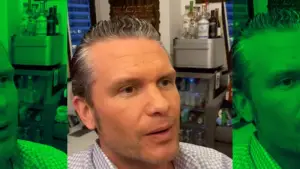 Meidas Touch Network, Commentary: Liquor Stash Photos Bolster NBC Report on Pete Hegseth Drinking Allegations, J.D. Wolf, Dec. 20, 2024. Social media posts reveal Trump's Defense nominee stored bottles of alcohol in his office at work (as shown above via Instagram).
Multiple social media posts reviewed by MeidasTouch reveal that Pete Hegseth had a liquor stash in his office for years. NBC News reported that "Pete Hegseth's drinking worried colleagues at Fox News" citing 10 current and former Fox News employees as sources.
New York Times, Mexico, Betting Trump Is Bluffing on Tariffs, Sees an Opportunity, Peter S. Goodman, Dec. 28, 2024. Business leaders in Mexico say President-elect Trump’s new administration will enhance the appeal of their factories as an alternative to plants in China.
Last month, President-elect Trump threatened the economics of nearshoring by promising to impose 25 percent tariffs on all goods entering the United States from Mexico and Canada. Mexican industry was confronted with a high-stakes question: Was Mr. Trump bluffing, hoping the threat would pressure the Mexican government to halt the movement of people and drugs toward the border? Or was he really preparing to put tariffs on Mexican imports to force companies to move production to the United States?
New York Times, As Ambassador, Rahm Emanuel Says His Impatience Nudged Japan Forward, Motoko Rich, Dec. 15, 2024. Patience, Rahm Emanuel likes to say, is a waste of time.
Relevant Recent Headlines
New York Times, Trump Threatens 25% Tariff on Canada and Mexico, Potentially Crippling TradeThe Bulwark, Political Opinion: Trade Wars Are Good, And Easy to Win, Andrew Egger
Trump Legal Cases, Strategies, Allies
The Hartmann Report, Commentary: Weiner went to prison but Gaetz won’t? Thom Hartmann, Dec. 28, 2024. Remember when Democratic Congressman Anthony Weiner, right, served 18 months in prison for texting a dick pic to an underage girl he never met or touched or paid or anything else?
Now comes Matt Gaetz and, according to a new report from the House Ethics Committee, the Republican Congressman actually paid an underage girl for sex that he then had with her in such a public part of a party house that multiple people witnessed it.
Will Gaetz similarly go to prison? Don’t count on it; Republicans are generally immune from prosecution for such crimes, particularly when their fathers are major and morbidly rich Republican movers-and-shakers and Trump is trying to pack his administration with accused rapists and predators…
Meidas Touch Network, Commentary: WHOA! DOJ Drops BOMBSHELL FILING in Trump Case, Michael Popok, Dec. 31, 2024. Dec 31, 2024 Special Counsel Jack Smith and President Biden just gave Trump a New Year’s surprise, handing off the Mar a Lago appeal to the main Miami federal prosecutor, rather than dismiss it, in hopes that the 11th Circuit Court of Appeals rules against Judge Cannon and her ruling that the Special Counsel is unconstitutional before the inauguration. reports.
New York Times, Guest Essay: What Judges Can Do for the Rule of Law Under Trump, Nancy Gertner, right,and Joel Cohen (Ms. Gertner is a retired federal judge. Mr. Cohen is a former federal prosecutor), Dec. 27, 2024 (print ed.).
President-elect Trump recently threatened to lock up political foes, like Liz Cheney, as well as members of Congress who investigated his role in the Jan. 6 attack. “For what they did,” he said, “honestly, they should go to jail.”
On the campaign trail, Mr. Trump said repeatedly that he would encourage the Justice Department and the F.B.I. to go after his enemies. His picks for attorney general (Pam Bondi) and F.B.I. director (Kash Patel) have echoed these remarks. Mr. Patel even compiled an enemies list, which includes Christopher Wray and retired Gen. Mark Milley.
This impulse could reach beyond leadership and may well trickle down in significant part to the 94 federal district courts around the nation. Each United States attorney will have been appointed by Mr. Trump and will be subject to his whim — meaning their potential firing if he does not approve of their performance.
If these confirmed public servants can’t stand up to the pressure from above to serve not an individual person but justice as a principle, who will? It will have to be the judges.
Judges simply can’t be blind to what Mr. Trump, Ms. Bondi and Mr. Patel have said. They can’t ignore their words if the Justice Department under Mr. Trump or the F.B.I. goes after those on an enemies list who have committed no crime beyond opposing the president-elect.Sign up for the Opinion Today newsletter Get expert analysis of the news and a guide to the big ideas shaping the world every weekday morning. Get it sent to your inbox.
Suppose a federal district judge is asked to sign off on an eavesdropping warrant under Title III of the federal criminal law. He or she will receive one-sided (“ex parte”) submissions from prosecutors applying for search warrants (for a physical search or a wiretap), an application that the target’s attorney will not know about nor have the ability to contest.
In previous administrations, federal trial judges have had generally well-founded confidence that the Justice Department and the post-Hoover F.B.I., under presidents from either party, have not been employed to attack political enemies. Most district judges — especially those who have served as federal prosecutors, as most have — believe that the prosecutors appearing before them act with integrity, that their offices are not being manipulated to undermine those who challenged the current administration or its leader.
A judge could assume that the warrant has gone through layers of approval within the Justice Department, even reaching the assistant attorney general in charge of the criminal division, an extremely high ranking official in the department. That judge could also be reasonably confident that very little, if anything, would be amiss after passing through the layers of the approval process, including senior department officials.
But with the astonishing comments from the president-elect and his appointments, it is reasonable to ask if judges can still assume that level of confidence in the review process. The previous assumption that prosecutions would be undertaken only against individuals suspected of committing crimes may be wrong.Editors’ PicksLin-Manuel Miranda on ‘Mufasa’ and the Secret to a Disney HitThe Trinidadian Christmas Staple Worth the Yearlong WaitHow ‘Rudolph the Red-Nosed Reindeer’ (and Its Writer) Went Down in History
Now, when judges are asked to review warrant applications, or any other ex parte submissions from the government, they should do so through a different lens, much more scrupulously than ever before.
Or consider a motion to dismiss an indictment based on selective prosecution. In the usual case, prosecutors are given broad discretion, so long as there is probable cause to believe a crime has been committed and the prosecution does not run afoul of constitutional protections.
A selective prosecution motion alleges that criminal charges were brought for reasons forbidden by the Constitution. The defendant must prove that he was singled out for prosecution when those similarly situated were not and that the prosecution was based on an impermissible reason, such as race, religion or political affiliation.
Since courts presume that the government undertakes a prosecution in good faith, the defendant’s burden of proof is typically quite heavy. The motion rarely succeeds — for example, Hunter Biden’s motion to dismiss his gun case on selective prosecution grounds failed.
But what if, in Mr. Trump’s second term, the object of the prosecution is on Mr. Patel’s list, or is expressly targeted in a Trump speech? Judges should obviously not assume that prosecutors in the Trump administration are always acting in bad faith. But they should consider accusations of selective prosecution differently than they have in the past.
If a defendant in a political case raises legitimate concerns about the integrity of a case in Mr. Trump’s second term, federal judges can’t bury their heads in the sand and ignore the attorney general’s clear intentions or those of the proposed F.B.I. director.
When these individuals announce that political affiliation will influence their prosecution decisions, judges should believe them — and act accordingly.
Nancy Gertner, a retired federal judge, teaches law, neuroscience and sentencing at Harvard Law School and is the author of “In Defense of Women: Memoirs of an Unrepentant Advocate” and the forthcoming “Incomplete Sentences.” Joel Cohen, a former federal prosecutor, is a senior counsel at Petrillo Klein & Boxer and the author of “Blindfolds Off: Judges on How They Decide.”
Politico Magazine, Trumpian Revenge, Campus Revolts and the Collapse of a Presidency: 24 Stories That Explain a Chaotic Year, Staff Report, Dec. 25, 2024. It has been a year of unprecedented headlines — even for an election year.
The conviction of Donald Trump. An assassination attempt just weeks later. An abrupt end to Joe Biden’s candidacy, followed by the rise and fall of Kamala Harris. It was a historically chaotic and consequential year on the campaign trail, and beyond. America saw intense protests on campus colleges over the Israel-Hamas war, a rising gender divide among the youth and the kind of widening polarization that can even fracture families.
It might have been too many events to fully process in one year, so POLITICO Magazine has you covered. Check out these 24 stories — many of them our top reads of the year — that will help you understand what just happened and what’s to come under Trump 2.0.
New York Times, Devin Nunes, Pugnacious Trump Loyalist, to Lead Espionage Advisory Board, Charlie Savage, Dec. 15, 2024 (print ed.). As chair of the House Intelligence Committee (shown above), he attacked the Russia inquiry and Donald J. Trump’s first impeachment. Now, Mr. Nunes runs Mr. Trump’s social media company.
President-elect Donald J. Trump announced on Saturday that he would appoint Devin Nunes, a former member of Congresswho had used his role as chairman of the House Intelligence Committee to try to delegitimize the Trump-Russia investigation, to head an independent advisory board on espionage policy.
The organization — the President’s Intelligence Advisory Board — dates back to the early Cold War and consists of private citizens with top-level security clearances who are supposed to help the White House analyze spy agency effectiveness and planning. Its members do not need Senate confirmation, so presidents can pick whomever they want for it.
In a statement, Mr. Trump praised Mr. Nunes — who is currently the chief executive of the Trump Media & Technology Group, which runs the Truth Social platform — for his counterinvestigation into the Trump-Russia inquiry in 2017-18, when Mr. Nunes led the House Intelligence Committee as a Republican congressman from California.
“While continuing his leadership of Trump Media & Technology Group, Devin will draw on his experience as former chairman of the House Intelligence Committee, and his key role in exposing the Russia, Russia, Russia Hoax, to provide me with independent assessments of the effectiveness and propriety of the U.S. Intelligence Community’s activities,” Mr. Trump wrote in his announcement.
New York Times, Trump Names Richard Grenell for ‘Special Missions’ Role, Elizabeth Williamson, Dec. 15, 2024 (print ed.). A combative loyalist and the president-elect’s former ambassador to Germany, Mr. Grenell had hoped to be secretary of state.
President-elect Donald J. Trump named Richard Grenell, his former ambassador to Germany and former acting director of national intelligence, as his “envoy for special missions,” Mr. Trump wrote on his Truth Social platform on Saturday.
A loyalist known for unbridled social media attacks on Mr. Trump’s perceived critics and many others, Mr. Grenell led a shambolic effort to challenge the 2020 election results in Nevada after Mr. Trump’s loss, and he has lobbied assiduously for a diplomatic job in the new administration.
He got his start in government before Mr. Trump’s rise, as a spokesman for the U.S. mission to the United Nations under multiple presidents. But his online toxicity, foreign business contacts and tendency toward biting personal attacks on political opponents and the media turned off many centrist conservatives, helping propel him toward Mr. Trump, a man he denounced in 2016 as “dangerous.”
“Ric will continue to fight for Peace through Strength, and always put AMERICA FIRST,” Mr. Trump wrote in his announcement.
Mr. Grenell did not immediately reply to a texted question about his priorities for the role, which does not currently exist. Mr. Trump outlined it as: “Ric will work in some of the hottest spots around the World, including Venezuela and North Korea.”
The role is a far cry from secretary of state, the job Mr. Grenell coveted, but to which Mr. Trump plans to appoint Senator Marco Rubio, the Republican from Florida. Being named for a lower-profile White House envoy job could help Mr. Grenell avoid persistent questions about his paid work for foreign clients, including luxury hotel development projects he has pursued in the Balkans with Jared Kushner, the president-elect’s son-in-law.
During the first Trump administration, Mr. Grenell was ambassador to Germany. His abrasiveness and partisanship alarmed diplomats on both sides of the Atlantic, particularly after he told Breitbart London that he planned to “empower” German conservatives opposing “the failed policies of the left.”
In 2020, Mr. Trump named Mr. Grenell to temporarily replace the acting director of national intelligence, Joseph Maguire, whom Mr. Trump had fired.
New York Times, An Epidemic of Vicious School Brawls, Fueled by Student Cellphones, Natasha Singer (Natasha Singer reported from Revere, Mass., and reviewed more than 400 student fight videos from schools in 15 states), Dec. 15, 2024. Cafeteria melees. Students kicked in the head. Injured educators. Technology is stoking cycles of violence in schools.
Ricardo Martinez, an 11th grader, was in his high school lunchroom in April when a mass brawl erupted.
He watched, horrified, as a dozen teenage boys rampaged through the cafeteria, pummeling and kicking one another, overturning tables and chairs. Other students jeered and jostled to film the fight on their phones.
“It was like a stampede of videos,” said Mr. Martinez, now 18 and a senior. “Everyone was trying to get the best angle.”
But the pandemonium at Revere High School in Revere, Mass., was just beginning.
Within minutes, students in other parts of the building began receiving text messages about the lunchroom brawl. Suddenly, teachers said, dozens of riled-up teenagers started racing down hallways and careening down stairways with their phones to get to the fight.
New York Times, How Will the Rebels Rule Syria? Their Past Offers Clues, Neil MacFarquhar and Justin Scheck, Dec. 15, 2024. The Islamist rebels who ousted Syria’s dictator ran a pragmatic and disciplined administration in the territory they controlled. They also jailed their critics.
Since 2017, Hayat Tahrir al-Sham and its affiliated organizations, driven by a hunger for broader power, created a certain level of stability in Idlib, governing with pragmatism and discipline. While the group retained overall control, it governed through a civilian authority with 11 ministries, which allowed it to concentrate on rebuilding its militia as a more structured force.
In Idlib, Hayat Tahrir al-Sham maintained a robust internal security force to confront other military factions and domestic critics, prompting regular protests against what were seen as authoritarian methods and against harsh jail conditions.
The primary question is whether these rebels, who are now trying to form a national government, can scale up what they achieved in Idlib, a poor, agrarian region with a relatively small population.
In Idlib, ministers who dealt with outside aid organizations could never make a decision on the spot, they always had to consult first with Hayat Tahrir al-Sham leaders, according to one representative of a humanitarian organization who asked not to be named because of the sensitivity of aid operations in the area. Such tight control might work in a small governorate, but could prove unwieldy in a large country.
With its roots in the Islamic State and Al Qaeda, Hayat Tahrir al-Sham modified and moderated its own jihadist orientation starting around 2016. While it enforced some conservative Islamic practices, they did not resort to the strictures imposed by the Islamic State terrorist group when it ruled parts of Syria.
Still, Hayat Tahrir al-Sham remains designated as a terrorist organization by the United States, the United Nations, Turkey and others. Because that designation blocked overt outside support, the group found new ways to sustain itself financially and militarily.
It levied fees on all kinds of goods and enterprises, including crops, border crossings, construction, trade, shopkeeping and craftwork. In addition, companies linked to the group enjoyed a monopoly on providing fuel, electricity, water and garbage collection.
“H.T.S. exemplifies adaptability in conflict economics,” said Mark Nakhla, the chief research officer at Kharon, an open-source analytics firm that advises companies on complying with sanctions against armed groups and other hostile actors.
He has been tracking Hayat Tahrir al-Sham since its jihadist days, and has watched it go through what he called a “strategic rebranding” and a shift from relying financially on wealthy foreign donors to sustaining military and civilian operations through local taxation and governance.
New York Times, How Will the Rebels Rule Syria? Their Past Offers Clues, Neil MacFarquhar and Justin Scheck, Dec. 15, 2024. The Islamist rebels who ousted Syria’s dictator ran a pragmatic and disciplined administration in the territory they controlled. They also jailed their critics.
Since 2017, Hayat Tahrir al-Sham and its affiliated organizations, driven by a hunger for broader power, created a certain level of stability in Idlib, governing with pragmatism and discipline. While the group retained overall control, it governed through a civilian authority with 11 ministries, which allowed it to concentrate on rebuilding its militia as a more structured force.
In Idlib, Hayat Tahrir al-Sham maintained a robust internal security force to confront other military factions and domestic critics, prompting regular protests against what were seen as authoritarian methods and against harsh jail conditions.
The primary question is whether these rebels, who are now trying to form a national government, can scale up what they achieved in Idlib, a poor, agrarian region with a relatively small population.
In Idlib, ministers who dealt with outside aid organizations could never make a decision on the spot, they always had to consult first with Hayat Tahrir al-Sham leaders, according to one representative of a humanitarian organization who asked not to be named because of the sensitivity of aid operations in the area. Such tight control might work in a small governorate, but could prove unwieldy in a large country.
With its roots in the Islamic State and Al Qaeda, Hayat Tahrir al-Sham modified and moderated its own jihadist orientation starting around 2016. While it enforced some conservative Islamic practices, they did not resort to the strictures imposed by the Islamic State terrorist group when it ruled parts of Syria.
Still, Hayat Tahrir al-Sham remains designated as a terrorist organization by the United States, the United Nations, Turkey and others. Because that designation blocked overt outside support, the group found new ways to sustain itself financially and militarily.
It levied fees on all kinds of goods and enterprises, including crops, border crossings, construction, trade, shopkeeping and craftwork. In addition, companies linked to the group enjoyed a monopoly on providing fuel, electricity, water and garbage collection.
“H.T.S. exemplifies adaptability in conflict economics,” said Mark Nakhla, the chief research officer at Kharon, an open-source analytics firm that advises companies on complying with sanctions against armed groups and other hostile actors.
He has been tracking Hayat Tahrir al-Sham since its jihadist days, and has watched it go through what he called a “strategic rebranding” and a shift from relying financially on wealthy foreign donors to sustaining military and civilian operations through local taxation and governance.
New York Times, Man Found in Syria Appears to Be a Missing American, Ben Hubbard and Amelia Nierenberg, Dec. 12, 2024. The man told reporters that his name was Travis Timmerman and that he had entered Syria on a religious pilgrimage. He said that he had been detained for months.
The Syrian authorities said on Thursday that a foreign man who had been imprisoned while Bashar al-Assad was in power had been found outside Damascus and handed over to the rebel group that now controls the capital.
In interviews with international news media, the man appeared to identify himself as Travis Timmerman, an American who is believed to have gone missing from Budapest, Hungary, this year. In a video aired on Thursday by the news channel Al Arabiya, someone is heard asking the man if his name is Travis Timmerman. The man says, “That’s right.”
Hisham al-Eid, the mayor of Al-Thihabiyeh, a poor, partly rural town east of Damascus, said that the man had been found on Thursday morning on a main road. He was barefoot and cold but otherwise seemed to be in good health, Mr. al-Eid said.
The man told reporters that he had entered Syria from Lebanon on a Christian pilgrimage, and had been detained for several months. He said he had received food and water while in detention, and was allowed to go to the bathroom three times a day.
Justice Department Special Prosecutor Jack Smith, left, and former President Donald Trump, shown in a collage via CNN.
Washington Post, Special counsel Jack Smith moves to dismiss Trump’s D.C. prosecution, Perry Stein and Spencer S. Hsu, Nov. 26, 2024 (print ed.). The special counsel filed a motion to dismiss Donald Trump’s election-obstruction case without prejudice, which means the case could be revived in the future.
Special counsel Jack Smith asked U.S. District Judge Tanya S. Chutkan on Monday to dismiss the federal election interference charges against President-elect Donald Trump, putting an end to a lengthy investigation that never made it to trial.Sign up for Fact Checker, our weekly review of what's true, false or in-between in politics.
Smith’s motion seeks to dismiss the case without prejudice, acknowledging that Justice Department policy prohibits prosecuting a sitting president. If she does that, it leaves open the possibility that prosecutors could again bring charges once Trump leaves office after his second White House term.
But legal experts said it’s possible that once Trump is in office, he could try to do something that has never been tested before: pardon himself to foreclose the possibility of legal jeopardy in the future.
Trump faces four counts related to conspiring to obstruct the 2020 election results. Smith’s filing acknowledges that the Justice Department has longed believed a sitting president cannot stand trial, and says prosecutors conferred with Trump’s attorneys and that they did not oppose the request to dismiss the case.
Russia, Russian War Against Ukraine
Alexander Dugin, a far-right writer and ideologue known as “Putin’s brain,” is seen in 2016 in his studio in Moscow (Photo by Francesca Ebel of the Associated Press).
Washington Post, U.S. imposes Russia, Iran sanctions over attempted election interference, Jeff Stein, Jan. 1, 2024 (print ed.). The Treasury Department accused a Russian entity of having “manipulated a video” about a vice-presidential candidate.
The Treasury Department announced new sanctions Tuesday on Iranian and Russian entities accused of trying to interfere with the U.S. 2024 elections, including by allegedly using artificial intelligence to disseminate false information.Sign up for Fact Checker, our weekly review of what's true, false or in-between in politics.
In its statement, Treasury said it was imposing sanctions on both a subsidiary of Iran’s Islamic Revolutionary Guard Corps and an affiliate of Russia’s military intelligence agency over their efforts to “stoke sociopolitical tensions and influence the U.S. electorate during the 2024 election.”
Treasury’s statement also said the Russian entity used AI tools to “quickly create disinformation that would be distributed across a massive network” of fake news websites and produced “baseless accusations” about a 2024 vice-presidential candidate, whom Treasury declined to identify.
Although the sanctions target relatively minor entities and are unlikely to have major economic effects, they reflect the deteriorating relationship between the United States and two of its chief geopolitical adversaries. President Joe Biden is weighing much more far-reaching sanctions against Russia’s energy sector, while President-elect Donald Trump is expected to try to significantly increase economic pressure on Tehran.
“The Governments of Iran and Russia have targeted our election processes and institutions and sought to divide the American people through targeted disinformation campaigns,” Bradley Smith, Treasury’s acting undersecretary for terrorism and financial intelligence, said in a statement. “The United States will remain vigilant against adversaries who would undermine our democracy.”
Sanctions were imposed on the Center for Geopolitical Expertise (CGE), a Moscow-based group founded by Aleksandr Dugin, whom Treasury had already sanctioned in 2015. Treasury accused the center of working closely with the Russian military intelligence service that “oversees sabotage, political interference operations and cyberwarfare” against the West. Dugin's daughter, Darya Dugina, shown in an image circulated on X by @AlexKokcharov, was another ultra nationalist killed in car bomb attack that some suspect was aimed at her father.
In its statement, Treasury said the intelligence service both directed and provided financial support to the center to influence the 2024 presidential election. With that support, Treasury said, the center maintained a network of “at least 100 websites” for its “disinformation operations,” through which it pushed false information.
“CGE and its personnel used generative AI tools to quickly create disinformation that would be distributed across a massive network of websites designed to imitate legitimate news outlets to create false corroboration between the stories, as well as to obfuscate their Russian origin,” the Treasury statement said.
The Russian center also “manipulated a video” to “produce baseless accusations concerning a 2024 vice-presidential candidate,” Treasury said. Treasury did not identify the video, but The Washington Post and other news organizations reported in October that, according to U.S. intelligence officials, Moscow was behind a faked video and other material smearing Democratic vice-presidential nominee Tim Walz with abuse allegations. Separately, Microsoft researchers said this fall that Russian entities had circulated false videos on social media in which an actor accused Vice President Kamala Harris of a nonexistent hit-and-run.
The sanctions also target the Cognitive Design Production Center, a subsidiary of the Iranian Revolutionary Guard, over its “influence operations,” according to the Treasury Department. The Justice Department previously charged three men with an alleged hack-and-leak attack against Trump’s presidential campaign.
Washington Post, Putin says he saved Russia, but a year of challenges suggests Moscow’s position is precarious, Mary Ilyushina, Jan. 1, 2024 (print ed.). Marking 25 years in office, Vladimir Putin says he has remade Russia as a sovereign power and will prevail in Ukraine, but economic and strategic setbacks complicate the picture.
When Russia’s first democratically elected president, Boris Yeltsin, resigned on New Year’s Eve in 1999, he publicly implored Vladimir Putin, his handpicked but little-known successor, to “take care of Russia.”A quarter-century later, Putin insists he has done just that — and more.
As he wrapped up his marathon year-end news conference on Dec. 19, Putin boasted that he had thwarted efforts by the United States and its Western allies to subjugate Russia after the Soviet Union fell apart.
“I have not just taken care of it, but I believe we have stepped back from the edge of the abyss,” he declared, in response to a question about Yeltsin’s remark.
“I have done everything so that Russia can be an independent and sovereign state that is capable of making decisions in its interests,” Putin said, “rather than in the interests of the countries that were dragging it toward them, patting it on the back, only to use it for their own purposes.”
But as 2024 draws to a close, Russia is in a far more precarious place than Putin’s rhetoric and bravado suggest. His forces are making slow but steady advances in Ukraine, but estimates by some NATO countries suggest hundreds of thousands of Russian troops have been killed or wounded in the war, which has dragged on for nearly three years.
Washington Post, U.S. Treasury says it was hacked by China-backed intruder, Pranshu Verma and Ellen Nakashima, Dec. 31, 2024 (print ed.). The department told lawmakers that the breach gained access to government workstations and unclassified documents.
The U.S. Treasury Department said Monday that it was hacked by a Chinese state-sponsored actor who gained access to government workstations and unclassified documents, according to a letter reviewed by The Washington Post.Get concise answers to your questions. Try Ask The Post AI.
The department was notified Dec. 8 by a third-party software provider, BeyondTrust, that a hacker had gained access to a security key, which allowed the intruder to override certain security protocols and access some Treasury Department office workstations and unclassified documents stored on them, according to the letter notifying the Senate Banking Committee leadership of the breach.
The Treasury Department labeled the breach a “major incident,” in line with department policy that, according to the letter, categorizes nation-state intrusions as “major.” Once Treasury was alerted to the issue, it contacted the Cybersecurity and Infrastructure Security Agency (CISA), and it has taken the BeyondTrust service offline, according to a Treasury spokesperson. There is no evidence the hacker still has access to Treasury systems, the spokesperson said.
New York Times, Putin Apologizes for Kazakhstan Crash but Stops Short of Taking Responsibility, Anatoly Kurmanaev, Dec. 28, 2024.President Vladimir Putin of Russia called his Azerbaijani counterpart, the Kremlin said, to apologize for the crash of an Azerbaijan Airlines plane.
President Vladimir V. Putin of Russia on Saturday apologized for the crash of an Azerbaijan Airlines plane this past week, breaking the Kremlin’s three-day silence on the accident that killed 38 people. He did not explicitly acknowledge Russia’s responsibility for the crash.
Mr. Putin “offered his apologies” for the crash in a phone call to his Azerbaijani counterpart, Ilham Aliyev, the Kremlin said in a statement. Mr. Putin initiated the phone call, according to the statement, and told Mr. Aliyev “that the tragic incident took place in Russian airspace.”
Mr. Putin said that as the plane approached its scheduled destination of Grozny, in southern Russia, Russian air defenses had begun to repulse an attack by Ukrainian drones on the Grozny airport and others nearby, according to the Kremlin.
Aviation experts and U.S. officials believe a Russian air-defense missile may have mistakenly downed the passenger jet. The Kremlin statement stopped short of attributing the crash to a Russian missile, but in its own statement acknowledging the apology, Azerbaijan’s presidential office suggested that was indeed the cause.
New York Times, Plane Crash Investigators Focus on Russian Air Defenses as Possible Cause, Ivan Nechepurenko, Dec. 27, 2024 (print ed.).Russian aviation authorities said the Azerbaijan Airlines plane had hit a flock of birds. But some experts cast doubt on that account, pointing to footage showing apparent holes in the fuselage.Listen to this article · 5:51 min Learn more
As authorities in several countries tried to determine what caused the deadly crash of a passenger airplane in Kazakhstan, investigators and experts on Thursday were focusing on the possibility that a Russian air defense system had struck the plane.
Aviation experts cast doubt on a Russian agency’s contention that the Azerbaijan Airlines jet had hit a flock of birds, saying images of the crash site show holes in the plane’s fuselage that appeared unlikely to have been caused by them.
The jet had been flying on Wednesday morning from Baku, the capital of Azerbaijan, to Grozny, in Russia’s Chechnya republic, at a time when drone strikes were taking place around Grozny and Russian air defense systems were responding, according to residents and local news media reports.
Two Azerbaijanis briefed on a government inquiry said that Azerbaijani officials now believe that a Russian Pantsir-S defense system damaged the plane. They spoke on condition of anonymity because the investigation was ongoing. Caliber, a news outlet in Azerbaijan that is close to the government, also reported that the country’s investigators believe a Russian Pantsir system was responsible.-
New York Times, Analysis: Has Russia’s Shadow Fleet, Built to Evade Sanctions, Engaged in Sabotage? Michael Schwirtz, Dec. 28, 2024. Russia has assembled a fleet of hundreds of vessels to covertly ship its oil. The idea of using some to cause havoc may be proving irresistible to the Kremlin.
Western officials have long been concerned about Moscow’s so-called shadow fleet, an assemblage of aged tankers created to covertly carry Russian crude oil around the world. Since Russia invaded Ukraine, the worry primarily concerned the use of such off-the-books ships to circumvent Western sanctions and generate revenue to fuel the Kremlin’s war machine.
But Russia’s shadow fleet may now present a more pressing danger to the West.
This week, Finnish commandos boarded an oil tanker that officials suspect had cut through vital underwater cables in the Baltic Sea, including one that carries electricity between Finland and Estonia. The ship, the Eagle S, bears all the hallmarks of vessels belonging to Russia’s shadow fleet, officials said, and had embarked from a Russian port shortly before the cables were cut.
If confirmed, it would be the first known instance of a shadow fleet vessel being used to intentionally sabotage critical infrastructure in Europe — and, officials and experts said, a clear escalation by Russia in its conflict with the West.
New York Times, Finland Says Vessel Suspected of Cutting Cable May Be Part of Russia’s ‘Shadow Fleet,’ Johanna Lemola and Lynsey Chutel, Dec. 27, 2024 (print ed.). Finland seized an oil tanker after the latest in a series of disruptions to undersea infrastructure.
The Finnish authorities seized an oil tanker on Thursday on the suspicion that it was involved in cutting vital undersea cables and said the ship might have been part of Russia’s “shadow fleet,” aimed at evading Western sanctions.
In a statement, the police in Finland said the authorities had boarded the Eagle S tanker in Finnish waters. The ship, which is registered in the Cook Islands in the South Pacific, had been sailing from St. Petersburg, Russia, to Port Said, Egypt, when it was detained.The police said they were investigating whether the vessel was involved in the latest suspected act of sabotage on undersea infrastructure: the cutting on Wednesday of the Estlink 2 submarine cable, which carries electricity between Finland and Estonia. The Finnish authorities said Thursday that four other cables carrying data also had been damaged. The police called the latest cable cuts “aggravated vandalism.”
The Finnish authorities said the tanker might be part of Russia’s shadow fleet, which emerged as a way to circumvent Western-imposed price caps on Russian oil transported by sea. The caps were introduced several months after President Vladimir V. Putin of Russia ordered the full-scale invasion of Ukraine in February 2022.
Washington Post, In major shift, Zelensky appears open to negotiating an end to the war, Isabelle Khurshudyan and Ellen Francis, Dec. 24, 2024 (print ed.). A new U.S. president and battlefield realities appear to be pushing Ukraine’s leader, who had long insisted on fighting for every inch of occupied land, to the table.
As Ukrainian forces struggle to hold off Russia’s army on the battlefield and President-elect Donald Trump looks to broker a peace deal, President Volodymyr Zelensky has in recent weeks signaled a greater willingness for negotiations to end the war — a major shift for the Ukrainian leader, who had long vowed to fight for every last inch of his country’s land.Get concise answers to your questions. Try Ask The Post AI.
Zelensky’s messaging has been careful; he has not explicitly said Kyiv would agree to concessions — territorial or otherwise — even while Russia occupies more than 20 percent of Ukraine and would probably retain control of that land after any ceasefire. But after previously stating that negotiations could begin only once Moscow withdrew all its troops, Zelensky is now emphasizing the need for long-term security rather than the immediate return of territory.
Zelensky’s change in rhetoric — something Ukrainian and Western officials have noticed — can probably be attributed to a worsening situation on the front line and an incoming U.S. administration that has put future security assistance for Kyiv in doubt. Ukrainian officials throughout the first year of the war stressed the importance of reclaiming all of Ukraine’s land, including Crimea and other areas Russia has effectively ruled since 2014, as a condition for any deal.
In recent meetings with Trump and European leaders, however, Zelensky has focused more on what he has referred to as “lasting peace” for Ukraine. The top priority is securing an invite to the NATO military alliance and other security guarantees, such as the possible presence of Western peacekeepers, to prevent future Russian attacks.
Officials and analysts said Zelensky’s tone shift is probably an attempt to be more in line with Trump’s emphasis on halting the conflict. But the Ukrainian leader is also trying to ensure his country doesn’t come out empty-handed.
Recent Relevant Headlines
White House Chronicle, Commentary: Trump, Who Thinks He Bought the Nation, Now Eyes the World, Llewellyn KingMeidas Touch Network, Commentary: Liquor Stash Photos Bolster NBC Report on Pete Hegseth Drinking Allegations, J.D. Wolf
Global Politics, War, Famine, Human Rights
Politico, Driver Rams Christmas Market in Germany, Killing at Least 2 in Suspected Attack, Christopher F. Schuetze, Dec. 20, 2024. Video showed a car plowing into a large crowd in the city of Magdeburg. The driver, identified as a 50-year-old Saudi Arabian citizen who worked as a doctor, was arrested
A driver plowed a vehicle into a Christmas market in the central German city of Magdeburg on Friday evening, killing an adult and a small child and injuring dozens of other people in what officials indicated was a targeted attack.
The driver was arrested, the authorities said. He was identified as a 50-year-old Saudi Arabian citizen who first came to Germany in 2006 and worked as a doctor in a small town 25 miles south of Magdeburg, officials said.
Saudi Arabia condemned the attack in a statement by its Foreign Ministry that did not mention the suspect. “The Kingdom expresses its solidarity with the German people and the families of the victims,” the statement said.
More than 65 people were injured, 14 of them severely, said Michael Reif, the spokesman for Magdeburg. The authorities say they believe it was a deliberate attack. They are working to determine a motive, said Reiner Haseloff, the governor of Saxony-Anhalt state, where Magdeburg is the capital.your times accessHave a moment? Play these games.Connections
Group words that share a common thread.PlaySpelling Bee
Make as many words as you can with 7 letters.PlayThe Crossword
Crack the clues in today’s puzzle.Play
“Every human life lost in this attack is a terrible tragedy and one human life too many,” a visibly shaken Mr. Haseloff told reporters on Friday night.200 mi.300 km.© Mapbox © OpenStreetMap
Nancy Faeser, who as Germany’s interior minister is responsible for public safety, said in a statement: “The shocking act in Magdeburg a few days before Christmas hits us in the heart. We continue to fear for the lives of the seriously injured and mourn the people who were torn from life by this terrible act.”
Before leaving his post in November, the head of Germany’s domestic intelligence agency, Thomas Haldenwang, warned that the country’s threat level was higher because of the war in Middle East.
“The danger is real and more acute than it has been in a long time,” he said at the time.
More than 1,000 temporary Christmas markets pop up every year in Germany, and they have been the target of terrorists in the past. Last month, the police in Germany arrested two teenagers suspected of exchanging plans about attacking a Christmas market, but those alleged plans appear to have nothing to do with the attack on Friday.Editors’ PicksMy Neighbor Won’t Stop Praying for Me. What Should I Do?A Woman on Our Girls’ Trip Has Grown Snarky. Can We Stop Inviting Her?Skiing’s Budget Secret: It Can Be Cheaper in Europe
In 2016, an extremist rammed a truck into a crowd in Berlin, killing 13. Since then, the police have secured many Christmas markets with temporary barriers.
It remains unclear how the driver in Magdeburg was able to circumvent the barriers that were protecting the market. The car drove some 1,200 feet before it stopped, officials said.
The authorities said the driver had rented a car before plowing it into the market on the last Friday before Christmas, when it was especially crowded with visitors. Many police officers were at the site. The area around the market was closed after the episode, a police spokeswoman said.
The attack in Germany inspired additional security measures around Christmas markets thousands of miles away, in New York City.
The New York Police Department said in a statement on Friday: “The N.Y.P.D. has been closely monitoring recent events in Germany and coordinating with federal and international partners. While we have not identified any specific/credible threats to New York City at this time, resources have been deployed to various Christmas markets and other locations throughout the city out of an abundance of caution.”
The city of Magdeburg, population 240,000, used to be part of Communist East Germany. The year’s Christmas market is in the old market square, just in front of City Hall.
Surveillance footage circulating on social media and verified by The New York Times on Friday shows a car plowing into a large crowd at the Christmas market. The car then turns right onto another crowded street. Video of the aftermath shows people helping the wounded as cries are heard.
“The reports from Magdeburg are alarming,” Chancellor Olaf Scholz said in social media post. “My thoughts are with the victims and their families.”
Recent Relevant Headlines
New York Times, Syrian Rebels Breach City of Aleppo, in Biggest Advance in Years
Sex Assault, Trafficking, #MeToo, Abortion, Women's Health
NYPD Chief Jeffrey Maddrey attends a news conference outside New York City Police Department 40th Precinct, July 17, 2023, in New York. (AP File photo by Jeenah Moon).
Associated Press, Top-ranking NYPD officer abruptly resigns amid sexual misconduct allegations, Philip Marcelou, Dec. 22, 2024. The highest-ranking uniformed officer in the New York Police Department has resigned amid allegations he demanded sex from a subordinate in exchange for opportunities to earn extra pay.
Police Commissioner Jessica Tisch accepted Chief of Department Jeffrey Maddrey ’s resignation Friday night, effective immediately, according to a department statement Saturday.
Chief of Patrol John Chell will take over as interim chief of department, and Philip Rivera will assume Chell’s duties as the head of the patrol division, the NYPD said.
Late Saturday, Tisch replaced the head of the internal affairs bureau, which investigates alleged police misconduct, saying in a statement that the unit “must always be dedicated to preserving integrity and rooting out corruption in all its forms.” She appointed Edward Thompson as interim chief after Miguel Iglesias was relieved of his command.
The NYPD declined to comment on the allegations against Maddrey other than to say it “takes all allegations of sexual misconduct seriously and will thoroughly investigate this matter.”
A lawyer for his accuser, Lt. Quathisha Epps, said the move was overdue.
New York Times, Texas Attorney General Sues New York Doctor for Mailing Abortion Pills, J. David Goodman and Pam Belluck, Dec. 14, 2024 (print ed.). The lawsuit appeared to be among the first attempts to stop doctors from mailing the medication to states that ban abortions.
The Texas attorney general opened a new front in the contentious battle over access to abortion this week by suing a New York doctor for sending abortion pills into Texas. It appeared to be among the first attempts to stop the mailing of such medication into states that ban abortion.
The lawsuit from Attorney General Ken Paxton — filed on Thursday in state court in Collin County, north of Dallas — pits the laws of Texas, which has a near-total ban on abortion, against those of New York, where lawmakers have taken steps to shield doctors from out-of-state prosecution.
Under shield laws, states like New York will refuse to cooperate with attempts by other states to prosecute or sue abortion providers who prescribe and send pills across state lines. Such laws exist in eight states and have allowed doctors there to send more than 10,000 abortion pills per month to women in states with bans.
But legal experts say they expect Texas to try to pursue its case even if it is rebuffed by New York’s law. Such an effort could wind up in federal court, potentially imperiling the ability of women in other states with bans to receive abortion pills by mail, and becoming a major test of whether states can enforce contradictory laws across state lines.
“It’s a huge deal,” said Mary Ziegler, a law professor at the University of California, Davis. “Shield doctors mailing pills into ban states was always going to be, I think, both the most consequential in terms of access to abortion and the highest risk.”
Recent Relevant Headlines
U.S. Immigration
Washington Post, Trump says he backs H-1B visas, aligning with Musk on immigration, Will Oremus, Dec. 29, 2024 (print ed.). President-elect Donald Trump on Saturday threw his weight behind H-1B visas, taking the side of Elon Musk in the squabble among conservatives over the program that allows foreigners with technical skills to temporarily work in the United States.Get concise answers to your questions.
“I’ve always liked the visas, I have always been in favor of the visas,” Trump told the New York Post in a phone interview. He added: “I have many H-1B visas on my properties. I’ve been a believer in H-1B. I have used it many times. It’s a great program.”
The comments come amid an online clash that has revealed a rift in Trump’s coalition ahead of his January inauguration. Musk and other business leaders see the visa program as essential for the U.S. tech industry, but anti-immigrant hard-liners such as right-wing activist Laura Loomer and former Trump adviser Stephen K. Bannon say the system lets companies exploit cheap foreign labor at the expense of Americans.
While Trump said he employs H-1B workers, past reporting has found he employs workers under the H-2A program, which covers temporary visas for agricultural workers, and the H-2B program, for seasonal workers in sectors such as tourism, hospitality and landscaping. The Trump transition team did not respond to a request for comment on Saturday.
Still, Trump’s words send an important signal, said Sophie Alcorn, an attorney in Silicon Valley who specializes in business immigration.
“The president’s statement that he supports immigration and visas for highly skilled workers allows tech workers in Silicon Valley and the companies that employ them to breathe a huge sigh of relief in what has been a tumultuous several months,” Alcorn said.
Washington Post, Trump’s top border adviser says he will bring back family detention, Nick Miroff, Dec. 27, 2024 (print ed.)..Tom Homan oversaw implementation of the “zero tolerance” policy that separated more than 4,000 children from their parents during the president-elect’s first term.
U.S. immigration authorities will once more put families with children in detention centers when President-elect Donald Trump returns to office next month, according to incoming White House “border czar” Tom Homan.You are what you read. Reveal your 2024 reader type with Newsprint.
U.S. Immigration and Customs Enforcement will look to hold parents with children in “soft-sided” tent structures similar to those used by U.S. border officials to handle immigration surges, Homan said. The government will not hesitate to deport parents who are in the country illegally, even if they have young U.S.-born children, he added, leaving it to those families to decide whether to exit together or be split up.
“Here’s the issue,” Homan said in a wide-ranging interview that included some of his most extensive comments to date on Trump’s plans for mass deportations. “You knew you were in the country illegally and chose to have a child. So you put your family in that position.”
President Joe Biden ended family detention in 2021, closing three facilities ICE called “residential centers” that offered about 3,000 beds. The facilities had a dorm-like design with recreational and educational programming. They were criticized by immigration advocates and pediatricians who said detention was harmful for children.
The federal judge who oversees immigration detention programs involving minors has set 20 days as the maximum amount of time children can be held at the family facilities. The deportation process often requires more time, so ICE has generally preferred to prioritize easier-to-remove adults. But Homan said that may change once Trump takes office.
“We’re going to need to construct family facilities,” he said. “How many beds we’re going to need will depend on what the data says.”
Washington Post, For some Latinos, ‘prosperity gospel’ led them to Trump, Michelle Boorstein, Dec. 27, 2024 (print ed.). The belief system has overtaken traditional theologies centered on the poor. Some experts say that helps explain a shift among Latino Christians to Donald Trump.
The mix of hope, drive for success and belief in a God who rewards faith, sometimes with financial accomplishments, has become dominant across the United States and Latin America, experts on Latino religion say. The belief system is sometimes called “seed faith,” “health and wealth gospel,” or “prosperity gospel.”
In the past half-century, driven by larger-than-life pastors, it has overtaken other more traditional theologies centered on God’s priority being poor and disenfranchised people, some experts said. This belief system, they said, helps explain what exit polls showed was a significant shift among Latino Christian voters to Trump, who they see as an uber-successful, strong and God-focused striver.
“If you take Trump and all his characteristics, it’s almost exactly as any prosperity gospel preacher,” said Tony Tian-Ren Lin, an Asian-Latino pastor in New York who wrote a book on Latino Americans and the prosperity gospel. “The big personality, talking a big game, saying things like ‘no one can do it’ but him … If for years you’ve been listening to someone like that, you’re not surprised when a political leader says those things.”
Washington Post, Immigration: Hundreds more migrants have died in Rio Grande crossings than U.S., Mexico reported, Arelis R. Hernández, Melissa del Bosque, Charles Boutaud, Monica Camacho, Sarah Cahlan, Jack Sapoch and Miriam Ramirez, Dec. 8, 2024. An investigation by The Washington Post; Lighthouse Reports, an investigative news organization, and the El Universal newspaper in Mexico found that hundreds more people have drowned than the U.S. and Mexican governments have reported.
And nowhere in Texas have more people died than in Eagle Pass, where Republican Gov. Greg Abbott’s $11 billion border security initiative, Operation Lone Star, is concentrated.
Washington Post, Many targeted for removal by Trump can’t be deported, ICE data shows, Nick Miro, Dec. 8, 2024. Nearly half of the 1.4 million people in the U.S. immigration system who have pending deportation orders cannot be sent back to their home countries, according to internal Immigration and Customs Enforcement data, posing one of several looming obstacles to President-elect Donald Trump’s pledge for a mass removal campaign.
Some orders can’t be carried out because the would-be deportee’s home country won’t take them or limits cooperation with ICE. Others identified for deportation are serving prison terms, or have received a reprieve or deferral from an immigration judge, due to a medical condition, a credible persecution threat or another extenuating factor.
An array of other logistical and legal impediments also could constrain mass deportations, according to current and former ICE officials.
Trump promises to brush aside hurdles and mount a campaign modeled after the harsh roundups of the Eisenhower administration, when the U.S. government expelled hundreds of thousands of migrant workers to Mexico.
“We will begin — and we have no choice — the largest deportation operation in American history,” he said on the campaign trail.
Trump’s aides describe the anticipated campaign as an enforcement blitz that will leverage the power and resources of the U.S. military to roll back the effect of record numbers of illegal border crossings under President Joe Biden. Criminals and those with outstanding deportation orders will be the administration’s priority as of Trump’s inauguration, Jan. 20, aides say.
Recent Relevant Headlines
U.S. Jobs, Investment, Economy, Pensions
Meidas Touch Network, Commentary: United States Stock Market On Pace For Best Two Year Period This Century, Aaron Parnas, Dec. 31, 2024. The Biden Administration's economic policy is working.
The United States stock market is expected to have its best two year stretch this entire century, achieving a feat that has only happened a few times in history. According to latest numbers, the S&P 500 is set to gain over 20% this year.
This comes one year after the index rose 24%. Should these results hold, which they will for all intents and purposes, it would be the best performance for the index since 1997 and 1998.
According to statistics over the past two centuries, this type of performance by the index has only occurred three other times, in 1927 and 1928, in 1935 and 1936, and again in 1954 and 1955. This would mean that the current pace for the market is one that has been achieved only four other times in our nation's history.
In total, the S&P 500 is now up over 60% of the past two years, marking significant gains from 2022 which saw the index fall about 20%. Today's news is a testament to the Biden-Harris Administration's economic policy which has successfully ushered the United States out of the COVID-19 pandemic.
It is now almost certain that the economy will achieve the vaunted soft landing, ensuring that the United States stays out of a recession following extremely high inflation. It also means that the incoming Trump Administration will now be inheriting a booming, record breaking economy.
Washington Post, Japanese buyer sends Biden new U.S. Steel proposal in final bid for support, David J. Lynch and Jeff Stein, Dec. 31, 2024. President Joe Biden has publicly opposed Nippon Steel’s proposed $14.9 billion purchase of U.S. Steel, leaving him at odds with many of his advisers who favor the deal, according to two administration officials.
Nippon Steel proposed giving the U.S. government a veto over any reduction in U.S. Steel’s “production capacity” in a last-ditch bid for President Joe Biden’s approval to acquire the venerable American steelmaker, according to a document sent to the White House on Monday.Get a curated selection of 10 of our best stories in your inbox every weekend.
The proposal is aimed at mollifying the Committee on Foreign Investment in the United States (CFIUS), which warned last week that Nippon Steel’s $14.9 billion takeover of U.S. Steel could lead to a decline in domestic steel output that would pose “risks to the national security of the United States.”
The president has publicly opposed the takeover for months, leaving him at odds with many of his advisers who favor the deal, according to two senior administration officials, who spoke on the condition of anonymity to discuss internal deliberations.
Biden is siding with David McCall, the president of the United Steelworkers union, who has blasted Nippon Steel’s bid as “bad for workers” and questioned the company’s commitment to U.S. Steel’s unionized operations.
New York Times, Richard Parsons, Serial Fixer of Media and Finance Giants, Dies at 76, Benjamin Mullin, Dec. 27, 2024 (print ed.). Mr. Parsons’s lengthy résumé is a catalog of corporate emergencies at Time Warner, Citigroup and the Los Angeles Clippers.
Richard D. Parsons, whose humane approach to business made him a serial troubleshooter at distressed companies such as Time Warner, CBS and Citigroup and a sought-after adviser at the highest echelons of American industry, died on Thursday at his Manhattan home. He was 76.
The cause was cancer, said Ronald S. Lauder, a member of the Estée Lauder board and one of Mr. Parsons’s oldest friends.
Mr. Parsons’s winding career tracked the biggest companies in American media and finance — and the biggest problems. Time and again, he stepped in when things looked catastrophic and put his smooth leadership style to work, disentangling Gordian knots and assuaging discontented shareholders.
Mr. Parsons, a jazz-loving oenophile who served on the board of the Apollo Theater and owned a Tuscan winery, rose to the top of the business world in an era when he was frequently the only Black executive in the boardroom. A self-described “Rockefeller Republican,” Mr. Parsons spoke out on social justice issues in the wake of George Floyd’s murder in 2020, signed a letter protesting a 2021 law that imposed restrictions on Georgia voters and co-founded the Equity Alliance, a fund that backs early-stage ventures led by women and people of color.your times accessHave a moment? Play these games.
Mr. Parsons’s lengthy résumé is a catalog of corporate emergencies: He stanched losses at Dime Bancorp during the savings-and-loan crisis in the 1980s; cleaned up the disastrous merger of AOL and Time Warner after the dot-com bust at the turn of the century; stepped in at Citigroup as the banking colossus teetered after the 2007-8 financial crisis; served as CBS’s board chairman after its disgraced chief executive, Leslie Moonves, went to war with its controlling shareholder, Shari Redstone; and came out of semiretirement to steady the Los Angeles Clippers after their owner at the time, Donald Sterling, made racist remarks.
Throughout it all, Mr. Parsons deployed his easy manner and extensive Rolodex — he was an aide to Nelson A. Rockefeller, the former vice president and New York governor — to lead, charm and cajole his way out of tight corporate corners. In 2007, as Time Warner was crawling back from the brink of disaster, Mr. Parsons summed up his career during a steakhouse interview with The New York Times before ordering a second bottle of wine.
“I want my legacy to be simple: I left the place in good shape and in good hands,” he said.
His survivors include his wife, Laura (Bush), and their three children, Gregory, Leslie and Rebecca.
Richard Dean Parsons was born on April 4, 1948, in Brooklyn, N.Y., one of five children of Lorenzo, an electrical technician, and Isabelle. A huge fan of the Brooklyn Dodgers, Mr. Parsons soon moved reluctantly with his family to the Ozone Park neighborhood in Queens, where he was a precocious but somewhat indifferent student. An astronomy and physics enthusiast, he nearly blew up a friend’s house trying to make rocket fuel on the stove. He skipped two grades and graduated from high school at 16 before enrolling at the University of Hawaii on a whim.
“I put down University of Hawaii, not actually really knowing if there was one,” Mr. Parsons said in a 2008 interview with the Brooklyn Historical Society. “I just assumed there was. I had sat next to this girl in physics class who was from Hawaii who was just gorgeous.”
How The Times decides who gets an obituary. There is no formula, scoring system or checklist in determining the news value of a life. We investigate, research and ask around before settling on our subjects. If you know of someone who might be a candidate for a Times obituary, please suggest it here.Learn more about our process.
Mr. Parsons was somewhat unprepared for college life when he arrived in Hawaii — he hadn’t made any lodging plans — but things fell into place quickly. After going broke within weeks, he learned to manage his money, settled on a major (history) and joined a fraternity.
Later in life, he would recall a conversation with one of his white fraternity brothers, who told Mr. Parsons that although he hadn’t had any Black friends growing up outside Detroit, he was able to bond with Mr. Parsons “because you’re different.”
“On reflection, I’ve thought, different than what, or different than whom?” Mr. Parsons said in an interview with Citigroup in 2021. “Was I different than his other Black friends? No, because he didn’t have any other Black friends. In fact, I was different from an image he had in his head of what Black people were supposed to be like.”
Mr. Parsons met Ms. Bush during his sophomore year at the university. She had come to his rescue during an English class for which he hadn’t done the reading. She eventually let him see the paper she was working on, Mr. Parsons said in a 2008 interview with PBS. They were soon married.ImageMr. Parsons stands behind Laura Parsons, resting his left hand on her left shoulder, at a formal gala.Mr. Parsons with his wife, Laura, in 2008. They met while students at the University of Hawaii. Credit...Joe Corrigan/Getty Images
Laura Parsons helped focus her husband. She dragged him out of bed the morning he was supposed to take his law school admission exams and guided him toward Albany Law School. He was admitted despite being several credits short of his undergraduate degree, and finished at the top of his class.
When he landed a job on Governor Rockefeller’s staff, it was a full-circle moment for the Parsons clan: Decades earlier, his grandfather had worked as the head groundskeeper at Kykuit, the Rockefeller estate in Pocantico Hills, N.Y. Mr. Parsons would go on to serve as the chair of the Rockefeller Foundation’s board of trustees.
When Mr. Rockefeller became vice president under President Gerald R. Ford, Mr. Parsons decamped to Washington, serving on Mr. Rockefeller’s legal team and on Mr. Ford’s Domestic Council. After his stint in the White House, Mr. Parsons moved back to New York and joined a prestigious law firm, Patterson, Belknap, Webb & Tyler.
Recent Relevant Headlines
New York Times, Opinion: Crony Capitalism Is Coming to America, Paul KrugmanThe Hartmann Report, The Great Dismantling: Trump’s Coming Attack on America’s Economic Backbone, Thom HartmannPolitico, DNC chair hits back at Sanders over party criticism: 'Straight up BS'
Energy, Transportation, Climate Change, Environment, Space
New York Times, Flood-Soaked Homeowners Face a Costly Choice: Raise or Raze, Gregory Barber, Dec. 29, 2024. As climate change intensifies, flooding is emerging as a threat for some homes. Some people are responding by lifting up their houses.
Hydraulic lifts, set in trenches dug under the foundation, push the house upward, a process so smooth that lifters are known to leave a vase standing in a window for dramatic effect. A new foundation is installed, along with elongated staircases and reworked wires and plumbing.
On a recent weekend, Albert Jasuwan, owner of JAS Builders, one of a few house-raising specialists in the Tampa Bay area, had three houses “in the air” and 22 more awaiting permits. “Mother Nature is giving us more than the ground can take,” Mr. Jasuwan said. Prices can range from $75 to $200 per square foot, depending on the home’s design. A typical Florida home built on a concrete slab may cost $400,000 to raise, though larger houses can exceed $1 million.
New York Times, A.I., the Electricians and the Boom Towns of Central Washington, Karen Weise, Photographs by Jovelle Tamayo, Dec. 25, 2024. The rural region is changing fast as electricians from around the U.S. plug the tech industry’s new, giant data centers into its ample power supply.
Washington Post, In the shadows of Arizona’s data center boom, thousands live without power, Pranshu Verma, Dec. 24, 2024 (print ed.). As data centers drain America’s power grids, a fierce battle is being waged for electricity. On Navajo Nation land, many are on the losing end.
Recent Relevant Headlines
Media, High Tech, Culture, Education
New York Times, Net Neutrality Rules Struck Down by Appeals Court, Cecilia Kang, Jan. 2, 2025. After nearly two decades of fighting, the battle over regulations that treat broadband providers as utilities came to an end on Thursday.
A federal appeals court struck down the Federal Communications Commission’s landmark net neutrality rules on Thursday, ending a nearly two-decade effort to regulate broadband internet providers as utilities.
The U.S. Court of Appeals for the Sixth Circuit, in Cincinnati, said the F.C.C. lacked the authority to reinstate rules that prevented broadband providers from slowing or blocking access to internet content. In its opinion, a three-judge panel pointed to a Supreme Court decision in June, known as Loper Bright, that overturned a 1984 legal precedent that gave deference to government agencies on regulations.
“Applying Loper Bright means we can end the F.C.C.’s vacillations,” the court ruled.
The court’s decision put an end to the Biden administration’s hallmark tech policy, which had drawn impassioned support from consumer groups and tech giants like Google and fierce protests from telecommunications giants like Comcast and AT&T.
The F.C.C. had voted in April to restore net neutrality regulations, which expand government oversight of broadband providers and aim to protect consumer access to the internet. The regulations were first put in place nearly a decade ago under the Obama administration and were aimed at preventing internet service providers like Verizon or Comcast from blocking or degrading the delivery of services from competitors like Netflix and YouTube. The rules were repealed under President-elect Donald J. Trump in his first administration, but they continued to be a contentious partisan issue that pit tech giants against broadband providers.
Thursday’s decision effectively concludes the back-and-forth battle. Brendan Carr, whom Mr. Trump has named as the incoming F.C.C. chair, has been a strong critic of net neutrality. The court’s reliance on the Loper case in its ruling could also portend more lawsuits to hollow out federal regulations at the F.C.C. and other agencies.
The court’s opinion “puts to bed an issue that unnecessarily sucked up a lot of oxygen in tech and telecom for two decades now,” said Evan Swarztrauber, a former policy adviser to Mr. Carr.
In a statement, Mr. Carr said that he was “pleased” by the decision and that “the work to unwind the Biden administration’s regulatory overreach will continue.”
The court’s decision doesn’t affect state laws on net neutrality in California, Washington and Colorado. Democrats at the F.C.C. called on Thursday for Congress to create laws promoting net neutrality, signaling that the issue may continue to fester.
“Consumers across the country have told us again and again that they want an internet that is fast, open, and fair,” said Jessica Rosenworcel, the chairwoman of the F.C.C. and a Democrat who had pushed for the reinstatement of the rules. “It is clear that Congress now needs to heed their call, take up the charge for net neutrality and put open internet principles in federal law.”Editors’ Picks10 Ways to Keep Your Mind Healthy in 2025The New York Times 2024 Culture News QuizMaking a Cooking Resolution? These Recipes Will Get You Started.
Judge Richard Allen Griffin, who wrote Thursday’s opinion, said that the panel of judges acknowledged that the internet was complicated and that the F.C.C. “has significant expertise in overseeing ‘this technical and complex area.’”
But the F.C.C.’s interpretation of its authority to define broadband internet service akin to phone service exceeded legal definitions in the Telecommunications Act, he wrote.
“The F.C.C. lacks the statutory authority to impose its desired net-neutrality policies,” he said.
The term net neutrality was coined in 2003 by Tim Wu, a Columbia University law professor, who warned that broadband internet service providers could become gatekeepers of internet access and block or charge for access to certain content.
The concept was championed by Google, Facebook and Netflix. The companies lobbied the F.C.C. to create rules to prevent preferential treatment of content by the internet service providers.
In 2010, the F.C.C. under the Democratic chairman, Julius Genachowski, created the first proposals for net neutrality rules, stirring waves of public interest. The rules prompted street protests, torrents of email comments and even threats of violence against commissioners who opposed the rules.
The technical and wonky issue resonated politically with progressives who saw the rules as a necessary restraint on corporate power and a campaign to keep the internet open and fair.
But cable and telecom companies opposed the rules largely because they saw them as regulatory overreach. They feared that classifying broadband providers as “common carriers,” like phone companies, opened the door to utility-style regulation and government price setting.
Relevant Recent Headlines
Talking Feds Substack, Commentary: No Middle Ground: Reflections on My Resignation from the LA Times Three Weeks Later, Harry LitmanWhite House Chronicle, Opinion: The Crisis in Journalism — More Reporting Needed , Llewellyn King
Jan. 3
Top Headlines
Mass Terror Attacks, Threats In U.S.
Trump / GOP Transition News, Commentary
New York Times, Trump Transition Live Updates: Speaker Johnson Works to Unite Fractious Republicans Behind HimPolitico, Former FBI and CIA head prods Senate to reject Patel, Gabbard, Kierra Frazier,
More U.S. Legal News
Washington Post, Rapist behind ‘Gone Girl’ kidnapping charged in more crimes — 15 years later, Jonathan Edwards SCOTUSblog, In year-end report, chief justice defends judiciary’s independence, Amy Howe
More U.S. Politics, Governance, Elections
Washington Post, D.C. Mayor Bowser goes to Mar-a-Lago, says she had ‘great meeting’ with Trump
More On Carter Life, Legacy
New York Times, ‘Hanging Out With Jimmy Carter,’ Biden Faces the Echoes of History, Peter BakerNew York Times, Carter the Critic Didn’t Spare His Successors
Trump's Cases, Allies, Vengence, Threats, Opponents
New York Times, Trump Loses Appeal of Carroll’s $5 Million Award in Sex-Abuse Case
U.S. Public Health, RFK Jr., Healthcare CEO's Murder
President-elect Donald Trump with Robert F. Kennedy Jr., Trump's nominee to become U.S. Secretary of Health and Human Services (Photo via Getty Images)
New York Times, U.S. Surgeon General Calls for Cancer Warnings on Alcohol
More On Middle East Crises: Syria, Israel, Lebanon
More On U.S. Foreign Policy, Defense, Tariffs
Washington Post, U.S. Treasury says it was hacked by China-backed intruder
More On Presidential Pardons, Cases
Russia, Russian War Against Ukraine
Global Politics, War, Famine, Human Rights
U.S. Defense, Foreign Policy, Security
New York Times, Departing Air Force Secretary Will Leave Space Weaponry as a Legacy
U.S. Immigration
Sex Assault, Trafficking, #MeToo, Abortion, Women's Health
New York Times, Trump Loses Appeal of Carroll’s $5 Million Award in Sex-Abuse Case Associated Press, Top-ranking NYPD officer abruptly resigns amid sexual misconduct allegations
U.S. Economy, Jobs, Pensions
New York Times, Richard Parsons, Serial Fixer of Media and Finance Giants, Dies at 76Washington Post, Skyrocketing car-insurance premiums are pushing inflation higher
Energy, Environment, Transportation, Climate Change, Disasters
Washington Post, ‘Critical failure’ of Puerto Rico’s power grid means dark New Year’s Eve
Media, High-Tech, Culture, Education, Sports
Top Stories
New York Times, U.S. Surgeon General Calls for Cancer Warnings on Alcohol, Roni Caryn Rabin, Jan. 3, 2025. Dr. Vivek Murthy’s report cites studies linking alcoholic beverages to malignancies, including breast cancer. But to label them, Congress would have to act.
Alcohol is a leading preventable cause of cancer, and alcoholic beverages should carry a warning label as packs of cigarettes do, the U.S. surgeon general, above, said on Friday.
It is the latest salvo in a fierce debate about the risks and benefits of moderate drinking as the influential U.S. Dietary Guidelines for Americans are about to be updated. For decades, moderate drinking was said to help prevent heart attacks and strokes.
That perception has been embedded in the dietary advice given to Americans. But growing research has linked drinking, sometimes even within the recommended limits, to various types of cancer.
Labels currently affixed to bottles and cans of alcoholic beverages warn about drinking while pregnant or before driving and operating other machinery, and about general “health risks.”
But alcohol directly contributes to 100,000 cancer cases and 20,000 related deaths each year, the surgeon general, Dr. Vivek Murthy, said.
He called for updating the labels to include a heightened risk of breast cancer, colon cancer and at least five other malignancies now linked by scientific studies to alcohol consumption.
“Many people out there assume that as long as they’re drinking at the limits or below the limits of current guidelines of one a day for women and two for men, that there is no risk to their health or well-being,” Dr. Murthy said in an interview.
“The data does not bear that out for cancer risk.”
Only Congress can mandate new warning labels of the sort Dr. Murthy recommended, and it’s not clear that the incoming administration would support the change.
Still, President-elect Donald J. Trump does not drink, and his choice to head the Health and Human Services Department, Robert F. Kennedy Jr., swore off alcohol and drugs decades ago, and says he regularly attends AA meetings.
Excerpt Continued Below.
Axios, Mike Johnson reelected as speaker after brief revolt, Andrew Solender, Jan. 3, 2025. Rep. Mike Johnson (R-La.) was reelected as the speaker of the House on Friday, securing the gavel on the first ballot.
Why it matters: Johnson appeared imperiled as three Republicans initially voted against him — enough to sink him on the first ballot.
After a roughly 45-minute standoff, Reps. Ralph Norman (R-S.C.) and Keith Self (R-Texas) switched to voting for Johnson, giving him the 218 votes he needed to secure the gavel without a multi-ballot fight. Rep. Thomas Massie (R-Ky.) was the lone defector, voting for Majority Whip Tom Emmer (R-Minn.), while all Democrats voted for Minority Leader Hakeem Jeffries (D-N.Y.).
Zoom in: Just before the vote began Friday, Johnson released a list of promises around spending cuts in an apparent deal to shore up his reelection.
He said he will create a working group of "independent experts" to explore spending reforms and release a report, as well as direct committees to "aggressively" review federal funding. That was enough to win over roughly a dozen House Republicans who had for weeks refused to commit to voting for him, some of whom waited until the last minute to do so.
Zoom out: The Louisiana Republican, first elevated to the speakership in 2023 after Rep. Kevin McCarthy's (R-Calif.) ouster, has faced growing anger from his right flank throughout his 14-month tenure.
GOP hardliners have raged at him for working across the aisle to pass government spending and foreign aid bills without demanding stringent spending cuts. But President-elect Trump backed Johnson, urging his allies not to tank the vote and potentially imperil Congress' certification of his election victory on Jan.
Politico, Trump will be sentenced for hush money conviction on Jan. 10 — but won’t get jail time, Kyle Cheney, Josh Gerstein and Erica Orden, Jan. 3, 2025. Incarceration is not a practical option given Trump’s imminent return to the White House, Justice Juan Merchan wrote.Former President Donald Trump appears in court for his hush money trial at Manhattan Criminal Court.
A New York judge plans to sentence Donald Trump on Jan. 10 for his criminal hush money conviction, rejecting efforts by the president-elect to sweep aside a jury’s verdict that found him guilty of 34 felony counts.
But Justice Juan Merchan indicated he will not sentence Trump to prison time, acknowledging that incarceration is not a “practicable” option. And the judge said Trump may attend the sentencing virtually rather than reporting to court in person.
The long-delayed sentencing — unless a higher court blocks it — will force Trump to revisit the sordid hush money case just 10 days before his inauguration. And by maintaining the jury’s verdict, Merchan all but ensured that Trump will take office with his sole criminal conviction still on his record.
In an 18-page decision Friday, Merchan ruled that the Supreme Court’s July decision on presidential immunity does not shield Trump from facing sentencing for the conviction. And the judge rejected Trump’s arguments that the entire case should be thrown out in light of his victory in the 2024 election, calling the suggestion an affront to the justice system.
Merchan also sharply criticized Trump for his “disdain” for the legal process. In addition to continually criticizing the case itself, Trump repeatedly argued for Merchan to recuse himself, claiming the judge was biased. During the trial, he disobeyed the judge’s gag order and often appeared to fall asleep in court.
A Trump spokesperson blasted Merchan’s ruling as unconstitutional, saying “there should be no sentencing” and vowing Trump would continue to fight the “lawless” case.
A Manhattan jury convicted Trump last May on 34 counts of falsifying business records in order to obscure $130,000 paid to porn star Stormy Daniels just prior to the 2016 presidential election. Daniels and former Trump lawyer Michael Cohen testified the money was intended to ensure she did not go public with a claim that she had sex with Trump while both attended a celebrity golf tournament in 2006. Trump has vehemently denied Daniels’ account.
The maximum sentence for falsifying business records is four years in prison. But experts said Trump was never likely to receive such a harsh sentence, given his age and lack of any other criminal convictions.
Trump last year repeatedly persuaded Merchan to postpone the sentencing, in part based on arguments that proceeding with the sentencing in the summer or fall would interfere with the 2024 election. Then, when Trump won that election, he sought to have the conviction tossed out entirely, arguing that maintaining the case would interfere with the presidential transition and his eventual duties when he returns to office.
In a ruling last month, Merchan rejected a separate bid by Trump to dismiss the case on immunity grounds. And in his Friday ruling, the New York judge again upheld the conviction, even as he floated the possibility that Trump will not face any concrete penalties.
A sentence of “unconditional discharge” may be the “most viable solution” given Trump’s imminent return to the White House, the judge wrote. Under New York law, a sentence of unconditional discharge appears to allow a defendant to avoid any incarceration, probation or fine.Conservatives are signaling their votes for Johnson only represent a tentative truce.
Politico, Judge turns down Jan. 6 felon’s request to attend Trump inauguration at invitation of GOP lawmakers, Kyle Cheney, Jan. 3, 2025. It’s the second time a federal judge has denied a Jan. 6 defendant’s request to attend Trump’s inauguration.A bird flies framed by security fencing in front of the U.S. Capitol.
A federal judge has denied a Jan. 6 felony defendant’s request for permission to attend Donald Trump’s inauguration, despite a personal invitation from members of the Utah congressional delegation.
U.S. District Judge Royce Lamberth said Russell Taylor’s “unusually grave” conduct at the Capitol — which included recruiting “fighters” to descend on the Capitol, wearing armor, carrying weapons and helping others push past a police line — did not warrant the “immense privilege” of attending an inauguration.
“It would not be appropriate for the Court to grant permission to attend such a hallowed event to someone who carried weapons and threatened police officers in an attempt to thwart the last Inauguration, and who openly glorified ‘[i]nsurrection’ against the United States,” Lamberth wrote in a five-page decision.
Lamberth, a Reagan appointee, is the second federal judge to deny a Jan. 6 defendant’s request to attend Trump’s inauguration. U.S. District Judge Tim Kelly, a Trump appointee, turned down a request Thursday from a felony defendant charged with unleashing chemical spray at a police officer.
U.S. District Judge Tanya Chutkan, an Obama appointee, approved a misdemeanor defendant’s request to attend the inauguration, and several other requests are pending. The Justice Department has largely opposed such requests, saying it would be improper to subject Capitol police to facing the very people who stood against them four years ago.
Taylor’s is the only request that was publicly endorsed by members of Congress.
Former Utah representative Chris Stewart, who wrote to Lamberth on behalf of three current members of Utah’s congressional delegation, asked the judge’s permission for Taylor to attend as their guest.
“He is [a] caring father and reveres his family, his faith, and his love of our Country as his highest priority in life,” Stewart wrote last month. “I am honored to extend this invitation for him to attend the Inauguration as my guest.”
Despite the charges against him, Taylor’s case was complex. He quickly pleaded guilty for his crimes, acknowledged his wrongdoing and became an early cooperator with prosecutors, even testifying at the trial of an alleged co-conspirator. Lamberth sentenced Taylor to a term of probation and praised him as a model defendant. Under the terms of Taylor’s three-year probation, he must receive permission to travel to Washington.
Lamberth acknowledged Stewart’s praise for Taylor, but said he had already considered those factors when he gave Taylor a lenient sentence.
Washington Post, Biden awards Liz Cheney a presidential medal for challenging Jan. 6 attack, Maeve Reston, Jan. 3, 2025. The president honored one of Donald Trump’s most outspoken critics less than three weeks before Trump is set to take office a second time.
President Joe Biden on Thursday awarded the Presidential Citizens Medal to former Republican congresswoman Liz Cheney, honoring one of President-elect Donald Trump’s most outspoken critics at a White House ceremony less than three weeks before Trump is set to reclaim the presidency.Get the latest election news and results
The medal, given to those who have performed exemplary deeds of service for their country, is the nation’s second-highest award, after the Presidential Medal of Freedom. Biden also gave the medal to Rep. Bennie G. Thompson (D-Mississippi), who along with Cheney led the House committee that investigated the Jan. 6, 2021, assault on the U.S. Capitol.
The attendees at the ceremony in the East Room — composed largely of Democratic lawmakers and aides, along with friends and relatives of the honorees — rose to give Cheney a standing ovation as she took the stage to accept the medal, later doing the same for Thompson. Biden alluded to the Jan. 6, 2021, attack and pointedly mentioned the “free and fair election of 2020” in his brief remarks before bestowing the medals, but did not mention Trump by name.
Biden noted that he has previously honored “law enforcement officers who defended our Capitol on January 6th and the state and local election officials, elected leaders who defended the free and fair election 2020.”
“Today we celebrate a new group of Americans who dedicated their careers to serving our democracy in other essential ways.”
He spoke of the deep polarization within America, saying the country’s courage and optimism have been tested but have endured. “Our empathy that fuels our common project of our willingness to see each other not as enemies, but as fellow Americans,” he said.
Eighteen other Americans were honored as well at Thursday’s ceremony, but the inclusion of two lawmakers who were so vocal in attacking Trump’s efforts to overturn the 2020 election made the event especially notable. It took place in the same White House that Trump vacated and will soon reoccupy, and was hosted by the president whose victory Trump sought to challenge.
Washington Post, Investigation: How ISIS inspires violence, from a Taylor Swift concert plot to New Orleans carnage, Souad Mekhennet and Joby Warrick, Jan. 3, 2025. In the Bourbon Street rampage, a foiled attack on a European pop concert and other attacks, a pattern of self-radicalization breeds terrorists influenced by ISIS.
New York Times, Biden Blocks Japanese Bid for U.S. Steel, Alan Rappeport, Jan. 3, 2025. President Biden is said to believe the sale poses a threat to national security. The decision would be an extraordinary use of executive power.
President Biden moved to block the $14 billion takeover of U.S. Steel by Nippon Steel of Japan in an announcement on Friday based on grounds that the sale posed a threat to national security.
The decision was an extraordinary use of executive power, particularly for a president who is just weeks from leaving office. It is also a departure from America’s long-established culture of open investment, one that could have wide-ranging implications for the U.S. economy. Although the politics of the move were clear, Mr. Biden emphasized that he was acting to protect national security.
“It is my solemn responsibility as president to ensure that, now and long into the future, America has a strong domestically owned and operated steel industry that can continue to power our national sources of strength at home and abroad,” Mr. Biden said in a statement on Friday morning. “And it is a fulfillment of that responsibility to block foreign ownership of this vital American company.”
Mr. Biden’s move to stop the transaction could cause foreign investors to rethink the wisdom of acquiring American firms in sensitive industries that are based in politically important states. It could also roil relations with Japan, a close ally of the United States and one of America’s largest sources of foreign investment.
The president’s decision to block the deal came after a federal committee reviewing the transaction opted to not make a formal recommendation about whether the takeover should be allowed to proceed, according to letters sent to the companies and the White House last month.
New York Times, John Thune Takes Charge in the Senate, Ushering in a New Leadership Era, Carl Hulse, Jan. 3, 2025. The South Dakota conservative is the first new chief of the Senate G.O.P. in nearly 20 years. He will have to manage President-elect Trump’s demands.
John Thune won election to the Senate in 2004 by conquering Senator Tom Daschle, the powerful Democratic majority leader, only to quickly face a mortal threat to his political future when a major Air Force base in his state was threatened with closure.
He beat back the effort and saved Ellsworth Air Force Base, a financial engine in his largely rural state, keeping his job and learning valuable lessons that have helped power his rise in the Senate.
Now the South Dakota Republican has ascended to the top and will become majority leader in the new Congress that convenes on Friday, but he is again facing an early challenge and a major threat to his political standing.
Mr. Thune’s task this time is to juggle President-elect Donald J. Trump’s demands, the competing desires of 53 G.O.P. senators and a formidable legislative agenda. It starts with shepherding multiple baggage-laden Trump nominees to confirmation in the closely divided Senate, where he can afford to lose no more than three Republican votes if Democrats hold together in opposition.
New York Times, Rudy Giuliani, Slow to Give Up His Belongings, Tests Patience of Court, Stefanos Chen, Jan. 3, 2025. He could be held in contempt of court after failing to fully comply with orders to surrender millions of dollars in assets to election workers he defamed.
After several missed deadlines and extensions, Rudolph W. Giuliani, the former mayor of New York, could be found in contempt of court on Friday for failing to deliver assets worth $11 million to two poll workers he defamed after the 2020 presidential election.
If he is held in contempt, he could face steep penalties, including jail time.
Mr. Giuliani, 80, was set to appear in federal court in Lower Manhattan to justify the stalled handover of some of his most prized possessions, including a penthouse apartment in Manhattan, a collection of Yankees memorabilia, luxury watches and a vintage Mercedes-Benz convertible. (It is unclear whether Mr. Giuliani will appear in person; his lawyers have indicated that he might attend the hearing remotely, citing health problems.)
The transfer was originally scheduled to take place in October, as a down payment on a $148 million judgment that he was ordered to pay to two Georgia election workers, Ruby Freeman and her daughter, Shaye Moss. Mr. Giuliani had claimed, without evidence, that the women had helped steal the presidential election from Donald J. Trump more than four years ago.
But one deadline after another has passed, and lawyers for the women said they have received only a fraction of the property.
Mr. Giuliani has argued that he has largely complied with the handover request and said that some of the items sought by the plaintiffs are not in his possession.
New York Times Magazine, Ukraine Was Outgunned. Its Solution: Small, Cheap Suicide Drones, C.J. Chivers, Photographs and Video by David Guttenfelder, Dec. 31, 2024. Outnumbered and desperate, the nation began hacking cheap consumer drones with explosives — bringing a brutal new form of violence to 21st-century warfare.
Known as first-person-view drones, or FPVs, the weapons have altered the human experience of war and flooded the internet with footage chronicling the desperate last seconds of lives ended by miniaircraft that transmit video of the people they pursue, then smack into them and explode.
Its camera revealed a surprise: a Russian T-80 tank parked in the foliage. A $3 million military machine had been discovered by a $400 repurposed toy.
The tank was well defended. Its crew had backed the 44-ton vehicle into undergrowth, blocking access to its vulnerable exhaust grate. Slats of reactive armor, which can thwart armor-piercing charges, bedecked its sloped front end. Its rotating turret carried a metal frame and netting, a combination derisively referred to as a cope cage, designed to snag drones and prevent warheads from making direct strikes on hulls. All its hatches were closed, blocking Prorok from flying the warhead inside.
In the past, attacking an armored vehicle with such a warhead typically required a soldier to risk exposure to take a hasty shot with a rocket-propelled grenade, sending a projectile at almost 1,000 feet per second that may not hit the vehicle at all. Weaponized FPV drones have created a new way. In the field south of Belgorod, the combination of the tank’s defensive measures and the drone’s peculiar characteristics made for an exercise that was almost surreal. Time seemed to slow down. The little drone hovered patiently before the massive military machine, rising and falling, swaying on the breeze, emitting its high-pitched buzz while Prorok flew it safely from afar, deciding his attack’s best place, which he could strike with uncanny precision.
Prorok selected the turret’s base, where armor was thinner. “Yes, yes,” Buryi said. Prorok leaned forward as he pushed the flight controller and the drone plunged into the spot. The screen went blank. Watching from the surveillance drone, Andy called out. “I see an explosion!” he said.
New York Times, Net Neutrality Rules Struck Down by Appeals Court, Cecilia Kang, Jan. 3, 2025 (print ed.). After nearly two decades of fighting, the battle over regulations that treat broadband providers as utilities came to an end on Thursday.
A federal appeals court struck down the Federal Communications Commission’s landmark net neutrality rules on Thursday, ending a nearly two-decade effort to regulate broadband internet providers as utilities.
The U.S. Court of Appeals for the Sixth Circuit, in Cincinnati, said the F.C.C. lacked the authority to reinstate rules that prevented broadband providers from slowing or blocking access to internet content. In its opinion, a three-judge panel pointed to a Supreme Court decision in June, known as Loper Bright, that overturned a 1984 legal precedent that gave deference to government agencies on regulations.
“Applying Loper Bright means we can end the F.C.C.’s vacillations,” the court ruled.
The court’s decision put an end to the Biden administration’s hallmark tech policy, which had drawn impassioned support from consumer groups and tech giants like Google and fierce protests from telecommunications giants like Comcast and AT&T.
The F.C.C. had voted in April to restore net neutrality regulations, which expand government oversight of broadband providers and aim to protect consumer access to the internet. The regulations were first put in place nearly a decade ago under the Obama administration and were aimed at preventing internet service providers like Verizon or Comcast from blocking or degrading the delivery of services from competitors like Netflix and YouTube. The rules were repealed under President-elect Donald J. Trump in his first administration, but they continued to be a contentious partisan issue that pit tech giants against broadband providers.
Thursday’s decision effectively concludes the back-and-forth battle. Brendan Carr, whom Mr. Trump has named as the incoming F.C.C. chair, has been a strong critic of net neutrality. The court’s reliance on the Loper case in its ruling could also portend more lawsuits to hollow out federal regulations at the F.C.C. and other agencies.
New York Times, U.S. Weighs Ban on Chinese Drones, Citing National Security Concerns, Ana Swanson, Jan. 3, 2025 (print ed.). The Commerce Department requested that companies comment on the implications of the rule by March. The final decision will fall to the Trump administration.
The Biden administration said on Thursday that it was considering a new rule that could restrict or ban Chinese drones in the United States out of national security concerns.
In a notice, the Commerce Department said the involvement of foreign adversaries — notably China and Russia — in the design, development, manufacture and supply of drones could pose “undue or unacceptable risk to U.S. national security.”
The notice requested private companies to comment on the scope and implications of the rule by March 4. The decision of what restrictions to impose, if any, on Chinese and Russian drones will fall to the Trump administration.
China and Russia have shown a willingness to compromise U.S. infrastructure and security through cyberespionage, the Commerce Department said, adding that the governments could leverage their laws and political situations to “co-opt private entities for national interests.”
Beyond the use of drones by hobbyists, the devices are employed in a variety of U.S. industries. They help farmers monitor crops and spray for pests, inspect pipelines for the chemical industry, survey bridges and construction sites, and aid firefighters and other emergency responders.
But drones have evolved over the past decade to include sophisticated cameras, receivers and artificial intelligence abilities, fueling concerns that they could be turned into a useful tool for an adversarial government.
New York Times, Biden Expected to Permanently Ban Oil Drilling in Some Federal Waters, Lisa Friedman, Jan. 3, 2025 (print ed.). The move by President Biden, expected as early as Monday, relies on a 70-year-old law that could make it difficult for the Trump administration to reverse it.
President Biden is expected to permanently ban new oil and gas drilling in large sections of the Atlantic and Pacific oceans, as well as other federal waters, in a way that could be difficult for the Trump administration to unwind, according to two people familiar with the plans.
Mr. Biden intends to invoke an obscure provision of a 1953 law, the Outer Continental Shelf Lands Act, that would give him wide latitude to withdraw federal waters from future oil and gas leasing, said the people. They spoke on the condition of anonymity because they were not authorized to discuss the policy publicly.
The ban would be a significant victory for environmental advocates who have long argued that new drilling is inconsistent with the need to sharply reduce greenhouse gas emissions from burning oil and gas that are dangerously warming the planet. The year that just ended was the hottest in recorded history.
The move would also cement Mr. Biden’s legacy on climate change as he prepares to leave the White House after a single term. President-elect Donald J. Trump has pledged to reverse virtually every law and regulation aimed at curbing carbon dioxide emissions, and to make it easier for companies to produce and burn more coal, oil and gas.
While section 12(a) of the Outer Continental Shelf Lands Act gives a president wide leeway to bar drilling, it does not include language that would allow Mr. Trump or any future president to revoke a ban.
That was tested after President Barack Obama banned offshore drilling in parts of the Arctic Ocean and dozens of canyons in the Atlantic Ocean. During his first term in office Mr. Trump tried to revoke the ban. In 2019, U.S. District Court Judge Sharon Gleason in Alaska ruled that Mr. Obama’s ban could not be undone without an act of Congress.
The order could box in Mr. Trump politically as well. One area Mr. Biden intends to permanently protect is a stretch of coastal waters from North Carolina to Florida, according to the two people knowledgeable about the plan. Mr. Trump himself had imposed a 10-year moratorium on oil and gas exploration in that region by using the Outer Continental Shelf Lands Act. He took that step while he was courting voters in those states during his unsuccessful bid for re-election in 2020.
New York Times, Trump Transition Updates: Speaker Johnson Works to Unite Fractious Republicans Behind Him, Jan. 3, 2025 (print ed.). Speaker Mike Johnson, right, had appeared to be on a glide path to keeping his post, but he has to persuade nearly every Republican in the House to back him again when they vote on Friday.
He has already lost one, and other hard-right conservatives have declined to say how they will vote. In the last few weeks, Mr. Johnson angered large swaths of Republicans, including President-elect Donald J. Trump, over a bipartisan deal to keep the government open and a failed effort to raise the debt ceiling. Read more ›
President Biden will award the Presidential Citizens Medal, one of the United States’ highest civilian honors, to 20 people on Thursday afternoon, including former Representative Liz Cheney. The selection of Ms. Cheney, a Wyoming Republican whose vocal opposition to Mr. Trump cost her her political career, was a continuation of Mr. Biden’s push for bipartisanship in politics. Read more ›
Hours after a man drove a truck into New Year’s Eve revelers in New Orleans, killing 15 people, Mr. Trump falsely suggested on social media that his condemnations of undocumented immigrants had been validated. Officials have since identified the suspect as a U.S.-born citizen and Army veteran.
BBC News, Elon Musk changes his name to Kekius Maximus on X, Tom Bayly and Patrick Jackson, Jan. 1, 2025. The world's richest man, Elon Musk, has sparked speculation after changing his name on his social media platform X to "Kekius Maximus."
The tech mogul - and close confidant of US President-Elect Donald Trump - offered no immediate explanation for the name or his new profile image which depicts the character Pepe the Frog - a meme that has been used by far-right groups.
The move has sent ripples through the cryptocurrency world, sending the value of a memecoin - a digital currency inspired by internet memes - that shares the same name skyrocketing.
In the past, Mr Musk has influenced crypto prices with his social media commentary, but it was not immediately clear if he had any involvement in this particular memecoin.Elon Musk A picture of Elon Musk's X profile with a picture of Kekius MaximusElon Musk
"Kekius" appears to be a Latinisation of "kek", a word roughly equivalent to "laugh out loud" popularised by gamers but now often associated with the alt right.
"Kek" is also the name of the ancient Egyptian god of darkness, who is sometimes depicted with the head of a frog.
Many people would link "Maximus" to the name of Russell Crowe's heroic character in the film Gladiator, Maximus Decimus Meridius.
Mr Musk's new profile image depicts Pepe in Roman military dress holding what appears to be a game console.
Mass Terror Attacks, Threats In U.S.
Man killed in Cybertruck explosion, Sgt. Matthew Alan Livelsberger, an Army master sergeant, was active-duty U.S. Army soldier, officials say (Alcides Antunes photo via Reuters and PBS).
New York Times, New Details Emerge in Cybertruck Explosion, but Motive Is Still Unclear, Jacey Fortin and Jesus Jiménez, Jan. 3, 2025 (print ed.). Officials said they used data from Tesla charging stations to chart the driver’s dayslong journey from Colorado to the Trump Hotel in Las Vegas.
It was difficult, at first, for the authorities to identify the driver of the Tesla truck that exploded outside the Trump International Hotel in Las Vegas on Wednesday morning. By the time the flames were extinguished, he had been burned beyond recognition.
But as investigators pored over the charred remains of his ruined rented vehicle, a 2024 Cybertruck, they discovered some clues to the driver’s background and his intentions: some guns, a military ID, fuel and many fireworks.
And on Thursday, the authorities said that they had found something else: The cause of death was a self-inflicted gunshot wound to the driver’s head, the county coroner ruled.
“Am I comfortable calling it a suicide mission?” Sheriff Kevin McMahill of the Las Vegas Metropolitan Police Department said in response to a reporter’s question at a Thursday news briefing. “I’m comfortable calling it a suicide, with a bombing that occurred immediately thereafter. I’m not giving it any other labels.”
New York Times, Cybertruck Driver Shot Himself in Head Before Vegas Blast, Jacey Fortin, Jan. 3, 2025 (print ed.). Military officials identified the driver as an Army master sergeant who had been on leave from active duty.
The man who was driving a Tesla Cybertruck that exploded outside the Trump International Hotel in Las Vegas on Wednesday morning shot himself in the head immediately before the vehicle was engulfed by fire, the authorities said on Thursday.
Earlier on Thursday, military officials identified the driver as an Army master sergeant who had been on leave from active duty.
The authorities are still working to determine exactly what happened, and what the motivation was for the incident, which injured seven people. Here is what we know so far.
What happened on the morning of the explosion?
At about 8:40 a.m. local time on Wednesday, the Las Vegas Metropolitan Police Department received a report of an explosion at the Trump International Hotel in Las Vegas, a 64-story tower on Fashion Show Drive, which is just off the Las Vegas Strip. A rented 2024 Tesla Cybertruck had “pulled up to the glass entrance doors of the hotel,” according to Sheriff Kevin McMahill, before it exploded. Witnesses saw the vehicle engulfed in flames as it sat in front of the hotel.
After firefighters extinguished the blaze, the authorities said that they found gasoline canisters, camp fuel canisters and large firework mortars in the back of the truck; they said they did not know how the explosion had been ignited.
Elon Musk, Tesla’s chief executive, said in a statement on X that “the explosion was caused by very large fireworks and/or a bomb carried in the bed of the rented Cybertruck,” and said the vehicle had been functioning properly.
Mr. Musk has cultivated a close relationship with President-elect Donald J. Trump, whose name adorns the hotel where the Tesla exploded. Federal filings showed that Mr. Musk spent more than $250 million in the final months of the presidential campaign to help Mr. Trump win the White House.
Mr. Trump is set to take office on Jan. 20, and he has selected Mr. Musk to serve as a co-leader of a new government efficiency commission.EWho was the driver?
In a statement sent to reporters on Thursday, the Army identified the driver as Matthew Alan Livelsberger, an Army master sergeant.
According to the Army, Sergeant Livelsberger enlisted as a Special Forces trainee and served on active duty from January 2006 to March 2011, then served in the National Guard from March 2011 to July 2012, and in the Army Reserve from July 2012 to December 2012.
Sergeant Livelsberger was a 37-year-old from Colorado Springs, Sheriff McMahill said on Thursday. He added that in addition to the gunshot wound, Sergeant Livelsberger’s body had been burned “beyond recognition.”Was anybody hurt?
Sergeant Livelsberger was the only person in the truck, the authorities said, and died inside the vehicle. At least seven other people suffered minor injuries.
Washington Post, Investigation: How ISIS inspires violence, from a Taylor Swift concert plot to New Orleans carnage, Souad Mekhennet and Joby Warrick, Jan. 3, 2025. In the Bourbon Street rampage, a foiled attack on a European pop concert and other attacks, a pattern of self-radicalization breeds terrorists influenced by ISIS.
By the time he came up with the idea of bombing a Taylor Swift concert, Beran Aliji’s young life had completely broken down. In July, amid a self-described mental crisis, the 19-year-old Austrian abruptly quit his job as a factory apprentice and isolated himself in his apartment, obsessing, as he later told police, about his own death.Sign up for Fact Checker, our weekly review of what's true, false or in-between in politics.
With no money or prospects, and in lieu of close friendships, he began to immerse himself in a virtual world of violent videos and secret chatrooms devoted to the Islamic State. According to phone records seized by police, he began looking to the extremist group first for inspiration and then for practical advice about planning an attack.
“My operation is to take place at a big concert,” he wrote in a text message to a stranger he believed to be a member of the Islamic State, according to Austrian records exclusively obtained by The Washington Post. “I will try to get a gun and bombs. If that doesn’t work, I will use big knives. Or I will kill a police officer and take his rifle.”
The planned attack on Taylor Swift’s Aug. 9 concert in Vienna was foiled when police arrested Aliji, whose online messages were being monitored by at least one foreign intelligence agency. Months later, hundreds of text messages and multiple police reports offer insight into that plot, while also shedding light on how the group continues to inspire violence five years after its self-proclaimed caliphate was destroyed.
The trove, details of which have not been previously reported, reveal a path toward radicalization that bears striking similarities to what police have observed in other recent terrorism cases, including the New Year’s Day rampage in New Orleans that killed at least 14 people.
Like the Austrian suspect, the man accused of ramming a vehicle through crowds of New Year’s revelers on Bourbon Street appears to have self-radicalized after a string of personal crises, including divorces, a job loss and financial insolvency. Like Aliji, Houston resident Shamsud-Din Jabbar was described as being “inspired” by the Islamic State and pledged allegiance to the group in a self-made video. Whether the extremist group was directly involved in either plot is as yet unclear.
The Islamic State’s Afghanistan affiliate, known as ISIS-K, is believed to have orchestrated complex attacks with multiple casualties in Iran and Russia this past year.
Jabbar’s precise motivations are currently unknown. But in many of the recent cases, the perpetrators appear to have been driven less by ideology or politics than by rage over personal failings, terrorism experts say. The suspects may have little or no direct contact with the Islamic State. Yet the group is still a potent source of radicalization — and a convenient excuse, in the attacker’s mind, to justify violence.
Washington Post, New Orleans victims included a doting mom, a former Princeton football player, Jonathan Edwards, Annie Gowen, Daniel Wu, Lauren Weberand Vivian Ho, Jan. 3, 2025. Among the 14 killed by a truck-driving assailant were parents of young children, a Superdome worker and a former Ivy League football player.
Fourteen people were killed in the early hours of New Year’s Day when a man drove a pickup truck through a crowd of revelers on New Orleans’s Bourbon Street. The attack, which authorities said also injured dozens and is being investigated as an act of terrorism, turned a joyful scene on the famed nightlife corridor into one of terror and mayhem just hours after the new year began.
The attacker, identified by the FBI as 42-year-old Shamsud-Din Jabbar, an Army veteran from Texas, died in a shootout with police.
His victims included parents of young children, a Superdome worker and a former Ivy League football player, who were among the crowd that flocked the streets to celebrate the new year and an upcoming College Football Playoff game. Among those injured are two Israeli citizens, according to Israel’s Ministry of Foreign Affairs, and a University of Georgia student who is in critical condition, university president Jere Morehead said.
Washington Post, 14 killed, 30 injured in New Orleans as vehicle plows into crowd, city says, Victoria Bisset, Jan. 2, 2024 (print ed.). The emergency preparedness agency of New Orleans said the mass casualty incident took place on Bourbon Street overnight. Trump suggested the suspect was an immigrant, but officials later said he was born in the U.S.
Around 3:15 a.m. local time, a man drove down Bourbon Street “at a very face pace” and “was trying to run over as many people as he possibly could,” New Orleans Police Superintendent Anne Kirkpatrick said Wednesday. “This is not a DUI situation.”
Kirkpatrick said 35 injured people were taken to hospitals, but said there could be more taken to other hospitals. The city’s emergency preparedness agency, NOLA Ready, said on its website earlier that 30 people were injured in the mass casualty incident that took place on Canal and Bourbon Street.
The suspect, who went around barricades to crash into the crowd, also fired on officers after he crashed the vehicle, Kirkpatrick said; 2 officers were shot. “He was hell bent on creating the carnage and the damage that he did,” Kirkpatrick said, noting the FBI would be taking over the investigation.
FBI Special Agent in Charge for New Orleans, Alethea Duncan, said that “this is not a terrorist event." "What it is right now is improvised explosive devices that was found and we are working on confirming if it was a viable device.”
New York Times, Suspect in New Orleans Attack Is Identified as a Texan and Had an ISIS Flag With Him, Mike Baker, Shannon Sims, Maria Jimenez Moya and J. David Goodman, Jan. 2, 2024 (print ed.). an. 1, 2025. In a YouTube video from 2020, the man identified as the suspect said he had been born and raised in Beaumont, Texas, and had served in the U.S. military.
The man killed in a shootout with the police after ramming into dozens of revelers in New Orleans early on New Year’s Day was Shamsud-Din Jabbar, 42, a native of Texas who had served with the U.S. Army, officials confirmed on Wednesday as they sought to determine a motivation for the attack.
The Federal Bureau of Investigation said that it was examining an Islamic State flag that was found in the truck used in the attack and that it believed the Mr. Jabbar “was not solely responsible.” Several improvised explosive devices were found and disposed of, officials said.
Mr. Jabbar, who officials confirmed was honorably discharged from the Army, had converted to Islam at some point, according to Dwayne Marsh, who is married to Mr. Jabbar’s ex-wife Nakedra Charrlle. Mr. Jabbar and Ms. Charrlle had two daughters, ages 15 and 20, Mr. Marsh said, adding that “the girls are a mess” after the attack.
In recent months, he said, Mr. Jabbar had been acting erratically, “being all crazy, cutting his hair” after converting, Mr. Marsh said. Mr. Marsh and his wife then stopped allowing the daughters to spend time with Mr. Jabbar, he said.
In a YouTube video from 2020 that appears to have been posted by Mr. Jabbar, he spoke positively about his skills in real estate. He said he had been born and raised in Beaumont, Texas, and had served in the U.S. military.
Washington Post, Va. man had largest homemade bomb stockpile in FBI history, prosecutors say, Salvador Rizzo, Jan. 1, 2024 (print ed.). An informant said Brad K. Spafford used photographs of President Joe Biden for target practice.
A Virginia man was arrested on Dec. 17 after federal agents seized 150 pipe bombs from his home on a 20-acre farm outside Newport News, the largest stockpile of homemade explosives ever found by the FBI, prosecutors said.
Brad K. Spafford, 36, was arrested and charged with possessing an unregistered short-barrel rifle, though U.S. officials may pursue additional counts. His friend and former neighbor, according to court records, was a government informant who chatted with Spafford for years and wore a wire to secretly record one visit in October.
According to prosecutors, the informant described how Spafford voiced support for political assassinations, boasted of keeping unregistered firearms, used photographs of President Joe Biden for target practice and had blown off three of his own fingers years earlier, while working on a homemade explosive device.
A law enforcement search of Spafford’s farm in Isle of Wight County turned up 150 homemade pipe bombs, “assessed as the largest seizure by number of finished explosive devices in FBI history,” federal prosecutors said in a court filing.
Prosecutors said Spafford lives with his wife and two children, and that his wife thought the firearms were registered and was not aware of the explosives stockpile. Authorities detonated most of the explosive devices at the scene and tested a subset, according to court filing from prosecutors.Washington Post, U.S. Treasury says it was hacked by China-backed intruder.
Secret Service agents surround then-GOP presidential candidate Donald Trump after an assassination attempt in Butler, PA on July 14, 2024.
Washington Post, Investigation: Years of inaction on ‘crisis’ at Secret Service set stage for Trump shooting in Butler, Carol D. Leonnig and Emmanuel Martinez,, Jan. 2, 2024 (print ed.). An exodus of veteran agents over the past 10 years forced the agency to rely even more on less experienced agents, a Post analysis revealed.
In the days before Donald Trump’s July 13 rally in Butler, Pennsylvania, the Secret Service needed a member of his protective detail to develop a security plan to keep the former president safe as he addressed a crowd of thousands at an open-air fairground.You are what you read. Reveal your 2024 reader type with Newsprint.
With agents stretched thin by the presidential campaign, the agency turned to a “junior” member of the detail, according to an independent review panel commissioned by the Department of Homeland Security.
In the past, the Secret Service would have trained new agents in a field office for a minimum of five years and had them work at least two more in a protective detail before assigning them to oversee such a large public event, multiple former agents told The Washington Post. The agent put in charge of security at Butler had joined the Secret Service four years earlier and only started in the protective detail in 2023, the panel found.
“If an agent with this little experience was responsible for planning Butler, that means there was nobody else,” said Jonathan Wackrow, a security executive and former supervisor on then-President Barack Obama’s Secret Service detail. “Now we are introducing hope as a strategy. And that is just plain dangerous. ”
The July 13 shooting, in which the agency’s failure to block sight lines from a nearby rooftop allowed a gunman with limited firearms training to come close to killing Trump, stunned many Americans and prompted lawmakers to ask what had happened to an agency long charged with keeping sitting and former presidents safe. Besides a bullet that grazed Trump’s ear, the shooting left one spectator dead and two injured.
The causes of the mistakes in Butler, the Secret Service’s biggest security failure since the 1981 attempted assassination of President Ronald Reagan, had been years in the making, a Post review found.
Spurred by a string of humiliating security lapses during the Obama administration, the White House and Congress launched separate investigations in 2014 that diagnosed the Secret Service as being in crisis and stretched beyond its abilities. The investigative panels recommended sharp increases in agent training and the hiring of fresh leadership to disrupt an insular culture that the probes said tended to cover up problems rather than own and fix them.
But three presidents and Congress have failed to fix the major vulnerabilities in the Secret Service that were identified a decade ago, the Post review has found. Instead, some problems have grown worse and left the agency weaker on key measures. For instance, the agency was never able to hire enough staff to spare agents for routine training; instead its mission expanded and was shouldered by an overworked workforce, leading to burnout and low morale.
Trump / GOP Transition News
Politico, House rules would make it harder to oust speaker in next Congress, Jordain Carney and Meredith Lee Hill, Jan. 2, 2024 (print ed.). The rules package raises the threshold for triggering a vote from one GOP member to nine.Republicans will make it harder to remove the speaker in the 119th Congress under a rules package unveiled Wednesday.
The proposed rules package would require nine GOP members to back making a motion to vacate to trigger a vote on ousting the speaker. That’s an increase from the current rule, which allows any single GOP member to force a vote.
The deal to increase the threshold was negotiated in November by members of the House Freedom Caucus and the small business-oriented Main Street Caucus last year — an agreement that was first reported by POLITICO. Even after a vote is triggered, it still requires the support of a majority of the House in order for a speaker to be removed.
The release of the rules package, which includes proposed changes to the House’s general order of operations, comes ahead of Friday’s start to the new Congress. Republicans will need to formally adopt the package on the House floor, which they can’t do until they elect a speaker. In addition to the change to the motion to vacate, the rules package also tweaks the names of two House committees, allows committees to adopt rules on electronic voting, and tees up votes on 12 GOP bills including legislation related to immigration, voter ID and transgender student athletes. Inclusion of one of those bills, related to the International Criminal Court, is already drawing pushback from some members of the House GOP’s right flank.
Speaker Mike Johnson, during a recent Fox News interview, predicted that he will have the votes to become speaker despite his party’s thin margin. But Johnson has yet to lock down the votes he’ll need from his conference. Republicans are expected to have a 219-215 majority at the start of the new Congress, meaning Johnson must have nearly unanimous support from GOP lawmakers to win the gavel.
Washington Post, Trump endorses Mike Johnson ahead of what could be a prolonged House speaker fight, Marianna Sotomayor, Mariana Alfaro and Meryl Kornfield, Dec. 31, 2024 (print ed.). House Republicans have said for weeks that Donald Trump would have the final say on whether Johnson keeps the gavel or is replaced.
President-elect Donald Trump gave House Republican lawmakers a directive on Monday, days before what is expected to become an embattled speakership fight: Support Mike Johnson’s reelection.
In a lengthy post on his social media platform, Truth Social, Trump argued that Republicans should “NOT BLOW THIS GREAT OPPORTUNITY WHICH WE HAVE BEEN GIVEN” by voters to immediately govern, which would require Johnson (R-Louisiana), right, to be swiftly reelected as House speaker on Friday.Get the latest election news and results
“Speaker Mike Johnson is a good, hard working, religious man. He will do the right thing, and we will continue to WIN. Mike has my Complete & Total Endorsement,” Trump wrote.
But not all Republicans are following Trump’s directive, testing the GOP’s narrow majority and foreshadowing a prolonged fight on the House floor Friday.
“I respect and support President Trump, but his endorsement of Mike Johnson is going to work out about as well as his endorsement of Speaker Paul Ryan,” Rep. Thomas Massie (R-Kentucky) posted on X. “We’ve seen Johnson partner with the democrats to send money to Ukraine, authorize spying on Americans, and blow the budget.”
Recent Relevant Headlines
The Hartmann Report, Commentary: Americans are sick of the Grinches stealing healthcare, Thom HartmannThinking about....Commentary on Tyranny: Why is Musk-Trump the 'Mump Regime'? Timothy SnyderThe Hartmann Report, Commentary: Depressing the Vote with Money in Politics, Thom HartmannWashington Post, Opinion: Democrats shouldn’t try to find ‘common ground’ with Trump, Jennifer Rubin
More U.S. Legal News
Deputies lead Ian Cramer out of a courtroom Monday at the Mercer County Courthouse in Stanton, N.D. (Jack Dura photo via Associated Press).
Washington Post, Sen. Kevin Cramer’s adult son sentenced to 28 years in prison, Azi Paybarah, Jan. 1, 2024 (print ed.). Ian Cramer led law enforcement in North Dakota on a high-speed chase, crashing into a vehicle and killing a sheriff’s deputy.
Ian Cramer, the 43-year-old son of Sen. Kevin Cramer (R-North Dakota), was sentenced Monday to 28 years in prison for leading police on a high-speed car chase in North Dakota that ended when he crashed into another vehicle and killed a sheriff’s deputy.Get the latest election news and results
The sentencing came after Ian Cramer pleaded guilty in September to charges that included homicide while fleeing a peace officer, fleeing a peace officer, preventing arrest, reckless endangerment, driving under suspension, possession of methamphetamine, possession of cocaine, unlawful possession of drug paraphernalia and possession of marijuana, the Associated Press reported.
The sentence from Judge Bobbi Weiler of the South Central Judicial District of North Dakota included 38 years in prison, with 10 years suspended, followed by three years of probation.
“You had resources, more resources than 99 percent of the people that I’ve seen,” Weiler said in a video published by the Bismarck Tribune.
The senator, who did not immediately respond Tuesday to a request for comment from The Washington Post, said in a statement issued in December 2023 that his son “suffers from serious mental disorders which manifest in severe paranoia and hallucinations.”
The younger Cramer struggled with substance abuse and mental health issues for years, according to the judge and statements from his family.
On Dec. 6, 2023, Cramer’s mother drove him to a hospital for mental health care. But when she got out of the car, he jumped into the driver’s seat and drove away, according to the senator’s statement.
Law enforcement officials pursued Cramer for several miles as he reached speeds of over 100 mph, the outlet NewsDakota reported.
The pursuit ended when Cramer crashed into an unoccupied patrol vehicle, behind which Deputy Sheriff Paul Martin was trying to deploy a tire-deflation device, the outlet reported. Later in court, state prosecutors showed body-cam footage of officers rushing to the scene to try to save Martin, KFYR-TV reported.
Meidas Touch Network, Commentary: GOP Senator EXPOSED after Son SENTENCED to 35 YEARS, Ben Meiselas, Dec. 31, 2024. NY MeidasTouch host Ben Meiselas reports on a MAGA GOP Senator who led the charge against Hunter Biden but whose own son was just sentenced to 35 years in prison.
Reader Comments: Kevin Cramer's son Isaac died at 35 from alcoholism and his older son Ian (45) killed a cop while out of his mind on drugs. Like how the hell were these kids raised and yet Senator Cramer gets to tell us how to raise ours? Cramer's son will likely serve a fourth of his sentence or less. He should be in for life....When is Matt Gaetz getting arrested for not disclosing his drug use on his gun registration?
Politico, ‘Lawless’: Trump’s TikTok brief asks Supreme Court to overreach, legal experts say, Brendan Bordelon, Jan. 2, 2024 (print ed.). Lawyers believe the president-elect’s request for the Supreme Court to delay the TikTok law lacks a legal basis — and they fear it’s an early sign that Trump plans to blow past precedent. President-elect Donald Trump is asking the Supreme Court to exceed its authority with his unprecedented request in the case over the federal TikTok ban, legal experts say.
Trump filed a brief Friday asking the high court to suspend the law’s critical Jan. 19 deadline until after he takes office. The law — if the justices allow it to take effect — will effectively ban TikTok in the United States if the social media platform fails to cut ties with its Beijing-based owner by that date.
Experts said Trump had no grounds to ask to pause the TikTok law before he takes office as president, and they faulted him for requesting a “stay” of the law without taking a stance on whether the law is unconstitutional.
“The fact that the law goes into effect the day before Trump is inaugurated is just too bad for Trump, but a future president cannot ask a court to delay a law,” said Alan Rozenshtein, a former official at the Department of Justice who now teaches at the University of Minnesota Law School. He said the Supreme Court “does not have the authority to pause a law that was written by Congress and enacted” without considering its constitutionality.
The high court, of course, is weighing a constitutional challenge from TikTok, which says the law violates the First Amendment. But legal experts criticized Trump’s unconventional attempt to intervene in the dispute before taking office.
Washington Post, Rapist behind ‘Gone Girl’ kidnapping charged in more crimes — 15 years later, Jonathan Edwards, Jan. 2, 2024 (print ed.). A man convicted of kidnapping and raping a California woman, whom police initially accused of staging her abduction, has been charged in two similar crimes. Matthew Muller, seen at right in a 2015 booking photo, was behind what became known as the “Gone Girl Hoax” kidnapping and is now charged in two similar crimes.
Matthew Muller, a U.S. Marine turned Harvard University-educated lawyer, was still six years away from gaining national infamy for the abduction that would later become known as the “Gone Girl Hoax” kidnapping.
The driver of the pickup truck in New Orleans was killed in a police shootout, officials said, and the attack is being investigated as an act of terrorism.But in 2009, he was already honing his craft as a kidnapper and rapist by breaking into women’s homes and drugging them, prosecutors now allege.
More than 15 years later, Muller has been charged with breaking into two women’s houses in the San Francisco Bay Area, tying them up, forcibly drugging them and threatening to rape them, prosecutors said Monday.
Muller, now 47 and incarcerated in Tucson, gained national attention in 2015 when he was accused of kidnapping and raping a physical therapist in an attack that Vallejo, California, police first called an elaborate hoax as they tried to get her boyfriend to admit that he had killed her and dumped her body somewhere.
Muller pleaded guilty in 2016 to kidnapping Denise Huskins and was sentenced to 40 years in prison. He later was convicted of two counts of forcible rape, for which he was sentenced to 31 years.
Santa Clara District Attorney Jeff Rosen on Monday addressed the 2009 attacks. “The details of this person’s violent crime spree seem scripted for Hollywood, but they are tragically real,” Rosen said in a statement.
On Monday, Muller was arraigned on two counts of committing sexual assault during a home invasion. Prosecutors accuse him of breaking into a woman’s home in Mountain View, California, early on Sept. 29, 2009, and forcing her to drink a cocktail of medications. He threatened to rape her, but she persuaded him not to, prosecutors said Monday in a statement. Instead, he allegedly suggested she get a dog before fleeing her home.
Less than a month later, on Oct. 18, Muller broke into a different woman’s home in neighboring Palo Alto, California, prosecutors said. He allegedly bound and gagged the woman, who was in her 30s, forced her to drink NyQuil and then assaulted her. The woman persuaded him to stop, prompting Muller to give her crime prevention advice and then bolt, prosecutors allege.
Washington Post, Investigtation: Scouring social media, a firm fights NFL settlement payouts, Will Hobson, Dec. 30, 2024 (print ed.). Despite vowing to act fast, the firm that oversees the NFL settlement still delays and denies claims, The Post found, including because of players’ online activity.
It took five years, three doctor’s visits, two federal lawsuits and countless emails with his lawyers, but Reggie Brown finally got word in February: Heofficially had dementia. Which meant, he believed, it was time for the NFL to pay up.
Brown, 64, had been fighting for years to get paid by the landmark NFL concussion settlement, which promised to compensate every former player with dementia or a brain disease linked to head trauma. Under the rules of the settlement, Brown’s lawyers told him, his diagnosis entitled him to about $200,000.
All that stood between him and a check was BrownGreer, the independent administrative firm that examines all claims. He had heard stories about the firm taking months, even years, to review claims, but he hoped his would move quickly. After all, his diagnosis had come from a board-certified settlement doctor who had been vetted by BrownGreer and lawyers for the NFL.
Then, in July, Brown received an email from the firm. It had reviewed his tax returns and scoured his social media activity, and it wanted to know:
If Brown had dementia, how had he managed to work part-time, earning about $30,000 annually the past five years?
Why did he claim online he worked as a motivational speaker?
And what about the Facebook posts that showed him attending his daughter’s graduate school graduation, traveling with his wife and going to the gym?
When lawyers for the NFL and thousands of former players struck the historic settlement a decade ago, they entrusted the crucial role of managing it to BrownGreer, one of the most experienced firms in the country focused on settlement administration. And BrownGreer’s founding partner, Orran Brown Sr., publicly assured former players that his firm would work to make the process as efficient and fair as possible
It was building a nationwide network of settlement-approved doctors whose diagnoses would quickly lead to payments, Brown said. And while the firm would consult a panel of expert review doctors on some claims, he said, it would rarely — if ever — deny claims involving diagnoses made by those settlement doctors.
“We do not take orders from the NFL,” he said then. His firm, he added, wanted to “get this done correctly and get it done quickly.”
But seven years later, BrownGreer has denied hundreds of claims involving diagnoses made by settlement doctors, and the firm has spent months — and, in some cases, years — scouring players’ social media and scrutinizing medical records, sparking an outcry from former players and causing some doctors to quit the settlement’s languishing network, a Washington Post investigation found.
SCOTUSblog, In year-end report, chief justice defends judiciary’s independence, Amy Howe, right, Jan. 1, 2025. At the end of an eventful year at the Supreme Court that included a ruling giving former President Donald Trump broad immunity from criminal prosecution for his conduct while in office, reporting that controversial flags had flown at the homes of Justice Samuel Alito, and an ethics inquiry from Senate Democrats that found more gift trips that Justice Clarence Thomas had failed to disclose, Chief Justice John Roberts’ annual report, released on Tuesday evening, focused on what he sees as the threats to judicial independence.
One of those threats, Roberts wrote, is disinformation from abroad fomented by foreign countries. Although Roberts did not mention any of the “hostile foreign state actors” responsible for such disinformation by name, the justices will hear oral arguments next week in a challenge to a federal law that would require social media giant TikTok to shut down in the United States unless its parent company can sell it off by Jan. 19.
A federal appeals court upheld the law earlier this month, calling it part of “a broader effort to counter a well-substantiated national security threat posed by the People’s Republic of China.” Roberts’ discussion of disinformation in his report seemed to suggest that he may be sympathetic to the TikTok ban.
The chief justice traditionally releases his year-end report on the federal judiciary every year on New Year’s Eve. Roberts’s 2023 report discussed the legal profession and the role of artificial intelligence. His 2022 report, in the aftermath of the court’s decision overturning the constitutional right to abortion, stressed the importance of judicial security.
New York Times, Chief Justice Roberts Condemns Threats to Judicial Independence, Adam Liptak, Dec. 31, 2024. In his year-end report on the federal judiciary, John Roberts decried violence, intimidation and disinformation and warned against defiance of court rulings.
Judicial independence is under grave threat on several fronts, Chief Justice John G. Roberts Jr. wrote on Tuesday in an unusually urgent and somber year-end report on the state of the federal judiciary.
“Violence, intimidation and defiance directed at judges because of their work undermine our Republic, and are wholly unacceptable,” he wrote.
The report, which arrived in the wake of questions about the court’s ethical standards and a drop in its approval ratings, said some criticism of judges’ work is healthy, warranted and welcome.
“Unfortunately, not all actors engage in ‘informed criticism’ or anything remotely resembling it,” he wrote. “I feel compelled to address four areas of illegitimate activity that, in my view, do threaten the independence of judges on which the rule of law depends.”
SCOTUSblog, Biden asks justices to allow enforcement of anti-money-laundering law, Amy Howe, right, Jan. 1, 2025. Biden asks justices to allow enforcement of anti-money-laundering law.
The Biden administration came to the Supreme Court on Tuesday afternoon, asking the justices to let it enforce an anti-money-laundering law while the government appeals to the U.S. Court of Appeals for the 5th Circuit and, if necessary, the Supreme Court. U.S. Solicitor General Elizabeth Prelogar told the justices that an order by a federal judge barring the government from enforcing the Corporate Transparency Act “impedes efforts to prevent financial crime and protect national security” and “undermines the United States’ ability to press other countries to improve their own anti-money laundering regimes.”
More broadly, Prelogar suggested that the justices could weigh in on the propriety of so-called “universal injunctions” – orders barring the government from enforcing the law anywhere in the country. Some of the court’s conservative justices – Clarence Thomas, Neil Gorsuch, and Brett Kavanaugh – have indicated in the past that the Supreme Court should address whether such injunctions are proper.
Universal injunctions have been used (as in this case) to block laws and policies during both the Biden and Trump administrations.
The case is a challenge to the constitutionality of the Corporate Transparency Act, a 2021 law intended to prevent crimes like money laundering and the financing of terrorism by requiring businesses to report information about their owners. A rule issued by the Department of the Treasury originally required companies created before 2024 to submit initial reports by Jan. 1, 2025.
On Dec. 3, U.S. District Judge Amos L. Mazzant III, in Sherman, Tex., agreed that the law is likely unconstitutional and entered an order barring the government from enforcing the law anywhere in the country.
The Biden administration went to the 5th Circuit, asking that court to put Mazzant’s order on hold while it appealed. A three-judge panel initially granted the government’s request, but a different panel of judges reinstated Mazzant’s order and scheduled oral arguments in the case for March 25.
Prelogar then came to the Supreme Court on Tuesday afternoon, asking the justices to intervene and allow the government to enforce the law while its appeals move forward.
The reporting requirements imposed by the law, she wrote, “fall comfortably within Congress’s authority under the Commerce Clause to regulate economic activities (here, the anonymous operation of business entities) that substantially affect interstate commerce.”
Congress also has the power to impose the reporting requirements, Prelogar continued, because they are “necessary and proper” to carry out some of the powers that the Constitution gives it, such as the power to regulate commerce, to collect taxes, and to oversee foreign affairs.
Prelogar noted that three other federal district courts had rejected similar requests to block the law – two because they concluded that the law is likely constitutional and one on the ground that the challengers had not shown that they would be permanently harmed if the law were allowed to go into effect. She acknowledged that a district court in Alabama had ruled that the law is unconstitutional, but she emphasized that the court’s order in that case only barred the government from enforcing the law against the challengers.
At the very least, Prelogar told the justices, the Supreme Court should “narrow the district court’s vastly overbroad” order. Universal injunctions like the one issued by Mazzant in this case, Prelogar contended, exceed the power of federal courts, which can only provide a remedy for the injuries suffered by the specific plaintiffs in the case. Moreover, she added, universal injunctions create “other legal and practical problems” – for example, encouraging forum shopping and allowing one district court to effectively cut off other litigation on the same issue. Universal injunctions also operate “asymmetrically,” she continued, so that although “the government must prevail in every suit to keep its policy in force,” “plaintiffs can block a federal statute or regulation nationwide with just a single lower-court victory.”
New York Times, Investigation: How Shen Yun Tapped Religious Fervor to Make $266 Million, Michael Rothfeld and Nicole Hong, Dec. 30, 2024 (print ed.). The dance group has accumulated enormous wealth, in large part by getting followers of the Falun Gong religious movement to work for free and pay its bills.
Over the past decade, the dance group Shen Yun Performing Arts has made money at a staggering rate.
The group had $60 million in 2015.
It had $144 million by 2019.
And by the end of last year, tax records show, it had more than a quarter of a billion dollars, stockpiling wealth at a pace that would be extraordinary for any company, let alone a nonprofit dance group from Orange County, N.Y.
Operated by Falun Gong, the persecuted Chinese religious movement, Shen Yun’s success flows in part from its ability to pack venues worldwide — while exploiting young, low-paid performers with little regard for their health or well-being.
But it also is a token of the power that Falun Gong’s founder, Li Hongzhi, has wielded over his followers. In the name of fighting communism, and obeying Mr. Li’s mystical teachings, they have created a global network to glorify him and enrich his movement.your times access
Former President and President-elect Donald Trump is shown in a photo collage with columnist E. Jean Carroll, who won civil suits against him in New York City on claims of sexual battery and defamation.
New York Times, Trump Loses Appeal of Carroll’s $5 Million Award in Sex-Abuse Case, Lola Fadulu, Dec. 30, 2024. The president-elect had asked a court to overturn the defamation judgment against him in the case, which centered on E. Jean Carroll’s account of a sexual attack in a dressing room.President-elect Donald J. Trump on Monday failed to overturn a $5 million judgment that he sexually abused the writer E. Jean Carroll in a Bergdorf Goodman dressing room in the mid-1990s and later defamed her.
Mr. Trump’s lawyers argued to a federal appeals panel that a lower court in Manhattan had erred by allowing two women to testify in the Carroll trial that he had also sexually assaulted them. The lawyers also argued that the court should not have allowed Ms. Carroll’s lawyers to play the recording of the “Access Hollywood” conversation in which Mr. Trump bragged in vulgar terms about grabbing women by the genitals.
The appeals court rejected Mr. Trump’s request for a new trial in the case, which produced the smaller of two defamation judgments against him. “Mr. Trump has not demonstrated that the district court erred in any of the challenged rulings,” the opinion by the U.S. Court of Appeals for the Second Circuit said. It was unsigned but issued by a three-judge panel made up of Denny Chin and Susan Carney — appointed by President Barack Obama — as well as Myrna Perez, appointed by President Biden.
“Both E. Jean Carroll and I are gratified by today’s decision,” Roberta Kaplan, Ms. Carroll’s lawyer, said in a statement. “We thank the Second Circuit for its careful consideration of the parties’ arguments.”
New York Times, Investigation: The Men Who Use Instagram to Groom Child Influencers, Jennifer Valentino-DeVries and Michael H. Keller, Dec. 30, 2024. Photographers and other men offer to build online followings for young girls, but some are pedophiles who work with parents to sexualize them.
Everyone had an idea about how the 12-year-old girl should pose in a G-string bikini as they assembled in an Airbnb rental home in a small Louisiana town.
The photographer was new to the business of shooting child influencers, so he welcomed suggestions, he later explained in an interview.
The girl’s mother, swiping through images of women from men's magazines on her phone, recommended that she stand with one leg raised provocatively on a bed, he recalled. The girl, he said, proposed imitating a scene from an erotic film she had watched — she would lie on her back with her hands grasping for the bedposts.
In the end, several shots positioned her “head on a pillow and her buttocks raised in the air,” and in one, the camera focused on her “barely covered” genitals. That was the description in court documents, written by federal authorities who charged the photographer and mother with crimes related to child sexual abuse material.
New York Times, Social Media Companies Face Global Tug-of-War Over Free Speech, Cecilia Kang and Adam Satariano, Dec. 30, 2024. Donald Trump’s picks for the F.C.C. and F.T.C. have vowed to remove censorship online. That conflicts with European regulators pushing for stricter moderation.
President-elect Donald J. Trump and his allies have vowed to squash an online “censorship cartel” of social media firms that they say targets conservatives.
Already, the president-elect’s newly chosen regulators at the Federal Communications Commission and the Federal Trade Commission have outlined plans to stop social media platforms like Facebook and YouTube from removing content the companies deem offensive — and punish advertisers that leave less restrictive platforms like X in protest of the lack of moderation.
“The censorship and advertising boycott cartel must end now!” Elon Musk, the owner of X, whom Mr. Trump has appointed to cut the federal budget, posted on his site last month.
In Europe, social media companies face the opposite problem. There, regulators accuse the platforms of being too lax about the information they host, including allowing posts that stoked political violence in Britain and spread hate in Germany and France.
New York Times, Chinese Companies Have Sidestepped Trump’s Tariffs. They Could Do It Again, Ana Swanson, Dec. 31, 2024. The companies have found plenty of new channels to the U.S. market, demonstrating the potential limits of the tariffs Donald Trump has promised to impose.
After President Donald J. Trump slapped tariffs on Chinese bicycles in 2018, Arnold Kamler, then the chief executive of the bike maker Kent International, saw a curious trend play out in the bicycle industry.
Chinese bicycle factories moved their final manufacturing and assembly operations out of China, setting up new facilities in Taiwan, Vietnam, Malaysia, Cambodia and India. Using parts mostly from China, those companies made bicycles that they could export directly to the United States — without paying the 25 percent tariff had the bike been shipped straight from China.
“The net effect of what’s going on with these tariffs is that Chinese factories in China are setting up Chinese factories in other countries,” said Mr. Kamler, whose company imports some bicycles from China and makes others at a South Carolina factory.
Pushing those factories into other countries resulted in additional costs for companies and consumers, without increasing the amount of manufacturing in the United States, Mr. Kamler said. He said he had been forced to raise his prices several times as a result of the tariffs.
“There’s no real gain here,” said Mr. Kamler, whose bikes are sold at Walmart and other retailers. “It’s very inflationary.”
New York Times, Drugs, Scams and Sin: Myanmar’s War Has Made It the Global Crime Capital, Hannah Beech, Dec. 31, 2024. The chaotic country is now a magnet for criminal syndicates, particularly from China, destabilizing law enforcement across much of Asia.
Since descending into a full-blown civil conflict nearly four years ago, after the military overthrew the elected government, Myanmar has cemented its status as a hotbed of transnational crime. It is a playground for warlords, arms dealers, human traffickers, poachers, drug syndicates and generals wanted by international courts.
Recent Relevant Headlines
New York Times, Trump Loses Appeal of Carroll’s $5 Million Award in Sex-Abuse Case New York Times, Guest Essay: What Judges Can Do for the Rule of Law Under Trump, Nancy Gertner and Joel Cohen
More U.S. Political News
Politico Magazine, ‘Dark Money’ Is Tainting Washington Think Tanks. A New Report Shows It’s Worse Than You Think, Michael Schaffer, Jan. 3, 2025. Foreign governments are throwing millions at D.C. think tanks.
Washington’s think-tank industry, which sets the terms of debate for so much of American policymaking, is floating on a sea of foreign-government and Pentagon-contractor dollars.
That’s the conclusion of a brand-new report out this morning and shared with me by a pair of scholars at the Quincy Institute for Responsible Statecraft, a think tank that officially eschews foreign-government money — and delights in tweaking the Beltway foreign-affairs establishment.
Among other things, the paper says that the top 50 think tanks took in some $110 million over the past five years from foreign governments and related entities, including nearly $17 million from the United Arab Emirates, the largest single foreign donor. Leading Pentagon contractors, meanwhile, kicked in nearly $35 million over the same period.
The Atlantic Council and the Brookings Institution topped the list of foreign-government beneficiaries, taking in nearly $21 million and over $17 million, respectively. All in all, 54 different governments contributed to the industry, a list largely made up of pro-western democracies but also including fantastically wealthy authoritarian regimes like Saudi Arabia and Qatar.
Most disturbingly, the report makes clear that the numbers it cites may only be partial: Unlike traditional PACs or registered foreign agents, think tanks don’t have to disclose where their money comes from. Researching the study, co-authors Ben Freeman and Nick Cleveland-Stout told me, meant poring through the organizations’ annual reports in hopes that information would be voluntarily shared.
“More than a third of the top foreign policy think tanks in the US don’t disclose any donor information,” said Freeman. The category encompasses 18 of the 50 biggest think tanks, including highly-regarded Beltway stalwarts like the American Enterprise Institute or the Washington Institute for Near East Policy. “We really have no clue whatsoever who is funding them. We call these organizations dark money think tanks.”
That particular loaded term — lifted from the secretive political groups legalized by the Supreme Court’s Citizens United decision — is no accident.
According to Freeman and Cleveland-Stout, the typical think tank in 2024 looks a lot more like an advocacy group than a university. The paper doesn’t get into analyzing whether specific white papers were bought and paid for, but the implication is clear: Between media appearances, Congressional testimony and serving as mini governments-in-waiting for whatever party is out of power, the organizations do a lot to shape the political conversation, or at least set the boundaries of what views Washington deems respectable.
As such, they say, Americans have a vested interest in knowing who’s underwriting the opinions.
There are a couple of problems with that ask. One is the U.S. Constitution, which rightly makes it hard for the government to simply order a private organization to open up its books. The second is the self-conception of a lot of think tanks, which often cast themselves as high-minded research organizations rather than outfits involved in the grubby business of lobbying. This mindset underlies some of the reluctance to just lay out the finances voluntarily.
I think it’s time to get over that. In a low-trust moment where the policy views of many think tanks are about to face unprecedented assault, they should be going above and beyond to demonstrate that they’re legit. Hiding behind their researchers’ PhDs — as if they were ivory-tower philosophy professors who couldn’t even find their way to the bursar’s office — won’t cut it.
If the end result is that think tanks’ scholarly self-conception gets muddied up a bit, that’s probably good news for Washington’s culture, even if it dents a few researchers’ egos.
New York Times, Guest Essay: James Carville: I Was Wrong About the 2024 Election. Here’s Why, James Carville is veteran of Democratic presidential campaigns, including Bill Clinton’s in 1992, and a consultant to American Bridge, a Democratic super PAC,.Jan. 3, 2025 (print ed.).
I thought Kamala Harris would win. I was wrong. While I’m sure we Democrats can argue that the loss wasn’t a landslide or take a little solace in our House performance, the most important thing for us now is to face that we were wrong and take action on the prevailing “why.”
I’ve been going over this in my head for the past two months, all the variables, all the what-ifs, all the questions about Joe Biden’s re-election decisions and what kind of Democrat or message might have worked against Donald Trump. I keep coming back to the same thing. We lost for one very simple reason: It was, it is and it always will be the economy, stupid. We have to begin 2025 with that truth as our political north star and not get distracted by anything else.
Although the U.S. economy remains the strongest in the world, with G.D.P. soaring and inflation subsiding, the American people did not settle for us being better than the rest or take that as good enough. Mr. Trump, for the first time in his political career, decisively won by seizing a swath of middle-class and low-income voters focused on the economy. Democrats have flat-out lost the economic narrative. The only path to electoral salvation is to take it back. Perception is everything in politics, and a lot of Americans perceive us as out to lunch on the economy — not feeling their pain or caring too much about other things instead.
To win back the economic narrative, we must focus on revving up a transformed messaging machine for the new political paradigm we now find ourselves living in. It’s about finding ways to talk to Americans about the economy that are persuasive. Repetitive. Memorable. And entirely focused on the issues that affect Americans’ everyday lives.your times access.
This starts with how we form our opposition. First of all, we have got to stop making Mr. Trump himself our main focus; he can’t be elected again. Furthermore, it’s clear many Americans do not give a rat’s tail about Mr. Trump’s indictments — even if they are justified — or about his antidemocratic impulses or about social issues if they cannot provide for themselves or their families.
Mr. Trump won the popular vote by putting the economic anger of Americans front and center. If we focus on anything else, we risk falling farther into the abyss. Our messaging machine must sharply focus on opposing the unpopular Republican economic agenda that will live on past him. Vocally oppose the party, not the person or the extremism of his movement. I don’t always agree with Wall Street, but Jamie Dimon was right when he said that Democrats’ railing against “ultra-MAGA” was insulting and politically tone-deaf. Denouncing other Americans or their leader as miscreants is not going to win elections; focusing on their economic pain will, as will contesting the Republican economic agenda.
There will be plenty to oppose. Our central message must revolve around opposing Republicans’ tax cuts for the wealthiest Americans. It is deeply unpopular, and we know they want to do it again. And then we attack the rest. We know Republicans will most likely skyrocket everyday costs with slapstick tariffs; they will almost certainly attempt to slash the Affordable Care Act, raising premiums on the working class; and they will probably do next to nothing to curb the cost of prescription drugs. In a truly stunning display of inhumanity, the speaker of the House, Mike Johnson, has already lacerated health care funding for Sept. 11 emergency workers and survivors. There will be much, much worse to come.
But of course, opposition is only half the coin.
While Democrats have next to no chance of passing a bold, progressive economic agenda in the next four years, what we can do is force Republicans to oppose us. We must be on the offensive with a wildly popular and populist economic agenda they cannot be for.
Let’s start by forcing them to oppose a raise in the minimum wage to $15 an hour. Let’s make Roe v. Wade an economic messaging issue and force them to block our attempts to codify it into law. And let’s take back the immigration issue by making it an economic issue and force the G.O.P. to deny bipartisan reform that expedites entry for high-performing talent and for those who will bring business into our nation. This year the Democratic Party leadership must convene and publish a creative, popular and bold economic agenda and proactively take back our economic turf. Go big, go populist, stick to economic progress and force them to oppose what they cannot be for. In unison.
Finally, Democrats must trudge headfirst with this economic agenda into the new media paradigm we now live in. I am an 80-year-old man and can see clearly that we are barreling toward a nontraditional and decentralized media environment. Podcasts are the new print newspapers and magazines. Social platforms are a social conscience. And influencers are digital stewards of that conscience. Our economic message must be sharp, crisp, clear — and we must take it right to the people. To Democratic presidential hopefuls, your auditions for 2028 should be based on two things: 1) How authentic you are on the economy and 2) how well you deliver it on a podcast.
The road ahead will not be easy, but there are no two roads to choose from. The path forward could not be more certain: We live or die by winning public perception of the economy.
Thus it was, thus it is, and thus it forever shall be.
Lance's Substack, Political Opinion: Biden's Worst Decision, Lance F Rosen, Jan. 1, 2024. Will Bunch of the Philly Inquirer nails it. The biggest and most tragic mistake by Joe Biden was his pick of Merrick Garland for Attorney General.
Thanks to Will Bunch (published here) we now know why President Biden picked Merrick Garland and so regrets his decision. Former White House Chief Of Staff Ron Klain led the faction which pushed Garland. This is according to his commentary based upona Washington Post report detailing Biden's extreme regret over his choice.
Not mentioned by Bunch about Klain is that he's the tag team partner of corrupt corporate centrist Biden advisor Anita Dunn, left, who sabotaged his presidency and campaign by abandoning progressives and traditional Democratic constituencies in favor of appeals to "moderate MAGAs" from the white suburbs. Dunn had top down control over the campaign press shop and messaging, and did everything possible to prevent Biden from attacking Trump, or even using hisname. He was advised to call him "the other guy," and tripped all over himself trying to distinguish between the misnamed "regular" MAGA, and "Ultra-MAGA," which he described as "semi-fascist."
The Dunn-Klain combo was the source of the awful triangulation strategy, which infected many aspects of the administration, costing the President whole chunks of his program (in conjunction with fellow Democratic corporate centrists Manchin and Sinema, with whom they worked) and large drops in his approval ratings among youth, black and Muslim minorities, Latinos, and progressives of all stripes. This is the actual reason why the so-called "Blue Wall" collapsed in November, and we now have a full clown-car of escaped mental patients being given the keys to the government to go joyriding around in for four or more years.
Also not mentioned by Bunch was that Klain and Dunn were exposed as the pair who sabotaged Biden's debate prep which contributed to sinking his candidacy, the reason FLOTUS Dr. Jill Biden and son Hunter (shown above in a June 2024 photo) demanded the President fire them both immediately after the disaster when they all met at Camp David (which he wouldn't).
I suspected that the reasoning behind Garland's appointment was a futile and deluded plan to seek bipartisanship with MAGA, which included a "hands off or go slow" approach to prosecuting Trump's crimes, so as to not overly antagonize Trump's Congressional allies and base. Maybe a great idea on paper, but they were always going to be "antagonized" over everything. They incited and assisted a violent mob attack our Capitol, and the White House hoped for civilty and cooperation with Nazis who organized a coup against them? Seriously?
Bunch's background commentary on the Garland appointment seems to point in the same direction, raising similar questions, and is sounding an alarm to prevent similar failures in judgment.
Excerpt continued below.
Washington Post, D.C. Mayor Bowser goes to Mar-a-Lago, says she had ‘great meeting’ with Trump, Meagan Flynn and Martin Weil, Jan. 1, 2024 (print ed.). Bowser said the two had met “to discuss our shared priorities” for Donald Trump’s second term as president.
D.C. Mayor Muriel E. Bowser (D) met with President-elect Donald Trump at Mar-a-Lago on Monday, saying in a late-night statement that they discussed “shared priorities” involving the federal workforce, buildings and park space during the “great meeting.”
Washington Post, Russia’s gas supply to Europe halted after Ukraine transit deal expires, Francesca Ebel and David L. Stern, Jan. 1, 2024. Ukraine, which had allowed Russian oil and gas to cross its territory to serve Europe while fighting Moscow’s invasion since 2022, refused to renew the deal.
Despite a brutal Russian invasion that has killed tens of thousands of Ukrainian soldiers and civilians and laid waste to swaths of the country since 2022, Ukraine continued to allow Russian oil and gas to cross its territory to serve its European neighbors — generating revenue for Kyiv and Moscow and illustrating how hard it is for the bitter enemies to cut ties.
More Political News, Commentary
New York Times, Guest Essay: What’s the Matter With Chicago? Andrew G. Biggs (senior fellow at the American Enterprise Institute, serving since 2016 as a presidentially appointed member of the Financial Oversight and Management Board for Puerto Rico, which has overseen the Puerto Rico government’s bankruptcy.), Dec. 31, 2024 (print ed.).
The word bankruptcy has been hanging over Chicago like a storm cloud about to burst.
Mayor Brandon Johnson is the latest leader to attempt to close Chicago’s gaping fiscal gap: He proposed a $300 million property tax increase to partly fill Chicago’s $982 million projected budget deficit, only to be unanimously rejected by the City Council. The City Council narrowly passed a budget on Dec. 16, with far less in tax increases than the mayor had initially demanded.
The Windy City’s woes are the product of decades of fiscal profligacy and a cautionary tale to policymakers in every region and at every level of government: Retirement benefits are like free junk food to politicians — everyone loves them, and the bills don’t arrive until later. They can be ruinous for a city’s long-term fiscal health.
At the heart of Chicago’s deficit are decades of increasingly generous retirement benefits offered by Chicago’s leaders to more than 30,000 public employees, a politically powerful constituency. Today, a city employee retiring after 35 years with a final salary of $75,000 would receive combined pension and retiree health benefits of about $77,000.
The City government has failed to fund those pension promises fully and the bill has come due. Retirement benefits and debt service together made up 43 percent of Chicago’s budget in 2022, the highest rate of any U.S. city. Chicago spends more on debt and pensions than it does on the police and infrastructure, according to an analysis from the Illinois Policy Institute, a libertarian-leaning policy group. In other words, Chicago is paying for the past, not investing for the future.your times access
Chicago’s pension actuary warned in a letter to the plan’s leadership last year that “the Fund is still at risk of potential insolvency if an economic recession or investment market downturn were to occur in the near term.” (He wrote it in boldface to get policymakers to take notice.)Sign up for the Opinion Today newsletter Get expert analysis of the news and a guide to the big ideas shaping the world every weekday morning. Get it sent to your inbox.
Chicago owes bondholders almost $29 billion. It also faces $35 billion in unfunded pension liabilities and almost $2 billion in unfunded retiree health benefits. And these figures do not include an additional $14 billion in unfunded benefits owed to Chicago’s teachers. The watchdog group Truth in Accounting gives Chicago a grade of “F” for fiscal responsibility, ranking it 74 out of 75 cities. (New York City is last.)
City leaders may continue to ignore these warnings. If the pension fund does get close to insolvency, Chicago can most likely keep the pension checks flowing by suspending payments to bondholders. Illinois has no legal provision for Chicago to declare bankruptcy, meaning the state would be forced to rush legislation into place to prevent financial chaos.
Judging by the experience of places such as Detroit and Puerto Rico, where I serve on a federally appointed board overseeing the island government’s bankruptcy, pensions would largely be protected in the event of fiscal chaos, followed by core government operations. Nonessential government services would be reduced, and bondholders would receive what remains.
Even if Chicago can contain the political fallout locally, the economic impact would reach far beyond the city limits. Chicago is the largest city in the Midwest and the third largest nationwide. The state of Illinois, which faces vast debts of its own, is not in a position to bail out its largest city, so Congress or the Federal Reserve might have to step in to help.
Policymakers in other big American cities ought to be paying attention. Truth in Accounting gave San Francisco a fiscal grade of D, while New York’s largest-in-the-nation debt burden of $61,800 per taxpayer caused it to share a failing grade with Chicago. New York and San Francisco each already devote more than 22 percent of their total budgets to retirement benefits and debt.
One reason it’s easy to allow pension-fueled deficits to keep growing is that there are very few guardrails. State and local government pensions are unregulated by the federal government, so they operate with much lower funding standards than federal government pensions or those offered by private companies.
Like private pensions, state and local governments should be required to assume conservative returns on pension investments and to address unfunded liabilities quickly, rather than letting funding shortfalls fester over decades.
If, as in Chicago, decades of fiscal recklessness are allowed to go unchecked, changing course can be extremely painful. Chicago has increased its pension contributions significantly. But the city must pay for its $927 million in additional pension contributions by reducing other essential government functions.
The consequence is a lower level of public services for everyone. With the city police force down by over 1,600 officers since 2018, the city’s inspector general found that 49 percent of 911 calls appear to go unanswered. Chicago is already seeing the effects of this deterioration. Companies such as Boeing, United Airlines, Tyson Foods and the hedge fund Citadel have all moved operations away from Chicago in recent years, citing the business environment, public safety and governance quality among their reasons.+Andrew G Biggs is a senior fellow at the American Enterprise Institute.
U.S. House Speaker Mike Johnson (R-LA), left, basks in the presence of Elon Musk, center, and President-elect Donald Trump
Letters from an American, Historical Commentary: December 21, 2024 [U.S. Government Shutdown Avoided], Heather Cox Richardson, Dec. 22, 2024. Shortly after midnight last night, the Senate passed the continuing resolution to fund the government through March 14, 2025. The previous continuing resolution ran out at midnight, but as Bloomberg’s congressional budget reporter Steven Dennis explained, “midnight is NOT a hard deadline for a government shutdown. A shutdown occurs only when [the Office of Management and Budget] issues a shutdown order, which they traditionally will NOT issue if a bill is moving toward completion.”
President Joe Biden signed the bill this morning, praising the agreement for keeping the government open, providing urgently needed disaster relief, and providing the money to rebuild the Francis Scott Key Bridge in Baltimore after a container ship hit it in March 2024, causing it to collapse.
Washington Post, D.C. Mayor Bowser goes to Mar-a-Lago, says she had ‘great meeting’ with Trump, Meagan Flynn and Martin Weil, Jan. 1, 2024 (print ed.). Bowser said the two had met “to discuss our shared priorities” for Donald Trump’s second term as president.
D.C. Mayor Muriel E. Bowser (D) met with President-elect Donald Trump at Mar-a-Lago on Monday, saying in a late-night statement that they discussed “shared priorities” involving the federal workforce, buildings and park space during the “great meeting.”
New York Times, Trump Weighs In on Immigrant Visa Debate but Offers Little Clarity, Ken Bensinger, Dec. 29, 2024 (print ed.). President-elect Trump said he had used the visas for skilled workers “many times.” But he has mainly used visas for unskilled workers like housekeepers.
President-elect Donald J. Trump appeared to weigh in on Saturday on a heated debate among his supporters over the role of skilled immigrant workers in the U.S. economy, saying he had frequently used the visas for those workers and backed the program.
“I have many H-1B visas on my properties,” he told The New York Post. “I’ve been a believer in H-1B. I have used it many times. It’s a great program.”
But his comments — which were enthusiastically embraced by the technology industry as an endorsement — may muddy the waters because Mr. Trump appears to have only sparingly used the H-1B visa program, which allows skilled workers like software engineers to work in the United States for up to three years and can be extended to six years.
Instead, he has been a frequent and longtime user of the similarly named, but starkly different, H-2B visa program, which is for unskilled workers like gardeners and housekeepers, as well as the H-2A program, which is for agricultural workers. Those visas allow a worker to remain in the country for 10 months. Federal data show Mr. Trump’s companies have received approval to employ over 1,000 workers through the two H-2 programs in the past 20 years.
New York Times, Trump Previews Second Term in Sprawling Speech to Conservative Conference, Michael D. Shear, Dec. 22, 2024. President-elect Trump repeated false claims about immigration and the border and discussed the Panama Canal in the 90-minute address.
President-elect Donald J. Trump delivered a sprawling address on Sunday that he called a “small preview of the common-sense revolution” his administration will bring, pledging to slam shut the nation’s borders, end federal regulations, lower taxes, prosecute his rivals, “stop woke” and “end the transgender lunacy.”
In a 90-minute speech at a conservative conference in Phoenix, Mr. Trump offered a triumphant view of his election victory in which he described his liberal adversaries as “befuddled” and promised that a new “golden age in America” had begun.
“We will end the occupation, and Jan. 20 will truly be liberation day in America,” Mr. Trump told thousands of people at AmericaFest, a four-day conference run by the conservative group Turning Point USA.
The president-elect’s speech was a familiar mash-up of false assertions, self-praise, fierce attacks on his adversaries and promises about how his return to power would change the country for the better.
Recent Relevant Headlines
Everyone's Entitled To My Own Opinion, Commentary: Oh look, Elderly Golfer is a geopolitical madman, Jeff TiedrichPolitico, Lara Trump removes herself from Florida Senate sweepstakesLetters from an American, Historical Commentary: December 21, 2024 [U.S. Government Shutdown Avoided], Heather Cox RichardsonEgberto Off The Record, Opinion: Spineless greedy parasitic CEOs are sucking up to Trump, a clear and present danger to all, Egberto Willies
More On Carter Life, Legacy
President Jimmy Carter and Senator Joseph R. Biden Jr. in 1978. Both saw themselves as straight shooters in a world of spinners (Photo:
Barry Thumma/Associated Press
New York Times, ‘Hanging Out With Jimmy Carter,’ Biden Faces the Echoes of History, Peter Baker, Jan. 1, 2024 (print ed.). President Biden is another Democrat hurt by inflation and struggling to free hostages. But Mr. Carter’s enhanced reputation post-presidency offers hope.
When President Biden appeared on camera to pay tribute to former President Jimmy Carter, he sounded almost as if he were thinking of himself in these final days in office.
“In today’s world, some look at Jimmy Carter and see a man of a bygone era — with honesty and character, faith and humility,” Mr. Biden said in breaking away from his Caribbean vacation on Sunday after the former president’s death. “It mattered. But I don’t believe it’s a bygone era.”
Mr. Biden, too, has been dismissed as a man of a bygone era, an old-school politician in a new-school world, an octogenarian president playing by rules he learned in the 1970s when he served in the Senate and Mr. Carter was in the White House, rules that did not help him in today’s fast-paced, smash-mouth political arena. He is, in this view, a man out of time — Mr. Carter’s time.
Washington Post, Jimmy Carter: They wrote obituaries about Carter — but died before him, Laura Wagner, Jan. 1, 2024 (print ed.). Carter’s longevity meant that some of his obit writers have by now not only left journalism but also their mortal coils.
New York Times, In Carter’s Hometown, a Long Vigil Ends With Sorrow, but Also Uplift, Rick Rojas, Christina Morales and Christian Boone, Jan. 1, 2024 (print ed.). Plains, Ga., had been bracing for the inevitable through Jimmy Carter’s ailments and nearly two years of hospice care. Still, his death “doesn’t seem real.”
The Georgia town known first and foremost as the home of Jimmy Carter had steeled itself time and again for an existence without him. First, there was his cancer diagnosis in 2015, and then the fall that broke a hip, and the disclosure almost two years ago that he had entered hospice care.
But sure enough, every time, he held on.
And so, Plains, a speck of a community tied to the 39th president for the better part of a century, awoke on Monday to a reality that, strangely enough, seemed almost as inconceivable as it was inevitable. Mr. Carter, 100, was gone. He died on Sunday at his home, the modest ranch house hidden behind the security fencing and guard stations in the center of town.
“Honestly, it doesn’t seem real,” said Philip Kurland, the owner of the Plains Trading Post, an overstuffed emporium of political memorabilia in the strip of businesses that makes up downtown. “It was inevitable, but there’s still sadness. There’s also a feeling of: Let’s celebrate a life well lived.”
Former U.S. President Jimmy Carter (New York Times photo by Damon Winter )
New York Times, Jimmy Carter, Peacemaking President Amid Crises, Is Dead at 100, Peter Baker and Roy Reed, Dec. 30, 2024 (print ed.). Jimmy Carter, who rose from Georgia farmland to become the 39th president of the United States on a promise of national healing after the wounds of Watergate and Vietnam, then lost the White House in a cauldron of economic turmoil at home and crisis in Iran, died on Sunday at his home in Plains, Ga. He was 100.
The Carter Center in Atlanta announced his death, which came nearly three months after Mr. Carter, already the longest-living president in American history, became the first former commander in chief to reach the century mark. Mr. Carter went into hospice care 22 months ago, but held on longer than even his family expected.
Tributes poured in from presidents, world leaders and many everyday people from around the world who admired not only Mr. Carter’s service during four years in the White House but his four decades of efforts since leaving office to fight disease, broker peace and provide for the poor. President Biden ordered a state funeral to be held and was expected to deliver a eulogy.
“To all of the young people in this nation and for anyone in search of what it means to live a life of purpose and meaning — the good life — study Jimmy Carter, a man of principle, faith and humility,” Mr. Biden, the first Democratic senator to endorse Mr. Carter’s long-shot 1976 bid for the presidency, said in a statement. “He showed that we are great nation because we are a good people.”
President-elect Donald J. Trump, who often denigrated Mr. Carter on the campaign trail and in recent days spoke of unraveling one of the former president’s signature accomplishments, the transfer of the Panama Canal to Panama, issued a gracious statement. “The challenges Jimmy faced as president came at a pivotal time for our country, and he did everything in his power to improve the lives of all Americans,” Mr. Trump said. “For that, we owe him a debt of gratitude.”
Mr. Carter was no fan of Mr. Trump and family members said he was holding on in part to vote for Vice President Kamala Harris. The former president cast his absentee ballot for her in mid-October after making his final public appearance on his birthday when he was rolled out to his yard in a wheelchair to watch a flyover of military jets in his honor.
Other than interludes in the White House and the Georgia governor’s mansion, he and his wife, the former first lady Rosalynn Carter, lived in the same simple home in Plains for most of their adult lives and each of them passed away there, Mrs. Carter in November last year.
A lifelong farmer who still worked with his hands building houses for the poor well into his 90s, Mr. Carter had long defied death and outlived not only his wife but his vice president, most of his cabinet, key aides and allies as well as the Republican president he defeated and the Republican challenger who later defeated him. Over the years, he beat back a series of health crises, including a bout with the skin cancer melanoma, which spread to his liver and brain, and repeated falls, one giving him a broken hip.
The Carter Center announced in February last year that Mr. Carter, “after a series of short hospital stays,” had decided to forgo further life-prolonging medical treatment and would receive hospice care at home.
News that he seemed to be in his final days prompted a wave of tributes and remembrances of his extended and eventful life, but even then he upended expectations by hanging on for nearly two years. He lived long enough to bid farewell to Mrs. Carter, who died at 96, culminating a marriage of 77 years.
Jimmy Carter, furthest right, is standing in the Oval Office with four of his successors. From left to right: George H.W. Bush, Barack Obama, George W. Bush and Bill Clinton. Former President Jimmy Carter, furthest right, in a group photo of his successors in January 2009 (New York Times photo by Doug Mills)
New York Times, Carter the Critic Didn’t Spare His Successors, Linda Qiu, Dec. 30, 2024 (print ed.). Jimmy Carter defied the unwritten rule of former presidents: Don’t criticize the occupant of the Oval Office.
Former President Jimmy Carter grinned in the Oval Office in January 2009 for a photograph, a visible gap separating him from four of his successors. As the others stood shoulder to shoulder, he positioned himself off to the side, a hand in one pocket, as if to distance himself just slightly from that most exclusive club.
Mr. Carter had no qualms about breaking one of that club’s unwritten rules, namely that former presidents restrain their critiques of the current occupant of the Oval Office. In the four decades after leaving the White House following the 1980 election, he caused regular stirs with pointed opinions about his successors.
“He was in fights with everyone, Democrats, Republicans,” said Julian E. Zelizer, the author of “Jimmy Carter” and a historian at Princeton University, who called Mr. Carter “a maverick through and through.”
Stuart Eizenstat, a former adviser to Mr. Carter, said the former president wasn’t the type of person to just go back to Plains, Ga., and “work on carpentry and painting.”
“When he left office, he was in his mid 50s,” Mr. Eizenstat said. “He didn’t want his voice to be unheard.”
Washington Post, Carter to lie in state at Capitol, with state funeral to follow on Jan. 9, Azi Paybarahm, Dec. 30, 2024. Former presidents and other dignitaries are expected to attend the service at Washington National Cathedral where President Joe Biden will deliver the eulogy.
The death of former president Jimmy Carter touched off an American mourning ritual that requires quickly coordinating a sprawling group of federal officials, local partners and law enforcement, as well as elected leaders from across the political spectrum.Get the latest election news and results
Services to honor Carter will begin Jan. 4 in his home state of Georgia and conclude Jan. 9 with a state funeral at Washington National Cathedral, where President Joe Biden will deliver the eulogy. Carter will lie in state in the Rotunda of the U.S. Capitol for three days, which will give members of Congress and everyday Americans the opportunity to pay their respects.
The events require a complicated choreography of protocol, ceremony and security at which official Washington excels, but the timing of Carter’s funeral presents some particular challenges. The former president died Sunday at the age of 100.
The tributes to Carter come after the New Year’s Day holiday and as Washington is experiencing a political transition, with Biden preparing to hand power to President-elect Donald Trump. Separately, a fractured House Republican majority will try to elect a speaker on Jan. 3, a process that previously took the GOP dozens of rounds of votes spread over several days of public feuding.
New York Times, After Jimmy Carter Won the Presidency, Democrats Lost the South, Richard Fausset, Dec. 30, 2024. On the day he was sworn in as governor of Georgia, Jimmy Carter, an ambitious white peanut farmer from rural Sumter County, announced that “the time for racial discrimination is over.”
The declaration landed like the carefully calculated bomb it was intended to be in the South of 1971 — and landed Mr. Carter on the cover of Time magazine, along with the blurb, “Dixie whistles a different tune.”
But in his ensuing half-century of public life, Mr. Carter, the one-term Democratic president who died Sunday at 100, would be forced to listen rather helplessly as Republicans mostly called the tune in his native South, supported by white voters who were uncomfortable with the Democrats’ embrace of racial inclusion and abortion rights, and were attracted to the small-government, low-tax promises of the party of Ronald Reagan.
Indeed, after Mr. Carter’s ascension to the White House, the states of the old Confederacy would go on to become, with a few exceptions, a crucial base of support for Republican presidential candidates. Much of that support came from Mr. Carter’s fellow Southern evangelicals, who turned sharply away from him and the Democrats during his presidential term. They became one of the most loyal Republican voting blocs and remain so to this day.
That was part of a shift that had begun in the early 1960s, as Republicans found a way to chip and then blast away at what had been a solidly Democratic South since the end of Reconstruction. Southerners’ fealty to the party had been based on their appreciation for Roosevelt’s New Deal, and their bitterness over the 19th century Republicanism of Lincoln that helped erode the region’s strict racial hierarchies.
Yet Mr. Carter also helped to create a model for Democratic success in a South that has become increasingly Republican‚ a model that remains workable to varying degrees today. The election of 1976 was one of a number of times that a Democratic candidate has emerged with just the right balance of rhetoric and policy promises, uniting just enough white Southern progressives and white moderates in a successful coalition with Black and other minority voters.
Recent Relevant Headlines
Trump's Cases, Allies, Threats, Opponents
Lance's Substack, Political Opinion: Biden's Worst Decision, Lance F Rosen, Jan. 1, 2024. Will Bunch of the Philly Inquirer nails it. The biggest and most tragic mistake by Joe Biden was his pick of Merrick Garland for Attorney General.
Thanks to Will Bunch (published here) we now know why President Biden picked Merrick Garland and so regrets his decision. Former White House Chief Of Staff Ron Klain led the faction which pushed Garland. This is according to his commentary based upona Washington Post report detailing Biden's extreme regret over his choice.
Not mentioned by Bunch about Klain is that he's the tag team partner of corrupt corporate centrist Biden advisor Anita Dunn, left, who sabotaged his presidency and campaign by abandoning progressives and traditional Democratic constituencies in favor of appeals to "moderate MAGAs" from the white suburbs. Dunn had top down control over the campaign press shop and messaging, and did everything possible to prevent Biden from attacking Trump, or even using his name. He was advised to call him "the other guy," and tripped all over himself trying to distinguish between the misnamed "regular" MAGA, and "Ultra-MAGA," which he described as "semi-fascist."
The Dunn-Klain combo was the source of the awful triangulation strategy, which infected many aspects of the administration, costing the President whole chunks of his program (in conjunction with fellow Democratic corporate centrists Manchin and Sinema with whom they worked) and large drops in his approval ratings among youth, black and Muslim minorities, Latinos, and progressives of all stripes. This is the actual reason why the so-called "Blue Wall" collapsed in November, and we now have a full clown-car of escaped mental patients being given the keys to the government to go joyriding around in for four or more years.
Also not mentioned by Bunch was that Klain and Dunn were exposed as the pair who sabotaged Biden's debate prep which contributed to sinking his candidacy, the reason FLOTUS Dr. Jill Biden and son Hunter (shown above in a June 2024 photo) demanded the President fire them both immediately after the disaster when they all met at Camp David (which he wouldn't).
I suspected that the reasoning behind Garland's appointment was a futile and deluded plan to seek bipartisanship with MAGA, which included a "hands off or go slow" approach to prosecuting Trump's crimes, so as to not overly antagonize Trump's Congressional allies and base. Maybe a great idea on paper, but they were always going to be "antagonized" over everything. They incited and assisted a violent mob attack our Capitol, and the White House hoped for civilty and cooperation with Nazis who organized a coup against them? Seriously?
Bunch's background commentary on the Garland appointment seems to point in the same direction, raising similar questions, and is sounding an alarm to prevent similar failures in judgment.
Excerpt continued from above.
I'm going to state publicly what I have suspected all along but have not yet divulged until now. This is my personal speculation, but I believe that a deal was made by Biden to get Trump to leave the White House and relinquish power in 2021, provided he would not be prosecuted aggressively. This, in my mind, is the only thing which solves the mystery of why did Trump even leave, and why did he agree to a transition? And I should state for the record that while I always remained critical in a principled way, I have been a strong and vocal defender of Joe Biden since he launched his candidacy in 2017, and I am not writing this to bash him. In a way, if a deal was made I understand it and his motives.
That said, all indications were that Trump would make some desperate effort at a last stand, because he stood to lose his Presidential legal shield and go to jail if he didn't. He even tried to get Netanyahu's help in launching a war with Iran at the end to fabricate a national emergency and void the election. General Milley actually called it Trump's "Reichstag Fire" and blocked it. Despite his desperation, Trump relented, and it has always been puzzling to me as to why. If there were a deal, that would explain it. We know that everything with Trump is a transaction, devoid of any motive other than self-preservation. I am certainly open to discussion if others have thoughts on it, because it is just my opinion and nothing more.
So, on our timeline, Biden came in, pledged bipartisanship and healing in his inaugural, appointed Garland under pressure from Dunns's flunky Klain, left. He (Garland) was a former DOJ prosecutor and federal judge, a plodding GOP bureaucrat and proceduralist, guaranteed to not do anything which could remotely be considered "political" in order to protect the DOJ from charges of "weaponizing Justice. Therefore when it came to not antagonizing MAGA, he was right on board with Klain's and Dunn's program.
Remember also that this was the guy who prosecuted the Oklahoma City bombers McVeigh and Nichols, but the religious cult and militia networks (the neo-Nazi "Christian Identity," and the Michigan militia) which housed them and actively supported their anti-government plot were let off the hook. There was a network, not just two guys, and Garland chose to not go after all of them for sedition conspiracy, only the two mentioned for the crime of the bombing. (It should be mentioned that the same Michigan militia networks that supported them were caught plotting a "citizen's arrest" of Governor Gretchen Whitmer 26 years later, which was in fact a plot to kidnap her and her cabinet, conduct mock trials and summary executions for treason, right after they were incited by Trump to storm the Michigan Capitol in Lansing to oppose covid lockdown)
Garland, once sworn in after the usual obstruction in the Senate by McConnell, (the second go-round for him after he was Obama's failed nominee for SCOTUS) did nothing for month after month about the stolen documents or J-6. Instead of going after the planners and the ringleaders, he was preoccupied with rounding up and prosecuting the thousand or so zombies used as cannon-fodder for the riot, which was just cover for the actual coup plot of Trump's Congreseional allies boiding Biden's electors. Not Trump,Meadows, Bannon, Stone, especially not Ginni Thomas. No, it was more important to nail the “horny” QAnon guy than the people who were responsible for bring the mob which left five dead DC cops and hundreds more injured.
Then the J-6 committee did such a thorough job documenting Trump's coup attempt, that Garland was literally forced to abort the "hands off" policy and started a grand jury. And once it was finally underway, all of his foot-dragging led to his "cover your ass" move of appointing a special prosecutor, Jack Smith.
Then there were shocking revelations that Trump's stolen documents included nuclear secrets which he was showing off to guests and donors at his golf club, and Biden's national security team raised the roof to convince him to pressure Garland to go after them. Garland started another investigation he didn't want in order to force Trump to give the documents up. Trump said "fuck you," ordered his lawyers to lie to the FBI, he was allowed to stall, hide some of what he had, possibly sell some of it, so Garland was forced to get a search warrant for Mar-a-Lago and start a second grand jury (which again he never wanted) and Biden went along with him on all of it.
And to top it off, Garland incredibly insisted that Smith convene the grand jury and try the stolen documents case in Ron DeSantis' fascist hellscape of Florida, not Washington DC where the judges are more balanced than Florida's Republican hack federal appointees. No credible reason for Garland to insist Smith go to trial in Florida was ever given, aside from the fact the documents were there. He personally oversaw packing up in Washington, and had no immunity the moment Biden was sworn in. It would have been a slam dunk.
The only possible explanation is that bringing the case in Trump's home state was a sop, a buy-off to mitigate the rage and retribution factor from the Congressional MAGAts. Remember that after the Mar-aLago FBI search warrant was executed, a Trump supporter assassinated an FBI agent in Cincinnati, and there was a pattern of threats against their offices nationwide. Therefore Florida is what they went with, and almost predictibly a Trump appointed "fan-girl" known as Aileen "Loose Cannon" got jurisdiction, stalled, delayed, and after the SCOTUS immunity ruling threw out the case entirely.
This bought Trump the time he needed to let the SCOTUS step in and give him his blank check to cancel all of his cases and start making plans to deploy Seal Team Six to assassinate his political opponents. All of the cases were then pronounced DOA, including the state criminal charges in Georgia and New York.
As a consequence of Garland's malfeasance and incompetence, we now have a Führer, not a President, coming in with list in hand of his targets for bloody retribution, a person with the mental map and personality disorders of the movie character Patrick Bateman from the bloody horror novel "American Psycho." And the worst thing is that some of us wanted to believe the same thing President Biden believed, that this collection of vengeance-seeking bloodthirsty fascists who belong to a violent cult led by a psychopath could be bargained with. Or, for that matter cared even a whit about the national interest, and were really just normal good people who would come around when we got some bills passed that would mean job security and putting money in the pockets of their voters.
It is beyond me that someone with Joe's battle-tested life experiences and history of political wars in the Senate and as VP could actually have believed this. He once told Putin to his face that he had no soul. Did he really think he could horse-trade with people who were bought or sold, or had their lives threatened? Did he really believe that Trump would honor his side of any deal that was made, if one was made? I believe in redemption, but I don't cry over Hallmark movie happy endings which I know to not be real,
The intention, in my view, was never to prosecute or jail Trump, despite Jack Smith's committment to do just that. It was to use the prosecutions as leverage to contain Trump and force him to eventually drop out of the campaign. And instead he turned around and did the exact opposite. And Biden went along with the deal and Garland's do-nothingism because his "Rasputin" Anita Dunn was in his ear telling him that if Trump went on trial he would lose the "moderate MAGA" vote and therefore the whole election, and our democracy along with it.
Biden never realized how tragic his error was until Garland went after his son, then after him personally on his decade old collection of useless memorabilia in his garage, and Garland's choice for Special Prosecutor, Republican hack prosecutor Robert Hur (approved of by Gym Jordan and James Comer) wrote a long report on how there was no crime, but Biden seemed senile. All this of course to prove himself fair and non-partisan when it came time to testify in Jordan's committee to grovel for budget crumbs and defend his turf. Joe never saw it coming, like a character in a Shakespeare tragedy.
That is my reading from the outside, fwiw. Like I said it is speculation. And the tragedy regardless is that Biden's awful pragmatic decision born of a 50 year long career of centrist dealmaking with Republicans came back to haunt him because Garland offered up his son Hunter as a sacrifice to the MAGA carnivores, hoping that would "balance things out" for his Trump cases, (which again, I believe he never wanted) and prove his department was apolitical in order to keep them out of his business running the DOJ. Well...how did that all work out?
That is what I believe actually happened. At some point I think more will come out that points toward this scenario as being likely.
So, one mystery solved, which is why Biden picked Garland. Another one still remains open, which is why did Trump leave the White House in 2021, a decision he has said he regretted all along. Whatever the case, we will pay the price for President Biden's unfortunate decisions reminiscent of Shakespeare's King Lear. He only found out at the tragic end who his real friends were, and who were his enemies, because he saw what he wanted to see and placed his trust in the wrong people at the worst possible time. He wanted to believe that McConnell and Lindsey Graham were still his friends and that they would work with him. He didn't want to see how they and others were broken by Trump.
Former President and President-elect Donald Trump is shown in a photo collage with columnist E. Jean Carroll, who won civil suits against him in New York City on claims of sexual battery and defamation.
New York Times, Trump Loses Appeal of Carroll’s $5 Million Award in Sex-Abuse Case, Lola Fadulu, Dec. 31, 2024 (print ed). The president-elect had asked a court to overturn the defamation judgment against him in the case, which centered on E. Jean Carroll’s account of a sexual attack in a dressing room.President-elect Donald J. Trump on Monday failed to overturn a $5 million judgment that he sexually abused the writer E. Jean Carroll in a Bergdorf Goodman dressing room in the mid-1990s and later defamed her.
Mr. Trump’s lawyers argued to a federal appeals panel that a lower court in Manhattan had erred by allowing two women to testify in the Carroll trial that he had also sexually assaulted them. The lawyers also argued that the court should not have allowed Ms. Carroll’s lawyers to play the recording of the “Access Hollywood” conversation in which Mr. Trump bragged in vulgar terms about grabbing women by the genitals.
The appeals court rejected Mr. Trump’s request for a new trial in the case, which produced the smaller of two defamation judgments against him. “Mr. Trump has not demonstrated that the district court erred in any of the challenged rulings,” the opinion by the U.S. Court of Appeals for the Second Circuit said. It was unsigned but issued by a three-judge panel made up of Denny Chin and Susan Carney — appointed by President Barack Obama — as well as Myrna Perez, appointed by President Biden.
“Both E. Jean Carroll and I are gratified by today’s decision,” Roberta Kaplan, Ms. Carroll’s lawyer, said in a statement. “We thank the Second Circuit for its careful consideration of the parties’ arguments.”
Steven Cheung, Mr. Trump’s chief campaign spokesman, who is set to be his White House communications director, said Mr. Trump was re-elected with an “overwhelming mandate,” and he said the American people “demand an immediate end to the political weaponization of our justice system and a swift dismissal of all of the witch hunts, including the Democrat-funded Carroll hoax, which will continue to be appealed.”
Mr. Trump was represented in the appeal by D. John Sauer, his pick for U.S. solicitor general.
Huff Post, Investigation: Trump’s Jan. 6 Pardon Promise Would Put Police-Assaulters Back On The Streets, S.V. Date and Arthur Delaney, Dec. 27, 2024. A HuffPost analysis of Jan. 6 cases finds that 83% of those given a year or more in prison committed acts of violence.
Andrew Taake pepper-sprayed police officers defending the Capitol on Jan. 6, 2021, and hit one with a metal whip. He is serving 74 months at a federal prison in Beaumont, Texas.
Christopher Alberts carried a loaded 9 mm pistol onto Capitol grounds that day and hit police officers with a wooden pallet. He is serving an 84-month sentence at the federal prison in Milan, Michigan.
Steven Cappuccio held his cellphone in his mouth so he could beat an officer using both of his hands, including with the officer’s own baton. He is doing 85 months at the federal prison in Forrest City, Arkansas.
All three will be back on the streets if Donald Trump, the man who incited them and some 2,000 others to attack the Capitol in the first place, follows through on his oft-repeated pledge to pardon the Jan. 6 insurrectionists.
“LET THE JANUARY 6 PRISONERS GO. THEY WERE CONVICTED, OR ARE AWAITING TRIAL, BASED ON A GIANT LIE, A RADICAL LEFT CON JOB,” Trump wrote on social media on March 7, 2023.
“It will be my great honor to pardon the peaceful January 6 protesters, or as I often call them, the hostages,” Trump said in a speech this past May. “There has never been a group of people treated so harshly or unfairly in our country’s history.”
Trump’s claims that a large number of “peaceful” protesters are being held behind bars, however, is demonstrably false.
A HuffPost analysis of sentencing data shows that in the vast majority of cases, the people serving substantial prison time are those who committed violent crimes that day. And conversely, the vast majority of those prosecuted for nonviolent offenses either never went to jail in the first place or had such short sentences that they are already out.
Of those serving a year or more in prison, a full 57% are there following a conviction in cases involving an assault on a police officer. In all, 83% serving a year or more were convicted of committing an act of violence.
All of which means that, with few exceptions, the only people Trump could release from prison with his pardons are those who attacked a police officer, possessed weapons or explosives, or were convicted of some other violent felony.
“People who will be pardoned will be the violent ones. That’s who’s left to pardon. ... Those who went to jail were the most violent that day,” said Harry Dunn, a former Capitol police officer who was among the hundreds assaulted on Jan. 6.
In all, more than 140 members of the Capitol and the Washington, D.C., police departments were wounded by Trump’s followers that day. One died hours later and four others died by suicide over the coming months. Trump, though, has never acknowledged their injuries and deaths.
Trump’s aides, presented with HuffPost’s findings, would not address them directly, and instead referred to his comments to NBC News on the topic earlier this month in which he promised to start the pardon process on “Day 1,” would look at the cases individually but was inclined to pardon everyone except those who had acted “radical” or “crazy.”
But in that interview, Trump also provided indications that he was not particularly knowledgeable about the details of the prosecutions.
Trump, for example, said that Jan. 6 insurrectionists had been incarcerated “three or four years” in a “filthy, disgusting place that shouldn’t even be allowed to be open.”
In fact, it has not yet been four years since the Capitol assault, and the majority of the defendants were not arrested until many months later. And Trump’s “filthy, disgusting” description appears to refer to the District of Columbia jail, which at any given time has only held a couple of dozen defendants who are either awaiting trial or are about to be transferred to a federal prison after their conviction.
U.S. Rep. Matt Gaetz, left, a Florida Republican who was President-elect Trump's's first nominee to become U.S. Attorney General in a second Trump administration, is shown with Trump in a file photo via Facebook.
New York Times, Trump Transition Updates: Ethics Panel Report Accuses Gaetz of ‘Regularly’ Paying for Sex and Using Drugs, Luke Broadwater, Maggie Haberman and Robert Draper, Dec. 24, 2024 (print ed.). Former Representative Matt Gaetz has been under investigation over allegations including sexual misconduct and illicit drug use.
A report (here) by the House Ethics Committee accused former Representative Matt Gaetz, Republican of Florida, of regularly paying for sex, using illegal drugs and having sexual relations with a 17-year-old girl. The report concluded that the actions by Mr. Gaetz — President-elect Donald J. Trump’s former pick for attorney general — violated state sexual misconduct laws, including Florida’s statutory rape law, and violated House rules. But the committee said it did not find conclusive evidence that he violated federal sex trafficking laws. Read more ›
President Biden commuted the sentences of nearly all prisoners on federal death row, sparing the lives of 37 men just a month before Mr. Trump returns to the Oval Office with a promise to restart federal executions. Only three men, who each carried out notorious mass killings, will remain on federal death row. Mr. Biden campaigned in 2020 on ending the federal death penalty, but legislation to that effect failed to advance in Congress during his administration.
An ethics panel report concluded that Gaetz violated state laws and House rules.
The House Ethics Committee accused former Representative Matt Gaetz, Republican of Florida, President-elect Donald J. Trump’s former pick for attorney general, of regularly paying for sex, possessing illegal drugs and having sexual relations with an underage girl, according to a draft of the panel’s report.
The report, which was released on Monday, found that from at least 2017 to 2020, Mr. Gaetz “regularly paid women for engaging in sexual activity with him”; and, in 2017, “engaged in sexual activity with a 17-year-old girl,” the report said.
U.S. Rep. Matt Gaetz (R-FL), center, in a 2017 Facebook photo with friends and fellow ardent Trump supporters Roger Stone and Joel Greenberg, the latter a former Florida tax collector now imprisoned on multiple federal felony charges for sex trafficking, allegedly in part with Gaetz.
Politico, Gaetz report renews debate about how he escaped federal charges, Josh Gerstein, Betsy Woodruff Swan and Kyle Cheney, Dec. 24, 2024 (print ed.). The Justice Department applies federal sex-trafficking laws narrowly.
The House Ethics Committee report about former Rep. Matt Gaetz offers some hints about why the Justice Department decided not to prosecute the former Florida congressman after a wide-ranging federal investigation into whether he committed sex trafficking.
The decision likely stemmed from concerns about the strength of the evidence and the department’s history of applying sex-trafficking laws narrowly, former prosecutors said Monday.
The modern federal sex trafficking law is limited to cases involving coercion, fraud or the interstate or international movement of minors for sex. Despite its damning evidence of wide-ranging violations of law and House rules by Gaetz, the Ethics Committee report did not find those factors.
An older statute, known as the Mann Act, sweeps more broadly, but the Justice Department as a matter of discretion limits its application to particularly egregious acts of trafficking.Jeffries on Gaetz Report: 'Sunlight is the best disinfectant'
The most egregious allegation Gaetz faces is having sex with a 17-year-old. But the Ethics Committee report does not say that he transported or arranged for transport of the alleged victim across state lines — an important point because some connection to interstate commerce is required for it to become a federal sex-trafficking crime. The report also says the then-17-year-old told investigators she did not tell Gaetz her age at the time, and that he didn’t ask.
The report does bluntly accuse Gaetz of having violated Florida’s statutory rape law. But it concluded that a state prosecution is impossible at this point because he allegedly had sex with the 17-year-old in 2017, and the state’s statute of limitations has expired.
The report also found “substantial evidence” that Gaetz committed other illegal conduct, including hiring prostitutes and using illicit drugs. Some of that conduct was connected to interstate commerce — but federal prosecutors likely felt it did not rise to the level of what is typically prosecuted under the relevant federal statutes.
The Mann Act is traditionally reserved “for situations where there’s severe forms of trafficking and exploitation of the victims,” said Margaret Gandy, a former federal prosecutor.
Because Gaetz’ alleged interstate and international conduct involved women over 18 and there was no suggestion of violence or duress, DOJ may not have thought it was an appropriate Mann Act case to charge, Gandy said.
“When it is exploitative and abusive, when there’s obviously physical force, coercion, duress, all those things, that makes it easy,” Gandy said. “There’s more of a gray area sometimes around some more transactional sex with consenting adults that warrants that additional pause and consideration.”
Another former federal prosecutor, Robert Bittman, agreed that the department rarely brings sex-trafficking charges in cases of consensual sex between adults, even if money changed hands.
“It’s a crime, it’s a statute on the books that they can prosecute — but it’s not a high-priority thing,” he said. “It’s not something that’s often prosecuted, and really would only be prosecuted if there are significant, other aggravating factors.”
Federal prosecutors have also historically hesitated to bring cases that involve quid-pro-quos for sex that involve things other than an explicit payment.
The Justice Department concluded its investigation into Gaetz last year. A Justice Department spokesperson declined to comment.
However, a law enforcement official said all DOJ decisions about Gaetz were made by career prosecutors. The official, who was granted anonymity because they were not authorized to discuss the case publicly, added that this has been the standard practice for the Public Integrity Section, which handles sensitive investigations into political figures.
An attorney for Gaetz did not respond to a request for comment, and Gaetz directed reporters seeking comment to his social media posts.
“There is a reason they did this to me in a Christmas Eve-Eve report and not in a courtroom of any kind where I could present evidence and challenge witnesses,” Gaetz wrote on X, contending that many of the claims in the report were inaccurate. He has repeatedly denied having sex with anyone under 18 and said money he transferred to women was to compensate girlfriends or ex-girlfriends for their travel.MOST READbiden-37249.jpg
New York Times, Trump’s Suit Over Iowa Poll Is His Latest Action Against News Media, Zolan Kanno-Youngs, Maggie Haberman, David Enrich and Alan Feuer, Dec. 18, 2024 (print ed.). Donald J. Trump sued The Des Moines Register for running a poll before the election that showed him trailing Vice President Kamala Harris, escalating his threats to seek retribution against the mainstream media and his political enemies.
Lance's Substack, Political Commentary and Opinion: Why Biden must issue Sweeping Preemptive pardons For Trump Retribution Targets, Lance F. Rosen, right, Dec. 15, 2024. Kash Patel Is A Lunatic.
This MSNBC article by author and writer Jay Michaelson makes a strong case for Biden to carry out sweeping pre-emptive pardons to protect those targeted for revenge prosecutions by Trump and his incoming "Himmler," Kash Patel, left.
The counterarguments by legalists, MAGA fascists and several Biden-bashing liberal media pundits are fairly well refuted, and in fact shown to be bogus in each example.
Americans by and large are letting their fears affect their judgment, and are either blocking out the Trump/Patel threat to our constitutional system and targeted individuals, or have resigned themselves to it and are retreating into a psychological bunker mentality.
The only remedy is effective political action. Throwing junk memes up against your Facebook wall is no solution and represents a net negative as far as wasted time and energy.Facebook is part of the apparatus which will be deployed to identify us and pick us off, one by one. Be clear that this is a devolving Orwellian type of platform designed to neutralize Trump's political opposition.
I should not have to make this case. You all saw what Facebook did with their algorithm to spike most of the posts about Project 2025 when that became the leading issue in the campaign. And of course it was soon determined that the corporate figure who designed that algorithm in charge of so-called “community guidelines” was a Trump guy.
And now you have Zuckerberg crawling to Mar-a-Lago to kiss Trump's bone spurs, then funding his inaugural to the tune of 1 million, with who knows what other kinds of backroom deals were struck to keep Trump off his back. Same with Bezos.
My days here are numbered. You also saw this week that my page was hijacked and I lost all but a handful of my 1400 readers. My wife posted a notice on my timeline to notify everyone that I have a new page, and how to find it. That message was removed, either by Facebook or the hijacker.
So this place is a dead end for those resisting the regime. That is where we are. I'm taking steps this weekend to backup and safeguard my Substack archive of a 1000 articles going back six years. Others who are writers and posters should consider taking similar steps to preserve their data.
Don't block on this, we are headed into dark territory.
Former President Donald J. Trump, in a blue suit, sits with his attorneys shortly before arraignment in New York City's state court on 34 felony charges of falsifying business records related to the 2016 presidential campaign season, reportedly involving in part hush money to women ((Associated Press photo by Seth Wong). Below, the presiding judge in the case was Juan Merchon, below left.
New York Times, Judge Denies Trump’s Bid to Throw Out Conviction Over Immunity Ruling, Ben Protess and Kate Christobek, Dec. 16, 2024. Justice Juan Merchan thwarted one of several attempts by President-elect Trump to clear his record of 34 felonies before returning to the White House.
Relevant Recent Headlines
Deadline, Donald Trump, On ‘Meet The Press,’ Again Pledges To Pardon January 6th Rioters, Says Liz Cheney And Other Committee Members “Should Go To Jail
Public Health, RFK Jr., Healthcare CEO's Murder
New York Times, U.S. Surgeon General Calls for Cancer Warnings on Alcohol, Roni Caryn Rabin, Jan. 3, 2025. Dr. Vivek Murthy’s report cites studies linking alcoholic beverages to malignancies, including breast cancer. But to label them, Congress would have to act.
Alcohol is a leading preventable cause of cancer, and alcoholic beverages should carry a warning label as packs of cigarettes do, the U.S. surgeon general, above, said on Friday.
It is the latest salvo in a fierce debate about the risks and benefits of moderate drinking as the influential U.S. Dietary Guidelines for Americans are about to be updated. For decades, moderate drinking was said to help prevent heart attacks and strokes.
That perception has been embedded in the dietary advice given to Americans. But growing research has linked drinking, sometimes even within the recommended limits, to various types of cancer.
Labels currently affixed to bottles and cans of alcoholic beverages warn about drinking while pregnant or before driving and operating other machinery, and about general “health risks.”
But alcohol directly contributes to 100,000 cancer cases and 20,000 related deaths each year, the surgeon general, Dr. Vivek Murthy, said.
He called for updating the labels to include a heightened risk of breast cancer, colon cancer and at least five other malignancies now linked by scientific studies to alcohol consumption.
“Many people out there assume that as long as they’re drinking at the limits or below the limits of current guidelines of one a day for women and two for men, that there is no risk to their health or well-being,” Dr. Murthy said in an interview.
“The data does not bear that out for cancer risk.”
Only Congress can mandate new warning labels of the sort Dr. Murthy recommended, and it’s not clear that the incoming administration would support the change.
Still, President-elect Donald J. Trump does not drink, and his choice to head the Health and Human Services Department, Robert F. Kennedy Jr., swore off alcohol and drugs decades ago, and says he regularly attends AA meetings.
Excerpt Continued From Above.
There is no question that heavy consumption is harmful. But supporters of moderate drinking — including makers of wine, beer and spirits, and some physicians and scientists — argue that a little alcohol each day may reduce cardiovascular disease, the No. 1 killer in the United States.
Newer scientific studies have criticized the methodology of earlier studies, however, and have challenged that view, which was once a consensus.
While most cancer deaths occur at drinking levels that exceed the current recommended dietary guidelines, the risk for cancers of the breast, the mouth and the throat may rise with consumption of as little as one drink a day, or even less, Dr. Murthy said on Friday.
Overall, one of every six breast cancer cases is attributable to alcohol consumption, Dr. Murthy said. More recent studies have also linked moderate alcohol consumption to certain forms of heart disease, including atrial fibrillation, a heart arrhythmia.
Two scientific reviews will be used to inform the updated recommendations about alcohol consumption in the federal dietary guidelines.
Five years ago, the scientific report that informed the writing of the 2020-2025 dietary guidelines acknowledged that alcohol is a carcinogen and generally unhealthy and suggested “tightening guidelines” by capping the recommendation for men at one standard drink, or 14 grams of alcohol a day.
When the final guidelines were drafted, however, there was no change in the advice that moderate drinking of up to two drinks a day for men was acceptable.
President-elect Donald Trump with Robert F. Kennedy Jr., Trump's nominee to become U.S. Secretary of Health and Human Services (Photo via Getty Images).
New York Times, Research Finds Vaccines Are Not Behind the Rise in Autism. So What Is? Emily Baumgaertner, Dec. 24, 2024 (print ed.). There is no one factor that causes autism — or explains its growing prevalence. Researchers are seeking explanations for the surge. Here are some possibilities.
When President-elect Donald J. Trump mused in a recent television interview about whether vaccines cause autism — a theory that has been discredited by dozens of scientific studies — autism researchers across the country collectively sighed in frustration.
But during the interview, on NBC’s “Meet The Press,” Mr. Trump made one passing comment with which they could agree: “I mean, something is going on,” he said, referring to skyrocketing rates of autism. “I think somebody has to find out.”
What is going on? Autism diagnoses are undeniably on the rise in the United States — about 1 in 36 children have one, according to data the Centers for Disease Control and Prevention collected from 11 states, compared with 1 in 150 children in 2000 — and researchers have not yet arrived at a clear explanation. They attribute most of the surge to increased awareness of the disorder and changes in how it is classified by medical professionals. But scientists say there are other factors, genetic and environmental, that could be playing a role too.
Autism spectrum disorder, as it is officially called, is inherently wide-ranging, marked by a blend of social and communication issues, repetitive behaviors and thinking patterns that vary in severity. A mildly autistic child could simply struggle with social cues, while a child with a severe case could be nonverbal. There is no blood test or brain scan to determine who has autism, just a clinician’s observations.
The Bulwark, Political Opinion: Preferring Not to See, Andrew Egger, Dec. 19, 2024. Robert F. Kennedy Jr. hasn’t exactly hidden his anti-vaccine views over the years, as hundreds of hours of video footage, numerous books, and many documentaries show. And yet, on the cusp of being considered for the top health post in the country, Senate Republicans are suggesting they’re reassured Kennedy has moderated his views based on their brief, one-on-one conversations.
“I think he’s done a good job of answering a lot of the questions about his views on vaccines,” incoming Senate Majority Leader John Thune (R-S.D.) told CNN after meeting with Kennedy this week. “I think he understands the values and benefit that vaccines play and have played through the years preventing disease.”
We don’t know exactly what Thune and Kennedy discussed. (Neither party opted to fill me in, although I did ask.) But come on!
Kennedy may well have denied—as he has in public for years—that he is truly “anti-vaccine.” Like many other anti-vaxxers, Kennedy prefers to be thought of as a stickler for vaccine safety.
But one would have to be deliberately obtuse or willingly naïve to think that Kennedy has suddenly seen the light about the benefits of vaccines. He has spent years arguing that the vaccines currently on the market are harming more people than they help. And he’s actively campaigning against their continued use, pending a brand-new regimen of placebo-controlled testing.
In one interview, Kennedy made the case against the measles vaccine by noting what a great time he had when he and his siblings caught the disease, which can have gruesome complications including brain swelling (you don’t say?), gastrointestinal issues and fever, sepsis, and septicemia.
“My 11 brothers and sisters, we all had measles and it was a great week” he said, describing the cure for measles as “chicken soup and vitamin A.”
He has declared that “the polio vaccine does not work” and argued that it in fact could be responsible for a wave of cancers “that killed many, many, many, many, many more people than polio ever did.”
In 2021, he told podcaster Alec Zeck that he tries to actively convince people not to get their kids vaccinated. “I see somebody on a hiking trail carrying a little baby and I say to him, ‘Better not to get him vaccinated.’”
Last year, he went further while speaking to podcaster Lex Fridman: “There is no vaccine that is safe and effective.”
A few months later, in a CNN appearance, he tried to clean those comments up:
"What I meant—which was a bad use of words in this—none of the vaccines that are currently on the mandated schedule for children, the 72 vaccines for children, have ever been tested in a pre-licensing safety study. What that means is that we do not know what the risk profile is for those products."
When Kennedy argues that he just wants to “test” vaccines—or when Donald Trump says, as he did last weekend, that “there are problems” surrounding pediatric vaccination and “we’re going to find out what those problems are”—what he is saying is actually quite drastic.
The Bulwark, Political Opinion: Never Trumpers Were Right, Actually, Jonathan V. Last, right, Dec. 18, 2024. A response to Bret Stephens. Plus drone talk from the front lines.
Bret Stephens has a column today in which he renounces his Never Trump patrimony and castigates Trump critics for being overheated and wrong about so many things.
You should read his piece to get the full breadth of his argument. But I’ll give you a taste:
Never Trumpers also overstated our case and, in doing so, defeated our purpose. We warned that Trump would be a reckless president who might stumble into World War III. If anything, his foreign policy in his first term was, in practice, often cautious to a fault. We hyperventilated about his odd chumminess with Vladimir Putin. But the collusion allegations were a smear, and Trump’s Russia policy — whether it was his opposition to the Nord Stream 2 pipeline or his covert aid to Ukraine — was much tougher than either Barack Obama’s or (at least until Russia invaded Ukraine) President Biden’s.
New York Times, Suspect in C.E.O.’s Killing Withdrew From a Life of Privilege and Promise, Corey Kilgannon, Mike Baker, Luke Broadwater and Shawn Hubler, Dec. 10, 2024 (print ed.). Luigi Mangione, above, charged in the death of an executive in New York, was an Ivy League graduate who had recently suffered physical and psychological pain.
Luigi Mangione, the online version of him, was an Ivy League tech enthusiast who flaunted his tanned, chiseled looks in beach photos and party pictures with blue-blazered frat buddies.
He was the valedictorian of a prestigious Baltimore prep school who earned bachelor’s and master’s degrees at the University of Pennsylvania and served as a head counselor at a pre-college program at Stanford University.
With his credentials and connections, he could have ended up one day as an entrepreneur or the chief executive of one of his family’s thriving businesses. Instead, investigators suspect, he took a different path.
The police now believe that Mr. Mangione, 26, is the masked gunman who calmly took out a pistol equipped with a suppressor on a Midtown Manhattan street last week and assassinated Brian Thompson, the chief executive of UnitedHealthcare. He was arrested in Altoona, Pa., on Monday after an employee at a McDonald’s recognized him and called the police. Officers said they found him with fake identification, a weapon similar to the one seen in video of the killing and a manifesto decrying the health care industry.
Later on Monday, Mr. Mangione was charged in Manhattan with murder, along with additional counts of forgery and illegal weapons possession. And in the hours after his apprehension, his baffling journey from star student to murder suspect began to come into focus.
Washington Post, Person of interest in UnitedHealthcare shooting arrested in Pa., police say, Mark Berman and Shayna Jacobs, Dec. 10, 2024 (print ed.). Luigi Mangione faces gun charges and other counts. He was denied bail after his arraignment in Altoona, Pa.police commissioner, said at a news briefing.
Thompson, 50, right, the chief executive of UnitedHealthcare, was shot and killed Wednesday outside a Hilton hotel in Midtown Manhattan, a stunning act of early-morning violence in one of New York’s busiest areas.
Police said it appeared that the suspect they were seeking escaped the city shortly after the shooting. Law enforcement officials said they were scouring reams of video footage and tips, but they pleaded with the public for more help, sharing several images of a person they said was wanted in connection with the killing.
ABC News, What we know about Luigi Mangione, Ivy League grad and suspect in CEO's murder, Aaron Katersky, Mark Crudele, Josh Margolin, and Meredith Deliso, Dec. 9, 2024. Mangione, above, was located in Pennsylvania nearly a week after Brian Thompson's death.
Salon, Alleged UnitedHealthcare assassin praised Elon Musk for battle against “woke mind virus," Russell Payne, Dec, 9, 2024. Not so fast, what kind of "anti-capitalist" is praising Elon Musk and retweeting Peter Thiel?
On Monday afternoon, police announced that they had arrested a person of interest in the investigation into the killing of UnitedHealthcare chief executive Brian Thompson, who was shot outside his hotel in midtown Manhattan last week.
According to police, Luigi Mangione was arrested around 9:15 a.m. in Altoona, Pennsylvania with a ghost gun and suppressor that New York Police Commissioner Jessica Tisch said was “consistent with the weapon used in the murder.”
Recent Relevant Headlines
New York Times, Suspect in C.E.O.’s Killing Withdrew From a Life of Privilege and PromiseABC News, What we know about Luigi Mangione, Ivy League grad and suspect in CEO's murder,More On Presidential Pardons
Huff Post, Investigation: Trump’s Jan. 6 Pardon Promise Would Put Police-Assaulters Back On The Streets, S.V. Date and Arthur Delaney, Dec. 27, 2024. A HuffPost analysis of Jan. 6 cases finds that 83% of those given a year or more in prison committed acts of violence.
Andrew Taake pepper-sprayed police officers defending the Capitol on Jan. 6, 2021, and hit one with a metal whip. He is serving 74 months at a federal prison in Beaumont, Texas.
Christopher Alberts carried a loaded 9 mm pistol onto Capitol grounds that day and hit police officers with a wooden pallet. He is serving an 84-month sentence at the federal prison in Milan, Michigan.
Steven Cappuccio held his cellphone in his mouth so he could beat an officer using both of his hands, including with the officer’s own baton. He is doing 85 months at the federal prison in Forrest City, Arkansas.
All three will be back on the streets if Donald Trump, the man who incited them and some 2,000 others to attack the Capitol in the first place, follows through on his oft-repeated pledge to pardon the Jan. 6 insurrectionists.
“LET THE JANUARY 6 PRISONERS GO. THEY WERE CONVICTED, OR ARE AWAITING TRIAL, BASED ON A GIANT LIE, A RADICAL LEFT CON JOB,” Trump wrote on social media on March 7, 2023.
“It will be my great honor to pardon the peaceful January 6 protesters, or as I often call them, the hostages,” Trump said in a speech this past May. “There has never been a group of people treated so harshly or unfairly in our country’s history.”
Trump’s claims that a large number of “peaceful” protesters are being held behind bars, however, is demonstrably false.
A HuffPost analysis of sentencing data shows that in the vast majority of cases, the people serving substantial prison time are those who committed violent crimes that day. And conversely, the vast majority of those prosecuted for nonviolent offenses either never went to jail in the first place or had such short sentences that they are already out.
Of those serving a year or more in prison, a full 57% are there following a conviction in cases involving an assault on a police officer. In all, 83% serving a year or more were convicted of committing an act of violence.
All of which means that, with few exceptions, the only people Trump could release from prison with his pardons are those who attacked a police officer, possessed weapons or explosives, or were convicted of some other violent felony.
“People who will be pardoned will be the violent ones. That’s who’s left to pardon. ... Those who went to jail were the most violent that day,” said Harry Dunn, a former Capitol police officer who was among the hundreds assaulted on Jan. 6.
In all, more than 140 members of the Capitol and the Washington, D.C., police departments were wounded by Trump’s followers that day. One died hours later and four others died by suicide over the coming months. Trump, though, has never acknowledged their injuries and deaths.
Trump’s aides, presented with HuffPost’s findings, would not address them directly, and instead referred to his comments to NBC News on the topic earlier this month in which he promised to start the pardon process on “Day 1,” would look at the cases individually but was inclined to pardon everyone except those who had acted “radical” or “crazy.”
But in that interview, Trump also provided indications that he was not particularly knowledgeable about the details of the prosecutions.
Trump, for example, said that Jan. 6 insurrectionists had been incarcerated “three or four years” in a “filthy, disgusting place that shouldn’t even be allowed to be open.”
In fact, it has not yet been four years since the Capitol assault, and the majority of the defendants were not arrested until many months later. And Trump’s “filthy, disgusting” description appears to refer to the District of Columbia jail, which at any given time has only held a couple of dozen defendants who are either awaiting trial or are about to be transferred to a federal prison after their conviction.
Trump in that interview also repeated favorite right-wing conspiracy theories about Jan. 6 ― that “Antifa” was behind the violence and that a man named Ray Epps actually instigated the attack.
What’s more, Trump said his pardons would also extend to those who actually pleaded guilty to assaulting officers because, in his view, the justice system is “corrupt,” and the accused were coerced into taking pleas. “Because they had no choice,” he said.
Further, the “radical” and “crazy” qualifiers for those who might not get pardons conflicts with dozens of statements at his rallies over the past three years in which he has promised to pardon all the Jan. 6 defendants.
Relevant Recent Headlines
Emptywheel, Analysis: Judge Mark Scarsi’s Umbrage: Do Not Go Gentle into that Good Night, Emptywheel (Marcy Wheeler)
Middle East Wars, Reactions
New York Times, As Hopes Rise for Gaza Cease-Fire, Conditions There Have Only Worsened, Aryn Baker and Abu Bakr Bashir, Dec. 28, 2024. Israel says that it tries to limit the loss of civilian life. But the dire humanitarian situation has prompted condemnation from human rights organizations.
Even as mediators try to secure a cease-fire deal between Israel and Hamas, Palestinians and human rights organizations say the humanitarian situation is getting more desperate.
In the 14 months since Israel launched its invasion of Gaza in response to the Hamas-led terror attack on Israel, military bombardments have turned cities into rubble-filled wastelands and 90 percent of the population of about 2.1 million has been displaced at least once. Winter is adding to the misery. A doctor at a hospital in Khan Younis, in southern Gaza, said that four infants in tent encampments had died from the cold in the past week.
Israel says that its target is Hamas and that it does everything possible to limit the loss of civilian life. But the increasingly dire humanitarian situation has prompted a particularly scathing chorus of condemnation from the United Nations and international human rights organizations.
Here is a closer look at three parts of Gaza’s humanitarian crisis.
Washington Post, U.S. amplifies strikes on Yemen’s Houthis as tensions with Israel flare, Missy Ryan, Jan. 1, 2024 (print ed.). The latest round of strikes occurred as the United States and its ally Israel struggle to halt a campaign of regional assaults by the Iranian-backed militant group.
The Biden administration directed new airstrikes on Houthi targets in Yemen on Tuesday, as the United States and its ally Israel struggle to halt a campaign of regional assaults by the Iranian-backed militant group.Sign up for Fact Checker, our weekly review of what's true, false or in-between in politics.
U.S. Central Command, which oversees military operations in the Middle East, said the attacks struck targets in coastal Yemen and the capital, Sanaa, including a command node and facilities used for manufacturing and storing weapons. The operations, which also included strikes on Monday, destroyed radar positions and one-way aerial drones, Centcom said in a statement.
Video provided by Centcom showed aircraft taking off from the USS Harry S. Truman, an aircraft carrier positioned in the Red Sea.
The strikes mark the latest salvo in a year-long U.S.-led campaign aimed at halting ongoing attacks by the Houthis, a militant group that functions as the de facto government in much of Yemen, on commercial ships and military vessels in nearby waters. The Houthis’ campaign has impaired global shipping and taken a major toll on U.S. allies reliant on related revenue.
New York Times, Investigation: Israel Loosened Its Rules to Bomb Hamas Fighters, Killing Many More Civilians, Patrick Kingsley, Natan Odenheimer, Bilal Shbair, Ronen Bergman, John Ismay, Sheera Frenkel and Adam Sella (The reporters interviewed more than 100 soldiers and officials in Israel, dozens of victims of the strikes in Gaza, and experts on the rules of armed conflict), Dec. 27, 2024 (print ed.).
Fearful of another Oct. 7-style attack, Israel weakened safeguards meant to protect noncombatants. One of the deadliest attacks of the 21st century followed.
At exactly 1 p.m. on Oct. 7, 2023, Israel’s military leadership issued an order that unleashed one of the most intense bombing campaigns in contemporary warfare.
Effective immediately, the order granted mid-ranking Israeli officers the authority to strike thousands of militants and military sites that had never been a priority in previous wars in Gaza. Officers could now pursue not only the senior Hamas commanders, arms depots and rocket launchers that were the focus of earlier campaigns, but also the lowest-ranking fighters.
In each strike, the order said, officers had the authority to risk killing up to 20 civilians.
The order, which has not previously been reported, had no precedent in Israeli military history. Mid-ranking officers had never been given so much leeway to attack so many targets, many of which had lower military significance, at such a high potential civilian cost.
It meant, for example, that the military could target rank-and-file militants as they were at home surrounded by relatives and neighbors, instead of only when they were alone outside.
In previous conflicts with Hamas, many Israeli strikes were approved only after officers concluded that no civilians would be hurt. Sometimes, officers could risk killing up to five civilians and only rarely did the limit rise to 10 or above, though the actual death toll was sometimes much higher.
On Oct. 7, the military leadership changed its rules of engagement because it believed that Israel faced an existential threat, according to a senior military officer who answered questions about the order on the condition of anonymity.
New York Times, Here Are 8 Ways Israel Weakened Civilian Protections, Samuel Granados, Patrick Kingsley and Natan Odenheimer, Dec. 26, 2024. Here are some of the main takeaways from the investigation.The Israeli military said its air force had struck a vehicle overnight in Nuseirat with a “terrorist cell” from the militant group Palestinian Islamic Jihad inside. Reports about journalists being targeted were “fake claims,” Nadav Shoshani, an Israeli military spokesman, said on social media.
The media office of Gaza’s Hamas-run government said five journalists from Al Quds Today, a Palestinian television channel, were killed in an Israeli strike on their broadcast vehicle. The channel has regularly featured Islamic Jihad leaders and promoted the group’s ideology.
The office said this brought the number of journalists killed in Gaza to 201 since the start of the war in October last year.
The vehicle, bearing the word “Press” in red letters, was hit near the gates of Al Awda Hospital, according to a post on social media from Quds News Network, another Palestinian news outlet. The Israeli military has previously said that it has never deliberately targeted journalists but that it considers members of “an organized armed group,” such as the military wing of Hamas, or those who participate in hostilities, as lawful targets.
Washington Post, Under Biden, a generational shift in U.S. views of Israel, Yasmeen Abutaleb, Dec. 23, 2024. Support for Israel was once widespread across the American political spectrum.
New York Times, Syria’s New Leaders Try to Unite Rebel Factions Under a Single Government, Adam Rasgon, Dec. 25, 2024. The fighters who ousted Bashar al-Assad are aiming to transform their revolutionary movement and assert control over the country.
Syria’s new leadership has taken steps to unite disparate rebel factions under a single government in the wake of Bashar al-Assad’s ouster.
Under a new accord, a number of rebel factions agreed to dissolve themselves, Sana, the Syrian state-run news service, reported on Tuesday. The agreement suggested that the new Syrian administration was making progress in asserting its authority over the country.
The rebel groups agreed to be integrated under the defense ministry, the Sana report said. Pictures posted on social media showed Ahmad al-Shara, the rebel who led the offensive that overthrew the Assad dictatorship, meeting on Tuesday with dozens of rebels, many of them clad in military uniforms.
Recent Relevant Headlines
Washington Post, Israeli government approves plan to expand settlements on occupied Golan
More Global News
Washington Post, Russia’s gas supply to Europe halted after Ukraine transit deal expires, Francesca Ebel and David L. Stern, Jan. 1, 2024. Ukraine, which had allowed Russian oil and gas to cross its territory to serve Europe while fighting Moscow’s invasion since 2022, refused to renew the deal.
Despite a brutal Russian invasion that has killed tens of thousands of Ukrainian soldiers and civilians and laid waste to swaths of the country since 2022, Ukraine continued to allow Russian oil and gas to cross its territory to serve its European neighbors — generating revenue for Kyiv and Moscow and illustrating how hard it is for the bitter enemies to cut ties.
New York Times, Elon Musk Doubles Down on Support for German Far-Right Party, Christopher F. Schuetze, Dec. 28, 2024. The world’s richest man, a key adviser to President-elect Trump, ridiculed critics over his backing of the extremist party AfD, as Germany prepares for elections.
Elon Musk, the world’s richest man and a close adviser to President-elect Donald J. Trump, shocked many in Germany last week by endorsing its far-right Alternative for Germany party, which is under surveillance by domestic intelligence for being extremist.
This week, Mr. Musk entangled himself even more in the country’s snap election, explaining in a newspaper opinion essay why he believes the far-right party is the “last spark of hope” for Germany.
“The traditional parties have failed in Germany,” Mr. Musk wrote in comments published online by the daily Welt on Saturday. “Their policies have led to economic stagnation, social unrest, and the erosion of national identity.”
Mr. Musk’s opinion piece comes as Germany girds itself for an intense winter election after Chancellor Olaf Scholz’s three-party coalition collapsed in November. On Friday President Frank-Walter Steinmeier of Germany officially announced the disbandment of Parliament and set Feb. 23 as the date for new elections.
With four mainstream and three extremist parties on the left and right vying for seats in Parliament and government participation, polls are favoring the conservative Christian Democratic Union. However, the AfD, with its anti-immigrant platform, is polling in second place, with roughly 20 percent.
Mr. Musk’s commentary was printed in the Sunday edition of the Welt, a conservative daily owned by the Axel Springer media group, which also owns Politico in the United States. Many of the paper’s journalists protested the printing of the commentary, according to reports. Eva Marie Kogel, who had been the paper’s head of opinion, resigned from her post after the printing, she confirmed on X.
In an apparent acknowledgment that Mr. Musk’s thoughts on the AfD could be controversial, the paper printed a response by Jan Philipp Burgard, the editor in chief-designate on the same page.
Washington Post, U.S. Treasury says it was hacked by China-backed intruder, Pranshu Verma and Ellen Nakashima, Dec. 31, 2024 (print ed.). The department told lawmakers that the breach gained access to government workstations and unclassified documents.
The U.S. Treasury Department said Monday that it was hacked by a Chinese state-sponsored actor who gained access to government workstations and unclassified documents, according to a letter reviewed by The Washington Post.Get concise answers to your questions. Try Ask The Post AI.
The department was notified Dec. 8 by a third-party software provider, BeyondTrust, that a hacker had gained access to a security key, which allowed the intruder to override certain security protocols and access some Treasury Department office workstations and unclassified documents stored on them, according to the letter notifying the Senate Banking Committee leadership of the breach.
The Treasury Department labeled the breach a “major incident,” in line with department policy that, according to the letter, categorizes nation-state intrusions as “major.” Once Treasury was alerted to the issue, it contacted the Cybersecurity and Infrastructure Security Agency (CISA), and it has taken the BeyondTrust service offline, according to a Treasury spokesperson. There is no evidence the hacker still has access to Treasury systems, the spokesperson said.
Washington Post, Alawites live in fear as Syrian rebels hunt members of Assad’s regime, Kareem Fahim and Zakaria Zakaria, Jan. 1, 2024. Syria’s minority Alawite community is gripped by terror as reports spread of killings and disappearances under the country’s new Islamist rulers.
A sense of euphoria in much of Syria has been tempered by dread in areas like Khirbet al-Hammam, where most residents are Alawites, the Muslim sect Assad belongs to. As the country’s new Sunni Islamist rulers embark on a hunt for former government figures, Alawite districts are gripped by terror and confusion, as reports spread of killings, disappearances, beatings and sectarian harassment.
The violence has posed an early test for Syria’s fledgling government, led by Hay’at Tahrir al-Sham, the former rebel group that toppled Assad in early December with the help of other insurgent factions and was quick to promise tolerance for minorities.
Washington Post, Australia, wary of China, prepares workforce to build nuclear subs, Michael E. Miller, Dec. 30, 2024 (print ed.). Australia is investing in education to support the AUKUS nuclear submarine program amid jitters that incoming President Donald Trump could scrutinize the deal.
the United States and the United Kingdom are helping Australia build nuclear-propelled submarines to counter China’s growing military assertiveness in the region. Australia has committed to spend as much as $250 billion over three decades, first to acquire used submarines, then to build its own.
Washington Post, U.S. imposes Russia, Iran sanctions over attempted election interference, Jeff Stein, Jan. 1, 2024 (print ed.). The Treasury Department accused a Russian entity of having “manipulated a video” about a vice-presidential candidate.
The Treasury Department announced new sanctions Tuesday on Iranian and Russian entities accused of trying to interfere with the U.S. 2024 elections, including by allegedly using artificial intelligence to disseminate false information.Sign up for Fact Checker, our weekly review of what's true, false or in-between in politics.
In its statement, Treasury said it was imposing sanctions on both a subsidiary of Iran’s Islamic Revolutionary Guard Corps and an affiliate of Russia’s military intelligence agency over their efforts to “stoke sociopolitical tensions and influence the U.S. electorate during the 2024 election.” Treasury’s statement also said the Russian entity used AI tools to “quickly create disinformation that would be distributed across a massive network” of fake news websites and produced “baseless accusations” about a 2024 vice-presidential candidate, whom Treasury declined to identify.
Although the sanctions target relatively minor entities and are unlikely to have major economic effects, they reflect the deteriorating relationship between the United States and two of its chief geopolitical adversaries. President Joe Biden is weighing much more far-reaching sanctions against Russia’s energy sector, while President-elect Donald Trump is expected to try to significantly increase economic pressure on Tehran.
“The Governments of Iran and Russia have targeted our election processes and institutions and sought to divide the American people through targeted disinformation campaigns,” Bradley Smith, Treasury’s acting undersecretary for terrorism and financial intelligence, said in a statement. “The United States will remain vigilant against adversaries who would undermine our democracy.”
Sanctions were imposed on the Center for Geopolitical Expertise (CGE), a Moscow-based group founded by Aleksandr Dugin, whom Treasury had already sanctioned in 2015. Treasury accused the center of working closely with the Russian military intelligence service that “oversees sabotage, political interference operations and cyberwarfare” against the West.
In its statement, Treasury said the intelligence service both directed and provided financial support to the center to influence the 2024 presidential election. With that support, Treasury said, the center maintained a network of “at least 100 websites” for its “disinformation operations,” through which it pushed false information.
“CGE and its personnel used generative AI tools to quickly create disinformation that would be distributed across a massive network of websites designed to imitate legitimate news outlets to create false corroboration between the stories, as well as to obfuscate their Russian origin,” the Treasury statement said.
The Russian center also “manipulated a video” to “produce baseless accusations concerning a 2024 vice-presidential candidate,” Treasury said. Treasury did not identify the video, but The Washington Post and other news organizations reported in October that, according to U.S. intelligence officials, Moscow was behind a faked video and other material smearing Democratic vice-presidential nominee Tim Walz with abuse allegations. Separately, Microsoft researchers said this fall that Russian entities had circulated false videos on social media in which an actor accused Vice President Kamala Harris of a nonexistent hit-and-run.
The sanctions also target the Cognitive Design Production Center, a subsidiary of the Iranian Revolutionary Guard, over its “influence operations,” according to the Treasury Department. The Justice Department previously charged three men with an alleged hack-and-leak attack against Trump’s presidential campaign.
Washington Post, U.S. amplifies strikes on Yemen’s Houthis as tensions with Israel flare, Missy Ryan, Jan. 1, 2024 (print ed.). The latest round of strikes occurred as the United States and its ally Israel struggle to halt a campaign of regional assaults by the Iranian-backed militant group.The Biden administration directed new airstrikes on Houthi targets in Yemen on Tuesday, as the United States and its ally Israel struggle to halt a campaign of regional assaults by the Iranian-backed militant group.Sign up for Fact Checker, our weekly review of what's true, false or in-between in politics.
U.S. Central Command, which oversees military operations in the Middle East, said the attacks struck targets in coastal Yemen and the capital, Sanaa, including a command node and facilities used for manufacturing and storing weapons. The operations, which also included strikes on Monday, destroyed radar positions and one-way aerial drones, Centcom said in a statement.
Video provided by Centcom showed aircraft taking off from the USS Harry S. Truman, an aircraft carrier positioned in the Red Sea.
The strikes mark the latest salvo in a year-long U.S.-led campaign aimed at halting ongoing attacks by the Houthis, a militant group that functions as the de facto government in much of Yemen, on commercial ships and military vessels in nearby waters. The Houthis’ campaign has impaired global shipping and taken a major toll on U.S. allies reliant on related revenue.
New York Times, 179 Dead in Plane Crash in South Korea, Choe Sang-Hun, John Yoon and Jin Yu Young, Dec. 29, 2024. The passenger plane was landing when it went off the runway in Muan, in the country’s southwest. The flight came from Bangkok; only two people survived the crash.
Only two people survived the crash, which happened as the plane was landing at an airport in the southwest. Officials said they were investigating the cause.
Relevant Recent Headlines
New York Times, Trump Threatens 25% Tariff on Canada and Mexico, Potentially Crippling TradeNew York Times, Taiwan Says China Has Deployed Largest Fleet of Ships in Decades
More On U.S. Foreign Policy, National Security, Tariffs
New York Times, Mexico, Betting Trump Is Bluffing on Tariffs, Sees an Opportunity, Peter S. Goodman, Dec. 28, 2024. Business leaders in Mexico say President-elect Trump’s new administration will enhance the appeal of their factories as an alternative to plants in China.
New York Times, Putin Apologizes for Kazakhstan Crash but Stops Short of Taking Responsibility, Anatoly Kurmanaev, Dec. 28, 2024.President Vladimir Putin of Russia called his Azerbaijani counterpart, the Kremlin said, to apologize for the crash of an Azerbaijan Airlines plane.
New York Times, Plane Crash Investigators Focus on Russian Air Defenses as Possible Cause, Ivan Nechepurenko, Dec. 27, 2024 (print ed.).Russian aviation authorities said the Azerbaijan Airlines plane had hit a flock of birds. But some experts cast doubt on that account, pointing to footage showing apparent holes in the fuselage.Listen to this article · 5:51 min Learn more
New York Times, Analysis: Has Russia’s Shadow Fleet, Built to Evade Sanctions, Engaged in Sabotage? Michael Schwirtz, Dec. 28, 2024. Russia has assembled a fleet of hundreds of vessels to covertly ship its oil. The idea of using some to cause havoc may be proving irresistible to the Kremlin.
New York Times, Finland Says Vessel Suspected of Cutting Cable May Be Part of Russia’s ‘Shadow Fleet,’ Johanna Lemola and Lynsey Chutel, Dec. 27, 2024 (print ed.). Finland seized an oil tanker after the latest in a series of disruptions to undersea infrastructure.
New York Times, Departing Air Force Secretary Will Leave Space Weaponry as a Legacy, Eric Lipton, Dec. 30, 2024 (print ed.). Frank Kendall, right, who grew up on an apple farm and rose to the pinnacle of the U.S. military, has preached the need for better preparation for the next big fight.
Weapons in space. Fighter jets powered by artificial intelligence.
As the Biden administration comes to a close, one of its legacies will be kicking off the transformation of the nearly 80-year-old U.S. Air Force under the orchestration of its secretary, Frank Kendall.
When he leaves office in January — after more than five decades at the Defense Department and as a military contractor, including nearly four years as Air Force secretary — Mr. Kendall, 75, will have set the stage for a transition that is not only changing how the Air Force is organized but how global wars will be fought.
Meidas Touch Network, Commentary: Pete Hegseth Wants the U.S. Military to "Be the World's Sheriff", J.D. Wolf, Dec. 30, 2024. The Trump Defense nominee's rhetoric clashes with MAGA's "America First" movement.
Pete Hegseth, a potential Defense nominee, has expressed views that conflict with the MAGA base and Donald Trump's "America First" foreign policy rhetoric. During a 2016 speech at the Heritage Foundation,Hegseth advocated for the U.S. military to "be the world's sheriff," signaling support for a more interventionist approach to global conflicts:
"So as good patriots after 7 years of Obama, what do we need to do? We need to unapologetically lead, be willing to acknowledge that without America there is no leader of the free world. And, again, it doesn't mean we have to be the policeman in every corner, but we better be the world's sheriff with a big, shiny badge willing to say our security and our interests are important to us and when our word matters, and we will backup our allies and stand up to our enemies."
Pete Hegseth: "We better be the world's sheriff with a big, shiny badge..."
This perspective contrasts sharply with Trump's repeated criticism of U.S. involvement in foreign wars, exemplified by his 2018 tweet opposing the U.S. acting as the "Policeman of the Middle East."Trump
In 2013, Trump also called for focusing on domestic issues instead of policing the world.Trump
Trump and the MAGA base have consistently emphasized ending "endless wars" and reducing U.S. military commitments abroad, aligning with a non-interventionist philosophy. Hegseth's stance, advocating for an active global policing role, suggests a potential ideological divide between his vision and the isolationist leanings of Trump’s base.
Politico Magazine, Exit Interview: Patrick McHenry Lets Loose on the Republican Insurgents He Left Behind, Eleanor Mueller and Zachary Warmbrodt, Dec. 31, 2024. The retiring Republican reflects on his transformation over 20 years in Congress.Patrick McHenry talks in a chair.
When a 29-year-old Patrick McHenry entered Congress in 2005, few would have believed the man described as the GOP’s “attack dog-in-training” would retire two decades later as a paragon of pragmatism.
But after he spent his first terms brawling to little effect, the North Carolina Republican decided to get serious. The bow-tied conservative followed a path that led to the chairship of the House Financial Services Committee and, for three tumultuous weeks, temporary speaker of the House.
In an exit interview with POLITICO Magazine, he recounted the “out-of-body experience” he had when he assumed power after Kevin McCarthy’s ousting. And he talked about how the Republican Party has shifted over his time in office in a way that often left him feeling like he was “going upstream from the traffic.”
But that’s not why he’s leaving. Twenty years is enough, he said, plus his chairmanship is over on account of committee term limits, something he still thinks is a great idea.Patrick McHenry arrives for a vote at the U.S. Capitol.
McHenry followed a path that led to the chairship of the House Financial Services Committee and, for three tumultuous weeks, temporary speaker of the House. | Francis Chung/POLITICO
In his final years in office, McHenry had the opportunity to rise through the ranks of leadership — John Boehner said he would be speaker one day — but instead chose to focus on crafting financial policy, including landmark cryptocurrency legislation. It’s a decision he doesn’t regret.
“[After] that crucible in October, when all the dust settled, and I could kind of get my wits about me, I was in complete peace,” he said. “I knew it was the right thing. That I was done.”
This conversation was edited for length and clarity.
You came into Congress as a bomb-thrower and left a pragmatist. How do you explain what changed?
Let me just rewind here. I ran for state House when I was in college and lost. I worked in the Bush campaign, worked in the Bush administration, went home. And I thought, “I’m going home, and I’m going to come back to politics. Once I have some financial stability, I’ll come back sometime later, you know, 10, 20 years later.”
I set up life in my hometown in the suburbs of Charlotte. And six months in, a state House seat comes open. There’s a piece written about me as if I had designed this thing — fantastic and insanely not true — that I had this sort of set up. And I’m like, “No, no, when I left D.C., I was firmly done.”you
Associated Press via Politico, Pentagon chief loses bid to reject 9/11 plea deals, Staff Report, Dec. 31, 2024. A military appeals court has ruled against Defense Secretary Lloyd Austin’s effort to throw out the plea deals reached for Khalid Sheikh Mohammed and two other defendants in the 9/11 attacks.
A military appeals court has ruled against Defense Secretary Lloyd Austin’s effort to throw out the plea deals reached for Khalid Sheikh Mohammed and two other defendants in the 9/11 attacks, a U.S. official said.
The decision puts back on track the agreements that would have the three men plead guilty to one of the deadliest attacks on the United States in exchange for being spared the possibility of the death penalty. The attacks by al-Qaida killed nearly 3,000 people on Sept. 11, 2001, and helped spur U.S. invasions of Afghanistan and Iraq in what the George W. Bush administration called its war on terror.
The military appeals court released its ruling Monday night, according to the U.S. official, who was not authorized to discuss the matter publicly and spoke on condition of anonymity.
Military prosecutors and defense attorneys for Mohammed, the accused mastermind of the attacks, and two co-defendants reached the plea agreements after two years of government-approved negotiations. The deals were announced late last summer.
Washington Post, Trump team says Canada, Greenland, Panama comments are part of a broader plan, Jacqueline Alemany and Cat Zakrzewski ,Dec. 29, 2024 (print ed.). Not everyone is convinced.
In the past several weeks — and before he has been sworn in for his second term — President-elect Donald Trump has threatened trade wars with both of the United States’ closest neighbors, mused about taking over Greenland, blustered about bringing the Panama Canal back under American control and suggested making Canada the 51st state.Get the latest election news and results
Less than a month before his inauguration, Trump — who vowed to end foreign wars and made “peace through strength” a rallying cry of his 2024 presidential campaign — is crafting an “America First” foreign policy defined by antagonism toward U.S. allies and adversaries alike, centered around dreams of territorial expansionism, and channeled through the president-elect’s braggadocio.
Trump’s pre-presidency tactics regarding Greenland, the Panama Canal and the United States’ closest neighbors aren’t likely to result in massive change. Canadians and their political leaders are unlikely to prove receptive to dissolving their country, and U.S. lawmakers have not broadly expressed willingness to absorb Canada as a new state. Greenland’s prime minister has said the island is not for sale, and Panamanian President José Raúl Mulino has said that “every square meter of the Panama Canal and its adjacent zone belongs to Panama and will remain so.”
White House Chronicle, Commentary: Trump, Who Thinks He Bought the Nation, Now Eyes the World Llewellyn King, Dec. 28, 2024. When Donald Trump began his first term as president in 2017, I wrote that he came to office not as a politician who had won an election, but rather as a businessman who had won a takeover battle and was ready to hire, fire, sell-off, and generally to reshape the property he had bought.
On Christmas Day, Trump – with a series of posts on social media — revealed himself as a businessman who believes not that he has won the nation in a takeover battle, but rather that he has won the whole world and that he is ready to hire, fire and sell-off.
Also, like a canny takeover artist, he didn’t reveal his hand during the takeover struggle. During the election, there was no hint that Canada should become the U.S. 51st state, that Panama was overcharging U.S. shipping nor that ownership of Greenland was essential over and above the key role it already plays with a vital U.S. base, happily provided for by treaty with Denmark.
Like a businessman, Trump offered to buy Greenland during his first presidential term. His offer was soundly and summarily rejected. Now he is back and the answer hasn’t changed.
Canada, Trump believes, takes unfair advantage of the United States in trade, although the regime of the flourishing cross-border trading is the selfsame one: the United States-Mexico-Canada Agreement, signed in July 2020 by Trump himself as a vast improvement over its predecessor, the North American Free Trade Agreement, although in substance and spirit it is very similar.
When it comes to Panama, Trump has a double accusation. Beyond the belief that Panama is ripping us off, this kind of national business paranoia is part of the Trump manual of expectations in foreign policy: All foreign governments are scalawags bent on cheating America.
It is part of a kind of permanent, low-grade C-Suite paranoia that is present in many companies: Who is stealing an advantage, who is going to concede to the unions, who is angling for more shelf space, etc. You might call it corporate situational awareness paranoia.
Statesmanship is learned; good instincts help, but it isn't intuitive for most leaders. It is learned through studying history, meeting, talking, traveling, and moving in foreign policy circles. It is learned best on the job, if the job is in the House or the Senate.
Trump has learned not in that world, but in the world of New York real estate with its own jungle law — deals are done, undone, litigated, and political influence is brought to bear. Ultimately, there is victory for one side.
Trump correctly — and it could be said belatedly because he took no action during his first administration — has cast a penetrating light on China in the Americas. China, as Trump has said, doesn’t operate the Panama Canal. Panama does. A subsidiary of Hong Kong-based CK Hutchison Holdings manages two ports at the canal's entrances, with Chinese firms providing more than $1 billion for the construction of a new bridge over the canal.
Panama’s revenues are up as a result of congestion charging, but fewer ships are transiting the canal due to drought. The vast Lake Gatun, which feeds the canal and keeps the lock system viable, is only partially full. The less water available, the fewer transits are possible. These dipped from 38 large ships to just 22 but rains have improved the situation and transits have risen.
Seizing canals is a fraught business, witness the disaster of France and Britain trying to seize the Suez Canal in 1956. Major damage to the Panama Canal would cost the United States for decades. It is a masterpiece of big, intricate engineering. I took a cruise through it for the purpose of understanding it better.
The British word “gobsmacked” is easily understood: smacked in the mouth. That is what happened to the commentariat — those who comment on national affairs. Trump’s Christmas Day declarations on Truth Social, his social media network, went almost unmentioned. The reporting was there, the networks and newspapers turned up the volume, but the commentators were silent,
That, in its way, is as notable as Trump’s implication that he has bought the world and plans to take possession. The enormity of the thing has been quieting. We, the opinion writers, have been struck dumb, you might say. That is news in itself.
New York Times, Trump’s Wish to Control Greenland and Panama Canal: Not a Joke This Time, David E. Sanger and Lisa Friedman, Dec. 24, 2024 (print ed.). In recent days the president-elect has called for asserting U.S. control over the Panama Canal and Greenland, showing that his “America First” philosophy has an expansionist dimension.
Over the past two days, President-elect Donald J. Trump has made clear that he has designs for American territorial expansion, declaring that the United States has both security concerns and commercial interests that can best be addressed by bringing the Panama Canal and Greenland under American control or outright ownership.
Mr. Trump’s tone has had none of the trolling jocularity that surrounded his repeated suggestions in recent weeks that Canada should become America’s “51st state,” including his social media references to the country’s beleaguered prime minister as “Governor Justin Trudeau.”
Instead, while naming a new ambassador to Denmark — which controls Greenland’s foreign and defense affairs — Mr. Trump made clear on Sunday that his first-term offer to buy the landmass could, in the coming term, become a deal the Danes cannot refuse.
He appears to covet Greenland both for its strategic location at a time when the melting of Arctic ice is opening new commercial and naval competition and for its reserves of rare earth minerals needed for advanced technology.
“For purposes of National Security and Freedom throughout the World,” Mr. Trump wrote on social media, “the United States of America feels that the ownership and control of Greenland is an absolute necessity.”
On Saturday evening, he had accused Panama of price-gouging American ships traversing the canal, and suggested that unless that changed, he would abandon the Jimmy Carter-era treaty that returned all control of the canal zone to Panama.
“The fees being charged by Panama are ridiculous,” he wrote, just ahead of an increase in the charges scheduled for Jan. 1. “This complete ‘rip-off’ of our country will immediately stop.”
He went on to express worry that the canal could fall into the “wrong hands,’' an apparent reference to China, the second-largest user of the canal. A Hong Kong-based firm controls two ports near the canal, but China has no control over the canal itself.
Not surprisingly, the government of Greenland immediately rejected Mr. Trump’s demands, as it did in 2019, when he first floated the idea. “Greenland is ours,” Prime Minister Mute B. Egede said in a statement. “We are not for sale and will never be for sale. We must not lose our long struggle for freedom.”Editors’ Picks7 New Movies Our Critics Are Talking About This WeekA Hanukkah-Ready Recipe That Does Everything RightStaffers at The Times on the Books They Enjoyed in 2024
The Danish prime minister’s office was more circumspect, writing in a statement that the government was “looking forward to working with the new administration” and offering no further comment on Mr. Trump’s remarks.
After Mr. Trump brought up the Panama Canal again in a speech on Sunday, Panama’s president, José Raúl Mulino, said in a video that “every square meter of the Panama Canal and its adjacent zones is part of Panama, and it will continue to be.” He added: “Our country’s sovereignty and independence are not negotiable.”
But the president-elect’s statements — and the not-so-subtle threats behind them — were another reminder that his version of “America First” is not an isolationist creed.
His aggressive interpretation of the phrase evokes the expansionism, or colonialism, of President Theodore Roosevelt, who took control of the Philippines after the Spanish-American War. And it reflects the instincts of a real estate developer who suddenly has the power of the world’s largest military to back up his negotiating strategy.
Mr. Trump has often suggested that he does not always see the sovereignty of other nations’ borders as sacrosanct. When Russia invaded Ukraine, his first response was not a condemnation of the blatant land grab, but rather the observation that President Vladimir V. Putin’s move was an act of “genius.”
Even now, as Mr. Trump seeks a deal to end the war in Ukraine, he has never said that the country’s borders must be restored, a key demand of the United States and NATO — he has only promised a “deal” to end the fighting.
Meidas Touch Network, Commentary: Liquor Stash Photos Bolster NBC Report on Pete Hegseth Drinking Allegations, J.D. Wolf, Dec. 20, 2024. Social media posts reveal Trump's Defense nominee stored bottles of alcohol in his office at work (as shown above via Instagram).
Multiple social media posts reviewed by MeidasTouch reveal that Pete Hegseth had a liquor stash in his office for years. NBC News reported that "Pete Hegseth's drinking worried colleagues at Fox News" citing 10 current and former Fox News employees as sources.
New York Times, Mexico, Betting Trump Is Bluffing on Tariffs, Sees an Opportunity, Peter S. Goodman, Dec. 28, 2024. Business leaders in Mexico say President-elect Trump’s new administration will enhance the appeal of their factories as an alternative to plants in China.
Last month, President-elect Trump threatened the economics of nearshoring by promising to impose 25 percent tariffs on all goods entering the United States from Mexico and Canada. Mexican industry was confronted with a high-stakes question: Was Mr. Trump bluffing, hoping the threat would pressure the Mexican government to halt the movement of people and drugs toward the border? Or was he really preparing to put tariffs on Mexican imports to force companies to move production to the United States?
New York Times, As Ambassador, Rahm Emanuel Says His Impatience Nudged Japan Forward, Motoko Rich, Dec. 15, 2024. Patience, Rahm Emanuel likes to say, is a waste of time.
Relevant Recent Headlines
New York Times, Trump Threatens 25% Tariff on Canada and Mexico, Potentially Crippling TradeThe Bulwark, Political Opinion: Trade Wars Are Good, And Easy to Win, Andrew Egger
Trump Legal Cases, Strategies, Allies
The Hartmann Report, Commentary: Weiner went to prison but Gaetz won’t? Thom Hartmann, Dec. 28, 2024. Remember when Democratic Congressman Anthony Weiner, right, served 18 months in prison for texting a dick pic to an underage girl he never met or touched or paid or anything else?
Now comes Matt Gaetz and, according to a new report from the House Ethics Committee, the Republican Congressman actually paid an underage girl for sex that he then had with her in such a public part of a party house that multiple people witnessed it.
Will Gaetz similarly go to prison? Don’t count on it; Republicans are generally immune from prosecution for such crimes, particularly when their fathers are major and morbidly rich Republican movers-and-shakers and Trump is trying to pack his administration with accused rapists and predators…
Meidas Touch Network, Commentary: WHOA! DOJ Drops BOMBSHELL FILING in Trump Case, Michael Popok, Dec. 31, 2024. Dec 31, 2024 Special Counsel Jack Smith and President Biden just gave Trump a New Year’s surprise, handing off the Mar a Lago appeal to the main Miami federal prosecutor, rather than dismiss it, in hopes that the 11th Circuit Court of Appeals rules against Judge Cannon and her ruling that the Special Counsel is unconstitutional before the inauguration. reports.
New York Times, Guest Essay: What Judges Can Do for the Rule of Law Under Trump, Nancy Gertner, right,and Joel Cohen (Ms. Gertner is a retired federal judge. Mr. Cohen is a former federal prosecutor), Dec. 27, 2024 (print ed.).
President-elect Trump recently threatened to lock up political foes, like Liz Cheney, as well as members of Congress who investigated his role in the Jan. 6 attack. “For what they did,” he said, “honestly, they should go to jail.”
On the campaign trail, Mr. Trump said repeatedly that he would encourage the Justice Department and the F.B.I. to go after his enemies. His picks for attorney general (Pam Bondi) and F.B.I. director (Kash Patel) have echoed these remarks. Mr. Patel even compiled an enemies list, which includes Christopher Wray and retired Gen. Mark Milley.
This impulse could reach beyond leadership and may well trickle down in significant part to the 94 federal district courts around the nation. Each United States attorney will have been appointed by Mr. Trump and will be subject to his whim — meaning their potential firing if he does not approve of their performance.
If these confirmed public servants can’t stand up to the pressure from above to serve not an individual person but justice as a principle, who will? It will have to be the judges.
Judges simply can’t be blind to what Mr. Trump, Ms. Bondi and Mr. Patel have said. They can’t ignore their words if the Justice Department under Mr. Trump or the F.B.I. goes after those on an enemies list who have committed no crime beyond opposing the president-elect.Sign up for the Opinion Today newsletter Get expert analysis of the news and a guide to the big ideas shaping the world every weekday morning. Get it sent to your inbox.
Suppose a federal district judge is asked to sign off on an eavesdropping warrant under Title III of the federal criminal law. He or she will receive one-sided (“ex parte”) submissions from prosecutors applying for search warrants (for a physical search or a wiretap), an application that the target’s attorney will not know about nor have the ability to contest.
In previous administrations, federal trial judges have had generally well-founded confidence that the Justice Department and the post-Hoover F.B.I., under presidents from either party, have not been employed to attack political enemies. Most district judges — especially those who have served as federal prosecutors, as most have — believe that the prosecutors appearing before them act with integrity, that their offices are not being manipulated to undermine those who challenged the current administration or its leader.
A judge could assume that the warrant has gone through layers of approval within the Justice Department, even reaching the assistant attorney general in charge of the criminal division, an extremely high ranking official in the department. That judge could also be reasonably confident that very little, if anything, would be amiss after passing through the layers of the approval process, including senior department officials.
But with the astonishing comments from the president-elect and his appointments, it is reasonable to ask if judges can still assume that level of confidence in the review process. The previous assumption that prosecutions would be undertaken only against individuals suspected of committing crimes may be wrong.Editors’ PicksLin-Manuel Miranda on ‘Mufasa’ and the Secret to a Disney HitThe Trinidadian Christmas Staple Worth the Yearlong WaitHow ‘Rudolph the Red-Nosed Reindeer’ (and Its Writer) Went Down in History
Now, when judges are asked to review warrant applications, or any other ex parte submissions from the government, they should do so through a different lens, much more scrupulously than ever before.
Or consider a motion to dismiss an indictment based on selective prosecution. In the usual case, prosecutors are given broad discretion, so long as there is probable cause to believe a crime has been committed and the prosecution does not run afoul of constitutional protections.
A selective prosecution motion alleges that criminal charges were brought for reasons forbidden by the Constitution. The defendant must prove that he was singled out for prosecution when those similarly situated were not and that the prosecution was based on an impermissible reason, such as race, religion or political affiliation.
Since courts presume that the government undertakes a prosecution in good faith, the defendant’s burden of proof is typically quite heavy. The motion rarely succeeds — for example, Hunter Biden’s motion to dismiss his gun case on selective prosecution grounds failed.
But what if, in Mr. Trump’s second term, the object of the prosecution is on Mr. Patel’s list, or is expressly targeted in a Trump speech? Judges should obviously not assume that prosecutors in the Trump administration are always acting in bad faith. But they should consider accusations of selective prosecution differently than they have in the past.
If a defendant in a political case raises legitimate concerns about the integrity of a case in Mr. Trump’s second term, federal judges can’t bury their heads in the sand and ignore the attorney general’s clear intentions or those of the proposed F.B.I. director.
When these individuals announce that political affiliation will influence their prosecution decisions, judges should believe them — and act accordingly.
Nancy Gertner, a retired federal judge, teaches law, neuroscience and sentencing at Harvard Law School and is the author of “In Defense of Women: Memoirs of an Unrepentant Advocate” and the forthcoming “Incomplete Sentences.” Joel Cohen, a former federal prosecutor, is a senior counsel at Petrillo Klein & Boxer and the author of “Blindfolds Off: Judges on How They Decide.”
Politico Magazine, Trumpian Revenge, Campus Revolts and the Collapse of a Presidency: 24 Stories That Explain a Chaotic Year, Staff Report, Dec. 25, 2024. It has been a year of unprecedented headlines — even for an election year.
The conviction of Donald Trump. An assassination attempt just weeks later. An abrupt end to Joe Biden’s candidacy, followed by the rise and fall of Kamala Harris. It was a historically chaotic and consequential year on the campaign trail, and beyond. America saw intense protests on campus colleges over the Israel-Hamas war, a rising gender divide among the youth and the kind of widening polarization that can even fracture families.
It might have been too many events to fully process in one year, so POLITICO Magazine has you covered. Check out these 24 stories — many of them our top reads of the year — that will help you understand what just happened and what’s to come under Trump 2.0.
New York Times, Devin Nunes, Pugnacious Trump Loyalist, to Lead Espionage Advisory Board, Charlie Savage, Dec. 15, 2024 (print ed.). As chair of the House Intelligence Committee (shown above), he attacked the Russia inquiry and Donald J. Trump’s first impeachment. Now, Mr. Nunes runs Mr. Trump’s social media company.
President-elect Donald J. Trump announced on Saturday that he would appoint Devin Nunes, a former member of Congresswho had used his role as chairman of the House Intelligence Committee to try to delegitimize the Trump-Russia investigation, to head an independent advisory board on espionage policy.
The organization — the President’s Intelligence Advisory Board — dates back to the early Cold War and consists of private citizens with top-level security clearances who are supposed to help the White House analyze spy agency effectiveness and planning. Its members do not need Senate confirmation, so presidents can pick whomever they want for it.
In a statement, Mr. Trump praised Mr. Nunes — who is currently the chief executive of the Trump Media & Technology Group, which runs the Truth Social platform — for his counterinvestigation into the Trump-Russia inquiry in 2017-18, when Mr. Nunes led the House Intelligence Committee as a Republican congressman from California.
“While continuing his leadership of Trump Media & Technology Group, Devin will draw on his experience as former chairman of the House Intelligence Committee, and his key role in exposing the Russia, Russia, Russia Hoax, to provide me with independent assessments of the effectiveness and propriety of the U.S. Intelligence Community’s activities,” Mr. Trump wrote in his announcement.
New York Times, Trump Names Richard Grenell for ‘Special Missions’ Role, Elizabeth Williamson, Dec. 15, 2024 (print ed.). A combative loyalist and the president-elect’s former ambassador to Germany, Mr. Grenell had hoped to be secretary of state.
President-elect Donald J. Trump named Richard Grenell, his former ambassador to Germany and former acting director of national intelligence, as his “envoy for special missions,” Mr. Trump wrote on his Truth Social platform on Saturday.
A loyalist known for unbridled social media attacks on Mr. Trump’s perceived critics and many others, Mr. Grenell led a shambolic effort to challenge the 2020 election results in Nevada after Mr. Trump’s loss, and he has lobbied assiduously for a diplomatic job in the new administration.
He got his start in government before Mr. Trump’s rise, as a spokesman for the U.S. mission to the United Nations under multiple presidents. But his online toxicity, foreign business contacts and tendency toward biting personal attacks on political opponents and the media turned off many centrist conservatives, helping propel him toward Mr. Trump, a man he denounced in 2016 as “dangerous.”
“Ric will continue to fight for Peace through Strength, and always put AMERICA FIRST,” Mr. Trump wrote in his announcement.
Mr. Grenell did not immediately reply to a texted question about his priorities for the role, which does not currently exist. Mr. Trump outlined it as: “Ric will work in some of the hottest spots around the World, including Venezuela and North Korea.”
The role is a far cry from secretary of state, the job Mr. Grenell coveted, but to which Mr. Trump plans to appoint Senator Marco Rubio, the Republican from Florida. Being named for a lower-profile White House envoy job could help Mr. Grenell avoid persistent questions about his paid work for foreign clients, including luxury hotel development projects he has pursued in the Balkans with Jared Kushner, the president-elect’s son-in-law.
During the first Trump administration, Mr. Grenell was ambassador to Germany. His abrasiveness and partisanship alarmed diplomats on both sides of the Atlantic, particularly after he told Breitbart London that he planned to “empower” German conservatives opposing “the failed policies of the left.”
In 2020, Mr. Trump named Mr. Grenell to temporarily replace the acting director of national intelligence, Joseph Maguire, whom Mr. Trump had fired.
New York Times, An Epidemic of Vicious School Brawls, Fueled by Student Cellphones, Natasha Singer (Natasha Singer reported from Revere, Mass., and reviewed more than 400 student fight videos from schools in 15 states), Dec. 15, 2024. Cafeteria melees. Students kicked in the head. Injured educators. Technology is stoking cycles of violence in schools.
Ricardo Martinez, an 11th grader, was in his high school lunchroom in April when a mass brawl erupted.
He watched, horrified, as a dozen teenage boys rampaged through the cafeteria, pummeling and kicking one another, overturning tables and chairs. Other students jeered and jostled to film the fight on their phones.
“It was like a stampede of videos,” said Mr. Martinez, now 18 and a senior. “Everyone was trying to get the best angle.”
But the pandemonium at Revere High School in Revere, Mass., was just beginning.
Within minutes, students in other parts of the building began receiving text messages about the lunchroom brawl. Suddenly, teachers said, dozens of riled-up teenagers started racing down hallways and careening down stairways with their phones to get to the fight.
New York Times, How Will the Rebels Rule Syria? Their Past Offers Clues, Neil MacFarquhar and Justin Scheck, Dec. 15, 2024. The Islamist rebels who ousted Syria’s dictator ran a pragmatic and disciplined administration in the territory they controlled. They also jailed their critics.
Since 2017, Hayat Tahrir al-Sham and its affiliated organizations, driven by a hunger for broader power, created a certain level of stability in Idlib, governing with pragmatism and discipline. While the group retained overall control, it governed through a civilian authority with 11 ministries, which allowed it to concentrate on rebuilding its militia as a more structured force.
In Idlib, Hayat Tahrir al-Sham maintained a robust internal security force to confront other military factions and domestic critics, prompting regular protests against what were seen as authoritarian methods and against harsh jail conditions.
The primary question is whether these rebels, who are now trying to form a national government, can scale up what they achieved in Idlib, a poor, agrarian region with a relatively small population.
In Idlib, ministers who dealt with outside aid organizations could never make a decision on the spot, they always had to consult first with Hayat Tahrir al-Sham leaders, according to one representative of a humanitarian organization who asked not to be named because of the sensitivity of aid operations in the area. Such tight control might work in a small governorate, but could prove unwieldy in a large country.
With its roots in the Islamic State and Al Qaeda, Hayat Tahrir al-Sham modified and moderated its own jihadist orientation starting around 2016. While it enforced some conservative Islamic practices, they did not resort to the strictures imposed by the Islamic State terrorist group when it ruled parts of Syria.
Still, Hayat Tahrir al-Sham remains designated as a terrorist organization by the United States, the United Nations, Turkey and others. Because that designation blocked overt outside support, the group found new ways to sustain itself financially and militarily.
It levied fees on all kinds of goods and enterprises, including crops, border crossings, construction, trade, shopkeeping and craftwork. In addition, companies linked to the group enjoyed a monopoly on providing fuel, electricity, water and garbage collection.
“H.T.S. exemplifies adaptability in conflict economics,” said Mark Nakhla, the chief research officer at Kharon, an open-source analytics firm that advises companies on complying with sanctions against armed groups and other hostile actors.
He has been tracking Hayat Tahrir al-Sham since its jihadist days, and has watched it go through what he called a “strategic rebranding” and a shift from relying financially on wealthy foreign donors to sustaining military and civilian operations through local taxation and governance.
New York Times, How Will the Rebels Rule Syria? Their Past Offers Clues, Neil MacFarquhar and Justin Scheck, Dec. 15, 2024. The Islamist rebels who ousted Syria’s dictator ran a pragmatic and disciplined administration in the territory they controlled. They also jailed their critics.
Since 2017, Hayat Tahrir al-Sham and its affiliated organizations, driven by a hunger for broader power, created a certain level of stability in Idlib, governing with pragmatism and discipline. While the group retained overall control, it governed through a civilian authority with 11 ministries, which allowed it to concentrate on rebuilding its militia as a more structured force.
In Idlib, Hayat Tahrir al-Sham maintained a robust internal security force to confront other military factions and domestic critics, prompting regular protests against what were seen as authoritarian methods and against harsh jail conditions.
The primary question is whether these rebels, who are now trying to form a national government, can scale up what they achieved in Idlib, a poor, agrarian region with a relatively small population.
In Idlib, ministers who dealt with outside aid organizations could never make a decision on the spot, they always had to consult first with Hayat Tahrir al-Sham leaders, according to one representative of a humanitarian organization who asked not to be named because of the sensitivity of aid operations in the area. Such tight control might work in a small governorate, but could prove unwieldy in a large country.
With its roots in the Islamic State and Al Qaeda, Hayat Tahrir al-Sham modified and moderated its own jihadist orientation starting around 2016. While it enforced some conservative Islamic practices, they did not resort to the strictures imposed by the Islamic State terrorist group when it ruled parts of Syria.
Still, Hayat Tahrir al-Sham remains designated as a terrorist organization by the United States, the United Nations, Turkey and others. Because that designation blocked overt outside support, the group found new ways to sustain itself financially and militarily.
It levied fees on all kinds of goods and enterprises, including crops, border crossings, construction, trade, shopkeeping and craftwork. In addition, companies linked to the group enjoyed a monopoly on providing fuel, electricity, water and garbage collection.
“H.T.S. exemplifies adaptability in conflict economics,” said Mark Nakhla, the chief research officer at Kharon, an open-source analytics firm that advises companies on complying with sanctions against armed groups and other hostile actors.
He has been tracking Hayat Tahrir al-Sham since its jihadist days, and has watched it go through what he called a “strategic rebranding” and a shift from relying financially on wealthy foreign donors to sustaining military and civilian operations through local taxation and governance.
New York Times, Man Found in Syria Appears to Be a Missing American, Ben Hubbard and Amelia Nierenberg, Dec. 12, 2024. The man told reporters that his name was Travis Timmerman and that he had entered Syria on a religious pilgrimage. He said that he had been detained for months.
The Syrian authorities said on Thursday that a foreign man who had been imprisoned while Bashar al-Assad was in power had been found outside Damascus and handed over to the rebel group that now controls the capital.
In interviews with international news media, the man appeared to identify himself as Travis Timmerman, an American who is believed to have gone missing from Budapest, Hungary, this year. In a video aired on Thursday by the news channel Al Arabiya, someone is heard asking the man if his name is Travis Timmerman. The man says, “That’s right.”
Hisham al-Eid, the mayor of Al-Thihabiyeh, a poor, partly rural town east of Damascus, said that the man had been found on Thursday morning on a main road. He was barefoot and cold but otherwise seemed to be in good health, Mr. al-Eid said.
The man told reporters that he had entered Syria from Lebanon on a Christian pilgrimage, and had been detained for several months. He said he had received food and water while in detention, and was allowed to go to the bathroom three times a day.
Justice Department Special Prosecutor Jack Smith, left, and former President Donald Trump, shown in a collage via CNN.
Washington Post, Special counsel Jack Smith moves to dismiss Trump’s D.C. prosecution, Perry Stein and Spencer S. Hsu, Nov. 26, 2024 (print ed.). The special counsel filed a motion to dismiss Donald Trump’s election-obstruction case without prejudice, which means the case could be revived in the future.
Special counsel Jack Smith asked U.S. District Judge Tanya S. Chutkan on Monday to dismiss the federal election interference charges against President-elect Donald Trump, putting an end to a lengthy investigation that never made it to trial.Sign up for Fact Checker, our weekly review of what's true, false or in-between in politics.
Smith’s motion seeks to dismiss the case without prejudice, acknowledging that Justice Department policy prohibits prosecuting a sitting president. If she does that, it leaves open the possibility that prosecutors could again bring charges once Trump leaves office after his second White House term.
But legal experts said it’s possible that once Trump is in office, he could try to do something that has never been tested before: pardon himself to foreclose the possibility of legal jeopardy in the future.
Trump faces four counts related to conspiring to obstruct the 2020 election results. Smith’s filing acknowledges that the Justice Department has longed believed a sitting president cannot stand trial, and says prosecutors conferred with Trump’s attorneys and that they did not oppose the request to dismiss the case.
Russia, Russian War Against Ukraine
Alexander Dugin, a far-right writer and ideologue known as “Putin’s brain,” is seen in 2016 in his studio in Moscow (Photo by Francesca Ebel of the Associated Press).
Washington Post, U.S. imposes Russia, Iran sanctions over attempted election interference, Jeff Stein, Jan. 1, 2024 (print ed.). The Treasury Department accused a Russian entity of having “manipulated a video” about a vice-presidential candidate.
The Treasury Department announced new sanctions Tuesday on Iranian and Russian entities accused of trying to interfere with the U.S. 2024 elections, including by allegedly using artificial intelligence to disseminate false information.Sign up for Fact Checker, our weekly review of what's true, false or in-between in politics.
In its statement, Treasury said it was imposing sanctions on both a subsidiary of Iran’s Islamic Revolutionary Guard Corps and an affiliate of Russia’s military intelligence agency over their efforts to “stoke sociopolitical tensions and influence the U.S. electorate during the 2024 election.”
Treasury’s statement also said the Russian entity used AI tools to “quickly create disinformation that would be distributed across a massive network” of fake news websites and produced “baseless accusations” about a 2024 vice-presidential candidate, whom Treasury declined to identify.
Although the sanctions target relatively minor entities and are unlikely to have major economic effects, they reflect the deteriorating relationship between the United States and two of its chief geopolitical adversaries. President Joe Biden is weighing much more far-reaching sanctions against Russia’s energy sector, while President-elect Donald Trump is expected to try to significantly increase economic pressure on Tehran.
“The Governments of Iran and Russia have targeted our election processes and institutions and sought to divide the American people through targeted disinformation campaigns,” Bradley Smith, Treasury’s acting undersecretary for terrorism and financial intelligence, said in a statement. “The United States will remain vigilant against adversaries who would undermine our democracy.”
Sanctions were imposed on the Center for Geopolitical Expertise (CGE), a Moscow-based group founded by Aleksandr Dugin, whom Treasury had already sanctioned in 2015. Treasury accused the center of working closely with the Russian military intelligence service that “oversees sabotage, political interference operations and cyberwarfare” against the West. Dugin's daughter, Darya Dugina, shown in an image circulated on X by @AlexKokcharov, was another ultra nationalist killed in car bomb attack that some suspect was aimed at her father.
In its statement, Treasury said the intelligence service both directed and provided financial support to the center to influence the 2024 presidential election. With that support, Treasury said, the center maintained a network of “at least 100 websites” for its “disinformation operations,” through which it pushed false information.
“CGE and its personnel used generative AI tools to quickly create disinformation that would be distributed across a massive network of websites designed to imitate legitimate news outlets to create false corroboration between the stories, as well as to obfuscate their Russian origin,” the Treasury statement said.
The Russian center also “manipulated a video” to “produce baseless accusations concerning a 2024 vice-presidential candidate,” Treasury said. Treasury did not identify the video, but The Washington Post and other news organizations reported in October that, according to U.S. intelligence officials, Moscow was behind a faked video and other material smearing Democratic vice-presidential nominee Tim Walz with abuse allegations. Separately, Microsoft researchers said this fall that Russian entities had circulated false videos on social media in which an actor accused Vice President Kamala Harris of a nonexistent hit-and-run.
The sanctions also target the Cognitive Design Production Center, a subsidiary of the Iranian Revolutionary Guard, over its “influence operations,” according to the Treasury Department. The Justice Department previously charged three men with an alleged hack-and-leak attack against Trump’s presidential campaign.
Washington Post, Putin says he saved Russia, but a year of challenges suggests Moscow’s position is precarious, Mary Ilyushina, Jan. 1, 2024 (print ed.). Marking 25 years in office, Vladimir Putin says he has remade Russia as a sovereign power and will prevail in Ukraine, but economic and strategic setbacks complicate the picture.
When Russia’s first democratically elected president, Boris Yeltsin, resigned on New Year’s Eve in 1999, he publicly implored Vladimir Putin, his handpicked but little-known successor, to “take care of Russia.”A quarter-century later, Putin insists he has done just that — and more.
As he wrapped up his marathon year-end news conference on Dec. 19, Putin boasted that he had thwarted efforts by the United States and its Western allies to subjugate Russia after the Soviet Union fell apart.
“I have not just taken care of it, but I believe we have stepped back from the edge of the abyss,” he declared, in response to a question about Yeltsin’s remark.
“I have done everything so that Russia can be an independent and sovereign state that is capable of making decisions in its interests,” Putin said, “rather than in the interests of the countries that were dragging it toward them, patting it on the back, only to use it for their own purposes.”
But as 2024 draws to a close, Russia is in a far more precarious place than Putin’s rhetoric and bravado suggest. His forces are making slow but steady advances in Ukraine, but estimates by some NATO countries suggest hundreds of thousands of Russian troops have been killed or wounded in the war, which has dragged on for nearly three years.
Washington Post, U.S. Treasury says it was hacked by China-backed intruder, Pranshu Verma and Ellen Nakashima, Dec. 31, 2024 (print ed.). The department told lawmakers that the breach gained access to government workstations and unclassified documents.
The U.S. Treasury Department said Monday that it was hacked by a Chinese state-sponsored actor who gained access to government workstations and unclassified documents, according to a letter reviewed by The Washington Post.Get concise answers to your questions. Try Ask The Post AI.
The department was notified Dec. 8 by a third-party software provider, BeyondTrust, that a hacker had gained access to a security key, which allowed the intruder to override certain security protocols and access some Treasury Department office workstations and unclassified documents stored on them, according to the letter notifying the Senate Banking Committee leadership of the breach.
The Treasury Department labeled the breach a “major incident,” in line with department policy that, according to the letter, categorizes nation-state intrusions as “major.” Once Treasury was alerted to the issue, it contacted the Cybersecurity and Infrastructure Security Agency (CISA), and it has taken the BeyondTrust service offline, according to a Treasury spokesperson. There is no evidence the hacker still has access to Treasury systems, the spokesperson said.
New York Times, Putin Apologizes for Kazakhstan Crash but Stops Short of Taking Responsibility, Anatoly Kurmanaev, Dec. 28, 2024.President Vladimir Putin of Russia called his Azerbaijani counterpart, the Kremlin said, to apologize for the crash of an Azerbaijan Airlines plane.
President Vladimir V. Putin of Russia on Saturday apologized for the crash of an Azerbaijan Airlines plane this past week, breaking the Kremlin’s three-day silence on the accident that killed 38 people. He did not explicitly acknowledge Russia’s responsibility for the crash.
Mr. Putin “offered his apologies” for the crash in a phone call to his Azerbaijani counterpart, Ilham Aliyev, the Kremlin said in a statement. Mr. Putin initiated the phone call, according to the statement, and told Mr. Aliyev “that the tragic incident took place in Russian airspace.”
Mr. Putin said that as the plane approached its scheduled destination of Grozny, in southern Russia, Russian air defenses had begun to repulse an attack by Ukrainian drones on the Grozny airport and others nearby, according to the Kremlin.
Aviation experts and U.S. officials believe a Russian air-defense missile may have mistakenly downed the passenger jet. The Kremlin statement stopped short of attributing the crash to a Russian missile, but in its own statement acknowledging the apology, Azerbaijan’s presidential office suggested that was indeed the cause.
New York Times, Plane Crash Investigators Focus on Russian Air Defenses as Possible Cause, Ivan Nechepurenko, Dec. 27, 2024 (print ed.).Russian aviation authorities said the Azerbaijan Airlines plane had hit a flock of birds. But some experts cast doubt on that account, pointing to footage showing apparent holes in the fuselage.Listen to this article · 5:51 min Learn more
As authorities in several countries tried to determine what caused the deadly crash of a passenger airplane in Kazakhstan, investigators and experts on Thursday were focusing on the possibility that a Russian air defense system had struck the plane.
Aviation experts cast doubt on a Russian agency’s contention that the Azerbaijan Airlines jet had hit a flock of birds, saying images of the crash site show holes in the plane’s fuselage that appeared unlikely to have been caused by them.
The jet had been flying on Wednesday morning from Baku, the capital of Azerbaijan, to Grozny, in Russia’s Chechnya republic, at a time when drone strikes were taking place around Grozny and Russian air defense systems were responding, according to residents and local news media reports.
Two Azerbaijanis briefed on a government inquiry said that Azerbaijani officials now believe that a Russian Pantsir-S defense system damaged the plane. They spoke on condition of anonymity because the investigation was ongoing. Caliber, a news outlet in Azerbaijan that is close to the government, also reported that the country’s investigators believe a Russian Pantsir system was responsible.-
New York Times, Analysis: Has Russia’s Shadow Fleet, Built to Evade Sanctions, Engaged in Sabotage? Michael Schwirtz, Dec. 28, 2024. Russia has assembled a fleet of hundreds of vessels to covertly ship its oil. The idea of using some to cause havoc may be proving irresistible to the Kremlin.
Western officials have long been concerned about Moscow’s so-called shadow fleet, an assemblage of aged tankers created to covertly carry Russian crude oil around the world. Since Russia invaded Ukraine, the worry primarily concerned the use of such off-the-books ships to circumvent Western sanctions and generate revenue to fuel the Kremlin’s war machine.
But Russia’s shadow fleet may now present a more pressing danger to the West.
This week, Finnish commandos boarded an oil tanker that officials suspect had cut through vital underwater cables in the Baltic Sea, including one that carries electricity between Finland and Estonia. The ship, the Eagle S, bears all the hallmarks of vessels belonging to Russia’s shadow fleet, officials said, and had embarked from a Russian port shortly before the cables were cut.
If confirmed, it would be the first known instance of a shadow fleet vessel being used to intentionally sabotage critical infrastructure in Europe — and, officials and experts said, a clear escalation by Russia in its conflict with the West.
New York Times, Finland Says Vessel Suspected of Cutting Cable May Be Part of Russia’s ‘Shadow Fleet,’ Johanna Lemola and Lynsey Chutel, Dec. 27, 2024 (print ed.). Finland seized an oil tanker after the latest in a series of disruptions to undersea infrastructure.
The Finnish authorities seized an oil tanker on Thursday on the suspicion that it was involved in cutting vital undersea cables and said the ship might have been part of Russia’s “shadow fleet,” aimed at evading Western sanctions.
In a statement, the police in Finland said the authorities had boarded the Eagle S tanker in Finnish waters. The ship, which is registered in the Cook Islands in the South Pacific, had been sailing from St. Petersburg, Russia, to Port Said, Egypt, when it was detained.The police said they were investigating whether the vessel was involved in the latest suspected act of sabotage on undersea infrastructure: the cutting on Wednesday of the Estlink 2 submarine cable, which carries electricity between Finland and Estonia. The Finnish authorities said Thursday that four other cables carrying data also had been damaged. The police called the latest cable cuts “aggravated vandalism.”
The Finnish authorities said the tanker might be part of Russia’s shadow fleet, which emerged as a way to circumvent Western-imposed price caps on Russian oil transported by sea. The caps were introduced several months after President Vladimir V. Putin of Russia ordered the full-scale invasion of Ukraine in February 2022.
Washington Post, In major shift, Zelensky appears open to negotiating an end to the war, Isabelle Khurshudyan and Ellen Francis, Dec. 24, 2024 (print ed.). A new U.S. president and battlefield realities appear to be pushing Ukraine’s leader, who had long insisted on fighting for every inch of occupied land, to the table.
As Ukrainian forces struggle to hold off Russia’s army on the battlefield and President-elect Donald Trump looks to broker a peace deal, President Volodymyr Zelensky has in recent weeks signaled a greater willingness for negotiations to end the war — a major shift for the Ukrainian leader, who had long vowed to fight for every last inch of his country’s land.Get concise answers to your questions. Try Ask The Post AI.
Zelensky’s messaging has been careful; he has not explicitly said Kyiv would agree to concessions — territorial or otherwise — even while Russia occupies more than 20 percent of Ukraine and would probably retain control of that land after any ceasefire. But after previously stating that negotiations could begin only once Moscow withdrew all its troops, Zelensky is now emphasizing the need for long-term security rather than the immediate return of territory.
Zelensky’s change in rhetoric — something Ukrainian and Western officials have noticed — can probably be attributed to a worsening situation on the front line and an incoming U.S. administration that has put future security assistance for Kyiv in doubt. Ukrainian officials throughout the first year of the war stressed the importance of reclaiming all of Ukraine’s land, including Crimea and other areas Russia has effectively ruled since 2014, as a condition for any deal.
In recent meetings with Trump and European leaders, however, Zelensky has focused more on what he has referred to as “lasting peace” for Ukraine. The top priority is securing an invite to the NATO military alliance and other security guarantees, such as the possible presence of Western peacekeepers, to prevent future Russian attacks.
Officials and analysts said Zelensky’s tone shift is probably an attempt to be more in line with Trump’s emphasis on halting the conflict. But the Ukrainian leader is also trying to ensure his country doesn’t come out empty-handed.
Recent Relevant Headlines
White House Chronicle, Commentary: Trump, Who Thinks He Bought the Nation, Now Eyes the World, Llewellyn KingMeidas Touch Network, Commentary: Liquor Stash Photos Bolster NBC Report on Pete Hegseth Drinking Allegations, J.D. Wolf
Global Politics, War, Famine, Human Rights
Politico, Driver Rams Christmas Market in Germany, Killing at Least 2 in Suspected Attack, Christopher F. Schuetze, Dec. 20, 2024. Video showed a car plowing into a large crowd in the city of Magdeburg. The driver, identified as a 50-year-old Saudi Arabian citizen who worked as a doctor, was arrested
A driver plowed a vehicle into a Christmas market in the central German city of Magdeburg on Friday evening, killing an adult and a small child and injuring dozens of other people in what officials indicated was a targeted attack.
The driver was arrested, the authorities said. He was identified as a 50-year-old Saudi Arabian citizen who first came to Germany in 2006 and worked as a doctor in a small town 25 miles south of Magdeburg, officials said.
Saudi Arabia condemned the attack in a statement by its Foreign Ministry that did not mention the suspect. “The Kingdom expresses its solidarity with the German people and the families of the victims,” the statement said.
More than 65 people were injured, 14 of them severely, said Michael Reif, the spokesman for Magdeburg. The authorities say they believe it was a deliberate attack. They are working to determine a motive, said Reiner Haseloff, the governor of Saxony-Anhalt state, where Magdeburg is the capital.your times accessHave a moment? Play these games.Connections
Group words that share a common thread.PlaySpelling Bee
Make as many words as you can with 7 letters.PlayThe Crossword
Crack the clues in today’s puzzle.Play
“Every human life lost in this attack is a terrible tragedy and one human life too many,” a visibly shaken Mr. Haseloff told reporters on Friday night.200 mi.300 km.© Mapbox © OpenStreetMap
Nancy Faeser, who as Germany’s interior minister is responsible for public safety, said in a statement: “The shocking act in Magdeburg a few days before Christmas hits us in the heart. We continue to fear for the lives of the seriously injured and mourn the people who were torn from life by this terrible act.”
Before leaving his post in November, the head of Germany’s domestic intelligence agency, Thomas Haldenwang, warned that the country’s threat level was higher because of the war in Middle East.
“The danger is real and more acute than it has been in a long time,” he said at the time.
More than 1,000 temporary Christmas markets pop up every year in Germany, and they have been the target of terrorists in the past. Last month, the police in Germany arrested two teenagers suspected of exchanging plans about attacking a Christmas market, but those alleged plans appear to have nothing to do with the attack on Friday.Editors’ PicksMy Neighbor Won’t Stop Praying for Me. What Should I Do?A Woman on Our Girls’ Trip Has Grown Snarky. Can We Stop Inviting Her?Skiing’s Budget Secret: It Can Be Cheaper in Europe
In 2016, an extremist rammed a truck into a crowd in Berlin, killing 13. Since then, the police have secured many Christmas markets with temporary barriers.
It remains unclear how the driver in Magdeburg was able to circumvent the barriers that were protecting the market. The car drove some 1,200 feet before it stopped, officials said.
The authorities said the driver had rented a car before plowing it into the market on the last Friday before Christmas, when it was especially crowded with visitors. Many police officers were at the site. The area around the market was closed after the episode, a police spokeswoman said.
The attack in Germany inspired additional security measures around Christmas markets thousands of miles away, in New York City.
The New York Police Department said in a statement on Friday: “The N.Y.P.D. has been closely monitoring recent events in Germany and coordinating with federal and international partners. While we have not identified any specific/credible threats to New York City at this time, resources have been deployed to various Christmas markets and other locations throughout the city out of an abundance of caution.”
The city of Magdeburg, population 240,000, used to be part of Communist East Germany. The year’s Christmas market is in the old market square, just in front of City Hall.
Surveillance footage circulating on social media and verified by The New York Times on Friday shows a car plowing into a large crowd at the Christmas market. The car then turns right onto another crowded street. Video of the aftermath shows people helping the wounded as cries are heard.
“The reports from Magdeburg are alarming,” Chancellor Olaf Scholz said in social media post. “My thoughts are with the victims and their families.”
Recent Relevant Headlines
New York Times, Syrian Rebels Breach City of Aleppo, in Biggest Advance in Years
Sex Assault, Trafficking, #MeToo, Abortion, Women's Health
NYPD Chief Jeffrey Maddrey attends a news conference outside New York City Police Department 40th Precinct, July 17, 2023, in New York. (AP File photo by Jeenah Moon).
Associated Press, Top-ranking NYPD officer abruptly resigns amid sexual misconduct allegations, Philip Marcelou, Dec. 22, 2024. The highest-ranking uniformed officer in the New York Police Department has resigned amid allegations he demanded sex from a subordinate in exchange for opportunities to earn extra pay.
Police Commissioner Jessica Tisch accepted Chief of Department Jeffrey Maddrey ’s resignation Friday night, effective immediately, according to a department statement Saturday.
Chief of Patrol John Chell will take over as interim chief of department, and Philip Rivera will assume Chell’s duties as the head of the patrol division, the NYPD said.
Late Saturday, Tisch replaced the head of the internal affairs bureau, which investigates alleged police misconduct, saying in a statement that the unit “must always be dedicated to preserving integrity and rooting out corruption in all its forms.” She appointed Edward Thompson as interim chief after Miguel Iglesias was relieved of his command.
The NYPD declined to comment on the allegations against Maddrey other than to say it “takes all allegations of sexual misconduct seriously and will thoroughly investigate this matter.”
A lawyer for his accuser, Lt. Quathisha Epps, said the move was overdue.
New York Times, Texas Attorney General Sues New York Doctor for Mailing Abortion Pills, J. David Goodman and Pam Belluck, Dec. 14, 2024 (print ed.). The lawsuit appeared to be among the first attempts to stop doctors from mailing the medication to states that ban abortions.
The Texas attorney general opened a new front in the contentious battle over access to abortion this week by suing a New York doctor for sending abortion pills into Texas. It appeared to be among the first attempts to stop the mailing of such medication into states that ban abortion.
The lawsuit from Attorney General Ken Paxton — filed on Thursday in state court in Collin County, north of Dallas — pits the laws of Texas, which has a near-total ban on abortion, against those of New York, where lawmakers have taken steps to shield doctors from out-of-state prosecution.
Under shield laws, states like New York will refuse to cooperate with attempts by other states to prosecute or sue abortion providers who prescribe and send pills across state lines. Such laws exist in eight states and have allowed doctors there to send more than 10,000 abortion pills per month to women in states with bans.
But legal experts say they expect Texas to try to pursue its case even if it is rebuffed by New York’s law. Such an effort could wind up in federal court, potentially imperiling the ability of women in other states with bans to receive abortion pills by mail, and becoming a major test of whether states can enforce contradictory laws across state lines.
“It’s a huge deal,” said Mary Ziegler, a law professor at the University of California, Davis. “Shield doctors mailing pills into ban states was always going to be, I think, both the most consequential in terms of access to abortion and the highest risk.”
Recent Relevant Headlines
U.S. Immigration
Washington Post, Trump says he backs H-1B visas, aligning with Musk on immigration, Will Oremus, Dec. 29, 2024 (print ed.). President-elect Donald Trump on Saturday threw his weight behind H-1B visas, taking the side of Elon Musk in the squabble among conservatives over the program that allows foreigners with technical skills to temporarily work in the United States.Get concise answers to your questions.
“I’ve always liked the visas, I have always been in favor of the visas,” Trump told the New York Post in a phone interview. He added: “I have many H-1B visas on my properties. I’ve been a believer in H-1B. I have used it many times. It’s a great program.”
The comments come amid an online clash that has revealed a rift in Trump’s coalition ahead of his January inauguration. Musk and other business leaders see the visa program as essential for the U.S. tech industry, but anti-immigrant hard-liners such as right-wing activist Laura Loomer and former Trump adviser Stephen K. Bannon say the system lets companies exploit cheap foreign labor at the expense of Americans.
While Trump said he employs H-1B workers, past reporting has found he employs workers under the H-2A program, which covers temporary visas for agricultural workers, and the H-2B program, for seasonal workers in sectors such as tourism, hospitality and landscaping. The Trump transition team did not respond to a request for comment on Saturday.
Still, Trump’s words send an important signal, said Sophie Alcorn, an attorney in Silicon Valley who specializes in business immigration.
“The president’s statement that he supports immigration and visas for highly skilled workers allows tech workers in Silicon Valley and the companies that employ them to breathe a huge sigh of relief in what has been a tumultuous several months,” Alcorn said.
Washington Post, Trump’s top border adviser says he will bring back family detention, Nick Miroff, Dec. 27, 2024 (print ed.)..Tom Homan oversaw implementation of the “zero tolerance” policy that separated more than 4,000 children from their parents during the president-elect’s first term.
U.S. immigration authorities will once more put families with children in detention centers when President-elect Donald Trump returns to office next month, according to incoming White House “border czar” Tom Homan.You are what you read. Reveal your 2024 reader type with Newsprint.
U.S. Immigration and Customs Enforcement will look to hold parents with children in “soft-sided” tent structures similar to those used by U.S. border officials to handle immigration surges, Homan said. The government will not hesitate to deport parents who are in the country illegally, even if they have young U.S.-born children, he added, leaving it to those families to decide whether to exit together or be split up.
“Here’s the issue,” Homan said in a wide-ranging interview that included some of his most extensive comments to date on Trump’s plans for mass deportations. “You knew you were in the country illegally and chose to have a child. So you put your family in that position.”
President Joe Biden ended family detention in 2021, closing three facilities ICE called “residential centers” that offered about 3,000 beds. The facilities had a dorm-like design with recreational and educational programming. They were criticized by immigration advocates and pediatricians who said detention was harmful for children.
The federal judge who oversees immigration detention programs involving minors has set 20 days as the maximum amount of time children can be held at the family facilities. The deportation process often requires more time, so ICE has generally preferred to prioritize easier-to-remove adults. But Homan said that may change once Trump takes office.
“We’re going to need to construct family facilities,” he said. “How many beds we’re going to need will depend on what the data says.”
Washington Post, For some Latinos, ‘prosperity gospel’ led them to Trump, Michelle Boorstein, Dec. 27, 2024 (print ed.). The belief system has overtaken traditional theologies centered on the poor. Some experts say that helps explain a shift among Latino Christians to Donald Trump.
The mix of hope, drive for success and belief in a God who rewards faith, sometimes with financial accomplishments, has become dominant across the United States and Latin America, experts on Latino religion say. The belief system is sometimes called “seed faith,” “health and wealth gospel,” or “prosperity gospel.”
In the past half-century, driven by larger-than-life pastors, it has overtaken other more traditional theologies centered on God’s priority being poor and disenfranchised people, some experts said. This belief system, they said, helps explain what exit polls showed was a significant shift among Latino Christian voters to Trump, who they see as an uber-successful, strong and God-focused striver.
“If you take Trump and all his characteristics, it’s almost exactly as any prosperity gospel preacher,” said Tony Tian-Ren Lin, an Asian-Latino pastor in New York who wrote a book on Latino Americans and the prosperity gospel. “The big personality, talking a big game, saying things like ‘no one can do it’ but him … If for years you’ve been listening to someone like that, you’re not surprised when a political leader says those things.”
Washington Post, Immigration: Hundreds more migrants have died in Rio Grande crossings than U.S., Mexico reported, Arelis R. Hernández, Melissa del Bosque, Charles Boutaud, Monica Camacho, Sarah Cahlan, Jack Sapoch and Miriam Ramirez, Dec. 8, 2024. An investigation by The Washington Post; Lighthouse Reports, an investigative news organization, and the El Universal newspaper in Mexico found that hundreds more people have drowned than the U.S. and Mexican governments have reported.
And nowhere in Texas have more people died than in Eagle Pass, where Republican Gov. Greg Abbott’s $11 billion border security initiative, Operation Lone Star, is concentrated.
Washington Post, Many targeted for removal by Trump can’t be deported, ICE data shows, Nick Miro, Dec. 8, 2024. Nearly half of the 1.4 million people in the U.S. immigration system who have pending deportation orders cannot be sent back to their home countries, according to internal Immigration and Customs Enforcement data, posing one of several looming obstacles to President-elect Donald Trump’s pledge for a mass removal campaign.
Some orders can’t be carried out because the would-be deportee’s home country won’t take them or limits cooperation with ICE. Others identified for deportation are serving prison terms, or have received a reprieve or deferral from an immigration judge, due to a medical condition, a credible persecution threat or another extenuating factor.
An array of other logistical and legal impediments also could constrain mass deportations, according to current and former ICE officials.
Trump promises to brush aside hurdles and mount a campaign modeled after the harsh roundups of the Eisenhower administration, when the U.S. government expelled hundreds of thousands of migrant workers to Mexico.
“We will begin — and we have no choice — the largest deportation operation in American history,” he said on the campaign trail.
Trump’s aides describe the anticipated campaign as an enforcement blitz that will leverage the power and resources of the U.S. military to roll back the effect of record numbers of illegal border crossings under President Joe Biden. Criminals and those with outstanding deportation orders will be the administration’s priority as of Trump’s inauguration, Jan. 20, aides say.
Recent Relevant Headlines
U.S. Jobs, Investment, Economy, Pensions
Meidas Touch Network, Commentary: United States Stock Market On Pace For Best Two Year Period This Century, Aaron Parnas, Dec. 31, 2024. The Biden Administration's economic policy is working.
The United States stock market is expected to have its best two year stretch this entire century, achieving a feat that has only happened a few times in history. According to latest numbers, the S&P 500 is set to gain over 20% this year.
This comes one year after the index rose 24%. Should these results hold, which they will for all intents and purposes, it would be the best performance for the index since 1997 and 1998.
According to statistics over the past two centuries, this type of performance by the index has only occurred three other times, in 1927 and 1928, in 1935 and 1936, and again in 1954 and 1955. This would mean that the current pace for the market is one that has been achieved only four other times in our nation's history.
In total, the S&P 500 is now up over 60% of the past two years, marking significant gains from 2022 which saw the index fall about 20%. Today's news is a testament to the Biden-Harris Administration's economic policy which has successfully ushered the United States out of the COVID-19 pandemic.
It is now almost certain that the economy will achieve the vaunted soft landing, ensuring that the United States stays out of a recession following extremely high inflation. It also means that the incoming Trump Administration will now be inheriting a booming, record breaking economy.
Washington Post, Japanese buyer sends Biden new U.S. Steel proposal in final bid for support, David J. Lynch and Jeff Stein, Dec. 31, 2024. President Joe Biden has publicly opposed Nippon Steel’s proposed $14.9 billion purchase of U.S. Steel, leaving him at odds with many of his advisers who favor the deal, according to two administration officials.
Nippon Steel proposed giving the U.S. government a veto over any reduction in U.S. Steel’s “production capacity” in a last-ditch bid for President Joe Biden’s approval to acquire the venerable American steelmaker, according to a document sent to the White House on Monday.Get a curated selection of 10 of our best stories in your inbox every weekend.
The proposal is aimed at mollifying the Committee on Foreign Investment in the United States (CFIUS), which warned last week that Nippon Steel’s $14.9 billion takeover of U.S. Steel could lead to a decline in domestic steel output that would pose “risks to the national security of the United States.”
The president has publicly opposed the takeover for months, leaving him at odds with many of his advisers who favor the deal, according to two senior administration officials, who spoke on the condition of anonymity to discuss internal deliberations.
Biden is siding with David McCall, the president of the United Steelworkers union, who has blasted Nippon Steel’s bid as “bad for workers” and questioned the company’s commitment to U.S. Steel’s unionized operations.
New York Times, Richard Parsons, Serial Fixer of Media and Finance Giants, Dies at 76, Benjamin Mullin, Dec. 27, 2024 (print ed.). Mr. Parsons’s lengthy résumé is a catalog of corporate emergencies at Time Warner, Citigroup and the Los Angeles Clippers.
Richard D. Parsons, whose humane approach to business made him a serial troubleshooter at distressed companies such as Time Warner, CBS and Citigroup and a sought-after adviser at the highest echelons of American industry, died on Thursday at his Manhattan home. He was 76.
The cause was cancer, said Ronald S. Lauder, a member of the Estée Lauder board and one of Mr. Parsons’s oldest friends.
Mr. Parsons’s winding career tracked the biggest companies in American media and finance — and the biggest problems. Time and again, he stepped in when things looked catastrophic and put his smooth leadership style to work, disentangling Gordian knots and assuaging discontented shareholders.
Mr. Parsons, a jazz-loving oenophile who served on the board of the Apollo Theater and owned a Tuscan winery, rose to the top of the business world in an era when he was frequently the only Black executive in the boardroom. A self-described “Rockefeller Republican,” Mr. Parsons spoke out on social justice issues in the wake of George Floyd’s murder in 2020, signed a letter protesting a 2021 law that imposed restrictions on Georgia voters and co-founded the Equity Alliance, a fund that backs early-stage ventures led by women and people of color.your times accessHave a moment? Play these games.
Mr. Parsons’s lengthy résumé is a catalog of corporate emergencies: He stanched losses at Dime Bancorp during the savings-and-loan crisis in the 1980s; cleaned up the disastrous merger of AOL and Time Warner after the dot-com bust at the turn of the century; stepped in at Citigroup as the banking colossus teetered after the 2007-8 financial crisis; served as CBS’s board chairman after its disgraced chief executive, Leslie Moonves, went to war with its controlling shareholder, Shari Redstone; and came out of semiretirement to steady the Los Angeles Clippers after their owner at the time, Donald Sterling, made racist remarks.
Throughout it all, Mr. Parsons deployed his easy manner and extensive Rolodex — he was an aide to Nelson A. Rockefeller, the former vice president and New York governor — to lead, charm and cajole his way out of tight corporate corners. In 2007, as Time Warner was crawling back from the brink of disaster, Mr. Parsons summed up his career during a steakhouse interview with The New York Times before ordering a second bottle of wine.
“I want my legacy to be simple: I left the place in good shape and in good hands,” he said.
His survivors include his wife, Laura (Bush), and their three children, Gregory, Leslie and Rebecca.
Richard Dean Parsons was born on April 4, 1948, in Brooklyn, N.Y., one of five children of Lorenzo, an electrical technician, and Isabelle. A huge fan of the Brooklyn Dodgers, Mr. Parsons soon moved reluctantly with his family to the Ozone Park neighborhood in Queens, where he was a precocious but somewhat indifferent student. An astronomy and physics enthusiast, he nearly blew up a friend’s house trying to make rocket fuel on the stove. He skipped two grades and graduated from high school at 16 before enrolling at the University of Hawaii on a whim.
“I put down University of Hawaii, not actually really knowing if there was one,” Mr. Parsons said in a 2008 interview with the Brooklyn Historical Society. “I just assumed there was. I had sat next to this girl in physics class who was from Hawaii who was just gorgeous.”
How The Times decides who gets an obituary. There is no formula, scoring system or checklist in determining the news value of a life. We investigate, research and ask around before settling on our subjects. If you know of someone who might be a candidate for a Times obituary, please suggest it here.Learn more about our process.
Mr. Parsons was somewhat unprepared for college life when he arrived in Hawaii — he hadn’t made any lodging plans — but things fell into place quickly. After going broke within weeks, he learned to manage his money, settled on a major (history) and joined a fraternity.
Later in life, he would recall a conversation with one of his white fraternity brothers, who told Mr. Parsons that although he hadn’t had any Black friends growing up outside Detroit, he was able to bond with Mr. Parsons “because you’re different.”
“On reflection, I’ve thought, different than what, or different than whom?” Mr. Parsons said in an interview with Citigroup in 2021. “Was I different than his other Black friends? No, because he didn’t have any other Black friends. In fact, I was different from an image he had in his head of what Black people were supposed to be like.”
Mr. Parsons met Ms. Bush during his sophomore year at the university. She had come to his rescue during an English class for which he hadn’t done the reading. She eventually let him see the paper she was working on, Mr. Parsons said in a 2008 interview with PBS. They were soon married.ImageMr. Parsons stands behind Laura Parsons, resting his left hand on her left shoulder, at a formal gala.Mr. Parsons with his wife, Laura, in 2008. They met while students at the University of Hawaii. Credit...Joe Corrigan/Getty Images
Laura Parsons helped focus her husband. She dragged him out of bed the morning he was supposed to take his law school admission exams and guided him toward Albany Law School. He was admitted despite being several credits short of his undergraduate degree, and finished at the top of his class.
When he landed a job on Governor Rockefeller’s staff, it was a full-circle moment for the Parsons clan: Decades earlier, his grandfather had worked as the head groundskeeper at Kykuit, the Rockefeller estate in Pocantico Hills, N.Y. Mr. Parsons would go on to serve as the chair of the Rockefeller Foundation’s board of trustees.
When Mr. Rockefeller became vice president under President Gerald R. Ford, Mr. Parsons decamped to Washington, serving on Mr. Rockefeller’s legal team and on Mr. Ford’s Domestic Council. After his stint in the White House, Mr. Parsons moved back to New York and joined a prestigious law firm, Patterson, Belknap, Webb & Tyler.
Recent Relevant Headlines
New York Times, Opinion: Crony Capitalism Is Coming to America, Paul KrugmanThe Hartmann Report, The Great Dismantling: Trump’s Coming Attack on America’s Economic Backbone, Thom HartmannPolitico, DNC chair hits back at Sanders over party criticism: 'Straight up BS'
Energy, Transportation, Climate Change, Environment, Space
New York Times, Flood-Soaked Homeowners Face a Costly Choice: Raise or Raze, Gregory Barber, Dec. 29, 2024. As climate change intensifies, flooding is emerging as a threat for some homes. Some people are responding by lifting up their houses.
Hydraulic lifts, set in trenches dug under the foundation, push the house upward, a process so smooth that lifters are known to leave a vase standing in a window for dramatic effect. A new foundation is installed, along with elongated staircases and reworked wires and plumbing.
On a recent weekend, Albert Jasuwan, owner of JAS Builders, one of a few house-raising specialists in the Tampa Bay area, had three houses “in the air” and 22 more awaiting permits. “Mother Nature is giving us more than the ground can take,” Mr. Jasuwan said. Prices can range from $75 to $200 per square foot, depending on the home’s design. A typical Florida home built on a concrete slab may cost $400,000 to raise, though larger houses can exceed $1 million.
New York Times, A.I., the Electricians and the Boom Towns of Central Washington, Karen Weise, Photographs by Jovelle Tamayo, Dec. 25, 2024. The rural region is changing fast as electricians from around the U.S. plug the tech industry’s new, giant data centers into its ample power supply.
Washington Post, In the shadows of Arizona’s data center boom, thousands live without power, Pranshu Verma, Dec. 24, 2024 (print ed.). As data centers drain America’s power grids, a fierce battle is being waged for electricity. On Navajo Nation land, many are on the losing end.
Recent Relevant Headlines
Media, High Tech, Culture, Education
New York Times, Net Neutrality Rules Struck Down by Appeals Court, Cecilia Kang, Jan. 2, 2025. After nearly two decades of fighting, the battle over regulations that treat broadband providers as utilities came to an end on Thursday.
A federal appeals court struck down the Federal Communications Commission’s landmark net neutrality rules on Thursday, ending a nearly two-decade effort to regulate broadband internet providers as utilities.
The U.S. Court of Appeals for the Sixth Circuit, in Cincinnati, said the F.C.C. lacked the authority to reinstate rules that prevented broadband providers from slowing or blocking access to internet content. In its opinion, a three-judge panel pointed to a Supreme Court decision in June, known as Loper Bright, that overturned a 1984 legal precedent that gave deference to government agencies on regulations.
“Applying Loper Bright means we can end the F.C.C.’s vacillations,” the court ruled.
The court’s decision put an end to the Biden administration’s hallmark tech policy, which had drawn impassioned support from consumer groups and tech giants like Google and fierce protests from telecommunications giants like Comcast and AT&T.
The F.C.C. had voted in April to restore net neutrality regulations, which expand government oversight of broadband providers and aim to protect consumer access to the internet. The regulations were first put in place nearly a decade ago under the Obama administration and were aimed at preventing internet service providers like Verizon or Comcast from blocking or degrading the delivery of services from competitors like Netflix and YouTube. The rules were repealed under President-elect Donald J. Trump in his first administration, but they continued to be a contentious partisan issue that pit tech giants against broadband providers.
Thursday’s decision effectively concludes the back-and-forth battle. Brendan Carr, whom Mr. Trump has named as the incoming F.C.C. chair, has been a strong critic of net neutrality. The court’s reliance on the Loper case in its ruling could also portend more lawsuits to hollow out federal regulations at the F.C.C. and other agencies.
The court’s opinion “puts to bed an issue that unnecessarily sucked up a lot of oxygen in tech and telecom for two decades now,” said Evan Swarztrauber, a former policy adviser to Mr. Carr.
In a statement, Mr. Carr said that he was “pleased” by the decision and that “the work to unwind the Biden administration’s regulatory overreach will continue.”
The court’s decision doesn’t affect state laws on net neutrality in California, Washington and Colorado. Democrats at the F.C.C. called on Thursday for Congress to create laws promoting net neutrality, signaling that the issue may continue to fester.
“Consumers across the country have told us again and again that they want an internet that is fast, open, and fair,” said Jessica Rosenworcel, the chairwoman of the F.C.C. and a Democrat who had pushed for the reinstatement of the rules. “It is clear that Congress now needs to heed their call, take up the charge for net neutrality and put open internet principles in federal law.”Editors’ Picks10 Ways to Keep Your Mind Healthy in 2025The New York Times 2024 Culture News QuizMaking a Cooking Resolution? These Recipes Will Get You Started.
Judge Richard Allen Griffin, who wrote Thursday’s opinion, said that the panel of judges acknowledged that the internet was complicated and that the F.C.C. “has significant expertise in overseeing ‘this technical and complex area.’”
But the F.C.C.’s interpretation of its authority to define broadband internet service akin to phone service exceeded legal definitions in the Telecommunications Act, he wrote.
“The F.C.C. lacks the statutory authority to impose its desired net-neutrality policies,” he said.
The term net neutrality was coined in 2003 by Tim Wu, a Columbia University law professor, who warned that broadband internet service providers could become gatekeepers of internet access and block or charge for access to certain content.
The concept was championed by Google, Facebook and Netflix. The companies lobbied the F.C.C. to create rules to prevent preferential treatment of content by the internet service providers.
In 2010, the F.C.C. under the Democratic chairman, Julius Genachowski, created the first proposals for net neutrality rules, stirring waves of public interest. The rules prompted street protests, torrents of email comments and even threats of violence against commissioners who opposed the rules.
The technical and wonky issue resonated politically with progressives who saw the rules as a necessary restraint on corporate power and a campaign to keep the internet open and fair.
But cable and telecom companies opposed the rules largely because they saw them as regulatory overreach. They feared that classifying broadband providers as “common carriers,” like phone companies, opened the door to utility-style regulation and government price setting.
New York Times, Investigation: The Men Who Use Instagram to Groom Child Influencers, Jennifer Valentino-DeVries and Michael H. Keller, Dec. 30, 2024. Photographers and other men offer to build online followings for young girls, but some are pedophiles who work with parents to sexualize them.
Relevant Recent Headlines
Talking Feds Substack, Commentary: No Middle Ground: Reflections on My Resignation from the LA Times Three Weeks Later, Harry LitmanWhite House Chronicle, Opinion: The Crisis in Journalism — More Reporting Needed , Llewellyn King
Jan. 2
Top Headlines
Washington Post, U.S. Treasury says it was hacked by China-backed intruderWashington Post, Investigation: Years of inaction on ‘crisis’ at Secret Service set stage for Trump shooting in Butler, Carol D. Leonnig and Emmanuel MartinezWashington Post, ‘Critical failure’ of Puerto Rico’s power grid means dark New Year’s Eve
Trump / GOP Transition News, Commentary
New York Times, Trump Transition Live Updates: Speaker Johnson Works to Unite Fractious Republicans Behind HimPolitico, Former FBI and CIA head prods Senate to reject Patel, Gabbard, Kierra Frazier,
More U.S. Legal News
Washington Post, Rapist behind ‘Gone Girl’ kidnapping charged in more crimes — 15 years later, Jonathan Edwards SCOTUSblog, In year-end report, chief justice defends judiciary’s independence, Amy Howe
More U.S. Politics, Governance, Elections
Washington Post, D.C. Mayor Bowser goes to Mar-a-Lago, says she had ‘great meeting’ with Trump
More On Carter Life, Legacy
New York Times, ‘Hanging Out With Jimmy Carter,’ Biden Faces the Echoes of History, Peter BakerNew York Times, Carter the Critic Didn’t Spare His Successors
More U.S. Political Commentary
Trump's Cases, Allies, Vengence, Threats, Opponents
New York Times, Trump Loses Appeal of Carroll’s $5 Million Award in Sex-Abuse CaseNew York Times, Trump Loses Appeal of Carroll’s $5 Million Award in Sex-Abuse Case
Public Health, RFK Jr., Healthcare CEO's Murder
President-elect Donald Trump with Robert F. Kennedy Jr., Trump's nominee to become U.S. Secretary of Health and Human Services (Photo via Getty Images)
More On Middle East Crises: Syria, Israel, Lebanon
 At the country’s most notorious prison, Syrians confront their worst fears: that they will never know what happened to the loved ones who disappeared (New York Times photo).
More On U.S. Foreign Policy, Defense, Tariffs
White House Chronicle, Commentary: Trump, Who Thinks He Bought the Nation, Now Eyes the World, Llewellyn KingMeidas Touch Network, Commentary: Liquor Stash Photos Bolster NBC Report on Pete Hegseth Drinking Allegations, J.D. Wolf
More On Presidential Pardons, Cases
Russia, Russian War Against Ukraine
Global Politics, War, Famine, Human Rights
U.S. Defense, Foreign Policy, Security
New York Times, Departing Air Force Secretary Will Leave Space Weaponry as a Legacy
U.S. Immigration

Sex Assault, Trafficking, #MeToo, Abortion, Women's Health
New York Times, Trump Loses Appeal of Carroll’s $5 Million Award in Sex-Abuse Case Associated Press, Top-ranking NYPD officer abruptly resigns amid sexual misconduct allegations
U.S. Economy, Jobs, Pensions
New York Times, Richard Parsons, Serial Fixer of Media and Finance Giants, Dies at 76Washington Post, Skyrocketing car-insurance premiums are pushing inflation higher
Energy, Environment, Transportation, Climate Change, Disasters
Media, High-Tech, Culture, Education, Sports
Top Stories
Man killed in Cybertruck explosion, Sgt. Matthew Alan Livelsberger, an Army master sergeant, was active-duty U.S. Army soldier, officials say (Alcides Antunes photo via Reuters and PBS).
New York Times, Cybertruck Driver Shot Himself in Head Before Vegas Blast, Jacey Fortin, Jan. 2, 2025. Military officials identified the driver as an Army master sergeant who had been on leave from active duty.
The man who was driving a Tesla Cybertruck that exploded outside the Trump International Hotel in Las Vegas on Wednesday morning shot himself in the head immediately before the vehicle was engulfed by fire, the authorities said on Thursday.
Earlier on Thursday, military officials identified the driver as an Army master sergeant who had been on leave from active duty.
The authorities are still working to determine exactly what happened, and what the motivation was for the incident, which injured seven people. Here is what we know so far.
What happened on the morning of the explosion?
At about 8:40 a.m. local time on Wednesday, the Las Vegas Metropolitan Police Department received a report of an explosion at the Trump International Hotel in Las Vegas, a 64-story tower on Fashion Show Drive, which is just off the Las Vegas Strip. A rented 2024 Tesla Cybertruck had “pulled up to the glass entrance doors of the hotel,” according to Sheriff Kevin McMahill, before it exploded. Witnesses saw the vehicle engulfed in flames as it sat in front of the hotel.
After firefighters extinguished the blaze, the authorities said that they found gasoline canisters, camp fuel canisters and large firework mortars in the back of the truck; they said they did not know how the explosion had been ignited.
Elon Musk, Tesla’s chief executive, said in a statement on X that “the explosion was caused by very large fireworks and/or a bomb carried in the bed of the rented Cybertruck,” and said the vehicle had been functioning properly.
Mr. Musk has cultivated a close relationship with President-elect Donald J. Trump, whose name adorns the hotel where the Tesla exploded. Federal filings showed that Mr. Musk spent more than $250 million in the final months of the presidential campaign to help Mr. Trump win the White House.
Mr. Trump is set to take office on Jan. 20, and he has selected Mr. Musk to serve as a co-leader of a new government efficiency commission.EWho was the driver?
In a statement sent to reporters on Thursday, the Army identified the driver as Matthew Alan Livelsberger, an Army master sergeant.
According to the Army, Sergeant Livelsberger enlisted as a Special Forces trainee and served on active duty from January 2006 to March 2011, then served in the National Guard from March 2011 to July 2012, and in the Army Reserve from July 2012 to December 2012.
Sergeant Livelsberger was a 37-year-old from Colorado Springs, Sheriff McMahill said on Thursday. He added that in addition to the gunshot wound, Sergeant Livelsberger’s body had been burned “beyond recognition.”Was anybody hurt?
Sergeant Livelsberger was the only person in the truck, the authorities said, and died inside the vehicle. At least seven other people suffered minor injuries.
New York Times Magazine, Ukraine Was Outgunned. Its Solution: Small, Cheap Suicide Drones, C.J. Chivers, Photographs and Video by David Guttenfelder, Jan. 2, 2025. Outnumbered and desperate, the nation began hacking cheap consumer drones with explosives — bringing a brutal new form of violence to 21st-century warfare.
Known as first-person-view drones, or FPVs, the weapons have altered the human experience of war and flooded the internet with footage chronicling the desperate last seconds of lives ended by miniaircraft that transmit video of the people they pursue, then smack into them and explode.
Its camera revealed a surprise: a Russian T-80 tank parked in the foliage. A $3 million military machine had been discovered by a $400 repurposed toy.
The tank was well defended. Its crew had backed the 44-ton vehicle into undergrowth, blocking access to its vulnerable exhaust grate. Slats of reactive armor, which can thwart armor-piercing charges, bedecked its sloped front end. Its rotating turret carried a metal frame and netting, a combination derisively referred to as a cope cage, designed to snag drones and prevent warheads from making direct strikes on hulls. All its hatches were closed, blocking Prorok from flying the warhead inside.
In the past, attacking an armored vehicle with such a warhead typically required a soldier to risk exposure to take a hasty shot with a rocket-propelled grenade, sending a projectile at almost 1,000 feet per second that may not hit the vehicle at all. Weaponized FPV drones have created a new way. In the field south of Belgorod, the combination of the tank’s defensive measures and the drone’s peculiar characteristics made for an exercise that was almost surreal. Time seemed to slow down. The little drone hovered patiently before the massive military machine, rising and falling, swaying on the breeze, emitting its high-pitched buzz while Prorok flew it safely from afar, deciding his attack’s best place, which he could strike with uncanny precision.
Prorok selected the turret’s base, where armor was thinner. “Yes, yes,” Buryi said. Prorok leaned forward as he pushed the flight controller and the drone plunged into the spot. The screen went blank. Watching from the surveillance drone, Andy called out. “I see an explosion!” he said.
New York Times, Net Neutrality Rules Struck Down by Appeals Court, Cecilia Kang, Jan. 2, 2025. After nearly two decades of fighting, the battle over regulations that treat broadband providers as utilities came to an end on Thursday.
A federal appeals court struck down the Federal Communications Commission’s landmark net neutrality rules on Thursday, ending a nearly two-decade effort to regulate broadband internet providers as utilities.
The U.S. Court of Appeals for the Sixth Circuit, in Cincinnati, said the F.C.C. lacked the authority to reinstate rules that prevented broadband providers from slowing or blocking access to internet content. In its opinion, a three-judge panel pointed to a Supreme Court decision in June, known as Loper Bright, that overturned a 1984 legal precedent that gave deference to government agencies on regulations.
“Applying Loper Bright means we can end the F.C.C.’s vacillations,” the court ruled.
The court’s decision put an end to the Biden administration’s hallmark tech policy, which had drawn impassioned support from consumer groups and tech giants like Google and fierce protests from telecommunications giants like Comcast and AT&T.
The F.C.C. had voted in April to restore net neutrality regulations, which expand government oversight of broadband providers and aim to protect consumer access to the internet. The regulations were first put in place nearly a decade ago under the Obama administration and were aimed at preventing internet service providers like Verizon or Comcast from blocking or degrading the delivery of services from competitors like Netflix and YouTube. The rules were repealed under President-elect Donald J. Trump in his first administration, but they continued to be a contentious partisan issue that pit tech giants against broadband providers.
Thursday’s decision effectively concludes the back-and-forth battle. Brendan Carr, whom Mr. Trump has named as the incoming F.C.C. chair, has been a strong critic of net neutrality. The court’s reliance on the Loper case in its ruling could also portend more lawsuits to hollow out federal regulations at the F.C.C. and other agencies.
The court’s opinion “puts to bed an issue that unnecessarily sucked up a lot of oxygen in tech and telecom for two decades now,” said Evan Swarztrauber, a former policy adviser to Mr. Carr.
In a statement, Mr. Carr said that he was “pleased” by the decision and that “the work to unwind the Biden administration’s regulatory overreach will continue.”
The court’s decision doesn’t affect state laws on net neutrality in California, Washington and Colorado. Democrats at the F.C.C. called on Thursday for Congress to create laws promoting net neutrality, signaling that the issue may continue to fester.
“Consumers across the country have told us again and again that they want an internet that is fast, open, and fair,” said Jessica Rosenworcel, the chairwoman of the F.C.C. and a Democrat who had pushed for the reinstatement of the rules. “It is clear that Congress now needs to heed their call, take up the charge for net neutrality and put open internet principles in federal law.”Editors’ Picks10 Ways to Keep Your Mind Healthy in 2025The New York Times 2024 Culture News QuizMaking a Cooking Resolution? These Recipes Will Get You Started.
Judge Richard Allen Griffin, who wrote Thursday’s opinion, said that the panel of judges acknowledged that the internet was complicated and that the F.C.C. “has significant expertise in overseeing ‘this technical and complex area.’”
But the F.C.C.’s interpretation of its authority to define broadband internet service akin to phone service exceeded legal definitions in the Telecommunications Act, he wrote.
“The F.C.C. lacks the statutory authority to impose its desired net-neutrality policies,” he said.
The term net neutrality was coined in 2003 by Tim Wu, a Columbia University law professor, who warned that broadband internet service providers could become gatekeepers of internet access and block or charge for access to certain content.
The concept was championed by Google, Facebook and Netflix. The companies lobbied the F.C.C. to create rules to prevent preferential treatment of content by the internet service providers.
In 2010, the F.C.C. under the Democratic chairman, Julius Genachowski, created the first proposals for net neutrality rules, stirring waves of public interest. The rules prompted street protests, torrents of email comments and even threats of violence against commissioners who opposed the rules.
The technical and wonky issue resonated politically with progressives who saw the rules as a necessary restraint on corporate power and a campaign to keep the internet open and fair.
But cable and telecom companies opposed the rules largely because they saw them as regulatory overreach. They feared that classifying broadband providers as “common carriers,” like phone companies, opened the door to utility-style regulation and government price setting.
New York Times, U.S. Weighs Ban on Chinese Drones, Citing National Security Concerns, Ana Swanson,Jan. 2, 2025. The Commerce Department requested that companies comment on the implications of the rule by March. The final decision will fall to the Trump administration.
The Biden administration said on Thursday that it was considering a new rule that could restrict or ban Chinese drones in the United States out of national security concerns.
In a notice, the Commerce Department said the involvement of foreign adversaries — notably China and Russia — in the design, development, manufacture and supply of drones could pose “undue or unacceptable risk to U.S. national security.”
The notice requested private companies to comment on the scope and implications of the rule by March 4. The decision of what restrictions to impose, if any, on Chinese and Russian drones will fall to the Trump administration.
China and Russia have shown a willingness to compromise U.S. infrastructure and security through cyberespionage, the Commerce Department said, adding that the governments could leverage their laws and political situations to “co-opt private entities for national interests.”
Beyond the use of drones by hobbyists, the devices are employed in a variety of U.S. industries. They help farmers monitor crops and spray for pests, inspect pipelines for the chemical industry, survey bridges and construction sites, and aid firefighters and other emergency responders.
But drones have evolved over the past decade to include sophisticated cameras, receivers and artificial intelligence abilities, fueling concerns that they could be turned into a useful tool for an adversarial government.
Companies based in China account for at least 75 percent of the U.S. drone market, a dominance that “provides ample exploitation opportunities,” the Commerce Department said. It added that Russia accounted for a relatively small portion of global drone sales but had announced its intention to invest heavily in developing the domestic market.
Commerce Secretary Gina M. Raimondo said in a statement that the proposed rule would be “an essential step in protecting the United States from vulnerabilities posed by foreign entities.”
She added that securing the unmanned aircraft systems technology supply chain was “critical to safeguarding our national security.”
In its notice, the Commerce Department said that drones could be used to damage physical infrastructure in a collision, deliver an explosive payload or gather information about critical infrastructure, including building layouts.
New York Times, Biden Expected to Permanently Ban Oil Drilling in Some Federal Waters, Lisa Friedman, Jan. 2, 2025. The move by President Biden, expected as early as Monday, relies on a 70-year-old law that could make it difficult for the Trump administration to reverse it.
President Biden is expected to permanently ban new oil and gas drilling in large sections of the Atlantic and Pacific oceans, as well as other federal waters, in a way that could be difficult for the Trump administration to unwind, according to two people familiar with the plans.
Mr. Biden intends to invoke an obscure provision of a 1953 law, the Outer Continental Shelf Lands Act, that would give him wide latitude to withdraw federal waters from future oil and gas leasing, said the people. They spoke on the condition of anonymity because they were not authorized to discuss the policy publicly.
The ban would be a significant victory for environmental advocates who have long argued that new drilling is inconsistent with the need to sharply reduce greenhouse gas emissions from burning oil and gas that are dangerously warming the planet. The year that just ended was the hottest in recorded history.
The move would also cement Mr. Biden’s legacy on climate change as he prepares to leave the White House after a single term. President-elect Donald J. Trump has pledged to reverse virtually every law and regulation aimed at curbing carbon dioxide emissions, and to make it easier for companies to produce and burn more coal, oil and gas.
While section 12(a) of the Outer Continental Shelf Lands Act gives a president wide leeway to bar drilling, it does not include language that would allow Mr. Trump or any future president to revoke a ban.
That was tested after President Barack Obama banned offshore drilling in parts of the Arctic Ocean and dozens of canyons in the Atlantic Ocean. During his first term in office Mr. Trump tried to revoke the ban. In 2019, U.S. District Court Judge Sharon Gleason in Alaska ruled that Mr. Obama’s ban could not be undone without an act of Congress.
The order could box in Mr. Trump politically as well. One area Mr. Biden intends to permanently protect is a stretch of coastal waters from North Carolina to Florida, according to the two people knowledgeable about the plan. Mr. Trump himself had imposed a 10-year moratorium on oil and gas exploration in that region by using the Outer Continental Shelf Lands Act. He took that step while he was courting voters in those states during his unsuccessful bid for re-election in 2020.
New York Times, Trump Transition Live Updates: Speaker Johnson Works to Unite Fractious Republicans Behind Him, Jan. 2, 2025. Speaker Mike Johnson, right, had appeared to be on a glide path to keeping his post, but he has to persuade nearly every Republican in the House to back him again when they vote on Friday.
He has already lost one, and other hard-right conservatives have declined to say how they will vote. In the last few weeks, Mr. Johnson angered large swaths of Republicans, including President-elect Donald J. Trump, over a bipartisan deal to keep the government open and a failed effort to raise the debt ceiling. Read more ›
President Biden will award the Presidential Citizens Medal, one of the United States’ highest civilian honors, to 20 people on Thursday afternoon, including former Representative Liz Cheney. The selection of Ms. Cheney, a Wyoming Republican whose vocal opposition to Mr. Trump cost her her political career, was a continuation of Mr. Biden’s push for bipartisanship in politics. Read more ›
Hours after a man drove a truck into New Year’s Eve revelers in New Orleans, killing 15 people, Mr. Trump falsely suggested on social media that his condemnations of undocumented immigrants had been validated. Officials have since identified the suspect as a U.S.-born citizen and Army veteran.
New York Times, Guest Essay: James Carville: I Was Wrong About the 2024 Election. Here’s Why, James Carville is veteran of Democratic presidential campaigns, including Bill Clinton’s in 1992, and a consultant to American Bridge, a Democratic super PAC, .Jan. 2, 2025.
I thought Kamala Harris would win. I was wrong. While I’m sure we Democrats can argue that the loss wasn’t a landslide or take a little solace in our House performance, the most important thing for us now is to face that we were wrong and take action on the prevailing “why.”
I’ve been going over this in my head for the past two months, all the variables, all the what-ifs, all the questions about Joe Biden’s re-election decisions and what kind of Democrat or message might have worked against Donald Trump. I keep coming back to the same thing. We lost for one very simple reason: It was, it is and it always will be the economy, stupid. We have to begin 2025 with that truth as our political north star and not get distracted by anything else.
Although the U.S. economy remains the strongest in the world, with G.D.P. soaring and inflation subsiding, the American people did not settle for us being better than the rest or take that as good enough. Mr. Trump, for the first time in his political career, decisively won by seizing a swath of middle-class and low-income voters focused on the economy. Democrats have flat-out lost the economic narrative. The only path to electoral salvation is to take it back. Perception is everything in politics, and a lot of Americans perceive us as out to lunch on the economy — not feeling their pain or caring too much about other things instead.
To win back the economic narrative, we must focus on revving up a transformed messaging machine for the new political paradigm we now find ourselves living in. It’s about finding ways to talk to Americans about the economy that are persuasive. Repetitive. Memorable. And entirely focused on the issues that affect Americans’ everyday lives.your times access.
This starts with how we form our opposition. First of all, we have got to stop making Mr. Trump himself our main focus; he can’t be elected again. Furthermore, it’s clear many Americans do not give a rat’s tail about Mr. Trump’s indictments — even if they are justified — or about his antidemocratic impulses or about social issues if they cannot provide for themselves or their families.
Mr. Trump won the popular vote by putting the economic anger of Americans front and center. If we focus on anything else, we risk falling farther into the abyss. Our messaging machine must sharply focus on opposing the unpopular Republican economic agenda that will live on past him. Vocally oppose the party, not the person or the extremism of his movement. I don’t always agree with Wall Street, but Jamie Dimon was right when he said that Democrats’ railing against “ultra-MAGA” was insulting and politically tone-deaf. Denouncing other Americans or their leader as miscreants is not going to win elections; focusing on their economic pain will, as will contesting the Republican economic agenda.
There will be plenty to oppose. Our central message must revolve around opposing Republicans’ tax cuts for the wealthiest Americans. It is deeply unpopular, and we know they want to do it again. And then we attack the rest. We know Republicans will most likely skyrocket everyday costs with slapstick tariffs; they will almost certainly attempt to slash the Affordable Care Act, raising premiums on the working class; and they will probably do next to nothing to curb the cost of prescription drugs. In a truly stunning display of inhumanity, the speaker of the House, Mike Johnson, has already lacerated health care funding for Sept. 11 emergency workers and survivors. There will be much, much worse to come.
But of course, opposition is only half the coin.
While Democrats have next to no chance of passing a bold, progressive economic agenda in the next four years, what we can do is force Republicans to oppose us. We must be on the offensive with a wildly popular and populist economic agenda they cannot be for.
Let’s start by forcing them to oppose a raise in the minimum wage to $15 an hour. Let’s make Roe v. Wade an economic messaging issue and force them to block our attempts to codify it into law. And let’s take back the immigration issue by making it an economic issue and force the G.O.P. to deny bipartisan reform that expedites entry for high-performing talent and for those who will bring business into our nation. This year the Democratic Party leadership must convene and publish a creative, popular and bold economic agenda and proactively take back our economic turf. Go big, go populist, stick to economic progress and force them to oppose what they cannot be for. In unison.
Finally, Democrats must trudge headfirst with this economic agenda into the new media paradigm we now live in. I am an 80-year-old man and can see clearly that we are barreling toward a nontraditional and decentralized media environment. Podcasts are the new print newspapers and magazines. Social platforms are a social conscience. And influencers are digital stewards of that conscience. Our economic message must be sharp, crisp, clear — and we must take it right to the people. To Democratic presidential hopefuls, your auditions for 2028 should be based on two things: 1) How authentic you are on the economy and 2) how well you deliver it on a podcast.
The road ahead will not be easy, but there are no two roads to choose from. The path forward could not be more certain: We live or die by winning public perception of the economy.
Thus it was, thus it is, and thus it forever shall be.
Lance's Substack, Political Opinion: Biden's Worst Decision, Lance F Rosen, Jan. 1, 2024. Will Bunch of the Philly Inquirer nails it. The biggest and most tragic mistake by Joe Biden was his pick of Merrick Garland for Attorney General.
Thanks to Will Bunch (published here) we now know why President Biden picked Merrick Garland and so regrets his decision. Former White House Chief Of Staff Ron Klain led the faction which pushed Garland. This is according to his commentary based upona Washington Post report detailing Biden's extreme regret over his choice.
Not mentioned by Bunch about Klain is that he's the tag team partner of corrupt corporate centrist Biden advisor Anita Dunn, left, who sabotaged his presidency and campaign by abandoning progressives and traditional Democratic constituencies in favor of appeals to "moderate MAGAs" from the white suburbs. Dunn had top down control over the campaign press shop and messaging, and did everything possible to prevent Biden from attacking Trump, or even using hisname. He was advised to call him "the other guy," and tripped all over himself trying to distinguish between the misnamed "regular" MAGA, and "Ultra-MAGA," which he described as "semi-fascist."
The Dunn-Klain combo was the source of the awful triangulation strategy, which infected many aspects of the administration, costing the President whole chunks of his program (in conjunction with fellow Democratic corporate centrists Manchin and Sinema, with whom they worked) and large drops in his approval ratings among youth, black and Muslim minorities, Latinos, and progressives of all stripes. This is the actual reason why the so-called "Blue Wall" collapsed in November, and we now have a full clown-car of escaped mental patients being given the keys to the government to go joyriding around in for four or more years.
Also not mentioned by Bunch was that Klain and Dunn were exposed as the pair who sabotaged Biden's debate prep which contributed to sinking his candidacy, the reason FLOTUS Dr. Jill Biden and son Hunter (shown above in a June 2024 photo) demanded the President fire them both immediately after the disaster when they all met at Camp David (which he wouldn't).
I suspected that the reasoning behind Garland's appointment was a futile and deluded plan to seek bipartisanship with MAGA, which included a "hands off or go slow" approach to prosecuting Trump's crimes, so as to not overly antagonize Trump's Congressional allies and base. Maybe a great idea on paper, but they were always going to be "antagonized" over everything. They incited and assisted a violent mob attack our Capitol, and the White House hoped for civilty and cooperation with Nazis who organized a coup against them? Seriously?
Bunch's background commentary on the Garland appointment seems to point in the same direction, raising similar questions, and is sounding an alarm to prevent similar failures in judgment.
Excerpt continued below.
Washington Post, 15 killed, 30 injured in New Orleans as vehicle plows into crowd, city says, Victoria Bisset, Jan. 2, 2024 (print ed.). The emergency preparedness agency of New Orleans said the mass casualty incident took place on Bourbon Street overnight. Trump suggested the suspect was an immigrant, but officials later said he was born in the U.S.
Around 3:15 a.m. local time, a man drove down Bourbon Street “at a very face pace” and “was trying to run over as many people as he possibly could,” New Orleans Police Superintendent Anne Kirkpatrick said Wednesday. “This is not a DUI situation.”
Kirkpatrick said 35 injured people were taken to hospitals, but said there could be more taken to other hospitals. The city’s emergency preparedness agency, NOLA Ready, said on its website earlier that 30 people were injured in the mass casualty incident that took place on Canal and Bourbon Street.
The suspect, who went around barricades to crash into the crowd, also fired on officers after he crashed the vehicle, Kirkpatrick said; 2 officers were shot. “He was hell bent on creating the carnage and the damage that he did,” Kirkpatrick said, noting the FBI would be taking over the investigation.
FBI Special Agent in Charge for New Orleans, Alethea Duncan, said that “this is not a terrorist event." "What it is right now is improvised explosive devices that was found and we are working on confirming if it was a viable device.”
New York Times, Suspect in New Orleans Attack Is Identified as a Texan and Had an ISIS Flag With Him, Mike Baker, Shannon Sims, Maria Jimenez Moya and J. David Goodman, Jan. 2, 2024 (print ed.). an. 1, 2025. In a YouTube video from 2020, the man identified as the suspect said he had been born and raised in Beaumont, Texas, and had served in the U.S. military.
The man killed in a shootout with the police after ramming into dozens of revelers in New Orleans early on New Year’s Day was Shamsud-Din Jabbar, 42, a native of Texas who had served with the U.S. Army, officials confirmed on Wednesday as they sought to determine a motivation for the attack.
The Federal Bureau of Investigation said that it was examining an Islamic State flag that was found in the truck used in the attack and that it believed the Mr. Jabbar “was not solely responsible.” Several improvised explosive devices were found and disposed of, officials said.
Mr. Jabbar, who officials confirmed was honorably discharged from the Army, had converted to Islam at some point, according to Dwayne Marsh, who is married to Mr. Jabbar’s ex-wife Nakedra Charrlle. Mr. Jabbar and Ms. Charrlle had two daughters, ages 15 and 20, Mr. Marsh said, adding that “the girls are a mess” after the attack.
In recent months, he said, Mr. Jabbar had been acting erratically, “being all crazy, cutting his hair” after converting, Mr. Marsh said. Mr. Marsh and his wife then stopped allowing the daughters to spend time with Mr. Jabbar, he said.
In a YouTube video from 2020 that appears to have been posted by Mr. Jabbar, he spoke positively about his skills in real estate. He said he had been born and raised in Beaumont, Texas, and had served in the U.S. military.
New York Times, Live Updates: Sugar Bowl Postponed After Deadly New Year’s Attack in New Orleans, Devlin Barrett, Adam Goldman, Hamed Aleaziz and Ali Watkins, Jan. 2, 2024 (print ed.). Officials said they did not believe the suspect who rammed into New Year’s revelers was “solely responsible” for the attack, which killed at least 10 people and injured about 35 more, and were hunting for possible connections to terrorist organizations.
Federal investigators were seeking possible connections between terrorist groups and the 42-year-old Texas man who rammed a pickup into New Year’s revelers on Bourbon Street in New Orleans early Wednesday, killing at least 10 people and injuring dozens more.
The attack raised concerns about the city’s security precautions, which failed to stop the driver, and forced officials to postpone the Sugar Bowl until Thursday.
The suspect, a U.S. Army veteran who died in a shootout with police officers, was identified by the F.B.I. as Shamsud-Din Bahar Jabbar, a U.S. citizen. The truck carried an Islamic State flag, weapons and a “potential” improvised explosive, the agency said, adding that other potential bombs were also found in the French Quarter.
Here’s what else to know:
New York Times, 1 Dead After a Cybertruck Explodes Outside the Trump Hotel in Las Vegas, Emmett Lindner and Pashtana Usufzy, Jan. 2, 2024 (print ed.). At least seven people were injured, the authorities said. Videos posted to social media appeared to show a vehicle engulfed in flames outside the lobby’s entrance.
One person was dead and at least seven people were injured after a Tesla Cybertruck exploded and caught fire outside of the Trump International Hotel in Las Vegas on Wednesday morning, according to the authorities.
The Las Vegas Metropolitan Police Department received a report of an explosion at about 8:40 a.m. local time at the Trump Hotel. They were told that a 2024 Cybertruck “pulled up to the last entrance doors of the hotel,” Sheriff Kevin McMahill said at a news conference.
“We saw that smoke started showing from the vehicle, and then a large explosion from the truck occurs,” he added.
The person killed was inside the vehicle, he said, adding that at least seven others were reported to have sustained minor injuries. It was not immediately clear what was the cause of the explosion, but the authorities mentioned the attack in New Orleans during the news conference.
“We’re very well aware of what has happened in New Orleans with the event that occurred there,” Sheriff McMahill said, referring to a man who drove a truck through a crowd in New Orleans on Wednesday morning, killing at least 10 people. “As you can imagine, with an explosion here on an iconic Las Vegas Boulevard, we are taking all of the precautions that we need to take to keep our community safe.”
There did not appear to be any further threat to the public, Sheriff McMahill said, adding that the investigation would continue: “Obviously, a Cybertruck, the Trump Hotel, there’s lots of questions that we have to answer as we move forward.”
Videos posted to social media showed what appeared to be a Tesla Cybertruck engulfed in flames just outside a hotel’s lobby entrance doors. Other social media posts showed what appeared to be a line of people being led out of the building.
“Earlier today, a reported electric vehicle fire occurred in the porte cochère of Trump Las Vegas,” Eric Trump, Donald J. Trump’s son and a leader of the Trump Organization, said in a statement on X. “The safety and well-being of our guests and staff remain our top priority.”
The same message was posted by the Trump Las Vegas’s social media account. People who were staying at the hotel said they were evacuated because of the fire.
BBC News, Elon Musk changes his name to Kekius Maximus on X, Tom Bayly and Patrick Jackson, Jan. 1, 2025. The world's richest man, Elon Musk, has sparked speculation after changing his name on his social media platform X to "Kekius Maximus."
The tech mogul - and close confidant of US President-Elect Donald Trump - offered no immediate explanation for the name or his new profile image which depicts the character Pepe the Frog - a meme that has been used by far-right groups.
The move has sent ripples through the cryptocurrency world, sending the value of a memecoin - a digital currency inspired by internet memes - that shares the same name skyrocketing.
In the past, Mr Musk has influenced crypto prices with his social media commentary, but it was not immediately clear if he had any involvement in this particular memecoin.Elon Musk A picture of Elon Musk's X profile with a picture of Kekius MaximusElon Musk
"Kekius" appears to be a Latinisation of "kek", a word roughly equivalent to "laugh out loud" popularised by gamers but now often associated with the alt right.
"Kek" is also the name of the ancient Egyptian god of darkness, who is sometimes depicted with the head of a frog.
Many people would link "Maximus" to the name of Russell Crowe's heroic character in the film Gladiator, Maximus Decimus Meridius.
Mr Musk's new profile image depicts Pepe in Roman military dress holding what appears to be a game console.
Alexander Dugin, a far-right writer and ideologue known as “Putin’s brain,” is seen in 2016 in his studio in Moscow (Photo by Francesca Ebel of the Associated Press).
Washington Post, U.S. imposes Russia, Iran sanctions over attempted election interference, Jeff Stein, Jan. 1, 2024 (print ed.). The Treasury Department accused a Russian entity of having “manipulated a video” about a vice-presidential candidate.
The Treasury Department announced new sanctions Tuesday on Iranian and Russian entities accused of trying to interfere with the U.S. 2024 elections, including by allegedly using artificial intelligence to disseminate false information.Sign up for Fact Checker, our weekly review of what's true, false or in-between in politics.
In its statement, Treasury said it was imposing sanctions on both a subsidiary of Iran’s Islamic Revolutionary Guard Corps and an affiliate of Russia’s military intelligence agency over their efforts to “stoke sociopolitical tensions and influence the U.S. electorate during the 2024 election.”
Treasury’s statement also said the Russian entity used AI tools to “quickly create disinformation that would be distributed across a massive network” of fake news websites and produced “baseless accusations” about a 2024 vice-presidential candidate, whom Treasury declined to identify.
Although the sanctions target relatively minor entities and are unlikely to have major economic effects, they reflect the deteriorating relationship between the United States and two of its chief geopolitical adversaries. President Joe Biden is weighing much more far-reaching sanctions against Russia’s energy sector, while President-elect Donald Trump is expected to try to significantly increase economic pressure on Tehran.
“The Governments of Iran and Russia have targeted our election processes and institutions and sought to divide the American people through targeted disinformation campaigns,” Bradley Smith, Treasury’s acting undersecretary for terrorism and financial intelligence, said in a statement. “The United States will remain vigilant against adversaries who would undermine our democracy.”
Sanctions were imposed on the Center for Geopolitical Expertise (CGE), a Moscow-based group founded by Aleksandr Dugin, whom Treasury had already sanctioned in 2015. Treasury accused the center of working closely with the Russian military intelligence service that “oversees sabotage, political interference operations and cyberwarfare” against the West. Dugin's daughter, Darya Dugina, shown in an image circulated on X by @AlexKokcharov, was another ultra nationalist killed in car bomb attack that some suspect was aimed at her father.
In its statement, Treasury said the intelligence service both directed and provided financial support to the center to influence the 2024 presidential election. With that support, Treasury said, the center maintained a network of “at least 100 websites” for its “disinformation operations,” through which it pushed false information.
“CGE and its personnel used generative AI tools to quickly create disinformation that would be distributed across a massive network of websites designed to imitate legitimate news outlets to create false corroboration between the stories, as well as to obfuscate their Russian origin,” the Treasury statement said.
The Russian center also “manipulated a video” to “produce baseless accusations concerning a 2024 vice-presidential candidate,” Treasury said. Treasury did not identify the video, but The Washington Post and other news organizations reported in October that, according to U.S. intelligence officials, Moscow was behind a faked video and other material smearing Democratic vice-presidential nominee Tim Walz with abuse allegations. Separately, Microsoft researchers said this fall that Russian entities had circulated false videos on social media in which an actor accused Vice President Kamala Harris of a nonexistent hit-and-run.
The sanctions also target the Cognitive Design Production Center, a subsidiary of the Iranian Revolutionary Guard, over its “influence operations,” according to the Treasury Department. The Justice Department previously charged three men with an alleged hack-and-leak attack against Trump’s presidential campaign.
Washington Post, Putin says he saved Russia, but a year of challenges suggests Moscow’s position is precarious, Mary Ilyushina, Jan. 1, 2024 (print ed.). Marking 25 years in office, Vladimir Putin says he has remade Russia as a sovereign power and will prevail in Ukraine, but economic and strategic setbacks complicate the picture.
When Russia’s first democratically elected president, Boris Yeltsin, resigned on New Year’s Eve in 1999, he publicly implored Vladimir Putin, his handpicked but little-known successor, to “take care of Russia.”A quarter-century later, Putin insists he has done just that — and more.
As he wrapped up his marathon year-end news conference on Dec. 19, Putin boasted that he had thwarted efforts by the United States and its Western allies to subjugate Russia after the Soviet Union fell apart.
“I have not just taken care of it, but I believe we have stepped back from the edge of the abyss,” he declared, in response to a question about Yeltsin’s remark.
“I have done everything so that Russia can be an independent and sovereign state that is capable of making decisions in its interests,” Putin said, “rather than in the interests of the countries that were dragging it toward them, patting it on the back, only to use it for their own purposes.”
But as 2024 draws to a close, Russia is in a far more precarious place than Putin’s rhetoric and bravado suggest. His forces are making slow but steady advances in Ukraine, but estimates by some NATO countries suggest hundreds of thousands of Russian troops have been killed or wounded in the war, which has dragged on for nearly three years.
Washington Post, U.S. Treasury says it was hacked by China-backed intruder, Pranshu Verma and Ellen Nakashima, Dec. 31, 2024 (print ed.). The department told lawmakers that the breach gained access to government workstations and unclassified documents.
The U.S. Treasury Department said Monday that it was hacked by a Chinese state-sponsored actor who gained access to government workstations and unclassified documents, according to a letter reviewed by The Washington Post.Get concise answers to your questions. Try Ask The Post AI.
The department was notified Dec. 8 by a third-party software provider, BeyondTrust, that a hacker had gained access to a security key, which allowed the intruder to override certain security protocols and access some Treasury Department office workstations and unclassified documents stored on them, according to the letter notifying the Senate Banking Committee leadership of the breach.
The Treasury Department labeled the breach a “major incident,” in line with department policy that, according to the letter, categorizes nation-state intrusions as “major.” Once Treasury was alerted to the issue, it contacted the Cybersecurity and Infrastructure Security Agency (CISA), and it has taken the BeyondTrust service offline, according to a Treasury spokesperson. There is no evidence the hacker still has access to Treasury systems, the spokesperson said.
Secret Service agents surround then-GOP presidential candidate Donald Trump after an assassination attempt in Butler, PA on July 14, 2024.
Washington Post, Investigation: Years of inaction on ‘crisis’ at Secret Service set stage for Trump shooting in Butler, Carol D. Leonnig and Emmanuel Martinez,, Jan. 2, 2024 (print ed.). An exodus of veteran agents over the past 10 years forced the agency to rely even more on less experienced agents, a Post analysis revealed.
In the days before Donald Trump’s July 13 rally in Butler, Pennsylvania, the Secret Service needed a member of his protective detail to develop a security plan to keep the former president safe as he addressed a crowd of thousands at an open-air fairground.You are what you read. Reveal your 2024 reader type with Newsprint.
With agents stretched thin by the presidential campaign, the agency turned to a “junior” member of the detail, according to an independent review panel commissioned by the Department of Homeland Security.
In the past, the Secret Service would have trained new agents in a field office for a minimum of five years and had them work at least two more in a protective detail before assigning them to oversee such a large public event, multiple former agents told The Washington Post. The agent put in charge of security at Butler had joined the Secret Service four years earlier and only started in the protective detail in 2023, the panel found.
“If an agent with this little experience was responsible for planning Butler, that means there was nobody else,” said Jonathan Wackrow, a security executive and former supervisor on then-President Barack Obama’s Secret Service detail. “Now we are introducing hope as a strategy. And that is just plain dangerous. ”
The July 13 shooting, in which the agency’s failure to block sight lines from a nearby rooftop allowed a gunman with limited firearms training to come close to killing Trump, stunned many Americans and prompted lawmakers to ask what had happened to an agency long charged with keeping sitting and former presidents safe. Besides a bullet that grazed Trump’s ear, the shooting left one spectator dead and two injured.
The causes of the mistakes in Butler, the Secret Service’s biggest security failure since the 1981 attempted assassination of President Ronald Reagan, had been years in the making, a Post review found.
Spurred by a string of humiliating security lapses during the Obama administration, the White House and Congress launched separate investigations in 2014 that diagnosed the Secret Service as being in crisis and stretched beyond its abilities. The investigative panels recommended sharp increases in agent training and the hiring of fresh leadership to disrupt an insular culture that the probes said tended to cover up problems rather than own and fix them.
But three presidents and Congress have failed to fix the major vulnerabilities in the Secret Service that were identified a decade ago, the Post review has found. Instead, some problems have grown worse and left the agency weaker on key measures. For instance, the agency was never able to hire enough staff to spare agents for routine training; instead its mission expanded and was shouldered by an overworked workforce, leading to burnout and low morale.
Washington Post, Va. man had largest homemade bomb stockpile in FBI history, prosecutors say, Salvador Rizzo, Jan. 1, 2024 (print ed.). An informant said Brad K. Spafford used photographs of President Joe Biden for target practice.
A Virginia man was arrested on Dec. 17 after federal agents seized 150 pipe bombs from his home on a 20-acre farm outside Newport News, the largest stockpile of homemade explosives ever found by the FBI, prosecutors said.
Brad K. Spafford, 36, was arrested and charged with possessing an unregistered short-barrel rifle, though U.S. officials may pursue additional counts. His friend and former neighbor, according to court records, was a government informant who chatted with Spafford for years and wore a wire to secretly record one visit in October.
According to prosecutors, the informant described how Spafford voiced support for political assassinations, boasted of keeping unregistered firearms, used photographs of President Joe Biden for target practice and had blown off three of his own fingers years earlier, while working on a homemade explosive device.
A law enforcement search of Spafford’s farm in Isle of Wight County turned up 150 homemade pipe bombs, “assessed as the largest seizure by number of finished explosive devices in FBI history,” federal prosecutors said in a court filing.
Prosecutors said Spafford lives with his wife and two children, and that his wife thought the firearms were registered and was not aware of the explosives stockpile. Authorities detonated most of the explosive devices at the scene and tested a subset, according to court filing from prosecutors.Washington Post, U.S. Treasury says it was hacked by China-backed intruder.
Washington Post, ‘Critical failure’ of Puerto Rico’s power grid means dark New Year’s Eve, Ben Brasch, Jan. 1, 2024 (print ed.). The massive blackout may leave much of the island without electricity as 2025 begins.
A “massive blackout” that hit much of Puerto Rico early Tuesday may keep the U.S. territory in the dark through New Year’s Eve and beyond, according to the governor and the private energy company that provides power to the island.You are what you read. Reveal your 2024 reader type with Newsprint.
The outage began about 5:30 a.m., when an underground power line failed, Luma Energy said. The blackout may last 24 to 48 hours.
As of 1 p.m. Tuesday, crews had restored power to 44,700 customers — 3 percent of those affected, according to Luma. Two hours later, that number was 73,000 customers.
Trump / GOP Transition News
Politico, House rules would make it harder to oust speaker in next Congress, Jordain Carney and Meredith Lee Hill, Jan. 2, 2024 (print ed.). The rules package raises the threshold for triggering a vote from one GOP member to nine.Republicans will make it harder to remove the speaker in the 119th Congress under a rules package unveiled Wednesday.
The proposed rules package would require nine GOP members to back making a motion to vacate to trigger a vote on ousting the speaker. That’s an increase from the current rule, which allows any single GOP member to force a vote.
The deal to increase the threshold was negotiated in November by members of the House Freedom Caucus and the small business-oriented Main Street Caucus last year — an agreement that was first reported by POLITICO. Even after a vote is triggered, it still requires the support of a majority of the House in order for a speaker to be removed.
The release of the rules package, which includes proposed changes to the House’s general order of operations, comes ahead of Friday’s start to the new Congress. Republicans will need to formally adopt the package on the House floor, which they can’t do until they elect a speaker. In addition to the change to the motion to vacate, the rules package also tweaks the names of two House committees, allows committees to adopt rules on electronic voting, and tees up votes on 12 GOP bills including legislation related to immigration, voter ID and transgender student athletes. Inclusion of one of those bills, related to the International Criminal Court, is already drawing pushback from some members of the House GOP’s right flank.
Speaker Mike Johnson, during a recent Fox News interview, predicted that he will have the votes to become speaker despite his party’s thin margin. But Johnson has yet to lock down the votes he’ll need from his conference. Republicans are expected to have a 219-215 majority at the start of the new Congress, meaning Johnson must have nearly unanimous support from GOP lawmakers to win the gavel.
Washington Post, Trump endorses Mike Johnson ahead of what could be a prolonged House speaker fight, Marianna Sotomayor, Mariana Alfaro and Meryl Kornfield, Dec. 31, 2024 (print ed.). House Republicans have said for weeks that Donald Trump would have the final say on whether Johnson keeps the gavel or is replaced.
President-elect Donald Trump gave House Republican lawmakers a directive on Monday, days before what is expected to become an embattled speakership fight: Support Mike Johnson’s reelection.
In a lengthy post on his social media platform, Truth Social, Trump argued that Republicans should “NOT BLOW THIS GREAT OPPORTUNITY WHICH WE HAVE BEEN GIVEN” by voters to immediately govern, which would require Johnson (R-Louisiana), right, to be swiftly reelected as House speaker on Friday.Get the latest election news and results
“Speaker Mike Johnson is a good, hard working, religious man. He will do the right thing, and we will continue to WIN. Mike has my Complete & Total Endorsement,” Trump wrote.
But not all Republicans are following Trump’s directive, testing the GOP’s narrow majority and foreshadowing a prolonged fight on the House floor Friday.
“I respect and support President Trump, but his endorsement of Mike Johnson is going to work out about as well as his endorsement of Speaker Paul Ryan,” Rep. Thomas Massie (R-Kentucky) posted on X. “We’ve seen Johnson partner with the democrats to send money to Ukraine, authorize spying on Americans, and blow the budget.”
Recent Relevant Headlines
The Hartmann Report, Commentary: Americans are sick of the Grinches stealing healthcare, Thom HartmannThinking about....Commentary on Tyranny: Why is Musk-Trump the 'Mump Regime'? Timothy SnyderThe Hartmann Report, Commentary: Depressing the Vote with Money in Politics, Thom HartmannWashington Post, Opinion: Democrats shouldn’t try to find ‘common ground’ with Trump, Jennifer Rubin
More U.S. Legal News
Deputies lead Ian Cramer out of a courtroom Monday at the Mercer County Courthouse in Stanton, N.D. (Jack Dura photo via Associated Press).
Washington Post, Sen. Kevin Cramer’s adult son sentenced to 28 years in prison, Azi Paybarah, Jan. 1, 2024 (print ed.). Ian Cramer led law enforcement in North Dakota on a high-speed chase, crashing into a vehicle and killing a sheriff’s deputy.
Ian Cramer, the 43-year-old son of Sen. Kevin Cramer (R-North Dakota), was sentenced Monday to 28 years in prison for leading police on a high-speed car chase in North Dakota that ended when he crashed into another vehicle and killed a sheriff’s deputy.Get the latest election news and results
The sentencing came after Ian Cramer pleaded guilty in September to charges that included homicide while fleeing a peace officer, fleeing a peace officer, preventing arrest, reckless endangerment, driving under suspension, possession of methamphetamine, possession of cocaine, unlawful possession of drug paraphernalia and possession of marijuana, the Associated Press reported.
The sentence from Judge Bobbi Weiler of the South Central Judicial District of North Dakota included 38 years in prison, with 10 years suspended, followed by three years of probation.
“You had resources, more resources than 99 percent of the people that I’ve seen,” Weiler said in a video published by the Bismarck Tribune.
The senator, who did not immediately respond Tuesday to a request for comment from The Washington Post, said in a statement issued in December 2023 that his son “suffers from serious mental disorders which manifest in severe paranoia and hallucinations.”
The younger Cramer struggled with substance abuse and mental health issues for years, according to the judge and statements from his family.
On Dec. 6, 2023, Cramer’s mother drove him to a hospital for mental health care. But when she got out of the car, he jumped into the driver’s seat and drove away, according to the senator’s statement.
Law enforcement officials pursued Cramer for several miles as he reached speeds of over 100 mph, the outlet NewsDakota reported.
The pursuit ended when Cramer crashed into an unoccupied patrol vehicle, behind which Deputy Sheriff Paul Martin was trying to deploy a tire-deflation device, the outlet reported. Later in court, state prosecutors showed body-cam footage of officers rushing to the scene to try to save Martin, KFYR-TV reported.
Meidas Touch Network, Commentary: GOP Senator EXPOSED after Son SENTENCED to 35 YEARS, Ben Meiselas, Dec. 31, 2024. NY MeidasTouch host Ben Meiselas reports on a MAGA GOP Senator who led the charge against Hunter Biden but whose own son was just sentenced to 35 years in prison.
Reader Comments: Kevin Cramer's son Isaac died at 35 from alcoholism and his older son Ian (45) killed a cop while out of his mind on drugs. Like how the hell were these kids raised and yet Senator Cramer gets to tell us how to raise ours? Cramer's son will likely serve a fourth of his sentence or less. He should be in for life....When is Matt Gaetz getting arrested for not disclosing his drug use on his gun registration?
Politico, ‘Lawless’: Trump’s TikTok brief asks Supreme Court to overreach, legal experts say, Brendan Bordelon, Jan. 2, 2024 (print ed.). Lawyers believe the president-elect’s request for the Supreme Court to delay the TikTok law lacks a legal basis — and they fear it’s an early sign that Trump plans to blow past precedent. President-elect Donald Trump is asking the Supreme Court to exceed its authority with his unprecedented request in the case over the federal TikTok ban, legal experts say.
Trump filed a brief Friday asking the high court to suspend the law’s critical Jan. 19 deadline until after he takes office. The law — if the justices allow it to take effect — will effectively ban TikTok in the United States if the social media platform fails to cut ties with its Beijing-based owner by that date.
Experts said Trump had no grounds to ask to pause the TikTok law before he takes office as president, and they faulted him for requesting a “stay” of the law without taking a stance on whether the law is unconstitutional.
“The fact that the law goes into effect the day before Trump is inaugurated is just too bad for Trump, but a future president cannot ask a court to delay a law,” said Alan Rozenshtein, a former official at the Department of Justice who now teaches at the University of Minnesota Law School. He said the Supreme Court “does not have the authority to pause a law that was written by Congress and enacted” without considering its constitutionality.
The high court, of course, is weighing a constitutional challenge from TikTok, which says the law violates the First Amendment. But legal experts criticized Trump’s unconventional attempt to intervene in the dispute before taking office.
Washington Post, Rapist behind ‘Gone Girl’ kidnapping charged in more crimes — 15 years later, Jonathan Edwards, Jan. 2, 2024 (print ed.). A man convicted of kidnapping and raping a California woman, whom police initially accused of staging her abduction, has been charged in two similar crimes. Matthew Muller, seen at right in a 2015 booking photo, was behind what became known as the “Gone Girl Hoax” kidnapping and is now charged in two similar crimes.
Matthew Muller, a U.S. Marine turned Harvard University-educated lawyer, was still six years away from gaining national infamy for the abduction that would later become known as the “Gone Girl Hoax” kidnapping.
The driver of the pickup truck in New Orleans was killed in a police shootout, officials said, and the attack is being investigated as an act of terrorism.But in 2009, he was already honing his craft as a kidnapper and rapist by breaking into women’s homes and drugging them, prosecutors now allege.
More than 15 years later, Muller has been charged with breaking into two women’s houses in the San Francisco Bay Area, tying them up, forcibly drugging them and threatening to rape them, prosecutors said Monday.
Muller, now 47 and incarcerated in Tucson, gained national attention in 2015 when he was accused of kidnapping and raping a physical therapist in an attack that Vallejo, California, police first called an elaborate hoax as they tried to get her boyfriend to admit that he had killed her and dumped her body somewhere.
Muller pleaded guilty in 2016 to kidnapping Denise Huskins and was sentenced to 40 years in prison. He later was convicted of two counts of forcible rape, for which he was sentenced to 31 years.
Santa Clara District Attorney Jeff Rosen on Monday addressed the 2009 attacks. “The details of this person’s violent crime spree seem scripted for Hollywood, but they are tragically real,” Rosen said in a statement.
On Monday, Muller was arraigned on two counts of committing sexual assault during a home invasion. Prosecutors accuse him of breaking into a woman’s home in Mountain View, California, early on Sept. 29, 2009, and forcing her to drink a cocktail of medications. He threatened to rape her, but she persuaded him not to, prosecutors said Monday in a statement. Instead, he allegedly suggested she get a dog before fleeing her home.
Less than a month later, on Oct. 18, Muller broke into a different woman’s home in neighboring Palo Alto, California, prosecutors said. He allegedly bound and gagged the woman, who was in her 30s, forced her to drink NyQuil and then assaulted her. The woman persuaded him to stop, prompting Muller to give her crime prevention advice and then bolt, prosecutors allege.
Washington Post, Investigtation: Scouring social media, a firm fights NFL settlement payouts, Will Hobson, Dec. 30, 2024 (print ed.). Despite vowing to act fast, the firm that oversees the NFL settlement still delays and denies claims, The Post found, including because of players’ online activity.
It took five years, three doctor’s visits, two federal lawsuits and countless emails with his lawyers, but Reggie Brown finally got word in February: Heofficially had dementia. Which meant, he believed, it was time for the NFL to pay up.
Brown, 64, had been fighting for years to get paid by the landmark NFL concussion settlement, which promised to compensate every former player with dementia or a brain disease linked to head trauma. Under the rules of the settlement, Brown’s lawyers told him, his diagnosis entitled him to about $200,000.
All that stood between him and a check was BrownGreer, the independent administrative firm that examines all claims. He had heard stories about the firm taking months, even years, to review claims, but he hoped his would move quickly. After all, his diagnosis had come from a board-certified settlement doctor who had been vetted by BrownGreer and lawyers for the NFL.
Then, in July, Brown received an email from the firm. It had reviewed his tax returns and scoured his social media activity, and it wanted to know:
If Brown had dementia, how had he managed to work part-time, earning about $30,000 annually the past five years?
Why did he claim online he worked as a motivational speaker?
And what about the Facebook posts that showed him attending his daughter’s graduate school graduation, traveling with his wife and going to the gym?
When lawyers for the NFL and thousands of former players struck the historic settlement a decade ago, they entrusted the crucial role of managing it to BrownGreer, one of the most experienced firms in the country focused on settlement administration. And BrownGreer’s founding partner, Orran Brown Sr., publicly assured former players that his firm would work to make the process as efficient and fair as possible
It was building a nationwide network of settlement-approved doctors whose diagnoses would quickly lead to payments, Brown said. And while the firm would consult a panel of expert review doctors on some claims, he said, it would rarely — if ever — deny claims involving diagnoses made by those settlement doctors.
“We do not take orders from the NFL,” he said then. His firm, he added, wanted to “get this done correctly and get it done quickly.”
But seven years later, BrownGreer has denied hundreds of claims involving diagnoses made by settlement doctors, and the firm has spent months — and, in some cases, years — scouring players’ social media and scrutinizing medical records, sparking an outcry from former players and causing some doctors to quit the settlement’s languishing network, a Washington Post investigation found.
SCOTUSblog, In year-end report, chief justice defends judiciary’s independence, Amy Howe, right, Jan. 1, 2025. At the end of an eventful year at the Supreme Court that included a ruling giving former President Donald Trump broad immunity from criminal prosecution for his conduct while in office, reporting that controversial flags had flown at the homes of Justice Samuel Alito, and an ethics inquiry from Senate Democrats that found more gift trips that Justice Clarence Thomas had failed to disclose, Chief Justice John Roberts’ annual report, released on Tuesday evening, focused on what he sees as the threats to judicial independence.
One of those threats, Roberts wrote, is disinformation from abroad fomented by foreign countries. Although Roberts did not mention any of the “hostile foreign state actors” responsible for such disinformation by name, the justices will hear oral arguments next week in a challenge to a federal law that would require social media giant TikTok to shut down in the United States unless its parent company can sell it off by Jan. 19.
A federal appeals court upheld the law earlier this month, calling it part of “a broader effort to counter a well-substantiated national security threat posed by the People’s Republic of China.” Roberts’ discussion of disinformation in his report seemed to suggest that he may be sympathetic to the TikTok ban.
The chief justice traditionally releases his year-end report on the federal judiciary every year on New Year’s Eve. Roberts’s 2023 report discussed the legal profession and the role of artificial intelligence. His 2022 report, in the aftermath of the court’s decision overturning the constitutional right to abortion, stressed the importance of judicial security.
This year’s report comes in the wake of mounting criticism of the court and the justices’ decision in June overturning the longstanding Chevron doctrine, which instructed courts to generally defer to a federal agency’s interpretation of the statutes that it administers. Quoting his predecessor, the late Chief Justice William Rehnquist, Roberts characterized the United States’s independent federal judiciary as “one of the ‘crown jewels of our system of government” – and essential to the rule of law.
But “four areas of illegitimate activity” pose a danger to that independence, Roberts wrote on Tuesday. T
here has “been a significant uptick in” threats directed at judges, he noted, requiring the commitment of “significant additional resources” to protect judges and investigate and prosecute threats against them.A bill passed earlier this month to avert a government shutdown included more than $25 million in funding for security at the justices’ homes. A California man, Nicholas Roske, is scheduled to stand trial in Maryland next year on charges that he attempted to assassinate Justice Brett Kavanaugh in 2022.Efforts to intimidate judges – whether by “activist groups” or public officials – can undermine independence, Roberts continued.
Roberts cautioned that critics of the judiciary “should be mindful that intemperance in their statements when it comes to judges may prompt dangerous reactions by others.”Roberts also cited disinformation as a threat to judicial independence, observing that “distortion of the factual or legal basis for a ruling can undermine confidence in the court system.” The judicial branch, Roberts added, “is peculiarly ill-suited to combat this problem, because judges typically speak only through their decisions.” (The Supreme Court does not make audio of its opinion announcements, at which the justices normally read summaries of their written opinions, available for several months after the opinions are released.)
New York Times, Chief Justice Roberts Condemns Threats to Judicial Independence, Adam Liptak, Dec. 31, 2024. In his year-end report on the federal judiciary, John Roberts decried violence, intimidation and disinformation and warned against defiance of court rulings.
Judicial independence is under grave threat on several fronts, Chief Justice John G. Roberts Jr. wrote on Tuesday in an unusually urgent and somber year-end report on the state of the federal judiciary.
“Violence, intimidation and defiance directed at judges because of their work undermine our Republic, and are wholly unacceptable,” he wrote.
The report, which arrived in the wake of questions about the court’s ethical standards and a drop in its approval ratings, said some criticism of judges’ work is healthy, warranted and welcome.
“Unfortunately, not all actors engage in ‘informed criticism’ or anything remotely resembling it,” he wrote. “I feel compelled to address four areas of illegitimate activity that, in my view, do threaten the independence of judges on which the rule of law depends.”
Excerpt Continued Below.
SCOTUSblog, Biden asks justices to allow enforcement of anti-money-laundering law, Amy Howe, right, Jan. 1, 2025. Biden asks justices to allow enforcement of anti-money-laundering law.
The Biden administration came to the Supreme Court on Tuesday afternoon, asking the justices to let it enforce an anti-money-laundering law while the government appeals to the U.S. Court of Appeals for the 5th Circuit and, if necessary, the Supreme Court. U.S. Solicitor General Elizabeth Prelogar told the justices that an order by a federal judge barring the government from enforcing the Corporate Transparency Act “impedes efforts to prevent financial crime and protect national security” and “undermines the United States’ ability to press other countries to improve their own anti-money laundering regimes.”
More broadly, Prelogar suggested that the justices could weigh in on the propriety of so-called “universal injunctions” – orders barring the government from enforcing the law anywhere in the country. Some of the court’s conservative justices – Clarence Thomas, Neil Gorsuch, and Brett Kavanaugh – have indicated in the past that the Supreme Court should address whether such injunctions are proper.
Universal injunctions have been used (as in this case) to block laws and policies during both the Biden and Trump administrations.
The case is a challenge to the constitutionality of the Corporate Transparency Act, a 2021 law intended to prevent crimes like money laundering and the financing of terrorism by requiring businesses to report information about their owners. A rule issued by the Department of the Treasury originally required companies created before 2024 to submit initial reports by Jan. 1, 2025.
On Dec. 3, U.S. District Judge Amos L. Mazzant III, in Sherman, Tex., agreed that the law is likely unconstitutional and entered an order barring the government from enforcing the law anywhere in the country.
The Biden administration went to the 5th Circuit, asking that court to put Mazzant’s order on hold while it appealed. A three-judge panel initially granted the government’s request, but a different panel of judges reinstated Mazzant’s order and scheduled oral arguments in the case for March 25.
Prelogar then came to the Supreme Court on Tuesday afternoon, asking the justices to intervene and allow the government to enforce the law while its appeals move forward.
The reporting requirements imposed by the law, she wrote, “fall comfortably within Congress’s authority under the Commerce Clause to regulate economic activities (here, the anonymous operation of business entities) that substantially affect interstate commerce.”
Congress also has the power to impose the reporting requirements, Prelogar continued, because they are “necessary and proper” to carry out some of the powers that the Constitution gives it, such as the power to regulate commerce, to collect taxes, and to oversee foreign affairs.
Prelogar noted that three other federal district courts had rejected similar requests to block the law – two because they concluded that the law is likely constitutional and one on the ground that the challengers had not shown that they would be permanently harmed if the law were allowed to go into effect. She acknowledged that a district court in Alabama had ruled that the law is unconstitutional, but she emphasized that the court’s order in that case only barred the government from enforcing the law against the challengers.
At the very least, Prelogar told the justices, the Supreme Court should “narrow the district court’s vastly overbroad” order. Universal injunctions like the one issued by Mazzant in this case, Prelogar contended, exceed the power of federal courts, which can only provide a remedy for the injuries suffered by the specific plaintiffs in the case. Moreover, she added, universal injunctions create “other legal and practical problems” – for example, encouraging forum shopping and allowing one district court to effectively cut off other litigation on the same issue. Universal injunctions also operate “asymmetrically,” she continued, so that although “the government must prevail in every suit to keep its policy in force,” “plaintiffs can block a federal statute or regulation nationwide with just a single lower-court victory.”
New York Times, Investigation: How Shen Yun Tapped Religious Fervor to Make $266 Million, Michael Rothfeld and Nicole Hong, Dec. 30, 2024 (print ed.). The dance group has accumulated enormous wealth, in large part by getting followers of the Falun Gong religious movement to work for free and pay its bills.
Over the past decade, the dance group Shen Yun Performing Arts has made money at a staggering rate.
The group had $60 million in 2015.
It had $144 million by 2019.
And by the end of last year, tax records show, it had more than a quarter of a billion dollars, stockpiling wealth at a pace that would be extraordinary for any company, let alone a nonprofit dance group from Orange County, N.Y.
Operated by Falun Gong, the persecuted Chinese religious movement, Shen Yun’s success flows in part from its ability to pack venues worldwide — while exploiting young, low-paid performers with little regard for their health or well-being.
But it also is a token of the power that Falun Gong’s founder, Li Hongzhi, has wielded over his followers. In the name of fighting communism, and obeying Mr. Li’s mystical teachings, they have created a global network to glorify him and enrich his movement.your times access
Former President and President-elect Donald Trump is shown in a photo collage with columnist E. Jean Carroll, who won civil suits against him in New York City on claims of sexual battery and defamation.
New York Times, Trump Loses Appeal of Carroll’s $5 Million Award in Sex-Abuse Case, Lola Fadulu, Dec. 30, 2024. The president-elect had asked a court to overturn the defamation judgment against him in the case, which centered on E. Jean Carroll’s account of a sexual attack in a dressing room.President-elect Donald J. Trump on Monday failed to overturn a $5 million judgment that he sexually abused the writer E. Jean Carroll in a Bergdorf Goodman dressing room in the mid-1990s and later defamed her.
Mr. Trump’s lawyers argued to a federal appeals panel that a lower court in Manhattan had erred by allowing two women to testify in the Carroll trial that he had also sexually assaulted them. The lawyers also argued that the court should not have allowed Ms. Carroll’s lawyers to play the recording of the “Access Hollywood” conversation in which Mr. Trump bragged in vulgar terms about grabbing women by the genitals.
The appeals court rejected Mr. Trump’s request for a new trial in the case, which produced the smaller of two defamation judgments against him. “Mr. Trump has not demonstrated that the district court erred in any of the challenged rulings,” the opinion by the U.S. Court of Appeals for the Second Circuit said. It was unsigned but issued by a three-judge panel made up of Denny Chin and Susan Carney — appointed by President Barack Obama — as well as Myrna Perez, appointed by President Biden.
“Both E. Jean Carroll and I are gratified by today’s decision,” Roberta Kaplan, Ms. Carroll’s lawyer, said in a statement. “We thank the Second Circuit for its careful consideration of the parties’ arguments.”
Excerpt Continued Below.
New York Times, Investigation: The Men Who Use Instagram to Groom Child Influencers, Jennifer Valentino-DeVries and Michael H. Keller, Dec. 30, 2024. Photographers and other men offer to build online followings for young girls, but some are pedophiles who work with parents to sexualize them.
Everyone had an idea about how the 12-year-old girl should pose in a G-string bikini as they assembled in an Airbnb rental home in a small Louisiana town.
The photographer was new to the business of shooting child influencers, so he welcomed suggestions, he later explained in an interview.
The girl’s mother, swiping through images of women from men's magazines on her phone, recommended that she stand with one leg raised provocatively on a bed, he recalled. The girl, he said, proposed imitating a scene from an erotic film she had watched — she would lie on her back with her hands grasping for the bedposts.
In the end, several shots positioned her “head on a pillow and her buttocks raised in the air,” and in one, the camera focused on her “barely covered” genitals. That was the description in court documents, written by federal authorities who charged the photographer and mother with crimes related to child sexual abuse material.
Excerpt Continued Below.
New York Times, Social Media Companies Face Global Tug-of-War Over Free Speech, Cecilia Kang and Adam Satariano, Dec. 30, 2024. Donald Trump’s picks for the F.C.C. and F.T.C. have vowed to remove censorship online. That conflicts with European regulators pushing for stricter moderation.
President-elect Donald J. Trump and his allies have vowed to squash an online “censorship cartel” of social media firms that they say targets conservatives.
Already, the president-elect’s newly chosen regulators at the Federal Communications Commission and the Federal Trade Commission have outlined plans to stop social media platforms like Facebook and YouTube from removing content the companies deem offensive — and punish advertisers that leave less restrictive platforms like X in protest of the lack of moderation.
“The censorship and advertising boycott cartel must end now!” Elon Musk, the owner of X, whom Mr. Trump has appointed to cut the federal budget, posted on his site last month.
In Europe, social media companies face the opposite problem. There, regulators accuse the platforms of being too lax about the information they host, including allowing posts that stoked political violence in Britain and spread hate in Germany and France.
Excerpt Continued Below.
New York Times, Chinese Companies Have Sidestepped Trump’s Tariffs. They Could Do It Again, Ana Swanson, Dec. 31, 2024. The companies have found plenty of new channels to the U.S. market, demonstrating the potential limits of the tariffs Donald Trump has promised to impose.
After President Donald J. Trump slapped tariffs on Chinese bicycles in 2018, Arnold Kamler, then the chief executive of the bike maker Kent International, saw a curious trend play out in the bicycle industry.
Chinese bicycle factories moved their final manufacturing and assembly operations out of China, setting up new facilities in Taiwan, Vietnam, Malaysia, Cambodia and India. Using parts mostly from China, those companies made bicycles that they could export directly to the United States — without paying the 25 percent tariff had the bike been shipped straight from China.
“The net effect of what’s going on with these tariffs is that Chinese factories in China are setting up Chinese factories in other countries,” said Mr. Kamler, whose company imports some bicycles from China and makes others at a South Carolina factory.
Pushing those factories into other countries resulted in additional costs for companies and consumers, without increasing the amount of manufacturing in the United States, Mr. Kamler said. He said he had been forced to raise his prices several times as a result of the tariffs.
“There’s no real gain here,” said Mr. Kamler, whose bikes are sold at Walmart and other retailers. “It’s very inflationary.”
New York Times, Drugs, Scams and Sin: Myanmar’s War Has Made It the Global Crime Capital, Hannah Beech, Dec. 31, 2024. The chaotic country is now a magnet for criminal syndicates, particularly from China, destabilizing law enforcement across much of Asia.
Since descending into a full-blown civil conflict nearly four years ago, after the military overthrew the elected government, Myanmar has cemented its status as a hotbed of transnational crime. It is a playground for warlords, arms dealers, human traffickers, poachers, drug syndicates and generals wanted by international courts.
Recent Relevant Headlines
New York Times, Guest Essay: What Judges Can Do for the Rule of Law Under Trump, Nancy Gertner and Joel Cohen
More U.S. Political News
Washington Post, D.C. Mayor Bowser goes to Mar-a-Lago, says she had ‘great meeting’ with Trump, Meagan Flynn and Martin Weil, Jan. 1, 2024 (print ed.). Bowser said the two had met “to discuss our shared priorities” for Donald Trump’s second term as president.
D.C. Mayor Muriel E. Bowser (D) met with President-elect Donald Trump at Mar-a-Lago on Monday, saying in a late-night statement that they discussed “shared priorities” involving the federal workforce, buildings and park space during the “great meeting.”
Washington Post, Russia’s gas supply to Europe halted after Ukraine transit deal expires, Francesca Ebel and David L. Stern, Jan. 1, 2024. Ukraine, which had allowed Russian oil and gas to cross its territory to serve Europe while fighting Moscow’s invasion since 2022, refused to renew the deal.
Despite a brutal Russian invasion that has killed tens of thousands of Ukrainian soldiers and civilians and laid waste to swaths of the country since 2022, Ukraine continued to allow Russian oil and gas to cross its territory to serve its European neighbors — generating revenue for Kyiv and Moscow and illustrating how hard it is for the bitter enemies to cut ties.
More Political News, Commentary
New York Times, Guest Essay: What’s the Matter With Chicago? Andrew G. Biggs (senior fellow at the American Enterprise Institute, serving since 2016 as a presidentially appointed member of the Financial Oversight and Management Board for Puerto Rico, which has overseen the Puerto Rico government’s bankruptcy.), Dec. 31, 2024 (print ed.).
The word bankruptcy has been hanging over Chicago like a storm cloud about to burst.
Mayor Brandon Johnson is the latest leader to attempt to close Chicago’s gaping fiscal gap: He proposed a $300 million property tax increase to partly fill Chicago’s $982 million projected budget deficit, only to be unanimously rejected by the City Council. The City Council narrowly passed a budget on Dec. 16, with far less in tax increases than the mayor had initially demanded.
The Windy City’s woes are the product of decades of fiscal profligacy and a cautionary tale to policymakers in every region and at every level of government: Retirement benefits are like free junk food to politicians — everyone loves them, and the bills don’t arrive until later. They can be ruinous for a city’s long-term fiscal health.
At the heart of Chicago’s deficit are decades of increasingly generous retirement benefits offered by Chicago’s leaders to more than 30,000 public employees, a politically powerful constituency. Today, a city employee retiring after 35 years with a final salary of $75,000 would receive combined pension and retiree health benefits of about $77,000.
The City government has failed to fund those pension promises fully and the bill has come due. Retirement benefits and debt service together made up 43 percent of Chicago’s budget in 2022, the highest rate of any U.S. city. Chicago spends more on debt and pensions than it does on the police and infrastructure, according to an analysis from the Illinois Policy Institute, a libertarian-leaning policy group. In other words, Chicago is paying for the past, not investing for the future.your times access
Chicago’s pension actuary warned in a letter to the plan’s leadership last year that “the Fund is still at risk of potential insolvency if an economic recession or investment market downturn were to occur in the near term.” (He wrote it in boldface to get policymakers to take notice.)Sign up for the Opinion Today newsletter Get expert analysis of the news and a guide to the big ideas shaping the world every weekday morning. Get it sent to your inbox.
Chicago owes bondholders almost $29 billion. It also faces $35 billion in unfunded pension liabilities and almost $2 billion in unfunded retiree health benefits. And these figures do not include an additional $14 billion in unfunded benefits owed to Chicago’s teachers. The watchdog group Truth in Accounting gives Chicago a grade of “F” for fiscal responsibility, ranking it 74 out of 75 cities. (New York City is last.)
City leaders may continue to ignore these warnings. If the pension fund does get close to insolvency, Chicago can most likely keep the pension checks flowing by suspending payments to bondholders. Illinois has no legal provision for Chicago to declare bankruptcy, meaning the state would be forced to rush legislation into place to prevent financial chaos.
Judging by the experience of places such as Detroit and Puerto Rico, where I serve on a federally appointed board overseeing the island government’s bankruptcy, pensions would largely be protected in the event of fiscal chaos, followed by core government operations. Nonessential government services would be reduced, and bondholders would receive what remains.
Even if Chicago can contain the political fallout locally, the economic impact would reach far beyond the city limits. Chicago is the largest city in the Midwest and the third largest nationwide. The state of Illinois, which faces vast debts of its own, is not in a position to bail out its largest city, so Congress or the Federal Reserve might have to step in to help.
Policymakers in other big American cities ought to be paying attention. Truth in Accounting gave San Francisco a fiscal grade of D, while New York’s largest-in-the-nation debt burden of $61,800 per taxpayer caused it to share a failing grade with Chicago. New York and San Francisco each already devote more than 22 percent of their total budgets to retirement benefits and debt.
One reason it’s easy to allow pension-fueled deficits to keep growing is that there are very few guardrails. State and local government pensions are unregulated by the federal government, so they operate with much lower funding standards than federal government pensions or those offered by private companies.
Like private pensions, state and local governments should be required to assume conservative returns on pension investments and to address unfunded liabilities quickly, rather than letting funding shortfalls fester over decades.
If, as in Chicago, decades of fiscal recklessness are allowed to go unchecked, changing course can be extremely painful. Chicago has increased its pension contributions significantly. But the city must pay for its $927 million in additional pension contributions by reducing other essential government functions.
The consequence is a lower level of public services for everyone. With the city police force down by over 1,600 officers since 2018, the city’s inspector general found that 49 percent of 911 calls appear to go unanswered. Chicago is already seeing the effects of this deterioration. Companies such as Boeing, United Airlines, Tyson Foods and the hedge fund Citadel have all moved operations away from Chicago in recent years, citing the business environment, public safety and governance quality among their reasons.+Andrew G Biggs is a senior fellow at the American Enterprise Institute.
U.S. House Speaker Mike Johnson (R-LA), left, basks in the presence of Elon Musk, center, and President-elect Donald Trump
Letters from an American, Historical Commentary: December 21, 2024 [U.S. Government Shutdown Avoided], Heather Cox Richardson, Dec. 22, 2024. Shortly after midnight last night, the Senate passed the continuing resolution to fund the government through March 14, 2025. The previous continuing resolution ran out at midnight, but as Bloomberg’s congressional budget reporter Steven Dennis explained, “midnight is NOT a hard deadline for a government shutdown. A shutdown occurs only when [the Office of Management and Budget] issues a shutdown order, which they traditionally will NOT issue if a bill is moving toward completion.”
President Joe Biden signed the bill this morning, praising the agreement for keeping the government open, providing urgently needed disaster relief, and providing the money to rebuild the Francis Scott Key Bridge in Baltimore after a container ship hit it in March 2024, causing it to collapse.
Washington Post, D.C. Mayor Bowser goes to Mar-a-Lago, says she had ‘great meeting’ with Trump, Meagan Flynn and Martin Weil, Jan. 1, 2024 (print ed.). Bowser said the two had met “to discuss our shared priorities” for Donald Trump’s second term as president.
D.C. Mayor Muriel E. Bowser (D) met with President-elect Donald Trump at Mar-a-Lago on Monday, saying in a late-night statement that they discussed “shared priorities” involving the federal workforce, buildings and park space during the “great meeting.”
New York Times, Trump Weighs In on Immigrant Visa Debate but Offers Little Clarity, Ken Bensinger, Dec. 29, 2024 (print ed.). President-elect Trump said he had used the visas for skilled workers “many times.” But he has mainly used visas for unskilled workers like housekeepers.
President-elect Donald J. Trump appeared to weigh in on Saturday on a heated debate among his supporters over the role of skilled immigrant workers in the U.S. economy, saying he had frequently used the visas for those workers and backed the program.
“I have many H-1B visas on my properties,” he told The New York Post. “I’ve been a believer in H-1B. I have used it many times. It’s a great program.”
But his comments — which were enthusiastically embraced by the technology industry as an endorsement — may muddy the waters because Mr. Trump appears to have only sparingly used the H-1B visa program, which allows skilled workers like software engineers to work in the United States for up to three years and can be extended to six years.
Instead, he has been a frequent and longtime user of the similarly named, but starkly different, H-2B visa program, which is for unskilled workers like gardeners and housekeepers, as well as the H-2A program, which is for agricultural workers. Those visas allow a worker to remain in the country for 10 months. Federal data show Mr. Trump’s companies have received approval to employ over 1,000 workers through the two H-2 programs in the past 20 years.
New York Times, Trump Previews Second Term in Sprawling Speech to Conservative Conference, Michael D. Shear, Dec. 22, 2024. President-elect Trump repeated false claims about immigration and the border and discussed the Panama Canal in the 90-minute address.
President-elect Donald J. Trump delivered a sprawling address on Sunday that he called a “small preview of the common-sense revolution” his administration will bring, pledging to slam shut the nation’s borders, end federal regulations, lower taxes, prosecute his rivals, “stop woke” and “end the transgender lunacy.”
In a 90-minute speech at a conservative conference in Phoenix, Mr. Trump offered a triumphant view of his election victory in which he described his liberal adversaries as “befuddled” and promised that a new “golden age in America” had begun.
“We will end the occupation, and Jan. 20 will truly be liberation day in America,” Mr. Trump told thousands of people at AmericaFest, a four-day conference run by the conservative group Turning Point USA.
The president-elect’s speech was a familiar mash-up of false assertions, self-praise, fierce attacks on his adversaries and promises about how his return to power would change the country for the better.
Recent Relevant Headlines
Everyone's Entitled To My Own Opinion, Commentary: Oh look, Elderly Golfer is a geopolitical madman, Jeff TiedrichPolitico, Lara Trump removes herself from Florida Senate sweepstakesLetters from an American, Historical Commentary: December 21, 2024 [U.S. Government Shutdown Avoided], Heather Cox RichardsonEgberto Off The Record, Opinion: Spineless greedy parasitic CEOs are sucking up to Trump, a clear and present danger to all, Egberto Willies
More On Carter Life, Legacy
President Jimmy Carter and Senator Joseph R. Biden Jr. in 1978. Both saw themselves as straight shooters in a world of spinners (Photo:
Barry Thumma/Associated Press
New York Times, ‘Hanging Out With Jimmy Carter,’ Biden Faces the Echoes of History, Peter Baker, Jan. 1, 2024 (print ed.). President Biden is another Democrat hurt by inflation and struggling to free hostages. But Mr. Carter’s enhanced reputation post-presidency offers hope.
When President Biden appeared on camera to pay tribute to former President Jimmy Carter, he sounded almost as if he were thinking of himself in these final days in office.
“In today’s world, some look at Jimmy Carter and see a man of a bygone era — with honesty and character, faith and humility,” Mr. Biden said in breaking away from his Caribbean vacation on Sunday after the former president’s death. “It mattered. But I don’t believe it’s a bygone era.”
Mr. Biden, too, has been dismissed as a man of a bygone era, an old-school politician in a new-school world, an octogenarian president playing by rules he learned in the 1970s when he served in the Senate and Mr. Carter was in the White House, rules that did not help him in today’s fast-paced, smash-mouth political arena. He is, in this view, a man out of time — Mr. Carter’s time.
Washington Post, Jimmy Carter: They wrote obituaries about Carter — but died before him, Laura Wagner, Jan. 1, 2024 (print ed.). Carter’s longevity meant that some of his obit writers have by now not only left journalism but also their mortal coils.
New York Times, In Carter’s Hometown, a Long Vigil Ends With Sorrow, but Also Uplift, Rick Rojas, Christina Morales and Christian Boone, Jan. 1, 2024 (print ed.). Plains, Ga., had been bracing for the inevitable through Jimmy Carter’s ailments and nearly two years of hospice care. Still, his death “doesn’t seem real.”
The Georgia town known first and foremost as the home of Jimmy Carter had steeled itself time and again for an existence without him. First, there was his cancer diagnosis in 2015, and then the fall that broke a hip, and the disclosure almost two years ago that he had entered hospice care.
But sure enough, every time, he held on.
And so, Plains, a speck of a community tied to the 39th president for the better part of a century, awoke on Monday to a reality that, strangely enough, seemed almost as inconceivable as it was inevitable. Mr. Carter, 100, was gone. He died on Sunday at his home, the modest ranch house hidden behind the security fencing and guard stations in the center of town.
“Honestly, it doesn’t seem real,” said Philip Kurland, the owner of the Plains Trading Post, an overstuffed emporium of political memorabilia in the strip of businesses that makes up downtown. “It was inevitable, but there’s still sadness. There’s also a feeling of: Let’s celebrate a life well lived.”
Former U.S. President Jimmy Carter (New York Times photo by Damon Winter )
New York Times, Jimmy Carter, Peacemaking President Amid Crises, Is Dead at 100, Peter Baker and Roy Reed, Dec. 30, 2024 (print ed.). Jimmy Carter, who rose from Georgia farmland to become the 39th president of the United States on a promise of national healing after the wounds of Watergate and Vietnam, then lost the White House in a cauldron of economic turmoil at home and crisis in Iran, died on Sunday at his home in Plains, Ga. He was 100.
The Carter Center in Atlanta announced his death, which came nearly three months after Mr. Carter, already the longest-living president in American history, became the first former commander in chief to reach the century mark. Mr. Carter went into hospice care 22 months ago, but held on longer than even his family expected.
Tributes poured in from presidents, world leaders and many everyday people from around the world who admired not only Mr. Carter’s service during four years in the White House but his four decades of efforts since leaving office to fight disease, broker peace and provide for the poor. President Biden ordered a state funeral to be held and was expected to deliver a eulogy.
“To all of the young people in this nation and for anyone in search of what it means to live a life of purpose and meaning — the good life — study Jimmy Carter, a man of principle, faith and humility,” Mr. Biden, the first Democratic senator to endorse Mr. Carter’s long-shot 1976 bid for the presidency, said in a statement. “He showed that we are great nation because we are a good people.”
President-elect Donald J. Trump, who often denigrated Mr. Carter on the campaign trail and in recent days spoke of unraveling one of the former president’s signature accomplishments, the transfer of the Panama Canal to Panama, issued a gracious statement. “The challenges Jimmy faced as president came at a pivotal time for our country, and he did everything in his power to improve the lives of all Americans,” Mr. Trump said. “For that, we owe him a debt of gratitude.”
Mr. Carter was no fan of Mr. Trump and family members said he was holding on in part to vote for Vice President Kamala Harris. The former president cast his absentee ballot for her in mid-October after making his final public appearance on his birthday when he was rolled out to his yard in a wheelchair to watch a flyover of military jets in his honor.
Other than interludes in the White House and the Georgia governor’s mansion, he and his wife, the former first lady Rosalynn Carter, lived in the same simple home in Plains for most of their adult lives and each of them passed away there, Mrs. Carter in November last year.
A lifelong farmer who still worked with his hands building houses for the poor well into his 90s, Mr. Carter had long defied death and outlived not only his wife but his vice president, most of his cabinet, key aides and allies as well as the Republican president he defeated and the Republican challenger who later defeated him. Over the years, he beat back a series of health crises, including a bout with the skin cancer melanoma, which spread to his liver and brain, and repeated falls, one giving him a broken hip.
The Carter Center announced in February last year that Mr. Carter, “after a series of short hospital stays,” had decided to forgo further life-prolonging medical treatment and would receive hospice care at home.
News that he seemed to be in his final days prompted a wave of tributes and remembrances of his extended and eventful life, but even then he upended expectations by hanging on for nearly two years. He lived long enough to bid farewell to Mrs. Carter, who died at 96, culminating a marriage of 77 years.
Jimmy Carter, furthest right, is standing in the Oval Office with four of his successors. From left to right: George H.W. Bush, Barack Obama, George W. Bush and Bill Clinton. Former President Jimmy Carter, furthest right, in a group photo of his successors in January 2009 (New York Times photo by Doug Mills)
New York Times, Carter the Critic Didn’t Spare His Successors, Linda Qiu, Dec. 30, 2024 (print ed.). Jimmy Carter defied the unwritten rule of former presidents: Don’t criticize the occupant of the Oval Office.
Former President Jimmy Carter grinned in the Oval Office in January 2009 for a photograph, a visible gap separating him from four of his successors. As the others stood shoulder to shoulder, he positioned himself off to the side, a hand in one pocket, as if to distance himself just slightly from that most exclusive club.
Mr. Carter had no qualms about breaking one of that club’s unwritten rules, namely that former presidents restrain their critiques of the current occupant of the Oval Office. In the four decades after leaving the White House following the 1980 election, he caused regular stirs with pointed opinions about his successors.
“He was in fights with everyone, Democrats, Republicans,” said Julian E. Zelizer, the author of “Jimmy Carter” and a historian at Princeton University, who called Mr. Carter “a maverick through and through.”
Stuart Eizenstat, a former adviser to Mr. Carter, said the former president wasn’t the type of person to just go back to Plains, Ga., and “work on carpentry and painting.”
“When he left office, he was in his mid 50s,” Mr. Eizenstat said. “He didn’t want his voice to be unheard.”
Washington Post, Carter to lie in state at Capitol, with state funeral to follow on Jan. 9, Azi Paybarahm, Dec. 30, 2024. Former presidents and other dignitaries are expected to attend the service at Washington National Cathedral where President Joe Biden will deliver the eulogy.
The death of former president Jimmy Carter touched off an American mourning ritual that requires quickly coordinating a sprawling group of federal officials, local partners and law enforcement, as well as elected leaders from across the political spectrum.Get the latest election news and results
Services to honor Carter will begin Jan. 4 in his home state of Georgia and conclude Jan. 9 with a state funeral at Washington National Cathedral, where President Joe Biden will deliver the eulogy. Carter will lie in state in the Rotunda of the U.S. Capitol for three days, which will give members of Congress and everyday Americans the opportunity to pay their respects.
The events require a complicated choreography of protocol, ceremony and security at which official Washington excels, but the timing of Carter’s funeral presents some particular challenges. The former president died Sunday at the age of 100.
The tributes to Carter come after the New Year’s Day holiday and as Washington is experiencing a political transition, with Biden preparing to hand power to President-elect Donald Trump. Separately, a fractured House Republican majority will try to elect a speaker on Jan. 3, a process that previously took the GOP dozens of rounds of votes spread over several days of public feuding.
New York Times, After Jimmy Carter Won the Presidency, Democrats Lost the South, Richard Fausset, Dec. 30, 2024. On the day he was sworn in as governor of Georgia, Jimmy Carter, an ambitious white peanut farmer from rural Sumter County, announced that “the time for racial discrimination is over.”
The declaration landed like the carefully calculated bomb it was intended to be in the South of 1971 — and landed Mr. Carter on the cover of Time magazine, along with the blurb, “Dixie whistles a different tune.”
But in his ensuing half-century of public life, Mr. Carter, the one-term Democratic president who died Sunday at 100, would be forced to listen rather helplessly as Republicans mostly called the tune in his native South, supported by white voters who were uncomfortable with the Democrats’ embrace of racial inclusion and abortion rights, and were attracted to the small-government, low-tax promises of the party of Ronald Reagan.
Indeed, after Mr. Carter’s ascension to the White House, the states of the old Confederacy would go on to become, with a few exceptions, a crucial base of support for Republican presidential candidates. Much of that support came from Mr. Carter’s fellow Southern evangelicals, who turned sharply away from him and the Democrats during his presidential term. They became one of the most loyal Republican voting blocs and remain so to this day.
That was part of a shift that had begun in the early 1960s, as Republicans found a way to chip and then blast away at what had been a solidly Democratic South since the end of Reconstruction. Southerners’ fealty to the party had been based on their appreciation for Roosevelt’s New Deal, and their bitterness over the 19th century Republicanism of Lincoln that helped erode the region’s strict racial hierarchies.
Yet Mr. Carter also helped to create a model for Democratic success in a South that has become increasingly Republican‚ a model that remains workable to varying degrees today. The election of 1976 was one of a number of times that a Democratic candidate has emerged with just the right balance of rhetoric and policy promises, uniting just enough white Southern progressives and white moderates in a successful coalition with Black and other minority voters.
Recent Relevant Headlines
Trump's Cases, Allies, Threats, Opponents
Lance's Substack, Political Opinion: Biden's Worst Decision, Lance F Rosen, Jan. 1, 2024. Will Bunch of the Philly Inquirer nails it. The biggest and most tragic mistake by Joe Biden was his pick of Merrick Garland for Attorney General.
Thanks to Will Bunch (published here) we now know why President Biden picked Merrick Garland and so regrets his decision. Former White House Chief Of Staff Ron Klain led the faction which pushed Garland. This is according to his commentary based upona Washington Post report detailing Biden's extreme regret over his choice.
Not mentioned by Bunch about Klain is that he's the tag team partner of corrupt corporate centrist Biden advisor Anita Dunn, left, who sabotaged his presidency and campaign by abandoning progressives and traditional Democratic constituencies in favor of appeals to "moderate MAGAs" from the white suburbs. Dunn had top down control over the campaign press shop and messaging, and did everything possible to prevent Biden from attacking Trump, or even using his name. He was advised to call him "the other guy," and tripped all over himself trying to distinguish between the misnamed "regular" MAGA, and "Ultra-MAGA," which he described as "semi-fascist."
The Dunn-Klain combo was the source of the awful triangulation strategy, which infected many aspects of the administration, costing the President whole chunks of his program (in conjunction with fellow Democratic corporate centrists Manchin and Sinema with whom they worked) and large drops in his approval ratings among youth, black and Muslim minorities, Latinos, and progressives of all stripes. This is the actual reason why the so-called "Blue Wall" collapsed in November, and we now have a full clown-car of escaped mental patients being given the keys to the government to go joyriding around in for four or more years.
Also not mentioned by Bunch was that Klain and Dunn were exposed as the pair who sabotaged Biden's debate prep which contributed to sinking his candidacy, the reason FLOTUS Dr. Jill Biden and son Hunter (shown above in a June 2024 photo) demanded the President fire them both immediately after the disaster when they all met at Camp David (which he wouldn't).
I suspected that the reasoning behind Garland's appointment was a futile and deluded plan to seek bipartisanship with MAGA, which included a "hands off or go slow" approach to prosecuting Trump's crimes, so as to not overly antagonize Trump's Congressional allies and base. Maybe a great idea on paper, but they were always going to be "antagonized" over everything. They incited and assisted a violent mob attack our Capitol, and the White House hoped for civilty and cooperation with Nazis who organized a coup against them? Seriously?
Bunch's background commentary on the Garland appointment seems to point in the same direction, raising similar questions, and is sounding an alarm to prevent similar failures in judgment.
Excerpt continued from above.
I'm going to state publicly what I have suspected all along but have not yet divulged until now. This is my personal speculation, but I believe that a deal was made by Biden to get Trump to leave the White House and relinquish power in 2021, provided he would not be prosecuted aggressively. This, in my mind, is the only thing which solves the mystery of why did Trump even leave, and why did he agree to a transition? And I should state for the record that while I always remained critical in a principled way, I have been a strong and vocal defender of Joe Biden since he launched his candidacy in 2017, and I am not writing this to bash him. In a way, if a deal was made I understand it and his motives.
That said, all indications were that Trump would make some desperate effort at a last stand, because he stood to lose his Presidential legal shield and go to jail if he didn't. He even tried to get Netanyahu's help in launching a war with Iran at the end to fabricate a national emergency and void the election. General Milley actually called it Trump's "Reichstag Fire" and blocked it. Despite his desperation, Trump relented, and it has always been puzzling to me as to why. If there were a deal, that would explain it. We know that everything with Trump is a transaction, devoid of any motive other than self-preservation. I am certainly open to discussion if others have thoughts on it, because it is just my opinion and nothing more.
So, on our timeline, Biden came in, pledged bipartisanship and healing in his inaugural, appointed Garland under pressure from Dunns's flunky Klain, left. He (Garland) was a former DOJ prosecutor and federal judge, a plodding GOP bureaucrat and proceduralist, guaranteed to not do anything which could remotely be considered "political" in order to protect the DOJ from charges of "weaponizing Justice. Therefore when it came to not antagonizing MAGA, he was right on board with Klain's and Dunn's program.
Remember also that this was the guy who prosecuted the Oklahoma City bombers McVeigh and Nichols, but the religious cult and militia networks (the neo-Nazi "Christian Identity," and the Michigan militia) which housed them and actively supported their anti-government plot were let off the hook. There was a network, not just two guys, and Garland chose to not go after all of them for sedition conspiracy, only the two mentioned for the crime of the bombing. (It should be mentioned that the same Michigan militia networks that supported them were caught plotting a "citizen's arrest" of Governor Gretchen Whitmer 26 years later, which was in fact a plot to kidnap her and her cabinet, conduct mock trials and summary executions for treason, right after they were incited by Trump to storm the Michigan Capitol in Lansing to oppose covid lockdown)
Garland, once sworn in after the usual obstruction in the Senate by McConnell, (the second go-round for him after he was Obama's failed nominee for SCOTUS) did nothing for month after month about the stolen documents or J-6. Instead of going after the planners and the ringleaders, he was preoccupied with rounding up and prosecuting the thousand or so zombies used as cannon-fodder for the riot, which was just cover for the actual coup plot of Trump's Congreseional allies boiding Biden's electors. Not Trump,Meadows, Bannon, Stone, especially not Ginni Thomas. No, it was more important to nail the “horny” QAnon guy than the people who were responsible for bring the mob which left five dead DC cops and hundreds more injured.
Then the J-6 committee did such a thorough job documenting Trump's coup attempt, that Garland was literally forced to abort the "hands off" policy and started a grand jury. And once it was finally underway, all of his foot-dragging led to his "cover your ass" move of appointing a special prosecutor, Jack Smith.
Then there were shocking revelations that Trump's stolen documents included nuclear secrets which he was showing off to guests and donors at his golf club, and Biden's national security team raised the roof to convince him to pressure Garland to go after them. Garland started another investigation he didn't want in order to force Trump to give the documents up. Trump said "fuck you," ordered his lawyers to lie to the FBI, he was allowed to stall, hide some of what he had, possibly sell some of it, so Garland was forced to get a search warrant for Mar-a-Lago and start a second grand jury (which again he never wanted) and Biden went along with him on all of it.
And to top it off, Garland incredibly insisted that Smith convene the grand jury and try the stolen documents case in Ron DeSantis' fascist hellscape of Florida, not Washington DC where the judges are more balanced than Florida's Republican hack federal appointees. No credible reason for Garland to insist Smith go to trial in Florida was ever given, aside from the fact the documents were there. He personally oversaw packing up in Washington, and had no immunity the moment Biden was sworn in. It would have been a slam dunk.
The only possible explanation is that bringing the case in Trump's home state was a sop, a buy-off to mitigate the rage and retribution factor from the Congressional MAGAts. Remember that after the Mar-aLago FBI search warrant was executed, a Trump supporter assassinated an FBI agent in Cincinnati, and there was a pattern of threats against their offices nationwide. Therefore Florida is what they went with, and almost predictibly a Trump appointed "fan-girl" known as Aileen "Loose Cannon" got jurisdiction, stalled, delayed, and after the SCOTUS immunity ruling threw out the case entirely.
This bought Trump the time he needed to let the SCOTUS step in and give him his blank check to cancel all of his cases and start making plans to deploy Seal Team Six to assassinate his political opponents. All of the cases were then pronounced DOA, including the state criminal charges in Georgia and New York.
As a consequence of Garland's malfeasance and incompetence, we now have a Führer, not a President, coming in with list in hand of his targets for bloody retribution, a person with the mental map and personality disorders of the movie character Patrick Bateman from the bloody horror novel "American Psycho." And the worst thing is that some of us wanted to believe the same thing President Biden believed, that this collection of vengeance-seeking bloodthirsty fascists who belong to a violent cult led by a psychopath could be bargained with. Or, for that matter cared even a whit about the national interest, and were really just normal good people who would come around when we got some bills passed that would mean job security and putting money in the pockets of their voters.
It is beyond me that someone with Joe's battle-tested life experiences and history of political wars in the Senate and as VP could actually have believed this. He once told Putin to his face that he had no soul. Did he really think he could horse-trade with people who were bought or sold, or had their lives threatened? Did he really believe that Trump would honor his side of any deal that was made, if one was made? I believe in redemption, but I don't cry over Hallmark movie happy endings which I know to not be real,
The intention, in my view, was never to prosecute or jail Trump, despite Jack Smith's committment to do just that. It was to use the prosecutions as leverage to contain Trump and force him to eventually drop out of the campaign. And instead he turned around and did the exact opposite. And Biden went along with the deal and Garland's do-nothingism because his "Rasputin" Anita Dunn was in his ear telling him that if Trump went on trial he would lose the "moderate MAGA" vote and therefore the whole election, and our democracy along with it.
Biden never realized how tragic his error was until Garland went after his son, then after him personally on his decade old collection of useless memorabilia in his garage, and Garland's choice for Special Prosecutor, Republican hack prosecutor Robert Hur (approved of by Gym Jordan and James Comer) wrote a long report on how there was no crime, but Biden seemed senile. All this of course to prove himself fair and non-partisan when it came time to testify in Jordan's committee to grovel for budget crumbs and defend his turf. Joe never saw it coming, like a character in a Shakespeare tragedy.
That is my reading from the outside, fwiw. Like I said it is speculation. And the tragedy regardless is that Biden's awful pragmatic decision born of a 50 year long career of centrist dealmaking with Republicans came back to haunt him because Garland offered up his son Hunter as a sacrifice to the MAGA carnivores, hoping that would "balance things out" for his Trump cases, (which again, I believe he never wanted) and prove his department was apolitical in order to keep them out of his business running the DOJ. Well...how did that all work out?
That is what I believe actually happened. At some point I think more will come out that points toward this scenario as being likely.
So, one mystery solved, which is why Biden picked Garland. Another one still remains open, which is why did Trump leave the White House in 2021, a decision he has said he regretted all along. Whatever the case, we will pay the price for President Biden's unfortunate decisions reminiscent of Shakespeare's King Lear. He only found out at the tragic end who his real friends were, and who were his enemies, because he saw what he wanted to see and placed his trust in the wrong people at the worst possible time. He wanted to believe that McConnell and Lindsey Graham were still his friends and that they would work with him. He didn't want to see how they and others were broken by Trump.
Former President and President-elect Donald Trump is shown in a photo collage with columnist E. Jean Carroll, who won civil suits against him in New York City on claims of sexual battery and defamation.
New York Times, Trump Loses Appeal of Carroll’s $5 Million Award in Sex-Abuse Case, Lola Fadulu, Dec. 31, 2024 (print ed). The president-elect had asked a court to overturn the defamation judgment against him in the case, which centered on E. Jean Carroll’s account of a sexual attack in a dressing room.President-elect Donald J. Trump on Monday failed to overturn a $5 million judgment that he sexually abused the writer E. Jean Carroll in a Bergdorf Goodman dressing room in the mid-1990s and later defamed her.
Mr. Trump’s lawyers argued to a federal appeals panel that a lower court in Manhattan had erred by allowing two women to testify in the Carroll trial that he had also sexually assaulted them. The lawyers also argued that the court should not have allowed Ms. Carroll’s lawyers to play the recording of the “Access Hollywood” conversation in which Mr. Trump bragged in vulgar terms about grabbing women by the genitals.
The appeals court rejected Mr. Trump’s request for a new trial in the case, which produced the smaller of two defamation judgments against him. “Mr. Trump has not demonstrated that the district court erred in any of the challenged rulings,” the opinion by the U.S. Court of Appeals for the Second Circuit said. It was unsigned but issued by a three-judge panel made up of Denny Chin and Susan Carney — appointed by President Barack Obama — as well as Myrna Perez, appointed by President Biden.
“Both E. Jean Carroll and I are gratified by today’s decision,” Roberta Kaplan, Ms. Carroll’s lawyer, said in a statement. “We thank the Second Circuit for its careful consideration of the parties’ arguments.”
Steven Cheung, Mr. Trump’s chief campaign spokesman, who is set to be his White House communications director, said Mr. Trump was re-elected with an “overwhelming mandate,” and he said the American people “demand an immediate end to the political weaponization of our justice system and a swift dismissal of all of the witch hunts, including the Democrat-funded Carroll hoax, which will continue to be appealed.”
Mr. Trump was represented in the appeal by D. John Sauer, his pick for U.S. solicitor general.
Huff Post, Investigation: Trump’s Jan. 6 Pardon Promise Would Put Police-Assaulters Back On The Streets, S.V. Date and Arthur Delaney, Dec. 27, 2024. A HuffPost analysis of Jan. 6 cases finds that 83% of those given a year or more in prison committed acts of violence.
Andrew Taake pepper-sprayed police officers defending the Capitol on Jan. 6, 2021, and hit one with a metal whip. He is serving 74 months at a federal prison in Beaumont, Texas.
Christopher Alberts carried a loaded 9 mm pistol onto Capitol grounds that day and hit police officers with a wooden pallet. He is serving an 84-month sentence at the federal prison in Milan, Michigan.
Steven Cappuccio held his cellphone in his mouth so he could beat an officer using both of his hands, including with the officer’s own baton. He is doing 85 months at the federal prison in Forrest City, Arkansas.
All three will be back on the streets if Donald Trump, the man who incited them and some 2,000 others to attack the Capitol in the first place, follows through on his oft-repeated pledge to pardon the Jan. 6 insurrectionists.
“LET THE JANUARY 6 PRISONERS GO. THEY WERE CONVICTED, OR ARE AWAITING TRIAL, BASED ON A GIANT LIE, A RADICAL LEFT CON JOB,” Trump wrote on social media on March 7, 2023.
“It will be my great honor to pardon the peaceful January 6 protesters, or as I often call them, the hostages,” Trump said in a speech this past May. “There has never been a group of people treated so harshly or unfairly in our country’s history.”
Trump’s claims that a large number of “peaceful” protesters are being held behind bars, however, is demonstrably false.
A HuffPost analysis of sentencing data shows that in the vast majority of cases, the people serving substantial prison time are those who committed violent crimes that day. And conversely, the vast majority of those prosecuted for nonviolent offenses either never went to jail in the first place or had such short sentences that they are already out.
Of those serving a year or more in prison, a full 57% are there following a conviction in cases involving an assault on a police officer. In all, 83% serving a year or more were convicted of committing an act of violence.
All of which means that, with few exceptions, the only people Trump could release from prison with his pardons are those who attacked a police officer, possessed weapons or explosives, or were convicted of some other violent felony.
“People who will be pardoned will be the violent ones. That’s who’s left to pardon. ... Those who went to jail were the most violent that day,” said Harry Dunn, a former Capitol police officer who was among the hundreds assaulted on Jan. 6.
In all, more than 140 members of the Capitol and the Washington, D.C., police departments were wounded by Trump’s followers that day. One died hours later and four others died by suicide over the coming months. Trump, though, has never acknowledged their injuries and deaths.
Trump’s aides, presented with HuffPost’s findings, would not address them directly, and instead referred to his comments to NBC News on the topic earlier this month in which he promised to start the pardon process on “Day 1,” would look at the cases individually but was inclined to pardon everyone except those who had acted “radical” or “crazy.”
But in that interview, Trump also provided indications that he was not particularly knowledgeable about the details of the prosecutions.
Trump, for example, said that Jan. 6 insurrectionists had been incarcerated “three or four years” in a “filthy, disgusting place that shouldn’t even be allowed to be open.”
In fact, it has not yet been four years since the Capitol assault, and the majority of the defendants were not arrested until many months later. And Trump’s “filthy, disgusting” description appears to refer to the District of Columbia jail, which at any given time has only held a couple of dozen defendants who are either awaiting trial or are about to be transferred to a federal prison after their conviction.
U.S. Rep. Matt Gaetz, left, a Florida Republican who was President-elect Trump's's first nominee to become U.S. Attorney General in a second Trump administration, is shown with Trump in a file photo via Facebook.
New York Times, Trump Transition Updates: Ethics Panel Report Accuses Gaetz of ‘Regularly’ Paying for Sex and Using Drugs, Luke Broadwater, Maggie Haberman and Robert Draper, Dec. 24, 2024 (print ed.). Former Representative Matt Gaetz has been under investigation over allegations including sexual misconduct and illicit drug use.
A report (here) by the House Ethics Committee accused former Representative Matt Gaetz, Republican of Florida, of regularly paying for sex, using illegal drugs and having sexual relations with a 17-year-old girl. The report concluded that the actions by Mr. Gaetz — President-elect Donald J. Trump’s former pick for attorney general — violated state sexual misconduct laws, including Florida’s statutory rape law, and violated House rules. But the committee said it did not find conclusive evidence that he violated federal sex trafficking laws. Read more ›
President Biden commuted the sentences of nearly all prisoners on federal death row, sparing the lives of 37 men just a month before Mr. Trump returns to the Oval Office with a promise to restart federal executions. Only three men, who each carried out notorious mass killings, will remain on federal death row. Mr. Biden campaigned in 2020 on ending the federal death penalty, but legislation to that effect failed to advance in Congress during his administration.
An ethics panel report concluded that Gaetz violated state laws and House rules.
The House Ethics Committee accused former Representative Matt Gaetz, Republican of Florida, President-elect Donald J. Trump’s former pick for attorney general, of regularly paying for sex, possessing illegal drugs and having sexual relations with an underage girl, according to a draft of the panel’s report.
The report, which was released on Monday, found that from at least 2017 to 2020, Mr. Gaetz “regularly paid women for engaging in sexual activity with him”; and, in 2017, “engaged in sexual activity with a 17-year-old girl,” the report said.
U.S. Rep. Matt Gaetz (R-FL), center, in a 2017 Facebook photo with friends and fellow ardent Trump supporters Roger Stone and Joel Greenberg, the latter a former Florida tax collector now imprisoned on multiple federal felony charges for sex trafficking, allegedly in part with Gaetz.
Politico, Gaetz report renews debate about how he escaped federal charges, Josh Gerstein, Betsy Woodruff Swan and Kyle Cheney, Dec. 24, 2024 (print ed.). The Justice Department applies federal sex-trafficking laws narrowly.
The House Ethics Committee report about former Rep. Matt Gaetz offers some hints about why the Justice Department decided not to prosecute the former Florida congressman after a wide-ranging federal investigation into whether he committed sex trafficking.
The decision likely stemmed from concerns about the strength of the evidence and the department’s history of applying sex-trafficking laws narrowly, former prosecutors said Monday.
The modern federal sex trafficking law is limited to cases involving coercion, fraud or the interstate or international movement of minors for sex. Despite its damning evidence of wide-ranging violations of law and House rules by Gaetz, the Ethics Committee report did not find those factors.
An older statute, known as the Mann Act, sweeps more broadly, but the Justice Department as a matter of discretion limits its application to particularly egregious acts of trafficking.Jeffries on Gaetz Report: 'Sunlight is the best disinfectant'
The most egregious allegation Gaetz faces is having sex with a 17-year-old. But the Ethics Committee report does not say that he transported or arranged for transport of the alleged victim across state lines — an important point because some connection to interstate commerce is required for it to become a federal sex-trafficking crime. The report also says the then-17-year-old told investigators she did not tell Gaetz her age at the time, and that he didn’t ask.
The report does bluntly accuse Gaetz of having violated Florida’s statutory rape law. But it concluded that a state prosecution is impossible at this point because he allegedly had sex with the 17-year-old in 2017, and the state’s statute of limitations has expired.
The report also found “substantial evidence” that Gaetz committed other illegal conduct, including hiring prostitutes and using illicit drugs. Some of that conduct was connected to interstate commerce — but federal prosecutors likely felt it did not rise to the level of what is typically prosecuted under the relevant federal statutes.
The Mann Act is traditionally reserved “for situations where there’s severe forms of trafficking and exploitation of the victims,” said Margaret Gandy, a former federal prosecutor.
Because Gaetz’ alleged interstate and international conduct involved women over 18 and there was no suggestion of violence or duress, DOJ may not have thought it was an appropriate Mann Act case to charge, Gandy said.
“When it is exploitative and abusive, when there’s obviously physical force, coercion, duress, all those things, that makes it easy,” Gandy said. “There’s more of a gray area sometimes around some more transactional sex with consenting adults that warrants that additional pause and consideration.”
Another former federal prosecutor, Robert Bittman, agreed that the department rarely brings sex-trafficking charges in cases of consensual sex between adults, even if money changed hands.
“It’s a crime, it’s a statute on the books that they can prosecute — but it’s not a high-priority thing,” he said. “It’s not something that’s often prosecuted, and really would only be prosecuted if there are significant, other aggravating factors.”
Federal prosecutors have also historically hesitated to bring cases that involve quid-pro-quos for sex that involve things other than an explicit payment.
The Justice Department concluded its investigation into Gaetz last year. A Justice Department spokesperson declined to comment.
However, a law enforcement official said all DOJ decisions about Gaetz were made by career prosecutors. The official, who was granted anonymity because they were not authorized to discuss the case publicly, added that this has been the standard practice for the Public Integrity Section, which handles sensitive investigations into political figures.
An attorney for Gaetz did not respond to a request for comment, and Gaetz directed reporters seeking comment to his social media posts.
“There is a reason they did this to me in a Christmas Eve-Eve report and not in a courtroom of any kind where I could present evidence and challenge witnesses,” Gaetz wrote on X, contending that many of the claims in the report were inaccurate. He has repeatedly denied having sex with anyone under 18 and said money he transferred to women was to compensate girlfriends or ex-girlfriends for their travel.MOST READbiden-37249.jpg
New York Times, Trump’s Suit Over Iowa Poll Is His Latest Action Against News Media, Zolan Kanno-Youngs, Maggie Haberman, David Enrich and Alan Feuer, Dec. 18, 2024 (print ed.). Donald J. Trump sued The Des Moines Register for running a poll before the election that showed him trailing Vice President Kamala Harris, escalating his threats to seek retribution against the mainstream media and his political enemies.
Lance's Substack, Political Commentary and Opinion: Why Biden must issue Sweeping Preemptive pardons For Trump Retribution Targets, Lance F. Rosen, right, Dec. 15, 2024. Kash Patel Is A Lunatic.
This MSNBC article by author and writer Jay Michaelson makes a strong case for Biden to carry out sweeping pre-emptive pardons to protect those targeted for revenge prosecutions by Trump and his incoming "Himmler," Kash Patel, left.
The counterarguments by legalists, MAGA fascists and several Biden-bashing liberal media pundits are fairly well refuted, and in fact shown to be bogus in each example.
Americans by and large are letting their fears affect their judgment, and are either blocking out the Trump/Patel threat to our constitutional system and targeted individuals, or have resigned themselves to it and are retreating into a psychological bunker mentality.
The only remedy is effective political action. Throwing junk memes up against your Facebook wall is no solution and represents a net negative as far as wasted time and energy.Facebook is part of the apparatus which will be deployed to identify us and pick us off, one by one. Be clear that this is a devolving Orwellian type of platform designed to neutralize Trump's political opposition.
I should not have to make this case. You all saw what Facebook did with their algorithm to spike most of the posts about Project 2025 when that became the leading issue in the campaign. And of course it was soon determined that the corporate figure who designed that algorithm in charge of so-called “community guidelines” was a Trump guy.
And now you have Zuckerberg crawling to Mar-a-Lago to kiss Trump's bone spurs, then funding his inaugural to the tune of 1 million, with who knows what other kinds of backroom deals were struck to keep Trump off his back. Same with Bezos.
My days here are numbered. You also saw this week that my page was hijacked and I lost all but a handful of my 1400 readers. My wife posted a notice on my timeline to notify everyone that I have a new page, and how to find it. That message was removed, either by Facebook or the hijacker.
So this place is a dead end for those resisting the regime. That is where we are. I'm taking steps this weekend to backup and safeguard my Substack archive of a 1000 articles going back six years. Others who are writers and posters should consider taking similar steps to preserve their data.
Don't block on this, we are headed into dark territory.
Former President Donald J. Trump, in a blue suit, sits with his attorneys shortly before arraignment in New York City's state court on 34 felony charges of falsifying business records related to the 2016 presidential campaign season, reportedly involving in part hush money to women ((Associated Press photo by Seth Wong). Below, the presiding judge in the case was Juan Merchon, below left.
New York Times, Judge Denies Trump’s Bid to Throw Out Conviction Over Immunity Ruling, Ben Protess and Kate Christobek, Dec. 16, 2024. Justice Juan Merchan thwarted one of several attempts by President-elect Trump to clear his record of 34 felonies before returning to the White House.
Relevant Recent Headlines
Deadline, Donald Trump, On ‘Meet The Press,’ Again Pledges To Pardon January 6th Rioters, Says Liz Cheney And Other Committee Members “Should Go To Jail
Public Health, RFK Jr., Healthcare CEO's Murder
President-elect Donald Trump with Robert F. Kennedy Jr., Trump's nominee to become U.S. Secretary of Health and Human Services (Photo via Getty Images).
New York Times, Research Finds Vaccines Are Not Behind the Rise in Autism. So What Is? Emily Baumgaertner, Dec. 24, 2024 (print ed.). There is no one factor that causes autism — or explains its growing prevalence. Researchers are seeking explanations for the surge. Here are some possibilities.
When President-elect Donald J. Trump mused in a recent television interview about whether vaccines cause autism — a theory that has been discredited by dozens of scientific studies — autism researchers across the country collectively sighed in frustration.
But during the interview, on NBC’s “Meet The Press,” Mr. Trump made one passing comment with which they could agree: “I mean, something is going on,” he said, referring to skyrocketing rates of autism. “I think somebody has to find out.”
What is going on? Autism diagnoses are undeniably on the rise in the United States — about 1 in 36 children have one, according to data the Centers for Disease Control and Prevention collected from 11 states, compared with 1 in 150 children in 2000 — and researchers have not yet arrived at a clear explanation. They attribute most of the surge to increased awareness of the disorder and changes in how it is classified by medical professionals. But scientists say there are other factors, genetic and environmental, that could be playing a role too.
Autism spectrum disorder, as it is officially called, is inherently wide-ranging, marked by a blend of social and communication issues, repetitive behaviors and thinking patterns that vary in severity. A mildly autistic child could simply struggle with social cues, while a child with a severe case could be nonverbal. There is no blood test or brain scan to determine who has autism, just a clinician’s observations.
The Bulwark, Political Opinion: Preferring Not to See, Andrew Egger, Dec. 19, 2024. Robert F. Kennedy Jr. hasn’t exactly hidden his anti-vaccine views over the years, as hundreds of hours of video footage, numerous books, and many documentaries show. And yet, on the cusp of being considered for the top health post in the country, Senate Republicans are suggesting they’re reassured Kennedy has moderated his views based on their brief, one-on-one conversations.
“I think he’s done a good job of answering a lot of the questions about his views on vaccines,” incoming Senate Majority Leader John Thune (R-S.D.) told CNN after meeting with Kennedy this week. “I think he understands the values and benefit that vaccines play and have played through the years preventing disease.”
We don’t know exactly what Thune and Kennedy discussed. (Neither party opted to fill me in, although I did ask.) But come on!
Kennedy may well have denied—as he has in public for years—that he is truly “anti-vaccine.” Like many other anti-vaxxers, Kennedy prefers to be thought of as a stickler for vaccine safety.
But one would have to be deliberately obtuse or willingly naïve to think that Kennedy has suddenly seen the light about the benefits of vaccines. He has spent years arguing that the vaccines currently on the market are harming more people than they help. And he’s actively campaigning against their continued use, pending a brand-new regimen of placebo-controlled testing.
In one interview, Kennedy made the case against the measles vaccine by noting what a great time he had when he and his siblings caught the disease, which can have gruesome complications including brain swelling (you don’t say?), gastrointestinal issues and fever, sepsis, and septicemia.
“My 11 brothers and sisters, we all had measles and it was a great week” he said, describing the cure for measles as “chicken soup and vitamin A.”
He has declared that “the polio vaccine does not work” and argued that it in fact could be responsible for a wave of cancers “that killed many, many, many, many, many more people than polio ever did.”
In 2021, he told podcaster Alec Zeck that he tries to actively convince people not to get their kids vaccinated. “I see somebody on a hiking trail carrying a little baby and I say to him, ‘Better not to get him vaccinated.’”
Last year, he went further while speaking to podcaster Lex Fridman: “There is no vaccine that is safe and effective.”
A few months later, in a CNN appearance, he tried to clean those comments up:
"What I meant—which was a bad use of words in this—none of the vaccines that are currently on the mandated schedule for children, the 72 vaccines for children, have ever been tested in a pre-licensing safety study. What that means is that we do not know what the risk profile is for those products."
When Kennedy argues that he just wants to “test” vaccines—or when Donald Trump says, as he did last weekend, that “there are problems” surrounding pediatric vaccination and “we’re going to find out what those problems are”—what he is saying is actually quite drastic.
The Bulwark, Political Opinion: Never Trumpers Were Right, Actually, Jonathan V. Last, right, Dec. 18, 2024. A response to Bret Stephens. Plus drone talk from the front lines.
Bret Stephens has a column today in which he renounces his Never Trump patrimony and castigates Trump critics for being overheated and wrong about so many things.
You should read his piece to get the full breadth of his argument. But I’ll give you a taste:
Never Trumpers also overstated our case and, in doing so, defeated our purpose. We warned that Trump would be a reckless president who might stumble into World War III. If anything, his foreign policy in his first term was, in practice, often cautious to a fault. We hyperventilated about his odd chumminess with Vladimir Putin. But the collusion allegations were a smear, and Trump’s Russia policy — whether it was his opposition to the Nord Stream 2 pipeline or his covert aid to Ukraine — was much tougher than either Barack Obama’s or (at least until Russia invaded Ukraine) President Biden’s.
New York Times, Suspect in C.E.O.’s Killing Withdrew From a Life of Privilege and Promise, Corey Kilgannon, Mike Baker, Luke Broadwater and Shawn Hubler, Dec. 10, 2024 (print ed.). Luigi Mangione, above, charged in the death of an executive in New York, was an Ivy League graduate who had recently suffered physical and psychological pain.
Luigi Mangione, the online version of him, was an Ivy League tech enthusiast who flaunted his tanned, chiseled looks in beach photos and party pictures with blue-blazered frat buddies.
He was the valedictorian of a prestigious Baltimore prep school who earned bachelor’s and master’s degrees at the University of Pennsylvania and served as a head counselor at a pre-college program at Stanford University.
With his credentials and connections, he could have ended up one day as an entrepreneur or the chief executive of one of his family’s thriving businesses. Instead, investigators suspect, he took a different path.
The police now believe that Mr. Mangione, 26, is the masked gunman who calmly took out a pistol equipped with a suppressor on a Midtown Manhattan street last week and assassinated Brian Thompson, the chief executive of UnitedHealthcare. He was arrested in Altoona, Pa., on Monday after an employee at a McDonald’s recognized him and called the police. Officers said they found him with fake identification, a weapon similar to the one seen in video of the killing and a manifesto decrying the health care industry.
Later on Monday, Mr. Mangione was charged in Manhattan with murder, along with additional counts of forgery and illegal weapons possession. And in the hours after his apprehension, his baffling journey from star student to murder suspect began to come into focus.
Washington Post, Person of interest in UnitedHealthcare shooting arrested in Pa., police say, Mark Berman and Shayna Jacobs, Dec. 10, 2024 (print ed.). Luigi Mangione faces gun charges and other counts. He was denied bail after his arraignment in Altoona, Pa.police commissioner, said at a news briefing.
Thompson, 50, right, the chief executive of UnitedHealthcare, was shot and killed Wednesday outside a Hilton hotel in Midtown Manhattan, a stunning act of early-morning violence in one of New York’s busiest areas.
Police said it appeared that the suspect they were seeking escaped the city shortly after the shooting. Law enforcement officials said they were scouring reams of video footage and tips, but they pleaded with the public for more help, sharing several images of a person they said was wanted in connection with the killing.
ABC News, What we know about Luigi Mangione, Ivy League grad and suspect in CEO's murder, Aaron Katersky, Mark Crudele, Josh Margolin, and Meredith Deliso, Dec. 9, 2024. Mangione, above, was located in Pennsylvania nearly a week after Brian Thompson's death.
Salon, Alleged UnitedHealthcare assassin praised Elon Musk for battle against “woke mind virus," Russell Payne, Dec, 9, 2024. Not so fast, what kind of "anti-capitalist" is praising Elon Musk and retweeting Peter Thiel?
On Monday afternoon, police announced that they had arrested a person of interest in the investigation into the killing of UnitedHealthcare chief executive Brian Thompson, who was shot outside his hotel in midtown Manhattan last week.
According to police, Luigi Mangione was arrested around 9:15 a.m. in Altoona, Pennsylvania with a ghost gun and suppressor that New York Police Commissioner Jessica Tisch said was “consistent with the weapon used in the murder.”
Recent Relevant Headlines
New York Times, Suspect in C.E.O.’s Killing Withdrew From a Life of Privilege and PromiseABC News, What we know about Luigi Mangione, Ivy League grad and suspect in CEO's murder,More On Presidential Pardons
Huff Post, Investigation: Trump’s Jan. 6 Pardon Promise Would Put Police-Assaulters Back On The Streets, S.V. Date and Arthur Delaney, Dec. 27, 2024. A HuffPost analysis of Jan. 6 cases finds that 83% of those given a year or more in prison committed acts of violence.
Andrew Taake pepper-sprayed police officers defending the Capitol on Jan. 6, 2021, and hit one with a metal whip. He is serving 74 months at a federal prison in Beaumont, Texas.
Christopher Alberts carried a loaded 9 mm pistol onto Capitol grounds that day and hit police officers with a wooden pallet. He is serving an 84-month sentence at the federal prison in Milan, Michigan.
Steven Cappuccio held his cellphone in his mouth so he could beat an officer using both of his hands, including with the officer’s own baton. He is doing 85 months at the federal prison in Forrest City, Arkansas.
All three will be back on the streets if Donald Trump, the man who incited them and some 2,000 others to attack the Capitol in the first place, follows through on his oft-repeated pledge to pardon the Jan. 6 insurrectionists.
“LET THE JANUARY 6 PRISONERS GO. THEY WERE CONVICTED, OR ARE AWAITING TRIAL, BASED ON A GIANT LIE, A RADICAL LEFT CON JOB,” Trump wrote on social media on March 7, 2023.
“It will be my great honor to pardon the peaceful January 6 protesters, or as I often call them, the hostages,” Trump said in a speech this past May. “There has never been a group of people treated so harshly or unfairly in our country’s history.”
Trump’s claims that a large number of “peaceful” protesters are being held behind bars, however, is demonstrably false.
A HuffPost analysis of sentencing data shows that in the vast majority of cases, the people serving substantial prison time are those who committed violent crimes that day. And conversely, the vast majority of those prosecuted for nonviolent offenses either never went to jail in the first place or had such short sentences that they are already out.
Of those serving a year or more in prison, a full 57% are there following a conviction in cases involving an assault on a police officer. In all, 83% serving a year or more were convicted of committing an act of violence.
All of which means that, with few exceptions, the only people Trump could release from prison with his pardons are those who attacked a police officer, possessed weapons or explosives, or were convicted of some other violent felony.
“People who will be pardoned will be the violent ones. That’s who’s left to pardon. ... Those who went to jail were the most violent that day,” said Harry Dunn, a former Capitol police officer who was among the hundreds assaulted on Jan. 6.
In all, more than 140 members of the Capitol and the Washington, D.C., police departments were wounded by Trump’s followers that day. One died hours later and four others died by suicide over the coming months. Trump, though, has never acknowledged their injuries and deaths.
Trump’s aides, presented with HuffPost’s findings, would not address them directly, and instead referred to his comments to NBC News on the topic earlier this month in which he promised to start the pardon process on “Day 1,” would look at the cases individually but was inclined to pardon everyone except those who had acted “radical” or “crazy.”
But in that interview, Trump also provided indications that he was not particularly knowledgeable about the details of the prosecutions.
Trump, for example, said that Jan. 6 insurrectionists had been incarcerated “three or four years” in a “filthy, disgusting place that shouldn’t even be allowed to be open.”
In fact, it has not yet been four years since the Capitol assault, and the majority of the defendants were not arrested until many months later. And Trump’s “filthy, disgusting” description appears to refer to the District of Columbia jail, which at any given time has only held a couple of dozen defendants who are either awaiting trial or are about to be transferred to a federal prison after their conviction.
Trump in that interview also repeated favorite right-wing conspiracy theories about Jan. 6 ― that “Antifa” was behind the violence and that a man named Ray Epps actually instigated the attack.
What’s more, Trump said his pardons would also extend to those who actually pleaded guilty to assaulting officers because, in his view, the justice system is “corrupt,” and the accused were coerced into taking pleas. “Because they had no choice,” he said.
Further, the “radical” and “crazy” qualifiers for those who might not get pardons conflicts with dozens of statements at his rallies over the past three years in which he has promised to pardon all the Jan. 6 defendants.
Relevant Recent Headlines
Emptywheel, Analysis: Judge Mark Scarsi’s Umbrage: Do Not Go Gentle into that Good Night, Emptywheel (Marcy Wheeler)
Middle East Wars, Reactions
New York Times, Saudi Arabia and U.A.E. Tread Cautiously With Syria’s New Leaders, Ismaeel Naar, Jan. 3, 2025. The Miideast powerhouses have been trying to block the rise of Islamist groups for two decades. The rebel takeover in Damascus will test that approach.
For decades, Syria was Iran’s closest Arab ally in the Middle East while the wealthy Persian Gulf monarchies were locked in a competition with Tehran for power and influence across the region.
With the sudden overthrow of the Syrian dictator Bashar al-Assad, his close ally Iran has been sidelined. That presents an opportunity for Gulf states to fill the void and develop ties with the new government in Damascus.
The two leading Gulf powers, Saudi Arabia and the United Arab Emirates, are taking a cautious approach, because Hayat Tahrir al-Sham, the main rebel faction that has seized control of much of Syria, leans toward Islamism and was once affiliated with the extremist group Al Qaeda.
The two Gulf nations have spent the better part of the past two decades trying to prevent the rise of groups that embrace political Islam across the Middle East, opposing the likes of Al Qaeda, the Islamic State and the Muslim Brotherhood.
The Gulf powers have said publicly that the new leaders in Syria must demonstrate that they will be inclusive and tolerant of the country’s diverse array of sects before they can win political and financial support.
New York Times, European Ministers Visit Syria to Strengthen Ties With New Government, Aaron Boxerman, Jan. 3, 2025. Germany and France’s top diplomats went to Damascus on behalf of the European Union. It’s the first such trip in years, and part of a flurry of Western outreach.
Syria’s new leaders are set to meet the French and German foreign ministers in the capital, Damascus, on Friday in one of the highest-level Western diplomatic visits since the fall of President Bashar al-Assad last month.
Annalena Baerbock, Germany’s top diplomat, and Jean-Noël Barrot, the French foreign minister, arrived in Damascus for the first such trip in years on behalf on the European Union, as world powers have begun building ties with Hayat Tahrir al-Sham, the Islamist group that leads the new Syrian government.
Ms. Baerbock and Mr. Barrot were scheduled to meet with Ahmad al-Shara, the group’s leader. The two also visited the notorious Sednaya prison, where Mr. al-Assad’s regime tortured and killed thousands of detainees.
New York Times, As Hopes Rise for Gaza Cease-Fire, Conditions There Have Only Worsened, Aryn Baker and Abu Bakr Bashir, Dec. 28, 2024. Israel says that it tries to limit the loss of civilian life. But the dire humanitarian situation has prompted condemnation from human rights organizations.
Even as mediators try to secure a cease-fire deal between Israel and Hamas, Palestinians and human rights organizations say the humanitarian situation is getting more desperate.
In the 14 months since Israel launched its invasion of Gaza in response to the Hamas-led terror attack on Israel, military bombardments have turned cities into rubble-filled wastelands and 90 percent of the population of about 2.1 million has been displaced at least once. Winter is adding to the misery. A doctor at a hospital in Khan Younis, in southern Gaza, said that four infants in tent encampments had died from the cold in the past week.
Israel says that its target is Hamas and that it does everything possible to limit the loss of civilian life. But the increasingly dire humanitarian situation has prompted a particularly scathing chorus of condemnation from the United Nations and international human rights organizations.
Here is a closer look at three parts of Gaza’s humanitarian crisis.
Washington Post, U.S. amplifies strikes on Yemen’s Houthis as tensions with Israel flare, Missy Ryan, Jan. 1, 2024 (print ed.). The latest round of strikes occurred as the United States and its ally Israel struggle to halt a campaign of regional assaults by the Iranian-backed militant group.
New York Times, Investigation: Israel Loosened Its Rules to Bomb Hamas Fighters, Killing Many More Civilians, Patrick Kingsley, Natan Odenheimer, Bilal Shbair, Ronen Bergman, John Ismay, Sheera Frenkel and Adam Sella (The reporters interviewed more than 100 soldiers and officials in Israel, dozens of victims of the strikes in Gaza, and experts on the rules of armed conflict), Dec. 27, 2024 (print ed.).
Fearful of another Oct. 7-style attack, Israel weakened safeguards meant to protect noncombatants. One of the deadliest attacks of the 21st century followed.
At exactly 1 p.m. on Oct. 7, 2023, Israel’s military leadership issued an order that unleashed one of the most intense bombing campaigns in contemporary warfare.
Effective immediately, the order granted mid-ranking Israeli officers the authority to strike thousands of militants and military sites that had never been a priority in previous wars in Gaza. Officers could now pursue not only the senior Hamas commanders, arms depots and rocket launchers that were the focus of earlier campaigns, but also the lowest-ranking fighters.
In each strike, the order said, officers had the authority to risk killing up to 20 civilians.
The order, which has not previously been reported, had no precedent in Israeli military history. Mid-ranking officers had never been given so much leeway to attack so many targets, many of which had lower military significance, at such a high potential civilian cost.
It meant, for example, that the military could target rank-and-file militants as they were at home surrounded by relatives and neighbors, instead of only when they were alone outside.
In previous conflicts with Hamas, many Israeli strikes were approved only after officers concluded that no civilians would be hurt. Sometimes, officers could risk killing up to five civilians and only rarely did the limit rise to 10 or above, though the actual death toll was sometimes much higher.
On Oct. 7, the military leadership changed its rules of engagement because it believed that Israel faced an existential threat, according to a senior military officer who answered questions about the order on the condition of anonymity.
New York Times, Here Are 8 Ways Israel Weakened Civilian Protections, Samuel Granados, Patrick Kingsley and Natan Odenheimer, Dec. 26, 2024. Here are some of the main takeaways from the investigation.The Israeli military said its air force had struck a vehicle overnight in Nuseirat with a “terrorist cell” from the militant group Palestinian Islamic Jihad inside. Reports about journalists being targeted were “fake claims,” Nadav Shoshani, an Israeli military spokesman, said on social media.
The media office of Gaza’s Hamas-run government said five journalists from Al Quds Today, a Palestinian television channel, were killed in an Israeli strike on their broadcast vehicle. The channel has regularly featured Islamic Jihad leaders and promoted the group’s ideology.
The office said this brought the number of journalists killed in Gaza to 201 since the start of the war in October last year.
The vehicle, bearing the word “Press” in red letters, was hit near the gates of Al Awda Hospital, according to a post on social media from Quds News Network, another Palestinian news outlet. The Israeli military has previously said that it has never deliberately targeted journalists but that it considers members of “an organized armed group,” such as the military wing of Hamas, or those who participate in hostilities, as lawful targets.
Recent Relevant Headlines
Washington Post, Alawites live in fear as Syrian rebels hunt members of Assad’s regimeWashington Post, Israeli government approves plan to expand settlements on occupied Golan
More Global News
New York Times, South Korea Turmoil: Impeached President Faces Down Detention Bid, Stoking South Korea’s Crisis, Choe Sang-HunJohn Yoon and Jin Yu Young, Jan. 3, 2025. After an hourslong standoff, officials retreated without serving a court warrant to hold President Yoon Suk Yeol for questioning on insurrection charges.
When around 100 criminal investigators and police officers entered a hilly compound in central Seoul on Friday morning, they tried to achieve something that has never been done before in South Korea: detain a sitting president.
First, they made it through two blockades formed by parked vehicles and people. Then, when they came within 650 feet of the building where President Yoon Suk Yeol was believed to be holed up, they came face to face with an even more formidable barrier: 10 buses and cars along with 200 elite soldiers and bodyguards belonging to Mr. Yoon’s Presidential Security Service. Small scuffles erupted as the investigators tried in vain to break through and serve a court-issued warrant to take Mr. Yoon away.
Three prosecutors were allowed to approach the building. But there, Mr. Yoon’s lawyers told them that they could not serve the warrant because it was “illegally” issued, according to officials who briefed news media about what happened inside the compound.
Outnumbered, the 100 officials retreated after a five-and-a-half-hour standoff.
“It’s deeply regrettable,” the Corruption Investigation Office for High-Ranking Officials, the independent government agency that led the raid into the presidential compound on Friday, said in a statement. It accused Mr. Yoon — who has already been suspended from office after being impeached by Parliament last month — of refusing to honor a court-issued warrant. “We will discuss what our next step should be.”New York Times, F.B.I. Offers New Details in Hunt for Jan. 6 Pipe Bomb Suspect, Jan. 3, 2025.
New York Times, A Long Fight to Keep a Closer Eye on Madrasas Unravels in Pakistan, Zia ur-Rehman, Jan. 3, 2025. Pakistan is abandoning a requirement that religious seminaries, long seen by Western officials as a potential threat, register with the government.
Washington Post, Russia’s gas supply to Europe halted after Ukraine transit deal expires, Francesca Ebel and David L. Stern, Jan. 1, 2024. Ukraine, which had allowed Russian oil and gas to cross its territory to serve Europe while fighting Moscow’s invasion since 2022, refused to renew the deal.
Despite a brutal Russian invasion that has killed tens of thousands of Ukrainian soldiers and civilians and laid waste to swaths of the country since 2022, Ukraine continued to allow Russian oil and gas to cross its territory to serve its European neighbors — generating revenue for Kyiv and Moscow and illustrating how hard it is for the bitter enemies to cut ties.
New York Times, Elon Musk Doubles Down on Support for German Far-Right Party, Christopher F. Schuetze, Dec. 28, 2024. The world’s richest man, a key adviser to President-elect Trump, ridiculed critics over his backing of the extremist party AfD, as Germany prepares for elections.
Elon Musk, the world’s richest man and a close adviser to President-elect Donald J. Trump, shocked many in Germany last week by endorsing its far-right Alternative for Germany party, which is under surveillance by domestic intelligence for being extremist.
This week, Mr. Musk entangled himself even more in the country’s snap election, explaining in a newspaper opinion essay why he believes the far-right party is the “last spark of hope” for Germany.
“The traditional parties have failed in Germany,” Mr. Musk wrote in comments published online by the daily Welt on Saturday. “Their policies have led to economic stagnation, social unrest, and the erosion of national identity.”
Mr. Musk’s opinion piece comes as Germany girds itself for an intense winter election after Chancellor Olaf Scholz’s three-party coalition collapsed in November. On Friday President Frank-Walter Steinmeier of Germany officially announced the disbandment of Parliament and set Feb. 23 as the date for new elections.
With four mainstream and three extremist parties on the left and right vying for seats in Parliament and government participation, polls are favoring the conservative Christian Democratic Union. However, the AfD, with its anti-immigrant platform, is polling in second place, with roughly 20 percent.
Mr. Musk’s commentary was printed in the Sunday edition of the Welt, a conservative daily owned by the Axel Springer media group, which also owns Politico in the United States. Many of the paper’s journalists protested the printing of the commentary, according to reports. Eva Marie Kogel, who had been the paper’s head of opinion, resigned from her post after the printing, she confirmed on X.
In an apparent acknowledgment that Mr. Musk’s thoughts on the AfD could be controversial, the paper printed a response by Jan Philipp Burgard, the editor in chief-designate on the same page.
Washington Post, U.S. Treasury says it was hacked by China-backed intruder, Pranshu Verma and Ellen Nakashima, Dec. 31, 2024 (print ed.). The department told lawmakers that the breach gained access to government workstations and unclassified documents.
The U.S. Treasury Department said Monday that it was hacked by a Chinese state-sponsored actor who gained access to government workstations and unclassified documents, according to a letter reviewed by The Washington Post.Get concise answers to your questions. Try Ask The Post AI.
The department was notified Dec. 8 by a third-party software provider, BeyondTrust, that a hacker had gained access to a security key, which allowed the intruder to override certain security protocols and access some Treasury Department office workstations and unclassified documents stored on them, according to the letter notifying the Senate Banking Committee leadership of the breach.
The Treasury Department labeled the breach a “major incident,” in line with department policy that, according to the letter, categorizes nation-state intrusions as “major.” Once Treasury was alerted to the issue, it contacted the Cybersecurity and Infrastructure Security Agency (CISA), and it has taken the BeyondTrust service offline, according to a Treasury spokesperson. There is no evidence the hacker still has access to Treasury systems, the spokesperson said.
Washington Post, Alawites live in fear as Syrian rebels hunt members of Assad’s regime, Kareem Fahim and Zakaria Zakaria, Jan. 1, 2024. Syria’s minority Alawite community is gripped by terror as reports spread of killings and disappearances under the country’s new Islamist rulers.
A sense of euphoria in much of Syria has been tempered by dread in areas like Khirbet al-Hammam, where most residents are Alawites, the Muslim sect Assad belongs to. As the country’s new Sunni Islamist rulers embark on a hunt for former government figures, Alawite districts are gripped by terror and confusion, as reports spread of killings, disappearances, beatings and sectarian harassment.
The violence has posed an early test for Syria’s fledgling government, led by Hay’at Tahrir al-Sham, the former rebel group that toppled Assad in early December with the help of other insurgent factions and was quick to promise tolerance for minorities.
Washington Post, Australia, wary of China, prepares workforce to build nuclear subs, Michael E. Miller, Dec. 30, 2024 (print ed.). Australia is investing in education to support the AUKUS nuclear submarine program amid jitters that incoming President Donald Trump could scrutinize the deal.
the United States and the United Kingdom are helping Australia build nuclear-propelled submarines to counter China’s growing military assertiveness in the region. Australia has committed to spend as much as $250 billion over three decades, first to acquire used submarines, then to build its own.
Washington Post, U.S. imposes Russia, Iran sanctions over attempted election interference, Jeff Stein, Jan. 1, 2024 (print ed.). The Treasury Department accused a Russian entity of having “manipulated a video” about a vice-presidential candidate.
The Treasury Department announced new sanctions Tuesday on Iranian and Russian entities accused of trying to interfere with the U.S. 2024 elections, including by allegedly using artificial intelligence to disseminate false information.Sign up for Fact Checker, our weekly review of what's true, false or in-between in politics.
In its statement, Treasury said it was imposing sanctions on both a subsidiary of Iran’s Islamic Revolutionary Guard Corps and an affiliate of Russia’s military intelligence agency over their efforts to “stoke sociopolitical tensions and influence the U.S. electorate during the 2024 election.” Treasury’s statement also said the Russian entity used AI tools to “quickly create disinformation that would be distributed across a massive network” of fake news websites and produced “baseless accusations” about a 2024 vice-presidential candidate, whom Treasury declined to identify.
Although the sanctions target relatively minor entities and are unlikely to have major economic effects, they reflect the deteriorating relationship between the United States and two of its chief geopolitical adversaries. President Joe Biden is weighing much more far-reaching sanctions against Russia’s energy sector, while President-elect Donald Trump is expected to try to significantly increase economic pressure on Tehran.
“The Governments of Iran and Russia have targeted our election processes and institutions and sought to divide the American people through targeted disinformation campaigns,” Bradley Smith, Treasury’s acting undersecretary for terrorism and financial intelligence, said in a statement. “The United States will remain vigilant against adversaries who would undermine our democracy.”
Sanctions were imposed on the Center for Geopolitical Expertise (CGE), a Moscow-based group founded by Aleksandr Dugin, whom Treasury had already sanctioned in 2015. Treasury accused the center of working closely with the Russian military intelligence service that “oversees sabotage, political interference operations and cyberwarfare” against the West.
In its statement, Treasury said the intelligence service both directed and provided financial support to the center to influence the 2024 presidential election. With that support, Treasury said, the center maintained a network of “at least 100 websites” for its “disinformation operations,” through which it pushed false information.
“CGE and its personnel used generative AI tools to quickly create disinformation that would be distributed across a massive network of websites designed to imitate legitimate news outlets to create false corroboration between the stories, as well as to obfuscate their Russian origin,” the Treasury statement said.
The Russian center also “manipulated a video” to “produce baseless accusations concerning a 2024 vice-presidential candidate,” Treasury said. Treasury did not identify the video, but The Washington Post and other news organizations reported in October that, according to U.S. intelligence officials, Moscow was behind a faked video and other material smearing Democratic vice-presidential nominee Tim Walz with abuse allegations. Separately, Microsoft researchers said this fall that Russian entities had circulated false videos on social media in which an actor accused Vice President Kamala Harris of a nonexistent hit-and-run.
The sanctions also target the Cognitive Design Production Center, a subsidiary of the Iranian Revolutionary Guard, over its “influence operations,” according to the Treasury Department. The Justice Department previously charged three men with an alleged hack-and-leak attack against Trump’s presidential campaign.
Washington Post, U.S. amplifies strikes on Yemen’s Houthis as tensions with Israel flare, Missy Ryan, Jan. 1, 2024 (print ed.). The latest round of strikes occurred as the United States and its ally Israel struggle to halt a campaign of regional assaults by the Iranian-backed militant group.The Biden administration directed new airstrikes on Houthi targets in Yemen on Tuesday, as the United States and its ally Israel struggle to halt a campaign of regional assaults by the Iranian-backed militant group.Sign up for Fact Checker, our weekly review of what's true, false or in-between in politics.
U.S. Central Command, which oversees military operations in the Middle East, said the attacks struck targets in coastal Yemen and the capital, Sanaa, including a command node and facilities used for manufacturing and storing weapons. The operations, which also included strikes on Monday, destroyed radar positions and one-way aerial drones, Centcom said in a statement.
Video provided by Centcom showed aircraft taking off from the USS Harry S. Truman, an aircraft carrier positioned in the Red Sea.
The strikes mark the latest salvo in a year-long U.S.-led campaign aimed at halting ongoing attacks by the Houthis, a militant group that functions as the de facto government in much of Yemen, on commercial ships and military vessels in nearby waters. The Houthis’ campaign has impaired global shipping and taken a major toll on U.S. allies reliant on related revenue.
New York Times, 179 Dead in Plane Crash in South Korea, Choe Sang-Hun, John Yoon and Jin Yu Young, Dec. 29, 2024. The passenger plane was landing when it went off the runway in Muan, in the country’s southwest. The flight came from Bangkok; only two people survived the crash.
Only two people survived the crash, which happened as the plane was landing at an airport in the southwest. Officials said they were investigating the cause.
Relevant Recent Headlines
New York Times, Trump Threatens 25% Tariff on Canada and Mexico, Potentially Crippling TradeNew York Times, Taiwan Says China Has Deployed Largest Fleet of Ships in Decades
More On U.S. Foreign Policy, National Security, Tariffs
New York Times, Mexico, Betting Trump Is Bluffing on Tariffs, Sees an Opportunity, Peter S. Goodman, Dec. 28, 2024. Business leaders in Mexico say President-elect Trump’s new administration will enhance the appeal of their factories as an alternative to plants in China.
New York Times, Putin Apologizes for Kazakhstan Crash but Stops Short of Taking Responsibility, Anatoly Kurmanaev, Dec. 28, 2024.President Vladimir Putin of Russia called his Azerbaijani counterpart, the Kremlin said, to apologize for the crash of an Azerbaijan Airlines plane.
New York Times, Plane Crash Investigators Focus on Russian Air Defenses as Possible Cause, Ivan Nechepurenko, Dec. 27, 2024 (print ed.).Russian aviation authorities said the Azerbaijan Airlines plane had hit a flock of birds. But some experts cast doubt on that account, pointing to footage showing apparent holes in the fuselage.Listen to this article · 5:51 min Learn more
New York Times, Analysis: Has Russia’s Shadow Fleet, Built to Evade Sanctions, Engaged in Sabotage? Michael Schwirtz, Dec. 28, 2024. Russia has assembled a fleet of hundreds of vessels to covertly ship its oil. The idea of using some to cause havoc may be proving irresistible to the Kremlin.
New York Times, Finland Says Vessel Suspected of Cutting Cable May Be Part of Russia’s ‘Shadow Fleet,’ Johanna Lemola and Lynsey Chutel, Dec. 27, 2024 (print ed.). Finland seized an oil tanker after the latest in a series of disruptions to undersea infrastructure.
New York Times, Departing Air Force Secretary Will Leave Space Weaponry as a Legacy, Eric Lipton, Dec. 30, 2024 (print ed.). Frank Kendall, right, who grew up on an apple farm and rose to the pinnacle of the U.S. military, has preached the need for better preparation for the next big fight.
Weapons in space. Fighter jets powered by artificial intelligence.
As the Biden administration comes to a close, one of its legacies will be kicking off the transformation of the nearly 80-year-old U.S. Air Force under the orchestration of its secretary, Frank Kendall.
When he leaves office in January — after more than five decades at the Defense Department and as a military contractor, including nearly four years as Air Force secretary — Mr. Kendall, 75, will have set the stage for a transition that is not only changing how the Air Force is organized but how global wars will be fought.
Meidas Touch Network, Commentary: Pete Hegseth Wants the U.S. Military to "Be the World's Sheriff", J.D. Wolf, Dec. 30, 2024. The Trump Defense nominee's rhetoric clashes with MAGA's "America First" movement.
Pete Hegseth, a potential Defense nominee, has expressed views that conflict with the MAGA base and Donald Trump's "America First" foreign policy rhetoric. During a 2016 speech at the Heritage Foundation,Hegseth advocated for the U.S. military to "be the world's sheriff," signaling support for a more interventionist approach to global conflicts:
"So as good patriots after 7 years of Obama, what do we need to do? We need to unapologetically lead, be willing to acknowledge that without America there is no leader of the free world. And, again, it doesn't mean we have to be the policeman in every corner, but we better be the world's sheriff with a big, shiny badge willing to say our security and our interests are important to us and when our word matters, and we will backup our allies and stand up to our enemies."
Pete Hegseth: "We better be the world's sheriff with a big, shiny badge..."
This perspective contrasts sharply with Trump's repeated criticism of U.S. involvement in foreign wars, exemplified by his 2018 tweet opposing the U.S. acting as the "Policeman of the Middle East."Trump
In 2013, Trump also called for focusing on domestic issues instead of policing the world.Trump
Trump and the MAGA base have consistently emphasized ending "endless wars" and reducing U.S. military commitments abroad, aligning with a non-interventionist philosophy. Hegseth's stance, advocating for an active global policing role, suggests a potential ideological divide between his vision and the isolationist leanings of Trump’s base.
Politico Magazine, Exit Interview: Patrick McHenry Lets Loose on the Republican Insurgents He Left Behind, Eleanor Mueller and Zachary Warmbrodt, Dec. 31, 2024. The retiring Republican reflects on his transformation over 20 years in Congress.Patrick McHenry talks in a chair.
When a 29-year-old Patrick McHenry entered Congress in 2005, few would have believed the man described as the GOP’s “attack dog-in-training” would retire two decades later as a paragon of pragmatism.
But after he spent his first terms brawling to little effect, the North Carolina Republican decided to get serious. The bow-tied conservative followed a path that led to the chairship of the House Financial Services Committee and, for three tumultuous weeks, temporary speaker of the House.
In an exit interview with POLITICO Magazine, he recounted the “out-of-body experience” he had when he assumed power after Kevin McCarthy’s ousting. And he talked about how the Republican Party has shifted over his time in office in a way that often left him feeling like he was “going upstream from the traffic.”
But that’s not why he’s leaving. Twenty years is enough, he said, plus his chairmanship is over on account of committee term limits, something he still thinks is a great idea.Patrick McHenry arrives for a vote at the U.S. Capitol.
McHenry followed a path that led to the chairship of the House Financial Services Committee and, for three tumultuous weeks, temporary speaker of the House. | Francis Chung/POLITICO
In his final years in office, McHenry had the opportunity to rise through the ranks of leadership — John Boehner said he would be speaker one day — but instead chose to focus on crafting financial policy, including landmark cryptocurrency legislation. It’s a decision he doesn’t regret.
“[After] that crucible in October, when all the dust settled, and I could kind of get my wits about me, I was in complete peace,” he said. “I knew it was the right thing. That I was done.”
This conversation was edited for length and clarity.
You came into Congress as a bomb-thrower and left a pragmatist. How do you explain what changed?
Let me just rewind here. I ran for state House when I was in college and lost. I worked in the Bush campaign, worked in the Bush administration, went home. And I thought, “I’m going home, and I’m going to come back to politics. Once I have some financial stability, I’ll come back sometime later, you know, 10, 20 years later.”
I set up life in my hometown in the suburbs of Charlotte. And six months in, a state House seat comes open. There’s a piece written about me as if I had designed this thing — fantastic and insanely not true — that I had this sort of set up. And I’m like, “No, no, when I left D.C., I was firmly done.”you
Associated Press via Politico, Pentagon chief loses bid to reject 9/11 plea deals, Staff Report, Dec. 31, 2024. A military appeals court has ruled against Defense Secretary Lloyd Austin’s effort to throw out the plea deals reached for Khalid Sheikh Mohammed and two other defendants in the 9/11 attacks.
A military appeals court has ruled against Defense Secretary Lloyd Austin’s effort to throw out the plea deals reached for Khalid Sheikh Mohammed and two other defendants in the 9/11 attacks, a U.S. official said.
The decision puts back on track the agreements that would have the three men plead guilty to one of the deadliest attacks on the United States in exchange for being spared the possibility of the death penalty. The attacks by al-Qaida killed nearly 3,000 people on Sept. 11, 2001, and helped spur U.S. invasions of Afghanistan and Iraq in what the George W. Bush administration called its war on terror.
The military appeals court released its ruling Monday night, according to the U.S. official, who was not authorized to discuss the matter publicly and spoke on condition of anonymity.
Military prosecutors and defense attorneys for Mohammed, the accused mastermind of the attacks, and two co-defendants reached the plea agreements after two years of government-approved negotiations. The deals were announced late last summer.
Washington Post, Trump team says Canada, Greenland, Panama comments are part of a broader plan, Jacqueline Alemany and Cat Zakrzewski ,Dec. 29, 2024 (print ed.). Not everyone is convinced.
In the past several weeks — and before he has been sworn in for his second term — President-elect Donald Trump has threatened trade wars with both of the United States’ closest neighbors, mused about taking over Greenland, blustered about bringing the Panama Canal back under American control and suggested making Canada the 51st state.Get the latest election news and results
Less than a month before his inauguration, Trump — who vowed to end foreign wars and made “peace through strength” a rallying cry of his 2024 presidential campaign — is crafting an “America First” foreign policy defined by antagonism toward U.S. allies and adversaries alike, centered around dreams of territorial expansionism, and channeled through the president-elect’s braggadocio.
Trump’s pre-presidency tactics regarding Greenland, the Panama Canal and the United States’ closest neighbors aren’t likely to result in massive change. Canadians and their political leaders are unlikely to prove receptive to dissolving their country, and U.S. lawmakers have not broadly expressed willingness to absorb Canada as a new state. Greenland’s prime minister has said the island is not for sale, and Panamanian President José Raúl Mulino has said that “every square meter of the Panama Canal and its adjacent zone belongs to Panama and will remain so.”
White House Chronicle, Commentary: Trump, Who Thinks He Bought the Nation, Now Eyes the World Llewellyn King, Dec. 28, 2024. When Donald Trump began his first term as president in 2017, I wrote that he came to office not as a politician who had won an election, but rather as a businessman who had won a takeover battle and was ready to hire, fire, sell-off, and generally to reshape the property he had bought.
On Christmas Day, Trump – with a series of posts on social media — revealed himself as a businessman who believes not that he has won the nation in a takeover battle, but rather that he has won the whole world and that he is ready to hire, fire and sell-off.
Also, like a canny takeover artist, he didn’t reveal his hand during the takeover struggle. During the election, there was no hint that Canada should become the U.S. 51st state, that Panama was overcharging U.S. shipping nor that ownership of Greenland was essential over and above the key role it already plays with a vital U.S. base, happily provided for by treaty with Denmark.
Like a businessman, Trump offered to buy Greenland during his first presidential term. His offer was soundly and summarily rejected. Now he is back and the answer hasn’t changed.
Canada, Trump believes, takes unfair advantage of the United States in trade, although the regime of the flourishing cross-border trading is the selfsame one: the United States-Mexico-Canada Agreement, signed in July 2020 by Trump himself as a vast improvement over its predecessor, the North American Free Trade Agreement, although in substance and spirit it is very similar.
When it comes to Panama, Trump has a double accusation. Beyond the belief that Panama is ripping us off, this kind of national business paranoia is part of the Trump manual of expectations in foreign policy: All foreign governments are scalawags bent on cheating America.
It is part of a kind of permanent, low-grade C-Suite paranoia that is present in many companies: Who is stealing an advantage, who is going to concede to the unions, who is angling for more shelf space, etc. You might call it corporate situational awareness paranoia.
Statesmanship is learned; good instincts help, but it isn't intuitive for most leaders. It is learned through studying history, meeting, talking, traveling, and moving in foreign policy circles. It is learned best on the job, if the job is in the House or the Senate.
Trump has learned not in that world, but in the world of New York real estate with its own jungle law — deals are done, undone, litigated, and political influence is brought to bear. Ultimately, there is victory for one side.
Trump correctly — and it could be said belatedly because he took no action during his first administration — has cast a penetrating light on China in the Americas. China, as Trump has said, doesn’t operate the Panama Canal. Panama does. A subsidiary of Hong Kong-based CK Hutchison Holdings manages two ports at the canal's entrances, with Chinese firms providing more than $1 billion for the construction of a new bridge over the canal.
Panama’s revenues are up as a result of congestion charging, but fewer ships are transiting the canal due to drought. The vast Lake Gatun, which feeds the canal and keeps the lock system viable, is only partially full. The less water available, the fewer transits are possible. These dipped from 38 large ships to just 22 but rains have improved the situation and transits have risen.
Seizing canals is a fraught business, witness the disaster of France and Britain trying to seize the Suez Canal in 1956. Major damage to the Panama Canal would cost the United States for decades. It is a masterpiece of big, intricate engineering. I took a cruise through it for the purpose of understanding it better.
The British word “gobsmacked” is easily understood: smacked in the mouth. That is what happened to the commentariat — those who comment on national affairs. Trump’s Christmas Day declarations on Truth Social, his social media network, went almost unmentioned. The reporting was there, the networks and newspapers turned up the volume, but the commentators were silent,
That, in its way, is as notable as Trump’s implication that he has bought the world and plans to take possession. The enormity of the thing has been quieting. We, the opinion writers, have been struck dumb, you might say. That is news in itself.
New York Times, Trump’s Wish to Control Greenland and Panama Canal: Not a Joke This Time, David E. Sanger and Lisa Friedman, Dec. 24, 2024 (print ed.). In recent days the president-elect has called for asserting U.S. control over the Panama Canal and Greenland, showing that his “America First” philosophy has an expansionist dimension.
Over the past two days, President-elect Donald J. Trump has made clear that he has designs for American territorial expansion, declaring that the United States has both security concerns and commercial interests that can best be addressed by bringing the Panama Canal and Greenland under American control or outright ownership.
Mr. Trump’s tone has had none of the trolling jocularity that surrounded his repeated suggestions in recent weeks that Canada should become America’s “51st state,” including his social media references to the country’s beleaguered prime minister as “Governor Justin Trudeau.”
Instead, while naming a new ambassador to Denmark — which controls Greenland’s foreign and defense affairs — Mr. Trump made clear on Sunday that his first-term offer to buy the landmass could, in the coming term, become a deal the Danes cannot refuse.
He appears to covet Greenland both for its strategic location at a time when the melting of Arctic ice is opening new commercial and naval competition and for its reserves of rare earth minerals needed for advanced technology.
“For purposes of National Security and Freedom throughout the World,” Mr. Trump wrote on social media, “the United States of America feels that the ownership and control of Greenland is an absolute necessity.”
On Saturday evening, he had accused Panama of price-gouging American ships traversing the canal, and suggested that unless that changed, he would abandon the Jimmy Carter-era treaty that returned all control of the canal zone to Panama.
“The fees being charged by Panama are ridiculous,” he wrote, just ahead of an increase in the charges scheduled for Jan. 1. “This complete ‘rip-off’ of our country will immediately stop.”
He went on to express worry that the canal could fall into the “wrong hands,’' an apparent reference to China, the second-largest user of the canal. A Hong Kong-based firm controls two ports near the canal, but China has no control over the canal itself.
Not surprisingly, the government of Greenland immediately rejected Mr. Trump’s demands, as it did in 2019, when he first floated the idea. “Greenland is ours,” Prime Minister Mute B. Egede said in a statement. “We are not for sale and will never be for sale. We must not lose our long struggle for freedom.”Editors’ Picks7 New Movies Our Critics Are Talking About This WeekA Hanukkah-Ready Recipe That Does Everything RightStaffers at The Times on the Books They Enjoyed in 2024
The Danish prime minister’s office was more circumspect, writing in a statement that the government was “looking forward to working with the new administration” and offering no further comment on Mr. Trump’s remarks.
After Mr. Trump brought up the Panama Canal again in a speech on Sunday, Panama’s president, José Raúl Mulino, said in a video that “every square meter of the Panama Canal and its adjacent zones is part of Panama, and it will continue to be.” He added: “Our country’s sovereignty and independence are not negotiable.”
But the president-elect’s statements — and the not-so-subtle threats behind them — were another reminder that his version of “America First” is not an isolationist creed.
His aggressive interpretation of the phrase evokes the expansionism, or colonialism, of President Theodore Roosevelt, who took control of the Philippines after the Spanish-American War. And it reflects the instincts of a real estate developer who suddenly has the power of the world’s largest military to back up his negotiating strategy.
Mr. Trump has often suggested that he does not always see the sovereignty of other nations’ borders as sacrosanct. When Russia invaded Ukraine, his first response was not a condemnation of the blatant land grab, but rather the observation that President Vladimir V. Putin’s move was an act of “genius.”
Even now, as Mr. Trump seeks a deal to end the war in Ukraine, he has never said that the country’s borders must be restored, a key demand of the United States and NATO — he has only promised a “deal” to end the fighting.
Meidas Touch Network, Commentary: Liquor Stash Photos Bolster NBC Report on Pete Hegseth Drinking Allegations, J.D. Wolf, Dec. 20, 2024. Social media posts reveal Trump's Defense nominee stored bottles of alcohol in his office at work (as shown above via Instagram).
Multiple social media posts reviewed by MeidasTouch reveal that Pete Hegseth had a liquor stash in his office for years. NBC News reported that "Pete Hegseth's drinking worried colleagues at Fox News" citing 10 current and former Fox News employees as sources.
New York Times, Mexico, Betting Trump Is Bluffing on Tariffs, Sees an Opportunity, Peter S. Goodman, Dec. 28, 2024. Business leaders in Mexico say President-elect Trump’s new administration will enhance the appeal of their factories as an alternative to plants in China.
Last month, President-elect Trump threatened the economics of nearshoring by promising to impose 25 percent tariffs on all goods entering the United States from Mexico and Canada. Mexican industry was confronted with a high-stakes question: Was Mr. Trump bluffing, hoping the threat would pressure the Mexican government to halt the movement of people and drugs toward the border? Or was he really preparing to put tariffs on Mexican imports to force companies to move production to the United States?
New York Times, As Ambassador, Rahm Emanuel Says His Impatience Nudged Japan Forward, Motoko Rich, Dec. 15, 2024. Patience, Rahm Emanuel likes to say, is a waste of time.
Relevant Recent Headlines
New York Times, Trump Threatens 25% Tariff on Canada and Mexico, Potentially Crippling TradeThe Bulwark, Political Opinion: Trade Wars Are Good, And Easy to Win, Andrew Egger
Trump Legal Cases, Strategies, Allies
The Hartmann Report, Commentary: Weiner went to prison but Gaetz won’t? Thom Hartmann, Dec. 28, 2024. Remember when Democratic Congressman Anthony Weiner, right, served 18 months in prison for texting a dick pic to an underage girl he never met or touched or paid or anything else?
Now comes Matt Gaetz and, according to a new report from the House Ethics Committee, the Republican Congressman actually paid an underage girl for sex that he then had with her in such a public part of a party house that multiple people witnessed it.
Will Gaetz similarly go to prison? Don’t count on it; Republicans are generally immune from prosecution for such crimes, particularly when their fathers are major and morbidly rich Republican movers-and-shakers and Trump is trying to pack his administration with accused rapists and predators…
Meidas Touch Network, Commentary: WHOA! DOJ Drops BOMBSHELL FILING in Trump Case, Michael Popok, Dec. 31, 2024. Dec 31, 2024 Special Counsel Jack Smith and President Biden just gave Trump a New Year’s surprise, handing off the Mar a Lago appeal to the main Miami federal prosecutor, rather than dismiss it, in hopes that the 11th Circuit Court of Appeals rules against Judge Cannon and her ruling that the Special Counsel is unconstitutional before the inauguration. reports.
New York Times, Guest Essay: What Judges Can Do for the Rule of Law Under Trump, Nancy Gertner, right,and Joel Cohen (Ms. Gertner is a retired federal judge. Mr. Cohen is a former federal prosecutor), Dec. 27, 2024 (print ed.).
President-elect Trump recently threatened to lock up political foes, like Liz Cheney, as well as members of Congress who investigated his role in the Jan. 6 attack. “For what they did,” he said, “honestly, they should go to jail.”
On the campaign trail, Mr. Trump said repeatedly that he would encourage the Justice Department and the F.B.I. to go after his enemies. His picks for attorney general (Pam Bondi) and F.B.I. director (Kash Patel) have echoed these remarks. Mr. Patel even compiled an enemies list, which includes Christopher Wray and retired Gen. Mark Milley.
This impulse could reach beyond leadership and may well trickle down in significant part to the 94 federal district courts around the nation. Each United States attorney will have been appointed by Mr. Trump and will be subject to his whim — meaning their potential firing if he does not approve of their performance.
If these confirmed public servants can’t stand up to the pressure from above to serve not an individual person but justice as a principle, who will? It will have to be the judges.
Judges simply can’t be blind to what Mr. Trump, Ms. Bondi and Mr. Patel have said. They can’t ignore their words if the Justice Department under Mr. Trump or the F.B.I. goes after those on an enemies list who have committed no crime beyond opposing the president-elect.Sign up for the Opinion Today newsletter Get expert analysis of the news and a guide to the big ideas shaping the world every weekday morning. Get it sent to your inbox.
Suppose a federal district judge is asked to sign off on an eavesdropping warrant under Title III of the federal criminal law. He or she will receive one-sided (“ex parte”) submissions from prosecutors applying for search warrants (for a physical search or a wiretap), an application that the target’s attorney will not know about nor have the ability to contest.
In previous administrations, federal trial judges have had generally well-founded confidence that the Justice Department and the post-Hoover F.B.I., under presidents from either party, have not been employed to attack political enemies. Most district judges — especially those who have served as federal prosecutors, as most have — believe that the prosecutors appearing before them act with integrity, that their offices are not being manipulated to undermine those who challenged the current administration or its leader.
A judge could assume that the warrant has gone through layers of approval within the Justice Department, even reaching the assistant attorney general in charge of the criminal division, an extremely high ranking official in the department. That judge could also be reasonably confident that very little, if anything, would be amiss after passing through the layers of the approval process, including senior department officials.
But with the astonishing comments from the president-elect and his appointments, it is reasonable to ask if judges can still assume that level of confidence in the review process. The previous assumption that prosecutions would be undertaken only against individuals suspected of committing crimes may be wrong.Editors’ PicksLin-Manuel Miranda on ‘Mufasa’ and the Secret to a Disney HitThe Trinidadian Christmas Staple Worth the Yearlong WaitHow ‘Rudolph the Red-Nosed Reindeer’ (and Its Writer) Went Down in History
Now, when judges are asked to review warrant applications, or any other ex parte submissions from the government, they should do so through a different lens, much more scrupulously than ever before.
Or consider a motion to dismiss an indictment based on selective prosecution. In the usual case, prosecutors are given broad discretion, so long as there is probable cause to believe a crime has been committed and the prosecution does not run afoul of constitutional protections.
A selective prosecution motion alleges that criminal charges were brought for reasons forbidden by the Constitution. The defendant must prove that he was singled out for prosecution when those similarly situated were not and that the prosecution was based on an impermissible reason, such as race, religion or political affiliation.
Since courts presume that the government undertakes a prosecution in good faith, the defendant’s burden of proof is typically quite heavy. The motion rarely succeeds — for example, Hunter Biden’s motion to dismiss his gun case on selective prosecution grounds failed.
But what if, in Mr. Trump’s second term, the object of the prosecution is on Mr. Patel’s list, or is expressly targeted in a Trump speech? Judges should obviously not assume that prosecutors in the Trump administration are always acting in bad faith. But they should consider accusations of selective prosecution differently than they have in the past.
If a defendant in a political case raises legitimate concerns about the integrity of a case in Mr. Trump’s second term, federal judges can’t bury their heads in the sand and ignore the attorney general’s clear intentions or those of the proposed F.B.I. director.
When these individuals announce that political affiliation will influence their prosecution decisions, judges should believe them — and act accordingly.
Nancy Gertner, a retired federal judge, teaches law, neuroscience and sentencing at Harvard Law School and is the author of “In Defense of Women: Memoirs of an Unrepentant Advocate” and the forthcoming “Incomplete Sentences.” Joel Cohen, a former federal prosecutor, is a senior counsel at Petrillo Klein & Boxer and the author of “Blindfolds Off: Judges on How They Decide.”
Politico Magazine, Trumpian Revenge, Campus Revolts and the Collapse of a Presidency: 24 Stories That Explain a Chaotic Year, Staff Report, Dec. 25, 2024. It has been a year of unprecedented headlines — even for an election year.
The conviction of Donald Trump. An assassination attempt just weeks later. An abrupt end to Joe Biden’s candidacy, followed by the rise and fall of Kamala Harris. It was a historically chaotic and consequential year on the campaign trail, and beyond. America saw intense protests on campus colleges over the Israel-Hamas war, a rising gender divide among the youth and the kind of widening polarization that can even fracture families.
It might have been too many events to fully process in one year, so POLITICO Magazine has you covered. Check out these 24 stories — many of them our top reads of the year — that will help you understand what just happened and what’s to come under Trump 2.0.
New York Times, Devin Nunes, Pugnacious Trump Loyalist, to Lead Espionage Advisory Board, Charlie Savage, Dec. 15, 2024 (print ed.). As chair of the House Intelligence Committee (shown above), he attacked the Russia inquiry and Donald J. Trump’s first impeachment. Now, Mr. Nunes runs Mr. Trump’s social media company.
President-elect Donald J. Trump announced on Saturday that he would appoint Devin Nunes, a former member of Congresswho had used his role as chairman of the House Intelligence Committee to try to delegitimize the Trump-Russia investigation, to head an independent advisory board on espionage policy.
The organization — the President’s Intelligence Advisory Board — dates back to the early Cold War and consists of private citizens with top-level security clearances who are supposed to help the White House analyze spy agency effectiveness and planning. Its members do not need Senate confirmation, so presidents can pick whomever they want for it.
In a statement, Mr. Trump praised Mr. Nunes — who is currently the chief executive of the Trump Media & Technology Group, which runs the Truth Social platform — for his counterinvestigation into the Trump-Russia inquiry in 2017-18, when Mr. Nunes led the House Intelligence Committee as a Republican congressman from California.
“While continuing his leadership of Trump Media & Technology Group, Devin will draw on his experience as former chairman of the House Intelligence Committee, and his key role in exposing the Russia, Russia, Russia Hoax, to provide me with independent assessments of the effectiveness and propriety of the U.S. Intelligence Community’s activities,” Mr. Trump wrote in his announcement.
New York Times, Trump Names Richard Grenell for ‘Special Missions’ Role, Elizabeth Williamson, Dec. 15, 2024 (print ed.). A combative loyalist and the president-elect’s former ambassador to Germany, Mr. Grenell had hoped to be secretary of state.
President-elect Donald J. Trump named Richard Grenell, his former ambassador to Germany and former acting director of national intelligence, as his “envoy for special missions,” Mr. Trump wrote on his Truth Social platform on Saturday.
A loyalist known for unbridled social media attacks on Mr. Trump’s perceived critics and many others, Mr. Grenell led a shambolic effort to challenge the 2020 election results in Nevada after Mr. Trump’s loss, and he has lobbied assiduously for a diplomatic job in the new administration.
He got his start in government before Mr. Trump’s rise, as a spokesman for the U.S. mission to the United Nations under multiple presidents. But his online toxicity, foreign business contacts and tendency toward biting personal attacks on political opponents and the media turned off many centrist conservatives, helping propel him toward Mr. Trump, a man he denounced in 2016 as “dangerous.”
“Ric will continue to fight for Peace through Strength, and always put AMERICA FIRST,” Mr. Trump wrote in his announcement.
Mr. Grenell did not immediately reply to a texted question about his priorities for the role, which does not currently exist. Mr. Trump outlined it as: “Ric will work in some of the hottest spots around the World, including Venezuela and North Korea.”
The role is a far cry from secretary of state, the job Mr. Grenell coveted, but to which Mr. Trump plans to appoint Senator Marco Rubio, the Republican from Florida. Being named for a lower-profile White House envoy job could help Mr. Grenell avoid persistent questions about his paid work for foreign clients, including luxury hotel development projects he has pursued in the Balkans with Jared Kushner, the president-elect’s son-in-law.
During the first Trump administration, Mr. Grenell was ambassador to Germany. His abrasiveness and partisanship alarmed diplomats on both sides of the Atlantic, particularly after he told Breitbart London that he planned to “empower” German conservatives opposing “the failed policies of the left.”
In 2020, Mr. Trump named Mr. Grenell to temporarily replace the acting director of national intelligence, Joseph Maguire, whom Mr. Trump had fired.
New York Times, An Epidemic of Vicious School Brawls, Fueled by Student Cellphones, Natasha Singer (Natasha Singer reported from Revere, Mass., and reviewed more than 400 student fight videos from schools in 15 states), Dec. 15, 2024. Cafeteria melees. Students kicked in the head. Injured educators. Technology is stoking cycles of violence in schools.
Ricardo Martinez, an 11th grader, was in his high school lunchroom in April when a mass brawl erupted.
He watched, horrified, as a dozen teenage boys rampaged through the cafeteria, pummeling and kicking one another, overturning tables and chairs. Other students jeered and jostled to film the fight on their phones.
“It was like a stampede of videos,” said Mr. Martinez, now 18 and a senior. “Everyone was trying to get the best angle.”
But the pandemonium at Revere High School in Revere, Mass., was just beginning.
Within minutes, students in other parts of the building began receiving text messages about the lunchroom brawl. Suddenly, teachers said, dozens of riled-up teenagers started racing down hallways and careening down stairways with their phones to get to the fight.
New York Times, How Will the Rebels Rule Syria? Their Past Offers Clues, Neil MacFarquhar and Justin Scheck, Dec. 15, 2024. The Islamist rebels who ousted Syria’s dictator ran a pragmatic and disciplined administration in the territory they controlled. They also jailed their critics.
Since 2017, Hayat Tahrir al-Sham and its affiliated organizations, driven by a hunger for broader power, created a certain level of stability in Idlib, governing with pragmatism and discipline. While the group retained overall control, it governed through a civilian authority with 11 ministries, which allowed it to concentrate on rebuilding its militia as a more structured force.
In Idlib, Hayat Tahrir al-Sham maintained a robust internal security force to confront other military factions and domestic critics, prompting regular protests against what were seen as authoritarian methods and against harsh jail conditions.
The primary question is whether these rebels, who are now trying to form a national government, can scale up what they achieved in Idlib, a poor, agrarian region with a relatively small population.
In Idlib, ministers who dealt with outside aid organizations could never make a decision on the spot, they always had to consult first with Hayat Tahrir al-Sham leaders, according to one representative of a humanitarian organization who asked not to be named because of the sensitivity of aid operations in the area. Such tight control might work in a small governorate, but could prove unwieldy in a large country.
With its roots in the Islamic State and Al Qaeda, Hayat Tahrir al-Sham modified and moderated its own jihadist orientation starting around 2016. While it enforced some conservative Islamic practices, they did not resort to the strictures imposed by the Islamic State terrorist group when it ruled parts of Syria.
Still, Hayat Tahrir al-Sham remains designated as a terrorist organization by the United States, the United Nations, Turkey and others. Because that designation blocked overt outside support, the group found new ways to sustain itself financially and militarily.
It levied fees on all kinds of goods and enterprises, including crops, border crossings, construction, trade, shopkeeping and craftwork. In addition, companies linked to the group enjoyed a monopoly on providing fuel, electricity, water and garbage collection.
“H.T.S. exemplifies adaptability in conflict economics,” said Mark Nakhla, the chief research officer at Kharon, an open-source analytics firm that advises companies on complying with sanctions against armed groups and other hostile actors.
He has been tracking Hayat Tahrir al-Sham since its jihadist days, and has watched it go through what he called a “strategic rebranding” and a shift from relying financially on wealthy foreign donors to sustaining military and civilian operations through local taxation and governance.
New York Times, How Will the Rebels Rule Syria? Their Past Offers Clues, Neil MacFarquhar and Justin Scheck, Dec. 15, 2024. The Islamist rebels who ousted Syria’s dictator ran a pragmatic and disciplined administration in the territory they controlled. They also jailed their critics.
Since 2017, Hayat Tahrir al-Sham and its affiliated organizations, driven by a hunger for broader power, created a certain level of stability in Idlib, governing with pragmatism and discipline. While the group retained overall control, it governed through a civilian authority with 11 ministries, which allowed it to concentrate on rebuilding its militia as a more structured force.
In Idlib, Hayat Tahrir al-Sham maintained a robust internal security force to confront other military factions and domestic critics, prompting regular protests against what were seen as authoritarian methods and against harsh jail conditions.
The primary question is whether these rebels, who are now trying to form a national government, can scale up what they achieved in Idlib, a poor, agrarian region with a relatively small population.
In Idlib, ministers who dealt with outside aid organizations could never make a decision on the spot, they always had to consult first with Hayat Tahrir al-Sham leaders, according to one representative of a humanitarian organization who asked not to be named because of the sensitivity of aid operations in the area. Such tight control might work in a small governorate, but could prove unwieldy in a large country.
With its roots in the Islamic State and Al Qaeda, Hayat Tahrir al-Sham modified and moderated its own jihadist orientation starting around 2016. While it enforced some conservative Islamic practices, they did not resort to the strictures imposed by the Islamic State terrorist group when it ruled parts of Syria.
Still, Hayat Tahrir al-Sham remains designated as a terrorist organization by the United States, the United Nations, Turkey and others. Because that designation blocked overt outside support, the group found new ways to sustain itself financially and militarily.
It levied fees on all kinds of goods and enterprises, including crops, border crossings, construction, trade, shopkeeping and craftwork. In addition, companies linked to the group enjoyed a monopoly on providing fuel, electricity, water and garbage collection.
“H.T.S. exemplifies adaptability in conflict economics,” said Mark Nakhla, the chief research officer at Kharon, an open-source analytics firm that advises companies on complying with sanctions against armed groups and other hostile actors.
He has been tracking Hayat Tahrir al-Sham since its jihadist days, and has watched it go through what he called a “strategic rebranding” and a shift from relying financially on wealthy foreign donors to sustaining military and civilian operations through local taxation and governance.
New York Times, Man Found in Syria Appears to Be a Missing American, Ben Hubbard and Amelia Nierenberg, Dec. 12, 2024. The man told reporters that his name was Travis Timmerman and that he had entered Syria on a religious pilgrimage. He said that he had been detained for months.
The Syrian authorities said on Thursday that a foreign man who had been imprisoned while Bashar al-Assad was in power had been found outside Damascus and handed over to the rebel group that now controls the capital.
In interviews with international news media, the man appeared to identify himself as Travis Timmerman, an American who is believed to have gone missing from Budapest, Hungary, this year. In a video aired on Thursday by the news channel Al Arabiya, someone is heard asking the man if his name is Travis Timmerman. The man says, “That’s right.”
Hisham al-Eid, the mayor of Al-Thihabiyeh, a poor, partly rural town east of Damascus, said that the man had been found on Thursday morning on a main road. He was barefoot and cold but otherwise seemed to be in good health, Mr. al-Eid said.
The man told reporters that he had entered Syria from Lebanon on a Christian pilgrimage, and had been detained for several months. He said he had received food and water while in detention, and was allowed to go to the bathroom three times a day.
Justice Department Special Prosecutor Jack Smith, left, and former President Donald Trump, shown in a collage via CNN.
Washington Post, Special counsel Jack Smith moves to dismiss Trump’s D.C. prosecution, Perry Stein and Spencer S. Hsu, Nov. 26, 2024 (print ed.). The special counsel filed a motion to dismiss Donald Trump’s election-obstruction case without prejudice, which means the case could be revived in the future.
Special counsel Jack Smith asked U.S. District Judge Tanya S. Chutkan on Monday to dismiss the federal election interference charges against President-elect Donald Trump, putting an end to a lengthy investigation that never made it to trial.Sign up for Fact Checker, our weekly review of what's true, false or in-between in politics.
Smith’s motion seeks to dismiss the case without prejudice, acknowledging that Justice Department policy prohibits prosecuting a sitting president. If she does that, it leaves open the possibility that prosecutors could again bring charges once Trump leaves office after his second White House term.
But legal experts said it’s possible that once Trump is in office, he could try to do something that has never been tested before: pardon himself to foreclose the possibility of legal jeopardy in the future.
Trump faces four counts related to conspiring to obstruct the 2020 election results. Smith’s filing acknowledges that the Justice Department has longed believed a sitting president cannot stand trial, and says prosecutors conferred with Trump’s attorneys and that they did not oppose the request to dismiss the case.
Russian War Against Ukraine
New York Times, Putin Apologizes for Kazakhstan Crash but Stops Short of Taking Responsibility, Anatoly Kurmanaev, Dec. 28, 2024.President Vladimir Putin of Russia called his Azerbaijani counterpart, the Kremlin said, to apologize for the crash of an Azerbaijan Airlines plane.
President Vladimir V. Putin of Russia on Saturday apologized for the crash of an Azerbaijan Airlines plane this past week, breaking the Kremlin’s three-day silence on the accident that killed 38 people. He did not explicitly acknowledge Russia’s responsibility for the crash.
Mr. Putin “offered his apologies” for the crash in a phone call to his Azerbaijani counterpart, Ilham Aliyev, the Kremlin said in a statement. Mr. Putin initiated the phone call, according to the statement, and told Mr. Aliyev “that the tragic incident took place in Russian airspace.”
Mr. Putin said that as the plane approached its scheduled destination of Grozny, in southern Russia, Russian air defenses had begun to repulse an attack by Ukrainian drones on the Grozny airport and others nearby, according to the Kremlin.
Aviation experts and U.S. officials believe a Russian air-defense missile may have mistakenly downed the passenger jet. The Kremlin statement stopped short of attributing the crash to a Russian missile, but in its own statement acknowledging the apology, Azerbaijan’s presidential office suggested that was indeed the cause.
New York Times, Plane Crash Investigators Focus on Russian Air Defenses as Possible Cause, Ivan Nechepurenko, Dec. 27, 2024 (print ed.).Russian aviation authorities said the Azerbaijan Airlines plane had hit a flock of birds. But some experts cast doubt on that account, pointing to footage showing apparent holes in the fuselage.Listen to this article · 5:51 min Learn more
As authorities in several countries tried to determine what caused the deadly crash of a passenger airplane in Kazakhstan, investigators and experts on Thursday were focusing on the possibility that a Russian air defense system had struck the plane.
Aviation experts cast doubt on a Russian agency’s contention that the Azerbaijan Airlines jet had hit a flock of birds, saying images of the crash site show holes in the plane’s fuselage that appeared unlikely to have been caused by them.
The jet had been flying on Wednesday morning from Baku, the capital of Azerbaijan, to Grozny, in Russia’s Chechnya republic, at a time when drone strikes were taking place around Grozny and Russian air defense systems were responding, according to residents and local news media reports.
Two Azerbaijanis briefed on a government inquiry said that Azerbaijani officials now believe that a Russian Pantsir-S defense system damaged the plane. They spoke on condition of anonymity because the investigation was ongoing. Caliber, a news outlet in Azerbaijan that is close to the government, also reported that the country’s investigators believe a Russian Pantsir system was responsible.-
New York Times, Analysis: Has Russia’s Shadow Fleet, Built to Evade Sanctions, Engaged in Sabotage? Michael Schwirtz, Dec. 28, 2024. Russia has assembled a fleet of hundreds of vessels to covertly ship its oil. The idea of using some to cause havoc may be proving irresistible to the Kremlin.
Western officials have long been concerned about Moscow’s so-called shadow fleet, an assemblage of aged tankers created to covertly carry Russian crude oil around the world. Since Russia invaded Ukraine, the worry primarily concerned the use of such off-the-books ships to circumvent Western sanctions and generate revenue to fuel the Kremlin’s war machine.
But Russia’s shadow fleet may now present a more pressing danger to the West.
This week, Finnish commandos boarded an oil tanker that officials suspect had cut through vital underwater cables in the Baltic Sea, including one that carries electricity between Finland and Estonia. The ship, the Eagle S, bears all the hallmarks of vessels belonging to Russia’s shadow fleet, officials said, and had embarked from a Russian port shortly before the cables were cut.
If confirmed, it would be the first known instance of a shadow fleet vessel being used to intentionally sabotage critical infrastructure in Europe — and, officials and experts said, a clear escalation by Russia in its conflict with the West.
New York Times, Finland Says Vessel Suspected of Cutting Cable May Be Part of Russia’s ‘Shadow Fleet,’ Johanna Lemola and Lynsey Chutel, Dec. 27, 2024 (print ed.). Finland seized an oil tanker after the latest in a series of disruptions to undersea infrastructure.
The Finnish authorities seized an oil tanker on Thursday on the suspicion that it was involved in cutting vital undersea cables and said the ship might have been part of Russia’s “shadow fleet,” aimed at evading Western sanctions.
In a statement, the police in Finland said the authorities had boarded the Eagle S tanker in Finnish waters. The ship, which is registered in the Cook Islands in the South Pacific, had been sailing from St. Petersburg, Russia, to Port Said, Egypt, when it was detained.The police said they were investigating whether the vessel was involved in the latest suspected act of sabotage on undersea infrastructure: the cutting on Wednesday of the Estlink 2 submarine cable, which carries electricity between Finland and Estonia. The Finnish authorities said Thursday that four other cables carrying data also had been damaged. The police called the latest cable cuts “aggravated vandalism.”
The Finnish authorities said the tanker might be part of Russia’s shadow fleet, which emerged as a way to circumvent Western-imposed price caps on Russian oil transported by sea. The caps were introduced several months after President Vladimir V. Putin of Russia ordered the full-scale invasion of Ukraine in February 2022.
Washington Post, In major shift, Zelensky appears open to negotiating an end to the war, Isabelle Khurshudyan and Ellen Francis, Dec. 24, 2024 (print ed.). A new U.S. president and battlefield realities appear to be pushing Ukraine’s leader, who had long insisted on fighting for every inch of occupied land, to the table.
As Ukrainian forces struggle to hold off Russia’s army on the battlefield and President-elect Donald Trump looks to broker a peace deal, President Volodymyr Zelensky has in recent weeks signaled a greater willingness for negotiations to end the war — a major shift for the Ukrainian leader, who had long vowed to fight for every last inch of his country’s land.Get concise answers to your questions. Try Ask The Post AI.
Zelensky’s messaging has been careful; he has not explicitly said Kyiv would agree to concessions — territorial or otherwise — even while Russia occupies more than 20 percent of Ukraine and would probably retain control of that land after any ceasefire. But after previously stating that negotiations could begin only once Moscow withdrew all its troops, Zelensky is now emphasizing the need for long-term security rather than the immediate return of territory.
Zelensky’s change in rhetoric — something Ukrainian and Western officials have noticed — can probably be attributed to a worsening situation on the front line and an incoming U.S. administration that has put future security assistance for Kyiv in doubt. Ukrainian officials throughout the first year of the war stressed the importance of reclaiming all of Ukraine’s land, including Crimea and other areas Russia has effectively ruled since 2014, as a condition for any deal.
In recent meetings with Trump and European leaders, however, Zelensky has focused more on what he has referred to as “lasting peace” for Ukraine. The top priority is securing an invite to the NATO military alliance and other security guarantees, such as the possible presence of Western peacekeepers, to prevent future Russian attacks.
Officials and analysts said Zelensky’s tone shift is probably an attempt to be more in line with Trump’s emphasis on halting the conflict. But the Ukrainian leader is also trying to ensure his country doesn’t come out empty-handed.
Recent Relevant Headlines
Global Politics, War, Famine, Human Rights
Politico, Driver Rams Christmas Market in Germany, Killing at Least 2 in Suspected Attack, Christopher F. Schuetze, Dec. 20, 2024. Video showed a car plowing into a large crowd in the city of Magdeburg. The driver, identified as a 50-year-old Saudi Arabian citizen who worked as a doctor, was arrested
A driver plowed a vehicle into a Christmas market in the central German city of Magdeburg on Friday evening, killing an adult and a small child and injuring dozens of other people in what officials indicated was a targeted attack.
The driver was arrested, the authorities said. He was identified as a 50-year-old Saudi Arabian citizen who first came to Germany in 2006 and worked as a doctor in a small town 25 miles south of Magdeburg, officials said.
Saudi Arabia condemned the attack in a statement by its Foreign Ministry that did not mention the suspect. “The Kingdom expresses its solidarity with the German people and the families of the victims,” the statement said.
More than 65 people were injured, 14 of them severely, said Michael Reif, the spokesman for Magdeburg. The authorities say they believe it was a deliberate attack. They are working to determine a motive, said Reiner Haseloff, the governor of Saxony-Anhalt state, where Magdeburg is the capital.your times accessHave a moment? Play these games.Connections
Group words that share a common thread.PlaySpelling Bee
Make as many words as you can with 7 letters.PlayThe Crossword
Crack the clues in today’s puzzle.Play
“Every human life lost in this attack is a terrible tragedy and one human life too many,” a visibly shaken Mr. Haseloff told reporters on Friday night.200 mi.300 km.© Mapbox © OpenStreetMap
Nancy Faeser, who as Germany’s interior minister is responsible for public safety, said in a statement: “The shocking act in Magdeburg a few days before Christmas hits us in the heart. We continue to fear for the lives of the seriously injured and mourn the people who were torn from life by this terrible act.”
Before leaving his post in November, the head of Germany’s domestic intelligence agency, Thomas Haldenwang, warned that the country’s threat level was higher because of the war in Middle East.
“The danger is real and more acute than it has been in a long time,” he said at the time.
More than 1,000 temporary Christmas markets pop up every year in Germany, and they have been the target of terrorists in the past. Last month, the police in Germany arrested two teenagers suspected of exchanging plans about attacking a Christmas market, but those alleged plans appear to have nothing to do with the attack on Friday.Editors’ PicksMy Neighbor Won’t Stop Praying for Me. What Should I Do?A Woman on Our Girls’ Trip Has Grown Snarky. Can We Stop Inviting Her?Skiing’s Budget Secret: It Can Be Cheaper in Europe
In 2016, an extremist rammed a truck into a crowd in Berlin, killing 13. Since then, the police have secured many Christmas markets with temporary barriers.
It remains unclear how the driver in Magdeburg was able to circumvent the barriers that were protecting the market. The car drove some 1,200 feet before it stopped, officials said.
The authorities said the driver had rented a car before plowing it into the market on the last Friday before Christmas, when it was especially crowded with visitors. Many police officers were at the site. The area around the market was closed after the episode, a police spokeswoman said.
The attack in Germany inspired additional security measures around Christmas markets thousands of miles away, in New York City.
The New York Police Department said in a statement on Friday: “The N.Y.P.D. has been closely monitoring recent events in Germany and coordinating with federal and international partners. While we have not identified any specific/credible threats to New York City at this time, resources have been deployed to various Christmas markets and other locations throughout the city out of an abundance of caution.”
The city of Magdeburg, population 240,000, used to be part of Communist East Germany. The year’s Christmas market is in the old market square, just in front of City Hall.
Surveillance footage circulating on social media and verified by The New York Times on Friday shows a car plowing into a large crowd at the Christmas market. The car then turns right onto another crowded street. Video of the aftermath shows people helping the wounded as cries are heard.
“The reports from Magdeburg are alarming,” Chancellor Olaf Scholz said in social media post. “My thoughts are with the victims and their families.”
Recent Relevant Headlines
New York Times, Syrian Rebels Breach City of Aleppo, in Biggest Advance in Years
Sex Assault, Trafficking, #MeToo, Abortion, Women's Health
NYPD Chief Jeffrey Maddrey attends a news conference outside New York City Police Department 40th Precinct, July 17, 2023, in New York. (AP File photo by Jeenah Moon).
Associated Press, Top-ranking NYPD officer abruptly resigns amid sexual misconduct allegations, Philip Marcelou, Dec. 22, 2024. The highest-ranking uniformed officer in the New York Police Department has resigned amid allegations he demanded sex from a subordinate in exchange for opportunities to earn extra pay.
Police Commissioner Jessica Tisch accepted Chief of Department Jeffrey Maddrey ’s resignation Friday night, effective immediately, according to a department statement Saturday.
Chief of Patrol John Chell will take over as interim chief of department, and Philip Rivera will assume Chell’s duties as the head of the patrol division, the NYPD said.
Late Saturday, Tisch replaced the head of the internal affairs bureau, which investigates alleged police misconduct, saying in a statement that the unit “must always be dedicated to preserving integrity and rooting out corruption in all its forms.” She appointed Edward Thompson as interim chief after Miguel Iglesias was relieved of his command.
The NYPD declined to comment on the allegations against Maddrey other than to say it “takes all allegations of sexual misconduct seriously and will thoroughly investigate this matter.”
A lawyer for his accuser, Lt. Quathisha Epps, said the move was overdue.
New York Times, Texas Attorney General Sues New York Doctor for Mailing Abortion Pills, J. David Goodman and Pam Belluck, Dec. 14, 2024 (print ed.). The lawsuit appeared to be among the first attempts to stop doctors from mailing the medication to states that ban abortions.
The Texas attorney general opened a new front in the contentious battle over access to abortion this week by suing a New York doctor for sending abortion pills into Texas. It appeared to be among the first attempts to stop the mailing of such medication into states that ban abortion.
The lawsuit from Attorney General Ken Paxton — filed on Thursday in state court in Collin County, north of Dallas — pits the laws of Texas, which has a near-total ban on abortion, against those of New York, where lawmakers have taken steps to shield doctors from out-of-state prosecution.
Under shield laws, states like New York will refuse to cooperate with attempts by other states to prosecute or sue abortion providers who prescribe and send pills across state lines. Such laws exist in eight states and have allowed doctors there to send more than 10,000 abortion pills per month to women in states with bans.
But legal experts say they expect Texas to try to pursue its case even if it is rebuffed by New York’s law. Such an effort could wind up in federal court, potentially imperiling the ability of women in other states with bans to receive abortion pills by mail, and becoming a major test of whether states can enforce contradictory laws across state lines.
“It’s a huge deal,” said Mary Ziegler, a law professor at the University of California, Davis. “Shield doctors mailing pills into ban states was always going to be, I think, both the most consequential in terms of access to abortion and the highest risk.”
Recent Relevant Headlines
U.S. Immigration
Washington Post, Trump says he backs H-1B visas, aligning with Musk on immigration, Will Oremus, Dec. 29, 2024 (print ed.). President-elect Donald Trump on Saturday threw his weight behind H-1B visas, taking the side of Elon Musk in the squabble among conservatives over the program that allows foreigners with technical skills to temporarily work in the United States.Get concise answers to your questions.
“I’ve always liked the visas, I have always been in favor of the visas,” Trump told the New York Post in a phone interview. He added: “I have many H-1B visas on my properties. I’ve been a believer in H-1B. I have used it many times. It’s a great program.”
The comments come amid an online clash that has revealed a rift in Trump’s coalition ahead of his January inauguration. Musk and other business leaders see the visa program as essential for the U.S. tech industry, but anti-immigrant hard-liners such as right-wing activist Laura Loomer and former Trump adviser Stephen K. Bannon say the system lets companies exploit cheap foreign labor at the expense of Americans.
While Trump said he employs H-1B workers, past reporting has found he employs workers under the H-2A program, which covers temporary visas for agricultural workers, and the H-2B program, for seasonal workers in sectors such as tourism, hospitality and landscaping. The Trump transition team did not respond to a request for comment on Saturday.
Still, Trump’s words send an important signal, said Sophie Alcorn, an attorney in Silicon Valley who specializes in business immigration.
“The president’s statement that he supports immigration and visas for highly skilled workers allows tech workers in Silicon Valley and the companies that employ them to breathe a huge sigh of relief in what has been a tumultuous several months,” Alcorn said.
Washington Post, Trump’s top border adviser says he will bring back family detention, Nick Miroff, Dec. 27, 2024 (print ed.)..Tom Homan oversaw implementation of the “zero tolerance” policy that separated more than 4,000 children from their parents during the president-elect’s first term.
U.S. immigration authorities will once more put families with children in detention centers when President-elect Donald Trump returns to office next month, according to incoming White House “border czar” Tom Homan.You are what you read. Reveal your 2024 reader type with Newsprint.
U.S. Immigration and Customs Enforcement will look to hold parents with children in “soft-sided” tent structures similar to those used by U.S. border officials to handle immigration surges, Homan said. The government will not hesitate to deport parents who are in the country illegally, even if they have young U.S.-born children, he added, leaving it to those families to decide whether to exit together or be split up.
“Here’s the issue,” Homan said in a wide-ranging interview that included some of his most extensive comments to date on Trump’s plans for mass deportations. “You knew you were in the country illegally and chose to have a child. So you put your family in that position.”
President Joe Biden ended family detention in 2021, closing three facilities ICE called “residential centers” that offered about 3,000 beds. The facilities had a dorm-like design with recreational and educational programming. They were criticized by immigration advocates and pediatricians who said detention was harmful for children.
The federal judge who oversees immigration detention programs involving minors has set 20 days as the maximum amount of time children can be held at the family facilities. The deportation process often requires more time, so ICE has generally preferred to prioritize easier-to-remove adults. But Homan said that may change once Trump takes office.
“We’re going to need to construct family facilities,” he said. “How many beds we’re going to need will depend on what the data says.”
Washington Post, For some Latinos, ‘prosperity gospel’ led them to Trump, Michelle Boorstein, Dec. 27, 2024 (print ed.). The belief system has overtaken traditional theologies centered on the poor. Some experts say that helps explain a shift among Latino Christians to Donald Trump.
The mix of hope, drive for success and belief in a God who rewards faith, sometimes with financial accomplishments, has become dominant across the United States and Latin America, experts on Latino religion say. The belief system is sometimes called “seed faith,” “health and wealth gospel,” or “prosperity gospel.”
In the past half-century, driven by larger-than-life pastors, it has overtaken other more traditional theologies centered on God’s priority being poor and disenfranchised people, some experts said. This belief system, they said, helps explain what exit polls showed was a significant shift among Latino Christian voters to Trump, who they see as an uber-successful, strong and God-focused striver.
“If you take Trump and all his characteristics, it’s almost exactly as any prosperity gospel preacher,” said Tony Tian-Ren Lin, an Asian-Latino pastor in New York who wrote a book on Latino Americans and the prosperity gospel. “The big personality, talking a big game, saying things like ‘no one can do it’ but him … If for years you’ve been listening to someone like that, you’re not surprised when a political leader says those things.”
Washington Post, Immigration: Hundreds more migrants have died in Rio Grande crossings than U.S., Mexico reported, Arelis R. Hernández, Melissa del Bosque, Charles Boutaud, Monica Camacho, Sarah Cahlan, Jack Sapoch and Miriam Ramirez, Dec. 8, 2024. An investigation by The Washington Post; Lighthouse Reports, an investigative news organization, and the El Universal newspaper in Mexico found that hundreds more people have drowned than the U.S. and Mexican governments have reported.
And nowhere in Texas have more people died than in Eagle Pass, where Republican Gov. Greg Abbott’s $11 billion border security initiative, Operation Lone Star, is concentrated.
Washington Post, Many targeted for removal by Trump can’t be deported, ICE data shows, Nick Miro, Dec. 8, 2024. Nearly half of the 1.4 million people in the U.S. immigration system who have pending deportation orders cannot be sent back to their home countries, according to internal Immigration and Customs Enforcement data, posing one of several looming obstacles to President-elect Donald Trump’s pledge for a mass removal campaign.
Some orders can’t be carried out because the would-be deportee’s home country won’t take them or limits cooperation with ICE. Others identified for deportation are serving prison terms, or have received a reprieve or deferral from an immigration judge, due to a medical condition, a credible persecution threat or another extenuating factor.
An array of other logistical and legal impediments also could constrain mass deportations, according to current and former ICE officials.
Trump promises to brush aside hurdles and mount a campaign modeled after the harsh roundups of the Eisenhower administration, when the U.S. government expelled hundreds of thousands of migrant workers to Mexico.
“We will begin — and we have no choice — the largest deportation operation in American history,” he said on the campaign trail.
Trump’s aides describe the anticipated campaign as an enforcement blitz that will leverage the power and resources of the U.S. military to roll back the effect of record numbers of illegal border crossings under President Joe Biden. Criminals and those with outstanding deportation orders will be the administration’s priority as of Trump’s inauguration, Jan. 20, aides say.
Recent Relevant Headlines
U.S. Jobs, Investment, Economy, Pensions
Meidas Touch Network, Commentary: United States Stock Market On Pace For Best Two Year Period This Century, Aaron Parnas, Dec. 31, 2024. The Biden Administration's economic policy is working.
The United States stock market is expected to have its best two year stretch this entire century, achieving a feat that has only happened a few times in history. According to latest numbers, the S&P 500 is set to gain over 20% this year.
This comes one year after the index rose 24%. Should these results hold, which they will for all intents and purposes, it would be the best performance for the index since 1997 and 1998.
According to statistics over the past two centuries, this type of performance by the index has only occurred three other times, in 1927 and 1928, in 1935 and 1936, and again in 1954 and 1955. This would mean that the current pace for the market is one that has been achieved only four other times in our nation's history.
In total, the S&P 500 is now up over 60% of the past two years, marking significant gains from 2022 which saw the index fall about 20%. Today's news is a testament to the Biden-Harris Administration's economic policy which has successfully ushered the United States out of the COVID-19 pandemic.
It is now almost certain that the economy will achieve the vaunted soft landing, ensuring that the United States stays out of a recession following extremely high inflation. It also means that the incoming Trump Administration will now be inheriting a booming, record breaking economy.
Washington Post, Japanese buyer sends Biden new U.S. Steel proposal in final bid for support, David J. Lynch and Jeff Stein, Dec. 31, 2024. President Joe Biden has publicly opposed Nippon Steel’s proposed $14.9 billion purchase of U.S. Steel, leaving him at odds with many of his advisers who favor the deal, according to two administration officials.
Nippon Steel proposed giving the U.S. government a veto over any reduction in U.S. Steel’s “production capacity” in a last-ditch bid for President Joe Biden’s approval to acquire the venerable American steelmaker, according to a document sent to the White House on Monday.Get a curated selection of 10 of our best stories in your inbox every weekend.
The proposal is aimed at mollifying the Committee on Foreign Investment in the United States (CFIUS), which warned last week that Nippon Steel’s $14.9 billion takeover of U.S. Steel could lead to a decline in domestic steel output that would pose “risks to the national security of the United States.”
The president has publicly opposed the takeover for months, leaving him at odds with many of his advisers who favor the deal, according to two senior administration officials, who spoke on the condition of anonymity to discuss internal deliberations.
Biden is siding with David McCall, the president of the United Steelworkers union, who has blasted Nippon Steel’s bid as “bad for workers” and questioned the company’s commitment to U.S. Steel’s unionized operations.
New York Times, Richard Parsons, Serial Fixer of Media and Finance Giants, Dies at 76, Benjamin Mullin, Dec. 27, 2024 (print ed.). Mr. Parsons’s lengthy résumé is a catalog of corporate emergencies at Time Warner, Citigroup and the Los Angeles Clippers.
Richard D. Parsons, whose humane approach to business made him a serial troubleshooter at distressed companies such as Time Warner, CBS and Citigroup and a sought-after adviser at the highest echelons of American industry, died on Thursday at his Manhattan home. He was 76.
The cause was cancer, said Ronald S. Lauder, a member of the Estée Lauder board and one of Mr. Parsons’s oldest friends.
Mr. Parsons’s winding career tracked the biggest companies in American media and finance — and the biggest problems. Time and again, he stepped in when things looked catastrophic and put his smooth leadership style to work, disentangling Gordian knots and assuaging discontented shareholders.
Mr. Parsons, a jazz-loving oenophile who served on the board of the Apollo Theater and owned a Tuscan winery, rose to the top of the business world in an era when he was frequently the only Black executive in the boardroom. A self-described “Rockefeller Republican,” Mr. Parsons spoke out on social justice issues in the wake of George Floyd’s murder in 2020, signed a letter protesting a 2021 law that imposed restrictions on Georgia voters and co-founded the Equity Alliance, a fund that backs early-stage ventures led by women and people of color.your times accessHave a moment? Play these games.
Mr. Parsons’s lengthy résumé is a catalog of corporate emergencies: He stanched losses at Dime Bancorp during the savings-and-loan crisis in the 1980s; cleaned up the disastrous merger of AOL and Time Warner after the dot-com bust at the turn of the century; stepped in at Citigroup as the banking colossus teetered after the 2007-8 financial crisis; served as CBS’s board chairman after its disgraced chief executive, Leslie Moonves, went to war with its controlling shareholder, Shari Redstone; and came out of semiretirement to steady the Los Angeles Clippers after their owner at the time, Donald Sterling, made racist remarks.
Throughout it all, Mr. Parsons deployed his easy manner and extensive Rolodex — he was an aide to Nelson A. Rockefeller, the former vice president and New York governor — to lead, charm and cajole his way out of tight corporate corners. In 2007, as Time Warner was crawling back from the brink of disaster, Mr. Parsons summed up his career during a steakhouse interview with The New York Times before ordering a second bottle of wine.
“I want my legacy to be simple: I left the place in good shape and in good hands,” he said.
His survivors include his wife, Laura (Bush), and their three children, Gregory, Leslie and Rebecca.
Richard Dean Parsons was born on April 4, 1948, in Brooklyn, N.Y., one of five children of Lorenzo, an electrical technician, and Isabelle. A huge fan of the Brooklyn Dodgers, Mr. Parsons soon moved reluctantly with his family to the Ozone Park neighborhood in Queens, where he was a precocious but somewhat indifferent student. An astronomy and physics enthusiast, he nearly blew up a friend’s house trying to make rocket fuel on the stove. He skipped two grades and graduated from high school at 16 before enrolling at the University of Hawaii on a whim.
“I put down University of Hawaii, not actually really knowing if there was one,” Mr. Parsons said in a 2008 interview with the Brooklyn Historical Society. “I just assumed there was. I had sat next to this girl in physics class who was from Hawaii who was just gorgeous.”
How The Times decides who gets an obituary. There is no formula, scoring system or checklist in determining the news value of a life. We investigate, research and ask around before settling on our subjects. If you know of someone who might be a candidate for a Times obituary, please suggest it here.Learn more about our process.
Mr. Parsons was somewhat unprepared for college life when he arrived in Hawaii — he hadn’t made any lodging plans — but things fell into place quickly. After going broke within weeks, he learned to manage his money, settled on a major (history) and joined a fraternity.
Later in life, he would recall a conversation with one of his white fraternity brothers, who told Mr. Parsons that although he hadn’t had any Black friends growing up outside Detroit, he was able to bond with Mr. Parsons “because you’re different.”
“On reflection, I’ve thought, different than what, or different than whom?” Mr. Parsons said in an interview with Citigroup in 2021. “Was I different than his other Black friends? No, because he didn’t have any other Black friends. In fact, I was different from an image he had in his head of what Black people were supposed to be like.”
Mr. Parsons met Ms. Bush during his sophomore year at the university. She had come to his rescue during an English class for which he hadn’t done the reading. She eventually let him see the paper she was working on, Mr. Parsons said in a 2008 interview with PBS. They were soon married.ImageMr. Parsons stands behind Laura Parsons, resting his left hand on her left shoulder, at a formal gala.Mr. Parsons with his wife, Laura, in 2008. They met while students at the University of Hawaii. Credit...Joe Corrigan/Getty Images
Laura Parsons helped focus her husband. She dragged him out of bed the morning he was supposed to take his law school admission exams and guided him toward Albany Law School. He was admitted despite being several credits short of his undergraduate degree, and finished at the top of his class.
When he landed a job on Governor Rockefeller’s staff, it was a full-circle moment for the Parsons clan: Decades earlier, his grandfather had worked as the head groundskeeper at Kykuit, the Rockefeller estate in Pocantico Hills, N.Y. Mr. Parsons would go on to serve as the chair of the Rockefeller Foundation’s board of trustees.
When Mr. Rockefeller became vice president under President Gerald R. Ford, Mr. Parsons decamped to Washington, serving on Mr. Rockefeller’s legal team and on Mr. Ford’s Domestic Council. After his stint in the White House, Mr. Parsons moved back to New York and joined a prestigious law firm, Patterson, Belknap, Webb & Tyler.
Recent Relevant Headlines
New York Times, Opinion: Crony Capitalism Is Coming to America, Paul KrugmanThe Hartmann Report, The Great Dismantling: Trump’s Coming Attack on America’s Economic Backbone, Thom HartmannPolitico, DNC chair hits back at Sanders over party criticism: 'Straight up BS'
Energy, Transportation, Climate Change, Environment, Space
New York Times, Flood-Soaked Homeowners Face a Costly Choice: Raise or Raze, Gregory Barber, Dec. 29, 2024. As climate change intensifies, flooding is emerging as a threat for some homes. Some people are responding by lifting up their houses.
Hydraulic lifts, set in trenches dug under the foundation, push the house upward, a process so smooth that lifters are known to leave a vase standing in a window for dramatic effect. A new foundation is installed, along with elongated staircases and reworked wires and plumbing.
On a recent weekend, Albert Jasuwan, owner of JAS Builders, one of a few house-raising specialists in the Tampa Bay area, had three houses “in the air” and 22 more awaiting permits. “Mother Nature is giving us more than the ground can take,” Mr. Jasuwan said. Prices can range from $75 to $200 per square foot, depending on the home’s design. A typical Florida home built on a concrete slab may cost $400,000 to raise, though larger houses can exceed $1 million.
New York Times, A.I., the Electricians and the Boom Towns of Central Washington, Karen Weise, Photographs by Jovelle Tamayo, Dec. 25, 2024. The rural region is changing fast as electricians from around the U.S. plug the tech industry’s new, giant data centers into its ample power supply.
Washington Post, In the shadows of Arizona’s data center boom, thousands live without power, Pranshu Verma, Dec. 24, 2024 (print ed.). As data centers drain America’s power grids, a fierce battle is being waged for electricity. On Navajo Nation land, many are on the losing end.
Recent Relevant Headlines
Media, High Tech, Culture, Education
New York Times, Net Neutrality Rules Struck Down by Appeals Court, Cecilia Kang, Jan. 2, 2025. After nearly two decades of fighting, the battle over regulations that treat broadband providers as utilities came to an end on Thursday.
A federal appeals court struck down the Federal Communications Commission’s landmark net neutrality rules on Thursday, ending a nearly two-decade effort to regulate broadband internet providers as utilities.
The U.S. Court of Appeals for the Sixth Circuit, in Cincinnati, said the F.C.C. lacked the authority to reinstate rules that prevented broadband providers from slowing or blocking access to internet content. In its opinion, a three-judge panel pointed to a Supreme Court decision in June, known as Loper Bright, that overturned a 1984 legal precedent that gave deference to government agencies on regulations.
“Applying Loper Bright means we can end the F.C.C.’s vacillations,” the court ruled.
The court’s decision put an end to the Biden administration’s hallmark tech policy, which had drawn impassioned support from consumer groups and tech giants like Google and fierce protests from telecommunications giants like Comcast and AT&T.
The F.C.C. had voted in April to restore net neutrality regulations, which expand government oversight of broadband providers and aim to protect consumer access to the internet. The regulations were first put in place nearly a decade ago under the Obama administration and were aimed at preventing internet service providers like Verizon or Comcast from blocking or degrading the delivery of services from competitors like Netflix and YouTube. The rules were repealed under President-elect Donald J. Trump in his first administration, but they continued to be a contentious partisan issue that pit tech giants against broadband providers.
Thursday’s decision effectively concludes the back-and-forth battle. Brendan Carr, whom Mr. Trump has named as the incoming F.C.C. chair, has been a strong critic of net neutrality. The court’s reliance on the Loper case in its ruling could also portend more lawsuits to hollow out federal regulations at the F.C.C. and other agencies.
The court’s opinion “puts to bed an issue that unnecessarily sucked up a lot of oxygen in tech and telecom for two decades now,” said Evan Swarztrauber, a former policy adviser to Mr. Carr.
In a statement, Mr. Carr said that he was “pleased” by the decision and that “the work to unwind the Biden administration’s regulatory overreach will continue.”
The court’s decision doesn’t affect state laws on net neutrality in California, Washington and Colorado. Democrats at the F.C.C. called on Thursday for Congress to create laws promoting net neutrality, signaling that the issue may continue to fester.
“Consumers across the country have told us again and again that they want an internet that is fast, open, and fair,” said Jessica Rosenworcel, the chairwoman of the F.C.C. and a Democrat who had pushed for the reinstatement of the rules. “It is clear that Congress now needs to heed their call, take up the charge for net neutrality and put open internet principles in federal law.”Editors’ Picks10 Ways to Keep Your Mind Healthy in 2025The New York Times 2024 Culture News QuizMaking a Cooking Resolution? These Recipes Will Get You Started.
Judge Richard Allen Griffin, who wrote Thursday’s opinion, said that the panel of judges acknowledged that the internet was complicated and that the F.C.C. “has significant expertise in overseeing ‘this technical and complex area.’”
But the F.C.C.’s interpretation of its authority to define broadband internet service akin to phone service exceeded legal definitions in the Telecommunications Act, he wrote.
“The F.C.C. lacks the statutory authority to impose its desired net-neutrality policies,” he said.
The term net neutrality was coined in 2003 by Tim Wu, a Columbia University law professor, who warned that broadband internet service providers could become gatekeepers of internet access and block or charge for access to certain content.
The concept was championed by Google, Facebook and Netflix. The companies lobbied the F.C.C. to create rules to prevent preferential treatment of content by the internet service providers.
In 2010, the F.C.C. under the Democratic chairman, Julius Genachowski, created the first proposals for net neutrality rules, stirring waves of public interest. The rules prompted street protests, torrents of email comments and even threats of violence against commissioners who opposed the rules.
The technical and wonky issue resonated politically with progressives who saw the rules as a necessary restraint on corporate power and a campaign to keep the internet open and fair.
But cable and telecom companies opposed the rules largely because they saw them as regulatory overreach. They feared that classifying broadband providers as “common carriers,” like phone companies, opened the door to utility-style regulation and government price setting.
New York Times, Investigation: The Men Who Use Instagram to Groom Child Influencers, Jennifer Valentino-DeVries and Michael H. Keller, Dec. 30, 2024. Photographers and other men offer to build online followings for young girls, but some are pedophiles who work with parents to sexualize them.
Relevant Recent Headlines
Talking Feds Substack, Commentary: No Middle Ground: Reflections on My Resignation from the LA Times Three Weeks Later, Harry LitmanWhite House Chronicle, Opinion: The Crisis in Journalism — More Reporting Needed , Llewellyn King
Jan. 1
Top Headliness
Washington Post, U.S. Treasury says it was hacked by China-backed intruderWashington Post, Investigation: Years of inaction on ‘crisis’ at Secret Service set stage for Trump shooting in Butler, Carol D. Leonnig and Emmanuel MartinezWashington Post, ‘Critical failure’ of Puerto Rico’s power grid means dark New Year’s Eve
Trump / GOP Transition News, Commentary
Politico, Former FBI and CIA head prods Senate to reject Patel, Gabbard, Kierra Frazier,
More U.S. Legal News
Washington Post, Rapist behind ‘Gone Girl’ kidnapping charged in more crimes — 15 years later, Jonathan Edwards SCOTUSblog, In year-end report, chief justice defends judiciary’s independence, Amy Howe
More U.S. Politics, Governance, Elections
Washington Post, D.C. Mayor Bowser goes to Mar-a-Lago, says she had ‘great meeting’ with Trump
More On Carter Life, Legacy
New York Times, ‘Hanging Out With Jimmy Carter,’ Biden Faces the Echoes of History, Peter BakerNew York Times, Carter the Critic Didn’t Spare His Successors
More U.S. Political Commentary
Trump's Cases, Allies, Vengence, Threats, Opponents
New York Times, Trump Loses Appeal of Carroll’s $5 Million Award in Sex-Abuse CaseNew York Times, Trump Loses Appeal of Carroll’s $5 Million Award in Sex-Abuse Case
Public Health, RFK Jr., Healthcare CEO's Murder
President-elect Donald Trump with Robert F. Kennedy Jr., Trump's nominee to become U.S. Secretary of Health and Human Services (Photo via Getty Images)
More On Middle East Crises: Syria, Israel, Lebanon
At the country’s most notorious prison, Syrians confront their worst fears: that they will never know what happened to the loved ones who disappeared (New York Times photo).
More On U.S. Foreign Policy, Defense, Tariffs
White House Chronicle, Commentary: Trump, Who Thinks He Bought the Nation, Now Eyes the World, Llewellyn KingMeidas Touch Network, Commentary: Liquor Stash Photos Bolster NBC Report on Pete Hegseth Drinking Allegations, J.D. Wolf
More On Presidential Pardons, Cases
Russia, Russian War Against Ukraine
Global Politics, War, Famine, Human Rights
U.S. Defense, Foreign Policy, Security
New York Times, Departing Air Force Secretary Will Leave Space Weaponry as a Legacy
U.S. Immigration
Sex Assault, Trafficking, #MeToo, Abortion, Women's Health
New York Times, Trump Loses Appeal of Carroll’s $5 Million Award in Sex-Abuse Case Associated Press, Top-ranking NYPD officer abruptly resigns amid sexual misconduct allegations
U.S. Economy, Jobs, Pensions
New York Times, Richard Parsons, Serial Fixer of Media and Finance Giants, Dies at 76Washington Post, Skyrocketing car-insurance premiums are pushing inflation higher
Energy, Environment, Transportation, Climate Change, Disasters
Media, High-Tech, Culture, Education, Sports
Top Stories
Lance's Substack, Political Opinion: Biden's Worst Decision, Lance F Rosen, Jan. 1, 2024. Will Bunch of the Philly Inquirer nails it. The biggest and most tragic mistake by Joe Biden was his pick of Merrick Garland for Attorney General.
Thanks to Will Bunch (published here) we now know why President Biden picked Merrick Garland and so regrets his decision. Former White House Chief Of Staff Ron Klain led the faction which pushed Garland. This is according to his commentary based upona Washington Post report detailing Biden's extreme regret over his choice.
Not mentioned by Bunch about Klain is that he's the tag team partner of corrupt corporate centrist Biden advisor Anita Dunn, left, who sabotaged his presidency and campaign by abandoning progressives and traditional Democratic constituencies in favor of appeals to "moderate MAGAs" from the white suburbs. Dunn had top down control over the campaign press shop and messaging, and did everything possible to prevent Biden from attacking Trump, or even using hisname. He was advised to call him "the other guy," and tripped all over himself trying to distinguish between the misnamed "regular" MAGA, and "Ultra-MAGA," which he described as "semi-fascist."
The Dunn-Klain combo was the source of the awful triangulation strategy, which infected many aspects of the administration, costing the President whole chunks of his program (in conjunction with fellow Democratic corporate centrists Manchin and Sinema, with whom they worked) and large drops in his approval ratings among youth, black and Muslim minorities, Latinos, and progressives of all stripes. This is the actual reason why the so-called "Blue Wall" collapsed in November, and we now have a full clown-car of escaped mental patients being given the keys to the government to go joyriding around in for four or more years.
Also not mentioned by Bunch was that Klain and Dunn were exposed as the pair who sabotaged Biden's debate prep which contributed to sinking his candidacy, the reason FLOTUS Dr. Jill Biden and son Hunter (shown above in a June 2024 photo) demanded the President fire them both immediately after the disaster when they all met at Camp David (which he wouldn't).
I suspected that the reasoning behind Garland's appointment was a futile and deluded plan to seek bipartisanship with MAGA, which included a "hands off or go slow" approach to prosecuting Trump's crimes, so as to not overly antagonize Trump's Congressional allies and base. Maybe a great idea on paper, but they were always going to be "antagonized" over everything. They incited and assisted a violent mob attack our Capitol, and the White House hoped for civilty and cooperation with Nazis who organized a coup against them? Seriously?
Bunch's background commentary on the Garland appointment seems to point in the same direction, raising similar questions, and is sounding an alarm to prevent similar failures in judgment.
Excerpt continued below.
Washington Post, 15 killed, 30 injured in New Orleans as vehicle plows into crowd, city says, Victoria Bisset, Jan. 1, 2024. The emergency preparedness agency of New Orleans said the mass casualty incident took place on Bourbon Street overnight. Trump suggested the suspect was an immigrant, but officials later said he was born in the U.S.
Around 3:15 a.m. local time, a man drove down Bourbon Street “at a very face pace” and “was trying to run over as many people as he possibly could,” New Orleans Police Superintendent Anne Kirkpatrick said Wednesday. “This is not a DUI situation.”
Kirkpatrick said 35 injured people were taken to hospitals, but said there could be more taken to other hospitals. The city’s emergency preparedness agency, NOLA Ready, said on its website earlier that 30 people were injured in the mass casualty incident that took place on Canal and Bourbon Street.
The suspect, who went around barricades to crash into the crowd, also fired on officers after he crashed the vehicle, Kirkpatrick said; 2 officers were shot. “He was hell bent on creating the carnage and the damage that he did,” Kirkpatrick said, noting the FBI would be taking over the investigation.
FBI Special Agent in Charge for New Orleans, Alethea Duncan, said that “this is not a terrorist event." "What it is right now is improvised explosive devices that was found and we are working on confirming if it was a viable device.”
New York Times, Suspect in New Orleans Attack Is Identified as a Texan and Had an ISIS Flag With Him, Mike Baker, Shannon Sims, Maria Jimenez Moya and J. David Goodman, Jan. 1, 2025. In a YouTube video from 2020, the man identified as the suspect said he had been born and raised in Beaumont, Texas, and had served in the U.S. military.
The man killed in a shootout with the police after ramming into dozens of revelers in New Orleans early on New Year’s Day was Shamsud-Din Jabbar, 42, a native of Texas who had served with the U.S. Army, officials confirmed on Wednesday as they sought to determine a motivation for the attack.
The Federal Bureau of Investigation said that it was examining an Islamic State flag that was found in the truck used in the attack and that it believed the Mr. Jabbar “was not solely responsible.” Several improvised explosive devices were found and disposed of, officials said.
Mr. Jabbar, who officials confirmed was honorably discharged from the Army, had converted to Islam at some point, according to Dwayne Marsh, who is married to Mr. Jabbar’s ex-wife Nakedra Charrlle. Mr. Jabbar and Ms. Charrlle had two daughters, ages 15 and 20, Mr. Marsh said, adding that “the girls are a mess” after the attack.
In recent months, he said, Mr. Jabbar had been acting erratically, “being all crazy, cutting his hair” after converting, Mr. Marsh said. Mr. Marsh and his wife then stopped allowing the daughters to spend time with Mr. Jabbar, he said.
In a YouTube video from 2020 that appears to have been posted by Mr. Jabbar, he spoke positively about his skills in real estate. He said he had been born and raised in Beaumont, Texas, and had served in the U.S. military.
New York Times, Live Updates: Sugar Bowl Postponed After Deadly New Year’s Attack in New Orleans, Devlin Barrett, Adam Goldman, Hamed Aleaziz and Ali Watkins, Jan. 1, 2024. Officials said they did not believe the suspect who rammed into New Year’s revelers was “solely responsible” for the attack, which killed at least 10 people and injured about 35 more, and were hunting for possible connections to terrorist organizations.
Federal investigators were seeking possible connections between terrorist groups and the 42-year-old Texas man who rammed a pickup into New Year’s revelers on Bourbon Street in New Orleans early Wednesday, killing at least 10 people and injuring dozens more.
The attack raised concerns about the city’s security precautions, which failed to stop the driver, and forced officials to postpone the Sugar Bowl until Thursday.
The suspect, a U.S. Army veteran who died in a shootout with police officers, was identified by the F.B.I. as Shamsud-Din Bahar Jabbar, a U.S. citizen. The truck carried an Islamic State flag, weapons and a “potential” improvised explosive, the agency said, adding that other potential bombs were also found in the French Quarter.
Here’s what else to know:
New York Times, 1 Dead After a Cybertruck Explodes Outside the Trump Hotel in Las Vegas, Emmett Lindner and Pashtana Usufzy, Jan. 1, 2025. At least seven people were injured, the authorities said. Videos posted to social media appeared to show a vehicle engulfed in flames outside the lobby’s entrance.
One person was dead and at least seven people were injured after a Tesla Cybertruck exploded and caught fire outside of the Trump International Hotel in Las Vegas on Wednesday morning, according to the authorities.
The Las Vegas Metropolitan Police Department received a report of an explosion at about 8:40 a.m. local time at the Trump Hotel. They were told that a 2024 Cybertruck “pulled up to the last entrance doors of the hotel,” Sheriff Kevin McMahill said at a news conference.
“We saw that smoke started showing from the vehicle, and then a large explosion from the truck occurs,” he added.
The person killed was inside the vehicle, he said, adding that at least seven others were reported to have sustained minor injuries. It was not immediately clear what was the cause of the explosion, but the authorities mentioned the attack in New Orleans during the news conference.
“We’re very well aware of what has happened in New Orleans with the event that occurred there,” Sheriff McMahill said, referring to a man who drove a truck through a crowd in New Orleans on Wednesday morning, killing at least 10 people. “As you can imagine, with an explosion here on an iconic Las Vegas Boulevard, we are taking all of the precautions that we need to take to keep our community safe.”
There did not appear to be any further threat to the public, Sheriff McMahill said, adding that the investigation would continue: “Obviously, a Cybertruck, the Trump Hotel, there’s lots of questions that we have to answer as we move forward.”
Videos posted to social media showed what appeared to be a Tesla Cybertruck engulfed in flames just outside a hotel’s lobby entrance doors. Other social media posts showed what appeared to be a line of people being led out of the building.
“Earlier today, a reported electric vehicle fire occurred in the porte cochère of Trump Las Vegas,” Eric Trump, Donald J. Trump’s son and a leader of the Trump Organization, said in a statement on X. “The safety and well-being of our guests and staff remain our top priority.”
The same message was posted by the Trump Las Vegas’s social media account. People who were staying at the hotel said they were evacuated because of the fire.
BBC News, Elon Musk changes his name to Kekius Maximus on X, Tom Bayly and Patrick Jackson, Jan. 1, 2025. The world's richest man, Elon Musk, has sparked speculation after changing his name on his social media platform X to "Kekius Maximus."
The tech mogul - and close confidant of US President-Elect Donald Trump - offered no immediate explanation for the name or his new profile image which depicts the character Pepe the Frog - a meme that has been used by far-right groups.
The move has sent ripples through the cryptocurrency world, sending the value of a memecoin - a digital currency inspired by internet memes - that shares the same name skyrocketing.
In the past, Mr Musk has influenced crypto prices with his social media commentary, but it was not immediately clear if he had any involvement in this particular memecoin.Elon Musk A picture of Elon Musk's X profile with a picture of Kekius MaximusElon Musk
"Kekius" appears to be a Latinisation of "kek", a word roughly equivalent to "laugh out loud" popularised by gamers but now often associated with the alt right.
"Kek" is also the name of the ancient Egyptian god of darkness, who is sometimes depicted with the head of a frog.
Many people would link "Maximus" to the name of Russell Crowe's heroic character in the film Gladiator, Maximus Decimus Meridius.
Mr Musk's new profile image depicts Pepe in Roman military dress holding what appears to be a game console.
Alexander Dugin, a far-right writer and ideologue known as “Putin’s brain,” is seen in 2016 in his studio in Moscow (Photo by Francesca Ebel of the Associated Press).
Washington Post, U.S. imposes Russia, Iran sanctions over attempted election interference, Jeff Stein, Jan. 1, 2024 (print ed.). The Treasury Department accused a Russian entity of having “manipulated a video” about a vice-presidential candidate.
The Treasury Department announced new sanctions Tuesday on Iranian and Russian entities accused of trying to interfere with the U.S. 2024 elections, including by allegedly using artificial intelligence to disseminate false information.Sign up for Fact Checker, our weekly review of what's true, false or in-between in politics.
In its statement, Treasury said it was imposing sanctions on both a subsidiary of Iran’s Islamic Revolutionary Guard Corps and an affiliate of Russia’s military intelligence agency over their efforts to “stoke sociopolitical tensions and influence the U.S. electorate during the 2024 election.”
Treasury’s statement also said the Russian entity used AI tools to “quickly create disinformation that would be distributed across a massive network” of fake news websites and produced “baseless accusations” about a 2024 vice-presidential candidate, whom Treasury declined to identify.
Although the sanctions target relatively minor entities and are unlikely to have major economic effects, they reflect the deteriorating relationship between the United States and two of its chief geopolitical adversaries. President Joe Biden is weighing much more far-reaching sanctions against Russia’s energy sector, while President-elect Donald Trump is expected to try to significantly increase economic pressure on Tehran.
“The Governments of Iran and Russia have targeted our election processes and institutions and sought to divide the American people through targeted disinformation campaigns,” Bradley Smith, Treasury’s acting undersecretary for terrorism and financial intelligence, said in a statement. “The United States will remain vigilant against adversaries who would undermine our democracy.”
Sanctions were imposed on the Center for Geopolitical Expertise (CGE), a Moscow-based group founded by Aleksandr Dugin, whom Treasury had already sanctioned in 2015. Treasury accused the center of working closely with the Russian military intelligence service that “oversees sabotage, political interference operations and cyberwarfare” against the West. Dugin's daughter, Darya Dugina, shown in an image circulated on X by @AlexKokcharov, was another ultra nationalist killed in car bomb attack that some suspect was aimed at her father.
In its statement, Treasury said the intelligence service both directed and provided financial support to the center to influence the 2024 presidential election. With that support, Treasury said, the center maintained a network of “at least 100 websites” for its “disinformation operations,” through which it pushed false information.
“CGE and its personnel used generative AI tools to quickly create disinformation that would be distributed across a massive network of websites designed to imitate legitimate news outlets to create false corroboration between the stories, as well as to obfuscate their Russian origin,” the Treasury statement said.
The Russian center also “manipulated a video” to “produce baseless accusations concerning a 2024 vice-presidential candidate,” Treasury said. Treasury did not identify the video, but The Washington Post and other news organizations reported in October that, according to U.S. intelligence officials, Moscow was behind a faked video and other material smearing Democratic vice-presidential nominee Tim Walz with abuse allegations. Separately, Microsoft researchers said this fall that Russian entities had circulated false videos on social media in which an actor accused Vice President Kamala Harris of a nonexistent hit-and-run.
The sanctions also target the Cognitive Design Production Center, a subsidiary of the Iranian Revolutionary Guard, over its “influence operations,” according to the Treasury Department. The Justice Department previously charged three men with an alleged hack-and-leak attack against Trump’s presidential campaign.
Washington Post, Putin says he saved Russia, but a year of challenges suggests Moscow’s position is precarious, Mary Ilyushina, Jan. 1, 2024 (print ed.). Marking 25 years in office, Vladimir Putin says he has remade Russia as a sovereign power and will prevail in Ukraine, but economic and strategic setbacks complicate the picture.
When Russia’s first democratically elected president, Boris Yeltsin, resigned on New Year’s Eve in 1999, he publicly implored Vladimir Putin, his handpicked but little-known successor, to “take care of Russia.”A quarter-century later, Putin insists he has done just that — and more.
As he wrapped up his marathon year-end news conference on Dec. 19, Putin boasted that he had thwarted efforts by the United States and its Western allies to subjugate Russia after the Soviet Union fell apart.
“I have not just taken care of it, but I believe we have stepped back from the edge of the abyss,” he declared, in response to a question about Yeltsin’s remark.
“I have done everything so that Russia can be an independent and sovereign state that is capable of making decisions in its interests,” Putin said, “rather than in the interests of the countries that were dragging it toward them, patting it on the back, only to use it for their own purposes.”
But as 2024 draws to a close, Russia is in a far more precarious place than Putin’s rhetoric and bravado suggest. His forces are making slow but steady advances in Ukraine, but estimates by some NATO countries suggest hundreds of thousands of Russian troops have been killed or wounded in the war, which has dragged on for nearly three years.
Washington Post, U.S. Treasury says it was hacked by China-backed intruder, Pranshu Verma and Ellen Nakashima, Dec. 31, 2024 (print ed.). The department told lawmakers that the breach gained access to government workstations and unclassified documents.
The U.S. Treasury Department said Monday that it was hacked by a Chinese state-sponsored actor who gained access to government workstations and unclassified documents, according to a letter reviewed by The Washington Post.Get concise answers to your questions. Try Ask The Post AI.
The department was notified Dec. 8 by a third-party software provider, BeyondTrust, that a hacker had gained access to a security key, which allowed the intruder to override certain security protocols and access some Treasury Department office workstations and unclassified documents stored on them, according to the letter notifying the Senate Banking Committee leadership of the breach.
The Treasury Department labeled the breach a “major incident,” in line with department policy that, according to the letter, categorizes nation-state intrusions as “major.” Once Treasury was alerted to the issue, it contacted the Cybersecurity and Infrastructure Security Agency (CISA), and it has taken the BeyondTrust service offline, according to a Treasury spokesperson. There is no evidence the hacker still has access to Treasury systems, the spokesperson said.
Secret Service agents surround then-GOP presidential candidate Donald Trump after an assassination attempt in Butler, PA on July 14, 2024.
Washington Post, Investigation: Years of inaction on ‘crisis’ at Secret Service set stage for Trump shooting in Butler, Carol D. Leonnig and Emmanuel Martinez, Jan. 1, 2024 (print ed.). An exodus of veteran agents over the past 10 years forced the agency to rely even more on less experienced agents, a Post analysis revealed.
In the days before Donald Trump’s July 13 rally in Butler, Pennsylvania, the Secret Service needed a member of his protective detail to develop a security plan to keep the former president safe as he addressed a crowd of thousands at an open-air fairground.You are what you read. Reveal your 2024 reader type with Newsprint.
With agents stretched thin by the presidential campaign, the agency turned to a “junior” member of the detail, according to an independent review panel commissioned by the Department of Homeland Security.
In the past, the Secret Service would have trained new agents in a field office for a minimum of five years and had them work at least two more in a protective detail before assigning them to oversee such a large public event, multiple former agents told The Washington Post. The agent put in charge of security at Butler had joined the Secret Service four years earlier and only started in the protective detail in 2023, the panel found.
“If an agent with this little experience was responsible for planning Butler, that means there was nobody else,” said Jonathan Wackrow, a security executive and former supervisor on then-President Barack Obama’s Secret Service detail. “Now we are introducing hope as a strategy. And that is just plain dangerous. ”
The July 13 shooting, in which the agency’s failure to block sight lines from a nearby rooftop allowed a gunman with limited firearms training to come close to killing Trump, stunned many Americans and prompted lawmakers to ask what had happened to an agency long charged with keeping sitting and former presidents safe. Besides a bullet that grazed Trump’s ear, the shooting left one spectator dead and two injured.
The causes of the mistakes in Butler, the Secret Service’s biggest security failure since the 1981 attempted assassination of President Ronald Reagan, had been years in the making, a Post review found.
Spurred by a string of humiliating security lapses during the Obama administration, the White House and Congress launched separate investigations in 2014 that diagnosed the Secret Service as being in crisis and stretched beyond its abilities. The investigative panels recommended sharp increases in agent training and the hiring of fresh leadership to disrupt an insular culture that the probes said tended to cover up problems rather than own and fix them.
But three presidents and Congress have failed to fix the major vulnerabilities in the Secret Service that were identified a decade ago, the Post review has found. Instead, some problems have grown worse and left the agency weaker on key measures. For instance, the agency was never able to hire enough staff to spare agents for routine training; instead its mission expanded and was shouldered by an overworked workforce, leading to burnout and low morale.
Washington Post, Va. man had largest homemade bomb stockpile in FBI history, prosecutors say, Salvador Rizzo, Jan. 1, 2024 (print ed.). An informant said Brad K. Spafford used photographs of President Joe Biden for target practice.
A Virginia man was arrested on Dec. 17 after federal agents seized 150 pipe bombs from his home on a 20-acre farm outside Newport News, the largest stockpile of homemade explosives ever found by the FBI, prosecutors said.
Brad K. Spafford, 36, was arrested and charged with possessing an unregistered short-barrel rifle, though U.S. officials may pursue additional counts. His friend and former neighbor, according to court records, was a government informant who chatted with Spafford for years and wore a wire to secretly record one visit in October.
According to prosecutors, the informant described how Spafford voiced support for political assassinations, boasted of keeping unregistered firearms, used photographs of President Joe Biden for target practice and had blown off three of his own fingers years earlier, while working on a homemade explosive device.
A law enforcement search of Spafford’s farm in Isle of Wight County turned up 150 homemade pipe bombs, “assessed as the largest seizure by number of finished explosive devices in FBI history,” federal prosecutors said in a court filing.
Prosecutors said Spafford lives with his wife and two children, and that his wife thought the firearms were registered and was not aware of the explosives stockpile. Authorities detonated most of the explosive devices at the scene and tested a subset, according to court filing from prosecutors.Washington Post, U.S. Treasury says it was hacked by China-backed intruder.
Washington Post, ‘Critical failure’ of Puerto Rico’s power grid means dark New Year’s Eve, Ben Brasch, Jan. 1, 2024 (print ed.). The massive blackout may leave much of the island without electricity as 2025 begins.
A “massive blackout” that hit much of Puerto Rico early Tuesday may keep the U.S. territory in the dark through New Year’s Eve and beyond, according to the governor and the private energy company that provides power to the island.You are what you read. Reveal your 2024 reader type with Newsprint.
The outage began about 5:30 a.m., when an underground power line failed, Luma Energy said. The blackout may last 24 to 48 hours.
As of 1 p.m. Tuesday, crews had restored power to 44,700 customers — 3 percent of those affected, according to Luma. Two hours later, that number was 73,000 customers.
Trump / GOP Transition News
Politico, House rules would make it harder to oust speaker in next Congress, Jordain Carney and Meredith Lee Hill, The rules package raises the threshold for triggering a vote from one GOP member to nine.Republicans will make it harder to remove the speaker in the 119th Congress under a rules package unveiled Wednesday.
The proposed rules package would require nine GOP members to back making a motion to vacate to trigger a vote on ousting the speaker. That’s an increase from the current rule, which allows any single GOP member to force a vote.
The deal to increase the threshold was negotiated in November by members of the House Freedom Caucus and the small business-oriented Main Street Caucus last year — an agreement that was first reported by POLITICO. Even after a vote is triggered, it still requires the support of a majority of the House in order for a speaker to be removed.
The release of the rules package, which includes proposed changes to the House’s general order of operations, comes ahead of Friday’s start to the new Congress. Republicans will need to formally adopt the package on the House floor, which they can’t do until they elect a speaker. In addition to the change to the motion to vacate, the rules package also tweaks the names of two House committees, allows committees to adopt rules on electronic voting, and tees up votes on 12 GOP bills including legislation related to immigration, voter ID and transgender student athletes. Inclusion of one of those bills, related to the International Criminal Court, is already drawing pushback from some members of the House GOP’s right flank.
Speaker Mike Johnson, during a recent Fox News interview, predicted that he will have the votes to become speaker despite his party’s thin margin. But Johnson has yet to lock down the votes he’ll need from his conference. Republicans are expected to have a 219-215 majority at the start of the new Congress, meaning Johnson must have nearly unanimous support from GOP lawmakers to win the gavel.
Washington Post, Trump endorses Mike Johnson ahead of what could be a prolonged House speaker fight, Marianna Sotomayor, Mariana Alfaro and Meryl Kornfield, Dec. 31, 2024 (print ed.). House Republicans have said for weeks that Donald Trump would have the final say on whether Johnson keeps the gavel or is replaced.
President-elect Donald Trump gave House Republican lawmakers a directive on Monday, days before what is expected to become an embattled speakership fight: Support Mike Johnson’s reelection.
In a lengthy post on his social media platform, Truth Social, Trump argued that Republicans should “NOT BLOW THIS GREAT OPPORTUNITY WHICH WE HAVE BEEN GIVEN” by voters to immediately govern, which would require Johnson (R-Louisiana), right, to be swiftly reelected as House speaker on Friday.Get the latest election news and results
“Speaker Mike Johnson is a good, hard working, religious man. He will do the right thing, and we will continue to WIN. Mike has my Complete & Total Endorsement,” Trump wrote.
But not all Republicans are following Trump’s directive, testing the GOP’s narrow majority and foreshadowing a prolonged fight on the House floor Friday.
“I respect and support President Trump, but his endorsement of Mike Johnson is going to work out about as well as his endorsement of Speaker Paul Ryan,” Rep. Thomas Massie (R-Kentucky) posted on X. “We’ve seen Johnson partner with the democrats to send money to Ukraine, authorize spying on Americans, and blow the budget.”
Recent Relevant Headlines
The Hartmann Report, Commentary: Americans are sick of the Grinches stealing healthcare, Thom HartmannThinking about....Commentary on Tyranny: Why is Musk-Trump the 'Mump Regime'? Timothy SnyderThe Hartmann Report, Commentary: Depressing the Vote with Money in Politics, Thom HartmannWashington Post, Opinion: Democrats shouldn’t try to find ‘common ground’ with Trump, Jennifer Rubin
More U.S. Legal News
Deputies lead Ian Cramer out of a courtroom Monday at the Mercer County Courthouse in Stanton, N.D. (Jack Dura photo via Associated Press).
Washington Post, Sen. Kevin Cramer’s adult son sentenced to 28 years in prison, Azi Paybarah,Jan. 1, 2024 (print ed.). Ian Cramer led law enforcement in North Dakota on a high-speed chase, crashing into a vehicle and killing a sheriff’s deputy.
Ian Cramer, the 43-year-old son of Sen. Kevin Cramer (R-North Dakota), was sentenced Monday to 28 years in prison for leading police on a high-speed car chase in North Dakota that ended when he crashed into another vehicle and killed a sheriff’s deputy.Get the latest election news and results
The sentencing came after Ian Cramer pleaded guilty in September to charges that included homicide while fleeing a peace officer, fleeing a peace officer, preventing arrest, reckless endangerment, driving under suspension, possession of methamphetamine, possession of cocaine, unlawful possession of drug paraphernalia and possession of marijuana, the Associated Press reported.
The sentence from Judge Bobbi Weiler of the South Central Judicial District of North Dakota included 38 years in prison, with 10 years suspended, followed by three years of probation.
“You had resources, more resources than 99 percent of the people that I’ve seen,” Weiler said in a video published by the Bismarck Tribune.
The senator, who did not immediately respond Tuesday to a request for comment from The Washington Post, said in a statement issued in December 2023 that his son “suffers from serious mental disorders which manifest in severe paranoia and hallucinations.”
The younger Cramer struggled with substance abuse and mental health issues for years, according to the judge and statements from his family.
On Dec. 6, 2023, Cramer’s mother drove him to a hospital for mental health care. But when she got out of the car, he jumped into the driver’s seat and drove away, according to the senator’s statement.
Law enforcement officials pursued Cramer for several miles as he reached speeds of over 100 mph, the outlet NewsDakota reported.
The pursuit ended when Cramer crashed into an unoccupied patrol vehicle, behind which Deputy Sheriff Paul Martin was trying to deploy a tire-deflation device, the outlet reported. Later in court, state prosecutors showed body-cam footage of officers rushing to the scene to try to save Martin, KFYR-TV reported.
Meidas Touch Network, Commentary: GOP Senator EXPOSED after Son SENTENCED to 35 YEARS, Ben Meiselas, Dec. 31, 2024. NY MeidasTouch host Ben Meiselas reports on a MAGA GOP Senator who led the charge against Hunter Biden but whose own son was just sentenced to 35 years in prison.
Reader Comments: Kevin Cramer's son Isaac died at 35 from alcoholism and his older son Ian (45) killed a cop while out of his mind on drugs. Like how the hell were these kids raised and yet Senator Cramer gets to tell us how to raise ours? Cramer's son will likely serve a fourth of his sentence or less. He should be in for life....When is Matt Gaetz getting arrested for not disclosing his drug use on his gun registration?
Politico, ‘Lawless’: Trump’s TikTok brief asks Supreme Court to overreach, legal experts say, Brendan Bordelon, Lawyers believe the president-elect’s request for the Supreme Court to delay the TikTok law lacks a legal basis — and they fear it’s an early sign that Trump plans to blow past precedent. President-elect Donald Trump is asking the Supreme Court to exceed its authority with his unprecedented request in the case over the federal TikTok ban, legal experts say.
Trump filed a brief Friday asking the high court to suspend the law’s critical Jan. 19 deadline until after he takes office. The law — if the justices allow it to take effect — will effectively ban TikTok in the United States if the social media platform fails to cut ties with its Beijing-based owner by that date.
Experts said Trump had no grounds to ask to pause the TikTok law before he takes office as president, and they faulted him for requesting a “stay” of the law without taking a stance on whether the law is unconstitutional.
“The fact that the law goes into effect the day before Trump is inaugurated is just too bad for Trump, but a future president cannot ask a court to delay a law,” said Alan Rozenshtein, a former official at the Department of Justice who now teaches at the University of Minnesota Law School. He said the Supreme Court “does not have the authority to pause a law that was written by Congress and enacted” without considering its constitutionality.
The high court, of course, is weighing a constitutional challenge from TikTok, which says the law violates the First Amendment. But legal experts criticized Trump’s unconventional attempt to intervene in the dispute before taking office.
Washington Post, Rapist behind ‘Gone Girl’ kidnapping charged in more crimes — 15 years later, Jonathan Edwards, A man convicted of kidnapping and raping a California woman, whom police initially accused of staging her abduction, has been charged in two similar crimes. Matthew Muller, seen at right in a 2015 booking photo, was behind what became known as the “Gone Girl Hoax” kidnapping and is now charged in two similar crimes.
Matthew Muller, a U.S. Marine turned Harvard University-educated lawyer, was still six years away from gaining national infamy for the abduction that would later become known as the “Gone Girl Hoax” kidnapping.
The driver of the pickup truck in New Orleans was killed in a police shootout, officials said, and the attack is being investigated as an act of terrorism.But in 2009, he was already honing his craft as a kidnapper and rapist by breaking into women’s homes and drugging them, prosecutors now allege.
More than 15 years later, Muller has been charged with breaking into two women’s houses in the San Francisco Bay Area, tying them up, forcibly drugging them and threatening to rape them, prosecutors said Monday.
Muller, now 47 and incarcerated in Tucson, gained national attention in 2015 when he was accused of kidnapping and raping a physical therapist in an attack that Vallejo, California, police first called an elaborate hoax as they tried to get her boyfriend to admit that he had killed her and dumped her body somewhere.
Muller pleaded guilty in 2016 to kidnapping Denise Huskins and was sentenced to 40 years in prison. He later was convicted of two counts of forcible rape, for which he was sentenced to 31 years.
Santa Clara District Attorney Jeff Rosen on Monday addressed the 2009 attacks. “The details of this person’s violent crime spree seem scripted for Hollywood, but they are tragically real,” Rosen said in a statement.
On Monday, Muller was arraigned on two counts of committing sexual assault during a home invasion. Prosecutors accuse him of breaking into a woman’s home in Mountain View, California, early on Sept. 29, 2009, and forcing her to drink a cocktail of medications. He threatened to rape her, but she persuaded him not to, prosecutors said Monday in a statement. Instead, he allegedly suggested she get a dog before fleeing her home.
Less than a month later, on Oct. 18, Muller broke into a different woman’s home in neighboring Palo Alto, California, prosecutors said. He allegedly bound and gagged the woman, who was in her 30s, forced her to drink NyQuil and then assaulted her. The woman persuaded him to stop, prompting Muller to give her crime prevention advice and then bolt, prosecutors allege.
Washington Post, Investigtation: Scouring social media, a firm fights NFL settlement payouts, Will Hobson, Dec. 30, 2024 (print ed.). Despite vowing to act fast, the firm that oversees the NFL settlement still delays and denies claims, The Post found, including because of players’ online activity.
It took five years, three doctor’s visits, two federal lawsuits and countless emails with his lawyers, but Reggie Brown finally got word in February: Heofficially had dementia. Which meant, he believed, it was time for the NFL to pay up.
Brown, 64, had been fighting for years to get paid by the landmark NFL concussion settlement, which promised to compensate every former player with dementia or a brain disease linked to head trauma. Under the rules of the settlement, Brown’s lawyers told him, his diagnosis entitled him to about $200,000.
All that stood between him and a check was BrownGreer, the independent administrative firm that examines all claims. He had heard stories about the firm taking months, even years, to review claims, but he hoped his would move quickly. After all, his diagnosis had come from a board-certified settlement doctor who had been vetted by BrownGreer and lawyers for the NFL.
Then, in July, Brown received an email from the firm. It had reviewed his tax returns and scoured his social media activity, and it wanted to know:
If Brown had dementia, how had he managed to work part-time, earning about $30,000 annually the past five years?
Why did he claim online he worked as a motivational speaker?
And what about the Facebook posts that showed him attending his daughter’s graduate school graduation, traveling with his wife and going to the gym?
When lawyers for the NFL and thousands of former players struck the historic settlement a decade ago, they entrusted the crucial role of managing it to BrownGreer, one of the most experienced firms in the country focused on settlement administration. And BrownGreer’s founding partner, Orran Brown Sr., publicly assured former players that his firm would work to make the process as efficient and fair as possible
It was building a nationwide network of settlement-approved doctors whose diagnoses would quickly lead to payments, Brown said. And while the firm would consult a panel of expert review doctors on some claims, he said, it would rarely — if ever — deny claims involving diagnoses made by those settlement doctors.
“We do not take orders from the NFL,” he said then. His firm, he added, wanted to “get this done correctly and get it done quickly.”
But seven years later, BrownGreer has denied hundreds of claims involving diagnoses made by settlement doctors, and the firm has spent months — and, in some cases, years — scouring players’ social media and scrutinizing medical records, sparking an outcry from former players and causing some doctors to quit the settlement’s languishing network, a Washington Post investigation found.
SCOTUSblog, In year-end report, chief justice defends judiciary’s independence, Amy Howe, right, Jan. 1, 2025. At the end of an eventful year at the Supreme Court that included a ruling giving former President Donald Trump broad immunity from criminal prosecution for his conduct while in office, reporting that controversial flags had flown at the homes of Justice Samuel Alito, and an ethics inquiry from Senate Democrats that found more gift trips that Justice Clarence Thomas had failed to disclose, Chief Justice John Roberts’ annual report, released on Tuesday evening, focused on what he sees as the threats to judicial independence.
One of those threats, Roberts wrote, is disinformation from abroad fomented by foreign countries. Although Roberts did not mention any of the “hostile foreign state actors” responsible for such disinformation by name, the justices will hear oral arguments next week in a challenge to a federal law that would require social media giant TikTok to shut down in the United States unless its parent company can sell it off by Jan. 19.
A federal appeals court upheld the law earlier this month, calling it part of “a broader effort to counter a well-substantiated national security threat posed by the People’s Republic of China.” Roberts’ discussion of disinformation in his report seemed to suggest that he may be sympathetic to the TikTok ban.
The chief justice traditionally releases his year-end report on the federal judiciary every year on New Year’s Eve. Roberts’s 2023 report discussed the legal profession and the role of artificial intelligence. His 2022 report, in the aftermath of the court’s decision overturning the constitutional right to abortion, stressed the importance of judicial security.
This year’s report comes in the wake of mounting criticism of the court and the justices’ decision in June overturning the longstanding Chevron doctrine, which instructed courts to generally defer to a federal agency’s interpretation of the statutes that it administers. Quoting his predecessor, the late Chief Justice William Rehnquist, Roberts characterized the United States’s independent federal judiciary as “one of the ‘crown jewels of our system of government” – and essential to the rule of law.
But “four areas of illegitimate activity” pose a danger to that independence, Roberts wrote on Tuesday. T
here has “been a significant uptick in” threats directed at judges, he noted, requiring the commitment of “significant additional resources” to protect judges and investigate and prosecute threats against them.A bill passed earlier this month to avert a government shutdown included more than $25 million in funding for security at the justices’ homes. A California man, Nicholas Roske, is scheduled to stand trial in Maryland next year on charges that he attempted to assassinate Justice Brett Kavanaugh in 2022.Efforts to intimidate judges – whether by “activist groups” or public officials – can undermine independence, Roberts continued.
Roberts cautioned that critics of the judiciary “should be mindful that intemperance in their statements when it comes to judges may prompt dangerous reactions by others.”Roberts also cited disinformation as a threat to judicial independence, observing that “distortion of the factual or legal basis for a ruling can undermine confidence in the court system.” The judicial branch, Roberts added, “is peculiarly ill-suited to combat this problem, because judges typically speak only through their decisions.” (The Supreme Court does not make audio of its opinion announcements, at which the justices normally read summaries of their written opinions, available for several months after the opinions are released.)
New York Times, Chief Justice Roberts Condemns Threats to Judicial Independence, Adam Liptak, Dec. 31, 2024. In his year-end report on the federal judiciary, John Roberts decried violence, intimidation and disinformation and warned against defiance of court rulings.
Judicial independence is under grave threat on several fronts, Chief Justice John G. Roberts Jr. wrote on Tuesday in an unusually urgent and somber year-end report on the state of the federal judiciary.
“Violence, intimidation and defiance directed at judges because of their work undermine our Republic, and are wholly unacceptable,” he wrote.
The report, which arrived in the wake of questions about the court’s ethical standards and a drop in its approval ratings, said some criticism of judges’ work is healthy, warranted and welcome.
“Unfortunately, not all actors engage in ‘informed criticism’ or anything remotely resembling it,” he wrote. “I feel compelled to address four areas of illegitimate activity that, in my view, do threaten the independence of judges on which the rule of law depends.”
Excerpt Continued Below.
SCOTUSblog, Biden asks justices to allow enforcement of anti-money-laundering law, Amy Howe, right, Jan. 1, 2025. Biden asks justices to allow enforcement of anti-money-laundering law.
The Biden administration came to the Supreme Court on Tuesday afternoon, asking the justices to let it enforce an anti-money-laundering law while the government appeals to the U.S. Court of Appeals for the 5th Circuit and, if necessary, the Supreme Court. U.S. Solicitor General Elizabeth Prelogar told the justices that an order by a federal judge barring the government from enforcing the Corporate Transparency Act “impedes efforts to prevent financial crime and protect national security” and “undermines the United States’ ability to press other countries to improve their own anti-money laundering regimes.”
More broadly, Prelogar suggested that the justices could weigh in on the propriety of so-called “universal injunctions” – orders barring the government from enforcing the law anywhere in the country. Some of the court’s conservative justices – Clarence Thomas, Neil Gorsuch, and Brett Kavanaugh – have indicated in the past that the Supreme Court should address whether such injunctions are proper.
Universal injunctions have been used (as in this case) to block laws and policies during both the Biden and Trump administrations.
The case is a challenge to the constitutionality of the Corporate Transparency Act, a 2021 law intended to prevent crimes like money laundering and the financing of terrorism by requiring businesses to report information about their owners. A rule issued by the Department of the Treasury originally required companies created before 2024 to submit initial reports by Jan. 1, 2025.
On Dec. 3, U.S. District Judge Amos L. Mazzant III, in Sherman, Tex., agreed that the law is likely unconstitutional and entered an order barring the government from enforcing the law anywhere in the country.
The Biden administration went to the 5th Circuit, asking that court to put Mazzant’s order on hold while it appealed. A three-judge panel initially granted the government’s request, but a different panel of judges reinstated Mazzant’s order and scheduled oral arguments in the case for March 25.
Prelogar then came to the Supreme Court on Tuesday afternoon, asking the justices to intervene and allow the government to enforce the law while its appeals move forward.
The reporting requirements imposed by the law, she wrote, “fall comfortably within Congress’s authority under the Commerce Clause to regulate economic activities (here, the anonymous operation of business entities) that substantially affect interstate commerce.”
Congress also has the power to impose the reporting requirements, Prelogar continued, because they are “necessary and proper” to carry out some of the powers that the Constitution gives it, such as the power to regulate commerce, to collect taxes, and to oversee foreign affairs.
Prelogar noted that three other federal district courts had rejected similar requests to block the law – two because they concluded that the law is likely constitutional and one on the ground that the challengers had not shown that they would be permanently harmed if the law were allowed to go into effect. She acknowledged that a district court in Alabama had ruled that the law is unconstitutional, but she emphasized that the court’s order in that case only barred the government from enforcing the law against the challengers.
At the very least, Prelogar told the justices, the Supreme Court should “narrow the district court’s vastly overbroad” order. Universal injunctions like the one issued by Mazzant in this case, Prelogar contended, exceed the power of federal courts, which can only provide a remedy for the injuries suffered by the specific plaintiffs in the case. Moreover, she added, universal injunctions create “other legal and practical problems” – for example, encouraging forum shopping and allowing one district court to effectively cut off other litigation on the same issue. Universal injunctions also operate “asymmetrically,” she continued, so that although “the government must prevail in every suit to keep its policy in force,” “plaintiffs can block a federal statute or regulation nationwide with just a single lower-court victory.”
New York Times, Investigation: How Shen Yun Tapped Religious Fervor to Make $266 Million, Michael Rothfeld and Nicole Hong, Dec. 30, 2024 (print ed.). The dance group has accumulated enormous wealth, in large part by getting followers of the Falun Gong religious movement to work for free and pay its bills.
Over the past decade, the dance group Shen Yun Performing Arts has made money at a staggering rate.
The group had $60 million in 2015.
It had $144 million by 2019.
And by the end of last year, tax records show, it had more than a quarter of a billion dollars, stockpiling wealth at a pace that would be extraordinary for any company, let alone a nonprofit dance group from Orange County, N.Y.
Operated by Falun Gong, the persecuted Chinese religious movement, Shen Yun’s success flows in part from its ability to pack venues worldwide — while exploiting young, low-paid performers with little regard for their health or well-being.
But it also is a token of the power that Falun Gong’s founder, Li Hongzhi, has wielded over his followers. In the name of fighting communism, and obeying Mr. Li’s mystical teachings, they have created a global network to glorify him and enrich his movement.your times access
Former President and President-elect Donald Trump is shown in a photo collage with columnist E. Jean Carroll, who won civil suits against him in New York City on claims of sexual battery and defamation.
New York Times, Trump Loses Appeal of Carroll’s $5 Million Award in Sex-Abuse Case, Lola Fadulu, Dec. 30, 2024. The president-elect had asked a court to overturn the defamation judgment against him in the case, which centered on E. Jean Carroll’s account of a sexual attack in a dressing room.President-elect Donald J. Trump on Monday failed to overturn a $5 million judgment that he sexually abused the writer E. Jean Carroll in a Bergdorf Goodman dressing room in the mid-1990s and later defamed her.
Mr. Trump’s lawyers argued to a federal appeals panel that a lower court in Manhattan had erred by allowing two women to testify in the Carroll trial that he had also sexually assaulted them. The lawyers also argued that the court should not have allowed Ms. Carroll’s lawyers to play the recording of the “Access Hollywood” conversation in which Mr. Trump bragged in vulgar terms about grabbing women by the genitals.
The appeals court rejected Mr. Trump’s request for a new trial in the case, which produced the smaller of two defamation judgments against him. “Mr. Trump has not demonstrated that the district court erred in any of the challenged rulings,” the opinion by the U.S. Court of Appeals for the Second Circuit said. It was unsigned but issued by a three-judge panel made up of Denny Chin and Susan Carney — appointed by President Barack Obama — as well as Myrna Perez, appointed by President Biden.
“Both E. Jean Carroll and I are gratified by today’s decision,” Roberta Kaplan, Ms. Carroll’s lawyer, said in a statement. “We thank the Second Circuit for its careful consideration of the parties’ arguments.”
Excerpt Continued Below.
New York Times, Investigation: The Men Who Use Instagram to Groom Child Influencers, Jennifer Valentino-DeVries and Michael H. Keller, Dec. 30, 2024. Photographers and other men offer to build online followings for young girls, but some are pedophiles who work with parents to sexualize them.
Everyone had an idea about how the 12-year-old girl should pose in a G-string bikini as they assembled in an Airbnb rental home in a small Louisiana town.
The photographer was new to the business of shooting child influencers, so he welcomed suggestions, he later explained in an interview.
The girl’s mother, swiping through images of women from men's magazines on her phone, recommended that she stand with one leg raised provocatively on a bed, he recalled. The girl, he said, proposed imitating a scene from an erotic film she had watched — she would lie on her back with her hands grasping for the bedposts.
In the end, several shots positioned her “head on a pillow and her buttocks raised in the air,” and in one, the camera focused on her “barely covered” genitals. That was the description in court documents, written by federal authorities who charged the photographer and mother with crimes related to child sexual abuse material.
Excerpt Continued Below.
New York Times, Social Media Companies Face Global Tug-of-War Over Free Speech, Cecilia Kang and Adam Satariano, Dec. 30, 2024. Donald Trump’s picks for the F.C.C. and F.T.C. have vowed to remove censorship online. That conflicts with European regulators pushing for stricter moderation.
President-elect Donald J. Trump and his allies have vowed to squash an online “censorship cartel” of social media firms that they say targets conservatives.
Already, the president-elect’s newly chosen regulators at the Federal Communications Commission and the Federal Trade Commission have outlined plans to stop social media platforms like Facebook and YouTube from removing content the companies deem offensive — and punish advertisers that leave less restrictive platforms like X in protest of the lack of moderation.
“The censorship and advertising boycott cartel must end now!” Elon Musk, the owner of X, whom Mr. Trump has appointed to cut the federal budget, posted on his site last month.
In Europe, social media companies face the opposite problem. There, regulators accuse the platforms of being too lax about the information they host, including allowing posts that stoked political violence in Britain and spread hate in Germany and France.
Excerpt Continued Below.
New York Times, Chinese Companies Have Sidestepped Trump’s Tariffs. They Could Do It Again, Ana Swanson, Dec. 31, 2024. The companies have found plenty of new channels to the U.S. market, demonstrating the potential limits of the tariffs Donald Trump has promised to impose.
After President Donald J. Trump slapped tariffs on Chinese bicycles in 2018, Arnold Kamler, then the chief executive of the bike maker Kent International, saw a curious trend play out in the bicycle industry.
Chinese bicycle factories moved their final manufacturing and assembly operations out of China, setting up new facilities in Taiwan, Vietnam, Malaysia, Cambodia and India. Using parts mostly from China, those companies made bicycles that they could export directly to the United States — without paying the 25 percent tariff had the bike been shipped straight from China.
“The net effect of what’s going on with these tariffs is that Chinese factories in China are setting up Chinese factories in other countries,” said Mr. Kamler, whose company imports some bicycles from China and makes others at a South Carolina factory.
Pushing those factories into other countries resulted in additional costs for companies and consumers, without increasing the amount of manufacturing in the United States, Mr. Kamler said. He said he had been forced to raise his prices several times as a result of the tariffs.
“There’s no real gain here,” said Mr. Kamler, whose bikes are sold at Walmart and other retailers. “It’s very inflationary.”
New York Times, Drugs, Scams and Sin: Myanmar’s War Has Made It the Global Crime Capital, Hannah Beech, Dec. 31, 2024. The chaotic country is now a magnet for criminal syndicates, particularly from China, destabilizing law enforcement across much of Asia.
Since descending into a full-blown civil conflict nearly four years ago, after the military overthrew the elected government, Myanmar has cemented its status as a hotbed of transnational crime. It is a playground for warlords, arms dealers, human traffickers, poachers, drug syndicates and generals wanted by international courts.
Recent Relevant Headlines
New York Times, Guest Essay: What Judges Can Do for the Rule of Law Under Trump, Nancy Gertner and Joel Cohen
More U.S. Political News
Washington Post, D.C. Mayor Bowser goes to Mar-a-Lago, says she had ‘great meeting’ with Trump, Meagan Flynn and Martin Weil, Jan. 1, 2024 (print ed.). Bowser said the two had met “to discuss our shared priorities” for Donald Trump’s second term as president.
D.C. Mayor Muriel E. Bowser (D) met with President-elect Donald Trump at Mar-a-Lago on Monday, saying in a late-night statement that they discussed “shared priorities” involving the federal workforce, buildings and park space during the “great meeting.”
Washington Post, Russia’s gas supply to Europe halted after Ukraine transit deal expires, Francesca Ebel and David L. Stern, Jan. 1, 2024. Ukraine, which had allowed Russian oil and gas to cross its territory to serve Europe while fighting Moscow’s invasion since 2022, refused to renew the deal.
Despite a brutal Russian invasion that has killed tens of thousands of Ukrainian soldiers and civilians and laid waste to swaths of the country since 2022, Ukraine continued to allow Russian oil and gas to cross its territory to serve its European neighbors — generating revenue for Kyiv and Moscow and illustrating how hard it is for the bitter enemies to cut ties.
More Political News, Commentary
New York Times, Guest Essay: What’s the Matter With Chicago? Andrew G. Biggs (senior fellow at the American Enterprise Institute, serving since 2016 as a presidentially appointed member of the Financial Oversight and Management Board for Puerto Rico, which has overseen the Puerto Rico government’s bankruptcy.), Dec. 31, 2024 (print ed.).
The word bankruptcy has been hanging over Chicago like a storm cloud about to burst.
Mayor Brandon Johnson is the latest leader to attempt to close Chicago’s gaping fiscal gap: He proposed a $300 million property tax increase to partly fill Chicago’s $982 million projected budget deficit, only to be unanimously rejected by the City Council. The City Council narrowly passed a budget on Dec. 16, with far less in tax increases than the mayor had initially demanded.
The Windy City’s woes are the product of decades of fiscal profligacy and a cautionary tale to policymakers in every region and at every level of government: Retirement benefits are like free junk food to politicians — everyone loves them, and the bills don’t arrive until later. They can be ruinous for a city’s long-term fiscal health.
At the heart of Chicago’s deficit are decades of increasingly generous retirement benefits offered by Chicago’s leaders to more than 30,000 public employees, a politically powerful constituency. Today, a city employee retiring after 35 years with a final salary of $75,000 would receive combined pension and retiree health benefits of about $77,000.
The City government has failed to fund those pension promises fully and the bill has come due. Retirement benefits and debt service together made up 43 percent of Chicago’s budget in 2022, the highest rate of any U.S. city. Chicago spends more on debt and pensions than it does on the police and infrastructure, according to an analysis from the Illinois Policy Institute, a libertarian-leaning policy group. In other words, Chicago is paying for the past, not investing for the future.your times access
Chicago’s pension actuary warned in a letter to the plan’s leadership last year that “the Fund is still at risk of potential insolvency if an economic recession or investment market downturn were to occur in the near term.” (He wrote it in boldface to get policymakers to take notice.)Sign up for the Opinion Today newsletter Get expert analysis of the news and a guide to the big ideas shaping the world every weekday morning. Get it sent to your inbox.
Chicago owes bondholders almost $29 billion. It also faces $35 billion in unfunded pension liabilities and almost $2 billion in unfunded retiree health benefits. And these figures do not include an additional $14 billion in unfunded benefits owed to Chicago’s teachers. The watchdog group Truth in Accounting gives Chicago a grade of “F” for fiscal responsibility, ranking it 74 out of 75 cities. (New York City is last.)
City leaders may continue to ignore these warnings. If the pension fund does get close to insolvency, Chicago can most likely keep the pension checks flowing by suspending payments to bondholders. Illinois has no legal provision for Chicago to declare bankruptcy, meaning the state would be forced to rush legislation into place to prevent financial chaos.
Judging by the experience of places such as Detroit and Puerto Rico, where I serve on a federally appointed board overseeing the island government’s bankruptcy, pensions would largely be protected in the event of fiscal chaos, followed by core government operations. Nonessential government services would be reduced, and bondholders would receive what remains.
Even if Chicago can contain the political fallout locally, the economic impact would reach far beyond the city limits. Chicago is the largest city in the Midwest and the third largest nationwide. The state of Illinois, which faces vast debts of its own, is not in a position to bail out its largest city, so Congress or the Federal Reserve might have to step in to help.
Policymakers in other big American cities ought to be paying attention. Truth in Accounting gave San Francisco a fiscal grade of D, while New York’s largest-in-the-nation debt burden of $61,800 per taxpayer caused it to share a failing grade with Chicago. New York and San Francisco each already devote more than 22 percent of their total budgets to retirement benefits and debt.
One reason it’s easy to allow pension-fueled deficits to keep growing is that there are very few guardrails. State and local government pensions are unregulated by the federal government, so they operate with much lower funding standards than federal government pensions or those offered by private companies.
Like private pensions, state and local governments should be required to assume conservative returns on pension investments and to address unfunded liabilities quickly, rather than letting funding shortfalls fester over decades.
If, as in Chicago, decades of fiscal recklessness are allowed to go unchecked, changing course can be extremely painful. Chicago has increased its pension contributions significantly. But the city must pay for its $927 million in additional pension contributions by reducing other essential government functions.
The consequence is a lower level of public services for everyone. With the city police force down by over 1,600 officers since 2018, the city’s inspector general found that 49 percent of 911 calls appear to go unanswered. Chicago is already seeing the effects of this deterioration. Companies such as Boeing, United Airlines, Tyson Foods and the hedge fund Citadel have all moved operations away from Chicago in recent years, citing the business environment, public safety and governance quality among their reasons.+Andrew G Biggs is a senior fellow at the American Enterprise Institute.
U.S. House Speaker Mike Johnson (R-LA), left, basks in the presence of Elon Musk, center, and President-elect Donald Trump
Letters from an American, Historical Commentary: December 21, 2024 [U.S. Government Shutdown Avoided], Heather Cox Richardson, Dec. 22, 2024. Shortly after midnight last night, the Senate passed the continuing resolution to fund the government through March 14, 2025. The previous continuing resolution ran out at midnight, but as Bloomberg’s congressional budget reporter Steven Dennis explained, “midnight is NOT a hard deadline for a government shutdown. A shutdown occurs only when [the Office of Management and Budget] issues a shutdown order, which they traditionally will NOT issue if a bill is moving toward completion.”
President Joe Biden signed the bill this morning, praising the agreement for keeping the government open, providing urgently needed disaster relief, and providing the money to rebuild the Francis Scott Key Bridge in Baltimore after a container ship hit it in March 2024, causing it to collapse.
Washington Post, D.C. Mayor Bowser goes to Mar-a-Lago, says she had ‘great meeting’ with Trump, Meagan Flynn and Martin Weil, Jan. 1, 2024 (print ed.). Bowser said the two had met “to discuss our shared priorities” for Donald Trump’s second term as president.
D.C. Mayor Muriel E. Bowser (D) met with President-elect Donald Trump at Mar-a-Lago on Monday, saying in a late-night statement that they discussed “shared priorities” involving the federal workforce, buildings and park space during the “great meeting.”
New York Times, Trump Weighs In on Immigrant Visa Debate but Offers Little Clarity, Ken Bensinger, Dec. 29, 2024 (print ed.). President-elect Trump said he had used the visas for skilled workers “many times.” But he has mainly used visas for unskilled workers like housekeepers.
President-elect Donald J. Trump appeared to weigh in on Saturday on a heated debate among his supporters over the role of skilled immigrant workers in the U.S. economy, saying he had frequently used the visas for those workers and backed the program.
“I have many H-1B visas on my properties,” he told The New York Post. “I’ve been a believer in H-1B. I have used it many times. It’s a great program.”
But his comments — which were enthusiastically embraced by the technology industry as an endorsement — may muddy the waters because Mr. Trump appears to have only sparingly used the H-1B visa program, which allows skilled workers like software engineers to work in the United States for up to three years and can be extended to six years.
Instead, he has been a frequent and longtime user of the similarly named, but starkly different, H-2B visa program, which is for unskilled workers like gardeners and housekeepers, as well as the H-2A program, which is for agricultural workers. Those visas allow a worker to remain in the country for 10 months. Federal data show Mr. Trump’s companies have received approval to employ over 1,000 workers through the two H-2 programs in the past 20 years.
New York Times, Trump Previews Second Term in Sprawling Speech to Conservative Conference, Michael D. Shear, Dec. 22, 2024. President-elect Trump repeated false claims about immigration and the border and discussed the Panama Canal in the 90-minute address.
President-elect Donald J. Trump delivered a sprawling address on Sunday that he called a “small preview of the common-sense revolution” his administration will bring, pledging to slam shut the nation’s borders, end federal regulations, lower taxes, prosecute his rivals, “stop woke” and “end the transgender lunacy.”
In a 90-minute speech at a conservative conference in Phoenix, Mr. Trump offered a triumphant view of his election victory in which he described his liberal adversaries as “befuddled” and promised that a new “golden age in America” had begun.
“We will end the occupation, and Jan. 20 will truly be liberation day in America,” Mr. Trump told thousands of people at AmericaFest, a four-day conference run by the conservative group Turning Point USA.
The president-elect’s speech was a familiar mash-up of false assertions, self-praise, fierce attacks on his adversaries and promises about how his return to power would change the country for the better.
Recent Relevant Headlines
Everyone's Entitled To My Own Opinion, Commentary: Oh look, Elderly Golfer is a geopolitical madman, Jeff TiedrichPolitico, Lara Trump removes herself from Florida Senate sweepstakesLetters from an American, Historical Commentary: December 21, 2024 [U.S. Government Shutdown Avoided], Heather Cox RichardsonEgberto Off The Record, Opinion: Spineless greedy parasitic CEOs are sucking up to Trump, a clear and present danger to all, Egberto Willies
More On Carter Life, Legacy
President Jimmy Carter and Senator Joseph R. Biden Jr. in 1978. Both saw themselves as straight shooters in a world of spinners (Photo:
Barry Thumma/Associated Press
New York Times, ‘Hanging Out With Jimmy Carter,’ Biden Faces the Echoes of History, Peter Baker, Jan. 1, 2024 (print ed.). President Biden is another Democrat hurt by inflation and struggling to free hostages. But Mr. Carter’s enhanced reputation post-presidency offers hope.
When President Biden appeared on camera to pay tribute to former President Jimmy Carter, he sounded almost as if he were thinking of himself in these final days in office.
“In today’s world, some look at Jimmy Carter and see a man of a bygone era — with honesty and character, faith and humility,” Mr. Biden said in breaking away from his Caribbean vacation on Sunday after the former president’s death. “It mattered. But I don’t believe it’s a bygone era.”
Mr. Biden, too, has been dismissed as a man of a bygone era, an old-school politician in a new-school world, an octogenarian president playing by rules he learned in the 1970s when he served in the Senate and Mr. Carter was in the White House, rules that did not help him in today’s fast-paced, smash-mouth political arena. He is, in this view, a man out of time — Mr. Carter’s time.
Washington Post, Jimmy Carter: They wrote obituaries about Carter — but died before him, Laura Wagner, Jan. 1, 2024 (print ed.). Carter’s longevity meant that some of his obit writers have by now not only left journalism but also their mortal coils.
New York Times, In Carter’s Hometown, a Long Vigil Ends With Sorrow, but Also Uplift, Rick Rojas, Christina Morales and Christian Boone, Jan. 1, 2024 (print ed.). Plains, Ga., had been bracing for the inevitable through Jimmy Carter’s ailments and nearly two years of hospice care. Still, his death “doesn’t seem real.”
The Georgia town known first and foremost as the home of Jimmy Carter had steeled itself time and again for an existence without him. First, there was his cancer diagnosis in 2015, and then the fall that broke a hip, and the disclosure almost two years ago that he had entered hospice care.
But sure enough, every time, he held on.
And so, Plains, a speck of a community tied to the 39th president for the better part of a century, awoke on Monday to a reality that, strangely enough, seemed almost as inconceivable as it was inevitable. Mr. Carter, 100, was gone. He died on Sunday at his home, the modest ranch house hidden behind the security fencing and guard stations in the center of town.
“Honestly, it doesn’t seem real,” said Philip Kurland, the owner of the Plains Trading Post, an overstuffed emporium of political memorabilia in the strip of businesses that makes up downtown. “It was inevitable, but there’s still sadness. There’s also a feeling of: Let’s celebrate a life well lived.”
Former U.S. President Jimmy Carter (New York Times photo by Damon Winter )
New York Times, Jimmy Carter, Peacemaking President Amid Crises, Is Dead at 100, Peter Baker and Roy Reed, Dec. 30, 2024 (print ed.). Jimmy Carter, who rose from Georgia farmland to become the 39th president of the United States on a promise of national healing after the wounds of Watergate and Vietnam, then lost the White House in a cauldron of economic turmoil at home and crisis in Iran, died on Sunday at his home in Plains, Ga. He was 100.
The Carter Center in Atlanta announced his death, which came nearly three months after Mr. Carter, already the longest-living president in American history, became the first former commander in chief to reach the century mark. Mr. Carter went into hospice care 22 months ago, but held on longer than even his family expected.
Tributes poured in from presidents, world leaders and many everyday people from around the world who admired not only Mr. Carter’s service during four years in the White House but his four decades of efforts since leaving office to fight disease, broker peace and provide for the poor. President Biden ordered a state funeral to be held and was expected to deliver a eulogy.
“To all of the young people in this nation and for anyone in search of what it means to live a life of purpose and meaning — the good life — study Jimmy Carter, a man of principle, faith and humility,” Mr. Biden, the first Democratic senator to endorse Mr. Carter’s long-shot 1976 bid for the presidency, said in a statement. “He showed that we are great nation because we are a good people.”
President-elect Donald J. Trump, who often denigrated Mr. Carter on the campaign trail and in recent days spoke of unraveling one of the former president’s signature accomplishments, the transfer of the Panama Canal to Panama, issued a gracious statement. “The challenges Jimmy faced as president came at a pivotal time for our country, and he did everything in his power to improve the lives of all Americans,” Mr. Trump said. “For that, we owe him a debt of gratitude.”
Mr. Carter was no fan of Mr. Trump and family members said he was holding on in part to vote for Vice President Kamala Harris. The former president cast his absentee ballot for her in mid-October after making his final public appearance on his birthday when he was rolled out to his yard in a wheelchair to watch a flyover of military jets in his honor.
Other than interludes in the White House and the Georgia governor’s mansion, he and his wife, the former first lady Rosalynn Carter, lived in the same simple home in Plains for most of their adult lives and each of them passed away there, Mrs. Carter in November last year.
A lifelong farmer who still worked with his hands building houses for the poor well into his 90s, Mr. Carter had long defied death and outlived not only his wife but his vice president, most of his cabinet, key aides and allies as well as the Republican president he defeated and the Republican challenger who later defeated him. Over the years, he beat back a series of health crises, including a bout with the skin cancer melanoma, which spread to his liver and brain, and repeated falls, one giving him a broken hip.
The Carter Center announced in February last year that Mr. Carter, “after a series of short hospital stays,” had decided to forgo further life-prolonging medical treatment and would receive hospice care at home.
News that he seemed to be in his final days prompted a wave of tributes and remembrances of his extended and eventful life, but even then he upended expectations by hanging on for nearly two years. He lived long enough to bid farewell to Mrs. Carter, who died at 96, culminating a marriage of 77 years.
Jimmy Carter, furthest right, is standing in the Oval Office with four of his successors. From left to right: George H.W. Bush, Barack Obama, George W. Bush and Bill Clinton. Former President Jimmy Carter, furthest right, in a group photo of his successors in January 2009 (New York Times photo by Doug Mills)
New York Times, Carter the Critic Didn’t Spare His Successors, Linda Qiu, Dec. 30, 2024 (print ed.). Jimmy Carter defied the unwritten rule of former presidents: Don’t criticize the occupant of the Oval Office.
Former President Jimmy Carter grinned in the Oval Office in January 2009 for a photograph, a visible gap separating him from four of his successors. As the others stood shoulder to shoulder, he positioned himself off to the side, a hand in one pocket, as if to distance himself just slightly from that most exclusive club.
Mr. Carter had no qualms about breaking one of that club’s unwritten rules, namely that former presidents restrain their critiques of the current occupant of the Oval Office. In the four decades after leaving the White House following the 1980 election, he caused regular stirs with pointed opinions about his successors.
“He was in fights with everyone, Democrats, Republicans,” said Julian E. Zelizer, the author of “Jimmy Carter” and a historian at Princeton University, who called Mr. Carter “a maverick through and through.”
Stuart Eizenstat, a former adviser to Mr. Carter, said the former president wasn’t the type of person to just go back to Plains, Ga., and “work on carpentry and painting.”
“When he left office, he was in his mid 50s,” Mr. Eizenstat said. “He didn’t want his voice to be unheard.”
Washington Post, Carter to lie in state at Capitol, with state funeral to follow on Jan. 9, Azi Paybarahm, Dec. 30, 2024. Former presidents and other dignitaries are expected to attend the service at Washington National Cathedral where President Joe Biden will deliver the eulogy.
The death of former president Jimmy Carter touched off an American mourning ritual that requires quickly coordinating a sprawling group of federal officials, local partners and law enforcement, as well as elected leaders from across the political spectrum.Get the latest election news and results
Services to honor Carter will begin Jan. 4 in his home state of Georgia and conclude Jan. 9 with a state funeral at Washington National Cathedral, where President Joe Biden will deliver the eulogy. Carter will lie in state in the Rotunda of the U.S. Capitol for three days, which will give members of Congress and everyday Americans the opportunity to pay their respects.
The events require a complicated choreography of protocol, ceremony and security at which official Washington excels, but the timing of Carter’s funeral presents some particular challenges. The former president died Sunday at the age of 100.
The tributes to Carter come after the New Year’s Day holiday and as Washington is experiencing a political transition, with Biden preparing to hand power to President-elect Donald Trump. Separately, a fractured House Republican majority will try to elect a speaker on Jan. 3, a process that previously took the GOP dozens of rounds of votes spread over several days of public feuding.
New York Times, After Jimmy Carter Won the Presidency, Democrats Lost the South, Richard Fausset, Dec. 30, 2024. On the day he was sworn in as governor of Georgia, Jimmy Carter, an ambitious white peanut farmer from rural Sumter County, announced that “the time for racial discrimination is over.”
The declaration landed like the carefully calculated bomb it was intended to be in the South of 1971 — and landed Mr. Carter on the cover of Time magazine, along with the blurb, “Dixie whistles a different tune.”
But in his ensuing half-century of public life, Mr. Carter, the one-term Democratic president who died Sunday at 100, would be forced to listen rather helplessly as Republicans mostly called the tune in his native South, supported by white voters who were uncomfortable with the Democrats’ embrace of racial inclusion and abortion rights, and were attracted to the small-government, low-tax promises of the party of Ronald Reagan.
Indeed, after Mr. Carter’s ascension to the White House, the states of the old Confederacy would go on to become, with a few exceptions, a crucial base of support for Republican presidential candidates. Much of that support came from Mr. Carter’s fellow Southern evangelicals, who turned sharply away from him and the Democrats during his presidential term. They became one of the most loyal Republican voting blocs and remain so to this day.
That was part of a shift that had begun in the early 1960s, as Republicans found a way to chip and then blast away at what had been a solidly Democratic South since the end of Reconstruction. Southerners’ fealty to the party had been based on their appreciation for Roosevelt’s New Deal, and their bitterness over the 19th century Republicanism of Lincoln that helped erode the region’s strict racial hierarchies.
Yet Mr. Carter also helped to create a model for Democratic success in a South that has become increasingly Republican‚ a model that remains workable to varying degrees today. The election of 1976 was one of a number of times that a Democratic candidate has emerged with just the right balance of rhetoric and policy promises, uniting just enough white Southern progressives and white moderates in a successful coalition with Black and other minority voters.
Recent Relevant Headlines
Trump's Cases, Allies, Threats, Opponents
Lance's Substack, Political Opinion: Biden's Worst Decision, Lance F Rosen, Jan. 1, 2024. Will Bunch of the Philly Inquirer nails it. The biggest and most tragic mistake by Joe Biden was his pick of Merrick Garland for Attorney General.
Thanks to Will Bunch (published here) we now know why President Biden picked Merrick Garland and so regrets his decision. Former White House Chief Of Staff Ron Klain led the faction which pushed Garland. This is according to his commentary based upona Washington Post report detailing Biden's extreme regret over his choice.
Not mentioned by Bunch about Klain is that he's the tag team partner of corrupt corporate centrist Biden advisor Anita Dunn, left, who sabotaged his presidency and campaign by abandoning progressives and traditional Democratic constituencies in favor of appeals to "moderate MAGAs" from the white suburbs. Dunn had top down control over the campaign press shop and messaging, and did everything possible to prevent Biden from attacking Trump, or even using his name. He was advised to call him "the other guy," and tripped all over himself trying to distinguish between the misnamed "regular" MAGA, and "Ultra-MAGA," which he described as "semi-fascist."
The Dunn-Klain combo was the source of the awful triangulation strategy, which infected many aspects of the administration, costing the President whole chunks of his program (in conjunction with fellow Democratic corporate centrists Manchin and Sinema with whom they worked) and large drops in his approval ratings among youth, black and Muslim minorities, Latinos, and progressives of all stripes. This is the actual reason why the so-called "Blue Wall" collapsed in November, and we now have a full clown-car of escaped mental patients being given the keys to the government to go joyriding around in for four or more years.
Also not mentioned by Bunch was that Klain and Dunn were exposed as the pair who sabotaged Biden's debate prep which contributed to sinking his candidacy, the reason FLOTUS Dr. Jill Biden and son Hunter (shown above in a June 2024 photo) demanded the President fire them both immediately after the disaster when they all met at Camp David (which he wouldn't).
I suspected that the reasoning behind Garland's appointment was a futile and deluded plan to seek bipartisanship with MAGA, which included a "hands off or go slow" approach to prosecuting Trump's crimes, so as to not overly antagonize Trump's Congressional allies and base. Maybe a great idea on paper, but they were always going to be "antagonized" over everything. They incited and assisted a violent mob attack our Capitol, and the White House hoped for civilty and cooperation with Nazis who organized a coup against them? Seriously?
Bunch's background commentary on the Garland appointment seems to point in the same direction, raising similar questions, and is sounding an alarm to prevent similar failures in judgment.
Excerpt continued from above.
I'm going to state publicly what I have suspected all along but have not yet divulged until now. This is my personal speculation, but I believe that a deal was made by Biden to get Trump to leave the White House and relinquish power in 2021, provided he would not be prosecuted aggressively. This, in my mind, is the only thing which solves the mystery of why did Trump even leave, and why did he agree to a transition? And I should state for the record that while I always remained critical in a principled way, I have been a strong and vocal defender of Joe Biden since he launched his candidacy in 2017, and I am not writing this to bash him. In a way, if a deal was made I understand it and his motives.
That said, all indications were that Trump would make some desperate effort at a last stand, because he stood to lose his Presidential legal shield and go to jail if he didn't. He even tried to get Netanyahu's help in launching a war with Iran at the end to fabricate a national emergency and void the election. General Milley actually called it Trump's "Reichstag Fire" and blocked it. Despite his desperation, Trump relented, and it has always been puzzling to me as to why. If there were a deal, that would explain it. We know that everything with Trump is a transaction, devoid of any motive other than self-preservation. I am certainly open to discussion if others have thoughts on it, because it is just my opinion and nothing more.
So, on our timeline, Biden came in, pledged bipartisanship and healing in his inaugural, appointed Garland under pressure from Dunns's flunky Klain, left. He (Garland) was a former DOJ prosecutor and federal judge, a plodding GOP bureaucrat and proceduralist, guaranteed to not do anything which could remotely be considered "political" in order to protect the DOJ from charges of "weaponizing Justice. Therefore when it came to not antagonizing MAGA, he was right on board with Klain's and Dunn's program.
Remember also that this was the guy who prosecuted the Oklahoma City bombers McVeigh and Nichols, but the religious cult and militia networks (the neo-Nazi "Christian Identity," and the Michigan militia) which housed them and actively supported their anti-government plot were let off the hook. There was a network, not just two guys, and Garland chose to not go after all of them for sedition conspiracy, only the two mentioned for the crime of the bombing. (It should be mentioned that the same Michigan militia networks that supported them were caught plotting a "citizen's arrest" of Governor Gretchen Whitmer 26 years later, which was in fact a plot to kidnap her and her cabinet, conduct mock trials and summary executions for treason, right after they were incited by Trump to storm the Michigan Capitol in Lansing to oppose covid lockdown)
Garland, once sworn in after the usual obstruction in the Senate by McConnell, (the second go-round for him after he was Obama's failed nominee for SCOTUS) did nothing for month after month about the stolen documents or J-6. Instead of going after the planners and the ringleaders, he was preoccupied with rounding up and prosecuting the thousand or so zombies used as cannon-fodder for the riot, which was just cover for the actual coup plot of Trump's Congreseional allies boiding Biden's electors. Not Trump,Meadows, Bannon, Stone, especially not Ginni Thomas. No, it was more important to nail the “horny” QAnon guy than the people who were responsible for bring the mob which left five dead DC cops and hundreds more injured.
Then the J-6 committee did such a thorough job documenting Trump's coup attempt, that Garland was literally forced to abort the "hands off" policy and started a grand jury. And once it was finally underway, all of his foot-dragging led to his "cover your ass" move of appointing a special prosecutor, Jack Smith.
Then there were shocking revelations that Trump's stolen documents included nuclear secrets which he was showing off to guests and donors at his golf club, and Biden's national security team raised the roof to convince him to pressure Garland to go after them. Garland started another investigation he didn't want in order to force Trump to give the documents up. Trump said "fuck you," ordered his lawyers to lie to the FBI, he was allowed to stall, hide some of what he had, possibly sell some of it, so Garland was forced to get a search warrant for Mar-a-Lago and start a second grand jury (which again he never wanted) and Biden went along with him on all of it.
And to top it off, Garland incredibly insisted that Smith convene the grand jury and try the stolen documents case in Ron DeSantis' fascist hellscape of Florida, not Washington DC where the judges are more balanced than Florida's Republican hack federal appointees. No credible reason for Garland to insist Smith go to trial in Florida was ever given, aside from the fact the documents were there. He personally oversaw packing up in Washington, and had no immunity the moment Biden was sworn in. It would have been a slam dunk.
The only possible explanation is that bringing the case in Trump's home state was a sop, a buy-off to mitigate the rage and retribution factor from the Congressional MAGAts. Remember that after the Mar-aLago FBI search warrant was executed, a Trump supporter assassinated an FBI agent in Cincinnati, and there was a pattern of threats against their offices nationwide. Therefore Florida is what they went with, and almost predictibly a Trump appointed "fan-girl" known as Aileen "Loose Cannon" got jurisdiction, stalled, delayed, and after the SCOTUS immunity ruling threw out the case entirely.
This bought Trump the time he needed to let the SCOTUS step in and give him his blank check to cancel all of his cases and start making plans to deploy Seal Team Six to assassinate his political opponents. All of the cases were then pronounced DOA, including the state criminal charges in Georgia and New York.
As a consequence of Garland's malfeasance and incompetence, we now have a Führer, not a President, coming in with list in hand of his targets for bloody retribution, a person with the mental map and personality disorders of the movie character Patrick Bateman from the bloody horror novel "American Psycho." And the worst thing is that some of us wanted to believe the same thing President Biden believed, that this collection of vengeance-seeking bloodthirsty fascists who belong to a violent cult led by a psychopath could be bargained with. Or, for that matter cared even a whit about the national interest, and were really just normal good people who would come around when we got some bills passed that would mean job security and putting money in the pockets of their voters.
It is beyond me that someone with Joe's battle-tested life experiences and history of political wars in the Senate and as VP could actually have believed this. He once told Putin to his face that he had no soul. Did he really think he could horse-trade with people who were bought or sold, or had their lives threatened? Did he really believe that Trump would honor his side of any deal that was made, if one was made? I believe in redemption, but I don't cry over Hallmark movie happy endings which I know to not be real,
The intention, in my view, was never to prosecute or jail Trump, despite Jack Smith's committment to do just that. It was to use the prosecutions as leverage to contain Trump and force him to eventually drop out of the campaign. And instead he turned around and did the exact opposite. And Biden went along with the deal and Garland's do-nothingism because his "Rasputin" Anita Dunn was in his ear telling him that if Trump went on trial he would lose the "moderate MAGA" vote and therefore the whole election, and our democracy along with it.
Biden never realized how tragic his error was until Garland went after his son, then after him personally on his decade old collection of useless memorabilia in his garage, and Garland's choice for Special Prosecutor, Republican hack prosecutor Robert Hur (approved of by Gym Jordan and James Comer) wrote a long report on how there was no crime, but Biden seemed senile. All this of course to prove himself fair and non-partisan when it came time to testify in Jordan's committee to grovel for budget crumbs and defend his turf. Joe never saw it coming, like a character in a Shakespeare tragedy.
That is my reading from the outside, fwiw. Like I said it is speculation. And the tragedy regardless is that Biden's awful pragmatic decision born of a 50 year long career of centrist dealmaking with Republicans came back to haunt him because Garland offered up his son Hunter as a sacrifice to the MAGA carnivores, hoping that would "balance things out" for his Trump cases, (which again, I believe he never wanted) and prove his department was apolitical in order to keep them out of his business running the DOJ. Well...how did that all work out?
That is what I believe actually happened. At some point I think more will come out that points toward this scenario as being likely.
So, one mystery solved, which is why Biden picked Garland. Another one still remains open, which is why did Trump leave the White House in 2021, a decision he has said he regretted all along. Whatever the case, we will pay the price for President Biden's unfortunate decisions reminiscent of Shakespeare's King Lear. He only found out at the tragic end who his real friends were, and who were his enemies, because he saw what he wanted to see and placed his trust in the wrong people at the worst possible time. He wanted to believe that McConnell and Lindsey Graham were still his friends and that they would work with him. He didn't want to see how they and others were broken by Trump.
Former President and President-elect Donald Trump is shown in a photo collage with columnist E. Jean Carroll, who won civil suits against him in New York City on claims of sexual battery and defamation.
New York Times, Trump Loses Appeal of Carroll’s $5 Million Award in Sex-Abuse Case, Lola Fadulu, Dec. 31, 2024 (print ed). The president-elect had asked a court to overturn the defamation judgment against him in the case, which centered on E. Jean Carroll’s account of a sexual attack in a dressing room.President-elect Donald J. Trump on Monday failed to overturn a $5 million judgment that he sexually abused the writer E. Jean Carroll in a Bergdorf Goodman dressing room in the mid-1990s and later defamed her.
Mr. Trump’s lawyers argued to a federal appeals panel that a lower court in Manhattan had erred by allowing two women to testify in the Carroll trial that he had also sexually assaulted them. The lawyers also argued that the court should not have allowed Ms. Carroll’s lawyers to play the recording of the “Access Hollywood” conversation in which Mr. Trump bragged in vulgar terms about grabbing women by the genitals.
The appeals court rejected Mr. Trump’s request for a new trial in the case, which produced the smaller of two defamation judgments against him. “Mr. Trump has not demonstrated that the district court erred in any of the challenged rulings,” the opinion by the U.S. Court of Appeals for the Second Circuit said. It was unsigned but issued by a three-judge panel made up of Denny Chin and Susan Carney — appointed by President Barack Obama — as well as Myrna Perez, appointed by President Biden.
“Both E. Jean Carroll and I are gratified by today’s decision,” Roberta Kaplan, Ms. Carroll’s lawyer, said in a statement. “We thank the Second Circuit for its careful consideration of the parties’ arguments.”
Steven Cheung, Mr. Trump’s chief campaign spokesman, who is set to be his White House communications director, said Mr. Trump was re-elected with an “overwhelming mandate,” and he said the American people “demand an immediate end to the political weaponization of our justice system and a swift dismissal of all of the witch hunts, including the Democrat-funded Carroll hoax, which will continue to be appealed.”
Mr. Trump was represented in the appeal by D. John Sauer, his pick for U.S. solicitor general.
Huff Post, Investigation: Trump’s Jan. 6 Pardon Promise Would Put Police-Assaulters Back On The Streets, S.V. Date and Arthur Delaney, Dec. 27, 2024. A HuffPost analysis of Jan. 6 cases finds that 83% of those given a year or more in prison committed acts of violence.
Andrew Taake pepper-sprayed police officers defending the Capitol on Jan. 6, 2021, and hit one with a metal whip. He is serving 74 months at a federal prison in Beaumont, Texas.
Christopher Alberts carried a loaded 9 mm pistol onto Capitol grounds that day and hit police officers with a wooden pallet. He is serving an 84-month sentence at the federal prison in Milan, Michigan.
Steven Cappuccio held his cellphone in his mouth so he could beat an officer using both of his hands, including with the officer’s own baton. He is doing 85 months at the federal prison in Forrest City, Arkansas.
All three will be back on the streets if Donald Trump, the man who incited them and some 2,000 others to attack the Capitol in the first place, follows through on his oft-repeated pledge to pardon the Jan. 6 insurrectionists.
“LET THE JANUARY 6 PRISONERS GO. THEY WERE CONVICTED, OR ARE AWAITING TRIAL, BASED ON A GIANT LIE, A RADICAL LEFT CON JOB,” Trump wrote on social media on March 7, 2023.
“It will be my great honor to pardon the peaceful January 6 protesters, or as I often call them, the hostages,” Trump said in a speech this past May. “There has never been a group of people treated so harshly or unfairly in our country’s history.”
Trump’s claims that a large number of “peaceful” protesters are being held behind bars, however, is demonstrably false.
A HuffPost analysis of sentencing data shows that in the vast majority of cases, the people serving substantial prison time are those who committed violent crimes that day. And conversely, the vast majority of those prosecuted for nonviolent offenses either never went to jail in the first place or had such short sentences that they are already out.
Of those serving a year or more in prison, a full 57% are there following a conviction in cases involving an assault on a police officer. In all, 83% serving a year or more were convicted of committing an act of violence.
All of which means that, with few exceptions, the only people Trump could release from prison with his pardons are those who attacked a police officer, possessed weapons or explosives, or were convicted of some other violent felony.
“People who will be pardoned will be the violent ones. That’s who’s left to pardon. ... Those who went to jail were the most violent that day,” said Harry Dunn, a former Capitol police officer who was among the hundreds assaulted on Jan. 6.
In all, more than 140 members of the Capitol and the Washington, D.C., police departments were wounded by Trump’s followers that day. One died hours later and four others died by suicide over the coming months. Trump, though, has never acknowledged their injuries and deaths.
Trump’s aides, presented with HuffPost’s findings, would not address them directly, and instead referred to his comments to NBC News on the topic earlier this month in which he promised to start the pardon process on “Day 1,” would look at the cases individually but was inclined to pardon everyone except those who had acted “radical” or “crazy.”
But in that interview, Trump also provided indications that he was not particularly knowledgeable about the details of the prosecutions.
Trump, for example, said that Jan. 6 insurrectionists had been incarcerated “three or four years” in a “filthy, disgusting place that shouldn’t even be allowed to be open.”
In fact, it has not yet been four years since the Capitol assault, and the majority of the defendants were not arrested until many months later. And Trump’s “filthy, disgusting” description appears to refer to the District of Columbia jail, which at any given time has only held a couple of dozen defendants who are either awaiting trial or are about to be transferred to a federal prison after their conviction.
U.S. Rep. Matt Gaetz, left, a Florida Republican who was President-elect Trump's's first nominee to become U.S. Attorney General in a second Trump administration, is shown with Trump in a file photo via Facebook.
New York Times, Trump Transition Updates: Ethics Panel Report Accuses Gaetz of ‘Regularly’ Paying for Sex and Using Drugs, Luke Broadwater, Maggie Haberman and Robert Draper, Dec. 24, 2024 (print ed.). Former Representative Matt Gaetz has been under investigation over allegations including sexual misconduct and illicit drug use.
A report (here) by the House Ethics Committee accused former Representative Matt Gaetz, Republican of Florida, of regularly paying for sex, using illegal drugs and having sexual relations with a 17-year-old girl. The report concluded that the actions by Mr. Gaetz — President-elect Donald J. Trump’s former pick for attorney general — violated state sexual misconduct laws, including Florida’s statutory rape law, and violated House rules. But the committee said it did not find conclusive evidence that he violated federal sex trafficking laws. Read more ›
President Biden commuted the sentences of nearly all prisoners on federal death row, sparing the lives of 37 men just a month before Mr. Trump returns to the Oval Office with a promise to restart federal executions. Only three men, who each carried out notorious mass killings, will remain on federal death row. Mr. Biden campaigned in 2020 on ending the federal death penalty, but legislation to that effect failed to advance in Congress during his administration.
An ethics panel report concluded that Gaetz violated state laws and House rules.
The House Ethics Committee accused former Representative Matt Gaetz, Republican of Florida, President-elect Donald J. Trump’s former pick for attorney general, of regularly paying for sex, possessing illegal drugs and having sexual relations with an underage girl, according to a draft of the panel’s report.
The report, which was released on Monday, found that from at least 2017 to 2020, Mr. Gaetz “regularly paid women for engaging in sexual activity with him”; and, in 2017, “engaged in sexual activity with a 17-year-old girl,” the report said.
U.S. Rep. Matt Gaetz (R-FL), center, in a 2017 Facebook photo with friends and fellow ardent Trump supporters Roger Stone and Joel Greenberg, the latter a former Florida tax collector now imprisoned on multiple federal felony charges for sex trafficking, allegedly in part with Gaetz.
Politico, Gaetz report renews debate about how he escaped federal charges, Josh Gerstein, Betsy Woodruff Swan and Kyle Cheney, Dec. 24, 2024 (print ed.). The Justice Department applies federal sex-trafficking laws narrowly.
The House Ethics Committee report about former Rep. Matt Gaetz offers some hints about why the Justice Department decided not to prosecute the former Florida congressman after a wide-ranging federal investigation into whether he committed sex trafficking.
The decision likely stemmed from concerns about the strength of the evidence and the department’s history of applying sex-trafficking laws narrowly, former prosecutors said Monday.
The modern federal sex trafficking law is limited to cases involving coercion, fraud or the interstate or international movement of minors for sex. Despite its damning evidence of wide-ranging violations of law and House rules by Gaetz, the Ethics Committee report did not find those factors.
An older statute, known as the Mann Act, sweeps more broadly, but the Justice Department as a matter of discretion limits its application to particularly egregious acts of trafficking.Jeffries on Gaetz Report: 'Sunlight is the best disinfectant'
The most egregious allegation Gaetz faces is having sex with a 17-year-old. But the Ethics Committee report does not say that he transported or arranged for transport of the alleged victim across state lines — an important point because some connection to interstate commerce is required for it to become a federal sex-trafficking crime. The report also says the then-17-year-old told investigators she did not tell Gaetz her age at the time, and that he didn’t ask.
The report does bluntly accuse Gaetz of having violated Florida’s statutory rape law. But it concluded that a state prosecution is impossible at this point because he allegedly had sex with the 17-year-old in 2017, and the state’s statute of limitations has expired.
The report also found “substantial evidence” that Gaetz committed other illegal conduct, including hiring prostitutes and using illicit drugs. Some of that conduct was connected to interstate commerce — but federal prosecutors likely felt it did not rise to the level of what is typically prosecuted under the relevant federal statutes.
The Mann Act is traditionally reserved “for situations where there’s severe forms of trafficking and exploitation of the victims,” said Margaret Gandy, a former federal prosecutor.
Because Gaetz’ alleged interstate and international conduct involved women over 18 and there was no suggestion of violence or duress, DOJ may not have thought it was an appropriate Mann Act case to charge, Gandy said.
“When it is exploitative and abusive, when there’s obviously physical force, coercion, duress, all those things, that makes it easy,” Gandy said. “There’s more of a gray area sometimes around some more transactional sex with consenting adults that warrants that additional pause and consideration.”
Another former federal prosecutor, Robert Bittman, agreed that the department rarely brings sex-trafficking charges in cases of consensual sex between adults, even if money changed hands.
“It’s a crime, it’s a statute on the books that they can prosecute — but it’s not a high-priority thing,” he said. “It’s not something that’s often prosecuted, and really would only be prosecuted if there are significant, other aggravating factors.”
Federal prosecutors have also historically hesitated to bring cases that involve quid-pro-quos for sex that involve things other than an explicit payment.
The Justice Department concluded its investigation into Gaetz last year. A Justice Department spokesperson declined to comment.
However, a law enforcement official said all DOJ decisions about Gaetz were made by career prosecutors. The official, who was granted anonymity because they were not authorized to discuss the case publicly, added that this has been the standard practice for the Public Integrity Section, which handles sensitive investigations into political figures.
An attorney for Gaetz did not respond to a request for comment, and Gaetz directed reporters seeking comment to his social media posts.
“There is a reason they did this to me in a Christmas Eve-Eve report and not in a courtroom of any kind where I could present evidence and challenge witnesses,” Gaetz wrote on X, contending that many of the claims in the report were inaccurate. He has repeatedly denied having sex with anyone under 18 and said money he transferred to women was to compensate girlfriends or ex-girlfriends for their travel.MOST READbiden-37249.jpg
New York Times, Trump’s Suit Over Iowa Poll Is His Latest Action Against News Media, Zolan Kanno-Youngs, Maggie Haberman, David Enrich and Alan Feuer, Dec. 18, 2024 (print ed.). Donald J. Trump sued The Des Moines Register for running a poll before the election that showed him trailing Vice President Kamala Harris, escalating his threats to seek retribution against the mainstream media and his political enemies.
Lance's Substack, Political Commentary and Opinion: Why Biden must issue Sweeping Preemptive pardons For Trump Retribution Targets, Lance F. Rosen, right, Dec. 15, 2024. Kash Patel Is A Lunatic.
This MSNBC article by author and writer Jay Michaelson makes a strong case for Biden to carry out sweeping pre-emptive pardons to protect those targeted for revenge prosecutions by Trump and his incoming "Himmler," Kash Patel, left.
The counterarguments by legalists, MAGA fascists and several Biden-bashing liberal media pundits are fairly well refuted, and in fact shown to be bogus in each example.
Americans by and large are letting their fears affect their judgment, and are either blocking out the Trump/Patel threat to our constitutional system and targeted individuals, or have resigned themselves to it and are retreating into a psychological bunker mentality.
The only remedy is effective political action. Throwing junk memes up against your Facebook wall is no solution and represents a net negative as far as wasted time and energy.Facebook is part of the apparatus which will be deployed to identify us and pick us off, one by one. Be clear that this is a devolving Orwellian type of platform designed to neutralize Trump's political opposition.
I should not have to make this case. You all saw what Facebook did with their algorithm to spike most of the posts about Project 2025 when that became the leading issue in the campaign. And of course it was soon determined that the corporate figure who designed that algorithm in charge of so-called “community guidelines” was a Trump guy.
And now you have Zuckerberg crawling to Mar-a-Lago to kiss Trump's bone spurs, then funding his inaugural to the tune of 1 million, with who knows what other kinds of backroom deals were struck to keep Trump off his back. Same with Bezos.
My days here are numbered. You also saw this week that my page was hijacked and I lost all but a handful of my 1400 readers. My wife posted a notice on my timeline to notify everyone that I have a new page, and how to find it. That message was removed, either by Facebook or the hijacker.
So this place is a dead end for those resisting the regime. That is where we are. I'm taking steps this weekend to backup and safeguard my Substack archive of a 1000 articles going back six years. Others who are writers and posters should consider taking similar steps to preserve their data.
Don't block on this, we are headed into dark territory.
Former President Donald J. Trump, in a blue suit, sits with his attorneys shortly before arraignment in New York City's state court on 34 felony charges of falsifying business records related to the 2016 presidential campaign season, reportedly involving in part hush money to women ((Associated Press photo by Seth Wong). Below, the presiding judge in the case was Juan Merchon, below left.
New York Times, Judge Denies Trump’s Bid to Throw Out Conviction Over Immunity Ruling, Ben Protess and Kate Christobek, Dec. 16, 2024. Justice Juan Merchan thwarted one of several attempts by President-elect Trump to clear his record of 34 felonies before returning to the White House.
Relevant Recent Headlines
Deadline, Donald Trump, On ‘Meet The Press,’ Again Pledges To Pardon January 6th Rioters, Says Liz Cheney And Other Committee Members “Should Go To Jail
Public Health, RFK Jr., Healthcare CEO's Murder
President-elect Donald Trump with Robert F. Kennedy Jr., Trump's nominee to become U.S. Secretary of Health and Human Services (Photo via Getty Images).
New York Times, Research Finds Vaccines Are Not Behind the Rise in Autism. So What Is? Emily Baumgaertner, Dec. 24, 2024 (print ed.). There is no one factor that causes autism — or explains its growing prevalence. Researchers are seeking explanations for the surge. Here are some possibilities.
When President-elect Donald J. Trump mused in a recent television interview about whether vaccines cause autism — a theory that has been discredited by dozens of scientific studies — autism researchers across the country collectively sighed in frustration.
But during the interview, on NBC’s “Meet The Press,” Mr. Trump made one passing comment with which they could agree: “I mean, something is going on,” he said, referring to skyrocketing rates of autism. “I think somebody has to find out.”
What is going on? Autism diagnoses are undeniably on the rise in the United States — about 1 in 36 children have one, according to data the Centers for Disease Control and Prevention collected from 11 states, compared with 1 in 150 children in 2000 — and researchers have not yet arrived at a clear explanation. They attribute most of the surge to increased awareness of the disorder and changes in how it is classified by medical professionals. But scientists say there are other factors, genetic and environmental, that could be playing a role too.
Autism spectrum disorder, as it is officially called, is inherently wide-ranging, marked by a blend of social and communication issues, repetitive behaviors and thinking patterns that vary in severity. A mildly autistic child could simply struggle with social cues, while a child with a severe case could be nonverbal. There is no blood test or brain scan to determine who has autism, just a clinician’s observations.
The Bulwark, Political Opinion: Preferring Not to See, Andrew Egger, Dec. 19, 2024. Robert F. Kennedy Jr. hasn’t exactly hidden his anti-vaccine views over the years, as hundreds of hours of video footage, numerous books, and many documentaries show. And yet, on the cusp of being considered for the top health post in the country, Senate Republicans are suggesting they’re reassured Kennedy has moderated his views based on their brief, one-on-one conversations.
“I think he’s done a good job of answering a lot of the questions about his views on vaccines,” incoming Senate Majority Leader John Thune (R-S.D.) told CNN after meeting with Kennedy this week. “I think he understands the values and benefit that vaccines play and have played through the years preventing disease.”
We don’t know exactly what Thune and Kennedy discussed. (Neither party opted to fill me in, although I did ask.) But come on!
Kennedy may well have denied—as he has in public for years—that he is truly “anti-vaccine.” Like many other anti-vaxxers, Kennedy prefers to be thought of as a stickler for vaccine safety.
But one would have to be deliberately obtuse or willingly naïve to think that Kennedy has suddenly seen the light about the benefits of vaccines. He has spent years arguing that the vaccines currently on the market are harming more people than they help. And he’s actively campaigning against their continued use, pending a brand-new regimen of placebo-controlled testing.
In one interview, Kennedy made the case against the measles vaccine by noting what a great time he had when he and his siblings caught the disease, which can have gruesome complications including brain swelling (you don’t say?), gastrointestinal issues and fever, sepsis, and septicemia.
“My 11 brothers and sisters, we all had measles and it was a great week” he said, describing the cure for measles as “chicken soup and vitamin A.”
He has declared that “the polio vaccine does not work” and argued that it in fact could be responsible for a wave of cancers “that killed many, many, many, many, many more people than polio ever did.”
In 2021, he told podcaster Alec Zeck that he tries to actively convince people not to get their kids vaccinated. “I see somebody on a hiking trail carrying a little baby and I say to him, ‘Better not to get him vaccinated.’”
Last year, he went further while speaking to podcaster Lex Fridman: “There is no vaccine that is safe and effective.”
A few months later, in a CNN appearance, he tried to clean those comments up:
"What I meant—which was a bad use of words in this—none of the vaccines that are currently on the mandated schedule for children, the 72 vaccines for children, have ever been tested in a pre-licensing safety study. What that means is that we do not know what the risk profile is for those products."
When Kennedy argues that he just wants to “test” vaccines—or when Donald Trump says, as he did last weekend, that “there are problems” surrounding pediatric vaccination and “we’re going to find out what those problems are”—what he is saying is actually quite drastic.
The Bulwark, Political Opinion: Never Trumpers Were Right, Actually, Jonathan V. Last, right, Dec. 18, 2024. A response to Bret Stephens. Plus drone talk from the front lines.
Bret Stephens has a column today in which he renounces his Never Trump patrimony and castigates Trump critics for being overheated and wrong about so many things.
You should read his piece to get the full breadth of his argument. But I’ll give you a taste:
Never Trumpers also overstated our case and, in doing so, defeated our purpose. We warned that Trump would be a reckless president who might stumble into World War III. If anything, his foreign policy in his first term was, in practice, often cautious to a fault. We hyperventilated about his odd chumminess with Vladimir Putin. But the collusion allegations were a smear, and Trump’s Russia policy — whether it was his opposition to the Nord Stream 2 pipeline or his covert aid to Ukraine — was much tougher than either Barack Obama’s or (at least until Russia invaded Ukraine) President Biden’s.
New York Times, Suspect in C.E.O.’s Killing Withdrew From a Life of Privilege and Promise, Corey Kilgannon, Mike Baker, Luke Broadwater and Shawn Hubler, Dec. 10, 2024 (print ed.). Luigi Mangione, above, charged in the death of an executive in New York, was an Ivy League graduate who had recently suffered physical and psychological pain.
Luigi Mangione, the online version of him, was an Ivy League tech enthusiast who flaunted his tanned, chiseled looks in beach photos and party pictures with blue-blazered frat buddies.
He was the valedictorian of a prestigious Baltimore prep school who earned bachelor’s and master’s degrees at the University of Pennsylvania and served as a head counselor at a pre-college program at Stanford University.
With his credentials and connections, he could have ended up one day as an entrepreneur or the chief executive of one of his family’s thriving businesses. Instead, investigators suspect, he took a different path.
The police now believe that Mr. Mangione, 26, is the masked gunman who calmly took out a pistol equipped with a suppressor on a Midtown Manhattan street last week and assassinated Brian Thompson, the chief executive of UnitedHealthcare. He was arrested in Altoona, Pa., on Monday after an employee at a McDonald’s recognized him and called the police. Officers said they found him with fake identification, a weapon similar to the one seen in video of the killing and a manifesto decrying the health care industry.
Later on Monday, Mr. Mangione was charged in Manhattan with murder, along with additional counts of forgery and illegal weapons possession. And in the hours after his apprehension, his baffling journey from star student to murder suspect began to come into focus.
Washington Post, Person of interest in UnitedHealthcare shooting arrested in Pa., police say, Mark Berman and Shayna Jacobs, Dec. 10, 2024 (print ed.). Luigi Mangione faces gun charges and other counts. He was denied bail after his arraignment in Altoona, Pa.police commissioner, said at a news briefing.
Thompson, 50, right, the chief executive of UnitedHealthcare, was shot and killed Wednesday outside a Hilton hotel in Midtown Manhattan, a stunning act of early-morning violence in one of New York’s busiest areas.
Police said it appeared that the suspect they were seeking escaped the city shortly after the shooting. Law enforcement officials said they were scouring reams of video footage and tips, but they pleaded with the public for more help, sharing several images of a person they said was wanted in connection with the killing.
ABC News, What we know about Luigi Mangione, Ivy League grad and suspect in CEO's murder, Aaron Katersky, Mark Crudele, Josh Margolin, and Meredith Deliso, Dec. 9, 2024. Mangione, above, was located in Pennsylvania nearly a week after Brian Thompson's death.
Salon, Alleged UnitedHealthcare assassin praised Elon Musk for battle against “woke mind virus," Russell Payne, Dec, 9, 2024. Not so fast, what kind of "anti-capitalist" is praising Elon Musk and retweeting Peter Thiel?
On Monday afternoon, police announced that they had arrested a person of interest in the investigation into the killing of UnitedHealthcare chief executive Brian Thompson, who was shot outside his hotel in midtown Manhattan last week.
According to police, Luigi Mangione was arrested around 9:15 a.m. in Altoona, Pennsylvania with a ghost gun and suppressor that New York Police Commissioner Jessica Tisch said was “consistent with the weapon used in the murder.”
Recent Relevant Headlines
New York Times, Suspect in C.E.O.’s Killing Withdrew From a Life of Privilege and PromiseABC News, What we know about Luigi Mangione, Ivy League grad and suspect in CEO's murder,More On Presidential Pardons
Huff Post, Investigation: Trump’s Jan. 6 Pardon Promise Would Put Police-Assaulters Back On The Streets, S.V. Date and Arthur Delaney, Dec. 27, 2024. A HuffPost analysis of Jan. 6 cases finds that 83% of those given a year or more in prison committed acts of violence.
Andrew Taake pepper-sprayed police officers defending the Capitol on Jan. 6, 2021, and hit one with a metal whip. He is serving 74 months at a federal prison in Beaumont, Texas.
Christopher Alberts carried a loaded 9 mm pistol onto Capitol grounds that day and hit police officers with a wooden pallet. He is serving an 84-month sentence at the federal prison in Milan, Michigan.
Steven Cappuccio held his cellphone in his mouth so he could beat an officer using both of his hands, including with the officer’s own baton. He is doing 85 months at the federal prison in Forrest City, Arkansas.
All three will be back on the streets if Donald Trump, the man who incited them and some 2,000 others to attack the Capitol in the first place, follows through on his oft-repeated pledge to pardon the Jan. 6 insurrectionists.
“LET THE JANUARY 6 PRISONERS GO. THEY WERE CONVICTED, OR ARE AWAITING TRIAL, BASED ON A GIANT LIE, A RADICAL LEFT CON JOB,” Trump wrote on social media on March 7, 2023.
“It will be my great honor to pardon the peaceful January 6 protesters, or as I often call them, the hostages,” Trump said in a speech this past May. “There has never been a group of people treated so harshly or unfairly in our country’s history.”
Trump’s claims that a large number of “peaceful” protesters are being held behind bars, however, is demonstrably false.
A HuffPost analysis of sentencing data shows that in the vast majority of cases, the people serving substantial prison time are those who committed violent crimes that day. And conversely, the vast majority of those prosecuted for nonviolent offenses either never went to jail in the first place or had such short sentences that they are already out.
Of those serving a year or more in prison, a full 57% are there following a conviction in cases involving an assault on a police officer. In all, 83% serving a year or more were convicted of committing an act of violence.
All of which means that, with few exceptions, the only people Trump could release from prison with his pardons are those who attacked a police officer, possessed weapons or explosives, or were convicted of some other violent felony.
“People who will be pardoned will be the violent ones. That’s who’s left to pardon. ... Those who went to jail were the most violent that day,” said Harry Dunn, a former Capitol police officer who was among the hundreds assaulted on Jan. 6.
In all, more than 140 members of the Capitol and the Washington, D.C., police departments were wounded by Trump’s followers that day. One died hours later and four others died by suicide over the coming months. Trump, though, has never acknowledged their injuries and deaths.
Trump’s aides, presented with HuffPost’s findings, would not address them directly, and instead referred to his comments to NBC News on the topic earlier this month in which he promised to start the pardon process on “Day 1,” would look at the cases individually but was inclined to pardon everyone except those who had acted “radical” or “crazy.”
But in that interview, Trump also provided indications that he was not particularly knowledgeable about the details of the prosecutions.
Trump, for example, said that Jan. 6 insurrectionists had been incarcerated “three or four years” in a “filthy, disgusting place that shouldn’t even be allowed to be open.”
In fact, it has not yet been four years since the Capitol assault, and the majority of the defendants were not arrested until many months later. And Trump’s “filthy, disgusting” description appears to refer to the District of Columbia jail, which at any given time has only held a couple of dozen defendants who are either awaiting trial or are about to be transferred to a federal prison after their conviction.
Trump in that interview also repeated favorite right-wing conspiracy theories about Jan. 6 ― that “Antifa” was behind the violence and that a man named Ray Epps actually instigated the attack.
What’s more, Trump said his pardons would also extend to those who actually pleaded guilty to assaulting officers because, in his view, the justice system is “corrupt,” and the accused were coerced into taking pleas. “Because they had no choice,” he said.
Further, the “radical” and “crazy” qualifiers for those who might not get pardons conflicts with dozens of statements at his rallies over the past three years in which he has promised to pardon all the Jan. 6 defendants.
Relevant Recent Headlines
Emptywheel, Analysis: Judge Mark Scarsi’s Umbrage: Do Not Go Gentle into that Good Night, Emptywheel (Marcy Wheeler)
Middle East Wars, Reactions
New York Times, As Hopes Rise for Gaza Cease-Fire, Conditions There Have Only Worsened, Aryn Baker and Abu Bakr Bashir, Dec. 28, 2024. Israel says that it tries to limit the loss of civilian life. But the dire humanitarian situation has prompted condemnation from human rights organizations.
Even as mediators try to secure a cease-fire deal between Israel and Hamas, Palestinians and human rights organizations say the humanitarian situation is getting more desperate.
In the 14 months since Israel launched its invasion of Gaza in response to the Hamas-led terror attack on Israel, military bombardments have turned cities into rubble-filled wastelands and 90 percent of the population of about 2.1 million has been displaced at least once. Winter is adding to the misery. A doctor at a hospital in Khan Younis, in southern Gaza, said that four infants in tent encampments had died from the cold in the past week.
Israel says that its target is Hamas and that it does everything possible to limit the loss of civilian life. But the increasingly dire humanitarian situation has prompted a particularly scathing chorus of condemnation from the United Nations and international human rights organizations.
Here is a closer look at three parts of Gaza’s humanitarian crisis.
Washington Post, U.S. amplifies strikes on Yemen’s Houthis as tensions with Israel flare, Missy Ryan, Jan. 1, 2024 (print ed.). The latest round of strikes occurred as the United States and its ally Israel struggle to halt a campaign of regional assaults by the Iranian-backed militant group.
The Biden administration directed new airstrikes on Houthi targets in Yemen on Tuesday, as the United States and its ally Israel struggle to halt a campaign of regional assaults by the Iranian-backed militant group.Sign up for Fact Checker, our weekly review of what's true, false or in-between in politics.
U.S. Central Command, which oversees military operations in the Middle East, said the attacks struck targets in coastal Yemen and the capital, Sanaa, including a command node and facilities used for manufacturing and storing weapons. The operations, which also included strikes on Monday, destroyed radar positions and one-way aerial drones, Centcom said in a statement.
Video provided by Centcom showed aircraft taking off from the USS Harry S. Truman, an aircraft carrier positioned in the Red Sea.
The strikes mark the latest salvo in a year-long U.S.-led campaign aimed at halting ongoing attacks by the Houthis, a militant group that functions as the de facto government in much of Yemen, on commercial ships and military vessels in nearby waters. The Houthis’ campaign has impaired global shipping and taken a major toll on U.S. allies reliant on related revenue.
New York Times, Investigation: Israel Loosened Its Rules to Bomb Hamas Fighters, Killing Many More Civilians, Patrick Kingsley, Natan Odenheimer, Bilal Shbair, Ronen Bergman, John Ismay, Sheera Frenkel and Adam Sella (The reporters interviewed more than 100 soldiers and officials in Israel, dozens of victims of the strikes in Gaza, and experts on the rules of armed conflict), Dec. 27, 2024 (print ed.).
Fearful of another Oct. 7-style attack, Israel weakened safeguards meant to protect noncombatants. One of the deadliest attacks of the 21st century followed.
At exactly 1 p.m. on Oct. 7, 2023, Israel’s military leadership issued an order that unleashed one of the most intense bombing campaigns in contemporary warfare.
Effective immediately, the order granted mid-ranking Israeli officers the authority to strike thousands of militants and military sites that had never been a priority in previous wars in Gaza. Officers could now pursue not only the senior Hamas commanders, arms depots and rocket launchers that were the focus of earlier campaigns, but also the lowest-ranking fighters.
In each strike, the order said, officers had the authority to risk killing up to 20 civilians.
The order, which has not previously been reported, had no precedent in Israeli military history. Mid-ranking officers had never been given so much leeway to attack so many targets, many of which had lower military significance, at such a high potential civilian cost.
It meant, for example, that the military could target rank-and-file militants as they were at home surrounded by relatives and neighbors, instead of only when they were alone outside.
In previous conflicts with Hamas, many Israeli strikes were approved only after officers concluded that no civilians would be hurt. Sometimes, officers could risk killing up to five civilians and only rarely did the limit rise to 10 or above, though the actual death toll was sometimes much higher.
On Oct. 7, the military leadership changed its rules of engagement because it believed that Israel faced an existential threat, according to a senior military officer who answered questions about the order on the condition of anonymity.
New York Times, Here Are 8 Ways Israel Weakened Civilian Protections, Samuel Granados, Patrick Kingsley and Natan Odenheimer, Dec. 26, 2024. Here are some of the main takeaways from the investigation.The Israeli military said its air force had struck a vehicle overnight in Nuseirat with a “terrorist cell” from the militant group Palestinian Islamic Jihad inside. Reports about journalists being targeted were “fake claims,” Nadav Shoshani, an Israeli military spokesman, said on social media.
The media office of Gaza’s Hamas-run government said five journalists from Al Quds Today, a Palestinian television channel, were killed in an Israeli strike on their broadcast vehicle. The channel has regularly featured Islamic Jihad leaders and promoted the group’s ideology.
The office said this brought the number of journalists killed in Gaza to 201 since the start of the war in October last year.
The vehicle, bearing the word “Press” in red letters, was hit near the gates of Al Awda Hospital, according to a post on social media from Quds News Network, another Palestinian news outlet. The Israeli military has previously said that it has never deliberately targeted journalists but that it considers members of “an organized armed group,” such as the military wing of Hamas, or those who participate in hostilities, as lawful targets.
Washington Post, Under Biden, a generational shift in U.S. views of Israel, Yasmeen Abutaleb, Dec. 23, 2024. Support for Israel was once widespread across the American political spectrum.
New York Times, Syria’s New Leaders Try to Unite Rebel Factions Under a Single Government, Adam Rasgon, Dec. 25, 2024. The fighters who ousted Bashar al-Assad are aiming to transform their revolutionary movement and assert control over the country.
Syria’s new leadership has taken steps to unite disparate rebel factions under a single government in the wake of Bashar al-Assad’s ouster.
Under a new accord, a number of rebel factions agreed to dissolve themselves, Sana, the Syrian state-run news service, reported on Tuesday. The agreement suggested that the new Syrian administration was making progress in asserting its authority over the country.
The rebel groups agreed to be integrated under the defense ministry, the Sana report said. Pictures posted on social media showed Ahmad al-Shara, the rebel who led the offensive that overthrew the Assad dictatorship, meeting on Tuesday with dozens of rebels, many of them clad in military uniforms.
Recent Relevant Headlines
Washington Post, Israeli government approves plan to expand settlements on occupied Golan
More Global News
Washington Post, Russia’s gas supply to Europe halted after Ukraine transit deal expires, Francesca Ebel and David L. Stern, Jan. 1, 2024. Ukraine, which had allowed Russian oil and gas to cross its territory to serve Europe while fighting Moscow’s invasion since 2022, refused to renew the deal.
Despite a brutal Russian invasion that has killed tens of thousands of Ukrainian soldiers and civilians and laid waste to swaths of the country since 2022, Ukraine continued to allow Russian oil and gas to cross its territory to serve its European neighbors — generating revenue for Kyiv and Moscow and illustrating how hard it is for the bitter enemies to cut ties.
New York Times, Elon Musk Doubles Down on Support for German Far-Right Party, Christopher F. Schuetze, Dec. 28, 2024. The world’s richest man, a key adviser to President-elect Trump, ridiculed critics over his backing of the extremist party AfD, as Germany prepares for elections.
Elon Musk, the world’s richest man and a close adviser to President-elect Donald J. Trump, shocked many in Germany last week by endorsing its far-right Alternative for Germany party, which is under surveillance by domestic intelligence for being extremist.
This week, Mr. Musk entangled himself even more in the country’s snap election, explaining in a newspaper opinion essay why he believes the far-right party is the “last spark of hope” for Germany.
“The traditional parties have failed in Germany,” Mr. Musk wrote in comments published online by the daily Welt on Saturday. “Their policies have led to economic stagnation, social unrest, and the erosion of national identity.”
Mr. Musk’s opinion piece comes as Germany girds itself for an intense winter election after Chancellor Olaf Scholz’s three-party coalition collapsed in November. On Friday President Frank-Walter Steinmeier of Germany officially announced the disbandment of Parliament and set Feb. 23 as the date for new elections.
With four mainstream and three extremist parties on the left and right vying for seats in Parliament and government participation, polls are favoring the conservative Christian Democratic Union. However, the AfD, with its anti-immigrant platform, is polling in second place, with roughly 20 percent.
Mr. Musk’s commentary was printed in the Sunday edition of the Welt, a conservative daily owned by the Axel Springer media group, which also owns Politico in the United States. Many of the paper’s journalists protested the printing of the commentary, according to reports. Eva Marie Kogel, who had been the paper’s head of opinion, resigned from her post after the printing, she confirmed on X.
In an apparent acknowledgment that Mr. Musk’s thoughts on the AfD could be controversial, the paper printed a response by Jan Philipp Burgard, the editor in chief-designate on the same page.
Washington Post, U.S. Treasury says it was hacked by China-backed intruder, Pranshu Verma and Ellen Nakashima, Dec. 31, 2024 (print ed.). The department told lawmakers that the breach gained access to government workstations and unclassified documents.
The U.S. Treasury Department said Monday that it was hacked by a Chinese state-sponsored actor who gained access to government workstations and unclassified documents, according to a letter reviewed by The Washington Post.Get concise answers to your questions. Try Ask The Post AI.
The department was notified Dec. 8 by a third-party software provider, BeyondTrust, that a hacker had gained access to a security key, which allowed the intruder to override certain security protocols and access some Treasury Department office workstations and unclassified documents stored on them, according to the letter notifying the Senate Banking Committee leadership of the breach.
The Treasury Department labeled the breach a “major incident,” in line with department policy that, according to the letter, categorizes nation-state intrusions as “major.” Once Treasury was alerted to the issue, it contacted the Cybersecurity and Infrastructure Security Agency (CISA), and it has taken the BeyondTrust service offline, according to a Treasury spokesperson. There is no evidence the hacker still has access to Treasury systems, the spokesperson said.
Washington Post, Alawites live in fear as Syrian rebels hunt members of Assad’s regime, Kareem Fahim and Zakaria Zakaria, Jan. 1, 2024. Syria’s minority Alawite community is gripped by terror as reports spread of killings and disappearances under the country’s new Islamist rulers.
A sense of euphoria in much of Syria has been tempered by dread in areas like Khirbet al-Hammam, where most residents are Alawites, the Muslim sect Assad belongs to. As the country’s new Sunni Islamist rulers embark on a hunt for former government figures, Alawite districts are gripped by terror and confusion, as reports spread of killings, disappearances, beatings and sectarian harassment.
The violence has posed an early test for Syria’s fledgling government, led by Hay’at Tahrir al-Sham, the former rebel group that toppled Assad in early December with the help of other insurgent factions and was quick to promise tolerance for minorities.
Washington Post, Australia, wary of China, prepares workforce to build nuclear subs, Michael E. Miller, Dec. 30, 2024 (print ed.). Australia is investing in education to support the AUKUS nuclear submarine program amid jitters that incoming President Donald Trump could scrutinize the deal.
the United States and the United Kingdom are helping Australia build nuclear-propelled submarines to counter China’s growing military assertiveness in the region. Australia has committed to spend as much as $250 billion over three decades, first to acquire used submarines, then to build its own.
Washington Post, U.S. imposes Russia, Iran sanctions over attempted election interference, Jeff Stein, Jan. 1, 2024 (print ed.). The Treasury Department accused a Russian entity of having “manipulated a video” about a vice-presidential candidate.
The Treasury Department announced new sanctions Tuesday on Iranian and Russian entities accused of trying to interfere with the U.S. 2024 elections, including by allegedly using artificial intelligence to disseminate false information.Sign up for Fact Checker, our weekly review of what's true, false or in-between in politics.
In its statement, Treasury said it was imposing sanctions on both a subsidiary of Iran’s Islamic Revolutionary Guard Corps and an affiliate of Russia’s military intelligence agency over their efforts to “stoke sociopolitical tensions and influence the U.S. electorate during the 2024 election.” Treasury’s statement also said the Russian entity used AI tools to “quickly create disinformation that would be distributed across a massive network” of fake news websites and produced “baseless accusations” about a 2024 vice-presidential candidate, whom Treasury declined to identify.
Although the sanctions target relatively minor entities and are unlikely to have major economic effects, they reflect the deteriorating relationship between the United States and two of its chief geopolitical adversaries. President Joe Biden is weighing much more far-reaching sanctions against Russia’s energy sector, while President-elect Donald Trump is expected to try to significantly increase economic pressure on Tehran.
“The Governments of Iran and Russia have targeted our election processes and institutions and sought to divide the American people through targeted disinformation campaigns,” Bradley Smith, Treasury’s acting undersecretary for terrorism and financial intelligence, said in a statement. “The United States will remain vigilant against adversaries who would undermine our democracy.”
Sanctions were imposed on the Center for Geopolitical Expertise (CGE), a Moscow-based group founded by Aleksandr Dugin, whom Treasury had already sanctioned in 2015. Treasury accused the center of working closely with the Russian military intelligence service that “oversees sabotage, political interference operations and cyberwarfare” against the West.
In its statement, Treasury said the intelligence service both directed and provided financial support to the center to influence the 2024 presidential election. With that support, Treasury said, the center maintained a network of “at least 100 websites” for its “disinformation operations,” through which it pushed false information.
“CGE and its personnel used generative AI tools to quickly create disinformation that would be distributed across a massive network of websites designed to imitate legitimate news outlets to create false corroboration between the stories, as well as to obfuscate their Russian origin,” the Treasury statement said.
The Russian center also “manipulated a video” to “produce baseless accusations concerning a 2024 vice-presidential candidate,” Treasury said. Treasury did not identify the video, but The Washington Post and other news organizations reported in October that, according to U.S. intelligence officials, Moscow was behind a faked video and other material smearing Democratic vice-presidential nominee Tim Walz with abuse allegations. Separately, Microsoft researchers said this fall that Russian entities had circulated false videos on social media in which an actor accused Vice President Kamala Harris of a nonexistent hit-and-run.
The sanctions also target the Cognitive Design Production Center, a subsidiary of the Iranian Revolutionary Guard, over its “influence operations,” according to the Treasury Department. The Justice Department previously charged three men with an alleged hack-and-leak attack against Trump’s presidential campaign.
Washington Post, U.S. amplifies strikes on Yemen’s Houthis as tensions with Israel flare, Missy Ryan, Jan. 1, 2024 (print ed.). The latest round of strikes occurred as the United States and its ally Israel struggle to halt a campaign of regional assaults by the Iranian-backed militant group.The Biden administration directed new airstrikes on Houthi targets in Yemen on Tuesday, as the United States and its ally Israel struggle to halt a campaign of regional assaults by the Iranian-backed militant group.Sign up for Fact Checker, our weekly review of what's true, false or in-between in politics.
U.S. Central Command, which oversees military operations in the Middle East, said the attacks struck targets in coastal Yemen and the capital, Sanaa, including a command node and facilities used for manufacturing and storing weapons. The operations, which also included strikes on Monday, destroyed radar positions and one-way aerial drones, Centcom said in a statement.
Video provided by Centcom showed aircraft taking off from the USS Harry S. Truman, an aircraft carrier positioned in the Red Sea.
The strikes mark the latest salvo in a year-long U.S.-led campaign aimed at halting ongoing attacks by the Houthis, a militant group that functions as the de facto government in much of Yemen, on commercial ships and military vessels in nearby waters. The Houthis’ campaign has impaired global shipping and taken a major toll on U.S. allies reliant on related revenue.
New York Times, 179 Dead in Plane Crash in South Korea, Choe Sang-Hun, John Yoon and Jin Yu Young, Dec. 29, 2024. The passenger plane was landing when it went off the runway in Muan, in the country’s southwest. The flight came from Bangkok; only two people survived the crash.
Only two people survived the crash, which happened as the plane was landing at an airport in the southwest. Officials said they were investigating the cause.
Relevant Recent Headlines
New York Times, Trump Threatens 25% Tariff on Canada and Mexico, Potentially Crippling TradeNew York Times, Taiwan Says China Has Deployed Largest Fleet of Ships in Decades
More On U.S. Foreign Policy, National Security, Tariffs
New York Times, Mexico, Betting Trump Is Bluffing on Tariffs, Sees an Opportunity, Peter S. Goodman, Dec. 28, 2024. Business leaders in Mexico say President-elect Trump’s new administration will enhance the appeal of their factories as an alternative to plants in China.
New York Times, Putin Apologizes for Kazakhstan Crash but Stops Short of Taking Responsibility, Anatoly Kurmanaev, Dec. 28, 2024.President Vladimir Putin of Russia called his Azerbaijani counterpart, the Kremlin said, to apologize for the crash of an Azerbaijan Airlines plane.
New York Times, Plane Crash Investigators Focus on Russian Air Defenses as Possible Cause, Ivan Nechepurenko, Dec. 27, 2024 (print ed.).Russian aviation authorities said the Azerbaijan Airlines plane had hit a flock of birds. But some experts cast doubt on that account, pointing to footage showing apparent holes in the fuselage.Listen to this article · 5:51 min Learn more
New York Times, Analysis: Has Russia’s Shadow Fleet, Built to Evade Sanctions, Engaged in Sabotage? Michael Schwirtz, Dec. 28, 2024. Russia has assembled a fleet of hundreds of vessels to covertly ship its oil. The idea of using some to cause havoc may be proving irresistible to the Kremlin.
New York Times, Finland Says Vessel Suspected of Cutting Cable May Be Part of Russia’s ‘Shadow Fleet,’ Johanna Lemola and Lynsey Chutel, Dec. 27, 2024 (print ed.). Finland seized an oil tanker after the latest in a series of disruptions to undersea infrastructure.
New York Times, Departing Air Force Secretary Will Leave Space Weaponry as a Legacy, Eric Lipton, Dec. 30, 2024 (print ed.). Frank Kendall, right, who grew up on an apple farm and rose to the pinnacle of the U.S. military, has preached the need for better preparation for the next big fight.
Weapons in space. Fighter jets powered by artificial intelligence.
As the Biden administration comes to a close, one of its legacies will be kicking off the transformation of the nearly 80-year-old U.S. Air Force under the orchestration of its secretary, Frank Kendall.
When he leaves office in January — after more than five decades at the Defense Department and as a military contractor, including nearly four years as Air Force secretary — Mr. Kendall, 75, will have set the stage for a transition that is not only changing how the Air Force is organized but how global wars will be fought.
Meidas Touch Network, Commentary: Pete Hegseth Wants the U.S. Military to "Be the World's Sheriff", J.D. Wolf, Dec. 30, 2024. The Trump Defense nominee's rhetoric clashes with MAGA's "America First" movement.
Pete Hegseth, a potential Defense nominee, has expressed views that conflict with the MAGA base and Donald Trump's "America First" foreign policy rhetoric. During a 2016 speech at the Heritage Foundation,Hegseth advocated for the U.S. military to "be the world's sheriff," signaling support for a more interventionist approach to global conflicts:
"So as good patriots after 7 years of Obama, what do we need to do? We need to unapologetically lead, be willing to acknowledge that without America there is no leader of the free world. And, again, it doesn't mean we have to be the policeman in every corner, but we better be the world's sheriff with a big, shiny badge willing to say our security and our interests are important to us and when our word matters, and we will backup our allies and stand up to our enemies."
Pete Hegseth: "We better be the world's sheriff with a big, shiny badge..."
This perspective contrasts sharply with Trump's repeated criticism of U.S. involvement in foreign wars, exemplified by his 2018 tweet opposing the U.S. acting as the "Policeman of the Middle East."Trump
In 2013, Trump also called for focusing on domestic issues instead of policing the world.Trump
Trump and the MAGA base have consistently emphasized ending "endless wars" and reducing U.S. military commitments abroad, aligning with a non-interventionist philosophy. Hegseth's stance, advocating for an active global policing role, suggests a potential ideological divide between his vision and the isolationist leanings of Trump’s base.
Politico Magazine, Exit Interview: Patrick McHenry Lets Loose on the Republican Insurgents He Left Behind, Eleanor Mueller and Zachary Warmbrodt, Dec. 31, 2024. The retiring Republican reflects on his transformation over 20 years in Congress.Patrick McHenry talks in a chair.
When a 29-year-old Patrick McHenry entered Congress in 2005, few would have believed the man described as the GOP’s “attack dog-in-training” would retire two decades later as a paragon of pragmatism.
But after he spent his first terms brawling to little effect, the North Carolina Republican decided to get serious. The bow-tied conservative followed a path that led to the chairship of the House Financial Services Committee and, for three tumultuous weeks, temporary speaker of the House.
In an exit interview with POLITICO Magazine, he recounted the “out-of-body experience” he had when he assumed power after Kevin McCarthy’s ousting. And he talked about how the Republican Party has shifted over his time in office in a way that often left him feeling like he was “going upstream from the traffic.”
But that’s not why he’s leaving. Twenty years is enough, he said, plus his chairmanship is over on account of committee term limits, something he still thinks is a great idea.Patrick McHenry arrives for a vote at the U.S. Capitol.
McHenry followed a path that led to the chairship of the House Financial Services Committee and, for three tumultuous weeks, temporary speaker of the House. | Francis Chung/POLITICO
In his final years in office, McHenry had the opportunity to rise through the ranks of leadership — John Boehner said he would be speaker one day — but instead chose to focus on crafting financial policy, including landmark cryptocurrency legislation. It’s a decision he doesn’t regret.
“[After] that crucible in October, when all the dust settled, and I could kind of get my wits about me, I was in complete peace,” he said. “I knew it was the right thing. That I was done.”
This conversation was edited for length and clarity.
You came into Congress as a bomb-thrower and left a pragmatist. How do you explain what changed?
Let me just rewind here. I ran for state House when I was in college and lost. I worked in the Bush campaign, worked in the Bush administration, went home. And I thought, “I’m going home, and I’m going to come back to politics. Once I have some financial stability, I’ll come back sometime later, you know, 10, 20 years later.”
I set up life in my hometown in the suburbs of Charlotte. And six months in, a state House seat comes open. There’s a piece written about me as if I had designed this thing — fantastic and insanely not true — that I had this sort of set up. And I’m like, “No, no, when I left D.C., I was firmly done.”you
Associated Press via Politico, Pentagon chief loses bid to reject 9/11 plea deals, Staff Report, Dec. 31, 2024. A military appeals court has ruled against Defense Secretary Lloyd Austin’s effort to throw out the plea deals reached for Khalid Sheikh Mohammed and two other defendants in the 9/11 attacks.
A military appeals court has ruled against Defense Secretary Lloyd Austin’s effort to throw out the plea deals reached for Khalid Sheikh Mohammed and two other defendants in the 9/11 attacks, a U.S. official said.
The decision puts back on track the agreements that would have the three men plead guilty to one of the deadliest attacks on the United States in exchange for being spared the possibility of the death penalty. The attacks by al-Qaida killed nearly 3,000 people on Sept. 11, 2001, and helped spur U.S. invasions of Afghanistan and Iraq in what the George W. Bush administration called its war on terror.
The military appeals court released its ruling Monday night, according to the U.S. official, who was not authorized to discuss the matter publicly and spoke on condition of anonymity.
Military prosecutors and defense attorneys for Mohammed, the accused mastermind of the attacks, and two co-defendants reached the plea agreements after two years of government-approved negotiations. The deals were announced late last summer.
Washington Post, Trump team says Canada, Greenland, Panama comments are part of a broader plan, Jacqueline Alemany and Cat Zakrzewski ,Dec. 29, 2024 (print ed.). Not everyone is convinced.
In the past several weeks — and before he has been sworn in for his second term — President-elect Donald Trump has threatened trade wars with both of the United States’ closest neighbors, mused about taking over Greenland, blustered about bringing the Panama Canal back under American control and suggested making Canada the 51st state.Get the latest election news and results
Less than a month before his inauguration, Trump — who vowed to end foreign wars and made “peace through strength” a rallying cry of his 2024 presidential campaign — is crafting an “America First” foreign policy defined by antagonism toward U.S. allies and adversaries alike, centered around dreams of territorial expansionism, and channeled through the president-elect’s braggadocio.
Trump’s pre-presidency tactics regarding Greenland, the Panama Canal and the United States’ closest neighbors aren’t likely to result in massive change. Canadians and their political leaders are unlikely to prove receptive to dissolving their country, and U.S. lawmakers have not broadly expressed willingness to absorb Canada as a new state. Greenland’s prime minister has said the island is not for sale, and Panamanian President José Raúl Mulino has said that “every square meter of the Panama Canal and its adjacent zone belongs to Panama and will remain so.”
White House Chronicle, Commentary: Trump, Who Thinks He Bought the Nation, Now Eyes the World Llewellyn King, Dec. 28, 2024. When Donald Trump began his first term as president in 2017, I wrote that he came to office not as a politician who had won an election, but rather as a businessman who had won a takeover battle and was ready to hire, fire, sell-off, and generally to reshape the property he had bought.
On Christmas Day, Trump – with a series of posts on social media — revealed himself as a businessman who believes not that he has won the nation in a takeover battle, but rather that he has won the whole world and that he is ready to hire, fire and sell-off.
Also, like a canny takeover artist, he didn’t reveal his hand during the takeover struggle. During the election, there was no hint that Canada should become the U.S. 51st state, that Panama was overcharging U.S. shipping nor that ownership of Greenland was essential over and above the key role it already plays with a vital U.S. base, happily provided for by treaty with Denmark.
Like a businessman, Trump offered to buy Greenland during his first presidential term. His offer was soundly and summarily rejected. Now he is back and the answer hasn’t changed.
Canada, Trump believes, takes unfair advantage of the United States in trade, although the regime of the flourishing cross-border trading is the selfsame one: the United States-Mexico-Canada Agreement, signed in July 2020 by Trump himself as a vast improvement over its predecessor, the North American Free Trade Agreement, although in substance and spirit it is very similar.
When it comes to Panama, Trump has a double accusation. Beyond the belief that Panama is ripping us off, this kind of national business paranoia is part of the Trump manual of expectations in foreign policy: All foreign governments are scalawags bent on cheating America.
It is part of a kind of permanent, low-grade C-Suite paranoia that is present in many companies: Who is stealing an advantage, who is going to concede to the unions, who is angling for more shelf space, etc. You might call it corporate situational awareness paranoia.
Statesmanship is learned; good instincts help, but it isn't intuitive for most leaders. It is learned through studying history, meeting, talking, traveling, and moving in foreign policy circles. It is learned best on the job, if the job is in the House or the Senate.
Trump has learned not in that world, but in the world of New York real estate with its own jungle law — deals are done, undone, litigated, and political influence is brought to bear. Ultimately, there is victory for one side.
Trump correctly — and it could be said belatedly because he took no action during his first administration — has cast a penetrating light on China in the Americas. China, as Trump has said, doesn’t operate the Panama Canal. Panama does. A subsidiary of Hong Kong-based CK Hutchison Holdings manages two ports at the canal's entrances, with Chinese firms providing more than $1 billion for the construction of a new bridge over the canal.
Panama’s revenues are up as a result of congestion charging, but fewer ships are transiting the canal due to drought. The vast Lake Gatun, which feeds the canal and keeps the lock system viable, is only partially full. The less water available, the fewer transits are possible. These dipped from 38 large ships to just 22 but rains have improved the situation and transits have risen.
Seizing canals is a fraught business, witness the disaster of France and Britain trying to seize the Suez Canal in 1956. Major damage to the Panama Canal would cost the United States for decades. It is a masterpiece of big, intricate engineering. I took a cruise through it for the purpose of understanding it better.
The British word “gobsmacked” is easily understood: smacked in the mouth. That is what happened to the commentariat — those who comment on national affairs. Trump’s Christmas Day declarations on Truth Social, his social media network, went almost unmentioned. The reporting was there, the networks and newspapers turned up the volume, but the commentators were silent,
That, in its way, is as notable as Trump’s implication that he has bought the world and plans to take possession. The enormity of the thing has been quieting. We, the opinion writers, have been struck dumb, you might say. That is news in itself.
New York Times, Trump’s Wish to Control Greenland and Panama Canal: Not a Joke This Time, David E. Sanger and Lisa Friedman, Dec. 24, 2024 (print ed.). In recent days the president-elect has called for asserting U.S. control over the Panama Canal and Greenland, showing that his “America First” philosophy has an expansionist dimension.
Over the past two days, President-elect Donald J. Trump has made clear that he has designs for American territorial expansion, declaring that the United States has both security concerns and commercial interests that can best be addressed by bringing the Panama Canal and Greenland under American control or outright ownership.
Mr. Trump’s tone has had none of the trolling jocularity that surrounded his repeated suggestions in recent weeks that Canada should become America’s “51st state,” including his social media references to the country’s beleaguered prime minister as “Governor Justin Trudeau.”
Instead, while naming a new ambassador to Denmark — which controls Greenland’s foreign and defense affairs — Mr. Trump made clear on Sunday that his first-term offer to buy the landmass could, in the coming term, become a deal the Danes cannot refuse.
He appears to covet Greenland both for its strategic location at a time when the melting of Arctic ice is opening new commercial and naval competition and for its reserves of rare earth minerals needed for advanced technology.
“For purposes of National Security and Freedom throughout the World,” Mr. Trump wrote on social media, “the United States of America feels that the ownership and control of Greenland is an absolute necessity.”
On Saturday evening, he had accused Panama of price-gouging American ships traversing the canal, and suggested that unless that changed, he would abandon the Jimmy Carter-era treaty that returned all control of the canal zone to Panama.
“The fees being charged by Panama are ridiculous,” he wrote, just ahead of an increase in the charges scheduled for Jan. 1. “This complete ‘rip-off’ of our country will immediately stop.”
He went on to express worry that the canal could fall into the “wrong hands,’' an apparent reference to China, the second-largest user of the canal. A Hong Kong-based firm controls two ports near the canal, but China has no control over the canal itself.
Not surprisingly, the government of Greenland immediately rejected Mr. Trump’s demands, as it did in 2019, when he first floated the idea. “Greenland is ours,” Prime Minister Mute B. Egede said in a statement. “We are not for sale and will never be for sale. We must not lose our long struggle for freedom.”Editors’ Picks7 New Movies Our Critics Are Talking About This WeekA Hanukkah-Ready Recipe That Does Everything RightStaffers at The Times on the Books They Enjoyed in 2024
The Danish prime minister’s office was more circumspect, writing in a statement that the government was “looking forward to working with the new administration” and offering no further comment on Mr. Trump’s remarks.
After Mr. Trump brought up the Panama Canal again in a speech on Sunday, Panama’s president, José Raúl Mulino, said in a video that “every square meter of the Panama Canal and its adjacent zones is part of Panama, and it will continue to be.” He added: “Our country’s sovereignty and independence are not negotiable.”
But the president-elect’s statements — and the not-so-subtle threats behind them — were another reminder that his version of “America First” is not an isolationist creed.
His aggressive interpretation of the phrase evokes the expansionism, or colonialism, of President Theodore Roosevelt, who took control of the Philippines after the Spanish-American War. And it reflects the instincts of a real estate developer who suddenly has the power of the world’s largest military to back up his negotiating strategy.
Mr. Trump has often suggested that he does not always see the sovereignty of other nations’ borders as sacrosanct. When Russia invaded Ukraine, his first response was not a condemnation of the blatant land grab, but rather the observation that President Vladimir V. Putin’s move was an act of “genius.”
Even now, as Mr. Trump seeks a deal to end the war in Ukraine, he has never said that the country’s borders must be restored, a key demand of the United States and NATO — he has only promised a “deal” to end the fighting.
Meidas Touch Network, Commentary: Liquor Stash Photos Bolster NBC Report on Pete Hegseth Drinking Allegations, J.D. Wolf, Dec. 20, 2024. Social media posts reveal Trump's Defense nominee stored bottles of alcohol in his office at work (as shown above via Instagram).
Multiple social media posts reviewed by MeidasTouch reveal that Pete Hegseth had a liquor stash in his office for years. NBC News reported that "Pete Hegseth's drinking worried colleagues at Fox News" citing 10 current and former Fox News employees as sources.
New York Times, Mexico, Betting Trump Is Bluffing on Tariffs, Sees an Opportunity, Peter S. Goodman, Dec. 28, 2024. Business leaders in Mexico say President-elect Trump’s new administration will enhance the appeal of their factories as an alternative to plants in China.
Last month, President-elect Trump threatened the economics of nearshoring by promising to impose 25 percent tariffs on all goods entering the United States from Mexico and Canada. Mexican industry was confronted with a high-stakes question: Was Mr. Trump bluffing, hoping the threat would pressure the Mexican government to halt the movement of people and drugs toward the border? Or was he really preparing to put tariffs on Mexican imports to force companies to move production to the United States?
New York Times, As Ambassador, Rahm Emanuel Says His Impatience Nudged Japan Forward, Motoko Rich, Dec. 15, 2024. Patience, Rahm Emanuel likes to say, is a waste of time.
Relevant Recent Headlines
New York Times, Trump Threatens 25% Tariff on Canada and Mexico, Potentially Crippling TradeThe Bulwark, Political Opinion: Trade Wars Are Good, And Easy to Win, Andrew Egger
Trump Legal Cases, Strategies, Allies
The Hartmann Report, Commentary: Weiner went to prison but Gaetz won’t? Thom Hartmann, Dec. 28, 2024. Remember when Democratic Congressman Anthony Weiner, right, served 18 months in prison for texting a dick pic to an underage girl he never met or touched or paid or anything else?
Now comes Matt Gaetz and, according to a new report from the House Ethics Committee, the Republican Congressman actually paid an underage girl for sex that he then had with her in such a public part of a party house that multiple people witnessed it.
Will Gaetz similarly go to prison? Don’t count on it; Republicans are generally immune from prosecution for such crimes, particularly when their fathers are major and morbidly rich Republican movers-and-shakers and Trump is trying to pack his administration with accused rapists and predators…
Meidas Touch Network, Commentary: WHOA! DOJ Drops BOMBSHELL FILING in Trump Case, Michael Popok, Dec. 31, 2024. Dec 31, 2024 Special Counsel Jack Smith and President Biden just gave Trump a New Year’s surprise, handing off the Mar a Lago appeal to the main Miami federal prosecutor, rather than dismiss it, in hopes that the 11th Circuit Court of Appeals rules against Judge Cannon and her ruling that the Special Counsel is unconstitutional before the inauguration. reports.
New York Times, Guest Essay: What Judges Can Do for the Rule of Law Under Trump, Nancy Gertner, right,and Joel Cohen (Ms. Gertner is a retired federal judge. Mr. Cohen is a former federal prosecutor), Dec. 27, 2024 (print ed.).
President-elect Trump recently threatened to lock up political foes, like Liz Cheney, as well as members of Congress who investigated his role in the Jan. 6 attack. “For what they did,” he said, “honestly, they should go to jail.”
On the campaign trail, Mr. Trump said repeatedly that he would encourage the Justice Department and the F.B.I. to go after his enemies. His picks for attorney general (Pam Bondi) and F.B.I. director (Kash Patel) have echoed these remarks. Mr. Patel even compiled an enemies list, which includes Christopher Wray and retired Gen. Mark Milley.
This impulse could reach beyond leadership and may well trickle down in significant part to the 94 federal district courts around the nation. Each United States attorney will have been appointed by Mr. Trump and will be subject to his whim — meaning their potential firing if he does not approve of their performance.
If these confirmed public servants can’t stand up to the pressure from above to serve not an individual person but justice as a principle, who will? It will have to be the judges.
Judges simply can’t be blind to what Mr. Trump, Ms. Bondi and Mr. Patel have said. They can’t ignore their words if the Justice Department under Mr. Trump or the F.B.I. goes after those on an enemies list who have committed no crime beyond opposing the president-elect.Sign up for the Opinion Today newsletter Get expert analysis of the news and a guide to the big ideas shaping the world every weekday morning. Get it sent to your inbox.
Suppose a federal district judge is asked to sign off on an eavesdropping warrant under Title III of the federal criminal law. He or she will receive one-sided (“ex parte”) submissions from prosecutors applying for search warrants (for a physical search or a wiretap), an application that the target’s attorney will not know about nor have the ability to contest.
In previous administrations, federal trial judges have had generally well-founded confidence that the Justice Department and the post-Hoover F.B.I., under presidents from either party, have not been employed to attack political enemies. Most district judges — especially those who have served as federal prosecutors, as most have — believe that the prosecutors appearing before them act with integrity, that their offices are not being manipulated to undermine those who challenged the current administration or its leader.
A judge could assume that the warrant has gone through layers of approval within the Justice Department, even reaching the assistant attorney general in charge of the criminal division, an extremely high ranking official in the department. That judge could also be reasonably confident that very little, if anything, would be amiss after passing through the layers of the approval process, including senior department officials.
But with the astonishing comments from the president-elect and his appointments, it is reasonable to ask if judges can still assume that level of confidence in the review process. The previous assumption that prosecutions would be undertaken only against individuals suspected of committing crimes may be wrong.Editors’ PicksLin-Manuel Miranda on ‘Mufasa’ and the Secret to a Disney HitThe Trinidadian Christmas Staple Worth the Yearlong WaitHow ‘Rudolph the Red-Nosed Reindeer’ (and Its Writer) Went Down in History
Now, when judges are asked to review warrant applications, or any other ex parte submissions from the government, they should do so through a different lens, much more scrupulously than ever before.
Or consider a motion to dismiss an indictment based on selective prosecution. In the usual case, prosecutors are given broad discretion, so long as there is probable cause to believe a crime has been committed and the prosecution does not run afoul of constitutional protections.
A selective prosecution motion alleges that criminal charges were brought for reasons forbidden by the Constitution. The defendant must prove that he was singled out for prosecution when those similarly situated were not and that the prosecution was based on an impermissible reason, such as race, religion or political affiliation.
Since courts presume that the government undertakes a prosecution in good faith, the defendant’s burden of proof is typically quite heavy. The motion rarely succeeds — for example, Hunter Biden’s motion to dismiss his gun case on selective prosecution grounds failed.
But what if, in Mr. Trump’s second term, the object of the prosecution is on Mr. Patel’s list, or is expressly targeted in a Trump speech? Judges should obviously not assume that prosecutors in the Trump administration are always acting in bad faith. But they should consider accusations of selective prosecution differently than they have in the past.
If a defendant in a political case raises legitimate concerns about the integrity of a case in Mr. Trump’s second term, federal judges can’t bury their heads in the sand and ignore the attorney general’s clear intentions or those of the proposed F.B.I. director.
When these individuals announce that political affiliation will influence their prosecution decisions, judges should believe them — and act accordingly.
Nancy Gertner, a retired federal judge, teaches law, neuroscience and sentencing at Harvard Law School and is the author of “In Defense of Women: Memoirs of an Unrepentant Advocate” and the forthcoming “Incomplete Sentences.” Joel Cohen, a former federal prosecutor, is a senior counsel at Petrillo Klein & Boxer and the author of “Blindfolds Off: Judges on How They Decide.”
Politico Magazine, Trumpian Revenge, Campus Revolts and the Collapse of a Presidency: 24 Stories That Explain a Chaotic Year, Staff Report, Dec. 25, 2024. It has been a year of unprecedented headlines — even for an election year.
The conviction of Donald Trump. An assassination attempt just weeks later. An abrupt end to Joe Biden’s candidacy, followed by the rise and fall of Kamala Harris. It was a historically chaotic and consequential year on the campaign trail, and beyond. America saw intense protests on campus colleges over the Israel-Hamas war, a rising gender divide among the youth and the kind of widening polarization that can even fracture families.
It might have been too many events to fully process in one year, so POLITICO Magazine has you covered. Check out these 24 stories — many of them our top reads of the year — that will help you understand what just happened and what’s to come under Trump 2.0.
New York Times, Devin Nunes, Pugnacious Trump Loyalist, to Lead Espionage Advisory Board, Charlie Savage, Dec. 15, 2024 (print ed.). As chair of the House Intelligence Committee (shown above), he attacked the Russia inquiry and Donald J. Trump’s first impeachment. Now, Mr. Nunes runs Mr. Trump’s social media company.
President-elect Donald J. Trump announced on Saturday that he would appoint Devin Nunes, a former member of Congresswho had used his role as chairman of the House Intelligence Committee to try to delegitimize the Trump-Russia investigation, to head an independent advisory board on espionage policy.
The organization — the President’s Intelligence Advisory Board — dates back to the early Cold War and consists of private citizens with top-level security clearances who are supposed to help the White House analyze spy agency effectiveness and planning. Its members do not need Senate confirmation, so presidents can pick whomever they want for it.
In a statement, Mr. Trump praised Mr. Nunes — who is currently the chief executive of the Trump Media & Technology Group, which runs the Truth Social platform — for his counterinvestigation into the Trump-Russia inquiry in 2017-18, when Mr. Nunes led the House Intelligence Committee as a Republican congressman from California.
“While continuing his leadership of Trump Media & Technology Group, Devin will draw on his experience as former chairman of the House Intelligence Committee, and his key role in exposing the Russia, Russia, Russia Hoax, to provide me with independent assessments of the effectiveness and propriety of the U.S. Intelligence Community’s activities,” Mr. Trump wrote in his announcement.
New York Times, Trump Names Richard Grenell for ‘Special Missions’ Role, Elizabeth Williamson, Dec. 15, 2024 (print ed.). A combative loyalist and the president-elect’s former ambassador to Germany, Mr. Grenell had hoped to be secretary of state.
President-elect Donald J. Trump named Richard Grenell, his former ambassador to Germany and former acting director of national intelligence, as his “envoy for special missions,” Mr. Trump wrote on his Truth Social platform on Saturday.
A loyalist known for unbridled social media attacks on Mr. Trump’s perceived critics and many others, Mr. Grenell led a shambolic effort to challenge the 2020 election results in Nevada after Mr. Trump’s loss, and he has lobbied assiduously for a diplomatic job in the new administration.
He got his start in government before Mr. Trump’s rise, as a spokesman for the U.S. mission to the United Nations under multiple presidents. But his online toxicity, foreign business contacts and tendency toward biting personal attacks on political opponents and the media turned off many centrist conservatives, helping propel him toward Mr. Trump, a man he denounced in 2016 as “dangerous.”
“Ric will continue to fight for Peace through Strength, and always put AMERICA FIRST,” Mr. Trump wrote in his announcement.
Mr. Grenell did not immediately reply to a texted question about his priorities for the role, which does not currently exist. Mr. Trump outlined it as: “Ric will work in some of the hottest spots around the World, including Venezuela and North Korea.”
The role is a far cry from secretary of state, the job Mr. Grenell coveted, but to which Mr. Trump plans to appoint Senator Marco Rubio, the Republican from Florida. Being named for a lower-profile White House envoy job could help Mr. Grenell avoid persistent questions about his paid work for foreign clients, including luxury hotel development projects he has pursued in the Balkans with Jared Kushner, the president-elect’s son-in-law.
During the first Trump administration, Mr. Grenell was ambassador to Germany. His abrasiveness and partisanship alarmed diplomats on both sides of the Atlantic, particularly after he told Breitbart London that he planned to “empower” German conservatives opposing “the failed policies of the left.”
In 2020, Mr. Trump named Mr. Grenell to temporarily replace the acting director of national intelligence, Joseph Maguire, whom Mr. Trump had fired.
New York Times, An Epidemic of Vicious School Brawls, Fueled by Student Cellphones, Natasha Singer (Natasha Singer reported from Revere, Mass., and reviewed more than 400 student fight videos from schools in 15 states), Dec. 15, 2024. Cafeteria melees. Students kicked in the head. Injured educators. Technology is stoking cycles of violence in schools.
Ricardo Martinez, an 11th grader, was in his high school lunchroom in April when a mass brawl erupted.
He watched, horrified, as a dozen teenage boys rampaged through the cafeteria, pummeling and kicking one another, overturning tables and chairs. Other students jeered and jostled to film the fight on their phones.
“It was like a stampede of videos,” said Mr. Martinez, now 18 and a senior. “Everyone was trying to get the best angle.”
But the pandemonium at Revere High School in Revere, Mass., was just beginning.
Within minutes, students in other parts of the building began receiving text messages about the lunchroom brawl. Suddenly, teachers said, dozens of riled-up teenagers started racing down hallways and careening down stairways with their phones to get to the fight.
New York Times, How Will the Rebels Rule Syria? Their Past Offers Clues, Neil MacFarquhar and Justin Scheck, Dec. 15, 2024. The Islamist rebels who ousted Syria’s dictator ran a pragmatic and disciplined administration in the territory they controlled. They also jailed their critics.
Since 2017, Hayat Tahrir al-Sham and its affiliated organizations, driven by a hunger for broader power, created a certain level of stability in Idlib, governing with pragmatism and discipline. While the group retained overall control, it governed through a civilian authority with 11 ministries, which allowed it to concentrate on rebuilding its militia as a more structured force.
In Idlib, Hayat Tahrir al-Sham maintained a robust internal security force to confront other military factions and domestic critics, prompting regular protests against what were seen as authoritarian methods and against harsh jail conditions.
The primary question is whether these rebels, who are now trying to form a national government, can scale up what they achieved in Idlib, a poor, agrarian region with a relatively small population.
In Idlib, ministers who dealt with outside aid organizations could never make a decision on the spot, they always had to consult first with Hayat Tahrir al-Sham leaders, according to one representative of a humanitarian organization who asked not to be named because of the sensitivity of aid operations in the area. Such tight control might work in a small governorate, but could prove unwieldy in a large country.
With its roots in the Islamic State and Al Qaeda, Hayat Tahrir al-Sham modified and moderated its own jihadist orientation starting around 2016. While it enforced some conservative Islamic practices, they did not resort to the strictures imposed by the Islamic State terrorist group when it ruled parts of Syria.
Still, Hayat Tahrir al-Sham remains designated as a terrorist organization by the United States, the United Nations, Turkey and others. Because that designation blocked overt outside support, the group found new ways to sustain itself financially and militarily.
It levied fees on all kinds of goods and enterprises, including crops, border crossings, construction, trade, shopkeeping and craftwork. In addition, companies linked to the group enjoyed a monopoly on providing fuel, electricity, water and garbage collection.
“H.T.S. exemplifies adaptability in conflict economics,” said Mark Nakhla, the chief research officer at Kharon, an open-source analytics firm that advises companies on complying with sanctions against armed groups and other hostile actors.
He has been tracking Hayat Tahrir al-Sham since its jihadist days, and has watched it go through what he called a “strategic rebranding” and a shift from relying financially on wealthy foreign donors to sustaining military and civilian operations through local taxation and governance.
New York Times, How Will the Rebels Rule Syria? Their Past Offers Clues, Neil MacFarquhar and Justin Scheck, Dec. 15, 2024. The Islamist rebels who ousted Syria’s dictator ran a pragmatic and disciplined administration in the territory they controlled. They also jailed their critics.
Since 2017, Hayat Tahrir al-Sham and its affiliated organizations, driven by a hunger for broader power, created a certain level of stability in Idlib, governing with pragmatism and discipline. While the group retained overall control, it governed through a civilian authority with 11 ministries, which allowed it to concentrate on rebuilding its militia as a more structured force.
In Idlib, Hayat Tahrir al-Sham maintained a robust internal security force to confront other military factions and domestic critics, prompting regular protests against what were seen as authoritarian methods and against harsh jail conditions.
The primary question is whether these rebels, who are now trying to form a national government, can scale up what they achieved in Idlib, a poor, agrarian region with a relatively small population.
In Idlib, ministers who dealt with outside aid organizations could never make a decision on the spot, they always had to consult first with Hayat Tahrir al-Sham leaders, according to one representative of a humanitarian organization who asked not to be named because of the sensitivity of aid operations in the area. Such tight control might work in a small governorate, but could prove unwieldy in a large country.
With its roots in the Islamic State and Al Qaeda, Hayat Tahrir al-Sham modified and moderated its own jihadist orientation starting around 2016. While it enforced some conservative Islamic practices, they did not resort to the strictures imposed by the Islamic State terrorist group when it ruled parts of Syria.
Still, Hayat Tahrir al-Sham remains designated as a terrorist organization by the United States, the United Nations, Turkey and others. Because that designation blocked overt outside support, the group found new ways to sustain itself financially and militarily.
It levied fees on all kinds of goods and enterprises, including crops, border crossings, construction, trade, shopkeeping and craftwork. In addition, companies linked to the group enjoyed a monopoly on providing fuel, electricity, water and garbage collection.
“H.T.S. exemplifies adaptability in conflict economics,” said Mark Nakhla, the chief research officer at Kharon, an open-source analytics firm that advises companies on complying with sanctions against armed groups and other hostile actors.
He has been tracking Hayat Tahrir al-Sham since its jihadist days, and has watched it go through what he called a “strategic rebranding” and a shift from relying financially on wealthy foreign donors to sustaining military and civilian operations through local taxation and governance.
New York Times, Man Found in Syria Appears to Be a Missing American, Ben Hubbard and Amelia Nierenberg, Dec. 12, 2024. The man told reporters that his name was Travis Timmerman and that he had entered Syria on a religious pilgrimage. He said that he had been detained for months.
The Syrian authorities said on Thursday that a foreign man who had been imprisoned while Bashar al-Assad was in power had been found outside Damascus and handed over to the rebel group that now controls the capital.
In interviews with international news media, the man appeared to identify himself as Travis Timmerman, an American who is believed to have gone missing from Budapest, Hungary, this year. In a video aired on Thursday by the news channel Al Arabiya, someone is heard asking the man if his name is Travis Timmerman. The man says, “That’s right.”
Hisham al-Eid, the mayor of Al-Thihabiyeh, a poor, partly rural town east of Damascus, said that the man had been found on Thursday morning on a main road. He was barefoot and cold but otherwise seemed to be in good health, Mr. al-Eid said.
The man told reporters that he had entered Syria from Lebanon on a Christian pilgrimage, and had been detained for several months. He said he had received food and water while in detention, and was allowed to go to the bathroom three times a day.
Justice Department Special Prosecutor Jack Smith, left, and former President Donald Trump, shown in a collage via CNN.
Washington Post, Special counsel Jack Smith moves to dismiss Trump’s D.C. prosecution, Perry Stein and Spencer S. Hsu, Nov. 26, 2024 (print ed.). The special counsel filed a motion to dismiss Donald Trump’s election-obstruction case without prejudice, which means the case could be revived in the future.
Special counsel Jack Smith asked U.S. District Judge Tanya S. Chutkan on Monday to dismiss the federal election interference charges against President-elect Donald Trump, putting an end to a lengthy investigation that never made it to trial.Sign up for Fact Checker, our weekly review of what's true, false or in-between in politics.
Smith’s motion seeks to dismiss the case without prejudice, acknowledging that Justice Department policy prohibits prosecuting a sitting president. If she does that, it leaves open the possibility that prosecutors could again bring charges once Trump leaves office after his second White House term.
But legal experts said it’s possible that once Trump is in office, he could try to do something that has never been tested before: pardon himself to foreclose the possibility of legal jeopardy in the future.
Trump faces four counts related to conspiring to obstruct the 2020 election results. Smith’s filing acknowledges that the Justice Department has longed believed a sitting president cannot stand trial, and says prosecutors conferred with Trump’s attorneys and that they did not oppose the request to dismiss the case.
Russian War Against Ukraine
New York Times, Putin Apologizes for Kazakhstan Crash but Stops Short of Taking Responsibility, Anatoly Kurmanaev, Dec. 28, 2024.President Vladimir Putin of Russia called his Azerbaijani counterpart, the Kremlin said, to apologize for the crash of an Azerbaijan Airlines plane.
President Vladimir V. Putin of Russia on Saturday apologized for the crash of an Azerbaijan Airlines plane this past week, breaking the Kremlin’s three-day silence on the accident that killed 38 people. He did not explicitly acknowledge Russia’s responsibility for the crash.
Mr. Putin “offered his apologies” for the crash in a phone call to his Azerbaijani counterpart, Ilham Aliyev, the Kremlin said in a statement. Mr. Putin initiated the phone call, according to the statement, and told Mr. Aliyev “that the tragic incident took place in Russian airspace.”
Mr. Putin said that as the plane approached its scheduled destination of Grozny, in southern Russia, Russian air defenses had begun to repulse an attack by Ukrainian drones on the Grozny airport and others nearby, according to the Kremlin.
Aviation experts and U.S. officials believe a Russian air-defense missile may have mistakenly downed the passenger jet. The Kremlin statement stopped short of attributing the crash to a Russian missile, but in its own statement acknowledging the apology, Azerbaijan’s presidential office suggested that was indeed the cause.
New York Times, Plane Crash Investigators Focus on Russian Air Defenses as Possible Cause, Ivan Nechepurenko, Dec. 27, 2024 (print ed.).Russian aviation authorities said the Azerbaijan Airlines plane had hit a flock of birds. But some experts cast doubt on that account, pointing to footage showing apparent holes in the fuselage.Listen to this article · 5:51 min Learn more
As authorities in several countries tried to determine what caused the deadly crash of a passenger airplane in Kazakhstan, investigators and experts on Thursday were focusing on the possibility that a Russian air defense system had struck the plane.
Aviation experts cast doubt on a Russian agency’s contention that the Azerbaijan Airlines jet had hit a flock of birds, saying images of the crash site show holes in the plane’s fuselage that appeared unlikely to have been caused by them.
The jet had been flying on Wednesday morning from Baku, the capital of Azerbaijan, to Grozny, in Russia’s Chechnya republic, at a time when drone strikes were taking place around Grozny and Russian air defense systems were responding, according to residents and local news media reports.
Two Azerbaijanis briefed on a government inquiry said that Azerbaijani officials now believe that a Russian Pantsir-S defense system damaged the plane. They spoke on condition of anonymity because the investigation was ongoing. Caliber, a news outlet in Azerbaijan that is close to the government, also reported that the country’s investigators believe a Russian Pantsir system was responsible.-
New York Times, Analysis: Has Russia’s Shadow Fleet, Built to Evade Sanctions, Engaged in Sabotage? Michael Schwirtz, Dec. 28, 2024. Russia has assembled a fleet of hundreds of vessels to covertly ship its oil. The idea of using some to cause havoc may be proving irresistible to the Kremlin.
Western officials have long been concerned about Moscow’s so-called shadow fleet, an assemblage of aged tankers created to covertly carry Russian crude oil around the world. Since Russia invaded Ukraine, the worry primarily concerned the use of such off-the-books ships to circumvent Western sanctions and generate revenue to fuel the Kremlin’s war machine.
But Russia’s shadow fleet may now present a more pressing danger to the West.
This week, Finnish commandos boarded an oil tanker that officials suspect had cut through vital underwater cables in the Baltic Sea, including one that carries electricity between Finland and Estonia. The ship, the Eagle S, bears all the hallmarks of vessels belonging to Russia’s shadow fleet, officials said, and had embarked from a Russian port shortly before the cables were cut.
If confirmed, it would be the first known instance of a shadow fleet vessel being used to intentionally sabotage critical infrastructure in Europe — and, officials and experts said, a clear escalation by Russia in its conflict with the West.
New York Times, Finland Says Vessel Suspected of Cutting Cable May Be Part of Russia’s ‘Shadow Fleet,’ Johanna Lemola and Lynsey Chutel, Dec. 27, 2024 (print ed.). Finland seized an oil tanker after the latest in a series of disruptions to undersea infrastructure.
The Finnish authorities seized an oil tanker on Thursday on the suspicion that it was involved in cutting vital undersea cables and said the ship might have been part of Russia’s “shadow fleet,” aimed at evading Western sanctions.
In a statement, the police in Finland said the authorities had boarded the Eagle S tanker in Finnish waters. The ship, which is registered in the Cook Islands in the South Pacific, had been sailing from St. Petersburg, Russia, to Port Said, Egypt, when it was detained.The police said they were investigating whether the vessel was involved in the latest suspected act of sabotage on undersea infrastructure: the cutting on Wednesday of the Estlink 2 submarine cable, which carries electricity between Finland and Estonia. The Finnish authorities said Thursday that four other cables carrying data also had been damaged. The police called the latest cable cuts “aggravated vandalism.”
The Finnish authorities said the tanker might be part of Russia’s shadow fleet, which emerged as a way to circumvent Western-imposed price caps on Russian oil transported by sea. The caps were introduced several months after President Vladimir V. Putin of Russia ordered the full-scale invasion of Ukraine in February 2022.
Washington Post, In major shift, Zelensky appears open to negotiating an end to the war, Isabelle Khurshudyan and Ellen Francis, Dec. 24, 2024 (print ed.). A new U.S. president and battlefield realities appear to be pushing Ukraine’s leader, who had long insisted on fighting for every inch of occupied land, to the table.
As Ukrainian forces struggle to hold off Russia’s army on the battlefield and President-elect Donald Trump looks to broker a peace deal, President Volodymyr Zelensky has in recent weeks signaled a greater willingness for negotiations to end the war — a major shift for the Ukrainian leader, who had long vowed to fight for every last inch of his country’s land.Get concise answers to your questions. Try Ask The Post AI.
Zelensky’s messaging has been careful; he has not explicitly said Kyiv would agree to concessions — territorial or otherwise — even while Russia occupies more than 20 percent of Ukraine and would probably retain control of that land after any ceasefire. But after previously stating that negotiations could begin only once Moscow withdrew all its troops, Zelensky is now emphasizing the need for long-term security rather than the immediate return of territory.
Zelensky’s change in rhetoric — something Ukrainian and Western officials have noticed — can probably be attributed to a worsening situation on the front line and an incoming U.S. administration that has put future security assistance for Kyiv in doubt. Ukrainian officials throughout the first year of the war stressed the importance of reclaiming all of Ukraine’s land, including Crimea and other areas Russia has effectively ruled since 2014, as a condition for any deal.
In recent meetings with Trump and European leaders, however, Zelensky has focused more on what he has referred to as “lasting peace” for Ukraine. The top priority is securing an invite to the NATO military alliance and other security guarantees, such as the possible presence of Western peacekeepers, to prevent future Russian attacks.
Officials and analysts said Zelensky’s tone shift is probably an attempt to be more in line with Trump’s emphasis on halting the conflict. But the Ukrainian leader is also trying to ensure his country doesn’t come out empty-handed.
Recent Relevant Headlines
Global Politics, War, Famine, Human Rights
Politico, Driver Rams Christmas Market in Germany, Killing at Least 2 in Suspected Attack, Christopher F. Schuetze, Dec. 20, 2024. Video showed a car plowing into a large crowd in the city of Magdeburg. The driver, identified as a 50-year-old Saudi Arabian citizen who worked as a doctor, was arrested
A driver plowed a vehicle into a Christmas market in the central German city of Magdeburg on Friday evening, killing an adult and a small child and injuring dozens of other people in what officials indicated was a targeted attack.
The driver was arrested, the authorities said. He was identified as a 50-year-old Saudi Arabian citizen who first came to Germany in 2006 and worked as a doctor in a small town 25 miles south of Magdeburg, officials said.
Saudi Arabia condemned the attack in a statement by its Foreign Ministry that did not mention the suspect. “The Kingdom expresses its solidarity with the German people and the families of the victims,” the statement said.
More than 65 people were injured, 14 of them severely, said Michael Reif, the spokesman for Magdeburg. The authorities say they believe it was a deliberate attack. They are working to determine a motive, said Reiner Haseloff, the governor of Saxony-Anhalt state, where Magdeburg is the capital.your times accessHave a moment? Play these games.Connections
Group words that share a common thread.PlaySpelling Bee
Make as many words as you can with 7 letters.PlayThe Crossword
Crack the clues in today’s puzzle.Play
“Every human life lost in this attack is a terrible tragedy and one human life too many,” a visibly shaken Mr. Haseloff told reporters on Friday night.200 mi.300 km.© Mapbox © OpenStreetMap
Nancy Faeser, who as Germany’s interior minister is responsible for public safety, said in a statement: “The shocking act in Magdeburg a few days before Christmas hits us in the heart. We continue to fear for the lives of the seriously injured and mourn the people who were torn from life by this terrible act.”
Before leaving his post in November, the head of Germany’s domestic intelligence agency, Thomas Haldenwang, warned that the country’s threat level was higher because of the war in Middle East.
“The danger is real and more acute than it has been in a long time,” he said at the time.
More than 1,000 temporary Christmas markets pop up every year in Germany, and they have been the target of terrorists in the past. Last month, the police in Germany arrested two teenagers suspected of exchanging plans about attacking a Christmas market, but those alleged plans appear to have nothing to do with the attack on Friday.Editors’ PicksMy Neighbor Won’t Stop Praying for Me. What Should I Do?A Woman on Our Girls’ Trip Has Grown Snarky. Can We Stop Inviting Her?Skiing’s Budget Secret: It Can Be Cheaper in Europe
In 2016, an extremist rammed a truck into a crowd in Berlin, killing 13. Since then, the police have secured many Christmas markets with temporary barriers.
It remains unclear how the driver in Magdeburg was able to circumvent the barriers that were protecting the market. The car drove some 1,200 feet before it stopped, officials said.
The authorities said the driver had rented a car before plowing it into the market on the last Friday before Christmas, when it was especially crowded with visitors. Many police officers were at the site. The area around the market was closed after the episode, a police spokeswoman said.
The attack in Germany inspired additional security measures around Christmas markets thousands of miles away, in New York City.
The New York Police Department said in a statement on Friday: “The N.Y.P.D. has been closely monitoring recent events in Germany and coordinating with federal and international partners. While we have not identified any specific/credible threats to New York City at this time, resources have been deployed to various Christmas markets and other locations throughout the city out of an abundance of caution.”
The city of Magdeburg, population 240,000, used to be part of Communist East Germany. The year’s Christmas market is in the old market square, just in front of City Hall.
Surveillance footage circulating on social media and verified by The New York Times on Friday shows a car plowing into a large crowd at the Christmas market. The car then turns right onto another crowded street. Video of the aftermath shows people helping the wounded as cries are heard.
“The reports from Magdeburg are alarming,” Chancellor Olaf Scholz said in social media post. “My thoughts are with the victims and their families.”
Recent Relevant Headlines
New York Times, Syrian Rebels Breach City of Aleppo, in Biggest Advance in Years
Sex Assault, Trafficking, #MeToo, Abortion, Women's Health
NYPD Chief Jeffrey Maddrey attends a news conference outside New York City Police Department 40th Precinct, July 17, 2023, in New York. (AP File photo by Jeenah Moon).
Associated Press, Top-ranking NYPD officer abruptly resigns amid sexual misconduct allegations, Philip Marcelou, Dec. 22, 2024. The highest-ranking uniformed officer in the New York Police Department has resigned amid allegations he demanded sex from a subordinate in exchange for opportunities to earn extra pay.
Police Commissioner Jessica Tisch accepted Chief of Department Jeffrey Maddrey ’s resignation Friday night, effective immediately, according to a department statement Saturday.
Chief of Patrol John Chell will take over as interim chief of department, and Philip Rivera will assume Chell’s duties as the head of the patrol division, the NYPD said.
Late Saturday, Tisch replaced the head of the internal affairs bureau, which investigates alleged police misconduct, saying in a statement that the unit “must always be dedicated to preserving integrity and rooting out corruption in all its forms.” She appointed Edward Thompson as interim chief after Miguel Iglesias was relieved of his command.
The NYPD declined to comment on the allegations against Maddrey other than to say it “takes all allegations of sexual misconduct seriously and will thoroughly investigate this matter.”
A lawyer for his accuser, Lt. Quathisha Epps, said the move was overdue.
New York Times, Texas Attorney General Sues New York Doctor for Mailing Abortion Pills, J. David Goodman and Pam Belluck, Dec. 14, 2024 (print ed.). The lawsuit appeared to be among the first attempts to stop doctors from mailing the medication to states that ban abortions.
The Texas attorney general opened a new front in the contentious battle over access to abortion this week by suing a New York doctor for sending abortion pills into Texas. It appeared to be among the first attempts to stop the mailing of such medication into states that ban abortion.
The lawsuit from Attorney General Ken Paxton — filed on Thursday in state court in Collin County, north of Dallas — pits the laws of Texas, which has a near-total ban on abortion, against those of New York, where lawmakers have taken steps to shield doctors from out-of-state prosecution.
Under shield laws, states like New York will refuse to cooperate with attempts by other states to prosecute or sue abortion providers who prescribe and send pills across state lines. Such laws exist in eight states and have allowed doctors there to send more than 10,000 abortion pills per month to women in states with bans.
But legal experts say they expect Texas to try to pursue its case even if it is rebuffed by New York’s law. Such an effort could wind up in federal court, potentially imperiling the ability of women in other states with bans to receive abortion pills by mail, and becoming a major test of whether states can enforce contradictory laws across state lines.
“It’s a huge deal,” said Mary Ziegler, a law professor at the University of California, Davis. “Shield doctors mailing pills into ban states was always going to be, I think, both the most consequential in terms of access to abortion and the highest risk.”
Recent Relevant Headlines
U.S. Immigration
Washington Post, Trump says he backs H-1B visas, aligning with Musk on immigration, Will Oremus, Dec. 29, 2024 (print ed.). President-elect Donald Trump on Saturday threw his weight behind H-1B visas, taking the side of Elon Musk in the squabble among conservatives over the program that allows foreigners with technical skills to temporarily work in the United States.Get concise answers to your questions.
“I’ve always liked the visas, I have always been in favor of the visas,” Trump told the New York Post in a phone interview. He added: “I have many H-1B visas on my properties. I’ve been a believer in H-1B. I have used it many times. It’s a great program.”
The comments come amid an online clash that has revealed a rift in Trump’s coalition ahead of his January inauguration. Musk and other business leaders see the visa program as essential for the U.S. tech industry, but anti-immigrant hard-liners such as right-wing activist Laura Loomer and former Trump adviser Stephen K. Bannon say the system lets companies exploit cheap foreign labor at the expense of Americans.
While Trump said he employs H-1B workers, past reporting has found he employs workers under the H-2A program, which covers temporary visas for agricultural workers, and the H-2B program, for seasonal workers in sectors such as tourism, hospitality and landscaping. The Trump transition team did not respond to a request for comment on Saturday.
Still, Trump’s words send an important signal, said Sophie Alcorn, an attorney in Silicon Valley who specializes in business immigration.
“The president’s statement that he supports immigration and visas for highly skilled workers allows tech workers in Silicon Valley and the companies that employ them to breathe a huge sigh of relief in what has been a tumultuous several months,” Alcorn said.
Washington Post, Trump’s top border adviser says he will bring back family detention, Nick Miroff, Dec. 27, 2024 (print ed.)..Tom Homan oversaw implementation of the “zero tolerance” policy that separated more than 4,000 children from their parents during the president-elect’s first term.
U.S. immigration authorities will once more put families with children in detention centers when President-elect Donald Trump returns to office next month, according to incoming White House “border czar” Tom Homan.You are what you read. Reveal your 2024 reader type with Newsprint.
U.S. Immigration and Customs Enforcement will look to hold parents with children in “soft-sided” tent structures similar to those used by U.S. border officials to handle immigration surges, Homan said. The government will not hesitate to deport parents who are in the country illegally, even if they have young U.S.-born children, he added, leaving it to those families to decide whether to exit together or be split up.
“Here’s the issue,” Homan said in a wide-ranging interview that included some of his most extensive comments to date on Trump’s plans for mass deportations. “You knew you were in the country illegally and chose to have a child. So you put your family in that position.”
President Joe Biden ended family detention in 2021, closing three facilities ICE called “residential centers” that offered about 3,000 beds. The facilities had a dorm-like design with recreational and educational programming. They were criticized by immigration advocates and pediatricians who said detention was harmful for children.
The federal judge who oversees immigration detention programs involving minors has set 20 days as the maximum amount of time children can be held at the family facilities. The deportation process often requires more time, so ICE has generally preferred to prioritize easier-to-remove adults. But Homan said that may change once Trump takes office.
“We’re going to need to construct family facilities,” he said. “How many beds we’re going to need will depend on what the data says.”
Washington Post, For some Latinos, ‘prosperity gospel’ led them to Trump, Michelle Boorstein, Dec. 27, 2024 (print ed.). The belief system has overtaken traditional theologies centered on the poor. Some experts say that helps explain a shift among Latino Christians to Donald Trump.
The mix of hope, drive for success and belief in a God who rewards faith, sometimes with financial accomplishments, has become dominant across the United States and Latin America, experts on Latino religion say. The belief system is sometimes called “seed faith,” “health and wealth gospel,” or “prosperity gospel.”
In the past half-century, driven by larger-than-life pastors, it has overtaken other more traditional theologies centered on God’s priority being poor and disenfranchised people, some experts said. This belief system, they said, helps explain what exit polls showed was a significant shift among Latino Christian voters to Trump, who they see as an uber-successful, strong and God-focused striver.
“If you take Trump and all his characteristics, it’s almost exactly as any prosperity gospel preacher,” said Tony Tian-Ren Lin, an Asian-Latino pastor in New York who wrote a book on Latino Americans and the prosperity gospel. “The big personality, talking a big game, saying things like ‘no one can do it’ but him … If for years you’ve been listening to someone like that, you’re not surprised when a political leader says those things.”
Washington Post, Immigration: Hundreds more migrants have died in Rio Grande crossings than U.S., Mexico reported, Arelis R. Hernández, Melissa del Bosque, Charles Boutaud, Monica Camacho, Sarah Cahlan, Jack Sapoch and Miriam Ramirez, Dec. 8, 2024. An investigation by The Washington Post; Lighthouse Reports, an investigative news organization, and the El Universal newspaper in Mexico found that hundreds more people have drowned than the U.S. and Mexican governments have reported.
And nowhere in Texas have more people died than in Eagle Pass, where Republican Gov. Greg Abbott’s $11 billion border security initiative, Operation Lone Star, is concentrated.
Washington Post, Many targeted for removal by Trump can’t be deported, ICE data shows, Nick Miro, Dec. 8, 2024. Nearly half of the 1.4 million people in the U.S. immigration system who have pending deportation orders cannot be sent back to their home countries, according to internal Immigration and Customs Enforcement data, posing one of several looming obstacles to President-elect Donald Trump’s pledge for a mass removal campaign.
Some orders can’t be carried out because the would-be deportee’s home country won’t take them or limits cooperation with ICE. Others identified for deportation are serving prison terms, or have received a reprieve or deferral from an immigration judge, due to a medical condition, a credible persecution threat or another extenuating factor.
An array of other logistical and legal impediments also could constrain mass deportations, according to current and former ICE officials.
Trump promises to brush aside hurdles and mount a campaign modeled after the harsh roundups of the Eisenhower administration, when the U.S. government expelled hundreds of thousands of migrant workers to Mexico.
“We will begin — and we have no choice — the largest deportation operation in American history,” he said on the campaign trail.
Trump’s aides describe the anticipated campaign as an enforcement blitz that will leverage the power and resources of the U.S. military to roll back the effect of record numbers of illegal border crossings under President Joe Biden. Criminals and those with outstanding deportation orders will be the administration’s priority as of Trump’s inauguration, Jan. 20, aides say.
Recent Relevant Headlines
U.S. Jobs, Investment, Economy, Pensions
Meidas Touch Network, Commentary: United States Stock Market On Pace For Best Two Year Period This Century, Aaron Parnas, Dec. 31, 2024. The Biden Administration's economic policy is working.
The United States stock market is expected to have its best two year stretch this entire century, achieving a feat that has only happened a few times in history. According to latest numbers, the S&P 500 is set to gain over 20% this year.
This comes one year after the index rose 24%. Should these results hold, which they will for all intents and purposes, it would be the best performance for the index since 1997 and 1998.
According to statistics over the past two centuries, this type of performance by the index has only occurred three other times, in 1927 and 1928, in 1935 and 1936, and again in 1954 and 1955. This would mean that the current pace for the market is one that has been achieved only four other times in our nation's history.
In total, the S&P 500 is now up over 60% of the past two years, marking significant gains from 2022 which saw the index fall about 20%. Today's news is a testament to the Biden-Harris Administration's economic policy which has successfully ushered the United States out of the COVID-19 pandemic.
It is now almost certain that the economy will achieve the vaunted soft landing, ensuring that the United States stays out of a recession following extremely high inflation. It also means that the incoming Trump Administration will now be inheriting a booming, record breaking economy.
Washington Post, Japanese buyer sends Biden new U.S. Steel proposal in final bid for support, David J. Lynch and Jeff Stein, Dec. 31, 2024. President Joe Biden has publicly opposed Nippon Steel’s proposed $14.9 billion purchase of U.S. Steel, leaving him at odds with many of his advisers who favor the deal, according to two administration officials.
Nippon Steel proposed giving the U.S. government a veto over any reduction in U.S. Steel’s “production capacity” in a last-ditch bid for President Joe Biden’s approval to acquire the venerable American steelmaker, according to a document sent to the White House on Monday.Get a curated selection of 10 of our best stories in your inbox every weekend.
The proposal is aimed at mollifying the Committee on Foreign Investment in the United States (CFIUS), which warned last week that Nippon Steel’s $14.9 billion takeover of U.S. Steel could lead to a decline in domestic steel output that would pose “risks to the national security of the United States.”
The president has publicly opposed the takeover for months, leaving him at odds with many of his advisers who favor the deal, according to two senior administration officials, who spoke on the condition of anonymity to discuss internal deliberations.
Biden is siding with David McCall, the president of the United Steelworkers union, who has blasted Nippon Steel’s bid as “bad for workers” and questioned the company’s commitment to U.S. Steel’s unionized operations.
New York Times, Richard Parsons, Serial Fixer of Media and Finance Giants, Dies at 76, Benjamin Mullin, Dec. 27, 2024 (print ed.). Mr. Parsons’s lengthy résumé is a catalog of corporate emergencies at Time Warner, Citigroup and the Los Angeles Clippers.
Richard D. Parsons, whose humane approach to business made him a serial troubleshooter at distressed companies such as Time Warner, CBS and Citigroup and a sought-after adviser at the highest echelons of American industry, died on Thursday at his Manhattan home. He was 76.
The cause was cancer, said Ronald S. Lauder, a member of the Estée Lauder board and one of Mr. Parsons’s oldest friends.
Mr. Parsons’s winding career tracked the biggest companies in American media and finance — and the biggest problems. Time and again, he stepped in when things looked catastrophic and put his smooth leadership style to work, disentangling Gordian knots and assuaging discontented shareholders.
Mr. Parsons, a jazz-loving oenophile who served on the board of the Apollo Theater and owned a Tuscan winery, rose to the top of the business world in an era when he was frequently the only Black executive in the boardroom. A self-described “Rockefeller Republican,” Mr. Parsons spoke out on social justice issues in the wake of George Floyd’s murder in 2020, signed a letter protesting a 2021 law that imposed restrictions on Georgia voters and co-founded the Equity Alliance, a fund that backs early-stage ventures led by women and people of color.your times accessHave a moment? Play these games.
Mr. Parsons’s lengthy résumé is a catalog of corporate emergencies: He stanched losses at Dime Bancorp during the savings-and-loan crisis in the 1980s; cleaned up the disastrous merger of AOL and Time Warner after the dot-com bust at the turn of the century; stepped in at Citigroup as the banking colossus teetered after the 2007-8 financial crisis; served as CBS’s board chairman after its disgraced chief executive, Leslie Moonves, went to war with its controlling shareholder, Shari Redstone; and came out of semiretirement to steady the Los Angeles Clippers after their owner at the time, Donald Sterling, made racist remarks.
Throughout it all, Mr. Parsons deployed his easy manner and extensive Rolodex — he was an aide to Nelson A. Rockefeller, the former vice president and New York governor — to lead, charm and cajole his way out of tight corporate corners. In 2007, as Time Warner was crawling back from the brink of disaster, Mr. Parsons summed up his career during a steakhouse interview with The New York Times before ordering a second bottle of wine.
“I want my legacy to be simple: I left the place in good shape and in good hands,” he said.
His survivors include his wife, Laura (Bush), and their three children, Gregory, Leslie and Rebecca.
Richard Dean Parsons was born on April 4, 1948, in Brooklyn, N.Y., one of five children of Lorenzo, an electrical technician, and Isabelle. A huge fan of the Brooklyn Dodgers, Mr. Parsons soon moved reluctantly with his family to the Ozone Park neighborhood in Queens, where he was a precocious but somewhat indifferent student. An astronomy and physics enthusiast, he nearly blew up a friend’s house trying to make rocket fuel on the stove. He skipped two grades and graduated from high school at 16 before enrolling at the University of Hawaii on a whim.
“I put down University of Hawaii, not actually really knowing if there was one,” Mr. Parsons said in a 2008 interview with the Brooklyn Historical Society. “I just assumed there was. I had sat next to this girl in physics class who was from Hawaii who was just gorgeous.”
How The Times decides who gets an obituary. There is no formula, scoring system or checklist in determining the news value of a life. We investigate, research and ask around before settling on our subjects. If you know of someone who might be a candidate for a Times obituary, please suggest it here.Learn more about our process.
Mr. Parsons was somewhat unprepared for college life when he arrived in Hawaii — he hadn’t made any lodging plans — but things fell into place quickly. After going broke within weeks, he learned to manage his money, settled on a major (history) and joined a fraternity.
Later in life, he would recall a conversation with one of his white fraternity brothers, who told Mr. Parsons that although he hadn’t had any Black friends growing up outside Detroit, he was able to bond with Mr. Parsons “because you’re different.”
“On reflection, I’ve thought, different than what, or different than whom?” Mr. Parsons said in an interview with Citigroup in 2021. “Was I different than his other Black friends? No, because he didn’t have any other Black friends. In fact, I was different from an image he had in his head of what Black people were supposed to be like.”
Mr. Parsons met Ms. Bush during his sophomore year at the university. She had come to his rescue during an English class for which he hadn’t done the reading. She eventually let him see the paper she was working on, Mr. Parsons said in a 2008 interview with PBS. They were soon married.ImageMr. Parsons stands behind Laura Parsons, resting his left hand on her left shoulder, at a formal gala.Mr. Parsons with his wife, Laura, in 2008. They met while students at the University of Hawaii. Credit...Joe Corrigan/Getty Images
Laura Parsons helped focus her husband. She dragged him out of bed the morning he was supposed to take his law school admission exams and guided him toward Albany Law School. He was admitted despite being several credits short of his undergraduate degree, and finished at the top of his class.
When he landed a job on Governor Rockefeller’s staff, it was a full-circle moment for the Parsons clan: Decades earlier, his grandfather had worked as the head groundskeeper at Kykuit, the Rockefeller estate in Pocantico Hills, N.Y. Mr. Parsons would go on to serve as the chair of the Rockefeller Foundation’s board of trustees.
When Mr. Rockefeller became vice president under President Gerald R. Ford, Mr. Parsons decamped to Washington, serving on Mr. Rockefeller’s legal team and on Mr. Ford’s Domestic Council. After his stint in the White House, Mr. Parsons moved back to New York and joined a prestigious law firm, Patterson, Belknap, Webb & Tyler.
Recent Relevant Headlines
New York Times, Opinion: Crony Capitalism Is Coming to America, Paul KrugmanThe Hartmann Report, The Great Dismantling: Trump’s Coming Attack on America’s Economic Backbone, Thom HartmannPolitico, DNC chair hits back at Sanders over party criticism: 'Straight up BS'
Energy, Transportation, Climate Change, Environment, Space
New York Times, Flood-Soaked Homeowners Face a Costly Choice: Raise or Raze, Gregory Barber, Dec. 29, 2024. As climate change intensifies, flooding is emerging as a threat for some homes. Some people are responding by lifting up their houses.
Hydraulic lifts, set in trenches dug under the foundation, push the house upward, a process so smooth that lifters are known to leave a vase standing in a window for dramatic effect. A new foundation is installed, along with elongated staircases and reworked wires and plumbing.
On a recent weekend, Albert Jasuwan, owner of JAS Builders, one of a few house-raising specialists in the Tampa Bay area, had three houses “in the air” and 22 more awaiting permits. “Mother Nature is giving us more than the ground can take,” Mr. Jasuwan said. Prices can range from $75 to $200 per square foot, depending on the home’s design. A typical Florida home built on a concrete slab may cost $400,000 to raise, though larger houses can exceed $1 million.
New York Times, A.I., the Electricians and the Boom Towns of Central Washington, Karen Weise, Photographs by Jovelle Tamayo, Dec. 25, 2024. The rural region is changing fast as electricians from around the U.S. plug the tech industry’s new, giant data centers into its ample power supply.
Washington Post, In the shadows of Arizona’s data center boom, thousands live without power, Pranshu Verma, Dec. 24, 2024 (print ed.). As data centers drain America’s power grids, a fierce battle is being waged for electricity. On Navajo Nation land, many are on the losing end.
Recent Relevant Headlines
Media, High Tech, Culture, Education
New York Times, Investigation: The Men Who Use Instagram to Groom Child Influencers, Jennifer Valentino-DeVries and Michael H. Keller, Dec. 30, 2024. Photographers and other men offer to build online followings for young girls, but some are pedophiles who work with parents to sexualize them.Everyone had an idea about how the 12-year-old girl should pose in a G-string bikini as they assembled in an Airbnb rental home in a small Louisiana town.
The photographer was new to the business of shooting child influencers, so he welcomed suggestions, he later explained in an interview.
The girl’s mother, swiping through images of women from men's magazines on her phone, recommended that she stand with one leg raised provocatively on a bed, he recalled. The girl, he said, proposed imitating a scene from an erotic film she had watched — she would lie on her back with her hands grasping for the bedposts.
In the end, several shots positioned her “head on a pillow and her buttocks raised in the air,” and in one, the camera focused on her “barely covered” genitals. That was the description in court documents, written by federal authorities who charged the photographer and mother with crimes related to child sexual abuse material.
“We just provided what we knew that men wanted to purchase,” the photographer, Grant Durtschi, said by telephone from a jail outside Baton Rouge.
For the past year, The New York Times has been investigating how a drive for online fame has created a marketplace on Instagram of girl influencers who are managed by their parents — Instagram does not allow children under 13 to have their own accounts — and frequently draw an audience of men.
Some of the parents, like the Louisiana mother, develop monetary relationships with the men, selling them images of the girls. Others also offer chat sessions with them and even their worn leotards.
Those looking to supercharge their daughters’ online presence sometimes tap into an established network of men, The Times found, many of them convicted of sex crimes or accused of pedophilia, who participate in the grooming of children under the guise of working as social media professionals.
Among them was Mr. Durtschi, who pleaded guilty in March 2023 to producing child sexual abuse imagery, sometimes legally known as child pornography, during the photo shoot with the 12-year-old. He had been arrested a year earlier in San Francisco.
The men present themselves to parents — almost always mothers — as photographers, social media experts or web technicians who can create photo-selling sites for them. Some go even further, working with mothers to produce ever more sexualized content as they cultivate inappropriate relationships of their own with the daughters.
In rare cases, people like Mr. Durtschi and the 12-year-old’s mother are prosecuted. But The Times found multiple instances in which allegations of pedophilia and possible criminal conduct circulated widely in the child-influencer world or had been reported to law enforcement with no known consequences.
New York Times, Social Media Companies Face Global Tug-of-War Over Free Speech, Cecilia Kang and Adam Satariano, Dec. 30, 2024. Donald Trump’s picks for the F.C.C. and F.T.C. have vowed to remove censorship online. That conflicts with European regulators pushing for stricter moderation.
President-elect Donald J. Trump and his allies have vowed to squash an online “censorship cartel” of social media firms that they say targets conservatives.
Already, the president-elect’s newly chosen regulators at the Federal Communications Commission and the Federal Trade Commission have outlined plans to stop social media platforms like Facebook and YouTube from removing content the companies deem offensive — and punish advertisers that leave less restrictive platforms like X in protest of the lack of moderation.
“The censorship and advertising boycott cartel must end now!” Elon Musk, the owner of X, whom Mr. Trump has appointed to cut the federal budget, posted on his site last month.
In Europe, social media companies face the opposite problem. There, regulators accuse the platforms of being too lax about the information they host, including allowing posts that stoked political violence in Britain and spread hate in Germany and France.
Mr. Trump’s return to the White House is expected to widen the speech divide that has long existed between the United States and Europe, setting up parallel regulatory systems that tech policy experts say could influence elections, public health and public discourse. That’s putting social media companies in the middle of a global tug of war over how to police content on their sites.
“What you are seeing is conflicting laws emerging from the world’s democracies, and consumers in the end suffer,” said Kate Klonick, an associate professor of property and internet law at St. John’s University School of Law. The result could be a fractured internet experience where people see different content based on the laws where they live, she said.
Free speech is core to making America great, said Morgan Ackley, a spokeswoman for Mr. Trump. “President Trump is committed to protecting this right for all Americans,” she added.
The cross-Atlantic regulatory clash stems from distinctly different global views on free speech. The United States, which has the First Amendment, also passed a law in 1996, known as Section 230, that shields companies from liability for content posted online — meaning it is largely up to social media sites to decide what to remove.
New York Times, Charles Dolan, Cablevision Founder Who Sat Atop a Media Empire, Dies at 98, Richard Goldstein, Dec. 29, 2024. His business choices were diverse and prolific: He founded HBO, bought Madison Square Garden and the New York Knicks, and took over a Long Island newspaper.
Charles F. Dolan, who bought a group of small cable TV systems on Long Island in 1973, merged them into a network he called Cablevision and amassed a fortune building an innovative communications, entertainment and sports empire that included HBO and Madison Square Garden and its professional teams, died on Saturday. He was 98.
A representative for Mr. Dolan’s family confirmed the death on Sunday in a statement, which did not say where he died.
Cablevision Systems Corporation had 1,500 customers when Mr. Dolan founded it. It was serving three million cable TV households in the New York metropolitan area and providing internet and digital telephone service when he reached a deal in September 2015 to sell it to Altice, a European media company, for $17.7 billion. Altice USA now runs it under the Optimum brand.
Mr. Dolan “helped establish cable television as an economic, social and cultural force in the United States during the final quarter of the 20th century,” Douglas Gomery, a mass communications scholar, wrote in the 2004 edition of “Encyclopedia of Television,” a publication of the Museum of Broadcast Communications in Chicago.
The deal with Altice, completed in June 2016, included the Long Island-based Newsday and Mr. Dolan’s News 12 cable stations providing news from the New York metropolitan area. But the Dolan family regained control of Newsday two weeks later, buying back a 75 percent interest for an undisclosed sum.
In August 2018, Newsday announced that Mr. Dolan’s son Patrick, who had been the president and majority owner of the Newsday Media Group, had acquired the remaining shares to become the sole owner of Newsday. (Patrick Dolan continued as president of the News 12 stations when Altice obtained them from Cablevision, but later stepped down and was named a senior adviser of the network.)
The Dolan family also remains a powerful presence on the New York sports and entertainment scenes. It owns the Madison Square Garden Entertainment Corporation, which operates the arena; the Madison Square Garden Sports Corporation, whose properties include the arena’s teams, the Knicks and the Rangers; and the MSG sports-programming cable TV stations. All are run by Charles Dolan’s son James.
The Guardian, Trump’s threat to defund all US public media has NPR and PBS on the back foot, Cecilia Nowell, Dec. 28, 2024. President-elect’s agenda and Project 2025 playbook align in stripping Corporation for Public Broadcasting’s license.
On the campaign trail this year, Donald Trump routinely criticized US media. The president-elect called for CBS to be stripped of its broadcast license after it aired an interview with Kamala Harris, refused to participate in an interview with 60 Minutes and routinely called journalists the “enemy of the people”.
But perhaps no American media has attracted as much ire from the president-elect as the Corporation for Public Broadcasting – a non-profit corporation created by federal law in 1967 to distribute funding to public media organizations like PBS and NPR.
“NO MORE FUNDING FOR NPR, A TOTAL SCAM!” Trump wrote in a post on Truth Social in April. “THEY ARE A LIBERAL DISINFORMATION MACHINE. NOT ONE DOLLAR!!!”
As the Trump prepares to take office next month, public media organizations – such as NPR and PBS, which have aired longtime favorites such as Curious George and All Things Considered – are readying themselves for funding cuts and other attacks against their programming. After Trump was re-elected in November, NPR member stations circulated a report warning that “it would be unwise to assume that events will play out as they have in the past” where funding is concerned, the New York Times reported Friday, and PBS board members received an update from political consultants earlier this month.
Trump and his allies have repeatedly called for the federal government to cut all funding to public media. In March 2017, Trump called for Congress to cut all funding to the Corporation for Public Broadcasting in the first proposed budget of his presidency – a call he repeated throughout his presidency.
In response to a 2020 effort to defund public media, the PBS president and CEO, Paula Kerger, issued a statement noting that “PBS and our member stations have earned bipartisan Congressional support because of the vital role that public television plays in homes and communities across the country. For 50 years, PBS has served as a trusted source for educational and thought-provoking programming, including school readiness initiatives for children, support for teachers and caregivers, public safety communications and lifelong learning across broadcast and digital platforms.”
But the conservative playbook Project 2025 has continued echoing conservative calls to cut funding to PBS and NPR, stating that the new Trump administration should strip public media of federal funding and licenses for noncommercial education stations.
“Not only is the federal government trillions of dollars in debt and unable to afford the more than half a billion dollars squandered on leftist opinion each year, but the government should not be compelling the conservative half of the country to pay for the suppression of its own views,” Mike Gonzalez, a Heritage Foundation senior fellow, wrote in the document, repeating a common conservative refrain that public media leans to the left.
In recent months, Trump allies such as Elon Musk have taken up the call to defund public media. In April 2023, NPR moved off Twitter after Musk labeled the news organization “state-affiliated media”, the same term it uses for propaganda outlets in Russia and China. After NPR quit the platform, Musk posted a tweet saying “Defund @NPR”.
In November, shortly after Trump won the 2024 presidential election, Musk coauthored an op-ed in the Wall Street Journal with Vivek Ramaswamy (the two have been tasked with leading a “department of government efficiency”, an agency Trump claims he will create). In it, the pair identified the $535m Congress allocates each year to the Corporation for Public Broadcasting as one line item they would cut to reduce federal expenditures. As recently as this week, Musk posted on X that “legacy media must die”.
Although these attacks against public media are growing more concerted, they’re not new. Every Republican administration has aimed to defund public media since the Corporation for Public Broadcasting was founded.
American public media traces its origins to the Public Broadcasting Act of 1967, passed under Lyndon B Johnson’s administration. A public-private partnership, the Corporation for Public Broadcasting connects 1,190 public radio stations and 356 public television stations with federal grants, allowing those stations to maintain editorial independence and also raise funds from members and sponsorships. Today, 99% of the US population lives within listening range of at least one public media station.
Yet, the US spends considerably less on public media than its peer nations. A 2021 study from the University of Pennsylvania found that Germany spends $142.42 a person on its public media, Norway spends $110.73, the UK $81.30, and Spain $58.25, while the US spends just $3.16.
In 2005, while defending against a Bush administration attempt to defund public media, then representative Ed Markey said: “What parents and kids get from public TV is an incredible bargain. The question is not: ‘Can we afford it?’ but rather: ‘Can we afford to lose it?’”
Although Republican-sponsored bills to eliminate federal funding of public media are already before Congress (including the No Propaganda act and the Defund NPR act), two details may slow those efforts: the Corporation for Public Broadcasting is funded two years in advance and many local public media stations run emergency alerts, a crucial system that would have to be transferred elsewhere.
Efforts to defund public media are likely to affect local newsrooms the most in rural areas where Trump was the favored candidate, as federal grants can make up a significant portion of a member station’s budget.
“The most vulnerable stations serving the most vulnerable people are going to be the ones that are hurt the hardest,” Eric Nuzum, a former NPR executive and a co-founder of the audio consulting and production company Magnificent Noise, told the New York Times. “We’re talking about very rural parts of the United States.”
New York Times, Trump Urges Supreme Court to Pause TikTok Ban So He Can Weigh In, Adam Liptak, Dec. 27, 2024. President-elect Trump took no position on the app’s First Amendment challenge to the law, which sets a Jan. 19 deadline to sell or close the popular platform. President-elect Donald J. Trump filed an unusual brief on Friday asking the Supreme Court to block a law that requires TikTok to be sold or shut down by Jan. 19.
The deadline falls a day before Mr. Trump is to be inaugurated, and the brief asks the justices for the delay so that he may address the matter.
“President Trump opposes banning TikTok in the United States at this juncture,” the brief said, “and seeks the ability to resolve the issues at hand through political means once he takes office.”
The brief took no position on the legal question that the justices are set to consider when they hear arguments in the case next month: whether Congress violated the First Amendment by effectively banning TikTok. Adopting a distinctive tone at odds with the sober and measured arguments more typical in Supreme Court advocacy, the brief instead touted Mr. Trump’s expertise.
“President Trump alone possesses the consummate deal-making expertise, the electoral mandate and the political will to negotiate a resolution to save the platform while addressing the national security concerns expressed by the government — concerns which President Trump himself has acknowledged,” the brief said.
Mr. Trump, the brief added, is particularly knowledgeable about social media in general and TikTok in particular.
“President Trump is one of the most powerful, prolific and influential users of social media in history,” the brief said. “Consistent with his commanding presence in this area, President Trump currently has 14.7 million followers on TikTok with whom he actively communicates, allowing him to evaluate TikTok’s importance as a unique medium for freedom of expression, including core political speech.”
Relevant Recent Headlines
 Hartford Business, Former Hartford Courant HQ headed to auction block, Greg BordonaroTalking Feds Substack, Commentary: No Middle Ground: Reflections on My Resignation from the LA Times Three Weeks Later, Harry LitmanWhite House Chronicle, Opinion: The Crisis in Journalism — More Reporting Needed , Llewellyn King
Page 31 of 37

Click below to watch, share and like the latest interview at these sites or others (via audio or video), and sign up for future shows!
District Insiders on YouTube @districtinsiders, Amazon, Apple Podcast, PodBean, Spotify

Andrew Kreig
JIP Editor
The Justice Integrity Project (JIP) researches official misconduct

Broadcast and lecture audiences can count on the Project's director to deliver blunt, entertaining and cutting-edge commentary about public affairs, with practical tips for the millions of Americans caught up in unfair litigation or regulation.
Based in Washington, DC, Andrew Kreig is an accomplished fighter for the public interest. Learn from his decades of reporting, analysis and advocacy:
• Shocking tales of recent corruption, deception and cover-up by both parties in communities ranging from small towns to world capitals; and
• Practical how-to tips for reformers on action that brings real-world results.
To book guest broadcast appearances on your station, write:
Advertisements
(adsbygoogle = window.adsbygoogle || []).push({});
© Justice-Integrity Project LLC. All rights reserved.

