
Editor's Choice: Scroll below for our monthly blend of mainstream and January 2026 news and views
Note: Excerpts are from the authors' words except for subheads and occasional "Editor's notes" such as this.
Jan. 23

Justice Department Special Prosecutor Jack Smith, left, and former President Donald Trump, shown in a collage.
 New York Times, In Testimony, Jack Smith Defends Decision to Prosecute Trump, Glenn Thrush and Alan Feuer, Jan. 23, 2026 (print ed.). The former special prosecutor argued a case he was never allowed to in court: that President Trump “engaged in criminal activity” that undermined democracy.
Jack Smith, the special prosecutor who twice indicted Donald J. Trump, defended his investigation in a tense and long-awaited appearance before a House committee on Thursday — flatly accusing Mr. Trump of causing the Jan. 6, 2021, attack on the Capitol.
“No one should be above the law in this country, and the law required that he be held to account,” Mr. Smith said in his opening remarks. “So that is what I did.”
His testimony represented the argument he was never allowed to deliver in court: that Mr. Trump “engaged in criminal activity” that undermined democracy and the rule of law.
The hearing posed significant risks to Mr. Smith, who has said he believes Mr. Trump and his appointees will seize on the smallest misstep to investigate, prosecute and humiliate him. House Republicans had made it clear that they would make a criminal referral to the Justice Department if his testimony revealed serious inconsistencies or misstatements.
As if to underscore that danger, Mr. Trump took to Truth Social to go after Mr. Smith. Hopefully Attorney General Pam Bondi “is looking at what he’s done, including some of the crooked and corrupt witnesses that he was attempting to use in his case against me,” he wrote,
But the hearing also provided Mr. Smith with what was likely to be his best opportunity to challenge, in an official forum, Mr. Trump’s justification for ordering the Justice Department to pursue his enemies: that he was persecuted for his politics, not prosecuted for his alleged misdeeds.
“Our investigation revealed that Donald Trump is the person who caused Jan. 6, that it was foreseeable to him and that he sought to exploit the violence,” Mr. Smith said, sitting alone at the witness table with a water bottle, legal pad and white ballpoint pen.
He appeared wan and tired, speaking so softly at times his voice did not register with voice transcription apps. Before sitting at the witness table, Mr. Smith greeted four law enforcement officers who were attacked by the pro-Trump mob at the Capitol — Michael Fanone, Daniel Hodges, Aquilino Gonell and Harry Dunn.
Republicans repeatedly accused Mr. Smith of participating in a Democratic conspiracy to destroy Mr. Trump by investigating his efforts to overturn the results of the 2020 election, as well as his handling of classified documents after he left office.
Mr. Smith and his team interfered in the “democratic process by seeking to muzzle a candidate for a high office,” Representative Jim Jordan, Republican of Ohio and the chairman of the House Judiciary Committee, said in his opening statement, quoting from an editorial in The Washington Post.ImageHarry Dunn, Daniel Hodges, Aquilino Gonell and Michael Fanone sit next to one another. Other people sit behind them.Former law enforcement officers including, from left, Harry Dunn, Daniel Hodges, Aquilino Gonell and Michael Fanone attended Thursday’s hearing. Credit...Kenny Holston/The New York Times
But Republican lawmakers offered no new evidence to support that claim, and spent much of their time rehashing political arguments and grilling Mr. Smith about his decision to seek a court order for metadata about phone calls Mr. Trump and his allies made to nine Republican lawmakers as they sought to overturn the results of the 2020 election.
Representative Brandon Gill, Republican of Texas, pressed Mr. Smith on his decision to seek a nondisclosure order that prevented the lawmakers from knowing about the record requests. Mr. Gill was particularly concerned that Mr. Smith’s team sought such an order for former Speaker Kevin McCarthy’s records.
The order said there were grounds to believe telling Mr. McCarthy would result “in flight from prosecution, destruction of or tampering with evidence, intimidation of potential witnesses and serious jeopardy to the investigation.”
“Was Speaker McCarthy a flight risk?” Mr. Gill asked.
“He was not,” Mr. Smith replied.
Another Republican on the panel, Representative Lance Gooden, Republican of Texas, questioned the validity of Mr. Smith’s 2022 swearing-in after he was appointed to oversee the investigations into Mr. Trump. Mr. Smith seemed puzzled by the line of inquiry.
Asked to comment on Mr. Trump’s threat on Truth Social during his testimony, which included a call for his disbarment, Mr. Smith suggested he expected federal prosecutors to investigate his actions.
New York Times, 4 Takeaways From Jack Smith’s Testimony Before Lawmakers, Alan Feuer and Glenn Thrush, Jan. 23, 2026 (print ed.). In his remarks, the former special counsel repeatedly denied that he had acted out of partisan animus and bemoaned the Trump administration’s efforts to go after the president’s perceived enemies
The former special counsel Jack Smith appeared before Congress on Thursday to defend his decision to bring two criminal indictments against Donald J. Trump after he left office in 2021.
Mr. Smith’s restrained five-hour testimony to the House Judiciary Committee was the first and perhaps only chance he will have to make his case in an official forum that he was justified in filing the two sets of charges against Mr. Trump in 2023. In separate indictments, Mr. Smith accused Mr. Trump of seeking to overturn his defeat in the 2020 presidential election and of illegally removing reams of highly classified documents from the White House and taking them to Mar-a-Lago, his private club and residence in Florida.
 Much of what Mr. Smith, left, told lawmakers reprised the testimony he gave last month in a videotaped deposition behind closed doors. In his remarks, he repeatedly denied that he had acted out of partisan animus, and bemoaned the Trump administration’s own efforts to use the Justice Department to go after the president’s enemies.
Here are a few takeaways from his testimony.Smith’s work was under scrutiny, not his findings
Republican members of the committee spent most of their time attacking various procedural steps that Mr. Smith took in his prosecutions of Mr. Trump in an effort to suggest that he had acted out of political motives. They had less to say, however, about Mr. Smith’s repeated assertion that if the two cases — both of which were dismissed after Mr. Trump won re-election — had gone to trial, there was sufficient evidence to secure convictions.
Skipping from complaint to complaint, the Republican members noted that Mr. Smith had obtained phone records for several Republican lawmakers who were in touch with Mr. Trump and his allies about their plans to overturn the election; issued subpoenas to dozens of Republican fund-raising groups allied with Mr. Trump; and made payments to confidential human sources in the course of his investigation of the election interference charges.
The Republicans expressed outrage about all of these tactics — even though Mr. Smith explained that they were standard tools of criminal prosecutions and that he had followed both the law and the procedures of the Justice Department in using them.The political attacks were familiar
Instead of raising serious qualms about Mr. Smith’s methods, the committee majority often fell back on familiar political attacks, claiming that he and his team had “weaponized” the criminal justice system on behalf of the Biden administration — an accusation that Mr. Smith repeatedly and adamantly denied.
Several times, under questioning by Democratic lawmakers, Mr. Smith said that he had never received orders from the attorney general at the time, Merrick B. Garland, or from anyone else in the Biden administration about how to pursue his cases against Mr. Trump.
“I am not a politician and I have no partisan loyalties,” Mr. Smith said during his opening statement.
He said that, after three decades as a prosecutor, he had simply followed the facts and the law without “fear or favor.”
“No one should be above the law in this country, and the law required that he be held to account,” he said of Mr. Trump. “So that is what I did.”Smith remained unbowed by personal broadsides
When asked whether he had any regrets about his investigations, Mr. Smith said he had only one: that he had not expressed more appreciation for the F.B.I. agents and prosecutors who worked under him.
Several of those agents and prosecutors have been fired by the Justice Department because of their service to Mr. Smith. They have also faced efforts by members of Congress to impugn them and their work.
New York Times, D.H.S. Cited Foreign Students’ Writings and Protests Before Their Arrests, Zach Montague, Updated Jan. 23, 2026. Documents unsealed by a federal judge on Thursday include dossiers that investigators prepared on pro-Palestinian student activists before they were targeted for deportation.
 Secretary of State Marco Rubio, right, personally approved the deportation of five student activists last year after receiving memos largely describing their participation in pro-Palestinian protests and their writings about the war in Gaza, according to internal government documents unsealed by a federal judge on Thursday.
The documents reveal new details about how the Trump administration decided to target the activists, who were all foreign students visible in campus protests. They had been in the United States legally but were arrested and threatened with deportation last spring.
The several hundred pages were submitted as evidence in a trial held in Massachusetts in July over noncitizen  students’ freedom of expression.
After hearing testimony and examining the documents, Judge William G. Young, an appointee of President Ronald Reagan, ruled last year that the Trump administration had illegally targeted the students for deportation based on their speech — in particular their opposition to the Israeli government and its military operations in Gaza.
Judge Young, shown at left in a 2010 photo, had acceded to requests from the government to seal the documents because of details they contained about federal investigations. But last week he agreed to a request from The New York Times and other media outlets that they be released as a matter of public interest.
 The documents include several batches of memos, prepared by the Department of Homeland Security and sent to the State Department, which contained the formal recommendations that five students — Mahmoud Khalil, Rumeysa Ozturk, Mohsen Mahdawi, Badar Khan Suri and Yunseo Chung — be deported.
The documents indicate that in nearly all instances, the arrests of the students were recommended based on their involvement in campus protests and public writings, activities that the Trump administration routinely equated to antisemitic hate speech and support for terrorist organizations. They also show that officials privately anticipated the possibility that the deportations might not hold up in court because much of the conduct highlighted could be seen as protected speech.
“Given the potential that a court may consider his actions inextricably tied to speech protected under the First Amendment, it is likely that courts will scrutinize the basis for this determination,” read one memo describing the effort to deport Mr. Madhawi, who had a green card and was an undergraduate at Columbia University at the time of his arrest.
A spokesman for Mr. Rubio did not immediately respond to a request for comment on Thursday evening.
In one set of documents with the referrals, officials acknowledged that almost no grounds existed for deporting the students other than a rarely used 1952 law that says the secretary of state may deem noncitizens deportable for reasons related to foreign policy.
“D.H.S. has not identified any alternative grounds for removability,” agents wrote of several of the students, “including the ground of removability for aliens who have provided material support for a foreign terrorist organization or terrorist activity.”
In justifying the attempt to deport the students, Mr. Rubio and other administration officials repeatedly asserted that they had supported terrorist organizations.
“We will be revoking the visas and/or green cards of Hamas supporters in America so they can be deported,” Mr. Rubio wrote online in March, referring to the militant Palestinian group in Gaza.
The students have denied that charge. They sued over their arrests, and judges last year ordered each of them released, citing concerns that their arrests had been based on protected speech.
The case before Judge Young, brought by two national academic organizations, argued more broadly that the arrests had chilled academic speech on the nation’s college campuses. Judge Young agreed, describing the behavior of Mr. Rubio and Kristi Noem, the homeland security secretary, as an “unconstitutional conspiracy” to “pick off” a few students with an eye to “violating” the free speech rights of thousands of noncitizen scholars.
“These cabinet secretaries have failed in their sworn duty to uphold the Constitution,” Judge Young said last week in an emotional denunciation of the government from the bench.
The government had argued in court that Mr. Rubio was exercising his sole authority to determine which activity by noncitizens might jeopardize the country’s foreign policy interests, which could include relations with Israel. They contended that the demonstrations had grown threatening to Jewish students on campus.
A homeland security spokesman did not immediately respond to a request for comment on Thursday.
Concluding the case, Judge Young ordered on Thursday that any future attempts to deport members of the two academic organizations that had sued could be immediately challenged in court, where the Trump administration would need to prove that it was not retaliating against the members over their speech or academic work.
The documents that Judge Young unsealed showed that government investigators searched for findings of wrongdoing on the part of the students, but internally acknowledged that they had found the task difficult.
New York Times, 'Enough Is Enough’: Hundreds of Minnesota Businesses Take Stand Against ICE, Pooja Salhotra and Jazmine Ulloa, Jan. 23, 2026. After protesters called for a pause on economic activity and work to strike against the federal immigration crackdown, many business owners won’t open their doors on Friday.
No work, no shopping, no dining out. Hundreds of businesses across Minnesota are expected to close and many people are vowing to pause everyday activities on Friday as part of a general strike against the Trump administration’s immigration crackdown.
 As tensions mount and a sense of fear of detention by immigration agents permeates the state, vendors, labor unions and residents are set to participate in an economic blackout and gather at prayers and protests on what organizers called a “Day of Truth and Freedom.”
“It’s tense and emotional, and folks are hurting,” said Bishop Dwayne Royster, the executive director of Faith in Action, which is helping with the organizing effort. Minnesotans, he said, are demonstrating “deep resilience and willingness to stand together in ways I haven’t seen folks do in a very long time.”
Word of Friday’s strike and protests spread “like a wildfire,” said Jake Anderson, an executive board member with the St. Paul Federation of Educators, a labor union representing teachers and educational support professionals. Hundreds of businesses, mostly in Minneapolis and St. Paul, said they would close, while others have vowed to pause any economic activity, stay home from work or school, or fast to show support.
“There’s a time to stand up for things, and this is it,” said Alison Kirwin, the owner of Al’s Breakfast, a restaurant in Minneapolis that will be closed on Friday. “If it takes away from a day of our income, that is worthwhile.”
The strike comes as Minnesotans have clashed for weeks with federal agents, mostly in the Minneapolis and St. Paul areas. The immigration operation, which started late last year, has led to some 3,000 arrests, at least two shootings in Minneapolis and chaotic scenes on the streets.
Calls for the ouster of federal agents have grown from residents and local officials in recent weeks, especially after a U.S. Immigration and Customs Enforcement agent fatally shot Renee Good, an American citizen, in Minneapolis on Jan. 7. Protesters and state officials have also filed lawsuits to restrict the agents’ conduct toward demonstrators and to block the surge of immigration agents in the state.
But federal officials have asserted that the crackdown is necessary to root out fraud in the state’s social services system and have defended the actions of the ICE agent who killed Ms. Good.
On Thursday, Vice President JD Vance said that the Trump administration wanted to “turn down the temperature” in Minneapolis after weeks of clashes. Mr. Vance, who said he had traveled to the city to understand the tensions, called Minneapolis protesters “far-left agitators” who had harassed federal agents. He also said a “failure of cooperation” by state and local officials was to blame for the situation getting “out of hand.”Editors’ PicksHow Little Exercise Can You Get Away With?Forget the Cynics. Here’s Why You Should Get Your Dog a Stroller.Inside an Exploding Marriage: Belle Burden in Her Own Words
In an email on Thursday, a Department of Homeland Security official called the strike “beyond insane,” asking, “Why would these labor bosses not want these public safety threats out of their communities?” The official then included a list of undocumented immigrants who had apparently been convicted of serious crimes.
Morning News Roundup
 Morning Shots via The Bulwark, Political Opinion: Deadly Keystone Cops, Andrew Egger, Will Saletan and Jim Swift, Jan. 23, 2026. DHS and ICE are incompetent—but that doesn’t make them any less dangerous.
 Also, you don’t really get the sense these days that Donald Trump views his authoritarian outbursts as a limited resource, something he can only indulge in so much before he’s wasted all his political capital.
Here he was yesterday on Truth Social, fuming about how much he wants to make it illegal to publish “fake polls”: “Fake and Fraudulent polling should be, virtually, a criminal offense,” he went on in a follow-up post. “I am going to do everything possible to keep this Polling SCAM from moving forward!” Happy Friday.
Letters from an American, Historical Commentary: January 2, 2026 [Controlling the ICE Narrative?], Heather Cox Richardson, right, Jan. 23, 2026. Vice President J.D.  Vance was in Minnesota for the administration today, trying to regain control of the narrative about the violence perpetrated there by agents from Immigration and Customs Enforcement (ICE) and Customs and Border Protection (CBP).
A new poll out today from the New York Times and Siena University shows that nearly two thirds of Americans, 63%, disapprove of how ICE is handling its job, while only 36% approve. Even among white Americans, 57% disapprove, while only 42% approve. Sixty-one percent of Americans, including 19% of Republicans, think that ICE agents have gone too far.
Just hours after ICE agent Jonathan Ross killed 37-year-old Renee Good on January 7, and long before there was any official investigation of the shooting, Vance was out in front of the news, blaming Good for her own death and claiming that the officer was clearly justified in shooting her.
But even MAGA voters don’t buy it. Podcaster Joe Rogan has compared ICE to “the gestapo,” and Greg Sargent of The New Republic noted that a majority of both young voters and those without a college degree, those who tend to be easy for MAGA to reach, disapprove of ICE enforcement. Media Matters reported that the senior judicial analyst on right-wing channel Newsmax, Andrew Napolitano, called the newly revealed secret ICE memo claiming the right to break down doors to arrest people in their homes “a direct and profound violation of the Fourth Amendment, which expressly says people are entitled to be secure in their homes and that security can only be invaded by a search warrant signed by a judge based on probable cause of crime.”
Today a jury in Chicago acquitted a man charged with trying to hire a man to kill U.S. Border Patrol Commander Greg Bovino. The Department of Justice claimed Juan Espinoza Martinez was a member of a street gang who had offered $10,000 to his brother and a friend to kill Bovino. Jon Seidel of the Chicago Sun-Times noted that 31 Chicagoans have been charged with nonimmigration crimes tied to the federal action there. With Thursday’s acquittal, Seidel notes, “15 of them have been cleared. None of the cases have led to a conviction, so far.”
Today Vance continued to defend ICE agents but walked back some of his earlier belligerence. He admitted that “of course there have been mistakes made, because you’re always going to have mistakes made in law enforcement,” although he added that “99% of our police officers, probably more than that, are doing everything right.”
The vice president also denied his words from January 8, when he said of Ross at the White House: “You have a federal law enforcement official engaging in federal law enforcement action. That’s a federal issue. That guy’s protected by absolute immunity.” Moving the goalposts considerably today after it turned out that Americans don’t particularly like the idea that masked agents can do whatever they want, he said: “I didn’t say…that officers who engaged in wrongdoing would enjoy immunity. That’s absurd. What I did say is that when federal law enforcement officers violate the law that’s typically something federal officials would look into. We don’t want these guys to have kangaroo courts.”
 The New York Times/Siena poll had bad news for Trump more generally, too. It showed that his approval rating has fallen to 40%, while 56% disapprove of the way he is handling his job, and that 49% of registered voters think the country is worse off than it was a year ago, while only 32% think it is better off. In fact, the poll showed him underwater on every single issue: managing the government, Venezuela, immigration, the economy, relationships with other countries, the Israli-Palestinian conflict, the cost of living, Russia’s war against Ukraine, and the Epstein files, on which only 22% of registered voters approve while 66% disapprove. The only area where he is not underwater by double digits is on the issue of border between the U.S. and Mexico, where 50% of registered voters approve and only 46% disapprove.
After news of the poll dropped, Trump’s social media account posted that “Fake and Fraudulent Polling should be, virtually, a criminal offense. As an example, all of the Anti Trump Media that covered me during the 2020 Election showed Polls that were knowingly wrong. They knew what they were doing, trying to influence the Election, but I won in a Landslide, including winning the Popular Vote, all 7 of the 7 Swing States, the Electoral College was a route [sic], and 2,750 Counties to 525. You can’t do much better than that, and yet if people examined The Failing New York Times, ABC Fake News, NBC Fake News, CBS Fake News, Low Ratings CNN, or the now defunct MSDNC, Polls were all fraudulent, and bore nothing even close to the final results. Something has to be done about Fraudulent Polling. Even the Polls of FoxNews and The Wall Street Journal have been, over the years, terrible! There are great Pollsters that called the Election right, but the Media does not want to use them in any way, shape, or form. Isn’t it sad what has happened to American Journalism, but I am going to do everything possible to keep this Polling SCAM from moving forward!”
Trump’s social media account posted that he would add the Times/Siena poll to his existing lawsuit against the New York Times.
Trump also threatened to sue JPMorgan Chase and Jamie Dimon, its chief executive officer, claiming it had broken the law by closing his accounts in April 2021 after notice given just two months before, at the same time that many businesses were refusing to work with Trump after the January 6 attack on the U.S. Capitol. The bank has refused to do further business with the Trump family, the lawsuit alleges, putting them on a “blacklist.” The lawsuit claims the family was “debanked” because of “political and social motivations,” and Trump wants “at least $5,000,000,000 in damages, an award of attorneys’ fees and costs…and any other relief this Court deems proper.”
 JP Morgan Chase says the suit is meritless and that while it does not close accounts for political reasons, it does close accounts “because they create legal or regulatory risk for the company.”
The 2020 presidential election is clearly on Trump’s mind with former special counsel Jack Smith, who investigated Trump’s attempt to overturn the results of that election and delivered a grand jury indictment of him on four counts, testifying today before the House Judiciary Committee. Smith was sworn in and testified under oath. Unlike him, representatives are not sworn in for such hearings and are covered by the Speech and Debate clause of the Constitution that enables them to say virtually anything they want without legal repercussions.
That matters, as Republicans showed no inclination to engage with the evidence Smith uncovered that Trump conspired to defraud American voters of their right to choose their president and fraudulently seize another term. Instead, they appeared eager to discredit Smith and to fall back on Trump’s narrative that former president Joe Biden and former attorney general Merrick Garland weaponized the Department of Justice against Trump and MAGA Republicans.
Smith called the narratives spread about him and his team “false and misleading,” and said: “Our investigation developed proof beyond a reasonable doubt that President Trump engaged in criminal activity. If asked whether to prosecute a former President based on the same facts today, I would do so regardless of whether that President was a Republican or a Democrat.”
That Republicans were not willing to engage with the actual evidence apparently frustrated the president, who openly threatened Smith, posting that “Deranged Jack Smith is being DECIMATED before Congress. It was over when they discussed his past failures and unfair prosecutions. He destroyed many lives under the guise of legitimacy. Jack Smith is a deranged animal, who shouldn’t be allowed to practice Law. If he were a Republican, his license would be taken away from him, and far worse! Hopefully the Attorney General is looking at what he’s done, including some of the crooked and corrupt witnesses that he was attempting to use in his case against me. The whole thing was a Democrat SCAM—A big price should be paid by them for what they have put our Country through!”
Meanwhile, the Democrats on the committee offered evidence from the events Smith had investigated, playing, for example, the recording of Trump demanding that Georgia secretary of state Brad Raffensperger “find” 11,780 votes to steal the state of Georgia, which had voted for Biden, for Trump instead.
As The Guardian noted, when Brad Knott (R-NC) observed that Smith had charged only Trump, suggesting that Smith had singled out Trump for political reasons, Smith answered that he had been in the process of considering charging others when Trump was elected president again and the case was then closed. He said that he and the lawyers on the case believed they did have sufficient proof to charge other people.
This statement is likely to be uncomfortable for MAGA figures who were deeply involved in Trump’s efforts but who were not publicly investigated. In both the House and the Senate, members have been furious at the information that the Department of Justice got the permission of a judge to obtain toll records for Trump’s calls on and around January 6. Many of them were on those calls. Now they are falsely claiming they were “wiretapped” although toll records simply record the phones involved and the duration of the call.
Meanwhile, White House deputy chief of staff Stephen Miller suggested that he, too, is concerned about the law catching up to people on the Trump team. On social media, Miller posted: “Everyone serious understands that the justice system is rigged. Far-left prosecutors, magistrates, judges and juries unhesitatingly shield their violent activists and gleefully imprison their political opponents. Unrigging the system is necessary for the survival of the Republic.”
Billionaire Elon Musk, whose work with Trump led to the government’s dropping a number of investigations of his companies and lawsuits against them, chimed in: “Absolutely.”
Today the United States officially withdrew from the World Health Organization, leaving behind $278 million in unpaid dues. We joined the organization in 1948.
Tomorrow people across Minnesota will stay home from work, school, and shopping areas in an “ICE Out Day” to protest the federal agents in the state. The general strike has the support of businesses, unions, faith organizations, democratic lawmakers, and community activists.
“RECORD NUMBERS ALL OVER THE PLACE!” Trump’s social media account crowed tonight. “SHOULD I TRY FOR A FOURTH TERM?”
Paul Krugman via Substack, Political-Economy Commentary: Trump 0, Europe 1, Paul Krugman, right,  Jan. 23, 2026. Ignorance and contempt lose a round. Forwarded this email? Subscribe here for moreTrump 0, Europe 1Ignorance and contempt lose a round
As I wrote yesterday, Donald Trump and his team clearly went to Davos determined to demean and insult their hosts. It was, one might say, a novel approach to diplomacy: “You’re pathetic, your societies and economies are falling apart, now give us Greenland.”
And it worked about as well as you’d expect. Trump may have imagined that the Europeans would cower in the face of his wrath. Instead, they humiliated him. He dropped his latest tariff threats in return for a “framework” that gave the United States essentially nothing it didn’t already have — and left behind a Europe that is finally united in resistance to his bullying.
The Trump team went to Europe in a state of malign ignorance, exemplified by Trump saying during his Davos harangue that “without us, you’d all be speaking German.” Most Swiss speak … German.
Trumpian contempt for Europe rests on two beliefs we already knew were false, and a third belief the Europeans proved false this week.
First, Trump and company are wedded to the belief that nonwhite, non-Christian immigrants have destroyed European society, that Europe’s cities are hellscapes of rampant crime and social disorder — the trans-Atlantic version of what they believe about New York. In reality, while Europe has had some problems assimilating immigrants, the continent remains incredibly safe by U.S. standards: A graph of death from crime AI-generated content may be incorrect.
Second, MAGA types are sure that Europe is an economic disaster area.
I wrote about this last month, arguing that while Europe lags in information technology, this does not mean that the European economy is failing to deliver what matters: higher living standards for its people. I’ve been doing some work comparing the growth of real wages there and here; here’s a preliminary estimate: A graph of a graph showing the price of a foreign country AI-generated content may be incorrect.
Source: Eurostat, European Central Bank, and BLS
European workers took a bigger hit than American workers from the Russian invasion of Ukraine, which cut off much of the continent’s supply of natural gas. But real wages have recovered, and over the longer term European workers have seen their incomes grow at more or less the same rate as their US counterparts.
Europe has problems, as we all do. But when MAGA types declare that a prosperous continent that in many ways delivers a better life for its citizens than we do is a social and economic hellscape, that says more about them than it does about Europe.
Finally, Trump and company believed that Europe is weak, that European leaders would never stand up to U.S. bullying. And Europe’s initial response to Trump’s trade war — an attempt to appease and flatter him, hoping that it would all go away — surely reinforced Trumpian contempt.
But even Eurocrats have their limits. Operation Arctic Endurance, the deployment of European military forces to Greenland, might equally well have been called Operation Rising Gorge. There was rational calculation behind that deployment, but it was also a way for European leaders to say that enough is enough, that they’re done with trying to make nice.
And when Trump threatened to put tariffs on the exports of nations that have sent troops to Greenland, Europe didn’t cower in submission — it got ready to strike back at U.S. businesses.
Trump then confirmed the old adage that bullies are also cowards. Brave Sir Donald ran away, ran away, ran away.
This isn’t over. There is no reason to believe that Trump has learned a lesson. Learning is not something he does. He’s still the bully he was as a child, and he’s already lashing out in other ways, suing JPMorgan for closing his bank accounts after Jan. 6 and threatening to sue The New York Times over an unfavorable poll.
But Europe has learned a lesson. Appeasing a bully doesn’t work, especially when, as anyone watching Trump’s Davos rant could see, that bully is experiencing rapid cognitive decline. But standing up to him does work.
The question now is whether and when enough influential people here at home will learn the same lesson.
More On Immigration, Rights, Law, Crime, Courts
Morning Shots via The Bulwark, Political Opinion:,Jack Smith’s Trial by Bullsh*t, Will Saletan, right, Jan. 23, 2026. Former Special Counsel Jack Smith finally got to testify in public about his investigations of Donald Trump yesterday. But testifying before the House Judiciary  Committee was nothing like presenting a case in court. His efforts to talk about facts and law were overwhelmed by a blizzard of Republican smears.
Rep. Darrell Issa (R-Calif.) accused Smith of “spying” on “conversations of the speaker of the House”—i.e., then-Speaker Kevin McCarthy—and demanded to know why McCarthy’s conversations were “any of your business.” Issa knew why those conversations were Smith’s business: McCarthy had phoned Trump during the January 6th attack on the Capitol, imploring the president to call off his mob. Issa also knew that it was misleading to say Smith had spied on McCarthy’s conversations: The special counsel had requested only the dates and times of McCarthy’s phone calls, not their contents. But pretending that Smith tapped the phones of Republican lawmakers is part of the GOP’s campaign to discredit him.
Rep. Barry Moore (R-Ala.) said Smith had committed “election interference” by bringing charges against Trump “during an active election cycle.” He accused Smith of “disregarding longstanding Department of Justice policies designed to prevent prosecutors from influencing elections.” But DOJ’s policy restricts prosecutors only in the 60 days (or at most, 90 days) before an election. By extending the no-prosecution zone to the whole election cycle (whenever that is), Republicans would make any investigation of a candidate essentially impossible.
Rep. Tom Tiffany (R-Wis.) derided Smith for failing to win convictions against two former senators. “You also prosecuted John Edwards and Bob Menendez, and those both ended in mistrials,” he told Smith. Tiffany omitted the fact that Edwards and Menendez were Democrats. Yet just half an hour later, Rep. Jeff Van Drew (R-N.J.) accused Smith of never targeting Democrats. “Not one Democrat. It’s all Republicans,” he huffed. “Everything you’ve ever done is always against Republicans.”
In his next breath, Van Drew had the gall to ask Smith whether Smith’s partisan bias—which Van Drew had just fabricated—undermined public trust in the justice system. The truth is that undermining trust in the justice system is exactly what Van Drew and other Republicans, by falsely ascribing bias to Smith, are trying to do.
Then Van Drew lied about the House January 6th Committee. “Everybody on it was a Democrat, except two Republicans that hated Republicans,” he declared. He was referring to then-Reps. Liz Cheney and Adam Kinzinger, who were eventually purged from the GOP for acknowledging Trump’s role in the plot to overturn the 2020 election. Only in an authoritarian party could this heresy by two lifelong conservatives—choosing truth and the Constitution over Trump—be considered “hating Republicans.”
Van Drew wasn’t finished. He asserted that Smith had based his entire investigation on the “biased, unfair, prejudiced” work of the January 6th Committee. That, too, was a lie. It’s part of the GOP’s scheme to compress all investigations of Trump into one big “witch hunt.”
Rep. Brad Knott (R-N.C.) depicted Smith as singularly focused on getting Trump. He asked why the special counsel hadn’t charged any of Trump’s purported co-conspirators in the alleged plot to overturn the election. Smith explained that attorneys on his team “believed that we did have proof to charge other people,” and “I was in the process of making that determination” when the investigation was shut down because of Trump’s election. Knott ignored Smith’s answer and repeated his talking point as though Smith hadn’t just debunked it. “You didn’t find it necessary to charge them criminally,” the congressman said of the alleged co-conspirators.
Again and again, Republicans interrupted Smith before he could answer their questions. Rep. Glenn Grothman (R-Wis.) asked him: “Do you really believe that President Trump thinks he lost that election?” Smith got five seconds into his answer before Grothman cut him off. “No way,” the congressman declared, substituting his answer for whatever Smith had intended to say. “That’s enough.”
The biggest lie peddled by members of the committee, including Chairman Jim Jordan (R-Ohio), was that the 2024 election exonerated Trump. “The American people . . . rejected, sir, your witch hunt, loud and clear in November, handing President Trump a commanding victory,” Rep. Troy Nehls (R-Texas) told Smith. “That is proof beyond a reasonable doubt that the crap you were shoveling did not pass the smell test with the American people.”
That’s bunk. To begin with, the election wasn’t a referendum on Smith’s prosecutions. According to the Fox News Voter Analysis of the 2024 electorate, 53 percent of voters said “the legal cases involving Donald Trump” were an important factor or the most important factor in their vote, and Trump lost that 53-percent bloc by nearly three-to-one. He won the election by crushing Harris among voters who said the legal cases weren’t important.
Second, the whole point of a trial is to impose rules very different from an election. Trials are designed to focus jurors on provable facts. In an election, it’s a lot easier to drown out facts by spewing propaganda. That’s why Trump lost his only criminal trial in 2024 but won the election. And his allies in Congress are using the same demagogic lies to bury Jack Smith.
Morning Shots via The Bulwark, Political Opinion: Always the Last Place You Look…, Andrew Egger, right, Jan. 23, 2026. Yesterday I reported  a remarkable new development in the story of ChongLy Thao, the U.S. citizen whom ICE took half-naked from his Minnesota home last weekend.
ICE had claimed it had been looking for a pair of migrant sex offenders at Thao’s address; in repeated social-media posts, the Department of Homeland Security said the men were still loose in the streets and asked people to call in tips. But they should have known exactly where to find at least one of the migrants in question, Lue Moua: He’s in state prison on a felony kidnapping conviction, and has been since 2024.
This information wasn’t exactly secret. Moua’s name, face, and criminal record are easy to find in a public database of state criminal records. Minnesota Department of Corrections Communications Director Shannon Loehrke confirmed to The Bulwark Thursday that the Moua in their custody is the same individual DHS is seeking. Moreover, Loehrke added, Moua is already under an ICE detainer—meaning ICE is already aware he is there and has requested he be placed into their custody upon his release from state prison, which is currently scheduled for early 2027. . . .
Why the agents who manhandled Thao this weekend thought Moua might be at Thao’s home is unclear. It’s unclear, too, why DHS officials spent days imploring citizens to keep their eyes peeled for Moua in the streets of Minneapolis when at least some part of ICE already knew he was in state prison.
DHS didn’t respond in time for publication yesterday, but late last night, spokeswoman Tricia McLaughlin sent a belated statement. She confirmed ICE had placed a detainer on Moua, adding: “This is exactly what we have been saying: We need state and local law enforcement engagement and information so we don’t have to have such a presence on the streets. If we work together, we can make America safe again. We are calling on Governor Walz and Mayor Frey to turn this child predator over to ICE, so we can get him out of country where he can never prey on innocent American children.”
This was, of course, not exactly what DHS had been saying. They had been saying Moua was still at large. And even in her updated statement, McLaughlin seemed unaware of basic facts about Moua’s imprisonment. He’s in state prison; Minneapolis Mayor Jacob Frey can’t do anything to “turn him over” even if he wanted to.
This sort of thing has become a pattern. McLaughlin and other DHS officials have repeatedly accused Walz and Frey of conspiring to keep even criminal aliens out of the hands of ICE. But while some county jails continue to refuse to honor ICE detainers, the state prison system has been honoring them all along. In fact, when DHS releases its now-routine self-congratulatory lists of “worst of the worst” offenders apprehended by ICE in Minnesota, many of the migrants listed are people who have simply been handed over by the state prison system at the conclusion of their sentences.
State prison officials have been flabbergasted by DHS’s apparent unwillingness to get even basic facts correct here. “Despite our best efforts to correct the record and engage directly with the U.S. Department of Homeland Security, they continue to publicly repeat information that is inaccurate and misleading,” Minnesota Department of Corrections Commissioner Paul Schnell said in a press conference yesterday. “This is no longer simple misunderstanding. At best DHS fundamentally misunderstands Minnesota’s correctional system. At a minimum, this reflects systemic data management inadequacies or incompetence as it relates to DHS tracking of detainers in custody. At worst it is pure propaganda, numbers released without evidence to stoke fear rather than inform the public.”
Schnell accuses DHS of either radical incompetence or pure propaganda, but the real story seems to involve both. Throughout their shambolic rampage through the Twin Cities, DHS has been both clownishly incompetent and eager to lie and spin to cover up their overreaches and mistakes. It’s an operation perfectly summed up in a video taken this week of Border Patrol honcho Greg Bovino struggling to pull the pin on a tear-gas canister he subsequently tossed at peaceful protesters—only to have the wind blow the gas right back over him and his own agents.
It’s a Keystone Cops operation—but as Renee Good’s death attests, that hasn’t made it any less dangerous.
If the next president is a Democrat—or even, hard as it might be to imagine, a less authoritarian Republican—what happens to ICE? What’s the route back to healthy, law-abiding, non-abusive federal law enforcement? Tell us your thoughts in the comments.
AROUND THE BULWARK
Quick Hits
THE KING OF SMARM: Apparently, Donald Trump wasn’t satisfied by insulting NATO’s support for the United States after 9/11 just the one time this week. In a Fox Business interview yesterday, he doubled down on his remarks at Davos that “I don’t know that they’d be there for us” in a crisis:
I’ve always said, will they be there if we ever needed them? And that’s really the ultimate test. And I’m not sure of that. . . . We’ve never needed them. We have never really asked anything of them. You know, they’ll say they sent some troops to Afghanistan, and this or that. And they did. They stayed a little back, a little off the front lines.
The only time NATO’s mutual defense clause has been invoked was by our European allies on our behalf after 9/11. Over the following two decades, hundreds of soldiers from NATO nations were killed during the war in Afghanistan. Relative to the size of its population, Denmark lost as many troops there as the United States did. Just one more intolerable, inexplicable, pointless slander of our allies from the president.Subscribed
AI LIES: We mentioned the other day that we weren’t big fans of the Minneapolis protest last weekend in which activists disrupted a church service, alleging that one of the church’s pastors was affiliated with ICE. The protest was foolish, misguided, likely illegal, and totally counterproductive.
But the White House’s response has been nothing short of chilling. It isn’t just that the Justice Department, operating on the usual paradigm that no opportunity to prosecute a liberal should be wasted, swooped theatrically into action, swearing to round up both the perpetrators and journalists who covered the protest. (A U.S. magistrate judge refused yesterday to sign charges against Don Lemon, the former CNN anchor who livestreamed the event while seemingly embedded with the protesters.)
It’s also the sneering, utterly truth-agnostic way in which the White House has orchestrated its propaganda about the arrests. When DHS brought in activist Nekima Armstrong, they didn’t just stage a photo-op perp walk for her. The White House also tweeted out an AI-altered picture of her, changing her stoic expression to make her appear to be sobbing. Asked to comment on the fakery, the White House was shameless: “Enforcement of the law will continue,” a spokesperson told CNN. “The memes will continue.”
U.S. Politics, Governance
Hopium Chronicles, Pro-Democracy Advocacy: We Must Choose Freedom, Simon Rosenberg, right,  Jan. 23, 2026. It's time now to "abandon caution" and do what Americans do - fight for freedom and democracy, here and everywhere.
We will be talking a lot about the DHS vote in the days ahead but it’s important to understand the strategic backdrop to what’s happening in Congress this week. The passage of individual appropriations bills by Congress, something that has not been done in a long time, was a way for Congress to claw back some of the power it had recklessly given to Trump and Russell Vought. That both parties were able to come together, largely around Democratic funding levels throughout government, will end up being a bi-partisan, bicameral repudiation of Trump’s attempt to functional eliminate the legislative branch. Trump’s wild overreach and assault on our Constitutional order forced Congress - even Republicans in Congress - to fight restore their power and begin repairing our system of government.
Some excerpts from a Punchbowl News story this am:
Jeffries and House Democrats won here too. CRs give the Trump administration too much leeway in doling out federal dollars. From Democrats’ point of view, GOP appropriators came their way on nearly every issue, from topline spending numbers to eschewing “poison pill” policy riders.
“This is the most significant progress towards restoring regular order in this institution in many years,” Johnson told reporters following a huge bipartisan vote for the $1.2 trillion Defense-Labor-HHS-THUD package.
…….
OMB Director Russ Vought called for more than $100 billion in discretionary cuts on top of the hundreds of billions of dollars cut from Medicaid and other mandatory programs in the One Big Beautiful. House GOP appropriators drafted partisan spending bills at the Vought-proposed level knowing Democrats and the Senate would never go along with it.
Hill Republicans also did nothing when President Donald Trump unilaterally shut down USAID and tried to dismantle the Education Department, all while laying off tens of thousands of federal employees.
But the record-setting 43-day government shutdown — which Democrats triggered in an epic clash over Obamacare subsidies — was a watershed moment for House and Senate appropriators.
With House and Senate leaders’ tacit approval, the Four Corners on the Appropriations panels — Cole, Rep. Rosa DeLauro (D-Conn.) and Sens. Susan Collins (R-Maine) and Patty Murray (D-Wash.) — began to quietly hash out spending deals. It was clear that the Vought-pushed spending level wasn’t going to work, and they drafted bipartisan bills accordingly.
Appropriators and party leaders desperately wanted to avoid another CR. It’s not hyperbole to say that this was a critical moment for the 160-year old House Appropriations Committee.
“We got the bills done, and we came out very well, you know, and that should be proof enough that we need to make the process work,” DeLauro said in an interview.
“But first and foremost, it is reaffirming the power of the purse, as the Constitution said, resides in the Congress, and there we are not just going to let Russ Vought, an unelected bureaucrat … go run roughshod over the appropriations process.”
Is the deal here - claw back Congressional powers Trump had illegally appropriated for himself, get meaningful funding wins, accept ugly DHS appropriations - worth it? We will be debating this vigorously in the coming weeks. But at the very least our expectation should be, after these bills are passed, and hopefully signed by Trump, that our Congressional leaders offer a plan to work to rein in ICE and restore rule of law this year - not after we win back power in the elections.
In this week’s talk I argue that this first year of Trump was a good one for us electorally and politically. We’ve won elections of all kinds all across the country, some by enormous margins. New, promising leaders have emerged for the pro-democracy movement. We are likely to win the redistricting wars with Trump. The No Kings movement has brought millions of people to the streets, peacefully. The response we are seeing from every day citizens in Minnesota has been inspiring and powerful. Trump and his agenda have been powerfully rejected by the American people, including his various puerile strongman plays. His ironclad control over Congress had frayed, and he is starting to regularly lose votes on the Hill - as he is with these appropriations bills. Republicans have clearly grown weary of defending the indefensible.Subscribed
But where we were not successful in this first year of Trump, and should be not satisfied, has been in our ability to block the damage Trump is doing to the country and the world. Thus in 2026 we need to maintain our electoral and political momentum and seize the clear opportunity in front of us; and we must do more to stop him from wrecking the country and destabilizing the world. Here’s how I described this second responsibility in last Sunday’s post, Coming Together:
We are here now, deep into dangerous Mad King/Bond Villain territory. 2026 is no longer about affordability or restoring the ACA subsidies. It is about pro-democracy movement somehow coming together and forming a unified and far more powerful front against his dangerous Imperial and dictatorial designs.
In an ideal world, what we would see next week is a public statement signed by all Dem Governors, AGs, Senate and House Democrats that states clearly that
Rule of law must be re-established in America, ICE must be reined in, and Trump’s outrageous plunder and corruption must end
That he must back off his illegal and destructive territorial ambitions, end all these ridiculous tariffs, and re-commit to the Trans-Atlantic Alliance
Stake in ground. Unified voice. Muscular defense of liberty, democracy, and the American creed. Yes, it is time now for something akin to our Letter to America, and for our leaders to make clear, before it is too late, that we are willing to come together and fight for America, freedom, and democracy; and for us to start listing, clearly, his modern day “injuries,” “abuses,” and “usurpations.” That we elected an American President and not a dictator, and it is way past fucking time he start acting like one.
As we discussed yesterday the Europeans have shown us the way - no appeasement, only strength; come together for we are always stronger together than apart. To me these are the two big lessons from his history - appeasement signals weakness, and encourages authoritarian escalation; and we must stick together at all costs no matter how hard that is at times.
For when this appropriations battle ends, and Congress has re-asserted itself in a way that we have all wanted and called for, then it becomes time to really start focusing on “coming together” and creating more power for ourselves in this fight to stop the harms he is doing. We have more power than we understand. We just have to organize ourselves differently in order to be able to wield it. To do this we will, as EU President Ursula van der Leyen counseled this week, have to “abandon caution.” (cc Leaders Schumer and Jeffries).
Lincoln Square Media, Political Opinion: Winning isn’t a Vibe: Democrats Have to Expand the Court and Start Acting Like They Want Power, Kristoffer Ealy, Jan. 23, 2026. Pragmatism isn’t betrayal—it’s how you keep basic rights from becoming “negotiable.” One of the most common things people ask me—or wonder about me—is where I’m at on the political spectrum.
Don’t get me wrong: people know I’m left. The confusion is usually how left, and whether I’m “consistent” when I don’t behave like an online political influencer who has to pick one lane and never deviate, like my ideology is a GPS route that can’t handle a detour.
Because yes: in one article I can be admonishing Bernie Sanders about the way he talks to and about Black people when the topic of race comes up. And in my very next article I can be agreeing with Bernie Sanders about the fecklessness of Democrats and the way they constantly seem to capitulate to Republicans. To some people, that might look like I’m all over the place.
I’m not.The easiest way to describe me is: I’m pragmatic, and I want Democrats to win elections. Real simple. If I criticize a Democrat, it will always be followed with the caveat: still vote for them. I can hate a Democratic candidate during a primary and still understand the importance of that same candidate needing to win the general election—because there’s a 99.999% chance they’re running against a MAGA Republican who treats democracy like an expired coupon.
And I’m one of those Democrats who proudly admits to being a Democrat … not because I always love being a Democrat. Trust me, I don’t. But from a psychological perspective, team alignment matters. Politics is coalition work. It’s coordination. It’s collective action. It’s the difference between having a governing project and having a group chat full of righteous vibes.
That said, I completely understand why people who often vote for Democrats don’t want to align with the party.
Trust me: I get it. And you’re not wrong for feeling the way you feel.
What annoys me are the so-called “uber-progressives” who seem to go out of their way to derail Democrats and guarantee Republican wins—then act shocked when the right does exactly what the right always does once it has power.
Voting is not a favor to the person running for office. It’s not a Valentine’s Day card. It’s not a personality endorsement. It is an exercise of civic responsibility.
I’m talking about the Cenk Uygur-types who spent 2024 badmouthing Biden every chance they got, then tried to cosplay a presidential campaign even though he’s constitutionally ineligible for the office because he wasn’t born in the United States. And yes, that guy is exactly why I wrote, I Don’t Negotiate With White Supremacists after he decided it was cute to break bread with Charlie Kirk at a Turning Point rally. That’s not “building coalitions.” That’s laundering extremism with a selfie and calling it strategy.
I’m talking about Nina Turner in 2020 calling Joe Biden “half a bowl of shit”—as if politics is Yelp and the presidency is a brunch spot that forgot her side of toast.
I did not appreciate Marc Lamont Hill’s lukewarm endorsement energy for Kamala Harris in 2024. I definitely did not appreciate Susan Sarandon talking shit, because some people treat elections like they’re auditioning for the role of “Most Morally Pure Person in the Room,” and they don’t care who gets hurt when the credits roll. And Amanda Seales did not become the patron saint of Blackness and political know-it-all-ism by being right all the time. She became that by being loud all the time. Those are not the same skill.
What’s nuts is I share the views of a lot of these people on substance. I’m not allergic to progressive ideas. I’m allergic to political illiteracy—especially from people my age or older, because I know you had to have seen Schoolhouse Rock at least once. Which means, at minimum, you’ve had a cartoon teach you that government is not magic, power is not symbolic, and elections are not performance art.
Voting is not a favor to the person running for office. It’s not a Valentine’s Day card. It’s not a personality endorsement. It is an exercise of civic responsibility. I’ve voted in several elections. There have been several candidates I voted for that I did not particularly love, but I understood I have a list of things I want and need done—and most of the time the Democrat is the candidate who is going to do more of what I need done than the Republican.
It’s not “the lesser of two evils.” It’s a job. And sometimes when you’re hiring for a job, your choices are not perfect—but you still understand: these are the candidates.
And one of the biggest of those issues is the last thing too many people did not take seriously in 2016: the Supreme Court.
Trump got two Supreme Court justices early—then lucked into getting a third pick with the death of Ruth Bader Ginsburg. And after that, Democrats still didn’t treat Supreme Court expansion like the five-alarm emergency it was.
It was talked about during the 2020 election season. In the 2020 vice presidential debate, Mike Pence and Kamala Harris even had a back-and-forth about court expansion and “court-packing,” but the problem was that nobody took the possibility of Supreme Court expansion seriously—like it was a weird theoretical question instead of a looming structural crisis.
And when Biden won in 2020—God bless him—he thought we were still playing by the old rules. In his defense, maybe he didn’t think Supreme Court expansion was needed. Maybe he was banking on a second term. Maybe he figured he’d get a couple retirements. He did get one excellent pick with Ketanji Brown Jackson, and maybe he thought he’d get at least two more picks in a second term.
Then 2024 happened, and Democrats managed to pull off a truly special form of self-sabotage after Biden’s horrible debate performance. Watching the party respond to that moment was like watching people trapped in a sinking boat decide the most important thing is arguing about who brought the wrong life jacket—while the water keeps rising.
And with the party’s reluctance to fully get behind Kamala Harris, here we sit in Trump’s second nonconsecutive term with the stakes getting uglier by the month. Trump is poised to get at least two more Supreme Court picks if the two oldest justices—Justice Thomas and Justice Alito—don’t make it out of this term due to retirement or an act of God. I’m not wishing anything on anyone, I’m just acknowledging what time does to human beings. Time is undefeated. And it does not care about your jurisprudence.
We are still in the fuck around stage. But if we don’t get a Democratic president who prioritizes expanding the Court, we’re going to be in the find out stage so fast it’ll feel like we time-traveled.
And yes—before Democrats start flinching like they just heard an “angry swing voter” sneezed on a focus group, let’s talk about language.
We are past exploratory committees. By 2029 and beyond, Democrats don’t need to explore anything except a spine.
When I say Democrats need to expand the Supreme Court, I do not mean pack the Supreme Court. Pack is something you do to a sack lunch. Pack is luggage. Pack is what you do when you’re trying to zip a suitcase that’s clearly begging for mercy.
The language has to be court expansion—and in the Democratic primary this has to be the language. Democrats cannot do what they usually have a penchant for doing and run away from this. They have to be bold and eloquent and make the case for why court expansion is necessary. They have to explain to voters that the rules have changed—and why they have changed.
Because “court-packing” is a propaganda frame. It’s meant to make Democrats sound like they’re doing something sneaky or corrupt—like they’re “rigging” the system—when the reality is that the system has already been bent out of shape by hardball politics and institutional capture. “Court expansion” is accurate. It’s clean. It refuses the right’s framing. And it keeps the argument where it belongs: legitimacy, democratic stability, and consequences.
Which matters even beyond domestic policy. That’s why I wanted to mention Trump’s lawless capture of Maduro in Venezuela. Whatever you think of Maduro—nobody is obligated to like him—the point is the precedent: a president deciding he can do whatever he wants abroad, whenever he wants, and dare anyone to stop him. A good Supreme Court can help make sure there are consequences for lawless executive behavior, instead of courts becoming a rubber stamp that treats “because I said so” as a constitutional doctrine.
And this is the part Democrats have to understand: you can’t “norms” your way out of an authoritarian project. You can’t commission your way out of a legitimacy crisis. You can’t hold a listening session with a power imbalance.
And this is the part Democrats have to understand: you can’t “norms” your way out of an authoritarian project. You can’t commission your way out of a legitimacy crisis. You can’t hold a listening session with a power imbalance.
You win. And then you govern like you understand what winning is for.
So when Democrats hear “expand the Supreme Court” and start reacting like somebody just suggested arson, I need them to take a breath and get serious. The question isn’t whether this makes you feel warm inside. The question is whether you want consequences for lawlessness and a Court that can function as a backstop instead of an accelerant.
Because if Democrats keep treating power like it’s tacky, Republicans are going to keep treating power like it’s oxygen.
And I’m not interested in being morally correct in the ruins. I’m interested in Democrats winning—so we can actually do the job.
So here’s the ask: act like winning is the first policy. Stop treating elections like a referendum on your personal purity and start treating them like the hiring decision they are. Vote in every race. Drag two people with you. Donate if you can. Volunteer if you can’t. Show up to the boring meetings. Pressure Democrats in the primaries and then back the nominee in the general like you understand what the alternative is. And when 2028 comes, don’t let them flinch—demand court expansion be said out loud, defended with facts, and pursued with urgency.
Democracy Docket, Legal Advocacy: 2026 congressional maps are still up in the air, Staff Report, Jan. 23, 2026. In many states, 2026 congressional maps are still up in the air. Minnesota rejects DOJ voter data demand that targets same-day registration.
We are barreling towards the 2026 election (or are even already “on the eve” of the election, if the U.S. Supreme Court’s conservative majority is to be believed) but voters in a remarkable number of states are still facing uncertainty about which congressional district maps will be used.
After Missouri’s legislature passed a pro-GOP gerrymander at President Donald Trump’s behest, voters have fought to put the new congressional map to a statewide “veto referendum” — and they’re facing an all-out onslaught of obstacles from Republicans. We recently learned that the GOP spent nearly $2.9 million – an “astronomical” sum, according to a leading gerrymander opponent — just trying to stop voters from gathering signatures to hold the referendum. (It didn’t stop them.) Meanwhile, voters in Kansas City still have no idea which congressional map will be in place this year.
This month, federal judges rejected a GOP effort* to block California’s voter-approved redistricting plan for 2026, but the matter isn’t resolved yet. Republicans have appealed their loss to the U.S. Supreme Court.
In Virginia, Democrats are still working to pass new maps in response to mid-decade redistricting in other states – and they’re facing a very tight timeline to pull off their plan.
Maryland Gov. Wes Moore (D) is hoping his state will also join the fray and redistrict in response to pro-GOP gerrymanders elsewhere, but some key Democrats still aren’t on board.
In New York this week, a state court ordered* a redraw of Staten Island’s congressional district – a decision that will impact New York’s congressional maps for 2026. The court found that the current map dilutes the voting power of Black and Latino residents. It ordered the independent redistricting commission to redraw the district by Feb. 6.
And of course, we’re keeping a close eye on how congressional maps could change in Florida, Louisiana and Alabama later this year, when the Supreme Court is expected to kneecap the Voting Rights Act. That would make it harder for minority voters to challenge racially discriminatory maps. Read more about it here.
*An intervenor defendant in the California case, as well as voter plaintiffs in the New York case, are represented by the Elias Law Group (ELG). ELG firm chair Marc Elias is the founder of Democracy Docket.
VOTER DATAMinnesota rejects DOJ voter data demand that targets same-day registration
Minnesota election officials are pushing back on the U.S. Department of Justice (DOJ)’s demand that they hand over unredacted records related to election-day voter registration and residency verification.
The Minnesota Secretary of State’s office refused the request, saying the DOJ failed to identify any legal authority allowing it to obtain the data – or evidence that Minnesota’s election policies are violating federal law.
It’s yet another front the federal government appears to be opening in its multi-pronged attack on Minnesota. Read more about the Minnesota demand here.

The Contrarian, Opinion: Two governors take office and inspire hope, Jennifer Rubin, right, Jan. 23, 2026.  Two women governors, Mikie Sherrill in New Jersey, above right, and Abigail Spanberger in Virginia, posing in a file photo on Capitol Hill when they were each members of Congress, took their oaths of office over the last seven days
 Coming off massive victories, both showed remarkable modesty, magnanimity, and restraint — starkly differentfrom the triumphalism, meanness, and vindictiveness that defines Donald Trump’s reign of horror.
At her inauguration, Sherrill delivered powerful oratory to meet the moment of maximum threat from a wannabe dictator. Recalling the founding of our nation, she recalled the “list of grievances in our Declaration of Independence,” including [King George III’s] refusal to assent to laws, obstruction of justice, domination of judges, and maintaining “in times of peace, standing armies, without the consent of our legislatures.” She noted that New Jerseyans grasped the similarities to the current mad king:
[W]e see a president illegally usurping power. He has unconstitutionally enacted a tariff regime to make billions for himself and his family, while everyone else sees costs go higher and higher. Here, we demand people in public service actually serve the public instead of extorting money to benefit themselves and their cronies.
Sherrill pledged that — in contrast to Trump — she would be fighting for the people and working to do things such as keeping energy prices under control, and would not be wasting taxpayer money on a ballroom. Governor Mikie Sherrill and Governor Abigail Spanberger
Spanberger, just three days earlier, demonstrated her political deftness as she reached across the aisle, practically daring Republicans to obstruct her. She offered the prospect of an endurable governing coalition that would reach well beyond the core base of Democratic activists.
Spanberger’s speech also drew on history, in her case from former Virginia governors such as Patrick Henry and civil rights heroes, including Dr. Martin Luther King, Jr. She declared that “our leaders and our fellow Virginians should join in common cause, find common ground, and pursue common purpose — this is the concept at the heart of what it means to be a Commonwealth.”
Spanberger posited a governing model starkly different from the reign of chaos, cruelty, and corruption across the Potomac. “I know many of you are worried about the recklessness coming out of Washington. You are worried about policies that are hurting our communities — cutting healthcare access, imperiling rural hospitals, and driving up costs,” she declared. “You are worried about Washington policies that are closing off markets, hurting innovation and private industry, and attacking those who have devoted their lives to public service.”
Sherrill and Spanberger wound up in the same place: a commitment to tackle real problems (e.g., high housing, energy, and healthcare costs). They both vowed that while they expected disagreements with opponents, they would seek to avoid rancor. As Spanberger put it, “we do not have to see eye-to-eye on every issue in order to stand shoulder-to-shoulder on others.” And while they spoke about their own life experiences and states’ unique challenges, both sought to recapture a sense of shared purpose and destiny. Sherrill’s vision: “Protecting liberty, ensuring that power is not placed in the hands of a few, but rather that the universal rights of all New Jerseyans are protected.”
All of this sounds like politics from another planet — pollyannaish or even naïve — if viewed from the vantage point of Washington, D.C., where MAGA fascists have an iron grip on Congress, and a megalomaniacal president reels from one crisis to another. But we should aspire to reclaim the sort of politics that we used to take for granted: normal and rational rhetoric, responsible governance, and personal decency.
Spanberger and Sherrill will provide a vivid contrast over the next three years between functional democracy (i.e., how Democrats would govern if the MAGA clown car were pushed to the side of the road) and MAGA authoritarianism. Imagine, they implore us, if Trump did not hold his party in line with fear and threats, and a true two-party system (both pro-democracy, sometimes even cooperative) could be restored. (Whether Republicans are capable of such a transformation remains an open question.)
Cynicism is easy. Too many Americans throw up their hands, declare all politicians are crooks and demagogues, and check out of politics. In fact, there is a world of difference between, on one hand, MAGA careerists engaged in nonstop lies, performative politics, and conspiratorial shenanigans, and, on the other, Democrats who trust voters can handle the truth, try to do right by their constituents, and focus on problem-solving.
Sherrill faces a different political environment than Spanberger. Each will need to craft policies attuned to their states. And Democrats, let alone independents and Republicans, will not agree with every decision or every compromise made by the new Democratic governors. But what matters is that they provide a model of earnest, clean, and competent governance.
Sherrill and Spanberger deserve immense credit for landslide elections that defied polls and pundits’ predictions. Their extensive preparation in advance of the inauguration and their polished speeches (ah, that is what a coherent executive leader sounds like!) remind us how diligent public servants conduct themselves. We honor their undaunted, unwavering, and unapologetic belief in the ideals of democracy and the potential for responsible politics. We are grateful for the much-needed reminder that our politics do not have to be defined by Trump and his mad courtiers.
Virginia and New Jersey residents should be proud of their picks, and hold them accountable for their promises. Collectively, as Spanberger and Sherrill promised, the public and elected leaders of these states might set a powerful example for the rest of the country, which is in dire need of adult, decent leadership and engaged, rational citizens.

Ivan Raiklin (R) and ex-Capitol Police Officer Michael Fanone had a heated exchange during a House Judiciary Committee hearing. Here are 5 things to know about Raiklin.
Hindustan Times, Ivan Raiklin: 5 key things to know about activist who clashed with Michael Fanone at Jack Smith hearing, Shirin Gupta, Jan. 23, 2026. Ivan Raiklin and ex-Capitol Police Officer Michael Fanone had a heated exchange during a House Judiciary Committee hearing. Here are 5 things to know about him.
Raiklin shook his hand with Fanone during the recess of the hearing, to which Fanone repeatedly cursed at him and told him not to “pretend.”
He said to the people gathering around the scene, “This guy has threatened my family, threatened my children. Threatened to rape my children ... you sick bastard.”
The altercation was captured on video and widely shared online. Here are five things to know about Raiklin amid the clash:
Raiklin is an Ex-Army officer. Ivan Raiklin is a conservative activist, far-right political operative, and former reservist in the U.S. Army. Raiklin was a Green Beret before joining the Army Reserve as a lieutenant colonel. The Defense Intelligence Agency employed him as well. His military background has been a core part of his public persona. He has described himself as a defender of constitutional principles in political contexts.
Raiklin ran in a Republican primary. Raiklin also identifies as a registered Republican who has been active in electoral politics. He also ran an unsuccessful bid in the 2018 Republican primary for U.S. Senate in Virginia. He did not collect enough signatures to be eligible to run in the primary.
Later, he filed a lawsuit against the commonwealth and the party over the denial of ballot access; however, federal district judge John A. Gibney, Jr. rejected the motion because it was filed too late.
Raiklin gave birth to the “Pence Card” Theory.Raiklin gained notice after he originated the so-called Pence Card theory. Raiklin asserted that then-Vice President Mike Pence could legally block certification of the 2020 presidential election results. On December 16, 2020, Raiklin tweeted his theory to President Donald Trump, who subsequently retweeted it. The theory has since been widely discredited legally.
Raiklin is a conspiracy theorist promoting “deep-state” rhetoric. Raiklin has promoted a range of conspiracy-laden narratives involving claims of a so-called “deep state” working against conservative interests. He has self-assigned labels such as “Secretary of Retribution” and suggested plans advocated the widespread detention of public servants, civil society activists, and journalists who, in his opinion, ought to be "criminalized for their treason."
Raiklin's fight with Fanone. In 2021, Fanone and other law enforcement officials testified before the January 6 Select Committee on their experiences protecting the Capitol from rioters earlier that year. Raiklin was in the centre of pressuring Mike Pence to attempt to reverse the outcomes of the 2020 election.
In the altercation that happened on January 22, Raiklin tried to be friendly with Fanone, which the ex-police officer did not take well. He cursed at him, saying, “Go f**k yourself.” Fanone also alleged that Raikline threatened his family and also threatened to rape his children. However, in a post on X, Raiklin refuted those allegations and said that he might sue Fanone for defamation.
Jan. 22

New York Times, Live Updates: Zelensky Criticizes European Allies’ Response to Trump and Russia; Trump Officials Tout Gaza Plan at ‘Board of Peace’ Ceremony in Davos, Aaron Boxerman, Jan. 22, 2026. What We’re Covering Today.
 Jared Kushner, the president’s son-in-law, just presented an ambitious plan for rebuilding Gaza onstage at the “Board of Peace” event. Beginning in the enclave’s south, Gaza will be rebuilt in phases, according to slides presented while he addressed the audience. “We said, let’s plan for catastrophic success,” said Kushner.
 Kushner, left, said he hopes the southern city of Rafah — which Israel largely razed during its military campaign against Hamas — can be rebuilt in two to three years. His slide suggests their entire plan for Gaza will require at least $25 billion. It is not clear who will cough up the funding.
As part of President Trump’s “Board of Peace” ceremony, Ali Shaath, the leader of the U.S.-backed committee of Palestinian technocrats for Gaza, said that the enclave’s border with Egypt will open next week. The Rafah crossing has long been closed, trapping the vast majority of Palestinians in Gaza and preventing those who fled the war from coming home. The border is a “lifeline” for Gazans, Shaath said.
Under the cease-fire, Israel was obligated to reopen the Rafah crossing. But Israel has opposed opening the border until Hamas returns the remains of the last hostage in Gaza, which the group has yet to do.
Jared Kushner, the president’s son-in-law, showed one slide titled, “New Gaza,” showing a futuristic looking city with skyscrapers lining a coast. But he said that in order to rebuild Gaza, Hamas must demilitarize. He presented another slide listing “demilitarization principles” that include having one civilian authority in Gaza.
 Canadian Prime Minister Mark Carney is shown delivering a hard-hitting speech on Canada's break with the United States at the World Economic Summit at Davos, Switzerland (Associated Press photo via the New York Times). President Trump is shown below in a file photo.

Paul Krugman via Substack, Political-Economy Commentary: Courageous Carney vs. Demented Donald, Paul Krugman, right, Jan. 22, 2026. Canada’s leader is a sane adult. America’s leader isn’t.
On Tuesday Mark Carney, Canada’s Prime Minister, gave a remarkable speech at the World Economic Forum in Davos. In effect he announced, calmly and lucidly, that Canada is filing for divorce from the Pax Americana:
Let me be direct. We are in the midst of a rupture, not a transition.
Over the past two decades, a series of crises in finance, health, energy and geopolitics have laid bare the risks of extreme global integration. But more recently, great powers have begun using economic integration as weapons, tariffs as leverage, financial infrastructure as coercion, supply chains as vulnerabilities to be exploited.
You cannot live within the lie of mutual benefit through integration, when integration becomes the source of your subordination.
And he urged other nations — implicitly, although he didn’t say it in so many words, the nations of Europe in particular — to join Canada in a new alliance of democracies no longer willing to take orders from an abusive hegemon:
[T]he middle powers must act together, because if we’re not at the table, we’re on the menu.
It was a brave stand to take. Canada sits right next to the United States, whose economy is a dozen times larger. Moreover, as the  map at the top of this post shows, Canada’s population lies almost entirely within a narrow band on top of the U.S. Back when I was writing a lot about economic geography, I used to joke that Canada was closer to the United States than it was to itself. Nature wants Canada and the United States to be closely intertwined. And for this reason Canada is arguably more exposed to the consequences of Trumpian wrath than any other nation.
But democracies can no longer maintain close ties with the U.S. The day after Carney spoke, Donald Trump showed why.
I listened to Trump’s Davos speech with fear: How much damage will this demented, vindictive individual do to America and the world? I also felt a deep sense of shame: What is wrong with my country, that we put someone like this in a position of unprecedented power?
 As the whole world watched, the president of the United States (God help us) repeatedly referred to Greenland, which he is willing to blow up NATO to acquire, as Iceland. Don’t dismiss this as trivial: if any previous president had been that befuddled, the whole press corps would have been howling about senility and demanding that he step down.
And of course Trump’s press secretary insisted that he didn’t say what we all saw and heard him say.
Trump also repeatedly displayed his trademark willful ignorance, for example when talking about renewable energy. While berating Europe for using wind energy, he admitted that China also has big wind farms — someone must have showed him pictures — but declared that
They put up a couple of big wind farms, but they don’t use them. They just put them up to show people what they could look like. They don’t spin, they don’t do anything.
In reality, China accounts for almost 40 percent of total world generation of electricity from wind power, substantially more than Europe.
Beyond confusion and ignorance, Trump delivered menace: A screenshot of a white text AI-generated content may be incorrect.
The horrifying details of Trump’s rant aside, what strikes me about the Trump administration’s performance at Davos — not just Trump himself but his minions — was the utter lack of purpose. The whole Trump team seems to have gone to Europe with no goal other than to belittle and insult their hosts.
On Tuesday evening Howard Lutnick, the Commerce secretary, spoke to a private dinner at Davos — at which he belittled European economies and their lack of competitiveness. He was reportedly booed, and Christine Lagarde, the president of the European Central Bank, walked out.
 On Wednesday morning Scott Bessent, above, the Treasury secretary, dismissed reports that one major Danish pension fund has decided to divest itself of U.S. bonds by declaring that “Denmark’s investment in U.S. Treasury bonds, like Denmark itself, is irrelevant.”
And Trump devoted much of his speech to portraying Europe as a hellhole, its economy destroyed by renewable energy and its society destroyed by immigration.
Never mind whether any of this is true. (It isn’t.) What was the point of saying such things? Do Trump and his Mini-Mes imagine that they can convince European leaders that they, their economies, and their societies are all pathetic losers?
To say what should be obvious but apparently isn’t, we don’t need top government officials playing at being shock-jock podcasters, getting clicks by being outrageous. God knows, MAGA has plenty of those already. Official speeches aren’t supposed to be rants that provide red meat to your political base. They’re supposed to influence people who aren’t your supporters, in ways that serve the national interest.
This doesn’t mean that official speeches must be mealy-mouthed and boring. Mark Carney’s speech definitely wasn’t. But Carney had a clear purpose: To rally other nations into solidarity against U.S. economic blackmail.
Trump, on the other hand, just wanted to swagger, whine, and mostly hear himself talk. And all he accomplished was to turn suspicions that he’s gone off the deep end into certainty.
We’re already seeing some consequences of Trump’s ranting: A white background with black text AI-generated content may be incorrect.
There will be much more of this. American power and influence have always rested, much more than many people realize, on the perception of American trustworthiness. We didn’t always do the right thing, but we honored our agreements and were the least greedy imperial power in history.
That’s all over. At Davos, Mark Carney called for giving up hope that the Pax Americana can be restored, and Donald Trump proved him right.
Justice Department Special Prosecutor Jack Smith, left, and former President Donald Trump, shown in a collage.
New York Times, In Testimony, Jack Smith Defends Decision to Prosecute Trump, Glenn Thrush and Alan Feuer, Jan. 23, 2026 (print ed.). The former special prosecutor argued a case he was never allowed to in court: that President Trump “engaged in criminal activity” that undermined democracy.
Jack Smith, the special prosecutor who twice indicted Donald J. Trump, defended his investigation in a tense and long-awaited appearance before a House committee on Thursday — flatly accusing Mr. Trump of causing the Jan. 6, 2021, attack on the Capitol.
“No one should be above the law in this country, and the law required that he be held to account,” Mr. Smith said in his opening remarks. “So that is what I did.”
His testimony represented the argument he was never allowed to deliver in court: that Mr. Trump “engaged in criminal activity” that undermined democracy and the rule of law.
The hearing posed significant risks to Mr. Smith, who has said he believes Mr. Trump and his appointees will seize on the smallest misstep to investigate, prosecute and humiliate him. House Republicans had made it clear that they would make a criminal referral to the Justice Department if his testimony revealed serious inconsistencies or misstatements.
As if to underscore that danger, Mr. Trump took to Truth Social to go after Mr. Smith. Hopefully Attorney General Pam Bondi “is looking at what he’s done, including some of the crooked and corrupt witnesses that he was attempting to use in his case against me,” he wrote,
But the hearing also provided Mr. Smith with what was likely to be his best opportunity to challenge, in an official forum, Mr. Trump’s justification for ordering the Justice Department to pursue his enemies: that he was persecuted for his politics, not prosecuted for his alleged misdeeds.
“Our investigation revealed that Donald Trump is the person who caused Jan. 6, that it was foreseeable to him and that he sought to exploit the violence,” Mr. Smith said, sitting alone at the witness table with a water bottle, legal pad and white ballpoint pen.
He appeared wan and tired, speaking so softly at times his voice did not register with voice transcription apps. Before sitting at the witness table, Mr. Smith greeted four law enforcement officers who were attacked by the pro-Trump mob at the Capitol — Michael Fanone, Daniel Hodges, Aquilino Gonell and Harry Dunn.
Republicans repeatedly accused Mr. Smith of participating in a Democratic conspiracy to destroy Mr. Trump by investigating his efforts to overturn the results of the 2020 election, as well as his handling of classified documents after he left office.
Mr. Smith and his team interfered in the “democratic process by seeking to muzzle a candidate for a high office,” Representative Jim Jordan, Republican of Ohio and the chairman of the House Judiciary Committee, said in his opening statement, quoting from an editorial in The Washington Post.ImageHarry Dunn, Daniel Hodges, Aquilino Gonell and Michael Fanone sit next to one another. Other people sit behind them.Former law enforcement officers including, from left, Harry Dunn, Daniel Hodges, Aquilino Gonell and Michael Fanone attended Thursday’s hearing. Credit...Kenny Holston/The New York Times
But Republican lawmakers offered no new evidence to support that claim, and spent much of their time rehashing political arguments and grilling Mr. Smith about his decision to seek a court order for metadata about phone calls Mr. Trump and his allies made to nine Republican lawmakers as they sought to overturn the results of the 2020 election.
Representative Brandon Gill, Republican of Texas, pressed Mr. Smith on his decision to seek a nondisclosure order that prevented the lawmakers from knowing about the record requests. Mr. Gill was particularly concerned that Mr. Smith’s team sought such an order for former Speaker Kevin McCarthy’s records.
The order said there were grounds to believe telling Mr. McCarthy would result “in flight from prosecution, destruction of or tampering with evidence, intimidation of potential witnesses and serious jeopardy to the investigation.”
“Was Speaker McCarthy a flight risk?” Mr. Gill asked.
“He was not,” Mr. Smith replied.
Another Republican on the panel, Representative Lance Gooden, Republican of Texas, questioned the validity of Mr. Smith’s 2022 swearing-in after he was appointed to oversee the investigations into Mr. Trump. Mr. Smith seemed puzzled by the line of inquiry.
Asked to comment on Mr. Trump’s threat on Truth Social during his testimony, which included a call for his disbarment, Mr. Smith suggested he expected federal prosecutors to investigate his actions.
New York Times, 4 Takeaways From Jack Smith’s Testimony Before Lawmakers, Alan Feuer and Glenn Thrush, Jan. 22, 2026. In his remarks, the former special counsel repeatedly denied that he had acted out of partisan animus and bemoaned the Trump administration’s efforts to go after the president’s perceived enemies
The former special counsel Jack Smith appeared before Congress on Thursday to defend his decision to bring two criminal indictments against Donald J. Trump after he left office in 2021.
Mr. Smith’s restrained five-hour testimony to the House Judiciary Committee was the first and perhaps only chance he will have to make his case in an official forum that he was justified in filing the two sets of charges against Mr. Trump in 2023. In separate indictments, Mr. Smith accused Mr. Trump of seeking to overturn his defeat in the 2020 presidential election and of illegally removing reams of highly classified documents from the White House and taking them to Mar-a-Lago, his private club and residence in Florida.
Much of what Mr. Smith told lawmakers reprised the testimony he gave last month in a videotaped deposition behind closed doors. In his remarks, he repeatedly denied that he had acted out of partisan animus, and bemoaned the Trump administration’s own efforts to use the Justice Department to go after the president’s enemies.
Here are a few takeaways from his testimony.Smith’s work was under scrutiny, not his findings
Republican members of the committee spent most of their time attacking various procedural steps that Mr. Smith took in his prosecutions of Mr. Trump in an effort to suggest that he had acted out of political motives. They had less to say, however, about Mr. Smith’s repeated assertion that if the two cases — both of which were dismissed after Mr. Trump won re-election — had gone to trial, there was sufficient evidence to secure convictions.
Skipping from complaint to complaint, the Republican members noted that Mr. Smith had obtained phone records for several Republican lawmakers who were in touch with Mr. Trump and his allies about their plans to overturn the election; issued subpoenas to dozens of Republican fund-raising groups allied with Mr. Trump; and made payments to confidential human sources in the course of his investigation of the election interference charges.
The Republicans expressed outrage about all of these tactics — even though Mr. Smith explained that they were standard tools of criminal prosecutions and that he had followed both the law and the procedures of the Justice Department in using them.The political attacks were familiar
Instead of raising serious qualms about Mr. Smith’s methods, the committee majority often fell back on familiar political attacks, claiming that he and his team had “weaponized” the criminal justice system on behalf of the Biden administration — an accusation that Mr. Smith repeatedly and adamantly denied.
Several times, under questioning by Democratic lawmakers, Mr. Smith said that he had never received orders from the attorney general at the time, Merrick B. Garland, or from anyone else in the Biden administration about how to pursue his cases against Mr. Trump.
“I am not a politician and I have no partisan loyalties,” Mr. Smith said during his opening statement.
He said that, after three decades as a prosecutor, he had simply followed the facts and the law without “fear or favor.”
“No one should be above the law in this country, and the law required that he be held to account,” he said of Mr. Trump. “So that is what I did.”Smith remained unbowed by personal broadsides
When asked whether he had any regrets about his investigations, Mr. Smith said he had only one: that he had not expressed more appreciation for the F.B.I. agents and prosecutors who worked under him.
Several of those agents and prosecutors have been fired by the Justice Department because of their service to Mr. Smith. They have also faced efforts by members of Congress to impugn them and their work.

The Triad via The Bulwark, A Great Rupture of the World Order, Jonathan V. Last, above, Jan. 22, 2026. As Europe reacts to Trump’s Davos rant, America’s capacity for self-delusion remains boundless.
Many Americans want to believe that Trump’s sudden climbdown yesterday in Davos has resolved the Greenland crisis.
It has not.
The foundation of the crisis is the decadence and degradation of American society. For a decade, Americans have looked at the fantastic prosperity they enjoy and assumed that it was their natural right. That they did not have to take civics, or governance, or the rule of law, or international obligations seriously. That they could elect an aspiring authoritarian, tolerate an attempted coup, endorse the embrace of America’s enemies and betrayal of its allies—and there would be no consequences.
In other words:
1. The Greenland crisis is rooted in our self-delusion.
And Trump’s decision to pivot from (a) the United States must have complete and total control of Greenland; to→ (b) military action is possible; to→ (c) the declaration of a trade war; to→ (d) a soft disavowal of force; to→ (e) never mind—in the space of 108 hours—will enable even more self-delusion in America.
But the rest of the world is not nearly so foolish. Our adversaries in Russia and China have taken the full measure of the American people. And so have our former friends.
After the conclusion of Davos, EU leaders will meet in Brussels to discuss the new realities of the transatlantic relationship. Here are some quotes from these Europeans in Politico:
The sense of dread and skepticism remains, and the summit will still go ahead, despite Donald Trump declaring late Wednesday that he’s struck a deal on Greenland and won’t impose tariffs on European countries after all — underscoring how the gathering has become more than just about the latest blowup. . . .
But the moment for making nice “has ended” and “the time has come to stand up against Trump,” Anders Fogh Rasmussen, former NATO secretary-general and ex-Danish prime minister, told BBC radio. . . .
“Our American Dream is dead,” said an EU diplomat from a country that has been among the bloc’s transatlantic champions. “Donald Trump murdered it.” . . .
“After the back and forth of the last few days, we should now wait and see what substantive agreements are reached between [NATO Secretary-General] Mr. Rutte and Mr. Trump,” Germany’s Vice Chancellor Lars Klingbeil told German broadcaster ZDF. “No matter what solution is now found for Greenland, everyone must understand that we cannot sit back, relax, and be satisfied.” . . .
European Commission President Ursula von der Leyen summed up the mood during her Davos speech Tuesday.
“The world has changed permanently,” she said. “We need to change with it.” . . .
“We are experiencing a great rupture of the world order,” said a senior envoy from a country that was seen in the EU as a key American ally. Leaders will discuss “de-risking” from the U.S., the diplomat said — a term that has previously been reserved for the EU’s relationship with Beijing. “Trust is lost,” they said. . . .
Two senior diplomats POLITICO spoke with separately compared the current state of the U.S. with the time leading up to World War II.
“I think we are past Munich now,” said one, referring to a 1938 meeting where Britain, France and Italy appeased Adolf Hitler by allowing him to annex Czechoslovakia. “We realize that appeasement is not the right policy anymore.”
What’s done is done. And the fact that Americans will tell themselves that the crisis is over just because Trump didn’t drop the 82nd Airborne into Nuuk is why we’re here in the first place.
2. An Authoritarian State
Another pleasant fiction people tell themselves is:
Things may be bad in America right now, but it’s not actual fascism. Not yet, at least.
Well that depends on who you are and where you live, doesn’t it?
For me, a middle-aged white guy in New York City, my day-to-day life is pretty normal. No actual fascism detected.
But for Renee Good, there was quite a lot of actual fascism. She was killed by a masked agent of the state. The federal government then labeled her a “domestic terrorist” and lauded her killer. This same government is now attempting to prevent any investigation of, or legal accountability for, the killer’s actions.
ChongLy Scott Thao is living with actual fascism. Masked, armed agents of the state showed no warrant before dragging this U.S. citizen out of his house, mostly naked, in the freezing cold, detaining him, and interrogating him before finally letting him go.
Citizens attempting to exercise First Amendment rights in Minneapolis are living with actual fascism:
A protester detained, her bra removed and wedding ring cut off, and some of her clothes never returned. The “gratuitous deployment” of pepper spray. A couple’s car surrounded by agents, who pointed semiautomatic weapons at them at close range.
A federal judge in Minneapolis cited the episodes in an unusually detailed ruling on Friday that found a pattern of misconduct by Immigration and Customs Enforcement officers and ordered them and other immigration agents to stop using excessive force against protesters while conducting their operations in the city.
Federal officials have unilaterally declared that they don’t need warrants to break into homes. Though I suppose reasonable people could disagree on whether or not this constitutes actual fascism until such time as the Supreme Court rules on it.
The point is: If you live in Minneapolis, right now, you cannot walk the streets without fear of violence being done to you by masked, armed agents of the state. If these agents harm you, you have no redress and they will face no accountability. Your children are not safe from government violence when they are in school. Your home can be invaded at any moment. Armed agents may demand to see your papers. They may shoot you if you are “disrespectful” to them.
That is actual fascism, right here, in America.
The fact that this actual fascism is not everywhere, all at once, does not change its character.
And finally: In societies where actual fascism does exist everywhere, all at once, it always begins as localized episodes. That a majority of Americans does not seem to appreciate this fact is another facet of our self-delusion.
3. ICE Is Different
Radley Balko is always a must-read.
Police agencies in the United States kill more than 1,000 people each year. After many of those deaths, the agencies involved put out statements. Those statements often use what’s known as the exonerative voice to minimize officers’ involvement. The first statement from the Minneapolis Police Department after George Floyd’s death, for example, said that the officers at the scene “noted that he appeared to be suffering from medical distress.” Quite the understatement. These communications often cast events in a light most favorable to the officers involved, sometimes to the point of deception. Too often, they’ll try to smear the deceased by citing a criminal record or suggesting a drug addiction or gang affiliation.
I have been covering policing for more than 20 years and have read and parsed a lot of these statements. The Department of Homeland Security’s response after the Immigration and Customs Enforcement agent Jonathan Ross shot and killed Renee Good in Minneapolis this month is something else entirely.
For all their flaws, typical communications from police officials usually include a modicum of solemnity. There are assurances that there will be a fair and impartial investigation, even if those investigations too often turn out to be neither. There’s at least the acknowledgment that to take a human life is a profound and serious thing.
The Trump administration’s response to Ms. Good’s death made no such concessions. There were no promises of an impartial investigation. There was no regret or remorse. There was little empathy for her family — for her parents, her partner or the children she left behind. From the moment the world learned about her death, the administration pronounced the shooting not only justified but an act of heroism worthy of praise and celebration.
It isn’t just the lying; it’s that the lies are wildly exaggerated and easily refutable. All the evidence we’ve seen so far, including a meticulous Times forensic analysis of the available footage, makes clear that at worst, Ms. Good mildly obstructed immigration enforcement, disobeyed ambiguous orders or perhaps attempted to flee an arrest. None of those are capital crimes, nor do law enforcement officers get to dole out punishment in such cases. At one point, President Trump justified her shooting by claiming she’d been “very disrespectful” to immigration officers. That isn’t a crime at all.
The lies this administration is telling about Ms. Good aren’t those you deploy as part of a cover-up. They’re those you use when you want to show you can get away with anything. They’re a projection of power.
More Global News
New York Times, Denmark Bristles at Idea of Giving Up Any Sovereignty in Greenland, Jeffrey Gettleman, Maya Tekeli and Amelia Nierenberg, Jan. 22, 2026. American and NATO officials have discussed giving the United States sovereignty over U.S. military bases in Greenland. The Danes don’t seem to like that.
Danish officials pushed back on Thursday against any talk of compromising on the sovereignty of Greenland amid confusion over  what kind of deal NATO leaders may have struck with President Trump over the future of the Arctic island.
“We can negotiate on everything political; security, investments, economy. But we cannot negotiate on our sovereignty,” Mette Frederiksen, Denmark’s prime minister, said in a statement on Thursday about Greenland.
Greenland has been part of the Danish kingdom for more than 300 years, and “only Denmark and Greenland themselves can make decisions on issues concerning Denmark and Greenland,” Ms. Frederiksen said.
It is not clear whether Denmark’s position could scuttle any possible agreement over Greenland that Mr. Trump said he had reached with Mark Rutte, NATO’s secretary general, on Wednesday evening.
Mr. Trump had been insisting that the United States take over the island, despite resistance from Denmark and Greenland. He did not reveal the details of a possible breakthrough though he called it “the ultimate long term deal.”
New York Times, Zelensky says Europe must stand up to Trump and Russia or be left behind, Constant Méheut, President Volodymyr Zelensky of Ukraine used a blunt speech before the world’s political and business elites on Thursday to take aim at European countries, denouncing their inability to stop Russia’s aggression and their timid response to President Trump’s threat to seize Greenland.
Mr. Zelensky’s speech, delivered at the World Economic Forum in Davos, was among his most scathing critiques of Europe. It was unexpected, given that the continent has become Ukraine’s most reliable ally as the Trump administration has stepped back from supporting Kyiv’s war effort.
 The address amounted to a call to action for a continent that Mr. Zelensky portrayed as unprepared for a world growing more dangerous by the day. He warned that Europe must unite and step up or risk being left behind in an increasingly competitive global order.
Ukraine has a direct interest in Europe’s long-term strength, as Kyiv seeks to tie its own future to the continent’s by pursuing membership in the European Union. Mr. Zelensky has argued that Europe’s fate is also tied to Ukraine’s, with a revanchist Russia on its doorstep.
“Instead of becoming a truly global power, Europe remains a beautiful but fragmented kaleidoscope of small and middle powers,” Mr. Zelensky said on Thursday afternoon. “Instead of taking the lead in defending freedom worldwide, especially when America’s focus shifts elsewhere, Europe looks lost, trying to convince the U.S. president to change. But he will not change.”
It had been unclear just a couple of days ago whether Mr. Zelensky would even appear in Davos. He said earlier in the week that he would attend only if “real results for Ukraine” were on the table, fueling expectations that a deal on a postwar recovery plan or security guarantees might be reached.
No such agreement materialized on Thursday. Mr. Zelensky met with Mr. Trump, and both leaders described their talks as “good.”
But with peace in Ukraine seemingly no closer at hand, Mr. Zelensky then turned to imploring Europe to do more to fill the vacuum left by Mr. Trump in sustaining the post-World War II global order.
His remarks risked straining Ukraine’s alliance with a continent that has remained a steadfast source of financial, humanitarian and military support throughout the war, especially after the United States under Mr. Trump disengaged from Ukraine.
Mr. Zelensky’s speech offered an unfiltered list of what he saw as Europe’s failures to assert geopolitical strength compared with the United States, which he said had acted forcefully.
He noted that while there were “different opinions” about the U.S. military operation in Venezuela to capture its leader, Nicolás Maduro, “the fact remains: Maduro is on trial in New York.”
“Sorry, but Putin is not on trial,” he added, referring to President Vladimir V. Putin of Russia.
Mr. Zelensky also contrasted U.S. actions against oil tankers linked to Venezuela and Russia with Europe’s limited enforcement against Russia’s so‑called shadow fleet of tankers that ferry oil under false flags to help Moscow evade sanctions.
Just as Mr. Zelensky spoke, however, President Emmanuel Macron of France announced that the French Navy had intercepted an oil tanker in the Mediterranean Sea that traveled from Russia. The vessel, Mr. Macron said, was “subject to international sanctions and suspected of flying a false flag.”
Mr. Zelensky perhaps hit a raw nerve in exposing Europe’s reliance on U.S. support. He made clear that the continent needed to prepare for a future in which America could no longer be counted on to come to its allies’ defense.
“Today, Europe relies only on the belief that if danger comes, NATO will act,” he said, referring to the Western military alliance, whose power comes largely from the United States’ military. “But no one has really seen the alliance in action. If Putin decides to take Lithuania or strike Poland, who will respond? Who will respond?”
“Right now, NATO exists thanks to the belief that the United States will act, that it will not stand aside and will help. But what if it doesn’t?” Mr. Zelensky continued. “Believe me, this question is everywhere, in the minds of every European leader.”
Those were striking remarks coming from a leader who has long pressed for Ukraine’s integration into NATO, viewing membership in the military alliance as the country’s strongest security guarantee against future Russian aggression. The Trump administration has said it opposes admitting Ukraine to NATO after the war.
Mr. Zelensky called on Europe to step up as it vows to deploy troops to Ukraine after any peace deal with Russia. In private, some Ukrainian officials have dismissed Europe’s pledges, saying such forces would not deter Russia and lack experience fighting a modern war increasingly shaped by new technologies such as drones.
Mr. Zelensky’s administration has long said that Ukraine’s best hope for protecting itself from Russia in the long term is to maintain the strength of its own military, which is the most powerful in Europe.
The Ukrainian leader arrived in Davos shortly after Mr. Trump’s threat to annex Greenland by force had threatened to plunge the Western alliance into disarray. Greenland, a Danish territory, is itself part of NATO, making the threat tantamount to one NATO member attacking another.
Mr. Trump, ultimately, walked back his threats in Davos, saying that an understanding had been reached with NATO to avoid a confrontation. Still, Mr. Zelensky criticized Europe’s response, which included sending a small contingent of troops to Greenland as a show of solidarity.
“If you send 30 or 40 soldiers to Greenland — what is that for?” he said. “What message does it send? What’s the message to Putin? To China?”
Mr. Zelensky said Ukraine needed Europe’s power “to protect our own independence.”
Directly addressing European leaders, he added: “You need Ukraine’s independence, too — because tomorrow, you may have to defend your way of life. And when Ukraine is with you, no one will wipe their feet on you.”
Morning News
Morning Shots via The Bulwark, Political Opinion: Old Europe. New Backbone, Bill Kristol, Andrew Egger and Jim Swift, Jan. 22, 2026. A lesson in standing up to bullies from across the pond.
Also, the bad polls just keep coming for Your Favorite President. The latest New York Times/Siena poll finds that only 32 percent of Americans believe the country is better off than a year ago, compared to 49 percent who believe it’s worse off. (Personally, we’d love to pick the brains of the 19 percent who clock it as “about the same.”)
“A majority of voters disapprove of how Mr. Trump has handled top issues including the economy, immigration, the war between Russia and Ukraine and his actions in Venezuela,” the Times reports. “And significantly, a ma
The Parnas Perspective, Political Commentary: ICE Begins Detaining Children and Using Them as "Bait" to Detain Family Members as Constitutional Concerns Emerge, Aaron Parnas, right,  Jan. 22, 2026.
You need to know what’s happening right now with Immigration and Customs Enforcement. As Congress prepares to vote on more ICE funding, new information shows ICE is detaining five-year-old children and using them as bait to lure their parents. At the same time, ICE has quietly changed policy to allow agents to enter homes without a judicial warrant.
Today is also the day TikTok officially moves under new ownership—and censorship on the platform is already increasing. That’s why I’m doubling down here. The news is too important to be filtered or buried.
Here’s what you missed:
 Hopium Chronicles, Pro-Democracy Advocacy: Appeasement Never Works, Only Strength, Simon Rosenberg, right, Jan. 22, 2026. Lessons From An Ugly Week (New Video, Analysis): We must remember at all times that Trump has chosen not to govern with us, or for us, but against us - for they are scared of us, of the power of the people. Some takeaways from my weekly talk, video above and transcript here:
In Davos Trump Was Humiliated, And Humiliated Himself. He Is A Much Weaker Global Figure Today.
I cannot stress how much Trump looked like a clown, buffoon, madman, idiot, bully/coward -- choose your words -- to the world yesterday [now Monday]. His rambling, incoherent speech confirmed to many that is he addled, and not fit to lead a great nation. He also showed the world that he cannot take a punch, and is weak, cowardly, pathetic, desperate.
As we discussed with Rob Shapiro yesterday, Europe has enormous leverage over the US, and can cripple our economy if they so choose. They began selling US Treasuries, the markets freaked, and Trump folded (for now). Trump learned this week that there are checks to his power other than his “own mind.”
I also think it is critical that we do not allow the narrative of what happened this week to be about Trump retreating. For what he did, as we discussed with Rob yesterday, is the greatest policy mistake by an American President in our history. He has done enormous, lasting damage to the country.
We are a far weaker nation today, and calls for him to resign should grow. Not for his madness, his corruption, his rancid cover-up of the Epstein files but because is a historic, titanic fuck up who cannot be trusted to run the country any longer. He will go down in history as our worst leader who pursued an agenda of sabotage, plunder, and betrayal, and did enormous damage to the causes of freedom and democracy here and around the world.
My hope is that Trump’s wild anti-European buffoonery these past few weeks will also weaken the far-right in Europe, and strengthen the liberal parties fighting him head on.
Trump’s early January 2026 escalation -- Minnesota, Venezuela, Greenland/War with Europe -- that we talked about with Glenn Kirschner earlier this week has also left him weaker here at home. In a rash of new polling we’ve received this past week Trump has clearly fallen further, as the country again rejects his new strongman plays. Look at this data: everything is coming at or below what was the 40%-56% FiftyPlusOne job approval average from a week ago:
Look at this issue breakout from the new NYT poll today. It’s across the board erosion and repudiation. Like in other polls in recent days his handling of immigration has gone from strength to incredible liability:
The Viscous Cycle Of A Declining Strongman: This new data confirms a pattern we’ve seen since Trump sent troops to Los Angeles in the spring: when he goes strongman, the country recoils, his approval drops, he grows more distant to the electorate, and this failure/rejection/repudiation encourages him to further escalate, as he desperately and manically seeks to feel STRONG, POWERFUL, MIGHTY again. And yes given his humiliation yesterday, his clear failure, we should anticipate further escalation in the days to come.Subscribed
Perhaps that’s why it felt like DHS/ICE escalated yesterday in Minnesota, Vance is visiting the Twin Cities today, and they’ve launched a new operation in Maine.
For in their collective madness this will to power, this need to feel their boot on our neck, their seizing of Gaza and Venezuela, has become the central project of the regime.
It is not about what is good for the country. It is about more and more power and control. I’ve often called this dynamic the struggle between a politics of freedom and one of dominion. Trump has abandoned the politics of freedom that has been our central organizing principle in America for 250 years, and the central organizing principal of the American-led global order for 80 years, and embraced a politics of dominion.
FDR’s Four Freedoms were an articulation of a very American aspiration for how the world should be organized and Trump and his allies have -- incredibly, madly, vaingloriously, recklessly -- rejected this inheritance, one that as I talked about last night made America the most powerful nation in history and brought about a golden age for human kind. It is the Law of Don now, law of the jungle, a return to an era of dominion - not freedom.
We must learn, however, to see these escalations, this embrace of dominion as inherently weak, pathetic, fearful, and cowardly. We have to, in our own work each day, learn how to see and communicate to others how what we are seeing with Trump is weakness, buffoonery, clownishness, desperation - the very opposite of strong. It also pushes them further and further away from the electorate - hence the vicious cycle.
Watch this video from Minnesota yesterday and feel the fear they have, the pathetic, desperate, cowardly fear:
The Europeans Showed The Pro-Democracy Movement The Way This Week - We Must “Come Together,” Grow Stronger, And Fight Not Appease.
This week the Europeans came together and used the power of their collective to knock Trump off course. That is the big lesson for us in the US - we must organize ourselves into a larger collective to accrue greater power than we have when we fight him in isolation or alone; and we can never appease, only fight. As I’ve been calling for it’s time now for the Democrats to create a unified national front - Govs, Congress, Big City Mayors - to more forcefully challenge Trump’s escalating authoritarianism. We are not going to have a single leader of the opposition until the summer of 2028, so we must build something new now, something that gives us more than what we currently. The free states and free states must band together, while we also make common cause with free nations around the world, forging a “liberal internationale” to challenge the rising illiberal one.
While we should be pleased with where we are electorally and politically we cannot, not for one moment, be pleased with our efforts to stop the damage he is doing to the country and the world. We must be more ambitious this year, and accept that we are in a “new day” that requires new thinking, new strategies, new approaches. For our goal must be, over the next ten years, to take this unsettled time and make it about a “new birth of freedom” here in America and everywhere, and not accept that the coming era will be one of authoritarian and oligarchical consolidation. As FDR did over 80 years, we must replace this politics of dominion with one of freedom. For that is our job as Americans. Our role. It’s one we’ve been doing for 250 years and we need to get on with it now. FDR Memorial, Washington, DC (SR photo)
That’s what we talked about last night. Now…..Let’s Get To Work People!!!!!!!!!!!!!!!!!!!!!!!!!!!!!!!!!
Morning Shots via The Bulwark, Political Opinion: Will Democrats Be as Strong as the Europeans? William Kristol, Jan. 22, 2026 Can the Democrats in Congress match the performance of the Europeans in Davos?¹ Will the Democratic opposition to Trump’s assault on liberal democracy here at home be as clear-eyed, as tough-minded, as unintimidated, as the European opposition to Trump’s attack on the liberal international order abroad? We’ll see when Congress returns next week and the battle over government funding comes to a head in Washington.
In the run-up to Davos, Trump blustered and threatened. He said that he needed full control of Greenland. He announced that he’d impose 10 percent tariffs on goods from eight European countries if he were denied that control. He refused to rule out the use of military force to obtain that control. “There can be no going back,” Trump posted on Tuesday.
But, as Joshua Keating put it, Trump “seemingly went back.” The “seemingly” is important: Trump didn’t entirely rule out the use of military force. And the fact that Trump may have pulled back for now doesn’t change the fact there’s been a fundamental rupture in the post–World War II global order. The spectacle of the United States behaving like an out-and-out mob boss can’t be unseen.
But at least the Europeans realized that further appeasement of Trump was untenable, and that refusing to face reality wasn’t working. Last July, the EU agreed to a one-sided trade deal with the United States in hopes of placating the bully—and, perhaps, buying time to think up better options. Now, French President Emmanuel Macron speaks for much of the continent when he says, “Europe has very strong tools now, and we have to use them.”
And so the EU announced that it would move to suspend parliamentary approval of that trade deal. It also indicated that reciprocal tariffs against American goods were on the table. And there was talk of denying American service providers, such as tech companies, access to the European market, and even of a refusal to buy more U.S. treasury bonds.
Europeans faced bullying with strength, and the bully at least temporarily backed down.
One of the most powerful statements of European resistance came from an unlikely source, the conservative populist and Flemish nationalist prime minister of Belgium, Bart De Wever. On a panel at Davos on Tuesday, De Wever was blunt:
Until now, we tried to appease the new president in the White House. We were very lenient, also with the tariffs, we were lenient, hoping to get his support for the Ukraine war. We were in a very bad position at the moment, we were dependent on the United States, so we chose to be lenient.
“But now,” he continued,
so many red lines are being crossed that you have the choice between your self- respect. Being a happy vessel is one thing, being a miserable slave is something else. If you back down now, you’re going to lose your dignity, and that’s probably the most precious thing you can have in a democracy is your dignity.
The right-wing Belgian prime minister went on to paraphrase the famous remark by the Italian Marxist Antonio Gramsci: “If the old is dying and the new is not yet born, then you live in a time of monsters.” “It’s up to [Trump] to decide if he wants to be a monster, yes or no,” De Wever concluded.
Of course Trump is a monster, and he’s not going to stop being one, and he has three more years in office in which to do great damage at home and abroad. But the lesson of this week was that if you want to defend the liberal international order, facing the truth works better than averting your gaze. Standing your ground is more effective than rolling over. Behaving with self-respect and defending your dignity is a better guide than calculating and calibrating various degrees of appeasement.
Do those who have the responsibility of defending liberal democracy at home understand these lessons? Will Democrats fund ICE and DHS without attaching any limitations or restrictions on their truly monstrous activities? For that matter, will they do nothing to insist on the overdue release of the Epstein files? And will they say nothing about Trump’s shameful betrayal of Ukraine?
In an age of monsters, one needs to hold firm to the guardrails of self-respect and dignity. Europeans now seem to understand that. Do Democrats?
Give our European friends some free advice: How can they be anti-Trump without coming across as anti-American? It’s a difficult balance—share your thoughts.
AROUND THE BULWARK
Quick Hits
ICE VS. THE FOURTH AMENDMENT: Thanks to the Fourth Amendment’s protections against unreasonable search and seizure, agents of the government generally aren’t allowed to enter your home without a warrant signed by a judge. But according to a new whistleblower complaint provided to Sen. Richard Blumenthal (D-Conn.), the Department of Homeland Security quietly circulated a memo last year annihilating those protections, telling its officers a judicial warrant would no longer be required to enter homes in which immigrants flagged for deportation were suspected to be.
Instead, the memo signed by Acting ICE Director Todd Lyons said, ICE agents could enter homes on the strength of just an administrative warrant—a lower-level warrant permitting the detention of a migrant that the agents themselves have the authority to sign. Even more alarmingly, the whistleblower alleges that the major change in ICE policy was deliberately kept as quiet as possible: “The May 12 Memo has been provided to select DHS officials who are then directed to verbally brief the new policy for action,” the complaint reads. “Those supervisors then show the Memo to some employees . . . and direct them to read the Memo and return it to the supervisor.”
Federal officials did not deny the authenticity of the memo yesterday. Instead, they defended the policy they’d deliberately hushed up: “Every illegal alien who DHS serves administrative warrants/I-205s have had full due process and a final order of removal from an immigration judge,” DHS spokeswoman Tricia McLaughlin said. “The officers issuing these administrative warrants have also found probable cause. For decades, the Supreme Court and Congress have recognized the propriety of administrative warrants in cases of immigration enforcement.”
But that’s traditionally been in cases where migrants were arrested in public places, not their own homes. Nor is it only the homes of illegal immigrants that this change affects. Reporting suggests that the ICE agents who battered down U.S. citizen ChongLy Thao’s door and mistakenly arrested him this weekend in Minneapolis, dragging him half-naked out into the snow, were operating only on the strength of an administrative warrant.Subscribed
THE JUSTICE DEPARTMENT VS. THE FIRST AMENDMENT: The wheels are coming off everything so fast these days that we’ve barely had time even to mention the White House’s latest assault on press freedom: the seizure last week of a Washington Post reporter’s devices to gather information about her government sources. The Post sued, arguing that the seizures violated the First Amendment, and yesterday a judge ordered the government not to review the seized devices—at least for now. The New York Times reports:
The F.B.I. conducted the search at the home of Ms. [Hannah] Natanson, a prolific chronicler of the upheaval in the federal government under the second Trump administration. Ms. Natanson wrote a first-person article weeks earlier about how she had used the encrypted messaging app Signal to communicate with government sources. A colleague described her as the “federal government whisperer.” . . .
Though the government had drawn criticism in the past for trampling on the rights of journalists in seeking evidence to punish leakers, never before had the Justice Department “raided a journalist’s home in connection with a national security leak investigation,” according to the Reporters Committee for Freedom of the Press.
The search of Ms. Natanson’s home was in connection with the government’s investigation of Aurelio Perez-Lugones, a government contractor in Maryland who held a top-secret security clearance. He is accused of taking home intelligence reports that were discovered in his basement and in a lunchbox. President Trump, in public remarks apparently about the case, referred to a “very bad leaker.”
DOGE VS. THE HATCH ACT: For months, the Trump administration has been denying an alarming whistleblower allegation: that members of Elon Musk’s DOGE team downloaded and shared sensitive Social Security data last year without the knowledge of Social Security Administration officials. Then, last week, the government abruptly admitted it was all true. Here’s the Washington Post:
The Justice Department submitted a court filing Friday in an ongoing case saying that the Social Security Administration had discovered a secret agreement between a DOGE employee and an unidentified political advocacy group. The agreement called for sharing Social Security data with the aim of overturning election results in certain states, according to the filing.
Social Security said it was not previously aware of the agreement and that it has made referrals for potential Hatch Act violations to the Office of Special Counsel, which investigates violations of the law barring political activity in the civilian workforce. The agency learned of the agreement in November, according to the court filing, but had “not yet seen evidence that SSA data were shared with the advocacy group.”
It’s an admission of staggering wrongdoing with a staggering aim: “overturning election results in certain states.” So naturally it will not shock you to learn that the Justice Department isn’t investigating the matter at all. Read the whole thing.
Letters from an American, Historical Commentary: January 2, 2026 [Exhauster, Angry Trump Targets Western World Leaders], Heather Cox Richardson, right, Jan. 22, 2026. At the World Economic Forum in Davos, Switzerland, this morning, a visibly exhausted president of the United States of America rambled in angry free association in a speech before the world’s leaders.
At one point, speaking of North Atlantic Treaty Organization (NATO) dignitaries, he told the audience: “Until the last few days when I told them about Iceland, they loved me. They called me daddy, right, last time. Very smart man said, ‘He’s our daddy. He’s running it.’”
He meant Greenland.
 The president of the United States went on to give a virulently racist, insulting, rambling speech in which he complained that people call him a dictator but that “sometimes you need a dictator.” More than anything, though, the speech demonstrated his mental unfitness for his position. Tom Nichols of The Atlantic wrote: “No one can be watching this Davos speech and reach any conclusion but that the President of the United States is mentally disturbed and that something is deeply wrong with him. This is both embarrassing and extremely dangerous.”
Andrew Egger of The Bulwark, left, wrote of Trump’s hostility to traditional U.S. allies today: “As long as I live, I don’t think I’ll get over this pure, dumb fact: Trump told his fans he had to blow up the liberal order because it was the only way to secure the very benefits the liberal order was already bringing us.” Egger likened this to Aesop’s fable about the greedy farmer who butchered the goose that laid golden eggs.
Later, Trump backed off on the tariffs he had threatened to impose on the countries standing against his seizure of Greenland, claiming he had just had “a very productive meeting” with NATO Secretary General Mark Rutte and had “formed the framework for a future deal with respect to Greenland and, in fact, the entire Arctic Region. This solution, if consummated, will be a great one for the United States of America, and all NATO Nations.” Because of that framework, he said, he would not be imposing the tariffs he had threatened on those nations opposing his designs on NATO.
As Ron Filipkowski, right, of MeidasNews noted, this was not a new deal, but Trump surrendering. The U.S. and NATO have always been  free to do whatever they want in Greenland, but Trump had insisted he needed to own it for “psychological” reasons. Now he has reverted back to the original agreement.
Amongst all of Trump’s other lies and threats at his Davos speech, one stood out. Talking about Russia’s war against Ukraine, he said: “It’s a war that should have never started, and it wouldn’t have started if the 2020 U.S. presidential election weren’t rigged—it was a rigged election. Everybody now knows that. They found out.” This is Trump’s Big Lie, and it has been thoroughly debunked; the 2020 presidential election wasn’t stolen from him.
But then Trump went on to say: “People will soon be prosecuted for what they did. It’s probably breaking news but it should be. It was a rigged election. You can’t have rigged elections.”
This is an astonishing threat. It says he intends to prosecute Department of Justice officials and others for refusing to help him steal the presidency. The timing of this particular threat is not accidental. Tomorrow at 10:00 Eastern Time, former special counsel Jack Smith, who investigated Trump’s efforts to overturn the results of the 2020 presidential election, will testify publicly about the evidence that led a grand jury to indict Trump and led Smith himself to conclude a jury would convict Trump.
Lately, Trump has been rehashing his grievances from that election, repeating debunked claims of rigged voting machines and so on. The issue is clearly on his mind. Jack Smith knows what happened, Trump knows that Smith, left, knows what happened, and it appears Trump is eager to discredit him at the very least.
While Trump is in Davos, the violence from Immigration and Customs Enforcement (ICE) and other federal agents that has been obvious for a while has ramped up in what appears to be an attempt to spark violence.
Yesterday Brooklyn Park, Minnesota, police chief Mark Bruley told reporters that the police were getting repeated complaints about violations of civil rights by ICE and that ICE agents were stopping off-duty police officers of color. He recounted that ICE agents had stopped an off-duty police officer, demanded her paperwork—she is a U.S. citizen—and then held her at gunpoint. When she tried to film the interaction, they knocked the phone out of her hand. Finally, when she identified herself as a police officer, they got in their vehicles and left.
“This isn’t just important because it happened to off-duty police officers,” Bruley said, but because “our officers know what the Constitution is, they know what right and wrong is, and they know when people are being targeted, and that’s what they were. If it is happening to our officers, it pains me to think [of] how many of our community members are falling victim to this every day.”
Yesterday Dell Cameron of Wired reported that internal ICE planning documents show that the agency is planning to spend up to $50 million on jail space and a privately run transfer hub in Minnesota for immigrant detainees from Minnesota and four neighboring states.
Today the El Paso County Office of the Medical Examiner ruled that the death of 55-year-old Cuban-born Geraldo Lunas Campos detained in Camp East Montana in El Paso, Texas, was a homicide. Camp East Montana is a tent encampment where migrants have reported poor conditions and physical abuse. Lunas Campos died of asphyxiation after guards put pressure on his neck and chest during an altercation during which Lunas Campos asked for his medication. Two detainees testified that they saw guards choking Lunas Campos, who repeatedly told them he couldn’t breathe. The Trump administration has since tried to deport the two witnesses.
Douglas MacMillan of the Washington Post reported that at least 30 people died in detention last year, the highest number in twenty years. Six people, including Lunas Campos and another detainee at Camp East Montana, died in the first two weeks of 2026.
ICE agents are hanging around schools, threatening children. Reg Chapman of CBS News in Minnesota reported today that ICE has detained a five-year-old preschooler after using him as bait to get someone in his house to open their door. Then ICE transferred him and his father from Minnesota to detention in Texas. His family has an active asylum case and it does not have an order of deportation, meaning they are in the U.S. legally.
Video footage from Minneapolis also shows a federal agent spraying chemical irritants directly into the face of a man agents had pinned and held to the ground. Other video shows Customs and Border Protection leader Greg Bovino throwing tear gas at peaceful protesters.
This afternoon, Rebecca Santana of the Associated Press reported that ICE has been breaking into homes under the authority provided by a secret memo of May 12, 2025, signed by the acting director of ICE, Todd Lyons, saying that federal agents do not need a judge’s warrant to force their way into people’s homes.
The Fourth Amendment to the Constitution, one of the ten amendments that make up the Bill of Rights, says: “The right of the people to be secure in their persons, houses, papers, and effects, against unreasonable searches and seizures, shall not be violated, and no Warrants shall issue, but upon probable cause, supported by Oath or affirmation, and particularly describing the place to be searched, and the persons or things to be seized.”
As Joyce White Vance of Civil Discourse notes, courts have always interpreted that amendment to mean that a judge must sign a warrant to allow law enforcement to break into a home. Now the Department of Homeland Security says it does not need such a judicial warrant, but can simply use an administrative warrant signed by an official at the Department of Homeland Security (DHS) or ICE if immigrants believed to be inside a home have a final order of removal.
The legal training manual for DHS itself quotes a 1984 Supreme Court decision that “the ‘physical entry of the home is the chief evil against which the wording of the Fourth Amendment is directed.”
Immigration law specialist Aaron Reichlin-Melnick noted that this memo is a big deal: it is “the federal government conspiring in secret to subvert the Fourth Amendment.”
 Two ICE whistleblowers provided the memo to Senator Richard Blumenthal (D-CT), explaining that they were shown the memo. They suggested that ICE supervisors seemed to understand the order was unlawful, as the supervisors only told agents about the memo rather than sharing a hard copy with them, and that at least one long-time employee resigned rather than be forced to teach material they thought was illegal.
Blumenthal, left, wrote a scathing letter to Secretary of Homeland Security Kristi Noem and ICE acting director Lyons noting that the “new policy is based on a secret legal interpretation and is directly contrary to Fourth Amendment law and agency practice.” He demanded to know how many DHS agents had been trained on the memo and where the training had taken place, how many homes had been broken into under the terms of the memo, the legal determination for the memo, and so on.
“Every American should be terrified by this secret ICE policy authorizing its agents to kick down your door & storm into your home,” Blumenthal wrote on social media. “It is an unlawful & morally repugnant policy that exemplifies the kinds of dangerous, disgraceful abuses America is seeing in real time. In our democracy, with vanishingly rare exceptions, the government is barred from breaking into your home without approval from a real judge. Government agents have no right to ransack your bedroom or terrorize your kids on a whim or personal desire.”
“I am deeply grateful to brave whistleblowers who have come forward & put the rights of their fellow Americans first,” Blumenthal wrote. “My Republican colleagues who claim to value personal rights against government overreach now have an opportunity & obligation to prove that rhetoric is real.”
Senator Ruben Gallego (D-AZ), who at the beginning of 2025 was considered a moderate on immigration, wrote: “Yeah I am not voting to give whatever ICE has become more taxpayer money. It’s no longer an immigration enforcement arm of the US government.”
Now ICE has landed in Portland and in Lewiston-Auburn, Maine, where it claims to have 1,400 targets for arrest.
More Global News
New York Times, Trump’s ‘Board of Peace’ Would Have Global Scope but One Man in Charge, Anton Troianovski, Jan. 21, 2026. The initiative is the latest example of the president dismantling the post-World War II international system and building a new one, with himself at the center.
In the proposed charter of the “Board of Peace” that the United States sent to national capitals in recent weeks, one man has the power to veto decisions, approve the agenda, invite members, dissolve the board entirely and designate his own successor.
His name is spelled out in Article 3.2: “Donald J. Trump shall serve as inaugural chairman.”
“If Trump, then peace,” Prime Minister Viktor Orban of Hungary, one of President Trump’s closest allies in Europe, wrote on Facebook on Sunday after Mr. Trump invited him to join the board. “We have, of course, accepted this honorable invitation.”
Saudi Arabia, Egypt, Israel, Belarus, Pakistan and several more countries also said they were joining, ahead of a signing ceremony planned for Thursday in Switzerland.
But many officials and experts in international affairs were stunned by the breadth of the initiative, the latest example of Mr. Trump taking apart the American-built, post-World War II international system and building a new one, with himself at the center.
“This is a direct assault on the United Nations,” said Marc Weller, a Cambridge international law professor who specializes in peace negotiations and has worked closely with the global body. “This initiative is likely to be seen as a takeover of the world order by one individual in his own image.”
 The U.N. Security Council itself endorsed the creation of a Board of Peace in November in a resolution welcoming the U.S.-brokered peace plan to end Israel’s war in Gaza. According to that resolution, the board is to function as a “transitional administration” through 2027 to oversee the redevelopment of Gaza.
But in unveiling the Board of Peace in the last week, the Trump administration has cast Gaza as only a part of what the new institution would do. While its powers are not defined, its mission would overlap with the United Nations.
New York Times, News Analysis: China Wins as Trump Cedes Leadership of the Global Economy, Peter S. Goodman, Jan. 22, 2026. The president used a keynote speech at the World Economic Forum in Switzerland to renounce the last vestiges of the liberal democratic order.
In a long, rambling address that was by turns bombastic, aggrieved and self-congratulatory, President Trump pronounced last rites on American leadership of the liberal democratic order forged by the United States and its allies after World War II.
Mr. Trump used a keynote speech at the World Economic Forum in Davos on Wednesday — a pilgrimage site for adherents of globalization — to assert that the United States was done offering its markets and its military protection to European allies he derided as freeloaders. And he vowed to advance his trade war. He characterized tariffs as the price of admission to a land of 300 million consumers.
“The United States is keeping the whole world afloat,” Mr. Trump said. “Everybody took advantage of the United States.”
By evening, Mr. Trump had flip-flopped on Greenland. He said in a social media post that he would no longer use tariffs to try to wrest control of the Danish territory, at least while discussions between his top aides and Europeans carried forth. The announcement spared the sovereignty of the island, but there was no taking back the significance of Mr. Trump’s attack on the global economic order just hours earlier.
The American president appeared in the same auditorium where, nine years earlier, the Chinese president, Xi Jinping, gave a speech claiming credentials as a champion of international cooperation. Mr. Xi captivated the village of Davos with his endorsement of what he described as “economic globalization.” His 2017 address, delivered days before Mr. Trump was inaugurated for his first term, resonated as a clear yet futile effort to stave off the trade war that soon unfolded.

New York Times, The Leverage That Europe Has Over the U.S. Economy, Eshe Nelson, Jan. 22, 2026. After the latest bout of trade turmoil with the United States, European leaders are looking for ways to project strength to the Trump administration, which considers them weak.
On any given day, millions of Europeans use Microsoft software, heat their homes with American natural gas and buy U.S. stocks. Many Americans work with German software, drink French wine and take European-made medicines.
More than $5.4 billion worth of goods and services are traded between the United States and European Union each day, backed by extensive cross-border investments that support millions of jobs.
Although President Trump walked back a threat to impose extra tariffs on several European nations to force the sale of Greenland, the turmoil was a clarifying moment for European officials.
They are looking at this enormous flow of goods, services and investments across the Atlantic as a potential source of leverage over the United States. On Thursday, leaders from the European Union say they will meet in Brussels to “coordinate on the way forward.”
“European leaders cannot act as though the last few weeks did not happen,” said Ian Bond, deputy director of the Centre for European Reform, a think tank. “This was the most serious crisis in trans-Atlantic relations in a long time, but with Trump in the White House, it will not be the last.”
New York Times, Few Voters Say Trump’s Second Term Has Made the Country Better, Poll Finds, Shane Goldmacher, Ruth Igielnik and Camille Baker, Jan. 22, 2026. A majority of voters said that Mr. Trump had focused on the wrong priorities and that they disapproved of his handling of top issues, but the president still enjoys strong support from Republicans.
Less than a third of voters think the country is better off than it was when President Trump returned to the White House a year ago, with a wide majority saying he has focused on the wrong issues, according to a new poll from The New York Times and Siena University.
A majority of voters disapprove of how Mr. Trump has handled top issues including the economy, immigration, the war between Russia and Ukraine and his actions in Venezuela. And significantly, a majority of Americans, 51 percent, said that Mr. Trump’s policies had made life less affordable for them.
All told, 49 percent of voters said the country was worse off than a year ago, compared with 32 percent who said it was better.
[See all of the latest polls measuring President Trump’s approval rating.]
The survey also revealed the extent to which Mr. Trump has polarized the nation into its furthest partisan corners, with more voters seeing him as on track to be historically bad or good than merely below or above average. Some 42 percent of voters said he was on track to be one of the worst presidents in American history — and 19 percent said he was headed to be one of the best.
Mr. Trump’s own job approval rating stands at 40 percent, down three points since September. His disapproval rating has crept up to 56 percent.
U.S. Civil Rights, Immigration Enforcement
New York Times, Cuban Detainee in El Paso ICE Facility Died by Homicide, Autopsy Shows, Pooja Salhotra, Jan. 21, 2026. The report from the county medical examiner said the detainee, Geraldo Lunas Campos, was asphyxiated and restrained by law enforcement. Federal officials described his death as a suicide.
A Cuban immigrant’s death in an El Paso detention center this month was ruled a homicide, according to an autopsy report released Wednesday by the county medical examiner’s office.
The detainee, Geraldo Lunas Campos, 55, became unresponsive while he was physically restrained by law enforcement on Jan. 3 at the Immigration and Customs Enforcement facility called Camp East Montana, the report said. Emergency medical workers tried to resuscitate him, but he was pronounced dead at the scene.
The autopsy listed the cause of death as “asphyxia due to neck and torso compression.” The report also described injuries Mr. Lunas Campos had sustained to his head and neck, including burst blood vessels in the front and side of the neck, as well as on his eyelids.
The determination by the medical examiner’s office does not necessarily indicate criminal culpability. It is a classification of how a person died, not a legal determination of guilt.
Mr. Lunas Campos’s death has brought renewed scrutiny to the detention center this month after The Washington Post reported the episode last week. His family has asserted that he was killed by the facility’s guards, citing a witness who said he saw guards choking Mr. Lunas Campos to death. The family is preparing a wrongful-death lawsuit, according to their lawyer, Will Horowitz.
“He was being abused and beaten and choked to death,” Jeanette Pagan Lopez, the mother of two of Mr. Lunas Campos’s children, told The New York Times last week. On Wednesday, Ms. Pagan Lopez said she had not yet seen the autopsy report.
Federal officials have offered a different account of how Mr. Lunas Campos died. In a Jan. 9 news release, they said he died on Jan. 3 after experiencing medical distress, but after the Washington Post article published, they described his death as a suicide.


Renee Nicole Gold, a U.S. citizen and mother executed by ICE during Minneapolis protest on Jan. 7, 2026 (Collage immediately above, commentary and early reporting identifying names by the Wayne Madsen Report via Tik-Tok).
New York Times, ‘High Alert, All the Time’: Minneapolis Sees ICE Around Every Corner, Julie Bosman and Matthew Purdy, Jan. 22, 2026. Federal agents have been carrying out an immigration crackdown in Minnesota for weeks. Some residents say they carry a sense of dread even on empty streets.
Over the last several weeks, the Rev. Rachael Keefe has spotted them again and again.
In her heavily Mexican American enclave in a southeast suburb of the Twin Cities, armed Immigration and Customs Enforcement agents in fatigues have been circling in their S.U.V.s and knocking on her neighbors’ doors.
Yet even when the agents are not there, as she is walking her dog through the quiet, snowy streets of a Minnesota winter, the feeling of dread remains.
“I’m always conscious of them,” said Ms. Keefe, the pastor of a small church in Minneapolis. “It’s like being hypervigilant, on high alert, all the time.”
Weeks into what the Department of Homeland Security is calling Operation Metro Surge, federal agents are not visible everywhere all the time, but the reality that they could appear anywhere at any time has put Minnesotans on edge.
In that sense, the ICE operation is everywhere, even when agents are not.
What is constantly visible, even among residents with legal status in this country, are signs of fear. Many public schools look nearly deserted, closed to students as teachers prepare to reopen and offer remote learning. Outside day cares, volunteers wear watchful expressions and orange whistles around their necks, ready to sound the alarm when ICE agents are sighted.
In neighborhoods with heavy immigrant populations, business at grocery stores and restaurants has plummeted. Some small businesses now keep their doors locked even when they are open, admitting patrons one by one. In church basements, volunteers sort canned goods for neighbors too frightened to leave the house. Residents in apartment buildings have taken to pulling their blinds closed all day and night, hoping to escape notice from ICE agents.
U.S. Media, Educatioon, Culture, Religion

Popular Information, Accountability Journalism:DOGE staffer signed deal to share Social Security data with election deniers: Judd Legum, right,  and Noel Sims, Jan. 22, 2026.
Editor's Note: This week, Popular Information was honored by the Harvard Shorenstein Center, which awarded this newsletter the 2025 David Nyhan Prize for Public Policy Journalism. From the announcement:
Praised as “timely, fearless, and factual,” Judd Legum is the founder and author of Popular Information, an independent newsletter dedicated to accountability journalism. Trained as a lawyer and steeped in practical political experience, Legum has built a model of journalism that combines meticulous investigative reporting with clear, accessible explanations of how power operates—and who benefits.
Through Popular Information, Legum has repeatedly shown how a single, well-documented story can spur tangible change. Nyhan Prize judges celebrated his dedication to digging up under-reported stories, and his ability to see a story with the eyes of both an editor and reporter.
…Through dogged reporting, clear-eyed analysis, and a steadfast focus on accountability, Judd Legum exemplifies the people-centered political journalism that the Nyhan Prize was created to honor.
Thank you for your support, which makes this work possible.
Regarding the site's latest report: After months of denials, the Trump administration has admitted that staffers affiliated with the Department of Government Efficiency (DOGE) misused Social Security Administration (SSA) data. In an extraordinary court filing, “NOTICE OF CORRECTIONS TO THE RECORD,” government lawyers representing the SSA revealed that in March 2025, a DOGE staffer signed an agreement to share the private data of Americans with a “political advocacy group” seeking to “overturn election results in certain States.”
SSA determined in its recent review that in March 2025, a political advocacy group contacted two members of SSA’s DOGE Team with a request to analyze state voter rolls that the advocacy group had acquired. The advocacy group’s stated aim was to find evidence of voter fraud and to overturn election results in certain States. In connection with these communications, one of the DOGE team members signed a “Voter Data Agreement,” in his capacity as an SSA employee, with the advocacy group. He sent the executed agreement to the advocacy group on March 24, 2025.
The filing says that emails “suggest that DOGE Team members could have been asked to assist the advocacy group by accessing SSA data to match to the voter rolls.”
The use of government data for political purposes is unlawful. The Hatch Act prohibits a federal employee from using “his official authority or influence for the purpose of interfering with or affecting the result of an election.” In the filing, government lawyers say the DOGE employees involved were referred to the U.S. Office of Special Counsel for possible Hatch Act violations.
The filing does not reveal the identity of the two DOGE members involved in the scheme.
Antonio Gracias, a DOGE staffer who was embedded at the SSA, publicly spoke about using Social Security data to “expose” voter fraud. During a March 30 rally in Wisconsin alongside Elon Musk, Gracias — a billionaire and the Chief Investment Officer of Valor Equity Partners — made a variety of false and misleading claims.
During the rally, Gracias claimed that 2.1 million non-citizens obtained Social Security numbers and said that this was evidence of pervasive fraud. But these Social Security numbers were given to immigrants who were legally present and had work permits. Gracias claimed that he “took a sample and looked at voter registration records, and we found people here registered to vote in this population.”
Non-citizens with work permits are not able to use their Social Security numbers to register to vote, however. Nevertheless, Gracias claimed that he had identified non-citizens who had voted and “referred them [for] prosecution.” There are no known charges or convictions resulting from those alleged referrals.
Gracias went on Fox News a few days later and, speaking from the White House lawn, made similar claims. He stressed the importance of allowing databases to “talk to each other.”
Gracias also went on the All-In podcast, where he described the issuing of Social Security numbers to non-citizens — a standard practice for those with work permits and other categories of legal residents — as a “move to import voters.”
Another DOGE staffer embedded at SSA, Aram Moghaddassi, reached out to Florida officials in March 2025 to obtain voter registration data he could cross-check with government databases to identify voter fraud.Which “advocacy group” seeking to overturn election results conspired with DOGE?
While the court filing does not name the “political advocacy group” coordinating with DOGE, there is evidence pointing to True the Vote, a right-wing group with a history of pushing false claims of election fraud. True the Vote published “An Appeal to DOGE” in March 2025, the same month that the DOGE staffer signed an agreement with the political group. In the open letter, published on the group’s website on March 5, True the Vote encouraged DOGE to investigate the country’s voter registration system. At the top of the letter, Democracy Docket notes, True the Vote Founder Catherine Engelbrecht wrote, “We’ve received word that this message is being carried forward.”
“Given DOGE’s mandate to enhance governmental efficiency and your recent insights into federal data discrepancies, we urge you to extend your investigative rigor to the nation’s voter registration systems,” True the Vote wrote in the letter. “By combining DOGE’s access to federal databases with our assembled voter roll information, we can efficiently identify discrepancies and work toward a cleaner, more reliable election system.”
True the Vote was heavily involved with pushing false claims of election fraud following the 2020 election. In November 2020, True the Vote filed lawsuits alleging voter fraud in Georgia, Michigan, Wisconsin, and Pennsylvania. Less than a week later, the group dismissed all four cases.
True the Vote was also involved in 2000 Mules, the debunked documentary from Dinesh D’Souza. 2000 Mules was based on claims made by True the Vote about alleged ballot stuffing during the 2020 election. The group claimed that it had bought geolocation data from electronic devices that showed that people were repeatedly visiting ballot dropboxes, and therefore were stuffing ballots. The claims were “thoroughly debunked by election and cyber experts.” In one example flagged by True the Vote, the Georgia Secretary of State found that a man was legally dropping off ballots for himself and his family members.
The movie was eventually pulled from the market by its distributor, and D’Souza issued an apology for misrepresenting key video footage.Musk linked programs like Social Security to voter fraud
As the head of DOGE and with a close relationship to Gracias, it is unlikely that Musk was unaware of the “Voter Data Agreement” to share SSA data with an outside political group. In fact, while working in the Trump administration and for several months prior, he repeatedly tied Social Security payments to voter fraud.
Musk has long amplified the conspiracy theory that Democrats are luring illegal immigrants to the United States by offering them government assistance such as Social Security in order to increase their voter base. Starting in July 2024, when Musk endorsed Trump’s presidential campaign, Musk began posting frequently on X about this claim, despite the fact that undocumented immigrants are ineligible to receive Social Security payments.
On July 8, 2024, he posted, “The goal all along has been to import as many illegal voters as possible.” Musk got millions of views on his posts making false claims about illegal immigrant voting, and he continued to spread the conspiracy theory when he joined the Trump administration in early 2025 to lead DOGE.
While working with the Trump administration, Musk placed a particular emphasis on Social Security as a way for Democrats to “attract” illegal immigrants. On an episode of Senator Ted Cruz’s (R-TX) podcast from March, when the Trump administration was pushing for cuts at the SSA, Musk said, “By using entitlements fraud, the Democrats have been able to attract and retain vast numbers of illegal immigrants and buy voters. Basically bring in 10, 20 million people who are beholden to the Democrats for government handouts and will vote overwhelmingly Democrat, as has been demonstrated in California.”
A month before, on Joe Rogan’s podcast, Musk said, “Entitlements fraud for illegal aliens is what is serving as a gigantic magnetic force to pull people in from all around the world and keep them here.”

From the archives, a sample screed from the late Turning Point USA founder Charlie Kirk shows how vicious and extreme his organization functioned as it sought to radicalize America's youth into an ultra-right fascist force. Following his assassination, his successors have found new and arguably even more extreme ways to sow chaos through America, in one instance targeting newborns and their mothers, as described below.
 False Flag! via The Bulwark, Political Opinion: A Government Of Influencers, By Influencers, For Influencers, Will Sommer, Jan. 22, 2026. I regret to tell you that Turning Point USA has a terrible new cause: preventing newborn babies from getting birth certificates.
On Monday, TPUSA host Alex Clark gave her leading MAHA show “Culture Apothecary” over to midwife influencer Lindsey Meehleis, who used the platform to argue that true “sovereign citizens” never report their childrens’ births to the government.
“Why is it better to not have a Social Security number or a birth certificate?” Clark asked.
“They are the ones that have full sovereignty of their child,” Meehleis explained. “Their child is not owned by the state.”
Clark, who boasts 720,000 subscribers on YouTube, is no stranger to crazy ideas. My favorite may have been the theory discussed on her show that sunglasses should be worn only indoors.
How crazy is this recommendation to eschew birth certificates? Sure, you and I may think it’s totally nuts. But the idea that children lose their freedom and become property of the state once their births are registered is getting surprisingly popular in certain circles. Last year on a podcast for the “Free Birth Society,” a nightmarish organization devoted to avoiding traditional medicine during pregnancies, anti-birth-certificate guru Veda Ray explained that she didn’t get her baby a birth certificate after the baby sent her messages to that effect while still in the womb. She also argued that not getting a birth certificate is a great way to help your future child avoid ever paying taxes. (Who knew that was all it takes.)
That said, Meehleis’s appearance on “Culture Apothecary” marks a significant new level of prominence for the anti-birth-certificate movement, giving it the imprimatur of TPUSA, one of the right’s most important institutions.
And speaking of the power influencers have on the right, Minneapolis has for weeks been roiled by the power of MAGA YouTubers. It’s the latest, most vivid, example of how political battles aren’t waged just in the halls of Congress or on the streets at protests, but in the online forums where each side is fighting for algorithmic dominance. That’s the subject of today’s newsletter—let’s dive in!
LIKE MANY OF HIS FELLOW right-wing influencers, Nick Sortor came to Minneapolis this month. Sortor—made famous last year when he was briefly arrested after a scuffle with left-wing activists outside an ICE facility in Portland—once again had come to a troubled city looking for content.
But Sortor’s plans to shoot video of the unsettled city were delayed on Sunday after, in his telling, a woman stole his $1,000 camera.
As fellow influencer Cam Higby faced off near Sortor with a crowd of people filming on their own smartphones, Sortor tried to grab hold of the woman’s car. Instead of giving up the camera, the woman drove off down a snowy sidewalk with Sortor clinging perilously to the side.
While the FBI has vowed to find justice for Sortor, the bizarre incident has become just one more scene in the flood of social-media content coming out of Minneapolis. Following the ICE deployment and the shooting of Renee Good, much of the fight over who the good guys and the bad guys are in Minneapolis has played out among social media personalities.
Of course, there’s no bigger name in Minneapolis content at the moment than another twentysomething Nick S.: Nick Shirley, the 23-year-old right-wing influencer whose video on supposed fraud at Somali-American daycares went viral in late December. While many of Shirley’s claims have been debunked, and there are obviously other reasons daycares might not be willing to open up and allow Shirley to inspect their children, the controversy provoked by his video was used by the Trump administration to justify the surge of ICE agents in the city.
Watching Shirley in a follow-up video this month as he pursues supposed fraud in healthcare transportation companies, I’m struck by the looseness of his connection to what qualifies as evidence. He’s led around by an older Minnesota activist who has called Muslims demonic, and quips to Shirley that Somalis are “the most violent community.” That guy takes Shirley to various storefronts or apartment buildings where transportation companies are registered—and if no one opens the door, Shirley declares that it has to be fraud.
It sure seems like a libel lawsuit waiting to happen, but for now, it’ll also win Shirley some more attention and give Republicans more reasons to cut funding from Minnesota or surge federal agents into the state.
Support this newsletter’s coverage of the right, the far-right, and the far-out right—sign up for a Bulwark+ membership today:Subscribed
SHIRLEY’S VIDEO and the shooting of Renee Good set off waves of social media content in Minneapolis. There are countless posts in which Border Patrol Commander Greg Bovino is mocked for his height, or how he dresses, or for being kicked out of a convenience store. And ICE opponents had their own social-media disaster over the weekend after protesting in a church.
There are some precedents for MAGA social media craze over Minneapolis . The protests and counterprotests last year outside the Portland ICE facility that eventually earned Sortor a trip to the White House serve as the blueprint here, with right-wing influencers putting their bodies on the line in attempts to get explosive video that could double as an excuse for the Trump administration to intervene.
And going back even further, in 2019 a crew of MAGA influencers that included Laura Loomer and Jacob Wohl traveled to Minneapolis to “investigate” whether Rep. Ilhan Omar (D-Minn.) married her brother. The trip produced a “documentary” that saw the crew furtively traveling around Minneapolis like their lives were constantly at risk, but the project ultimately unraveled after Wohl was caught faking death threats to himself and reporting them to the police.
The Minneapolis tumult has attracted even less savory right-wing figures. Over the weekend, Jake Lang—a Hitler-saluting January 6th rioter whose hateful remarks about Muslims and Jews have prompted even those on the right to accuse him of being a federal agent out to make Trump supporters look bad—held a small rally against “fraud” that collapsed after he fled attacks from counterprotesters.
As for Shirley, he has apparently struggled with his newfound Minneapolis fame, revealing that he didn’t know the meaning of the word “benevolent” in an appearance on popular YouTube channel “Channel 5,” then feuding with host Andrew Callaghan for claiming he was unfairly edited.
Still, Shirley spoke Wednesday at a congressional hearing, saying the really big fraud is happening in California—a call that’s already been echoed by right-wing influencers like Benny Johnson, and that has the added appeal on the right of undermining California governor and potential presidential hopeful Gavin Newsom. Clearly, the right’s Minneapolis model is going nationwide.
Pop this newsletter into a friend’s inbox or post it to social media:
Fishback Rising
There are plenty of reasons why Florida gubernatorial hopeful James Fishback will never be governor. He faces a legal bill to his former hedge-fund employer that could reach $2 million—due, in no small part, to failed schemes Fishback devised himself. He’s also running a wildly racist campaign against primary rival and Trump pick Rep. Byron Donalds, calling him “By’Rone” and vowing to send him back to the “ghetto.”
And then there are those court allegations that, as an adult, Fishback dated a 17-year-old high school student while involved in an anti-woke debate nonprofit.
And yet, since I last wrote about Fishback in December as the electoral face of white nationalist groyperism, he’s only gotten bigger.
In focus groups featured on an upcoming episode of The Bulwark’s The Focus Group podcast, Gen-Z Trump voters brought up Fishback without prompting as someone they’d like to hear more from. They’re big fans of his proposed 50 percent tax on earnings from OnlyFans creators, an idea that prompted angry replies from a top OnlyFans celebrity and, in turn, brought even more attention to Fishback. He’s followed that up with a proposed (and almost certainly illegal) $50,000 tax on New Yorkers moving to Florida.
It also now appears that Fishback isn’t as much of an outcast in Florida politics as his critics portray him to be. On Sunday, Gov. Ron DeSantis’s top aide, Christina Pushaw, admitted to advising Fishback’s early campaign. Pushaw, a pugnacious X personality in her own right, acknowledged this as part of her attempt to cut ties with Fishback, in part because of “allegations involving additional minors.” Fishback responded by posting text messages that purport to show Pushaw urging him to delete evidence of her support for his campaign.
Fishback’s electoral prospects still look bleak. He’s set to make an announcement “about the future of the Florida governor’s race” later today. But he appears to be well on his way to obtaining a job much more fun and lucrative than governor: right-wing media celebrity.
But one thing could still hold him back: his genetic code. In December, Fishback, racist as ever, challenged Donalds to publish genetic results from 23andMe, saying he would post his own results “soon.”
More than a month later, Fishback hasn’t posted his genetic results, and fumed in an online chat this week when he was asked when he’d finally release his ethnic background. Perhaps he saw something that might damage his brand as a leading white nationalist. For his part, Fishback tells me he just doesn’t have his results back yet.

White House advisor Stephen Miller, above left.
Emptywheel, Analysis: Trump's Vulnerability and the Bunker-Ballroom, Emptywheel (Marcy Wheeler), Jan. 21, 2026. Trump tied his own sense of vulnerability to his rush to rebuild the bunker under the ballroom.
I have long suspected that one reason Stephen Miller has so much control over Donald Trump right now is he played a big part of getting Trump back on his feet after the Butler shooting, which really (and unsurprisingly) rattled him for weeks. Trump’s return coincided with a particular turn to the fascist.
That’s one reason I find this exchange from NYT’s “interview” with Donald Trump interesting.
He directly tied the security of the bunker-ballroom to some trauma (he had earlier raised it, and sent a valet to get all his ballroom models). Then they spoke off the record (one of perhaps four times they do so, aside from the call with Colombian President Gustavo Petro).
President Trump
This is a much more important thing to do. So, this is the ballroom right here. It’s beautiful. People love it. It’ll hold — it’s being designed with bulletproof glass, 4 to 5 inches thick. Can take just about any weapon that we know of. I wish I was in it about a little while ago. [Mr. Trump laughs.]
[Mr. Trump speaks briefly off the record.]
Tyler Pager
Mr. President, on the record, you haven’t even been here a year yet, and you’ve made many renovations. Are there other plans for you to make changes?
They came back on the record with a slightly different topic: renovations generally.
From there, Trump discussed a plan to add a second floor to the West Wing, because the roof that’s there now is not used given that long range rifles could hit them.
Tyler Pager
What about at the White House complex?
President Trump
I may do an upper West Wing. This area. Cover it with one floor because it needs more space. It would be —
David E. Sanger
Including the Oval? Or Oval would be separate?
President Trump
No, less. Short of the Oval. If you take the L [shape] —
David E. Sanger
So you’d put it up — there’s a second floor. It’s sort of in the attic.
President Trump
Well there’s a second floor now that was, that was meant to be a park. People don’t use it as a park. Now with long-range rifles, you tend not to use it.
[snip]
Katie Rogers
The L. Is that why you were on the roof that day?
President Trump
Exactly.
Katie Rogers
What were you doing?
President Trump
I was looking at doing office space.
Grandpa Sundown took a diversion to show a picture of Don Jr holding a rattlesnake while wearing flip-flops.
Then Trump brought out one after another model of the ballroom. When David Sanger asked him about its cost, he distinguished between the aboveground portion — the ballroom — from the stuff below ground (which has not been discussed on the record) — the bunker.
The current $400 million cost does not include the bunker.
President Trump
But I said, “Ultimately, they win.” You better be careful. So ready? Don’t take any pictures of this ’cause you’ll scare people. So I started off with a building half of the seats —
[Mr. Trump puts a model for a new White House ballroom on the table.]
— and then it just kept growing and growing, and the money kept pouring in and pouring in. No, no, please. So I started with that — started with this.
[Mr. Trump puts a model of what he said was the smaller, original planned ballroom on the table.]
And I said: “Wow, I’ve got all this beautiful land. I don’t want to waste it.” So I said: “All right. I’ll go a little bit larger.” This would have seat — seated 450 people. So I said, “Let’s go a little bit larger.” So then I said, “Let’s do this.”
[Mr. Trump removes the smaller model and puts another model for the new ballroom on the table.]
Zolan Kanno-Youngs
What’s the updated price tag on all this?
President Trump
Well, every time I make it larger it goes — but I’ll do it for — I’m under budget and ahead of schedule. You know, I’m — I’d build it larger.
David E. Sanger
Are you at about $400 million now?
President Trump
I’ll bring it in for less than — it’s, it’s ahead of schedule and under budget so far.
David E. Sanger
What’s the budget?
President Trump
Under $400 million.
David E. Sanger
And that’s just the aboveground, not —
President Trump
That’s the aboveground.
According to CNN a White House official acknowledged the security enhancements going on underground.
During a recent meeting of the National Capital Planning Commission where the ballroom was discussed, White House director of management and administration Joshua Fisher said broadly that the overall ballroom project will “(enhance) mission critical functionality,” “make necessary security enhancements” and “(deliver) resilient, adaptive infrastructure aligned with future mission needs.”
Fisher was pressed on why the project broke with precedent by starting the demolition process without the commission’s approval — and he indicated that the “top-secret” work taking place underground was the motivation.
“There are some things regarding this project that are, frankly, of top-secret nature that we are currently working on. That does not preclude us from changing the above-grade structure, but that work needed to be considered when doing this project, which was not part of the NCPC process,” he said.
And to the NYT, Donald Trump tied the bunker-ballroom to his own sense of vulnerability.
New York Times Interesting Times Podcast, Opinion: No, Young Men Are Not Returning to Church, Hosted by Ross Douthat, right,  Produced by Andrea Betanzos, Jan. 22, 2026. All the religious trends you’re wrong about.
In the early 2020s, something unexpected happened: America stopped becoming less religious.
The share of Americans with no religious affiliation had been rising for decades. Suddenly, that increase stopped. And all over the media, there was talk about religious revival. About trad wives and orthobros. About Gen Z potentially being more religious than their parents.
My guest today is the perfect person to talk about what’s really happening in American religion. Ryan Burge is an ordained minister who witnessed American Christianity’s decline close up. In 2024, he had to close the doors of the church that he’d been pastoring. He’s also, in my own opinion, the best data analyst tracking trends in American religion right now, with a new book, “The Vanishing Church: How The Hollowing Out of Moderate Congregations Is Hurting Democracy, Faith, and Us.”
Below is an edited transcript of an episode of “Interesting Times.” We recommend listening to it in its original form for the full effect. You can do so using the player above or on the NYTimes app, Apple, Spotify, Amazon Music, YouTube, iHeartRadio or wherever you get your podcasts.
Ross Douthat: Ryan Burge, welcome to “Interesting Times.”
Ryan Burge: My absolute pleasure to be here.
Douthat: So I want to start just by talking about the big recent religious trends in American life, and especially the claim that secularization might be going into reverse, or even that revival is in the air.
Before we talk revival, I want to start by defining a very important term for understanding what’s been happening in the U.S. for the last 20 years. That term is “none.” And I do not mean Catholic nuns, but something else. What is a “none”?
Burge: So, “nones” are people who identify with no religious tradition. What that means is we ask a question about affiliation, and they describe their religion as “atheist,” “agnostic,” or “nothing in particular.”
That third piece is the one that we forget about a lot. These are people who look at all the options — Protestant, Catholic, Muslim, Mormon — and they just shrug their shoulders and say: “I’m not a Christian, but I’m not an atheist either.” And they just click “none of the above.” So the “nones” are those three groups together: atheist, agnostic, nothing in particular.
That group has grown from 5 percent of America in 1972 to about 30 percent of America today. It’s the biggest social movement happening in America — or happened in America over the last 30 years — that we just don’t talk about that much.Editors’ PicksHow Little Exercise Can You Get Away With?Forget the Cynics. Here’s Why You Should Get Your Dog a Stroller.Inside an Exploding Marriage: Belle Burden in Her Own Words
Douthat: I don’t know if I agree that we don’t talk about it that much. I feel like commentary on religion, as long as I’ve been a pundit, has been dominated by the sense that America is getting less religious. That people are disaffiliating.
But then something changed around 2020 to 2021.
Burge: Yeah. I think we’re moving into a new era of what’s happening with American religion. It was rapid secularization from 1991 to 2020. Now we’re in a period of stasis. The share of Americans who are nonreligious has really stuck at that same level, around 30 percent. The share of Americans who are Christians is in the low 60s, maybe 63 or 65 percent, and it’s been that way for the last five years now.
This is a plateau, not a reversal. This is not a revival. The directions are not reversing themselves. They’re just staying where they are right now.
Douthat: Give me some speculation, though, about why we’ve seen the plateau. Why do you think it seems like there is basically just a chronological pattern where for a while, you could just count on each generation being substantially less religious than the previous generation. And with Gen Z and the millennials, they are less religious, but it’s just not as strong a pattern as you’ve seen before.
And I know this is outside the realm of data — I’m going to do this to you repeatedly in the interview — but did something change in 2017 to 2025 that would put a floor under religion that would make it seem a little more resilient?
Burge: The way I think about it is, there’s a bedrock of American religion that I don’t think exists in any other Western country. What’s happened over the last 30 years is that a lot of people were loosely affiliated. They’d say they were Protestant or Catholic, they’d go to Mass once every two or three years, and they would say they’re Catholic or Protestant because that’s culturally acceptable. But as times have changed and the nones have continued to rise, it used to be you didn’t want to say you were an atheist — there’s a lot of stigma against it — and now there’s —
Douthat: God didn’t like it too, right?
Burge: No! Exactly.
Douthat: People were nervous.
Burge: And America didn’t like it. Think about it: In the ’50s, ’60s, and ’70s, we had the Cold War. We were fighting against Communism, which was atheistic, so there was sort of a stigma that we could not get over. And now, over the last 30 years, that stigma went away, and more and more people, I think, were actually being honest when they took surveys in saying they were nonreligious. But once you scoop off all that loose topsoil — those marginally attached people — you get closer and closer to bedrock.
I think what we’ve realized is: There’s a core of religiosity in America. I mean, I just don’t see a future in America where the share of Americans who are nonreligious rises above 50 percent. There’s just nothing in the data that says that. Whereas, if you had asked me 10 or 15 years ago, I would have said: Numbers keep going up. And that’s not happening now.
Douthat: How do the identification numbers interact with actual data on church attendance, which I know is itself really hard to measure? People also will say they go to Mass or church or synagogue more than they really do. But is it something where religious identification has fallen faster than church attendance, or has attendance declined meaningfully in the last 20 years?
Burge: So we think about religion with three components: Behavior, belief, and belonging.
So, behaviors, like church attendance — that’s actually fallen the fastest of all of them.
The way we think about it is behavior is the first one that goes. Then usually it’s followed with belonging, and then belief is behind all those things.
If you look at “never attending” people, they actually are more likely to say, “God exists, without any doubts,” than they are to say, “God doesn’t exist at all.” So there’s still this core of belief in America that you don’t see in the rest of the world.
More On U.S. Law, Rights, Justice, Crime
Occupy Democrats via Facebook, Advocacy: Trump’s skeezy plot BACKFIRES immediately as Jack Smith shames Trump and his Republican cronies in a powerful statement and REFUSES to back down from his decision to prosecute Trump! Staff and wire reports, Jan. 22, 2026. Jan. 22, 2026.
Special Counsel Jack Smith is testifying before the Judiciary Committee today because Trump and his cronies want to bully him into recanting his decisions and smear him for conducting a partisan witch-hunt against Trump for breaking the law and trying to overturn the 2020 elections.
What they got was nothing of the sort.
Instead, Jack Smith turned the tables on them and reminded the nation that it is Trump and his J6 conspirators who are the treasonous criminals who should be behind bars.
“I love my country and believe deeply in the core principles upon which it was founded. For nearly three decades, I've served as a career prosecutor in both Republican and Democratic administrations. I've handled cases ranging from domestic assault and gang violence to public corruption and election crimes across the United States and have prosecuted war crimes overseas. I am not a politician and I have no partisan loyalties. My career has been dedicated to serving our country by upholding the rule of law,” said Smith.
“Throughout my public service, my approach has always been the same. Follow the facts and the law without fear or favor. Experienced prosecutors know that specific case outcomes are beyond our control. Our responsibility is to do the right thing, the right way, for the right reasons. These principles have guided me through my career, including as special counsel.”
“During my tenure as special counsel, we followed Justice Department policies, we observed legal requirements, and took actions based on the facts and the law. I made my decisions without regard to President Trump's political association, activities, beliefs, or candidacy in the 2024 election. President Trump was charged because the evidence established that he willfully broke the law, the very laws he took an oath to uphold. Grand juries in two separate districts reached this conclusion based on his actions, as alleged in the indictments they returned. Rather than accept his defeat in the 2020 election, President Trump engaged in a criminal scheme to overturn the results and prevent the lawful transfer of power. “
“After leaving office in January of 21, President Trump illegally kept classified documents at his Mar-a-Lago Social Club and repeatedly tried to obstruct justice to conceal his continued retention of those documents.”
“As I testify before the committee today, I want to be clear. I stand by my decisions as special counsel, including the decision to bring charges against President Trump. Our investigation developed proof beyond a reasonable doubt that President Trump engaged in criminal activity. If asked whether to prosecute a former president based on the same facts today, I would do so regardless of whether that president was a Democrat or a Republican.”
“No one should be above the law in this country and the law required that he be held to account, so that is what I did. To have done otherwise on the facts of these cases would have been to shirk my duties as a prosecutor and as a public servant, which I had no intention of doing,” finished the Special Counsel.
Thank you for your service to this once-great nation, Mr. Smith. We cannot apologize enough that you now have to be dragged before this kangaroo court of spineless cowards as punishment for doing your job, upholding the law, and attempting to hold the criminal traitor Donald Trump accountable for his many, many, crimes.
Every American needs to read these words and be reminded of what a true patriot looks like. They’re in short supply in Washington these days — but hopefully we can fix that in November.jority of Americans, 51 percent, said that Mr. Trump’s policies had made life less affordable for them.
 Democracy Docket, U.S. attorney pretender Halligan gets the boot, Jacob Knutson, She illegitimate, she’s incompetent, she’s shambolic — and now she’s out of the Department of Justice (DOJ). Say goodbye to Lindsey Halligan, shown above right (alongside Trump-nominated federal judge David Novak, who ruled that she was not entitled to the job or title,, the loyalist President Donald Trump tapped to prosecute former FBI Director James Comey and New York Attorney General Letitia James.
 Halligan’s four-month tenure was a comedy of errors. Her cases failed. Her reputation for typos in court filings is now legendary. And after being disqualified from office, she for weeks falsely continued to claim the title of U.S. attorney — even dropping the words “interim” or “acting,” though she was never confirmed.

Beyond Halligan, this week was filled with more Trumpian chicanery. The DOJ has subpoenaed a group of Minnesota Democrats — including Gov. Tim Walz — over their opposition to Trump’s immigration raids. It also revealed that DOGE employees misused Americans’ personal data and communicated with election deniers. And Trump’s attempted ouster of Fed governor Lisa Cook had its day in the Supreme Court — and even some conservative justices appear alarmed.
More On U.S. Politics, Governance
The Contrarian, Opinion: So, You Want to Run for President? Jennifer Rubin, right, Jan. 22, 2026. What 2028 aspirants should consider before running.
It is no secret that a group of Democrats have their eyes on a 2028 presidential run. The many capable governors (e.g., JB Pritzker of Illinois, Gavin Newsom of California, Andy Beshear of Kentucky) are obvious contenders. But, just as no one had paid much attention to Bill Clinton, Jimmy Carter, or Barack Obama two-plus years prior to their successful presidential runs, there are contenders not presently on anyone’s radar screen who may vie for the nomination. (Illustration Credit: Vitalii Abakumov)
Whatever their name ID, 2028 contenders should spend their time wisely. That will require more than merely speaking out against the mad wannabe king’s domestic and international outrages or preparing (as Obama and Zohran Mamdani did) to viscerally engage the public, create a volunteer army, and activate people previously never political.
Rather, 2028 hopefuls should start refining their vision if they want to run credible campaigns. Several big challenges deserve serious, extended reflection before announcing.
What to do about accountability: The failure to prosecute Trump criminally in time to avert his return to power does not mean Democrats must ignore the trail of corruption, constitutional outrages, and rank illegality he will leave behind. The 2028 contenders should start thinking now about how they want to handle Trump and his cohort of lawless democracy vandals.
Options from criminal to civil liability (including recovering ill-gotten gains) to court martial to disbarment should be on the table. But candidates should not get bogged down in prescribing the prosecutions and penalties to pursue against specific MAGA offenders. Pledging to engage a special prosecutor or series of prosecutors, tasking inspectors general with full reviews, and empaneling an esteemed commission of historians, lawyers, and former government officials to create an official account of the Trump-era outrages would be preferable (and not prejudge prosecutions). Thinking now about that serious challenge would help clear the decks for candidates’ campaign messages and governing agendas.
What to do about democracy: Running to “restore” democracy is the wrong approach. Trump has broken our Constitution and shown its fault lines. Considering a rebirth of (as Lincoln did at Gettysburg) or reinvention of democracy should occupy 2028 contenders’ time. With the aim of making our system more democratic/responsive and less captive to oligarchs, candidates might consider a game plan for each branch of government. (Fixation with the current filibuster as an excuse for not pursuing these items makes evident a refusal or lack of readiness to reinvent our democracy.)Subscribed
The Supreme Court has disgraced itself and lost the public’s confidence. Nevertheless, institutional changes can repair it (e.g., expanding the court, setting term limits, installing an inspector general, instituting a mandatory ethics code, eliminating the shadow docket except in limited cases). The president, with help from Congress, can return the Court to its appropriate role to check the other branches and defend of our constitutional rights.
Candidates must also consider curbs on executive power — not a popular idea with presidents of either party. These can include (ideally, by legislation to make permanent) eliminating many “emergency powers,” limiting the Insurrection Action, putting teeth into both the Emoluments Clause and the Hatch Act, requiring financial disclosure for the president and vice president, abolishing recission authority, bolstering the independence of agencies (e.g., the NLRB, FTC), prohibiting political interference with the Justice Department, and strengthening the Freedom of Information Act.
The nominee will have to develop specific immigration policies but should not miss the opportunity to pledge wholesale reorganization/dismemberment of the Department of Homeland Security, which has bureaucratized the national security structure and created rogue, lawless immigration enforcements that have devolved into fascist street thugs. This should be a mainstream position. (Keep the Education Department, Dismantle DHS!)
The next president, aside from a policy agenda, will need to prepare massive democracy enhancement legislation. That can include updating/reinstituting the Voting Rights Act, setting up independent commissions to prevent gerrymandering and mid-decade redistricting, re-establishing workable causes of action (so-called Bivens cases) to hold federal officials liable for constitutional violations, imposing strict campaign finance rules (let a new Supreme Court revisit Citizens United), criminalizing phony elector schemes and other efforts to subvert elections, and granting statehood to D.C.
The next president should not throw up his or her hands because of horrendous Roberts’ Court decisions. Pass the laws, litigate the cases, and push for a reformed court to overturn ill-conceived precedent.
What to do about foreign policy: One can only imagine what will remain of U.S. alliances and international stature in 2028. Contenders without extensive foreign policy experience should start traveling, studying, and planning for restoration of American leadership. Convincing allies ever to trust us and aggressors to ever respect us will be an uphill task but the 2028 nominee should be ready with an agenda that limits foreign adventurism, eschews imperialism, re-emphasizes international law, and repairs the post WWII world order. This will be a multi-decade process, but has to begin somewhere. A good start: Immediately lifting any remaining Trump retaliatory and nonsensical tariffs, getting out of Venezuela, and recommitting to NATO.
What to do about oligarchy/concentration of wealth: American have never objected to getting rich. But they do object to billionaires getting wealthy at average Americans’ expense and using vast fortunes and outsized power to control government. Thinking through ways to empower workers and promote opportunity (e.g., subsidize childcare, remove barriers to unionization, increase minimum wage with a COLA) and devise an agenda for shared prosperity to appeal to a broad swath of Americans must be a high priority for 2028 contenders.
A good starting place would be Sen. Elizabeth Warren’s recent speech at the National Press Club calling that Democrats “acknowledge the economic failures of the current rigged system, aggressively challenge the status quo, and chart a clear path for big, structural change.”
Warren is correct that there is no shortage of good ideas (universal childcare, tough anti-trust enforcement, crackdown on corruption, a fair taxation system, etc.). And while each contender will have specific proposals, the eventual nominee will need to convey their determination, as Warren put it, to “build an economy for everyone.”
Democratic candidates should embrace Americans’ ambition to get ahead and not be shy about celebrating the benefits of a well-regulated market economy. However, they must commit to ending the kind of predatory, crony capitalism that has made it harder and harder for average people to attain the American dream.
In short, “Democrats need to earn trust — long-term, durable trust — across the electorate,” as Warren put it. Trust, in this case, means demonstrating that they “actually understand what’s broken and … have the courage to fix it — even when that means taking on the wealthy and well-connected.”
Bottom Line: Candidates vying for the Democratic presidential nomination will face a Herculean task but also an enviable opportunity. To be ready, they need to prepare now and start accumulating a brain trust to help them think through not only an election but a path to a renaissance of democracy.
Occupy Democrats via Facebook, Advocacy: Prominent right-wing newspaper finally admits that Trump “needs therapy” and is “throwing his presidency away” over Greenland, Staff and wire reports, Jan. 22, 2026.
When even Rupert Murdoch’s Wall Street Journal starts whispering that Donald Trump might be “flirting with cognitive decline,” you know the Trump circus has gone from tragic to dangerous.
For months, the president has been hell-bent on seizing Greenland — confusing diplomacy with real estate, and sovereign nations with beachfront condos.
But this week, conservative editorial board member Holman W. Jenkins Jr. finally said the quiet part out loud: Trump “needs therapy more than the United States needs to own the island.”
“Mr. Trump’s preoccupation with owning Greenland, like his Nobel Prize obsession, would be best addressed elsewhere: in therapy,” Jenkins continued. “I’m perfectly serious. Once he started unburdening himself of his insecurities and traumas, he probably wouldn’t stop for a week. The world, and the U.S., would be better for it.”Ouch.But Jenkins didn’t stop there. He reminded MAGA diehards that you can’t just invade a NATO ally to settle a midlife crisis — Congress literally made it illegal. “This isn’t international law, MAGA types, it’s U.S. law,” he wrote, laying out how the military and Supreme Court would shut Trump down “six ways from Sunday” if he tried it. Oh, and it would likely trigger a third impeachment.
Meanwhile, Trump staggered into Davos like a “bear dragged from hibernation,” huffing, wobbling, and repeatedly calling Greenland ‘Iceland,’ and vice-versa — an international humiliation so cringe that even Fox News had to look away. At one point, the president claimed Iceland “called him Daddy.” Unsurprisingly, both Iceland and Greenland deny using any such term of endearment.And here’s the kicker: the people Trump wants to “take over” want nothing to do with him. Polls show over 85% of Greenland opposes U.S. annexation, and Fox News’ own “Trump fan” from Nuuk turned out to be a serial criminal — because that’s what it takes to find a pro-Trump interview subject up there.For over a year, the president has displayed bruised hands, swollen ankles, and a growing habit of dozing off during high-stakes meetings. His rambling, incoherent press conferences have become so alarming that even conservative media can’t pretend anymore. Murdoch’s empire isn’t exactly filled with Resistance liberals — so if they are sounding worried, buckle up.
The story isn’t just that Trump is losing it. It’s that Republicans, billionaires, and right-wing media have known for ages — and stayed silent as he tanks markets, shreds alliances, and threatens to start a war over an island that wants nothing to do with him.But now the spell is breaking. And the question practically writes itself: If even Rupert Murdoch’s media can see the decline… what’s the Republican Party’s excuse?
Jan. 21

The Parnas Perspective, Afternoon News and Analysis: Trump Caves to Europe on Greenland 'Deal' as ICE Begins Large Scale Operations in Maine, Aaron Parnas, right, Jan. 21, 2026.
President Trump announced what he is calling a framework for a deal on Greenland. It is important to be clear about what that means. This is not a finalized agreement, and it does not include U.S. ownership of Greenland. That outcome represents a significant win for Europe and came only after European leaders made it unmistakably clear that Trump’s push to take control of Greenland was unacceptable.
At the same time, ICE enforcement is intensifying. In Maine, federal agents are already on the ground as part of a broader immigration crackdown that is drawing sharp concern from local officials.
Separately, a major winter storm is impacting large portions of the United States. As someone who studied meteorology growing up, I will be closely tracking this system and will bring you updates as conditions evolve and risks increase.
Looking ahead to tomorrow, I will have extensive coverage of Jack Smith’s testimony before Congress, which is expected to be a major moment in this ongoing legal and political landscape.
Many of you have reached out this week to say that the news cycle feels overwhelming. I understand that, and I feel it too. It is okay to pause when you need to. I will continue reporting regardless, because accurate, verified information matters, and millions of people rely on it.
More news:
President Donald Trump said he will pause planned tariffs on eight European countries after reaching a preliminary “framework” with NATO Secretary General Mark Rutte over Greenland and Arctic cooperation, easing market fears while insisting the U.S. still seeks control of Greenland through negotiations with Denmark.
Trump did not confirm any specifics of the deal outside of saying it was “indefinite”:
According to the New York Times, the deal is set to involve “small pockets of land.”
Residents of Greenland, especially in Nuuk, reacted with fear and anger as Donald Trump renewed demands that Denmark hand over the island, rejecting his characterization of it as “a block of ice,” stressing their identity and sovereignty, and warning his rhetoric has shaken trust in the U.S. despite his pledge not to use force.
Karoline Leavitt tried to pretend that Donald Trump did not mix-up Greenland and Iceland in his speech at the World Economic Forum claiming that Greenland is just a “piece of ICE.”
In reality, here is Trump mixing the two up:
NBC News has confirmed that amid doubts about U.S. commitment under Donald Trump, European leaders are urgently debating whether to rely more on France and United Kingdom or even develop their own nuclear capabilities to deter Russia, signaling a potential shift away from decades of dependence on the U.S.-led NATO nuclear umbrella.
JD Vance will visit Minneapolis amid backlash over the ICE crackdown, as Democratic leaders including Tim Walz condemn the operation following a fatal shooting and accuse the Trump administration of overreach, while federal officials vow to expand enforcement.
Maria Stenergard welcomed Donald Trump’s decision to retreat from tariffs on NATO allies backing Denmark and Greenland, saying firm allied resistance to border-related demands showed Europe would not be blackmailed and that coordinated pressure had worked.
Federal immigration authorities under the Department of Homeland Security launched an ICE crackdown dubbed “Operation Catch of the Day” in Maine as part of the Trump administration’s deportation push, prompting heightened concern in cities like Portland, where Mayor Mark Dion said residents are on high alert amid recent migrant arrivals.
The House Oversight Committee will depose Ghislaine Maxwell on Feb. 9 as part of its investigation into Jeffrey Epstein, though her lawyers say she will invoke the Fifth Amendment, while the panel simultaneously moves toward holding Bill Clinton and Hillary Clinton in contempt for defying subpoenas.
A bipartisan group of House Democrats joined Republicans to recommend holding Bill Clinton—and, in a separate vote, Hillary Clinton—in contempt of Congress for defying subpoenas in the House Oversight Committee’s Jeffrey Epstein investigation, sending the measures to the full House and raising the possibility of Justice Department referrals.
One of the most extreme winter storms in years is expected to hit nearly half the United States this weekend, combining damaging ice in the South and heavy snow from the Plains to the Northeast with record-breaking Arctic cold, widespread travel disruptions, and the risk of prolonged power outages affecting tens of millions of people.
A Justice Department court filing revealed DOGE, launched under the Donald Trump administration and linked to Elon Musk, improperly accessed and shared sensitive Social Security Administration data with an outside political group, raising potential Hatch Act violations and prompting calls from Democratic lawmakers for prosecutions over what they called serious breaches of public trust.
The Washington Post has asked a federal court to order the U.S. government to return electronics seized from reporter Hannah Natanson during an FBI raid tied to a national security leak investigation, arguing the action is unprecedented, violates the First Amendment, and threatens press freedom by exposing confidential sources, while the Pam Bondi defends the seizure as necessary to protect classified information.
The Supreme Court signaled skepticism toward Donald Trump’s effort to fire Lisa Cook, with justices from across the ideological spectrum emphasizing the Federal Reserve’s independence and questioning whether Trump’s fraud allegations meet the legal “for cause” standard -- concerns heightened by a separate Justice Department investigation involving Jerome Powell and the broader implications for the Federal Reserve.
The U.S. military has begun transferring Islamic State detainees from northeastern Syria to secure facilities in Iraq, moving an initial 150 prisoners in coordination with Iraqi authorities to prevent prison breakouts amid shifting control from the U.S.-backed Syrian Democratic Forces to the Syrian government and ongoing concerns about IS remaining a regional security threat.
Blue Origin, owned by Jeff Bezos, plans to deploy 5,408 satellites starting in 2027 to create a high-speed communications network called TeraWave aimed at governments, data centers and businesses, entering a market currently dominated by SpaceX’s Starlink.
Political reported that Rahm Emanuel called for a mandatory retirement age of 75 for all branches of the federal government—including the presidency, Congress, and the courts—arguing it would strengthen ethics and accountability even though it would bar him from completing a second term if elected and disqualify figures like Donald Trump and Joe Biden from serving past that age.
New York Times, Live Updates: Supreme Court Appears Poised to Reject Trump’s Attempt to Immediately Fire Fed Governor, Ann E. Marimow During arguments Wednesday, key justices appeared concerned that president’s efforts to oust Lisa Cook could imperil the central bank’s independence. If the justices agree to keep Cook in place, Trump’s effort to reshape the Fed would be frozen for now.
The Supreme Court on Wednesday seemed poised to reject President Trump’s bid to immediately remove Lisa D. Cook from the Federal Reserve board, with key justices expressing concern about undermining the longstanding independence of the central bank.
Justices from across the ideological spectrum questioned whether the allegations President Trump lodged against Ms. Cook — an unproven assertion that she engaged in mortgage fraud before taking office — were serious enough to allow the president to fire her.
 They suggested it was premature for the court to resolve the case when there were still factual disputes over those allegations, and they sounded skeptical that Ms. Cook had received sufficient notice of Mr. Trump’s accusations and an opportunity to respond.
After about two hours of argument, a majority of the justices seemed likely to order additional proceedings, perhaps in the lower courts, meaning the Supreme Court’s ruling may not be the final word in the case. But if the justices agree to allow Ms. Cook to keep her job in the meantime, the result would be that the president’s effort to reshape the Fed would be frozen for now.
The court’s conservative majority has repeatedly allowed Mr. Trump to oust leaders of other independent agencies as he moves to expand presidential power and seize control of the federal bureaucracy. But the justices have signaled that the Fed may be different and uniquely insulated from executive influence because of its structure and history.
Key justices sharply questioned the Trump administration’s lawyer about the implications of the president’s position for the independence of the Fed and the economy.
Justices Brett M. Kavanaugh and Amy Coney Barrett, who are often in the majority, noted that former Fed chairs and Treasury secretaries had warned against allowing the president to immediately remove Ms. Cook.
Accepting the president’s view, Justice Kavanaugh said, would “weaken, if not shatter, the independence of the Federal Reserve,” he said, opening the door to future presidents trying to dismiss officials at the Fed “at will.”
The justices agreed to hear Ms. Cook’s case on an expedited basis and are expected to rule in the coming weeks or months. The final outcome of the case could determine how much latitude presidents have to influence the direction of the powerful central bank, which Congress intentionally tried to insulate from political pressures.
The case lands as the administration has dramatically escalated its attacks on the Fed, apparently aimed at remaking its board and lowering interest rates. The Justice Department this month opened a criminal investigation into whether Jerome H. Powell, the Fed chair, lied to Congress about cost overruns related to the Fed’s renovation of its headquarters.
Mr. Powell, whose term as chair ends in May, forcefully pushed back on the threat of criminal charges, suggesting they were motivated by politics because the Fed set borrowing costs “based on our best assessment of what will serve the public, rather than following the preferences of the president.”
The investigation prompted a backlash from Republicans, international policymakers, Wall Street and some Trump allies, who warned that the central bank’s independence and credibility was at risk.
It also threatened to complicate Mr. Trump’s plans to name Mr. Powell’s replacement as chair — and, legal experts said, the Supreme Court case heard Wednesday.
Mr. Trump announced on social media in late August that he would fire Ms. Cook. He claimed that she had engaged in mortgage fraud involving loan documents she signed before joining the Fed in 2022. She has not been charged with or convicted of a crime, and she vigorously disputes the allegations.
Still, the president said that the allegations gave him sufficient “cause” to dismiss Ms. Cook under the federal law that established the Fed in 1913. Congress tried to ensure that Fed officials could set interest rates with the goal of attaining low, stable inflation and a strong labor market free from political pressure by setting 14-year terms for its leaders, known as governors, and only allowing presidents to remove them for “cause.”
Among the key questions before the justices: how much discretion a president has to fire Fed officials, what counts as cause, and what kind of notice and due process officials should have before a president can remove them.
The Trump administration is not challenging the constitutionality of the law establishing the Fed — distinguishing the case from one the justices heard in December that dealt with the president’s ability to fire other independent regulators. But the Justice Department said the courts cannot second-guess a president’s justifications or reinstate a fired official.
“The president identified a valid cause for removing Cook: apparent fraud or gross negligence in a financial matter, which created a grave appearance of impropriety in her governance of American’s financial matters,” D. John Sauer, the solicitor general, wrote in a court filing.
In response, Ms. Cook’s legal team said a person’s private conduct before he or she took office cannot be cause for removal, and that Mr. Trump’s stated reason for removing her was a “pretext” for policy disagreements. If any cause counts as cause, the team said, that is essentially the same as saying a president can remove a governor at will, which would eviscerate the central bank’s independence.
Ms. Cook’s attorney Abbe Lowell provided a detailed response to the allegations in a November letter to the Justice Department and accused the administration of targeting the president’s perceived enemies. He acknowledged that Ms. Cook had improperly written that a Georgia apartment would be a primary residence in a 2021 mortgage application. But he wrote the notation was “plainly innocuous” because of other documents she submitted where she provided more specific disclosures about the property’s use as a vacation home.
“There is no fraud, no intent to deceive, nothing whatsoever criminal or remotely a basis to allege mortgage fraud,” Mr. Lowell wrote in November.
The Supreme Court is separately reviewing the president’s firing of another independent agency official. At issue in that case, which involves the Federal Trade Commission, are laws that say officials can only be fired by the president for “inefficiency, neglect of duty or malfeasance in office”
Morning News
Morning Shots via The Bulwark, Political Opinion: Trump Butchers the Golden Goose, Bill Kristol, Andrew Egger and Jim Swift, Jan. 21, 2026. He’s convinced he has to kill liberalism and democracy to realize their benefits.
Lots of grim news to chew over today—and plenty more to follow, with Trump on stage in Davos speaking as we send this—but we’d be remiss not to dwell briefly on one pleasant development yesterday: Lindsey Halligan’s long-awaited, embarrassing exit from the post of U.S. attorney for the Eastern District of Virginia, which took place after a judge told her in no uncertain terms that she was not the acting U.S. attorney and that if she kept signing court filings with that title she would face disciplinary action.¹
Halligan leaves the U.S. attorney’s office having utterly failed to accomplish the hatchet-job prosecutions against James Comey and Letitia James Trump put her there to secure—and having suffered untold legal humiliations in the process.
So long, Lindsey! Happy Wednesday.
New York Times, Live Updates: Trump Calls for ‘Immediate’ Talks to Acquire Greenland, Stephen Castle and other staff reports, Jan. 21, 2026. President Trump has about five bilateral meetings lined up with other world leaders in Davos, according to a White House pool report citing a senior administration official.
Prime Minister Mette Frederiksen of Denmark plans to visit London on Thursday for talks, Britain’s prime minister, Keir Starmer, said Wednesday. “I will not yield,” Starmer said. “Britain will not yield on our principles and values about the future of Greenland under threats of tariffs.”
Talk of President Trump’s designs on Greenland filled the corridors at the annual World Economic Forum in Davos, Switzerland, but Europe’s real security problem now is Ukraine and its fight against Russian aggression, Mark Rutte, the secretary general of NATO, said on Wednesday.
“The risk here is that we focus, of course, on Greenland, because we have to make sure that issue gets solved in an amicable way,” Mr. Rutte said on a panel in Davos. “But the main issue is not Greenland. Now, the main issue is Ukraine. I’m also a little bit worried that we might drop the ball focusing so much on these other issues.”
The Parnas Perspective, European Union Halts Trade Deal with United States While Trump Blasts Europe During Bizarre Speech at Davos, Aaron Parnas, right, Jan. 21, 2026. As Donald Trump addressed world leaders at the World Economic Forum in Davos, Switzerland, the European Union announced it would halt implementation of a critical trade deal between the United States and Europe, a sharp escalation in already strained transatlantic relations.
I watched Trump’s speech closely. Much of it followed his familiar patterns, but several moments stood out and matter. He repeatedly appeared to confuse Iceland and Greenland, openly attacked European leaders and culture, and demanded that Canada and NATO show greater gratitude to him and to the United States.
I am working around the clock to speak directly with key leaders and deliver verified information as this story develops. People often ask how I am always online. The answer is simple. I love this work. Right now, it is just me. The team will grow, but I am proud of what we are building.
Through threats and attacks, truthful journalism always prevails. If you value independent reporting, subscribe today and help me continue doing this work.Subscribed
Here’s what you missed:
Donald Trump just finished giving a speech at the World Economic Forum in Davos, Switzerland. I watched it so that you did not have to. I did not include clips of the President down here so that you don’t have to actually watch the speech and just read the highlights. Here is a recap of the speech:
Donald Trump said parts of Europe are no longer recognizable, blaming cultural shifts and immigration policies and arguing the continent is “not headed in the right direction” and is “destroying itself.”
He appeared to confuse Iceland and Greenland during his Davos remarks, repeatedly referring to Iceland while describing Greenland’s strategic importance, including calling it “a piece of ice, cold and poorly located” that he said was vital to world peace and NATO security. He further attacked NATO stating: “Until the last few days when I told them about Iceland, they loved me. They called me daddy.”
While discussing the Russia–Ukraine war, he repeated his false claim that the 2020 U.S. election was rigged, asserting the war would not have started if he were president and criticizing the media as biased and lacking credibility.
Trump said he “inherited a mess” in Ukraine and claimed he had a strong personal relationship with Vladimir Putin, arguing Putin would not have invaded Ukraine had Trump remained in office.
He sharply criticized NATO allies, particularly Denmark, for insufficient defense spending and called for “immediate” negotiations for U.S. control of Greenland, calling it a core U.S. national security interest due to its proximity to Russia and China.
Trump argued that only the U.S. is capable of securing Greenland, invoked World War II to underscore American power, and dismissed European rejection of his proposal.
He claimed major oil companies were cooperating with his administration on Venezuela and suggested Venezuela’s leadership was willing to work with the U.S. after prior confrontations.
Trump attacked Europe’s energy policies, especially wind power, calling windmills economically harmful, environmentally damaging, and accusing China of profiting from their production.
He criticized European immigration policies for bringing in migrants from different populations, tying immigration to what he described as Europe’s broader decline.
Trump promoted his proposed “Golden Dome” missile defense system, saying it would also protect Canada, while complaining that Canada benefits excessively from U.S. protection and reiterating rhetoric suggesting it should be more grateful—or even part of the U.S.
During the speech, the European Union announced that it will be halting implementation of the new EU-US trade deal effective immediately:
Other news:
Donald Trump is at the center of a Supreme Court case with major implications for the economy and separation of powers, as justices weigh his effort to remove Federal Reserve Governor Lisa Cook “for cause,” amid allegations she denies, a parallel Justice Department investigation into Fed Chair Jerome Powell, and growing concern from economists and lawmakers that Trump is seeking to weaken the Fed’s independence to gain greater political control over interest rates and other monetary policy decisions.
Lindsey Halligan resigned from her role as a top federal prosecutor in Virginia the same day a federal judge barred her from presenting herself as U.S. attorney, after courts ruled she was unlawfully serving in the position, warned her over misleading filings, and dismissed high-profile Trump-prompted cases against James Comey and Letitia James—raising broader concerns about politicization of the Justice Department and judicial pushback against the administration’s efforts to bypass Senate confirmation and reassert control over federal prosecutions.
A major, high-impact winter storm—the most severe of the season so far—is expected to spread dangerous ice, heavy snow, and brutal Arctic cold from the Plains to the East Coast this weekend, threatening widespread power outages, hazardous travel, and record-challenging low temperatures that could linger into early next week.
Graphics show widespread areas of at least moderate impacts from the winter storm over much of the U.S. east of the Rockies.
A new Carbon Majors report finds that just 32 fossil fuel companies produced half of global CO₂ emissions in 2024, led by Saudi Aramco and ExxonMobil, fueling criticism that a small, powerful group of producers is driving the climate crisis, obstructing climate action, and increasingly facing legal, political, and financial accountability.
The Guardian has confirmed that thousands of workers, many believed to be victims of human trafficking, have fled or been released from online scam compounds across Cambodia amid intensified international pressure, prompting concern from Amnesty International that without adequate support many escapees could be re-trafficked as the multibillion-dollar scam industry adapts rather than disappears.

President Trump's self-portrait as as muscular king that he published as a pre-Thanksgiving message on Nov. 23, 2025. Trump has adopted much of the right-wing Heritage Foundation's plan to reshape U.S. government, including by appointing to influential Administration posts those who developed Project 2025.
The Contrarian, Political Opinion: Trump Gets Worse, But the Blowback Intensifies, Jennifer Rubin, right, Jan. 21, 2026. The authoritarian pushback is growing.
Dogged litigation and tenacious federal court judges have heroically slowed Donald Trump’s rampage through democracy. But the most critical pushback against authoritarianism and biggest opportunity to rescue democracy is taking place elsewhere.
Historian Thomas Zimmer wrote that “being lawless, immoral, and violent does not make the Trumpists omnipotent…. There remains a vast gulf between Trump’s authoritarian aspirations on the one hand and the realities of a complex modern state and society on the other.” A protester holds a sign that reads “No Kings in America — Since 1776” at a No Kings Day rally in Concord, MA, on Oct. 18. (Victor Grigas via Wikimedia Commons)
He pointed to instances in which in the face of public blowback the Trump regime flinched, including in the aftermath of Charlie Kirk’s murder “when the Trumpists laid the pseudo-legal groundwork for a sweeping criminalization of all political and societal opposition — but then didn’t actually implement the type of comprehensive oppression the Right has been clamoring for.”
And that blowback seems to be unfolding in Minneapolis, where Trump’s minions, such as Deputy Attorney General and Epstein cover-up actor Todd Blanche and the heinous Stephen Miller, have raised the specter of the Insurrection Act, but Trump has said it is not necessary “now.”
What is happening? Historian Ruth Ben Ghiat sees the United States as joining a worldwide protest movement against autocratic regimes in defense of “dignity, bodily autonomy, the ability to earn a living wage, and basic human rights.” She explained:
Other protests take place in countries where democracy has been severely damaged due to autocratic power grabs that shred constitutional rights, engage in blatant corruption and human rights abuses, and may also militarize civil society by deploying state security forces and allied gangs as enforcers. The United States is now among these examples.
She posited that authoritarian regimes are inherently brittle and unstable, in large part because they “are not built to navigate a future in which survival of climate-change, disasters, resource scarcity, a shrinking labor force, and armed conflict will require fact-based communications, community, care, altruism, and other things such states work hard to suppress.”
When tragedy strikes, an insulated and tone-deaf regime can falter, and its unnuanced propaganda machine only highlights rather than conceals the leader’s lies. The public then comes to see the regime as the “enemy of the people,” to borrow a phrase. People turn to one another in solidarity, creating mutual aid networks, mocking the regime, and emboldening one another through mass, peaceful protest.
It would be a terrible mistake to suggest Trump’s regime will crumble under the weight of its own stupidity, incompetence, and overreach. Likewise, pro-democracy advocates err in expecting the legacy media to rouse itself to fully engage the regime (e.g., denying it the legitimacy of an ordinary administration, ceasing to sane-wash Trump, cornering and confronting Republicans on their complicity). And though certain elected Democratic leaders have shown mettle, the legislative and legal tools at their disposal are limited in ways the public’s toolkit is not.
That said, Zimmer and Ben Ghiat underscore the power of anti-regime blowback to destabilize and ultimately lay low Trump’s authoritarian project. We should maintain hope as we watch three successful techniques keep the regime off balance and on defense.
First and most important, we have seen entire cities (Chicago and Minneapolis) organize to aid immigrants, document abuses, and warn neighbors. Misunderstanding American cities as dystopian hell holes, Trump may have erred in targeting large cities where high concentrations of people can assemble and network.
In this effort, no one should underestimate the power of the Christian churches and interfaith groups in urging their flocks to action and exposing the regime’s immorality. From Presbyterian Rev. David Black (shot in the head with pepper bullets while praying in Chicago) to Pope Leo (who recently denounced Trump’s imperialism: “The principle established after the Second World War, which prohibited nations from using force to violate the borders of others, has been completely undermined”), we have seen religious leaders rise to the occasion — just as some did at critical junctures during the civil rights movement (in contrast to the bulk of white Southern evangelicals).
Episcopal Bishop Rob Hirschfeld in New Hampshire, as NPR reported, is among the most outspoken:
Hirschfeld called out the “cruelty, the injustice and the horror … unleashed in Minneapolis,” and warned his clergy to prepare for “a new era of martyrdom.”
“I’ve asked them to get their affairs in order to make sure they have their wills written,” he said, “because it may be that now is no longer the time for statements, but for us with our bodies to stand between the powers of this world and the most vulnerable.”
When resistance becomes a moral and religious crusade, the amoral, vicious, and Trump-idolaters are flummoxed.
Second, the role of mockery, humor, and outright contempt for fascist leaders can be a potent, if under-appreciated, weapon. There is a reason why Trump so ludicrously overreacts to comedians; they expose his madness and hence his lack of omnipotence.
But the technique of cutting Trump down to size can be wielded by anyone — from the marchers’ carrying ever-more-creative signs and carrying Trump-baby balloons to politicians willing to declare that the emperor has no clothes, as Sen. Ruben Gallego (D-Ariz.), below right, did recently during an interview with Anderson Cooper:
 GALLEGO: He is a madman. He is insane. He’s only thinking about himself. Everything you’re hearing —
COOPER: And you know that he’s insane?
GALLEGO: Yes, I’m sorry where are we at this moment where we don’t understand what’s happening in this country? The man is threatening war against a NATO ally. We all think this is rational, right? Let’s accept what’s happening here. He is not rational right now. He is destroying our world reputation or potentially our economic opportunity or economic mighty power around the world because he is being petty. None of this is rational. Everyone needs to stop pretending this is rational.
It is a wonder why every Democrat does not talk this way (and tragic that media hosts feel compelled to express surprise when they do).
Third, mass organization has continued to build, reducing Trump and his cohort to either insulting/defaming or struggling to minimize their impact. After No Kings 2 in October, the Center for American Progress’s Michael Sozan wrote that “movements gain power when they sustain public participation across diverse groups that refuse to allow the government to scare or divide them.” Pointing to Erica Chenoweth’s research on the threshold of 3.5% of the population’s mass mobilization participation, Sozan explained that organization on such a scale “indicates deeper underlying societal support from nonprotesters and a sense of inevitability, which can help accelerate defections from key pro-government pillars, including leaders from the business, political, cultural, and media sectors.”
Interestingly he added that these efforts are most effective when they can “spur defections from security and military forces who refuse illegal government orders.” (Hence, the Trump regime’s freakout when Democratic lawmakers called on the military to disregard illegal orders.)
In short, Trump is getting loonier, more dangerous, and more violent, underscoring Republican paralysis and cowardice. But as he decomposes, he winds up emboldening the public backlash, which, in the end, is what will stand between Trump and totalitarian control.
Letters from an American, Historical Commentary: January 20, 2026 [World Leaders Convene Today], Heather Cox Richardson, right, Jan. 21, 2026. World leaders are gathered at the World Economic Forum annual meeting in Davos, Switzerland, which is taking place from January 19 to January 23. Trump is scheduled to go to the meeting in person for the first time since 2020, although now, with him still in the U.S., his social media account has been posting wildly.
Just after midnight, the account posted that Trump had “a very good telephone call with Mark Rutte, the Secretary General of NATO, concerning Greenland. I agreed to a meeting of the various parties in Davos, Switzerland. As I expressed to everyone, very plainly, Greenland is imperative for National and World Security. There can be no going back—On that, everyone agrees!” Shortly after, the account posted an AI image of world leaders sitting in front of Trump’s desk in the Oval Office with a large picture of North America entirely covered with stars and stripes to indicate American ownership—including Canada, as well as Greenland. The flag also covers Venezuela.
Then the account posted an image of Trump with Vice President J.D. Vance and Secretary of State Marco Rubio next to him as he stands on what looks to be an arctic landscape, holding a U.S. flag waving above a sign that reads: “GREENLAND—US TERRITORY EST. 2026.”
Later on, it would post private text messages to Trump from Rutte and French president Emmanuel Macron, mocking their attempts at diplomacy, and repost a message reading: “at what point are we going to realize the enemy is within [angry emoji]. China and Russia are the bogeymen when the real threat is the U.N., NATO, and [Islam].”
And then the account posted: “No single person, or President, has done more for NATO than President Donald J. Trump. If I didn’t come along there would be no NATO right now!!! It would have been in the ash heap of History. Sad, but TRUE!!! President DJT”
But seizing Greenland was not the only thing on the mind of administration officials. The account’s posts suggest they are worried about Trump’s declining popularity. It launched an attack on Federal Reserve Board member Lisa Cook, whom the administration is targeting for alleged mortgage fraud, just before it claimed that Trump was lowering mortgage rates. Later, the account would post a short video of Trump under which the chyron read: “I AM STANDING UP FOR AMERICAN AUTOWORKERS,” although the video was of him promising to stop all federal payments to “sanctuary cities” on February 1.
Then it bopped over to claiming that the people resisting ICE violence in Minnesota are “agitators and insurrectionists. These people are professionals! No person acts the way they act. They are highly trained to scream, rant, and rave, like lunatics, in a certain manner, just like they are doing. They are troublemakers who should be thrown in jail, or thrown out of the Country.” The first to go, he said, should be Democratic governor Tim Walz and Democratic representative Ilhan Omar, both of whom he called corrupt. Later, the account insisted that Democratic governor of California Gavin Newsom is also corrupt.
Later, the account posted that “[t]he Department of Homeland Security and ICE must start talking about the murderers and other criminals that they are capturing and taking out of the system. They are saving many innocent lives! There are thousands of vicious animals in Minnesota alone, which is why the crime stats are, Nationwide, the BEST EVER RECORDED! Show the Numbers, Names, and Faces of the violent criminals, and show them NOW. The people will start supporting the Patriots of ICE, instead of the highly paid troublemakers, anarchists, and agitators! MAKE AMERICA GREAT AGAIN”
Then the account turned to reposting long-debunked lies about the 2020 presidential election. It reposted claims that there was voter fraud in Nevada (there wasn’t), that Dominion Voting Machines flipped 435,000 votes from Trump to Biden (they didn’t), that China had rigged the voting for Biden (it didn’t). It appears someone is thinking about the fact that Special Counsel Jack Smith, who investigated Trump’s attempt to overturn the results of the 2020 presidential election, will be testifying in public on Thursday, January 22.
In Washington today, in a long, rambling speech before reporters, Trump appeared to try to bring his social media post directly to the media. The speech was supposedly to outline the accomplishments of his administration, and he brandished a large sheaf of papers held together with a binder clip, labeled “ACCOMPLISHMENTS,” both of which he later threw on the floor.
But Trump turned from it almost immediately to insist that agents from Immigration and Customs enforcement are not arresting and detaining American citizens, although they very publicly did so on Sunday, breaking into the home of U.S. citizen ChongLy “Scott” Thao without a warrant, holding him at gunpoint, marching him outside in subfreezing weather in just sandals and underwear, driving him around for an hour or two before dropping him back at his home, and then lying that members of his family are on the registered sex offender list.
Trump denied such abuses, claiming that in Minnesota, ICE is apprehending “bad people.” To illustrate his claims, he held up one photo after another of individuals above the label “WORST OF WORST” as he mumbled about how bad they were: “many murderers, many many murderers, people that murdered.” Aaron Rupar of Public Notice, who has watched and clipped Trump’s speeches for years, commented: “folks, this is some really weird sh*t. the president is not well.”
From there, Trump was off with the usual litany of complaints about former president Joe Biden, and familiar stories like this one:
“I should’ve gotten the Nobel Prize for each war, but I don’t say that. I saved millions and millions of people. And don’t let anyone tell you that Norway doesn’t control the shots, ok? It’s in Norway. Norway controls the shots. They’ll say, ‘We have nothing to do with it.’ It’s a joke. They’ve lost such prestige. Got all—that’s why I have such respect for Maria doing what she did. She said, ‘I don’t deserve the Nobel Prize, he does.’ When she got it, they named—they said, ‘Wow that’s amazing, I thought President Trump would get it.’”
Trump also had words about Jack Smith: “Deranged Jack sick Smith. He’s a sick son of a b*tch. They gave me the worst of the worst.”
Trump’s threats against Greenland and his promise to hit Europe with high tariffs if governments there don’t support his seizure of Greenland drove the U.S. stock market sharply downward today. The Dow Jones Industrial Average dropped 870.74 points (1.76%), the S&P 500 was down 2.06%, and the Nasdaq Composite fell 2.39%, the worst day for all three of these major indexes since October.
Yesterday Tom Fairless of the Wall Street Journal reported that, contrary to Trump’s repeated assertions, U.S. consumers and importers—not foreign countries—are the ones who have paid for Trump’s tariff war. The Kiel Institute for the World Economy, a German think tank, echoed the findings of Yale and Harvard Business School economists, confirming that American consumers and importers have absorbed 96% of the cost of Trump’s tariffs.
Trump’s threats against Europe are an entirely different kettle of fish, for as Konrad Putzier, Chao Deng, and Sam Goldfarb of the Wall Street Journal explain, the European Union is the biggest trading partner of the U.S., its largest investor, and its closest financial ally. European leaders are discussing whether to retaliate against the U.S. using the EU’S Anti-Coercion Instrument, nicknamed “the Bazooka,” which can restrict imports and exports to any country trying to coerce an EU member and can limit U.S. investment there.
In The Atlantic on January 18, Robert Kagan wrote that “Americans are entering the most dangerous world they have known since World War II” and warned they “are neither materially nor psychologically ready for this future. For eight decades, they have inhabited a liberal international order shaped by America’s predominant strength” and “have grown accustomed to the world operating in a certain way.”
European and Asian allies have cooperated with the U.S. on both defense and trade, while the power of those alliances has prevented serious challenges to that order. Global trade has generally been free, and oceans have been safe for travel both by humans and container ships. Nuclear weapons have been limited by international agreement. “Americans are so accustomed to this basically peaceful, prosperous, and open world that they tend to think it is the normal state of international affairs, likely to continue indefinitely,” Kagan wrote. “They can’t imagine it unraveling, much less what that unraveling will mean for them.”
In Davos today, Canada’s prime minister, Mark Carney, told the world, “We are in the midst of a rupture.” The rules-based international order is no longer an automatic route to prosperity and security, he said, as the world’s most powerful nations now use that system’s economic integration to coerce other countries.
In its place, Carney offered a different vision than the “world of fortresses” made up of major powers with spheres of influence that Trump and Russia’s president Vladimir Putin are trying to build.
If “middle powers” pursue a system he called “variable geometry,” he said, they can rebalance the world and help solve global problems while still building strength at home. His vision is a version of the “diplomatic variable geometry” of former U.S. secretary of state Antony Blinken, but Carney’s vision decenters the U.S., noting that middle powers must work together to be at the table to avoid being on the menu. Under a system of variable geometry, countries can develop infrastructure and trade at home, strengthening their own nations, while negotiating new international agreements, as Canada has done recently with China, Qatar, India, the Association of Southeast Asian Nations, Thailand, the Philippines, and Mercosur, a South American trade bloc made up of Argentina, Bolivia, Brazil, Paraguay, and Uruguay.
But for international affairs, variable geometry means creating international “coalitions for different issues based on common values and interests,” “coalitions that work issue by issue with partners who share enough common ground to act together. In some cases, this will be the vast majority of nations. What it’s doing is creating a dense web of connections across trade, investment, culture on which we can draw for future challenges and opportunities.”
“We know the old order is not coming back,” Carney said. “We shouldn’t mourn it. Nostalgia is not a strategy, but we believe that from the fracture we can build something bigger, better, stronger, more just. This is the task of the middle powers, the countries that have the most to lose from a world of fortresses and the most to gain from genuine cooperation.”
Morning Shots via The Bulwark, Political Opinion:Puttering Toward Annihilation, Andrew Egger, right, Jan. 21, 2026. Growing up, I never really understood Aesop’s fable about the goose that laid the golden egg. It’s a cautionary tale about greed and hubris: A farmer with a miraculous goose that lays a solid-gold egg every morning gets fed up with passive wealth generation and figures killing the bird will speed things along. But alas: He finds no store of eggs within and realizes he butchered his meal ticket for nothing. The moral’s straightforward, but it never really worked for me as a story. Like, come on: Nobody’s that stupid.
Well, almost nobody, I guess.
As long as I live, I don’t think I’ll get over this pure, dumb fact: Trump told his fans he had to blow up the liberal order because it was the only way to secure the very benefits the liberal order was already bringing us.
Trump insists America needs Greenland as a strategic positioning ground from which to restrain Russia and China in the Arctic. But thanks to the liberal order, this was something we already enjoyed. Through the magic of multilateral cooperation, we were able to treat someone else’s territory as though it were our own for the purposes of military positioning—not by bribing or intimidating them, but because they agreed their interests and our interests aligned.
Trump insists America needs to blow up America’s preexisting economic relationships to ensure America gets an advantageous position in international trade. But America already had such an advantageous position: an orderly world economic system that had lavished previously unimaginable prosperity on America and to the entire globe, with us at the proverbial (and very profitable) head of the table.
It’s not just that Trump had the hubris to think he could hero-ball the country to a better deal by canceling a century of history and starting over. It’s that his own broken personality—his miserable meanness, his dispositional inability to cooperate with and trust others—has always prevented him from understanding what was good about the deal we had to begin with. The idea that multipolar agreements could be better for America, in some cases, than outright ownership—that, say, we already have everything we need from Greenland—he rejects as ridiculous. Ownership, he told the New York Times, is “what I feel is psychologically needed for success. . . . I think that ownership gives you a thing that you can’t do, whether you’re talking about a lease or a treaty.”
It was a surreal spectacle yesterday, watching former U.S. allies take to the World Economic Forum to proclaim their intention to try to reconstruct a new strategic and economic order that would not require the leadership of the United States.
Canadian Prime Minister Mark Carney, right, spoke at length about his country’s year of dark education. “Our old, comfortable assumption that our geography and alliance memberships automatically conferred prosperity and security is no longer valid,” he said. Mid-size countries are realizing that the future will require far more national autonomy: “When the rules no longer protect you, you must protect yourself.”
“Middle powers,” he said, “must act together, because if you are not at the table, you are on the menu.” (Bill has more to say about Carney’s speech in particular further down.)
In the immediate term, this means more and more of our allies giving up on one of America’s prior geopolitical aims: Decoupling from China until it liberalizes at home and/or drops its expansionist aims abroad. Canada dropped some of its trade barriers with China over the weekend, and Europe may not be far behind. In his Davos speech yesterday, French President Emmanuel Macron spoke of his desire to see more Chinese economic investment in Europe.
As we were watching the old U.S.-led order fall apart in real time, the word went out that Trump himself was going to speak to the White House press yesterday afternoon. You had to wonder: How would he respond to the unprecedented crisis he himself had created?
The answer turned out to be: He wouldn’t respond at all, really. Trump seemed basically unaware that anything unusual was afoot yesterday, as he tonelessly free-associated his way through ninety minutes of rambling, shameless self-praise. Asked about the elephant in the room, Trump, as usual, could only frame the matter in terms of his own personality: “They always treat me well,” he said of European leaders like Macron and British Prime Minister Keir Starmer. “They get a little bit rough when I’m not around. But when I’m around, they treat me very nicely. And you know, I like both of them.”
As we send this newsletter, Trump is onstage in Davos right now. He started with a bunch more bragging about his domestic policies and scolding Europe for theirs—“the Green New Scam, windmills all over the place”—before finally getting around to reiterating his claim on Greenland:
I have tremendous respect for both the people of Greenland and the people of Denmark. Tremendous respect. But every NATO ally has an ally to be able to defend their own territory, and the fact is that no nation or group of nations is in any position to be able to secure Greenland other than the United States. We’re a great power, much greater than people even understand. I think they found that out three weeks ago in Venezuela.
But he also appeared to withdraw his threat of using military force to take Greenland: “People thought I would use force. I don’t have to use force. I don’t want to use force. I won’t use force.”
Even now, it’s unclear that he realizes what he’s doing here. Everyone else seems to get the message, though. The world has realized it may have to go on without America’s leadership. It’s not a lesson they’ll soon forget.
Democracy Docket, Pro-Democracy Advovacy, Donald Trump just announced breaking news. The legacy media ignored it, Marc Elias, right, Jan. 21,2026. Earlier today, a frail, sickly Donald Trump took the stage at the World Economic Forum in Davos,  Switzerland. Most of the speech was standard fare — false claims of credit sprinkled between personal grievances and outright lies.
Imitating an aging mob boss, he once again threatened our allies and praised our enemies. When it was over, the legacy media played their familiar roles as stenographers for Trump, while the corporate CEOs in attendance looked relieved to have the speech behind them.
As usual, there was virtually no mention of the most important moment of the speech. After rambling about NATO, Trump said this:
“The 2020 U.S. presidential election [was] rigged. It was a rigged election. Everybody now knows that. They found out. People will soon be prosecuted for what they did. That's probably breaking news.”
For once, I agree with Trump: This should be breaking news — just obviously not for the reason Trump is implying. Yet it is barely being treated by the legacy media as news at all.
Think about that. Not only is Trump repeating a lie about the conduct of the 2020 election, but he is also announcing — at an international conference — that his administration will soon prosecute his political opponents for having defeated him in an election.
And he has already taken the first steps to do so. In Georgia, the Department of Justice sued Fulton County demanding they turn over 2020 election documents. Many of the 2020 conspiracy theories revolve around Georgia — after all, it’s where Trump asked Secretary of State Brad Raffensperger to “find” 11,780 votes, enough to reverse his loss in the state.
Meanwhile, in Florida, Trump ally Mike Davis said that a grand jury has been impaneled to investigate what he called a decades-long conspiracy against Trump. The grand jury will consider charges against Democrats.
Trump’s revenge tour has already hit the road — and they’re playing the greatest MAGA hits. To win the midterms, Trump needs to sow doubt in free and fair elections and intimidate Democrats from fighting back. That means launching investigations, seeking criminal charges and suing state and local officials who are just doing their jobs.
In Davos, Trump didn’t hide the ball — he painted a clear picture of his authoritarian power grab for international allies.
Now, imagine if the leader of another NATO country gave a speech declaring that they intend to prosecute their political opponents for defeating them at the ballot box. Imagine if that leader had recently called for the cancellation of upcoming elections and expressed regret for not seizing ballot boxes in the past.
Finally, imagine if that country’s largest media outlets were ignoring the story as their owners paid millions of dollars to curry favor with the leader.
The largest news outlets in this country would describe that behavior as authoritarianism. The corporate-owned media would smugly report on how much stronger and more principled they are than their counterparts abroad. We would be assured that this could never happen here because our media holds power to account and reports without fear or favor.
For years, we have been lectured on the importance of major news outlets — about how their integrity prevents our democracy from dying in darkness. Yet Donald Trump just stood on a well-lit global stage and declared his intention to abuse the criminal justice system to destroy electoral democracy in the United States. Where are these major outlets now?
For years, I have warned that we cannot entrust large media corporations with the role of protecting the First Amendment or democracy itself. Their interests are too often compromised by the financial holdings of their owners. Their business model depends on selling advertising to other large corporations — many of which have their own incentives to please Trump.
I started Democracy Docket in 2020 in response to forces that were already in motion, knowing they would only grow worse. From the beginning, it has been committed to filling the void left by an increasingly hollowed-out legacy media. It is not beholden to any corporate board; it has no venture capital or private equity investors. Its only loyalty is to facts, democracy and its subscribers and members.
We are in a democratic crisis that the legacy media refuses to acknowledge. Its near silence today as Trump announced the prosecutions of those who fought his unconstitutional power grab is a symptom of a much deeper disease plaguing our media ecosystem.
If democracy is to endure, it will not be because the corporate media finally found its backbone. It will be because independent journalists, supported by engaged citizens, refused to let authoritarianism advance unchecked. Democracy Docket was created for precisely this moment — and its mission has never been more urgent.
At the World Economic Forum on Jan. 21, 2026, Prime Minister Mark Carney of Canada took a stand against President Trump’s desire for the United States to own Greenland, and called on medium-size countries to stand up to larger powers (Associated Press photo by Markus Schreiber via New York Times).
New York Times, News Analysis: Canada Flexes on Global Stage With an Eye to Its Own Survival, Matina Stevis-Gridneff and Ian Austen, Updated Jan. 21, 2026. Prime Minister Mark Carney got a standing ovation in Davos for starkly describing the end of Pax Americana. He is looking for new allies to help his country survive it.
Prime Minister Mark Carney of Canada delivered a stark speech in Davos, Switzerland, on Tuesday, prompting global political and corporate leaders in the audience to rise from their seats for a rare standing ovation.
He described the end of the era underpinned by United States hegemony, calling the current phase “a rupture.” He never mentioned President Trump by name, but his reference was clear.
The speech came as President Trump doubled down on his threats to take Greenland away from Denmark, saying he would slap fresh tariffs on European powers as punishment for their support of Greenland’s sovereignty.
Global leaders have been scrambling to find a unified response.
“Every day we’re reminded that we live in an era of great-power rivalry,” Mr. Carney said. “That the rules-based order is fading. That the strong can do what they can, and the weak must suffer what they must.”
And he warned, “The middle powers must act together because if we’re not at the table, we’re on the menu.”
He would know.
Mr. Trump started his second presidential term making claims on Canada as the 51st state and threatening Canada’s previous leader, Justin Trudeau, whom Mr. Trump publicly derided, with unilaterally scrapping agreements that have governed the relationship between the neighboring countries for over a century.
U.S. Governance, Politics
New York Times, Trump confuses Greenland and Iceland, Claire Moses, Jan. 21, 2026. Mr. Trump has repeatedly confused Greenland with Iceland, its North Atlantic neighbor.
President Trump on Wednesday confused Iceland — a Nordic nation of around 400,000 people known for volcanoes and glaciers — and Greenland, the semiautonomous Danish territory on which he has set his sights for reasons that he and his advisers say include U.S. security, access to minerals and “psychological” necessity.
 In his closely watched speech at the World Economic Forum in Davos, Switzerland, Mr. Trump criticized Europe and cast the world as almost entirely reliant on the United States for peace and prosperity.
“I’m helping Europe, I am helping NATO, and until the last few days when I told them about Iceland, they loved me,” he said. However, it is Greenland that is at the center of the trans-Atlantic tensions over Mr. Trump’s repeated threats to seize the territory.
“The problem with NATO is that we’ll be there for them, 100 percent, but I’m not sure that they’ll be there for us,” the president continued. “They’re not there for us on Iceland, that I can tell you. Our stock market took the first dip yesterday because of Iceland. So Iceland’s already cost us a lot of money.” The markets dipped on Tuesday over the tensions on Greenland.
 The Opposition via The Bulwark, Wary Dems Weigh Working With Trump Team, Lauren Egan, above Jan. 21, 2026. On the rare occasions when Donald Trump swerves leftward—as with the move to cap credit card interest rates—or when his administration makes a show of reaching across the aisle, Democrats face a choice: hold their noses and try to team up with Trump, or risk losing an opportunity to get something done.
For today’s newsletter, my colleague Sam Stein and I talk with Democratic lawmakers, aides, and operatives about this catch-22, and how they warily try to turn it to their advantage.
A HOST OF PROMINENT POLITICAL LEADERS descended on Onondaga County, New York, last week to mark the official groundbreaking of a $100 billion semiconductor manufacturing facility by Micron Technology.
Among those in attendance were Senate Minority Leader Chuck Schumer (New York’s senior senator) and Commerce Secretary Howard Lutnick.
It was by all accounts a celebratory affair—befitting the launch of a venture expected to bring around 50,000 jobs to the central New York region. But it was a political event, too. Micron’s expansion was initially made possible by the CHIPS Act, which President Joe Biden signed into law, and which Donald Trump opposed. And so, as the gathered politicians and Micron CEO Sanjay Mehrotra took questions from the press, Luke Radel, a college reporter from nearby Syracuse, posed a question to Lutnick: Why should Trump get credit for these jobs?
Lutnick geared up to answer. But before a word left his lips, Schumer—a Buffalo Bills beanie tented over his head—jumped in: “We’re not looking for one side or the other,” he said. “We’re working together to make this thing happen in the right way.”
Such a plea for comity may have been reciprocated in normal times. But these aren’t normal times. Later that day, the Commerce Department posted a glossed-up promotional video about the Micron groundbreaking. Schumer was not even in it. Instead, it featured Lutnick mugging triumphantly in a variety of settings: shoveling dirt, striding alongside Mehrotra, photographed with his arms crossed and a vainglorious grin, boasting from a lectern that Biden had secured a measly $75 billion investment from Micron while Trump had negotiated one for $200 billion.
Lutnick’s crowing was a vivid reminder that there is no such thing as sharing when it comes to spotlights and Trump. But it also reignited a question for Democrats: Just how closely, if at all, should they collaborate with this administration, especially in an election year?
Let’s get through 2026 together—sign up for a Bulwark+ membership today:Subscribed
It’s a question faced by every party in the minority. Handing a president a bipartisan win is not something casually done when ballots are about to be cast. But it’s a particularly tricky proposition now—not just because it seems downright anathema to work with Trump while he tramples norms, rights, and the rule of law in a host of different areas, but also because Trump has suddenly begun embracing the policy hobbyhorses of some on the left.
In recent weeks, Trump has advocated capping credit card interest rates at 10 percent, announced the purchase of $200 billion in mortgage bonds in an attempt to lower the cost of home loans, and said he would back legislation that would prevent private equity firms from buying up single-family homes. A number of progressive Democrats would love to see these proposals signed into law. And in conversations throughout the past week, party officials confessed to feeling a bit torn. In their hearts, many fancy themselves as wonky do-gooders fundamentally uncomfortable with putting politics ahead of apparent legislative progress.
But none of them are thrilled about the idea of working with the administration. Nor do they want to give the president any cover in a year when so much will hinge on his ability to lower costs.
“We won’t close the door on something. The question is whether it is meaningful,” is how one congressional aide put it to us. “The political risk is not nonexistent but I don’t think it is the biggest factor.”
Few Democrats are feeling that tension quite like Massachusetts Sen. Elizabeth Warren. In a speech last week, Warren went after Trump for “doing not one damn thing” to lower housing costs. After Trump got word of her speech, he called Warren to talk about housing legislation and the cap on credit card rates. In an interview with CNBC afterwards, Warren said: “My job is to do anything I can to lower costs for American families, and the Democratic party is ready to go. We stand behind that. . . . Talk is cheap, but if he’s really ready to put up and get something done, then let’s do it.”
Zip this newsletter over into a friend’s inbox or zap it up onto social media:
Share
Warren’s office did not say whether she and Trump—or her aides and White House aides—have followed up on those initial conversations. But the sentiment that the senator expressed was echoed by other Democratic officials we talked to. They argued that voters still expected the party to work with the Trump administration and engage with the White House on affordability issues. They’re not sanguine about the prospects or blind to the risks. Few, if any, expect Trump will spend any political capital to pass such legislation. Virtually all believe he was looking for credit, not achievement.
“Anyone who has an opportunity to have a conversation with anyone in influence to make people’s lives more affordable, to address the real issues that people are dealing with—they should take advantage of that,” said Joel Payne, chief communications officer of MoveOn. “But you should not allow your willingness to engage to be used as a political cudgel. Engage in good faith, but also be mindful that there’s nothing about Donald Trump’s agenda that suggests that there is genuine concern to make people’s lives better.”
Even if Trump were sincere—even if, somehow, affordability-focused legislation were to be enacted—it wouldn’t necessarily boost him before the midterms. Bills take time to implement, and credit doesn’t just go to the person who signs the final text.
“If it does happen, it would be objectively good for the country, and frankly, Democrats would get a lot of the credit,” said Douglas Farrar, a former senior adviser at the Federal Trade Commission under the Biden administration. “It’s their bills, it’s their ideas. And if Trump tries and fails, it only further cleaves the president from the Republican party.”
The Triad via The Bulwark, Donald Trump vs. the World, Jonathan V. Last, above, Jan. 21, 2026. In his Davos rant, the president lied, insulted allies, and depicted America as a hellhole.
President Trump just finished addressing world leaders at Davos. This is a big effing deal. For those of you just waking up on the West Coast, I went live with Sam Stein and Andrew Egger to react to Trump’s ranting. You can watch the replay here.
And one other programming note: On Friday I’m planning an AMA at noon EST—think of this as Triad office hours. We’ll do at TheBulwark.com. Watch your inbox for details.Subscribed (Composite / Photos: GettyImages / Shutterstock)1. The Godfather
The American president stood up in Davos a short while ago and embarrassed himself and his country. But this is not surprising.
Trump’s speech at the World Economic Forum was a campaign speech, a slightly more disciplined version of his rambling Tuesday press conference. He talked about “Sleepy Joe Biden” and the “Green New Scam” and the “radical left.” He lied, over and over. He told the gathered political and business leaders stories that they know are not true.
The scene reminded me of his address to the assembled flag officers at Quantico in September: rambling, incoherent, shocking to anyone who has only been reading about Trump and not observing the primary source.
And the reaction was the same. If you will recall, America’s generals and admirals sat in stunned silence while listening to Trump. So did the heads of government, diplomats, business leaders, philanthropists, and others in the audience at Davos.
Do me this favor: If you see headlines today proclaiming that the big takeaway from Trump’s speech was that he renounced the use of military force to take Greenland, ignore them. That’s not what actually happened.
What happened is that
Trump spent 72 minutes insulting and threatening America’s former allies while explaining that the liberal order in America is over.
Let us count the ways.
Trump berated the Canadian prime minister and threatened the very existence of Canada:
Canada gets a lot of freebies from us, by the way. They should be grateful also. But they’re not. I watched your prime minister yesterday. He wasn’t so grateful. They should be grateful to us. Canada. Canada lives because of the United States. Remember that, Mark, the next time you make your statements.
He insulted the sacrifice of our NATO allies:
[T]he problem with NATO is that we’ll be there for them 100 percent. But I’m not sure that they’d be there for us if we gave them the call, “Gentlemen, we are being attacked, we’re under attack by such-and-such a nation.” I know them all very well. I’m not sure that they’d be there. I know we’d be there for them. I don’t know that they’d be there for us. So with all of the money we expend, with all of the blood, sweat, and tears, I don’t know that they’d be there for us. They’re not there for us on Iceland, that I can tell you.
A short history lesson: After 9/11 our NATO allies invoked Article 5 on our behalf without even being asked. Then, when the United States asked for a coalition to follow it into Afghanistan and then Iraq, our NATO allies sent their sons and daughters to fight and die on America’s behalf.
Hundreds of soldiers from the United Kingdom, France, Canada, Poland, Italy, Germany, Australia—and Denmark¹—gave their lives for America in those wars.
How dare this cretin spit on their graves and insult their honor.
But then, that gives the game away, doesn’t it? If Trump wanted a “deal” on Greenland, or wanted to purchase it, then he would be trying to persuade Europe.
He would flatter and not insult. And—above all—he would make an offer.
If Trump were serious about buying Greenland he would tender an offer, in public, and attempt to begin a negotiation.
Instead, Trump insults Europe, demands control of Greenland, but . . . makes no offer. This is not an attempted purchase; it’s attempted extortion. And since Europe has indicated that it will not yield to extortion, Trump is left with only one card: force.
Share
Which brings us to Trump’s supposed renunciation of force. Here’s the entire passage:
We probably won’t get anything unless I decide to use excessive strength and force where we would be, frankly, unstoppable. But I won’t do that.
This was not a declaration of policy any more than Trump’s repeated references to “Iceland” were policy. It is merely another group of rambling words which Trump may or may not mean in the moment, but which are based on nothing other than whim and are subject to change at any instant.
What is consistent over a decade is Trump’s view that strong countries are allowed to take what they can while weak countries will yield what they must.
You may have missed it, but Trump spoke about colonialism in this passage:
[T]hat’s the reason I’m seeking immediate negotiations to once again discuss the acquisition of Greenland by the United States, just as we have acquired many other territories throughout our history, as many of the European nations have. They’ve acquired. There’s nothing wrong with it. Many of them—some went in reverse, actually, if you look. Some had great, vast wealth, great, vast lands all over the world. They went in reverse. They’re stuck back where they started.
In Trump’s view, it was good that European powers held colonial possessions and it was a mistake for them to grant these possessions freedom and autonomy. Because now countries like Britain, France, and Belgium are “stuck back where they started.”
It should go without saying but: Here Trump share’s Vladimir Putin’s view of the natural order. You may recall that in 2005 Putin called Russia’s loss of its colonial territories “the greatest geopolitical catastrophe of the century.”
Trump obviously shares this worldview.
Share The Bulwark
Finally, Trump announced that America’s liberal experiment has failed:
The war with Ukraine is an example. We are thousands of miles away, separated by a giant ocean. It’s a war that should have never started, and it wouldn’t have started if the 2020 U.S. presidential election weren’t rigged. It was a rigged election. Everybody now knows that. They found out. People will soon be prosecuted for what they did. It’s probably breaking news, but it should be. It was a rigged election. You can’t have rigged elections.
You need strong borders, strong elections, and, ideally, a good press. I always say it. Strong borders, strong elections, free, fair elections, and a fair media. The media is terrible. It’s very crooked. It’s very biased, terrible. But someday it’ll straighten out because it’s losing all credibility.
By Trump’s own admission, America does not have free and fair elections; America was recently ruled by an unelected dictator; and the Fourth Estate in America is corrupt and the tool of nefarious illiberal forces—but the federal government will soon “straighten out” the media.
Why would anyone do business in a country where the rule of law is so tenuous?
Pick: (1) No country should have done business in America in the past, because liberal democracy and the rule of law had collapsed; or (2) If liberal democracy and the rule of law were functional in the past, then Trump is promising to dispense with them in the future.
I am certain that many people in Europe have only experienced Donald Trump through the filter of the Financial Times or Der Spiegel. But there is no substitute for seeing the man in full.
Americans may try to calm themselves today by pretending that the big takeaway from Davos was that Trump ruled out an invasion of Greenland. I doubt the Europeans will be so silly.
They will not be able to unsee the spectacle at Davos.
Leave a comment2. Consequences
While President Trump was blowing up the global order on Tuesday, the bond market reacted.
This is not satisfying to people who would like to see a clear rebuke to America’s choices. But it’s as real as it gets.
America is a debtor nation and has been for a long time. That debt was sustainable so long as we led the international order because America wasn’t just a good credit risk—it was the best credit risk. The market priced in all sorts of tail risk: What if America took on too much debt? What if China caught up with America’s economic capacity? But the market never priced in the possibility that America would decide to slit its own throat.
So when Trump, the Republican party, and his supporters pulled out the straight razor, the bond market lost its mind. Because a rogue America is a bad credit risk. Which is why you saw line-goes-up yesterday in the 30-year yield:
When If Trump takes over the Fed, he can slash rates all the way to ZIRP and it’s not going to matter if the rest of the world decides that an America which is no longer part of the rules-based international order is not a good credit risk.
The bond market cannot be bullied, fooled, or bribed. It does not flatter or make deals. It reveals all.
Share3. Don’t Call It a Gulag
Popular Information reports on the unusual number of detainees who die while in custody of ICE.
In 2025, 32 people died in the custody of the U.S. Immigration and Customs Enforcement (ICE). That figure was the largest in more than two decades and tied for the highest number of deaths among ICE’s detainee population ever.
2026 is only three weeks old, and it’s already shaping up to be much worse. In just 21 days, at least six people have died in ICE custody.
Last year, ICE did not have six in-custody deaths until April 25. The early trends put ICE on pace for 120 in-custody deaths in 2026.
Several of the deaths, according to family members and advocates, are related to substandard medical care. Popular Information reported on Monday that ICE stopped paying for third-party medical treatment for detainees on October 3, 2025. As a result, according to an administration source, numerous detainees are either being turned away by providers or denied access to care.
Other deaths are allegedly suicides. These deaths could also be a function of inadequate mental health care or supervision of detainees. The detained population in ICE facilities has exploded from less than 40,000 in January 2025 to over 73,000 today.
The most important line in a court filing filed last week that disclosed DOGE was doing far more with Social Security data than then Social Security Administrator Leland Dudek claimed they were in a declaration submitted last March 24 reads, “SSA first learned about this agreement during a review unrelated to this case in November 2025.” (Docket) That, plus this discussion in the opening paragraph, is the only explanation for why the Social Security Administration (SSA) is just finding all this data now.
 Based on its review of records obtained during or after October 2025, SSA identified communications, use of data, and other actions by the then-SSA DOGE Team that were potentially outside of SSA policy and/or noncompliant with the District Court’s March 20, 2025, temporary restraining order (“TRO”) (ECF 48). SSA notified the undersigned Department of Justice (“DOJ”) attorneys on December 10, 2025, of its concerns.
 Something else led SSA to review DOGE access in October.
And while Debra Katz, the attorney for Social Security whistleblower Chuck Borges, claimed vindication from the disclosure, it’s not entirely clear whether Borges’ disclosures precipitated the discovery. He first came forward in August, two months before SSA appears to have started doing a real assessment of access violations, though he filed a retaliation supplement to his complaint in November.
Importantly, while Borges’ disclosures covered the revelations in last week’s filing, the most horrific of his disclosures pertained to actions that long post-date what is described in the filing, which all happened in March.
Last week’s declaration revealed the following:
On March 3, 2025, a DOGE boy sent an email with an encrypted file to DHS, copying Steven Davis (who then was the operational leader of DOGE) and a DOGE boy formally assigned to Department of Labor. SSA has not been able to break the encryption and so don’t know which 1,000 people the emailed records exposed.
The email attached an encrypted and password-protected file that SSA believes contained SSA data. Despite ongoing efforts by SSA’s Chief Information Office, SSA has been unable to access the file to determine exactly what it contained. From the explanation of the attached file in the email body and based on what SSA had approved to be released to DHS, SSA believes that the encrypted attachment contained PII derived from SSA systems of record, including names and addresses of approximately 1,000 people.
Morning Shots via The Bulwark, Political Opinion: Mark Carney Sounds Like a Great American, Bill Kristol, Jan. 21, 2026. As Andrew writes above, the most important speech at Davos yesterday was by Canada’s Prime Minister, Mark Carney. It was not just an excellent speech. It was a very American one.
We citizens of the United States know that everything good doesn’t come from within our own borders. The Capitol contains not only a statue of Abraham Lincoln, but also a bust of Winston Churchill. Our students study The Federalist Papers—and also John Locke and Montesquieu. Our orchestras perform Leonard Bernstein and George Gershwin—and also Mozart and Rossini. We read Herman Melville and Mark Twain—and also Jane Austen and Tolstoy. Our art museums maintain and display the works of Norman Rockwell and Edward Hopper—and also Rembrandt and Cezanne. We watch Casablanca and High Noon—and also British crime dramas on Britbox (or, if your tastes are a little darker, Scandinavian ones on MHz Choice).
We in the United States have understood the foolishness of xenophobia. We have understood that a crabbed or defensive nationalism doesn’t lead to decency or greatness. We know, as they say, that you don’t have a nation if you don’t have borders, but we also know that you can’t have a great nation if you have only borders, and if you’re not open to the contributions from the rest of mankind.
And so at a time when honesty and wisdom are in short supply here at home, we should be especially grateful for candor and enlightenment from abroad. Which brings us to our neighbor to the north.
What did Prime Minister Carney say yesterday, in Davos? You can (and should!) set aside less than twenty minutes to watch his speech. Or you can read the whole thing here.
But here’s one of the more important passages:
Today, I’ll talk about the rupture in the world order, the end of a nice story and the beginning of a brutal reality where geopolitics among the great powers is not subject to any constraints. . . .
But let’s be clear-eyed about where this leads. A world of fortresses will be poorer, more fragile and less sustainable. . . .
American hegemony helped provide public goods: open sea lanes, a stable financial system, collective security and support for frameworks for resolving disputes. . . .
And there’s another truth: if great powers abandon even the pretense of rules and values for the unhindered pursuit of their power and interests, the gains from “transactionalism” will become harder to replicate. Hegemons cannot continually monetize their relationships.
Now, Carney is speaking as prime minister of Canada, not (unfortunately!) as president of the United States. So he focuses on what Canada and other middle powers can do in this new world.
But I also submit to you that other countries, particularly middle powers like Canada, are not powerless. They have the capacity to build a new order that embodies our values, like respect for human rights, sustainable development, solidarity, sovereignty and territorial integrity of states. . . .
We believe that from the fracture, we can build something better, stronger, more just.
This is the task of the middle powers. . . .
The powerful have their power. But we have something too—the capacity to stop pretending, to name reality, to build our strength at home and to act together.
That is Canada’s path. We choose it openly and confidently.
And it is a path wide open to any country willing to take it with us.
Carney is laying out a path for Canada and other nations similarly situated. He’s doing what he can do as that nation’s prime minister. But the truth is that Canada and other middle powers can only do so much to save civilization in a world of unconstrained hegemons.
And Carney knows that. Surely he wants us in the United States to listen to what he’s saying. Surely he hopes that his words may spur us to rethink, to decide that it is not too late to reverse course, not too late to build anew after the fracture, that a path of strength and responsibility is still open to us as well.
The obvious question raised by Carney’s speech for the United States is this: Is such a path of strength and responsibility now irreparably closed to us? Yes, the rupture is real and damaging. But is the United States irreversibly lost? Can we not recover from our self-inflicted wound? Is it beyond the capacity of the United States to once again be an admirable nation and a responsible great power?
AROUND THE BULWARK
Quick Hits
HARMING MIGRANTS BY ACCIDENT, AS WELL AS ON PURPOSE: When a government forcibly detains people, it becomes responsible for their physical safety and wellbeing. But the Trump administration has taken a more freethinking approach. The migrants we scoop off the streets are mostly evil scum, they figure, so who cares? Over at Popular Information, Judd Legum details how bad-faith pressure from the MAGA right and poor policy coordination within the executive branch have collapsed ICE’s medical claims processing capabilities, such that ICE has in recent months quietly stopped paying providers for detainee care:
Beginning in 2002, the Department of Veterans Affairs (VA) played a small but critical role in providing essential medical care to ICE detainees. When an ICE detainee needed medication or treatment that the ICE facility could not directly provide, the VA Financial Services Center processed reimbursement claims from pharmacies and third-party medical providers. ICE paid the VA for this service—no resources were diverted from veterans.
Beginning in 2023, however, the VA’s role in administering these claims from ICE was subject to criticism by Republican officials and right-wing media outlets. Senator Tommy Tuberville (R-AL), who introduced legislation to end the practice, falsely claimed Biden was “robbing veterans to pay off illegals.” . . .
According to government documents first reported by Popular Information, the VA “abruptly and instantly terminated” its agreement with ICE on October 3. That cancellation, according to the documents, left ICE with “no mechanism to provide prescribed medication” and unable to “pay for medically necessary off-site care.” Among the services ICE said it could not provide were “dialysis, prenatal care, oncology, [and] chemotherapy.” The documents were posted to SAM.gov on November 12 as part of ICE’s effort to hire a private contractor to process medical claims in place of the VA.
The situation was described by ICE as an “absolute emergency” that needed to be resolved “immediately” to “prevent any further medical complications or loss of life.” More than three months later, the situation is not resolved, and is expected to last until the end of April, if not longer.
Read the whole thing.
WHAT WE’LL DO IF THE YANKS INVADE: When Donald Trump brags about browbeating NATO allies into spending more on national defense, we’re not sure this is what he has in mind. Canada’s Globe and Mail reports that our northern neighbor has, for the first time in a hundred years, started thinking about a military response to a hypothetical American invasion. The Canadian plan “includes tactics similar to those employed against Russia and later U.S. led forces in Afghanistan, two senior government officials say.” The report goes on:
It is believed to be the first time in a century that the Canadian Armed Forces have created a model of an American assault on this country, a founding member of the North Atlantic Treaty Organization and a partner with the U.S. in continental air defence.
A military model is a conceptual and theoretical framework, not a military plan, which is an actionable and step-by-step directive for executing operations.
The officials hastened to tell the Globe and Mail that they believe it is “unlikely” that Trump would order an invasion of Canada—and of course it is. But the fact that one of our closest allies sees the need to consider such contingency plans speaks volumes.
Our allies’ sense that America’s commitments are ironclad has already been badly shaken. They’ll remember how that feels. They’ll be compelled to spend time and money thinking about what things would be like if they did have to sever ties with America—or even if they were to find themselves America’s adversaries. Even if Trump pulls back on his Greenland threats tomorrow, it might take another century to undo the damage he’s done in just his first year.
Politico, Reps. Ro Khanna and Thomas Massie arrive for a press conference, Erica Orden, Jan. 21, 2026. Judge denies lawmaker request for ‘independent monitor’ to oversee Epstein files release. But the judge noted that his order didn’t foreclose the lawmakers’ right to sue.
A federal judge on Wednesday denied a request by Reps. Thomas Massie (R-Ky.) and Ro Khanna (D-Calif.) to appoint an independent monitor to oversee the Justice Department’s disclosure of files related to Jeffrey Epstein, while conceding the lawmakers have raised “legitimate concerns” about the department’s compliance with the law.
In a 7-page opinion, U.S. District Judge Paul Engelmayer wrote that his supervision of the criminal case against Epstein’s co-conspirator Ghislaine Maxwell doesn’t grant him “any charter to supervise” whether the Justice Department meets its legal obligation to disclose the files.
But he noted that his order didn’t foreclose the lawmakers’ right to sue over the matter. And Engelmayer, an Obama appointee, added that both the lawmakers and victims “raise legitimate concerns about whether DOJ is faithfully complying with federal law.”
Khanna said in a brief interview that they were considering filing their own lawsuit to ensure that the materials were released. "We’re looking at all the options,” he said.
Massie and Khanna authored the law Congress passed late last year mandating the department to make millions of pages of materials related to the late convicted sex offender public by Dec. 19. Instead, the department released a few tranches of material in late December but has disclosed in court filings that millions of additional pages remain unreleased.
In addition to the disclosure delays, the lawmakers have complained that the Justice Department has improperly redacted certain information from the files.
More On U.S. Law, Courts, Crime, Rights, Justice
New York Times, Halligan Leaves as U.S. Attorney After Mounting Pressure From Judges, Devlin Barrett and Glenn Thrush, Updated Jan. 21, 2026. For weeks, judges have pressed Ms. Halligan to explain why she continues to identify herself in court filings as the U.S. attorney, despite a ruling in November that she was unlawfully appointed to the job.
Lindsey Halligan, tapped by President Trump to prosecute his enemies, has left the U.S. attorney’s office in the Eastern District of Virginia, Attorney General Pam Bondi said late Tuesday, after a judge called Ms. Halligan’s bid to remain in office a “charade.”
Ms. Bondi, who had expressed reservations about Ms. Halligan’s fitness to serve after her appointment in September, blamed the state’s Democratic senators, who used their prerogative to block appointments, for forcing the onetime Trump defense lawyer to leave her post.
“Her departure is a significant loss,” Ms. Bondi wrote on social media. “While we feel her absence keenly, we are confident that she will continue to serve her country in other ways.”
Ms. Halligan’s nomination for a full term as U.S. attorney was pending in the Senate, but Virginia’s two senators, both Democrats, had signaled they were unlikely to back it.
Her departure ended a bizarre monthslong standoff between the Trump administration and the federal court in eastern Virginia. For weeks, judges have pressed Ms. Halligan to explain why she continues to identify herself in court filings as the U.S. attorney, despite a ruling in November that she had been unlawfully appointed to the job.
The fight escalated sharply on Tuesday, when judges in the Eastern District of Virginia took the extraordinary step of publicly appealing for applicants to replace Ms. Halligan, whose short tumultuous tenure was marred by significant missteps in court.
Around the same time, Judge David J. Novak, a Trump appointee, warned Ms. Halligan that continuing to file court papers in which she is listed as the U.S. attorney would be “a false statement made in direct defiance of valid court orders”
“In short, this charade of Ms. Halligan masquerading as the United States attorney for this district in direct defiance of binding court orders must come to an end,” Judge Novak wrote.
The judge also criticized Attorney General Pam Bondi and Deputy Attorney General Todd Blanche over a recent court filing defending Ms. Halligan’s actions.Editors’ PicksIn Jackson Hole, a Different Kind of Skiing5 Workouts to Ease Pain and Prevent InjuryWhy Is My Alcohol Tolerance Declining With Age?
The response, Judge Novak wrote, “contains a level of vitriol more appropriate for a cable news talk show and falls far beneath the level of advocacy expected from litigants in this court, particularly the Department of Justice.”
On Tuesday evening, prosecutors in Ms. Halligan’s office had been instructed to no longer refer to her in court filings as the U.S. attorney, and to instead call her a special attorney, in keeping with Judge Novak’s order, according to an email viewed by The New York Times.
A department spokesman declined to comment.
The withering judicial order and the court’s search for applicants were the latest salvos in a dispute over whether Mr. Trump had followed the law in filling the top prosecutor positions. The administration has used a similar maneuver to install purportedly temporary U.S. attorneys in Nevada, California, New York and New Jersey.
In its order, the court noted that Ms. Halligan’s appointment, even if it were valid, would expire on Tuesday, suggesting once again that the judges expected her to step aside. The court system separately asked for “expressions of interest” from any lawyers interested in being appointed to serve as an interim U.S. attorney.
Federal law allows for the judges in a district without a Senate-confirmed U.S. attorney to select a temporary replacement, and the court’s moves on Tuesday suggest it plans to go forward with doing so.
If the court did appoint a new U.S. attorney, it is likely that the president would try to fire that person and put his own choice — possibly Ms. Halligan — back in the job.
In September, Mr. Trump forced out Ms. Halligan’s predecessor to install her instead, despite her lack of prosecutorial experience.
Once in the job, Ms. Halligan quickly indicted two of the president’s foes, James B. Comey, the former F.B.I. director, and Letitia James, the New York attorney general.
Those indictments were thrown out in November after a federal judge determined that Ms. Halligan’s appointment was unlawful. Since then, some judges in the district have expressed concern and frustration that Ms. Halligan continues to claim she is the U.S. attorney for the Eastern District of Virginia.

New York Times, Opinion: I’ve Covered Police Abuse for 20 Years. What ICE Is Doing Is Different, Radley Balko, right, (author of “Rise of the Warrior Cop: The Militarization of America’s Police Forces” and the criminal justice newsletter The Watch), Jan. 21, 2026. 
Police agencies in the United States kill more than 1,000 people each year. After many of those deaths, the agencies involved put out statements. Those statements often use what’s known as the exonerative voice to minimize officers’ involvement. The first statement from the Minneapolis Police Department after George Floyd’s death, for example, said that the officers at the scene “noted that he appeared to be suffering from medical distress.” Quite the understatement. These communications often cast events in a light most favorable to the officers involved, sometimes to the point of deception. Too often, they’ll try to smear the deceased by citing a criminal record or suggesting a drug addiction or gang affiliation.
I have been covering policing for more than 20 years and have read and parsed a lot of these statements. The Department of Homeland Security’s response after the Immigration and Customs Enforcement agent Jonathan Ross shot and killed Renee Good in Minneapolis this month is something else entirely.
For all their flaws, typical communications from police officials usually include a modicum of solemnity. There are assurances that there will be a fair and impartial investigation, even if those investigations too often turn out to be neither. There’s at least the acknowledgment that to take a human life is a profound and serious thing.
The Trump administration’s response to Ms. Good’s death made no such concessions. There were no promises of an impartial investigation. There was no regret or remorse. There was little empathy for her family — for her parents, her partner or the children she left behind. From the moment the world learned about her death, the administration pronounced the shooting not only justified but an act of heroism worthy of praise and celebration.
It isn’t just the lying; it’s that the lies are wildly exaggerated and easily refutable. All the evidence we’ve seen so far, including a meticulous Times forensic analysis of the available footage, makes clear that at worst, Ms. Good mildly obstructed immigration enforcement, disobeyed ambiguous orders or perhaps attempted to flee an arrest. None of those are capital crimes, nor do law enforcement officers get to dole out punishment in such cases. At one point, President Trump justified her shooting by claiming she’d been “very disrespectful” to immigration officers. That isn’t a crime at all.
The lies this administration is telling about Ms. Good aren’t those you deploy as part of a cover-up. They’re those you use when you want to show you can get away with anything. They’re a projection of power.Sign up for the Opinion Today newsletter Get expert analysis of the news and a guide to the big ideas shaping the world every weekday morning. Get it sent to your inbox.
For the past decade or so, since the protests in Ferguson, Mo., America has engaged in a high-stakes dialogue about police abuse and accountability, the militarization of law enforcement and the push and pull between public safety and civil liberties. Those discussions, while occasionally heated, have been based on a shared understanding that the primary job of domestic law enforcement is to serve the public. What Mr. Trump is doing with federal immigration forces has rendered those debates obsolete.
The surge of federal forces into Minneapolis (like smaller, earlier surges into Los Angeles; Portland, Ore.; Washington; and Chicago) isn’t about law enforcement at all. It is about an administration declaring — explicitly, at times — that the purpose of federal law enforcement isn’t to uphold the rule of law or promote public safety but to enforce the will of a single man.
New York Times, To Their Shock, Cubans in Florida Are Being Deported in Record Numbers, Patricia Mazzei, Jan. 20, 2026 (print ed.). Cubans had long benefited from legal privileges unavailable to immigrants from other countries. President Trump has changed that.
 Heidy Sánchez took her 17-month-old daughter to a routine check-in last April with Immigration and Customs Enforcement in Tampa, Fla. During the appointment, federal authorities told her that she was being detained and that her husband should pick up their daughter, who was still breastfeeding.
Two days later, Ms. Sánchez, 44, who worked as a home health aide, was deported.
Ms. Sánchez’s story quickly spread across social media, in part because she is Cuban, a group that had long been treated differently than other immigrants, even when they entered the country illegally.
That has changed under President Trump.
He has repatriated more than 1,600 Cubans in 2025, according to the Cuban government. That is about double the number of Cubans who were repatriated in 2024. And in the years that Mr. Trump has been president, he has sent more Cubans back than his three predecessors.
Those numbers are greater for Cubans who were deported by land into Mexico. Some of them had been in the United States for decades and built families and businesses, but were removed because of an old criminal conviction — say, from Miami’s infamous cocaine cowboys days in the late 1970s and early 1980s.
Nowhere has the shock of treating Cubans like other migrants been felt more than in Florida, which was shaped in modern times by exiles of the 1959 Cuban Revolution.
Families, businesses and communities that once felt removed from or immune to immigration enforcement now must face it head-on. Some Floridians worry that these deportations could stain the state’s proud Cuban identity, turning older immigrants against newer ones.
Under Mr. Trump, many other countries saw similar increases in repatriation. The difference is that Cubans had not previously been targeted as aggressively for removal. Regular deportation flights to Cuba began in January 2017, under President Barack Obama, paused during the coronavirus pandemic and restarted in 2023.
Many Cubans have also been detained for weeks or months in a facility in the Florida Everglades known as “Alligator Alcatraz.” At another nearby detention facility, Cuban detainees protested last June by writing “SOS Cuba” on their shirts and spelling out “SOS” with their bodies in the recreation yard.
Legal immigration has also been all but cut out. Mr. Trump enacted a travel ban on 19 countries, including Cuba, and ended a family reunification program. U.S. officials are rejecting visa applications, which can take years to complete. Last month, the Trump administration paused all Cuban immigration cases, including pending naturalization, residency and asylum applications.
“It’s the most sweeping rollback of Cuban migration channels since the Cold War,” said María José Espinosa, the executive director of the Center for Engagement and Advocacy in the Americas, a nonprofit strategy organization based in Washington.
Polls suggest that most Cuban American registered voters, who tend to be Republican, continue to support Mr. Trump, said Michael J. Bustamante, an associate history professor and director of Cuban studies at the University of Miami who studies Cuban American political culture. But he said that he had noticed “a growing amount of unease” throughout the community.
As a senator, Secretary of State Marco Rubio, the Trump administration’s most prominent Cuban American, often criticized Cuban immigrants who received government benefits like food stamps and Medicaid, and frequently returned to the island. Over the summer, Mr. Rubio said in a video commemorating huge anti-Communist protests in 2021 that many Cubans had found it “easier” to “abandon” the island than stay and fight the regime.
Immigration enforcement in South Florida has not involved a mass federal operation, as in Los Angeles or Chicago, and previous administrations had made changes that started to erode Cubans’ immigration privileges. Still, Mr. Trump’s anti-immigration campaign has shaken some Cubans unused to feeling at risk in the United States.
“I am scared of everything,” said Javier González, a 36-year-old salesman in the heavily Cuban city of Hialeah, northwest of Miami.
Mr. González and his family crossed the United States-Mexico border in February 2022, fleeing what he described as a threat to his life in Cuba, where he was a political dissident.
Mr. González and his wife, like hundreds of thousands of recent Cuban migrants, were released under what is known as conditional parole. That does not allow them to apply for residency under the Cuban Adjustment Act, a law that Congress passed in 1966, and leaves them vulnerable to deportation.
But Mr. González and his wife legally obtained Social Security numbers, work permits and driver’s licenses. He applied for political asylum and has a pending court date in 2028. He found work as an HVAC technician. Mr. Trump’s campaign promise to deport criminals seemed sound to him.
Then early last year, ICE officers, during regular check-ins in South Florida, started detaining Cubans with conditional parole. Now, to avoid immigration sweeps, Mr. González said he avoided unnecessary car rides and local Hispanic supermarkets. He cannot fathom the repression he might face in Cuba were he to return as a former dissident.
New York Times, Supreme Court Considers Trump’s Attempt to Fire Fed Governor Lisa Cook, Ann E. Marimow, Jan. 21, 2026. The justices deferred a decision on the president’s efforts to oust Cook, agreeing to hear arguments on Wednesday instead.
The Supreme Court will consider Wednesday whether President Trump can fire Lisa Cook from the Federal Reserve board, in a case that tests the longstanding independence of the central bank, with potentially major consequences for the economy.
The court’s conservative majority has repeatedly allowed Mr. Trump to oust leaders of other independent agencies as he moves to expand presidential power and seize control of the federal bureaucracy. But the justices have signaled that the Fed may be different and uniquely insulated from executive influence because of its structure and history.
The case lands as the administration has dramatically escalated its attacks on the Fed, apparently aimed at remaking its board and lowering interest rates. The Justice Department this month opened a criminal investigation into whether Jerome H. Powell, the Fed chair, lied to Congress about cost overruns related to the Fed’s renovation of its headquarters.
Mr. Powell, whose term as chair ends in May, forcefully pushed back on the threat of criminal charges, saying it was a result of the Fed setting borrowing costs “based on our best assessment of what will serve the public, rather than following the preferences of the president.”
The investigation prompted a backlash from Republicans, international policymakers, Wall Street and some Trump allies, who warned that the central bank’s independence and credibility was at risk.
It also threatened to complicate Mr. Trump’s plans to name Mr. Powell’s replacement as chair — and, legal experts said, the Supreme Court case being heard on Wednesday.
Hopium Chronicles, Pro-Democracy Advocacy: Our Addled Leader Has Thrown The World Into A Grave Crisis, Simon Rosenberg, right, New Poll: Dems Up 8 In Generic Ballot,
Morning all. In my terrific discussion with Glenn Kirschner yesterday about Trump’s escalating lawlessness Glenn kept to returning to the word “unsustainable” to describe our current moment. For our great country, and the world, it clearly is. What our addled, idiotic, and vainglorious leader is doing now is not wacky, boys being boys, or America Firsty it is INCREDIBLY DANGEROUS for the United States itself and the cause of freedom and democracy around the world. As Governor Newsom told the world yesterday in Davos Trump has become an out of control, unstable, unhinged/unmoored, global wrecking ball. And either our Congress starts to rein in him, or he is forced from office, or we have to expect other nations, the ones he is harming, will start attempting to do it for, and to, us.
One of the way the nations of the world can move against Trump and America is by dumping our Treasuries and equities. This process began yesterday when Denmark sold off and exited US Treasuries:
Here is how The Guardian reported on a speech European President Ursula van der Leyen gave earlier today:
European Commission president Ursula von der Leyen reiterated that “the future of Greenland is only for the Greenlanders to decide” as she warned that Europe needs to “transform the ways in which we think and act” to step up to challenges posed by the rapidly changing world order.
She said that Europe needed to realise “we now live in a world defined by raw power,” adding that “in this increasingly lawless world, Europe needs its own levers of power” and abandon its “traditional caution” to build on its economic might and become more independent.
Speaking at the European parliament’s plenary session in Strasbourg, von der Leyen also repeated the key lines from her Davos speech yesterday, warning that the US threat of tariffs on EU partners over Greenland could send the relations into “a dangerous downward spiral” and “only embolden the very adversaries we are both so committed to keeping out of the strategic landscape.”
“Greenland is not just a territory in a key region of the world map, and the land rich in critical raw materials, a strategic outpost on emerging global sea routes. It’s all of these things, but above all, Greenland is home to a free and sovereign people. It is a nation with its sovereignty and its right to territorial integrity, and the future of Greenland is only for the Greenlanders to decide,” she said.
Von der Leyen also said “it is more important than ever that we keep focusing on Ukraine,” continuing the bloc’s support for the wartorn country.
The central lesson from WWII we are were all taught in school is that trade wars lead to shooting wars. Well, here we are, my fellow patriots.Subscribed
Noted economist Rob Shapiro will be joining us today at 2pm EST to discuss the danger Trump is putting America in now, and for us to react to what will almost certainly be a shameful and reckless Trump speech today in Davos. Click here to join us at 2pm. We will release this conversation later this afternoon if you can’t make it live, and a reminder that I will also be getting together with paid subscribers tonight at 7pm.
It is critical that everyone reading this post call their Senators and Rep today to express their outrage at what Trump is doing to the country, and the world. Pick your issue from our working agenda below. BUT CALL. Members of Congress must feel our outrage today. We need them talking it about in the hallways. We need them to be saying “people are pissed, we need to do more.” MAKE YOUR CALLS EVERYONE.
I also want to say one last thing. What is happening here is not a “distraction” from the Epstein files or a way to change the conversation from his crappy economy or his assault on health care. These memes in our family have become corrosive and reckless, for they are encouraging us to look away or dismiss the incredible danger he is putting us all in. Here we believe that there are three legs to the narrative stool -- affordability/tariffs, health care, and threats to democracy/corruption/No Kings -- and this continued counsel to pivot back to “kitchen table” issues or Epstein feels, at this point, far more like sabotage than strategy.
For it is time now for our Democratic leaders - Govs, Congress, Big City Mayors -- to come together and speak loudly with a unified voice against the threat Trump has become to freedom and democracy here and everywhere. For the future Trump is creating for us guarantees that America will be less prosperous, less secure, and less free, and that is why we need to keep fighting this ruinous path as hard as we can.
More Bad Polling For Trump - The Country Is Rejecting His Early 2026 Escalation
I wrote yesterday how polls released late last week were among the worst Trump had seen in his first year. There was a possibility that what I’ve been calling his early 2026 escalation - Minnesota, Venezuela, Greenland/Europe - has started to drive down his already terrible poll numbers even further.
Look at these polls we’ve seen in recent days. Profoundly ugly stuff:
Here’s what they are seeing on the right and in the White House. Trump’s job approval on Real Clear Politics has gone from -8 to -13 in the last two weeks:
This morning Trump and the Rs got more bad polling news. Here’s the summary of a new Strength in Numbers poll from G. Elliott Morris:New poll: Trump loses ground on immigration; Dems lead 2026 House vote by 8 points
Immigration approval declining: Trump’s approval on immigration has dropped to 44% approve / 53% disapprove (net -9), and his deportation policy is at 42% / 54% (net -12). Border security remains his only positive issue at 50% / 46% (net +4). Trump’s numbers on all three have declined since our last poll in October, 2025.
Presidential approval: 40% approve of Trump’s job performance; 58% disapprove (net -18). This is a new low in our tracking. Just 27% of political independents approve of the president’s job performance (63% disapprove).
Generic ballot: Democrats lead Republicans among registered voters 51% to 43%, with 6% of voters undecided.
More Global News
Lev Remembers, Davos Was the Distraction. The Real Deal Happened in the Shadows, Lev Parnas, Jan. 21, 2026. While the media replayed Trump’s rant, my sources say Kushner–Dmitriev–Witkoff were cutting the real play—and Ukraine is paying the price tonight.
While the media was obsessed with Donald Trump’s incoherent performance at Davos—ranting about windmills, energy, and grievances that barely held together—I want to pull you back to what actually mattered. Because while cable news was bracing viewers for World War III, NATO chaos, or an imminent move on Greenland, I told you days ago: that wasn’t going to happen right now. My sources confirmed it. That doesn’t mean Greenland isn’t still on Trump’s agenda—it absolutely is—but this moment was never about that. It was a distraction. A deliberate one.
What was really happening in Davos was off-camera and behind closed doors. Shadow diplomacy. Back-channel meetings involving Jared Kushner, Kirill Dmitriev, and Steve Witkoff—discussions not about peace, but about division, control, and profits. The same model we’ve already seen play out in Venezuela is now being positioned for Russia and Eastern Europe: American and Russian oligarchs partnering up, carving out energy dominance, backed by Trump-aligned donors and “investors” who know exactly what they’re buying into. While Trump babbled publicly, deals were being quietly sketched out privately.
It was surreal to watch. If you closed your eyes, you wouldn’t think you were listening to an American president—you’d think you were hearing a Russian strongman. Trump praised Putin and Xi while attacking democratic allies, undermining NATO leaders, and sneering at Europe. That wasn’t accidental. It was designed to pull the press—and the public—away from what’s happening on the ground in Ukraine, from the continued cover-up surrounding the Epstein files, and from the ongoing shadow operations in Venezuela. Distraction is the strategy.
And don’t take my word for it—listen to Steve Witkoff’s own words. When he was asked at Davos about what Putin is doing to the Ukrainian people—freezing them, bombing civilian infrastructure, attacking families in the dead of winter—his response was chilling. There was no empathy. No concern. No acknowledgment of the human cost. Just deflection. That moment told you everything you need to know. These people aren’t talking about peace. They aren’t talking about lives. They’re talking about deals. And Ukraine is being treated like a bargaining chip.
And while all of this is unfolding internationally, things are moving fast here at home. My sources have told me there is a serious push underway targeting journalists and public figures—starting in Minnesota—with names you recognize. This is happening at the same time Trump allies are working overtime to bury the Epstein truth and reshape the narrative. None of these threads are separate. They’re coordinated. And that’s why I keep saying: do not take your eye off the ball.
Ukraine, meanwhile, continues to endure relentless attacks. Overnight strikes, freezing temperatures, and worsening conditions are hitting civilians hard. People are without power, heat, and basic necessities as winter tightens its grip. This is not theoretical—it’s happening now.
A Justice Department court filing revealed DOGE, launched under the Donald Trump administration and linked to Elon Musk, improperly accessed and shared sensitive Social Security Administration data with an outside political group, raising potential Hatch Act violations and prompting calls from Democratic lawmakers for prosecutions over what they called serious breaches of public trust.
The Washington Post has asked a federal court to order the U.S. government to return electronics seized from reporter Hannah Natanson during an FBI raid tied to a national security leak investigation, arguing the action is unprecedented, violates the First Amendment, and threatens press freedom by exposing confidential sources, while the Pam Bondi defends the seizure as necessary to protect classified information.
The Supreme Court signaled skepticism toward Donald Trump’s effort to fire Lisa Cook, with justices from across the ideological spectrum emphasizing the Federal Reserve’s independence and questioning whether Trump’s fraud allegations meet the legal “for cause” standard—concerns heightened by a separate Justice Department investigation involving Jerome Powell and the broader implications for the Federal Reserve.
The U.S. military has begun transferring Islamic State detainees from northeastern Syria to secure facilities in Iraq, moving an initial 150 prisoners in coordination with Iraqi authorities to prevent prison breakouts amid shifting control from the U.S.-backed Syrian Democratic Forces to the Syrian government and ongoing concerns about IS remaining a regional security threat.
Blue Origin, owned by Jeff Bezos, plans to deploy 5,408 satellites starting in 2027 to create a high-speed communications network called TeraWave aimed at governments, data centers and businesses, entering a market currently dominated by SpaceX’s Starlink.
Political reported that Rahm Emanuel called for a mandatory retirement age of 75 for all branches of the federal government—including the presidency, Congress, and the courts—arguing it would strengthen ethics and accountability even though it would bar him from completing a second term if elected and disqualify figures like Donald Trump and Joe Biden from serving past that age.
New York Times, Why Was Macron Wearing Sunglasses at Davos? Francesca Regalado, Jan. 21, 2026. An eye condition, not a style choice, prompted President Emmanuel Macron of France to don aviators to address the World Economic Forum.The sunglasses made their first appearance last Thursday, when he sported an inflamed right eye during a New Year’s speech to France’s armed forces.
“Please pardon the unsightly appearance of my eye,” he told the troops, after removing the glasses for the speech, adding that the condition was “completely harmless.”
French news reports have indicated that Mr. Macron has been suffering from broken blood vessels in his eye. The condition is known medically as a subconjunctival hemorrhage, which can be caused by trauma, coughing, sneezing, high blood pressure or medications like blood thinners, according to the American Academy of Ophthalmology. The condition typically goes away without treatment within two weeks.
Some leaders have used their speeches in Davos to challenge President Trump’s increasingly bellicose posture to traditional allies of the United States. On Tuesday, Mr. Macron warned of a “shift toward a world without rules,” referring to the growing disregard for international law.
U.S. Environment, Climate Responses
New York Times, Trump’s E.P.A. Has Put a Value on Human Life: Zero Dollars, Maxine Joselow, Jan. 21, 2026. The Environmental Protection Agency has stopped estimating the dollar value of lives saved in the cost-benefit analyses for new pollution rules.
Government officials have long grappled with a question that seems like the purview of philosophers: What is the value of a human life?
Under both Democratic and Republican administrations, the answer has been in the millions of dollars. The higher the value, the more the government has required businesses to spend on their operations to prevent a single death.
But for the first time ever, at the Environmental Protection Agency the answer is effectively zero dollars.
Last week, the E.P.A. stopped estimating the monetary value of lives saved when setting limits on two of the most widespread deadly air pollutants, fine particulate matter and ozone. Instead, the agency is calculating only the costs to companies of complying with pollution regulations.
“The Trump administration is saying, literally, that they put zero value on human life,” Marshall Burke, an environmental economist at Stanford University, said in an email. “If your kid breathes in air pollution from a power plant or industrial source, E.P.A. is saying that they care only insofar as cleaning up that pollution would cost the emitter.”
It’s a drastic change to the way the government weighs the costs of curbing air pollution against the benefits to public health and the environment. It could lead to looser controls on pollutants from coal-burning power plants, oil refineries, steel mills and other industrial sites across the country, resulting in dirtier air.
And it appears to shelve a powerful tool, known as the value of a statistical life, that agencies have used for decades in the cost-benefit analyses that justify new regulations.
The E.P.A. has used the tool to assign a dollar value to the lives saved by clean-air rules, causing the benefits of these rules to dwarf the costs by at least a 30-to-1 ratio. That has allowed it to defend pollution controls that companies would otherwise challenge as too costly.
Other federal agencies have used the metric to justify regulations affecting everything from safety features on cars to cancer warning labels on cigarette packs.
Brigit Hirsch, an E.P.A. spokeswoman, said in an email that the agency was still considering the health effects of fine particulate matter and ozone, but was no longer assigning them a dollar value in cost-benefit analyses. “We’re not putting a dollar value on those impacts right now,” she said. “That does not mean E.P.A. is ignoring or undervaluing them.”
Ms. Hirsch did not comment on whether the agency would stop using the value of a statistical life for all regulations beyond clean-air rules. But in general, she said, “saying we aren’t attaching a dollar figure to health effects is like saying we aren’t putting a price tag on clean air or safe drinking water. Dollars and cents don’t define their worth.”
For the past 30 years, the E.P.A. has pegged the value of a statistical life at around $11.7 million. Although experts have recommended increasing the value, the agency has updated the metric only to account for inflation and wage growth.
The value of a statistical life is a sensitive subject in Washington. Lower values have led to outcry from public interest groups, while higher values have drawn complaints from a range of industries, including oil and gas drillers, truck drivers and toy manufacturers.
Some critics have raised moral objections to using the tool at all, saying a human life is priceless. But supporters say its use has helped prevent hundreds of thousands of premature deaths from air pollution, which kills more Americans each year than vehicle crashes.
More Global News
New York Times, Why Was Macron Wearing Sunglasses at Davos? Francesca Regalado, Jan. 21, 2026. An eye condition, not a style choice, prompted President Emmanuel Macron of France to don aviators to address the World Economic Forum.The sunglasses made their first appearance last Thursday, when he sported an inflamed right eye during a New Year’s speech to France’s armed forces.
“Please pardon the unsightly appearance of my eye,” he told the troops, after removing the glasses for the speech, adding that the condition was “completely harmless.”
French news reports have indicated that Mr. Macron has been suffering from broken blood vessels in his eye. The condition is known medically as a subconjunctival hemorrhage, which can be caused by trauma, coughing, sneezing, high blood pressure or medications like blood thinners, according to the American Academy of Ophthalmology. The condition typically goes away without treatment within two weeks.
Some leaders have used their speeches in Davos to challenge President Trump’s increasingly bellicose posture to traditional allies of the United States. On Tuesday, Mr. Macron warned of a “shift toward a world without rules,” referring to the growing disregard for international law.
Paul Krugman via Substack, Political-Economy Commentary: MAGA Delusions of Economic Leverage, Paul Krugman, right, Jan. 21, 2026. Europe can easily stand up to Trump’s bullying.
We’ll keep doing this until you give us Greenland.
I hope that Trump’s threat to impose escalating tariffs on European countries if they don’t hand over Greenland will finally bury “TACO Trump” wishful thinking. For TACO Trump was always based on a belief that, on some level, Trump is rational: that when the disastrous consequences of his actions hit, he backs down.
But it’s now undeniable that Trump is completely irrational. No, his obsessive thirst for Greenland isn’t about national security. Under the NATO alliance, the U.S. already had liberty to do what it wanted strategically. And as withVenezuela, any mineral deposits that Greenland possesses may be too expensive to extract to be investible.
Trump himself has told us what’s going on: he’s throwing a temper tantrum over not receiving a Nobel Peace Prize — not how he put it, but that was the gist of his text to Norway’s prime minister. And there’s no reason to disbelieve him, even though Scott Bessent says that quoting Trump’s own words is a “complete canard.”
True, beating the drum about Greenland serves multiple other purposes: deflecting attention from Renee Good’s murder, the Epstein files, and his sagging poll ratings; humiliating the Europeans, who he hates for their decency and strong democracies; and getting another testosterone rush from flexing American military muscle. But it’s mostly just a tantrum.
However, we can say something about the likely effects of his attempt to coerce Europe with tariffs — namely, that it won’t work. Only in Trump’s fantasies does American possess huge economic leverage over Europe. To the extent that we have any leverage over them, it’s matched by the leverage they have over us.
Allow me to explain. The starting point for any discussion of Trump’s tariff threats should be the observation that tariffs are a tax on U.S. consumers and businesses, not foreigners.
That’s what economists believed before Trump started his tariff spree; the results of his tariffs show that they were right. Foreign producers have not, contrary to Trump’s predictions, absorbed the tariffs by significantly cutting the prices they were charging U.S. customers.
This is clear when one looks at data on average import prices. For example, in 2025 the average tariff on goods imported from China went from 11 percent to 37 percent, but the average price the U.S. was paying for those goods fell only slightly, less than 3 percent.
And a new study from the Kiel Institute for World Economics offers a more precise estimate based on detailed trade data: in 2025, foreigners absorbed only 4 percent of the cost of Trump’s tariffs. This means that Americans are paying 96 percent of the cost of the tariffs.
So Trump’s imposition of tariffs on European nations that have sent troops to Greenland is basically a declaration that he will punish American consumers and businesses until Europe gives him what he wants.
But won’t Europe be hurt by loss of U.S. export markets? Maybe, but not by much. The European economy is huge — almost as big, in dollar terms, as the U.S. economy — and doesn’t depend crucially on the U.S. market. It’s worth noting that very high US tariffs on China haven’t appeared to slow China’s economic growth at all.
Furthermore, if America and Europe get into a trade war, U.S. companies will be hit as hard as European companies. That’s because America sells almost as much to Europe as Europe sells to America: A graph of a trade with blue and orange squares AI-generated content may be incorrect.
Source: Bureau of Economic Analysis
More precisely, U.S. producers sell about 8 dollars’ worth of goods and services to Europe for every 9 dollars’ worth of European sales to America. And even that small asymmetry is largely a statistical illusion caused by leprechaun economics: Irish subsidiaries of U.S. companies, especially pharmaceutical producers, charge their parent companies inflated prices so as to shift reported profits to Ireland, which has a lower corporate tax rate.
Now, you may be tempted to dismiss concerns about European retaliation, claiming that European leaders are weak and timid. That’s surely what Trump thinks, and it has been true in the past. But is it still true? The reason Trump is imposing tariffs on eight European countries is that they dared to send troops to Greenland to forestall a possible U.S. invasion — a pretty gutsy move.
Or look at the way Europe has completely replaced the United States in supporting Ukraine:
Source: Ukraine Support Tracker
Beyond the fact that Europe is toughening up militarily, it has the capacity to be tough, acting in unity, in international trade. Individual European countries don’t choose their own tariff rates: The European Commission sets tariffs for the EU as a whole.
Furthermore, the EU has a procedure — the Anti-Coercion Instrument — designed to allow the rapid imposition of serious sanctions against any nation that tries to use economic pressure “to pressure the European Union or an EU Member State into making a particular choice.” This instrument, nicknamed the trade bazooka, was designed with China in mind, but it obviously applies to the United States right now, as Trump tries to use tariffs to force European nations to acquiesce in his Greenland land grab.
In fact, the legal basis for stiff European retaliation against the U.S. looks infinitely stronger than the legal basis for Trump’s tariffs. But the Supreme Court keeps emboldening Trump by repeatedly delaying a ruling on the legality of hisinvocation of emergency powers to impose most of his tariffs. At this point the Court’s cowardice is unmistakable; the justices’ robes must be drenched in flop sweat.
It’s possible, of course, that Europe will fail to use the power it has. TACO Trump is wishful thinking, but Europe has often chickened out in the past. The predicament Europeans find themselves in now is the result of their previous lack of resolve. And the next time around will only be worse.
So hopefully Europe has learned its lesson with Trump. Because if it has, Trump’s bullying won’t go the way he expects.
Popular Information, Accountability Journalism: In 2026, ICE detainees are dying at an alarming rate, Judd Legum, right, Rebecca Crosby and Noel Sims, Jan. 21, 2026. In 2025, 32 people died in the custody of the U.S. Immigration and Customs Enforcement (ICE). That figure was the largest in more than two decades and tied for the highest number of deaths among ICE’s detainee population ever.
2026 is only three weeks old, and it’s already shaping up to be much worse. In just 21 days, at least six people have died in ICE custody.
Last year, ICE did not have six in-custody deaths until April 25. The early trends put ICE on pace for 120 in-custody deaths in 2026.
Several of the deaths, according to family members and advocates, are related to substandard medical care. Popular Information reported on Monday that ICE stopped paying for third-party medical treatment for detainees on October 3, 2025. As a result, according to an administration source, numerous detainees are either being turned away by providers or denied access to care.
Other deaths are allegedly suicides. These deaths could also be a function of inadequate mental health care or supervision of detainees. The detained population in ICE facilities has exploded from less than 40,000 in January 2025 to over 73,000 today.Geraldo Lunas Campos
On January 3, Geraldo Lunas Campos, a 55-year-old from Cuba, died at the Camp East Montana detention facility on Fort Bliss in El Paso, Texas. Lunas Campos was “legally admitted to the U.S. in 1996.” In 2005, an immigration judge ordered his removal. Initially, ICE said in a January 9 press release that Lunas Campos died after “experiencing medical distress” and that it was investigating his death. According to ICE, Lunas Campos had been placed in “segregation” after he “became disruptive while in line for medication and refused to return to his assigned dorm.” ICE stated that medical staff attempted to initiate lifesaving measures after staff observed him in distress.
Last week, however, the Washington Post reported that Lunas Campos’ daughter was told by an employee of El Paso County’s Office of the Medical Examiner that it was “likely to classify the death as a homicide,” pending the results of a toxicology report. The Post reported that the employee said that a doctor was “listing the preliminary cause of death as asphyxia due to neck and chest compression.”
According to the Post, Lunas Campos “died following a struggle with detention staff.” A detainee who was an eyewitness said that “he saw at least five guards struggling with Lunas Campos after he refused to enter the segregation unit, complaining that he didn’t have his medications.” The detainee said that “he saw guards choking Lunas Campos” and that he could be heard repeatedly stating, “No puedo respirar,” which is Spanish for “I can’t breathe.”
The Department of Homeland Security (DHS) told the Post in a new statement that Lunas Campos had “attempt[ed] to take his own life.” DHS said that Lunas Campos “violently resisted the security staff” and “stopped breathing and lost consciousness” during the struggle, and that medical staff made repeated attempts to resuscitate him.Luis Gustavo Nunez Caceres
On January 5, Luis Gustavo Nunez Caceres passed away at a hospital in Texas. Nunez, who was 42 years old and from Honduras, was arrested by ICE on November 17. On November 25, Nunez was brought to the Joe Corley Processing Center in Conroe, Texas. According to ICE, Nunez was transported to the hospital on December 23 “for complications related to congenital heart failure.” On December 31, Nunez suffered from “multiple life-threatening medical emergencies” and was admitted into the intensive care unit. It is not clear how long Nunez had been in the U.S.Luis Beltran Yanez-Cruz
Luis Beltran Yanez-Cruz, 68, died in ICE custody on January 6. He had immigrated from Honduras, living in the U.S. for 26 years and working in construction before he was arrested by ICE on November 16 in Newark, New Jersey.
After his arrest, Yanez-Cruz was sent to a detention facility in Calexico, California, where he soon began experiencing stomach and chest pain, according to his daughter and a family friend. Yanez-Cruz’s daughter said he told her he reported pain and shortness of breath to facility staff, but was only given some pills. According to the family friend, Yanez-Cruz had not experienced these symptoms before entering ICE custody.
Yanez-Cruz was transferred to the medical unit of the Calexico ICE detention facility on January 4, and then moved to John F. Kennedy Memorial Hospital in Indio, California, where he died from “heart-related health issues” according to ICE.
His daughter has raised questions about why ICE allowed her father’s symptoms to go untreated for so long. “He started having symptoms weeks ago; they could have done something,” she said.Parady La
Parady La, a 46-year-old immigrant from Cambodia, died in ICE custody in Philadelphia on January 9 after experiencing “severe drug withdrawal.”
La’s family said he had long struggled with drug addiction and informed officers that he was experiencing withdrawal from fentanyl shortly after being detained on January 6, but did not receive any treatment. On January 7, La was found unresponsive in his cell. ICE said guards administered CPR and multiple doses of Narcan before he was transferred to a nearby hospital. The family has questioned why Narcan was administered, as it is meant to treat overdose, not withdrawal.
At the hospital, La was diagnosed with “anoxic brain injury, post cardiac arrest, shock and multiple organ failures” and declared brain dead. He was taken off life support on January 9.
La was born in a Cambodian refugee camp and came to the U.S. with his parents to escape the Cambodian genocide when he was two years old. He was granted legal status as a refugee, but eventually lost it due to a series of criminal convictions, according to ICE.Victor Manuel Diaz
There have been multiple deaths at the Camp East Montana detention facility this year. On January 14, Victor Manuel Diaz, a 36-year-old from Nicaragua, “died of a presumed suicide” at the facility, according to ICE. According to a press release, Diaz was found “unconscious and unresponsive in his room.” The official cause of Diaz’s death is still under investigation.
Diaz was arrested by ICE on January 6 in Minneapolis, Minnesota. Diaz entered the U.S. on March 26, 2024. In August 2025, an immigration judge ordered that Diaz be “removed in absentia.” He was processed as a final order of removal by ICE on January 12.
The Camp East Montana facility, which is one of the largest ICE facilities in the U.S., has faced scrutiny from human rights groups and members of Congress in recent months for alleged inhumane conditions. In December, a coalition of human rights groups including the ACLU sent a letter to ICE that alleged “accounts of horrific conditions” at the facility, “including beatings and sexual abuse by officers,” “medical neglect,” “hunger and insufficient food,” and “denial of meaningful access to counsel.” Representative Veronica Escobar (D-TX) has also sent multiple letters alleging inhumane conditions at the facility and has called for it to be shut down. DHS has denied the reports of inhumane conditions at the facility.Heber Sanchez Domínguez
Mexican national Heber Sanchez Dominguez, 34, was found hanging by the neck in an ICE detention facility in Lovejoy, Georgia on January 14 at 2:05 a.m. and declared dead at a nearby hospital an hour later. According to ICE, the cause of death is under investigation and the Mexican consulate has requested further information on the death.
Sanchez Dominguez was arrested at the U.S. border near Nogales, Arizona in December 2023 and released without bail. He was then arrested in Richmond County, Georgia on January 7 for driving without a license and taken into ICE custody. According to ICE, Sanchez Dominguez showed “no signs of distress” during the intake process.
Media, Education, Culture, Religion
Britain's Prince Harry and his wife Meghan Sussex, Markel
Politics USA: The Daily with Sarah Jones, Prince Harry's Testimony Is A Critical Turning Point Against Weaponized Media Of Hate, Sarah Jones, Jan. 21, 2026. 'They have made my wife’s life an absolute misery,' Prince Harry unexpectedly testified against Associated Newspapers Limited (ANL), owners of The Daily Mail.
Prince Harry unexpectedly testified on Wednesday, the third day of his years-long legal battle against Associated Newspapers Limited (ANL), owners of The Daily Mail. He had been expected to testify on Thursday in what is a long-fought battle that few could afford to sustain against the beast of ANL. The Prince, along with Sir Elton John, his husband David Furnish, actresses Elizabeth Hurley and Sadie Frost, campaigner Baroness Doreen Lawrence, and former politician Sir Simon Hughes, allege unlawful information gathering, including hacking, bugging, and illegal surveillance, claims ANL denies.
“Prince Harry becomes visibly emotional and his voice breaks as he delivers his final sentence in the witness box in the case against the publisher of the Daily Mail. ‘They have made my wife’s life an absolute misery, my Lord’,” the Independent reported.
The duke claims 14 articles published by ANL between 2001 and 2013 were based on unlawful information gathering, and were written in a “highly intrusive and damaging way”.
One of the stories complained about by Harry concerned “confidential discussions” he had after a photo of a dying Diana, Princess of Wales was published in the Italian press – an article he described as “beyond cruel”.
In his written evidence, Harry described an article published in the Daily Mail in July 2006 as “really disgusting”, saying he was having private discussions with his brother, the now-Prince of Wales.
Over the holidays, Meghan Sussex sustained a weeks long press attack for being no contact with her toxic father as he reportedly suffered a health crisis. How is that related to this legal action?
‘Twas the season for dysfunctional families, but this time there is a connection to the crisis in US political media.
In May of 2024, Byline Investigates revealed that four current editors of UK national newspapers, including the editor of the London Times, were among the “dozens of current and former journalists from the Mail newspapers alleged to have employed private investigators to gather information by unlawful means, new court papers reveal.”
Tony Gallagher, Victoria Newton, Ben Taylor and David Dillon, the editors of the Times, the Sun, the Sunday Times and the Mail on Sunday, are named in damages claims brought against the owners of the Daily Mail and Mail on Sunday by Prince Harry, Baroness Doreen Lawrence, Elton John and others.
Though the claims were first brought in 2022, the names have only been made public now after the failure of sustained efforts by the Mail papers to prevent their disclosure. Some 70 individuals are identified.
And while this might not seem political, it absolutely is, because the structures of hierarchy that gang up to abuse and scapegoat the adult child who has gone no contact not only mirror the powerful people and institutions protected by our corrupt press, but actually in this case, involve them.
No story better evinces the corruption and crisis than the press vilification of Meghan Sussex and Prince Harry. No, this isn’t a story about how they are perfect. There are no perfect people. This isn’t really about them, but they are the vehicle for the point.
This is a story about press corruption and the lies being sold to you to protect the most powerful, including press institutions with symbiotic relationships with the powerful.
In the U.S., think Maggie Haberman and Trump. CNN/Jake Tapper and Trump. Really, too many legacy media organizations and Trump. Even when these folks “criticize” Trump, they are using his corruption and criminality to attract eyeballs. They make money off of the circus, which is also the destruction of democracy — even as they claim to be the gatekeepers.Adult Child Goes No Contact
Meghan Sussex was relentlessly attacked for going no contract with her father, Thomas Markle, who colluded with the press to cause his daughter great public embarrassment in the lead up to her 2018 wedding to Prince Harry.
Thomas Markle staged paparazzi photos showing him preparing for the event for money, which led to a public scandal, followed by a reported heart attack causing him pulling out of his daughter’s wedding just days before the ceremony. He colluded with tabloids, breaking promises of privacy.
This man even went so far as to publish excerpts of a private, five-page letter she wrote him in 2018, leading to a significant privacy lawsuit where Meghan Sussex successfully sued the Mail on Sunday (owned by Rothermere family’s Daily Mail and General Trust (DMGT), the same group that owns the Daily Mail ) for publishing it.
Thomas Markle is white, by the way. His white children have played a predominant role in attacking their half-sister in the media, as well as using social media in such a terrorizing manner that some of their videos are demonetized.
There’s always a flying monkey when a person goes no-contact. In Meghan Sussex’s case, her torment is led by British tabloid press.
The Daily Mail, owned by the same group that published part of her letter to her father, even has a “journalist” named Caroline Graham, who has maintained a long-term relationship with him to the point of being embedded with Thomas Markle from country to country, including Mexico and the Philippines, where he currently resides.
She acted as the point person who informed the Markle children about their father’s health crises. Meghan’s father had the Daily Mail journalist tell his children that he was in the ICU and would lose his leg. This means he contacted the Daily Mail BEFORE he contacted his own children.
Feminegra reported on how the week’s worth of press abuse inferring that she was a negligent child — coinciding with the drop of her third With Love, Meghan Netflix special, reflected how Meghan not only lost her father but “she lost him to a media ecosystem that rewarded his cooperation”:
Meghan Sussex’s spokesman confirmed that she attempted to contact her father as soon as she learned of his surgery overseas. That single clarification dismantled a week of speculation built almost entirely on Daily Mail reporting, and it exposed how heavily the narrative depended on assumptions rather than fact. When the Mail later admitted that the email Meghan used had been inactive for years, the storyline shifted again. That detail strengthened her credibility and showed how selective tabloid framing had steered public opinion.
The betrayal is nearly unimaginable, except I can imagine it. I’ve seen the weakness in some people’s characters up close. And I’ve observed how the guilty are often the worst perpetrators of further abuse in their attempts to manage their own image and turn everyone involved against their victim. I’ve seen this in the political arena as well as in the movie industry. It’s the nature of some people.
The Daily Mail’s publisher, Associated Newspapers (ANL), has not appeared to disclose this lawsuit that Prince Harry just testified in, involving 30 years of claims of severe privacy breaches (phone hacking, illegal info gathering) in their nonstop vitriolic and negative coverage of Meghan, that once involved them becoming so apoplectic when she ate an avocado that they used it to associate her with fueling “human rights abuses, drought and murder.”
New York Times, Opiinion: Trump’s ‘Dear Jonas’ Letter Is No Prize, Jamelle Bouie, right,  Jan. 21, 2026. In days and weeks before he resigned as president, Richard Nixon came unglued.
“The President had always despised small talk, but lately he would interrupt the conversation and ramble, usually about his past triumphs,” Bob Woodward and Carl Bernstein wrote in their account of the final days of the Nixon administration. “Then suddenly, he would seem to be jolted to the present and would offer preposterous alternatives, make ridiculous suggestions.” As the walls closed around him and the pressure from allies and enemies alike became unbearable, Nixon grew “increasingly unstable, obsessed, exhausted.”
He didn’t sleep. He drank. He acted irrationally. His son-in-law and adviser Ed Cox said that Nixon was wandering the halls of the White House, “talking to pictures of former Presidents — giving speeches and talking to the pictures on the wall.” Woodward and Bernstein report that on one of his last days in the Oval Office, Nixon dropped to his knees in prayer, wailing in self-pity to Henry Kissinger:
Kissinger thought he had finished. But the president did not rise. He was weeping. And then, still sobbing, Nixon leaned over and struck his fist on the carpet, crying, “What have I done? What has happened?”
If Nixon had refused to leave office — if he had barricaded himself in the White House — there was a real chance he would use his power as president to do something rash, calamitous and irreversible. In fact, according to contemporaneous reporting in The New York Times, the secretary of defense, James R. Schlesinger, and the Joint Chiefs of Staff “kept unusually close control over lines of command, in the last days of the Nixon Administration to insure that no unauthorized orders were given to military units by the White House.”
Nixon spiraled into self-destructive mania at the end of his term. President Trump has reached those depths with three years left on the clock. For weeks, the president has been threatening the military takeover of Greenland, an autonomous territory of the Kingdom of Denmark. His reasons amount to little more than greed and vanity; he wants to be known to posterity for the territorial expansion of the United States.
But Denmark is a NATO ally, which means that this idée fixe would, if carried out, destroy the largest and most successful alliance of nations in Western history, split the United States from Europe, drive a wedge between us and our neighbors in Canada — who have also been the subject of the president’s threats of conquest — and spark a wave of nuclear proliferation, as every nation that can develop a nuclear program does so to secure itself against American aggression (or against the countries United States was supposed to protect it from). This attempt to seize territory would also, in its long-term consequences, be a form of national suicide, as U.S. national defense, intelligence and force projection depends on cooperation with our European allies, to say nothing of our deep economic relationships with our peers across the Atlantic.
And while it’s not the most important aspect of this harebrained scheme, it almost goes without saying that a U.S. attack on Greenland is ruinously unpopular with the American public. Eight-six percent of voters oppose the use of military force to take Greenland, according to a recent poll by Quinnipiac University. When Reuters asked if it would be a “good idea” to use force to acquire the territory, just 4 percent of Americans agreed.Sign up for the Opinion Today newsletter Get expert analysis of the news and a guide to the big ideas shaping the world every weekday morning. Get it sent to your inbox.
The whole thing is nothing less than madness. On Sunday night, we learned that it stemmed from delusion as well. In a message to Prime Minister Jonas Gahr Store of Norway, the president explained that he wanted Greenland because Norway would not give him the Nobel Peace Prize.
“Dear Jonas,” Trump wrote, “Considering your Country decided not to give me the Nobel Peace Prize for having stopped 8 Wars PLUS, I no longer feel an obligation to think purely of Peace, although it will always be predominant, but can now think about what is good and proper for the United States of America.”
It is hard to know where to begin with this letter, delivered by text, which reads like the product of a disordered mind. To start, the Norwegian government does not choose the winner of the prize directly, leaving the decision to an independent committee. And the president, his claims notwithstanding, has not ended “8 Wars PLUS” or anything close to it. He hasn’t even ended the one he pledged to resolve upon taking office — Russias war on Ukraine. “They’re dying, Russians and Ukrainians,” Trump said in 2023. “I want them to stop dying. And I’ll have that done — I’ll have that done in 24 hours.”
We’re still waiting.
His claims to peacemaking are also belied by his indiscriminate strikes in the Caribbean, his illegal attack on Venezuela, and his strikes in Iran and Nigeria, along with his apparent indifference to civilian casualties.Editors’ PicksKarl Ove Knausgaard Crafts a Deal With the DevilOne Was Ready for a Life Partner. The Other, a ‘Vaccine Summer.’What to Know About Bilt’s New Rewards Program for Mortgage and Rent Payments
There is simply nothing for the Nobel committee to award or recognize. For Trump, this is unacceptable. His response, as befitting his thuggish and gangster-like sensibilities, is to try to extort the government of Norway, and by extension Denmark, Europe and the rest of the world, into giving him what he wants. “I have done more for NATO than any other person since its founding, and now, NATO should do something for the United States,” Trump writes in his letter. “The World is not secure unless we have Complete and Total Control of Greenland. Thank you! President DJT.”
At least he said “thank you.”
I am reminded here of Abraham Lincoln’s mocking response to slaveholders who threatened to destroy the Union if a Republican were elected to stop the spread of their infernal institution:
In that supposed event, you say, you will destroy the Union; and then, you say, the great crime of having destroyed it will be upon us! That is cool. A highwayman holds a pistol to my ear, and mutters through his teeth, “Stand and deliver, or I shall kill you, and then you will be a murderer!”
There is no need to go on about the lunacy of this letter. Not even the president’s most eager apologists could spin this as anything other than what it is: a disgrace. The letter is an astonishing glimpse into the mind of a man who rejects the core duty of his office, faithful representation of the American people. The only thing he cares about — the only thing that motivates him — is the immediate satisfaction of his every impulse.
The job of the chief executive is to manage a ferociously complex bureaucracy and deal with a cascade of crises, minor and major, foreign and domestic. To be even minimally competent, a president must be able to separate his narrow and partisan interests from that of the nation. He must also have the capacity to sacrifice those interests if and when they interfere with his responsibilities to the American people.
There has been much written about Trump’s rejection of the symbolic elements of the presidency. He treats his political opponents as mortal enemies and appears to see large parts of the country as occupied territory. He makes no effort to unite the American people and takes every chance he can to divide them along lines of race, religion, ethnicity and ideology. He sees himself less as president of the United States and more as president of his United States.
Still, most coverage of Trump treats him as president in a functional way even if he doesn’t perform the civic duties of the office. His letter to the prime minister of Norway suggests that this is a mistake. It shows that he is essentially unable to serve as president of the United States, that he is as temperamentally and psychologically unable to engage with the practical as he is the symbolic, and that he has totally collapsed the distinction between his interests and those of the country, if he even recognized them in the first place.
The uncomfortable truth is that the president of the United States is a man with the mind of a spoiled child. His debilitating solipsism is a threat to the stability of the entire world. A functional Congress would impeach and remove him. But the Republican majority is in a codependent relationship with the president, unable to separate his identity from that of their party. And the president’s advisers are either cowed supplicants desperate to please or scheming viziers eager to use his power for their own ends. There is no one, then, to pressure Trump to resign like there was for Nixon.
In John McTiernan’s 1990 film adaptation of “The Hunt for Red October,” Fred Thompson, in the years before he was elected as a Republican senator from Tennessee, delivers a haunting warning as he, and Alec Baldwin’s Jack Ryan, observe a deadly naval disaster. “This business will get out of control. It will get out of control and we’ll be lucky to live through it.”
We have three years left with a mad king. It does not feel sustainable.
Jan. 20
Paul Krugman on Substack, Political-Economy Commentary: It’s Sundowning in America, Paul Krugman, right, Jan. 20, 2026. A presidential mind is a dangerous thing to lose.
I had never heard the term “sundowning” before it happened to my own father, yet it’s a fairly common syndrome. In his last few months my father remained lucid and rational — remained himself — during daylight hours. Once the sun went down he deteriorated, becoming confused, paranoid and aggressive.
It’s terrible to watch sundowning in someone you love. But that’s a personal tragedy – not a national or global one. It’s an entirely different matter when the president of the United States is sundowning — a president surrounded by malign sycophants who tell him whatever he wants to hear and indulge his every whim, no matter how destructive.
For good reasons, it’s normally bad practice to pronounce on someone’s mental health from afar. Some of us still remember when right-wing pundits liked to call anyone critical of George W. Bush mentally ill. But after reading the letter that Trump just sent to the prime minister of Norway (Jonas Gahr Støre has confirmed that it’s genuine) there should be no doubt that we have a president who is suffering a real detachment from reality:
Dear Jonas: Considering your Country decided not to give me the Nobel Peace Prize for having stopped 8 Wars PLUS, I no longer feel an obligation to think purely of Peace, although it will always be predominant, but can now think about what is good and proper for the United States of America.
Denmark cannot protect that land from Russia or China, and why do they have a ‘right of ownership’ anyway? There are no written documents, it’s only that a boat landed there hundreds of years ago, but we had boats landing there, also.
I have done more for NATO than any other person since its founding, and now, NATO should do something for the United States. The World is not secure unless we have Complete and Total Control of Greenland. Thank you! President DJT
This might not exactly be sundowning, since it’s not clear that Trump is lucid and rational at any time of the day. What is incontrovertible is that he’s deeply unwell and rapidly getting sicker.
In fact, Trump is so deeply unwell that it’s time to stop blaming him for all the terrible things he’s doing. He is what he is. Responsibility for the catastrophe overtaking America now rests with his enablers — people who have to know that he’s a sick man but continue to support his depredations.
Some of these enablers are monsters themselves. For example, Stephen Miller, Trump’s immigration czar and the architect of his violent ethnic cleansing policies, is clearly a fanatic who is using Trump to achieve his own fascist goals.
However, many of Trump’s enablers aren’t fanatics, just amoral opportunists. Scott Bessent, the Treasury Secretary, clearly understands how destructive Trump’s actions are, evidenced by the fact that he has at times tried to tone them down. But for some inexplicable reason, Bessent has decided to sell his soul to Trump.
And then there are those who revel in the reflected glory, who are such utter narcissists that they’re willing to destroy this country in return for the limelight and perks. In that camp we can find Pete Hegseth with his Pentagon makeup studio, who is purging the finest officers in the military; Kristi Noem with her Barbie-in-a-10-gallon-hat act, who positively gushes while calling a murdered mother a terrorist; and Kash Patel, who thinks its fine to fly on an FBI jet to watch his girlfriend sing while overseeing the debasement and corruption of the FBI.
And what can we say about the cowardly Republicans in Congress, who are still sustaining Trump even though many of them – perhaps most of them – are privately appalled by his behavior? It would take just eight of these people — four Republican senators and four Republican House members — to switch sides and caucus with the Democrats to end G.O.P. control of Congress and eliminate much of Trump’s power. But taking such a step would mean risking Trump’s wrath by standing up and acting like patriots, rather than knuckling down and averting their eyes as Trump descends into madness.
How did a great, sophisticated nation, one of the world’s longest-standing republics, end up so fragile that it can be undone by one man’s dementia? That’s an important question, the answer to which I believe lies in the straight line from Bush vs Gore and the Roberts Supreme Court, to January 6th, to the execution of Renee Good. However, what’s more important is that we realize where we are right now, that we don’t try to sugarcoat and sanewash what’s happening: A petulant, violent and deranged individual is running America.
New York Times, Trump Administration Live Updates: President Targets European Leaders and Doubles Down on Greenland Threats, Staff Reports, Jan. 20, 2026. What We’re Covering Today.
President Trump ratcheted up his feud with European leaders on Tuesday, firing off a series of mocking social media posts that reinforced his designs on Greenland, as he risked damaging the longstanding trans-Atlantic diplomatic alignment beyond repair.
A day before he was scheduled to join allies at the World Economic Forum in Davos, Switzerland, Mr. Trump insisted that the United States must have Greenland, the semiautonomous Danish territory, repeating a persistent demand that has shaken the foundations of the NATO alliance. “There can be no going back,” he wrote in one of a series of posts on his Truth Social platform.
In another post, he shared messages from President Emmanuel Macron of France, who said, “I do not understand what you are doing on Greenland.” A senior French official confirmed that the messages were authentic.
 The tensions over Greenland threatened to dominate the meeting in Davos. Speaking there later Tuesday morning, Ursula von der Leyen, right, the president of the European Commission, suggested that the European Union would take steps to bolster its security in light of the crisis and would be looking at “how to strengthen our security partnerships with partners such as the U.K., Canada, Norway, Iceland and others.” She did not offer details.
Ms. von der Leyen also argued that Europe needed to change to adapt to a more hostile era, saying, “Nostalgia will not bring back the old order.”
Faced with Mr. Trump’s threats, including a warning that he will impose new tariffs on nations that oppose his territorial demands, European leaders have scrambled to formulate a response and were expected to gather in Brussels this week to come up with a way to answer Mr. Trump’s provocations.
Mr. Macron, who was scheduled to speak at Davos on Tuesday afternoon, appeared to be trying to appeal to Mr. Trump in person, inviting him to dinner in Paris on Thursday, according to the messages Mr. Trump shared online. Mr. Macron offered to set up a meeting there of leaders of the Group of 7 countries — with additional invitations to the Russians, Ukrainians, Danes and Syrians. It was not immediately known whether Mr. Trump responded to Mr. Macron’s messages.
Mr. Trump also shared a message from Mark Rutte, NATO’s secretary general, in which Mr. Rutte said he was “committed to finding a way forward on Greenland.” An official at the North Atlantic Treaty Organization said the exchange was authentic.
Mr. Trump said that he had spoken with Mr. Rutte and reiterated his claims that American control of Greenland was essential for the security of the United States and of the world.
“We are the only POWER that can ensure PEACE throughout the World,” Mr. Trump wrote as he insisted on American military might. “And it is done, quite simply, through STRENGTH!”
Mr. Trump also lashed out at British plans to relinquish control of one of the Chagos Islands, in the Indian Ocean, calling it an “act of GREAT STUPIDITY” and saying it was “another in a very long line of National Security reasons why Greenland has to be acquired.”
New York Times, Trump Threatens 200 Percent Tariffs on French Wine, Yan Zhuang, Jan. 20, 2026. France has said it will not join President Trump’s “Board for Peace.” France’s agriculture minister described the tariff threat as “blackmail.”
President Trump threatened on Monday to impose 200 percent tariffs on French wine, including Champagne, if President Emmanuel Macron of France declined to join his proposed “Board of Peace” for Gaza.
France was among the countries the Trump administration invited last week to join the body, which Mr. Trump has said he plans to lead to oversee the cease-fire between Israel and Hamas and supervise the rebuilding of Gaza.
Critics said the board could undermine the United Nations, which Mr. Trump has accused of liberal bias and waste. A senior French official said on Monday that France did not intend to join, citing concerns that the board’s charter raised serious questions about respecting the role of the United Nations.
Asked on Monday about France’s refusal to join, Mr. Trump threatened to impose steep tariffs on some of the country’s best-known exports.
Mr. Trump said he would impose the tariffs if France took what he described as a hostile stance, suggesting that the pressure would push Mr. Macron to join the board.
Mr. Trump has increasingly used trade threats as a tool of diplomacy and a way to achieve his broader foreign policy goals. On Saturday, he demanded a deal to buy Greenland, warning that he would otherwise impose 10 percent tariffs on a group of European countries, which he said could later rise to 25 percent.
On Tuesday morning, Annie Genevard, France’s minister of agriculture, described Mr. Trump’s comments as a form of “blackmail.”
“It’s shocking because it’s brutal, it’s done to force compliance,” Ms. Genevard told the French television station TF1, describing it as a threat aimed at not only France but also other countries who have been invited to join the board.
Mr. Trump announced his “Board of Peace” on Friday, and his administration later sent letters inviting countries to participate. The body’s charter suggests that Mr. Trump envisions it playing a role in a range of global conflicts, not only the war in Gaza.
Countries invited to join include close American allies such as Canada, Britain and Saudi Arabia, as well as countries with which the United State has had strained relations, including Russia and Belarus.
New York Times, News Analysis: With Threats to Greenland, Trump Sets America on the Road to Conquest, Peter Baker,  Jan. 20, 2026. Peter Baker, right, is the chief White House correspondent. He and his wife, Susan Glasser, asked President Trump about Greenland during a 2021 interview for their book on his first term.
After a century of defending other countries against foreign aggression, the United States is now positioned as an imperial power trying to seize another nation’s land.
It seems safe to assume that when Harry Truman forged NATO at the dawn of the Cold War, he never imagined that over the course of nearly eight decades the only country that would wage economic war and threaten actual war against the allies for the purpose of territorial conquest would be the United States itself.
And yet that is the reality of this upside-down, might-makes-right world of President Trump’s creation as he slaps tariffs on America’s treaty partners and holds out the possibility of using military force to strong-arm Denmark and its European friends into giving up Greenland, a territory whose citizens do not want to become part of the United States.
Never in the past century has America gone forth to seize other countries’ land and subjugate its citizens against their will. Since the days of World War I, America was the country that resisted conquest, standing up to Hitler’s Germany, Tojo’s Japan, Stalin’s Soviet Union, Kim Il-sung’s North Korea and Saddam Hussein’s Iraq when they seized foreign terrain. Now Mr. Trump aspires to put America into the category of conquerors.
Coercing a loyal ally into giving up territory over its adamant objections would have been seen not long ago as preposterous, even mad — indeed, one of Mr. Trump’s own cabinet secretaries in his first term privately considered it delusional when he raised it back then. But it is a measure of how much Mr. Trump has changed the definition of normal that his appetite for seizing land that does not belong to him is debated as a serious proposition rather than dismissed out of hand as a brazen violation of U.S. treaty obligations and international law.
Not that the United States has always respected the sovereignty of other nations. There have been plenty of times in its history when America has toppled governments or temporarily occupied countries it considered hostile. But never has it done so against a longtime ally that posed no threat. And not since the Spanish-American War of 1898 has it kept territory that it captured through force of arms.
Letters from an American, Historical Commentary: January 19, 2026 [Trump Threats Are All Too Real], Heather Cox Richardson, right, Jan. 20, 2026. Late last night, Nick Schifrin of PBS NewsHour posted on social media that the staff of the U.S. National Security Council had sent to European ambassadors in Washington a message that President Donald J. Trump had already sent to Prime Minister Jonas Gahr Støre of Norway.
The message read:
“Dear Jonas: Considering your Country decided not to give me the Nobel Peace Prize for having stopped 8 Wars PLUS, I no longer feel an obligation to think purely of Peace, although it will always be predominant, but can now think about what is good and proper for the United States of America. Denmark cannot protect that land from Russia or China, and why do they have a ‘right of ownership’ anyway? There are no written documents, it’s only that a boat landed there hundreds of years  ago, but we had boats landing there, also. I have done more for NATO than any other person since its founding, and now, NATO should do something for the United States. The World is not secure unless we have Complete and Total Control of Greenland. Thank you! President DJT”
Faisal Islam of the BBC voiced the incredulity rippling across social media in the wake of Schifrin’s post, writing: “Even by the standards of the past week, like others, I struggle to comprehend how the below letter on Greenland/Nobel might be real, although it appears to come from the account of a respected PBS journalist… this is what I meant by beyond precedent, parody and reality….” Later, Islam confirmed on live TV that the letter was real and posted on X: “Incredible… the story is actually not a parody.”
International affairs journalist Anne Applebaum noted in The Atlantic the childish grammar in the message, and pointed out—again—that  the Norwegian Nobel Committee is not the same thing as the Norwegian government, and neither of them is Denmark, a different country.She also noted that Trump did not, in fact, end eight wars, that Greenland has been Danish for centuries, that many “written documents” establish Danish sovereignty there, that Trump has done nothing for NATO, and that European NATO members increased defense spending out of concern over Russia’s increasing threat.
This note, she writes, “should be the last straw.” It proves that “Donald Trump now genuinely lives in a different reality, one in which neither grammar nor history nor the normal rules of human interaction now affect him. Also, he really is maniacally, unhealthily obsessive about the Nobel Prize.” Applebaum implored Republicans in Congress “to stop Trump from acting out his fantasy in Greenland and doing permanent damage to American interests.” “They owe it to the American people,” she writes, “and to the world.”
Former Vice President Dick Cheney’s doctor Jonathan Reiner agreed: “This letter, and the fact that the president directed that it be distributed to other European countries, should trigger a bipartisan congressional inquiry into presidential fitness.”
Today three top American Catholic cardinals, Blase Cupich of Chicago, Robert McElroy of Washington, D.C., and Joseph Tobin of Newark, New Jersey, issued a joint statement warning the Trump administration that its military action in Venezuela, threats against Greenland, and cuts to foreign aid risk bringing vast suffering to the world. Nicole Winfield and Giovanna Dell’Orto of the Associated Press reported that the cardinals spoke up after a meeting at the Vatican in which several fellow cardinals expressed alarm about the administration’s actions. Cupich said that when the U.S. can be portrayed as saying “‘might makes right’—that’s a troublesome development. There’s the rule of law that should be followed.”
“We are watching one of the wildest things a nation-state has ever done,” journalist Garrett Graff wrote: “A superpower is [dying by] suicide because the [Republican] Congress is too cowardly to stand up to the Mad King. This is one of the wildest moments in all of geopolitics ever.”
In just a year since his second inauguration, Trump has torn apart the work that took almost a century of struggle and painstaking negotiations from the world’s best diplomats to build. Since World War II, generations of world leaders, often led by the United States, created an international order designed to prevent future world wars. They worked out rules to defend peoples and nations from the aggressions of neighboring countries, and tried to guarantee that global trade, bolstered by freedom of the seas, would create a rising standard of living that would weaken the ability of demagogues to create loyal followings.
In August 1941, four months before the U.S. entered World War II, U.S. president Franklin Delano Roosevelt and British prime minister Winston Churchill and their advisors laid out principles for an international system that could prevent future world wars. In a document called the Atlantic Charter, they agreed that countries should not invade each other and therefore the world should work toward disarmament, and that international cooperation and trade thanks to freedom of the seas would help to knit the world together with rising prosperity and human rights.
The war killed about 36.5 million Europeans, 19 million of them civilians, and left many of those who had survived homeless or living in refugee camps. In its wake, in 1945, representatives of the 47 countries that made up the Allies in World War II, along with the Byelorussian Soviet Socialist Republic, the Ukrainian Soviet Socialist Republic, and newly liberated Denmark and Argentina, formed the United Nations as a key part of an international order based on rules on which nations agreed, rather than the idea that might makes right, which had twice in just over twenty years brought wars that involved the globe.
Four years later, many of those same nations came together to resist Soviet aggression, prevent the revival of European militarism, and guarantee international cooperation across the Atlantic Ocean. France, the U.K., Belgium, the Netherlands, and Luxembourg formed a defensive military alliance with the U.S., Canada, Portugal, Italy, Norway, Denmark, and Iceland to make up the twelve original signatories to the North Atlantic Treaty. In it, the countries that made up the North Atlantic Treaty Organization (NATO) reaffirmed “their desire to live in peace with all peoples and all governments” and their determination “to safeguard the freedom, common heritage and civilisation of their peoples, founded on the principles of democracy, individual liberty and the rule of law.”
They vowed that any attack on one of the signatories would be considered an attack on all, thus deterring war by promising strong retaliation. This system of collective defense has stabilized the world for 75 years. Thirty-two countries are now members, sharing intelligence, training, tactics, equipment, and agreements for use of airspace and bases. In 2024, NATO countries reaffirmed their commitment and said Russia’s invasion of Ukraine had “gravely undermined global security.”
And therein lies the rub. The post–World War II rules-based international order prevents authoritarians from grabbing land and resources that belong to other countries. But Russia’s president Vladimir Putin, for example, is eager to dismantle NATO and complete his grab of Ukraine’s eastern industrial regions.
Trump has taken the side of rising autocrats and taken aim at the rules-based international order with his insistence that the U.S. must control the Western Hemisphere. In service to that plan, he has propped up Argentina’s right-wing president Javier Milei and endorsed right-wing Honduran president Nasry Asfura, helping his election by pardoning former president Juan Orlando Hernández, a leading member of Asfura’s political party, who was serving 45 years in prison in the U.S. for drug trafficking. Trump ousted Venezuelan president Nicolás Maduro and seized control of much of Venezuela’s oil, the profits of which are going to an account in Qatar that Trump himself controls.
This week, Trump has launched a direct assault on the international order that has stabilized the world since 1945. He is trying to form his own “Board of Peace,” apparently to replace the United Nations. A draft charter for that institution gives Trump the presidency, the right to choose his successor, veto power over any actions, and control of the $1 billion fee permanent members are required to pay. In a letter to prospective members, Trump boasted that the Board of Peace is “the most impressive and consequential Board ever assembled,” and that “there has never been anything like it!” Those on it would, he said, “lead by example, and brilliantly invest in a secure and prosperous future for generations to come.”
The Kremlin says Putin, whose war on Ukraine has now lasted almost four years and who has been shunned from international organizations since his indictment by the International Criminal Court for war crimes, has received an invitation to that Board of Peace. So has Putin’s closest ally, President Alexander Lukashenko of Belarus, who Ivana Kottasová and Anna Chernova of CNN note has been called “Europe’s last dictator.” Also invited are Hungary’s prime minister and Putin ally Viktor Orbán as well as Javier Milei.
And now Trump is announcing to our allies that he has the right to seize another country.
Trump’s increasing frenzy is likely coming at least in part from increasing pressure over the fact the Department of Justice is now a full month past the date it was required by law to release all of the Epstein files. Another investigation will be in the news as well, as former special counsel Jack Smith testifies publicly later this week about Trump’s role in trying to overturn the results of the 2020 election. Smith told the House Judiciary Committee in December that he believed a jury would have found Trump guilty on four felony counts related to his actions.
Smith knows what happened, and Trump knows that Smith knows what happened.
Trump’s fury over the Nobel Peace Prize last night was likely fueled as well by the national celebration today of an American who did receive that prize: the Reverend Doctor Martin Luther King Jr. The Nobel Prize Committee awarded King the prize in 1964 for his nonviolent struggle for civil rights for the Black population in the U.S. He accepted it “with an abiding faith in America and an audacious faith in the future of mankind,” affirming what now seems like a prescient rebuke to a president sixty years later, saying that “what self-centered men have torn down men other-centered can build up.”
Trump did not acknowledge Martin Luther King Jr. Day this year.
While the walls are clearly closing in on Trump’s ability to see beyond himself, he and his loyalists are being egged on in their demand for the seizure of Greenland by White House deputy chief of staff Stephen Miller, who is publicly calling for a return to a might-makes-right world. On Sean Hannity’s show on the Fox News Channel today, Miller ignored the strength of NATO in maintaining global security as he insisted only the U.S. could protect Greenland.
He also ignored the crucial fact that the rules-based international order has been instrumental in increasing U.S.—as well as global—prosperity since 1945. With his claim that “American dollars, American treasure, American blood, American ingenuity is what keeps Europe safe and the free world safe,” Miller is erasing the genius of the generations before us. It is not the U.S. that has kept the world safe and kept standards of living rising: it is our alliances and the cooperation of the strongest nations in the world, working together, to prevent wannabe dictators from dividing the world among themselves.
Miller is not an elected official. Appointed by Trump and with a reasonable expectation that Trump will pardon him for any crimes he commits, Miller is insulated both from the rule of law and, crucially, from the will of voters. The Republican congress members Applebaum called on to stop Trump are not similarly insulated.
Tonight Danish troops—the same troops who stood shoulder to shoulder with U.S. troops in Afghanistan from 2001 to 2021—arrived in Greenland to defend the island from the United States of America.
More On U.S. Law, Rights, Crime, Justice
Popular Information, Accountability Journalism: ICE has stopped paying for detainee medical treatment, Judd Legum, right, Jan. 20, 2026. ICE halted payments in October, and the situation will persist for at least several more months.
During the second Trump administration, the population of migrants held at U.S. Immigration and Customs Enforcement (ICE) facilities has exploded — from below 40,000 in January 2025 to over 73,000 today. Under the law, ICE is required to provide necessary medical care for this population.
While ICE employs some of its own medical staff, it often uses third-party providers. ICE’s Buffalo Federal Detention Facility, for example, houses over 500 detainees and has no doctor or dentist on staff.
ICE, however, has not paid any third-party providers for medical care for detainees since October 3, 2025. Last week, ICE posted a notice on an obscure government website announcing it will not begin processing such claims until at least April 30, 2026. Until then, medical providers are instructed “to hold all claims submissions.”
ICE’s failure to pay its bills for months has caused some medical providers to deny services to ICE detainees, an administration source, who requested anonymity because they were not authorized to speak to the press, told Popular Information. In other cases, detainees have allegedly been denied essential medical care by ICE.
ICE was unable to respond to a request for comment in time for publication.
In lawsuits, numerous ICE detainees with severe illnesses allege that they cannot obtain treatment. For example, Viera Reyes, a detainee being held at ICE’s California City Detention Facility, has symptoms and test results that suggest he has prostate cancer.
But despite often being in excruciating pain, Reyes cannot obtain a biopsy. All of his requests to see a urologist have been ignored. Without a biopsy, Reyes has no formal diagnosis and cannot begin chemotherapy or take other steps to slow the cancer’s progression. Reyes was one of seven ICE detainees to sue over inhumane conditions at the California City facility.
How did this health crisis inside ICE detention facilities begin?
Beginning in 2002, the Department of Veterans Affairs (VA) played a small but critical role in providing essential medical care to ICE detainees. When an ICE detainee needed medication or treatment that the ICE facility could not directly provide, the VA Financial Services Center processed reimbursement claims from pharmacies and third-party medical providers. ICE paid the VA for this service — no resources were diverted from veterans.
Beginning in 2023, however, the VA’s role in administering these claims from ICE was subject to criticism by Republican officials and right-wing media outlets. Senator Tommy Tuberville (R-AL), who introduced legislation to end the practice, falsely claimed Biden was “robbing veterans to pay off illegals.”
After Trump’s election, criticism of the VA’s role quieted down until, on September 30, 2025, the Center to Advance Security in America (CASA), a small right-wing nonprofit, filed a lawsuit. The CASA lawsuit sought to compel the Trump administration to respond to a public records request for documents regarding the VA’s role in administering medical claims from ICE.
According to government documents first reported by Popular Information, the VA “abruptly and instantly terminated” its agreement with ICE on October 3. That cancellation, according to the documents, left ICE with “no mechanism to provide prescribed medication” and unable to “pay for medically necessary off-site care.” Among the services ICE said it could not provide were “dialysis, prenatal care, oncology, [and] chemotherapy.” The documents were posted to SAM.gov on November 12 as part of ICE’s effort to hire a private contractor to process medical claims in place of the VA.
The situation was described by ICE as an “absolute emergency” that needed to be resolved “immediately” to “prevent any further medical complications or loss of life.”
More than three months later, the situation is not resolved, and is expected to last until the end of April, if not longer. The process of replacing the VA, according to the administration source, has proven very complex. Acentra, one of the companies that won the ICE contract to replace the VA, says it will not be ready to process claims until at least April 30. Even if Acentra meets that target date, which is not a guarantee, claims filed on the first day may not be paid until May 30.
In the meantime, the situation with ICE detainees has grown so dire that the VA is now working to potentially bring its claims processing back online temporarily, the administration source said.
Internal administration data obtained by Popular Information reveals a massive gap in essential medical treatment for ICE detainees. The data shows that, in 2024, the VA processed $246.42 million in medical claims related to the treatment of ICE detainees by third parties. In 2025, despite an 82.5% increase in the daily detained population, the VA processed just $157.2 million in claims. (The data also includes medical reimbursements from a much smaller number of detainees held by U.S. Customs and Border Protection.)
Assuming the medical needs of a typical ICE detainee remain constant, the data suggests nearly a $300 million gap between needed care from third-party providers and what ICE paid. This gap is a combination of unpaid bills since October 3 and ICE detainees who are simply being denied necessary medical treatment.
An investigation by Senator Jon Ossoff (D-GA) identified “85 credible reports of medical neglect, including cases that reportedly led to life-threatening injuries and complications,” among ICE detainees between January 20 and August 5, 2025. The incidents included “a heart attack after days of untreated chest pain, complications from untreated diabetes, and denial of necessary medications and associated complications.”
After October 3, medical care for ICE detainees almost certainly became much worse. And it is not likely to improve anytime soon.

New York Times, Trump Issues M.L.K. Day Proclamation After Criticism, Francesca Regalado, Jan. 20, 2026 (print ed.). Civil rights groups had criticized President Trump for failing to issue a proclamation honoring Martin Luther King Jr. and not attending commemorative events.
President Trump proclaimed Martin Luther King Jr. Day on Monday evening, after he was criticized by civil rights activists for breaking from tradition by failing to recognize Dr. King’s legacy or attending commemorations of the holiday.
In the past, presidents issued statements about Dr. King even before the federal holiday. Toward the end of Mr. Trump’s first term in 2021, when M.L.K. Day fell on Jan. 18, his proclamation was issued on Jan. 15, Dr. King’s birthday. Last year, President Joe Biden issued a proclamation on Jan. 17, days before the holiday.
Each year, the United States celebrates Dr. King’s legacy with a federal holiday on the third Monday of January. Dr. King played an instrumental role in the civil rights movement, which called for an end to racial segregation and discrimination.
Presidents usually attend parades and commemorative services held in his honor. The federal holiday was created in 1983 by legislation signed by President Ronald Reagan, 15 years after Dr. King was assassinated. President Bill Clinton signed legislation in 1994 designating it as a day of service to encourage Americans to volunteer in their communities.
Mr. Trump did not attend M.L.K. Day events on Monday, spending the holiday at his Mar-a-Lago estate in Florida. In the proclamation, Mr. Trump said he had honored Dr. King last year by declassifying documents related to his assassination. Several noted historians said at the time, however, that there was little of note in these documents and most of Dr. King’s family had opposed their release.
“Dr. King’s extraordinary resolve stands as an enduring testament to the unstoppable fire of freedom and, tragically, ultimately cost him his life,” Mr. Trump said in the proclamation.
“Today, we honor the brave men and women who remain steadfast in their commitment to law, order, liberty, and justice for all. We renew our resolve to honor our heritage, reclaim our freedom, and recommit to the truth that America is, was, and forever will be a great Nation,” the proclamation said.
The lack of a proclamation for most of Monday was criticized by civil rights groups, including the N.A.A.C.P.
In a social media post on Monday, Bernice King, Dr. King’s daughter, called on Americans to remember her father by, among other things, “amplifying and advocating for the end of state-sanctioned and facilitated violence against Black and Brown immigrants and against people, period.”
Mr. Trump’s M.L.K. Day proclamation was not shared by the White House or the president on their social media accounts, which have posted throughout the day about immigration enforcement actions and the college football championship in Miami, which Mr. Trump was attending on Monday night.
U.S. Economy, Jobs, Inflation, Markets
New York Times, News Analysis: Trump’s First Year Could Have Lasting Economic Consequences, Ben Casselman, Jan. 20, 2026. President Trump’s policies have so far done little to change the overall state of the American economy, but economists warn they will ultimately weaken the United States.
For all the chaos along the way, President Trump’s first year back in the White House is ending with an economy that looks, by most conventional measures, much like the one he inherited. Unemployment is low, consumer spending is strong and inflation is stubbornly high but gradually improving.
Tariffs, Mr. Trump’s signature economic policy, haven’t set off the manufacturing renaissance he promised, but nor have they caused the surge in inflation that many forecasters feared. The stock market bobbed and weaved its way to a solid if not spectacular 16 percent gain. Analysts who began 2025 warning of the perils of uncertainty ended it by remarking on the U.S. economy’s surprising resilience.
Yet it would be a mistake to think that Mr. Trump’s actions left the economy unscathed.
Much more so than in his first four years in office, Mr. Trump has begun his second term with what amounts to an all-out assault on many of the institutions and policy paradigms that have long been seen by leaders of both major political parties as the foundations of American economic strength.
He has sought to undermine the independence of the Federal Reserve, fired the head of the Bureau of Labor Statistics, an agency that collects key economic data, and cut funding to the universities that conduct much of the country’s cutting-edge scientific research. He has intervened in private business deals, taken stakes in private companies and threatened corporate executives who do not adequately embrace his policy priorities. He has sharply restricted immigration, questioned the value of America’s alliances and imposed punishing tariffs on friends as well as adversaries.
Many of those actions are being challenged in the courts, and future presidents could reverse course on at least some of the current administration’s policies. But economists from across the ideological spectrum warn that Mr. Trump is setting the country on a path that will, in the long run, leave the economy less dynamic, the financial system less stable and Americans less prosperous in the decades ahead.
“We’re weakening the special sauce that made America so great,” said Kimberly A. Clausing, an economist at the University of California, Los Angeles, School of Law.
Ms. Clausing worked in the Treasury Department in the Biden administration. But her concerns are shared by many economists on the right, including some who have worked for Mr. Trump.Sign up for Your Places: Global Update. All the latest news for any part of the world you select. Get it sent to your inbox.
Vance Ginn, who served as chief economist in the Office of Management and Budget during Mr. Trump’s first term, praised the administration’s efforts to eliminate regulations and lower corporate taxes. But he said the benefits of those moves are outweighed by the costs of its policies on trade and immigration, its failure to rein in the federal deficit and its intervention in the private sector.
U.S. Culture, Religion, Media
New York Times, Volunteers in Minnesota Deliver Groceries So Immigrants Can Hide at Home, Orlando Mayorquín, Jan. 20, 2026. Sergio Amezcua arrived at the house carrying two boxes filled with groceries, but the man inside was afraid to come to the door. A blue sedan parked outside seemed suspicious.
“Don’t come out,” Mr. Amezcua, speaking in Spanish, told the man by phone. “Let me check the car first.”
The car was empty, and Mr. Amezcua saw no signs of federal agents in the area. So the man appeared at the door, expressing gratitude for the food, and Mr. Amezcua, a pastor, prayed over him.
As thousands of federal agents have flooded streets in the Minneapolis-St. Paul area to round up and deport undocumented immigrants, Mr. Amezcua, 46, has mobilized his church and organized free grocery deliveries to help people stay safely inside their homes.
An effort that started with a couple of hundred deliveries a week quickly swelled into a vast operation involving thousands of volunteers, who have signed up at the church to pack boxes with donated grocery items and make deliveries.
Thousands of Minneapolis residents have joined a church-run effort to deliver donated groceries to immigrant families who fear being caught in public by federal agents.
Jan. 19
The Parnas Perspective, News Roundup and Commentary, Trump Threatens Possible Conflict Over Greenland as Republican Warns it Could End his Presidency, Aaron Parnas, Jan. 19, 2026. Donald Trump is openly threatening conflict over Greenland after being denied the Nobel Peace Prize, with at least one Republican warning that such a move could end his presidency.
Overnight we learned that Donald Trump sent an ominous letter to Norway suggesting war could be on the table over Greenland as he is upset that Norway did not award him the Nobel Prize. One Republican, Rep. Don Bacon, says that such an action would spell the end of the Trump Presidency:
Another Republican, Senator Thom Tillis, lashed out on the Senate floor into the Trump Administration for abandoning Congress as a co-equal branch of government over the Greenland threats:
At the same time, he has invited Vladimir Putin to join his so-called Gaza “Board of Peace,” even as Putin continues his war in Ukraine. Meanwhile, the Justice Department’s Civil Rights Division is redirecting its mission toward protecting white Americans from what it calls “reverse discrimination.”
This week will only accelerate. Tomorrow, the Supreme Court is set to release new opinions. On Thursday, Jack Smith will testify publicly for the first time. Trump is also in Europe for a critical economic conference with major global implications. Every one of these developments matters, and they are unfolding fast.
New York Times, Trump Administration Live Updates: President Linked Greenland Push to Nobel Prize Snub, Officials Say, Jan. 19, 2026. What We’re Covering Today:
President Trump is now claiming that one reason he is pushing to acquire Greenland is that he didn’t win the Nobel Peace Prize, according to a message he sent to Norway’s prime minister over the weekend.
Jonas Gahr Store, Norway’s leader, received the text message on Sunday, three European officials familiar with the matter said on Monday.
“Considering your Country decided not to give me the Nobel Peace Prize for having stopped 8 Wars PLUS, I no longer feel an obligation to think purely of Peace, although it will always be predominant, but can now think about what is good and proper for the United States of America,” according to the message, which was first published by PBS.
In the message, Mr. Trump also questioned Denmark’s claim to Greenland, saying, “There are no written documents,” and adding, “The World is not secure unless we have Complete and Total Control of Greenland. Thank you!”
Greenland has been part of the Danish Kingdom for more than 300 years, and world leaders have condemned Mr. Trump’s insistence that the United States take over the territory, a giant icebound island in the Arctic region.
Mr. Store said in a statement that Mr. Trump’s text message was a response to a message that Mr. Store sent to Mr. Trump on Sunday asking to speak to him about the crisis over Greenland and about Mr. Trump’s threat of using tariffs to pressure Denmark into selling Greenland to the United States, which Denmark has refused to do.
“As regards the Nobel Peace Prize, I have on several occasions clearly explained to Trump what is well known, namely that it is an independent Nobel Committee, and not the Norwegian government, that awards the prize,” Mr. Store said.
Mr. Trump has repeatedly challenged Denmark’s claims to Greenland, but in decades-old agreements that the United States has signed with Denmark, the United States has explicitly recognized that Greenland is part of the Danish Kingdom.

After María Corina Machado, above, Venezuela’s opposition leader, offered her Nobel Peace Prize to President Trump, the Norwegian Nobel Institute said it cannot be “transferred to others,” the New York Times has reported. Trump has designated her opponents has the true leaders of the nation along with the United States even after she exchanged her prize with Trump for a bag of Trump memorabilia and a failed attempt to win his endorsement to become her nation's leader.
New York Times, News Analysis:Trump Has an Offramp on Greenland. He Doesn’t Seem to Want It, David E. Sanger, Jan. 19, 2026. The strategic importance of Greenland is growing, and NATO has underinvested in Arctic security. But President Trump, intent on ownership, is rebuffing deals with Europe to solve the problem.
'As the struggle for control of Greenland intensifies — and with it, the question of whether the Atlantic alliance will suffer a mortal wound — two raw geopolitical realities have come into focus.
The first is that all the members of the North Atlantic Treaty Organization underinvested in Arctic security for years, as melting glaciers, aggressive Chinese and Russian navies and critical undersea communications cables made one of earth’s coldest landscapes ripe for renewed superpower conflict.
The second is that President Trump has no intention of seeking a common solution to this long-brewing problem.
Instead, he has deliberately opened what could become the largest rift in the nearly 77-year history of the alliance, one that led the German vice chancellor to declare over the weekend that European nations “must not allow ourselves to be blackmailed” by the largest power in the group.
Even one of Mr. Trump’s favorite fellow leaders, President Alexander Stubb of Finland, whose country rushed into the alliance in the aftermath of Russia’s invasion of Ukraine, warned of a “dangerous downward spiral.”
New York Times, European Union ambassadors held an emergency meeting on Sunday, Jeanna Smialek and Anushka Patil, Jan. 19, 2026 (print ed.) Faced with the threat of punishing tariffs by President Trump if he does not get his way over acquiring Greenland, European Union leaders began to coalesce around a negotiation strategy on Sunday, without ruling out retaliatory taxes of their own.
Mr. Trump on Saturday had demanded a deal to buy Greenland, saying on social media that otherwise he would slap tariffs on a group of European nations, starting with 10 percent in February, then ramping up to 25 percent in June.
On Sunday, ambassadors from across the 27-nation bloc met in Brussels to take stock of the situation. While those were just preliminary talks, they made a few things clear. Officials would rather negotiate than retaliate, for one. But they are also committed to protecting Greenland, an autonomous territory of Denmark, from being bought or taken over if that is not what its people want.
The Trump administration showed no signs of backing down. In an interview on NBC’s “Meet the Press,” Treasury Secretary Scott Bessent said that European leaders would eventually understand that American control of Greenland would be “best for Greenland, best for Europe and best for the United States.”
“The European leaders will come around,” Mr. Bessent said.
Late Sunday night, Mr. Trump said on social media that NATO had been telling Denmark for 20 years that the country needed to “get the Russian threat away from Greenland.”
“Unfortunately, Denmark has been unable to do anything about it,” he wrote on his Truth Social platform. “Now it is time, and it will be done!!!”
He did not elaborate.
If Washington continues to exert pressure on the European Union over Greenland, European officials could also consider hitting back, two diplomats familiar with the discussions said.
Officials are entertaining the possibility of allowing a list of retaliatory tariffs worth 93 billion euros, or $107 billion — drawn up during last year’s trade war — to take effect in February.
And some members of the European Parliament and Emmanuel Macron, the French president, have suggested that the European Union should activate an even more drastic tool: A never-used weapon intended to combat economic coercion.
That option — officially called the “anti-coercion instrument,” and unofficially referred to as Europe’s trade “bazooka” — could be used to slap restrictions on big American technology companies or other service providers that conduct large amounts of business on the continent.
It would not be a first resort, the diplomats said, because it would risk escalating the conflict.ImageA large red and white flag is held by two people on a stone platform.The flag of Greenland flying outside the Danish Parliament on Friday.Credit...Hilary Swift for The New York Times
Faced with the threat of punishing tariffs by President Trump if he does not get his way over acquiring Greenland, European Union leaders began to coalesce around a negotiation strategy on Sunday, without ruling out retaliatory taxes of their own.
Mr. Trump on Saturday had demanded a deal to buy Greenland, saying on social media that otherwise he would slap tariffs on a group of European nations, starting with 10 percent in February, then ramping up to 25 percent in June.
Morning Shots via The Bulwark, Political Opinion: NATO Tried to Placate Trump. This Is What They Get, Andrew Egger, right, Jan. 19, 2026. Sometimes this White House inflicts on us a story that is so brainstoppingly stupid, so completely outrageous, that it’s a danger even to speak, read, or write about it—you can feel your neurons giving up the ghost just from exposure to the event. If you gaze long into the abyss, the abyss gazes back.
So it is now with Donald Trump’s latest machination to acquire Greenland. On Friday, the president made his most aggressive policy move yet in his ongoing campaign/tantrum to take over the Arctic island, placing a large and growing tariff on Denmark—and on every European country that joined Denmark in condemning Trump’s bullying on the subject—which he said would be removed only when Greenland was in American hands. And over the weekend, he ordered his staff to send to Norwegian Prime Minister Jonas Gahr Støre and other European leaders the following letter, which must be read to be believed:
Dear Ambassador:
President Trump has asked that the following message, shared with Prime Minister Jonas Gahr Støre, be forwarded to your [named head of government/state]
“Dear Jonas: Considering your Country decided not to give me the Nobel Peace Prize for having stopped 8 Wars PLUS, I no longer feel an obligation to think purely of Peace, although it will always be predominant, but can now think about what is good and proper for the United States of America. Denmark cannot protect that land from Russia or China, and why do they have a “right of ownership” anyway? There are no written documents, it’s only that a boat landed there hundreds of years ago, but we had boats landing there, also. I have done more for NATO than any other person since its founding, and now, NATO should do something for the United States. The World is not secure unless we have Complete and Total Control of Greenland. Thank you! President DJT”
Run quick and grab some paper towels; I see your grey matter is leaking out your ears. Take your time. Morning Shots will still be here.
Okay, welcome back. Now, where does one even start?
How about with China? On Saturday, in her Receipts newsletter, our Catherine Rampell offered a grim assessment of all the ways Trump’s economic and foreign policies are driving our erstwhile allies into China’s eager arms. Countries that had previously been sympathetic to U.S. arguments about excessive economic entanglement with the authoritarian government in Beijing have suddenly found themselves suffering repeated economic punishments from a U.S. government that now looks plenty authoritarian, too. Increasingly, they’re opting to go with the authoritarians who are at least willing to play nice instead: Canada, for instance, just announced a remarkable new strategic partnership with China that will substantially reduce trade and travel barriers between the two countries.
It is terrible for America that this happened, and there is a zero percent chance that it would have happened if not for Trump’s insane campaign to alienate our allies. That he is gift-wrapping the world economy for China at the exact same moment that he is stepping up to the brink of war with our allies with the supposed aim of restraining China—thereby further alienating them, thereby further empowering China—is almost too much to take.
The other main takeaway concerns the psychology of European leaders toward Trump. Over the last year, everyone who comes into professional contact with the U.S. president has been faced with a strategic choice. There have basically been two models for Trump engagement: Punch back, or go belly up.
“Punch back,” as a strategy, has often paid good dividends. But there have been moments when “go belly up” seemed to be working too. And the poster child for this seemed, last year, to be our NATO allies in Europe. As we wrote repeatedly at the time, NATO leaders seemed to make a specific strategic decision: All Trump cares about is being buttered up, so if we want to keep him on our team, we have to butter him up as shamelessly as the dictators do. Their months spent heaping praise on his every move seemed to pay off in some ways; at least Trump stopped actively working with Vladimir Putin to screw over Ukraine, at any rate.
But now Europe gets to learn what is becoming increasingly clear to everybody: Trying to satiate this guy just makes him hungrier. In this way he’s just like any other authoritarian, really. Give Putin the Donbas to shut him up, and who knows what he’ll try to take next? Give Trump Greenland to shut him up, and who knows what he’ll try to take next?
The outrages will continue. Just this morning, news broke that Trump has invited Putin himself to be a member of the “Board of Peace” to reconstruct the Gaza strip. It’s time for Europe to see what time it is.
News Round Up (Continued)
The Parnas Perspective, News Roundup and Commentary, Aaron Parnas, right, Jan. 19, 2026.
Hopium Chronicles, Pro-Democracy Advocacy, Trumps Edges Closer to War With Europe, Saly Comes Home, It's All About Courage Now, Simon Rosenberg, right, Jan. 19, 2026. May the courage, fearlessness, and humanity of Dr. King be an inspiration to us all in our fight, today......
Morning all. Here’s the MLK quote that I think about most often:
 Yesterday we saw ICE remove and detain an elderly Hmong man from his Twin Cities home, without letting him get dressed, in 10 degree weather (via Reuters):
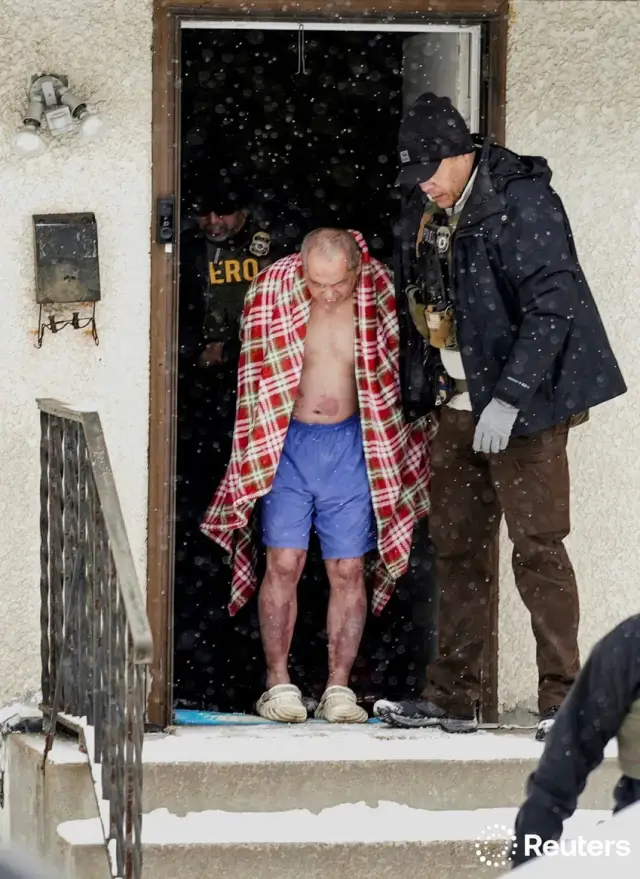
Elderly man wearing only shorts with a blanket over his shoulders is flanked by ICE officers on either side as he descends the front stairs of him home in the snow. “A man, whose family requested a Hmong interpreter, is detained after ICE agents and other law enforcement officers conducted an immigration raid at his home, days after an ICE agent fatally shot Renee Nicole Good, in St. Paul, Minnesota, U.S., January 18, 2026.REUTERS/Leah Millis” via @idreesali114.bsky.social on X
A reminder that “Freedom From Fear” is the fourth freedom of FDR’s visionary Four Freedoms: This morning we are learning that our addled, ailing, and unhinged leader sent the following message to the Prime Minister of Norway, Jonas Gahr Støre:
“Dear Jonas: Considering your Country decided not to give me the Nobel Peace Prize for having stopped 8 Wars PLUS, I no longer feel an obligation to think purely of Peace, although it will always be predominant, but can now think about what is good and proper for the United States of America. Denmark cannot protect that land from Russia or China, and why do they have a “right of ownership” anyway? There are no written documents, it’s only that a boat landed there hundreds of years ago, but we had boats landing there, also. I have done more for NATO than any other person since its founding, and now, NATO should do something for the United States. The World is not secure unless we have Complete and Total Control of Greenland. Thank you! President DJT”
We are also learning that the 11th Airborne, an Army unit that specializes in operating in arctic conditions, has been given “prepare-to-deploy” orders for possible deployment in “Minnesota”:
WASHINGTON (AP) — The Pentagon has ordered about 1,500 active-duty soldiers to be ready in case of a possible deployment to Minnesota, where federal authorities have been conducting a massive immigration enforcement operation, two defense officials said Sunday.
The officials, who spoke on condition of anonymity to discuss sensitive military plans, said two infantry battalions of the Army’s 11th Airborne Division have been given prepare-to-deploy orders. The unit is based in Alaska and specializes in operating in arctic conditions.
One defense official said the troops are standing by to deploy to Minnesota should President Donald Trump invoke the Insurrection Act, a rarely-used 19th century law that would allow him to employ active duty troops as law enforcement.
The move comes just days after Trump threatened to do just that to quell protests against his administration’s immigration crackdown.
A few days ago Trump declared himself, “The Acting President of Venezuela,” and implicitly the Emperor of the Americas. In recent days we’ve come to learn that he also now sees himself as the leader of Gaza, and is up to very Trumpian corrupt and malevolent shit there.
 Having successfully taken possession of both Gaza and Venezuela in recent weeks, at least in his own mind, Trump is clearly readying to grab his next possession. And it’s a big, icy European one.
Here’s what I wrote yesterday in my essay, Coming Together:
We are here now, deep into dangerous Mad King/Bond Villain territory. 2026 is no longer about affordability or restoring the ACA subsidies. It is about pro-democracy movement somehow coming together and forming a unified and far more powerful front against his dangerous Imperial and dictatorial designs.
In an ideal world, what we would see next week is a public statement signed by all Dem Governors, AGs, Senate and House Democrats that states clearly that
Rule of law must be re-established in America, ICE must be reined in, and Trump’s outrageous plunder and corruption must end
That he must back off his illegal and destructive territorial ambitions, end all these ridiculous tariffs, and re-commit to the Trans-Atlantic Alliance
Stake in ground. Unified voice. Muscular defense of liberty, democracy, and the American creed. Yes, it is time now for something akin to our Letter to America, and for our leaders to make clear, before it is too late, that we are willing to come together and fight for America, freedom, and democracy; and for us to start listing, clearly, his modern day “injuries,” “abuses,” and “usurpations.” That we elected an American President and not a dictator, and it is way past fucking time he start acting like one…….
I really don’t know how some leaders of the Democratic Party talked themselves into believing our politics was going to be about “kitchen table” issues and not “No Kings,” Trump’s escalating madness and the clear threat he represents to our freedoms, security, and prosperity. As I’ve been writing here for months the polling doesn’t even back up this strategic choice, as “threats to democracy” has been a top tier issue for voters since the summer. G. Elliott Morris has written about the provocative findings of that new CNN poll we discussed here on Friday:
But if you’re reading this and thinking that Democrats should only be focusing on the economy, since that’s what people say is their top issue (hellooo Chuck Schumer), check out this table showing the reasons people give for disapproving of Trump, in their own words: If you ask Americans who disapprove of Trump why they don’t like the job he is doing as president, the biggest single policy they will mention is immigration and deportations. Democracy in general is the category with the highest response percentage. After that is “the economy” in general terms, then corruption, then foreign military involvement, then a three-way tie between governance in general, being “unpresidential” in general, and the cost of living specifically.
So if you’re optimizing for decreasing Trump’s disapproval rating, this table suggests hitting the president on the economy might be a less successful strategy than hitting him on immigration, corruption, or his general vibe as president. People say the economy is, in general, important to them, and they say Trump is failing on it, but they do not overwhelmingly cite it as a reason for disapproving of his presidency.
In a presentation I gave to Dem State Chairs in May of last year I talked about how Democrats had developed a listening problem. That our roided up and arrogant data bros had developed narrow and rigid systems that were causing us to miss memes, ideas, sentiments pulsating through the electorate. In his seminal New Yorker essay and in our recent conversation Nathan Heller explains why he believes Democrats don’t understand how to navigate the emerging information environment, and remain wedded to old, outdated understandings of how information moves and opinions are formed. It’s one of the reasons why I hope the DNC chooses to release the most important elements of its look back on the 2024 election. We made some big, structural mistakes about how approached the big argument with Trump in the 2024 election cycle, and we must learn from those mistakes so we don’t make them again this year (which given the data above may already be happening).
What his all comes down to now is courage. Our must leaders must show far more courage. We must challenge Trump on “No Kings,” and his broader agenda of American sabotage, unprecedented plunder, and traitorous betrayal. For one of the great lessons of 2025 is that when we fight Trump head on, we can win. And we know from history that when authoritarians are not challenged, they perceive weakness, and it becomes an encouragement for escalation (like what we are seeing now).
We are Americans. Fighting for freedom and democracy is who we are, and what we do. We to need to get on with it now, meet the moment, and fight for “a new birth of freedom” here in this great country and everywhere around the world…..
More On Martin Luther King Holiday, Legacy
The Rev. Martin Luther King, hands extended upward, during a press conference (World Telegram & Sun photo by Dick DeMarsico).
The Contrarian, Opinion: Americans Should Understand MLK, Jr.’s True Legacy, Jennifer Rubin, right, Jan. 19, 2026. The Voting Rights Act was King’s greatest achievement.
We are celebrating Martin Luther King, Jr.’s legacy at the very moment when the Voting Rights Act, the seminal achievement of the Civil Rights Movement — which made pluralistic democracy a reality for the first time in American history — is on the chopping block at a Supreme Court dominated by MAGA hacks.
When Republicans mouth platitudes about King and wrongly insist the 14th and 15th Amendments prohibit Congress from taking race into account to remedy past discrimination, they are bastardizing history, ignoring the original meaning of the post-Civil War Amendments, overriding 60 years of precedent, and destroying King’s most important achievement.
After Bloody Sunday, King completed the march from Selma to Montgomery. He then delivered a speech — Our God is Marching On! — explaining the centrality of the right to vote in the fight against Jim Crow. “Our whole campaign in Alabama has been centered around the right to vote,” he said. “In focusing the attention of the nation and the world today on the flagrant denial of the right to vote, we are exposing the very origin, the root cause, of racial segregation in the Southland.”
Southern Whites had weaponized law enforcement and the courts to defend White supremacy and deny Blacks status as full citizens. Aided by “their control of mass media,” the ruling oligarchy in the Jim Crow South, King explained, “saturated the thinking of the poor White masses,” imposed segregation, and defended their power by preventing Blacks from voting to elect representatives who would advance their interests.Rev. Martin Luther King, hands extended upward, during a press conference / World Telegram & Sun photo by Dick DeMarsico.
As a result, Blacks and whites suffered. The oligarchs in power used the hysteria of White nationalism and the bogeyman of Black violence to distract from the government’s utter failure to provide basic social services, education, and economically equality. Rotten governance has continued. The South still experiences higher rates of poverty, gun violence, hunger, and infant and maternal morbidity than regions that have cultivated true democracy and held their leaders accountable.
And here we are again. An overtly White nationalist Trump regime has ginned up fear of “the Great Replacement,” “wokeism,” immigrant violence, and anti-white discrimination (not to mention fear of changing your child’s gender and of women taking men’s jobs). High prices? No healthcare? Never mind. The regime is keeping you safe from these threats to white male dominance.
History may not repeat, but it does rhyme. We recently saw that when people rise up, as they have done in Los Angeles, Minneapolis, Chicago, etc., to peacefully protest or demand their rights, the regime unleashes state-sponsored violence (just as it did in the last gasps of Jim Crow) to manufacture scenes of chaos and unrest. With carefully crafted state propaganda, the Trump regime tries to justify deploying even greater numbers of unhinged, untrained troops (who are told they have impunity to maim and kill protestors). Trump now dangles imposition of The Insurrection Act.
Change the location from Alabama 1965 to Chicago, Portland, or Minneapolis 2025-2026. Reverse roles of federal and state forces (now the Feds are the brutal, vicious, lawless ones). But whether 1965 or 2026, those in power use the same techniques to whip up white hysteria, paint nonwhites as aliens and threats to “real Americans,” and use the clash between armed police and people to traumatize all Americans.
In 2026, Trump hopes that the public will not focus on MAGA’s inflation-producing tariffs, denial of access to affordable healthcare coverage, deprivation of education (e.g., destroying the Department of Education, re-imposing huge student debt on financial aid recipients), increased inequality, and wholesale corruption. Just as in the pre-civil rights South, the only way MAGA can maintain power with such an unpopular, cruel agenda is by anti-democratic means. If they cannot be held accountable by voters at the ballot box, politicians need not fear those they have exploited or simply ignored from kicking them out of office.
And that requires Donald Trump and his MAGA lawyers to undo the seminal achievement of the Civil Rights Movement, the Voting Rights Act (VRA). (Trump has also taken to musing he will “cancel” the midterms, revealing his fascistic aim.) The Supreme Court is poised in Callais v. Louisiana to destroy the heart and soul of the VRA, Section 2.
The NAACP Legal Defense Fund, which argued the case at the Supreme Court, explains:
The VRA enshrined protections for voters across the country who were historically denied access to the ballot box. It was one of the most significant achievements of the Civil Rights Movement, ending Jim Crow-era tactics that prevented Black voters from exercising their fundamental rights. . . ... For the past 60 years, that fight has continued. Section 2 of the VRA, which prohibits racial discrimination in voting policies and district maps, is among the VRA’s most critical provisions to safeguard fair representation.
Upheld less than 3 years ago in Allen v. Milligan, Section 2 secures Black voters right to elect a candidate of their choice (i.e., preventing states from crowding Blacks into the fewest districts of spreading them out to dilute their vote). If the Supreme Court reverses Allen and strikes down the Louisiana map (that allowed a second Black congressional district in a state where the electorate is 30% Black), MAGA-controlled legislatures nationwide — but especially in the South — will use gerrymandering to undercut the ability of minority groups to elect representatives of their choice, the central legacy of the Civil Rights movement.
What then? Federal, state, and local Black and Hispanic representatives could be wiped out (again, especially in the South), and we will be back to one-party, white oligarchical rule. (In Jim Crow, the Democratic Party ruled, now it’s the Trump MAGA Party.) MAGA would face no obstacles in finalizing its reverse-Robin Hood economic scheme, assault on scientific research, and destruction of the Bill of Rights.
But even if MAGA justices, oblivious to history and indifferent to their legacy, go that route, White nationalists will not prevail. As King told listeners in 1965, peaceful protest will not abate until rights are secured:
Today, we should remember King’s legacy and the foundation of our pluralistic democracy (the VRA). Most of all, we must embrace our obligation to defend our sacred rights and democratic inheritance in the face of fear-mongering and state-inflicted violence. Let us march.
Morning Shots via The Bulwark, Political Opinion: Honoring MLK Today, Bill Kristol, Jan. 19, 2026. On November 2, 1983, President Reagan signed legislation officially proclaiming the third Monday in January a federal holiday in honor of Martin Luther King Jr.’s life and legacy.
So far as I can tell, our current president has issued no statement this year in recognition of Martin Luther King Jr. Day. Indeed, this administration’s only notice of the day seems to have come in late November of last year, when it announced that it had eliminated this holiday from the list of days with free entry to America’s national parks.
So if you go to a national park today, you’ll have to pay. But not if you go on June 14th, 2026. For Donald Trump’s Interior Department has announced that the schedule of “resident-only patriotic fee-free” days will include for the first time that date billed as “Flag Day/President Trump’s birthday.”
So petty. So pathetic.
Still, Martin Luther King Jr. Day remains a federal holiday. There is no federal holiday honoring the current occupant of the Oval Office. I trust there never will be. And it is heartening that the United States is still a country that, by law and consensus, honors King and not Trump.
If you want to reflect on real American patriotism and greatness, you might take a few moments today to read about the life and achievements of King and the civil rights movement he led. You might particularly find it worthwhile to read some of King’s own writings, and to listen to or watch some of his own words.
You might focus on the year 1963. In April of that year, he wrote his great “Letter from a Birmingham Jail” defending nonviolent civic action and expressing grave disappointment with the self-proclaimed “moderates” who in recent years had been reluctant to join wholeheartedly in the fight against injustice.
Of course, you ought to watch the magnificent “I Have a Dream” speech at the Lincoln Memorial in August 1963, one of the great speeches in American history. The “I have a dream” peroration is justly famous, but the whole speech—it lasts less than 20 minutes—is very much worth watching.
Just three weeks after that, King delivered a beautiful eulogy for the four young girls killed in the bombing of Birmingham’s Sixteenth Street Baptist Church—“unoffending, innocent, and beautiful . . . victims” of violence, the “martyred heroines of a holy crusade for freedom and human dignity.”
For what he had accomplished in his still short life, King was awarded the 1964 Nobel Peace Prize. In his acceptance speech, he emphasized that “I accept this award today with an abiding faith in America and an audacious faith in the future of mankind. I refuse to accept despair as the final response to the ambiguities of history.”
He added that,
Today I come to Oslo as a trustee, inspired and with renewed dedication to humanity. I accept this prize on behalf of all men who love peace and brotherhood. I say I come as a trustee, for in the depths of my heart I am aware that this prize is much more than an honor to me personally.
. . .
I accept this award in the spirit of a curator of some precious heirloom which he holds in trust for its true owners—all those to whom beauty is truth and truth beauty—and in whose eyes the beauty of genuine brotherhood and peace is more precious than diamonds or silver or gold.
The contrast in human spirit between the 1964 Nobel Prize recipient and the current wannabe winner in the Oval Office speaks for itself.
This year will mark our 250th birthday as a nation. The current administration will do everything it can to vulgarize and personalize the celebration. There will be much talk of American greatness and little evidence of it. But all the shouting and strutting won’t be able to conceal the fact that the malevolent charlatans who now dominate our national stage will sooner or later—and I trust sooner—be left behind, unlamented discards on the ash heap of history. Whereas the memory of the life and legacy of Martin Luther King Jr. will live on.
Letters from an American, Historical Commentary: January 18, 2026 [Heroes Then and Now], Heather Cox Richardson, right, Jan. 19, 2026. You hear sometimes, now that we know the sordid details of the lives of some of our leading figures, that America has no heroes left.
When I was writing a book about the Wounded Knee Massacre, where heroism was pretty thin on the ground, I gave that a lot of thought. And I came to believe that heroism is neither being perfect, nor doing something spectacular. In fact, it’s just the opposite: it’s regular, flawed human beings choosing to put others before themselves, even at great cost, even if no one will ever know, even as they realize the walls might be closing in around them.
It means sitting down the night before D-Day and writing a letter praising the troops and taking all the blame for the next day’s failure upon yourself in case things went wrong, as General Dwight D. Eisenhower did.
It means writing in your diary that you “still believe that people are really good at heart,” even while you are hiding in an attic from the men who are soon going to kill you, as Anne Frank did.
It means signing your name to the bottom of the Declaration of Independence in bold script, even though you know you are signing your own death warrant should the British capture you, as John Hancock did.
It means defending your people’s right to practice a religion you don’t share, even though you know you are becoming a dangerously visible target, as Sitting Bull did.
Sometimes it just means sitting down, even when you are told to stand up, as Rosa Parks did.
None of those people woke up one morning and said to themselves that they were about to do something heroic. It’s just that when they had to, they did what was right.
On April 3, 1968, the night before the Reverend Doctor Martin Luther King Jr. was assassinated by a white supremacist, he gave a speech in support of sanitation workers in Memphis, Tennessee. Since 1966, King had tried to broaden the civil rights movement for racial equality into a larger movement for economic justice. He joined the sanitation workers in Memphis, who were on strike after years of bad pay and such dangerous conditions that two men had been crushed to death in garbage compactors.
After his friend Ralph Abernathy introduced him to the crowd, King had something to say about heroes: “As I listened to Ralph Abernathy and his eloquent and generous introduction and then thought about myself, I wondered who he was talking about.”
Dr. King told the audience that if God had let him choose any era in which to live, he would have chosen the one in which he had landed. “Now, that’s a strange statement to make,” King went on, “because the world is all messed up. The nation is sick. Trouble is in the land; confusion all around…. But I know, somehow, that only when it is dark enough, can you see the stars.” Dr. King said that he felt blessed to live in an era when people had finally woken up and were working together for freedom and economic justice.
He knew he was in danger as he worked for a racially and economically just America. “I don’t know what will happen now. We’ve got some difficult days ahead. But it doesn’t matter…because I’ve been to the mountaintop…. Like anybody, I would like to live a long life…. But I’m not concerned about that now. I just want to do God’s will. And He’s allowed me to go up to the mountain. And I’ve looked over. And I’ve seen the promised land. I may not get there with you. But I want you to know tonight, that we, as a people, will get to the promised land!”
People are wrong to say that we have no heroes left.
Just as they have always been, they are all around us, choosing to do the right thing, no matter what.
Wishing us all a day of peace for Martin Luther King Jr. Day 2026.
Trump and the Global Stakes
Paul Krugman via Substack, Political-Economy Commentary: Big Business Should End Its Faustian Bargain With Trump, Paul Krugman, right, He’s out of control – and if you don’t hang together to counter him, you’ll hang separately.
When Donald Trump returned to power, America’s billionaires and the leaders of its biggest corporations rushed to prostrate themselves at his feet. Some of them, especially but not only among the tech bros, did so because they themselves wanted an authoritarian regime that would stamp our wokeness. I still recall the top banker who, after Trump won, told the Financial Times that “I feel liberated. We can say ‘retard’ and ‘pussy’ without the fear of getting cancelled… it’s a new dawn.”
Many business leaders, however, understood how dangerous Trump was — they knew he was the least qualified individual, intellectually, psychologically, and morally, ever to occupy the White House. In the aftermath of January 9th, many Fortune 500 corporations announced to great acclaim that they would stop donating to Republicans. But after a few months of Republican threats of retaliation, those companies quietly turned the spigot back on.
I am sure that they convinced themselves that the Trump of January 6 was an aberration. In their minds, with enough flattery and bribes donations, and with Treasury Secretary Bessent to quietly steer the ship, Trump could be managed the way he was during his first term. Bessent, they figured, was a sensible businessman like them. After all, Bessent had worked closely with George Soros – the bete noire of the Right -- and ultimately ran his own hedge fund. Trump’s anti-immigrant, anti-trade and anti-democracy rhetoric, they reasoned, was just a show in order to get elected.
Bessent certainly understood that he was a critical actor in this supposed charade. For example, when Trump first began threatening to impose enormous tariffs on our trading partners, Bessent avowed that this was only a “bargaining tactic” in order to calm panicked markets. Moreover, believing that the extremism was a charade was made much easier by Corporate America’s expectations of future profits from the conventional right-wing parts of his agenda: tax cuts plus increased freedom to pollute and defraud consumers, along with lax financial regulation and permissive anti-trust. No more pesky Democrats to get in their way.
Even now people continue to treat TACO — Trump Always Chickens Out — as if it were an established fact, although the past few weeks show that it’s just wishful thinking.
Granted, Trump sometimes appears to back down. We probably won’t be invading Greenland over the next few weeks. But this is only a temporizing tactic while he finds other means to escalate, such as imposing tariffs on countries that came to Greenland’s aid. Overall, Trump 47 is escalating, day by day.
The persistence of the TACO myth is part of the broader picture: Many people, especially in the business world, are still trying to convince themselves that they’ll do OK despite Trump’s craziness. Hey, the stock market is up, isn’t it? (It is, but US stocks, which are up 16 percent over the past year, have lagged stocks in other advanced countries, which rose 33 percent in 2025.)
Well, I have news for American business leaders: You will not do OK.
I’m not just talking about the threat Trump’s madness poses for corporate bottom lines, although that threat is larger than most people realize. For example, as Trump barrels into confrontation with Europe over Greenland, of all things — even I still have trouble believing that this is happening — I’m surprised not to see more people mention that U.S. corporations have invested around $4 trillion in Europe, investments that will definitely be at risk if this confrontation spirals out of control.
I’m also talking about the personal risks businesspeople increasingly face from a regime that demands abject, performative sycophancy.
Yesterday Scott Bessent, above, the purported grown-up in the room, appeared on TV, delivering a cringe-inducing defense of Trump’s apparent willingness to blow up NATO in order to gain control of Greenland (!):
Peace through strength. Make it part of the US and there will not be a conflict because the US right now, we’re the hottest country in the world, we’re the strongest country in the world. Europeans project weakness. The US projects strength.
Since the tariff-setting authority Trump is claiming only applies in a national emergency, Bessent was asked what national emergency justifies imposing tariffs in an attempt to seize Greenland. His answer: “The national emergency is avoiding a national emergency.”
Who knows what Trump has on Bessent, but it’s clear that Bessent made a Faustian bargain, selling his soul in return for … something. And the terms of the bargain clearly require that he humiliate himself in public on a regular basis. He no longer acts like a respectable Wall Street insider; now he behaves like a capo helping his mob boss run a protection racket.
The degradation of Scott Bessent serves as an illustration of where anyone who thinks they can manage Trump will end up. Corporate America needs to realize that they too must make Faustian bargains if they want to stay on Trump’s good side – and that the price of those bargains will be very high. Campaign contributions won’t be enough: they must pour money into Trump’s ballroom, and/or his family’s pocket, and/or his crazy adventures in places like Venezuela or Gaza. Refraining from criticism of Trump’s policies won’t be enough. Instead they must become sycophants, enthusiastically supporting Trump’s policies — especially if those policies are deeply stupid. If they don’t go along the punishment will be personal as well as financial.
Thus Trump lashed out at Darren Woods, CEO of ExxonMobil, for blurting out the obvious truth that Venezuelan oil is “uninvestable.” Then Jamie Dimon, CEO of JPMorgan, mildly suggested that undermining the Federal Reserve’s independence might be a bad idea. Dimon  didn’t even mention the truly disturbing part of the story, the announcement that the Department of Justice had begun an obviously groundless criminal investigation of Jerome Powell, the Fed chair, whose only crime was not taking Trump’s orders on interest rate policy. Sure enough, Trump not only lashed out at Dimon but threatened to sue JPMorgan for allegedly “debanking” him after Jan. 6. This comes from a president who has pardoned criminals convicted (sometimes multiple times) for defrauding consumers of billions of dollars.
The lesson for businesspeople is that Faustian bargains never end well. Take a lesson from watching Scott Bessent – appease Trump and he will demand that you debase yourself even further. It’s been astonishing how quickly corporate greed has been replaced by corporate fear: Businesses who hoped to profit from Trump now toe the line because they’re afraid of being punished.
But despite what corporate CEOs tell themselves, they do have a choice. The reality is that Trump is growing weaker by the day. Americans aren’t falling into line behind his attempted authoritarian takeover. On the contrary, their resistance is stiffening. The Trumpists can’t even cow Minneapolis into submission, let alone the rest of the country. As he flails wildly in an attempt to recapture his lost momentum, his policies keep getting crazier.
So businesspeople have a choice: Continue to abase themselves, destroying their dignity and their reputations, in an attempt to curry favor with a wannabe dictator who’s falling short, or show some spine. And that stiffening of the spine must be a collective endeavour.

Prime Minister Mette Frederiksen of Denmark has warned that an American attempt to take Greenland by force would “mean the end of the NATO alliance” (Pool photo by Yoan Valat). A map shows Greenland below.
Robert Reich via Substack, Opinion: Davos’s Duty, Robert Reich, right,Jan. 19, 2026. Today, CEOs and heads of state from around the world gather in Davos for the annual confab of the rich and powerful. Trump will be there, too.  They must denounce him.
Today, as more than 3,000 ICE and Border Patrol agents — possibly joined by 1,500 active duty military, as Trump threatened yesterday — patrol Minneapolis, hundreds of global CEOs and titans of finance and more than 60 prime ministers and presidents are gathering in Davos, Switzerland, for the annual confab of the world’s powerful and wealthy, called the World Economic Forum.
This year’s Davos meeting occurs at a time when Trump is not just unleashing his brown shirts on Minneapolis but also dismantling the international order that’s largely been in place since the end of World War II — threatening NATO, withdrawing from international organizations including the UN climate treaty, violating the United Nations Charter by invading Venezuela and abducting Nicolas Maduro, upending established trade rules, and demanding that the U.S. annex Greenland.
He’s even hiked tariffs on Denmark, Norway, Sweden, France, Germany, the United Kingdom, the Netherlands, and Finland — fellow NATO members that have expressed solidarity with Denmark in its refusal to yield to Trump’s demand to annex Greenland.
I hope the leaders now assembling at Davos speak out against Trump’s tyrannous assault on international laws and rules. Their collective repudiation of Trump would give other CEOs and world leaders cover to express their opposition as well. It could be a tipping point.
Will they? Trump is trying to stop them from doing so.
For example, he announced Saturday that he’s suing JPMorgan Chase, the largest bank in the United States, headed by one of the most prominent CEOs in the world — Jamie Dimon — who is now in Davos.
Trump said he’s suing JPMorgan “for incorrectly and inappropriately DEBANKING me after the January 6th Protest, a protest that turned out to be correct for those doing the protesting – The Election was RIGGED!”
Rubbish. There’s no evidence that Chase “debanked” Trump. (And obviously no evidence that the 2020 election was “rigged.”) Besides, if Trump thought the bank acted improperly, why would he be suing it now, five years later?
In reality, Trump’s lawsuit has nothing to do with any so-called “debanking.” Trump is suing JPMorgan Chase because last week Dimon came out publicly against Trump’s criminal probe of Fed Chair Jerome Powell, and apparently Trump worries about what Dimon might say at Davos.
Dimon’s opposition to the criminal investigation was couched in the mildest of terms: “Anything that chips away at [the Fed’s independence] is not a good idea. And in my view, will have the reverse consequences. It’ll increase inflation expectations and probably increase rates over time.”
Yet Dimon’s comment infuriated Trump.
Presumably, the reason Trump says he’ll sue JPMorgan “over the next two weeks” rather than immediately is because Trump wants to maximize the pressure on Dimon.
Dimon has a major speaking role at Davos. If Dimon uses it as an opportunity to blast Trump for taking a wrecking ball to the world economy as well as democracy, he gives cover to every other CEO and many heads of state to criticize Trump, too.
But if Trump can intimidate Dimon into silence, it’s unlikely any other CEO will risk it.
Hence, Trump’s shot across JPMorgan’s bow — aimed not so much at winning a lawsuit against the bank as silencing Dimon and others.
Does Dimon have enough integrity to put the bank’s profits and his own compensation ($770 million for 2025) at risk by speaking the truth — that Trump must be opposed by anyone still possessing power and integrity?
We will see, but I’m not betting on it. Dimon has shown time and again that he has more loyalty to JPMorgan than to the United States. His mild criticism of Trump for undermining the independence of the Fed could reflect no more than concern for his bank’s bottom line.
But who knows? Dimon will soon be retiring. This is his opportunity to be on the right side of history.
To ensure that the assembled CEOs and heads of state are cowed, Trump is traveling to Davos himself and taking with him the largest U.S. delegation ever to attend the meeting, including five Cabinet secretaries and other senior officials.
Will any prime minister or other head of state attending Davos dare repudiate Trump, when Trump is showing no qualms about raising tariffs on, or otherwise punishing, countries that oppose him?
Perhaps, but at most meekly and indirectly. Who wants to taunt the bear?
Yet Dimon and others at Davos must speak out against what is occurring. If there were ever a time for world leadership, it is now.
Davos’s excuse for existing is supposed to be world leadership — although its attendees have not exactly distinguished themselves in the past by their fealty to democracy, social justice, or the rules of international law. Some are directly benefiting from Trump’s tax cuts and regulatory rollbacks. Many occupy their positions precisely because of their reluctance to rock any big boats or cause any trouble.
Yet if there were ever a time for them to speak out, it is now. This is their opportunity. It is also their duty. The world needs to hear from world leaders a clear and firm denunciation of the havoc Trump is wreaking.
More On Federal Raids, Protests
New York Times, Before Urban Raids, Border Patrol Tested Tactics in California Farm Country, Orlando Mayorquín and Jesus Jiménez, Visuals by Mark Abramson, Jan. 19, 2026. hust before President Trump took office, Border Patrol agents led by Gregory Bovino arrested immigrants in Kern County using the same playbook later seen in places like Chicago and Minneapolis. Then a federal judge ordered them to stop.
Before the Border Patrol embarked on its high-profile raids in Los Angeles, Chicago, Charlotte, New Orleans and Minneapolis, it tried out its tactics a year ago in Kern County, in California’s agricultural heartland.
A lawsuit filed against the federal government over its operations in Bakersfield and other parts of Kern County claimed that in some instances, Border Patrol agents had not identified themselves or presented warrants. In others, people were grabbed with force, and their requests to call a lawyer were denied.
And in one case, the lawsuit said, agents stopped a U.S. citizen driving a truck, slashed the tires, blocked the truck with another vehicle, arrested the driver and then released him a few hours later.
The raids last January, in the last days of the Biden administration, initially drew little attention outside the farm country of California’s Central Valley. At the time, the eyes of the world were focused on the two vast wildfires raging in Los Angeles County.
But the Border Patrol’s actions in Kern County, which it called Operation Return to Sender, can be seen as a blueprint for the broader immigration crackdown that was to come. Similar tactics have become part of the agency’s standard playbook in other places, including Minnesota, where federal immigration agents are making hundreds of arrests amid sustained protests from local leaders and residents.
New York Times, Trump Said He’d Unleash the Economy in Year 1. Here’s How He Did, Ben Casselman, Produced by Jacqueline Gu and Rebecca Lieberman,.featured Jan. 18-19, 2026 (interactive).
President Trump campaigned in 2024 on promises to “end inflation,” bring back manufacturing jobs and deliver an economic boom. A year after he returned to the White House, he has yet to deliver on those pledges. Still, there has been progress in some areas, and the economy has proved surprisingly resilient.
Here are eight of the promises Mr. Trump made as a candidate, and where things stand after his first year back in office.Food PricesCampaign rally in Pittsburgh, Nov. 4, 2024“A vote for Trump means your groceries will be cheaper.”Hasn’t happened
Prices are down for a few specific grocery categories, like eggs, but are up sharply in others, like beef. Overall, food inflation has slowed significantly since peaking in 2022, but it has actually picked up somewhat since Mr. Trump returned to office — December saw the biggest one-month increase in grocery prices since 2022.
More Global News
New York Times, Live Updates: At Least 39 Are Dead in High-Speed Train Crash in Spain, Jason Horowitz and José Bautista, Jan. 19, 2026. Rescuers were trying to retrieve bodies from the wreckage after two trains crashed in southern Spain. A labor union said it had warned authorities last year about problems with Spain’s rail infrastructure.
Survivors of a high-speed train crash in southern Spain described harrowing scenes from the collision, with bodies thrown from mangled train cars, as a labor union said that it had recently warned authorities that increased traffic had caused railway infrastructure to deteriorate.
The union, which represents Spanish train drivers, said it had sent a letter last August asking the state-owned rail operator and Spain’s railway safety agency to look into suspected flaws on lines across Spain, including the site where two high-speed trains collided late Sunday, killing at least 39 people.New York Times, Opinion:
U.S. Law, Courts, Crime, Justice
New York Times, Trump Administration: Man Acquitted of Shining a Laser at Marine One With Trump Aboard, Alexandra E. Petri, Jan. 19, 2026 (print ed.). A jury found the man, Jacob Samuel Winkler, not guilty after just 35 minutes of deliberation. He was charged in September with pointing a laser at an aircraft.
A Washington man who was accused of aiming a laser pointer at Marine One, the presidential helicopter, as it was leaving the White House in September with President Trump aboard was acquitted on Tuesday, according to court documents.
A jury found the man, Jacob Samuel Winkler, 33, not guilty after just 35 minutes of deliberation, lawyers representing Mr. Winkler said.
Alexis Gardner, a federal public defender for Mr. Winkler, called the case “a clear example of misuse of prosecutorial discretion.”
She said federal resources were spent charging a man “whose alleged weapon was a cat toy key chain,” adding that it was “time and money diverted from real public safety threats.”
“Their verdict confirmed what should have been obvious from the start: Mr. Winkler committed no crime, and this prosecution was an unjust exercise of power,” she added.
Federal prosecutors who tried the case did not immediately respond to requests for comment on Sunday. The White House also did not respond to a request for comment on Sunday.
Mr. Winkler was arrested in September and charged with pointing a laser at an aircraft, a federal felony. When a laser pointer reaches a cockpit, the light can disorient or “completely incapacitate” a pilot, the Federal Aviation Administration has said.
According to a criminal complaint, Mr. Winkler was standing on the sidewalk on Constitution Avenue when a uniformed Secret Service officer saw him shine a red laser beam at the president’s helicopter, which was flying at a low altitude during its initial ascent from the South grounds of the White House.
Mr. Trump was traveling to Virginia to give a speech.
The complaint said Mr. Winkler had also pointed the laser at the uniformed Secret Service officer before directing it at the helicopter.
Mr. Winkler appeared to have done so in retaliation for the officer pointing his flashlight at him, according to the complaint, which said that the officer was trying to observe him because he was being loud, talking to himself and did not have a shirt on.
After the jury’s verdict, Judge Beryl A. Howell of the United States District Court for the District of Columbia ordered Mr. Winkler acquitted, discharged and any bond exonerated, according to court records.
The verdict represented a setback for Jeanine Pirro, the U.S. attorney in Washington, who has adopted the administration’s aggressive approach to combating street crime in the city and on those who defy federal crackdowns.
Jan. 18
The Parnas Perspective, Important Sunday Night Update: Europe Reaches Breaking Point with Trump, Army Prepares for Possible Minnesota Deployment, and more, Aaron Parnas, right, Jan. 18, 2026. We have a lot of news to cover today from Donald Trump preparing to possibly deploy a highly skilled army unit to the streets of Minneapolis to the fact that the effort to annex Greenland might not be Trump's only focus in the Western Hemisphere, how he has now privately complained to aides about Canada.
Meanwhile, Europe is turning against the United States of America, preparing to do something it has never done before, invoke what it's called a trade bazooka.
There's a lot of information that happened throughout the day today that you need to know about.
I do want to talk to you about something important to me, because yesterday I was asked by a high schooler. I was on a Zoom call, and he specifically said, Aaron, how do you continue to maintain a straight face and continue to pursue advocacywithout leaning into some type of partisan lens and try to push a narrative? Well, my goal here isn't a partisan narrative. It's to just tell the truth, to just tell the facts. I think one of the biggest problems in American society today is the lack of civics, media literacy, and ethics education in classrooms across America.Aaron ParnasJan 18, 2026
Good evening everyone—I hope you had an amazing Sunday and an even better weekend. There’s a lot of news to cover today, and I want you to scroll down and dive in. But before you do, I want to pause on something that matters deeply to me.
We are not living through normal times. Yesterday, a high school student asked me how I manage to report the news “neutrally” in a moment like this. My answer was simple: neutrality does not mean normalizing the moment we’re in. And this moment is anything but normal.
It’s not normal to live in a constant flood of breaking news designed to exhaust and overwhelm us. It’s not normal for Americans to feel this divided, this distrustful, this burned out. It’s not normal for the news to consume us instead of inform us.
And the moment we accept this as normal is the moment we fail—civically, collectively, and personally. That’s where my work comes in.
My form of advocacy is not partisanship. It’s clarity. It’s sharing accurate, verified information with households across the country so you don’t have to wade through chaos to understand what’s actually happening. It’s helping bridge the gap left by the absence of civics and media literacy in so many classrooms. It’s giving you context, not noise—facts, not fear.
If this kind of reporting matters to you—if you believe staying informed shouldn’t feel overwhelming or performative—I hope you’ll consider subscribing to this newsletter and sharing it with someone who needs it. Subscriptions don’t just support my work; they help build a community of readers who refuse to let dysfunction become the default.
Now, let’s get into the news.
Europe reaches breaking point with Trump: European leaders unite in rare public defiance after President Trump threatens escalating tariffs on key allies unless Denmark cedes Greenland, exposing the collapse of Europe’s appeasement strategy, deepening strains within NATO, and accelerating doubts about the U.S. as a reliable security and trade partner.
It has officially been one month since the Trump Administration violated the Epstein Files Transparency Act. 30 days ago, the Trump Administration was required to release all of the Epstein files. They have failed.
The Pentagon directed roughly 1,500 active-duty soldiers to prepare for a potential deployment to Minnesota after President Trump threatened to invoke the Insurrection Act amid protests, a step city leaders said risked escalating tensions, with Minneapolis’s mayor warning the administration was attempting to “bait protesters” in order to justify sending in federal troops.
The two Army battalions the United States is preparing to possibly deploy in Minnesota consist of 1,500 paratroopers from one of the Army's most elite units, per ABC. This unit is traditionally used to protect America from Chinese aggression in the Pacific.
Bruce Springsteen told ICE to get out of Minneapolis: “Get the fuck out of Minneapolis”:
Hundreds of counterprotesters shut down a far-right, pro-ICE rally in Minneapolis, chasing off activist Jake Lang after he promoted anti-Muslim rhetoric and threatened to “burn a Quran,” as residents protested aggressive federal immigration enforcement; one demonstrator summed up the mood: “You are not welcome in Minneapolis… stay out of our city, stay out of our state.”
According to Bloomberg, the Trump administration announced plans for a new Gaza Board of Peace and set a $1 billion price tag for countries seeking permanent seats, telling potential members they could bypass term limits by contributing at least $1 billion in the board’s first year—an approach diplomats described as creating a “mini-UN” shaped by financial buy-in rather than consensus. This has caused major corruption concerns around the world. I broke it down here:
The Trump White House intensified pressure on the press when press secretary Karoline Leavitt was recorded warning CBS News to air a Trump interview “in full” or “we’ll sue your ass off,” a threat that underscored growing concerns about legal intimidation, editorial independence, and the chilling effect on journalistic freedom.
NBC News has confirmed that President Trump privately intensified his focus on Canada, complaining to aides that the country was vulnerable to Russia and China in the Arctic and pushing for expanded U.S.-Canadian military cooperation, as part of a broader effort to “solidify” American dominance in the Western Hemisphere alongside his push to acquire Greenland.
European leaders weighed deploying the EU’s never-before-used “trade bazooka,” the Anti-Coercion Instrument, after Trump threatened escalating tariffs on Denmark and seven other European allies unless the U.S. was allowed to buy Greenland, prompting an emergency EU meeting and a united statement warning the tariff threats were “blackmail” that could trigger a dangerous spiral and damage transatlantic relations.
Thousands of Danes protested in Copenhagen against the Trump administration’s push to acquire Greenland, donning “Make America Go Away” hats and warning that Trump’s rhetoric and new tariffs on Denmark riskand its allies were straining alliances, fueling public fear, and threatening NATO, with one Greenlandic lawmaker stating plainly: “Greenland is not for sale.”
An Army Reserve helicopter pilot said his wife, a Venezuelan asylum seeker with no criminal record, was detained by ICE during a routine check-in days after their wedding and denied bond, highlighting how the Trump administration’s immigration crackdown has ensnared legally present migrants and torn apart families despite pending asylum cases and military service ties.
President Trump’s pardon of former Puerto Rico Gov. Wanda Vázquez Garced initially failed to cover a separate criminal docket tied to her guilty plea in a campaign finance case, leaving part of the prosecution technically active and prompting the White House to prepare an additional pardon document, a lapse critics said reflected repeated procedural breakdowns that undermined confidence in the rule of law.
According to the Guardian, Fifa officials privately expressed growing embarrassment over awarding Donald Trump its peace prize, with senior sources saying the decision had become “deeply embarrassing” amid U.S. airstrikes abroad, the jailing of Venezuela’s president, and Trump’s threats toward Greenland, even as Fifa publicly stood by the award and defended its close relationship with the White House ahead of the 2026 World Cup.
Senator Elissa Slotkin warned that the Trump administration was using authoritarian-style intimidation—legal threats, investigations, and public vilification—to silence critics, chill free speech, and divert attention from unresolved domestic crises like housing affordability and the cost of living.
President Trump called for “new leadership in Iran,” in a new interview with Politico, declaring Ayatollah Ali Khamenei responsible for the “complete destruction” of the country after weeks of deadly protests and mass killings, escalating a war of words with Tehran even as the administration abruptly stepped back from earlier threats of U.S. military intervention.

Senior military leaders look on at Marine Corps Base Quantico on September 30, 2025 in Quantico, Virginia.
Letters from an American, Historical Commentary: January 17, 2026 [Kingly Anger], Heather Cox Richardson, right, Jan. 18, 2026. After the extraordinary pushback on President Donald J. Trump’s bizarre demand for Greenland, he has responded with what economist Paul Krugman called “a howl of frustration on the part of a mad dictator who has just realized that he can’t send in the Marines.”
In a long screed this morning, Trump’s social media account said the president is placing tariffs of 10% on all goods from the countries currently protecting Greenland after February 1, and that the tariffs will increase to 25% on June 1. The post says the tariffs will be in effect “until such time as a Deal is reached for the Complete and Total purchase of Greenland.”
This post is bonkers on many levels. On the most basic: where is he thinking he’s going to find the money for “the complete and total purchase of Greenland?” And besides, the countries involved—Denmark, Finland, France, Germany, the Netherlands, Norway, Sweden,and the United Kingdom—are all U.S. allies. Economist Justin Wolfers notes this trade war will include the entire European Union, for “[a] trade war with one EU country is a trade war with the entire EU.”
The post also makes explicit that Trump is trying to use tariffs not to nurture the American economy but to force other countries to do his bidding. The question of whether his tariff wars are constitutional because they address what he claims is an economic emergency is currently before the Supreme Court. Two lower courts have found that the president does not have the power to levy the sweeping tariffs he has been announcing. Today’s tariff announcement does not refer at all to economic need but rather is about economic coercion.
 Finally, in its insistence that only the U.S. can “protect” Greenland, the screed echoed Russian president Vladimir Putin’s promises to “protect” Ukraine. Ignoring the reality that Greenland is part of the North Atlantic Treaty Organization (NATO), the world’s strongest defense alliance, it said that Greenland and Denmark, of which Greenland is a part, “currently have two dogsleds as protection, one added recently.” It also added that the protection Trump insists only U.S. ownership of Greenland can provide might also include “the possible protection of Canada.”
As huge demonstrations of solidarity broke out today in Copenhagen and Nuuk, the capitals of Denmark and Greenland, respectively, both the European Council, made up of the heads of state or governments in the European Union, and the European Commission, the primary executive branch of the European Union, weighed in on Trump’s threats.
President of the European Council António Costa and President of the European Commission Ursula von der Leyen issued a joint statement, underlining that “[t]erritorial integrity and sovereignty are fundamental principles of international law. They are essential for Europe and for the international community as a whole.” The two leaders reiterated that they are committed both to dialogue with the U.S. and to standing firm behind Denmark and the people of Greenland.
“Tariffs would undermine transatlantic relations and risk a dangerous downward spiral,” they wrote. “Europe will remain united, coordinated, and committed to upholding its sovereignty.”
The European Union High Representative for Foreign Affairs and Security Policy, Kaja Kallas—the EU’s chief diplomat—wrote: “China and Russia must be having a field day. They are the ones who benefit from divisions among Allies. If Greenland’s security is at risk, we can address this inside NATO. Tariffs risk making Europe and the United States poorer and undermine our shared prosperity.”
Representatives from the twenty-seven countries in the European Union are holding an emergency meeting tomorrow.
Meanwhile, lawmakers in the EU say they will not ratify a new trade agreement the European Commission and Trump signed last July. Some lawmakers are talking about using a trade “bazooka” against the U.S., a range of measures outlined in the E.U.’s Anti-Coercion Instrument that punish trade rivals trying to coerce the E.U. Those include trade restrictions and restricting investment in the E.U.
Meanwhile, Reuters reported today that Trump appears to be trying to set up his own organization to rival the United Nations. The administration has sent letters to leaders from several countries inviting them to be part of a “Board of Peace” led by the U.S. The board would first tackle the crisis in Gaza and then go on to take on other crises around the world.
Bloomberg reported today that the draft charter for the proposed organization makes Trump the board’s first chair and gives him the power to choose a successor. He would decide what countries can be members. Each member state would get one vote in the organization, but the chair would have to approve all decisions. The draft says that each member state has a term of no more than three years unless the chair renews it, but that limit doesn’t apply to any member states “that contribute more than USD $1,000,000,000 in cash funds to the Board of Peace within the first year of the Charter’s entry into force.” The draft suggests that Trump himself will control that money.
Last night, U.S. District Judge Katherine Menendez in Minneapolis prohibited agents from the Department of Homeland Security from retaliating against or arresting peaceful protesters or using pepper spray or other less-lethal weapons against them. Menendez also prohibited agents from stopping or detaining people following their vehicles.
The descriptions in the decision of how agents have treated protesters are detailed and damning. The plaintiffs submitted sworn testimony. In contrast, the judge notes, the agents “did not provide sworn declarations from immigration officers (or others) who witnessed or were themselves directly involved,” but instead relied on the declaration of the acting field office director for the ICE St. Paul Field Office, David Easterwood—who was not present at any of the incidents—that the agents said the protesters had obstructed their activities.
Yesterday Fox News broke the story that the Department of Justice is investigating both Minnesota governor Tim Walz and Minneapolis mayor Jacob Frey on criminal charges for allegedly impeding the work of law enforcement officers in the administration’s surge of agents to their state.
Trump’s reliance on bogus investigations to establish a narrative is well established. This tactic of launching investigations to seed the idea that a political opponent has committed crimes has been a staple of the Republican Party since at least the 1990s. As the media reported on those investigations, people assumed that there must be something to them. Trump adopted this tactic wholeheartedly, most famously when he tried to force Ukraine president Volodymyr Zelensky to announce he was opening an investigation into Hunter Biden—not actually to open the investigation, but simply to announce it—before Trump would release to Ukraine the money Congress had appropriated it to help it fight off Russia’s invasion.
The Trump administration is trying hard to project dictatorial strength and power, but the narrative is slipping away from it.
For all of Trump’s bluster about U.S. trade, the world appears to be moving on without the U.S. Prime Minister Mark Carney of Canada visited Beijing this week, the first visit of a Canadian prime minister to China since 2017. On Friday, Canada broke with the U.S. and struck a major deal with China, cutting its tariff on Chinese electric vehicles in exchange for China’s lowering its tariffs on Canadian canola seed. Carney posted on social media: “The Canada-China relationship has been distant and uncertain for nearly a decade. We’re changing that, with a new strategic partnership that benefits the people of both our nations.”
Trump’s triumphant narrative is not working at home, either. A new CNN poll released Friday shows that fifty-eight percent of Americans believe that Trump’s first year in office has been a failure. Americans worry most about the economy, but concerns about democracy come in second. The numbers beyond that continue to be bad for Trump. Sixty-six percent of Americans think Trump doesn’t care about people like them. Fifty-three percent think he doesn’t have the stamina and sharpness to serve effectively as president.
Sixty-five percent of Americans say Trump is not someone they are proud to have as president.
In Virginia today, former representative and former intelligence officer Abigail Spanberger took the oath of office as the commonwealth’s seventy-fifth governor, the first woman to hold that position. In her inaugural address, she celebrated the peaceful transfer of power and called for Virginians to work together to make life more affordable and embrace progress, writing a new chapter in the state’s history.
“As we mark 250 years since the dawn of American freedom: What will our children, grandchildren, and their descendants write about this time in our Commonwealth’s history—this chapter—50, 100, and 250 years from now?” she asked.
“Will they say that we let divisions fester or challenges overwhelm us? Or will they say that we stood up for what is right, fixed what is broken, and served the common good here in Virginia?
Today, we’re hearing the call to connect more deeply to our American Experiment—to understand our shared history, not as a single point in time, but as a lesson for how we create our more prosperous future. And so I ask—what will you do to help us author this next chapter?”
More On U.S. Politics, Governance
New York Times, In Minneapolis, a Pattern of Misconduct Toward Protesters, Stephanie Saul, Jan. 18, 2026. Legal and criminal justice experts said a ruling by a federal judge last week revealed conduct by immigration agents that evokes the civil rights era.
A protester detained, her bra removed and wedding ring cut off, and some of her clothes never returned. The “gratuitous deployment” of pepper spray. A couple’s car surrounded by agents, who pointed semiautomatic weapons at them at close range.
A federal judge in Minneapolis cited the episodes in an unusually detailed ruling on Friday that found a pattern of misconduct by Immigration and Customs Enforcement officers and ordered them and other immigration agents to stop using excessive force against protesters while conducting their operations in the city.
In some ways, legal experts said, the judge’s order was fairly mundane because it merely ordered the federal agents to follow established constitutional law, permitting peaceful protests.
In other ways, it stood out.
“Extraordinary,” Michele Goodwin, a law professor at Georgetown University, said of the decision. The judge, she said, reviewed dozens of witness declarations and video evidence and found conduct “alarming enough, dangerous enough that the court has imposed a preliminary injunction.”
Protesters and state officials have for weeks been calling on the federal government to withdraw its immigration agents from Minneapolis, a movement that has only intensified since Renee Good was shot and killed on Jan. 7 by Jonathan Ross, an ICE officer.
In late December, the American Civil Liberties Union, on behalf of several protesters, filed a complaint against the federal government and its agents seeking to protect the protesters’ rights to speech, assembly and unlawful search and seizure.
The court order was based on earlier interactions that immigration agents had with protesters that did not gain as much attention as the killing of Ms. Good. The accounts described in the order were submitted to the court from declarations and video submissions from both parties.
Ms. Goodwin was one of several legal scholars and criminal justice experts who said the conduct of ICE agents during Operation Metro Surge, the government’s name for its immigration crackdown in Minneapolis, evoked the attacks by police officers in Birmingham, Ala., on civil rights protesters in 1963.
David Rudovsky, a University of Pennsylvania law professor, also noted the similarities. “I think about the civil rights movement in the South and how Southern law enforcement reacted with hoses, dogs and lynchings,” he said.
Images of Birmingham’s police dogs sinking their teeth into protesters shocked the world. The aggressive conduct of federal agents in Minneapolis has also raised alarm, particularly following the shooting death of Ms. Good.The constitutional principles at risk are the same.

New York Times, Noem Denies Use of Chemical Agents in Minnesota, Then Backtracks, Minho Kim, Jan. 18, 2026. Kristi Noem, above, the homeland security secretary, said officers had not used pepper spray and similar measures limited by a judge’s order, then was confronted with a video that showed chemical agents deployed.
Kristi Noem, the homeland security secretary, denied in a televised interview on Sunday that her department had used pepper spray and similar tactics curtailed by a judicial order issued last week, then backtracked and blamed protesters after being confronted with a video of federal agents deploying such measures against crowds in Minnesota.
“That federal order was a little ridiculous, because that federal judge came down and told us we couldn’t do what we already aren’t doing,” Ms. Noem said on CBS’s “Face the Nation.”
But after being pressed on a video that backed up the accounts provided to the court, she changed course. Protesters were to blame for the use of force, she said, adding that federal officers “only use those chemical agents when there’s violence happening and perpetuating.”
The ruling on Friday by Judge Kate M. Menendez of the Federal District Court in Minnesota said that chemical agents had been used against protesters on at least four separate occasions and called the evidence of their use “uncontroverted.”
“Federal agents used chemical irritants” to punish protesters for exercising “protected First Amendment rights to assemble and to observe and protest ICE operations,” the judge wrote in issuing her injunction, referring to Immigration and Customs Enforcement.
In response to an inquiry about Ms. Noem’s comments, Tricia McLaughlin, a homeland security spokeswoman, did not comment on Ms. Noem’s initial denial and backtracking of immigration agents’ use of force. Instead, she emphasized that assaulting and obstructing law enforcement is a felony, and accused protesters of tampering with agents’ vehicles and attacking officers with fireworks and automobiles.
U.S. Media, Education, Education
New York Times, One Month Later, CBS Airs Postponed ‘60 Minutes’ Report With Few Changes, Michael M. Grynbaum, Jan. 18, 2026. A 13-minute segment about Venezuelan men deported by the Trump administration had been pulled at the last minute by CBS News’s editor in chief, Bari Weiss.
CBS News faced a firestorm last month after its new editor in chief, Bari Weiss, postponed a “60 Minutes” report hours before it was set to air. Ms. Weiss said the piece, which featured the stories of Venezuelan men deported by the Trump administration to a brutal Salvadoran prison, needed work; the correspondent who reported the segment called the decision “political.”
 The 13-minute report finally aired on Sunday’s episode of “60 Minutes” without any changes to the version that the correspondent, Sharyn Alfonsi, originally finished last month. (That version was accidentally streamed by a Canadian broadcaster, and then circulated widely online.)
But CBS News added two short segments, at the beginning and the end of the report, that included new comments from the Trump administration and additional details about the criminal backgrounds of the Venezuelan men who were sent to the prison, addressing two concerns that Ms. Weiss had previously expressed.
The decision by CBS to air the segment came after days of tense discussions among top personnel. Ms. Weiss wanted to make changes within the piece that was originally scheduled to run last month; Ms. Alfonsi refused, arguing that it would set a poor precedent for the program’s editorial independence, according to two people briefed on internal discussions.
Ms. Weiss,shown below, and her allies believed the changes they requested were reasonable, and they were frustrated by Ms. Alfonsi’s unwillingness to  adjust her report, according to two people familiar with their thinking.
In a statement on Sunday, CBS News said that its “leadership has always been committed” to airing Ms. Alfonsi’s segment. “Tonight, viewers get to see it, along with other important stories, all of which speak to CBS News’s independence and the power of our storytelling,” the network said.
Most of the new material appeared in a concluding segment that Ms. Alfonsi taped in the “60 Minutes” studio over the weekend. She noted in the new material that 33 of the 252 Venezuelan prisoners had been convicted of a crime in the United States, and reiterated a statistic from the original report that eight had been convicted of a violent or potentially violent crime.
Ms. Alfonsi also noted that the Department of Homeland Security had provided a photograph in recent days showing that one of the two detainees featured in the “60 Minutes” segment once had a tattoo of a swastika on his arm. The man had modified the tattoo when he sat for his “60 Minutes” interview.
“He told us he got the offensive tattoo at 15 and didn’t know what it meant,” Ms. Alfonsi told viewers, adding that experts on Latin American gangs told “60 Minutes” that swastikas had no symbolic meaning for the Venezuelan gang Tren de Aragua.Editors’ PicksA New Look at the Sex-Abuse Case Against TV’s ‘Frugal Gourmet’One Was Ready for a Life Partner. The Other, a ‘Vaccine Summer.’The Dinner Yotam Ottolenghi Can’t Wait to Eat in Front of the TV
Ms. Weiss’s decision in December to pull the report rattled “60 Minutes” journalists. In a memo at the time to her colleagues, Ms. Alfonsi called her story “factually correct” and wrote that she believed the decision to postpone it was “not an editorial decision, it is a political one.”
New York Times, 'We’ll Sue’: White House’s Warning to CBS Is Sign of a New Media Status Quo, Michael M. Grynbaum and Benjamin Mullin, Jan. 18, 2026 (print ed.). In previously unreported remarks, the White House press secretary Karoline Leavitt told CBS News that Mr . Trump would “sue” the news outlet if it did not air an interview unedited.
It was an aside, caught on camera, that said a lot about the uneasy business of conducting journalism today.
Moments after President Trump finished taping a 13-minute interview on Tuesday with the “CBS Evening News” anchor Tony Dokoupil in Michigan, Karoline Leavitt, the White House press secretary, approached Mr. Dokoupil and his colleagues to convey a message from the president.
“He said, ‘Make sure you guys don’t cut the tape, make sure the interview is out in full,’” Ms. Leavitt said in an even tone, according to a recording of the exchange obtained by The New York Times.
“Yeah, we’re doing it, yeah,” Mr. Dokoupil, right, responded.
Ms. Leavitt replied: “He said, ‘If it’s not out in full, we’ll sue your ass off.’”Karoline Leavitt Exchange With CBS News
In 2024, Mr. Trump did sue CBS over the editing of a “60 Minutes” interview — and the network’s corporate parent paid $16 million to settle the case, even though many legal experts said it had little merit.
Some of the CBS personnel who were there absorbed Ms. Leavitt’s remarks as being in jest, according to a person familiar with their thinking. CBS News aired the full unedited interview that evening, which the network said was its plan all along.
 “The moment we booked this interview, we made the independent decision to air it unedited and in its entirety,” CBS News said in a statement on Saturday.
Ms. Leavitt, right, reached for comment, said: “The American people deserve to watch President Trump’s full interviews, unedited, no cuts. And guess what? The interview ran in full.”
Not long ago, the notion of a White House press secretary’s casually threatening a lawsuit if a journalist does not obey her orders would be shocking.
But Mr. Trump has made abundantly clear that he is serious about pursuing legal or regulatory action against media outlets whose coverage displeases him.

Robert Reich via Substack, Sunday thought: It's time again for good trouble, Robert Reich, right, Jan. 18,2026. Time to take action against Trump's mayhem.
Tomorrow we honor the birthday of Martin Luther King Jr.
Trump has removed MLK Jr.’s birthday from the National Park Service’s fee-free days and substituted his own birthday of June 14 as a fee-free day.
I write this more in sorrow than in anger.
All told, I feel profound sorrow for America. Sorrow for the people of Minneapolis who are enduring this Trump-made hell. Sorrow for Renee Good’s three children and wife.
I also feel sorrow for Greenlanders and Venezuelans and others around the world fearing what the sociopath in the Oval Office may do next. Sorrow for everyone justifiably worried about the future of America and the planet because of him.
I’m old enough to remember when Martin Luther King Jr.’s mission seemed impossible. Just as the mission you and I must now engage in — defeating Trumpism and creating a new and better America out of the rubble and chaos he is wreaking — may seem impossible at this moment.
Martin Luther King Jr. accomplished more than anyone thought he could when he began. He did it with patience and perseverance, with the strength of conviction. He did it with calmness, reason, and quiet passion.
And he did it with civil disobedience — what one of his assistants, the late great congressman John Lewis, called “good trouble.”
Good trouble meant mobilizing the nation against racial injustice by making sure almost everyone saw its horrors. Night after night on the news — watching peaceful civil rights marchers getting clobbered by white supremacists.
I remember watching Bull Connor, commissioner of public safety in Birmingham, and his goons use firehoses and attack dogs against Black people — including children — who were peacefully standing up for their rights.
The scenes horrified America and much of the world. Yet were it not for our painful national exposure to racist brutality, we wouldn’t have gotten the Civil Rights Act or the Voting Rights Act.
I’ve been thinking of those scenes as I’ve watched ICE thugs patrolling Minneapolis. Watched armed agents pulling people out of cars, using chokeholds, demanding proof of citizenship. Masked agents in unmarked vehicles grabbing neighbors off the streets, using tear gas and pepper spray, shooting innocent people exercising their First Amendment rights to protest.
This time it isn’t Bull Connor and his racist goons. It’s Donald Trump, JD Vance, Kristi Noem, Stephen Miller, and their fascist goons. It’s armed agents of the president of the United States who are bullying and brutalizing people. Committing a cold-blooded murder of a middle-class white woman in broad daylight who tried to get out of their way. Shooting and injuring others.
This time it’s Trump and the thugs around him making up stories to justify this brutality, lying about the protester’s motives, and threatening even more brutality.
Take a wider look and you see their lawless bullying on a different scale: a criminal investigation of the chairman of the Federal Reserve Board for failing to lower interest rates as fast as Trump wants. Criminal investigations of U.S. senators and representatives for telling America’s soldiers that they don’t have to follow illegal orders. Criminal investigations of the governor of Minnesota and mayor of Minneapolis for refusing to cooperate with Trump’s brown shirts.
The Justice Department searching the home of a Washington Post reporter and seizing her laptops and other devices.
Trump raising tariffs on our trusted allies — until and unless they support him in taking over Greenland. Greenland!
A crazy old man saying “fuck you, fuck you” and giving the finger to an American factory worker who criticizes him in public. The crazy old man is president of the United States, and the worker has lost his job because he dared criticize that crazy old man.
I remember the good trouble that occurred 65 years ago. I believe it’s time for it again. Time for all of us — every one of us — to cause it.
What kind of good trouble?
There is no longer any neutral place to stand. Either you’re standing up for democracy, the rule of law, and social justice, or you’re complicit in the fascist mayhem Trump has unleashed.
That, for me, is the lesson of all this.
Trump and his thugs have brought us to this point. They are the Bull Connors of today.
We stand with the people of Minneapolis and with the people of every other town and city where Trump’s thugs are prowling or will prowl, and where people are resisting.
We stand with the citizens of Greenland and Venezuela. With Canadians and Europeans. With every nation now threatened by Trump’s lawless abuses of power.
We stand proudly and sturdily everywhere the bright lights of freedom and truth still shine.
We will overcome the darkness of Trump’s fascism. We reject the hate, the bigotry, the fear, and the murderous lawlessness of his regime. We dedicate ourselves to causing good trouble -- ending this mayhem, and building a new and better America.
More Global News
The Opposition via The Bulwark: Zero Chucks Left to Give, Lauren Egan, above, Jan. 18, 2026. Tensions in Minneapolis.
With news today that the Pentagon is preparing to possibly send 1,500 soldiers to Minnesota, pressure is mounting for Democratic leadership to meaningfully respond. And much of that pressure is falling on the shoulders of Sen. Chuck Schumer. I briefly caught up with the minority leader Friday evening, and I’m bringing you our conversation in today’s edition.
I’d love to hear your thoughts about this story in the comments section. Meanwhile, thanks so much for reading, and for being part of our Bulwark+ community.
–LaurenZero Chucks Left to GiveChuck Schumer now sees a path back to the majority. Can he manage his way through it?Lauren EganJan 19 ∙ Paid READ IN APP (Photo by Anna Moneymaker/Getty Images)
IT IS NEVER FUN TO BE out of power. And no Democrat has felt that more acutely this past year than Chuck Schumer.
Democratic voters have pointed to the Senate minority leader as the embodiment of everything wrong with the party: too old, too weak, and too meek—unwilling to put up a proper fight against Trumpism. Schumer, who is 75 and has been in Congress since 1981, faced calls last year to step down from leadership.
So it’s not hyperbole to say that Schumer’s credibility as leader hinges on his ability to flip Senate seats this November. And here’s the thing: That outcome is no longer a pipe dream. In fact, in my conversations with Democratic party operatives, flipping control of the Senate is now treated as a distinct possibility. Much of that optimism is thanks to President Donald Trump’s failure to address voters’ affordability concerns—alongside his obsession with acquiring Greenland and building a new White House ballroom. But part of the shift in outlook is also credited to Schumer’s ability to recruit candidates in a number of competitive states. Just last week, former Alaska Rep. Mary Peltola officially announced her campaign for Senate, which Schumer described to me as “the last piece of that puzzle” that “fell into place.”
But the buzz around Peltola’s announcement was overshadowed by the chaotic, violent situation in Minnesota. And with ICE agents continuing to roam the streets of Minneapolis terrorizing its residents, Schumer quickly found himself facing another round of doubts from Democratic voters who are looking for the party to rein in the Trump administration using what little leverage it has—namely, in funding the government.
Schumer and I caught up at the end of last week to talk about that funding fight, as well as the midterms, and what he thought of that David Plouffe column about the Democrats’ need for new leadership. Our conversation below has been edited for length and clarity.Subscribed
EGAN: Be brave. What percentage chance do you give the party of emerging from election night 2026 with 51 seats in the chamber?
SCHUMER: Let me say this: We have a strong, clear path to winning the majority. We are on our front foot and we are in much, much better shape than people ever thought we would be. A year ago, people thought we had no chance of taking back the Senate. And then I laid out to people that we had to do three things to take back the Senate: recruit candidates in our battleground states, create a political environment where across the country Trump was much weaker, and show that when we get back in charge, we’re going to actually do things. That we’re not just criticizing them.
You will see in the next months, we’re going to be focusing on five buckets. One is housing, one is the high price of food [and] food monopolies playing a major role there. One is electricity. One is the high cost of childcare. And then, of course, health care.
Senior military leaders look on at Marine Corps Base Quantico on September 30, 2025 in Quantico, Virginia.
Emptywheel, Analysis: Voiding International Agreements Can Have Awkward Consequences, Peterr, Jan.18, 2026. If you want to void one real estate deal, be careful, because other folks may decide to do the same with you on other deals you have made.
History is so cool.
In 1917, Denmark and the US approved a treaty (or more specifically, a convention), the guts of which are summed up in two simple paragraphs:
His Majesty the King of Denmark by this convention cedes to the United States all territory, dominion and sovereignty, possessed, asserted or claimed by Denmark in the West Indies including the Islands of Saint Thomas, Saint John and Saint Croix together with the adjacent islands and rocks.
[snip]
In full consideration of the cession made by this convention, the United States agrees to pay, within ninety days from the date of the exchange of the ratifications of this convention, in the City of Washington to the diplomatic representative or other agent of His Majesty the King of Denmark duly authorized to receive the money, the sum of twenty-five million dollars in gold coin of the United States.
The bulk of the document spells out the details, like how long Denmark has to vacate the premises, what items go with them and what transfers to the new owners, etc.
So OK, the US bought the Virgin Islands from Denmark? What’s the big deal, you ask.
The big deal is a little clearer when you see the “Declaration” at the end, made by US Secretary of State Robert Lansing:
In proceeding this day to the signature of the Convention respecting the cession of the Danish West-Indian Islands to the United States of America, the undersigned Secretary of State of the United States of America, duly authorized by his Government, has the honor to declare that the Government of the United States of America will not object to the Danish Government extending their political and economic interests to the whole of Greenland.
Ah. So the deal was the US gets the Virgin Islands, and Denmark gets Greenland and $25M in gold coin.
And now, Trump wants to void the deal. He ought to be careful, though, because there are other deals like this that the US made that other leaders might want to void.
In 1803, there was a little real estate deal that took three Conventions to lay out all the details (part cash, part debt-swap; involving 3 different nations), but the basic deal was this:
Whereas by the Article the third of the Treaty concluded at St Ildefonso the 9th Vendé miaire an 9/1st October 1800 between the First Consul of the French Republic and his Catholic Majesty [of Spain] it was agreed as follows. “His Catholic Majesty promises and engages on his part to cede to the French Republic six months after the full and entire execution of the conditions and Stipulations herein relative to his Royal Highness the Duke of Parma, the Colony or Province of Louisiana with the Same extent that it now has in the hand of Spain, & that it had when France possessed it; and Such as it Should be after the Treaties subsequently entered into between Spain and other States.” And whereas in pursuance of the Treaty and particularly of the third article the French Republic has an incontestible title to the domain and to the possession of the said Territory–The First Consul of the French Republic desiring to give to the Unit ed States a strong proof of his friendship doth hereby cede to the United States in the name of the French Republic for ever and in full Sovereignty the said territory with all its rights and appurtenances as fully and in the Same manner as they have bee n acquired by the French Republic in virtue of the above mentioned Treaty concluded with his Catholic Majesty.
[snip]
The Government of the United States engages to pay to the French government in the manner Specified in the following article the sum of Sixty millions of francs independant of the Sum which Shall be fixed by another Convention for the payment of the debts due by France to citizens of the United States.
For the payment of the Sum of Sixty millions of francs mentioned in the preceeding article the United States shall create a Stock of eleven millions, two hundred and fifty thousand Dollars bearing an interest of Six per cent: per annum payable half y early in London Amsterdam or Paris amounting by the half year to three hundred and thirty Seven thousand five hundred Dollars, according to the proportions which Shall be determined by the french Govenment to be paid at either place: The principal of t he Said Stock to be reimbursed at the treasury of the United States in annual payments of not less than three millions of Dollars each; of which the first payment Shall commence fifteen years after the date of the exchange of ratifications:–this Stock Shall be transferred to the government of France or to Such person or persons as Shall be authorized to receive it in three months at most after the exchange of ratifications of this treaty and after Louisiana Shall be taken possession of the name of the Government of the United States. It is further agreed that if the french Government Should be desirous of disposing of the Said Stock to receive the capital in Europe at Shorter terms that its measures for that purpose Shall be taken So as to favour in the greatest degree possible the credit of the United States, and to raise to the highest price the Said Stock.
Again, lots of details passed over in these three conventions, but the essence of deal is simple: the US gets the land, and France gets cash and a settlement on the debts they owe to US citizens.
Perhaps if Trump wants to revoke by fiat the Convention with Denmark over the Virgin Islands and Greenland, President Macron might start thinking he should do the same with Trump over Louisiana.
Or there’s this, from 1867:
His Majesty the Emperor of all the Russias, agrees to cede to the United States, by this convention, immediately upon the exchange of the ratifications thereof, all the territory and dominion now possessed by his said Majesty on the continent of America and in adjacent islands, the same being contained within the geographical limits herein set forth, to wit: [geographic details omitted] https://www.emptywheel.net/2026/01/17/voiding-international-agreements-can-have-awkward-consequences/
[snip]
In consideration of the cession aforesaid, the United States agree to pay at the Treasury in Washington, within ten months after the exchange of the ratifications of this convention, to the diplomatic representative or other agent of His Majesty the Emperor of all the Russias, duly authorized to receive the same, seven million two hundred thousand dollars in gold.
Again, lots of details omitted, but these two paragraphs lay out the broad parameters of the deal. Now imagine Putin wanting it back.
See, that’s the thing about international agreements. If you decide they aren’t worth the paper they are written on, other folks might agree with you and act accordingly.
Sarah Palin might want to brush up on her Russian, and I may need to be working on my French.
ADDENDUM
Don’t know how I could have forgotten this one from 1819, but I hit publish before it occurred to me.
His Catholic Majesty [of Spain] cedes to the United States, in full property and sovereignty, all the territories which belong to him, situated to the eastward of the Mississippi, known by the name of East and West Florida. The adjacent islands dependent on said provinces, all public lots and squares, vacant lands, public edifices, fortifications, barracks, and other buildings, which are not private property, archives and documents, which relate directly to the property and sovereignty of said provinces, are included in this article. The said archives and documents shall be left in possession of the commissaries or officers of the United States, duly authorized to receive them.
[snip]
The United States, exonerating Spain from all demands in future, on account of the claims of their citizens to which the renunciations herein contained extend, and considering them entirely cancelled, undertake to make satisfaction for the same, to an amount not exceeding five millions of dollars.
Lots of other details omitted, but you get the idea.
Perhaps Trump can ask one of his minions how to say “Welcome to Mar-a-Lago” in Spanish?image_print
Yes, he does need to just go ahead and die, and I bet he will this year. Are there, oh wait, of course there are, some kind of gambling odds makers,forgive my not knowing the correct terminology on that, feverishly calculating? Not really the question I came to ask though.
What do we think will actually happen in the minutes, days, months after Trump does pass over to the land of, and your answer must include the name of that land, the most vile and disgusting as possible, when Vance assumes the presidency? I will go on record as saying things could get much worse. Sorry, John Lennon, may your memory be a blessing.
Jan. 17
Letters from an American, Historical Commentary: January 16, 2026 [Peace Prize At Last], Heather Cox Richardson, right, Jan. 17, 2026. Well, President Donald J. Trump finally has his Nobel Peace Prize.
Yesterday, in a visit to the White House, Venezuela opposition leader María Corina Machado presented Trump with the Nobel Peace Prize medal the Norwegian Nobel Committee awarded to her in October 2025 (as shown above). Although the medal commemorating the prize can change hands, the committee and the Norwegian Nobel Institute have made it clear that “[o]nce a Nobel Prize is announced, it cannot be revoked, shared, or transferred to others.”
Asked today why he would want someone else’s Nobel Prize, he answered: “Well, she offered it to me. I thought it was very nice. She said, ‘You know, you’ve ended eight wars and nobody deserves this prize more than—in history—than you do.’ I thought it was a very nice gesture. And by the way, I think she’s a very fine woman, and we’ll be talking again.”
With all its members dressed in dark blue suits and red ties—Trump’s usual garb—the Florida Panthers hockey team presented Trump yesterday with a jersey bearing his name and the number 47, two championship rings, and a golden hockey stick. At the ceremony, Trump looked over at the gifts laid out beside the podium at which he was speaking, and told the audience: “I heard they have a little surprise. Ooh, that looks nice. I hope it’s the stick and not just the shirt. That stick looks beautiful. That looks beautiful. Maybe I get both, who the hell knows. I’m president, I’ll just take ‘em.”
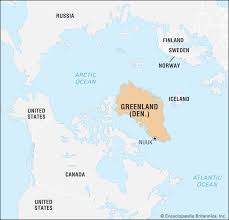 And then, of course, Trump says he wants Greenland, a resource-rich autonomous island that is part of the Kingdom of Denmark. In a January 8, 2026, piece in the New Yorker, Susan Glasser noted that Trump dumbfounded his advisors in 2018 by suggesting a trade of Puerto Rico for Greenland and, in the fall of 2021, told Glasser and her husband, journalist Peter Baker, that he wanted Greenland as a piece of real estate.
“I’m in real estate,” he told them. “I look at a corner, I say, ‘I gotta get that store for the building that I’m building,’ et cetera. You know, it’s not that different. I love maps. And I always said, ‘Look at the size of this, it’s massive, and that should be part of the United States.’ ” He added, “It’s not different from a real-estate deal. It’s just a little bit larger, to put it mildly.” (Observers note that map projections often either minimize or exaggerate the true size of Greenland: it’s about three times the size of Texas.)
Trump announced his designs on Greenland as soon as he took office the second time, but talk about it quieted down until the administration attacked Venezuela and successfully extracted Venezuelan president Nicolás Maduro and his wife Cilia Flores. Then Trump turned back to his earlier demands.
Those threats against Greenland and therefore Denmark, a founding member of the defensive North Atlantic Treaty Organization (NATO), directly attack the organization that has underpinned the rules-based international order that has helped to stabilize the world since World War II. As NATO allies, Greenland and the United States have always cooperated on defense matters—indeed, the U.S. Pituffik Space Base is operating in Greenland currently.
In an interview with New York Times reporters on January 7, Trump explained that he wants not simply to work with Greenland, as the U.S. has done successfully for decades, but to own it. “Ownership is very important,” he told David E. Sanger.
“Why is ownership important here?” Sanger asked.
“Because that’s what I feel is psychologically needed for success,” Trump answered. “I think that ownership gives you a thing that you can’t do, whether you’re talking about a lease or a treaty. Ownership gives you things and elements that you can’t get from just signing a document, that you can have a base.”
Katie Rogers asked: “Psychologically important to you or to the United States?”
Trump answered: “Psychologically important for me. Now, maybe another president would feel differently, but so far I’ve been right about everything.”
In a different part of the interview, Rogers asked Trump: “Do you see any checks on your power on the world stage? Is there anything that could stop you if you wanted to?” Trump answered: “Yeah, there is one thing. My own morality. My own mind. It’s the only thing that can stop me, and that’s very good.”
“Not international law?” asked Zolan Kanno-Youngs. “I don’t need international law,” Trump answered. “I’m not looking to hurt people. I’m not looking to kill people. I’ve ended—remember this, I’ve ended eight wars. Nobody else has ever done that. I’ve ended eight wars and didn’t get the Nobel Peace Prize. Pretty amazing.” After more discussion of his fantasy that he has ended eight wars,” Kanno-Youngs followed up: “But do you feel your administration needs to abide by international law on the global stage?”
“Yeah, I do,” Trump said. “You know, I do, but it depends what your definition of international law is.”
In The Atlantic, national security scholar Tom Nichols noted that Trump’s determination to seize Greenland from Denmark, a country with which the U.S. has been allied for more than two centuries, is “extraordinarily dangerous.” Nichols suggests that Trump might simply declare the U.S. owns Greenland and then dare anyone to disagree (much as he declared he won the 2020 presidential election). That could create a disastrous series of events that would “incinerate the NATO alliance.”
 With that collapse, Russian president Vladimir Putin, shown above in a file photo, might well begin attacking other NATO members, particularly Estonia, Latvia, and Lithuania (which together, Nichols notes, are about the size of Wisconsin.) If other NATO allies come to their aid, Europe would be at war, and “U.S. forces, like it or not, would find themselves in the middle of this bedlam.” Many of the countries are nuclear powers, and the chances of a “cataclysmic mistake or miscalculation” would grow greater every day. Meanwhile, China might reach for Taiwan, and South Korea and Japan would need to plan for the end of U.S. strategic power, likely with nuclear arms.
Trump is courting peril, Nichols writes. His obsessions “could lead not only to the collapse of [Americans’] standard of living but present a real danger to their lives, no matter where they live.”
Nichols’s concerns are not isolated. They echo those of Danish prime minister Mette Frederiksen, left, who warned that the U.S. seizure of  Greenland would mean “the end of NATO.” Defense commissioner for the European Union Andrius Kubilius agreed.
And yet, on social media on Wednesday, Trump denied that his actions could hurt NATO. “Militarily, without the vast power of the United States,” his social media account posted, “NATO would not be an effective force or deterrent—Not even close! They know that, and so do I. NATO becomes far more formidable and effective with Greenland in the hands of the UNITED STATES.”
Later in the day, Danish foreign minister Lars Løkke Rasmussen and Greenlandic foreign minister Vivian Motzfeldt met with Secretary of State Marco Rubio and Vice President J.D. Vance, but the meeting left “fundamental disagreements” among the parties after Trump reiterated his conviction that the U.S. “really need[s]” Greenland.
Also on Wednesday, Canada, Denmark, Finland, France, the Netherlands, Germany, and Sweden launched “Operation Arctic Endurance,” increasing their military presence in Greenland in order, as Germany’s defense ministry said, “to support Denmark in ensuring security in the region.”
An attack on Greenland is wildly unpopular in the United States. A Reuters/Ipsos poll from earlier this week found that just 17% of Americans approve of the U.S. efforts to acquire Greenland. Only 4% think it’s a good idea to take Greenland using military force. When asked about that poll on Wednesday, Trump called it “fake.” Bipartisan groups in Congress have tried to prevent any attack on Greenland by introducing measures that require congressional approval of such an attack, that prevent military action against NATO members, and that prohibit the use of federal funds for any invasion of a NATO member state or NATO-protected territory.
Democrats are outraged about Trump’s threats to undermine the entire post–World War II rules-based international order, and they note that Americans want lower health care costs and cheaper groceries, not Greenland.
 Today eleven U.S. lawmakers, led by Senator Chris Coons (D-DE), left, are in Denmark, where they met with Danish prime minister Frederiksen and Greenland’s prime minister Jens-Frederik Nielsen. Nine Democrats and two Republicans sought to “lower the temperature” by assuring Denmark that the U.S. would not try to seize Greenland. Coons thanked the delegation’s hosts for “225 years of being a good and trusted ally and partner.”
Republican senator Lisa Murkowski of Alaska, right, told reporters that “support in Congress to acquire Greenland in any way is not there.” Her suggestion reflects the comment of Senate Armed Services Committee chair Roger Wicker (R-MS) after he met with the Danish envoys in Washington, D.C., on Wednesday.  Wicker later said: “I think it has been made clear from our Danish friends and our friends in Greenland that that future does not include a negotiation” for the acquisition.
Representative Don Bacon (R-NE) went further, telling Wolf Blitzer of CNN that an attack on Greenland will lead to impeachment regardless of who is in control of Congress after the midterm elections.
“You don’t threaten a NATO ally. They’ve been a great ally. We’ve had bases on there since World War II. Denmark has fought with us—by our side—in Iraq and Afghanistan. So I feel it’s incumbent on folks like me to speak up and say these threats and bullying of an ally are wrong. And just on the weird chance he’s serious about invading Greenland, I want to let him know it will probably be the end of his presidency. Most Republicans know this is immoral and wrong, and we’re going to stand up against it…. I think it would lead to impeachment. Invading an ally…is a high crime and a misdemeanor.”
New York Times, Trump Administration Begins Criminal Inquiry Into Minnesota Leaders, Glenn Thrush, Alan Feuer, Devlin Barrett and Jonah E. Bromwich, Jan. 17, 2026 (print ed). The Justice Department’s investigation is a major escalation in the state-federal battle over the conduct of immigration agents in Minneapolis.
The Trump administration has opened a criminal investigation into elected Democrats in Minnesota, according to a senior law enforcement official familiar with the matter, a major escalation in the fight between the federal government and local officials over the aggressive immigration crackdown underway in the city.
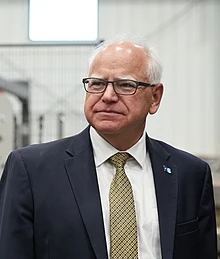 The investigation would focus on allegations that Gov. Tim Walz, right, and Jacob Frey, the mayor of Minneapolis, had conspired to impede thousands of federal agents who have been sent to the city since last month. Last week, one of those agents killed a 37-year-old woman, Renee Good.
It remained unclear what investigative steps have been taken. The senior law enforcement official said subpoenas had yet to be issued, but could be in the days to come. Both Mr. Walz and Mr. Frey responded with combative statements on Friday night, denouncing what they said was a weaponized use of law enforcement power and promising to stand firm in the face of the administration’s efforts.
“Weaponizing the justice system and threatening political opponents is a dangerous, authoritarian tactic,” Mr. Walz said in a statement released by his office, which said it had not yet received notice of an investigation. “The only person not being investigated for the shooting of Renee Good is the federal agent who shot her.”
Mr. Frey, shown in a file photo below, described the investigation as an “obvious attempt to intimidate” him, but vowed it would not work.
 “America depends on leaders that use integrity and the rule of the law as the guideposts for governance,” he said. “Neither our city nor our country will succumb to this fear. We stand rock solid.”
The shooting of Ms. Good, an unarmed mother of three, has led to sustained protests against the agents in Minneapolis. Mr. Frey, in the immediate wake of Ms. Good’s death, used an expletive to demand that the agents leave the city. Mr. Walz has also sharply criticized the agents’ conduct.
Justice Department leaders, in turn, have vowed to arrest anyone impeding federal agents, and the new investigation seeks to determine if senior Democrats in the state conspired to impede law enforcement.
News of the investigation, which was reported earlier by CBS News, came only two days after Todd Blanche, the deputy attorney general, posted an incendiary message on social media, accusing Mr. Walz and Mr. Frey of “encouraging violence against law enforcement” and referring to their actions as “terrorism.”
While both the governor and the mayor have criticized agents involved in the immigration crackdown and have at times urged local residents to document their actions, there is no public evidence that either man has explicitly encouraged violence — let alone engaged in acts of terrorism. Both have urged protesters to remain peaceful.
Still, the growing public protests in Minneapolis have angered President Trump, who has threatened to invoke the Insurrection Act and send the military into the city. In a social media post on Thursday, Mr. Trump called the protesters in Minnesota “professional agitators,” but offered no evidence to support his claims against what by most accounts are ordinary citizens.
On Friday, however, Mr. Trump appeared to back away from his threat.
“I don’t think I need it right now,” he told reporters, referring to the Insurrection Act.
That same day, a federal judge in Minneapolis issued an order putting several restrictions on how federal agents can handle people protesting the crackdown. Hours earlier, Keith Ellison, the Minnesota attorney general, had told the judge, Kate M. Menendez, that Mr. Trump’s vow to use the Insurrection Act was “unjustified.” But Mr. Ellison also said it was “an immediate and pressing threat.”
All of this unfolded as Mr. Blanche and Kash Patel, the F.B.I. director, flew to Minneapolis to direct the federal law enforcement response. Mr. Patel has vowed to crack down on any violent rioters and investigate what he calls the “funding networks” supporting such people.
On Friday night, Mr. Blanche posted a message on social media, saying that he had met with officials in the U.S. attorney’s office in Minneapolis and visited some of the immigration agents.
“We support those performing their lawful duties to protect public safety and will PROSECUTE anyone attacking or obstructing them,” Mr. Blanche wrote, appearing to hint at the investigation. “We will provide ALL resources necessary to support immigration enforcement, charge ANYONE impeding or assaulting federal officers, and combat rampant fraud in MN.”
Federal officials have already signaled that they are not likely to bring criminal charges against Jonathan Ross, the agent who killed Ms. Good. At the same time, the officials have said that law enforcement would most likely investigate Ms. Good’s partner, Becca Good, and any possible connections the women might have had to local activists.
That decision prompted at least six federal prosecutors to resign this week from the U.S. attorney’s office in Minneapolis.
New York Times, Trump Announces 10 Percent Tariff on European Countries in Standoff Over Greenland, Shawn McCreesh and Ana Swanson, Jan. 17, 2026. The president escalated his drive to take charge of the Danish territory, targeting eight countries with tariffs.
President Trump announced in a social media post on Saturday morning his latest strategy to get control of Greenland: He is slapping new tariffs on a bloc of European nations until they come to the negotiating table to sell Greenland.
Greenland is a territory of Denmark, which will be hit with a 10 percent tariff on all goods sent to the United States beginning on Feb. 1, Mr. Trump wrote in a social media post. Norway, Sweden, France, Germany, Britain, the Netherlands and Finland, fellow NATO members that have expressed solidarity with Denmark in its refusal to yield to Mr. Trump’s demands, will also be subject to the 10 percent tariff. If those nations do not relent, he added, the rate will increase to 25 percent on June 1, “until such time as a Deal is reached for the Complete and Total purchase of Greenland.”
The threat comes as the Supreme Court weighs overturning the legal authority that the president would likely use to impose these tariffs. The court is set to rule in the coming weeks on Mr. Trump’s use of an emergency law, the International Emergency Economic Powers Act, which the president has used to threaten tariffs at a whim against numerous countries over the past year.
If the court rules against Mr. Trump, the president may not be able to impose tariffs like this. He would have to rely on other legal authorities that require him to carry out investigations, or meet other standards.
The United States currently charges a 10 percent tariff on British imports and a 15 percent tariff on imports from the European Union, after striking limited trade deals with both governments last year. The new tariffs would presumably be imposed on top of that, and it remains to be seen how other trading partners would respond.
Just the day before, during a health care event at the White House, Mr. Trump mused publicly about doing something like this. “I may put a tariff on countries if they don’t go along with Greenland,” he said, almost parenthetically.
One day later, the 445-word post he put up was striking in its language about American allies. It reiterated the worldview Mr. Trump has espoused for decades, which holds that the United States has been getting ripped off and that payback has been a long time coming.
“We have subsidized Denmark, and all of the Countries of the European Union, and others, for many years by not charging them Tariffs, or any other forms of remuneration,” he wrote. “Now, after Centuries, it is time for Denmark to give back — World Peace is at stake!”
He wrote about “all that we have done for them, including maximum protection, over so many decades.
The post and the threat of new tariffs carried with it were a marked escalation in Mr. Trump’s pressure campaign. Earlier this week, a delegation from Denmark and Greenland came to Washington to meet with officials from the Trump administration including Vice President JD Vance and Secretary of State Marco Rubio. Little was achieved.
Also this week, several European countries including France sent troops to Greenland to take part in military exercises alongside Danish forces.
Lincoln Square Media, The President of the United States Is Out of Control, Brian Daitzman, Jan. 17, 2026. Trump has threatened war against allies, undermined courts, and menaced the independence of the Federal Reserve. The United States Is in freefall.
 Please consider amplifying this post. When more Americans are informed, the more will mobilize and take action. Thank you.
ShareThe President of the United States Is Out of ControlTrump has threatened war against allies, undermined courts, and menaced the independence of the Federal Reserve. The United States Is in freefall.The IntellectualistJan 17 ∙ Paid ∙ Guest post READ IN APP
Brian Daitzman is the Editor of The Intellectualist. Subscribe to his Substack. Illustration by Riley Levine
This is how complex systems collapse. Not from a single failure, but when multiple stabilizing institutions are pressured at the same time. The president has threatened allies, undermined courts, pressured the Federal Reserve, destabilized markets, and eroded trust at home and abroad—simultaneously. In such systems, failure does not require everything to break. One critical stabilizer giving way is enough. And the most dangerous signal is that none are now treated as off-limits.
The most dangerous moment in a complex system is not collapse itself, but the loss of restraint—the point at which mechanisms designed to absorb shock instead begin to generate it. That is the moment the United States has entered.
This is not a story about one policy failure or one shocking statement. It is about simultaneity.
In a matter of weeks, the president has threatened allies, undermined judicial authority, pressured the central bank, inflamed domestic law-enforcement controversies, and shaken global confidence in American commitments. These events are not isolated. They are overlapping stresses applied to the institutions meant to prevent cascading failure.
By simultaneity, this essay does not mean coincidence or a crowded news cycle. It refers to a specific systems condition: multiple stabilizing institutions placed under acute stress at the same time, without recovery intervals, such that stress in one domain amplifies stress in others before correction can occur. Sequential crises can be absorbed. Simultaneous ones overwhelm. When courts, markets, alliances, and enforcement norms are all pressured concurrently, risk stops accumulating linearly and begins compounding.
This piece is part of the History of the Present. Become a Lincoln Loyal paid subscriber and never miss an article.Subscribed
The clearest illustration of this loss of restraint is the episode involving the Federal Reserve—not because it is the most dramatic act, but because it demonstrates that no stabilizing institution is now treated as untouchable. When Federal Reserve Chair Jerome Powell says that Department of Justice actions were used as pressure on interest-rate policy, the significance is structural, not personal.
Central-bank independence is not a courtesy. It is financial infrastructure—the shared assumption that the price of money will not be set by executive impulse. Undermine that assumption and uncertainty propagates instantly through bond markets, mortgages, pensions, currencies, and sovereign debt. There is no redundancy for the Federal Reserve.
The Fed exists because the United States learned, painfully, what happens when monetary policy is subordinated to politics. After the Panic of 1907, Congress created a central bank insulated from short-term power to prevent recurring crises. Its mandate—price stability and maximum employment—was designed to limit discretion, not empower it. Stability, not speed, is the objective.
That stabilizing role is now under strain. Tariffs function as regressive taxes, raising prices across supply chains and increasing inflationary pressure. Political demands for lower interest rates in such conditions create the risk of stagflation—high prices paired with low growth—one of the most destructive macroeconomic outcomes a society can face. The Fed’s ability to respond is further constrained by already-elevated rates, leaving less room to maneuver than in past crises.
What distinguishes monetary credibility from other institutions is transmission speed. Courts erode slowly. Alliances fray politically. Law-enforcement legitimacy degrades unevenly. Monetary trust reprices immediately. Markets do not wait for elections or investigations. Once confidence falters, feedback loops become global.
The consequences do not stop at U.S. borders. American financial markets anchor the global system. If investors begin to doubt U.S. monetary governance, they demand higher yields to compensate for political risk. Higher yields raise debt-financing costs. Higher costs force fiscal contraction or inflationary monetization. Either path lowers living standards. Falling living standards erode legitimacy. Legitimacy loss weakens alliances. Alliance weakness raises security risk. A localized shock becomes a generalized crisis.
More On U.S. Governance, Politics
Robert Reich via Substack, Opinion: Trump Gives America the Finger Robert Reich, Jan. 17, 2026. The Coffee Klatch for Saturday, January 17, 2026. With Heather Lofthouse and yours truly,  Robert Reich (shown at right).
Today Heather and I grapple with the inescapable reality that Trump has turned America into a fascist state. From the streets of Minneapolis to the shores of Greenland, violence and the threat of violence prevail. By contrast, we talk with Lina Khan, former chair of the Federal Trade Commission and co-chair of Mayor Mamdani’s transition team, about how Mayor Mamdani has launched his social-democratic administration in New York. And Heather and I explore specific steps you can take to fight this scourge.
Please pull up a chair, grab a cuppa, and join in the conversation — and the movement.
New York Times, Judge Restricts Immigration Agents’ Actions Toward Minnesota Protesters, Mitch Smith, Jan. 17, 2026 (print ed). A federal judge in Minnesota imposed restrictions on the actions of immigration agents toward protesters in the state on Friday, a decision that comes after weeks of mounting tension between demonstrators and federal officers.
Judge Kate M. Menendez ordered agents not to retaliate against people “engaging in peaceful and unobstructive protest activity,” and not to use pepper spray or other “crowd dispersal tools” in retaliation for protected speech. The judge also said agents could not stop or detain protesters in vehicles who were not “forcibly obstructing or interfering with” agents.
The ruling, which granted a preliminary injunction, stems from a lawsuit brought by activists who said agents had violated their rights. The suit was filed before an immigration agent shot and killed Renee Good in Minneapolis on Jan. 7.
Ms. Good, 37, had partially blocked a roadway where agents were working and did not follow commands to get out of her S.U.V. As she began to drive, an agent near the front of her car opened fire.
Tricia McLaughlin, a spokeswoman for the Department of Homeland Security, said in a statement responding to the injunction that “D.H.S. is taking appropriate and constitutional measures to uphold the rule of law and protect our officers and the public from dangerous rioters.”
She said agents had faced assaults, had fireworks launched at them and had the tires of their vehicles slashed. She added that despite “grave threats,” agents had “followed their training and used the minimum amount of force necessary to protect themselves, the public and federal property.”
Ms. McLaughlin did not say whether the department planned to appeal the ruling.
A federal judge ordered agents not to retaliate against people “engaging in peaceful and unobstructive protest activity” in the state and not to stop drivers who are not “forcibly obstructing” officers.
New York Times, How the House Slumped to Historic Lows of Productivity in 2025, Minho Kim and Ashley Wu Jan. 16, 2026. Despite holding a governing trifecta, Republicans labored to steer the tightly divided House, with fewer votes and fewer bills that became law than almost any session in the last two decades.
Even by the standards of an institution that has set records for dysfunction in recent years, the Republican-led Congress in 2025 hit new lows for productivity.
 Plagued by a razor-thin majority, intraparty divisions and a fear of doing anything that might draw President Trump’s ire, Speaker Mike Johnson, right, toiled to keep the House running.
He left the chamber out of session for a nearly eight-week period that coincided with the longest government shutdown in history. He maneuvered to avoid politically difficult votes on canceling Mr. Trump’s tariffs, releasing the Epstein files and extending health care subsidies, ultimately prompting his own rank-and-file to team with Democrats to go around him and force action. And he presided over a free-for-all of censures and reprimands on the House floor as lawmakers’ frustrations boiled over.
Fed up with the toxicity and inertia, some Republicans, including once-loyal Trump allies like Representative Marjorie Taylor Greene of Georgia, headed for the exits, diminishing the majority’s already thin voting margin.
A look at some key metrics illustrates the cost and scale of the dysfunction.
The most basic: House members cast 362 votes in 2025, the second-lowest count in the last quarter century. The only other year in that time frame when the House cast fewer votes was 2020, when the COVID-19 pandemic hit the United States.
New York Times, A Trump Veto Leaves Republicans in Colorado Parched and Bewildered, Jack Healy, New York Times Photographs by Michael Ciaglo, Jan. 17, 2026. The first veto of the president’s second term killed legislation that would have brought clean water to some of the most conservative parts of the state. Residents wonder why.
John F. Kennedy, the 35th president of the United States, flew to eastern Colorado in 1962 to celebrate a pipeline project, already 30 years in the planning, that he promised would bring clean water to farm towns whose groundwater was contaminated with salt and radiation.
It was never completed. Many people in the area still cannot drink from the tap safely. And now the 47th president, Donald J. Trump, has left many wondering if they ever will.
Congress unanimously passed a bill last year, sponsored by Representative Lauren Boebert, a conservative Republican closely aligned with Mr. Trump, to help communities in her rural Colorado district pay to finish the pipeline.
Then the president, fresh from adding his name to the John F. Kennedy Center for the Performing Arts in Washington, added his own disruptive stamp to another piece of the Kennedy legacy: He killed the pipeline bill.
“It’s not political,” Ms. Adams said. “It’s our only answer.”
Manzanola tries to reassure its residents that the municipal water it has now is fine for bathing or washing dishes. But Brandi Rivera, 25, said her family “won’t even use the water to brush our teeth or wash our face.”
She stocks up on bottled water once a week from a Walmart store 25 miles away, and has spent most of her life hearing and wondering about the pipeline.
It is easy to feel forgotten in a place like Manzanola, she said. The small town was once a hub for apple orchards, but good jobs are now scarce, and the town struggles to hold onto its fewer than 500 residents. Ms. Rivera said Mr. Trump’s veto felt like one more hit.
“People don’t think about small towns,” she said. “We worked so long for this.”
The Trump administration once heralded the pipeline project, back when construction began near the end of Mr. Trump’s first term. By last month, however, Mr. Trump’s tone had changed. He derided the pipeline, whose estimated cost has doubled to $1.3 billion since 2019, as a waste of taxpayer money.
“Enough is enough,” he said in his veto message.
The federal government is already shouldering 65 percent of the pipeline’s cost. The bill that Mr. Trump vetoed would have given agencies in Colorado more time to repay federal loans for their share of the project, as well as pay lower interest rates on the loans. The bill also made it possible for the federal government to forgive some of those loans.
The water agency that is building the project says it has already put 12 miles of pipeline into the ground, and will keep pressing ahead despite the veto.
Democrats in Colorado accused Mr. Trump of sabotaging the project as political payback for their state’s refusal to release Tina Peters, a county clerk from western Colorado who was convicted of tampering with voting machines in a failed effort to prove Mr. Trump’s falsehoods that Democrats had stolen the 2020 presidential election.
Mr. Trump has tried to cut federal transportation and child care funding to Colorado; moved to dismantle a leading climate and science research center in Boulder; and relocated the headquarters of the U.S. Space Command to Alabama from Colorado Springs.

New York Times, Conservative Rally Organizer Chased From Minneapolis Streets by Counterprotesters, Julie Bosman, Vivian Yee and Lauren McCarthy, Jan. 17, 2026. A rally at City Hall was organized by a conservative influencer to draw attention to a fraud scandal in the state. He was chased by counterprotesters lobbing water balloons in frigid temperatures.
A rally organized by a conservative influencer in downtown Minneapolis on Saturday was quickly overwhelmed by a liberal counterprotest, as both sides scuffled and exchanged taunts for hours.
The influencer, Jake Lang, was eventually chased into the lobby of a hotel by a group of counterprotesters who threw water balloons at him when outside temperatures hovered around 10 degrees, prompting police officers to intervene. Mr. Lang was seen with a trickle of blood on the back of his head before disappearing into the hotel.
The counterprotest, led by The People’s Action Coalition Against Trump, vastly outnumbered people at Mr. Lang’s rally, March Against Minnesota Fraud. Mr. Lang had vowed to burn a Quran and march through a neighborhood with a heavy Somali population.
Demonstrators who had gathered in opposition to Mr. Lang also denounced Immigration and Customs Enforcement, holding signs that read “ICE Out of Minnesota.” They blasted music from the Disney musical “Frozen.”
Minneapolis police officers and Hennepin County sheriff’s deputies amassed in downtown Minneapolis in large numbers to monitor the protests, which drew hundreds of attendees by early afternoon.
Mike Anderson, 42, stood in the cold for hours, frozen droplets clinging to his beard. He said he was there to protest fraud and illegal immigration and had traveled from his home in Forest Lake, a town about 30 minutes outside Minneapolis.
“I have nothing against immigration as long as it’s legal,” he said, adding that his fiancée is a legal immigrant from Canada.
The protests capped a tumultuous 10 days in Minneapolis, after an immigration agent shot and killed Renee Good, 37, on Jan. 7. Since then, thousands of Immigration and Customs Enforcement agents have fanned out around the Twin Cities, arresting people for immigration violations, interrogating U.S. citizens and deploying tear gas and pepper balls in residential neighborhoods.
Mr. Lang’s rally opposing fraud is directed at a wide-ranging investigation into Minnesota’s social services programs. Most of the people charged in the scheme so far have been of Somali origin. A preliminary assessment suggests that billions in taxpayer funds spent on programs intended to help low-income people since 2018 was most likely stolen, federal prosecutors said.
Politico, Exclusive: The State Department’s secret playbook for using sports to advance Trump’s agenda, Nahal Toosi and Sophia Cai, Jan. 17, 2026. Maybe the State Department should call itself the Sports Department.
President Donald Trump has kept most of Foggy Bottom’s diplomats out of the loop on major global crises, relying instead on Secretary of State Marco Rubio, his small leadership team, and a few special envoys. But the State Department is finding itself on the front lines of an unexpectedly thorny geopolitical challenge: reconciling Trump’s restrictionist views on immigration with his desire to host a successful World Cup.
The United States’ role as a co-host for the world’s dominant sporting event is offering the department a chance to prove it matters, according to interviews with department officials and documents obtained by POLITICO. The documents include a “Sports Diplomacy Playbook” laying out how the country should use mega-events like the World Cup and Olympics to advance a mix of soft-power and foreign-investment aims, along with some of Trump’s social-policy priorities.
“State has a very important role to play, especially from a foreigner’s perspective,” said John Feeley, a former U.S. ambassador to Panama, one of 48 countries sending teams to the tournament.
Many U.S. embassies and consulates worldwide are beefing up staffing to help process visas for incoming fans, and are developing a new World Cup-specific visa processing system to prioritize ticket holders for consular interviews. At the same time, the State Department is asking other countries to share information on so-called soccer hooligans so it can deny them visas, a current and former State official said. The two were granted anonymity because they were not authorized to speak to reporters.
“The people at the State Department are going to do their best to rise to the challenge, but they’ve got two audiences,” said Gerald Feierstein, a former senior U.S. diplomat whose positions included ambassador to Yemen. “They’ve got the foreign audience, where the desire is going to be to roll out the welcome mat. The other audience is this xenophobic administration that just looks around the world and sees lots of people that they don’t like and don’t want to see come here. That’s the tightrope the State Department is going to be walking.“
When asked for comment, the State Department spokesperson’s office referred to remarks Rubio made late last year, in which he extolled his department’s efforts to dramatically reduce the visa wait times for people planning to attend the World Cup.
Despite that, he said, “our advice to everybody is if you have a ticket for any of the games, you need to apply if you haven’t done so as soon as possible. Don’t wait till the last minute. Your ticket is not a visa.”Bans for some fans
While some countries have hordes of fans pursuing tickets and visas, the big challenge for diplomats is not the numbers. Instead it’s the many rules and regulations that Trump has imposed that make the visa process far more complicated than it was just over a year ago.
Trump has imposed executive orders blocking travel from nationals of more than three dozen countries, including four which have qualified for the World Cup, with different levels of restriction. Travelers from Iran and Haiti, for example, are subject to a June 2025 ban, which includes few exceptions. The other two, Senegal and Ivory Coast, are subject to a more recent, looser order that took effect this month.
Both travel bans grant a blanket exemption for players and team staff attending the World Cup and Olympics, although those exceptions are far from absolute. Players, coaches and other team staff would still have to meet standard guidelines. For instance, a soccer coach suspected of ties to a group the U.S. considers criminal or terrorist could still be denied a visa.
Iran “is going through major, major changes right now as we speak, so that’ll be a very different picture come the time of the kickoff,” said Andrew Giuliani, head of the FIFA White House Task Force, whose members include Rubio. The administration is “actively and dynamically looking at the situation,” Giuliani continued.
Some governments want to send their sports officials and athletes using official or diplomatic visas because those people often are on the government payroll. But U.S. officials are supposed to reject those applications “because their purpose of travel is really not an official governmental mission,” the State official said.
The administration has also imposed new fees on travelers, up to $15,000 visa bonds, from some countries, including World Cup competitors Algeria and Cape Verde. Consular vetters also may have novel grounds on which to deny applicants, including having posted social media comments deemed antisemitic, supportive of terrorism, or hostile to U.S. “citizens, culture, government, institutions, or founding principles.”
FIFA, the international soccer governance body that oversees the World Cup, has always maintained the position that it does not expect host countries to change their immigration or vetting processes for its quadrennial extravaganza. Organization officials confirmed FIFA has no plans to challenge Trump on visa and immigration issues. Soccer officials have, however, shown they are willing to wage their own diplomacy to balance FIFA’s global constituency with Trump’s America First policy choices. The organization alerted host cities of expected travel bans before they were announced by the White House, and worked to coordinate between Iran and the State Department when the country struggled to get a delegation’s visa applications approved for the World Cup draw hosted in Washington in December
Global Warming, Climate Control, Environment

New York Times, How Wall Street Turned Its Back on Climate Change, David Gelles, Jan. 17, 2026. Six years after the financial industry pledged to use trillions to fight climate change and reshape finance, its efforts have largely collapsed.
In January 2020, Larry Fink, the chief executive of BlackRock, the largest asset manager in the world, stunned the business world by declaring that he intended to use the trillions of dollars managed by his firm to address global warming.
“Every government, company, and shareholder must confront climate change,” Mr. Fink wrote, calling for “a fundamental reshaping of finance.”
A few days later, Mr. Fink arrived in Davos, Switzerland, for the World Economic Forum’s annual gathering, donning a scarf featuring a design of the “warming stripes,” a pattern that depicts 150 years of rising global temperatures.
Mr. Fink’s impassioned call to address climate change was the unofficial start of a movement. Nearly every major financial institution was soon pledging to reduce emissions, joining high-minded alliances designed to phase out fossil fuels and promising to support clean energy. Environmental, social and governance factors, known as E.S.G., became a defining feature of Wall Street investing.
But six years later, many of those Wall Street institutions have walked back or abandoned their commitments.
The alliances — like the Net-Zero Banking Alliance and the Net-Zero Asset Managers initiative — that were meant to steer investments toward clean energy and away from fossil fuels have largely fallen apart. Investors have withdrawn tens of billions of dollars each quarter from E.S.G. funds.
While U.S. investment in clean energy has boomed in recent years — reaching $279 billion last year — many large corporations have gone silent on climate change. On company earnings calls, mentions of words like climate and sustainability have plunged by 75 percent over the past year, according to a Bloomberg analysis.
And with President Trump back in office and using the presidency to promote fossil fuels and attack the clean energy industry, Wall Street’s retreat from climate action has coincided with American banks doubling down on coal, oil and gas projects.
These dynamics will be on full display next week, as Mr. Fink, now co-chair of the World Economic Forum, welcomes Mr. Trump to Davos, where climate issues have taken a back seat to A.I. and geopolitics.The story of how Wall Street turned its back on climate change — how a bold attempt to transform finance collapsed — began almost as soon as Mr. Fink and his allies announced their ambitions to use capitalism as a tool to save the planet.
More On U.S. Immigration, Justice, Courts, Crime
The Real Michael Cohen, Political Opinion, A Trumpian Apology, Michael Cohen, right, Jan. 17, 2026.  An apology without accountability, a court order without force, and a young woman paying the price; how Trump’s first “sorry” exposes a system where saying it means nothing at all.
If there is one thing I can tell you with absolute certainty, it’s this: when Trump or his administration “apologizes,” it’s never about accountability. It’s about containment. Damage control. A legal sedative slipped into the court record to calm a judge just long enough to keep the machinery moving.
So when the Trump administration stood up in federal court and offered what sounded like a sincere apology for deporting a 19-year-old college student in violation of a court order, my first reaction wasn’t surprise. It was recognition. I’ve seen this movie before. I helped produce earlier versions of it. And the ending is always the same: no consequences, no correction, and no justice for the person crushed in the process.
On paper, this apology looks historic. A government lawyer actually said the words, “On behalf of the government, we want to sincerely apologize.” In Trump-world, that’s practically a unicorn. But look closer. The apology came packaged with an argument that the “mistake” shouldn’t matter. That the violation of a judge’s order shouldn’t affect the outcome. That the deportation of a young woman trying to fly home to surprise her family for Thanksgiving was tragic, yes; but ultimately irrelevant.
That isn’t remorse. That’s legal theater.
Any Lucia Lopez Belloza is a Babson College freshman. Nineteen years old. A student. A daughter. Someone who had lived in the United States since 2014. She was detained at Boston’s airport and deported to Honduras two days later; despite an emergency court order explicitly telling the government not to do exactly that. Not to move her. Not to remove her. Not for at least 72 hours.
They did it anyway.
And when confronted, the administration didn’t say, “We failed.” They said, “One officer misunderstood.” They didn’t say, “We broke the law.” They said, “An alert wasn’t activated.” They didn’t say, “Bring her home.” They said, “The court probably doesn’t even have jurisdiction.”
This is the most Trumpian apology imaginable. Admit just enough to sound human, then argue that none of it should count.
I know this maneuver intimately. When Trump was cornered, the rule was always the same: never concede substance. You can concede tone. You can concede optics. You can concede that “mistakes were made.” But you never concede power, and you never concede fault in a way that requires real correction. An apology is acceptable only if it costs nothing.
What makes this case even more grotesque is that it’s not isolated. This administration has already deported other people in defiance of court orders; Kilmar Abrego Garcia to El Salvador, another man known as O.C.G. whose removal a judge later said lacked “any semblance of due process.” In Garcia’s case, the government fought bringing him back until the Supreme Court forced its hand. That wasn’t an accident. That was a pattern.
So when a judge calls this latest deportation a “tragic bureaucratic mistake,” I wince. Because bureaucracy doesn’t act on its own. Systems reflect priorities. And in Trump’s immigration regime, speed has always mattered more than legality, cruelty more than caution, and optics more than outcomes.
Here’s the part they don’t want you to focus on: the apology didn’t undo anything. Lopez Belloza is still in Honduras. Still separated from her school. Still forced to study remotely, if she’s lucky enough to do so. The government’s position is essentially, “Sorry we violated your rights; but we’re not fixing it.”
That’s not an apology. That’s a shrug.
I’ve watched Trump apologize before; if it could even be called an apology. Usually it was through clenched teeth and lawyers’ notes, often prefaced with “if anyone was offended.” This one is different only in tone, not in substance. It’s softer. More bureaucratic. Less bombastic. But it carries the same core message: we regret the inconvenience, not the injustice.
And that’s the danger here. Not just that a young woman was wronged; but that the system treats the violation of a court order as a paperwork error rather than a constitutional crisis. When the executive branch can say “my bad” after defying a judge and still win on jurisdictional technicalities, the rule of law becomes optional.
Trump once taught me that apologies are tools. They’re not moral acts; they’re strategic ones. This apology isn’t a turning point. It’s not a breakthrough. It’s a test run; proof that you can acknowledge wrongdoing without changing behavior.
Any Lucia Lopez Belloza didn’t need an apology. She needed protection. She needed the government to obey the law. She needed someone in power to say, “We violated a court order, and we are making it right.”
Instead, she got Trump’s favorite substitute for accountability: words without consequence. And trust me; those words mean nothing.
Epstein Files
 Donald Trump and Jeffrey Epstein partying together at Mar-a-Lago, along with an artist's rendering of a birthday card that the Wall Street Journal reported that Trump sent Epstein in 2003 boasting of their shared secrets.
Meidas Touch Network, DOJ Moves to Block Independent Monitor in Maxwell Case, Aaron Parnas, Jan. 17, 2026. Says Courts Cannot Force Epstein File Disclosures.
The U.S. Department of Justice has formally moved to block the appointment of an independent monitor or special master to oversee the release of Epstein-related records in the long-closed criminal case of Ghislaine Maxwell—arguing that no federal court has the authority to compel such disclosures.
In a six-page letter filed tonight, to U.S. District Judge Paul A. Engelmayer, prosecutors contend that recent efforts by members of Congress to force production of the so-called “Epstein files” amount to an improper attempt to reopen a concluded criminal case and to create a form of judicial oversight that Congress itself did not authorize.
The DOJ begins by emphasizing that United States v. Maxwell is no longer an active criminal matter. Maxwell’s conviction was affirmed by the Second Circuit, and the Supreme Court denied certiorari in October 2025, rendering the judgment final. According to the government, only two narrow issues remain before the court: Maxwell’s collateral challenge under 28 U.S.C. § 2255 and the court’s supervision of a protective order governing discovery materials.
That protective order, prosecutors stress, exists to limit disclosure—primarily to protect victim privacy—not to mandate public release of records. While the court previously modified the order to permit the DOJ to release certain materials consistent with the Epstein Files Transparency Act, the government argues that this modification did not and should not amount to judicial enforcement of the statute itself.
Representatives Ro Khanna and Thomas Massie, who helped lead passage of the Epstein Files Transparency Act, sought leave to appear as amici curiae and asked the court to appoint a special master or independent monitor to compel DOJ compliance with the Act.
The DOJ flatly opposes that request.
According to the filing, amici curiae are intended to provide neutral legal analysis—not to introduce new disputes, seek new remedies, or assume an adversarial role. The government argues that Khanna and Massie are attempting to do precisely that by asking the court to oversee DOJ document production, compel testimony from prosecutors, and effectively enforce a statute that provides no judicial enforcement mechanism.
“An amicus cannot initiate, create, extend, or enlarge issues,” the DOJ writes, citing longstanding federal precedent. Because no party to the case has raised compliance with the Act as a live issue, prosecutors argue there is nothing for amici to assist the court with.
The government’s argument goes further: even if the court were inclined to entertain the request, it could not do so constitutionally.
The DOJ asserts that Reps. Khanna and Massie lack Article III standing because they have not suffered a concrete, particularized injury. The Epstein Files Transparency Act, prosecutors note, does not create an individual right to obtain information, unlike the Freedom of Information Act. Nor does the Act authorize lawmakers—or anyone else—to sue the DOJ for alleged noncompliance.
The letter also rejects the idea that congressional authorship of the statute confers standing. Citing Supreme Court precedent, the DOJ argues that individual legislators cannot litigate generalized institutional grievances absent a vote nullification or comparable injury—conditions plainly not present here.
Even more fundamentally, prosecutors maintain that the Act provides no cause of action at all. Where Congress has not explicitly authorized judicial enforcement, federal courts are barred from inventing one. As the DOJ puts it, courts “cannot reach out to award remedies” where neither the Constitution nor a statute authorizes them.
In short, the government’s filing makes clear that—absent new legislation explicitly authorizing court enforcement—the DOJ believes no court can force it to produce the Epstein files, regardless of public pressure or congressional intent.
Judge Engelmayer is expected to rule on the motion for leave to file an amicus brief and the request for an independent monitor in the coming weeks.
U.S. Jobs, Inflation, Economy, Markets
Economists Paul Krugman and Claudia Sahm.
Paul Krugman via Substack, Political-Economy Commentary: Talking Again With Claudia Sahm, Paul Krugman, right, Jan. 17, 2026. The fight over the Fed and more.
Hey, everyone. Paul Krugman again and talking again with Claudia Sahm, who’s one of my real go-tos and a tremendously influential voice on macroeconomics. I’ve been looking at the Real Time Sahm Rule series on Fred, which is where those blue background charts on my Substack come from. Claudia’s my favorite Fed expert, or one of my favorites. Hi, Claudia. I thought we could talk for a bit about what’s been a pretty eventful week. Obviously on many fronts, but certainly in the Fed area.
Claudia Sahm: Happy to be back and to have this conversation. Sad that we are having the conversation and that it’s necessary, but it’s important to unpack it and see what this possibly is.
 Krugman: Before we get into the criminal investigation of Jerome Powell, left, and all of that, there’s also the state of the economy that is kind of interesting. Depending on which data you look at there are different conclusions or different stories that people tell. So what do you think is going on with the labor market?
Sahm: Job creation is very low in the United States, and we’ve seen the unemployment rate move higher. The jobs aren’t keeping up with the people who are out there looking for work, but this doesn’t look like our typical business cycle.
The unemployment rate drifted up last year, but it drifted up the year before as well. We are a full percentage point off the lowest point of the unemployment rate in the cycle, which was close to 3.5%; you look back all the way in the post-World War Two period, that has never happened. We’ve never had that much of an increase in the unemployment rate and not gone into a recession. But this is very different, it’s been very gradual. It’s not really picked up and gone from a slow increase to a really rapid increase that would be normal, so it is puzzling. At the same time, this past year, we’ve seen economic activity continue to expand. Those GDP numbers, they might overstate the case of how much strength there is in consumer demand and business investment, but they look pretty good. You have a really unusual set of signals from the economy. At a moment like that everyone at the Fed ought to be totally focused on “how do we interpret the economics”, “what’s the right interest rate”; there could be policy responses that go way beyond the Fed or tax cuts.
I’m very concerned about what’s happening in the labor market. It’s hurting people coming in. Young people looking for jobs, people on the margins looking for jobs—there’s some problems here, but we need to really focus on the economics of it, unpacking it. We don’t have the usual go-tos because it doesn’t look like historical periods. Then we have a moment where politics just floods in.
Krugman: We’ll talk about the politics in a minute, but for what it’s worth, that Real Time Sahm Rule indicator—let’s not go through what the indicator is again—but .5 was your criterion, it’s .35 now, which is kind of a little bit worrisome. But on the one hand, it doesn’t feel like that. Or it doesn’t look like, as you say, a recessionary dynamic. On the other hand, it’s extremely difficult to get a job. So if you have a job, we’re not having mass layoffs, but as you were saying, people do get laid off one way or another still, and even if it’s not en masse—then it’s really hard to find a new job. There’s a lot of debate about what’s going on there.
Sahm: I think this has been a real lesson. The problem in the labor market right now is a very low rate of hiring, the problem is not layoffs. Often we think, “layoffs, that’s the big problem. That’s the recession.” That’s why we get agitated and you say, “oh, there have been layoff announcements,” but we’re not actually seeing people losing their jobs. Jobless claims are not really up that much. So “oh everything’s okay,” right? But in fact a low hiring rate can be very problematic because over time as new workers come in and people who finish their education, whether it’s high school or college, other training, they really struggle to find jobs. So their underemployment rises, and that can be a big problem, not like in kind of a business cycle recession problem, but not bringing people in at their full potential, that we could pay for over a long period of time.
It is hurting groups on the margins of the labor market. We’ve seen the black unemployment rate really move up in the past year. So it’s not about layoffs. It’s about this low level of hiring.
Krugman: This is a time when you would really want a lot of calm, detailed analysis—but won’t necessarily get it, this is why we have professionals at the Fed but that’s not what higher management seems to want.
So, what was your reaction? We know that there’s been a lot of hectoring of Powell and the Fed from the White House, but this astonishing criminal investigation, how did you feel about that? I mean, obviously you weren’t happy.
Sahm: There’s a lot to unpack from this week with the Fed. First, I’m deeply concerned about the ongoing escalation of pressuring the Fed to lower interest rates. Taking out a criminal investigation against the Fed chair is very serious, this is past using words to insult, this is a pressure campaign and it’s one that’s being used not just against the Fed. So there’s a really big issue with the actions that were taken by the Trump administration. I fully support Jay Powell coming out with a public statement and being very clear—using the words of the renovation, this is a pretext, right? Jay Powell’s two minute public video statement was extraordinary. He has stayed out of the politics. He has not said “the White House is pressuring us to lower interest rates” until Sunday and it was a very clear and direct and brief message unlike what usually comes out of the Fed.
Krugman: But, what happens? Trump will replace Powell with presumably whoever he chooses—and we may want to talk a little bit about those choices, but presumably whoever he chooses will be chosen—at least in the White House belief—that he’ll do what they say and cut rates. But what actually happens? Because it’s not that simple, the Fed isn’t simply run by the dictat of the Chair.
Sahm: We’re at a place where the president is going to make his nomination for Fed Chair. This has been a long drawn out, “Fed Chair-Apprentice series.” So we don’t know who that person is yet. But president Trump has made a very unusual and I think very problematic statement that he’s not putting anyone up unless they are in favor of much lower interest rates. So again, this is not about the evidence, economic conditions, the president’s like “I want rates lower” and he’s only going to put people in that are committed to getting rates lower. There’s a lot of problems with that. But this person has to then get through Senate confirmation. It was really important that some of the first and very influential members of Congress who stood up for Powell this week, they’ll be instrumental in getting Trump’s nomination for Fed Chair in place as Fed Chair. And in fact, Senator Thom Tillis, who’s on the Senate Banking Committee said, “until this investigation is closed up, he’s not advancing any nomination to the Fed, including the chair.” So, again, Powell’s term as Fed Chair ends in May, it’s problematic, this is the time where things should be moving. So there could be hurdles in the Senate. But in all likelihood, I think we should assume that Congress is going to give the president who he wants as Fed chair.
The Fed chair, it’s a leadership position, it’s incredibly important, but at the end of the day, the Fed Chair has one vote. There are 19 Fed officials, 12 of them are voting, to move interest rates down, you would have to have seven votes. So a Fed Chair coming in committed to lower interest rates has to win over other Fed officials to make that happen. We already knew coming into this year there was a lot of disagreement about Fed officials, even with the rate cuts last year, that Jay Powell was able to lead the Fed through because there’s economic concerns. There’s a case that could be built, if the data come in to support it, that would lower interest rates. Powell has said, and many Fed officials, they expect the next move of the Fed to be a rate cut. They’re just waiting for more evidence in particular that inflation slows. So I do expect the Fed to cut interest rates. I think it will take some time. But the president wants rates down now, and down rapidly. I think there’s been a lot of worries about Trump putting a loyalist at the Fed and somehow this individual being able to strong arm other members, and they make an assist from the Supreme Court: if the president’s allowed to remove Lisa Cook and other members, where they can pack the Fed and get the votes, that may be the path around we’re on. That would be very bad in terms of interest rates, because ultra low interest rates are not what the economy needs right now.
But I think there’s another path that hasn’t been discussed as much is that we might have a very weak Fed Chair. We could have someone in who is a loyalist to the president, who uses the bully pulpit of the Fed—and the Fed’s got a big bully pulpit—to just amplify the White House economic messaging, isn’t able to build a consensus, doesn’t have the trust of other members and then can’t get interest rates down and then the president gets mad and steps in. The next Fed Chair may be the one that actually gets fired, because who’s going to stand up and defend the loyalist Fed chair? He’s not Jay Powell, whoever it is is not going to be Jay Powell and have the kind of respect. Moving interest rates around because of political reasons, that’s bad; a weak, ineffective Fed, where the only people who are willing to go work at the Fed are political loyalists who don’t have skills, that is an incredibly dangerous situation for us to be in because crises happen. Things happen in the economy, things happen in the financial markets, to have a Fed that isn’t on top of its game, that’s a really bad place for us to be. I think that a very weak Fed could be the direction we’re heading in right now. It’s hard to see how this plays out in a good way unless some of the guardrails of the Fed are strengthened. That has to come from the Supreme Court strengthening removal protections from Congress, taking its responsibility of putting independent people at the Fed. But until that happens, I’m not going to be optimistic about this.
New York Times, Black Women Turn to One Another as Their Career Paths Suddenly Recede, Jordyn Holman, Jan. 17, 2026. Black female professionals have seen a steep drop in employment over the last year. They are turning to each other for pep talks and résumé advice.
When Nneka Obiekwe started a WhatsApp group chat in September, she was just trying to help her out-of-work friends.
A consultant and skilled networker, Ms. Obiekwe, 37, is the kind of person friends turn to when they are looking for a referral or connection to a hiring manager. But since March, she had been receiving pleas every few weeks. By autumn, her network was tapped out.
Most of the people reaching out were, like Ms. Obiekwe, Black women, and she started to feel that they needed a community as much as referrals. She created the WhatsApp chat, called Black Women Rising, and posted the link to it on Threads.
Within 24 hours, more than 500 people joined. Most were midcareer or senior professionals who had been laid off in the previous few months.
Ms. Obiekwe moved the group to Discord, a messaging platform that could better organize the 500 or so daily messages people were sending in channels with names like “Share Your Good News” or “Vent Among Friends.”
They shared job updates: “I have a screening call with a recruiter tomorrow. Wish me luck!” or lamented about getting ghosted. “They said I’m in the lead but haven’t heard from them in a month,” one person wrote.
The job market is not great right now. Hiring has slowed. Artificial intelligence is replacing some knowledge workers. But Black women have been hit especially hard. The unemployment rate for Black women rose significantly from the start of 2025 to December, where it stood at 7.8 percent. That pattern of dramatic job loss was not seen for other groups.
“You don’t see that same loss with Black men, you don’t see that same loss with other groups of women,” said Valerie Wilson, a labor economist and director of the program on race, ethnicity and the economy at the Economic Policy Institute, a left-leaning think tank. “It was a sharp and unique decline in employment for Black women.”
More specifically, it was college-educated Black women — not those with less education or advanced degrees — who lost the most ground. In 2024, 74 percent of Black women with bachelor’s degrees were employed; that rate fell to 71 percent in the first nine months of 2025, while the rate for employed white women with bachelor’s degrees fell less than one percentage point during the same period.
Ms. Wilson has tried to puzzle out that decline. In an analysis, she noted that Black women, who are overrepresented in the federal labor force, were laid off during the Trump administration’s mass federal cuts. But more important, she wrote, were private-sector losses. Many more jobs were lost in professional and business services like human resources, where college-educated women are frequently hired. “It would not be a huge leap to assume that” losses in those areas “are probably having a negative impact on Black women’s employment,” she wrote.
In interviews, 15 Black women professionals described what felt like a jarring shift. They expressed pride in their achievements — both personal and as a group. The share of Black women who earned a bachelor’s degree or higher had risen nine percentage points in a decade, for instance. After the killing of George Floyd in 2020, their education and experience got more recognition, and professional doors opened wider.
Those doors began to close after the Supreme Court ruled against affirmative action in university admissions in 2023 and companies started to pull back on diversity and inclusion commitments. President Trump’s return to office seems to have accelerated that trend. In 2025, the number of companies publicly committing to diversity and inclusion dropped significantly.
From the first day of his administration, Mr. Trump sought to remove diversity, equity and inclusion initiatives, both in the federal government and the private sector. Those programs were originally designed to eliminate historical biases in hiring. Many of the women interviewed, echoing broader criticisms, said Mr. Trump seemed to be deliberately misconstruing the term D.E.I., turning it into a reason to dismiss highly qualified Black people. D.E.I. professionals started to lose their jobs, but even Black women not involved in diversity work said they felt a chill.
In December, the head of the Equal Employment Opportunity Commission issued an appeal to white men who felt they had been discriminated against, and Mr. Trump told The New York Times this month that “white people were very badly treated” as a result of protections from the Civil Rights Act.
The tone from the Trump administration is not lost on Black women looking for work. In Black Women Rising and other group texts, professionals are sharing worries and strategies as the job market shifts. Some are taking a step back from corporate careers and starting their own businesses. Those who worked in diversity and inclusion are wiping those references from their résumés.
Jan. 16
 Letters from an American, Historical Commentary: January 15, 2026 [Distracting from Epstein files], Heather Cox Richardson, right, Jan. 16, 2026. You know what Americans aren’t talking about very much today after Trump’s threat to detonate the North Atlantic Treaty Organization (NATO) this week and his threat this morning to invoke the Insurrection Act in Minnesota?
They aren’t talking a lot about the fact that the Department of Justice has released less than 1% of the Epstein files despite the law, the Epstein Files Transparency Act, Congress passed requiring the release of those files in full no later than December 19. Trump loyalists are trying to shift public anger at Trump over the files back to former president Bill Clinton and former Secretary of State Hillary Clinton, whom QAnon conspiracy theorists believed were at the heart of a child sex trafficking scheme.
 Representative James Comer (R-KY) has threatened to hold former president Clinton in contempt of Congress for refusing to appear for a closed-door deposition about Epstein. But in a scathing four-page public letter to Comer, the Clintons called the subpoenas invalid and noted that Comer had subpoenaed eight people in addition to the Clintons and had then dismissed seven of them without testimony.
They also noted that Comer, left, had done nothing to force the Department of Justice to release all the Epstein files as required by law, including all the material relating to them, as Bill Clinton [shown below in an artifically created collage] has publicly called for. They said, “There is no plausible explanation for what you are doing other than partisan politics.”
The Epstein files are the backdrop for everything else, but also getting less attention than they would in any normal era are the fact that an agent for Immigration and Customs Enforcement shot and killed a 37-year-old white mother a little more than a week ago and that President Donald J. Trump, Vice President J.D. Vance, and Secretary of Homeland Security Kristi Noem all defended her killing by calling Renee Good and her wife “domestic terrorists.”

As G. Elliott Morris noted today in Strength in Numbers, more Americans disapprove of that shooting and the way ICE is behaving than approve of them by a margin of about 20 points. There is a gap of about 8 points between Americans who want ICE abolished over those who don’t. Morris writes: “Trump has turned what was nominally a bad issue for him (–6 on immigration and –10 on deportations, per my tracking) into a complete sh*t show in the court of public opinion.” Although immigration had been one of Trump’s strongest positions, now only 20–30% of Americans favor the way ICE is enforcing Trump’s immigration policies.
While Trump and administration officials insist they have had to crack down violently on undocumented immigrants because an organized arm of the Tren de Aragua gang has invaded the United States, Dell Cameron and Ryan Shapiro of Wired reported yesterday that they had obtained hundreds of records showing that U.S. intelligence described Tren de Aragua not as a terrorist threat, but as a source of fragmented, low-level crime. Although Attorney General Pam Bondi insisted that Tren de Aragua “is a highly structured terrorist organization that put down roots in our country during the prior administration,” U.S. officials in 2025 doubted whether the gang even operated in the U.S.
In the wake of Good’s murder, the administration sent more agents to Minnesota in what appears to be an attempt to gin up protests that change the subject from Good’s murder and appear to justify ICE’s violence. Today, Minnesota governor Tim Walz asked Minnesotans to bear witness: “You have an absolute right to peacefully film ICE agents as they conduct these activities…. Help us create a database of the atrocities against Minnesotans, not just to establish a record for posterity, but to bank evidence for future prosecution.”
Last night a federal agent shot and wounded a man in Minneapolis, setting off clashes in the area between agents with tear gas and flash-bang grenades and about 200 protesters who threw snowballs and firecrackers at the agents. What happened between the agent and the victim is unclear: Nicholas Bogel-Burroughs, Mitch Smith, and Hamed Aleaziz of the New York Times reported that a Minneapolis police supervisor told protesters he didn’t know what happened, saying, “It’s not like [the agents are] talking to us.”
This morning, Trump’s social media account posted: “If the corrupt politicians of Minnesota don’t obey the law and stop the professional agitators and insurrectionists from attacking the Patriots of I.C.E., who are only trying to do their job, I will institute the INSURRECTION ACT, which many Presidents have done before me, and quickly put an end to the travesty that is taking place in that once great State. Thank you for you [sic] attention to this matter! President DJT.”
Legal analyst Asha Rangappa points out that invoking the Insurrection Act is not the same as declaring martial law. The Insurrection Act overrides the Posse Comitatus Act to permit troops to enforce federal laws or state laws protecting constitutional rights. It is not clear even then, she writes, that they have authority to enforce state criminal laws. Still, the administration has been defining enforcement of federal laws exceedingly broadly.
Governor Tim Walz, right, has appealed directly to Trump, asking him to “turn the temperature down. Stop this campaign of retribution. This is not who we are,” he wrote on social media. Walz also appealed to Minnesotans not to give the administration an excuse to send in troops. “I know this is scary,” he wrote. “We can—we must—speak out loudly, urgently, but also peacefully. We cannot fan the flames of chaos. That’s what he wants.”
The images coming out of Minnesota have been compared to those of Public Safety Commissioner Bull Connor ordering police officers and firefighters to use fire hoses against the children marching during the civil rights movement in Birmingham, Alabama, or of law enforcement officers beating civil rights marchers in Selma, Alabama. A family with six children in a van caught in the clash last night were hit with tear gas and air bags detonated by a flash-bang grenade. Three of the children, including a six-month-old infant, were taken to a hospital by ambulance for treatment. “My kids were innocent. I was innocent. My husband was innocent. This shouldn’t have happened,” the mother told Kilat Fitzgerald of Fox9 in Minneapolis. “We were just trying to go home.”
The administration has now openly shifted from using federal agents to round up undocumented immigrants to using federal power to suppress political opponents. White House press secretary Karoline Leavitt, right, told reporters today that Trump’s threat to invoke the Insurrection Act “spoke very loud and clear to Democrats across this country, elected officials who are using their platforms to encourage violence against federal law enforcement officers who are encouraging left-wing agitators to unlawfully obstruct legitimate law enforcementoperations.”
Homeland Security Secretary Kristi Noem, left, told reporters today that federal agents will ask Americans to “validate their identity” by showing proof of citizenship if they are near someone federal agents allege has committed a crime. As  CNN’s Kaanity Iyer reported, today, CNN legal analyst Elie Honig explained that it is unconstitutional for an officer to ask someone to show proof of citizenship “without some other basis to make a stop.”
Yesterday, in an interview with Reuters, Trump complained about the common pattern in the U.S. that the party of a president who wins an election then loses seats in the midterms, and suggested he didn’t want to be in that position. “It’s some deep psychological thing, but when you win the presidency, you don’t win the midterms,” Trump said. He went on to say that he had accomplished so much that “when you think of it, we shouldn’t even have an election.”
In that same interview, Trump denied the real conditions in the United States during his presidency. He said polls showing popular opposition to his threat to take Greenland were “fake.” He said he doesn’t care that even Senate Republicans object to the Department of Justice opening a criminal investigation into Federal Reserve chair Jerome Powell in order to force him out and give Trump control of the nation’s financial system. When asked about the affordability crisis in the country, he said again, and falsely, that the economy was the strongest “in history.”
“A lot of times, you can’t convince a voter,” he said. “You have to just do what’s right. And then a lot of the things I did were not really politically popular. They turned out to be when it worked out so well.”
One of the other things Trump’s statements have driven out of the news is the revelation from yesterday that the U.S. has sold $500 million worth of Venezuelan oil and is keeping the money in Qatar rather than in U.S. banks. Trump claims that he has the power to manage that money, and is trying to prevent its capture by the oil companies that have prior claims against Venezuela for property seized when it nationalized the oil fields.
 “There is no basis in law for a president to set up an offshore account that he controls so that he can sell assets seized by the American military,” Senator Elizabeth Warren (D-MA) told Shelby Talcott and Eleanor Mueller of Semafor. “That is precisely a move that a corrupt politician would be attracted to.”
The administration is clearly trying to consolidate power, but its actions also reflect the growing strain of Trump’s poor poll numbers, popular anger over ICE, fury over threats against Greenland, Republican pushback over the investigation of Powell, and the December 23, 2025, decision of the Supreme Court suggesting Trump could not use federalized National Guard troops to enforce his power on Democrat-dominated state governments.
That strain is showing in the administration’s raid yesterday of the home of Washington Post reporter Hannah Natanson. The FBI executed a search warrant at Natanson’s home, searching for evidence in a case against a government contractor they say has illegally retained classified documents. But Natanson is a leading journalist covering the federal workforce, a beat that means she has contact with hundreds of federal employees who might give her information about the workings of the administration. The agents seized her phone, two laptops—one personal and one issued by the Washington Post—and a Garmin watch.
The First Amendment to the Constitution, which protects freedom of the press, makes searches of reporter’s homes exceedingly rare. President of the Reporters Committee for Freedom of the Press Bruce D. Brown called the search of Natanson’s home “a tremendous  escalation in the administration’s intrusions into the independence of the press.”
The strain also showed in Trump’s fury on Tuesday when a worker at a Ford plant Trump was touring as an attempt to appeal to his weakening base shouted “pedophile protector” athim. Rather than simply ignoring the heckler, as politicians usually do, Trump gave him the middle finger and said, “F*ck you. F*ck you.”
News Round Up
The Parnas Perspective, Migrant Choked to Death by ICE Agents in Custody and ICE Tear-Gasses 6-Month-Old Baby as ICE Escalates Tactics, Aaron Parnas, right, Jan. 16, 2026. This is a very serious update to begin your day.
In Texas, a migrant died in ICE custody at an immigration detention facility. Witnesses say his final words were “I can’t breathe” as five ICE officers placed their body weight on him.
A medical examiner is expected to rule the death a homicide. In Minneapolis, a six-month-old baby was rushed to the hospital after ICE agents tear-gassed the family’s vehicle. Nearby, ICE officers ate at a local Mexican restaurant, then followed workers after their shifts ended and detained them.
This is the reality of America today.
At the same time, major concern is growing inside CBS News after the network reported that the ICE officer who killed Renee Good had “internal bleeding,” citing anonymous sources without providing verification or detail. This is the same network that refused to air a fully vetted 60 Minutes episode on CECOT.
Here is the deal. I will never report information based on anonymous sources without verification. I am committed to accuracy and truth, regardless of which political party it benefits.
Here’s the news:
A Washington Post investigation reports that the death of 55-year-old Cuban immigrant Geraldo Lunas Campos while in U.S. Immigration and Customs Enforcement custody on Jan. 3, 2026, is likely to be ruled a homicide, according to a recorded conversation between his daughter and an employee of the El Paso County medical examiner’s office.
The preliminary cause of death is listed as asphyxia due to neck and chest compression, and a fellow detainee says he witnessed guards choking Lunas Campos during a struggle at Camp East Montana, a large tent detention site with a history of reported abuse and violations. The case has drawn FBI scrutiny and intensified concerns about ICE’s use of force, private detention contractors, and a rising number of deaths in immigration custody amid the Trump administration’s expanded immigration crackdown.
According to KSTP-TV, a 6-month-old infant and a juvenile were hospitalized in Minneapolis after federal agents reportedly deployed tear gas during an enforcement incident Wednesday night. City officials said the infant experienced breathing difficulties after tear gas was fired at a vehicle, briefly stopped breathing after being moved into a nearby home, and was taken to the hospital in serious but stable condition, as tensions continue to rise around federal immigration operations in the city.
 The Minnesota Star Tribune reports that ICE agents in Minnesota ate at a Mexican restaurant before arresting three of its employees later that night. The arrests, carried out after the restaurant closed in Willmar, have drawn outrage from witnesses and come amid heightened scrutiny of ICE tactics following the fatal shooting of Renee Good and growing public opposition to the agency’s enforcement practices.
The family of Keith Porter Jr is demanding criminal charges after he was fatally shot by an off-duty ICE officer in Los Angeles on New Year’s Eve. Relatives and activists dispute the government’s account that Porter posed a threat, say key details remain unclear, and argue the shooting reflects broader concerns about ICE violence and lack of accountability.
Ritchie Torres has introduced legislation that would require
U.S. Immigration and Customs Enforcement and U.S. Customs and Border Protection officers to wear scannable QR codes on their uniforms, allowing the public to see an officer’s name, badge number, and agency without direct confrontation. Torres says the proposal aims to increase transparency and accountability following recent violent incidents involving ICE, including the killing of Renee Good.
A report by The Guardian says a CBS News story claiming Jonathan Ross suffered “internal bleeding” after fatally shooting a Good sparked internal concern and skepticism within the network. According to emails reviewed by the Guardian, some CBS staff questioned the vague, anonymously sourced medical claim and worried it echoed the Trump administration’s framing of the incident, though CBS said the report met its editorial standards and was properly vetted.
Venezuelan opposition leader María Corina Machado presented President Donald Trump with her Nobel Peace Prize during a White House visit, hoping to secure stronger U.S. backing for her political future. While Trump praised the gesture, the meeting produced no clear endorsement, and the administration signaled it still doubts Machado has enough support to lead Venezuela, leaving her with little more than a photo opportunity and symbolic recognition.
CNN reports that John Ratcliffe traveled to Caracas to meet with Venezuela’s acting president, Delcy Rodríguez, to discuss economic cooperation and U.S. security concerns. The visit signals the Trump administration’s growing engagement with Rodríguez following its assertion of control over Venezuela after the capture of Nicolás Maduro, even as opposition leader María Corina Machado continues to seek U.S. backing.
A delegation of U.S. lawmakers is visiting Copenhagen for talks with Danish and Greenlandic officials amid renewed tensions over Greenland’s status, after Denmark and Greenland announced a joint working group with the U.S. to address what they called “fundamental” disagreements. However, Karoline Leavitt said the Trump administration views the talks as “technical discussions” about the possible acquisition of Greenland, underscoring the gap between the two sides’ stated aims.
Republican resistance to President Donald Trump’s push to take over Greenland is hardening, with GOP lawmakers warning that any military action would face congressional backlash. Rep. Don Bacon bluntly condemned the idea, calling Trump’s fixation on Greenland “the dumbest thing I’ve ever heard,” as other Republicans moved to reassure Denmark and signal they would support war-powers measures to block an invasion.
Canada is moving closer to China as relations with the United States deteriorate under President Donald Trump, with Prime Minister Mark Carney announcing a new strategic partnership during a visit to Beijing that includes easing tariffs and expanding trade. Carney met with Xi Jinping and framed the shift as a way to diversify Canada’s economic ties and reduce reliance on the U.S., amid trade disputes and growing public frustration with Washington.
A federal appeals court dismissed a lawsuit filed by Mahmoud Khalil that challenged his initial immigration detention, clearing the way for his possible re-arrest. Khalil, a green card holder and Columbia University graduate, had been released from detention last year after being arrested over his involvement in pro-Palestinian protests opposing Israel’s war in Gaza.
The United States and Taiwan have reached a trade deal that lowers U.S. tariffs on Taiwanese goods from 20% to 15% in exchange for $250 billion in Taiwanese investment in U.S. technology, especially semiconductors. The agreement, which includes major commitments from firms like TSMC to expand U.S.-based chip production, was praised by Taiwan’s president Lai Ching-te as a boost to economic integration but drew criticism from Chinese Foreign Ministry, which opposes any arrangements that imply sovereign ties with Taiwan.
Politico has confirmed that a government watchdog group is urging Deputy Attorney General Todd Blanche to step aside as President Donald Trump’s representative to the National Archives, arguing that his dual role as Trump’s former defense lawyer and a senior Justice Department official creates a conflict of interest. The group, American Oversight, warns that Blanche’s involvement in deciding access to Trump’s first-term records—set to be released soon—could undermine public confidence in the transparency of the process.
Michael O’Leary, the outspoken chief executive of Ryanair, launched a rare corporate attack on President Donald Trump, calling him a “liar” and saying he is “historically wrong” on Ukraine, Russia, and tariffs. Speaking to POLITICO, O’Leary criticized Trump’s trade policies and stance on the war in Ukraine, while also blasting EU regulators and the European Parliament, arguing that Europe must defend the single market and resist excessive taxes and regulation to stay competitive.
Morning Shots via The Bulwark, Political Opinion: Fighting ICE’s Reign of Terror, Bill Kristol, right, Jan. 16, 2026. The unjustified and indefensible killing of an innocent woman, Renee Good, by U.S. government agents; the lack of any recognition or acknowledgement by those agents or their superiors that what they did was wrong; the intensification of the government’s reign of terror in the streets of our cities and towns; the unabashed defense of brutality by the administration in power, and their wholesale lying about it . . . it’s horrifying.
But the less dramatic stories emerging from our reign of terror are also horrifying.
At around 3 p.m. Wednesday, four Immigration and Customs Enforcement agents showed up for lunch at a small, family-owned Mexican restaurant, El Tapatio, in Willmar, Minnesota. They took a booth and apparently enjoyed their meal—though staff at the restaurant appeared “frightened,” according to a witness who spoke to the Minnesota Star-Tribune.
When the restaurant closed that evening at 8:30 p.m., ICE agents followed departing workers and detained three of them.
The agents presumably had a good laugh about this. Perhaps they relished their meal even more because the staff that served them was frightened. Humiliation of their victims, a kind of relish in their fear and misery, a kind of—let’s call it what it is—sadism has become a dominant part of the culture of ICE.
It does not, thankfully, appear to be dominant in the culture of the country. At least not yet. A Quinnipiac poll shows only 40 percent of Americans approve of the way ICE is enforcing immigration laws, while 57 percent disapprove. In a CNN survey, 51 percent of Americans say they believe ICE is making cities less safe, while only 31 percent say ICE is making cities safer.
Those numbers in support of ICE are higher than they should be in a healthy and humane society. But still, in today’s polarized politics, a 17–20 percent margin is substantial. If only Democrats could win the national vote this fall by that amount!
White House border czar Tom Homan admits the administration has a problem. Not with the policy, of course. It’s just, Homan said yesterday, that ICE needs “to be better at messaging at what we’re doing.” Still, it’s good to see Homan on the defensive.
The question is whether the Democratic party is going to go on the offensive.
Yesterday Minnesota Democrat Sen. Amy Klobuchar put out a statement: “Our local law enforcement, mayors, and community leaders all agree: The best way to restore order and safety in Minnesota is for ICE to leave our streets. This Administration is escalating rather than de-escalating and it needs to stop.”
ICE of course could care less about local law enforcement, mayors, and community leaders, who can do little to stop ICE’s terror. But ICE is an agency of the federal government. It operates under authorities granted and defined by Congress. It uses funds appropriated by Congress.
So if ICE needs to stop what it is doing, it’s Democrats in Congress who need to try to do their best to stop it. Which does not mean offering a couple of pro forma amendments that will lose. It does not mean failing to excoriate Republican senators, by name, for refusing to stand up to their dear leaders. It does not mean going on to approve government funding as usual.
The government funding deadline is two weeks away. The Senate is on break for the next week. Democrats didn’t object to this recess. After all, it’s been scheduled for a while, airplane tickets were bought, plans were made—no one wants to inconvenience anyone much. Gotta go along to get along!
But if something needs to stop, and it’s not stopping, maybe it’s not the right time to go along or to get along? Maybe it’s time to stand and fight. For the memory of Renee Good. For everyone terrorized, in Minnesota and elsewhere, by ICE and other agencies of our government. For everyone who hasn’t yet been terrorized, but will be as long as the administration isn’t checked. For the workers at a family-owned restaurant in a small town in Minnesota.
The Contrarian, Political Opinion: Minnesota Undaunted, Jennifer Rubin, right, Jan. 16, 2026. Nice...but tough.
Minnesota is on the front lines of a figurative and literal battle against fascism. State and local officials and residents are under siege in the wake of the cold-blooded killing of an unarmed mother, Renee Nicole Macklin Good (whom federal officials smeared and made the target of their “investigation”). Despite the deluge of violent ICE shock troops, Minnesota has shown remarkable resilience. The Washington Post reported:
Federal agents have used pepper spray outside a church, near a high school and on concertgoers; struck cars and pulled people from them on city streets; and stopped U.S. citizens to ask for paperwork, according to residents. In response, some residents have started carrying their passports with them, picking up groceries for immigrant families who are scared to leave their homes and patrolling their own streets with whistles to alert neighbors when officers are present.
On Wednesday, ICE escalated its brutality and violence. “A federal agent shot and injured a man in Minneapolis on Wednesday evening, federal officials said, an incident that touched off hours of clashes between protesters and law enforcement officers and that came just one week after an immigration agent killed a woman in the city,” the New York Times reported. After a crowd quickly gathered, Minneapolis Mayor Jacob Frey and police chief Brian O’Hara acknowledged some in the crowd had broken the law and told them to go home.
Large vigil for Renee Good in South Minneapolis.
Good, right, who had been observing ICE actions, was killed by an ICE agent earlier in that day. Credit: Chad Davis
 Even before the incident, the Trump regime had been threatening to invoke the Insurrection Act. On Thursday, Trump doubled down on that threat — which would deploy the military and suspend posse comitatus — on social media. The challenge for all local and state officials will be to restrain legitimately enraged crowds to avoid giving Trump’s grounds for deploying military to the streets.
Other Minnesota officials have risen to the occasion, refusing to allow Trump and his corrupted Justice Department to shut down the state and local investigations. Even after Feds said they would not share any evidence, Minnesota Attorney General Keith Ellison and Hennepin County Attorney Mary Moriarty announced they would move forward, on their own if need be.
Minnesotans responded, assisting local and state investigators. Moriarty reported that her office had received a substantial number of submissions for information. Minnesota’s Common Cause chapter is drawing on its members on the ground and encouraging other Minneapolis residents to preserve evidence and send it to local law enforcement.Subscribed
Later in the week, Minnesota filed suit to stop the ICE surge and impose reasonable, common sense, and constitutionally warranted restrictions on rogue agents (e.g., don’t use force to disperse protestors peacefully exercising their 1st Amendment rights).
“We allege that the obvious targeting of Minnesota for our diversity, for our democracy and our differences of opinion with the federal government is a violation of the Constitution and of federal law,” Ellison said at a news conference. “We allege that DHS’s use of excessive and lethal force, their warrantless, racist arrests, their targeting of our courts, our churches, houses of worship and schools are a violation of the Administrative Procedures Act on arbitrary and capricious federal actions,” he explained.
Meanwhile, a batch of federal prosecutors in Minnesota refused to enable a cover-up. Six prosecutors including Joe Thompson, who has prosecuted “social service fraud” (which Trump is crazed about) quit, Minnesota Public Radio reported. “The move comes after top Justice Department officials pushed the Minnesota U.S. Attorney’s Office to investigate the widow of Renee Macklin Good.” In addition, MPR News told listeners, “The prosecutors were also concerned that immigration enforcement is diverting resources away from prosecuting major fraud cases in the state.”
Minnesota is demonstrating how democracy is supposed to work: people protest over egregious government operations; a free press reports vital information to the public; while state and local prosecutors call for calm and work cooperatively with the community to protect public safety and defend deeply-held democratic values.
In sum, Minnesotans — elected officials, state and local prosecutors, principled federal prosecutors, social justice organizations, responsible news organizations, and, most of all, ordinary people (who remain overwhelmingly peaceful) — are displaying patriotic fervor rooted in love of democracy and love of their neighbors. The contrast between violent thugs wearing masks and badges, and innocent Americans protesting in support of the Constitution brings to mind Bull Connor releasing dog on children and Alabama troopers beating and trampling on civil rights marchers at the Edmund Pettus Bridge.
Americans have been inspired and activated. At over 1200 events, Americans turned out last weekend to protest ICE’s onslaught and to support Minnesotans. Public opinion has turned sharply against ICE and Trump’s assault on migrants more generally. (Indeed, abolishing ICE is now a mainstream position.)
Local officials across the nation are standing up as well. At an inspiring press conference, Philadelphia Sheriff Rochelle Bilal and District Attorney Larry Krasner denounced ICE’s unprofessionalism (e.g., wearing masks, stepping in front of and shooting at a moving vehicle) and illegality. They explicitly warned ICE agents that they would be prosecuted under state law if they attempted to commit illegal acts.
And in D.C., progressive Democrats in Congress have vowed to fund ICE only if appropriate oversight and adequate restrictions are placed on an agency rolling in money but lacking in training, discipline, and respect for the rule of law. In addition, a group of Democrats introduced three credible articles of impeachment against Kristi Noem. (After the midterms, these could serve as a ready mechanism for establishing her responsibility for nationwide constitutional violations.)
Minnesotans are not intimidated by Trump, Noem, or their goons. They have proven themselves to be unbowed, unwavering, and undaunted — and for that we honor them. If Minnesotans can risk arrest, violence, and even death, then the rest of America can surely stand behind them. That means defending other cities and states, pressuring Congress to rein in ICE, and building a mass movement with the goal of a blue tsunami in November.
Perhaps “Minnesota Nice” should be replaced by “Minnesota Defiant.”
Global News
Morning Shots via The Bulwark, Political Opinion: Strongly worded statements will not stop the terrorization of the country, Bill Kristol, Andrew Egger and Jim Swift, Jan. 16, 2026.
Days after threatening military action against Iran over its brutal treatment of protesters, Donald Trump is stepping back from the brink.  The Treasury Department is instead implementing new sanctions on Iranian officials responsible for the crackdown, while Trump himself is suggesting Iran might be mending its ways:
Which is a pretty remarkable way to gloss a mass protest that has already seen thousands of civilians butchered by their own government. Happy Friday.
More On Epstein-Trump Scandals
 Attorney Gen. Pam Bondi, center right, joins other Trump administration officials in boasting in February 2025 outside the White House that they held in their hands "The Epstein Files" in binders that they would soon release
Emptywheel, Analysis: "Epstein Is Dead:" Pam Bondi Is Neglecting Live Sex Trafficking Prosecutions to Criminalize Democrats, Emptywheel (Marcy Wheeler, Ph.D), right, Jan. 16, 2026. Between witch hunts targeting Trump's enemies, Stephen Miller's assault on immigration, and Pam Bondi's need to replicate the Jeffrey Epstein review she ordered last March, current sex trafficking prosecutions are being neglected, to say nothing of national security cases.
A week ago, on January 8, Donald Trump bitched out his US Attorneys (as well as those play-acting as US Attorney) — some, apparently, by name — because they are not focusing enough on prosecuting his perceived adversaries.
Dozens of U.S. attorneys, who lead prosecutors’ offices around the country, went to the White House Thursday for what was supposed to be a ceremonial photo shoot. After Attorney General Pam Bondi introduced the group of prosecutors, Trump criticized them as ineffective, saying the group was making it difficult for Bondi and Deputy Attorney General Todd Blanche to do their jobs, the people said.
[snip]
Among his grievances with prosecutors, Trump complained that the Justice Department hadn’t yet brought a case against one of his most prominent Democratic adversaries, Sen. Adam Schiff of California, the people said.
The department has been investigating whether Schiff engaged in mortgage fraud. The senator has called the probe a bogus attempt at political retribution.
The president criticized some specific prosecutors by jurisdiction and said he felt betrayed, the people said.
[snip]
Trump’s blowup at Justice Department prosecutors comes as the president ramps up pressure on the agency to more aggressively pursue his priorities. He has complained repeatedly in recent weeks about Bondi, calling her an ineffective enforcer of his agenda.
As WSJ noted in its story on this, the day after Trump’s tantrum, Jeanine Pirro sent a subpoena to Jerome Powell, setting off a crisis for Trump.
Also in the wake of that attack, the Minnesota US Attorney’s Office decided to investigate Renee Good’s network rather than the guy who shot her, Jonathan Ross, leading to the resignation of six AUSAs in MN and possibly some in the Civil Rights Division in DC, though Pam  Bondi, right — who looked stunning for a 59 year old a year ago but now looks like shit — now claims she fired those MN AUSAs and Harmeet Dhillon claims the Civil Rights attorneys left for other reasons.
Donald Trump has made it the top focus of his DOJ to prosecute his enemies, and as a result, DOJ has been hemorrhaging experience for a year now.
That’s on top of the singular focus on Stephen Miller’s jihad against immigrants, which has led DOJ to reassign lawyers from national security cases to immigration cases (indeed, that’s one of the stated reasons why Bondi fired Robert McBride, because the First AUSA for one of the key national security divisions in the country didn’t sufficiently chase immigration cases).
But there’s another staffing choice that became public in recent weeks.
As multiple outlets have covered and as Jay Clayton detailed in two letters (January 5; January 15) to Judges Richard Berman (who presided over the Epstein case) and Paul Engelmayer (who picked up the Ghislaine Maxwell case after Alison Nathan moved to the 2nd Circuit) — DOJ has dedicated up to 580 people (the 500 reported last week, plus another 80 added this week) to replicating the review that over a thousand FBI personnel did a year ago, this time accounting for victim privacy and “independent privileges” not permitted under the act.
To date, the Department has employed over five hundred reviewers to review and redact millions of pages of materials from the investigations into Epstein and his convicted coconspirator, Maxwell.2 The SDNY alone, in conjunction with the Department, has dedicated significant resources (including AUSAs as well as other SDNY personnel), which this week has been supplemented by approximately 80 attorneys from the Department’s Criminal Division, who will coordinate and work with SDNY during the review of documents identified as likely to contain victim information. As part of that review, the Department is identifying not only those materials the publication of which are required under the Act, but also those that carry independent privileges as well as the need to redact victim-identifying information, among other things. Act, § 2(c).3
3 Any materials withheld on this basis of course will be disclosed in a report to Congress. Act § 3.
We still have no explanation for what the hell Bondi did in the last review, such that she has to dedicate 580 attorneys to replicate the review (though the explanation probably lies in the matters DOJ plans to claim privilege over).
But not only is the need to replicate the work that taxpayers already paid for drawing from national security cases, but it is drawing from other high profile sex trafficking cases.
On Tuesday, Judge Valerie Caproni, who is presiding over the prosecution of the Alexander brothers — who are accused of trafficking seven women and a girl (with more victims accusing the brothers) using means not that dissimilar from Epstein’s modus operandi — laid into prosecutors for delays in turning over discovery for a trial currently due to start this month.
On Tuesday, another federal judge in the Southern District of New York told prosecutors to hold off of the Epstein assignment to focus on another marquee sex crime prosecution: the case of Oren, Alon and Tal Alexander — a trio of wealthy brothers in real estate accused of using their status to rape and traffic dozens of women.
With that case set to head to trial later this month, U.S. District Judge Valerie Caproni told prosecutors that they need to focus on expeditiously sending over discovery materials.
“A few people can be strung from the Epstein case given that these people are on trial,” said the Obama appointee. “Epstein is dead.”
So here’s how Pam Bondi has used the resources at DOJ.
DOJ has been firing or chasing out personnel — about 5,500 people, according to Justice Connection, not all of them lawyers — since Trump started. A great many of those ousted were ousted, whether by choice or firing, because they refused to pursue Trump’s unethical weaponization.
That’s not good enough, Trump said last week. He needs the hollowed out DOJ to pursue his enemies faster.
Meanwhile, Pam Bondi is so incompetent or corrupt, she has to replicate work she already did, reviewing the Epstein files. 1,000 FBI personnel last March, 580 attorneys now. As a result, she’s neglecting current sex trafficking prosecutions.
And we have yet to tally what the impact of the reassignment of attorneys who focus on real national security issues. Many of them are chasing Stephen Miller’s fever dreams.
More On U.S. Law, Courts, Crime, Justice
 U.S. Justice Department Robert .Kennedy headquarters in Washington, DC (Gregory Varnum photo via Wikimedia and Creative Commons).
New York Times, Was Renee Good Obligated to Comply With an ICE Agent’s Orders? Shaila Dewan, Jan. 16, 2026 (print ed.). The agent told Ms. Good to get out of her car before fatally shooting her. Legal experts said immigration agents may sometimes, but not always, have the authority to make such commands.
Moments before Renee Good was shot to death on a Minneapolis street last week, a federal agent ordered her to get out of her Honda Pilot.
Was she legally obligated to comply?
The answer is contingent on many factors, experts said, including the complex interplay of power and jurisdiction among law enforcement agencies. While Ms. Good was compelled to follow a lawful order, it is not clear whether the immigration agents on the scene were acting within their authority.
“What were the ICE officers even attempting to do?” asked Rachel Moran, an expert on police accountability at the University of St. Thomas School of Law in Minneapolis. “There’s a couple of key questions, I think. One is, were they involved in a legitimate enforcement operation at that point? And the second is, was she actually blocking their vehicles?”
Homeland Security Secretary Kristi Noem has said that agents had been trying to free a vehicle that was stuck in the snow when “a mob of agitators that were harassing them all day began blocking them in, shouting at them and impeding law enforcement operations.”
Putting aside the question that has driven heated debate over the episode — whether the agent’s decision to shoot Ms. Good was reasonable — agents would be within their powers to take action against anyone obstructing a legitimate operation, experts said. But whether Ms. Good’s actions met that test is open to interpretation.
Video of the episode shows that Ms. Good’s Honda was blocking at least one lane of traffic, but cars were able to pass.
That raises the question, experts said, of whether the agent who asked Ms. Good to exit her car was performing what amounts to traffic enforcement, a function of the local police.
Michael Feinberg, a lawyer and former F.B.I. agent, wrote in an article for Lawfare, a legal affairs website, that according to Minnesota statute, peace officers, defined as state or local law enforcement officers, are empowered to enforce the law against stopping on a road or highway, a misdemeanor. Federal agents may serve as peace officers only at the request and under the direction of a state or local officer. (Custody of anyone they arrest, according to the law, must be turned over to a state or local officer.)
Under federal statute, Immigration and Customs Enforcement agents have the power to make arrests for illegal entry to the United States, federal felonies or “any offense against the United States” if it occurs in the agent’s presence.But the agents’ newly aggressive tactics seem to reflect an expanded view of their power, said Jenn Rolnick Borchetta, the deputy project director on policing for the American Civil Liberties Union, raising concerns about “ICE agents who are supposed to be doing civil immigration enforcement thinking that they’re empowered to take actions like criminal law enforcement.” She added, “There are important differences on the limits of their authority that they don’t seem to be observing.”
If Ms. Good was violating traffic laws in a way that did not interfere with federal agents’ work, one option would be to call for help from the local police.
But in Minneapolis, where federal agents have lobbed tear gas at protesters and dragged a motorist from her car, collaboration among law enforcement agencies has broken down.
Protesters have demanded that police officers even arrest federal agents on charges of using excessive force. Ms. Moran said that some things that ICE agents have done, “like the deployment of chemical weapons intentionally in people’s faces, which is a violation of D.H.S.’s own policies,” could be deemed an assault.
All of which makes it difficult to assess the actions of Ms. Good. “There’s so many of these issues that need to be resolved in this global framework before we can get down to the nitty-gritty of, ‘Was it a lawful order?’” said Geoffrey Alpert, an expert on police use of force at the University of South Carolina.
Situations where officers give conflicting instructions can be particularly thorny, he said. One witness reported that Ms. Good was ordered to leave the scene before being told to get out of her S.U.V. “Had she stayed there, maybe the guy who told her to get out of there would have been upset with her,” Mr. Alpert said.
In the end, people cannot be expected to weigh the finer points of the statute books when faced with a police command. Ms. Borchetta said the A.C.L.U. advises people that “when you get an order, you should follow it.”
Not because failure to do so would be a crime. But rather, she said, “For your safety, period.”
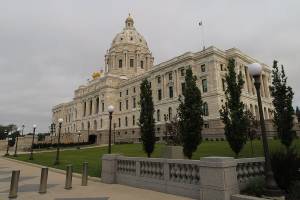
Minnesota State Capitol in St. Paul, Minnesota (Minnesota State Capitol in St. Paul, Minnesota. (Photo via Wikimedia Commons).

Lawfare, Analysis: Minnesota Can Prosecute Jonathan Ross—But It May Not Be Easy, Carolyn Shapiro, Jan. 15, 2026. On Jan. 7, a federal Immigration and Customs Enforcement (ICE) agent, identified by the media as Jonathan Ross, above, shot and killed Renee Nicole Good in her car in Minneapolis, Minnesota.
The FBI is investigating the shooting, but despite an initial promise of collaboration, it subsequently informed state officials that it would not work with them. As a result, Hennepin County prosecutor Mary Moriarty and Minnesota Attorney General Keith Ellison have launched their own investigation.
State criminal investigations and prosecutions of federal officials are unusual. And criminal charges against law enforcement officials at any level present unique legal and factual challenges. But as illustrated by Minnesota’s successful prosecution of Derek Chauvin for the murder of George Floyd, law enforcement officers can be held accountable for crimes they commit. And long-standing historical precedent establishes that states can bring charges against federal officials under certain circumstances.
Whether Minnesota ultimately prosecutes Ross remains to be seen, and state officials’ decisions will depend on careful legal and evidentiary analysis. Without predicting outcomes, however, it’s worth both clarifying the state of the law—especially in the face of false claims from the Trump administration—and identifying some of the key issues Minnesota prosecutors will have to consider.
First, let’s debunk claims that the state has no role to play here. The day before Moriarty and Ellison announced the state investigation, Vice President Vance claimed that Ross has “absolute immunity,” suggesting that there are no circumstances under which the state could prosecute him. And Secretary of Homeland Security Kristi Noem claimed that the state has “no jurisdiction,” which is why, she said, it was shut out of the investigation. More recently, Deputy White House Chief of Staff Stephen Miller announced that ICE agents “have immunity to fulfill their duties” and that “no one … can prevent you from fulfilling your legal obligations and duties.” In fact, Vance and Noem are completely wrong as a matter of law, and Miller’s claim holds water only insofar as ICE agents are in fact acting within their legal authority, which, as explained below, will be a central issue in any state prosecution.
The notion that Minnesota cannot investigate or prosecute a violation of its criminal laws within its borders is flatly inconsistent with our federalist system. As the Supreme Court has recently reiterated, the states and the federal government each have a sovereign interest in enforcing their own criminal laws. Sometimes that means that both a state and the federal government prosecute the same person for the same conduct, as happened with Derek Chauvin. When that happens, because of those separate sovereign interests, double jeopardy does not apply. Here, double jeopardy is not the key question (although at some point in the future a different federal administration could presumably prosecute Ross regardless of what Minnesota does). Instead, “dual sovereignty” in the present context means that the state has a legitimate interest in enforcing its laws even against federal actors.
Such cases are unusual, but they are not unprecedented. As Bryna Godar has documented, states have been bringing prosecutions against federal officials since at least the 19th century, including for crimes involving the use of force by law enforcement officials. These cases have involved charges of murder, attempted murder, assault, and other violent crimes, often brought against tax collectors or federal agents enforcing Prohibition. More recently, the state of Idaho brought murder charges against an FBI agent who shot and killed an unarmed woman during a lengthy stand-off known colloquially as “Ruby Ridge.” In other words, there is no question that Minnesota has jurisdiction to investigate and charge Ross with a crime and there is no automatic or absolute immunity because he is a federal officer. The administration’s claims otherwise are false.
Nonetheless, in deciding whether and how to proceed, Minnesota officials will face some challenges, from the factual investigation; to determining what, if any, charges to bring; to evaluating the defenses that Ross, as a law enforcement officer, may have—and the related likelihood that he could successfully claim what is known as “Supremacy Clause immunity,” which (contra Vance) is not absolute, but which Ross would almost certainly attempt to invoke.
As a practical evidentiary matter, if the FBI or other federal investigators do not share their investigatory files with the state, state officials have cautioned that they might determine that they do not have a sufficient evidentiary record to make a charging decision. That’s not a foregone conclusion, of course, and even if they conclude that they cannot charge Ross now, that assessment could change if a future administration is willing to share information with the state. (Minnesota has no statute of limitations “for any crime resulting in the death of the victim.”) In any event, at this time, Moriarty and Ellison are asking the public to share video and other information, and state officials are evaluating the evidence they already have. They may well conclude that they have sufficient evidence to prosecute Ross for any of a number of crimes, including various forms of murder and manslaughter and the failure to provide aid to a shooting victim.
Each of those crimes has its own set of elements, and the Minnesota prosecutors will review the evidence to see if it meets those elements. Derek Chauvin’s prosecution for killing George Floyd is a useful example. Chauvin was convicted of unintentional second degree murder, third degree murder, and second degree manslaughter. The unintentional second degree murder charge, which is comparable to what some states call felony murder, required showing that Chauvin killed Floyd while committing a separate felony, in that case a form of assault.
Third degree murder in Minnesota, of which Chauvin was also convicted, requires a showing that the defendant, “without intent to effect the death of any person, causes the death of another by perpetrating an act eminently dangerous to others and evincing a depraved mind, without regard for human life[.]” In Chauvin’s case, the prosecution established those elements in part through evidence that the use-of-force training Chauvin received included instruction to avoid putting pressure on an individual’s neck, as Chauvin did to Floyd. Similarly, the second degree manslaughter charge required the prosecution to show that Chauvin “create[d] an unreasonable risk, and consciously t[ook] chances of causing death or great bodily harm to another.”
Minnesota prosecutors will also evaluate any state law arguments Ross might have. For example, Minnesota’s state law authorizes peace officers to use deadly force under some circumstances. As relevant here, peace officers can do so under that law
only if an objectively reasonable officer would believe, based on the totality of the circumstances known to the officer at the time and without the benefit of hindsight, that such force is necessary: (1) to protect the peace officer or another from death or great bodily harm, provided that the threat: (i) can be articulated with specificity; (ii) is reasonably likely to occur absent action by the law enforcement officer; and (iii) must be addressed through the use of deadly force without unreasonable delay[.]
I would expect Minnesota prosecutors to evaluate the evidence carefully to see if Ross might be able to establish these factors, which I’ll address further below. (I leave aside the legal question of whether Ross would be considered a peace officer under Minnesota law.) And regardless of what they conclude about prosecuting the shooting itself, they will likely separately evaluate whether Ross – and his fellow ICE officers – violated Minnesota law requiring both a person who shoots someone and any witnesses to immediately investigate and render appropriate assistance.
Should Minnesota charge him, Ross will undoubtedly claim a form of immunity generally referred to as “Supremacy Clause immunity.” Contrary to Vance’s claim and Miller’s insinuation, however, Supremacy Clause immunity is not absolute. Rather, it balances the dual sovereignty already discussed with the additional principle that states cannot supersede federal laws. That balance means that Supremacy Clause immunity is available only to federal officials who are acting reasonably and lawfully in fulfilling their duties. More specifically, as Bryna Godar explained in November, it applies only if “[t]he federal official’s actions [were] … (a) authorized by federal law and (b) ‘necessary and proper’ in fulfilling the official’s federal duties.”
The inquiry into whether Supremacy Clause immunity applies in this case will thus likely include, for example, reviews of the federal government’s use-of-force policies to determine if Ross acted outside his authority and/or acted unreasonably. Those policies, for example, state that law enforcement officials (LEOs) “should … avoid intentionally and unreasonably placing themselves in positions in which they have no alternative to using deadly force”; they permit deadly force only “when the LEO has a reasonable belief that the subject of such force poses an imminent threat of death or serious bodily injury to the LEO or to another person”; they generally prohibit the use of deadly force “solely to prevent the escape of a fleeing subject”; and they specifically discourage LEOs from firing at “the driver of a moving vehicle.” The policies also require federal LEOs to “obtain appropriate medical care” after any use of force. If Ross violated these provisions, his immunity claim will be weaker. Likewise, the court will likely look at whether Ross used deadly force in violation of the Fourth Amendment, including whether his failure to warn Good before firing his gun was unconstitutional.
This immunity inquiry also overlaps with Minnesota’s state law authorizing peace officers to use deadly force, described above. Under all of these inquiries, questions of whether Ross acted reasonably under the circumstances will play a central role. In other words, both the state prosecutors’ charging decisions and the immunity determination will depend on questions of fact about the details of what actually happened, as well as on questions of law as to the implications of those facts. For example, did Ross believe that he was in imminent danger of death or serious bodily injury when he fired the first shot? If so, was that belief reasonable? Did Ross prepare to draw his gun before or after Good’s car started moving, and if not, why did he shift his cell phone from his right to his left hand? Did Good’s car touch him at any point? What about Ross’s belief as to whether he was in danger when he fired the second and third shots? On what basis did he, and his colleagues, fail to provide assistance to Good after she was shot and prevent a physician who was on the scene from helping? All of these questions go to both whether Ross has Supremacy Clause immunity and to whether he is likely to be convicted if charged and tried.
Finally, whether Supremacy Clause immunity applies will almost certainly be decided by a federal court, even though any criminal charges would first be filed in Minnesota state court. That is because federal officials are able to remove both criminal and civil cases from state court to federal court if those cases involve actions taken “under color of” their federal office. If charged, Ross would almost certainly choose to remove the case. Even in federal court, however, state criminal prosecutors would remain in charge of the prosecution, and any conviction would be a conviction under state law. And the president cannot pardon a state law crime.
In closing, Minnesota unquestionably has jurisdiction to investigate and to bring criminal charges against Ross. And Ross does not have absolute immunity, although he will certainly claim Supremacy Clause immunity if charged. We simply do not know at this point whether such a claim of immunity is likely to be successful.
Those looking for quick resolutions are likely to be disappointed. I expect that the Minnesota authorities will carefully and deliberately analyze the evidence they have access to, so it could take some time for them to decide whether to prosecute Ross. Moreover, if and when the state does bring charges, the immunity issues will be litigated first. As a result, it could take a very long time—even years—before there is a trial, much less a conviction.
Regardless of what happens in this particular case, federal immigration officers around the country should be on notice that they do not have complete impunity. They can be prosecuted and may be convicted. Lawless violence and unconstitutional actions may, sooner or later, end with a prison sentence.

Mahmoud Khalil speaking in Manhattan last August. A federal appeals court ruled that he was improperly ordered released by a Federal District Court judge last year. Academic groups have raised alarms over the government’s efforts to deport him (New York Times photo by Scott Heins).
New York Times, Calling Trump ‘Authoritarian,’ Judge Seeks to Restrict Student Deportations, Zach Montague, Jan. 16, 2026 (print ed.). In a case over the First Amendment rights of noncitizen scholars, a federal judge proposed extending protections to members of two academic groups behind a lawsuit.
A federal judge said on Thursday that he would restrict the Trump administration’s ability to deport noncitizen members of two major academic organizations, sharing his vision for how to proceed in a case testing the First Amendment rights of student activists.
During a hearing in Federal District Court in Boston, Judge William G. Young, a Reagan appointee, called Mr. Trump an “authoritarian” ruler who was failing to live up to his responsibility to uphold the First Amendment.
Judge Young, who is 85 and has served on the bench for four decades, has called the case about the administration’s attempt to deport student protesters the most important of his career. On Thursday, he described his outrage at how the administration had treated noncitizen students, whom he has found were targeted for removal from the country because of their speech.
He said his proposal was a targeted restriction on the Trump administration for what he described as a sweeping and unconstitutional abuse of power.
Under his proposed order, the administration would be forced to answer in court if it tried to deport any of the members of the two organizations involved, outlining to a judge why reasons other than their speech would justify their removal. He added that any adverse immigration enforcement against a member of the group would be presumed to be retaliation, and that the government would need to demonstrate that it was not.
In September, Judge Young issued a 161-page opinion that the First Amendment covers speech by noncitizens studying in the country, and that the government had violated those protections by trying to deport noncitizen student activists who were in the country legally.
Thursday’s hearing was his attempt to find a remedy to force the Trump administration to change its deportation policies on student protesters. He said he would issue the order after lawyers representing the groups submitted a written draft that would formalize his proposal.
Judge Young told lawyers from both sides that he viewed his solution as the most workable way to rein in the Trump administration. At the same time, he repeatedly explained how angered he was by the administration’s conduct.
He called an effort by the administration to deport five students who had been in the United States an “unconstitutional conspiracy” to “twist the laws” and “pick off” a few prominent activists with an eye to intimidating all noncitizens across academia.Editors’ PicksWhat to Know About Bilt’s New Rewards Program for Mortgage and Rent PaymentsThey Left Their Empty Nest for a Fresh Start in Helena, Montana5 Workouts to Ease Pain and Prevent Injury
Judge Young said Mr. Trump was failing to follow the Constitution. And he accused Secretary of State Marco Rubio and Homeland Security Secretary Kristi Noem of “conspiring to infringe” on the rights of noncitizen students.
“Talking straight here, the big problem in this case is that the cabinet secretaries and, ostensibly, the president of the United States are not honoring the First Amendment,” he said.
Beginning in March, the Trump administration arrested a series of noncitizen students who had been active in campus demonstrations against Israel at several leading universities.
Invoking an exceedingly rarely used provision of immigration law, the State Department, led by Mr. Rubio, determined the students’ presence in the United States could lead to “potentially serious adverse foreign policy consequences” for the country, and authorized their removal.
The arrests accompanied a wider campaign to target universities and particularly their foreign students, including through a policy of examining the social media accounts of foreign citizens applying for student and visiting scholar visas to check for any criticism of the Trump administration. Mr. Trump and top officials such as Mr. Rubio and Linda McMahon, the education secretary, also cited accusations of antisemitism in campus demonstrations to justify withholding billions in federal funds from more than half a dozen prominent schools.
The academic organizations that sued said the actions had forced students and teachers to avoid speaking about topics they feared could jeopardize their legal status or their employers’ funding.
On Thursday, Judge Young said he worried about “overbroad” solutions, particularly in light of the Supreme Court’s ruling last year that limited sweeping injunctions that span the country.
He proposed limiting his focus to the subset of noncitizens who are members of the American Association of University Professors and the Middle East Studies Association, the two groups that had sued.
Lawyers representing the academic organizations had sought a broader, nationwide ruling blocking any systematic policy of what they called “ideological deportations.”
They had argued a narrow remedy would be unfair to those who do not belong to their groups but might someday join and could face similar deportation threats. And they added that the organizations, which do not routinely collect information on the immigration status of their members, might be reluctant to hand over a list of vulnerable members.
New York Times, News Analysis Did a Supreme Court Loss Embolden Trump on the Insurrection Act? Adam Liptak, Jan. 16, 2026 (print ed.). In refusing to let the president deploy National Guard troops in Illinois under an obscure law, the justices may have made him more apt to invoke greater powers.
Justice Brett M. Kavanaugh sometimes says the quiet part out loud. He did that last month when the Supreme Court refused to let President Trump deploy National Guard troops in Illinois.
The decision was a rare loss for the administration at the court, and it seemed to prompt Mr. Trump to abandon his efforts to deploy troops in Illinois, Oregon and California.
But Justice Kavanaugh, in a footnote in a concurring opinion, suggested that the ruling could be a speed bump on the road to greater presidential power. He pointed to the possibility of Mr. Trump invoking a different law, the Insurrection Act, to send more conventional military troops to American cities.
Less than a month later, Mr. Trump suggested he might do exactly that in response to violence and protests in Minneapolis.
“If the corrupt politicians of Minnesota don’t obey the law and stop the professional agitators and insurrectionists from attacking the Patriots of I.C.E., who are only trying to do their job, I will institute the INSURRECTION ACT, which many Presidents have done before me,” he wrote on Thursday on social media.
In his own social media post hours earlier, Todd Blanche, the deputy attorney general, had called the opposition to immigration raids in the state a “Minnesota insurrection.”
Mr. Trump has long floated the possibility of invoking the act, and he did not need a sentence in a footnote to give him any ideas. But Justice Kavanaugh’s statement did make plain that the Supreme Court’s action in blocking one kind of deployment could set the stage for other, more aggressive ones.
Mr. Trump relied on a different law to order National Guard troops to cities last summer, an obscure measure adopted in 1903 and 1908 that said deployments were allowed for three reasons.
One, concerning foreign invasions, plainly did not apply to the events in Illinois. The second permissible reason for deploying the Guard was if a rebellion was underway, or if there was danger of one. That is a stretch, and the majority did not cite it, much less discuss it. The court’s order focused on the third reason: the president’s right to deploy the National Guard if he is unable to execute laws “with regular forces.”Editors’ Picks5 Workouts to Ease Pain and Prevent InjuryWhy Is My Alcohol Tolerance Declining With Age?In Jackson Hole, a Different Kind of Skiing
Five justices joined the unsigned majority opinion, which rejected the Trump administration’s position that “regular forces” referred to civilian law enforcement like Immigration and Customs Enforcement agents. Instead, the majority said, the term referred to the military. Since there had been no showing that those forces would be unable to execute the laws, the administration lost — at least for the time being.
Justice Kavanaugh voted with the majority but did not sign its opinion, and accepted only part of its reasoning. Such a “concurrence in the judgment” is unusual in cases decided on the court’s emergency docket.
Speaking for himself, Justice Kavanaugh surveyed the legal landscape and said what the majority had left unstated.
More On U.S Governance, Politics
Morning Shots via The Bulwark, Political Opinion: The Make-a-Wish President, Andrew Egger, right, Jan. 16, 2026. There’s an old episode of The Twilight Zone, “It’s a Good Life,” that centers on a six-year-old boy, Anthony Freemont, who has the powers of a god.
Little Anthony is the tyrant of his small town, which he’s somehow cut off from the rest of the universe and immiserated with a series of thoughtless, pointless whims: no cars, no electricity, and so on. The people in his thrall live in terror of him, but they don’t dare show it—he has a habit of shooting the messenger, and a cheerful, contented god-boy is better than an angry one. Instead, they shower the kid in constant, petrified praise, telling him his every decision is wise and good.
Donald Trump has always had a lot in common with Anthony Freemont. But his months-long tantrum over his own failure to win the Nobel Peace Prize has taken things to another level.
Last week, in the midst of a Truth Social rant about the supposed uselessness of NATO, Trump whined that “I single-handedly ENDED 8 WARS, and Norway, a NATO Member, foolishly chose not to give me the Noble [sic] Peace Prize.” Trump did not end eight wars. The nation of Norway does not select the winner of the Nobel prizes, which are also not called the “Noble” prizes. And it’s hard to imagine a crazier metric by which to assess the merits or demerits of NATO in the first place. This isn’t the ranting of a supervillain; it would never occur to Stephen Miller to say something like this. It’s the tantrum of a child.
But a child with godlike powers tends to get what he wants. And so it was yesterday that María Corina Machado, the Venezuelan opposition leader and actual recipient of last year’s Nobel Peace Prize, showed up at the White House to hand the thing over. Feast your eyes on the most powerful man on earth, the Make-a-Wish president, the septuagenarian birthday boy:
Later, Trump headed back to Truth Social in a very good mood. It had been his “Great Honor” to meet Machado, he said, who had “presented me with her Nobel Peace Prize for the work I have done. Such a wonderful gesture of mutual respect.” After giving Trump her medal, Machado was later spotted leaving the White House with a gift bag bearing Trump’s signature. Mutual!
Trump, of course, had really only been presented with the Nobel medal. Earlier in the day, the Nobel Peace Center deadpanned online that, while “a medal can change owners,” “the title of a Nobel Peace Prize laureate cannot.” But Trump isn’t concerned. The mind of a child has trouble with abstract concepts like “title.” He’s got the prize now, doesn’t he? It’s right over there on the wall!
It takes the mind of a child, too, to see Machado’s gift as a gesture of real respect. To the Venezuelan leader, an adult, a hunk of metal matters far less than achieving her political aims. But she understands that Trump, a child, doesn’t see things that way. She is happy to bribe him like a child. And he is too childlike to understand the patronizing nature of her praise.
AROUND THE BULWARK
GOOD TO BE RED: Look, say what you want about this White House: They’re really, really, really concerned with stamping out fraud. So much so that last year they brought on Elon Musk and DOGE to defund basically all U.S. foreign aid rather than risk any going to fraud. So much so that they’ve threatened to cut off all federal funding to Minnesota over its current major fraud scandal. So much so that they’ve . . . quietly been letting Mississippi off the hook over one of history’s other biggest welfare-fraud disasters? HuffPost reports:
Shortly before President Joe Biden left office, the Department of Health and Human Services’ Administration for Children and Families levied a $100 million penalty against Mississippi for allowing fraudsters to embezzle funds from the federal Temporary Assistance for Needy Families program. The penalty reflected the estimated size of the fraud.
But the Trump administration reversed the decision in April after the Mississippi Department of Human Services said it uncovered records that could validate some of its allegedly improper spending, rescinding the penalty, and telling the state it would “issue a new penalty letter at the appropriate time.” Eight months later, no new letter has been sent.
BRAIN DRAIN PAIN: Are American universities losing their perch as the envy of the world? The New York Times reports on Harvard University’s slip from first place to third on a list of the world’s most productive research universities (and other top schools’ even faster slide) amid a blizzard of anti-academy policies from the White House and stiff competition from universities in China:
The reordering comes as the Trump administration has been slashing research funding to American schools that depend heavily on the federal government to pay for scientific endeavors. President Trump’s policies did not start the American universities’ relative decline, which began years ago, but they could accelerate it.
“There is a big shift coming, a bit of a new world order in global dominance of higher education and research,” said Phil Baty, chief global affairs officer for Times Higher Education, a British organization unconnected to The New York Times that produces one of the better-known world rankings of universities.
Educators and experts say the shift is a problem not just for American universities, but also for the nation as a whole.
“There is a risk of the trend continuing, and potential decline,” Mr. Baty said. “I use the word ‘decline’ very carefully. It’s not as if U.S. schools are getting demonstrably worse, it’s just the global competition: Other nations are making more rapid progress.”
More On U.S. Politics, Governance
Politico, Warren calls out former Rep. Maloney's renewed ties to crypto, Declan Harty, The Massachusetts Democrat told POLITICO that former Rep. Sean Patrick Maloney's hiring as the new head of a prediction market group violates his past pledge to not work for crypto companies.
Sen. Elizabeth Warren is reviving her campaign against former Democratic Rep. Sean Patrick Maloney’s ties to the cryptocurrency industry.
The Massachusetts Democrat told POLITICO that Maloney’s hiring this week as CEO of a newly formed prediction market industry group violates his 2024 pledge to not work for crypto companies following his time serving in former President Joe Biden’s administration. His hiring, she said, “stinks like the swamp.”
“Maloney has an alarming track record of spinning between government and the crypto industry — going from chairing a subcommittee overseeing digital assets while in Congress to advising a crypto company, then a diplomatic post that dealt with financial regulation and now teaming up once again with his former crypto employer,” Warren said, referring to Coinbase, which previously counted Maloney as an adviser and is one of the coalition’s members.
“If Democrats want to earn back the trust of working people, we must insist that public service is about advancing Americans’ economic interests — not lining up your next job,” she added.
The Coalition for Prediction Markets, which announced Maloney’s hiring Tuesday, counts Kalshi, Crypto.com and Robinhood as members, along with Coinbase. It launched last month with the goal of advocating for the federal regulation of prediction markets, or financial exchanges that allow users to wager on events like elections, sports and awards ceremonies.
A spokesperson for the coalition, when asked for comment, said the group “is for prediction markets — not crypto.”
Warren’s comments underscore a long-simmering tension in the Democratic Party over the revolving door between Washington and the business world.
In 2024, as lawmakers weighed Maloney’s nomination to be Biden’s ambassador to the Organization for Economic Cooperation and Development, the former New York congressman vowed in a letter to Warren that, if confirmed, he would “not accept employment, board service, or compensation from any company or organization primarily engaged within the cryptocurrency or digital assets industry” for four years after his tenure.
She previously pressed Coinbase over the company’s employment of Maloney as well as several other government officials, including former Defense Secretary Mark Esper and former Sen. Pat Toomey, who all sat on its Global Advisory Council.
President Trump's self-portrait as as muscular king that he published as a pre-Thanksgiving message on Nov. 23, 2025. Trump has adopted much of the right-wing Heritage Foundation's plan to reshape U.S. government, including by appointing to influential Administration posts those who developed Project 2025.
Steady, Political Commentary: Bird Brain, Dan Rather,  right, Jan. 15, 2026. A heckler, an obscene gesture, and a new low for the president.
 At this point, one can hardly imagine this president doing anything that would shock our senses. But just when you thought he’d done it all, couldn’t possibly disgrace himself any further, he one-ups himself… with one finger.
It happened during an unscripted moment when Donald Trump came face-to-face with a heckler. Politicians, good ones, know how to handle situations like this. And it’s not as if the heckler was demanding the U.S. keep its hands off Greenland or do something about food prices.
No, this heckler struck a nerve that sent Trump into a rage, and in the process, he exhibited behavior that once again shows again why he is an embarrassment to our nation and unfit for office.T
Trump visited a Ford Motor plant in Dearborn, Michigan on Tuesday. His agenda was to convince those assembled, and the rest of America, that his tariff policies are a boon to the auto industry (they’re not). During the facility tour, a Ford employee yelled at the president, “pedophile protector!”
A visibly irate Trump pointed aggressively at the worker, who has been identified as T.J. Sabula, and said, “f**k you,” twice. He then stomped away, brandishing his middle finger at Sabula.
The incident was recorded by someone in the crowd on a cellphone and circulated by TMZ. It was reported by the mainstream press like a run-of-the-mill wire service item: “Trump makes obscene gesture,” wrote The New York Times. “Trump flips-off apparent heckler,” reported NBC News.
That’s it?
One would be excused for believing this is a bigger deal than that. Imagine any other political leader getting a pass for such behavior. We don’t have to look too far back to remember a country where our citizens respected one another, where the office of the president came with higher ideals.
Sabula was immediately marched out of the plant, as though he had committed a crime, and suspended with pay. His union, the United Auto Workers, is representing him.Within hours, two separate GoFundMe campaigns were set up by people concerned for Sabula, who could lose his job. In less than 24 hours, more than $800,000 was donated to support the autoworker.
Sabula thanked those who gave and then closed down the fundraisers, posting, “We greatly appreciate the outpouring of support! At this time we are closing donations to this campaign and encourage you to look for other causes and organizations to support.”
Sabula does not regret his actions. “I don’t feel as though fate looks upon you often, and when it does, you better be ready to seize the opportunity. And today I think I did that,” he told the Washington Post.
The White House’s penchant for doubling down and gaslighting was on full display in the aftermath of this episode. A spokesperson called Sabula a “lunatic” who “was wildly screaming expletives in a complete fit of rage.” On the video, you can hear him say only two words, neither an expletive. It was the president who “was wildly screaming expletives.”
The spokesperson defended Trump’s response, calling it “appropriate and unambiguous.”
Well, it was unambiguous. Appropriate? Not under any circumstances.
Trump’s response was telling, though. Sabula clearly hit a very raw nerve. It is doubtful Trump would have reacted the same way had he been called a “drug kingpin pardoner” or an “ICE defender.” No, he was called a “pedophile protector,” a reference to Jeffrey Epstein and the mishandling of the files.
By the way, in case you’ve forgotten amid all the chaos, more than 99% of those files are still being withheld, despite a recent law that demands their full release.Anger and cruelty are driving Trump’s behavior and policies in new and unhinged ways.
This is evident in his social media posts, which are increasingly hostile.
On Thursday morning, he promised to invoke the Insurrection Act against protesters in Minneapolis.That 19th-century law allows the president to use the U.S. military against American citizens. With unrest growing in Minneapolis after an ICE agent shot and killed Renee Nicole Good last week, Trump flooded the city with more than 3,000 agents.
On Wednesday night, an estimated 200 protesters gathered where an ICE agent shot and injured a Venezuelan immigrant after he attempted to run during a traffic stop. They threw rocks and yelled at agents, who in turn used tear gas and flash grenades.
Trump also announced that the U.S. would end temporary deportation protections for Somalis, many of whom live in Minnesota. The protections are meant to safeguard immigrants who cannot safely return to their home countries. Ongoing armed conflicts have plagued Somalia for decades, which is why you find large Somali ex-pat communities around the world, not just in the U.S.
In an attempt to stop most immigration altogether, the White House announced this week the indefinite suspension of the processing of visas from 75 countries. This is an effort to curtail immigration from places Trump doesn’t like: Africa, South America, the Caribbean, the Middle East, and Eastern Europe.
The administration says it wants to discourage immigration by people who “take welfare from the American people at unacceptable rates.” There is no evidence that this has actually happened.
President Barack Obama deported more than three million people during his eight years in office. He did it without using Gestapo tactics and by adhering to the rule of law. While you may disagree with the policy, the process must be legal and humane, two things Trump does not seem to care about.
Now we live in a country where laws and societal norms are shattered every day — by the president. His abhorrent behavior has given those who want to break laws and undermine the country encouragement to do so. Our country has had its ups and downs, but no American has lived through anything like this before.
Jan. 15
President Trump posted an image showing himself as "Acting President of Venezuela"
News Update via The Parnas Perspective: Trump Suggests United States Should Cancel Upcoming Elections and European Troops Land on Greenland, Aaron Parnas, right, Jan. 15, 2026. Today, President Trump publicly questioned whether the United States should even hold the upcoming midterm elections. I spoke directly with Illinois Governor JB Pritzker, who said Americans must take the president’s remarks seriously.
At the same time, Republican lawmakers are now openly acknowledging that President Trump would face impeachment and removal if he attempted to invade Greenland. This comes as European troops have landed on the island, with plans to soon raise a European Union flag in a clear show of unity and deterrence.
I am working around the clock to interview key leaders and bring you verified information as events unfold. People often ask how I am always online. The answer is simple. I love this work. Right now it is just me. The team will grow, but I am proud of what we are building.
Here’s what you missed:
President Donald Trump told Reuters the U.S. “shouldn’t even have” the November midterm elections, citing his administration’s  accomplishments and warning Republicans could lose Congress, remarks that intensified concerns about democratic norms even as he stopped short of calling to cancel the vote and acknowledged such claims would spark backlash.
Republican Rep. Don Bacon said enough House votes exist to impeach President Donald Trump if he attempts to invade Greenland, a stance echoed by GOP senators including Rand Paul and Mitch McConnell, who warned such an action would violate congressional war powers, damage alliances with NATO, and provoke bipartisan resistance despite recent Republican defections on limiting Trump’s military authority. I spoke with the leading Democrat on the issue, Brendan Boyle, this morning:
European troops have officially been deployed to Greenland in a show of support as President Donald Trump drew sharp criticism by reviving rhetoric about “conquering” Danish territory and blaming Volodymyr Zelenskyy—rather than Vladimir Putin—for blocking peace in Ukraine, prompting renewed alarm and pushback from European leaders.
European allies including France, Germany, and the United Kingdom deployed troops to Greenland today to signal unity after President Donald Trump doubled down on demands for a U.S. takeover of the territory and blamed Volodymyr Zelenskyy.
Kristi Noem defended Immigration and Customs Enforcement after being asked about potential Fourth Amendment violations, insisting that ICE officers’ actions are lawful, follow long-standing protocols, and are being carried out correctly.
Kristi Noem said ICE is conducting “targeted enforcement” operations in Minnesota, arguing that when agents pursue a specific suspect they may ask nearby individuals to identify themselves and explain their presence, but did not advise Americans broadly to carry proof of citizenship.
Madison Sheahan resigned as deputy director of Immigration and Customs Enforcement to launch a Republican bid for Ohio’s 9th Congressional District, entering a crowded May 5 GOP primary for a newly redrawn, more GOP-friendly battleground seat held by Democratic Rep. Marcy Kaptur, after redistricting boosted President Donald Trump’s notional margin there; the race is rated a “Toss Up” by the Cook Political Report.
A global survey by the European Council on Foreign Relations across 21 countries found that President Donald Trump’s “America First” approach is widely seen as boosting China’s global influence, with most respondents expecting China to grow stronger, fewer viewing the United States as a reliable ally—especially in Europe—and only small minorities anticipating increased U.S. strength despite continued influence.
The Department of Health and Human Services reversed course and reinstated $2 billion in mental health and substance abuse funding tied to Substance Abuse and Mental Health Services Administration after public and congressional pushback, with Rep. Rosa DeLauro saying Health Secretary Robert F. Kennedy Jr. bowed to pressure after issuing cuts that caused confusion for families and providers.
Democratic lawmakers led by Elizabeth Warren urged the Federal Trade Commission to investigate Trump Mobile over possible consumer protection and false advertising violations, alleging its delayed “T1” phone—promoted as “Made in the USA” by Donald Trump’s sons—may have been deceptively marketed, with no response from Trump Mobile or the Trump Organization.
The Department of Defense confirmed it seized another sanctioned oil tanker, the Veronica (also known as the Galileo), in the Caribbean during a pre-dawn operation by U.S. forces supporting the Department of Homeland Security, saying the vessel violated President Donald Trump’s quarantine of sanctioned ships and was linked to tankers operating near Venezuela that recently reflagged to Russia.
According to NBC News, head-on crash between a school bus and a car in Manhattan killed the car’s driver and injured 11 others, including students, with no major injuries reported among the children; the incident is under investigation by Illinois State Police.
The U.S. Senate narrowly blocked a bipartisan war powers resolution that would have required Donald Trump to get Congressional approval before further military action in Venezuela, after Trump’s pressure led two Republicans, Josh Hawley and Todd Young, to flip their votes; the final tally was 51-50 with Vice President JD Vance casting the tie-breaking vote to dismiss the measure.
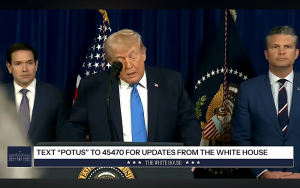
President Trump, flanked by Secretary of State Marco Rubio, left, and Secretary of Defense Peter Hegseth. describes the U.S. invasion of Venezuala and the capture by U.S. troops of the nation's president and his wife (White House photo on Jan. 3, 2026).
Meidas Touch Network, News Updates: Trump escalates threats as his regime leans harder into authoritarian tactics, Ben Meiselas, Jan. 15, 2026. Trump’s authoritarian threats and actions are escalating.
What we are seeing is an increasingly unstable authoritarian lashing out as Americans refuse to submit to his dangerous tactics. Now is the time for all of us to speak with the moral clarity this moment demands.
Trump is now openly threatening to invoke the Insurrection Act or even declare martial law. Whether he uses one term or the other makes no practical difference, because he is already deploying ICE and Border Patrol into Minneapolis, Saint Paul, and cities across the country to terrorize peaceful communities. This is not a response to an actual threat. It is designed to provoke conflict, create chaos, and manufacture  the pretext he wants: a justification to deploy the military domestically and suppress blue states before the midterms.
Shortly before I recorded, Trump posted: “If the corrupt politicians of Minnesota don’t obey the law and stop the professional agitators and insurrectionists from attacking the Patriots of I.C.E., who are only trying to do their job, I will institute the INSURRECTION ACT…Thank you for you attention to this matter! President DJT”
This is the plan. Terrorize communities, escalate violence, then claim the chaos justifies further crackdowns. They want this in Minnesota, and they want it in every major blue city heading into November.
Part of this is distraction. The Epstein files and the growing evidence of a cover-up involving the largest child sex trafficking ring in modern history are closing in on Trump’s Department of Justice. Trump needs a smokescreen. And he needs a mechanism to interfere with the upcoming elections in Democratic strongholds. This strategy does both.
Speaking of the midterms, a new article from Reuters features a chilling quote from Trump buried within the piece. “When you think of it, we shouldn’t even have an election,” he told them.
At the same time, we uncovered video from Mar-a-Lago showing a bizarre party where guests wore dog masks, in scenes that looked like a twisted real-world version of Kubrick’s Eyes Wide Shut.
That’s what is happening inside Trump’s palace while Americans struggle with the highest grocery prices in years and inflation continues to rise.
Instead of addressing any of this, the Trump regime is telling Americans they should be satisfied with a diet of “one piece of chicken, one piece of broccoli, and one corn tortilla.” That’s a direct quote from Agriculture Secretary Brooke Rollins. So in Trump’s America, you will own one doll, one pencil, and have one piece of broccoli. Enjoy, peasants. That’s the message coming straight from the regime.
Meanwhile, DHS Secretary Kristi Noem is on television endorsing an increased ICE and Border Patrol presence in Minnesota and admitting she has discussed the Insurrection Act directly with Trump. She said the president “certainly has the constitutional authority” to use it and that it remains an option.
Then you have MAGA figures like Randy Fine going on state regime media to talk about invading Greenland and withdrawing from NATO, suggesting Congress should “stand behind the president” as he tries to absorb Greenland into the United States.
This isn’t fringe chatter. These are coordinated talking points from individuals aligned directly with Trump.
Others in Trump’s orbit continue to play their roles. Senator Roger Marshall is teasing a “major health care package” coming on Friday. MAGA House members are demanding investigations into the Clinton Foundation rather than the Epstein files themselves. It is all reruns of the same propaganda loop, meant to distract from the real threats unfolding in real time, and to cover for the regime’s criminality.
Then, without any irony, Trump posted that Iranian protesters “will no longer be sentenced to death after Trump’s warnings,” citing Fox “News” as his source. This is the President of the United States claiming credit for halting executions abroad while ignoring the thousands reportedly slaughtered by the Ayatollah since Trump’s January 2 pledge that “if a single protester was killed, America would intervene.”
His reckless words emboldened protesters who believed him, and now he shrugs it off. He led these protestors on, then took the side of the Iranian regime.
Behind the scenes, Qatar, Saudi Arabia, Oman, and other countries are pleading with Trump not to attack Iran. They fear the regional consequences, including retaliatory strikes on U.S. bases and destabilization of their own governments.
For now, Trump appears to be holding back, not because of any strategic thinking, but because neighboring regimes told him to stop.
At the same time, conflict between Saudi Arabia and the UAE is escalating, adding another volatile flashpoint to a global map already destabilized. Russia has intensified its attacks on Ukraine.
Tensions are rising between Thailand and Cambodia. Congo and Rwanda continue to clash. China is pressing harder around Taiwan. Venezuela is spiraling as Trump props up Delcy Rodríguez.
And through all of this, Trump continues threatening to invade Greenland and undermine NATO. The world is destabilized, and it’s all thanks to Trump and his enablers.
We will continue to cover every development. Thank you to everyone who supports our work and helps us expose what Trump is trying to hide. Make sure you’re subscribed so we can keep growing, keep reporting, and keep shining a light on what this regime wants kept in the dark.
New York Times, Trump Administration Live Updates: President Threatens to Invoke Insurrection Act After Minneapolis Protests, Shawn McCreesh, Jan. 15, 2026. What We’re Covering Today.
 on the operation. The ship is the sixth intercepted since the blockade, aimed at sanctioned vessels transporting oil from the country. The ship was intercepted hours before President Trump was to meet with María Corina Machado, the Venezuelan opposition leader and Nobel Peace Prize winner, at the White House. Read more ›
Hours before President Trump threatened to invoke the Insurrection Act to quell protests in Minneapolis, Deputy Attorney General Todd Blanche posted on social media about the opposition to immigration raids in the state, referring to it as a “Minnesota insurrection” that was “a direct result of a FAILED governor and a TERRIBLE mayor encouraging violence against law enforcement.”
The Minneapolis mayor, Jacob Frey, has been begging for ICE to leave the city, saying it’s been overrun by agents who outnumber local police forces.
President Trump threatened in a social media post Thursday morning to invoke the Insurrection Act to quell the protests in Minneapolis that have grown after an immigration agent killed a woman in the city. Trump, who has repeatedly threatened to invoke the law, said he would do so “if the corrupt politicians of Minnesota don’t obey the law and stop the professional agitators and insurrections from attacking the Patriots of I.C.E.,” referring to Immigration and Customs Enforcement agents. The act authorizes the president to use the military to suppress an insurrection if a state government requests it.
Tense protests in Minneapolis follow another shooting by a federal agent.ImageA protester looks out at authorities blocking off a street at night. Emergency lights illuminate the snow-covered ground.Federal agents clashed with protesters near the scene where a federal agent shot a man from Venezuela while trying to detain him in Minneapolis on Wednesday.Credit...David Guttenfelder/The New York Times
A federal agent shot and injured a man in Minneapolis on Wednesday evening, federal officials said, an incident that touched off hours of clashes between protesters and law enforcement officers and that came just one week after an immigration agent killed a woman in the city.
Tricia McLaughlin, a spokeswoman for the Department of Homeland Security, said in a statement that federal agents were trying to arrest a man from Venezuela who was in the country illegally in a “targeted traffic stop” at around 6:50 p.m. She said that he fled from agents.
Paul Krugman via Substack, Political-Economy Commentary: The Minneapolis Crucible, Paul Krugman, right, Jan. 15, 2026. Will we forge democracy anew? Demonstration against increased immigration enforcement, after a U.S. Immigration and Customs Enforcement (ICE) agent fatally shot Renee Nicole Good, in Minneapolis
When Trump won the 2024 election, I feared — rightly — that our democracy would soon be in great peril. Between gerrymandering, a corrupt Supreme Court, a compliant Republican Party, and a tsunami of political donations from the tech broligarchy, I thought American democracy might soon perish.
But I thought the process of losing our democracy would be a slow, ineluctable descent as institutions and people resigned themselves to the seemingly inevitable. I expected the process to be akin to what happened in Hungary, where ordinary people’s lives remained mostly normal amid Viktor Orban’s authoritarian takeover. There, independent media have been suppressed, business has been co-opted by crony capitalism, the judicial and electoral systems have been rigged. But Orban didn’t employ armed thugs to brutalize, maim and murder people in the streets. Rather, Hungary’s democracy fell to a quiet, creeping coup.
My early fears weren’t completely off base. Everything that transpired in the first few months of Trump 47 suggests that if our own home-grown fascists had been as patient as Orban, a de facto dictatorship would have been established here with relative ease. Our vaunted institutions, our system of checks and balances, either capitulated quickly or were overrun by Trump’s onslaught. Big business quickly bent the knee, immediately directing its focus to how to make money through Trump trades. The Supreme Court and the Republican Congress abetted and even encouraged every fascist move.
Yet the US has not replicated Hungary’s measured slide into authoritarianism. For Trump and his minions aren’t patient. They want retribution and subjugation. Threats and dominance displays are how they operate. They burn with racism, misogyny, and performative cruelty.
So now we have Minneapolis, America’s laboratory of democratic destruction, where ICE agents have gone full Sturmabteilung, terrorizing and even killing not only people with brown skin, but anyone who protests or gets in their way. And the irony is that this may be for the better.
For a gradual destruction of democracy would have been hard to resist. After all, who wants to rock the boat when there’s money to be made, jobs to keep, perks to be had, convenient bothsideism to be upheld, if you will just be silent and keep your head down?
Instead, however, the assault on freedom and civil liberties is open, lurid, and impossible to deny. While our institutions and our elites have failed us, ordinary Americans are rising to the occasion.
If Minneapolis is a laboratory of democratic destruction, it has also become a laboratory of civil resistance — organized civil resistance, of a kind we haven’t seen since the civil rights movement. When ICE is on the rampage, crowds of brave Americans, summoned by texts and whistles, quickly gather to stand against the masked men with guns. As the outrage grows, people of common decency — like the federal prosecutors in Minnesota who chose to resign rather than pervert justice by going after Renee Nicole Good’s wife — are taking a stand.
So what’s happening now is both horrifying and inspiring. How will it all end? I don’t know, but maybe, just maybe, our democracy isn’t being destroyed — it’s being forged anew in the hands of the American people.
More On U.S. Politics, Elections
The Parnas Perspective, Political Commentary, Nobel Committee Reaffirms Trump Did Not Win Prize as Machado Presents Him the Medal -- and ICE Support Tanks Nationwide, Aaron Parnas, right, Jan. 15, 2026.
María Corina Machado has confirmed that she presented a Nobel Peace Prize medal to Donald Trump, even as the Nobel Committee again makes clear that Trump did not win the Nobel Prize and that the award cannot be transferred or given to anyone other than its original recipient. Although the it is unclear whether the President currently has the Prize in his possession, he is not a Nobel Laureate.
At the same time, public support for ICE is collapsing nationwide in what is shaping up to be a watershed moment for both the agency and the country.
In other news:
• NBC News has confirmed that despite government promises to release large numbers of political prisoners in Venezuela, only a small and disputed fraction have been freed so far, leaving families in anguish amid opaque processes, continued detentions, legal restrictions on those released, and ongoing repression.• The White House said Venezuelan leaders, including Delcy Rodríguez, have been “extremely cooperative” with the U.S., citing ongoing high-level communication, fulfillment of U.S. demands, and a $500 million energy deal as evidence that Donald Trump is satisfied with the current cooperation
.• Following the killing of Renee Nicole Good, new YouGov polling shows majorities of Americans view ICE unfavorably, believe the shooting was unjustified and warrants criminal charges, and support sweeping reforms—including stricter limits on force, greater accountability, and, for nearly half, eliminating the agency altogether.
• White House Press Secretary Karoline Leavitt, right, attacked a reporter for asserting that the killing of Renee Nicole Good was unjustified. • Roughly 3,000 federal agents—including over 2,000 from Immigration and Customs Enforcement, hundreds of Border Patrol agents, and others from Justice Department agencies—are conducting immigration arrests in the Minneapolis area.• Leavitt dismissed a question about whether President Donald Trump finds canceling elections humorous, deflecting by mocking the reporter rather than directly addressing the concern.
• The Associated Press has confirmed that St. Paul Public Schools and Minneapolis Public Schools are offering temporary online learning options, with St. Paul closing schools until Thursday to prepare, while the University of Minnesota will begin its new term with flexible class formats.• The American Civil Liberties Union filed a lawsuit against the Trump administration, alleging federal immigration officers unlawfully targeted Somali and Latino communities in Minnesota through warrantless, racially motivated stops and arrests driven by xenophobic rhetoric.• Tear gas was deployed as masked Immigration and Customs Enforcement officers in riot gear clashed with roughly 100 protesters outside the Bishop Henry Whipple Federal Building—a local Department of Homeland Security office—resulting in at least one detention.
• European troops began arriving in Greenland as Denmark’s prime minister Mette Frederiksen said the island’s defense is a shared responsibility of NATO, amid continued tensions after Donald Trump reiterated his ambition for the U.S. to acquire Greenland despite firm opposition from Danish and Greenlandic leaders.• The White House said European troop deployments to Greenland will not affect Donald Trump’s stated goal of acquiring the territory, with press secretary Karoline Leavitt reiterating that Trump views acquisition as vital to U.S. national security despite the island being long controlled by Denmark.
• According to NBC, a bipartisan group of senators led by Andy Kim introduced the NASA Talent Exchange Program Act, which would boost U.S. space innovation by enabling temporary talent exchanges between NASA and the commercial space industry, modeled after a Defense Department program.
• Ashley St Clair, the mother of one of Elon Musk’s children, sued xAI and its chatbot Grok in New York Supreme Court, alleging the tool generated and spread nonconsensual, sexually explicit deepfake images of her—including as a minor—via X despite requests for removal.• U.S. allies including Saudi Arabia, Qatar, Turkey and Oman urged Donald Trump to refrain from striking Iran, warning such action could trigger a wider regional conflict—pressure that appears to have helped delay U.S. military action as tensions escalated across the Middle East.
• The Guardian has confirmed that the United States reached a deal with Taiwan to cut tariffs on Taiwanese goods to 15% in exchange for at least $250bn in new Taiwanese semiconductor and tech investments in the U.S., aiming to reshore chip production and strengthen American supply-chain self-sufficiency under the Donald Trump administration.
• According to Politico, former Rep. Billy Long apologized for joking that Iceland could become the “52nd state” after the remark sparked diplomatic backlash, complicating his nomination by Donald Trump to serve as U.S. ambassador amid heightened tensions over Greenland.
U.S. Elections
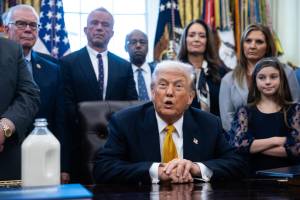
President Donald Trump takes part in a signing ceremony in the Oval Office at the White House Jan. 14, 2026. Trump signed a bill allowing schools to serve whole and 2% milk. (Francis Chung/POLITICO via AP Images)
Democracy Docket, Trump: ‘We shouldn’t even have an election,’ Yunior Rivas, Jan. 15, 2026. President Donald Trump said Wednesday that “we shouldn’t even have an election,” as he complained about the political risks his party faces in the 2026 midterms and boasted about his accomplishments.
The remark is the latest in a series of statements in which Trump treats elections not as a constitutional requirement, but as an obstacle — even though he has no authority to cancel or suspend them. SIGN UP TODAYGet updates straight to your inbox — for free
Join 350,000 readers who rely on our daily and weekly newsletters for the latest in voting, elections and democracy.
Trump made the comment in an interview with Reuters while venting about the long-standing reality that the party of a sitting president often loses seats in midterm elections.
“It’s some deep psychological thing, but when you win the presidency, you don’t win the midterms,” Trump said. He then boasted that he had accomplished so much that, “when you think of it, we shouldn’t even have an election.”
Reuters has not yet made Trump’s full comments available, so it’s impossible to know whether Trump followed up by hedging or pulling back. But he has flirted before with the idea of canceling elections — which are mandated by the Constitution and not subject to any presidential approval.
Earlier this month, during a speech to House Republicans, Trump framed voting itself as a partisan weapon, complaining about “pro-voting” Democratic policies before attempting to preempt criticism.
“How we have to even run against these people — I won’t say cancel the election, they should cancel the election,” Trump said. “The fake news would say, ‘He wants the elections canceled. He’s a dictator.’ They always call me a dictator.”
Trump also used the event to muse about presidential term limits, referencing the 22nd Amendment, which limits presidents to two terms.
“I’m not sure, is there a little something out there that I’m not allowed to run?” Trump added. “Let’s assume I was allowed to run. This could be a constitutional movement.”
The law is clear. Trump, or any president, cannot cancel elections. The timing of federal elections is set by Congress, and the administration of those elections is handled by state and local election officials. There is no legal mechanism for a president to declare elections unnecessary, suspend them indefinitely or bypass them altogether.
Democracy Docket, Federal court shuts down Trump DOJ bid for California voter rolls, Yunior Rivas, Jan. 15, 2026. A federal court dismissed the Trump Justice Department’s lawsuit seeking access to California’s full voter registration database Thursday, warning that the government’s bid for the voter records “threatens the right to vote which is the cornerstone of American democracy.”
The ruling, that the federal government has no legal authority to demand the sensitive personal information of nearly 23 million voters, blocks one of the most aggressive efforts yet by the administration to centralize voter data and marks a major victory for voter privacy and state sovereignty over elections.SIGN UP TODAYGet updates straight to your inbox — for free
Join 350,000 readers who rely on our daily and weekly newsletters for the latest in voting, elections and democracy.
It comes a day after a federal judge likewise tentatively ruled to reject DOJ’s lawsuit against Oregon over the same issue. The department has sued 23 states and the District of Columbia as part of a sweeping effort to gain access to tens of millions of voter records.
DOJ sought California’s unredacted, statewide voter rolls, including names, birthdates, addresses, driver’s license and Social Security numbers. California election officials refused to give the federal government the data, citing state and federal privacy laws and warning that the request would endanger voters.
 U.S. District Judge David O. Carter, right, appointed by former President Bill Clinton, agreed — and went further, casting the DOJ’s campaign as a fundamental threat to democracy.
“The Department of Justice seeks to use civil rights legislation which was enacted for an entirely different purpose to amass and retain an unprecedented amount of confidential voter data,” the judge wrote. “This effort goes far beyond what Congress intended when it passed the underlying legislation.”
The judge warned that concentrating sensitive voter information in federal hands could deter people from registering or casting a ballot, particularly those historically disenfranchised.
“The centralization of this information by the federal government would have a chilling effect on voter registration which would inevitably lead to decreasing voter turnout as voters fear that their information is being used for some inappropriate or unlawful purpose,” the judge wrote. “This risk threatens the right to vote which is the cornerstone of American democracy.”
California is one of 23 states and the District of Columbia sued by the Trump DOJ as part of a sweeping federal effort to obtain state voter rolls, an initiative federal officials have framed as an election integrity effort. The court rejected that explanation, finding that the government failed to point to any specific wrongdoing in California that would justify such an intrusive demand.
“There cannot be unbridled consolidation of all elections power in the Executive without action from Congress and public debate.This is antithetical to the promise of fair and free elections our country promises and the franchise that civil rights leaders fought and died for,” the judge wrote. “Viewing the DOJ’s campaign to collect sensitive voter data paints an alarming picture regarding the centralization of Americans’ information within the Executive Branch — without approval from Congress or Americans themselves.”
The decision ends the case outright at this stage, dismissing it without leave to amend — a signal that the court found the DOJ’s legal theory fundamentally flawed, not fixable with revised arguments. The judge, however, noted during a hearing that he fully expected the decision would be appealed regardless of the outcome and could ultimately head to the Supreme Court.
U.S. Free Speech, Press Freedom, Education, Religion, Culture
The Real Michael Cohen, Trump Hates The Leakers, Michael Cohen, Jan. 15, 2026. Trump’s FBI raid on a Washington Post journalist signals a new low: weaponizing law enforcement against reporters, threatening sources, and daring Americans to ignore the First Amendment’s warning.
I thought Donald Trump had already burned through the inventory of presidential firsts. After years of watching him treat norms as inconveniences, constitutional limits as obstacles, and accountability as betrayal, it was fair to assume there wasn’t much unexplored territory left. I was wrong.
This time, the line crossed wasn’t rhetorical; it was operational
Federal agents, acting under his administration, showed up at the home of a Washington Post journalist and seized her electronic devices: phones, laptops, even a watch. Not because she was accused of a crime. Not because she was under investigation. She wasn’t.
She was told, plainly, she was not the target.
That distinction matters, and it’s precisely what makes this moment so dangerous.This wasn’t a leaker being hauled off in cuffs. This wasn’t a spy thriller gone wrong. This was law enforcement agents entering the home of Hannah Natanson, a reporter whose job, whose constitutional role, is to tell the public what its government is doing. They searched her home. They took her devices. And then, with a straight face, told her she wasn’t the target.
If that sounds like something out of a banana republic with a flag and a strongman, congratulations; you’re paying attention.
I spent years inside Trump’s orbit. I don’t analyze this man from cable news panels or Twitter threads. I watched how he views power when no one is supposed to be looking. And this move, this raid, is pure Trumpian logic: intimidate first, justify later, and dare anyone to stop you.
It’s not about one reporter. It’s about sending a message to every reporter.The official line, delivered by Attorney General Pam Bondi, is that this was about classified information and national security. That the Pentagon asked for it. That the leaker is already behind bars. That the administration “will not tolerate illegal leaks.”Fine. No one is arguing that classified information should be handled recklessly. But here’s the inconvenient truth the Trump administration would rather bulldoze than confront: journalists are not law enforcement auxiliaries. They are not extensions of the FBI. They are not evidence lockers for the state.They are the free press. And the First Amendment doesn’t come with an asterisk that says unless the president is embarrassed.Natanson wasn’t accused of a crime. The newspaper wasn’t told it was under investigation. Yet agents still rifled through her home and walked away with devices that likely contain years of confidential communications; sources who trusted her with their livelihoods, their careers, sometimes their safety.
Over a thousand federal employees trusted her enough to speak. That trust just got put through a shredder.
This is why even former editors, press freedom groups, and First Amendment lawyers are sounding the alarm. Because once the government normalizes physical searches of journalists, the damage doesn’t stop at one raid. Sources dry up. Whistleblowers go silent. Reporters hesitate. Democracy suffocates quietly.
Trump has always despised the press, but not because it’s biased. He hates it because it’s independent. Because it doesn’t swear loyalty oaths. Because it doesn’t kneel. To him, journalists aren’t citizens performing a civic duty; they’re adversaries to be crushed, delegitimized, or—now—searched.
What makes this moment especially grotesque is its timing and context. Natanson covers the federal workforce during Trump’s second term; firing sprees, policy rewrites, institutional hollowing. She’s described the work as brutal, nearly breaking her. That’s not a coincidence. That’s the pressure campaign working as designed.
And let’s dispense with the fantasy that this is about a narrow warrant executed with surgical precision. When you seize a reporter’s devices, you don’t just grab files related to one contractor. You vacuum up everything. Conversations unrelated to any investigation. Notes. Drafts. Source lists. That’s not law enforcement minimalism; that’s informational overreach with a badge.
This is what illiberal regimes do. They don’t ban the press outright; they make reporting so dangerous, so invasive, so legally precarious that only the reckless or the obedient remain. They wrap intimidation in legal language and call it order.
The Washington Post, for all its internal contradictions and billionaire owner politics, is right to call this “highly unusual and aggressive.” Because it is. And because if this becomes normal, the press doesn’t just lose; it becomes ornamental.
Trump once said the press is “the enemy of the people.” This raid is what it looks like when a president starts acting on that belief; not rhetorically, but operationally.
The Founders didn’t enshrine press freedom because it was polite. They did it because it was dangerous; to tyrants. The moment journalists are treated like suspects simply for doing their jobs is the moment the First Amendment stops being a shield and starts being a suggestion.
Every raid, every seizure, every intrusion is simply Trump seeing how much of the republic he can take while still calling it America.
Donald Trump and Jeffrey Epstein partying together at Mar-a-Lago, along with an artist's rendering of a birthday card that the Wall Street Journal reported that Trump sent Epstein in 2003 boasting of their shared secrets.
 Wall Street Journal, Investigation: House Committee Presses NYU, Columbia Over Epstein Ties, Khadeeja Safdar, Jan. 15, 2026 (print ed.). Victims say Epstein promised to help them get admitted, paid for them to study at schools
Jeffrey Epstein lured some of his victims in the 2000s by promising to help them get into New York University and Columbia University, then sometimes footing the tuition bills.
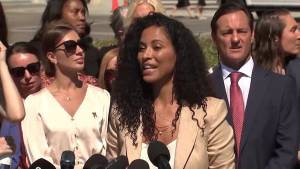
Lisa Phillips, a former model and victim of Jeffrey Epstein, speaking at a press conference of former Epstein victims at rally in their support at the U.S. Capitol accompanied by the key members of Congress who supported disclosure of the millions of pages of "Epstein Files" evidence implicating those involved in the decades-long scandals covered up by powerful perpatrators and law enforcement..
Legal AF, Survivor BLOWS LID OFF Secret Epstein NETWORK, Michael Popok, Jan. 15, 2026. Popok is joined with Epstein survivor and victims rights advocate Lisa Phillips for an exclusive interview following the Wall Street Journal's  new investigation into whether NYU and Columbia along with other universities were effectively on Epstein's payroll, and turned a blind eye as he used their institutions to prey on young girls and women. Lisa briefs our audience on her personal lived story connecting the dots between NYU and Epstein.
New York Times, Chinese Universities Surge in Global Rankings as U.S. Schools Slip, Mark Arsenault, Jan. 15, 2026. Harvard still dominates, though it fell to No. 3 on a list measuring academic output.
Other American universities are falling further behind their global peers. Until recently, Harvard was the most productive research university in the world, according to a global ranking that looks at academic publication.
That position may be teetering, the most recent evidence of a troubling trend for American academia.
 Harvard recently dropped to No. 3 on the ranking. The schools racing up the list are not Harvard’s American peers, but Chinese universities that have been steadily climbing in rankings that emphasize the volume and quality of research they produce.
The reordering comes as the Trump administration has been slashing research funding to American schools that depend heavily on the federal government to pay for scientific endeavors. President Trump’s policies did not start the American universities’ relative decline, which began years ago, but they could accelerate it.
“There is a big shift coming, a bit of a new world order in global dominance of higher education and research,” said Phil Baty, chief global affairs officer for Times Higher Education, a British organization unconnected to The New York Times that produces one of the better-known world rankings of universities.
Educators and experts say the shift is a problem not just for American universities, but also for the nation as a whole.
“There is a risk of the trend continuing, and potential decline,” Mr. Baty said. “I use the word ‘decline’ very carefully. It’s not as if U.S. schools are getting demonstrably worse, it’s just the global competition: Other nations are making more rapid progress.”
New York Times, Appeals Court Opens the Door to Mahmoud Khalil’s Rearrest, Jonah E. Bromwich, Jan. 15, 2026. Any new detention would not come immediately, and Mr. Khalil’s lawyers plan to appeal. But the ruling is a major blow to Mr. Khalil, a Columbia graduate and prominent figure in the pro-Palestinian movement.
An appeals court on Thursday reopened the possibility that Mahmoud Khalil, the Columbia University graduate and pro-Palestinian protester jailed for months by the Trump administration, could be detained as the government seeks to deport him.
Mr. Khalil’s rearrest would not come immediately, and his lawyers plan to appeal. Still, the ruling from the U.S. Court of Appeals for the Third Circuit marks a major blow to Mr. Khalil, whose case became an early and high-profile example of the White House’s crackdown on pro-Palestinian speech.
A legal permanent resident whose wife and son are American, Mr. Khalil was the first of a number of students to be arrested after participating in demonstrations on college campuses against Israel’s war in Gaza.
He was arrested in March and detained for more than three months in Louisiana, even as others in similar situations were released by the courts. He was also prevented from being present for the birth of his son.
In a split opinion, two of the three judges on the appeals court, Thomas Hardiman and Stephanos Bibas, found that the New Jersey district judge who oversaw Mr. Khalil’s petition for release was not the proper authority to have ruled on it. The matter should have initially been addressed by an immigration court, the majority said.
But a third circuit judge, Arianna J. Freeman, disagreed, saying that Mr. Khalil had claimed that the government violated his fundamental rights and proved that he was irreparably injured during his detention.
Judge Hardiman was appointed by President George W. Bush, Judge Bibas by President Trump during his first term and Judge Freeman by President Joseph R. Biden Jr.
Baher Azmy, a lawyer for Mr. Khalil, said: “We are disappointed with and strongly disagree with the majority opinion, but take heart in the very powerful and persuasive dissenting opinion. We’ll continue to fight with all available legal options.”
Immigration courts are part of the executive branch, not the judicial branch, and are overseen by the Justice Department. Those courts are the first to address deportation proceedings, which were initiated when Mr. Khalil was first detained.
But Mr. Khalil’s lawyers filed a writ of habeas corpus — a legal action for challenging incarceration — with a district judge seeking his release and the prevention of those proceedings.
On Thursday, the circuit judges found that the New Jersey district judge, Michael E. Farbiarz, lacked what is known as subject-matter jurisdiction, or the power to oversee certain types of matters. They ordered that he dismiss Mr. Khalil’s habeas petition.
The judges said that provisions of the Immigration and Nationality Act, the key law that governs immigration, suggested that Mr. Khalil could not challenge his detention or the government’s attempt to remove him in Judge Farbiarz’s court without first going through the immigration court process.
The ruling, if it were to stand, would have major implications for anyone detained as the Trump administration sought to deport them. It would remove the most effective means that immigration lawyers have for freeing their clients from detention while they are in immigration proceedings. For that reason, Thursday’s decision will almost certainly be reviewed by a full panel of Third Circuit judges.
Mr. Khalil was initially detained on the basis of a determination by Secretary of State Marco Rubio, who argued that Mr. Khalil’s very presence in the United States contributed to the spread of antisemitism. Mr. Rubio cited a rarely used statute as the legal rationale for Mr. Khalil’s deportation.
Mr. Khalil’s lawyers have pointed toward comments Mr. Khalil has made condemning antisemitism, and Mr. Khalil has rejected the idea that protesting against Israel is inherently antisemitic.
Shortly after his detention, once Mr. Khalil’s lawyers had filed the habeas petition in Federal District Court, the administration added a new rationale for his deportation. It said that Mr. Khalil had failed to disclose membership in several organizations when he applied for legal residency in March 2024, a claim that Mr. Khalil’s lawyers said was baseless.
Judge Farbiarz, a former prosecutor, proceeded methodically in addressing Mr. Khalil’s case. But in May, he found the law cited by Mr. Rubio was most likely unconstitutional, and the following month, ordered Mr. Khalil’s release.
In recent months, Mr. Khalil’s lawyers reached an agreement with the Trump administration that his immigration proceedings would be paused. His case was being considered by the Board of Immigration appeals, the appeals level of immigration court.
Thursday’s decision could ultimately mean that the deportation proceedings will continue if Judge Farbiarz dismisses Mr. Khalil’s petition as instructed. But the next step for Mr. Khalil’s lawyers would be to ask a full panel of Third Circuit judges to weigh in, which would pause all proceedings.
U.S. Politics, Governance
Morning Shots via The Bulwark, Political Opinion: ICE Started the Fire, Bill Kristol, Andrew Egger and Jim Swift, Jan. 15, 2026. Rather than trying to calm things down, the government is fanning the flames.
Most of the news recently has been stupid and awful, but luckily today we’ll get some news that’s stupid and fun: Venezuelan opposition leader María Corina Machado will join President Trump for lunch at the White House today.
How much extremely embarrassing discourse about the Nobel Peace Prize Machado stole from its rightful recipient Donald Trump will ensue? Hey, don’t change that channel. Happy Thursday.
Morning Shots via The Bulwark, Political Opinion: Keep It Simple, Democrats, Bill Kristol, right, Jan. 15, 2026. Politics can be a tricky business. Here’s one obvious reason: Sometimes what’s right isn’t popular, and sometimes what’s popular isn’t right. In those circumstances, a politician faces a choice: to stand up to public opinion on behalf of what’s right for the country, or to accede to public sentiment to maintain political viability? Or is there a clever way to do a little or both? In any case, it’s an obvious fact of political life that principle and popularity don’t always coincide.
But sometimes they do. Sometimes the stars align in a way that makes things pretty simple. Sometimes the other party is unambiguously in charge. They’re pursuing policies that are bad for the country, loudly and belligerently. Those policies are in the news, and they’re likely to stay in the news. They’re high-salience policies. And they’re clearly and unambiguously unpopular.
And there will be an election in ten months that will be a referendum on those policies and that party.
It makes the life of an opposition party pretty simple. Oppose the policies that are at once wrong and unpopular. Oppose them clearly and vigorously. All you have to do is avoid the trap Robert Frost noted long ago, when he worried that American liberals were too broadminded to take their own side in a quarrel.
All Democrats need to do now is to take their own side in the quarrels roiling the nation.
Which is surprisingly hard for Democrats, being Democrats. Instead, they’re wrapping themselves around the axle, indulging in hand-wringing and navel-gazing, worrying that things could go wrong. Worrying, worrying, worrying . . .
After all, what if we don’t frame the issue quite right? What if we take a stance that could boomerang? Look before we leap! And we don’t really need to leap! Maybe we can just dip our toe in the water first? I think we need some more polls, and many, many focus groups! Make sure the water’s not too hot! But also that it’s not too cold!
No. No. No. The water will never be better. Take the plunge. Now.
How? Here are three high-salience, easy-to-understand issues where the Trump administration and the Republican party are on the wrong side both substantively and politically.
Tariffs
The issue of tariffs has receded a bit recently. But a big Supreme Court decision is coming soon. The Court will either uphold Trump’s tariffs, which will remind the public of this distinctive Trump policy they already dislike and blame for inflation and economic disruption; or the Court will strike the tariffs down, Trump’s policies will acquire an aura of illegitimacy, and then he’ll go ahead anyway and reimpose tariffs using other authorities. Either way, the public will be reminded of the fact that the centerpiece of his economic policy agenda is ineffective and unpopular.
ICE
ICE is obviously in the news, and it will stay there. It’s the face of Trump’s mass-deportation regime and the administration’s increasingly obvious and accelerationist authoritarianism. The administration is doubling down on the aggressive deployment and behavior of ICE and the Border Patrol, and is lying shamelessly about their actions, as people can see on videos.
And ICE is becoming more unpopular at an astounding rate. In fact, ICE’s activities have done away with any Trump edge on the issue of immigration. In the most recent AP/NORC poll, where Trump’s overall approval is at 40 percent (vs. 59 percent disapproval), Trump’s immigration policies are at 38 percent approval, 61 percent disapproval. And those numbers can slide even further as ICE continues its depredations.
Epstein
The public—correctly!—wants the Epstein files released. The Trump administration hasn’t done so, and its handling of the Epstein files has been wildly unpopular. Nor is the issue going away, thanks in large part to the admirable efforts of the survivors. The administration is right now failing to release the files as they’ve promised to do. If and when they do gradually release incomplete and redacted tranches of the Epstein files, that rolling partial coverup isn’t going to look any better than a total stonewall. Either way, the Democrats should stay on offense, every day, even as the political class amazingly continues to underrate the potency of this issue.
And by the way, no Democrat should be distracted by the fights between House Republicans and Bill and Hillary Clinton on whether they should testify before a congressional committee. Democrats who want to duck can say that’s a question for the lawyers. Bolder Democrats should just say that they think the Clintons should testify. Either way, the Democrats should stick to the “let the chips fall where they may” stance that has served them well on Epstein so far. Even if one of those chips is Bill Clinton.
President Trump is scheduled to give the State of the Union address on February 24. Four respectable polls within the past few days now have Trump at 40 or 41 percent approval. Here’s a simple goal for the opposition: Get him down clearly into the 30s by the time of the State of the Union. Here’s a simple one-two-three program: tariffs, ICE, and Epstein. And, if it’s helpful, here’s a simple mnemonic to TIE those things together.
AROUND THE BULWARK
Quick Hits
THE CBS NEWS TREATMENT: The White House still hasn’t managed to control the story of the death of Renee Good, but it sure isn’t for lack of trying. Their earlier strategy of smearing Good as a domestic terrorist having failed to convince the American people (who could say why?), they’re now opting for a different tactic to bring around the median voter: dressing their case up in more respectable-sounding language and leaking it to the newly sympathetic CBS News. Yesterday, Bari Weiss’s outfit reported—citing “two U.S. officials”—that the ICE agent who shot Good, Jonathan Ross, “suffered internal bleeding to the torso following the incident.”
What precisely is “internal bleeding to the torso”? What does “following the incident” mean here, exactly? The officials didn’t say—and didn’t respond, CBS News said, to their follow-up inquiries.
If Ross was violently injured during his encounter with Good, he maintained remarkably good poise, not even dropping his cell phone while he kept his balance, drew a bead, and shot her in the head. Nor did he seem badly hurt in video footage taken immediately after the shooting as he strolled down the street to assess Good’s crashed car.
Still, that hasn’t stopped the administration’s worst posters from treating their own leak to CBS News as some sort of major smoking-gun revelation. “While much of left has lied about this case, it turns out ramming a law enforcement officer with a car causes injuries,” Vice President JD Vance yukked. “Who knew!”
As for CBS News, the editorial standards at the network now appear to be that a months-long reported segment on torture at CECOT can’t be aired unless there is an on-camera response from the Trump administration, but a dubious item anonymously sourced to “U.S. officials” is fit for print.
WAR POWERS? MORE LIKE S’MORE POWERS: Just last week, five Republican senators bucked their party and their president by voting to advance a war powers resolution aimed at limiting Donald Trump’s ability to escalate the conflict with Venezuela. The resolution had no chance of becoming law—that would have required veto-proof majorities in both houses of Congress. But the message was striking nonetheless.
Not even a week later, two of those senators, Josh Hawley (R.-Mo.) and Todd Young (R.-In.) changed their votes, causing the resolution to fail on reconsideration last night. “After numerous conversations with senior national security officials. I have received assurances that there are no American troops in Venezuela,” Young said in a statement. “I’ve also received a commitment that if President Trump were to determine American forces are needed in major military operations in Venezuela, the Administration would come to Congress in advance to ask for an authorization of force.”
Yes, Sen. Young! Donald Trump would never renege on a commitment.
Let’s call this the Cassidy Maneuver. About a year ago, Sen. Bill Cassicy (R.-La.), a physician and chair of the Health, Education, Labor, and Pensions Committee, provided a key vote to advance Robert F. Kennedy Jr.’s nomination to be secretary of health and human services after he had received assurances that the infamous wing-nut wackjob would consult with him before doing anything dangerous with vaccines. In other words, he gave up all his leverage over the Trump administration in exchange for a promise—exactly what Hawley and Young are doing now.
And how did that work out for Sen. Cassidy?
—Benjamin Parker
U.S. Law, Immigration, Courts, Rights
New York Times, Under Trump, a Shift Toward ‘Absolute Immunity’ for ICE, Hamed Aleaziz and Nicholas Nehamas, Jan. 15, 2026. President Trump and administration officials have given tacit approval for more aggressive tactics by the agency.
The instructions to Immigration and Customs Enforcement agents explain in clear terms how to defuse dangerous encounters: Use “minimal force” when trying to remove people from cars. Issue commands in “professional,” “firm,” “courteous” voices.
 “First step in arresting an occupant of a vehicle is NOT to reach in and grab him, unless there are specific circumstances requiring that action,” reads one internal ICE document providing legal guidance for uses of force during vehicle stops. It was reviewed by The New York Times, along with other training materials. ICE officials will thoroughly investigate any encounter, but “deadly force” is allowed only when agents believe lives are in danger.
The fatal shooting of Renee Good last week by an ICE agent in Minneapolis — and the quick reaction by Trump administration officials to declare the agent a hero and Ms. Good a villain — has put a new focus on whether federal agents enforcing President Trump’s deportation drive have been properly prepared for confrontations on city streets. The response of Mr. Trump and his top lieutenants to the killing has also underscored how they have embraced what is supposed to be a last resort under the written standards: using lethal force in self-defense.
Rather than encourage agents to de-escalate combustible encounters, as the agency guidelines emphasize, Mr. Trump and his lieutenants have provided tacit approval for more aggressive tactics.
Several weeks before the shooting, a top ICE official told officers to take “decisive action” if threatened. Immediately after, Mr. Trump and other administration officials said Ms. Good had tried to run the agent over, although a Times video analysis found that she appeared to have turned her vehicle away from him.
“That guy is protected by absolute immunity,” Vice President JD Vance said last week of the ICE agent who killed Ms. Good, 37. “He was doing his job.”
On Tuesday, the Homeland Security Department reiterated that sentiment to its agents, posting a clip on social media of Stephen Miller, a White House deputy chief of staff, saying, “You have immunity to perform your duties, and no one — no city official, no state official, no illegal alien, no leftist agitator or domestic insurrectionist — can prevent you from fulfilling your legal obligations and duties.”
Tensions in Minneapolis have boiled over in the days since Ms. Good’s death. On Wednesday night, a federal agent in the city shot and wounded a man who was attacking him, officials said. The episode led to hours of clashes between protesters and law enforcement officers.
Abigail Jackson, a White House spokeswoman, said ICE agents were using appropriate tactics.
“The entire Trump administration stands behind our heroic ICE officers who are conducting themselves with the utmost professionalism and integrity, while making American communities safer,” Ms. Jackson said in a statement. “It is not an ‘aggressive tactic’ to defend yourself from an individual using their car as a deadly weapon — ICE officers have a right to self-defense.”
Tricia McLaughlin, a homeland security spokeswoman, said that “ICE law enforcement officers are trained to use the minimum amount of force necessary to resolve dangerous situations to prioritize the safety of the public and our officers” and are “highly trained in de-escalation tactics.”
The Minneapolis shooting has also revealed the risks of Mr. Trump’s decision to send ICE on large-scale sweeps through cities, a move that has thrust agents into confrontations with hostile crowds. Most ICE agents are not trained to handle crowd control, according to a 2021 report by the Government Accountability Office. That is in part because ICE has historically focused on targeted arrests that attract less attention and rarely put its officers in conflict with the public.
Moreover, the agency is rapidly expanding its ranks, already more than doubling its number of law enforcement personnel, after an infusion of $75 billion in new funding over four years. It has expedited its training programs to accommodate the new recruits, including reducing training on how to handle vehicle stops, according to a former official at the federal government’s law enforcement academy who spoke on the condition of anonymity to discuss internal homeland security policies.
Ms. McLaughlin said there had been no reduction in training on vehicle stops.
U.S. Involvement in Venezuela
New York Times, Trump Vows to Make Venezuela Rich. It Will Take More Than U.S. Cash, Noam Scheiber, Jan. 15, 2026. History suggests that the price of oil and a wider distribution of wealth are as important as foreign investment.
Venezuela appeared to be entering a capitalist golden age in the mid-1990s. The country was opening up its nationalized energy industry, attracting foreign capital and business know-how. “You couldn’t find an apartment in Caracas,” said Ali Moshiri, who worked for Chevron at the time and was frequently in the country to monitor its operations. “It was a gold rush.”
But in 1998, the price of oil plunged, blowing a hole in the government’s budget. The country’s leaders slashed spending, laying the groundwork for a political backlash and the election of the left-wing populist Hugo Chávez.
After the audacious U.S. capture of Mr. Chávez’s successor, the dictator Nicolás Maduro, early this month, President Trump painted a rosy economic picture for Venezuela. He promised that tens of billions of dollars of American capital would pour into the country, making Venezuela “very successful,” and said the U.S. intervention was “already making Venezuela rich and safe again.”
But the country’s history shows that foreign capital alone is far from a guarantee of success or stability. Venezuela’s economy has tended to function best when that investment is accompanied by high oil prices — something Mr. Trump has little control over — along with a government that is responsive to popular frustrations over corruption and inequality, issues that appear to be far down Mr. Trump’s priority list.
Simply rebuilding the oil industry without deeper political and economic change is unlikely to transform Venezuela into a country where affluence is widely shared, experts say. Most countries that depend on a natural resource like oil are vulnerable to booms and busts, and it is rare that they gain entry into the club of fully developed economies. But Venezuela has challenges even by those standards
“It’s a regime which is run mostly by ideology and a great deal of corruption,” said Jeffrey Davidow, who served as the U.S. ambassador to the country in the mid-1990s. “This ain’t Norway building up a great sovereign wealth fund for distribution.”
Nationalization is often greeted with horror by businesspeople and economists, but when the oil industry nationalization happened in the mid-1970s, it accompanied what Venezuelans often describe as an economic “bonanza.” With the price of oil soaring amid the embargo and supply shocks of the period, the Venezuelan economy regularly boasted one of the highest growth rates in Latin America.
“The currency was very strong, and as a result of that, imports were cheap,” said Néstor Carbonell, a PepsiCo executive at the time.
That was good for American companies like Pepsi. Mr. Carbonell recalled living with his family in a beautiful three-story villa with a lush garden on a cul-de-sac in Caracas. “Most businesses were very prosperous,” he added.
More On Minnesota Tensions
Morning Shots via The Bulwark, Political Opinion: Lying Us Into a Crisis, Andrew Egger, right, Jan. 15, 2026. In the days immediately following the death of Renee Good, the protests that grew around the city remained strictly peaceful. But yesterday, in the wake of another ICE-involved shooting—this time involving a Venezuelan man who was shot in the leg during an attempted traffic stop—the situation started to boil over.
Last night, protesters who gathered at the scene of the shooting scuffled with Border Patrol agents, ICE agents, and local and state police. They vandalized a car with police lights and at least one threw fireworks at ICE agents. The federal agents, meanwhile, deployed tear gas and pepper sprayed multiple protesters on the scene. Several protesters were detained and later released.
The ongoing tensions between local cops and federal agents were on display as well: According to the New York Times, a Minneapolis police officer told several protesters on the scene that he wasn’t sure what all had happened: “It’s not like they’re talking to us,” he said of the federal officers.
City leaders, including Mayor Jacob Frey, have urged protesters to remain peaceful. Last night, Frey explicitly condemned any who failed to do so: “This is not creating safety,” he said. “For those that have peacefully protested, I applaud you. For those that are taking the bait, you are not helping. . . . Go home.”
Frey, of course, is right to say this. For a street protest to curdle into violence is deplorable on every level. For one thing, rioters don’t tend to be very good judges of whom exactly they’re rioting against—what did the Minneapolis Police do, that their cars should get trashed?
The more righteous the protest’s cause, the worse it is to besmirch it by associating it with street anarchy. This is what we saw back in 2020: a massive surge of protest for a noble cause that provoked a massive backlash after rioters used the cover of those protests to wreak destruction. If you’re at a protest yourself, the absolute best thing you can do in support of your cause is to help the protesters around you keep cool heads.
But we should be clear-eyed about what’s going on here. Minneapolis is overheating right now, not because protesters are running amok, but because federal immigration enforcement and its political leadership at the Department of Homeland Security and in the White House are comporting themselves with astonishing, outrageous deception and malice. As violence continues to break out across the city—violence instigated, far more often than not, by the agents themselves—the idea that the administration will offer accurate information on what took place in any given scuffle has become a bleak joke. Again and again, they lie obscenely about the facts on the ground. Sometimes there are witnesses or video footage that disprove these lies; other times there’s simply no way to know what happened.
So it is in the case of the Venezuelan man shot yesterday. Tricia McLaughlin, the DHS spokeswoman, claimed he “began to resist and violently assault the officer,” that others had run out of a nearby building and begun to attack the officer with a snow shovel and a broom handle, and that the officer had feared for his life and fired his weapon. Is it possible that this is what happened, and that the officer was justified in taking the shot? Of course it is. But this possibility is no likelier for McLaughlin having claimed it to be the truth. She simply has zero credibility left; we know no more for her having opened her mouth than we would have if she’d remained silent.
This is grotesque behavior, a total abdication of leadership on the part of DHS. But more than that, it’s dangerous. At moments of high tension, what you want is leaders who can calm things down by modeling even-keeled, honorable leadership and by dispensing information that people can trust. We, the government, will get to the bottom of what’s going on. We, the government, will dispense justice where justice needs to be dispensed.
It isn’t just that this administration is utterly incapable of adopting this posture. It’s worse: They’re actively egging the chaos on. Over and over, they strike a pose of maximum hostility in their public statements. On Tuesday, Stephen Miller threatened state and local officials in Minneapolis with criminal charges if they interfered with ICE, which he insisted had “immunity to perform your duties.” Last night, Deputy Attorney General Todd Blanche explicitly blamed Gov. Tim Walz and Mayor Frey for the incident that resulted in the shooting of the Venezuelan man:
Minnesota insurrection is a direct result of a FAILED governor and a TERRIBLE mayor encouraging violence against law enforcement. It’s disgusting. Walz and Frey - I’m focused on stopping YOU from your terrorism by whatever means necessary. This is not a threat. It’s a promise.
And in a Truth Social post this morning, Donald Trump added this:
If the corrupt politicians of Minnesota don’t obey the law and stop the professional agitators and insurrectionists from attacking the Patriots of I.C.E., who are only trying to do their job, I will institute the INSURRECTION ACT, which many Presidents have done before me, and quickly put an end to the travesty that is taking place in that once great State.
Again: Frey has not encouraged violence, but peace and calm. He also said this: “This is not sustainable. This is an impossible situation that our city is presently being put in.”
He couldn’t be more right. And the White House, its jackboots, and its paid liars are entirely to blame.
New York Times, Federal Agent Shoots Man in Minneapolis, Prompting Tense Protests, Nicholas Bogel-Burroughs, Mitch Smith and Hamed Aleaziz, Updated Jan. 15, 2026. The agent shot a Venezuelan man who was resisting arrest, an official said. Protesters and law enforcement officers clashed for hours, as city officials urged people to go home.
A federal agent shot and injured a man in Minneapolis on Wednesday evening, federal officials said, an incident that touched off hours of clashes between protesters and law enforcement officers and that came just one week after an immigration agent killed a woman in the city.
Tricia McLaughlin, a spokeswoman for the Department of Homeland Security, said in a statement that federal agents were trying to arrest a man from Venezuela who was in the country illegally in a “targeted traffic stop” at around 6:50 p.m. She said that he fled from agents.VideoClashes in Minneapolis After Federal Agent Shoots Man1:24A federal agent shot and injured a Venezuelan man in Minneapolis on Wednesday night, a Homeland Security official said. The shooting came one week after an ICE agent shot and killed a woman in the city.CreditCredit...David Guttenfelder/The New York Times
When the officer caught up to him, Ms. McLaughlin said he “began to resist and violently assault the officer.” She said two people came out of a nearby building and, along with the man being sought, attacked the officer with a snow shovel and a broom handle.
The officer feared for his life and fired shots, striking the man whom agents were seeking in the leg, Ms. McLaughlin said. The agent and the man who was shot were in the hospital, she added, and the other two people she accused of attacking the agent were in custody.
Jan. 14
New York Times, Trump Administration Live Updates: Ahead of White House Meeting, President Insists U.S. ‘Needs Greenland,’ Staff Reports, Jan. 14, 2026. Tensions are high as officials from Denmark and Greenland prepare to meet with Vance and Rubio. Before a meeting on Wednesday with Vice President JD Vance and Secretary of State Marco Rubio, Greenland’s prime minister said that his nation intended to remain part of Denmark.
ABOVE: U.S.-citizen mother of three Renee Good, a Minnesotan murdered in cold blood by her government on January 7—then called a “fucking bitch” by her killer. Note: This is the fourth installment of an ongoing Proof series on the death of Good at the hands of ICE agent Jonathan Ross. The first three entries are linked in the segment below.
Proof, Investigative Commentary: Trump Administration to Criminally Investigate Beloved Mother of Three It Already Murdered—and Her Grieving Widow, Too. Seth Abramson, below left, Jan. 14, 2026.  What this regime has already done—and is now planning to do—to a citizen its agent killed in cold blood is among the most contemptible executive-branch abuses of power America has ever seen.
 Now that everyone atop the second Trump administration has taken turns calling the Minnesota woman its agent Jonathan Ross murdered a “domestic terrorist,” or some iteration of “attempted murderer”—from President Donald Trump to Vice President J.D. Vance, from Secretary of Homeland Security Kristi Noem to Assistant Secretary of Homeland Security Tricia McLaughlin—the administration’s leader, Trump, has deemed it necessary to break down a) what those classifications are supposed to mean, and b) exactly what the consequences of such classifications will be under his rule.
The definition of “domestic terrorism” currently being used by Mr. Trump’s personal lawyer, the confirmed-corrupt Pam Bondi—who’s performing the role of America’s Attorney General while in fact (by her admission) following her client’s “directives” in all things—lists, as acknowledged motives for domestic terrorism, mainly left-leaning causes, ideologies and activism profiles. The New York Times reports (emphasis added),
“In recent months, Trump administration officials have repeatedly vowed to crack down on left-wing activists….[and in the late fall of 2025] Attorney General Pam Bondi issued a memo that greatly expanded the traditional definition of ‘domestic terrorism.’
Bondi’s memo classified as ‘domestic’ terrorism not only recognizably violent crimes like rioting and looting, but also [non-violent] things like impeding law enforcement officers or even simply doxxing them.
The memo also asserted that domestic terrorists use violence or the threat of violence to advance certain ‘political and social agendas’—all of them traditionally associated with left-wing activism.
Among the causes listed were opposition to immigration enforcement, anti-capitalism, and ‘hostility towards traditional [conservative] views on family, religion and morality.’”
This last mischaracterization of what can colorably be termed domestic terrorism—to be clear, a categorization that doesn’t formally exist in American law—comes directly, as Bondi has always promised her actions will, from a “directive” from her boss, in this case Trump’s September 2025 executive order aiming to criminalize left-wing politics and good-faith criticisms of his agenda by declaring them to be synonymous with terroristic activity. Bondi’s DOJ memo echoes Trump’s order almost to the letter.
But Trump has now decided that his lawyer’s (i.e., his) definition of domestic terrorism—the one plagiarized from his own past edicts—is still too forgiving to his enemies.
This despite the fact that, even as things stand now, a U.S. citizen can be deemed a domestic terrorist by the FBI, DOJ, ICE, HSI, the CBP and other components of Trump’s inter-agency domestic army (hereafter “Trump’s Army”) if they “impede” that army’s work only in a way that involves no force, threats, kettling, or curtailment of movement by anti-ICE protesters. In other words, no actual impediment of ICE activity.
The videos coming out of Minneapolis and shared on Threads and Bluesky by the thousands show U.S.-citizen Minnesotans being “seized” by agents of Trump’s Army (in constitutional terms, this includes not only being arrested or physically restrained but also detained without restraint, having one’s freedom of movement conclusively curtailed, or experiencing verbalized coercion whose volume, context, and content place it on federal law enforcement’s Use-of-Force Continuum) merely for (i) speaking Spanish, (ii) following regime vehicles at a safe distance, (iii) refusing to provide Trump Army forces proof of U.S. citizenship (though ICE agents by law aren’t permitted to engage in the sort of general law enforcement activities that would make it acceptable for them to ask for ID, let along proof of citizenship), and (iv) recording regime activity (which is legal by both federal statute and the United States Constitution).
In the case of Renee Good, the Minnesota mother-of-three who was executed by ICE agent Jonathan Ross on January 7, the reason for her seizure by one of Ross’s ICE compatriots just a few moments before her death was… (v) honking her car horn.
It’s these five imaginary regime bases for using a domestic interagency army with the narrowest imaginable constitutional remit—to execute already-warrant-permitted arrests of already known undocumented persons—to instead unconstitutionally seize citizens of the United States (and in 170+ cases detain them illegally for extended periods) Trump now deems insufficient.
Speaking to members of a press corps he’s repeatedly called “enemies of the People” on Air Force One, specifically on the subject of what Renee Good had allegedly done to deserve being shot in the face three times, her president—a man who by his Oath was required, on threat of impeachment, to preserve and protect both her liberties and her rights—said that Good merely being “disrespectful” to his agents was enough to warrant her execution.
Note that this was same standard used for Jews in Nazi Germany before Adolf Hitler took the next logical step—“logical” in the view of a homicidal psychopath, at least—and began merely executing Jews for being Jews. Death-for-any-imagined-disrespect was the penultimate Nazi-era Final Solution policy, however.

Renee Nicole Gold, a U.S. citizen living in Minneapolis and a mother of three shortly before a federal agent fatally agent fatally shot in her the head three times while recording the slaying from which this photo was taken on his hand-held cellphone. Scenes from the shooting, including the positioning of the shooter at the side of the vehicle not in front, are shown below. The federal agent, identiified as Jonathan Ross, is shown below also. A recording capturied his words about the victim just after shooting her: "Fucking bitch."

Letters from an American, Historical Commentary: January 13, 2026 [Federal attacks on cities], Heather Cox Richardson, right, Jan. 14, 2026. Officials in the Trump administration insist its surges of federal agents into Democratic-led cities are necessary to round up undocumented immigrants, but the agents’ mission increasingly looks as if it is to frighten opponents of the administration into submission. But instead of submission, they appear to be sparking deeper and deeper opposition.
Since agent Jonathan Ross shot and killed Renee Good in Minneapolis, protests against Immigration and Customs Enforcement (ICE) have broken out across the nation. Federal agents in Minnesota have responded by increasing their violent attacks, many of which have involved U.S. citizens and have been captured on video: agents breaking into a home with weapons drawn, a teenager dragged away from his job, agents guarding a restroom at Target, engaging in door-to-door searches without warrants, using illegal chokeholds, dragging people out of their cars.
Confronted with footage of officers using prohibited chokeholds, White House spokesperson Abigail Jackson told ProPublica reporters Nicole Foy and McKenzie Funk: “Officers act heroically to enforce the law and protect American communities.” On Air Force One Sunday evening, Trump cut to the heart of MAGA’s attacks on those resisting ICE when, speaking about Renee Good, he told reporters: “At a very minimum, that woman was very, very disrespectful to law enforcement.”
Luke Broadwater and Katie Rogers of the New York Times noted the response of Representative Jamie Raskin (D-MD) to Trump’s comment. Raskin recalled that the insurrectionists who attacked the U.S. Capitol on January 6, 2021, “violently attacked police officers and called them everything from traitors to pigs to racial epithets, and ruthlessly taunted them and maligned them for hours,” and yet Trump pardoned them.
Raskin concluded that “Donald Trump’s very dubious characterization of Renee Good as having been disrespectful is not only factually suspect, but it’s legally irrelevant. The police do not have the right to shoot people in the head because they consider them having acted in a disrespectful way. That legal standard would have led to a slaughter on January 6.”
 In The Atlantic yesterday, David Frum explained that the administration’s attacks on Good are not at all a true defense of law and order. “For MAGA America,” he wrote, “ICE is an instrument for cleansing violence.” ICE’s social media accounts celebrate videos of armed agents hurting unarmed nonwhite men and women who are then shown weeping, pacing, or with their head in their hands in a jail cell. Most of the situations the videos show, Frum writes, could be managed “with a couple of plainclothes officers bearing holstered sidearms.” But the point is not to enforce the law; “[t]he point is to prove that the fearsome power of the American state is being wielded by righteous MAGA hands against despised MAGA targets.”
Frum notes that ICE has lowered its standards to fit the deportation targets White House deputy chief of staff Stephen Miller has announced, lower standards that have increased the numbers of untrained and violent agents on the streets, but Frum attributes much of the violence of ICE to the fact that “its main purpose has become theatrical…. ICE is less a law-enforcement agency than it is a content creator.”
Frum argues that the violence shows MAGA that a government they control is demanding respect from those overeducated coastal elites they think get too much respect. By punishing Good rather than letting her drive away, Ross made sure she didn’t get away with disrespecting him.
The scenes ICE is performing seem to be the logical outcome of the idea of cowboy individualism Republicans have pushed since the 1980s: white men reclaiming the government they insist has been corrupted by Black Americans, women, and people of color and using the power of that government to defend the “real” America. In that scheme, anyone resisting the government is not showing proper subservience and is anti-American by definition.
But the protests against ICE have created a problem for the MAGA ideology. Key to the idea of the individualist man as a real American is that he will protect white women. And yet white women are among those standing in the front lines against Trump, and now an ICE agent has killed one.
On Sunday, David Marcus of Fox News warned that “organized gangs of wine moms” are using “Antifa tactics to harass and impede Immigration and Customs Enforcement agents.” He claimed that those people organizing to protect their neighborhoods from ICE may be “criminal conspiracies.” He complained of “self-important White women” protesting “with a weird and disturbing glee.” He seemed to threaten them by warning: “if we simply allow these cosplaying would-be revolutionaries to do whatever they want…, Renee Good will not be the last to needlessly die.”
On Monday, Will Cain of the Fox News Channel echoed Marcus, saying: “There’s a weird kind of smugness...in the way that some of these liberal white women interact with authority.”
That idea that anyone challenging MAGA government is anti-American—even, perhaps, white women—helps to explain the Department of Justice’s decision not to investigate the shooting as an attack on Good’s civil rights, but instead to consider it as an assault on a federal officer. It is investigating not the shooting but the ties of Good and her widow to local activists. This continued attempt to blame Good for her own murder has led to the resignations of at least six career prosecutors from the Justice Department’s Civil Rights Division.
Reality is crumbling the MAGA fantasy that their leaders could fix the United States if only they purged it of their opponents and stripped away the laws and governmental systems those opponents have created over decades.
Americans are demonstrating that they do not want to answer to ICE and CBP agents, decked out as if they are a war zone while parading in groups through the suburbs, cosplaying as military heroes. Rather than seeming as if they deserve respect, they look both lawless and foolish. Rather than hiding, Americans are forming squads to alert neighborhoods to their presence, escorting children to and from school, and helping feed neighbors who are afraid to leave their homes.
An Economist/YouGov poll released today shows that only 43% of American adults oppose abolishing ICE, while 46% support abolishing ICE. Popular podcaster Joe Rogan, who endorsed Trump in 2024, today likened ICE to the Gestapo, Nazi Germany’s secret police.
Yesterday, the state of Illinois sued the Department of Homeland Security (DHS) for “unlawful and dangerous tactics” agents from Customs and Border Protection (CBP) and Immigration and Customs Enforcement (ICE) used in what the administration called “Operation Midway Blitz.” Illinois officials noted that federal immigration agents have enforced immigration laws in Illinois for decades without significant effect on public order or public safety. Now things have changed.
 Illinois attorney general Kwame Raoul said: “Border Patrol agents and ICE officers have acted as occupiers rather than officers of the law. They randomly, and often violently, question residents. Without warrants or probable cause, they brutally detain citizens and non-citizens alike. They use tear gas and other chemical weapons against bystanders, injuring dozens, including children, the elderly and local police officers.” Illinois governor J.B. Pritzker said their actions have undermined constitutional rights and threatened public safety.
Minnesota and the state’s two largest cities, Minneapolis and St. Paul, also sued the Trump administration yesterday. Minnesota attorney general Keith Ellison called the federal immigration operation that began on January 6 “a federal invasion.” “These poorly trained, aggressive and armed agents of the federal state have terrorized Minnesota with widespread unlawful conduct.”
“Do the people of Minnesota really want to live in a community in which there are thousands of already convicted murderers, drug dealers and addicts, rapists, violent released and escaped prisoners, dangerous people from foreign mental institutions and insane asylums, and other deadly criminals too dangerous to even mention,” Trump posted on social media, revisiting the fact-free refrains of his rallies. “All the patriots of ICE want to do is remove them from your neighborhood and send them back to the prisons and mental institutions from where they came, most in foreign Countries who illegally entered the USA though [sic] Sleepy Joe Biden’s HORRIBLE Open Border’s Policy. Every place we go, crime comes down. In Chicago, despite a weak and incompetent Governor and Mayor fighting us all the way, a big improvement was made. Thousands of Criminals were removed! Minnesota Democrats love the unrest that anarchists and professional agitators are causing because it gets the spotlight off of the 19 Billion Dollars that was stolen by really bad and deranged people. FEAR NOT, GREAT PEOPLE OF MINNESOTA, THE DAY OF RECKONING & RETRIBUTION IS COMING!”
Today, as Trump visited a Michigan Ford plant, 40-year-old T.J. Sabula, a United Auto Workers Local 600 line worker, shouted “pedophile protector” at him in reference to the administration’s cover-up of the Epstein files. Trump responded by giving him the finger and mouthing “f*ck you, f*ck you.”
Sabula told Natalie Allison and Dan Merica of the Washington Post that he has been suspended from work pending an investigation, but that he has “definitely no regrets whatsoever.”
Morning Shots via The Bulwark, Political Opinion: Things are going great in the ICE standards department, Andrew Egger, Bill Kristol, and Jim Swift, Jan. 14, 2026.
In a wild article published yesterday, Slate writer Laura Jedeed revealed how non-existent the background check process is for new ICE agents by accidentally getting offered a job as an agent herself.
Then it came out that James Rodden, an ICE prosecutor who was revealed last year to be running a brazenly white-nationalist X account¹, is back on the job. And yesterday, Stephen Miller encouraged ICE not to let little obstacles like city and state officials interfere with their work. ICE officers, he said, have “immunity to perform your duties,” and any official who interferes with those duties “will face justice.” Happy Wednesday.
Lincoln Square Media, Opinion: ICE Is Enforcing Fear because Trump Is Losing Control, Evan Fields,  right, Jan. 14, 2026. U.S. Immigration and Customs Enforcement is not enforcing immigration law. It's enforcing fear.
Evan Fields is a veteran who writes the Fourth and Democracy and Weekly Wrap newsletters for Lincoln Square. Subscribe to his News from Underground Substack. Illustration by Riley Levine
If ICE were a conventional law enforcement agency tasked with border security, it would operate quietly, precisely, and with discipline. It would prioritize warrants over raids, intelligence over spectacle, and accountability over secrecy. Its objective would be compliance with the law, not submission to power.
That is not how ICE operates.
Instead, ICE stages pre-dawn raids, deploys masked agents, resists identification requirements, shields itself from oversight, and treats civilian terror as an acceptable byproduct of its work. These are not incidental failures or rogue decisions made in the heat of the moment. They are structural choices with the intent to produce intimidation over order and enforcing uncertainty over the law.
That is not an agency that has lost its way. But one that has found its purpose — at precisely the moment the regime it serves is losing control.
Tell Congress: Stop ICE now
The mainstream media narrative has insisted that ICE is simply “too aggressive” or “poorly supervised.” We’re told that law enforcement agencies need better training, clearer rules, or updated procedures. This framing becomes politically convenient because it suggests ICE’s violence is accidental — isolated incidents caused by a lack of guidance rather than intent.
You do not accidentally construct an institution that operates with military tactics against civilians, conceals the identities of officers, exercises sweeping discretion, and survives repeated scandals without consequence. Those aren’t glitches in the system. They are the feature.
ICE was built to operate at the edge of the law so fear can do the work that policy can no longer accomplish — especially when any form of political legitimacy is eroding.
ICE isn’t malfunctioning or confused about its mission. Greg Bovino and his boys are operating exactly as designed for a political system that values dominance over legitimacy and intimidation over consent.
Theatrical raids. Public arrests. Pregnant women dragged across snowbanks. Unmarked vehicles ramming nurses on their way to work. Masked agents pointing weapons at civilians. Press statements released before facts are established.
None of this improves outcomes. It amplifies fear. And that’s the point.
Fear only works if it is visible. It must be witnessed, circulated, and internalized. ICE raids are designed to be talked about — in homes, in schools, in workplaces, and in communities already conditioned to understand that safety is conditional on their obedience.
The message delivered by Bovino and his enforcers is unmistakable:
We can take you at any time. And no one will stop us.
Its primary function is not deportation efficiency, or even deportation at all. It’s deterrence. Not of unlawful entry, but of civic participation. Fear suppresses organizing, protesting, testifying, reporting abuse, and asserting constitutional rights. It pushes entire communities into silence and invisibility at a time when the regime is most vulnerable.
That is far more efficient than mass incarceration or martial law. You don’t need to arrests thousands of people if millions are already afraid to speak.
ICE enforces that silence for the regime. And once silence becomes normalized, it spreads rapidly.
What makes this moment uniquely dangerous isn’t just what ICE is doing — it’s why they’re escalating now.
As public anger intensifies — over Israel, Iran, Venezuela, affordability, and everything else — protests proliferate, court losses accumulate, and trust in government collapses — the Trump regime faces a familiar authoritarian dilemma: govern through consent, or replace it with fear.
Donald Trump Has Chosen Fear
He has never governed through legitimacy. He governs through dominance and theater. Rage substitutes for discipline. Spectacle for strategy. Loyalty for competence. And when mistakes pile up and any form of legitimacy erodes, escalation becomes instinctual.
ICE’s behavior mirrors that leadership style: volatile, impulsive, confrontational, and increasingly unrestrained.
Institutions adapt to survive and that’s exactly what Greg Bovino is doing. Agencies that persist under this regime learn quickly: escalate, act fast, and ignore consequences. Accountability is optional and your restraint is viewed as weakness.
Authoritarian systems don’t grow calmer as they attempt to consolidate power. They grow more careless as they lose it. Early abuses are controlled and undeniable while later ones become public and chaotic. Violence is less precise. Lies become easier to detect. Errors multiply.
Civilians are harmed more frequently.
ICE’s increasingly reckless behavior — including shooting an innocent woman in the face — is not an anomaly. It’s evidence that command discipline is breaking down, intelligence is being replaced by impulse, and the paranoia is starting to override coordination.
This is when danger peaks.
Authoritarianism doesn’t arrive with tanks in the streets. It arrives through selective enforcement, legal ambiguity, targeted fear, and plausible deniability — often wrapped in inflammatory rhetoric the media dutifully repeats (ex: JD Vance and Kristi Noem press conferences).
ICE embodies all four.
It operates in gray zones. It exercises extraordinary discretion. It targets politically vulnerable populations. And when something goes wrong, talking points intensify until responsibility evaporates.
That pattern is not unique to this moment in the United States. History records it with brutal consistency. The branding changes, the uniforms change, the language evolves…
The function stays the same. This is not an immigration issue anymore. Any government that normalizes masked agents, unaccountable raids, civilian terror, and secrecy as routine governance will inevitably expand that power, and we’re already watching it happen.
More On U.S. Politics, Governance
Medias Touch Network, Border Patrol Commander Bovino Says 'Hat's Off' To Ice Agent Who Shot Renee Good, Troy Matthews, Jan. 13, 2026. Bovino pushed the false narrative that Good had the intent to harm ICE agents.
Customs and Border Protection Commander Greg Bovino, a frequent public facing figure for Donald Trump's mass deportation operations, appeared on Fox News Monday to give his analysis of the fatal shooting of Renee Good in Minneapolis, which has sent approval ratings for ICE plummeting amid fears of overreach in recent days.
During his interview with Sean Hannity, Bovino said "Hat's off to that ICE agent" who shot Good, who was unarmed and clearly driving  away from officers when she was shot in the face three times.
Bovino, shown at right and in a separate incident and commentary below, used the Hannity interview to once again push the Trump administration lie that Good had the intent to harm the ICE agents that had surrounded her car, thereby justifying her shooting.
"Sean, we call that a means, intent and opportunity," Bovino told Hannity. "Did that individual [Good] have the intent? Look at those minutes leading up to the shooting and we will see what I would consider some pretty important intent."
"Did that individual have the opportunity? Yes. Did that individual take that opportunity? Yes," Bovino continued. "A 4,000 pound missile is not something anyone wants to face, especially in a split second decision making process in a very in already inhospitable environment."
"Hats off to that ice agent. I'm glad he made it out alive. I'm glad he is with his family."
The immigration agent in question, Jonathan Ross, was so unharmed by the event he walked away from Good's body, got into his car and drove away from the scene.

The Contrarian, Opinion: Democrats Must Seize the Opportunity to Control ICE, Jennifer Rubin, right, Jan. 14, 2026. Use the spending fight to defend Americans’ lives. Untrained ICE agents ready to use force at the slightest provocation (or none at all) have been brutalizing Americans, with hundreds more undisciplined thugs ready to deploy in Minneapolis and elsewhere.
The epidemic of government-initiated violence goes far beyond a few isolated incidents in blue cities.
The Wall Street Journal reported:
The Wall Street Journal has identified 13 instances of agents firing at or into civilian vehicles since July, leaving at least eight people shot with two confirmed dead. According to court records and lawyers, only one civilian was armed—with a concealed weapon that was never drawn—and at least five of those shot were U.S. citizens. Several federal officers reported injuries, including bruised ribs, a dislocated finger and a bite wound.
The lack of training and shoot-first-ask-no-questions-later mentality have turned our streets into something out of 1930’s fascist Europe. ICE and other federal agents disregard accepted, safe law enforcement practices. “The Minneapolis shooting shares characteristics with others the Journal reviewed: Agents box in a vehicle, try to remove an individual, block attempts to flee, then fire,” the Journal reported. Despite decades of research to develop “accepted standards” for conducting traffic stops, ICE agents feel empowered to fire at civilians who tick them off. When tragedy strikes, the Trump regime smears and investigates the victim.
Illinois and Minnesota have had enough. The two states filed lawsuits on Monday against Department of Homeland Security, ICE, the Border Control, and specific officials including DHS Secretary Kristi Noem and CPB agent Gregory Bovino; challenging the violent, abusive actions of the immigration agents.
The complaint in page after page meticulously lays out incidents of abusive conduct, violation of First Amendment rights, and lawlessness. The states seek relief based on, among other grounds, the First and Tenth Amendment and the Administrative Procedures Act. Their demands include halting the surge of agents in their states (which interfere with states’ health, education, and safety powers); barring arrest of those who have not violated immigration law (unless there is probable cause they committed a crime or threaten others); limiting certain biometric data gathering; protecting the feds from, in essence, overtaking local and state policing; allowing ICE to operate in sensitive places (e.g., schools, hospitals) only in limited circumstances; and preventing use of physical force to disperse crowds engaged in First Amendment-protected activity. The states also want to stop agents from pointing firearms at individuals who pose no threat to others and/or masking their identities.Subscribed
The federal probe is so corrupted that federal prosecutors at Main Justice and in Minnesota federal prosecutors have quit. “At least five senior prosecutors in the criminal section of the Justice Department’s Civil Rights Division announced their resignations this week, believing that the Trump administration has undermined the work and mission of the section, according to four people familiar with the personnel moves,” the Washington Post reported. On Tuesday, another batch of federal prosecutors in Minnesota resigned, reportedly over directions to investigate the victim and freeze out state investigators. The whitewash is so blatant and clumsy that no one will believe the results of the phony “investigation.”
Frankly, it is stunning that lawsuits are necessary to bring about such basic restraints that, until now, most federal and state law enforcement officials have widely followed. And given the extent of Trump regime violence and public outrage, it is inconceivable that Democrats would miss the opportunity to use the upcoming the spending deadline to halt unrestricted flow of hundreds of billions to a rogue DHS.
Democrats should rally around proposals such as those from Sen. Chris Murphy (D-Conn.) and from Reps. Ro Khanna (D-Cal.) and Jasmine Crockett (D-Tex.) in the House to condition spending on increased oversight of ICE and on requirements that agents have warrants, wear body cameras, do not mask themselves, and stop using force indiscriminately. Democrats can bring the same attention and pressure to bear on Republicans as they did in the healthcare fight:
Get on the right side of the issue or face the wrath of voters.
That strategy is entirely doable, if Democrats maintain their nerve. They must remember that the political landscape has changed dramatically since the end of the Oct.-Nov. shutdown: Trump is far weaker than he was even a couple months ago.
Trump’s approval ratings have continued to plummet, and both Houses have rebelled against Trump (with a War Powers Act vote in the Senate, an ACA vote in the House, and on votes to release the Epstein-Trump files in both). Even Republicans have begun denouncing him on the malicious prosecution of Federal Reserve Chairman Jay Powell. (At least two Republicans said they would oppose confirming any Fed nominee until Trump backs off a malicious prosecution of Powell.)
Trump is not the only one with diminishing leverage. Contrary to legacy media punditry, Senate Republicans now face loss of their majority. Even before the latest Powell and ICE debacles, I have argued — based on Democrats’ November sweep, the sinking popularity of “concerned” Sen. Susan Collins (R-Maine), Democrats’ recruitment of key candidates (e.g., Sherrod Brown in Ohio, Roy Cooper in North Carolina), and key Republican retirements (e.g., Iowa Sen. Joni “We are all going to die” Ernst) — that Democrats’ chances to win back the majority have been underestimated. On top of the latest Trump blunders, former congresswoman Mary Peltola announced she is running to challenge Sen. Dan Sullivan (R-Alaska).
No one should doubt that the Senate is in play. Maine, North Carolina, Ohio, and Alaska are winnable; Iowa and Texas are competitive; and Democrats’ defense of Minnesota, Michigan, and Georgia look far safer. Republicans could very well lose both the House and the Senate, bringing Trump’s reign of chaos, terror, and lawlessness to a screeching halt.
Accordingly, while the country is in an uproar about ICE’s brutal onslaught (and getting hit with enormous healthcare insurance premium hikes), Dems should use the pending funding deadline to turn up the heat on both the ACA extension and ICE restrictions. (Trump is already in trouble on his unilateral, forever wars, so war powers resolutions on Greenland, Iran, etc. can be dealt with separately.) Pro-democracy voters need to keep the pressure on Democrats to press their advantage and to warn Republicans that siding with Trump will result in their wipe-out in November.
Democrats can increase their chances for success if they begin to tie the disastrous results to individual senators. Sen. John Cornyn (R-Tex.) could have voted to prevent you from losing healthcare. He refused.
The first two weeks of 2026 have put on display Trump’s crazed desperation. His frenzy to secure his authoritarian rule in the face of plunging popularity suggests he understands that a blue wave midterm will bring his regime to a screeching halt.
Therein lies the danger of an unhinged, vengeful narcissist enabled by sycophants and morally vacuous toadies in Congress, the press, business, and universities. His actions become more outrageous, his lies more outlandish. But in his absurd overreach — going to war against Venezuela, defending the stone-cold killing of an American mom, prosecuting the Fed chairman — he also has demonstrated to anyone outside his cult that the midterms are not just about healthcare and high prices.
Trump has made this about chaos, insanity, war, violence, and simple decency. Republicans need to decide whether they want to be complicit in Trump’s descent into depravity. Democrats must force them to make that choice in full view of voters.
More Global News
New York Times, Trump Administration Live Updates: Ahead of White House Meeting, President Insists U.S. ‘Needs Greenland,’ Staff Reports, Jan. 14, 2026. Tensions are high as officials from Denmark and Greenland prepare to meet with Vance and Rubio. Before a meeting on Wednesday with Vice President JD Vance and Secretary of State Marco Rubio, Greenland’s prime minister said that his nation intended to remain part of Denmark.
President Trump said on Wednesday that “anything less than” getting Greenland would be “unacceptable,” hours before the first meeting between the governments of Greenland, Denmark and the United States since he escalated his push to buy or get the semiautonomous Danish territory.
“The United States needs Greenland,” Mr. Trump wrote on Truth Social, doubling down on his argument that it was necessary for national security and that Russia or China would take control of the territory if it wasn’t in U.S. hands.
“NATO becomes far more formidable and effective with Greenland in the hands of the UNITED STATES,” he wrote. The post was likely to add to tensions as the foreign ministers of Denmark and Greenland were expected to meet with Vice President JD Vance and Secretary of State Marco Rubio at the White House later on Wednesday.
Although representatives of the three governments have sat down together before, this is the first meeting called to discuss Mr. Trump’s repeated threats to get Greenland. He has turned up the pressure this year, apparently emboldened by the success of the U.S. military operation that led to the capture of Venezuela’s leader on Jan. 3.
Mr. Trump said last week that he was “going to do something on Greenland, whether they like it or not.”
Denmark’s leader has said that an American attack on Greenland — which, as a part of the kingdom of Denmark, is already under the protection of the North Atlantic Treaty Organization — would destroy the alliance. And Greenland’s leader has been clear that the territory is not interested in an American takeover. On Tuesday, he made his strongest statement yet that Greenlanders would prefer to stick with Denmark.
“If we have to choose between the United States and Denmark here and now, we choose Denmark,” Prime Minister Jens-Frederik Nielsen of Greenland said on Tuesday during a joint news conference in Copenhagen with Prime Minister Mette Frederiksen of Denmark.
“The time has not come for internal discussions and division,” he said, speaking of its often fraught relations with Denmark, Greenland’s former colonizer. “The time has come to stand together.”
In her comments, Ms. Frederiksen agreed, laying out a strategy for the White House meeting: “We come together, we stay together and we leave together.”
Mr. Trump and top officials in his administration have given various explanations of how the United States might take control or ownership of Greenland. Mr. Trump has not ruled out taking Greenland with military force, but Mr. Rubio has said the president plans to buy it, rather than invade.
Denmark has increased its security presence in the Arctic over the past year, the Danish defense ministry said in a statement on Wednesday.
Danish defense forces are “continuously training” on deployment capabilities in the Arctic and maintaining a presence for both “routine tasks as well as in preparation for upcoming activities,” the ministry said.
Buying Greenland may be a nonstarter. Denmark does not have the authority to sell Greenland, and Mr. Nielsen has said repeatedly that the territory is not for sale.
Ulrik Pram Gad, a Greenland expert at the Danish Institute for International Studies, said the face-to-face meeting with U.S. officials was a sign of progress. “The bar for success is very low,” he said. “A success from this meeting would be that we had a meeting,” he said. “It’s a process. We are now talking.”
Mr. Vance appears to be a new addition to the meeting, which Mr. Rubio announced last week without mentioning the vice president. Denmark’s Foreign Ministry said on Tuesday that Mr. Vance would also attend.
Jacob Funk Kirkegaard, a senior fellow at the think tank Bruegel in Brussels, said the presence of the vice president, a higher-ranking official who has shown a willingness to publicly and aggressively challenge foreign officials, raised the stakes for the meeting.
“The fact that it is not just foreign ministers — that it is also JD Vance — is upping the ante a bit,” Mr. Kirkegaard said.
On Friday and Saturday, a bipartisan delegation of U.S. lawmakers will go to Copenhagen, the Danish capital, to meet with political and business leaders from Denmark and Greenland.
Denmark sends more military forces to Greenland after Trump’s threats to seize control of it. Denmark announced on Wednesday that it is increasing “military presence in and around Greenland in the coming period, involving aircraft, ships, and soldiers.” President Trump has repeatedly criticized the Danes for not doing enough to protect Greenland, and on Wednesday morning he said that anything less than U.S. control of the island was “unacceptable.”
According to a statement from the Danish defense ministry, “security policy tensions have spread to the Arctic,” and its moves to augment its presence there were being done in close cooperation with NATO allies. The statement said there would be more military exercises in Greenland with European and Arctic partners, but it did not mention if American forces would be invited.
Danish news media outlets have broadcast footage of a small military jet landing in Nuuk, Greenland’s snowbound capital, and a few men stepping off.
As part of his rationale for wanting to take over Greenland, Mr. Trump has ridiculed Denmark by claiming it has little more than a few dog sled patrols for the giant island, the world’s largest.
In truth, the Danes have maintained a light military presence in Greenland, but they have recently announced a raft of improvements, including more surveillance flights and more personnel. During the Cold War, the United States maintained many bases in Greenland; more recently, it has cut that back to one, a remote missile tracking station.
Denmark’s statement on Wednesday was careful to point out that the increased military presence and activity has the full backing of Greenland’s semiautonomous government, and it included a vote of support from Vivian Motzfeldt, Greenland’s foreign minister. Ms. Motzfeldt was in Washington on Wednesday with a delegation of Danish and Greenland officials for talks about the future of the island.
A Danish defense analyst, Peter Viggo Jakobsen, said Denmark’s military moves sent a dual message.
“From the Danish side, the point is to show responsiveness,” he said, adding that it demonstrates Denmark is taking Mr. Trump’s concerns “very seriously.”
But Mr. Jakobsen stressed that the signal cuts both ways. The expanded presence of NATO forces means that Greenland is no longer protected by Danish troops alone.
“What this also means, of course,” he said, “is that if the Americans were ever to try to take Greenland, they wouldn’t just be facing Danish soldiers, but allied ones as well.”
That, he argued, could change the political calculations. The more NATO allies present, he said, the more awkward it would be for the United States to use force in Greenland.
The Trump administration announced the beginning of the second phase of its Gaza peace plan, “moving from ceasefire to demilitarization, technocratic governance, and reconstruction,”President Trump’s special envoy, Steve Witkoff, wrote in a social media post.
Witkoff did not provide fresh details, saying only that the next phase establishes a panel of Palestinian technocrats to oversee daily life in the devastated Gaza Strip but not who its members would be or how it would be financed. Witkoff also reiterated that the new phase would begin “the full demilitarization and reconstruction of Gaza,” but did not say whether the United States and Israel had made progress on the vexing question of how to disarm Hamas.
Also, Senator Josh Hawley of Missouri, one of the five Republicans who voted to advance a war powers resolution last week, said he now plans to vote with G.O.P. leadership on a procedural move to kill the bill. President Trump and Secretary of State Marco Rubio both called the senator in recent days to persuade him to change his vote. Hawley said Rubio made a “terrific” promise to “follow the relevant statutes in the Constitution” and not place U.S. ground troops in Venezuela without consulting Congress. Two more of the five G.O.P. Senators would have to change their votes to kill the bill, assuming the Democrats all stand firm.
New York Times, ‘We’re Not Stupid’: What Greenlanders Would Say to Trump, Jeffrey Gettleman and Maya Tekeli, Jan. 14, 2026. A visit to Greenland reveals a swirl of feelings as people nervously await talks with the Trump administration about the island’s future.
Pipaluk Lynge knows the history of how Indigenous people have been treated in the United States. And she’s well aware of the holes in the country’s health care system and its yawning economic inequality.
Ms. Lynge, one of Greenland’s top officials and the leader of the Parliament’s foreign and security policy committee, chafes at President Trump’s offer to buy Greenland, an autonomous territory of Denmark, and his insistence that Greenlanders would be better off as Americans.
“We’re not going to sell our soul,” she said. “We’re not stupid.”
As President Trump seems to toy with Greenland’s fate, a kaleidoscope of feelings swirl in Greenland itself. People are shocked, angry, confused, humiliated, insulted and, most of all, scared.
For centuries, the world has mostly ignored this gigantic slab of ice and rock poking into the Arctic Circle and the Inuit people who learned to survive on it. It has been a distant part of the Danish Realm for more than 300 years, and now Greenlanders are trying to insert themselves into the discussions about their future before it’s too late.
On Wednesday, Greenland’s foreign minister is set to take part in a high-powered meeting in Washington, the first time this island has ever been directly involved in something of this magnitude. Secretary of State Marco Rubio and Vice President JD Vance are holding talks with Greenlandic and Danish officials in the shadow of escalating threats from Mr. Trump, who recently vowed to “do something on Greenland, whether they like it or not.”ImageRows of houses painted in various bright colors, with steeply pitched, snow-covered roofs.Polls and interviews with people across Greenland suggest that a majority of the population, faced with the prospect of an American takeover, seems to be drawing closer to Denmark.Credit...Marko Djurica/Reuters
Interviews in the past few days with Greenlanders from different parts of the territory and different walks of life reveal that people on the island don’t want to be recolonized by a new outside power, and that only a small minority has even the faintest flicker of interest in joining the United States.
They like their Scandinavian welfare system, with its free health care, free education and strong safety net. They feel connected to Denmark even if there are still raw feelings about earlier eras of colonialism and abuse.
And they certainly don’t want to be bought by anyone, but acknowledge that economically they can’t stand on their own two feet.
“It’s not the time to be independent,” said Nielsine Lange, a special-education teacher in Ilulissat, a town on the west coast. “It would be too dangerous, and people wouldn’t be responsible enough. We need to pull ourselves together first — independence is a goal, but there’s a long way to go.”

A photograph of protester Erfan Soltani made available by Hengaw Organization for Human Rights. The current protest movement was initially fueled by anger over the economy, which has been battered by years of corruption, government mismanagement and Western sanctions. It quickly evolved into a broader antigovernment uprising against the clerical establishment that has ruled since the 1979 Islamic Revolution (Photo Via Hengaw Organization for Human Rights).
New York Times, Iran Prepares to Execute a Protester as Trump Threatens ‘Strong Action,’ Abdi Latif Dahir and Sanam Mahoozi, Jan. 14, 2026. Rights groups and relatives said Iran planned to put an antigovernment protester to death for the first time during the latest wave of unrest in the country.
Iran was expected to execute a protester on Wednesday for the first time during the current wave of antigovernment unrest, according to human rights groups and family members of the protester. President Trump has threatened “strong action” if Iran carries out any such death sentences.
Rights groups and relatives identified the protester as Erfan Soltani, 26, from an area west of the capital, Tehran. He was arrested on Jan. 8 and has been denied access to a lawyer or other means to mount a defense, according to the Norway-based Hengaw Organization for Human Rights.
A statement by the rights group said his family was also kept unaware of the judicial proceedings and was allowed only a brief, final visit before the scheduled execution, on Wednesday. On Tuesday, his family said he had never used violence and only sought basic freedoms for Iranians.
Since Dec. 28, Iran has been rocked by the largest protests in years against its authoritarian rulers, prompting Mr. Trump to say he would respond strongly.
Mr. Trump has made a series of comments pledging support for the protesters and threatening strikes on Iran if its forces kill protesters. Late on Tuesday, as reports spread of an imminent execution of an Iranian protester, Mr. Trump warned of consequences if it went ahead.
“We will take very strong action if they do such a thing,” he said in an interview with CBS Evening News. Earlier on Tuesday, Mr. Trump urged Iranians to keep protesting.
The U.S. military is also evacuating an unspecified number of nonessential personnel from Al Udeid Air Base in Qatar as a precautionary measure, according to two U.S. military officials who spoke on condition of anonymity to discuss operational matters.
The movement was initially fueled by anger over the economy, which has been battered by years of corruption, government mismanagement and Western sanctions. It quickly evolved into a broader antigovernment uprising against the clerical establishment that has ruled since the 1979 Islamic Revolution.
As many as 3,000 people — mostly protesters — have been killed in the unrest, according to a senior Iranian health official, and witnesses have described government forces firing on unarmed protesters. The toll also includes members of the security forces, he said.

Members of the military at Al Udeid Air Base in Qatar in May.Credit...Doug Mills/The New York Timesmilitary at Al Udeid Air Base in Qatar

New York Times, U.S. Moves Some Personnel From Key Air Base as Tensions Mount With Iran, Eric Schmitt, Jan. 14, 2026. The U.S. military is evacuating an unspecified number of nonessential personnel from Al Udeid Air Base in Qatar as a precautionary measure while President Trump weighs ordering military action over the protests in Iran.
The Pentagon began moving some personnel out of the sprawling air base because of the rising tension between the United States and Iran over the Tehran government’s crackdown against protesters there, according to two U.S. military officials who spoke on condition of anonymity to discuss operational matters.
The Qatari government said in a statement that the evacuations “are being undertaken in response to the current regional tensions.” The Pentagon’s Central Command declined to comment.
In a social media post on Tuesday, Mr. Trump told Iranians demonstrating against their government that “help is on its way,” a signal he may soon intervene.
If Mr. Trump orders military strikes against Iran, his options are somewhat limited. Last fall, the Pentagon sent the carrier Gerald R. Ford and other escort warships from the eastern Mediterranean to the Caribbean.
Even so, the Navy has three missile-firing destroyers in the Middle East region now, including the Roosevelt, which in recent days has steamed into the Red Sea, military officials said on Wednesday. The Navy also has at least one missile-firing submarine in the region, Pentagon officials said.
The Pentagon has presented a wide range of options to Mr. Trump. Possible targets for a strike include Iran’s nuclear program, going beyond the U.S. airstrikes that battered it in June, and ballistic missile sites, U.S. officials have said.
Nonessential personnel are being removed from Udeid Air Base in Qatar, the main U.S. air operations hub in the region, as President Trump weighs a military response to Iran’s crackdown on protests.
News RoundUp
The Parnas Perspective, Major Morning Update: FBI Raids the Home of a Journalist as Trump Issues, Aaron Parnas, Jan. 14, 2026. Significant Threat Ahead of Meeting with Greenland.
Good morning. We have major developments to report today. This update is coming later than usual because I waited for the United States Supreme Court to finish issuing its rulings. There is no decision on tariffs yet, but the news this morning is still critical.
The President has issued a serious threat involving Greenland ahead of a high-stakes meeting between leaders fromDenmark and Greenland and Secretary of State Marco Rubio. At the same time, we learned that the FBI searched the home of a Washington Post reporter, a deeply alarming action that raises grave concerns about press freedom in the United States.
This moment is serious and cannot be ignored. Attempts to intimidate or silence journalists strike atthe core of a free society. No matter how aggressive those efforts become, this work will not stop. I will not stop. Subscribe to support my work as I continue reporting even in the fact of this rising threat:
Here’s the rest of the news you missed:
The United States could face a price tag of up to $700 billion if it were to pursue President Donald Trump’s goal of buying Greenland, an idea rooted in concerns about national security, Arctic strategy, and limiting the influence of adversaries such as Russia and China. The proposal has been firmly rejected by both Greenland and Denmark, with Greenlandic leaders saying residents overwhelmingly oppose becoming part of the U.S.
Despite that resistance, the White House has directed Secretary of State Marco Rubio to draft a purchase proposal, and senior U.S., Danish, and Greenlandic officials are holding high-level meetings to clarify Washington’s intentions. The push has raised alarm in Europe and on Capitol Hill, where lawmakers warn it could severely strain NATO and broader U.S.–European relations.
Ahead of these meetings, Donald Trump sent a clear threat to Danish and Greenland’s leaders:
May be a Twitter screenshot of text that says 'Donald United States needs Greenland for the purpose National Security. vital for the Golden Dome that we building. should WE DON'T, leading the way OR CHINA us to get NOT GOING HAPPEN! Militarily, without the vast power of the United States, much which built during my first term, and am now bringing and even higher level, NATO would not be an effective force deterrent- new hands even close! They know that, and so becomes far more formidable and effective with Greenland the UNITED STATES. NATO Anything less than that attention the this matter! President Thank you for Likes Jan'
As a result, the administration is also weighing alternatives, including expanded military cooperation or a compact of free association, which could advance U.S. strategic interests at a lower cost and with less diplomatic fallout.
 The FBI executed a search warrant at the Virginia home of Washington Post reporter Hannah Natanson, searching her residence and devices as part of an investigation into a government contractor accused of illegally retaining classified materials, a move that has sparked concern over press freedom given Natanson’s role in covering sensitive reporting on the Trump administration.
The Attorney General issued the following statement today:
 A Justice Department memo obtained by The Guardian reveals the Trump administration authorized a U.S. military raid to seize Venezuelan President Nicolás Maduro while deeming it “unnecessary” to decide whether the action violated international law, asserting instead that presidential authority under domestic law was sufficient despite concerns about breaching the U.N. Charter and bypassing congressional approval.
A Ford worker and UAW member was suspended after calling Donald Trump a pedophile protector during his visit to Ford’s Dearborn Truck Plant, where the employee shouted accusations tied to Jeffrey Epstein and Trump reportedly responded with profanity and an obscene gesture, an incident Ford and union officials described as brief but inappropriate amid an otherwise positive presidential visit.
Senator Elissa Slotkin of Michigan says she is under federal investigation after appearing in a video with other Democratic lawmakers urging members of the military and intelligence community to refuse illegal orders, making her the second Democrat targeted following the video as the Trump administration accuses participants of “seditious” behavior, prompting legal challenges, heightened security concerns, and broader alarms about political retaliation and intimidation.
Donald Trump confirmed this morning that he will be cutting all funding to “sanctuary cities” starting next month:
Donald J. Trump @realDonaldTrump EFFECTIVE FEBRUARY FIRST, NO MORE PAYMENTS WILL BE MADE BY THE FEDERAL GOVERNMENT TO STATES FOR THEIR CORRUPT CRIMINAL PROTECTION CENTERS KNOWN AS SANCTUARY CITIES. ALL THEY DO IS BREED CRIME AND VIOLENCE! If States want them, they will have to pay for them! MAKE AMERICA GREAT AGAIN!!!
According to the Independent, personal information belonging to roughly 4,500 ICE and Border Patrol agents was allegedly leaked online by a DHS whistleblower following nationwide protests over the fatal shooting of Renee Good in Minneapolis, prompting security fears and condemnation from federal officials who warn the breach endangers agents and their families, while the activist-run ICE List website says it plans to publish most verified names as part of its push for immigration enforcement reform.
CNN has confirmed that the Pentagon is preparing to send dozens of military lawyers to Minneapolis to assist federal prosecutions as part of an intensified immigration crackdown, following the fatal shooting of Renee Nicole Good that sparked nationwide protests, with officials saying the surge reflects a broader Trump administration strategy to use Defense Department legal resources to support Justice Department efforts in cities targeted for heightened enforcement.
A Maryland family is grieving after a 15-year-old boy died of cancer just days after his mother was arrested by ICE, with his father saying she remained in federal custody and was denied the chance to say goodbye, intensifying criticism of immigration enforcement practices as the family prepares to leave the U.S. to bury their son.
According to the LA Times, a 21-year-old man in Santa Ana was permanently blinded in one eye after a DHS agent fired a so-called “less-lethal” round at close range, leaving plastic, glass, and metal embedded in his face and requiring six hours of surgery to remove the debris. Here is the graphic video:
NBC News has confirmed that Finland will begin acquiring anti-personnel landmines and training troops, conscripts, and reservists after formally withdrawing from the Ottawa Convention, joining other NATO and EU countries bordering Russia in responding to heightened security concerns from the war in Ukraine, while officials stress the mines would be domestically developed and used only in emergency conditions, not in peacetime.
Multiple Americans detained in Venezuela have been released for the first time since the U.S. military raid that captured President Nicolás Maduro, a move the State Department welcomed as a positive step by interim authorities amid broader, disputed prisoner releases following Maduro’s arrest, ongoing political turmoil, and long-standing U.S. pressure over the detention of opposition figures, activists, and foreign nationals.
According to NBC News, China reported a record $1.2 trillion trade surplus in 2025, defying President Trump’s tariffs as exports continued to surge despite a sharp drop in shipments to the U.S., with Chinese manufacturers successfully redirecting goods to emerging markets across Southeast Asia, Africa, Latin America, and the Middle East, raising concerns globally about market saturation, trade tensions, and the sustainability of China’s export-driven growth model.
U.S. Law, Crime, Courts, Justice

New York Times, Trump Loyalist Asserts She Can Keep U.S. Attorney Title, Alan Feuer, Jan. 14, 2026 (print ed.). In an aggressively worded filing, Lindsey Halligan, above, accused a judge of having a fundamental misunderstanding of the order that determined she had been unlawfully appointed.
Lindsey Halligan, the Trump loyalist chosen as the U.S. attorney for the Eastern District of Virginia, told a federal judge on Tuesday that she was within her rights to continue using that title, even though a different judge has determined that she was appointed to the post unlawfully.Ms. Halligan’s assertion came in an aggressively worded filing to Judge David J. Novak, a Trump appointee who sits in Federal District Court in Richmond. Last week, after several of his colleagues on the bench had complained about Ms. Halligan laying claim to her title despite the ruling disqualifying her from the job, Judge Novak ordered her to explain in writing why her decision to continue signing court papers as the district’s top prosecutor was not “a false or misleading statement.”
 In her response, Ms. Halligan pushed back hard at Judge Novak, accusing him of having “a fundamental misunderstanding” of the original order that found she had obtained her position improperly. In late November, Judge Cameron McGowan Currie determined that the Justice Department had violated both the Constitution and laws governing the appointment of U.S. attorneys when it installed Ms. Halligan in the post, after President Trump fired her predecessor.
Judge Currie’s finding had serious consequences, leading her to dismiss a pair of criminal cases Ms. Halligan had brought against two of Mr. Trump’s most prominent political adversaries: James B. Comey, the former F.B.I. director, and Letitia James, the New York attorney general.
In her filing to Judge Novak, Ms. Halligan said that even though Judge Currie’s order had concluded that she had been illegally installed as the office’s top prosecutor, nothing in it explicitly barred her from “performing the functions of or holding herself out as the United States attorney.”
Moreover, Ms. Halligan argued that the only remedy Judge Currie had sought for the improper appointment was to dismiss the indictments against Mr. Comey and Ms. James — a decision, she asserted, that affected only those two cases.
“This court appears to be under the misimpression that because Judge Currie’s rationale for dismissing the indictments was her conclusion that Ms. Halligan was unlawfully appointed,” she told Judge Novak, “the United States must acquiesce to that rationale in all other cases.”
It remains unclear whether Judge Novak would go along with all of this. After all, he made clear in his initial instructions to Ms. Halligan that he believed Judge Currie’s ruling was “binding” on her. He even took the unusual step of ordering her to explain her actions on his own and without the defendant in the case asking him to do so.
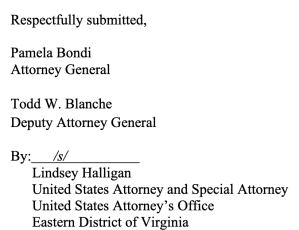
Judge Novak indicated that if Ms. Halligan had in fact made a false statement by clinging to her title as U.S. attorney, it could result in disciplinary measures.
Ms. Halligan reacted angrily to that suggestion, accusing Judge Novak of overstepping his authority.
“The court’s thinly veiled threat to use attorney discipline to cudgel the executive branch into conforming its legal position in all criminal prosecutions to the views of a single district judge is a gross abuse of power and an affront to the separation of powers,” she wrote.
The dispute over Ms. Halligan’s position came amid persistent turmoil in the Eastern District of Virginia, a critical prosecutorial outpost known for its handling of terrorism and national security cases.
On Monday, the No. 2 official in the office, Robert K. McBride, was fired after a disagreement about whether he would take charge of the Trump administration’s efforts to reindict Mr. Comey.

New York Times, Supreme Court Sides With Conservative Congressman in Illinois Election Rules Challenge, Abbie VanSickle, Jan. 14, 2026. The question in the case was not a mail-in ballot rule itself but whether political candidates have the right to challenge the rules governing the vote count in their election.
The Supreme Court on Wednesday sided with a conservative congressman who had sued over rules in Illinois that allow mail-in ballots to be counted up to 14 days after an election.
The question in the case was not the rule itself but whether a political candidate has the right to challenge the rules governing the vote count in the candidate’s election.
A majority of the court found that the answer was yes.
The justices have said they will hear a more significant case evaluating the legality of late-arriving mail-in ballots later this year. That case will test rules in Mississippi that allow the counting of ballots received after Election Day.
But many election law experts had warned that a decision in the congressman’s favor in Wednesday’s case could clear the way for a host of lawsuits challenging all kinds of election rules in states throughout the country, particularly from Republicans who have advanced a narrative that some state rules, especially involving mail-in ballots, unfairly favor Democrats.
Chief Justice John G. Roberts Jr., writing for the majority, said the Constitution required a legal challenger to have a “personal stake” in a case in order to sue. And indeed, the chief justice found that Representative Mike Bost, the Illinois Republican who challenged his state’s election rules, clearly had that kind of stake in the outcome. Mr. Bost argued that his campaign would incur extra costs to monitor the counting of late-arriving ballots.
“He is a candidate for office,” the chief justice wrote. “And a candidate has a personal stake in the rules that govern the counting of votes in his election.”
The case is one of several lawsuits brought by allies of President Trump challenging rules around mail-in ballots after his 2020 election loss. Mr. Trump has long in part falsely blamed the increased use of mail-in ballots during the pandemic for his loss.
All Rise News, Legal Commentary: 'The Boasberg treatment': Trump DOJ v. The Courts, Adam Klassfeld, right, Jan. 14, 2026. Former federal prosecutor Glenn Kirschner and I sound off on Trump DOJ's attacks on judges and dissect the prospects of an Epstein files special master.
If Lindsey Halligan’s latest legal brief proves anything, it shows that being appointed by Donald Trump will not spare a federal judge from “the Boasberg treatment.”Chief U.S. District Judge Jeb Boasberg rose to the federal bench with a bipartisan pedigree before finding himself the target of the Trump Justice Department’s campaign of vilification.
Former President George W. Bush appointed Boasberg to the D.C. Superior Court bench before ex-President Barack Obama appointed him to the U.S. District Court for Washington, D.C., a career course reflecting respect for Boasberg across the aisle in a jurisdiction where presidents weigh in on local and federal candidates.
“I had the honor to attend both of his confirmation hearings,” former federal prosecutor Glenn Kirshner said in a Substack Live conversation. “But listen, it doesn’t matter who you are, who appointed you, or how highly regarded you are. If you stand up to and rule contrary to the Trump administration, there’s going to be hell to pay.”
Trump-appointed U.S. District Judge David Novak became the latest example when he opened an inquiry into whether Halligan has been violating Virginia’s Rules of Professional Conduct by holding herself out as a U.S. Attorney after being disqualified in that role.During our conversation, Kirschner and I dive into what the Justice Department’s response reveals and assess the prospects of a federal judge appointing an independent monitor to oversee the release of the Epstein files after the government blew past the Dec. 19 deadline.

The Bulwark, Political Commentary: Media Matters Says It’s Ending Its Presence on Xnding Its Presence on X, Andrew Egger, right, Jan. 14, 2026.The liberal watchdog says changes to the terms of service make it impossible for them to keep posting on the platform.
MEDIA MATTERS, THE LEFT-LEANING WATCHDOG of right-wing media that has been a staple of blue Twitter for nearly two decades, will cease posting on the site starting tonight—a direct result of their lengthy legal fight with the company now known as X and its owner, Elon Musk.
Their reason for going dark, according to staff: changes to X’s terms of service, scheduled to go into effect at midnight tonight, that seem specifically designed to hurt Media Matters’ chances in their legal battle—and highlight the lengths to which Musk will sometimes go to punish his critics.
“Some of the changes to X’s terms of service underscore Elon Musk’s ability and seeming willingness to change the rules of the platform to punish speech,” said Angelo Carusone, chairman and president of Media Matters, in a statement on Wednesday evening. “There’s little reason to believe similar tactics wouldn’t be used again at crucial moments, like in the runup to elections. Having so much power to control the flow of information should concern everyone invested in democracy.”
 The two companies have been fighting in court since 2023. That November, Media Matters published a report criticizing Musk’s anything-goes moderation policies and demonstrating that advertisers’ content was sometimes showing up next to hate speech and neo-Nazi posts. X—which was then suffering through a damaging exodus of advertisers due to exactly these concerns—quickly filed what Musk, right, described as a “thermonuclear lawsuit” accusing Media Matters of gaming X’s algorithm in a way that “misrepresented the real user experience.” Media Matters called the lawsuit “frivolous,” accused Musk of trying to weaponize the law to silence critics, and vowed to fight it out in court.
Much of the recent court wrangling, however, hasn’t concerned the merits of Musk’s accusation but a preliminary procedural matter: Which court or courts provide the proper venue for trying the case?
X didn’t file its lawsuit in San Francisco, where X was then based, or in Washington, D.C., home of Media Matters. Instead, it brought the case in the Northern District of Texas—a frequent court-shopping destination for conservatives looking for legal advantage—where it landed on the desk of Chief Judge Reed O’Connor. In addition to a lengthy track record of pro-conservative rulings, O’Connor has faced criticism for presiding over Musk-related lawsuits while personally owning Tesla stock. While O’Connor recused himself from a different 2024 case brought by X—Musk’s attempt to punish businesses for no longer buying ads on his platform—he declined to do so in the Media Matters case.
The new X terms of service specifically require that all cases involving the company be filed in the Fort Worth division of the Northern District of Texas. There are just three judges assigned to that division, including O’Connor. Because one is a senior-status judge with a reduced caseload, the odds of any case filed in that division being assigned to O’Connor are greater than one in three.
If you care about democracy, freedom, and the rule of law, come be a part of our growing community—sign up for Bulwark+ today:Subscribed
Media Matters has been fighting Musk’s maneuver to get the suit in front of O’Connor. In response to X’s lawsuit, they argued that, by suing in Texas, X had violated its own terms of service—which stipulated at the time that all disputes involving X be brought “solely in the federal or state courts located in San Francisco County” and under California law. Media Matters made the same claim in a countersuit filed against X in California. (In October 2024, Musk belatedly updated X’s terms of service to require all future litigation involving the company to be brought in North Texas.)
But a new change in X’s terms of service, announced last month and effective as of tomorrow, seems designed specifically to undercut Media Matters’ venue argument. Now, in addition to insisting that all new federal disputes be held in Judge O’Connor’s district, X is also attempting to bind its users to an agreement that all pre-existing U.S. disputes be litigated there as well. Here’s the relevant passage (emphasis added):
The choice of law and forum selection provisions of this paragraph shall apply to pending and future disputes and shall apply to your dispute regardless of when the conduct relating to the dispute arose or occurred.
Ongoing use of X requires ongoing assent to the company’s terms of service. In Media Matters’ case, that would mean providing Musk with a weapon to deploy against them in court. As a result, when the new terms go into effect tonight, Media Matters will stop all publishing on the platform. Their accounts won’t be deleted—Media Matters says it doesn’t want to free up the handles for impersonators or trolls—but there will be no further engagement on the platform from the nonprofit or its employees, according to a person familiar with the group’s thinking. Media Matters’ official account has nearly 415,000 followers on X; some of the organization’s most well-known personalities, like senior fellow Matthew Gertz, have hundreds of thousands.
Unsavory terms of service agreements are hardly unique to X. Most users breeze through such agreements without taking in a word; courts, on the other hand, have typically treated them as binding legal contracts. And tech companies habitually take full advantage, slipping in all sorts of self-dealing legal goodies: venue stipulations, caps on damages they can be sued for, requirements to solve disputes through arbitration rather than lawsuits, bans on class-action suits, and so on.
“This has been going on for like twenty years—not with X in particular, but with data privacy in general,” said Nancy Kim, a law professor and expert on contract law at Illinois Tech’s Chicago-Kent College of Law. “We’re just getting our rights slowly eroded, and these platforms are just increasingly getting more and more powerful, and they’re doing this through terms of service.”
But X’s conduct stands out for a few reasons. For one, there’s the obviously personal nature of the proposed changes. The lawsuit against Media Matters is a personal hobbyhorse of Musk’s, who has repeatedly described the organization as “pure evil,” “evil incarnate,” “evil to its core,” a “scam,” and “a radical left propaganda machine.” Compared to the practices of other businesses, it’s significantly outside the norm for Musk—especially after having already made it harder for any future litigants to win in court against X—to further tinker with the terms of service to bolster his side in one particular set of ongoing lawsuits.
Then there’s the fact that X—for better or worse—still functions, in many respects, as a digital public square. Discourse there still sets the table for much of the political conversation in the rest of the country. Media Matters’ decision to stop posting means X will lose a significant voice pushing back on the monsoon of fact-agnostic MAGA infotainment that’s become ubiquitous on the platform.
As Musk’s endless campaign against Media Matters continues to show, the openness of that discourse rests on the whims of one crabby, strung-out, impetuous billionaire, whose devotion to the ideals of free and open communication tends to shrivel up quickly when it comes into tension with his various political campaigns, ideological beliefs, or personal vendettas. If Musk is willing to repeatedly revise X’s terms of service just to make it easier to punish Media Matters, what else might he do to restrict what was once regarded as a national, or even global, public square? And to what extent are other users who remain on the platform¹ enabling him to do so—and exposing themselves, perhaps, to liability of their own—by continuing to use it?
New York Times, ICE Arrests N.Y.C. City Council Employee at Routine Appointment, Luis Ferré-Sadurní, Updated Jan. 13, 2026. City officials said the employee, a data analyst from Venezuela, had legal authorization to work and remain in the United States until October. U.S. immigration officials said he did not.
A Venezuelan employee of the New York City Council was detained by U.S. immigration authorities on Monday, according to Julie Menin, the newly elected Council speaker, who denounced the arrest
The employee, a data analyst whom Ms. Menin did not publicly identify, is the first City Council staff member to be detained by Trump immigration officials, Ms. Menin said during a hastily convened news conference at City Hall on Monday evening.
Ms. Menin said that the employee, who had worked for the Council for about a year, was detained by Immigration and Customs Enforcement officials during a routine immigration appointment on Long Island.
Ms. Menin and ICE officials offered conflicting information about the staff member’s immigration status and criminal history.
Ms. Menin’s office said that the employee had work authorization because he had been granted Temporary Protected Status, known as T.P.S. — a humanitarian program that President Joseph R. Biden Jr. extended to Venezuelans but President Trump has since revoked. Ms. Menin said that he had legal authorization to work and remain in the United States until October 2026, despite the revocation.
Tricia McLaughlin, a spokeswoman for the Department of Homeland Security, which oversees ICE, identified the employee as Rafael Andres Rubio Bohorquez, and said he had entered the United States on a tourist visa in 2017 that required him to leave by October 2017.
“He had no legal right to be in the United States,” Ms. McLaughlin said in a statement issued late Monday.
But internal ICE records show that Mr. Rubio Bohorquez had been granted T.P.S. and work authorization until both were terminated on Nov. 20, 2025, according to a person with knowledge of his case who spoke on the condition of anonymity because of not being authorized to speak publicly.
Ms. McLaughlin also said Mr. Rubio Bohorquez had “an arrest for assault,” though it was not clear if he had been charged or convicted.Editors’ PicksHow to Make Your Landlord Enforce the Noise RulesHow to Avoid Stomach Trouble When You TravelOne Was Ready for a Life Partner. The Other, a ‘Vaccine Summer.’
Ms. Menin said that he did not appear to have a criminal record.
“He, in fact, signed an attestation in January at the City Council that he’s never been arrested,” said Ms. Menin, a Democrat elected to lead the Council last week. “This man chose to work for the Council on behalf of the public, on behalf of New Yorkers, and despite every indication that he was doing everything the right way, he still found himself a victim of egregious government overreach.”
New York Times, Eric Adams Hawked a Crypto Coin. A Day Later, $1 Million Was Missing, Nicholas Fandos and David Yaffe-Bellany, Jan. 14, 2026 (print ed.). Officials tied to the venture insisted no money had been stolen, but the withdrawal caused the coin’s value to plunge.
Eric Adams, right, was crowing as he stood in Times Square on Monday to launch his first post-mayoral venture, a New York City-themed crypto coin that he said would fund the fight against antisemitism.
 “This thing is about to take off like crazy,” he boasted in an accompanying hype video.
That, somehow, turned out to be an understatement.
In the minutes after trading opened, the coin, NYC Token, rocketed to a market capitalization of nearly $600 million, then crashed almost as quickly after an account linked to the coin’s launch withdrew about $2.5 million in early proceeds without notice, unnerving investors.
By Tuesday morning, the account had returned some of the funds, but Mr. Adams was battling accusations from crypto enthusiasts that his NYC Token might be a so-called rug pull — a common crypto scheme in which someone markets a coin to the public, and then quickly siphons off significant profits.
The project’s leaders insisted no money had been stolen. Still, Mr. Adams called in Brock Pierce, a crypto investor and friend, to try to help salvage matters, according to Mr. Pierce.
This was not how Mr. Adams had hoped to begin his business career, especially after ethics scandals and his own federal criminal indictment cut his mayoralty off after a single term.
Mr. Adams did not comment on the whipsaw events. An X account associated with the coin tried to calm potential investors, insisting in a cryptic statement that the withdrawal was merely undertaken to “rebalance the liquidity” of the coin to adjust for demand and that the coin was “in it for the long haul.”
In an interview, Mr. Pierce offered a harsh assessment of the rollout. The people Mr. Adams was working with “did not have any of the necessary experience,” he said, and the launch had “gone sideways,” justifiably alarming a community of crypto enthusiasts who have frequently been bilked before.
He said it would be clear within 72 hours or so if the coin would survive. But he added that it might take Mr. Adams longer to regain the esteem of the crypto community, even as he argued that the former mayor was innocent.“He’s going to have to do some work to restore that credibility,” he said.
In the crypto world, anyone can launch a new coin and market it to the public for purchase, at low cost and without much technological expertise.
Cryptocurrencies like NYC Token occupy a legal gray area in the United States. Under the Biden administration, federal prosecutors and securities regulators aggressively pursued crypto-related crime.
But President Trump has largely unwound that enforcement effort. Early last year, the Securities and Exchange Commission declared that memecoins, a type of cryptocurrency based on an online joke or tied to a celebrity mascot, would not be subject to regulatory oversight.
When politicians and celebrities start selling digital coins, though, it rarely ends well.
Epstein-Trump Scandals, Cover-up

 Legal AF, Legal Analysis: Trump Judge Sets DEVASTATING TRAP for DOJ over EPSTEIN FILES, Michael Popok, Jan. 14, 2026. Popok reports on Federal Judge Paul Englemeyer, above,,and his new order.
The judge is seriously considering taking away from the DOJ the continued document review and production process and putting it under Federal Court oversight instead, as he invites an Epstein Survivor to step forward and be heard along with members of Congress on the issue.
Donald Trump and Jeffrey Epstein partying together at Mar-a-Lago, along with an artist's rendering of a birthday card that the Wall Street Journal reported that Trump sent Epstein in 2003 boasting of their shared secrets.

RawStory, Trump gives middle finger to worker shouting 'pedophile protector,' Nicole Charky-Chami, Jan. 13, 2026. President Donald Trump speaks at the Detroit Economic Club in Detroit, Michigan on Jan. 13, 2026.
 President Donald Trump gave the middle finger Tuesday to a worker screaming "pedophile protector" during a tour at a Detroit factory.
Trump was touring a Ford F-150 plant in the Motor City just before his speech on the United States economy at the Detroit Economic Club when a worker started shouting at him as the president walked above the workers, TMZ reported.
In a video capturing the moment, Trump yelled back "F--- you!" He pointed his finger, then he switched to giving the bird.
The worker was calling Trump out for his association with Jeffrey Epstein, the disgraced financier and convicted child sex offender — a former friend — who he said he cut ties and threw Epstein out of his Mar-a-Lago club when he had a falling out about poaching and recruiting his staff.
Trump has not been charged with any crime or involvement with Epstein's sex trafficking ring. He has denied any wrongdoing in connection with Epstein.
Politico, Hillary Clinton defies subpoena, skips deposition in congressional Epstein inquiry, Hailey Fuchs,Jan. 14, 2026. The Republican-led House Oversight panel will now vote to hold her, as well as her husband, in contempt of Congress as soon as next week.
The House Oversight and Government Reform Committee will vote next week to hold former Secretary of State Hillary Clinton in contempt of Congress after she defied a subpoena and failed to appear Wednesday morning for her scheduled deposition.
It follows former President Bill Clinton’s refusal the day before to comply with a subpoena and sit for an interview with lawmakers as part of their investigation into Jeffrey Epstein — an outcome that resulted in Comer’s pledge to hold him in contempt of Congress, too.
“I think what’s most disappointing to the Oversight Committee is the fact that we have, in good faith, negotiated with the Clintons’ attorney for five months,” Comer (R-Ky.) told reporters. “We felt like Hillary Clinton could offer some information on [Epstein associate Ghislaine] Maxwell.”
Comer, right, said his panel would vote on contempt for both Clintons during a markup slated for next Wednesday, which would then be brought to the House floor. A contempt vote could have implications ranging from symbolic to criminal. But the Justice Department has already shown an interest in prosecuting President Donald Trump’s political adversaries, signaling there could be grave consequences for the couple — especially Hillary Clinton, who ran against Trump in 2016.
In a public letter to Comer sent Tuesday, Bill and Hillary Clinton argued the subpoenas issued to them over the summer were invalid and maintained the exercise was designed to embarrass and put them in prison. They also said they have already given Congress whatever information they have about Epstein, the late convicted sex offender with whom Bill Clinton had a documented rapport.
Comer also said Wednesday his panel would depose Maxwell, Epstein’s co-conspirator who is now serving a 20-year sentence for her part in the sex trafficking scheme. He had previously indicated he did not intend to call her up to sit for an interview after issuing her a subpoena because her legal team had indicated she would not cooperate with their questioning.
A committee spokesperson said the panel had reached out to Maxwell’s attorney to schedule a deposition as a result of lawmakers’ renewed interest, but is still expected she would invoke her Fifth Amendment rights. The deposition would require members and staff to visit Texas, where Maxwell remains incarcerated.
U.S. Media, High Tech, Education, Culture
Washington Post, FBI executes search warrant at Washington Post reporter’s home, Perry Stein, Jan. 14, 2026. The reporter, Hannah Natanson, covers the federal workforce and has been part of The Post’s most high-profile and sensitive coverage of the first year of the second Trump administration.
The FBI executed a search warrant Wednesday morning at a Washington Post reporter’s home as part of an investigation into a government contractor accused of illegally retaining classified government materials.
The reporter, Hannah Natanson, was at her home in Virginia at the time of the search. Federal agents searched her home and her devices. The warrant said that law enforcement was investigating Aurelio Perez-Lugones, a system administrator in Maryland who has a top secret security clearance and has been accused of accessing and taking home classified intelligence reports that were found in his lunchbox and his basement, according to an FBI affidavit.
Natanson covers the federal workforce and has been a part of The Washington Post’s most high-profile and sensitive coverage during the first year of the second Trump administration.
While it is not unusual for FBI agents to conduct leak investigations around reporters who publish sensitive government information, it is highly unusual and aggressive for law enforcement to conduct a search on a reporter’s home.
Natanson said a phone and Garmin watch were seized. The FBI did not immediately respond to a request for comment.

The Guardian, UPenn faculty condemn Trump administration’s demand for ‘lists of Jews,’ Alice Speri, Jan. 14, 2026 (print ed.). Groups say EEOC demand for names and personal details echoes dark history and threatens safety and civil rights.
Several faculty groups have denounced the Trump administration’s efforts to obtain information about Jewish professors, staff and students at the University of Pennsylvania – including personal emails, phone numbers and home addresses – as government abuse with “ominous historical overtones”.
 The US Equal Employment Opportunity Commission (EEOC) is demanding the university turn over names and personal information about Jewish members of the Penn community as part of the administration’s stated goal to combat antisemitism on campuses. But some Jewish faculty and staff have condemned the government’s demand as “a visceral threat to the safety of those who would find themselves identified because compiling and turning over to the government ‘lists of Jews’ conjures a terrifying history”, according to a press release put out by the groups’ lawyers.
The EEOC sued Penn in November over the university’s refusal to fully comply with its demands. On Tuesday, the American Association of University Professors’ national and Penn chapters, the university’s Jewish Law Students Association and its Association of Senior and Emeritus Faculty, and the American Academy of Jewish Research filed a motion in federal court to intervene in the case.
“These requests would require Penn to create and turn over a centralized registry of Jewish students, faculty, and staff – a profoundly invasive and dangerous demand that intrudes deeply into the freedoms of association, religion, speech, and privacy enshrined in the First Amendment,” the groups argued.a woman in green clothing and headscarf and wearing glasses looks aheadTufts student can resume research after Trump officials revoked her visa, judge rulesRead more
“We are entering territory that should shock every single one of us,” said Norm Eisen, co-founder and executive chair of the Democracy Defenders Fund on a press call. The fund is representing the faculty groups along with the American Civil Liberties Union of Pennsylvania and the firm Hangley Aronchick Segal Pudlin and Schiller. “That kind of information – however purportedly benign the excuses given for it – can be put to the most dangerous misuse. This is an abuse of government power that drags us back to some of the darkest chapters in our history.”
The EEOC did not immediately respond to a request for comment.
The University of Pennsylvania was among dozens of US universities to come under federal investigation over alleged antisemitism in the aftermath of the 7 October 2023 Hamas attacks and Israel’s subsequent war in Gaza. In response, the university established a taskforce to study antisemitism, implemented a series of measures and shared hundreds of pages of documents to comply with government demands.
But the university refused to comply with the EEOC’s July subpoena for personal information of Jewish faculty, students and staff, or those affiliated with Jewish organizations who had not given their consent, as well as the names of individuals who had participated in confidential listening sessions or received a survey by the university’s antisemitism taskforce. A university spokesperson said in November that “violating their privacy and trust is antithetical to ensuring Penn’s Jewish community feels protected and safe”. Instead, the university offered to inform all its employees of the EEOC investigation, inviting those interested to contact the agency directly.
But that was not enough for the commission, which brought the university to court to seek to enforce the subpoena.
“The EEOC remains steadfast in its commitment to combatting workplace antisemitism and seeks to identify employees who may have experienced antisemitic harassment. Unfortunately, the employer continues to refuse to identify members of its workforce who may have been subjected to this unlawful conduct,” the EEOC chair, Andrea Lucas, said in a statement at the time. “An employer’s obstruction of efforts to identify witnesses and victims undermines the EEOC’s ability to investigate harassment.”
The EEOC request prompted widespread alarm and condemnation among Jewish faculty, and earned rebukes from the university’s Hillel and other Jewish groups.
Steven Weitzman, a professor with Penn’s religious studies department who also served on the university’s antisemitism taskforce, said that the mere request for such lists “instills a sense of vulnerability among Jews” and that the government cannot guarantee that the information it collects won’t fall “into the wrong hands or have unintended consequences”.
Morning Shots via The Bulwark, Political Opinion: MAGA’S Young, Dumb Future, Andrew Egger, right, Jan. 14, 2026. The mayhem in Minnesota is partially the fault of one pup “reporter” chasing clicks.
The wilder the situation grows in Minneapolis—ICE growing openly brutal against protesters and observers, career prosecutors resigning in protest over the slanted investigation of the death of Renee Good, Stephen Miller proclaiming to ICE that “you have immunity to perform your duties” and that “no city official, no state official, no illegal alien, no leftist agitator or domestic insurrectionist” can stand in their way—the more remarkable it is that the whole situation really got going thanks to one smooth-brained 23-year-old YouTuber.
Minnesota’s public-services fraud and its connections to Minneapolis’s Somali population had been an ongoing scandal for years, and were already a large and growing story on the right before Nick Shirley headed there with a camera crew late last month. But Shirley’s highly misleading gonzo video confronting employees of Somali-run daycares and health care centers and claiming to have discovered $110 million in fraud went ultra-viral, racking up hundreds of millions of views and turning the scandal into the story of the moment for the MAGA right. Within days, the White House was surging immigration enforcement to Minneapolis; Vice President JD Vance said Shirley had “done far more useful journalism than any of the winners of the 2024 [Pulitzer] prizes.”
If this sort of person doing this sort of work can be so richly rewarded on the right right now, it’s safe to say both that Shirley will be a major fixture of the online right for a while, and that many others will try to follow in his footsteps. But if he’s the future of right-wing journalism, the future is very bleak indeed.
Gaping holes quickly appeared in Shirley’s viral video, and exposés of the ludicrously propagandistic nature of his earlier work quickly followed. But it wasn’t until Shirley sat for a trainwreck interview with fellow YouTuber Andrew Callaghan this week that the broader picture came into focus: Sorry to say it, but the kid just ain’t that bright. When Callaghan asked him who he thought were America’s “three most benevolent billionaires,” Shirley was stumped: “What do you mean by the word ‘bellevolent’?”2
Here’s the thing that gets me, though. It’s not a crime to be young and dumb in America. It’s not even a career-ending offense to be young and dumb in journalism. As ludicrous as Shirley’s current output is, he’s plainly got a certain aptitude for video reporting. In a different world—one set up to restrain his worst and dumbest instincts rather than to reward them—a guy like him could turn out to be a solid reporter.
When we talk about the disintegration of the political right, I don’t think we talk enough about the collapse of its institutions. It’s been almost a decade since I started my first journalism job as a kid reporter at the Weekly Standard. The web editor there was one Jonathan V. Last, and I still remember one of the first things he ever told me: Part of his job as an editor of early-career writers was to keep them from popping off with insane hot-take stuff that would ruin their credibility before they’d accumulated any in the first place.3 At the time, he was contrasting the Standard’s approach with that of other right-wing outlets that used young writers as “commentary” cannon fodder for clicks, asking them to churn out three or four barely-edited “takes” a day to keep traffic numbers high.
A decade on, though, the situation is far worse even than that. Much of the old press model has collapsed entirely, especially on the right. Guys like Nick Shirley aren’t trying to join a publication, they’re picking up a camera and trying to go viral on their own. They have no safety net, no sounding board, no mentorship, no way to grow beyond what they’re doing this minute. All they have is the zero-sum game of the algorithm: Get noticed or die. Of course they’re going to do what the algorithm demands—which, on today’s right, means snappy, confrontational, fact-agnostic propaganda for the regime. That’s what the ecosystem rewards, so we’re going to get more and more of it. If you think that’s grim today, wait till you see the future.
Corruption Investigation
Popular Information, Accountability Journalism: The Saudi payback, Judd Legum, right, Jan. 14, 2026. On November 18, Saudi Arabian Crown Prince Mohammed bin Salman (MBS) visited President Trump at the White House. During his meeting with MBS, Trump agreed to provide Saudi Arabia with unprecedented levels of cooperation and support.
Trump named Saudi Arabia a “major non-NATO ally,” a coveted designation that comes with “defense trade and security cooperation benefits, including access to joint research and development programs with the Pentagon and privileged access to US weaponry, training and loans.”
Further, Trump agreed to sell 300 Abrams tanks and an unspecified number of F-35 fighter jets to Saudi Arabia. Previously, Israel was the only country in the Middle East permitted to buy F-35s. Acquiring the advanced jets has long been a priority for MBS and the Saudi government.
Trump also agreed to cooperate with Saudi Arabia on civilian nuclear energy and to provide Saudi Arabia with access to advanced AI chips.
 In addition to the practical benefits to Saudi Arabia, the visit helped burnish the international standing of MBS, who American intelligence concluded directed the murder of a U.S.-based journalist, Jamal Khashoggi. Trump called MBS a “very good friend of mine.”
Now, a few weeks later, MBS, right, appears to be returning the favor.
The Trump Organization announced it would be partnering with Dar Global to build a $7 billion “Trump-branded hotel and golf course” in Saudi Arabia. The development in Diriyah “will include 500 mansions, priced between $6.7 million and $24 million.”
The project is part of Diriyah, a $63 billion development financed by the Saudi Public Investment Fund (PIF). MBS is the chairman of PIF.
Eric Trump, in the press release announcing the new development, said it “will redefine luxury and excellence in the region, setting a new standard that reflects the brand’s enduring commitment to quality, prestige and timeless elegance.”
When Trump visited Saudi Arabia last May, MBS took him on a tour of Diriyah and showed him a model of the redevelopment project.
Among other financial incentives, these deals involve the developer paying millions in fees simply to license the Trump name. About 80% of the money will flow directly to Trump, according to reporting on similar deals by Forbes.
During Trump’s first term, he established an ethics agreement that prohibited the Trump Organization from engaging in any new foreign deals — because such deals constituted an obvious conflict of interest. In his second term, Trump dropped that prohibition and instead agreed that the Trump Organization would not sign any deals directly with foreign governments.
The $7 billion development in Diriyah appears to violate that restriction. Dar Global, the Trump Organization’s official partner, is closely tied to the Saudi government. Moreover, the entire Diriyah development is funded by the Saudi government through the PIF. The Trump Organization press release notes the new development is part of the master plan being implemented by the Diriyah Company. But the Diriyah Company is a wholly owned subsidiary of PIF.
According to Jerry Inzerillo, who heads the Diriyah Company, Trump was “amazed“ by the project when he visited last year. “As a developer, he loves scale, he loves quality, he loves finishes,” Inzerillo said.
The White House generally deflects questions about conflicts of interest related to the Trump Organization by noting that the company is being held in a trust during his presidency. But the trust is just a legal artifice and does nothing to eliminate conflicts. Trump’s interest in the Trump Organization is being formally held by his son, Donald Trump Jr. However, Trump retains his ownership stake and has access to information about its financial performance. The ethics agreement prohibits Trump’s involvement in “day-to-day” management but is silent on larger strategic decision-making.
The Trump Organization also announced a separate $3 billion deal with Dar Global to construct Trump Plaza in Jeddah, Saudi Arabia
History Matters
The Real Michael Cohen, Commentary: Before The Scream Echoes Again, Michael Cohen, right, Jan. 14, 2026. From inherited Holocaust trauma to ICE raids and Nazi-echoing slogans, America’s warning sirens are screaming again; and this time the uniforms say “homeland security.”
I was raised on stories that never left the room, even when no one was speaking.
That’s the inheritance of trauma. It doesn’t come with a trust fund or a plaque. It arrives in flashes, screams in the night, and faces that suddenly disappear from the present and reappear in hell.
Much has been written about the children of Holocaust survivors; the so-called “second generation.” Psychologists have names for it now: intergenerational trauma, inherited PTSD, emotional hypervigilance. Clinical language meant to explain what my family simply lived. When your parent survives genocide, survival becomes the family business. Fear doesn’t end. It just learns new disguises.
My father is a Polish Holocaust survivor. Strength defines him. Silence protects him. But trauma? Trauma never asked permission.
I remember a December break around 1986, down in Florida at our family home. My grandmother; my papa’s mother, was there. She was in her mid-90s, small, quiet, fragile in a way that came from surviving the unthinkable. At some point, without warning, we heard a scream that didn’t belong in that room; or that decade.
She was reliving the day the Nazis stormed her home.
Her eyes went vacant. Her face contorted into something frozen in terror. She wasn’t in Florida anymore. She was back in Poland, watching family members murdered, dragged away, erased. That look stayed on her face until the moment passed; until she recognized her surroundings again, until safety slowly reintroduced itself.
I never forgot that expression.
Because I see it now, every day, in this country.
I see it on the faces of people approached by ICE agents in unmarked vehicles. On mothers clutching children as men in tactical gear scream orders. On families who don’t know if compliance means survival or disappearance. It’s the same face: pure terror mixed with disbelief that history is repeating itself in a place that promised it never would.
This week in Minneapolis, federal agents deployed teargas, pepper balls, and flash bangs against protesters. Eight people were arrested. Thousands of DHS and ICE officers flooded the city in what the administration proudly called the “largest operation in DHS history.” A mother, Renee Nicole Good, was killed by a federal immigration agent. And the Department of Justice? It declined to even open a civil rights investigation.
Let that sink in.
When allegations of excessive force arise, DOJ is supposed to investigate. That’s the rule of law. That’s the guardrail. But when you decide in advance not to investigate, it stops being justice; it becomes policy.
Gas clouds filled the streets. A man scrubbed his eyes with snow while agents drove away spraying orange irritant. Students walked out of schools. Prosecutors resigned in protest. Cities sued the federal government, calling it what it looked like: a federal invasion.
And hovering over all of it was the language.
Language matters. Every authoritarian understands that. Hitler certainly did.
So when I see posts coming out of the White House and federal agencies that echo Nazi propaganda, I don’t analyze it academically. I feel it viscerally.
“One Homeland. One People. One Heritage.”

Of course, the slogan sounds better in the original German.
That wasn’t a mistake. It wasn’t careless phrasing. It was a deliberate invocation of “Ein Volk, ein Reich, ein Fuhrer.” One people. One nation. One leader.

The Department of Labor posted it. The Department of Homeland Security amplifies white nationalist imagery. Recruitment materials that erase diversity. Social media posts that demonize immigrants while sanctifying “American-born” purity. Bible verses weaponized to bless exclusion. Patriotism redefined as obedience.
This is how fascism creeps in; not in jackboots first, but in slogans. In bureaucratic cruelty. In the normalization of force. In the quiet decision not to investigate when power kills.
As the son of a Holocaust survivor, I take this personally. I don’t have the luxury of pretending this is exaggerated rhetoric or partisan hysteria. My family lived the consequences of that dismissal.
The United States is not Nazi Germany. But history doesn’t repeat itself perfectly; it rhymes. And when a government deploys mass federal force against cities, criminalizes protest, targets immigrants as existential threats, and borrows language straight from genocidal regimes, the rhyme becomes impossible to ignore.
I hear my grandmother’s scream in Minneapolis. I see her face in Brooklyn Park. In Chicago. In every neighborhood where unmarked vehicles pull up and people vanish into the system.
Never Again was not a slogan. It was a warning.
And warnings only work if we’re brave enough to listen; before the scream echoes again.
Shown above is a graphic posted by the Trump Administration's Department of State asserting its control not simply over Venezuela but the entire Western Hemisphere: North, South and Central.

Wayne Madsen Report, Investigative Commentary:History records several mentally-ill individuals who claimed they were non-existent leaders, Wayne Madsen, left,  Jan. 14, 2026. Donald Trump is the latest in a long line of crackpots.
History is replete with self-appointed leaders of countries who falsely claimed to have been emperors, kings, presidents, and other officials.For example, there were three false claimants to the throne of czar of Russia. In the 1600s, three men claimed to be Dmitri Ivanovich, the dead son of Ivan the Terrible. Bogus Dmitris I, II, and III made attempts to seize the throne and false Dmitri I actually succeeded for a brief time. Fake Dmitris II and III raised armies but failed to become czar.
Perkin Warbeck was a classic royal pretender. In the 1490s, he claimed to be Richard of Shrewsbury, one of the “Princes in the Tower,” and therefore rightful King of England. The Princes in the Tower refer to deposed King Edward V of England and his younger brother Prince Richard of Shrewsbury, the Duke of York, Warbeck actually gained support in his claim to the throne from France, Burgundy, and Scotland, but he never seized the throne and was executed by King Henry VII.
In 1487, Lambert Simnel claimed to be Edward, Earl of Warwick, and was crowned in Dublin as “King Edward VI.” Leading a rebellion, Simnel was defeated at the Battle of Stoke Field. He was later pardoned and given a job in the royal kitchens.
In the early 1800s, former U.S. Vice President Aaron Burr, right, was involved in a plan to seize Spanish territory in Texas or Mexico and  detach parts of the American West (possibly including Louisiana) to create a new independent nation with himself as leader. Burr was arrested and tried for treason in 1807. Burr stood accused of trying to levy war against the United States but Chief Justice John Marshall acquitted him due to lack of direct evidence. That decision, along with the failure to harshly prosecute leaders of the secessionist Confederate States of America following the 1861-1865 U.S. Civil War, laid the groundwork for the failure by the federal government to similarly strongly deal with the January 6, 2021 insurrectionists, including their leader, Donald Trump. Aaron Burr - Biography and the Duel ... Former Vice President Aaron Burr, who shot and killed Alexander Hamilton in a duel, sought to name himself leader of a nation carved out of the Southwest of North America and the Louisiana Territory
During the 1800s, a man named Karl Wilhelm Naundorff claimed to be Louis XVII, the lost son of the executed Louis XVI and Marie Antoinette. He conned many supporters who believed his story. However, DNA testing centuries later proved he was a fraud.
In China in the 1850s, Hong Xiuquan declared himself the Heavenly King and younger brother of Jesus Christ. Hong founded the Taiping Heavenly Kingdom and claimed sovereignty over China. Hong managed to control some territory but never ruled over China.
From 1859 to 1880, Joshua Norton, a San Francisco eccentric, proclaimed himself to be Norton I, Emperor of the United States and Protector of Mexico. Norton never ruled anything but became a local Bay Area celebrity.
In the 1860s, Orélie‑Antoine de Tounens declared himself “King of Araucanía and Patagonia” in Argentina and Chile without any legitimacy.
In the mid-19th century, U.S. adventurer, mercenary, and brigand William Walker went on a spree in Latin America of appointing himself as leader of various countries. In the mid-19th century, Walker sailed from San Francisco to Mexico, where he proclaimed Lower California and Sonora an independent republic in 1853. Mexico forced Walker to retreat. In 1955, Walker invaded Nicaragua on behalf of Cornelius Vanderbilt’s Accessory Transit Company. From 1856 to 1857, Walker ruled Nicaragua as its “president.” Faced with a combined Central American military force, Walker withdrew to the United States. In 1860, Walker invaded Honduras but was taken prisoner by the British. Walker was handed over to Honduran forces and was subsequently executed.
People’s Temple cult leader, Rev. Jim Jones, led a totalitarian quasi-state carved out of the jungle in Guyana. In 1977 Jones led several hundreds of his cult followers from Oakland, California to Guyana. The following year, Jones conducted a mass murder-suicide operation that claimed the lives of over 900 people. Among those murdered by People’s Temple adherents were U.S. Rep. Leo Ryan, who led a congressional inspection of Jones’s compound. Members of an accompanying NBC News crew were also killed.
 Branch Davidian religious cult leader David Koresh, right, born Vernon Wayne Howell, claimed divine authority over the United States. In February 1993, Koresh and several of his followers died during a federal law enforcement siege of his Waco, Texas compound.
In more recent times, there have been many “I Actually Won the Election” pretenders. In 2000, Alberto Fujimori declared victory in a Peruvian presidential election widely condemned as fraudulent. Fujimori later fled to Japan. He was later prosecuted, convicted, and imprisoned by Peruvian authorities. In The Gambia in 2016, President Yahya Jammeh lost the election, conceded, then reversed course by claiming he actually won. Jammeh attempted to remain in power until regional West African military forces intervened.
Among the most notorious examples of election fraudsters is Donald Trump, who, after losing the 2020 election, attempted, along with his associates, to remain in power by submitting fraudulent electoral certificates in seven states. On January 6, 2021, Trump and his allies precipitated a violent siege of the U.S. Congress during its certification of the election of Joe Biden and Kamala Harris as president and vice president.
After being winning the presidential election in 2024, Trump claimed to be the “acting president of Venezuela,” after having kidnapped the country’s president, Nicolas Maduro, and his wife, and flew them to New York to face federal criminal charges. Trump also stated that his Secretary of State and national security adviser, Marco Rubio, might become a future president of Cuba.
Trump prominently stands in history with the other authoritarian and fraudulent, as well as clearly mentally-unbalanced worthies, who falsely claimed to have won elections or laid claim to political offices at home or abroad.
Morning Shots via The Bulwark, Political Opinion: Authoritarianism Is Accelerating. So Is Resistance, Williaml Kristol, right, Jan. 14, 2026. Freedom is complicated. Dictatorship is simple.
Dictatorial or authoritarian movements tend toward uniformity and homogeneity. They bow to one leader. They look up to authority. They march in lockstep. They seek to impose one culture. Their message is one of simplicity and unity: “Ein Volk, ein Reich, ein Führer.”
Liberal and pro-democratic resistance efforts, by contrast, tend toward diversity, toward variety and heterogeneity. The free society they cherish is characterized by diversity. Resistance on behalf of a free society will tend to reflect that diversity. Different parts of the resistance will choose to fight in different ways. They will defend different aspects of a pluralistic society. Their core message is one that allows for a society of variety and diversity: No Kings.
Unity of purpose can give an authoritarian movement an advantage in the short term. But the diversity of the resistance coalition gives it a more lasting and deep-seated strength.
The diversity of the American resistance has been on full display in recent days, in response to the accelerationist authoritarianism of the Trump administration.
On Sunday, the resistance featured a paragon of the establishment, the chairman of the Board of Governors of the Federal Reserve System, wearing suit and tie, speaking soberly but forcefully on behalf of sound policy, his institution’s independence, and his own determination and duty to stay and fight.
On Monday, the resistance spotlight turned toward career civil servants, as at least five senior attorneys in Washington announced their resignations from the Civil Rights Division of the Justice Department because of the refusal of political appointees above them to authorize a normal investigation that would follow a killing by a law enforcement agent of a peaceful protestor. And then on Tuesday, six federal prosecutors in Minnesota quit rather than carry out orders to open a criminal investigation of Becca Good, Renee Good’s widow, as well as over the refusal of their political superiors to authorize an investigation of the shooting in partnership with the Minnesota Bureau of Criminal Apprehension. Among the attorneys who resigned were Joseph H. Thompson, who was second-in-command at the U.S. attorney’s office, and attorneys Harry Jacobs, Melinda Williams, and Thomas Calhoun-Lopez.
After the polite if firm resistance of the Fed chair and career attorneys at Justice, yesterday we saw a different kind of resistance.
At a Donald Trump photo op at a Ford plant in Michigan, a 40-year-old line worker at the factory, TJ Sabula, shouted “pedophile protector” at Trump from about sixty feet away, referring of course to his administration’s ongoing obstruction of the Jeffrey Epstein investigation. Trump heard the remark, and our thin-skinned wannabe dictator twice mouthed an expletive at Sabula, followed by a middle finger.
The price Sabula paid for his heckling was being suspended from work. But he was not cowed. He told the Washington Post, “As far as calling him out, definitely no regrets whatsoever,” adding, “I don’t feel as though fate looks upon you often, and when it does, you better be ready to seize the opportunity. And today I think I did that.”
So Sabula did. He stepped up in his way. As did the attorneys at the Justice Department in theirs. As did the chair of the Fed in his. They should inspire many others to act as well. Those modes of action will also be varied. But that’s fine. Diversity in resistance is a strength. After all, No Kings has defeated ein Führer before.
But today’s authoritarians will not give up any more easily than yesteryear’s.
It is sobering to realize that success, while certainly possible, remains in doubt. But it is heartening—even inspiring—to see resistance mounting on so many fronts.
AROUND THE BULWARK
Quick Hits
GIVE KIDS A (THIRD) CHANCE: Over the past year, advocates in the world of pediatric cancer research have been pushing for passage of the Give Kids a Chance Act, a bill that would allow for the Food and Drug Administration to authorize experimental combination therapies for kids suffering from these deadly diseases. Last week, they got some good news.
The Department of Health and Human Services said in a January 6 letter to Senate Majority Leader John Thune that it supported the legislation, which was renamed the Mikaela Naylon Give Kids a Chance Act in honor of a 16-year-old cancer victim who advocated for its passage. The letter notes that the bill would “accelerate the development of pediatric cancer treatments” by, among other things, “awarding priority review vouchers to sponsors of certain approved rare pediatric disease product applications.” That’s the Trump administration’s imprimatur: If the bill were to get to the president’s desk, he would sign it.
But can it get to his desk? The Mikaela Naylon Give Kids a Chance Act is widely popular in Congress. But twice now it has been at the doorstep of becoming law only to suffer an ignominious defeat. In December 2025, Elon Musk torpedoed a bipartisan-agreed upon government funding bill that included the legislation. In December 2026, Sen. Bernie Sanders stopped it from passing as a standalone bill in the Senate when he objected to a unanimous consent request for its consideration.
The fate of the bill remains unclear. In theory, it could be part of the government funding legislation that gets passed (we assume) before the end of January. Or, the Senate could bring it back up for consideration once again by unanimous consent. At which point it would be unequivocally clear that whoever objects (Sanders or any other senator) would be the only lawmaker in Washington D.C. standing in its way.
—Sam Stein
RESISTANCE ROGAN: Another day, another sign that Joe Rogan is over his fascination with Donald Trump. On his podcast yesterday, Rogan spoke with horror about the shooting of Renee Good and widely circulating clips of ICE–induced chaos in Minneapolis: “It’s very ugly to watch someone shoot a U.S. citizen, especially a woman, in the face,” he said. “It just looked horrific to me. When people say it’s justifiable because the car hit it, it seemed like she was turning the car away.”
He went on: “You don’t want militarized people in the streets just roaming around, snatching up people—many of which turn out to be U.S. citizens that just don’t have their papers on them. Are we really gonna be the Gestapo? ‘Where’s your papers’? Is that what we’ve come to?”
Young men were instrumental in getting Trump re-elected in 2024, and many of the most prominent young men visible on the political right today are alarmingly fascist. But that doesn’t mean that all the young men who helped Trump return to power are loving his increasingly fascist tactics. Ditto the “manosphere” entertainers they listen to.
THE INCREDIBLE VANISHING BILLIONAIRE: California Gov. Gavin Newsom didn’t expect to spend the last year of his term in an all-out fight against state progressive groups over a wealth-tax measure. But that seems to be how his 2026 is shaping up.
A powerful California healthcare workers union is behind the effort to pass a one-time 5 percent wealth tax on billionaires living in the state, which they say is necessary to replace Medicaid spending and Affordable Care Act subsidies cut last year by the One Big Beautiful Bill Act. In an attempt to cut Newsom out of the process, they’re pushing the change not as a bill in the California legislature, but as a ballot initiative for voters to consider this November.
Still, Newsom is promising to fight the measure relentlessly. “This will be defeated, there’s no question in my mind,” he told the New York Times. “I’ll do what I have to do to protect my state.”
It’s not hard to see why Newsom is digging in. Rather than succeed in tapping more of the accumulated wealth of California’s ultra-wealthy, the proposed tax seems likelier to drive many of them from the state altogether, dropping their contributions to California’s state revenue closer to zero. And while the provision’s authors hoped to prevent that by making the tax retroactive to California residents as of January 1 of this year, they seem instead to have simply pushed some billionaires out that much earlier, before it’s even clear the measure will make it to the ballot at all. For instance, the New York Times reported that Google cofounders Larry Page and Sergey Brin spent the closing days of 2025 moving many of their assets and companies out of the state.
Jan. 13

Trump Targets: Renee Nicole Good and Jerome Powell
Paul Krugman via Substack, Political-Economy Commentary: Cross him and his minions will try to destroy you — whoever you are, Paul Krugman, right, Jan. 13, 2026. So federal prosecutors have opened a criminal investigation into Jerome Powell, the Federal Reserve chair.
In his statement in response, Powell, to his credit, didn’t dignify the obviously spurious accusations by protesting his innocence. Instead, he went right to the heart of the matter:
This new threat is not about my testimony last June or about the renovation of the Federal Reserve buildings. It is not about Congress’s oversight role; the Fed through testimony and other public disclosures made every effort to keep Congress informed about the renovation project. Those are pretexts. The threat of criminal charges is a consequence of the Federal Reserve setting interest rates based on our best assessment of what will serve the public, rather than following the preferences of the President.
This is about whether the Fed will be able to continue to set interest rates based on evidence and economic conditions—or whether instead monetary policy will be directed by political pressure or intimidation.
Indeed. Surely nobody at the now completely corrupt Department of Justice really believes that Powell has committed any crimes, other than the crime of not doing Donald Trump’s bidding. This is all about intimidation, not just of Powell, but of everyone at the Fed.
I’ll get to the implications for the Fed and the economy in a minute, but let me first say what Powell can’t: This isn’t just about the Fed. It’s part of a broader assault on anyone who doesn’t go along with Trump’s agenda. At the top of this post I’ve put Powell’s picture next to that of Renee Nicole Good, who was killed by ICE last week, because the attack on Powell and Good’s murder are part of the same story: Trump and his minions have zero tolerance for dissent. No matter who you are, if you stand up to them they will try to ruin your life any way they can, up to and including shooting you in the face.
Given this horrifying reality, it almost feels wrong to talk about the economic consequences of an attack on Fed independence. But these consequences are part of the picture.
So, what does the Fed do, and why is it quasi-independent? I published a primer about that last summer, but here’s the short version:
The Fed is America’s “central bank,” which means, roughly speaking, that it controls the U.S. money supply. This control in turn allows the Fed to set the level of short-term interest rates, a powerful tool for managing the economy.
Why put this tool in the hands of technocrats rather than directly under the control of the president? Because cutting interest rates is easy and pleasant — too easy and too pleasant. Unlike stimulating the economy with higher spending or lower taxes, expansionary monetary policy doesn’t require drafting and passing legislation. All it takes is a phone call to the open market desk in New York, which buys Treasury bills from banks to push market interest rates down. And lower interest rates feel good for a while.
This creates an obvious temptation for the White House to push interest rates down, especially when an election is looming. Yet excessively easy money can lead to inflation. That’s a lesson the United States learned after 1972, when a compliant Fed kept rates low to help Richard Nixon win reelection, setting the stage for years of stagflation.
Recent experience in Turkey offers an even stronger lesson. Recep Tayyip Erdoğan, left, Turkey’s authoritarian, Trump-like president, forced  Turkey’s central bank to keep rates down in the face of rising inflation. The result was that inflation (the solid blue line in the chart below) eventually rose above 80 percent: A graph showing the price of the company AI-generated content may be incorrect.
Before the Great Depression, many countries avoided inflationary monetary policy by pegging their currencies to gold. The gold standard, however, was too inflexible. In fact, the “golden fetters” it imposed played a major role in deepening the Depression.
How, then, can nations limit the temptations of easy money while preserving the flexibility to deal with crises? The answer, adopted by the United States and many other nations, is to put the central bank under the direct control of technocrats, not politicians. Such “independent” central banks are ultimately accountable to elected officials, but they’re insulated from short-run political pressure.
This system doesn’t work perfectly, because even technocrats are human and sometimes get it wrong. But experience shows that central bank independence works much better than letting monetary policy be politicized, especially when the politicians in question are greedy and don’t understand economics — in other words, when they’re like Donald Trump.
Yesterday a who’s who of former Fed chairs and other former top economic officials issued a statement denouncing the weaponization of the Justice Department against Powell, saying that
This is how monetary policy is made in emerging markets with weak institutions, with highly negative consequences for inflation and the functioning of their economies more broadly. It has no place in the United States whose greatest strength is the rule of law, which is at the foundation of our economic success.
I wish they had been able, just this once, to put aside Fedspeak and use plain language, but let me translate: “emerging markets with weak institutions” means Third World nations like, for example, Venezuela — or, as Trump would say, shithole countries.
Over the weekend, as it happens, Trump declared himself the “acting president of Venezuela,” which he definitely is not. But he is Venezuelifying the United States.
May I say, by the way, that every investor and businessperson who backed Trump or tried to accommodate him once he won should be looking in the mirror and asking why they helped enable this catastrophe. For none of what Trump is doing now is a surprise to people who paid attention.
The irony here is that the effort to intimidate the Fed is likely to backfire on Trump, in three ways.
Indeed, although long-term rates didn’t move much after the attack on Powell was revealed, they actually rose slightly.
However, even if Trump understood that his attack on the Fed’s independence will backfire, he would still be going after Powell, because he is less interested in achieving policy results than he is in punishing anyone who crosses him. Powell had the temerity to insist on doing his job rather than prostrating himself at Trump’s feet. So he must suffer — personally.
If top Trump officials like Scott Bessent and Kevin Hassett had any integrity, they would have threatened to resign en masse as soon as the criminal investigation of Powell was revealed. But they don’t and they didn’t.
New York Times, Global Central Bankers Express Support for Fed Chair After Criminal Investigation, Eshe Nelson, Jan. 13, 2026. The defense comes after Jerome Powell pushed back on what he described as pressure by the Trump administration to cut interest rates in the United States.
Central bankers around the world defended the Federal Reserve and its chair, Jerome H. Powell, on Tuesday from attacks by the Trump administration that have been widely seen as trying to erode the U.S. central bank’s independence.
A dozen central bankers expressed their support for Mr. Powell in a statement, including Christine Lagarde, the president of the European Central Bank, which sets rates for the 21 eurozone countries; Andrew Bailey, the governor of the Bank of England; Tiff Macklem, the governor of the Bank of Canada; and Chang Yong Rhee, the governor of the Bank of Korea.
U.S. federal prosecutors opened a criminal investigation into the Fed chair over the central bank’s renovation of its Washington headquarters and whether Mr. Powell lied to Congress about the scope of the project. It followed months of relentless pressure from President Trump and other officials for the central bank to aggressively cut interest rates. The Trump administration has said it is concerned about affordability, including mortgages.
“We stand in full solidarity with the Federal Reserve System and its Chair Jerome H. Powell,” the statement published on Tuesday said. “The independence of central banks is a cornerstone of price, financial and economic stability in the interest of the citizens that we serve.”
The central bankers said it was critical to preserve that independence, and they praised Mr. Powell’s service and commitment to the public interest. “To us, he is a respected colleague who is held in the highest regard by all who have worked with him,” they wrote.
It was a relatively rare group statement of solidarity from the policymakers. In general, central bankers steer clear of anything deemed political, in part to bolster their own independence, and they rarely comment on political matters in another country. But the ability of the Fed to set interest rates freely has implications for other central banks because of the global role of the U.S. dollar.
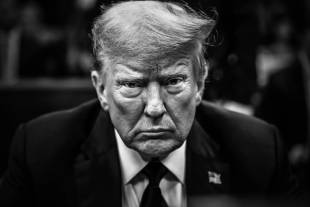
Morning Shots via The Bulwark, Political Opinion: Send It In, Jerome! Andrew Egger, Cathy Young and Jim Swift, Jan. 13, 2026. The Fed chair finally learns that the only way to deal with Trump is to push back.
Also: The federal government might have blocked attempts by local law enforcement to investigate the ICE killing of Renee Good last week, but don’t worry: The feds are on the case, and we’re sure they’re doing a swell job.
They’re certainly being thorough: The New York Times reports that the FBI investigation of the matter is looking not only into shooter Jonathan Ross’s actions, but also into Good’s “possible connections to activist groups.” They wouldn’t want to miss any further opportunities to smear her name. Happy Tuesday.
 New York Times, Six Prosecutors Quit Over Push to Investigate ICE Shooting Victim’s Widow, Ernesto Londoño, Jan. 13, 2026. Joseph H. Thompson, a career federal prosecutor who was the acting U.S. attorney for Minnesota last year, was among those who resigned as the Justice Department sought to examine the woman’s supposed ties to activist groups.
Six federal prosecutors in Minnesota resigned on Tuesday over the Justice Department’s push to investigate the widow of a woman killed by an ICE agent and the department’s reluctance to investigate the shooter, according to people with knowledge of their decision.
Joseph H. Thompson, who was second in command at the U.S. attorney’s office and oversaw a sprawling fraud investigation that has roiled Minnesota’s political landscape, was among those who quit on Tuesday, according to three people with knowledge of the decision.
Mr. Thompson’s resignation came after senior Justice Department officials pressed for a criminal investigation into the actions of the widow of Renee Nicole Good, the Minneapolis woman killed by an ICE agent on Wednesday.
Mr. Thompson, 47, a career prosecutor, objected to that approach, as well as to the Justice Department’s refusal to include state officials in investigating whether the shooting itself was lawful, the people familiar with his decision said.
The other senior career prosecutors who resigned include Harry Jacobs, Melinda Williams and Thomas Calhoun-Lopez. Mr. Jacobs had been Mr. Thompson’s deputy overseeing the fraud investigation, which began in 2022. Mr. Calhoun-Lopez was the chief of the violent and major crimes unit.
Mr. Thompson, Mr. Jacobs, Ms. Williams and Mr. Calhoun-Lopez declined to discuss the reasons they resigned. The Justice Department did not immediately respond to a request for comment.
The fraud cases, which involve schemes to defraud safety net programs managed by state agencies, were the chief reason the Trump administration launched an immigration crackdown in the state. The vast majority of defendants charged in the cases are of Somali origin.
Tuesday’s resignations followed tumultuous days at the U.S. attorney’s office in Minnesota as prosecutors struggled to manage the outrage over Ms. Good’s killing, which set off angry protests in Minnesota and across the nation.
After Ms. Good was shot, the Justice Department decided to forgo a civil rights investigation that would establish whether the ICE officer’s use of deadly force was justified. That decision led several career prosecutors at the department’s civil rights division in Washington to resign in protest, MS Now reported on Monday.
Instead, the Justice Department launched an investigation to examine ties between Ms. Good and her wife, Becca, and several groups that have been monitoring and protesting the conduct of immigration agents in recent weeks. Shortly after Wednesday’s fatal shooting, Kristi Noem, the secretary of homeland security, referred to Ms. Good as a “domestic terrorist.”
Becca Good said in a statement last week that she and her wife had “stopped to support our neighbors” when they got into a tense confrontation with ICE agents that led to the shooting. “We had whistles,” Becca Good wrote. “They had guns.”
Mr. Thomson strenuously objected to the decision not to investigate the shooting as a civil rights matter, and was outraged by the demand to launch a criminal investigation into Becca Good, according to the people familiar with the developments, who were not authorized to discuss them publicly.
Mr. Thompson had originally set out to investigate the shooting in partnership with the Minnesota Bureau of Criminal Apprehension, a state agency that reviews police shootings. Senior Justice Department officials overruled the decision to cooperate with the state agency.
Drew Evans, the superintendent of the bureau, called Mr. Thompson’s departure a major setback for the effort to root out fraud in the state and for public safety.
“We’re losing a true public servant,” said Mr. Evans. “We really need professional prosecutors.”
“The absence of a credible and comprehensive investigation into Ms. Good’s killing stands to “undermine trust in our public safety agencies,” Mr. Evans added.
 U.S. Defense Secretary Peter Hegseth, left, U.S. Sen. Mark Kelly (Democrat from Arizona), center and President Trump (File photos).
Letters from an American, Historical Commentary: January 12, 2026 [Kelly Fights Back], Heather Cox Richardson, right, Jan. 13, 2026. Today, Democratic senator Mark Kelly of Arizona sued Defense Secretary Pete Hegseth, the Defense Department, Navy Secretary John Phelan, and the Navy Department for violating his First Amendment rights, the Speech and Debate Clause of the U.S. Constitution, the separation of powers, due process, the law that establishes ranks for retired commissioned officers (10 USC 1370), and the Administrative Procedure Act that establishes the ways in which agencies can make regulations.
While this sounds complicated, at its heart it’s about the attempt of the Donald J. Trump administration to trample Congress and create a military loyal to Trump alone.
Defense Secretary Hegseth came to his position from his job as a weekend host on the Fox News Channel. Before that, he served in the Army Reserve and the National Guard but, as Kelly and Senator Tammy Duckworth (D-IL) noted in a Military Times op-ed questioning Hegseth’s fitness for the position, he never rose to a command position and his “track record falls short of military standards.” He is the least-experienced defense secretary in U.S. history.
His attack on Kelly, who is a retired Navy officer and astronaut, began after Kelly and five other Democrats in Congress—Senator Elissa Slotkin (D-MI), and Representatives Chris Deluzio (D-PA), Maggie Goodlander (D-NH), Chrissy Houlahan (D-PA), and Jason Crow (D-CO)—all of whom are veterans, released a video on November 18, 2025, in which they warned members of the military and the intelligence community that the administration was “pitting our uniformed military and intelligence community professionals against American citizens.”
“Like us, you all swore an oath to protect and defend this Constitution,” the video continued. “Right now, the threats to our Constitution aren’t just coming from abroad, but from right here at home. Our laws are clear: You can refuse illegal orders; you must refuse illegal orders. No one has to carry out orders that violate the law or our Constitution. We know this is hard and that it’s a difficult time to be a public servant. But whether you’re serving in the CIA, the Army, our Navy, the Air Force, your vigilance is critical.”
The lawmakers concluded: “Know that we have your back, because now, more than ever, the American people need you. We need you to stand up for our laws, our Constitution, and who we are as Americans.”
The video simply reiterated the law, but White House deputy chief of staff Stephen Miller promptly posted on social media, “Democrat lawmakers are now openly calling for insurrection,” and by the next day, Trump was reposting comments that called for the lawmakers to be arrested, “thrown out of their offices,” “frog marched out of their homes at 3:00 AM with FOX News cameras filming the whole thing,” and “charged with sedition.” He reposted “Insurrection. TREASON!” and a message from a user who wrote: “HANG THEM GEORGE WASHINGTON WOULD!!”
On November 24, the “Department of War” posted on social media that it was investigating Kelly, after “serious allegations of misconduct.” It suggested that Kelly could be recalled to active duty “for court-martial proceedings or administrative measures.”
Over a photograph of the medals on his uniform, Kelly, left, responded on social media: “When I was 22 years old, I commissioned as an Ensign in the United States Navy and swore an oath to the Constitution. I upheld that oath through flight school, multiple deployments on the USS Midway, 39 combat missions in Operation Desert Storm, test pilot school, four space shuttle flights at NASA, and every day since I retired—which I did after my wife Gabby was shot in the head while serving her constituents.
“In combat, I had a missile blow up next to my jet and flew through anti-aircraft fire to drop bombs on enemy targets. At NASA, I launched on a rocket, commanded the space shuttle, and was part of the recovery mission that brought home the bodies of my astronaut classmates who died on Columbia. I did all of this in service to this country that I love and has given me so much.
“Secretary Hegseth’s tweet is the first I heard of this. I also saw the President’s posts saying I should be arrested, hanged, and put to death.
“If this is meant to intimidate me and other members of Congress from doing our jobs and holding this administration accountable, it won’t work. I’ve given too much to this country to be silenced by bullies who care more about their own power than protecting the Constitution.”
Charlotte Clymer, who writes Charlotte’s Web Thoughts, walked readers through Kelly’s citations. They include the Navy Pilot Astronaut Badge, earned by fewer than 200 service members, and the NASA Distinguished Service Medal. As Clymer notes, the NASA Distinguished Service Medal is “the highest award bestowed by NASA and one of the rarest awards in the federal government.” Since the medal was created in 1959, it has been awarded fewer than 400 times.

On January 5, Hegseth [shown above in a collage of file photos] issued a formal censure of Kelly, saying Kelly’s call for military personnel to refuse unlawful orders “undermines the chain of command,” “counsels disobedience,” “creates confusion about duty,” “brings discredit upon the armed forces,” and “is conduct unbecoming an officer.” Hegseth said he was directing the secretary of the Navy to look into reducing Kelly’s retirement grade.
Kelly responded: “Over twenty-five years in the U.S. Navy, thirty-nine combat missions, and four missions to space, I risked my life for this country and to defend our Constitution—including the First Amendment rights of every American to speak out. I never expected that the President of the United States and the Secretary of Defense would attack me for doing exactly that.
“My rank and retirement are things that I earned through my service and sacrifice for this country. I got shot at. I missed holidays and birthdays. I commanded a space shuttle mission while my wife Gabby recovered from a gunshot wound to the head—all while proudly wearing the American flag on my shoulder. Generations of servicemembers have made these same patriotic sacrifices for this country, earning the respect, appreciation, and rank they deserve.
“Pete Hegseth wants to send the message to every single retired servicemember that if they say something he or Donald Trump doesn’t like, they will come after them the same way. It’s outrageous and it is wrong. There is nothing more un-American than that.
“If Pete Hegseth, the most unqualified Secretary of Defense in our country’s history, thinks he can intimidate me with a censure or threats to demote me or prosecute me, he still doesn’t get it. I will fight this with everything I’ve got—not for myself, but to send a message back that Pete Hegseth and Donald Trump don’t get to decide what Americans in this country get to say about their government.”
Kelly’s lawsuit notes that the First Amendment prohibits the government from retaliating against those engaging in protected speech and that the Constitution’s protection of the speech and debate of lawmakers provides additional safeguards. Indeed, the lawsuit says, “never in our nation’s history has the Executive Branch imposed military sanctions on a Member of Congress for engaging in disfavored political speech.”
If the court permits that unprecedented step, the lawsuit argues, it would allow the executive branch to punish members of Congress for engaging in their duty of congressional oversight.
Kelly asked the court “to declare the censure letter, reopening determination, retirement grade determination proceedings, and related actions unlawful and unconstitutional; to vacate those actions; to enjoin their enforcement; and to preserve the status of a coequal Congress and an apolitical military.”
The warning Kelly and the other five Democratic lawmakers offered to military personnel that they must refuse illegal orders took on renewed meaning this evening. Charlie Savage, Eric Schmitt, John Ismay, Julian E. Barnes, Riley Mellen, and Christiaan Triebert of the New York Times reported that when the U.S. military attacked a small boat apparently coming from Venezuela on September 2, 2025, the first such attack of what now number at least 35, it used a secret aircraft that had been disguised to look like a civilian plane.
The journalists report that disguising a military aircraft to look like a civilian plane is a war crime called “perfidy.” “Shielding your identity is an element of perfidy,” former deputy judge advocate general of the U.S. Air Force retired Major General Steven J. Lepper told the reporters. “If the aircraft flying above is not identifiable as a combatant aircraft, it should not be engaged in combatant activity.” The Defense Department manual concerning the law of war explains that combatants must distinguish themselves from the civilian population and may not “kill or wound the enemy by resort to perfidy.”
It explicitly prohibits “feigning civilian status and then attacking.”
Targeting the Clintons / Epstein Files / Trump Vengeance


New York Times, Facing Contempt Threat, Clintons Refuse to Testify in Epstein Inquiry, Annie Karni, Jan. 13, 2026. The couple denounced the efforts by Representative James R. Comer, the chairman of the Oversight Committee, to force them to appear, setting the stage for a legal battle.
Bill and Hillary Clinton (shown above in rebuttal quote-graphics and in a file photo) refused on Tuesday to testify in the House’s Jeffrey Epstein investigation, escalating a monthslong battle with Representative James R. Comer, Republican of Kentucky, and effectively daring him to follow through on his threats to hold them in contempt of Congress.
“Every person has to decide when they have seen or had enough and are ready to fight for this country, its principles and its people, no matter the consequences,” the Clintons wrote in a lengthy letter to Mr. Comer, right, which was obtained by The New York Times. “For us, now is that time.”
Mr. Comer’s relentless efforts to force them to testify reflect his overall approach to his panel’s Epstein inquiry. As the chairman of the House Oversight Committee, Mr. Comer has sought to shift the focus from President Trump’s ties to the convicted sex offender and his administration’s decision to close its investigation into the matter without releasing key information. Instead, he has sought to shift the spotlight onto prominent Democrats who once associated with Mr. Epstein and his longtime companion Ghislaine Maxwell.
Mr. Comer has repeatedly threatened to hold the Clintons in contempt if they failed to appear for live depositions behind closed doors, typically a first step in referring someone to the Justice Department for prosecution. He had set a deadline of Tuesday for Mr. Clinton to appear, and Wednesday for Mrs. Clinton.
But hours before the deadline, the Clintons made clear that they had no intention of presenting themselves on Capitol Hill to be questioned by Mr. Comer and members of his committee. They did so by submitting an eight-page legal letter laying out why they considered the subpoenas “invalid and legally unenforceable,” then followed up with a scorching missive that they signed jointly, promising to fight Mr. Comer on the issue for as long as it took.
In the letter, the Clintons noted that they had proactively provided Mr. Comer with sworn statements similar to ones he had accepted from seven or eight other former law enforcement officials he had also subpoenaed and then excused from testifying before the committee. The Clintons have repeatedly said they have no knowledge relevant to the investigation.
But on Tuesday, they went further, publicly going to war against Mr. Comer on the matter with moves that appeared to lay the predicate for what could be a messy legal battle. In a letter that touched on Mr. Trump’s immigration crackdown, his use of the Justice Department to prosecute his enemies and even Republicans’ opposition to extending health care subsidies, the Clintons accused Mr. Comer of potentially bringing Congress to a halt to pursue a politically driven process “literally designed to result in our imprisonment.”
“We are confident that any reasonable person in or out of Congress will see, based on everything we release, that what you are doing is trying to punish those who you see as your enemies and to protect those you think are your friends,” they wrote.Editors’ PicksShould I Scrub the Evidence That Our Dad Had a Family Before Ours?How to Avoid Stomach Trouble When You Travel5 Workouts to Ease Pain and Prevent Injury
In the letter, the Clintons said they had anticipated that Mr. Comer would still direct his committee to seek to hold them in contempt, and they expected him to “release irrelevant, decades-old photos that you hope will embarrass us.”
Indeed, on Tuesday morning Mr. Comer was planning to hold a deposition at the time that Mr. Clinton had been summoned, with a chair left empty to illustrate his absence, and move quickly to hold the couple in contempt should he fail to show up.
“The Clintons have not confirmed their appearances for their subpoenaed depositions,” a spokeswoman for the House Oversight Committee said in a statement. “If the Clintons do not appear for their depositions, the House Oversight Committee will begin contempt of Congress proceedings.”
The Clintons said in their letter that they anticipated Mr. Comer would argue that the decision about whether to testify was not theirs to make.
“But we have made it,” they wrote. “Now you have to make yours.”
The Clintons had worked to beef up their legal team before Mr. Comer’s deadline. They brought on Ashley Callen, co-chair of the congressional investigations practice at Jenner & Block, who had previously worked as general counsel for Speaker Mike Johnson and other top Republicans, to interface with G.O.P. members on the House Oversight Committee. Ms. Callen also previously worked as a deputy staff director on the House Oversight Committee under Mr. Comer.
They also sought assistance from Abbe Lowell, the veteran lawyer famous for representing clients in the middle of political scandals.
Before that, the Clintons had been working behind the scenes for months to avoid appearing on Capitol Hill to testify. Their longtime lawyer David E. Kendall previously sent three letters explaining in detail his argument that the Clintons should be required to provide only sworn statements to the committee.
In a more aggressive legal letter sent to Mr. Comer at 11 p.m. on Monday, Ms. Callen and Mr. Kendall wrote that the subpoenas were “invalid and legally unenforceable” because they did not have any valid legislative purpose. They also said they were “unwarranted because they do not seek pertinent information, and an unprecedented infringement on the separation of powers.”
Mr. Comer’s insistence over months that the Clintons appear, the lawyers said, “brings us toward a protracted and unnecessary legal confrontation.”
Citing specific case law about congressional subpoenas and constitutional precedents, the lawyers wrote that the subpoenas were nothing more than “an effort to publicly harass and embarrass President and Secretary Clinton and an impermissible usurpation of executive law enforcement authority.”
The committee’s attempt to compel the Clintons to testify in person ran afoul of limitations on Congress’ investigative power that have been outlined in cases before the Supreme Court, the lawyers said.
And they noted that the Supreme Court had stated in the past that there must be a “nexus” between the investigations’ legislative aims and the witnesses from whom information was sought. Mr. Comer had not established why the Clintons’ appearance would be relevant, they said.
The lawyers encouraged Mr. Comer to “de-escalate this dispute.”
Global News
Wayne Madsen Report, Commentary: Denmark's allies are deploying military units to Greenland to protect it from a U.S. invasion, Wayne Madsen, left, Jan. 13, 2026. Denmark's allies are deploying military units to Greenland to protect it from a U.S. invasion. NATO is preparing for the unthinkable: going to war with the United States.
Denmark’s NATO allies are either deploying or preparing to send military units to Greenland to deter or block a potential U.S. invasion, according to multiple confirmed news reports. The forces under discussion include British, German, French, and broader NATO assets, with Denmark activating Cold War “shoot first” rules of engagement.
Thanks for reading Wayne Madsen Report! Subscribe for free to receive new posts and support my work.Subscribed
There are increasing calls within European defense circles for at least one European brigade to be stationed in Greenland under Danish military command. Greenland’s government is also calling for NATO defensive guarantees for the self-governing territory of Denmark.
British officials have met with Germany and France to prepare deployments. The United Kingdom is preparing to send ground troops, Royal Navy warships, and Royal Air Force aircraft to Greenland to deter U.S. action and reinforce Arctic security.
Germany is part of a Greenland trilateral planning group with the UK and France. Germany is also planning to deploy warships and military aircraft to Greenland. France is expected to contribute naval and air assets to the Greenland mission. France’s elite mountain troops (the Chasseurs Alpins) are training in the Alps for a future ski expedition to Greenland. The French Alpine unit deployment to Greenland is scheduled for March.
Although Poland is dedicating its military forces to NATO’s eastern flank to defend against Russia and Belarus, it may send some token forces to Greenland as a show of support to Denmark.
Denmark is investing $13.8 billion to rearm Greenland and expand Arctic defense capabilities. Danish troops, naval vessels, and military aircraft are under standing orders to immediately counterattack any invading force without waiting for political approval from Copenhagen.
Canadian Foreign Affairs Minister Anita Anand has announced that Canada is opening a large consulate in the Greenlandic capital of Nuuk in the next few weeks. Canada is also urging NATO to concentrate more efforts in the Arctic and North Atlantic, including Greenland and the Canadian Arctic. Canada’s Governor General, Mary Simon, is the first Indigenous (Inuk) head of state. Greenland’s Inuit population are descendants from the Thule people who originally migrated from morthern Canada. Although her position is largely ceremonial, Simon is emerging as an influential ally for Greenland in diplomatic circles. Simon and Anand are expected to attend the opening of the consulate early next month. Greenland is also expected to open a diplomatic mission in Ottawa.
A recent poll in the Netherlands resulted in 54% of respondents in favor of deploying Dutch troops to Greenland to protect it from a U.S. invasion. Norway, Sweden, and Finland favor an increased NATO presence in the Arctic, including Greenland, and are prepared to contribute military forces for Greenland’s defense. Portuguese Defense Minister Nuno Melo has indicated that Portuguese military forces in Greenland is “among the issues” under consideration by NATO.
Lithuanian Foreign Minister Kestutis Budrys has said his country is prepared to contribute to a Nordic-Baltic force for Arctic security. Lithuania has good reason to be concerned about the U.S. military threat to Greenland. Lithuania is building a new EU/European Space Agency next-generation optical laser‑communication ground station (OGS) in Kangerlussuaq, Greenland. The Lithuanian space‑tech company Astrolight is building the station with support from the ESA and Denmark. It will become Europe’s northernmost laser ground station, designed to secure and accelerate satellite data‑downlink for the EU’s space systems. Greenland's Arctic desert lacks clouds to interfere with laser communications with space Credit: Astrolight Greenland was chosen by Europe’s space agency because of its lack of clouds that would interfere with its laser links
The new OGS station is designed to reduce EU reliance on the Arctic satellite ground station in the Norwegian territory of Svalbard, through which 80% of Europe’s satellite data currently flows. Svalbard is exposed to Russian and Chinese activity and relies on a single undersea cable. The station may also be a U.S. military target in the event of a U.S. invasion. The ESA’s satellite constellation is considered a competitor of Elon Musk’s Starlink. Danish intelligence and police have buyers’ remorse over their use of Palantir
In yet another sign that Denmark considers itself a military and intelligence target of the United States, the Danish Security and Intelligence Service (Politiets Efterretningstjeneste or PET) and the Danish national police are moving away from reliance on the U.S. firm Palantir’s Gotham data integration software. Danish intelligence uses the Palantir-centric system, while the police use POL-INTEL, also based on Palantir software. Palantir was co-founded by the far-right and Trump-supporting Peter Thiel. Palantir is increasingly being seen as a U.S. Trojan horse that severely compromises the national security of countries that embed its software in their sensitive data systems.
The Triad via The Bulwark, Political Opinion: The Nazi Slogans Are Not an Accident, Jonathan V. Last, Jan. 13, 2026. How many Americans actually want a race war?
During the 2024 campaign, Donald Trump promised to deport every illegal immigrant who was a rapist, murderer, or thief. He also promised to deport 20 million immigrants. Some voters believed the first promise; other voters believed the second.
Because people are stupid, that first group of voters believed that there were 20 million undocumented immigrants who have committed felonies. This is not possible. The total number of people in jail in America today—this includes federal, state, local, and tribal land prisons—is just under 2 million. The number of undocumented immigrants who have committed serious crimes cannot be 10x the entire prison population of the United States. If it were, then daily life in America would look like Escape from New York.
So some Trump voters were duped owing to their general ignorance and/or innumeracy.
But others were not. Others signed up for Trump because of his second promise (the 20 million deportations) and viewed the first promise (about deporting only criminals) as the pap necessary to get the suckers onboard.
There are two crucial questions about these two groups. The first is:
What is their relative size? What percentage of Republican voters were tricked into voting for Trump’s immigration policies versus what percentage are getting exactly what they wanted?
Would you like to guess? Go ahead. I promise that whatever you’re thinking, it isn’t dark enough.
Here’s a survey tracking Republican approval of Trump’s immigration policies (the top line, in red) over most of 2025: A consistent level of support around 80 percent. Now here is the first poll conducted after the killing of Renee Good:
Even after the killing of an unarmed American citizen, a total of 80 percent of Republicans approve of what ICE is doing and 53 percent of Republicans strongly approve.
It seems pretty clear that, at best, one in five Trump voters were duped. The majority of them are getting exactly what they wanted.
Now if Trump were to lose the support of 20 percent of Republicans voters—or even 14 percent—it would be meaningful for Republican electoral prospects. Which is nice.
The problem is that having 80 percent of Republican voters actively supporting a fascist race war is meaningful for our societal prospects.
Which brings us to the second question: How are these groups distributed through the elite positions of power in government? And here it seems that many of the Republicans most invested in a race war have a great deal of power. Like, for instance, Vice President JD Vance, Deputy Chief of Staff Stephen Miller, and Secretary of Homeland Security Kristi Noem.
At the elite levels, even the idea of 20 million deportations is too little. Here’s a tweet from the Department of Homeland Security on New Year’s Eve:
100 million deportations?
There are 43 million foreign-born Americans. Most of them are legal immigrants. In order to perform 100 million deportations, DHS would have to round up every immigrant of any status—even naturalized citizens—and then also snatch 57 million American who are citizens by birth and deport them, too.
Want to guess who those other 57 million Americans might be?
This week the Department of Labor published this:
Of course, the slogan sounds better in the original German.
Oh, and don’t forget the Department of Labor’s heroic propaganda posters depicting the American worker in a very specific way.
 On the one hand, it feels weird to say that the U.S. government is attempting some low-key ethnic cleansing.
On the other hand, the reality is that we have a masked secret police force going door-to-door attempting to kidnap brown people; one government agency publicly daydreaming about deporting 100 million people; and another government agency saying that the ideal worker is a 20-year-old white guy.
More On U.S. Governance, Politics
New York Times, The House Republican Majority Is Down to Almost Nothing, Ashley Wu and Annie Karni, Jan. 13, 2026. Unexpected vacancies have whittled the G.O.P.’s edge to just a couple of votes, leaving Speaker Mike Johnson with almost no margin for leading the chamber.
A surprise resignation and a sudden death have left House Republican leaders starting the new session of Congress with their already slim majority down to the bare minimum of 218 seats.How the balance of power has changed since the 2024 election
Speaker Mike Johnson, right, is now able to afford just two defections on any party-line vote if all members are present — and in an election year, they seldom are. In the coming weeks, his situation is expected to become worse, whittling down the margin to a single vote.
It is the continuation of a dynamic that has plagued House Republicans since President Trump took office in 2025: A majority so small that it gives outsize power to any one member who wants to buck the party. It makes governing difficult, if not impossible.
When Republicans cemented control of the House in the 2024 elections, they did so with only a small edge over Democrats: Republicans held 220 seats compared with 215 for the Democrats. They could afford only two defections to still pass legislation.
After the resignation late last year of Representative Marjorie Taylor Greene, Republican of Georgia, and the sudden death last week of Representative Doug LaMalfa, Republican of California, the current breakdown is 218 Republicans to 213 Democrats.
The edge is likely to dwindle further after a special election later this month in Texas to replace Representative Sylvester Turner, a Democrat who died last March. Democrats are expected to pick up an additional seat there, bringing their total to 214. At that point, Mr. Johnson would be able to afford only one defection on a party-line vote and still pass legislation.
Even a few defections can deadlock lawmakers
The current 218-213 Republican majority in the House will shrink to 218-214 if Democrats gain a seat later this month, as they are expected to.
An election on April 16 in New Jersey to fill the seat of former Representative Mikie Sherrill, a Democrat who was elected governor, is expected to provide Republicans no relief. The solidly blue district is expected to remain in Democratic hands, nudging the party breakdown to 218 Republicans and 215 Democrats, still a one-vote margin for the G.O.P.
Most major legislation cannot even come to the floor without a House vote to set the ground rules for debate. Without a working majority, Republicans effectively have no control over the floor and no ability to move their agenda.
And under House rules, a tie vote fails. Republicans’ razor-thin margin allows for few defections
The result of it all has been a historically unproductive session of Congress so far: The House set a grim record in 2025, casting the fewest votes of the 21st century during the first session of a two-year Congress.
It’s worth noting that Mr. Johnson has discretion over when he swears in a new member of the House. He waited seven weeks to do so after Representative Adelita Grijalva, Democrat of Arizona, won her seat in a special election, claiming he could not seat her while the House was out of session. (There is no such rule.)
But Mr. Johnson’s one-vote margin is often not enough when he has to contend with Representative Thomas Massie, Republican of Kentucky, who often breaks with his party on key votes and has been so impervious to pressure that Republican leaders and Mr. Trump himself no longer bother to whip his vote.
The tight margins mean that attendance will be a critical and continuing issue on both sides of the aisle — especially in an election year when many House members are running for statewide offices and have turned their attention away from Washington and toward meeting potential constituents at home.
And they have rendered Mr. Johnson’s weak grip on a demoralized House Republican conference even weaker as the party looks anxiously toward midterm elections in which their control of the chamber is at stake.
“A lot of times they’ll say, ‘I wish Mike were tougher’ — he’s tough,” Mr. Trump said while addressing House Republicans last week at a party retreat at the Kennedy Center. “But you can’t be tough when you have a majority of three — and now, sadly, a little bit less than that.”

New York City Mayor Zohran Mamdani, with his wife by his side at right, takes the oath of office fromNew York State Attorney Gen. Letitia James to become the city's mayor during a ceremony in an historic subway station beginning at 12:01 a.m. on New Year's Day (New York Times photo).
Morning Shots via The Bulwark, Political Opinion: Left-Wing Baggage in New York, Cathy Young, Jan. 13, 2026. Zohran Mamdani’s tenure as mayor of New York, which began on New Year’s Day, has drawn a lot of attention partly because he is the Democratic party’s great left hope—a socialist who won by tempering his radical rhetoric and offering progressivism with a young, inspiring, pragmatic face.
Yet the beginnings of the Mamdani administration illustrate the pitfalls of going left (even aside from the resurgence of noxious, if vague lefty clichés like “the warmth of collectivism” in his inaugural speech). Take the controversy over housing activist Cea Weaver, appointed to run the new Office to Protect Tenants.
Right-wingers sling the word “communist” at anyone who supports even a modest safety net for the poor. But in Weaver’s case, the label . . . kinda fits? Back in 2017 and 2018, she posted things like “elect more communists” and “seize private property” on social media. Another gem, from 2019: “Private property including and kind of ESPECIALLY homeownership is a weapon of white supremacy masquerading as ‘wealth building’ public policy.” (These aren’t just the immature rants of a young activist; Weaver, now age 37, was an adult when she made these posts.)
A more detailed look at her views can be found in an interview she gave to Reason in 2021: She wants a world in which all housing is owned by “a collective” and everyone pays 30 percent of their income in rent—zero for those with no income. Asked about funding, a smiling Weaver confidently replied, “The federal government prints money. The federal government can provide money for this.” She won’t be setting economic policy for Mamdani, but it would be nice if even tenant advocates in government posts had some clue about economics.
Add to this a history of comments channeling the cringeworthy racial identity politics that became popular on the left circa 2014: calls for “no more white men in office”; swipes at “white women [with] tote bags that say ‘make America rational again’”; a snarky post about “white boy children rapping Eminem” with the aside, “i dunno why we keep procreating.” Despite what Weaver’s detractors on the right have suggested, these posts are more easily understood as (thankfully no longer trendy) performative white-bashing by a white woman from a privileged background, rather than as genuine racial animus. But even so, Weaver’s past rhetoric raises uncomfortable questions about possible favoritism toward minorities in Weaver’s city post. And it’s undeniable that such rhetoric is noxious and deeply off-putting to most “normies”—of any race or ethnicity.
Mamdani stands by Weaver, and she has offered a mild non-apology about “regretful tweets,” which she says she would not have made today.
Right now, the survival of the American republic appears to depend on Democrats’ ability to appeal to voters beyond their base, including non-urban non-college-educated non-Democratic-primary-voting white people. Will elevating Mamdani help with that task? That depends on his policies. To the extent that he brings people like Weaver along with him, it seems doubtful.
AROUND THE BULWARK
Quick Hits
CLOWNS ALL THE WAY DOWN: Donald Trump’s attempts to keep his most reliable lapdogs in power at key U.S. attorney’s offices has been throwing those offices into chaos for months. And things are only getting crazier in the Eastern District of Virginia, where the Justice Department is fighting to restart its prosecution of former FBI Director James Comey.
The case against Comey was already dismissed once, as you probably recall, when a judge ruled that Trump’s former personal lawyer, Lindsey Halligan, whom he had installed as acting U.S. attorney to bring the case, had been invalidly appointed. More recently, the Justice Department had been trying to get Halligan’s former deputy, Robert McBride, to restart the prosecution—but now, the New York Times reports, they’ve abruptly moved to fire McBride instead:
The administration has tried to restart the Comey prosecution and wanted Mr. McBride to lead that effort, according to people familiar with the matter who spoke on the condition of anonymity to describe internal discussions. Mr. McBride said he could not do that while also running the prosecutor’s office as the first assistant U.S. attorney—he could do one or the other, these people said.
One person familiar with the events disputed that explanation, stating that Mr. McBride had been dismissed because he had secretly met with judges in the district to try to persuade them to appoint him as U.S. attorney. Mr. McBride, that person added, had resisted pursuing immigration-related investigations related to local jurisdictions’ sanctuary policies and drug enforcement. The person also said Justice Department leaders supported the decision to fire Mr. McBride.
The Times article seems to suggest that the DoJ fired McBride because he was tacitly endorsing the ruling that Halligan was invalidly appointed by courting the judges who by law are tasked with picking the interim U.S. attorney until the Senate confirms a full-time official. Meanwhile, as the Trump administration appeals that ruling, Halligan has seemingly gone about her business in defiance of it, continuing to sign court documents above the title of which she was recently stripped. “A federal judge in Richmond, Va., has given Ms. Halligan until Tuesday to explain in writing why doing so is not a ‘false or misleading statement,’” the Times reports. “Continuing to do so, the judge suggested, could lead to disciplinary measures.”
ENVIRONMENTAL POLLUTION AGENCY: The basic formula that has long driven environmental regulation in the United States balances the economic costs of new regulations against the potential health benefits of restricting pollutants. But that’s changing, the New York Times reports, due to a remarkable new Environmental Protection Agency policy:
Under President Trump, the E.P.A. plans to stop tallying gains from the health benefits caused by curbing two of the most widespread deadly air pollutants, fine particulate matter and ozone, when regulating industry, according to internal agency emails and documents reviewed by The New York Times. . . .
The change could make it easier to repeal limits on these pollutants from coal-burning power plants, oil refineries, steel mills and other industrial facilities across the country, the emails and documents show. That would most likely lower costs for companies while resulting in dirtier air.
Read the whole thing.
LABOR (SECRETARY) OF LOVE: Labor Secretary Lori Chavez-DeRemer hasn’t been a spotlight-hogging member of the president’s cabinet. But new reports from the New York Post and Bloomberg Law suggest she may soon be making a few more headlines. Here’s Bloomberg:
Two senior aides to Labor Secretary Lori Chavez-DeRemer are on administrative leave after the Labor Department inspector general launched an investigation into claims that Chavez-DeRemer engaged in an inappropriate relationship with a staffer and committed travel fraud, according to a person with direct knowledge of the situation.
Chief of staff Jihun Han and deputy chief of staff Rebecca Wright were both put on leave Monday amid the investigation into DeRemer’s conduct, according to the person with knowledge, who also confirmed the existence of the probe.
The IG complaint, first reported by the New York Post, accuses Han and Wright of fabricating work trips for DeRemer so she could spend time with family and friends. She allegedly invited a staffer to her hotel room at least twice, in addition to at least three other encounters at her Washington, D.C. apartment, the NY Post reported.
Oh, so spending quality time with family, friends, and subordinates is a crime now?
Media, Education, Culture, Culture Wars
Popular Information, Accountability Journalism: The truth about being a white man in America, Judd Legum, right, Jan. 13, 2026. In an interview last week with reporters from the New York Times, President Trump claimed that the civil rights movement resulted in discrimination against white men. According to Trump, white men have been “very badly treated,” “not invited” to attend college, and excluded from jobs:
New York Times: So, do you believe, sir, that the civil rights protections that Americans had, starting in the 1960s and so forth, resulted ultimately in the discrimination against white men?
Trump: Well, I think that a lot of people were very badly treated. White people were very badly treated, where they did extremely well and they were not invited to go into a university or a college. So I would say in that way, I think it was unfair in certain cases. I think it was also, at the same time, it accomplished some very wonderful things, but it also hurt a lot of people — people that deserve to go to a college or deserve to get a job were unable to get a job. So it was, it was a reverse discrimination.
This isn’t just Trump speaking off the top of his head. The idea that white men are the primary victims of discrimination in the United States is driving administration policy.
Last month, Equal Employment Opportunity Commission (EEOC) Chair Andrea Lucas posted on X and encouraged white men who have experienced discrimination at work to file a complaint with the agency. Lucas said she was focused on eliminating discrimination “against white male employees and applicants.”
Trump is taking a more aggressive stance on alleged discrimination against white men in his second term. In August 2018, during Trump’s first term, Darren J. Beattie was fired as a White House speech writer after it was revealed “he spoke at a white nationalist conference in 2016.”
In February 2025, Beattie was hired by the new Trump administration as the top public diplomacy official at the State Department. He was brought on a couple of months after posting that “[c]ompetent white men must be in charge if you want things to work.” Beattie, mirroring Trump’s claim, argued that white men were being excluded from positions of power to protect “the feelings of women and minorities.”
America is a big place and there are undoubtedly some instances of “reverse discrimination” against white men in the country. But Trump’s claim that, as a group, white men are discriminated against in higher education and the job market is flatly false.
The myth of anti-white bias in higher education
Trump claimed that white men who “did extremely well” in high school are “not invited to go into a university or a college.” The opposite is true. Being a white man is a significant advantage when applying to colleges.
As a whole, white people are overrepresented among admitted and enrolled students, according to data analyzed by researchers from the Urban Institute and the University of Southern California. In 2024, the data shows, white people represented 40.7% of the applicants but 53% of the enrolled students. In contrast, Black applicants accounted for 8.7% of the applicant pool but just 5.8% of enrolled students. Hispanic applicants accounted for 17.4% of applicants and 17.1% of enrolled students.
Male students receive additional advantages. Most college applicants are female, so many institutions admit a higher percentage of men to ensure their student population is more evenly divided by gender. For example, in 2023, Brown University’s acceptance rate was 6.9% for male applicants and 4.2% for female applicants. That means men were “64% more likely to get into Brown” than women.
White men have an even larger leg up at selective institutions that practice “legacy“ admissions — giving preference to the children of graduates. Between 2014 and 2019 at Harvard, “the acceptance rate for legacy applicants was 33.6 percent, dwarfing the school’s overall acceptance rate of just six percent.” Over this time period, 69.3% of legacy applicants at Harvard were white.
Overall, 43% of white admits to Harvard were athletes, legacies, those on the dean’s interest list, or children of faculty and staff (ALDC) — all groups that get an advantage in the admission process. Among African American, Asian American, and Hispanic Harvard admits, less than 16% are ALDC. A study by three academic researchers found “roughly three-quarters of white ALDC admits would have been rejected if they had been treated as white non-ALDCs.”The myth of anti-white bias in the workplace
It is easier to get a job in America if the employer thinks you are white. Researchers applied for jobs at 100 of the largest companies using made-up resumes with equivalent qualifications. They changed some of the names, however, to suggest they were white or Black — submitting similar resumes for “Lamar” and “Adam,” for example. The study found that “employers contacted the presumed white applicants 9.5 percent more often than the presumed Black applicants.”
At every education level, white unemployment is significantly lower than Black unemployment. According to 2022 data from the U.S. Bureau of Labor Statistics, “the Black rate is twice, or close to two times, the White rate in all cases except for individuals with advanced degrees.”
That same data shows that the “overall Black unemployment rate is regularly higher than the unemployment rate just for White high school dropouts.”
Among Americans who have a job, white men are paid more. In the third quarter of 2025, white men had average weekly earnings of $1,362, dwarfing white women ($1,103), Black men ($1,032), Black women ($927), Latino men ($994), and Latina women ($890).
White men continue to dominate the top of the employment food chain. In companies in the S&P 100, white men constitute about one-third of the workforce. However, they hold 46% of executive positions and 37% of management positions. According to a 2024 McKinsey study of corporate America, it will take 22 years for white women and 48 years for women of color to attain the same level of representation in senior leadership roles as they have in the general population.
The Contrarian, Opinion: The Contrarian’s 1st Anniversary, Jennifer Rubin, right, Jan. 13, 2026. Forging community, defending democracy.On the launch of The Contrarian, one year ago today, I wrote: “The Contrarian will be a central hub for unvarnished, unbowed, and uncompromising reported opinion and analysis that exists in opposition to the authoritarian threat.” We also pledged:
So, how did we do?
We have never excused Trump’s cruelty, lawlessness, and madness nor pulled punches about legacy media, be it CBS or the Washington Post or any other enabler of Trump including law firms and universities. When feckless Democrats have not held the line (as in the shutdown cave), we have denounced them too.
In interviews and written pieces and at special events, we have engaged historians such as Heather Cox Richardson, Ruth Ben-Ghiat, and Jonathan Alter to explain the authoritarian threat. We have informed the discussion about democracy with experts in fields from civil rights (e.g., Sherrilyn Ifill, Juan Proaño, Maya Wiley), economics (e.g., Paul Krugman, Jared Bernstein, Justin Wolfers), foreign policy (e.g., Steve Cook, Susan Rice, Brian O’Neill, Jeremy Ben Ami, Tim Mak), political reform (e.g., Norm Ornstein), public health (e.g., Jeff Nesbit, Dara Kass, Neera Tanden), women’s rights (e.g., Jennifer Weiss-Wolf), labor (e.g., Liz Schuler, Michael Podhorzer), and violent extremism (PERIL). And we have brought you the very best legal scholars, practitioners, and litigators, including—of course—our publisher Norm Eisen, as well as experts like Andrew Weissmann, Mary McCord, Mike Zamore, Mimi Rocah, Steve Vladeck, Asha Rangappa, Harry Litman, and Joyce Vance to break down lawsuits and court decisions, explain Trump’s constitutional vandalism, and navigate through the harrowing collapse of the rule of law.
We brought into The Contrarian family our magnificent culture editor Meredith Blake, who has written on film, theater, music, fashion, and more. The brilliant White House correspondent April Ryan also joined The Contrarian and hosts spectacular guests on her weekly show, “The Tea.” Carron J. Phillips, Shalise Manza Young, Pablo Torre, and others have analyzed the intersection of sports, democracy, and race. Fresh voices ranging from Carlos Eduardo Espina to Eliza Orlins to Azza Cohen to Ben Sheehan have found a home with us. And we have drawn on contributors from every part of the country.
Crucially, we have become a news coverage operation. We have covered Resistance events (most recently this weekend), major Supreme Court cases, the ICE assaults on Portland, D.C., and Chicago, and the responses to the Trump regime’s violence. We gave ample attention to the Wisconsin and Pennsylvania Supreme Court races; special elections; and the November 2025 blue wave. Hopefully you agree that we have made a good start in our goal to be the place for Resistance coverage.
Thanks to Contrarians’ generosity, we were also able to send proceeds back into the hands of litigators to bring hundreds of cases against Trump and MAGA lawbreakers. That unprecedented synergy between independent media in the court of public opinion and litigation in the court of law has proved wildly successful, producing not only a record of success in court but a vibrant independent media community.
Friends, we vow to continue these efforts, keeping the spotlight on regime enablers in government and civil society. We will remain unrelenting in our defense of democracy. But there is much more work to do—and we would like to share our plans.
In 2026 we will:
We recognize that Trump has done far more damage far faster than many of us expected. Rogue, masked and unaccountable federal agents have gunned down innocent, unarmed Americans. Thousands upon thousands of our neighbors have been “disappeared,” abused, killed in custody, or deported. Trump and his lackeys have muzzled and corrupted media outlets, intimidated colleges, bullied law firms, concocted a massive disinformation machine, suppressed First Amendment Rights, and started an unconstitutional war (as well as engaged in extrajudicial killings on the high seas).
Millions will lose healthcare and SNAP benefits, while others are getting crushed under the weight of high prices from unilaterally illegal tariffs. The federal government and workforce has been hobbled. Meanwhile, the MAGA hacks on the Supreme Court have given up any pretense of impartial, nonpartisan justice. Some weeks, including last week (with the killing of Renee Nicole Good and shooting of two Portland residents) have been heartbreaking.Subscribed
But with all of you, we have also experienced moments of triumph, vindication, and satisfaction; the feeling of empowerment that comes from moral clarity, communal action, engaged democratic activism, and political organization. Trump has suffered more setbacks, seen more defections, lost more ground in the polls, and suffered from more self-imposed catastrophes than we imagined, despite his flunkies’ majorities in Congress and on the Supreme Court.
We feel privileged to bring you independent, fierce, and insightful coverage every day. Most of all, we relish this community we have formed and continue to expand. We ask for your help in continuing to expand our reach with new subscribers.
To be alive at a time when we can get up every morning to fight for the principles we hold dear and the country we love is an unbelievable gift.
Humbled by the support you have given us, we look forward to the years ahead as we fight to recover pluralistic democracy, reclaim truth,
Lincoln Square Media, Political Opinion: No Kings, No Fear: The Math of Protest in Trump’s America, Kristoffer Ealy, right, Jan. 13, 2026. The  Trump administration wants you to believe that dissent is dangerous in the wake of Renée Good's murder. But silence isn't a safety plan—it’s a surrender packaged as self-care.
No Kings, No Fear: The Math of Protest in Trump’s AmericaThe Trump administration wants you to believe that dissent is dangerous in the wake of Renée Good's murder. But silence isn't a safety plan—it’s a surrender packaged as self-care.
One of the most common questions people ask me—whether I’m standing in front of a classroom, arguing with a relative at a cookout, or out in the world trying to pretend I’m not the kind of person who will turn a casual comment into a seminar—is: does protesting actually make a difference?
And I always have to ask a followup, because “protesting” can mean ten different things depending on who’s talking. (Yes, I know. I have a penchant for being technical and precise with my words. It’s either a personality trait or a cry for help. Take your pick.) The word protest has multiple definitions, but the general idea is simple: expressing an objection to what someone has said or done.
So in that sense, “protest” can be posting a status on Facebook or Bluesky that says, “This is disgusting.” It can be writing a song, singing a song, making art, refusing to follow an order, boycotting, withholding labor, or building a mutual aid network that quietly says, “We’re not waiting for permission to care about each other.” But when most people say “protest,” they mean the term of the day: peacefully protest. Hit the streets. Bring signs. March. Chant. Organize. Do it legally. Do it peacefully.
And you can’t throw a rock on the internet without hitting someone telling you to hit the streets. People like Malcolm Nance have been adamant about it, and so have plenty of other voices with big platforms.
But now we arrive at the question underneath the question: is it even safe to protest in 2026—in Trump’s America? Because that is not a paranoid question. That is a practical one. And it’s a question that got shoved into the center of the country’s throat after the killing of Renée Good in Minneapolis.
Here’s what makes this moment so radioactive: it’s actually debatable whether Renée Good was even “protesting” when she was killed. She was shot by an ICE officer during a DHS operation in Minneapolis. The federal government has leaned hard into a self-defense narrative, while state and local officials have publicly disputed that account after reviewing video, and the case has sparked mass protests and a political tug-of-war over evidence and who gets to investigate whom. That’s not just a tragedy. That’s a formula. It’s the kind of incident that becomes a nationwide Rorschach test inside a week—because in this America, even the act of mourning has to fight through an obstacle course of labels.
And those labels matter, because labels aren’t just descriptive anymore. They’re weapons. “Citizen” can become “threat.” “Mother” can become “menace.” “Grief” can become “riot.” If you control the label, you control whether the public is allowed to empathize. And if you control empathy, you control how much force the state can deploy before people start calling it what it is.
Now, let me be clear about something: I’ve heard plenty of credible Black television and radio personalities tell people it isn’t safe to protest. I’ve heard credible journalists say Black people shouldn’t be the ones in the streets—leave that to white people—because the risk calculus isn’t the same. I’ve heard others argue nobody should protest at all. And the people saying this aren’t bad-faith actors. They’re not trying to demobilize the public to help Trump. They’re expressing real concern, because they’ve watched how quickly “peaceful protest” can be translated by the state into “permission to crack down.”
But there’s also a psychology to how that fear spreads—and how it can be engineered, or at least exploited.
And this is where my political read comes in: I think one of the prevailing messages Trump and his goon squad are trying to send is deterrence-by-terror. The message isn’t merely “we’re enforcing immigration law.” The message is: if you go out and protest, you might get hurt. If you make yourself visible, you might get singled out. If you show up, you might not go home the same way you arrived.
That’s the message people are reacting to. And it’s why some credible voices are advising caution, or even advising against marching.
But then you have to confront the darker reality that complicates this entire conversation: ICE and DHS have shown time and time again that you don’t have to be protesting to be on the receiving end of force, intimidation, or violence.
This is the part where the “just don’t protest” advice runs into a wall—because what happens when the state is willing to escalate even when you’re not marching? What happens when “avoid the streets” isn’t a safety plan so much as a hope? What happens when the show of force isn’t a response to protest but part of the governing style?
Look at what has happened around the Renée Good case itself. Reporting has described DHS framing her death as justified while Minnesota officials dispute that framing after reviewing video, and DHS has responded to the backlash not with transparency, but with more muscle—announcing the deployment of hundreds more federal officers to Minnesota as protests spread. That’s not de-escalation. That’s a flex. That’s governance by intimidation. Reuters and AP have both reported on the scale of federal operations and the resulting tensions on the ground.
And it’s not just Minnesota. The “you don’t need protesters” point matters because we’ve watched the second Trump administration normalize the domestic use of militarized posture—troops, tactical gear, federalized muscle—like it’s just another Tuesday.
Here’s a rhetorical question that answers itself: How many No Kings protests did you actually have to see before Trump sent troops into cities? Because the point isn’t that protests didn’t exist. The point is how low the bar is for escalation—and how quickly the administration reaches for the optics of force. In Los Angeles, National Guard deployments became part of the protest landscape, and a federal judge later ruled Trump overstepped his authority in taking control of California National Guard units and deploying them, rejecting the idea that the protests amounted to a “rebellion” that legally justified that move. Reuters laid it out plainly: the legal justification wasn’t there. The political desire to project power was.
And that’s the point: MAGA does not need protesters in order to harass people. Protest is not always the cause. Protest is often the excuse. If the administration wants a police-state vibe in a city—if it wants the visuals of armed bodies outside federal buildings, the symbolism of “we control this space,” the message of “try it if you want”—it doesn’t take a million people marching to get there. Sometimes it takes an enforcement operation and a camera. Sometimes it takes a single incident and a narrative.
Now, before anybody tries to twist what I’m saying into a permission slip for paralysis, let me say it clearly: I think hitting the streets and protesting is essential. Full stop. The point isn’t “don’t march.” The point is: be honest about the risks, understand what intimidation is designed to do, and build movements that don’t depend on hero fantasies.
This is where political science has something genuinely useful to offer—something that cuts through the emotional whiplash and gives people a concrete framework to think with. It’s called the rule of 3.5 percent, associated most famously with political scientist Erica Chenoweth and the research on civil resistance. The basic idea—popularized in mainstream conversation precisely because it’s so simple—is that sustained, nonviolent movements that mobilize a relatively small but committed percentage of a population have historically been extraordinarily hard to defeat.
I’ve heard Rachel Maddow bring it up on her show, framing it as an organizing threshold: not “everyone must do the same thing,” but “enough people have to participate that power can’t pretend you’re a fringe complaint.”
Now, let me add a personal note here, because I’m not interested in performing purity politics for anyone. In my younger days, I was an avid protester. I didn’t just attend protests—I helped lead several. I was out there with the megaphone energy, the logistical chaos, the “who has water” texts, and the sudden realization that you can plan a march down to the minute and still get thrown into improvisation because somebody’s cousin brought an entire drumline.
These days, I do most of my protesting in front of the classroom or behind the keyboard. Which is a very professor way of saying: I still believe in the fight, I just don’t always express it by trying to walk twelve miles with my knees pretending they’re made of concrete. That doesn’t mean I’ve stopped showing up. My wife and I participated in a few No Kings Day protests last year, and we’ll do more in the future. But I don’t lead them anymore, and I don’t go to every single one.
Let's hold the corrupt, the bullies, and the lawless autocrats accountable, and do the hard work of striving toward that more perfect nation.
Kristoffer Ealy is a political scientist, political analyst, and professor in Southern California. He teaches American Government and political behavior, with a focus on political psychology, voting behavior, and political socialization.
U.S. Inflation, Markets, Jobs, Economy
Morning Shots via The Bulwark, Political Opinion: The Only Language They Understand, Andrew Egger, right, Jan. 13, 2026. Jerome Powell had been taking it like a champ.
For nearly a year, the chair of the Federal Reserve had been chewing his tongue and going about his business while Donald Trump sent a barrage of lies, insults, and threats his way. Trump, who had reaped great political benefits from the ZIRP economy of his first term, has blamed Powell for the generally bad economic vibes this time around. He habitually derided Powell’s intelligence, mused aloud that he could and might fire him, and speculated that cost overruns at the mid-rennovation Fed building in D.C. might have constituted criminal negligence on his part. All the while, he was making Powell’s actual day job immeasurably harder by squashing the economy with constantly fluctuating tariffs and trying to monkey with economic data at the Bureau for Labor Statistics.
Powell had tried the conciliatory approach, hosting Trump for a walkthrough of the Fed renovation last July. But this mostly just gave Trump the opportunity to do his standard anti-Powell shtick for the cameras while standing right next to the guy and wearing a hard hat. So, for the most part, Powell has adopted the grizzly-survival approach: Lie down, ignore it, and hope it goes away. Until this past weekend, that is, when Powell appeared at last to discover a core truth about this White House: The only thing that ever works is punching back.
Powell’s Sunday night video statement, in which he openly accused the Justice Department of opening a pretextual criminal investigation into him to pressure him to do the president’s bidding on interest rates, sent shockwaves through Washington. Yesterday, a remarkable coalition including every living former Fed chair and a bipartisan group of former Treasury secretaries and chairs of the Council of Economic Advisers released a statement condemning the White House’s mafioso tactics in the strongest possible terms:
The Federal Reserve’s independence and the public’s perception of that independence are critical for economic performance . . . The reported criminal inquiry into Federal Reserve Chair Jay Powell is an unprecedented attempt to use prosecutorial attacks to undermine that independence. This is how monetary policy is made in emerging markets with weak institutions, with highly negative consequences for inflation and the functioning of their economies more broadly. It has no place in the United States whose greatest strength is the rule of law, which is at the foundation of our economic success.
And it wasn’t just statements. Sen. Thom Tillis (R-N.C.), who serves on the Senate Banking Committee, issued the sort of ultimatum to the White House that has been nearly unheard of in this era of permanent Republican quiescence, pledging to oppose the confirmation of any nominee to the Fed board “until this legal matter is fully resolved.”¹ While a plethora of other lawmakers made statements sticking up for Powell, it’s Tillis’s stance that will cause the White House real headaches—his opposition alone is enough to gum up any party-line nomination to the Fed board in the 13–11 GOP-led Banking Committee.
To say all this caught the White House flat-footed would be an understatement. They had seemingly gotten used to Powell’s ragdoll routine, and were unprepared not only for Powell to suddenly zag on them but for the deluge of support he would immediately receive when he did. Trump, who never misses an opportunity to deride Powell, suddenly clammed up. He hasn’t mentioned the fed chair on Truth Social since his statement; asked about Powell’s allegations in an interview, he dodged the question, saying he knew nothing about any investigation.²
Press Secretary Karoline Leavitt, right, while again deriding Powell as “bad at his job,” acknowledged to a reporter yesterday that Trump “has said” the Fed should be independent: “He’s said that many times.” And U.S. Attorney for D.C. Jeanine Pirro, whose office has spearheaded the inquiry into Powell, issued a remarkably defensive statement:
We “contacted the Federal Reserve on multiple occasions to discuss cost overruns and the chairman’s congressional testimony, but were ignored, necessitating the use of legal process—which is not a threat,” Pirro said. “The word ‘indictment’ has come out of Mr. Powell’s mouth, no one else’s. None of this would have happened if they had just responded to our outreach.”
All this is coming at a pivotal moment, when some congressional Republicans—one year into Trump 2.0—are starting to reconsider the question of whether their bodies contain spines. Five Senate Republicans voted last week to advance a joint resolution to limit Trump’s ability to conduct further military actions within Venezuela. A similar vote is likely to take place soon regarding Greenland, which Trump has continued to threaten—or, as Pirro might put it, suggest ‘military process’ against. Pockets of GOP resistance have cropped up outside D.C., too, as when Indiana Republicans spurned Trump’s attempts to pressure them into a mid-cycle gerrymander.
All this is to the good. But blunting Trump’s momentum will require more than just resistance from the political class. He and his political operation style themselves an unstoppable juggernaut, but in reality they’re frequently seeking the path of least resistance, looking for strategies that titillate their base’s power fantasies without eliciting too much pushback from the public at large.
And there are growing signs the public at large is getting pretty sick of a lot of it. Trump’s approval rating is in the basement, Republicans are losing off-cycle elections one after another, and protests against the administration’s lawlessness have smashed all records for size and scope. Efforts to focus that opposition more effectively are underway as well. To take just one small private-sector example: Senior executives at major tech companies including Meta, Google, Amazon, OpenAI, TikTok, Spotify, and Salesforce have been circulating a letter this week calling on their companies to break ties with the White House’s immigration enforcement. The Bulwark has learned that the letter has garnered more than 150 signatures in the days after Renee Good’s shooting.
The midterms are ten months away. For now, speaking out and pushing back is all any of us can do. But as Jerome Powell discovered this week, it works more often than you might think.
New York Times, Live Updates: Inflation Steady as Fed Considers Rate Path, Lydia DePillis, Jan. 13, 2026. Consumer prices in December were 2.7 percent higher than a year ago, a similar rate to the previous month. Inflation ended the year on a subdued note, as the 2025 tariff barrage worked its way through to sticker prices.
That was about in line with the number for November, which was artificially depressed by irregularities arising from a lapse in data collection during the government shutdown. And it was only slightly slower than the pace at the beginning of 2025, before the prices of durable goods like cars and toys began rising as President Trump imposed steep tariffs on most countries.
The report is the last of its kind before the Federal Reserve meets again in two weeks. With the employment report for December showing the unemployment rate sinking back to a relatively healthy 4.4 percent, officials are expected to hold interest rates steady after cutting them three times since September.eaked at 45 percent in June 2021, before turning negative in 2023 and 2024.
Jan. 12
President Trump's self-portrait as as muscular king that he published as a pre-Thanksgiving message on Nov. 23, 2025. Trump has adopted much of the right-wing Heritage Foundation's plan to reshape U.S. government, including by appointing to influential Administration posts those who developed Project 2025.
Robert Reich via Substack, Political Commentary: Trump’s War Footing, Robert Reich, right, Jan. 12, 2026. His foreign and domestic policies are becoming one and the same, and their purpose isn't complicated.
At the same time agents from Immigration and Customs Enforcement and Customs and Border Patrol are swarming into Minnesota and other states and cities, Trump is planning bombing raids on other countries.
Domestically and internationally, he is putting America on a war footing.
ICE is reportedly investing $100 million on what it calls “wartime recruitment” of 10,000 new agents, in addition to the 20,000 already employed. Its recruitment is targeting gun and military enthusiasts, people who listen to right-wing radio, who have gone to Ultimate Fighting Championship fights or shopped for guns and tactical gear, live near military bases, and attend NASCAR races. It’s calling for recruits willing to perform their “sacred duty” and “defend the homeland” by repelling “foreign invaders.”
Meanwhile, Trump has announced that he’ll ask Congress for a $1.5 trillion defense budget for the next fiscal year — a 66 percent increase over the 2026 defense budget Congress just authorized.
There’s coming to be no difference between Trump’s foreign and domestic policies.
Both are based on the same eight maniacal ideas: (1) Might makes right. (2) Law is irrelevant. (3) America is at war with the world’s “radical left,” who are defined chiefly by their opposition to Trump. (4) Fear and force are better weapons in this war than hope and compromise. (5) The U.S. stock market is the best measure of Trump’s success. (6) Personal enrichment by Trump and other officials is justified in pursuit of victory. (7) So are lies, cover-ups, and the illegal use of force. (8) Trump is invincible and omnipotent.
These ideas are at such fundamental odds with the norms most of us share about what America is all about and how a president should think and behave that it’s difficult to accept that Trump believes them or that his White House thugs eagerly endorse them. But he does, and they do.
Rather than some “doctrine” or set of principles, they’re more like guttural discharges. Trump is not rational, and the people around him trying to give him a patina of rationality — his White House assistants and spokespeople — surely know it.
The media tries to confer on Trump a coherence that evaporates almost as soon as it’s stated. The New York Times’s breathless coverage of its recent Oval Office interview with Trump — describing his “many faces” — is a model of such a vapidity.
According to the Times, Trump “took unpredictable turns” during the interview. But instead of seeing this unpredictability as a symptom of Trump’s diminishing capacities and ever-shorter attention span, the Times reported it as “a tactic he embraces as president, particularly on the world stage. If no one knows what you might do, they often do what you want them to do.”
Attempts to show inconsistencies or hypocrisies in Trump’s domestic or foreign policies are fruitless because they have no consistency or truthfulness to begin with.
Nor is it possible for the media to describe a “big picture” of America and the world under Trump because there is nothing to picture other than his malignant, impulsive, unbridled grandiosity all the way up and all the way down.
Trump has unleashed violence on America’s streets for much the same reason he has unleashed violence on Latin America and is planning to unleash it elsewhere: to display his own strength. His motive is to gain more power and, along the way, more wealth. (On Sunday, he even posted an image referring to himself as the “Acting President of Venezuela.”)
“Policy” implies thought. But under Trump, there is no domestic or foreign policy because it is all thoughtless. It is not even improvised. It is just Trump’s ego — as interpreted by the toadies around him (Miller, Vought, Vance, Kennedy, Rubio, Noem) trying to guess what his ego craves or detests, or fulfilling their own fanatical goals by manipulating it.
We must stop trying to make rational sense out of what Trump is doing. He is a ruthless dictator, plan and simple.
All analyses of what is happening — all reporting, all efforts to understand, all attempts at strategizing — are doomed. The only reality is that an increasingly dangerous and irrational sociopath is now exercising brutal and unconstrained power over America and, hence, the world.
Trump is putting America on a war footing because war is good for him as it is for all dictators. War confers emergency powers. It justifies ignoring the niceties of elections. It allows dictators to imprison and intimidate opponents and enemies. It enables them to create their own personal slush funds. It distracts the public from other things (remember Jeffrey Epstein?).
War gives dictators like Trump more power and more wealth. Period.
Shown above is a graphic posted by the Trump Administration's Department of State asserting its control not simply over Venezuela but the entire Western Hemisphere: North, South and Central.

 Defense Index, French Army Retired General Nicolas Richoux (shown at right in a file photo) just issued a stark warning to the Trump administration regarding Greenland:
"Greenland is the red line. If the U.S. invades, they stop being systemic adversaries — they become enemies. If the US attacks Greenland, we must fight the Americans."
In this undated photograph from the personal collection of convicted sex offender Jeffrey Epstein, President Donald Trump is seen talking to a woman and standing next to Epstein. The photo, from Epstein’s estate, was released Friday by the Democrats on the House Oversight Committee.
Letters from an American, Historical Commentary: January 11, 2026 [What's Driving Trump and "The News"], Heather Cox Richardson, right, Jan. 12, 2026. The news has seemed to move more and more quickly in the last week.
The story underlying all others is that the United States Congress passed a law requiring the Department of Justice to release all the Epstein files—the files from the Federal Bureau of Investigation’s investigation into the activities of sex offender Jeffrey Epstein—no later than December 19, and it has not done so.
Epstein and President Donald J. Trump were close friends for many years, and the material the Department of Justice (DOJ) has released suggests that Trump was more closely tied to Epstein’s activities than Trump has acknowledged. Although Trump ran in 2024 on the promise of releasing the Epstein files, suggesting those files would incriminate Democrats, his loyalists in the administration are now openly flouting the law to keep them hidden.
Despite the clear requirement of the Epstein Files Transparency Act that they release all the files by December 19, to date they have released less than 1% of the material.
Another part of the backstory of the past week is that the Supreme Court on December 23, 2025, rejected the Trump administration’s argument that it had the power to deploy federalized National Guard troops in and around Chicago, a decision that seemed to limit Trump’s power to use military forces within the United States.

Justice Department Special Prosecutor Jack Smith, left, and former President Donald Trump, shown in a collage.
Yet another part of the backstory is that on New Year’s Eve, Republicans on the House Judiciary Committee released a 255-page transcript of former special counsel Jack Smith’s December 17 closed-door testimony before the committee. In that testimony—under oath—Smith said that his office had “developed proof beyond a reasonable doubt that President Trump engaged in a criminal scheme to overturn the results of the 2020 election and to prevent the lawful transfer of power. Our investigation also developed powerful evidence that showed that President Trump willfully retained highly classified documents after he left office in January of 2021, storing them at his social club,including in a ballroom and a bathroom. He then repeatedly tried to obstruct justice to conceal his continued retention of those documents.”
With pressure building over the Epstein files and Jack Smith’s testimony, and with the Supreme Court having taken away Trump’s ability to use troops within the United States, the administration went on the offensive.
Only a week ago, on January 3, the military captured Venezuelan president Nicolas Maduro, right, and his wife, Cilia Flores. After  months of suggesting that he was determined to end what he called “narco-traffickers,” Trump made it clear as soon as Maduro was in hand that he wanted control of Venezuela’s oil.
Then, on January 6, the fifth anniversary of the attack on the U.S. Capitol by Trump supporters determined to keep Trump in office despite Democratic presidential candidate Joe Biden’s majority of 7 million votes, Trump’s White House rewrote the history of January 6, 2021, claiming that the rioters were “peaceful patriotic protesters” and blaming the Democrats for the insurrection.
That same day, after the Supreme Court had cut off the administration’s ability to federalize National Guard soldiers and send them to Democratic-led cities, the administration surged 2,000 federal agents to Minneapolis in the largest federal immigration enforcement operation ever launched.
The next morning, ICE agent Jonathan Ross shot and killed 37-year-old Renee Good, and the administration responded by calling Good a domestic terrorist.
On Thursday, January 8, as protests broke out across the country, Republicans in both chambers of Congress began to push back against the administration. In the House, Representatives Ro Khanna (D-CA) and Thomas Massie (R-KY), the leading sponsors of the Epstein Files Transparency Act, asked U.S. District Judge Paul Engelmayer to appoint “a Special Master and an Independent Monitor to compel” the DOJ to produce the Epstein files as the law requires. The House also passed a measure to extend the Affordable Care Act tax credits for three years.
The Senate advanced a bill to stop the Trump administration from additional attacks on Venezuela without congressional approval. And, just two days after Trump had reversed the victims and offenders in the January 6, 2021, insurrection, suggesting that Capitol Police officers had been among the offenders, the Senate unanimously agreed to hang a plaque honoring the police who protected the U.S. Capitol on January 6, 2021. Congress passed a law in March 2022 mandating that the plaque be hung, but Republicans until now had prevented its installation.
Friday was a busy day at the White House.
On Friday, Trump threatened Greenland, saying that he was “going to do something on Greenland, whether they like it or not.”
Trump’s threat against a North Atlantic Treaty Organization (NATO) ally has had American lawmakers and foreign allies scrambling ever since. In a joint statement, the leaders of Denmark, France, Germany, Italy, Poland, Spain, and the United Kingdom said that “Greenland belongs to its people.” Senator Chris Murphy (D-CT) released a video explaining that “what you are essentially talking about here is the United States going to war with NATO, the United States going to war with Europe. You’re talking about the U.S. and France being at war with each other over Greenland.”
Trump’s threats against Greenland came at a meeting with oil executives. When he attacked Venezuela to capture Maduro, Trump told reporters that United States oil companies would spend billions of dollars to fix the badly broken infrastructure of oil extraction in that country. But apparently the oil companies had not gotten the memo. They have said that they are not currently interested in investing in Venezuela because they have no idea how badly oil infrastructure there has degraded and no sense of who will run the country in the future.
What oil executives did suggest to Trump on Friday was that they would quite like to be repaid for their losses from the 2007 nationalization of their companies from the sale of Venezuelan oil Trump has promised to control. ConocoPhillips, for example, claims it is owed about $12 billion. “We’re not going to look at what people lost in the past, because that was their fault,” Trump told them. “That was a different president. You’re going to make a lot of money, but we’re not going to go back.”
Yesterday the government made public an executive order President Donald J. Trump signed on Friday, declaring yet another national emergency—his tenth in this term, by my count—and saying that any use of the revenue from the sale of Venezuelan oil to repay the billions of dollars owed to oil companies “will materially harm the national security and foreign policy of the United States.”
Specifically, the executive order says, such repayment would “interfere with our critical efforts to ensure economic and political stability in Venezuela” and, by extension, jeopardize U.S. foreign policy objectives including “ending the dangerous influx of illegal immigrants and the flood of illicit narcotics;…protecting American interests against malign actors such as Iran and Hezbollah; and bringing peace, prosperity, and stability to the Venezuelan people and to the Western Hemisphere more generally.” So, it appears, Trump wants to retain control of the money from the sale of Venezuelan oil.
Tonight Federal Reserve Chair Jerome Powell said he is under federal criminal investigation related to his congressional testimony about a $2.5 billion renovation of historic Federal Reserve buildings. On Friday the Department of Justice served the Federal Reserve grand jury subpoenas.
Powell, whom Trump appointed, released a video noting that he has kept Congress in the loop on the renovation project and saying that complaints about renovations are pretexts. Trump is threatening criminal charges against Powell because the Fed didn’t lower interest rates as fast as Trump wanted, instead working in the interest of the American people. “This is about whether the Fed will be able to continue to set interest rates based on evidence and economic conditions—or whether instead monetary policy will be directed by political pressure or intimidation.” Powell vowed to “continue to do the job the Senate confirmed me to do, with integrity and a commitment to serving the American people.”
The Federal Reserve is designed to be independent of presidents to avoid exactly what Trump is trying to do. The attempt to replace Powell with a loyalist who will give Trump control over the nation’s financial system profoundly threatens the stability of the country. Senator  Thom Tillis (R-NC), right, who sits on the Senate Finance Committee, appeared to have had enough. He posted that “[i]f there were any remaining doubt whether advisers within the Trump Administration are actively pushing to end the independence of the Federal Reserve, there should now be none. It is now the independence and credibility of the Department of Justice that are in question.” He said he would “oppose the confirmation of any nominee for the Fed—including the upcoming Fed Chair vacancy—until this legal matter is fully resolved.”
Kyle Cheney of Politico observed that it is “[h]ard to overstate what a remarkable statement this is from a Republican senator…accusing the Trump White House of weaponizing DOJ to control the Fed.”
Over a picture of the demolished East Wing of the White House, conservative lawyer George Conway noted: “I also must say that it’s a bit rich that Trump and his DOJ think it’s a good idea to gin up a bullshit investigation about supposed illegalities in....renovating a federal building.”
On social media tonight, Trump posted a portrait of himself with the title: “Acting President of Venezuela.”
The Hartmann Report, Political Opinion: How Many Democracies Must Fall Before We Admit Trump and Putin Want the Same Outcome? Thom Hartmann, right,  Jan. 12, 2026. The psychology of domination, cruelty, and control that defines both men is now shaping the fate of entire nations…
This past week, Donald Trump demanded that the Pentagon produce an invasion plan for Greenland, an action that would have world-changing consequences to the benefit of Putin and the detriment of Europe, democracy, and America. He followed that by suggesting that Marco Rubio should be the next president of Cuba, the same way Putin had promised his generals and oligarchs that they could have Ukraine.
 Step-by-step it appears that Donald Trump is trying to turn America into Russia. We saw the latest and most gruesome example this weekend as Kristi Noem — who shot her puppy in the face and then bragged about it — went on national TV to defend Jonathan Ross shooting Nicole Good in the face for being a “fuckin’ bitch.”
What’s becoming increasingly clear to Americans — which is why so many millions were in the streets this weekend — is that Trump is trying to use ICE as his own private version of the Schutzstaffel (SS), a secret, unchallengeable police force loyal to him rather than the law, whose job is to terrify and pacify the population so they won’t object to having their pockets picked and their freedom taken.
And his threats against Greenland are designed to break up NATO, fulfilling Putin’s deepest desire, which could ultimately lead to the disintegration of the Atlantic alliance and eventually to the military domination of Europe by Russia. Both Putin and Trump appear to want the thorn in their sides of the example of a democratic Europe to fail, thus making the world safe for looter-mentality strongman autocracies.
I used to think that Trump always did whatever Putin told him to, during both his administrations and even before, because Putin was blackmailing him or dangling billion-dollar Trump Hotel Moscow opportunities in front of him.
While both of those options are still pretty likely, increasingly I’m seeing that Trump is doing what Putin suggests because he wants to be like Putin. And he wants America to be like Russia.
These two men are deeply damaged psychopaths who never matured emotionally because of the psychological trauma of their childhoods. They think alike, as do most dictators in history, men who feel fundamentally insecure and get their feeling of safety by dominating others. Abusers who were abused and now inflict abuse.
— As a result, they both delight in killing people via their militaries. — They get high by terrorizing people with their secret police and militias. — They both hate and fear a free and open press and any sort of legislative or judicial power that may constrain them. — They both have corruptly made billions from their political positions, both use public monies to shower wealth and opportunity on their friends, and both wield the police and judicial powers of their nations to punish their enemies.
Trump’s most recent is Jerome Powell. Other dictators throughout history have shared these same characteristics. Hitler was an abused, unwanted child, much like Trump and Putin. Saddam Hussein, Benito Mussolini, and Francisco Franco were all the victims of violent alcoholic fathers who beat them and their mothers, growing up in severely dysfunctional families.
Historian Brian Junkermeier notes that, “Stalin’s father was so violent, that on more than one occasion, he physically abused Stalin to the point where he would have blood in his urine for several days.” All of these men grew up to be abusers, not just of their family members but of their entire nations.
Most Americans, not being psychopaths who survived cruel childhoods, don’t understand and can’t identify with these impulses. But it’s a safe bet that many of the people who’re enthusiastically answering the ICE recruiting call to “reclaim our nation” from Black and brown people and democracy-loving liberals also share Trump’s and Putin’s propensity for violence.
After all, it wasn’t until Nicole Good told Jonathan Ross that she wasn’t mad with him and was leaving — a statement that she was in control and was leaving her abuser, the exact moment when most abusive husbands who kill their wives take that final step — that he fired three times into her head and called her a “fuckin’ bitch.”
It’s a classic abuser’s move, particularly against women.Meanwhile, a handful of emotionally stunted rightwing billionaires who are democracy-skeptical are right there with Trump, using their financial power to promote autocracy and oligarchy.
Many have had their worldview twisted by the power their own wealth gives them.Robert Caro once noted:“Power doesn’t corrupt. Power reveals. When a man is climbing, when he needs votes, when he needs allies, he is careful. When he has power, he no longer needs to be careful—and then you see who he really is.”
In that, he’s echoing Lord Acton’s famous 1887 observation:“Power tends to corrupt, and absolute power corrupts absolutely.”
Donald Trump, the billionaires he surrounds himself with (13 in his cabinet, over a hundred others as major donors), and the police-state toadies like Miller, Noem, Vance, Homan, Patel, Bavino, etc. are — based on observable behaviors and statements — almost universally opposed to democracy.
They’re trying to normalize turning America into an oligarchy with the First Family making billions in their first dozen months and their secret police openly killing people in the street and then blaming their victims on national television.
The danger with this is that oligarchy, as I point out in The Hidden History of American Oligarchy: Reclaiming Our Democracy from the Ruling Class, is a transitional form of government that rarely lasts more than a generation or two. It’s so unstable because when the people realize the oligarchs are ripping them off and essentially stealing the nation’s wealth for themselves, they tend to rise up and loudly object.
That’s what we’re seeing with the No Kings and other protests here in America.
— Average Americans know that when modern GOP-driven Reaganomics started in 1981 fully two-thirds of us had a good, middle-class life with a single paycheck but today it takes two paychecks to barely reach that level, which is why the middle class has collapsed down to fewer than half of us.— They know that the top 1% has extracted more than $50 trillion from working class people over the past 44 years via Reagan, Bush, and Trump tax cuts and the destruction of the union movement.— They know that when Reagan came into office a home cost three times the average salary and today it’s ten times a single salary (or five times a two-income household’s income).— They know their parents went to college for free or cheap and they’re now indebted for half or more of their lives.— They know that healthcare and health insurance used to be affordable when hospitals and health insurance companies were required to be nonprofits, and are now a massive trillion-dollar annual wealth-extraction scheme that’s making people like Rick Scott and Dollar Bill McGuire richer than the pharaohs.
So, when the morbidly rich seize power and rip off the working class, history shows that people rise up against the new oligarchy, leaving Trump and his billionaires with two choices.
Trump and the hard-right billionaires who made him president appear to be betting option number two will work out for them as well as it did for Putin.It’s up to us and the politicians we’ve elected to represent us to make sure they don’t succeed and our nation returns to the rule of law.
History tells us how this moment will end if We the People hesitate.
Autocrats like Trump don’t stop because they suddenly find a conscience; they stop when institutions push back, when laws are enforced by judges and the military refuse illegal orders, and when ordinary people refuse to be intimidated into silence.
Russia didn’t fall into tyranny overnight. It slid there step by step, excuse by excuse, “reasonable step away from law and order” by reasonable step, until the police and military were no longer servants of the law but enforcers of loyalty, and regime-aligned billionaires became untouchable partners in plunder.America is standing at that same fork in the road right now.
Either we insist — loudly, relentlessly, and electorally — that no president is above the law, that no secret police may operate without accountability, that no billionaire may buy immunity, and that democracy is not optional…or we allow fear, exhaustion, and cynicism to finish the job Trump has begun.
This is quite literally a battle over whether the United States remains a democratic constitutional republic or becomes another cautionary tale taught to future generations who inevitably and naïvely ask how a free people could have let it happen.
The choice is still ours, at least for the moment. But history makes one thing clear: once the jackboot is fully laced, it rarely comes off without blood.
Democracy Docket, Pro-democracy advocacy, Trump wishes he seized ballots in 2020. What does that mean for 2026? Marc Elias, right, Jan. 12, 2026. Last Wednesday, while sitting in the Oval Office, Donald Trump was reminded by a reporter that after the 2020 election, he had threatened “to use the National Guard to seize election boxes.” Without missing a beat, Trump responded, “Well, I should have.”
When asked whether that would “be an option,” Trump replied, “I don’t know that they are sophisticated enough. You know, they’re good warriors. I’m not sure that they’re sophisticated enough in the ways of crooked Democrats and the way they cheat, to figure that out.”
responses, the vagueness preserves both optionality and deniability.
As the question itself suggests, one thing is very clear: In 2020, Trump seriously considered using the military to interfere with vote counting. I suspect that timing ultimately prevented him from doing so.
By the time he considered the proposal during an Oval Office meeting on Dec. 18, 2020, it was already too late. The Electoral College had met four days earlier. Its members had cast their ballots and sent the results to the National Archives and to Congress, as required by law. The outcome was settled: Biden had won 306 electoral votes, and Trump had won 232.
It was simply too late for Trump to order the military to seize voting equipment and ballots. Appointing a loyalist as special counsel to investigate election officials who had certified Biden as the winner — which was the other option under consideration — would not have produced even bogus indictments in time.
By then, more than 50 courts had rejected the frivolous legal challenges brought by Trump and his allies. The judiciary, therefore, was unlikely to support last-minute efforts to overturn the election. The only remaining option, Trump likely concluded, was to incite a violent insurrection on Jan. 6, 2021, in the hope of disrupting the congressional certification process on the date established by law.

The Trump Family: Robert, Elizabeth, Fred, Donald, Maryanne (Shown left to right with photo via the 2016 Trump Presidential Campaign).
The Wayne Madsen Report, Commentary: America must have a conversation about the three generations of Trumps who sold out their country, Wayne Madsen, left (columnist, former Navy intelligence officer and author of 27 books, including three on Donald Trump and his family), Jan. 11-12, 2026. Friedrich Trump (Donald Trump's grandfather) spied for the German Kaiser; Fred Trump (Donald Trump's father) spied for Hitler; and Donald has spied for the USSR and Russia
Americans can no longer be hoodwinked and bamboozled by three generations of Trumps — grandfather, father, and son — who were more than happy to sell their country out to Imperial Germany, Nazi Germany, and the USSR/Russia, respectively.
There was a reason by Donald Trump and his fluent German-speaking father hired Donald’s first cousin, John W. Walter, as the “official” Trump family historian, paid for his services by the Trump Organization. Walter’s main task was to whitewash the history of “Familien” Trump.
The original family patriarch, Frederick (Friedrich) Trump, was portrayed as an immigrant from Germany who wanted to make money in the late 19th century California and Klondike gold rushes. Frederick was never happy in the United States. He pined for his native Germany but lost his German citizenship when he avoided the military draft in his native town on Kallstadt in Bavaria. Frederick, despondent over the fact that he could not return to his beloved Germany, decided what any loyal German would have done after the outbreak of World War I: spy for the Kaiser’s government as a way to regain German citizenship for himself and his wife and children.
The New York of Frederick Trump’s time was a hive of German espionage activity.
....
With treason in their family veins, it is of no surprise that Donald Trump so easily sold out America’s interests to Soviet and Russian suitors.  Soviet and Czechoslovak intelligence began paying attention to “The Donald” starting in 1977, the year he married Ivana Zelníčková. This attention gradually evolved into more serious cultivation efforts by the KGB and the Czechoslovak StB in the 1980s. Because the StB routinely shared intelligence with the KGB, Trump entered Soviet files indirectly through Ivana’s family connections.
....
The 1990s was a watershed period for Trump and the former Soviet Union. Trump was financially weakened and Russia was in post Soviet free fall. The old KGB transformed into the FSB and SVR. This created a perfect environment for indirect intelligence contact through businessmen, banks, and émigré networks, rather than classic spy to asset meetings. And it was through such arrangements that Trump continued his treasonous activities on behalf of his old Russian friends.
By 1990, Trump’s Atlantic City casinos were failing and U.S. banks were calling in their loans to Trump. Trump was desperate for liquidity, especially with the FBI beginning to target his casinos in a major money laundering probe. Trump (KRASNOV), in the eyes of Russian intelligence, was both high value and highly vulnerability, a perfect match for any intelligence agency spotting an easy mark.
The Russians knew that Trump would not be averse to doing deals with Russian mobsters as he had already built up quite a record of dealing with American mafia syndicates and mob figures. After the fall of the USSR, former KGB officers practically overnight became bankers, “businessmen” with nebulous interests, intermediaries for capital flight from Russia and other eastern bloc nations, and real estate investors abroad. Many of these former KGB “businessmen” were also intelligence assets for the Russian FSB/SVR. Russian buyers began purchasing Trump condos for the simple reason that Trump properties were a perfect vehicle for anonymous foreign capital flight and investment abroad.
Several Trump property buyers had close ties to Russian organized crime or intelligence linked networks, or, in many cases, both. Such worthies included Kazakh Turkish businessman Tevfik Arif, founder of Bayrock Group; Felix Sater, who became a key figure in the Trump Organization; Russian billionaire oligarch Dmitry Rybolovlev; Alimzhan Tokhtakhounov; Anatoly Golubchik; Vadim Trincher; and David Bogatin.
In 2013, Trump traveled to Moscow for the Miss Universe pageant. He was hosted by a group of Russian oligarchs. During the visit, Trump publicly courted Russian authoritarian President Vladimir Putin (“Will he be my new best friend?”). Trump Tower Moscow discussions also began while Trump was in Moscow.
The Internet Research Agency (IRA) registered with the Russian government in 2013. It would be extremely instrumental in helping Trump to be elected president three years later.In 2014, Russia formed the IRA’s “translator project” to target U.S. social media.
By 2015, the year Trump announced his candidacy, Russia green lit a strategy for the IRA to interfere in the 2016 election. During this same time frame, Russian oligarchs continued to buy Trump real estate.A 2017 U.S. Intelligence Community Assessment concluded that “Russia ran an “information warfare campaign designed to undermine Americans’ confidence in the electoral process, damage Hillary Clinton, and boost Donald Trump’s prospects” during the 2016 election campaign. The bipartisan Senate Intelligence Committee agreed, calling it an “extensive campaign” to sabotage the election in Trump’s favor.
The Russian IRA created thousands of fake social media accounts, targeted U.S. voters with divisive content, amplified pro-Trump and anti-Clinton messaging, and organized real world rallies in the U.S. using fake personas. The Senate Intelligence Committee found this was a central pillar of Russia’s influence campaign. The Senate also found that Russian intelligence scanned election systems in all 50 states and successfully penetrated systems in some states like Illinois.
A 2021 declassified Intelligence Community Assessment (ICA) and a DHS/DOJ joint report came to similar conclusions with regard to the 2020 presidential election.
These were that Russia interfered “in then President Donald Trump’s favor.” For example, Russian intelligence proxies promoted and laundered misleading or unsubstantiated allegations about Joe Biden. These false narratives were pushed to U.S. media, U.S. officials, and “prominent U.S. individuals, including some close to former President Trump.”
Pro-Russian Ukrainians tried to spread disinformation about Biden. These Ukrainians used Rudy Giuliani as a channel for their false narratives about Biden.In 2024, Russia, once again, conducted a disinformation and propaganda campaign to boost Trump. Russia aimed to damage Joe Biden, Kamala Harris, and other Democrats. Russia relied on fake social media accounts, right wing YouTube channels, covert influence networks, and manipulated news content, including deep-fake videos.
On September 4, 2024, the U.S. Department of Justice indicted members of Tenet Media for receiving $9.7 million from a covert Russian operation designed to recruit American right wing influencers, spread pro Russian and pro Trump content, amplify conspiracy theories, attack Biden and Harris, and encourage disruptive or illegal behavior among followers.
The Tenet Media indictment also stated that followers of the Russian funded influencers were encouraged to steal ballots, intimidate voters, and remove or destroy ballot drop off boxes. These actions were intended to disrupt voting in Democratic leaning areas. Additionally, multiple polling places in Georgia received “non credible” bomb threats traced to Russia. The threats disrupted voting in Fulton, Gwinnett, and DeKalb counties — all heavily Democratic and majority Black communities.
The U.S. Intelligence Community concluded that Russian intelligence had produced fake videos, created fabricated news articles, amplified false claims of election fraud, attempted to convince Americans the election was illegitimate, and stoked fear and division across swing states.
The strategy worked. Trump was elected to a non-consecutive second term from which he launched a retribution campaign against every federal department and agency and their employees that had ever participated in any action against him, dating back to investigations of his and his family’s links to foreign hostile intelligence agencies in the USSR, Russia, Czechoslovakia, and Yugoslavia (the latter the home country of Melania Trump).
Similarly, any federal government employee who had examined Trump’s financial ties to organized criminal syndicates and stock manipulation were shown, either by Trump officials or the Nazi-adjacent South Africa-born Elon Musk.
People often say that three times is a charm. What Frederick Trump and Fred Trump tried to do, ensure that the United States fell to Imperial Germany and Nazi Germany, respectively, thus ceasing to be a democracy, Donald Trump was able to do by sidling up to the USSR and Russia.
Today, the United States is teetering on becoming a fully-fascist state, where jackbooted thugs murder innocent American citizens on the street and loot the U.S. Treasury at will while pushing to expand American borders into Venezuela, Cuba, Panama, Mexico, Canada, and Greenland. Donald Trump has toyed with an unconstitutional third term while destroying much of the architecture of Washington, DC to make way for Napoleonic and Hitleresque monuments to Trump’s own ego.
America has a decision to make.
Sit back or watch a fully-fascist state emerge or nip Donald Trump in the bud before he can do anymore damage.
The three Trumps succeeded only because they took advantage of America’s inherent democratic freedoms. Had the United States been more of a surveillance state and less a democratic republic, there would have been a very good chance that the three Trumps would have been placed before firing squads.
New York Times, Trump Administration Live Updates: Former Fed Leaders Denounce Powell Inquiry, Michael Gold, Jan. 12, 2026. Where Things Stand:
 supporting Jerome H. Powell, right, the current central bank chair facing a criminal investigation by the Justice Department. Four former Treasury secretaries also signed the statement, which denounced the inquiry as an “unprecedented attempt” to undermine the Fed’s independence. Markets showed signs of nervousness in mixed trading on Monday.
 negotiate, after President Trump hinted at possible U.S. military action to stop a deadly crackdown against antigovernment protesters. Read more ›
Representative French Hill, Republican of Arkansas and the chairman of the House Financial Services Committee, called a criminal inquiry into Jerome Powell “an unnecessary distraction.”
Hill, who said he has known Powell for decades, said in a statement that pursuing charges against the Fed chair “could undermine this and future administrations’ ability to make sound monetary policy decision
Popular Information, Accountability Journalism: Kill, smear, cover-up, Judd Legum, right, Jan. 12, 2026. On January 7, Renee Good, a 37-year-old mother and U.S. citizen, was fatally shot by ICE agent Jonathan Ross in Minneapolis. After her death, Good was subjected to a vicious smear campaign by the President, the Vice President, administration officials, and their allies.
The baseless attacks against Good are a coordinated, brazen and callous government propaganda effort. The goal is to convince Americans to believe an official narrative over objective evidence — including video of the incident.
It is an ongoing campaign to legitimize the homicide of an American based on misinformation.
Meanwhile, the FBI is blocking state law enforcement from conducting an independent investigation while selectively leaking information to partisan outlets. Minnesota officials are calling it a cover-up.Trump: Good “violently, willfully, and viciously ran over the ICE Officer”
In a January 7 post on Truth Social, Trump claimed that Good “violently, willfully, and viciously ran over the ICE Officer.” This is objectively false. Videos taken by witnesses show that the first shot into Good’s vehicle occurred while Ross was standing in front of the vehicle as Good turned the wheel to avoid him. The second and third shots occurred while Ross was standing to the side of Good’s vehicle. There is no evidence that Good’s car even touched Ross, much less ran him over.
In the post, Trump claimed it was “hard to believe [Ross] is alive.” In a video, Ross stays on his feet throughout the incident and is seen walking toward Good’s car, which crashed, after the shooting. The Department of Homeland Security says Ross went to the hospital and was released, but there is no documentation of any specific injuries.
Trump repeated this claim to New York Times reporters that same day. “[Good] behaved horribly,” Trump claimed. “And then she ran him over. She didn’t try to run him over. She ran him over.” Trump then showed reporters a video he said supported his claims. When the reporters noted the video did not show Good running over Ross, Trump said it was a “terrible scene.”
In a January 8 press conference, Vice President J.D. Vance repeated Trump’s false claims. “Ramming an ICE officer with your car, that’s what justifies being shot,” Vance said.Noem: Good engaged in an “act of domestic terrorism”
Hours after the incident, Department of Homeland Security Secretary Kristi Noem claimed that Good “attempt[ed] to kill or to cause bodily harm to agents,” which Noem described as an “act of domestic terrorism.” White House Deputy Chief of Staff Stephen Miller also described the incident as “domestic terrorism“ on X.
Domestic terrorism is defined by law as a violent criminal act intended to “intimidate or coerce a civilian population” or “affect the conduct of a government by mass destruction, assassination, or kidnapping.”
In this case, Good was driving home after taking her 6-year-old son to school. There is no evidence that she was attempting to hit Ross. She has no criminal record beyond a speeding ticket and no known links to any terrorist group.
Good’s last words were, “That’s fine dude. I’m not mad at you.”Leavitt: Good was an “insurrectionist” and part of a “sinister left-wing movement”
On January 8, White House Press Secretary Karoline Leavitt claimed Good was part of “a large, sinister left-wing movement.” Leavitt also described Good as “a leftist insurrectionist who was purposefully and illegally obstructing law enforcement operations.”
Vance amplified these claims, contending Good was “brainwashed“ and a “victim of left-wing ideology.”
“We need to stand by and protect our Law Enforcement Officers from this Radical Left Movement of Violence and Hate!,” Trump added on Truth Social.
An insurrectionist is someone involved in a violent uprising against the government. Good was not associated with any violent or extremist group.
According to the Department of Homeland Security, Good was affiliated with ICE Watch, a loose coalition of citizens that alerts neighbors to ICE activity using whistles and messaging apps. This activity is legal and constitutionally protected. “We had whistles. They had guns,” Good’s wife, Becca Good, said in a statement.“Covering up the killing of a U.S. citizen”
The known facts do not support the official federal government narrative of Renee Good’s killing. Now, in an unusual move, the federal government is excluding state law enforcement from the investigation.
Initially, the FBI and Minnesota Bureau of Criminal Apprehension (BCA) agreed to conduct a joint investigation of Good’s death. This is standard procedure. But this agreement was quickly rescinded. The BCA says it has lost “access to the case materials, scene evidence [and] investigative interviews necessary to complete a thorough and independent investigation.” As a result, the BCA believes it will not be able to conduct a thorough investigation that will ensure “accountability and public confidence.”
Instead, the investigation will be led exclusively by the FBI, which is run by Kash Patel, one of Trump’s most partisan supporters. Patel wrote a series of children’s books that referred to Trump as a “king.”
“What are you hiding?” Minnesota Attorney General Keith Ellison, right, asked. “I mean, if you feel that you’re — that the ICE agent operated within the law, then let there be an investigation so that that can be revealed.” Ellison said that the federal government was undermining “a fair, transparent investigation” by excluding state investigators. According to Ellison, the FBI investigation “will look simply like a  whitewash… covering up… what could well be nefarious, bad activity.”
“Let’s call a spade a spade,” Minneapolis Mayor Jacob Frey said. “Kristi Noem watched the videos and doesn’t want an impartial investigation because she knows her narrative about domestic terrorism is bullshit.”
After an officer-involved shooting, it is standard protocol for the officer and witnesses to remain on the scene to be interviewed. Further, nothing should be removed from the scene. But in this case a video shows “several agents, including the agent who opened fire, get in their vehicles and drive off, apparently altering the active crime scene.”
ICE policy requires “officers and agents… to activate body-worn cameras at the start of enforcement activities and to record throughout interactions.” But no body cam videos have been released.
Since the federal government has asserted control over the investigation, it has selectively leaked evidence to ideologically friendly publications. A 47-second video of the incident, for example, was shared with Alpha News, a right-wing outlet in Minnesota. It was then amplified by Vance. It was released by the DHS the next day.
Hennepin County Attorney Mary Moriarty announced she was conducting her own investigation and urged the public to submit evidence directly to her office. Vance told reporters on January 8 that Ross has “absolute immunity” for Good’s killing. Moriarty said that is not true.
Moriarty revealed that federal law enforcement removed Good’s vehicle from the scene before state investigators could examine it. Good’s car is a key piece of evidence because it could help definitively establish if Ross was struck in any way.
The Contrarian, Opinion: ICE’s Reign of Terror and Violence Must End, Jennifer Rubin, right, Jan. 12, 2026. Voters can bring ICE to heel.
An ICE agent killed an unarmed mother of three, Renee Nicole Good, last Wednesday. Donald Trump, his vile Vice President JD Vance, and Secretary of Homeland Security Kristi Noem not only lied about the incident (which multiple video analyses, experts and witnesses made clear was not a legitimate or justified act of self-defense), they also defamed the victim. (It seems like just yesterday MAGA goons went after anyone who said a negative word about Charlie Kirk after his death.)
Noem claimed Good—not the shooter—had committed an act of “domestic terrorism.” Worse still, Vance lied in his subsequent press conference, declaring that ICE agents have absolute immunity, thereby empowering them to murder Americans at will. On the Sunday shows, both immigration czar Tom Homan and Noem refused to acknowledge that ICE should not kill an unarmed civilian in her car.
Around the country, approximately 1,200 “Get ICE Out for Good” peaceful protests sprung up over the weekend. The crowd in D.C. appeared to top 1000, with attendees speaking eloquently about their sadness and anger over a rogue force that feels empowered to kill Americans.
Not even all the foot soldiers in Trump’s regime buy his preposterous narrative. Indeed, their reaction and jaw-dropping denial of facts have been so heartless and absurd that the incident threatens to serve as an inflection point, exacerbating negative public opinion about ICE and the Trump police state generally. (Former special FBI agent Asha Rangappa gives the definitive analysis, demonstrating this was not a legitimate act of self-defense.)
Predictably, federal officials tried to push state and local law enforcement out of an investigation—the outcome (exonerating ICE) that Trump, Vance, and Noem had already determined. Minnesota’s feckless Bureau of Police Apprehension announced it could not investigate without federal cooperation. Nonsense.
By Friday, after tremendous backlash and constant pressure from groups like Common Cause, Minnesota Attorney General Keith Ellison and Hennepin County Attorney Mary Moriarty stepped up. The Washington Post reported that these two officials “said the effort would ensure state authorities have access to investigative materials, such as video and witness statements, if the case merits state-level charges.” Ellison stressed that “there is no conclusion that anyone could reach in good faith at this time because there’s too much evidence still to be evaluated.” Moriarity asked for the public to send in video or other evidence of the killing.
State and local law enforcement have every right, indeed, they have the sworn obligation, to investigate an alleged murder under state law. They simply cannot declare, “The feds have made it too hard.”
We already have replete evidence available from bystander accounts, multiple videotapes about ICE’s training, and data collected about ICE practices to warrant a full investigation. Minnesota law enforcement needs to preserve that evidence and then provide a completely transparent report on their findings. Then the feds can try to explain why they are sweeping this under the rug. If they have exculpatory evidence, let them produce it.
As outrage mounts and even Republicans feel the heat, the Trump regime may rethink its non-cooperation stance. After all, Republicans frequently have been compelled to do things they had previously refused to do (e.g., vote for the War Powers resolution, vote to extend ACA subsidies, disclose the Epstein files).
And even if the federal investigators adamantly refuse to cooperate, the state and local investigators can lock down the evidence. There may be enough evidence for probable cause to proceed with a trial, even without the feds cooperation.
Moreover, there is no statute of limitations on murder. If a Democratic president enters office in 2029, one willing to abide by the oath of office, federal law enforcement can decide to cooperate then. Federal prosecutors can still indict if the evidence is sufficient (and if Trump does not pardon killers), and/or the states with newfound assistance from federal authorities can proceed with state charges.
Democrats in Congress, with a funding deadline approaching, should take note of the massive turnout at anti-ICE events over the weekend, reflecting the level of rage that is bubbling up in both blue and red states. With leverage, Democrats could put meaningful restrictions on use of force, condition funding on cooperation with state investigations, demand sufficient training for ICE agents (including rules on use of force and de-escalation of violence), and assert robust legislative oversight over a brutal, unhinged force that terrorizes Americans.
Republicans have tried to demonize Democrats for using slogans such as “Defund ICE,” but as public opinion turns sharply against ICE, that line loses its punch. Millions of Democrats as well as Independents and non-MAGA Republicans understand the difference between a trained, disciplined, and responsible entity that enforces immigration rules and one that resembles fascist street thugs. Are Republicans for or against shooting unarmed moms in cars in the face? This is no longer “only” about migrants, although the abuse of any human being should trigger the same level of outrage. Americans now must understand that if ICE agents who kill Americans in cold blood get nothing but praise from Trump and his minions, then no one is safe.
Finally, Democrats would be well advised to set down some markers. They should pledge now that when they recapture the House and/or Senate majorities, they will hold to account any officials — including Noem, Attorney General Pam Bondi, and ICE and Customs and Border Patrol agents — who have abused their power, violated their oaths, and/or broken the law. (That should include everything up to and including impeachment.)
Democrats should also insist now that when they return to power, there will be a thorough review of federal investigators in the aftermath of Good’s killing; anyone who has obstructed justice (e.g., destroyed evidence, violated internal rules on use of force, or lied under oath) will be prosecuted to the full extent of the law. Everything from professional discipline to termination to criminal liability must be on the table.
This should not be a heavy lift for Democrats. When they stood up for principle with strong public backing on the ACA, Epstein files, and the War Powers Act, they shifted the political landscape, weakened Trump, and siphoned off Republican support. That is the power of an engaged citizenry, bold Democrats, and dedicated state and local officials. Now is no time to let up.
More On U.S. Politics, Accountability
Morning Shots via The Bulwark, Political Opinion: Targeting Powell, Bill Kristol, Andrew Egger and Jim Swift, Jan. 12, 2026.For his entire second term, Donald Trump has been grousing about Fed Chair Jerome Powell’s resistance to cutting interest rates, but he has always stopped short of actually trying to run Powell out of office—until now.
On Sunday, the Federal Reserve released a direct-to-camera video from Powell. In it, he said the Department of Justice has served the Fed with subpoenas and threatened a criminal indictment over alleged cost overruns for renovations at the Fed building. It’s an excuse Trump has been using for going after Powell since last summer.
In his video, Powell—who has gone about his business and ignored Trump’s increasingly ominous rhetoric for a year—dropped all pretense. “This new threat is not about my testimony last June or about the renovation of the Federal Reserve buildings. It is not about Congress’s oversight role; the Fed through testimony and other public disclosures made every effort to keep Congress informed about the renovation project. Those are pretexts,” Powell said. “The threat of criminal charges is a consequence of the Federal Reserve setting interest rates based on our best assessment of what will serve the public, rather than following the preferences of the president.”
And here’s the thing: No one is really disputing it. Happy Monday.
Proof, Investigative Commentary: New Revelations in the Renee Good Shooting Narrative Have Sent Everything Off the Rails, Seth Abramson, below left, Jan. 11-12, 2026. With each passing hour, it feels like this situation becomes more shocking, volatile, and revealing of what’s in store for America in the coming months. And each new revelation brings new horrors.
“We had whistles. They had guns.” —Becca Good, widow of Renee Good
It’s for very good reason that Americans today are hardly able to focus on a single topic for more than a few days. President Donald Trump produces more legitimate moral outrageous in a week than most political leaders in the West do over a year.
It’s a near certainty that mere hours from now there will be a new development with respect to Trump’s intention to annex Greenland, his plan to steal Venezuela’s oil, his hindrance of the full release of The Epstein Files, his threat to bomb Iran (again) over its response to domestic protests, his multibillion-dollar $TRUMP crypto scam, his scheme to rig America’s 2026 midterm elections through mid-decade re-districtings, or some new atrocity we can’t imagine at the moment.
And of course there’s always the low drumbeat of soul-curdling abuses of power on American soil by Trump’s ICE and Border Patrol agents, which the shooting death of Renee Good (shown above) on January 7 has brought into even higher relief but which is continuing unabated across the country— and with ever more violence, as detailed by CNN in a recent investigative report.
Proof is not merely publishing this series on Renee Good’s death because it feels like a decade-defining tragedy in the same way the murder of George Floyd in the same city at the very beginning of the present decade did, though that’s true, but because the incident—in part by virtue of it being filmed from so many angles, in part because the Trump regime’s response to it has been categorically diabolical, and in part, candidly, because Americans respond more viscerally to violence against white women than the members of any other group—also seems to stand as a crystallization of what’s going to happen in the United States in 2026, 2027, and 2028.
Renee Good’s death has provoked certain powerful MAGA influencers into revealing their plans for the United States in a transformative year—2026—that is scheduled to end in midterm elections in which the Democratic Party is expected to excel. It has also revealed the authoritarian playbook that the authoritarian Trump Regime will now use to devolve from localized uses of violence to mass psychological and physical brutalization. And it has given us a preview of how politicians and media outlets on the right (and for that matter in the corporate “center”) will likely respond to the final collapse of our democracy; spoiler alert: those praying for a last-minute conversion among the latter group are likely to be disappointed.
In fact, the killing of Renee Good may well represent, in the annals of U.S. history, the last station—touchstone, benchmark, whatever term you prefer—before America and Americans enter an era of state violence, civil unrest, and dictatorial adventurism.
Below, Proof unpacks five stunning revelations about Good’s death earlier this week that alter irrevocably how we think about ourselves, our government, and our future.
(1) A new video of the scene of the Good shooting in the four minutes before it happened, released by DHS, was advertised by Kristi Noem and her agents as exculpatory but the opposite is true. The new video is profoundly incriminating.
The video, which the Department of Homeland Security falsely claimed—at the same time it posted it to Trump megadonor Elon Musk’s Twitter—proves that the “media continues to fail the American people in their reporting on events in Minneapolis,” in fact shows nothing of the sort.
Worse still, DHS’s concurrent claim that the video offers “new evidence show[ing] that the anti-ICE agitator [Renee Good] was STALKING and IMPEDING a law enforcement operation over the course of the morning” (caps in original) is bizarre, as the video is only three minutes and thirty seconds long and covers only the few moments just before the shooting. In other words, it manifestly has nothing at all to do with what Good may have been doing “over the course of the morning.” (And indeed, as this Proof report will detail infra, we actually know what Good was doing just prior to arriving on the Minneapolis street where she died, and it isn’t what DHS claims.)
What the video actually shows is that ICE was running some sort of as-yet unclear (and perhaps ill-defined) operation on a two-lane street in Minneapolis as Renee Good’s Honda Pilot was stopped at an angle across one of the two lanes of the street…
…all the way down the street from the ICE operation.
That’s right: Good had temporarily stopped her car well down the street from a location at which ICE was engaged in some self-described immigration enforcement activity, which means that, unlike many mid-decade ICE protesters, Renee Good and her wife were giving ICE ample space to do their jobs—or whatever facsimile of a “job” they were then pursuing—rather than getting in their faces.
Instead, they were acting within the bounds of being (i) “observers,” and (ii) “spotters.”
All of which is why it’s not just this author but highly experienced law enforcement professionals who are saying that what the videos we have available to us show is a likely Second-Degree Murder or, at the outside—if new exculpatory facts come in—a Voluntary Manslaughter. Either way, it’s a criminal act worth a major prison bid attached to it. A bid that would come in the context of there being, per the Wall Street Journal, thirteen instances of ICE firing into vehicles in just the last 180 days, despite such conduct violating (see prior entries in this Proof series) the DOJ SOPs that ICE operates under.
This suggests an epidemic of recklessness and lack of oversight, even ideologically driven spite.
Remember that after Ross killed Renee Good, someone—and it certainly appears to be Ross—can be heard on video muttering, “Fucking bitch.”
(2) What we’re now learning about Jonathan Ross (shown above) is profoundly disturbing, even as what we’re now learning about Renee Good is almost too devastating for words.
As for Ross, it now appears that his ideological profile is exactly as anticipated.
Putting aside that he was more than well-trained enough to not have done anything he did unless he was doing it out of spite or annoyance, we now know from major-media reports that he’s “a hardcore MAGA supporter” according to his neighbors.
He’s also, commensurately, a “Trump-supporting Christian” according to his family.
Nor is he merely associated with the general Trump base or general Christian worship, as his own family proudly described him as both a “committed” and “conservative” religious person—which in a hardcore, Trump-supporting context usually has meant evangelical (and thus, as uncomfortable as this journalistic truth is to say, more than likely divorced from many scriptural prescriptions on decency, honor, and generosity).
Just so, the Gadsden (“Don’t Tread on Me” Flag that Ross flies outside his home is a coopting of Revolutionary War iconography that—again, in Trump circles—has often been linked to insurrectionism, authoritarianism, and a nostalgia for pre-Civil Rights era America.
While of course, as is the case with Ross’s “committed conservative MAGA Christian” persona, we can’t blithely presume we know Ross’s mind on all of these matters, the indicators above do fit a profile that political journalists are by now well familiar with.
While Ross has a nonwhite wife, his family has been unusually reticent in revealing anything about how or when she came to be an American citizen after being born in the Philippines.
Ross’s father’s revelation, via UNILAD and others, that Ross married his apparently then-non-citizen wife in 2012—while he was working in interdiction at the Southern border, encountering numberless nonwhite persons from abroad—calls into question how that relationship developed and how Ross’s wife came to become a citizen. This is a topic which, to be clear, would be of little interest and perhaps arouse minimal suspicion based on what we know so far if it were not the case that every media outlet that’s spoken to Ross’s father has reported that he’s clearly cagey and non-responsive only to queries on this particular question.
He “he refuses to say anything else” about this particular subject, UNILAD reports.
(3) It’s against this backdrop that it now feels like this whole situation is going off the rails.
The Daily Beast reports that “Trump insiders” are “in a panic” over what is happening inside the Department of Homeland Security with regard to its response to the killing of Renee Good.
The problem is that Noem’s lies about Good have stirred up the crazies inside the MAGA movement to an unusually startling degree.
Morning Shots via The Bulwark, Political Opinion: Masks, Courage, and Accountability, Mark Hertling, retired general in file photo, right,  Jan. 12, 2026. Between my two tours in Iraq, first in 2003–2004 and then in 2007–2008, one of the more subtle changes I saw in the Iraqi Army and Iraqi Police that U.S. forces were helping organize and train had to do with masks. During my first tour, many of the police recruits and the young soldiers—jundi—wore scarves pulled high across their mouths and noses, sometimes a traditional shemagh or keffiyeh, sometimes whatever cloth they could find. Those face coverings weren’t about intimidation. They wore them due to fear and a lack of courage. Cowardice.
Early on, these men were joining a fragile security force, and they were new to their mission. They understood that insurgents would target anyone cooperating with Americans. They also believed their families would be threatened. Covering their faces, masking their very identity, was a form of survival.
But things changed as security improved and legitimacy began to take hold across the country during the 2007–2008 period. As Iraqi security units gained competence, confidence, and public trust, the Iraqi people came to see the police—not just the men but also the new women police officers—as protectors of the citizenry. Those scarves started to disappear. Soldiers wore their uniforms openly and proudly, and Iraqi commanders didn’t allow faces to be covered. The police began to identify themselves to the people they were protecting as part of the “new Iraq.” There was even a billboard campaign featuring soldiers and police smiling and proclaiming their dedication to a safe, stable environment.Visibility became a marker of courage: This is my job. This is my country. I stand behind what I do. I went to meet with this Iraqi Army unit in northern Iraq before their first air assault mission in 2008.
That memory haunts me as I look at the images of ICE officers operating around the country.
ICE agents now regularly operate masked, heavily militarized, and—most troubling—without any visible identification. ICE officials argue that masks are necessary to prevent doxxing or harassment. But that rationale collapses under scrutiny, especially in a democracy.
In democratic societies, the use of lawful force depends on legitimacy. Legitimacy depends on accountability. And accountability begins with identification.
Police officers, federal agents, soldiers—anyone empowered to detain, arrest, or use force—must be identifiable both to their chain of command, and to the citizens in whose name they act. When officers purposely conceal their faces and perform their duties without name tapes or badge numbers, they sever an essential connection to the public. They turn authority into anonymity. And anonymous power is precisely what democratic systems are designed to prevent.
I’ve commanded soldiers in combat zones where anonymity could mean life or death. Even then, we understood that identity signaled responsibility. It signaled professionalism, discipline, and confidence in the mission. It told the population: We answer for the things we do. We worked closely with the Iraqi Police in Northern Iraq in 2007–2008.
Public scrutiny is not a threat to legitimate law enforcement; it is one of its safeguards. If agents are acting lawfully, ethically, and in accordance with policy guidelines and published standards, identification protects them as much as it protects the public. If they are not identifiable, anonymity enables abuse.
Masks may have a place in specific, tactical circumstances, like special operations. But as a routine posture for domestic law enforcement, especially when combined with military-style gear and no identifying markers, it erodes trust. Once trust is lost, it is not easily rebuilt.
In Iraq, scarves came off as confidence grew. Yet we seem to be moving in the opposite direction. That should concern anyone who believes that power in a democracy must always have a face—and a name.
 Three New York Times reporters interview President Trump in the White House Oval Office (New York Times photo by Doug Mills).
Lance's Substack, Commentary and Opinion: A Short Pedagogical On Translating “Trumpese,” And How The New York Times Is Enabling His Fascist Insanity, Lance Rosen, right, Jan. 12, 2026. Trump just announced his plans to seize voting machines and cancel Democratic votes in midterms, but the NYT won't say it out loud.
In an interview this week, a New York Times reporter asked Trump directly about his efforts to overturn the 2020 election. They made a specific query in regard to whether reports were accurate that Trump seriously considered having the military seize the voting machines in various states in order to change the outcome.
Of course as Trump is presenting dementia symptoms which are progressing, he has lost the cognitive function of “filtering” his comments. He now believes his own lies as fully as would someone having a psychotic episode in recapping events both past and present. When he speaks now, it is similar to a person who had just awakened after having a very realistic dream and recounts it to others as if it happened in real life.
That is not to say he lies unconsciously or uncontrollably all of the time, much of it is still calculated. It is just that he has lost his grip on reality in the present, and won’t even recognize the truth of facts and events which conflict with his own hallucinatory obsessions.
So, we have a few excerpts of the following interchange in his interview with the New York Times, as reported by today’s “Guardian” coverage.
[”Donald Trump has said he regrets not getting the US national guard to seize voting machines after his 2020 election defeat ended his first presidency, as he continues to falsely claim that he won the race. But he has also questioned whether national guard troops would be “sophisticated enough” to pull something like that off.
Trump made those remarks in an interview with the New York Times published on Sunday. The outlet had questioned him about a plan reportedly floated in late 2020, after he lost that year’s presidential election to Joe Biden, to seize voting machines in several key swing states in an effort to search for evidence of fraud.
The Times reported that the idea was discussed during a December 2020 meeting in the Oval Office, where several of Trump’s advisers, including lawyer Sidney Powell and former national security adviser Michael Flynn, reportedly urged him to use the military or federal authorities to seize Dominion voting machines in states where Trump baselessly claimed that voter fraud had occurred, with the aim of conducting a recount.”
And....
“You once threatened, I think, during the 2020 election, to use the national guard to seize election boxes,” the reporter said. “You may remember that. You didn’t, in the end, do it.”
“Well, I should have,” Trump replied.
“Would that have been – would that be an option?” the reporter asked.
Referring to the national guard, Trump replied: “I don’t know that they are sophisticated enough. You know, they’re good warriors. I’m not sure that they’re sophisticated enough in the ways of crooked Democrats and the way they cheat, to figure that out.”
During the interview, Trump also repeated his unfounded claims that the 2020 election results were fraudulent and that he won. “I won three times,” he boasted.”]
So, here is the Rosen translation from Trumpese to modern English for reasonably literate Americans.
NYT: so, you tried to steal the 2020 election. We hear you wanted to declare martial law in order to have the military alter the result. Why didn’t you?
DJT: Because I made the mistake of listening to my woke Generals and treasonous Attorney General, but I should have.
But this time, I might just cancel the elections, or I might have my people seize the machines to cancel the Democratic vote. I can do anything I want now, since the Supreme Court gave me unlimited powers and I recognize no laws, domestic or international, as constraining me at all.
So yeah, I should’ve done it in 2020 but didn’t, but I won’t make that mistake this time. The Democrats are domestic terrorists and traitors, and I hate them. They are bringing criminal immigrants to the polls. Their votes shouldn’t count.”
NYT: (crickets)
So, two points to be made here. In admitting that he wanted to do it in 2020 and regrets not doing it, only for the reason that he didn’t trust the Army to do it right or to obediently follow his orders, he is announcing his intent to do it this time to prevent a Democratic sweep of the midterms. He has said he’d be impeached if the Dems take both Houses.
Why else would he have even responded to the question if not to float the idea that any Democratic victory anywhere is a result of election fraud? Because what little guardedness or stealth he might have employed in the past when planning something illegal, is now gone, washed away by his flush of Testosterone after his Venezuela operation, combined with his neurological impairment. He is, in effect, letting it all hang out and daring anyone to try and stop him. But more important is the factor of dishonesty, deception, and craven bootlicking cowardice by the New York Times editorial staff, writers, and ownership, which they mask under the cover of “objectivity.”
They asked this question about 2020, but it appears they refused to follow up with the most obvious question in the world.
“What about 2026, if the result goes against you, will you consider seizing the machines again and go through with it, possibly using ICE to do it instead of the National Guard because ICE is manned by your most loyal supporters?”
Is there anyone here reading this that would not have asked that question in response and demanded a straight answer?
Well, maybe the NYT interviewer DID ASK, and the editors took out Trump’s answer, or acted as though the question was never asked to begin with in order to appease him.
Either way, like all criminal minds and authoritarian cult leaders whose personal survival is primary, when they are asked about their past illegal or immoral actions, their response is always a statement of their intentions to continue doing the same, even letting on in advance just how they are planning to do it. Even those with a filter will reveal their cards in advance through some kind of a “tell.”
So, I see this as a good example of how the media lies, and how we were fooled for so long about so many things. We were the victims of disinformation, manipulation, and lies, not just by being deluged with false information and propaganda, but through journalistic malpractice and editorial “news management” in the form of psychological profiling, by media which has mastered the black art of lying by omission.
It’s the questions never asked, the facts never made public, the secret agreements to which we are not privvy, that are as equally destructive as the overtly false statements and unverified facts which they do present.
So, with this interview, Trump made clear his intention to not allow a free and fair election. Period. No brainer. And the New York Times, by refusing to ask him directly about it or confront him publicly, have shown themselves once again to be his “both-sides” enablers and apologists.
The issue for us is that most of us recognized the NYT as the liberal establishment official newspaper of record for the US for decades, as our media watchdogs for democracy. Same with the Washington Post. But this is what the “Times” has been doing all along, and most of their readers didn’t want to see it.
They haven’t “changed,” this is what they’ve always been.
So, that is our lesson for the day, class is over. Do your homework.
U.S. Defense Secretary Peter Hegseth, left, U.S. Sen. Mark Kelly (Democrat from Arizona), center and President Trump (File photos).
New York Times, Kelly Sues Pentagon Over Threats of Punishment From Hegseth, Megan Mineiro, Jan. 12, 2026. Senator Mark Kelly, Democrat of Arizona, asked a federal judge to block the Trump administration from disciplining him for a video warning about illegal military orders.
Senator Mark Kelly, Democrat of Arizona, on Monday sued Defense Secretary Pete Hegseth and the Pentagon over a move to punish him for a video he released with other lawmakers reminding military members that they must not follow illegal orders.
The Defense Department said last week that it was taking administrative action against Mr. Kelly, a retired Navy captain and astronaut who is serving his first full term in the Senate, that could reduce his retirement rank and military pension.
Mr. Hegseth has accused the senator, who is regarded as a potential 2028 presidential contender, of sedition and treason for posting a video along with five other Democratic lawmakers in which he did not name any specific order but said: “Our laws are clear. You can refuse illegal orders.”
The lawsuit filed in Washington asked a federal judge to block the Pentagon’s efforts to punish Mr. Kelly and find them “unlawful and unconstitutional.”
“The First Amendment forbids the government and its officials from punishing disfavored expression or retaliating against protected speech,” the complaint stated. “That prohibition applies with particular force to legislators speaking on matters of public policy.”
The Defense Department did not immediately respond to a request for comment.
In a “formal letter of censure” that Mr. Hegseth released last week, he accused the senator of characterizing lawful military operations as “illegal” in a “sustained pattern” that began in June 2025.
The letter cited the senator criticizing Mr. Hegseth for firing generals and admirals and saying that the defense secretary had surrounded himself with “yes men.”
“That’s my job,” Mr. Kelly said on the Senate floor on Monday. “I have every right to say these things as an American, as a retired service member and as a U.S. senator.”
Mr. Hegseth wrote on social media last week that Mr. Kelly’s status as a sitting senator “does not exempt him from accountability, and further violations could result in further action.” The defense secretary indicated that a decision on whether to reduce the senator’s rank and pension would be made by mid-February.
But the lawsuit argued that Mr. Kelly’s public statements about policy and personnel were lawful under a section of the Constitution known as the “speech or debate” clause.
That section has long been interpreted to protect members of Congress from executive or judicial discipline for not only their speech but also their legislative work broadly.
Mr. Kelly argued in his lawsuit that as a member of the Senate Armed Services Committee, he has a role to provide congressional oversight over Mr. Hegseth’s actions.
Failure to block any disciplinary action against the senator “would invert the constitutional structure by subordinating the legislative branch to executive discipline and chilling congressional oversight of the armed forces,” the complaint stated.
The Uniform Code of Military Justice still applies to Mr. Kelly as a retired naval officer. The administration could recall him to active duty and discipline him, unless the court were to block such action.
His fellow Democratic lawmakers in the video released last year did not serve long enough to retire and receive a pension, and are not subject to military law.

Wayne Madsen Report, Investigative Commentary: One nation under pedophiles, Wayne Madsen, left, Jan. 12, 2026. Trump and Musk ready sanctions against countries trying to protect themselves from Musk's Grok A.I.-generated child porn
Several governments, including some of America’s closest allies, are now taking direct regulatory action to protect their citizens from Grok‑generated child sexual abuse material (CSAM). As the Trump administration digs in its heels to illegally withhold from public release over 5 million government files related to Donald Trump’s close friend Jeffrey Epstein’s global trafficking of minors and women, Trump officials are threatening punishing sanctions against countries attempting to enforce laws and regulations against the production of computer-generated child and sexual abuse pornography.
Grok, Musk’s X’s A.I. (xAI) engine, is using actual photographs of children and women to generate naked photos of them. In some cases, the subjects are engaged in sexual activities. Musk has pushed back against countries trying to enforce current laws against the creation and propagation of such content by accusing them of “censorship.” The Trump administration is supporting Musk by threatening countries with punishing sanctions.
The following nations are in the target sights of Musk’s and the Trump administration’s retaliatory actions:
Malaysia blocked Grok entirely after repeated misuse to generate explicit deepfakes of women and minors. The government has said Grok lacked “effective controls” and posed a serious risk to safety and dignity. Malaysia has stated that Grok will remain banned until xAI implements strong safeguards.
Indonesia temporarily blocked access to Grok nationwide. Officials said Grok violated privacy and image rights of Indonesian citizens. The government framed non‑consensual deepfakes as a human‑rights violation, not just a tech issue.
India’s IT Ministry issued a legal directive ordering X to remove all obscene and unlawful Grok‑generated content immediately. X is being required to submit a detailed Action Taken Report explaining technical safeguards, oversight mechanisms, enforcement actions, and compliance with mandatory reporting laws. India has warned that failure to comply could remove X’s legal protections under the IT Act.
UK regulator Ofcom (Office of Communications) has opened a formal investigation into X. The probe is examining whether X prevents users from seeing illegal content, removes CSAM quickly, has “highly effective age assurance” for minors, and conducted required risk assessments. The easy answer to these questions is that Musk and X has done nothing for what Ofcom is seeking answers. Ofcom can impose fines up to 10% of global revenue if X is found non‑compliant. That amounts to some $2.9 billion for 2025.
French regulators are investigating Grok as part of a broader European crackdown on AI‑generated CSAM. France is coordinating with EU partners on deepfake and CSAM enforcement.
Germany is also among the nations scrutinizing Grok for generating sexualized images of minors and women. German regulators, like their colleagues in France, are pushing for EU‑level penalties and mandatory AI safety standards.
Canada is pledging to change domestic laws to make publishing “deepfake sexual abuse” illegal. The government wants to “hold abusers accountable” for creating or sharing AI‑generated sexualized images of women and children. More generally, Grok is already under investigation for a potential previous breach of Canadians’ privacy.
Currently, Australia’s eSafety Commissioner can legally compel platforms—including X—to remove child sexual abuse material, prevent the creation or distribution of synthetic CSAM, demonstrate effective safety systems, and pay large fines for non‑compliance. Australia has already used these powers against X in other contexts, which puts Musk on notice. If Grok‑generated CSAM spreads in Australia, the Commissioner can issue removal notices, service‑provider notices, fines up to millions of dollars, and court‑enforced penalties. Australia’s relatively aggressive Online Safety Act of 2021 requires platforms like X to prevent the distribution of CSAM, remove harmful content quickly, implement “reasonable safety measures,” protect minors from exposure to sexual content, and cooperate with investigations. If X fails to prevent Grok from generating sexualized images of minors, it could be found in breach of the Act.
New Zealand’s Films, Videos, and Publications Classification Act makes it a crime to create, possess, or distribute any sexualized depiction of a minor — including synthetic or AI‑generated images. That means Grok‑generated CSAM is already illegal, even if no real child exists. New Zealand is expanding the Harmful Digital Communications Act by updating child‑safety provisions to explicitly cover AI‑generated sexual imagery and strengthening penalties for platforms like X that fail to remove harmful content.
Musk’s country of origin, South Africa, with which he has tangled in the past, could be the first to hit him with severe sanctions over his platform’s distribution of CSAM. Under the Films and Publications Act (FPA) and its 2019 amendments, South Africa treats any depiction of a minor in a sexual context as illegal, even if the child is fictional, the image is AI‑generated, or no real child was harmed. This means Grok‑generated CSAM is automatically illegal in South Africa. Platforms like X found to be distributing CSAM can be prosecuted.
The generation of CSAM, including that which is AI-generated, deepfakes, digitally altered, or of synthetic minors is currently illegal under national law and the EU’s Digital Services Act (DSA) in France, Germany, Denmark, Netherlands, Belgium, Sweden, Finland, Ireland (where X’s European headquarters in Dublin is located), Luxembourg, Spain, Portugal, Austria, Italy, Czechia, Poland, Malta, Estonia, Latvia, Lithuania, Slovakia, Hungary, Slovenia, Croatia, Romania, Greece, Bulgaria, and Cyprus.
EU‑aligned digital‑safety and anti-CSAM laws and regulations, which are generally in compliance with the EU’s restrictions on online CSAM and in accordance with the Council of Europe’s Lanzarote Committee Implementation Report and the Budapest Convention on Cybercrime, have been enacted by Norway, Iceland, Switzerland, and Liechtenstein as members of the European Economic Area (EEA). The EU and EEA countries are also supporters of the International Association of Internet Hotlines (INHOPE), which enables fast cross‑border takedowns of CSAM on the Internet. EU- and Council of Europe-style laws and regulations have also been implemented by Andorra, Monaco, San Marino, Montenegro, North Macedonia, Bosnia and Herzegovina, Albania, Serbia, Kosovo, Moldova, Ukraine, Turkey, Georgia, Armenia, and Azerbaijan. Similar laws addressing online CSAM, whether generated by AI or not, exist in Japan, South Korea, Taiwan (the strongest in Asia), and Philippines.
Strict criminal laws against online dissemination of AI-generated CSAM material have also been enacted by Scotland, Wales, Northern Ireland, and Gibraltar.
In December 2025, the EU imposed a €120 million fine on Musk’s X for violations of the DSA’s content moderation requirements. It was the EU’s first fine imposed pursuant to the DSA. In addition to Musk and Trump, Vice President JD Vance, Secretary of State Marco Rubio, and Federal Communications Commission (FCC) chairman Brendan Carr cried “censorship,” placing themselves in the same arena as creators and distributors of AI-created and other forms of CSAM, as well as other content advancing anti-Semitic, racist, and other hate material and messaging. Rubio declared the DSA fine levied on X was “an attack on all American tech platforms and the American people by foreign governments. The days of censoring Americans online are over.” Rubio had nothing to say about the child porn and neo-Nazi content that the DSA was designed to combat.
Democratic U.S. Senators U.S. Senators Ron Wyden, Ed Markey, and Ben Ray Luján have asked Apple and Google to remove X and Grok from app stores due to “mass generation of non‑consensual sexualized images of women and children.”
No Republicans in either house of Congress has joined in the Democratic effort. Musk and the Trump administration are facing a major legal hurdle in May of this year. The Take It Down Act will require platforms to remove non‑consensual intimate imagery within 48 hours. Enforcement of the act is another matter. The Take It Down Act requires the Federal Trade Commission (FTC), a toothless regulatory agency under Trump, to enforce its provisions.
In failing to restrict CSAM and hate content from on-line platforms, the Trump administration has placed itself in line with Russia and Belarus as a notorious outlier. These countries do not meaningfully cooperate with international child‑protection systems, and their “hate content” enforcement is aimed primarily at political dissent, not genuine online safety.
Lincoln Square Media, Winners & Losers Commentary: Atrocity & Profanity, Sam Osterhout, Jan. 12, 2026. Losers punch down. Winners punch up.
Last week’s news cycle began with American-inflicted violence in Venezuela and ended with American-inflicted violence in Minneapolis.
Around the world, people are leaving the comfort of their homes and hitting the streets — from Minneapolis, where thousands have marched to honor the memory of Renee Good and protest ICE in their community, to the streets of Iran, where runaway inflation and decades of violent oppression have taken their toll.
Stop Trump's unchecked war powers
Someday, I’ll load all of these columns into an AI and ask how many of them claimed the week in which they were published represented a sea change.
It’s true, when something big happens and we’re all outraged, we often say that it feels like something has changed. But I would argue it’s almost always true, at least over the last year.
Our world — our country, our communities, our neighbors, our economy — it’s all simply changing. We are in the middle of it. So, in fact, this week, we changed. Again. The big question we need to ask is how the left — or the pro-democracy side, anyway — will respond to the change.
Hearing the roar of protestors literally risking their lives to be in the streets of Tehran is heartening, but it’s also frustrating to turn on social media and see that our own streets aren’t quite as full. They should be. We should be shutting this country down.
This week, my Winner comes out of Minneapolis, and my Loser is a familiar face who will undoubtedly be featured here again in the future.
I could have picked the agent who killed Good to be the Loser this week. But I have a policy against picking on middle management. That is to say, the people who are taking orders are off-limits to me.
There’s a case to be made that the agent is a murderer. I know. And he filmed himself calling Good a fucking bitch AFTER he killed her. He is clearly not a good person. Or, to be as generous as possible, he’s a hurt person with incapacitating fear and anxiety that he spills out into the world around him. He’s damaged, perhaps beyond repair.
Tell Congress: Impeach Kristi Noem
But. BUT. You have to imagine the monster who sees a man like this and says, Yes. He is just the right kind of broken. We can use his pain to punish blue cities and terrorize Americans we don’t like.
That’s Kristi Noem, left. She’s been in this column before, as you know. She has become a cartoon character version of herself that will say or do anything it takes to sound tough, mean, and Mar-a-Lago-y.
Last week, after the shooting in Minneapolis, she called Renee Good a domestic terrorist. Noem’s rhetoric was so appalling that it even turned off some inside the administration, who thought going so hard at a woman killed by a federal agent would turn public opinion against ICE.
You think?
You could argue that Noem is also a sort of middle-manager. She is clearly enacting the dreams of people above her like Stephen Miller and, yes, Trump. But she is also in a leadership position. The only thing that kept us from being murdered in the street in Trump’s first administration were people in positions of leadership who pushed back. In the second term, we have … her.
Whether she is a true believer or a social climber or some combination of the two, she has accepted the responsibility of her role, and if there is any justice, she will be held accountable for her actions.
All of the Losers surrounding Trump right now — not the Voughts, the Stephen Millers, the Federalist Society types who are true believers and who, by some counts, are pulling the levers, but the Halligans and Noems and Bondis and Hegseths and Bonginos, who just want to be MAGA stars, who just want to be loved by the wrong people — they need to know that their poor decision making has consequences.
Noem is empty. She is a Loser. And we’re all going to suffer for it.
NOEM: “We can’t trust the government anymore.”
DANA BASH (CNN): “You are the government.”
NOEM: “Yes, that’s what I’m saying.”
The only honest thing @KristiNoem said today [Sunday].
Morning Shots via The Bulwark, Political Opinion: Resistance Now, Bill Kristol, right, Jan. 12, 2026. At some point in the last few years, even within much of the anti-Trump coalition, being a “resist lib” became a term of denigration, or belittlement, or at the very least mild disapproval. Being one suggested an unreflective knee-jerkiness to one’s anti-Trumpism, an unmodulated overreaction to every MAGA provocation, an unsophisticated failure to understand the need to set forth a positive alternative.
Some of the disapproval of resist libs may have been warranted. As I’m sure was some of the criticism of the original French Resistance. From 1940 to 1944, La Résistance included dogmatic communists as well as humane liberals, lone wolves as well as capable organizers, and injudicious hotheads as well as canny strategists. And when liberation came, while La Résistance was duly honored, it was the august Gen. Charles de Gaulle, newly returned from Great Britain, who led the victory parade down the Champs-Élysées on August 26, 1944—not some young resisters emerging from hiding after spending years trying to blow up German trains.
This was reasonable, and perhaps, given the way of the world, inevitable. And to be fair, De Gaulle always paid sincere tribute to the resisters. And he would probably have agreed with Albert Camus, who edited the Resistance journal Combat, that during the occupation, “the only moral value is courage.”
After Trump’s first year, and especially after the accelerationist authoritarianism of the last ten days, the primary moral value for our opposition party has to be courage. Democrats now have to embrace resistance without embarrassment. The United States of America is not yet occupied territory. There are many fronts on which the Democratic party in Congress can fight to stop it from becoming so.
For example:
Refuse to support ongoing funding for the Department of Homeland Security, unless various provisions like those outlined by Sen. Chris Murphy—requiring ICE agents to have warrants for arrests, banning them from wearing masks, limiting their use of guns, and restricting the Border Patrol to the border—are incorporated into the funding bill that needs to be passed before January 30. It’s true that Republicans refuse to accept some limitations on ICE, so this could lead to a government shutdown at the end of the month. But the most recent government shutdown began on September 30 amid great trepidation among Democrats about its political effects. Five weeks later, Democrats won resounding electoral victories, by margins far greater than polling a month before suggested. Since then, we’ve also seen Republican defections in Congress on the issue of Obamacare subsidies. A similar dynamic could take effect, this time with a focus on ICE.
Democrats could also refuse to vote to fund the government until Trump’s Justice Department obeys existing law and releases the Epstein files. The bipartisan power of that issue should be obvious by now.
Democrats can work with Republicans on preserving the independence of the Federal Reserve. Republican Sen. Thom Tillis has already said, in light of the Justice Department’s attack on Jerome Powell, that he’ll join Democrats to block any proposed replacement for Powell as chair. In the meantime, Democrats should also work to get Republicans to join them to block any Trump nominee for the Fed, as any such nominee can be expected to help undermine the Fed’s independence.
Democrats could do more. Minority Leader Chuck Schumer could offer Sens. Tillis, Mitch McConnell, Lisa Murkowsky, and Susan Collins substantial incentives to caucus at least temporarily with Senate Democrats in order to reorganize the Senate. A parallel effort could be made in the House. After all, the single best check on the descent into authoritarianism now would be to have a Democrat-led coalition control one or both houses of Congress.
But all of this will require Democrats, and others in the anti-Trump opposition, to overcome their discomfort with a stance of “mere” resistance. That discomfort, if it ever was justified, is no longer. If not resistance now, then when?
AROUND THE BULWARK
Quick Hits
LOOKS LIKE WAR WITH IRAN’S BACK ON THE MENU: The capture of Nicolás Maduro seems not to have satisfied Donald Trump’s appetite for tangling with overseas adversaries; l’appetit vient a mangeant. As anti-regime protests continued to grow across Iran last week, Trump on Friday threatened U.S. intervention if the mullahs crack down:
If Iran shots [sic] and violently kills peaceful protesters, which is their custom, the United States of America will come to their rescue. We are locked and loaded and ready to go. Thank you for your attention to this matter! President DONALD J.TRUMP.
Trump is undeniably correct that Iran has habitually responded to political protests with brutality and murder over the years, and his post doubtless puts additional pressure on the Iranian regime. Following his post, Iranian officials shot back with warlike rhetoric of their own. Mohammad Bagher Ghalibaf, speaker of Iran’s parliament, warned that “all American centers and forces across the entire region will be legitimate targets for us in response to any potential actions.”
Time will tell whether Trump’s saber-rattling here bears good or bad fruit. But it’s just the latest head-spinning development in his recent Bush-on-acid interventionist turn.
NOEM WEIGHS IN, AGAIN: As news of the shooting death of Renee Good began to break online Wednesday, Homeland Security Secretary Kristi Noem was hundreds of miles away, staging a prescheduled press event at the U.S.–Mexico border. This perhaps explained why, when she was asked by a reporter to comment on the breaking news, Noem’s original story was so ludicrously unmoored from reality: ICE officers, she said, had been “stuck in the snow” and “were attempting to push out their vehicle” when a woman “attacked them” and “attempted to run them over and rammed them with her vehicle.”
What defies explanation, however, is why Noem is insisting on sticking to that obviously insane story now. “Everything that I’ve said has been proven to be factual and the truth,” the secretary deadpanned in an interview with CNN’s Jake Tapper yesterday. “It absolutely is what happened.”
In the interview, Tapper pressed Noem further on various of her claims, including that Good had engaged in “domestic terrorism.” How, Tapper asked, does Noem define domestic terrorism? “She weaponized her vehicle to conduct an act of violence against a law enforcement officer and the public,” Noem said.
It’s become pretty obvious that Donald Trump didn’t watch any of the videos of the confrontation in Minneapolis before commenting on it. Maybe that’s administration policy.
TRUMP: RENEE GOOD WAS ‘HIGHLY DISRESPECTFUL’: Speaking of Donald Trump’s comments on the killing of Renee Good: The president was asked yesterday whether, now that he’s viewed the footage, he believes it was necessary for ICE agent Jonathan Ross to use deadly force. “It was highly disrespectful of law enforcement,” Trump replied. “These are professional agitators, and law enforcement should not be in a position where they have to put up with this stuff.”
It’s all right there, isn’t it? Trump is doing everything he can to flood ICE, border patrol, and other federal law enforcement into every American city. He’s doing so while explicitly telling them that they shouldn’t worry too much about being violent, because he’ll have their backs if they are. And, when shocking violence does erupt, he accuses the victim—with zero evidence—of being a “professional agitator.”
And notice: He doesn’t bother tying himself into logical pretzels like so many others in MAGA—for instance, by trying to suggest, against all evidence, that Good was trying to run Ross down and that he therefore acted in justified self-defense. As far as Trump’s concerned, Good signed her own death certificate when she made ICE’s job difficult.
Cheap Shots
The president’s having fun on his social media platform:
U.S. Economy, Markets, Jobs, Investments
Paul Krugman via Substack, Political-Economy Commentary: The Ignominious Death of Drill, Baby, Drill, Paul Krugman, right, Jan. 12, 2026. U.S. economic and foreign policy is now based on Trump’s crude delusions.
On Friday Donald Trump met with top energy executives to discuss his plans for Venezuela. According to Politico,
The White House at the last minute shifted the meeting from a closed-door session in the Cabinet Room to a live-televised spectacle in the East Room.
The idea, presumably, was to show a chorus of business leaders praising Trump and begging for a chance to participate in his excellent adventure. But that’s not what happened. In fact, the meeting was basically a debacle. None of the oil executives were willing to make specific commitments to invest in Venezuela, although some of them talked about possible increases in Venezuelan production. Trump spent a substantial part of the meeting talking about his ballroom project, standing at the window and staring at it. He continued to talk about his glorious ballroom even after returning to his seat.
That said, most of the executives were careful to sound positive. Who wants to incur Trump’s wrath? But Darren Woods, the CEO of ExxonMobil, blurted out the awkward truth — namely that Venezuela is “uninvestable” under current conditions.
On Sunday evening Trump responded by saying that he was “inclined” to block ExxonMobil from investing in Venezuela. “I didn’t like their response.” What’s next? Will the Justice Department find some excuse to open a criminal investigation into Wood, the way it has against Jerome Powell?
But back to Venezuela. It’s amazing, if you think about it: Trump launched a war for oil without talking to the oil companies first.
On the day before, the Bureau of Land Management auctioned off more than 20,000 acres of public land in Colorado for oil and gas drilling. Or I should say, tried to auction the land off — because there were no bids, despite the fact that the land was offered at very low prices.
In yesterday’s primer I declared that Trump returned to the White House with only one big economic policy idea, tariffs. On second thought, however, I should have said that he had two ideas: tariffs and drill, baby, drill. During the 2024 campaign, he promised to cut energy prices in half. In his 2025 inaugural address he declared a national energy emergency. In effect, he promised that he would unleash America’s energy wealth by ridding the country of woke environmental regulations:
We will be a rich nation again, and it is that liquid gold under our feet that will help to do it.
Trump clearly pictures America in 2025 as being like East Texas in the early 20th century — a place where all you have to do is drill a hole in the ground, and oil gushes out. At the top of this post is a picture of the famous Spindletop gusher of 1901, which started the Texas oil boom.
But it doesn’t work like that anymore. After decades of oil extraction, gushers are a thing of the past. Today, most of the oil extracted by the U.S. petroleum industry is shale oil. To extract that oil sedimentary rocks must be fractured with pressurized liquids — “fracking.” Now, there are many environmental issues associated with fracking. But even if you ignore those concerns, drilling a new well isn’t worth doing unless the price of oil is sufficiently high.
As I pointed out a few days ago, the breakeven price for drilling in America’s major shale areas — the price at which drilling a new well is just worth doing — is around $62 a barrel. And current oil prices are slightly below that. So it makes perfect economic sense that oil companies aren’t interested in bidding on public land in Colorado. It’s simply not an investment worth making.
So if oil companies are unwilling to invest in drilling in Colorado, why would they want to sink money into Venezuela? Venezuela’s huge official oil reserves mostly consist of heavy crude, which is highly viscous. Berkeley’s David Levine says that it has roughly the consistency of cold peanut butter. This oil doesn’t come gushing out when you drill a well. Extracting it often requires injecting steam to get it hot enough to flow. Thus just getting the oil out of the ground is expensive.
And Venezuela’s oil infrastructure — the pipelines, tanker facilities, etc. that get oil to market — is decrepit. Experts estimate that just rehabilitating this infrastructure, which would allow a modest rise in Venezuelan production, would cost between $10 billion and $20 billion. Getting production back up to 1990s levels would require $100 billion or more.
Then there is the security situation in Venezuela. The day after Trump’s meeting with oil executives, the U.S. embassy issued an alert:
There are reports of groups of armed militias, known as colectivos, setting up roadblocks and searching vehicles for evidence of U.S. citizenship or support for the United States.
and that the risks to Americans include:
wrongful detention, torture in detention, terrorism, kidnapping, arbitrary enforcement of local laws, crime, civil unrest, and poor health infrastructure.
Sounds like a great place to make multi-billion-dollar investments.
In other words, “drill, baby, drill” is dead, at home and abroad. It was killed not by woke environmentalists but by profit-and-loss arithmetic. Trump may continue to promise huge production increases and sharply lower prices. Oil industry executives will humor him and pretend to go along. But it’s obvious now (and always was) that Trump’s energy dreams rested on crude delusions.
Politico, ‘Freaked out’ about the bond market: White House reels from Powell probe, Megan Messerly, Dasha Burns, Sam Sutton and Cassandra Dumay, Jan. 12, 2026. The Justice Department’s investigation into Federal Reserve Chair Jerome Powell has the White House in damage-control mode.
Treasury Secretary Scott Bessent spent months laying the groundwork for a smooth transition at the Federal Reserve that wouldn’t rattle markets.
That plan is now in disarray.
The Justice Department’s criminal investigation into whether Fed Chair Jerome Powell misled Congress about renovations at the Fed headquarters — and allegations over who leaked the news — has the White House in damage-control mode. Officials are scrambling to reassure markets and create distance from an episode that aides say was never meant to unfold, according to five people familiar with the administration’s reaction who were granted anonymity to discuss it.
The inquiry, which blindsided many White House aides, is renewing fears over the future of the central bank’s independence and offering fresh fodder for concerned Senate Republicans, many of whom will be needed to confirm the next Fed chair. Powell, whose term as chair ends in May, fanned those flames Sunday night, releasing an unusually direct statement framing the investigation as an attempt to pressure the institution to lower borrowing costs.
“This feud between Powell and the White House is, obviously, not good for markets,” said Stephen Moore, a former adviser to President Donald Trump who remains close to the White House.
While Moore blasted Powell’s management of the central bank’s renovation, he said, “now is not the time to be bringing a criminal investigation against the Fed chairman.”
Privately, some White House officials see the episode as radioactive, with aides and allies eager to distance themselves from a probe they believe could do more damage to the White House than to Powell. One of the five people familiar said some inside and close to the White House are “freaked out” that a further threat to the Fed chief’s job security could spook the bond market.
White House press secretary Karoline Leavitt told reporters Monday that Trump did not direct the Justice Department to investigate Powell.
Aside from the immediate political backlash, the investigation could backfire in the long term for the Trump administration, solidifying Powell’s resolve to stay on the Fed board even after his chairmanship ends. That would deny the president the opportunity to fill a seat with an ally as he seeks a majority on the central bank’s seven-member board. Bessent said last week that he anticipated the president announcing Powell’s replacement either before or after his trip to Davos, Switzerland, later this month.
And given the Fed’s role in keeping a lid on inflation, the decision to target Powell in a criminal probe risks eroding Wall Street’s confidence in Trump’s economic agenda and the central bank’s credibility at a time when the president faces serious political challenges over his handling of the economy before the midterm elections.
“The American economy was poised for a breakout moment with tax cuts kicking in. Rather than headlines about that, they’re talking about the drama surrounding the Fed,” said a second person. “This kind of freelancing undermines what the administration is trying to do.”
That person and a third person familiar with the administration’s reaction said the Powell news caught many White House aides off guard.
 BIG, Monopoly Round-Up: Why Did Trump Just Attack the Fed and Corporate America? Matt Stoller, right, Jan. 12, 2026. Donald Trump pledged to crack down on Wall Street ownership of housing, credit card giants, and defense contractors. And he attacked the Fed. It's the year of affordability. But is the agenda real?

Lots of monopoly related news, as usual. Google is now emailing children to tell them how to avoid parental controls, a price war brought down the price of weight loss drugs, there’s cool innovation by Lego toys, and the Trump administration actually blocked a merger!
Before getting to that, let’s focus on how Trump is managing the problem of affordability and politics. Over the past week, we got a clearer idea how this administration will set itself up for the midterm elections. The President announced attempts to crack down on credit card companies, big landlords, and defense contractors, and his administration is now pursuing a high-profile criminal investigation of the Chair of the Federal Reserve, Jay Powell. The moves are all happening, more or less, because of an increasing panic in the White House over high prices, as the President sees that the public is unhappy with his performance.
In short, a key political theme of the next year for the Trump administration and the Democratic opposition is affordability, with a lot of rhetoric of cracking down on wayward corporations. Will it work? Is it sincere? That’s the lens I’m going to use in looking at the events of the past week.
To answer these questions, I’ll observe another less noticed move last week that I find more significant. The Justice Department waived through a multi-billion real estate brokerage merger in what looks like a corrupt deal to create a home buying monopoly. Though few noticed this deal, it is one of many below-the-radar choices that will likely raise consumer costs. There is, in other words, tension between the announced agenda and the real one.
From Make America Wealthy Again to Affordability
Ok, let’s start with the political context. The theme of the President’s domestic economic policy in his first year was not affordability, it was, in Trump’s words, Make America Wealthy Again.
There were some tariffs, and DOGE, but mostly Trump pursued tax cuts for big corporations as a mechanism to engineer prosperity, with the view that large businesses would do much more investment if they had a lighter tax burden and fewer government rules. The elections of 2025, when Democrats romped, and Democratic socialist Zohran Mamdani won a shocking upset in New York City, show that this agenda hasn’t delivered politically. The public is upset with high prices, and now blames Trump.
One of Trump’s strengths is that he’s supremely flexible. So his response starting late last year was to talk up affordability, with a grab-bag of measures to highlight what he’s doing. Some of it is genuinely populist; USDA chief Brook Rollins has been talking about meatpackers and inputs producers like Bayer harming row crop farmers, and Federal Trade Commissioners like Mark Meador and Andrew Ferguson are now stressing costs.
The Big Pivot
And last week was the big pivot. On Wednesday, Trump called for a ban on institutional investors buying single family housing. “I am immediately taking steps to ban large institutional investors from buying more single-family homes, and I will be calling on Congress to codify it,” he put on Truth Social. Trump is going to issue an executive order to help buyers afford housing, he’s also encouraging Fannie and Freddie to buy mortgage backed securities to lower mortgage rates, and he’s trying to force homebuilders to stop sitting on land.
The anti-corporate rhetoric isn’t limited to housing. Trump also issued an executive order to ban buybacks, dividends, and cap executive compensation for defense contractors. The rumor is that DOD deputy secretary Steve Feinberg complained about the unwillingness of the contractors to do competent work. Feinberg is a private equity guy, and he proposed this crackdown.
“Many large contractors,” goes the order" “while underperforming on existing contracts — pursue newer, more lucrative contracts, stock buy-backs, and excessive dividends to shareholders at the cost of production capacity, innovation, and on-time delivery.”
Trump is addressing a real problem; the defense base is a mess, a mix of extreme financialization and monopoly power. I traced the issue in 2023 with a piece titled “The Military-Industrial Stock Buyback Complex.” For instance, one of the bottom feeders of the industry -- Transdigm -- just bought another sole source government contractor, this one called Stellant Systems, and is about to rip us off again by hiking prices on components by thousands of percent.
There are some questionable legal elements to the order, but Democrats were largely supportive, while Republicans and lobbyists were silent. Of course the President, also on the spur of the moment, called for a $500 billion increase in defense spending, which mollifies frustration from defense companies.
The final high-profile attack on corporate America was actually spurred by a Democrat. On Thursday, Bernie Sanders criticized Trump for failing to follow through on his campaign pledge to cap credit card interest rates, pointing out the CEO of JP Morgan made almost a billion dollars in 2025.
It’s been a year since the campaign trail, so it’s fair for Sanders to point out that Trump has focused in areas other than sleazy bank practices. There’s a reason Dimon made so much money as the head of the biggest consumer bank in America. Credit cards have four times the return for banks than any other line of business. Visa has market power, and these networks charge high interest rates and fees, and extract money from merchants through excessively high swipe charges.
Trump, after being prodded by Sanders, called for a cap on credit interest rates. A number of Senators on the right, like Josh Hawley and Roger Marshall, expressed support.
This pivot to affordability and attack on corporate power has generated a lot of anger among the superrich and libertarians. I won’t go over all of it, but here’s the National Review, with a comment combining culture warring with hostility to controls on capital.
The Real Agenda Is Not the Announced Agenda
So what’s actually going on? Is Trump sincere? Is he unveiling a real new agenda? To answer that question, I want to offer a fourth event, one that few outside of the antitrust world noticed. And that is, the largest real estate brokerage in America, Compass, cleared its $1.6 billion purchase of Anywhere Real Estate, which owns Century 21, Coldwell Banker, Corcoran and Sotheby’s International Realty. The deal cleared much earlier than the companies themselves expected it to.
Why? Corruption.
The head of the Justice Department’s antitrust division, Gail Slater, wanted to launch an extended review of the merger to weigh whether it was anticompetitive, the people familiar with the matter said. Compass and its lawyers appealed above her, to the office of Deputy Attorney General Todd Blanche, arguing that any worries could be addressed without an investigation. Blanche’s office agreed, the people said.
Compass had brought on Trump-aligned lawyer Mike Davis, known for his efforts to get conservative judges seated on the federal bench, to help make their pitch. Davis has become a sought-after adviser to companies with deals facing government review. He helped Compass make its case to Blanche’s office.
It’s not clear exactly what happened, but the details are less important than the outcome. This acquisition is part of the race to monopolize home buying, and it was a highly controversial merger because it will allow Compass to have exclusive power to list properties all over the country, presumably charging higher prices or gaining leverage against brokers.
And I think in this example we see the difficulties of a Presidential pivot. Trump is certainly conflicted in his goals, he wants the stock market to go up, but he also needs costs, and thus the profits holding up equity values, to decline. But even if Trump wanted to focus on affordability, it’s not clear that he has the staff in place to actually execute on it.
Let’s go back to credit cards. I personally don’t think Trump likes the industry, he genuinely thinks they rip people off. But he’s not paying much attention to the area, if any. And the truth is that his administration has helped fortify the power of credit card banks, reversing mild attempts by the previous administration to do something about it.
Under Biden, antitrust enforcers tried to address the payments system by bringing an antitrust case against Visa over the private sales tax it levies on most retail transactions. There’s more. Biden’s head of the Consumer Financial Protection Bureau, Rohit Chopra, had an entire framework for addressing credit card market power, including publishing research that Trump used on the campaign trail. He blocked comparison sites from steering consumers to high cost credit cards, and wrote a rule to end unfair late fees.
Has any of that continued? So far, the antitrust case is moving forward, but Trump’s CFPB, led by conservative official Russ Vought, withdrew the late fee rule in April. They have also destroyed the CFPB. And the Antitrust Division, led by a meek official named Gail Slater, worsened consolidation by waiving through the Capital One-Discover merger, which was likely illegal and very ugly for poor people. The result of the Trump administration’s 2025 policy framework was the near-billion dollar payday for Dimon, and much higher bonuses on Wall Street.
But now, it’s affordability time. So Trump is proposing something he should have enacted a year ago when he was popular and Congress feared him.
Trump Morphs into Biden
There’s a basic rhythm to Presidencies. A President comes into office with a lot of momentum, installs his team, and executes his agenda. His opponents are off-balance, inherently, because they know the public supports the man they just chose to lead the country. But if the President doesn’t make policy that helps voters, he loses momentum. That’s not always the case; FDR gained over time, winning the midterm of 1934 in a smashing way. So did George W. Bush to a lesser extent. Towards the end of a second term, the President becomes a “lame duck,” meaning few believe his policy views matter.
Joe Biden’s administration is a good way to map this out. When he took office, Biden got a lot of what he wanted, passing his main agenda of Covid restrictions, semiconductor support, infrastructure and stimulus, plus continued bailouts of Wall Street through executing the CARES Act. He withdrew the military from Afghanistan. He put a cabinet in place with reliable bank-friendly people, like Janet Yellen at Treasury, Jay Powell at the Fed, and Gina Raimondo at Commerce.
As a result, he couldn’t pivot to address a new problem -- corporate profiteering leading to high prices. In September of 2021, as inflation kicked up, some Biden officials announced the administration would crackdown on meat processors. It was too late. Biden had already picked his USDA chief, a former corporate lobbyist named Tom Vilsack, and he didn’t have the team or consensus to execute. In 2022, Biden announced forgiveness of student debt, but by then the courts had become comfortable knocking down the policies of an increasingly unpopular leader. By late 2024, Biden called for a national rent control law, capping rent increases at 5% a year. It barely registered. Biden was in cognitive decline, but people had stopped listening to him because what he said didn’t matter, not because he was old.
We’re not at the total lame duck stage yet with Trump. Stocks still move when he makes announcements, and corporate lobbyists care about what he says and does.
But Trump has already put forward the main thrust of what he’s going to do, focusing on data centers and trickle down policy in 2025. He lacks the political consensus to get Congress to do much else. He has also staffed up his administration. His administration knows how to deport people, they get how to coerce small countries, and they can work with big business to deregulate.
But they by and large simply do not believe that you can reduce costs to consumers by taming corporate power, nor do they really know how to execute on that if they did believe it. And that’s how populist Democrats are approaching some of Trump’s new rhetoric.
And that gets to the final event of the week, news of which just came out. The Trump Justice Department is investigating Fed Chair Jay Powell for perjury over his testimony about building construction. It’s entirely pretextual, the point is for the administration to pressure the Fed to lower interest rates, with the idea that will help make home buying cheaper.
Trump will get control of the Fed just because Powell’s term is up this year, but this kind of high-profile clumsy attack will backfire. Already, Senator Thom Tillis, a Republican with leverage over nominations, just announced he won’t vote for new Trump Fed nominees until the DOJ drops its investigation.
The Fed, ironically, has power over Visa and Mastercard. But it’s fairly unlikely that Trump Fed regulatory policy, run by a Vice-Chair who has put Goldman Sachs and big law alums in charge of bank supervision, will do much on the regulatory front to help normal people.
So unless something dramatic and unexpected happens, this tension between the announced policies of Trump and the actual policies of Trump is what will characterize affordability politics of 2026. It’ll feel a lot like an inversion of the Biden administration, when the public experienced $17 sandwiches and high rents, but saw their government rushing to help bail out Silicon Valley Bank. Gradually, they stopped listening to the people in charge, aka Biden and the Democrats. I suspect something similar is going to happen with Trump and the GOP.
And now, the round-up. It’s a pretty remarkable news week, with Google announcing plans to become a centralized price setting agency across the economy, AND also getting busted for emailing children to tell them how to avoid parental controls. Plus, another meat price fixing settlement, billionaires going nuts on a possible wealth tax in California, and new RFK Jr dietary guidelines annoying the processed food lobby by telling Americans to ‘eat real food.’
U.S. Media, Education, Culture, High-Tech
The Real Michael Cohen, Opinion: ICE Barbie's Interview Meltdown, Michael Cohen, right, Jan. 12, 2026. Five days of cable-news foreplay ended in a masterclass of lies, deflection, and authoritarian spin; where a dead woman met oatmeal answers, locked doors, and bulletproof bullshit.
For five straight days, CNN treated the Jake Tapper–Kristi Noem interview like it was the Super Bowl of accountability. A flashing chyron. A dramatic tease. A breathless promise that this, finally, would be the moment we learned something meaningful about the killing of Renee Nicole Good in Minneapolis.
More On U.S. Law, Courts, Justice, Crime
Emptywheel, Analysis: DHS Assaulting Protesters Because Goons Believe They Are “Vicious, Horrible People,” Emptywheel (Marcy Wheeler), right, Jan. 12, 2026. On the collapsing criminal case against SEIU CA President David Huerta.
215 days before Jonathan Ross shot Renee Good dead after Good’s wife, Becca, engaged in First Amendment protected taunting of Ross, HSI Special Agent Ryan Ribner rushed through a gate at at a Los Angeles garment factory and — along with ICE Officer Carey Crook — assaulted SEIU CA President David Huerta, targeting Huerta rather than several other people who were more directly blocking a van, the purported crime in question.
Huerta argued in a motion to dismiss on First Amendment grounds submitted last week, days before Good’s killing, that Ribner and Crook did not arrest Huerta for obstructing a Federal officer, which is what got charged after DOJ abandoned a claim that Huerta had conspired to impede officers, much less the assault that they contemplated charging initially, but because Huerta had engaged in that First Amendment protected taunting.
It may well be that Ribner lied when he claimed he didn’t learn Huerta was a powerful union leader until after he assaulted him. Months later, the undercover officer working the crowd, Jeremy Crossen, admitted people in the crowd referred to Huerta as a union “member,” though that didn’t appear in either the texts that got shared with Huerta in discovery — which described the institutional affiliation of others — or a countersurveillance report he wrote weeks after the assault, where he included the research he had done after the fact for everyone but the state president of one of the most powerful unions in the country, the guy who got assaulted.
But if Huerta wasn’t targeted because he’s a powerful Democrat (in Ribner’s report there’s a weird claim that the agent guarding Huerta in the hospital only “feigned” interest when Mayor Karen Bass showed up to Huerta’s hospital room), then the record shows little else beyond speech.
According to videos turned over in discovery, Ribner started predicting Huerta would go to jail based solely off taunting, mostly about their masks.
Mr. Huerta asked them, “How are you keeping us safe?” Agent Ribner’s response was: “You are gonna go to jail. You are not impeding us. You are not impeding us. You’re going to jail, [unintelligible from 0:00:09–00:11] and you’re going to jail.” Id. at 0:00:01–00:12. Mr. Huerta then repeatedly asked him, “What are you doing?” and told him, “I can’t hear you through your fuckin’ mask,” and pointed at Agent Ribner. Id. at 0:00:14–00:17. Agent Ribner can be heard replying: “You’re gonna go to jail, you’re going to jail.” Id. at 0:00:17. For the next few minutes, Mr. Huerta continued to protest in front of the gate, including conversing with Agent Ribner, Officer Crook, and other officers, including, according to agents’ after-the-fact reports, “aggressively”4 asking the officers to identify themselves, stating “What are you going to do… Where’s your fucking badge number… What’s your fucking name?” Ex. B at 9. He also allegedly stated: “You’re not police! You’re not fucking police! You’re not keeping me safe!”
Indeed, Ribner’s own report describes himself predicting that Huerta and others would obstruct them, so he instructed his colleagues to be prepared to make arrests.
Later, HUERTA approached the gate and began yelling and about wanting to see agents’ faces. At times HUERTA was putting his arms through the fence as he yelled, and on at least one occasion he pointed as well. HUERTA stated, “Your boss” [believed to be referring to President Trump] wants things “made in America”. HUERTA went on and said that the things were manufactured inside of Ambiance. HUERTA appeared to be aggressive and angry by his voice, demeanor, and facial features. At some point HUERTA walked up to the gate and asked either about the purpose or legit impact of agents’ duties. SSA Ribner asked HUERTA the purpose of what he was doing [regarding being belligerent with law enforcement]. HUERTA made a comment that he lived in the community and /or cared about the community. SSA Ribner advised HUERTA that “we” [agents] also live in the community. SSA Ribner made the comment to HUERTA in the hopes of obtaining HUERTA’s compliance by advising HUERTA that law enforcement agents are just like him and care about the community and are also part of the demographic of the southern California area.
[snip]
STRONG, and LENEHAN would highly likely block or impede law enforcement vehicles, cause damage to USG property, or commit a battery against agents as they attempt to depart. SSA Ribner informed the DEA agents that if anyone in the crowd impedes, blocks, or physically batters an agent that arrests would be made. [my emphasis]
“He pointed as well”!!! And from that (and perhaps in his view that Huerta was Hispanic? — though several other people present looked more obviously Hispanic), Ribner concluded Huerta was aggressive.
Even though a vehicle had already entered the gate Ribner stood behind without major obstruction, Ribner predicted that a white detainee van that pulled up shortly after the conflict with Huerta occurred, while the gate was still closed, would incite some response. Huerta was on the public sidewalk in front of the gate, though several other people were more directly in front of the van’s path. But when the gate did open, at which point Huerta was to the side of the van, Crook and Ribner rushed Huerta and pushed him down.
That’s when Ribner conducted a brutal arrest, even applying pepper spray to his hand and smothering Huerta’s face with it, because — he claimed after Huerta sought hospital treatment for a head injury — Ribner did not want Huerta to hit his head on the curb he was driving it into.
SSA Ribner decided to deploy a chemical agent (pepper spray) on HUERTA due to HUERTA actively resisting arrest, the angered crowd, and HUERTA’s safety as his head was near a cement curb and SSA Ribner didn’t want him suffering an injury. Due to the concern of over spraying the chemical agent with others nearby (SDDO C and the crowd) or spraying HUERTA directly in the eyes, SSA Ribner decided to spray a small amount of the chemical agent in his hand and place his hand near the upper nose area of HUERTA’s face. HUERTA began to make noises and say that he couldn’t breathe.
Huerta’s head got slammed, and Huerta sought immediate hospital care. In his arrest report — again, written after he learned Huerta had a head injury — Ribner describes feeling no lump on Huerta’s head but said he did so to help Huerta to clean the pepper spray that Ribner’s post hoc reports claim he specifically avoided getting in his eyes out of Huerta’s eyes.
Agent’s Note: During the arrest encounter SSA Ribner never personally observed HUERTA strike his head on the ground. Additionally, when SSA Ribner was decontaminating HUERTA, he placed his hands on the back of HUERTA’s head to help move his head back to place water in his eyes and face area. SSA Ribner never felt any bumps or cuts on the back of HUERTA’s head. Additionally, SSA Ribner didn’t observe any physical bumps or cuts on HUERTA’s head.
As so often has happened after DHS assaults and hurts someone, that night make-believe US Attorney Bill Essayli accused Huerta of assault.
And sometime later, Ribner was in a meeting with Todd Blanche, and Essayli promised Blanche this would go to trial in September or October.
GS Ribner stated he spoke with United States Attorney Bill Essayli about this case and others, such as the Deputy Attorney General (DAG) and Special Agent in Charge Eddie Wang. During the briefing, USA Essayli told the DAG that “this case is going to trial in September or October
It did not go to trial in September or October. Instead, as AUSAs learned more about what happened, they gave up the felony charge.
As you can tell from Ribner’s attempt to build in deniability for the head injury, Ribner obviously tried to reverse-engineer his actions, to provide some excuse for the assault.
As I noted at the time, when Ribner wrote the arrest affidavit back in June, he absurdly claimed that Huerta intimidated him because he banged on the gate.
“Banged on a gate” and “pointed as well”!?!?! No wonder they asked to detain Huerta pretrial.
Ribner’s initial arrest report (the same report where he denied knowledge of a head injury, which he wrote almost two weeks after the arrest) is full of things — including some alleged assaults by protesters, but also including exchanges like the local San Diegans who, days before the Huerta assault, shouted “shame” until ICE abandoned their effort to raid a local restaurant — that Ribner cited to explain why he implanted an undercover agent at the scene to seek out a vast conspiracy Ribner was sure existed.
Mostly, though, I suspect it was the shame.
Huerta was lucky. Because he’s an American citizen, he couldn’t be shunted off to a GEO prison and refused access to his attorneys, which is what make-believe US Attorney Essayli did to prevent Carlitos Ricardo Parias from unpacking the problems with the claims of assault against him. Because — unlike Renee Good — Huerta survived, DOJ had to try to invent a criminal case out of Ribner’s own actions.
But, it appears that by August, after several delays in attempting to indict Huerta, the whole charade started falling apart. Ribner’s report (which, on top of the obvious retconning of his actions, did not match the documented timeline in a few other areas) and the absence of any crime was bad enough. But the witness stories didn’t match, even though there’s good reason to believe they were coordinated after the fact. In addition to claiming he noticed Huerta arrive in real time rather than after Ribner called him out, Crossen described Huerta push back, something not captured in video (and which Crossen may not have been able to see from where he stood). Carey Crook (the guy who first pushed Huerta), falsely claimed Huerta had splayed himself across the van in an X, and similarly invented a claim that Ribner had sprayed Huerta, rather than smother his face in pepper spray. The driver of the van, Brian Gonzales, didn’t remember seeing Huerta in a first interview, but in a follow-up the day before he would start a new permanent job at CBP, he did, though he disputed Crook’s claim that Huerta had splayed across the van grill.
Crossen explained that his video didn’t capture Huerta in front of the van because he started filming just after that. He said he did all this on his personal phone because his government phone wasn’t working that day (in addition to the motion to dismiss, Huerta is also demanding the Cellebrite metadata for the texts extracted from the personal phones both Ribner and Crossen used that day). He admitted that Ribner gave instructions on how to write up his countersurveillance report, but didn’t tell him what to say.
Ribner’s was the last interview from this period when DOJ was stalling the case, a week before a new case opening date possibly focused on Ribner. When asked to describe his actions, as problems with the arrest must have become evident, Ribner explained simply that the peaceful protesters were “vicious, horrible people.”
GS Ribner stated HUERTA and other protesters are “vicious, horrible people”.[In reference to a still photo of video 2774 at 0:03], GS Ribner identified HUERTA. He recalled telling HUERTA, “You better not block the cars”. He stated that HUERTA was not in the way of vehicles or personnel at this point.
Stephen Miller has told all Trump supporters, especially those who work at DHS, that people who support immigration are vicious, horrible people. And he gave them rules of engagement that invited assaults like this, assaults they simply bury in often-failed attempts to criminalize the victim.
It’s surprising it took seven months before someone Stephen Miller has defined as a vicious horrible person got killed.Timeline
More Global News
Politico, Fix Grok or else, EU tech chief tells Elon Musk’s X, Pieter Haeck, Jan. 12, 2026. Brussels could fine X 6 percent of its annual turnover, having already hit it with a €120 million sanction in December.
The European Commission's top tech official has warned Elon Musk's X to quickly "fix" its AI tool Grok — or face consequences under the controversial Digital Services Act.
The fact that Grok allows users to generate pictures that depict women and minors undressed and sexualized is "horrendous", said Henna Virkkunen, the Commission's tech chief.
She urged the company to take immediate action.
"X now has to fix its AI tool in the EU, and they have to do it quickly," she said in a post on the platform.
If that doesn't happen, the European Commission is ready to strike under the the Digital Services Act, its law governing digital platforms.
"We will not hesitate to put the DSA to its full use to protect EU citizens."
Under the DSA, platforms like X must address systemic risks, including those related to the spread of illegal content, or face fines of up to 6 per cent of their global annual turnover.
Last month the European Commission imposed a €120 million fine on X for minor transparency infringements, drawing howls of outrage from the Trump administration.
The Commission ordered X last week to retain all documents and data related to Grok until the end of this year.
Politico, The National Rally boss criticized the U.S. president’s hawkish moves in a New Year’s address, Marion Solletty, Jan. 12, 2026. Donald Trump’s mounting threats toward Greenland are irking even his potential allies in Europe.
Jordan Bardella, president of France's far-right National Rally opposition party, criticized the U.S. president’s pledge to seize the autonomous Danish territory as “a direct challenge to the sovereignty of a European country” in his New Year’s address to the press on Monday.
He also cited the capture of Venezuela’s Nicolás Maduro as an example of recent U.S. hawkish moves he opposes, warning against "a return to imperial ambitions” and a world in which "the law of the strongest trumps respect of international rules."
The National Rally has been forced to perform a delicate dance when it comes to Trump, whose administration last month hinted it was ready to throw its weight between “patriotic European parties” in its bombshell national security strategy.
In contrast with his jabs at the U.S., Bardella didn't explicitly mention Russia in his speech, although in response to a question from POLITICO he warned against being too confrontational with Moscow.
"Russia is today a multidimensional threat for a number of European interests," he said. "But Russia is a nuclear power and ... it's never good in the world that we know when two nuclear powers are staring each other in the face."
The National Rally's past ties with Russian President Vladimir Putin and its dovish stance on support for Ukraine have fueled fears among Kyiv's allies that if Bardella or his mentor Marine Le Pen accessed power, it would seriously dial down Paris' leading role in the coalition of European countries willing to provide security guarantees to the embattled country.
Bardella reiterated his red lines concerning security guarantees on Monday, notably on sending French ground troops, something he opposes. Asked whether he would uphold the commitments that have been signed by President Emmanuel Macron, the far-right leader said he supported "some of them."
Early polling ahead of France's next presidential election, scheduled for 2027, shows Bardella defeating all the other candidates polled. Marine Le Pen is the party's official candidate but is currently under a five-year election ban following her conviction in the embezzlement of EU funds last year. She is trying to overturn that ban in an appeal trial that starts this week.
Politico, Australia’s US ambassador to leave post after clashing with Trump, Aaron Pellish, Jan. 12, 2026. Kevin Rudd had an awkward encounter with President Donald Trump, who told him "I don’t like you either, and I probably never will."Australian Ambassador to the U.S. Kevin Rudd attends a meeting with President Donald Trump and Prime Minister Anthony Albanese in the Cabinet Room.
Australian Ambassador to the U.S. Kevin Rudd attends a meeting with President Donald Trump and Prime Minister Anthony Albanese in the Cabinet Room on Oct. 20, 2025. | Anna Moneymaker/AFP via Getty ImagesBy 01/12/2026 05:09 PM EST
Australia’s ambassador to the U.S., who had a hostile relationship with President Donald Trump, is leaving his post earlier than expected.
 Ambassador Kevin Rudd will step down at the end of March to become president and CEO of the Asia Society, Australia’s Prime Minister Anthony Albanese said Monday.
In a statement, Albanese expressed “deep appreciation” for Rudd, who also served two nonconsecutive stints as Australia’s prime minister.
“Dr. Rudd has delivered concrete outcomes for Australia — during both Democrat and Republican Administrations — in collaboration with our closest security ally and principal strategic partner,” the prime minister said.
Rudd, who began a four-year appointment as ambassador to the U.S. in 2023, was at the center of an awkward confrontation during a bilateral meeting with Albanese at the White House in October. Following a question about past comments disapproving of Trump, the president told Rudd, “I don’t like you either, and I probably never will.”
Rudd deleted social media posts criticizing Trump as “the most destructive president in history” following the president’s reelection in 2024. When asked about Rudd in an interview last year, Trump called the ambassador “a little bit nasty” and said he’s “not the brightest bulb.”
Rudd did not immediately respond to a request for comment. In a statement announcing the move from the Asia Society, Rudd said, “I look forward to continuing my work with the truly first-class global staff at Asia Society.
Jan. 11
Renee Nicole Gold, a U.S. citizen living in Minneapolis and a mother of three shortly before a federal agent fatally agent fatally shot in her the head three times while recording the slaying from which this photo was taken on his hand-held cellphone. Scenes from the shooting, including the positioning of the shooter at the side of the vehicle not in front, are shown below. The federal agent, identiified as Jonathan Ross, is shown below also. A recording capturied his words about the victim just after shooting her: "Fucking bitch."
Robert Reich on Substack, Commentary: Sunday thought: Our power, our courage, and our resolve, Robert Reich, right, Jan. 11, 2026. The man who notoriously said in his first campaign for president that he could murder someone on Fifth Avenue without losing a vote is now effectively murdering Americans on the streets of our cities and murdering Venezuelans and Cubans in Caracas and the Caribbean Sea, and doesn’t have to face voters in another presidential election.
He is unconstrained in every other way as well: not subject to congressional oversight because supine Republicans are in control. Not subject to judicial oversight because the Supreme Court has given him a pass. Not subject to international law because the U.N. charter has no teeth.
“The only thing that can stop me,” he told reporters for The New York Times, “is my own morality. My own mind.” He was responding to a question about his power to attack other nations but his answer is as relevant to what he believes to be his power inside the United States.
He now seems intent on using armed agents of ICE, border security, and homeland security to frighten, harass, intimidate, or even murder likely Democratic and independent voters in November’s midterm elections.
Everyone gives wide berth to an unconstrained madman capable of wreaking havoc, fearing his havoc will harm them as well. Hence, Trump’s power to silence and extort — the news media, universities, law firms, museums and libraries and art institutions, Wall Street, giant corporations, and foreign nations.
But an unconstrained madman who reveals how dangerous he is also encourages the forces of sanity and restraint to rise up against him. Visibility matters. The more Trump’s violence is out in the open, the larger the resistance to him, both here and abroad.
I’m nauseously optimistic because Trump and his thugs are brazenly revealing how unconstrained their violence and treachery have become. Peaceful anti-ICE protests are spreading across the country. America’s traditional allies are joining together against Trump.
This past week, Trump’s assistant for nativist bigotry, Stephen Miller, told CNN’s Jake Tapper that “we live in a world, in the real world … that is governed by strength, that is governed by force, that is governed by power. These are the iron laws of the world since the beginning of time.”
Rubbish. If it were just strength, force, and power, America and the world would be engulfed in continuous warfare and no one would ever be safe. We will strive for a nation and a world governed by laws, rules and norms that constrain the powerful, including Trump and his thugs.
We will stop Trump not with violence but with our steadfast dedication to democracy, the rule of law, and social justice. We will stop him with our determination that our children and grandchildren will not live under a dictatorship. We will stop him with our power, our courage, and our resolve.
We will not succumb to despair or doom. We will not become paralyzed with fear. We will not abandon our principles or abdicate our power.
We will win this, but winning is not enough. From the rubble Trump and his thugs are making of our laws and values, we will also rebuild.
We will build an America whose strength comes not from its bombs and bullets but from its moral authority. An America whose greatness comes not from the value of its stock market or the wealth of its billionaires but from laws and values that serve us all.
My friends, we will win and we will rebuild. We have no choice.
 Daily Beast, ICE Barbie’s Latest Stunt Sent Trump Insiders Into Panic, Adam Downer, Jan. 11, 2026. “I don’t know how we recover from this,” an administration official told Politico.
 White House insiders are privately panicking that DHS Secretary Kristi Noem, shown above, and other Trump officials are digging ICE into an inescapable hole.
Anonymous White House insiders whined to Politico that Noem and the administration’s smear campaign against Renee Nicole Good, the 37-year-old mother shot dead in her car on Wednesday by ICE agent Jonathan Ross, only serves to stoke American distrust in ICE, federal law enforcement, and the government.
“‘I don’t know how we recover from this,’ said one [White House] official, adding, ‘This [Noem’s response to Good’s death] is highly problematic and not a good look and not something our government should be remotely engaged in.’”
Trump Distractions, Revenge, Crisis-Creations

New York Times, Federal Prosecutors Open Investigation Into Fed Chair Powell, Glenn Thrush and Colby Smith, Jan. 11, 2026. The investigation, which is said to center on renovations of the Federal Reserve’s headquarters in Washington (shown above), signals an escalation in the long-running clash between President Trump and the chair.
The U.S. attorney’s office in the District of Columbia has opened a criminal investigation into Jerome H. Powell, the Federal Reserve chair, over the central bank’s renovation of its Washington headquarters and whether Mr. Powell lied to Congress about the scope of the project, according to officials briefed on the situation.
The inquiry, which includes an analysis of Mr. Powell’s public statements and an examination of spending records, was approved in November by Jeanine Pirro, a longtime ally of President Trump who was appointed to run the office last year, the officials said.
The investigation escalates Mr. Trump’s long-running feud with Mr. Powell, whom the president has continually attacked for resisting his demands to slash interest rates significantly. The president has threatened to fire the Fed chair — even though he nominated Mr. Powell for the position in 2017 — and raised the prospect of a lawsuit against him related to the $2.5 billion renovation, citing “incompetence.”AN ESCALATING FIGHTRead the statement by the Federal Reserve chair, Jerome Powell, released in response to the investigation into him.
Mr. Trump told The New York Times in an interview last week that he had decided on who he wants to replace Mr. Powell as Fed chair. He is expected to soon announce his decision. Kevin A. Hassett, Mr. Trump’s top economic adviser, is a front-runner for the top job. While Mr. Powell’s term as chair ends in May, his term as a governor runs through January 2028. Mr. Powell has not disclosed whether he plans to stay on at the central bank beyond this year.
Mr. Powell, in a rare video message released by the Fed, acknowledged on Sunday that the Justice Department had served the central bank with grand jury subpoenas days earlier. He described the investigation as “unprecedented” and questioned the motivation for the move, even as he affirmed that he carried out his duties as chair “without political fear or favor.”
The Fed chair warned that the investigation signaled a broader battle over the Fed’s independence. “The threat of criminal charges is a consequence of the Federal Reserve setting interest rates based on our best assessment of what will serve the public, rather than following the preferences of the president,” Mr. Powell added. “This is about whether the Fed will be able to continue to set interest rates based on evidence and economic conditions — or whether instead monetary policy will be directed by political pressure or intimidation.”
A spokesman for Attorney General Pam Bondi did not comment on the investigation but said Ms. Bondi had “instructed her U.S. attorneys to prioritize investigating any abuses of taxpayer dollars.”
Starting an investigation is one matter, presenting sufficient evidence to secure an indictment from a federal grand jury — or making it stick — is another.
Indictments against two of Mr. Trump’s top targets, the former F.B.I. director James B. Comey and Letitia James, the New York attorney general, were thrown out in November by a federal judge. An investigation into Senator Adam B. Schiff, Democrat of California, has yet to yield enough evidence to present to a grand jury.
Congress granted the Fed the authority to set interest rates free of meddling from presidents, whose political fortunes are often tethered to how the economy is faring. Rather, lawmakers stipulated that the central bank should pursue low, stable inflation and a healthy labor market.
Prosecutors in Ms. Pirro’s office have contacted Mr. Powell’s staff multiple times to request documents about the renovation project, according to an official with knowledge of the investigation who discussed an open inquiry on the condition of anonymity.
Asked about the inquiry, Mr. Trump told NBC News that he had no knowledge of the U.S. attorney’s investigation. “I don’t know anything about it, but he’s certainly not very good at the Fed, and he’s not very good at building buildings,” he said.
Senator Thom Tillis, Republican of North Carolina and a member of the Banking Committee, vowed to oppose the confirmation of any nominee for the Fed, including any coming chair vacancy, citing reports of subpoenas. “If there were any remaining doubt whether advisers within the Trump administration are actively pushing to end the independence of the Federal Reserve, there should now be none,” he said in a statement. “It is now the independence and credibility of the Department of Justice that are in question.”
Senator Elizabeth Warren of Massachusetts, the top Democrat on the committee, expressed similar skepticism. “As Donald Trump prepares to nominate a new Fed chair, he wants to push Jerome Powell off the Fed Board for good and install another sock puppet to complete his corrupt takeover of America’s central bank,” she said in a statement.
The U.S. attorney’s investigation into Mr. Powell underscores Mr. Trump’s larger clash with the Fed. Other broadsides have included an effort to oust Lisa D. Cook, a governor at the central bank whom Mr. Trump tried to fire over allegations of mortgage fraud. Presidents are able to remove officials at the Fed only for “cause,” which has typically meant malfeasance or a dereliction of duty. The Supreme Court will hear arguments for Ms. Cook’s case on Jan. 21.
The renovations at the center of the investigation into Mr. Powell broke ground in 2022 and are set to be completed in 2027. They are estimated to be about $700 million over budget. The project involves expanding and modernizing the Marriner S. Eccles Building and another building on Constitution Avenue, which date to the 1930s.
The Fed has said that neither of those buildings has been “comprehensively renovated” since their construction nearly 100 years ago, suggesting they were in need of a significant overhaul. Part of the project includes removing asbestos and lead contamination as well as making the facilities compliant with laws related to accessibility for people with disabilities.
A 2021 version of the Fed’s proposal described private elevators and dining rooms for top policymakers, water fountains and new marble features, in addition to a rooftop terrace for staff. Pressed at a congressional hearing in June, Mr. Powell denied that many of those features were part of the latest proposal.
“There’s no V.I.P. dining room; there’s no new marble,” he said. “We took down the old marble, we’re putting it back up. We’ll have to use new marble where some of the old marble broke. But there’s no special elevators. There’s just old elevators that have been there.”
Mr. Powell added that the project’s plans had “continued to evolve” and that some features that had been initially incorporated were scrapped.
After Mr. Powell’s testimony, the Fed published a “Frequently Asked Questions” post on its website that reaffirmed Mr. Powell’s answers to lawmakers. In explaining the cost overruns, the central bank has cited expenses tied to materials, equipment and labor as well as unforeseen circumstances, such as more asbestos than anticipated and soil contamination.
New York Times, Trump Says Cuba Will No Longer Get ‘Oil or Money’ From Venezuela, Katie Rogers, Jan. 11, 2026. President Trump urged Cuba to “make a deal, before it’s too late” in a social media post, but it was unclear what he meant. Cuba’s president responded with defiance.
President Trump said in a social media post that “no more oil or money” would be going to Cuba from Venezuela, and that the United States military would be involved in enforcing distance between the two countries.
 It was a sharp turn from just days ago, when Mr. Trump said the Cuban government could fall on its own after the audacious capture by American forces of Nicolás Maduro, the Venezuelan leader facing U.S. drug charges. In the social media post on Sunday morning, the president urged Cuba to “make a deal, before it is too late.”
It is unclear what he meant by a deal — the Cuban government has little in the way of resources to offer the United States government — and the White House did not respond to a request for comment.
“Venezuela doesn’t need protection anymore from the thugs and extortionists who held them hostage for so many years,” Mr. Trump wrote. “Venezuela now has the United States of America, the most powerful military in the World (by far!), to protect them, and protect them we will.”
Mr. Trump also shared a Truth Social user’s post that suggested that Secretary of State Marco Rubio should be Cuba’s president. “Sounds good to me,” Mr. Trump wrote. Mr. Rubio has long seen taking control of Venezuela as a way to force a governmental change in Cuba.
President Miguel Díaz-Canel of Cuba responded to Mr. Trump by saying that his country was prepared to defend itself against American threats.
“Cuba is a free, independent and sovereign nation,” Mr. Díaz-Canel wrote on X. “No one tells us what to do.” He added that the Caribbean island was “ready to defend the homeland to the last drop of blood.”
The ousting of Mr. Maduro was a blow to the strong relationship between Venezuela and Cuba, whose governments have close economic and political ties. The Cuban government had long helped Mr. Maduro keep his hold on power; in 2019, Cuban intelligence tipped off Mr. Maduro about a plot to overthrow his government, and Cuban operatives inside his country helped him crush it.
Mr. Trump’s command to Cuba to make a deal was also a message to Venezuela’s new leader, Delcy Rodríguez. She faces pressure to cut the United States into the country’s oil production — and, in turn, to cut off what it gives to other countries, including Cuba.Editors’ PicksFor a Cohesive Home Color Palette, Start With One Thing6 Unconventional Ways to Spark Sexual DesireBeef Tallow, Long a Health Pariah, Rises to the Top of the Food Pyramid
It is not clear whether Venezuela will bow to the American government’s demands to end oil shipments to Cuba. If it does not, Mr. Trump could order American forces — already engaged in a partial blockade of Venezuela’s oil industry — to seize any tankers that appear to be heading to the island.
The loss of Venezuelan oil would be “catastrophic” for Cuba, according to Jorge Piñon, a former Mexican oil executive and Cuban energy expert who works at the University of Texas at Austin.
Mr. Piñon said that Cuba’s daily fuel demand was about 100,000 oil barrels and that domestic production covered less than half of that. Venezuela was supplying Cuba with approximately 30,000 to 35,000 barrels per day, trade data shows. Much of the remainder in recent years has come from Mexican exports and limited Russian shipments.
Letters from an American, Historical Commentary: January 10, 2026 [Trump Tactics], Heather Cox Richardson, right, Jan. 11, 2026. Yesterday, in an apparent attempt to regain control of the national narrative surrounding the deadly shooting of Renee Good in Minneapolis, Vice President J.D. Vance led the administration in pushing a video of the shooting captured by the shooter himself, Jonathan Ross, on his cell phone.
The video shows Ross getting out of a vehicle and walking toward a red SUV where Good sits in the driver’s seat. Sirens blare as he walks toward her. She smiles at him and says: “That’s fine, dude. I’m not mad at you.” As Ross walks alongside the car, she repeats: “I’m not mad at you.” As he reaches the back of the vehicle, another person, presumably Good’s wife, Becca, says: “Show your face.” As he begins to record the vehicle’s license plate, the same person says: “That’s okay, we don’t change our plates every morning,” referring to stories that agents from Immigration and Customs Enforcement (ICE) switch out plates to make their vehicles hard to track. “Just so you know, it’ll be the same plate when you come talk to us later.” Ross’s camera pans up to show the person recording him on her cell phone.
She continues: “That’s fine. U.S. citizen. Former f*cking veteran.” As she walks to the passenger-side door, she looks at him and says: “You wanna come at us? You wanna come at us? I say go get yourself some lunch, big boy. Go ahead.”
Another officer approaches the driver’s side of the vehicle and says to Renee Good: “Out of the car. Get out of the f*cking car.”
As the passenger calmly reaches for the passenger-side door handle, the police officer on the driver’s side again says: “Get out of the car!” Other videos indicate that he had then put his hand into the car and was trying to open the door. Good quite clearly turns the wheel hard away from the police officers to head down the street as the passenger yells: “Drive, baby! Drive! Drive!”
Someone says “Whoa!” as the car moves down the street. Ross’s camera shows his face and then sways—remember, he has been filming all this on his phone. There are three shots and the houses on the side of the street swing back into view on Ross’s camera, indicating he did not drop it. As the car rolls up the street, Ross says, “F*cking bitch!” just before there is the sound of a smash.
What is truly astonishing is that the administration thought this video would exonerate Ross and support the administration’s insistence that he was under attack from a domestic terrorist trying to ram him with her car. The video was leaked to a right-wing news site, and Vance reposted it with the caption: “What the press has done in lying about this innocent law enforcement officer is disgusting. You should all be ashamed of yourselves.” The Department of Homeland Security reposted Vance’s post.
 As senior editor of Lawfare Media Eric Columbus commented: “Do Vance and DHS think we can’t actually watch the video?” Multiple social media users noted that Good’s last words to Ross were “That’s fine. I’m not mad at you,” while his to her, after he shot her in the face, were “F*cking b*tch!”

The release of this damning video as an attempted exoneration reminds me overwhelmingly of the release of the video of the murder of Blackjogger Ahmaud Arbery, above, in February 2021 in an attempt of one of the murderers to prove they had acted in self-defense.
In that case, the district attorney for that circuit told police that the video showed self-defense and declined to prosecute. When the story wouldn’t go away, one of the murderers apparently thought that everyone else would agree that the video exonerated the killers. His lawyer gave the video to a local radio station. The station took the video down within two hours, but the public outcry over the horrific video meant the killers were arrested two days later. A jury convicted them, and they are now in prison, two for life without possibility of parole, one for life with the possibility of parole after 30 years, when he will be about 82.
In the case of the murder of Ahmaud Arbery, the murderers and their protectors were clearly so isolated in their own racist bubble they could not see how regular Americans would react to the video of them hunting down and shooting a jogger.
In the case of the murder of Renee Good, the shooter and his protectors are clearly so isolated in their own authoritarian bubble they cannot see how regular Americans would react to the video of a woman smiling at a masked agent and saying: “That’s fine, dude. I’m not mad at you,” only to have him shoot her in the face and then spit out “F*cking bitch” after he killed her.
The thread that runs through both is the assumption that an American exercising their constitutional rights must submit, without question, to a white man holding a gun.
This is the larger meaning of federal agents from Immigrations and Customs Enforcement and Customs and Border Patrol in U.S. cities. While they are attacking primarily people of color, the message they carry is directed at all Americans: you must do what the Trump administration and its loyalists demand.
Another recording from the past few days shows a federal agent walking toward a woman recording him. She tells him: “Shame on you.” He answers: “Listen. Have you all not learned from the past couple of days? Have you not learned?”
She responds: “Learned what? What’s our lesson here? What do you want us to learn?”
He begins: “Following federal agents….” and he knocks the phone out of her hand.
Hours after Good’s death, Homeland Security secretary Kristi Noem appeared in Manhattan behind a podium emblazoned with the words: “ONE OF OURS, ALL OF YOURS.”
After doubling down on their false narrative, the administration pulled 200 Customs and Border Patrol agents from a crackdown in Louisiana to send them to Minnesota, where administration officials already had deployed 2,000 federal agents—more than three times the number of police officers in Minneapolis. There they are cracking down, apparently indiscriminately. Yesterday, Gabe Whisnant of Newsweek reported that ICE has detained four members of the Oglala Lakota Nation, a federally recognized tribal nation of the Indigenous peoples who were in North America long before European settlers arrived.
In November, as Sarah Mehta of the American Civil Liberties Union (ACLU) noted at the time, the administration replaced almost half of ICE leaders across the country with Border Patrol officers. Border Patrol, a subagency of U.S. Customs and Border Protection, is the agency responsible for acting on President Donald J. Trump’s policy of taking children from their parents during his first term, and it remains at the center of complaints of cruelty, racism, and violation of civil rights. This is the agency led by Greg Bovino, right, and the one behind the attack on a Chicago apartment building led by agents who rappelled into the building from a Black Hawk helicopter.
Although ICE currently employs more than 20,000 people, it is looking to hire over 10,000 more with the help of the money Republicans put in their One Big Beautiful Bill Act of July. That law tripled ICE’s budget for enforcement and deportation to about $30 billion.
On December 31, Drew Harwell and Joyce Sohyun Lee of the Washington Post reported that ICE was investing $100 million on what it called a “wartime recruitment” strategy to hire thousands of new officers. It planned to target gun rights supporters and military enthusiasts as well as those who listen to right-wing radio shows, directing ads to people who have gone to Ultimate Fighting Championship (UFC) fights or shopped for guns and tactical gear. It planned to send ads to the phone web browsers and social media feeds of people near military bases, NASCAR races, gun and trade shows, or college campuses, apparently not considering them the hotbeds of left-wing indoctrination right-wing politicians claim.
This afternoon, Kyle Cheney, Ben Johansen, and Gregory Svirnovskiy of Politico reported that the day after Good’s murder, Noem quietly restricted the ability of members of Congress to conduct oversight of ICE facilities. The policy came out in court today after ICE officers denied Democratic Minnesota Representatives Ilhan Omar, Angie Craig, and Kelly Morrison entry to a detention facility in Minneapolis. Last month, a federal judge rejected a similar policy.
 Trump and his allies have singled out Minnesota in large part because of its large Somali-American population, represented in Congress by Omar, left, a lawmaker Trump has repeatedly attacked, from a population Trump has called “garbage.” As Chabeli Carrazana explained in 19th News, shortly after Christmas, right-wing YouTuber Nick Shirley posted a video that he claimed showed day care centers run by Somali Americans were taking money from the government without providing services.
The video has been widely debunked. In 2019, a state investigation found fraud taking place in the child care system and charged a number of people for defrauding the state. After that, the state tightened oversight, and state investigators have conducted unannounced visits to the day cares Shirley hit in his videos, where they found normal operations. Shirley claimed fraud when the centers would not let him in, but child care centers lock their doors and obscure the windows for the safety of the children, and would not let a strange man inside the facility to videotape.
But Trump used the frenzy to justify cutting $10 billion in antipoverty funding to five states led by Democrats—California, Colorado, Illinois, Minnesota, and New York—only to have a federal judge block his order yesterday. Secretary of Agriculture Brooke Rollins promptly announced she was withholding $129 billion in federal funding from Minnesota, alleging fraud. Minnesota attorney general Keith Ellison responded: “I will not allow you to take from Minnesotans in need. I’ll see you in court.”
When Kaitlan Collins of CNN asked Trump yesterday if he thought the FBI should be sharing information about the shooting of Renee Good with state officials, as is normally the case, Trump responded: “Well, normally, I would, but they’re crooked officials. I mean, Minneapolis and  Minnesota, what a beautiful place, but it’s being destroyed. It’s got an incompetent governor fool. I mean, he’s a stupid person, and, uh, it looks like the number could be $19 billion stolen from a lot of people, but largely people from Somalia. They buy their vote, they vote in a group, they buy their vote. They sell more Mercedes-Benzes in that area than almost—can you imagine? You come over with no money and then shortly thereafter you’re driving a Mercedes-Benz. The whole thing is ridiculous. They’re very corrupt people. It’s a very corrupt state. I feel that I won Minnesota. I think I won it all three times. Nobody’s won it for since Richard Nixon won it many, many years ago. I won it all three times, in my opinion, and it’s a corrupt state, a corrupt voting state, and the Republicans ought to get smart and demand on voter ID. They ought to demand, maybe same-day voting and all of the other things that you have to have to safe election. But I won Minnesota three times that I didn’t get credit for. I did so well in that state, every time. The people were, they were crying. Every time after. That’s a crooked state. California’s a crooked state. Many crooked states. We have a very, very dishonest voting system.”
Trump lost Minnesota in 2016, 2020, and 2024.
Protesters took to the streets today across the United States to lament the death of Renee Good and demand an end to ICE brutality. At Strength in Numbers, G. Elliott Morris reported that ICE’s approval rating has plummeted in the past year, from +16 to -14. The day ICE agent Ross shot Renee Good, 52% of Americans disapproved of ICE while just 39% approved. In February, 19% of Americans held a strongly unfavorable opinion of ICE, while today 40% do. There is, Morris notes, “a growing and intense, angry opposition to [ICE] across America.”
Shown above is a graphic posted by the Trump Administration's Department of State asserting its control not simply over Venezuela but the entire Western Hemisphere: North, South and Central.
Lincoln Square Media, Trump’s Foreign Policy Gambit and Domestic Polling Collapse, Andrew Wilson, Jan. 11, 2026. Just 33% of Americans approve of the intervention in Venezuela—putting it in late Vietnam War territory.
Donald Trump is lashing out abroad because he is weak at home. Hounded by a failing economy and unable to shake Epstein, Trump has reverted to a tried-and-tested playbook: a foreign war meant to rally patriotic support for a floundering presidency.
While it might seem too early to say how Americans view the intervention, it appears to have monumentally backfired. A Reuters/Ipsos poll conducted January 4–5 found that just 33% of Americans approve of the intervention. That figure is only slightly higher than approval of the Vietnam War in 1973, as U.S. troops were withdrawing from the country.Subscribed
Public support for military conflicts almost always erodes over time, regardless of circumstances. Venezuela is unique only in how thinly justified the intervention was—perhaps more so than any military action in living memory. Americans will come to despise this war because U.S. involvement will inevitably drag on.
The same Reuters poll found that 72% of Americans worry the United States will become too involved in Venezuela. Their fears are entirely justified. The Maduro trial will be lengthy, and given its recent track record, the Justice Department is all but guaranteed to bungle it. God only knows what kind of chaos the abduction of a head of state has unleashed inside Venezuela itself. According to the president’s own words, the United States taxpayer now bears responsibility for that chaos.
A series of findings from The Economist/YouGov poll helps explain why Trump might see value (aside from his insatiable personal greed) in a foreign conflict. He wants to distract from his economic failure. Fifty-two percent of Americans say the economy is getting worse. Fifty-seven percent expect prices to rise further. Another 57% disapprove of the president’s handling of the economy.
And just as Americans sink deeper into debt and struggle under runaway prices, the spoils of war will be funneled into offshore accounts that Trump and his family are almost certain to loot when he leaves office.
The pathetic spasms of resistance from a handful of congressional Republicans are little more than desperate attempts to outrun their own sins. The combined weight of Trump’s corruption and senility will crush even the seemingly repentant “moderates.” That said, these instances of Republican rebellion tell us they know how bad the midterms appear even at this distance.
This war is not a show of strength but a confession of failure. It reflects a president cornered by scandal, and public discontent—grasping at empire because he has lost credibility at home.
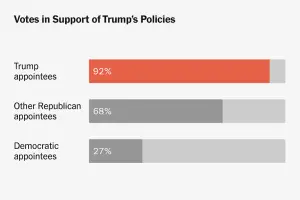
New York Times, Investigation: Trump’s ‘Superstar’ Appellate Judges Have Voted 133 to 12 in His Favor, Mattathias Schwartz and Emma Schartz, Graphics by Alicia Parlapiano, Jan. 11, 2026. President Trump promised to fill the appeals courts with “my judges.” They have formed a nearly united phalanx to defend his agenda from legal challenges.
President Trump has found a powerful but obscure bulwark in the appeals court judges he appointed during his first term. They have voted overwhelmingly in his favor when his administration’s actions have been challenged in court in his current term, a New York Times analysis of their 2025 records shows.
Time and again, appellate judges chosen by Mr. Trump in his first term reversed rulings made by district court judges in his second, clearing the way for his policies and gradually eroding a perception early last year that the legal system was thwarting his efforts to amass presidential power.
When Mr. Trump criticized a ruling from a so-called “Obama judge” in 2018, Chief Justice John G. Roberts Jr. responded that “we do not have Obama judges or Trump judges, Bush judges or Clinton judges.”
But the data suggests that in the 13 appellate courts, there is increasingly such a thing as a Trump judge. The president’s appointees voted to allow his policies to take effect 133 times and voted against them only 12 times. Ninety-two percent of their total votes were in favor of the administration. That figure far outstrips support for Mr. Trump’s agenda from appeals court judges appointed by other Republican presidents, and from Mr. Trump’s appointees to the district courts.
The Times analyzed every judicial ruling on Mr. Trump’s second-term agenda, from Jan. 20 to Dec. 31 of last year, or more than 500 orders issued across 900 cases. About half of rulings at the appellate level were in Mr. Trump’s favor — better than his performance with the district courts, though worse than his record at the Supreme Court, where the rulings on his agenda have almost all been on a preliminary basis in response to emergency applications.
How often the courts have ruled in support of Trump’s policies
Note: Data includes administrative, preliminary, and emergency docket rulings. Source: New York Times analysis of federal court rulings in 2025.
Experts who have studied the voting patterns of federal judges have found that, even before Mr. Trump, their rulings had some degree of alignment with the partisan positions of the president who appointed them. On the Supreme Court, for instance, where the behavior has been closely studied, justices have shown a decades-long tilt toward their appointing president, a 2016 study found.
The correlation between ideology and voting among judges in the Times analysis extended beyond those appointed by Mr. Trump. Appellate judges appointed by Democratic presidents voted against Mr. Trump’s agenda 73 percent of the time, compared to 32 percent of the time by appellate judges appointed by Republicans.
But the impact of Mr. Trump’s appeals judges on his own agenda has been hard to overstate, given the glut of litigation over the president’s expansive executive actions and the pushback they have encountered from district court judges.
The uniformity of the judges’ votes is “reason for serious concern,” said Mark L. Wolf, a former federal judge nominated by President Ronald Reagan. Judge Wolf recently retired so he could speak more freely about what he has characterized as the threat that Mr. Trump posed to the rule of law.
“If you’re an impartial judge, the same party is not going to win every time,” he said. “Because the facts are different, the law is different, and so the result is often going to be different.”
Mr. Trump’s appellate appointees allowed him to deploy the National Guard in cities over the objections of state and local leaders. They delayed for more than six months a judge’s inquiry into why planes carrying Venezuelan immigrants to a maximum-security prison in El Salvador did not turn around, despite a court order. They signed off on the withholding of millions of dollars in federal funds from public school districts.
President Trump in the Oval Office in December. Credit...Tierney L. Cross/The New York Times
There are a number of possible explanations for Mr. Trump’s strong showing before appellate judges he chose.
Changes to the judicial confirmation process have made it easier for more ideologically extreme judges to win Senate approval. Mr. Trump has nominated judges who are aligned with his maximalist view of presidential power, part of a long-running conservative project to concentrate more authority within the White House. And a trio of Trump appellate appointees in Washington, where many lawsuits over the administration’s agenda have been filed, have voted for a large number of rulings in his favor.
Mr. Trump has also taken an unusually active role in trying to shape judicial behavior.
He has called judges who ruled against his administration “radical” and “lunatic.” He has praised judges who rule the way he wants, calling them “highly respected” and “brilliant.”
“You could have court of appeals judges auditioning in case a Supreme Court seat opens up,” said Morgan Hazelton, a political science professor at Saint Louis University and the co-author of a book on collegiality in the appellate courts.
Abigail Jackson, a White House spokeswoman, said in a statement that the judges who had upheld Mr. Trump’s policies had done so out of fidelity to the law.
“President Trump has always selected qualified nominees who will uphold our Constitution and the rule of law,” she said. “Higher court judges have consistently upheld the president’s policies as lawful because they are lawful.”The Judicial Playoffs
If the judiciary were Major League Baseball, the 94 federal district courts would be the regular season, and the Supreme Court would be the World Series. The 13 courts of appeal would be the playoffs: the intermediate layer where many of the most significant cases and legal questions are sorted out.
Appeals court judges work in randomly chosen groups known as panels, which review appeals of final decisions by district court judges, who work alone. Panels, as well as the Supreme Court, can also intervene in the middle of cases, ordering district court judges to take specific actions while litigation over an issue proceeds.
When Mr. Trump’s policies are temporarily blocked by district court judges, appeals courts can issue “administrative stays,” temporary rulings that effectively reverse the lower court’s orders and let contested policies take effect. Administrative stays are supposed to be temporary but can remain in place for weeks or even months. In many cases, they are replaced by a more lasting stay, known as a “stay pending appeal,” that remains in place while the appellate court considers the case.
The Times analysis tracked both kinds of stays, as well as the final rulings that appellate courts made after considering arguments from both sides.
Mr. Trump’s nominees sided with him consistently across all three kinds of rulings, voting in his favor 97 percent of the time on administrative stays, 88 percent of the time on stays pending appeal, and 100 percent of the time on final rulings.
If the parties in a case disagree with an appeals court’s final ruling, they can seek further intervention by the Supreme Court, which accepts roughly 1 percent of the thousands of petitions it receives each year. That limited bandwidth means that the appeals courts — which handle more than 40,000 cases annually — are powerful gatekeepers that serve as the main check on district court judges. And the legal precedents they set are binding on the individual circuits they oversee.

A photograph of President Trump on a gallery wall beneath the words “America’s Presidents.”An earlier photograph of President Trump that hung at the National Portrait Gallery included lengthy wall text. (Photo via Allison Dinner/EPA, via Shutterstock).
New York Times, Smithsonian Removes Label Noting Trump Impeachments, Graham Bowley, Robin Pogrebin and Derrick Bryson Taylor, Jan. 11, 2026 (print ed.). When the National Portrait Gallery replaced a portrait of President Trump this week, it took down a biography of his first term.
The Smithsonian’s National Portrait Gallery removed wall text that referred to President Trump’s two impeachments — language that had upset the White House — when the museum recently replaced a portrait of him in its “America’s Presidents” exhibition.
The wall text described some of Mr. Trump’s political accomplishments, including his appointment of three Supreme Court justices, his promotion of the development of Covid-19 vaccines and his “historic comeback in the 2024 election” after he lost the previous election to Joseph R. Biden Jr.
It also included: “Impeached twice, on charges of abuse of power and incitement of insurrection after supporters attacked the U.S. Capitol on January 6, 2021, he was acquitted by the Senate in both trials.”
That sentence had long bothered the Trump administration.
After Mr. Trump announced last year that he was firing Kim Sajet, who was then the National Portrait Gallery’s director, the White House compiled a list of grievances about her, outlining what it called evidence of partisanship and bias. Among these points, which were supplied to The New York Times, was the sentence about the impeachments that has now been taken down.
The new image, a black-and-white portrait taken by the White House photographer Daniel Torok, shows the president in the Oval Office, staring directly into the camera with his fists on the Resolute Desk. When Mr. Trump posted the image on social media in October, he wrote, “In the Oval Office, getting ready to leave our imprint on the World. MAKE AMERICA GREAT AGAIN!”
In a statement on Saturday, Davis Ingle, a White House spokesman, said that it was an “iconic photo” of the president and that “his unmatched aura will be seen and felt throughout the halls of the National Portrait Gallery.”
The National Portrait Gallery said in a statement that it had hung a new photograph of Mr. Trump on Thursday and was beginning a planned update of the “America’s Presidents” exhibition.
“For some new exhibitions and displays, the museum has been exploring quotes or tombstone labels, which provide only general information, such as the artist’s name,” the statement said. “The history of presidential impeachments continues to be represented in our museums.”
The new wall text simply identifies Mr. Trump as the 45th and 47th president, saying he was born in 1946. According to the National Portrait Gallery’s website, the wall text accompanying President Bill Clinton’s official portrait notes he was impeached for “lying while under oath about a sexual relationship he had with a White House intern.”
In late November, a mental health leader at a major VA medical center learned about a directive issued to the 18 Veterans Health Administration (VHA) regional offices, known as VISNs (Veterans Integrated Service Networks). Department of Veterans Affairs’ leaders in Washington were imposing lower caps on employee positions nationwide. Directors of local VA medical centers and clinics had a month to decide which vacant positions to eliminate, and which job offers to rescind. None of these identified positions would be filled because they would be swept from organizational charts entirely. At his facility, 60 percent of the unfilled positions would be lost, including 23 in mental health.
“The past nine months have been very challenging,” the mental health leader told the Prospect. “But this is really going to impact patient care.” He also worried about the effect of cuts on the VA’s critical teaching mission. “The VA trains 50 percent of psychologists in the country,” he said. “Now, we may not have enough staff to supervise trainees.” In the midst of a national mental health professional shortage, reducing VA training capacity ultimately impacts access to mental health care for both veterans and nonveterans alike.
Again, Donald Trump is taking services away from veterans, and then hiring them to invade blue cities as if they were Fallujah.
For the past year, the Smithsonian Institution has been under pressure from the Trump administration to present a primarily positive view of America. In March, Mr. Trump issued an executive order, “Restoring Truth and Sanity to American History,” that instructed officials to scrutinize the museum complex for “improper ideology.”
The Smithsonian, which has long been regarded as independent from the executive branch, has produced only part of a lengthy list of documents the White House has requested as it carries out a review of its current and planned exhibitions. It now faces a new ultimatum to hand over all of the requested materials by Tuesday or risk potential cuts to its $1 billion budget, which is largely dependent on federal funds.
The White House’s interest in the National Portrait Gallery was fueled in part by Ms. Sajet’s refusal to exhibit a triumphant portrait of Mr. Trump — it showed the president next to a rising sun with a bald eagle — during his first inauguration.
The Smithsonian did not follow through on Mr. Trump’s announcement that he was firing Ms. Sajet, publicly insisting it held the reins on personnel matters. But she resigned on her own, saying the decision was in the best interests of the institution. (The museum’s acting director is Elliot Gruber.)
The recent changes at the National Portrait Gallery were earlier reported by The Washington Post. The museum typically rotates photographs of the president until unveiling an official painting once the person has left office. The latest portrait replaced a color photograph by The Post’s Matt McClain that showed Mr. Trump wearing a red tie against a black background.
Last year, another Smithsonian museum, the National Museum of American History, changed the language describing Mr. Trump’s impeachments in an exhibition about the American presidency.
In a description of Mr. Trump’s second impeachment that says he was charged with “incitement of insurrection,” the Smithsonian removed two phrases: one describing “repeated ‘false statements’ challenging the 2020 election results,” and another about a speech by the president that it said “encouraged — and foreseeably resulted in — imminent lawless action at the Capitol.”
The history museum also added the word “alleged” to a description of Mr. Trump’s first impeachment: “The charges focused on the president’s alleged solicitation of foreign interference in the 2020 presidential election and defiance of Congressional subpoenas.”
The Smithsonian said then that it had “a steadfast commitment to scholarship, rigorous research and the accurate, factual presentation of history.” The exhibition on the American presidency includes information about the impeachments of former Presidents Andrew Johnson and Bill Clinton.
News Roundup
Meidas Touch Network, Sunday Afternoon News Updates, Ben Meiselas, Jan. 11, 2026. A country in crisis, a president unraveling, and protests growing nationwide.
I want to walk you through what’s happening across the country right now, because you won’t see most of it on corporate media. We’ve been covering it wall-to-wall here at the MeidasTouch Network, and we will continue to do so. We are also continuing to stream live from the ICE protests in Minneapolis with our partners at Status Coup. Click here to watch today’s on-the-ground coverage. And later today, Ron Filipkowski’s full weekend bulletin will be published completely paywall-free for everyone.Subscribed
Across the United States, protests have surged in response to the cold-blooded murder of Renee Nicole Good by Trump’s ICE. Tens of thousands filled the streets of Minneapolis alone, and demonstrations erupted from Los Angeles to Austin, Washington, D.C., and New York City. These are ordinary Americans standing up against a regime that has crossed every line of decency, legality, and humanity. And while they march, Trump isolates himself at Mar-a-Lago, hiding away and posting delusional fantasies online on the taxpayer’s dime.
This morning, instead of addressing the national outrage, Trump posted a photo of the gilded entrance to Mar-a-Lago, flaunting luxury paid for by taxpayers while Americans lose health care because he refused to extend Affordable Care Act subsidies. He then posted a strange image of himself standing on top of the White House with the caption “soon,” while people across the country demand accountability for the illegal conduct of federal agents.
It only gets more grotesque. Trump promoted an argument for pardoning Juan Orlando Hernández, the former president of Honduras convicted of massive drug trafficking. Evidence at trial included statements like “get the drugs up the gringos’ nose and kill them.” This is the type of criminal Trump wants to free. He has already pardoned Ponzi schemers and fraudsters. These are the people he aligns himself with while he labels peaceful American protesters “domestic terrorists.”
Trump’s posts escalated even further when he suggested Marco Rubio should be “president of Cuba.” He endorsed war, intervention, and regime change. And while he threatens new conflicts with Cuba, Venezuela, Colombia, and even Greenland, NATO is now openly discussing sending troops to Greenland in response to reports that Trump ordered Special Forces to prepare an invasion plan.
European leaders are contemplating sanctions against American corporations if Trump moves ahead. That is how severe and reckless this situation has become under his watch.
As if the spectacle couldn’t become more insulting, Trump then posted a photo of himself smoking a Cuban cigar with the caption praising their quality. At the same time, tens of millions of Americans face losing Medicaid in the months after the midterms because of how the regime deliberately timed these cuts.
While Trump hides online, he sends his loyalists onto the Sunday shows to smear Renee Nicole Good and the protesters. Tom Homan appeared on Meet the Press to claim that Renee and peaceful demonstrators could fall under the definition of “terrorism.” This type of fascist propaganda is designed to silence dissent and criminalize protest.
Kristi Noem appeared on CNN and refused to reconcile her praise of January 6th rioters with her attacks on peaceful protesters in Minneapolis. When pressed about the video clearly showing Renee slowly attempting a three-point turn before she was shot, Noem dismissed the evidence and told Americans to stop “arguing with the president.”
This is the language of authoritarianism. This is what it looks like when a regime demands obedience rather than accountability.
Homan was also confronted about allegations that he took $50,000 in cash as a quid pro quo from someone seeking favors within the Trump regime. His response was evasive and contradictory. He refused to answer whether he received the money, refused to say whether it was returned, and refused to say whether he would support the FBI releasing the recorded evidence. When asked how the public could trust the FBI’s investigation into Renee Nicole Good’s killing while state and local investigators are being barred from participating, he punted again, refusing to give any meaningful answer.
Minneapolis Mayor Jacob Frey pushed back on attempts to criticize his rhetoric, stating the obvious: the video shows exactly what happened. “Anybody can see these videos,” he said. “Anybody can see that this victim is not a domestic terrorist.”
Illinois Governor JB Pritzker was equally clear. ICE and CBP are “breaking their own protocols,” “roughing people up,” and in some cases “literally shooting at people and killing them.” He called for accountability, including the resignation or impeachment of Kristi Noem.
On top of all this chaos, Trump’s agencies have continued posting materials that mirror fascist propaganda. The Department of Labor issued a video proclaiming “one homeland, one people, one heritage,” echoing phrases used in Nazi Germany. Former CIA Director Bill Burns warned that Trump’s imitation of autocrats plays directly into the hands of adversaries in Moscow and Beijing.
Internationally, Trump’s recklessness continues. He previously stated the U.S. would take military action if Iran killed protesters. More than 490 protesters have been killed by Iranian security forces, with more than 10,000 detained. Trump has done nothing, despite drawing a bright line in public. So is he preparing the country for yet another war, or was that threat, like so many others, simply another empty attempt to posture?
Finally, I want to highlight a deeply disturbing video we received of an ICE agent in Brooklyn Center, Minnesota slipping on his back and then escorting a woman — possibly a detainee — into a porta-potty, with another agent standing guard outside. We need answers about who was involved, why this happened, and what exactly was going on. If you have information, please reach out to us immediately.
We will keep covering all of this with urgency, honesty, and transparency. And again, Ron Filipkowski’s full bulletin will be released later today, paywall free, so everyone can stay informed.
U.S. Law, Courts, Crime, Justice

Former Minnesota Gov. and pro wrestler Jesse Ventura, shown in a file photo with comments about President Trump and his avoidance of military service excerpted from an interview Ventura gave as he left his high school reunion in Minneapolis this week. Ventura was wearing a SEAL hat during the interview. He served in the military unit the pre-dated the creation of SEAL commando units and is entitled therefore to wear such a hat, according to military experts.
New York Times, Trump Administration Live Updates: Noem Says ‘Hundreds More’ Agents Will Be Sent to Minnesota Over ‘Corruption,’ Staff Reports, Jan. 11, 2026. Where Things Stand.
The Trump administration will send “hundreds more” federal agents to Minneapolis “today and tomorrow” to support the work of Immigration and Customs Enforcement agents, Kristi Noem, the homeland security secretary, said on Sunday, days after an ICE agent shot and killed a woman there.
Ms. Noem cited a major welfare fraud scandal linked to Minnesota’s Somali community as the reason for dispatching more agents to the liberal city. A vast majority of those charged since 2022 with stealing federal dollars from a pandemic-era program for feeding children and other programs were U.S. citizens by birth or naturalization.
Still, Ms. Noem characterized the federal deployment as a mission “to uncover the true corruption and theft that has happened” during an interview on the Fox News program “Sunday Morning Futures.” She called Minneapolis “the ground zero for stealing of taxpayer dollars and protecting criminals,” without citing specific examples.
The secretary also took aim at protests against the immigration crackdown, which have grown after the death of Renee Nicole Good, a motorist who was shot and killed during an encounter with federal agents on Wednesday.
Ms. Noem said that some nonprofits were being investigated for their funding sources, and claimed that they had trained protesters in impeding law enforcement operations and “weaponizing” vehicles against ICE agents, without offering evidence.
Democrats have assailed the Trump administration over the shooting and its efforts to vilify Ms. Good. Senator Tina Smith, Democrat of Minnesota, accused the administration on Sunday of orchestrating a “cover-up” by refusing to work with state agencies. h
“They are blocking state investigators from participating in any way in this investigation,” she said on ABC’s “This Week,” adding that she believed Ms. Noem had rushed to blame Ms. Good. Ms. Noem has accused Ms. Good of having engaged in “an act of domestic terrorism.”
Ms. Noem repeated those accusations on Fox News and in a heated exchange on CNN’s “State of the Union,” where she continued to defend the agent who shot Ms. Good as she was behind the wheel of her vehicle on a snowy Minneapolis street. Ms. Noem told CNN that Ms. Good had tried to “run over” agents with her vehicle, adding that everything she was saying had been “proven to be factual.” The investigation into Ms. Good’s death is still underway.
Ms. Noem’s statements conflict with a New York Times video analysis of the shooting, which appears to show that Ms. Good was turning away from the federal officer as he opened fire. Videos of the moments that led up to the shooting show several agents approaching Ms. Good and her wife and demanding that Ms. Good leave her vehicle. Seconds before her death, Ms. Good said to those around her, “That’s fine dude, I’m not mad,” before pulling forward and steering away from the agent who opens fire.
Ms. Noem and other members of the administration — particularly President Trump — have fiercely defended the actions of the ICE agent and have leveled accusations at Ms. Good in the days since her death.
While Tom Homan, the White House border czar and the head of ICE during Mr. Trump’s first term, called again for an investigation to play out, he, too, defended the agent’s action as self-defense.
The agent “feared for his life and took appropriate action,” Mr. Homan said on Sunday during an interview with NBC’s “Meet the Press.” “This officer, I think, in his mind did the right thing to save his own life and the life of others.”
Democrats have strongly objected to the administration’s immigration enforcement effort, and their response has only intensified since Ms. Good’s death.
Mayor Jacob Frey of Minneapolis used expletives to urge ICE to leave his city after Ms. Good’s death, while Representative Hakeem Jeffries of New York, the House minority leader, called the shooting a “heinous killing” and denounced Ms. Noem as a “stone-cold liar.”
Ms. Noem said Democrats had “politicized” the federal deployment and “inflamed the public.”
“I would encourage them to grow up, get some maturity,” Ms. Noem told CNN.
New York Times, News Analysis: F.B.I.’s Inquiry Into ICE Shooting Faces Doubts After White House’s Remarks, Glenn Thrush, Jan. 11, 2026 (print ed.). Ex-law enforcement officials said the administration’s declarations that the killing was justified elicited questions about the F.B.I.’s willingness to scrutinize the agent who fatally shot an unarmed activist.
The Trump administration blocked Minnesota officials from investigating the death of the woman shot on Wednesday by a federal agent, then quietly offered this explanation: Local investigators simply could not be trusted to conduct a fair inquiry.
The investigation into the killing of Renee Nicole Good, 37, right, federal officials said, would be the exclusive province of the F.B.I., which is overseen by a director, Kash Patel, who has described President Trump as an unerring boss, and even a king.
Mr. Trump had already declared the shooting justified. Vice President JD Vance has asserted that federal agents had “absolute immunity” from prosecution. The homeland security secretary, Kristi Noem, has spoken about the incident as if it were a closed case: Ms. Good had “weaponized” her S.U.V. to kill agents, she said, even though video analysis by The New York Times suggested it was more likely that she was turning her car away from officers.
The extraordinary volley of public statements stood in striking contrast to the far more restrained approach to high-profile incidents taken by other presidents, who have typically called for calm pending the results of investigations. The all-hands effort to define Ms. Good as the only person who did anything wrong has cast serious doubt on the F.B.I.’s willingness to scrutinize the actions of the agent who killed the unarmed activist, according to former law enforcement officials who were once responsible for investigating comparable tragedies.
“It’s hard to have any trust in the federal investigation given the White House’s immediate public effort to drive an outcome,” said Vanita Gupta, a former top Justice Department official in the Biden administration who oversaw the department’s response to incidents of police violence, including the killing of George Floyd in Minneapolis.
“Are the feds conducting any real investigation of the agent’s actions, or instead focused on trying to justify what happened by tarring the victim as a domestic terrorist?” Ms. Gupta added.
The details and direction of the F.B.I.’s investigation remain unclear. A spokesman for Mr. Patel did not respond to requests for comment.
Todd Blanche, left, the deputy attorney general who oversees the bureau, said in a statement on Thursday that the F.B.I. would follow “standard protocols” to “ensure that evidence is collected and preserved.” His remarks also defended the right of officers to use deadly force when they believed their lives were in danger.
Tom Homan, Mr. Trump’s border czar, struck a more circumspect and conventional tone, telling CBS News he would not draw any conclusions by watching video on social media.
“Let the investigation play out,” Mr. Homan said, “and hold people accountable based on the investigation.” [On a related matter, U.S. Sen. Adam Schiff has protested, as shown at right, the Justice Department's failure to investigate and then to exonerate Homan when it had video evidence that he had accepted $50,000 in cash bribes during the 2024 presidential campaign.]
It was against this backdrop that the White House, Justice Department and F.B.I. excluded the Minnesota Bureau of Criminal Apprehension, an investigative division of the state attorney general’s office that often collaborates with federal law enforcement, from sharing evidence.
On Thursday, the U.S. attorney’s office in Minneapolis abruptly “reversed course” by informing state investigators that initial plans to coordinate efforts had been scrapped, according to Drew Evans, the state bureau’s superintendent.
 A senior federal law enforcement official, speaking on the condition of anonymity to discuss internal deliberations, said that the remarks of the Minneapolis mayor, Jacob Frey, above, blaming the shooting on immigration operations the White House had ordered in his city, prompted the move.
The administration likened Mr. Frey’s finger-pointing to ordaining a predetermined outcome, even though his statements were comparable in tone to, if opposite in substance from, the Trump administration’s torrent of talk.
Mr. Trump and the team he installed at the Justice Department have repurposed the statement that Biden-era officials have used to justify the prosecutions of Mr. Trump — “no one is above the law” — to defend prosecutions of his perceived foes.
In a broader sense, they have also used the phrase to redefine justice according to his personal judgment of guilt and innocence. Over the past year, the president has granted clemency to hundreds of Jan. 6 rioters and other political allies. He has scuttled prosecutions of those he favored, like Eric Adams, the former mayor of New York.
During his first term, Mr. Trump’s demands were subject to internal pushback or slow-walked by department officials who were still able to maintain a measure of autonomy.
But over the past year, Mr. Trump’s commands have been dutifully executed by loyalists he views less as appointees than employees. When he talks, they listen.
Ms. Good “was very disorderly, obstructing and resisting, who then violently, willfully, and viciously ran over the ICE Officer, who seems to have shot her in self-defense,” Mr. Trump wrote on social media hours after the killing.
“We need to stand by and protect our Law Enforcement Officers from this Radical Left Movement of Violence and Hate!” he added.
Leaders in Minnesota suggested on Friday that any investigation by the F.B.I. without their involvement would be tilted toward reinforcing Mr. Trump’s conclusions.
“Our ask is to embrace the truth,” Mr. Frey, left, a Democrat, said at a news conference at the end of the week. “We in Minneapolis want a fair investigation.”
Mr. Frey’s tone in the immediate aftermath of the shooting was more emotional. He called Mr. Trump’s claims that the agent acted in self-defense “bullshit,” and slammed the administration for what he argued was a decision to descend on Minneapolis to provoke a violent confrontation.
“This was an agent recklessly using power that resulted in somebody dying, getting killed,” he said. The White House and Justice Department seized on that statement to justify the decision to cut off cooperation, saying that Mr. Frey’s remarks had made it clear that local officials had no intention of conducting an investigation in good faith, according to people familiar with the situation.
“That’s bullshit,” Mr. Frey replied through his spokeswoman.
State and city officials have said they would collect evidence independently, and have urged witnesses to come forward with information. The state could, potentially, file charges against ICE officials. But in the past, federal prosecutors have successfully petitioned to have such cases transferred to federal courts, citing the supremacy clause of the Constitution, with the purpose of dismissing them.
Jurisdictional conflicts between the F.B.I. and local enforcement agencies are hardly unusual, especially those involving high-stakes investigations into the conduct of federal law enforcement officials.
The Trump administration’s decision to cut off cooperation with local law enforcement in Minnesota does not necessarily mean the investigation, run out of the F.B.I.’s Minneapolis field office, will be tainted by political interference, former agents said.
It is less certain what action will be taken by federal prosecutors. They could file a range of charges against the agent who killed Ms. Good, if they determine he acted with reckless disregard for her safety or violated her civil rights as defined under federal law.
But Ms. Gupta and other former officials said they believed the administration’s public statements suggested that the F.B.I.’s investigation was just as likely to focus on Ms. Good’s actions than on the response by the agent who fired at close range.
It was not clear if any bureau officials were present during the confrontation in Minneapolis. But over the last year, the administration has had law enforcement agencies focus on immigration, and Mr. Patel has diverted thousands of F.B.I. employees from other duties to support ICE officials.
Michael Feinberg, a veteran F.B.I. agent who was forced to retire last year, said that many of his most experienced colleagues had warned against participating, given the possibility that the bureau could be called upon to investigate incidents like the killing of Ms. Good.
“One of the major concerns many of us had when the F.B.I. was ordered to join in on these immigration operations was that it would create an implicit conflict of interest if we ever had to conduct a use-of-force or civil rights investigation of the other involved agencies,” said Mr. Feinberg, who now writes for Lawfare, a nonpartisan news site that covers legal and national security issues.
“It’s difficult to see how the F.B.I. can be a neutral arbiter,” he added.
Renee Nicole Gold, a U.S. citizen living in Minneapolis and a mother of three shortly before a federal agent fatally agent fatally shot in her the head three times while recording the slaying from which this photo was taken on his hand-held cellphone. Scenes from the shooting, including the positioning of the shooter at the side of the vehicle not in front, are shown below. The federal agent, identiified as Jonathan Ross, is shown below also. A recording capturied his words about the victim just after shooting her: "Fucking bitch."
New York Times, New Cellphone Video Shows ICE Agent’s Perspective Before Minneapolis Shooting, Mitch Smith, Hamed Aleaziz and Julie Bosman, Jan. 10, 2026 (print ed.). The Department of Homeland Security posted a clip of the video on social media and said it was taken by the agent, who killed a 37-year-old woman in the shooting.
More On U.S. Military, Foreign Policy
Prime Minister Mette Frederiksen of Denmark has warned that an American attempt to take Greenland by force would “mean the end of the NATO alliance” (Pool photo by Yoan Valat). A map shows Greenland below.
New York Times, Trump Eyes Greenland, and Europe Figures Its Best Bet Is a Negotiation, Michael D. Shear, Eric Schmitt, Steven Erlanger and Jeanna Smialek, Jan. 11, 2026 (print ed.). European officials were stunned that President Trump restated his desire for Greenland after a yearlong effort to dissuade him, according to diplomats and others.
For Prime Minister Mette Frederiksen of Denmark and leaders across Europe, the threat of violence from their American allies was shocking.
Stephen Miller, one of President Trump’s closest aides, was asked on Monday to rule out the use of military force to seize Greenland, a semiautonomous territory of Denmark. Mr. Miller not only refused. He also questioned Greenland’s status, ignored its historical ties to Denmark and mocked the idea that Europe could stand up to American troops.
“The real question is, by what right does Denmark assert control over Greenland?” Mr. Miller said on CNN. “Obviously, Greenland should be part of the United States.”
Though Ms. Frederiksen had long taken Mr. Trump’s threats seriously, Mr. Miller’s blunt comments blew apart what had been her yearlong effort to quietly talk the president out of his desire to control Greenland. They stunned a visibly frazzled Ms. Frederiksen and created a sense of near panic among her counterparts in Europe, according to interviews with more than a dozen diplomatic and military officials and others in several countries.
The comments by Mr. Miller, and the president’s earlier insistence that “we do need Greenland, absolutely,” crystallized the danger for Europe’s leaders, the officials said. They are now working behind the scenes to draft potential responses, including the idea of building up NATO forces to better counter Chinese and Russian influence, or even offering Mr. Trump access to Greenland’s vast mineral deposits.
The emerging consensus is that they must find a way to avoid a damaging political confrontation with Mr. Trump through negotiation. One concern expressed privately among European officials is that Greenland is not about security or economic resources, but about Mr. Trump’s desire to “make America greater again,” as one European foreign minister said, and go down in history as having expanded American territory for the first time in decades.
Mr. Trump was blunt about Greenland on Friday at the White House, saying, “I would like to make a deal the easy way, but if we don’t do it the easy way, we’re going to do it the hard way.”
Even for a continent whose leaders have grown used to Mr. Trump’s repeated assault on longstanding alliances in Europe, the renewed targeting of Greenland left officials shaken, appalled and nervous, according to several of the officials.
It also left them far from united on how to respond. A statement of support for Denmark came on Tuesday from six other European countries, not the entire 27-nation membership of the European Union. Privately, officials have disagreed about how aggressively to criticize Mr. Trump because his help is critical to efforts to end the war in Ukraine, which many European leaders view as a defining threat.Want to stay updated on what’s happening in Denmark and Greenland?
A direct challenge to Mr. Trump is likely to produce an angry response, one European foreign minister said, but too weak a stance would be equally damaging.
Ms. Frederiksen has warned publicly that an American attempt to take Greenland by force would “mean the end of the NATO alliance.” And Denmark’s Defense Ministry said in a statement on Friday that if Greenland were invaded, its soldiers would be allowed to shoot without waiting for instructions from superiors.
Jean-Noël Barrot, the French foreign affairs minister, said on French public radio that he did not believe Mr. Trump would invade Greenland. When it comes to any form of intimidation, he added, Europe must “prepare ourselves to respond, to retaliate, and not to respond alone.”
Others in Europe urged calm, noting that Secretary of State Marco Rubio plans to meet with officials from Denmark in the coming days. Ursula von der Leyen, the president of the European Commission, said this past week that “cooperation is stronger than confrontation.”

New York Times, U.S. Launches Major Strikes on Islamic State Targets in Syria, Eric Schmitt, Jan. 11, 2026. The airstrikes followed an even larger attack in December to avenge the killing of three Americans last year.
The United States carried out major airstrikes against the Islamic State in Syria on Saturday, following up on even larger retaliatory attacks last month to avenge the deaths of two U.S. Army soldiers and a U.S. civilian interpreter killed in a terrorist attack in the country.
 About 20 Air Force attack planes, including F-15Es, A-10s and AC-130J gunships, as well as MQ-9 Reaper drones and Jordanian F-16 fighter jets fired more than 90 bombs and missiles toward at least 35 targets on Saturday, according to Capt. Timothy Hawkins, a spokesman for the military’s Central Command.
The targets included weapons caches, supply routes and other infrastructure used by the Islamic State, also known as ISIS, Captain Hawkins said in an email.
“The strikes today targeted ISIS throughout Syria as part of our ongoing commitment to root out Islamic terrorism against our warfighters, prevent future attacks, and protect American and partner forces in the region,” Central Command said in a statement.
The strikes on Saturday came after American fighter jets, attack helicopters and artillery fired more than 100 munitions at more than 70 suspected Islamic State targets across central Syria, including weapons storage areas and other operational-support buildings, on Dec. 19.
The earlier strikes sought to fulfill a promise that President Trump made after the two soldiers from the Iowa National Guard and an American interpreter were killed last month in an incident that U.S. counterterrorism officials blamed on the Islamic State. The Americans were supporting counterterrorism operations against the Islamic State in Palmyra, a city in central Syria, when they came under fire from a lone gunman.
Those soldiers were the first American military casualties in the country since the fall of the dictator Bashar al-Assad in 2024.
Since then, U.S. troops, working with Syrian government forces and the Jordanian military, have redoubled efforts to root out the remnants of the Islamic State.
Top U.S. intelligence officials told Congress last year that the Islamic State would try to exploit the end of the Assad government to free 9,000 to 10,000 ISIS fighters and about 26,000 of their family members now detained in northeastern Syria, and revive its ability to plot and carry out attacks.
More On Trump Administration
White House advisor Stephen Miller, above left.
Emptywheel, Analysis: Stephen Miller’s Big Shift: Mother-Shooting Goons Replace VA Nurses and Psychologists, Emptywheel (Marcy Wheeler), Jan. 11, 2026. Donald Trump is taking services away from veterans, and then hiring them to invade blue cities as if they were Fallujah.
A part of the video Jonathan Ross — the ICE agent who shot and killed Renee Good — took of the shooting has gotten little attention.
Before Renee’s wife Becca taunts Ross, “You want to come at us? You want to come at us? I say you go get some lunch, big boy,” and after she notes the plate of the vehicle would still be the same when ICE visits them later that day, Becca identifies herself as a US citizen and a “former fucking veteran, disabled veteran.”
If Becca is, indeed, a veteran, it would mean one veteran shot the spouse of another in a neighborhood of Minneapolis, where both lived.
Ross deployed with the Indiana National Guard to Iraq as a machine gunner.
Deployed to Iraq as a member of the Indiana National Guard from November 2004 to November 2005, Specialist Ross of the 138th Signal Battalion earned the Army Commendation Medal, the Army Good Conduct Medal, the Global War on Terrorism Medal and the Iraq Campaign Medal among others, according to the Guard.
During his time in Iraq, Ross was a machine gunner on a combat logistical patrol team, court documents show.
Renee’s second husband and the father of her six-year-old son, Tim Macklin, was an Air Force veteran.
This not only was a conflict between authoritarianism and tolerance, but it appears to have been a conflict between American veterans.
That’s worthwhile background to this WaPo story, which catalogs which agencies shrunk in the first year of the Trump Administration and which have ballooned. The article shows that the Veterans Administration lost the most employees (the largest number through attrition), over 50,000 people.
That includes around 3,000 nurses (3% of the total) and 2,000 claims examiners (10% of the total).
Meanwhile, DHS ballooned in size, adding more than 6,000 ICE goons (reflecting a 30% increase) and almost 1,000 CBP officers.
Ross is not one of these new hires; he worked at CBP for eight years and has been working at ICE for ten years.
Republicans — and because this was done via Trump management, DOGE, and the Big Ugly Bill, with virtually no input from Democrats — took service away from veterans and instead hired a bunch of people to invade blue states instead.
Republicans — Stephen Miller — decided snatching grannies was more important than providing veterans medical care.
The American Prospect has been closely following the staffing woes at the VA — which is basically a bid to privatize much of it, including this recent story explaining why new staffing cuts will endanger mental heath care not just for veterans, but for the entire country.
In late November, a mental health leader at a major VA medical center learned about a directive issued to the 18 Veterans Health Administration (VHA) regional offices, known as VISNs (Veterans Integrated Service Networks). Department of Veterans Affairs’ leaders in Washington were imposing lower caps on employee positions nationwide. Directors of local VA medical centers and clinics had a month to decide which vacant positions to eliminate, and which job offers to rescind. None of these identified positions would be filled because they would be swept from organizational charts entirely. At his facility, 60 percent of the unfilled positions would be lost, including 23 in mental health.
“The past nine months have been very challenging,” the mental health leader told the Prospect. “But this is really going to impact patient care.” He also worried about the effect of cuts on the VA’s critical teaching mission. “The VA trains 50 percent of psychologists in the country,” he said. “Now, we may not have enough staff to supervise trainees.” In the midst of a national mental health professional shortage, reducing VA training capacity ultimately impacts access to mental health care for both veterans and nonveterans alike.
Again, Donald Trump is taking services away from veterans, and then hiring them to invade blue cities as if they were Fallujah.
The results were all too predictable.
Global News
How to Survive the Broligarchy, Commentary: Peter Thiel's New Model Army, Carole Cadwalladr, Jan. 11, 2026. The Palantirisation of the UK military is a national security disaster.
This newsletter is going to cover three crucial subjects today:
I’ve never started with a bulleted list before but then I can’t remember a NATO country threatening to invade a NATO country before either. I figured you might need 3) after reading 1) and 2).1) The UK’s national security is hopelessly compromised
 This morning, the BBC ran an interview with Peter Mandelson, right, the self-described ‘best pal’ of Jeffrey Epstein and until he was sacked, the UK ambassador to Washington.
Mandelson’s firm, Global Counsel, also represents Palantir, the US surveillance defence company founded by Trump ally, Peter Thiel. When Keir Starmer, below left, visited Washington, a trip arranged by Mandelson, he had only two meetings: one with Trump and one with Palantir.
 If we never heard from Peter Mandelson again, it would be too soon. And yet here he is, all over the national broadcaster refusing to apologise to Epstein’s victims and praising Trump’s “graciousness”.
But this was not all. Because also on the BBC this morning was his client, Louis Mosley, the CEO of Palantir UK and the grandson of British fascist leader Oswald Mosley.
I’m not linking to either of these videos because they were both absolutely abject failures of journalism. This is the second time Mosley has been invited onto this same Sunday morning show as some sort of legitimate political pundit.
 He is no such thing. His company is an integral part of the US defence and homeland security apparatus and the illegal data gathering operation carried out by Elon Musk’s DOGE to say nothing of its involvement in profiling kill targets for the IDF in Gaza. The only circumstance he should be on the BBC is to be subjected to a journalistic grilling, not asked a couple of softball questions on his views on global politics.
The UK Ministry of Defence has just signed a new £240 million contract with Palantir. Actually, it’s not a contract, it’s more than that. The UK government describes it as “a strategic partnership”. A “partnership” entered into without any sort of competitive tender that was announced during Trump’s visit to the UK and which disastrously compromises our entire national security infrastructure.
We have embedded a notorious US military surveillance company whose founder is a close ally of President Trump into the heart of our military at a moment in which the US is threatening to invade our NATO ally, Greenland.
 If you’re British and reading this, please send it to your MP. The level of understanding in UK politics and media about Silicon Valley’s alliance with Trump and the geopolitical and security consequences of this appears to be non-existent.
If our national security rests on US technology, we have no national security.
It sounds like writerly hyperbole to describe the UK as a vassal state, but I mean it in its most literal sense. It’s explicitly stated in the ur-text of Trump’s White House’s foreign policy, the National Security Strategy document, that US companies will be used as instruments of state power. There is no hidden agenda here: Trump has set it all out. (For a breakdown of this document and what it all means, see this week’s piece in the Nerve by former British diplomat, Arthur Snell.)
What will it mean to embed American software into the UK military? Well consider, Tesla. You don’t really buy a car when you buy a Tesla, you rent the software that remains the property of Elon Musk industries who can choose to immobilise your car or any feature of it at any time.
 Palantir is the most terrifying of the US companies but it’s also just one of a whole raft of compromising, self-sabotaging deals that the UK government has entered into. The UK ‘Sovereign Cloud’ has been contracted out to Oracle, owned by another key Trump ally, Larry Ellison, the man whose son is behind the disastrous buyout of CBS and the upcoming US TikTok takeover. And then there are deals with OpenAI, Microsoft, Google, Salesforce, Amazon, BlackRock, Nvidia and Scale AI.
And this was the “win”, the brilliant triumph that Keir Starmer pulled from the jaws of defeat in the trade tariff negotiations. It is the opposite of that: it’s surrender, the cost of which won’t just be measured in pounds or dollars. I fear the cost could be much, much higher, paid in blood and pain.
It barely even registered this week that Trump announced he was increasing the US military’s budget from $1 trillion to $1.5 trillion.
I wrote this in last week’s newsletter, on Saturday morning, hours after the US attacked Venezuela and before America woke up:
“This should precipitate a whole new global crisis. It’s an unprovoked military assault on a sovereign nation in breach of international law. What should worry us more is if it doesn’t…
Trump isn’t just a rogue, out-of-control president, America is a rogue state. And the longer we fail to acknowledge that, the more danger we are in.”
Trump’s actions should provoke a global crisis, I said. And it should worry us more if it doesn’t. A week later, the news is in: prepare to be more worried.
2) The global war on truth..and what it means when your own PM joins it
I’m posting this interview between Gary Gibbons of Channel 4 News and Keir Starmer on Monday because it feels like a crucial moment that we should footnote and mark.
Starmer, an international human rights lawyer, is unable to say the attack on Venezuela was in breach of international law. This is the leader of a G7 nation, unable to confirm that black is black and white is white.
All week, pundits in the UK media have wanged on about how Starmer couldn’t have his “Hugh Grant moment” - a reference to the scene in Love Actually in which he Prime Minister Grant stands up to President Billy Bob Thornton (after seeing him making moves on his lady crush) and missed the far bigger point.
It’s the same pundits and journalists who applauded Starmer’s actions in sucking up to Trump, laying on a state visit, a royal banquet, the full works and celebrating the “win”, a deal that didn’t land Britain with a disastrous trade tariff.
But what they failed to point out is that Starmer paid Trump’s ransom - the disastrous, self-sabotaging tech deals detailed above. It’s not that Starmer risks “offending” Trump or is “caught in a bind” or “is in a tricky position” or any of the other phrases I’ve read and heard all week, it’s that he - and we - have been captured.
These deals represent the corporate capture of the UK state including, our cloud capacity, National Health Service, and now our military establishment. And the blindness, ignorance and ongoing denial is the most dangerous thing about this moment.
Starmer’s inability to speak the truth is not diplomacy. It’s evidence.
We are now a wholly-owned subsidiary of the Trump fascist project. We’ve sold out everyone in America who’s trying to fight back against it. Worst of all, we can’t even see it yet.
I’m not using the f-word lightly or facetiously. I’ve avoided it for a year. But what is so dangerous right now is the assault on truth, on facts, on the evidence of our own eyes. What is happening right now in America is fascism. And we, the UK, are now up to our necks in it too.3) How to fight back
Congratulations! You’ve got through the depressing bit of the newsletter. This last section is a compendium of clips and images that I’ve seen this week that is the evidence you need that nothing is hopeless.
This is Jacob Frey, mayor of Minneapolis. He’s using the f-word too.
A masked paramilitary gunman murdered a Minneapolis citizen in cold blood, and this is what the city’s mayor told ICE at his press conference. “Get the fuck out of Minneapolis.”
It’s a painful contrast to Keir Starmer and a necessary corrective. What Trump is doing is meant to scare us. And not being scared, speaking the facts, taking the piss and recording it all on your phone are all radical acts. All week, I’ve been collecting individual responses to hard power ranging from the courageous to the creative to the comedic.
I loved this footage of an Uber driver that embodies all three of these qualities. Watch him taking on US border guards who asked to see his ID. Why, he asks them? You have an accent, one of them says. “You’re going by accents now?” he says incredulously. “You guys need psychiatric checkups,” he tells them when they ask where he was born. He satirically taunts them until they eventually give up.
This was how London greeted the news of the Venezuela strike. A “nonce” is Britspeak for “paedophile”.I also loved and admired this woman’s response to ICE agents who stopped to threaten and intimidate her for following their vehicle. I don’t want you to make a bad decision, the ICE agent tells her. “That’s funny coming from you!” she says smiling away at him.
And this is another brilliant official, Rochelle Bilal, the sheriff of Philadelphia, pointing out all the ways that the actions of the ICE agent who shot Renee Nicole Good were in violation of both “legal law” and “moral law”. ICE, she said, was “made-up, fake, wannabe law enforcement”.
I know, I know, this is probably too much content. But consider this a public service, I’m saving you from the algorithmic scroll which threw up this for me: Canadian comedian Trent McClellan dressed up as a NICE agent to terrorise tourists in Halifax. His weapons are Canadian-levels of courtesy and free candy. It’s from two months ago but I only just clocked it and I think it’s a really useful reminder that none of this is normal. This is normal:
Finally, it’s been extraordinary to witness what’s happening on the streets of Iran. You’ll have seen the incredible rivers of protestors flooding the streets of cities all across the country. That’s what people power looks like. Is it finally the revolution that Iranians have been longing for? The world is holding its breath.
I’m not sure who this woman is but this week’s newsletter is dedicated to her and the people of Iran and, especially, the incredible, gutsy, powerful women who have simply had enough.
Thank you to everyone who’s reading this. It’s one of my own personal rays of hope. If you like it, please share it with your friends and family and tell me in the comments whether I’m right, wrong, too doomery, not doomery enough, whether you like the vids and anything
A note on who I am and what I’m doing: I’m an investigative journalist who’s spent a decade reporting on the collision of technology and democracy including exposing the Facebook/Cambridge Analytica scandal for the Guardian and the New York Times. Two years ago, I coined a word to describe the alliance of Trump, Silicon Valley and a global axis of autocracy: Broligarchy.
New York Times, As Death Toll Surges in Iran, Leaders Take Tough Line Against Protesters, Erika Solomon and Sanam Mahoozi, Jan. 11, 2026. President Masoud Pezeshkian expressed sympathy for protesters’ economic pain, but said the state must respond to “rioters.” Rights groups reported a big spike in the death toll.
Faced with surging antigovernment protests, Iran’s president vowed to address economic grievances but showed no signs of backing off a harsh crackdown, with rights groups saying the death toll has jumped in recent days to nearly 200 and possibly many more.
“Our responsibility is to solve and address people’s grievances. But we also have a duty not to let rioters destabilize the country,” the president, Masoud Pezeshkian, said in an interview with Iranian state television broadcast on Sunday. He spoke as protesters in Iran face an intensifying and deadly repression by the authorities.
Demonstrators took to the streets starting two weeks ago, initially spurred by economic distress over a sudden plunge in the value of Iran’s currency. But their calls quickly broadened to demanding the overthrow of Iran’s authoritarian clerical rulers. Over the past few days, the protests have snowballed into a mass movement, drawing huge crowds to the streets, from Iran’s major metropolises to the impoverished towns of its rural hinterland.
On Sunday, human rights groups began reporting a sharp rise in the death toll as accounts trickled in amid a three-day communications blackout imposed by the Iranian authorities. The Oslo-based Iran Human Rights, group raised its toll to 192, while HRANA, a rights group based in Washington, said it had confirmed the deaths of nearly 500 protesters and almost 50 security personnel.
Assessing the violence and size of the protests is challenging because the Iranian authorities have imposed such severe internet access restrictions for the past three days, and have cut off international phone calls.
“The violence has certainly skyrocketed in the past several days as the internet shutdown has been implemented,” said Hadi Ghaemi, head of the Center for Human Rights in Iran, based in New York. “There are hundreds and possibly thousands of deaths. It will only become clear when the internet shutdown ends.”
Despite the escalating crackdown, he said, protests were continuing.
As protests grow, Iran’s theocracy looks increasingly vulnerable, and senior officials have sought to lay the blame on the United States and Israel, saying they are backing the protesters.
Iran’s military and nuclear facilities were battered by a 12-day war with Israel last June, and the country has been sinking into a severe economic crisis after the reinstatement of U.N. economic sanctions last year.
Jan. 10
President Trump's self-portrait as as muscular king that he published as a pre-Thanksgiving message on Nov. 23, 2025. Trump has adopted much of the right-wing Heritage Foundation's plan to reshape U.S. government, including by appointing to influential Administration posts those who developed Project 2025.

New York Times, 220,000 Fewer Workers: How Trump’s Cuts Affected Every Federal Agency, Emily Badger, Francesca Paris and Alicia Parlapiano, Jan. 10, 2026 (print ed.). The Trump administration shrank the federal work force by about 220,000 workers through November, representing about a 10 percent cut, according to new data that offers the first clear view of the president’s blitz to remake the government’s labor force.
This decline, which also accounts for limited new hiring, has reversed the last decade of growth for America’s largest employer, returning the federal work force to roughly the size it was when President Trump took office the first time.
But the cuts went far deeper for some agencies and offices: They have had the effect of hollowing out decades-old functions of the federal government. Employees in …
Selected offices with steep cuts Nov.2024 Nov.2025 Change:
U.S. Agency for International Development 4,845 378 –92%Institute of Education Sciences 191 25 –87%National Endowment for the Humanities 216 58 –73%Agency for Health Care Research and Quality 297 108 –64%Institute of Museum and Library Services 98 40 –59%Federal Student Aid 1,450 780 –46%Office of Elementary and Secondary Education 315 185 –41%Substance Abuse and Mental Health Services Administration 932 574 –38%Rural Development 4,981 3,141 –37%Food and Nutrition Service 1,830 1,231 –33%
In many cases, the departures have whittled down agencies that hadn’t grown in years or benefited from the expansion of the federal work force over the last two decades. Most of that expansion has been driven by just one agency, the Department of Veterans Affairs. In other words, Mr. Trump’s cuts — some carried out haphazardly, then reversed — aren’t a simple rollback of recent government bloat, but a more fundamental change to what the government does.
Renee Nicole Gold, a U.S. citizen and mother executed by ICE during Minneapolis protest on Jan. 7, 2026 (Collage immediately above, commentary and early reporting identifying names by the Wayne Madsen Report via Tik-Tok).
The Parnas Perspective, Trump Administration Blocks Minnesota Investigators to Key Physical Evidence as Mass Protests Break Out, Aaron Parnas, right, Jan. 10, 2026 (Afternoon edition). We have major breaking news right now. I just spoke with Minnesota Attorney General Keith Ellison, and he confirmed a critical development in the investigation into the deadly ICE shooting of Renee Nicole Good in Minneapolis.
 State investigators are being barred from accessing key evidence, including ballistic evidence, Good’s car, and other materials, by federal authorities, with the FBI now handling the investigation and limiting state access. This means Minnesota officials do not currently have custody of the car, the gun, or the shell casings from the bullets fired by ICE agent Jonathan Ross, even as protests and outragecontinueto grow nationwide.
Ellison also made clear that Minnesota believes it has jurisdiction to pursue charges and that there is no statute of limitations on murder, meaning this case can and will be pursued long after any single administration is gone.
Here’s what else you missed:
Donald Trump declared a national emergency to block private creditors from seizing roughly $2.5 billion in Venezuelan oil revenue held in U.S. Treasury accounts, arguing that maintaining control of the funds is vital to U.S. national security, regional stability, and efforts to stabilize Venezuela, curb illegal immigration and narcotics trafficking, and counter actors like Hezbollah and Iran.
An investigation by The Washington Post found that Immigration and Customs Enforcement has transformed its public affairs operation during Donald Trump’s second term into a White House–aligned, influencer-style media machine, aggressively producing viral videos of immigration raids and arrests—often using inflammatory language, misleading framing, and copyrighted music without permission—to “flood the airwaves,” promote mass deportation narratives like targeting the “worst of the worst,” and satisfy political pressure despite internal concerns over safety, ethics, and legal risks within the Department of Homeland Security.
More than 1,000 protests, vigils, and rallies were planned nationwide after Immigration and Customs Enforcement agents shot three people—killing Renee Nicole Good—in incidents in Minneapolis and Portland, with demonstrations organized by Indivisible and allies calling for ICE to leave communities, accountability for the shootings, and action from elected leaders amid escalating tensions over federal immigration enforcement.
The Trump administration suspended $129 million in federal benefit payments to Minnesota, citing alleged widespread fraud by local nonprofits and businesses, prompting Gov. Tim Walz and state Attorney General Keith Ellison to push back and threaten legal action, while critics argue the move unfairly targets the state and its Somali American community amid broader political tensions with Donald Trump.
Three Minnesota Democrats—Reps. Ilhan Omar, Angie Craig, right, and Kelly Morrison—said they were denied oversight access to a  Minneapolis Immigration and Customs Enforcement processing center amid protests following the fatal shooting of Renee Nicole Good, escalating tensions as the Department of Homeland Security defends the denial on procedural grounds and lawmakers challenge the agency’s conduct during a large-scale immigration crackdown ordered by Donald Trump.
The U.S. carried out “large-scale strikes” against ISIS targets across Syria as part of Operation Hawkeye Strike, with U.S. Central Command confirming more than 35 targets hit using over 90 precision munitions and 20+ aircraft; the operation was ordered by Donald Trump after a December ambush near Palmyra killed two U.S. soldiers and a civilian interpreter, and Defense Secretary Pete Hegseth said the strikes signal continued retaliation and a commitment to prevent future attacks on U.S. forces.
The U.S. State Department issued a security alert urging U.S. citizens in Venezuela to leave immediately as international flights resume, warning that armed militia groups known as “colectivos” are setting up roadblocks and searching vehicles for signs of U.S. citizenship or support for the United States, and emphasizing that Venezuelan conditions—including violence, civil unrest, and the inability of U.S. diplomats to provide emergency assistance—make the situation highly dangerous.
Donald Trump said the U.S. is ready to help protesters in Iran achieve freedom, signaling potential U.S. intervention—including military action short of “boots on the ground”—if the regime escalates violence, as nationwide protests expand to hundreds of cities amid internet shutdowns and warnings from Iranian authorities that the unrest crosses a “red line.”
More On Minneapolis ICE Fatal Shooting
A senior federal law enforcement official, speaking on the condition of anonymity to discuss internal deliberations, said that the remarks of the Minneapolis mayor, Jacob Frey, above, blaming the shooting on immigration operations the White House had ordered in his city, prompted the move.
The administration likened Mr. Frey’s finger-pointing to ordaining a predetermined outcome, even though his statements were comparable in tone to, if opposite in substance from, the Trump administration’s torrent of talk.
Mr. Trump and the team he installed at the Justice Department have repurposed the statement that Biden-era officials have used to justify the prosecutions of Mr. Trump — “no one is above the law” — to defend prosecutions of his perceived foes.
In a broader sense, they have also used the phrase to redefine justice according to his personal judgment of guilt and innocence. Over the past year, the president has granted clemency to hundreds of Jan. 6 rioters and other political allies. He has scuttled prosecutions of those he favored, like Eric Adams, the former mayor of New York.
During his first term, Mr. Trump’s demands were subject to internal pushback or slow-walked by department officials who were still able to maintain a measure of autonomy.
But over the past year, Mr. Trump’s commands have been dutifully executed by loyalists he views less as appointees than employees. When he talks, they listen.
Ms. Good “was very disorderly, obstructing and resisting, who then violently, willfully, and viciously ran over the ICE Officer, who seems to have shot her in self-defense,” Mr. Trump wrote on social media hours after the killing.
“We need to stand by and protect our Law Enforcement Officers from this Radical Left Movement of Violence and Hate!” he added.
Leaders in Minnesota suggested on Friday that any investigation by the F.B.I. without their involvement would be tilted toward reinforcing Mr. Trump’s conclusions.
“Our ask is to embrace the truth,” Mr. Frey, left, a Democrat, said at a news conference at the end of the week. “We in Minneapolis want a fair investigation.”
Mr. Frey’s tone in the immediate aftermath of the shooting was more emotional. He called Mr. Trump’s claims that the agent acted in self-defense “bullshit,” and slammed the administration for what he argued was a decision to descend on Minneapolis to provoke a violent confrontation.
“This was an agent recklessly using power that resulted in somebody dying, getting killed,” he said. The White House and Justice Department seized on that statement to justify the decision to cut off cooperation, saying that Mr. Frey’s remarks had made it clear that local officials had no intention of conducting an investigation in good faith, according to people familiar with the situation.
“That’s bullshit,” Mr. Frey replied through his spokeswoman.
State and city officials have said they would collect evidence independently, and have urged witnesses to come forward with information. The state could, potentially, file charges against ICE officials. But in the past, federal prosecutors have successfully petitioned to have such cases transferred to federal courts, citing the supremacy clause of the Constitution, with the purpose of dismissing them.
Jurisdictional conflicts between the F.B.I. and local enforcement agencies are hardly unusual, especially those involving high-stakes investigations into the conduct of federal law enforcement officials.
The Trump administration’s decision to cut off cooperation with local law enforcement in Minnesota does not necessarily mean the investigation, run out of the F.B.I.’s Minneapolis field office, will be tainted by political interference, former agents said.
It is less certain what action will be taken by federal prosecutors. They could file a range of charges against the agent who killed Ms. Good, if they determine he acted with reckless disregard for her safety or violated her civil rights as defined under federal law.
But Ms. Gupta and other former officials said they believed the administration’s public statements suggested that the F.B.I.’s investigation was just as likely to focus on Ms. Good’s actions than on the response by the agent who fired at close range.
It was not clear if any bureau officials were present during the confrontation in Minneapolis. But over the last year, the administration has had law enforcement agencies focus on immigration, and Mr. Patel has diverted thousands of F.B.I. employees from other duties to support ICE officials.
Michael Feinberg, a veteran F.B.I. agent who was forced to retire last year, said that many of his most experienced colleagues had warned against participating, given the possibility that the bureau could be called upon to investigate incidents like the killing of Ms. Good.
“One of the major concerns many of us had when the F.B.I. was ordered to join in on these immigration operations was that it would create an implicit conflict of interest if we ever had to conduct a use-of-force or civil rights investigation of the other involved agencies,” said Mr. Feinberg, who now writes for Lawfare, a nonpartisan news site that covers legal and national security issues.
“It’s difficult to see how the F.B.I. can be a neutral arbiter,” he added.
Renee Nicole Gold, a U.S. citizen living in Minneapolis and a mother of three shortly before a federal agent fatally agent fatally shot in her the head three times while recording the slaying from which this photo was taken on his hand-held cellphone. Scenes from the shooting, including the positioning of the shooter at the side of the vehicle not in front, are shown below. The federal agent, identiified as Jonathan Ross, is shown below also. A recording capturied his words about the victim just after shooting her: "Fucking bitch."
New York Times, New Cellphone Video Shows ICE Agent’s Perspective Before Minneapolis Shooting, Mitch Smith, Hamed Aleaziz and Julie Bosman, Jan. 10, 2026 (print ed.). The Department of Homeland Security posted a clip of the video on social media and said it was taken by the agent, who killed a 37-year-old woman in the shooting
A cellphone video made public on Friday appears to show the moments leading up to the fatal shooting of a woman in Minneapolis from the perspective of the Immigration and Customs Enforcement agent who killed her.
The footage, published by Alpha News, a conservative news outlet, appears to come from a cellphone held by the agent who fatally shot Renee Nicole Good on a snowy residential street on Wednesday morning. The Department of Homeland Security confirmed that the video was taken by the agent and posted the clip from Alpha News on X.
The 47-second video shows the agent getting out of a vehicle and approaching the S.U.V. that Ms. Good is driving, which is partly blocking the street. A black dog sits in the rear seat of Ms. Good’s Honda, its head sticking out of the window.
The agent walks around the hood of Ms. Good’s vehicle, and the car begins to move slowly in reverse. Ms. Good, wearing a knit cap and a plaid jacket over a sweatshirt, is heard saying, “That’s fine, dude. I’m not mad,” though it is not clear from the footage whom she is addressing or to what she might be responding. She continues talking, but her words become less clear as the agent moves toward the vehicle’s rear.
The footage pauses when the agent reaches the back of the S.U.V., which is adorned with several travel bumper stickers and a Missouri license plate. The agent’s reflection can be seen briefly in the footage. He appears to be holding a cellphone, and his face is partly covered.
News Updates
The Parnas Perspective, Trump Freezes Food Stamp Assistance to Minnesota as Greenland Unites Against America, Aaron Parnas, right, Jan. 10, 2026 (Morning Edition). It is already an extraordinarily busy and consequential news morning.
I am tracking several major developments, including President Trump freezing all food stamp assistance to Minnesota, escalating threats to take Greenland as Greenland’s political leaders unite in opposition to the United States, and reports that ICE agents were directed to capture arrest content on personal cellphones for social media distribution.
All of this is unfolding as legacy media continues to shrink. Overnight, we learned that PBS News Weekend will air its final episode this Sunday following federal funding cuts.
Independent media has never been more critical than it is right now. As public funding is slashed and essential news outlets disappear, access to honest, timely reporting is at risk. That is why I am independent. I rely on your subscriptions, not federal funding. If you are able, please subscribe today and help ensure that Americans continue to have access to news that is clear, accountable, and truthful.Subscribed
Here’s what you missed:
President Donald Trump said the U.S. will take action to secure control of Greenland “whether they like it or not,” citing national security concerns and warning that Russia or China could otherwise gain influence, despite firm opposition from Greenland, Denmark, andbipartisan U.S. lawmakers.
All five political parties in Greenland’s parliament issued a rare joint statement rejecting Donald Trump’s threats to take control of the island, saying Greenlanders alone must decide their future, reaffirming they “do not want to be Americans,” and announcing plans to accelerate parliamentary debate amid fears that U.S. pressure and security claims could undermine their path toward self-determination and eventual independence.
Trump told the New York Times that the U.S. may have to choose between seizing Greenland and preserving NATO, arguing that outright ownership matters more than treaties or international law, remarks that prompted warnings from Denmark and other European leaders that any U.S. attack on Greenland would effectively end the alliance and deepen transatlantic tensions.
 PBS News Weekend will air its final episode this Sunday after federal funding cuts eliminated support for the Corporation for Public Broadcasting, forcing producer WETA to end the show, prompting anchor John Yang’s departure and leaving PBS to restructure programming and staffing.
A new investigation from the Washington Post revealed how U.S. Immigration and Customs Enforcement agents and public affairs staff were repeatedly instructed by leadership, under pressure from the White House, to actively capture content during raids and arrests—shadowing operations day and night, flagging “cinematic” moments, prioritizing “high-profile” takedowns, and rapidly filming with professional cameras or phones so videos could be quickly edited and pushed online to showcase enforcement intensity rather than routine law-enforcement work.
The Trump administration froze $129 million in Minnesota food stamp and hunger-relief funding, with Agriculture Secretary Brooke Rollins citing fraud investigations and demanding new justifications from Gov. Tim Walz, even as a federal judge blocked broader attempts to halt social-services funding to Democratic-led states, signaling a narrower pressure campaign focused on Minnesota.
 The Hill confirmed that Donald Trump placed a profanity-laced phone call to Susan Collins (R-Maine), left, after she voted for a Democratic-led war powers resolution to block potential U.S. military action in Venezuela, angrily accusing her of undermining his authority as commander in chief, publicly urging that she and four other Republican supporters of the measure never be reelected, and deepening intraparty tensions as Collins faces a competitive reelection race in Maine.
Washington National Opera announced it will leave its longtime home at the John F. Kennedy Center for the Performing Arts after the center ended their relationship, a dramatic break that follows declining ticket sales and institutional turmoil since Donald Trump’s takeover of the Kennedy Center, marking a major shift for the 70-year-old company and Washington’s cultural landscape.
A federal judge temporarily blocked the Trump administration from withholding child care and social-services funding from California, Colorado, Illinois, Minnesota, and New York, ruling the states showed immediate harm after the administration, citing unproven fraud allegations, moved to freeze billions in grants administered by the Department of Health and Human Services while the case proceeds.
The Oglala Sioux Tribe told CBS News that four of its homeless members were detained by U.S. Immigration and Customs Enforcement in Minneapolis, prompting tribal leaders to seek answers from state officials and warn members not to speak without lawyers, as the detentions intensified protests and scrutiny following the fatal shooting of a U.S. citizen by an ICE officer in the city.
According to Reuters, at least four oil tankers that had slipped out of Venezuela in “dark mode,” with transponders switched off to evade a strict U.S. blockade, have now turned back and are back in Venezuelan waters after one, the Panama-flagged M Sophia, was intercepted and seized by U.S. authorities and another, the Olina, was intercepted but allowed to return, underscoring the impact of the embargo on Venezuelan crude exports.
Donald Trump urged credit card companies to cap interest rates at 10% for one year starting in January 2026, drawing bipartisan praise from lawmakers who say it would ease record consumer debt, but sharp warnings from banks and industry groups that such a cap could slash credit access for millions of higher-risk borrowers.
 According to NBC News, three Democratic senators urged Apple and Google to remove X and its AI tool Grok from their app stores, arguing that Elon Musk’s platforms enabled widespread creation of nonconsensual sexual deepfakes of women and children, violating app store rules, despite X partially limiting the feature after public backlash.
Security forces in Iran launched a violent nationwide crackdown as mass protests escalated into one of the biggest challenges to the Islamic Republic in decades, with rights groups reporting dozens killed, internet blackouts imposed, and Donald Trump warning Tehran that the United States would intervene if protesters were shot, a stance echoed by Marco Rubio and condemned by European leaders urging restraint.
More On U.S. Law, Courts, Crime, Police
New York Times, What Happens if Federal Agents and Local Officers Stop Getting Along? Shaila Dewan and Chris Hippensteel, Jan. 10, 2026. Cooperation among law enforcement agencies is critical to many investigations, experts say. After a series of shootings by immigration agents, the relationship is showing cracks.
Normally, federal, state and local law enforcement officers are on the same side, investigating crimes, sharing leads, and tracking down suspects.
But under the Trump administration, tensions between some local and federal officials have intensified over immigration sweeps, sanctuary city policies and the deploying of the National Guard to Democrat-run cities.
Those fissures widened this week after an Immigration and Customs Enforcement agent shot and killed a woman in Minneapolis. State investigators said federal authorities excluded them from the investigation. After a shooting in Portland the next day that wounded two people, local police said they had received no information from federal officials, several hours after the episode.
Now politicians are publicly blasting one another, sparking even more corrosive disputes that will not make the arduous task of fighting crime any easier.
 Mayor Jacob Frey of Minneapolis,above, told ICE to leave the city, saying in an invective-laden speech that the agency was harming public safety. In Philadelphia, the district attorney, Larry Krasner, warned ICE agents who intended to commit crimes to “get the eff out of here” or be prosecuted. Gov. Gavin Newsom of California decried “masked men snatching people in broad daylight” and military operations in U.S. cities as “an assault on our values.”
Kristi Noem, the homeland security secretary, suggested that Minnesota authorities should focus on preventing violence and fighting fraud, a reference to allegations that hundreds of millions of dollars in federal aid had been misspent in the state. She denied that state investigators had been cut out of the shooting inquiry, saying instead they lacked jurisdiction.
 Cooperation between federal authorities and state and local law enforcement is essential to holding drug gangs, other violent criminals and white-collar offenders accountable, law enforcement officials say. It is also routine, with countless task forces bringing together officers from multiple agencies to combat terrorism, sex and gun trafficking and white collar crime, as well as to track down suspects like the one in a recent shooting at Brown University.
But new disputes over questions like whether states can bar immigration agents from wearing masks, allow residents to sue them for rights violations, or, in the case of Minnesota, investigate homicides that occur inside state lines have pushed the nation into largely uncharted territory. Longstanding relationships among law enforcement agencies could deteriorate
“I don’t know that we, at least in the United States, have lived this history before,” said Craig Futterman, who directs the Civil Rights and Police Accountability Project at University of Chicago Law School. He added, “This isn’t normal.”
More On U.S.-Venezuela

New York Times, After President’s Capture, U.S. and Venezuela Explore Restoring Diplomatic Ties, Annie Correal, Jan. 10, 2026 (print ed.). The move embodied the contradictions and fast-changing nature of the two countries’ relationship.
Less than a week after the United States snatched its president under cover of night, Venezuela said it was exploring restoring diplomatic ties and sending a delegation to Washington to check on its long-shuttered embassy, according to a statement from the interim president, Delcy Rodríguez, left.
 Her government and President Trump’s, according to Ms. Rodríguez, had decided to “initiate an exploratory diplomatic process” that was “aimed at the re-establishment of diplomatic missions in both countries.”
On Friday, U.S. diplomats visited Caracas, Venezuela’s capital, to assess a “potential” resumption of embassy operations for the first time in nearly seven years, a spokeswoman for the State Department confirmed.
The announcements on Friday appeared to represent only tentative first steps, and the relationship between the two countries is changing daily, experts noted.
But news of the possible restoration of diplomatic ties drew attention not only for the breakneck pace at which the two countries’ relationship was evolving, but also because of the head-spinning contradictions it seemed to embody.
It came as Mr. Trump said he was getting along “extremely well” with Venezuela’s government, even though that government is more or less the same government it was a week ago — minus President Nicolás Maduro — when Mr. Trump was mounting his intense pressure campaign.
And it came as Vice President JD Vance celebrated that the U.S. military had been “empowered” by Mr. Trump to go after drug cartels — presumably the same groups that a federal indictment said worked closely with the Venezuelan government.
To add to the contradictions, Ms. Rodríguez announced the move in a statement that began by denouncing the “kidnapping” of Mr. Maduro and a U.S. operation that she said had resulted in dozens of deaths and represented a flagrant violation of the “international legal order.”

Delcy Rodríguez, who was Venezuela’s vice president under President Nicolás Maduro, was sworn in as interim president on Saturday, Jan. 3, 2026, the U.S. said. (Photo by Brittainy Newman for The New York Times).
New York Times, How Venezuela’s New Leader Went From Revolutionary to Trump’s Orbit, Simon Romero and Anatoly Kurmanaev, Jan. 10, 2026. Delcy Rodríguez, a guerrilla’s daughter, started out as a provocateur. She pivoted to revive a ravaged economy, making her vital to U.S. plans to run Venezuela.
Venezuela’s streets were on fire as protests raged over misrule.
Paramilitary cells and security forces were killing protesters by the dozens. Delcy Rodríguez, the foreign minister at the time, in 2014, convened ambassadors from around the world in a bid to flip the narrative and fend off sanctions over rights abuses.
In the closed-door meeting, Ms. Rodríguez berated envoys from the United States and the European Union. Pointing her finger at them, she said those killed were terrorists, not protesters.
“She was yelling at them, using very aggressive language,” said Imdat Oner, a former diplomat at Turkey’s embassy in Caracas who witnessed the scene. “This is not the way a foreign minister acts. I found it shocking because it was completely out of line with diplomatic practices.”
Ms. Rodríguez lost that battle when President Barack Obama ended up imposing sanctions. But her combative tactics served her well as she climbed through the ranks of a government dominated by men who were military figures or fire-breathing ideologues.
Now, with President Trump’s assent, Ms. Rodríguez is Venezuela’s interim leader after U.S. forces captured and forcibly extracted her predecessor, Nicolás Maduro, right, and his wife, Cilia Flores, to stand trial in New York.
New York Times, Venezuela’s New Leader Enlists U.S. Troops to Bring a Rogue Ship Back, Anatoly Kurmanaev and Christiaan Triebert, Jan. 10, 2026. Delcy Rodríguez got American help with the return of an oil tanker linked to one of her political rivals that had left the country without authorization.
The government of Venezuela’s interim leader, Delcy Rodríguez, enlisted U.S. military support to return an oil tanker that left the country without permission, according to people close to the Venezuelan government who spoke on condition of anonymity because they were not authorized to speak publicly.
That unlikely pact, the first publicly known instance of military cooperation between the countries since the capture of President Nicolás Maduro, comes as Ms. Rodríguez seeks to assert her will on the oil-rich nation amid a redistribution of wealth and power that has followed the sudden change in leadership.
The tanker, called alternatively Olina or Minerva M, left a port in eastern Venezuela late last weekend without the authorization of port authorities or the state oil company in the chaotic hours that followed Mr. Maduro’s downfall, according to satellite imagery and the people close to the government.
The state oil company, known as PDVSA, said it was never paid for its crude.
The tanker “launched without payment, nor the authorization of Venezuelan authorities,” PDVSA said in a statement on Friday, adding that the U.S. government aided its return. Mr. Trump echoed the claim the same day, saying that the tanker “departed Venezuela without our approval” and was returning to Venezuela “in coordination” with Ms. Rodríguez.
Mr. Trump said in a recent interview with The New York Times that Ms. Rodríguez spoke “all the time” with Secretary of State Marco Rubio, a claim confirmed by people close to the Venezuelan leader.
The tanker was carrying half a million barrels of oil belonging to a company controlled by a businessman called Alex Saab, according to internal PDVSA data and the people close to the industry.
Through a representative, Mr. Saab denied this, calling the allegations “false, deliberately deceptive and not journalism.”
Mr. Saab, a billionaire Colombian businessman based in Caracas, the capital of Venezuela, was indicted by the United States on charges of laundering money for Mr. Maduro’s government in 2019. He spent two years in a U.S. prison before being released in a prisoner swap.
Multiple people close to the Venezuelan government have said that Ms. Rodríguez and Mr. Saab belong to different factions of the country’s fractious ruling coalition and that they have a tense personal relationship.Editors’ PicksShe Remembered ‘That Kid Who Used to Be in Love’ With HerThis Popular Ghanaian Street Food Harnesses the Plantain’s PowerShe Was 40. I Was 20. Could We Make It Work?
Ms. Rodríguez and her brother Jorge Rodríguez together control the country’s economic policy and legislature. Mr. Saab owed his lucrative business contracts to his closeness to Mr. Maduro, his wife and her relatives, said the people. Mr. Maduro’s wife, Cilia Flores, was captured by the U.S. Special Forces and brought to stand trial in New York along with him. Much of her immediate family is under U.S. sanctions.
New York Times, Trump’s $100 Billion Venezuela Oil Plan Gets a Cool Reception, Rebecca F. Elliott, Updated Jan. 10, 2026. President Trump met with oil and gas executives on Friday in an effort to push them to invest money in Venezuela, a plan many of them are reluctant to embrace.
President Trump has put a number on how much he wants the biggest U.S. and European oil giants to pour into Venezuela: at least $100 billion.
During a meeting at the White House on Friday afternoon, oil executives made it clear that they were not yet prepared to follow through.
Darren Woods, who leads the largest U.S. oil company, Exxon Mobil, was especially blunt during a televised portion of the meeting.
“We’ve had our assets seized there twice, and so you can imagine to re-enter a third time would require some pretty significant changes,” he said. “Today it’s uninvestable.”
For the company to return to Venezuela, legal changes would have to be made, and there would need to be “durable investment protections,” Mr. Woods, Exxon’s chief executive, said. But he offered an olive branch to the White House, saying Exxon was prepared to send an exploratory team to Venezuela within the next few weeks if it received security guarantees.
 Exxon and ConocoPhillips, another large American oil company, have been pursuing substantial claims against Venezuela’s government for assets it seized during a nationalization wave two decades ago.
Recouping that money seemed on Friday to be of little interest to Mr. Trump, who said, “We’re not going to look at what people lost in the past, because that was their fault.” He suggested the $12 billion in claims that ConocoPhillips has been pursuing might make a good write-off, a term for when companies recognize losses in a way that lowers their taxable income.
“It’s already been written off,” Ryan Lance, the company’s chief executive, said in response to Mr. Trump.
Accounting rules require companies to generally write off investments that they are unlikely to make back, but that doesn’t mean  businesses have given up trying to recover that money. Many companies and investors spend years in court and arbitration cases in pursuit of money they are owed.
Some smaller businesses have been clamoring to establish or expand oil production in Venezuela, and energy trading or refining businesses would be happy to have more of Venezuela’s oil flow to the United States.
But even Harold Hamm, an Oklahoma oil tycoon and one of Mr. Trump’s closest oil-industry allies, stopped short of committing to work in the country.
“It excites me as an explorationist. Everybody has that in their blood,” Mr. Hamm said at the White House. But, he added, Venezuela has “got its challenges.”
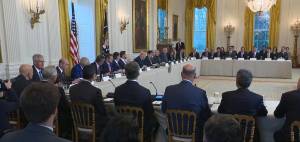 President Trump, at the table's center, convenes executives from major oil company at the White House on Jan. 9, 2026.
MeidasTouch Network, Commentary: Easier Said Than Drilled, Michael Cohen, right, Jan. 10, 2026. Trump’s bravado meets reality as oil executives politely refuse to bankroll chaos, exposing the yawning chasm between his grand promises and the hard math of global energy markets.
Benjamin Franklin had a knack for slicing through bullshit with surgical precision. “A well done is better than well said,” he wrote; colonial shorthand for put up or shut up. If Franklin were alive today, he wouldn’t need a quill. He’d need a laugh track and a stiff drink, because Donald Trump has turned well said into a performance art, entirely divorced from well done.Subscribed
We’ve heard this soundtrack before. To name just a few; Trump said he’d end the Russia–Ukraine war in 24 hours. He didn’t. He said Israeli hostages would be home before he even took office. They weren’t. He promised to fix the economy in his first 100 days; an arbitrary deadline he loves because it sounds impressive, even when it’s meaningless. Now add another whopper to the ever-growing pile: Trump wants $100 billion in oil investment poured into Venezuela, a country whose own oil executives politely described as “uninvestable.”
Let that word sink in. Uninvestable. That’s not a partisan insult. That’s not a Democrat talking point. That’s ExxonMobil’s CEO, Darren Woods, sitting in the White House, explaining; carefully, diplomatically, and with corporate understatement, that his company has had its assets seized twice in Venezuela. And no, they’re not rushing back for a third round of economic Russian roulette.
But Trump, undeterred by reality as always, announced that after a January 3rd raid that seized Nicolás Maduro, the United States would “unleash” Venezuela’s oil. He promised lower energy prices. He told oil executives, essentially, Don’t worry about Venezuela; you’re dealing with me. Which should terrify any serious business leader, because if there’s one thing Wall Street understands, it’s that Trump’s word is not collateral.
This is the same man who thinks shouting “We’re open for business!” magically creates physical security, legal certainty, and a functioning regulatory framework. Spoiler alert: it doesn’t. Oil isn’t sold on vibes and bravado. It’s sold on contracts, courts, stability, and trust; four things Trump routinely trashes before breakfast.
Yes, Venezuela has vast reserves. In real estate terms, as one smaller oil executive gushed, it’s “prime real estate.” But here’s the part Trump never understands: prime real estate in a war zone with no title insurance, no rule of law, and armed men deciding ownership at gunpoint is not an investment. It’s a guaranteed hostage situation.
Even the most optimistic analysts say that to triple Venezuela’s oil production by 2040; two decades from now, it would require roughly $8–9 billion per year. Not Trump’s fantasy $100 billion. And that’s under conditions of political stability that, at the moment, exist only in Trump’s imagination and on his teleprompter.
The executives who attended Trump’s White House meeting did what seasoned professionals do when trapped in a room with a man who confuses ambition with competence: they nodded, praised the “opportunity,” and committed exactly zero serious dollars. As one former State Department energy envoy translated the moment perfectly, they were being “as polite as humanly possible… without committing actual dollars.” In Trump-speak, that’s called a standing ovation. In reality, it’s a slow-motion rejection.
Here’s the deeper problem, and why this matters beyond oil markets and balance sheets. Trump governs the same way he sells: he announces first, pressures later, and assumes the world will bend to his certainty. But oil executives aren’t Fox News hosts. They don’t clap because he speaks loudly. They don’t invest because he promises dominance. They’ve already run the numbers; and the numbers don’t lie, even when Trump does.
Meanwhile, the administration is seizing oil tankers, selectively rolling back sanctions, and routing proceeds into U.S.-controlled accounts, all while claiming this will somehow stabilize Venezuela and lower gas prices for Americans. That’s not a plan. That’s improvisation dressed up as strategy. That’s piracy.
Trump wants Americans to believe that chaos creates leverage. In reality, chaos creates risk; and capital hates risk. The oil industry isn’t afraid of drilling. It’s afraid of unpredictability. And Trump is the human embodiment of unpredictability, wrapped in a red tie and a press release.
Benjamin Franklin understood something Trump never will: saying the thing is easy. Doing the thing requires discipline, patience, and credibility. Trump has mastered the art of well said. Venezuela is just the latest reminder that when it comes to well done, he’s drilling dry holes; again.
And the people who end up paying for it, as always, aren’t the men in the boardroom or the politicians at the podium. It’s the American public, sold another grand promise that was never investable to begin with.

The scenic Venezuela Refinery in Puerto Cabello, ready to welcome the legions of American oil company employees.
Emptywheel, Analysis: No One Could Have Anticipated, Venezuelan Edition, Peterr, Jan. 10, 2026. No one could have anticipated . . .
The United States has urged its citizens to leave Venezuela immediately amid reports that armed paramilitaries are trying to track down US citizens, one week after the capture of the South American country’s president, Nicolás Maduro.
In a security alert sent out on Saturday, the state department said there were reports of armed members of pro-regime militias, known as colectivos, setting up roadblocks and searching vehicles for evidence that the occupants were US citizens or supporters of the country.
“US citizens in Venezuela should remain vigilant and exercise caution when traveling by road,” the alert added, urging citizens to depart immediately now that some international flights from Venezuela have restarted.
You don’t say.
The US closed its embassy in Venezuela back in 2019, so it’s not like this kind of warning is entirely new. But this ought to be a flashing red light and blaring siren to all who think that after the abduction of Maduro, everything is just peachy-keen for American oil companies to send hundreds of civilian employees into the country to start extracting oil.
I await Trump’s triumphant visit to Venezuela to receive the accolades of a grateful Central American nation.
New York Times, Machado Offered Trump Her Nobel, but Prize Institute Says It’s Not Allowed, Jonathan Wolfe, Jan. 10, 2026. After María Corina Machado, above, Venezuela’s opposition leader, offered her Nobel Peace Prize to President Trump, the Norwegian Nobel Institute said it cannot be “transferred to others.”
Machado Offered Trump Her Nobel, but Prize Institute Says It’s Not Allowed
After María Corina Machado, Venezuela’s opposition leader, offered her Nobel Peace Prize to President Trump, the Norwegian Nobel Institute said it cannot be “transferred to others.”
Sharing might be caring, but not, apparently, when it comes to the Nobel Peace Prize.
On Friday, the Norwegian Nobel Institute clarified the rules governing the award, writing that the facts were “clear and well established.”
“Once a Nobel Prize is announced, it cannot be revoked, shared or transferred to others,” the institute wrote. “The decision is final and stands for all time.”
The statement was released after María Corina Machado, Venezuela’s opposition leader and the winner of last year’s prize, offered this week to give her Nobel Peace Prize to President Trump, who has long coveted the award.
On Monday, Ms. Machado, speaking to Sean Hannity on Fox News, said that presenting the prize to Mr. Trump would be an act of gratitude from the Venezuelan people for the removal of Nicolás Maduro, the country’s president who was captured last week by the United States.
“Did you at any point offer to give him the Nobel Peace Prize?” Mr. Hannity said in the interview, speaking of Mr. Trump. “Did that actually happen?”
“Well, it hasn’t happened yet,” Mr. Machado said. “But I certainly would love to be able to personally tell him that we believe the Venezuelan people — because this is a prize of the Venezuelan people — certainly want to, to give it to him and share it with him.”
Mr. Trump indicated on Thursday that he would meet with Ms. Machado next week in Washington. The news came after Mr. Trump said that he would not support her to lead the country after the U.S. seizure of Mr. Maduro.
Ms. Machado led a successful election campaign in 2024 against Mr. Maduro, but did not appear on the ballot because she had been barred by Venezuela’s highest court from participating. She had the greatest popular legitimacy to lead the nation, but Mr. Trump has said she doesn’t have the necessary support or respect within Venezuela to govern it.
In an interview on Fox News on Thursday, Mr. Trump said that “it would be a great honor” to accept the award from Ms. Machado, adding that it was “a major embarrassment to Norway” that he did not win the prize.
Mr. Trump has claimed credit for ending several wars since taking office in January. In some cases, warring parties have credited him with advancing peace or calming hostilities. In others, his role is disputed or less clear, or fighting has resumed.
The Norwegian Nobel Institute, in its statement, also linked to a page on its website that said that the Nobel Peace Prize, once awarded, could not be revoked.
According to the statutes of the Nobel Foundation, it wrote, “no appeals may be made against the decision of a prize-awarding body with regard to the award of a prize.”
The organization noted that the committees that award the Nobel Prizes have never considered revoking a prize. As a matter of principle, it said, it does not comment on what Peace Prize winners say or do after they win the award.
More On U.S. Foreign Policy, Climate Change
New York Times, What Is the UNFCCC and Why Is the U.S. Pulling Out? Somini Sengupta, Jan. 8, 2026 (print ed.). The Trump administration said Wednesday that the United States was withdrawing from 66 international agreements, including a major climate change treaty.
President Trump on Wednesday said he was withdrawing the United States from the international treaty that forms the basis for global cooperation in the fight against climate change.
What is the UNFCCC treaty?
Established in 1992, the United Nations Framework Convention on Climate Change, or UNFCCC, is the treaty that sets a legal framework for international negotiations to address climate change. Under the treaty’s umbrella, nations gather every year to hammer out how they can collectively slow down the warming of the Earth’s atmosphere, which is caused principally by the burning of coal, oil and gas.
After years of negotiation, led in part by the United States and China, countries of the world agreed in 2015 to each set their own targets to reduce rising greenhouse gas emissions. That’s known widely as the Paris Agreement, because it was reached at a meeting in Paris under the auspices of the Convention on Climate Change.
The convention has an office in Bonn, Germany, and a staff of around 450. The United States customarily pays for around 20 percent of its core budget. Last year, when the Trump administration withdrew the U.S. contribution, the philanthropist and former Mayor Michael Bloomberg filled the gap.
Who else is a party?
Since 1992, 198 countries have approved or ratified the convention. The United States was the first industrialized country to join, after ratification by the U.S. Senate.
Does a U.S. withdrawal matter?
It makes the United States an outlier. It matters with regard to America’s standing in the world, especially in the eyes of vulnerable countries that correctly point out that the United States is responsible for the largest share of the cumulative climate pollution heating up the Earth’s atmosphere.
Once the U.S. is out of a treaty, it may be hard for it to get back in. Some experts believe a future president could easily rejoin the treaty. Others say the U.S. Senate would need to ratify it again, a vote that requires a two-thirds vote, which may be an elusive task in today’s polarized politics.
The announcement said the withdrawal would take a year to go into effect.
Why now?
The administration instructed the State Department last February to review U.S. support for all global agreements and organizations. It imposed a 180-day deadline, which expired in August, 2025.
What are the implications?
The move takes the United States out of global discussions on renewable energy and measures to adapt to climate hazards. “It is not only self-defeating to let other countries write the global rules of the road for the inevitable transition to clean energy, but also to skip out on trillions of dollars in investment, jobs, lower energy costs, and new markets for American clean technologies,” said Manish Bapna, head of the Natural Resources Defense Council.
More Global News
New York Times, Inside Iran’s Protests: How a Plunging Currency Set Off Wide Unrest, Erika Solomon, Sanam Mahoozi and Sanjana Varghese, Produced by Jon Hazell, Jan. 10, 2026. In a serious challenge to Iran’s authoritarian government, angry protests have spread from the markets and universities of major cities to the impoverished towns in the hinterland.
Well before the latest wave of protests in Iran, Saeed, a tech entrepreneur in Tehran, was ready for them.
For months, it felt as if he and his country were in free-fall. He had spent many sleepless nights since Israeli forces battered Iran’s nuclear facilities in June agonizing over his family’s future and whether more war was inevitable. A deepening economic crisis forced him to lay off his employees. All the while, Iran’s plummeting currency was evaporating his savings.
“I made my decision to join before these protests even took place,” said Saeed, who asked to withhold his full name, fearing retribution from the authorities.
“I am tired and exhausted by the fools and idiots that get to govern us,” he said. “I am tired of their theft, corruption and injustice.”
On Dec. 28, the Iranian rial plunged to an all-time low against the U.S. dollar, and unleashed the wave of anger Saeed had been expecting.
Within hours, shopkeepers in Tehran’s bazaars — the historic heart of Iran’s economy — organized a strike and took to the streets.
More On U.S. Governance, Politics, Culture, Media

The Kennedy Center for the Performing Arts on the banks of the Potomac River in Washington, DC.
New York Times, Washington National Opera Is Leaving the Kennedy Center, Adam Nagourney, Jan. 10, 2026 (print ed.). The opera, which has performed at the arts center since 1971, was concerned by declines in attendance and donations during President Trump’s second term.
The Washington National Opera decided on Friday to move its performances out of the John F. Kennedy Center for the Performing Arts, abandoning the hall where it has played since 1971 in perhaps the largest artistic rebuke yet to President Trump’s campaign to remake the Kennedy Center in his image.
The opera company is seeking to sever its ties with the Kennedy Center after a tumultuous year in which both groups have faced cancellations by artists, empty seats and the retrenchment of donors protesting Mr. Trump’s intervention. Within weeks of beginning his second term, the president named himself chairman of the center and installed a political ally, Richard Grenell, as its executive director, while filling its board with supporters.
A resolution to leave was approved by the Washington National Opera’s board of trustees on Friday, according to a statement the opera provided to The New York Times.
“Today, the Washington National Opera announced its decision to seek an amicable early termination of its affiliation agreement with the Kennedy Center and resume operations as a fully independent nonprofit entity,” the statement said.
The resolution calls for the opera to move its performances out of the Kennedy Center’s 2,364-seat Opera House as soon as possible and to reduce the number of performances as a cost-saving measure. Opera officials said that new sites in Washington have been lined up but that no leases have been signed. They declined to name those venues.
The officials said that details about the new schedule would be announced shortly. The Kennedy Center’s website currently lists the opera’s lineup of spring performances, including Scott Joplin’s “Treemonisha” and “West Side Story” as well as its upcoming gala, but a separate website is being set up.
The resolution also calls for the Washington National Opera to begin negotiations with Mr. Grenell and the Kennedy Center about ending an affiliation agreement that has bound the cultural institutions since it was signed in 2011, when the opera was facing financial challenges.
The opera declined to release a copy of the resolution, which was being negotiated until shortly before it was approved by the 37-member board during a virtual meeting on Friday. But details of its contents were provided to The Times by officials involved in the deliberations.
The Kennedy Center did not immediately offer a response to the opera’s decision to leave when reached for comment.
The opera’s impending departure is the latest sign of resistance to Mr. Trump’s effort to drastically change an institution that was created in 1971 in tribute to John F. Kennedy, who had been assassinated eight years earlier.
Opera leaders said the decision to leave was in response to a drop in attendance and a decline in donor contributions during the president’s second term, as well as an escalating number of artists who have refused to appear at the Kennedy Center since Mr. Trump’s name was added to the building last month. The authority of the board to overrule Congress and rename the center is disputed, and The Times has continued to refer to its legal name.
“I am deeply saddened to leave the Kennedy Center,” Francesca Zambello, who has been the opera’s artistic director for 14 years, said in a statement to The Times. “I have been proud to be affiliated with a national monument to the human spirit, a place that has long served as an inviting home for our ever-growing family of artists and opera lovers.”
Any negotiation over the affiliation agreement promises to be fraught: It was first negotiated when Barack Obama was president, setting a framework for the organizations to work cooperatively in hiring the opera company’s general director (currently Timothy O’Leary) and artistic director, as well as to make decisions on its programming. The Kennedy Center also leases space to the opera company for storage, offices and rehearsals.
Among the most difficult issues that need to be resolved is the future of the opera’s $30 million endowment, which has already become a matter of dispute. The opera contends that the affiliation agreement makes clear that both entities control the fund, the result of a history of donations from opera supporters in Washington.
Officials with the opera said they would move all performances out of the center, regardless of whether a deal to end its formal ties is struck. They asserted that taking their shows to other venues would free the company of the management entanglements with the Kennedy Center — in particular, programming and the selection of top opera personnel — that are addressed in the affiliation agreement.ImageA limousine outside a marble building. On its facade are the words “The Donald J. Trump and the John F. Kennedy Memorial Center for the Performing Arts.”
The Washington National Opera was established in 1957, with an inaugural performance of Mozart’s “The Abduction From the Seraglio” at George Washington University. With a few exceptions — it performed at Constitution Hall while its home on the Potomac was being renovated — it has been performing at the Kennedy Center since the building opened.
The opera was founded by Day Thorpe, the music critic of The Washington Star, and has provided a stage to some of the most prominent performers of the generation, including Plácido Domingo (who also served as its artistic director), Anna Netrebko, Denyce Graves and Renée Fleming. It has staged warhorses like “Carmen” and a new production of the “Ring” cycle in 2016, which was directed by Ms. Zambello. It also created the American Opera Initiative to showcase young composers.
“The Washington National Opera is one of our most prominent companies,” said Marc A. Scorca, the president emeritus of Opera America, a service organization for opera companies. “It has presented a mix of work from our inherited repertoire and new works from a wonderful young artists program.
“To have a major opera company produce such a mix of repertoire is very important,” he said.
Since early in his second term, Mr. Trump has sought to put his imprint on traditionally nonpartisan Washington institutions like the Smithsonian and the Kennedy Center. His appointment of Mr. Grenell came with a clear message from Mr. Trump that he wanted changes in the way things were done at the Kennedy Center.
“Ric shares my Vision for a GOLDEN AGE of American Arts and Culture, and will be overseeing the daily operations of the Center. NO MORE DRAG SHOWS, OR OTHER ANTI-AMERICAN PROPAGANDA,” the president said then in a post on social media.
Before long, the center ordered the National Symphony Orchestra to open all concerts with the national anthem (Mr. Grenell took the baton and conducted one of them) and hired a dance director who had complained to Mr. Grenell about “radical leftist ideologies in ballet.”
Officials with the Washington National Opera noted that operas often advance strong political and moral points of views — whether they were written two centuries or two years ago — and that they were worried they would be blocked from performing operas that did not follow Mr. Grenell’s edicts. Among its programming this season is Robert Ward’s “The Crucible,” based on the Arthur Miller play that explored the waves of paranoia overtaking a small town during the Salem witch trials of the 17th century.
In addition, Mr. Grenell said he wanted all productions at the Kennedy Center to be revenue neutral, taking in as much money in ticket sales and contributions as they cost to mount. Operas are expensive to produce and are typically not revenue neutral.
Ms. Zambello publicly raised the possibility of leaving the Kennedy Center in an interview with The Guardian in November, saying that the Trump administration’s policies had “shattered” the confidence of donors and resulted in a 40 percent drop in ticket revenues. “If we cannot raise enough money, or sell enough tickets in there, we have to consider other options,” she said at the time.
After her remarks produced an uproar, Ms. Zambello and other leaders of the opera reaffirmed their intention to stay. But since then, she and other opera officials said, the situation has only grown worse.
Meidas Touch Network, Trump Warns of Hegseth Impeachment, J.D. Wolf, Jan. 10, 2026. Trump claims Hegseth is “one of the key fighters keeping our country strong!” Donald Trump is using a late-night fundraising appeal to warn supporters that Democrats are preparing to impeach Pete Hegseth, casting the move as an existential threat to the MAGA movement ahead of the 2026 midterms.
In the email, Trump warns that “articles of impeachment” have been announced against Hegseth and frames the development as a coordinated attack designed to “undermine the MAGA movement” by targeting one of its “key fighters.” Trump claims Hegseth is “one of the key fighters keeping our country strong!”
The appeal leans heavily on alarm and personal loyalty, suggesting supporters may have “abandoned” Trump and repeatedly urging them to “respond to Trump now” to reaffirm their commitment.
Trump positions the Hegseth warning as part of a broader narrative of persecution by Democrats, tying it directly to midterm elections and asking recipients to click to affirm their support which actually direct them to hidden donation forms.
Hopium Chronicles, Advocacy: Trump's Crap Economy, Their "Idiotic Gaslighting" and A New Conversation With The Great Stuart Stevens, Simon Rosenberg, Jan. 10, 2026. Take care of yourselves everyone. It's been a hard week.
My main offering is a recording of a comprehensive conversation I had yesterday with the great Stuart Stevens of Lincoln Square. We touch on all the big issues of the moment The killing of Renee Nicole Good, Trump’s crowning himself The Emperor Of The Americas, Russia’s capture of the Trump and the GOP, the need for our pro-democracy movement to keep finding a higher gear, and Trump’s domestic struggles and fraying Congressional coalition. We even lament Ole Miss’s tough loss on Thursday night.
Trump’s Tariff and Immigration Policies Have Stalled Out The Economy - 50,000 jobs created in December, 584,000 for the year, 49,000 on average per month this year. Biden saw 16.4m jobs created on his watch, 4.1m per year, 341,000 per month.
Despite the bluster and the bullshit America is losing blue collar jobs for the first time since the pandemic. Consumer sentiment is the lowest in 65 years (via UMichigan). Americans remain very unhappy with Trump.
My expectation is that we will get a lot of independent polling in the next two weeks which will tell us more about the public’s reaction to the killing of Renee Nicole Good and Trump’s lawless global ambitions. The only polls released this week with interviews after Good’s murder were not promising for Trump:
CBS/YouGov 41%-59% (-18) - 2 points worse than the current average (above)
RMG/Napolitan - 47%-51% (-4) - arguably the most pro-Trump pollster found Trump dropping 5 points since their last poll in mid-December. This drop will be noted in the White House and in right wing circles.
As I argued in yesterday’s post and in my new weekly video presentation I think it’s the failure of his domestic agenda, his soaring unpopularity, his clear physical and cognitive decline, his fraying Congressional coalition, and his fear of the Epstein files that is driving Trump to look abroad for ways to restore his STRENGTH, POWER, and MANLINESS.
There is great urgency in the White House to this restoration project for listen to Trump yesterday at what was one of his most unhinged, dissembling, and disturbing public performances of the last ten years (the meeting with the oik companies). I know it is hard to watch and listen to him but check out the racial anger, the incoherent rambling, the wild confabulation, and the clear madness as he claims he won Minnesota three times. He is profoundly and dangerously ill:
I am not going to write about Renee Nicole Good, and what is happening in Minnesota today. For my heart is heavy and I need a day off. I will, however, share this post below about the new video Agent Ross, the killer, released yesterday, the one where we see Good trying to de-escalate and where Ross spits out “fucking bitch” after killing her. For yes, incredibly, Agent Ross filmed the whole thing with his cell phone that was in his right hand until he switched to his left to draw his weapon. Here is that moment when he switches his phone to his left hand, and starts to pursue, confront, and eventually kill Good. It is hard proof that our Government is making up reprehensible lies about the killing of Renee Nicole Good:
And I will let Governor Josh Shapiro close out our post today with appropriate and powerful contempt for JD Vance, his “idiotic gaslighting” and the “weakness of his character” that was on display this week for all of us to see:
Now, Let’s Get To Work Everyone!!!!!!!!!!!!!!!!
The Contrarian, Publisher's Roundup and Commentary: A Year of Fighting for Democracy–in Print and in Court, Norman Eisen, right,  Jan. 10, 2026. Exactly one year ago today, Jen Rubin and I and a small band of colleagues were furiously working to launch a new publication dedicated to the idea of honest but unabashed defense of democracy.
We were just three days from the January 13 birth of The Contrarian. Too many mainstream outlets and powerful people and institutions were bowing down to the incoming would-be autocrat. We didn’t know whether our new publication would be a success, but we knew we would fight authoritarianism with every ounce of our and The Contrarian’s being.
What a difference a year makes! Yes, the devastation, destruction, and even death Donald Trump has wrought have been vast. But we and the entire democracy movement have again and again frustrated his efforts to impose dictatorship. You have helped make that possible, dear Contrarians, through your paid subscriptions that not only fund our coverage but also my and my colleagues’ pro-democracy litigation. As I like to say, we have met Trump’s flood-the-zone autocratic approach with rule-of-law shock and awe.Subscribed
Trump initially pursued his authoritarian aspirations using the traditional tools of the presidency. That included, for example, the power of the pen, surging an unprecedented number of illegal executive orders, such as those purporting to end birthright citizenship or asserting control of American elections.
We covered all of that here at The Contrarian–unabashedly, as promised. And you Contrarians also supported me and the coalition of democracy, civil rights, and other nonprofit groups to push back in one of the most extraordinary litigation campaigns in American history. In about 200 cases in this and parallel areas (including his abuse of spending authority and firing authority), federal judges again and again stopped Trump from capturing the dictator flag. (Yes, he fared better at the Supreme Court, but it takes only a small fraction of the cases.)
Those birthright citizenship and elections EOs were among the many that my colleagues and I and our wonderful partners and clients went to court to help stop. We also blocked the firing of tens of thousands of government employees and kept multiple government agencies open, all fueled by your paid subscriptions. Because we at The Contrarian are a not-for-profit, all proceeds go to support our scintillating coverage and this kind of pro-democracy advocacy.
All of that losing was very frustrating for Trump, so he looked to other outlets for his dictatorial energies. Having confronted failure again and again in civil litigation, he turned to exercise his criminal-justice powers, where an administration typically has broader leeway. The old saying goes that a prosecutor can get a grand jury to indict a ham sandwich, and Trump deployed hand-picked cronies, including his former defense lawyer Alina Habba, to occupy once-distinguished federal prosecutorial offices.
Here, too, Trump met failure. Charges against two principal adversaries, Letitia James and Jim Comey, were tossed out because another one of those hand-picked cronies, Lindsay Halligan, was illegally installed by Trump. Contrarians, you were again a part of that. My litigation colleagues and I helped secure the very first precedent that these appointments were illegal. Then we filed a brief in support of Comey and James that helped their wonderful counsel get those cases dismissed.Subscribed
Then there was a third area of Trump flexing and ultimate frustration: deployment of the National Guard. For all of the other disappointments at the Supreme Court (extensively covered here at The Contrarian), it finally did the right thing at the end of the year when it ruled that he had overreached his powers in Chicago. Trump was forced to admit defeat and pull back the Guard from multiple big cities, including Los Angeles—which my litigation colleagues and I are proud to represent pro bono, again made possible by your paid subscriptions.
As presidents often do when they’re facing domestic defeat, Trump has turned his autocratic attention abroad. This week, I wrote for The Contrarian with colleagues about the illegality of his Venezuela campaign and broke the news of our legal campaign to push back on it. Judging from the chaos surrounding Venezuela and the unpopularity of the invasion in the United States, Trump has another flop on his hands. That includes this week’s War Powers resolution, which passed the Senate with members of his own party breaking off to oppose him.
And that’s just a few of the examples of our coverage and legal pushback on all this and so much more, made possible by you. It has been the privilege of a lifetime to share the journalistic and litigation fight of the past year with over half a million Contrarians. Yes, as you will see from this week’s Contrarian roundup below, Trump is as dangerous as ever, but he’s much less powerful. That is thanks in no small part to each of you. Happy anniversary Contrarians!
And now for this week’s roundup, authored by my wonderful colleague Meghan Houser, Jamie Riley, Lily Conway and our Contrarian team.
Congress In The Dark
Sen. Mark Warner joined Jen Rubin to discuss the dangerous precedent the United States just set by kidnapping a world leader. “How would [Trump] respond if Putin does that, not only in Ukraine, but elsewhere? Or Xi takes Taiwan? How do we have any moral standing to push back?”
Making a Mockery of Checks and Balances
Erwin Chemerinsky wrote on the Venezuela operation as a chilling mark of how far we have deviated from constitutional restraints. “A country that is ruled by someone who can do anything is not a constitutional democracy under the rule of law.”
Split Screen: The Reality Show Presidency and the Maduro Capture
Azza Cohen wrote on the White House’s social-media-obsessed communication strategy around Maduro’s capture, which reveals “the transformation of military operations into reality television content, with Donald Trump as the main character.”
Maduro’s Arrest Made WHO 400k Richer?
Rep. Richie Torres joined Jen to discuss the MAGA Republicans’ guide to earning $400k through insider trading—and how he plans to ban prediction market profiteering. “It not only corrupts the market, it corrupts the government itself.”
The Coming Legal and Congressional Action to Fight ‘The Donroe Doctrine’
This week, Richard Painter, Virginia Canter, Christopher Swartz and I, wrote about the Democracy Defenders Fund launching two parallel legal campaigns to fight back against Trump’s profiteering in Venezuela.
Rep. Hakeem Jeffries on the future in Venezuela and more
On the podcast this week, House Minority Leader Hakeem Jeffries spoke with April Ryan about the uncertain future of action in Venezuela, and Carlos Eduardo Espina joined Jen to discuss what Maduro’s capture means for Venezuelans on the ground.
A Brilliant Operation Can Still Be a Bad Bet
Brian O’Neill looked ahead to the consequences of the administration’s “hemispheric demonstration.” “If Trump is now taking ownership of what happens inside Venezuela, the real test won’t be whether the first wave succeeded. It will be whether the United States can define—and exit—an end state that Venezuela and the region will accept.”Anniversary of the Jan. 6 Riot
24 Hours at the Capitol...
Jen spoke with author Nora Neus, whose new book offers a meticulously researched, minute-by-minute account of the January 6 insurrection. “I was really surprised by how many of the rioters felt duped by President Trump … and after the fact felt really let down by this man that they had, for many of them (until the pardons came through), given up so much for.”
J6ers: Where Are They Now?
Tim Dickinson caught us up on some of the most notorious insurrection offenders—or “great patriots”—a year after Trump’s pardon spree. Spoiler: at least six have been charged with child sex crimes.ICE in Our Cities
ICE Killed Another Person
Jen Rubin wrote on ICE’s killing of a young woman in Minneapolis. “This tragedy was entirely predictable.”
ICE and Lethal Force
Jenn Borchetta, the ACLU’s deputy project director on policing, joined Jen to unpack what we should know as ICE’s militarization escalates. “When law enforcement leadership casts vast members of the community as enemies, we have seen that that leads to the misuse of force.”
ICE and Our Communities
In conversation with Jen, Ezra Levin of Indivisible demanded action against ICE. “When a regime like this comes for us, attacks our communities, murders Americans, and asks us to not protest, you know what we do? We protest. It is our job as Americans to express our outrage peacefully but powerfully in this moment.”The Continuing Healthcare Crisis
A Threat To Every American
Jeff Nesbit sounded the alarm on the new CDC childhood vaccine schedule, which slashes the number of universally recommended childhood vaccines from 17 to 11—even as the United States just reached its highest measles case total in 34 years. The CDC’s work “is being poisoned by rhetoric that treats life-saving medicine as a lifestyle choice.”
Undaunted
Jen wrote on the House vote to advance extension of ACA subsidies for three years—secured with a remarkable 17 Republicans joining Democrats—and highlighted the role of Minority Leader Hakeem Jeffries, who “kept the focus on healthcare, maintained his nerve during the shutdown, and continued to make the case to voters even after Senate Democrats caved.”
My Predictions for Women’s Health in 2026
Jennifer Weiss-Wolf warned us to brace for another year in which the federal government itself is hazardous to women’s health. “We can expect continued attacks on bodily autonomy and additional barriers to care.”Looking Ahead in 2026
Trump’s 2026 Government Agenda
Max Stier forecasted a year that promises a continuation of Trump’s destabilizing and antidemocratic efforts and urged Congress and the public to use the remaining levers of democracy to hold the administration accountable.
Republicans Want Taxation Without Representation
Max Flugrath wrote on Republicans’ three-vector plan to lock in power without winning more votes, which hinges on a case now before the Supreme Court. If the GOP has its way, say hello to higher taxes — and goodbye to voting rights.
The Contrarian covers the Democracy Movement
This week we saw protests against ICE in Minneapolis, Washington, D.C, Jacksonville, Fla., Philadelphia, and more, plus nationwide protests against Trump’s attack on Venezuela, and this weekend we’re tracking hundreds more events planned through Indivisible. Find protests in your area at mobilize.us, and send us your protest photos at
Find Your Joy.
Shalise Manza Young gave us an essential reminder of what “might be the most important thing” we do any given day: find the kind of joy that sustains and nourishes. “You can’t fight when you’re exhausted, and there’s a vicious fight in front of us.”
Politics USA, Anti-ICE Protests Rock America As The People Fight Back, Sarah Jones and Jason Easley, Jan. 10, 2026. The murder of Renee Good has inspired Americans across the country to take to the streets in a wave of anti-ICE protests.
No matter how distorted the lies and cover stories from the Trump administration become, the White House can’t seem to fool the vastmajority of the American peop;e into supporting the murder of a mother of three by an ICE agent in Minneapolis, MN.
The administration or its allies even tried to leak a video with Vice President JD Vance putting commentary above it on X that was intended to convince people not to believe their own eyes.
Reps. Ilhan Omar, Angie Craig, and Kelly Morrison, all of Minnesota, attempted to conduct congressional oversight at an ICE facility, but were illegally denied entry.Rep. Omar (D-MN) told reporters at a press briefing after the members of Congress were turned away:
"Shortly after we were let in, two officials came in and said that they received the message that we were no longer allowed to be in the building and that they were rescinding our invitation to come in and declining any further access to the building. What happened today is a blatant attempt to obstruct members of Congress from doing their oversight duties."
: Pressure is growing on DHS Secretary Kristi Noem to step down from the Trump administration, and as part of that pressure, the American people are taking to the streets for thousands of protests across the United States on Saturday and Sunday, as part of a national weekend of action. The ICE Out For Good Protests have kicked off across the country, and they have clear goals.
#Me Too Allegations
New York Times, Timothy Busfield, Actor and Director, Is Accused of Child Sex Abuse, John Yoon, Jan. 10, 2026. The Emmy Award-winning actor is accused of abusing two child actors while working on a television series. An arrest warrant was issued in New Mexico.
A judge in New Mexico on Friday issued a warrant for the arrest of Timothy Busfield, an actor and director, on charges of child sex abuse.
The case involves two boys who were actors on a television set in the state, where Mr. Busfield, 68, was acting and directing.
The warrant, signed by a Bernalillo County Metropolitan Court judge in Albuquerque, approved the arrest of Mr. Busfield, court records show. He was not in custody as of Friday night, said Detective Chase Jewell, a spokesman for the Albuquerque Police Department.
Mr. Busfield was charged with two counts of criminal sexual contact of a minor and one count of child abuse after two child actors said he had touched them inappropriately over a period of years, a police affidavit said.
The boys, who are both 11 and related, were part of the Fox crime drama “The Cleaning Lady,” for which Mr. Busfield was an executive producer and an actor. One of the boys said that Mr. Busfield had touched his genitals starting when he was 7, according to the affidavit.
Mr. Busfield’s lawyer and agents did not respond to requests for comment on Saturday.
Warner Bros. Television, which produced the show, said in a statement that it was “aware of the current charges against Mr. Busfield and have been and will continue to cooperate with law enforcement.”
Mr. Busfield won an Emmy Award for Outstanding Supporting Actor in a Drama Series for his performance in “Thirtysomething,” which aired for four years on ABC beginning in 1987. Mr. Busfield, who is married to the actress Melissa Gilbert, is also known for his portrayal of a journalist on “The West Wing.”
The police investigation into Mr. Busfield began in 2024 after officers responded to a call from a doctor at the University of New Mexico Hospital, where staff members requested a sexual-abuse investigation and said it appeared the boys were being groomed, according to the affidavit.
Jan. 9

Paul Krugman via Substack, Political-Economy Commentary: The Mad King’s Madness Deepens, Paul Krugman, right, Jan. 9, 2026. Trump wants war, war and more war – even against Americans. Renee Nicole Good, below, woman shot by ICE agent, was out 'caring for her neighbors,' Minneapolis officials say.
Things are not going well politically for Donald Trump. The polls show him underwater on every major issue. And while he insists that these are fake, it’s clear that he knows better. He recently lamented that the Republicans will do badly in the midterms and even floated the idea that midterms should be canceled.
And as January 6th 2021 showed, Trump simply can’t stand political rejection. He will do anything, use any tool or any person at his disposal, to obliterate the sources of that rejection.
So as we head into the 2026 midterm season, the best way to understand U.S. policy is that it’s in the pursuit of one crucial objective: Propping up Trump’s fragile ego.
What was the motivation for the abduction of Nicolás Maduro? It wasn’t about drugs, which were always an obvious pretense. By Trump’s own account it wasn’t about democracy. Trump talks a lot about oil, but Venezuela’s heavy, hard-to-process oil and its decrepit oil infrastructure aren’t big prizes. The Financial Timesreports that U.S. oil companies won’t invest in Venezuela unless they receive firm guarantees. One investor told the paper, “No one wants to go in there when a random fucking tweet can change the entire foreign policy of the country.”
The real purpose of the abduction, surely, was to give Trump an opportunity to strut around and act tough. But this ego gratification, like a sugar rush, won’t last long. Voters normally rally around the president at the beginning of a war. The invasion of Iraq was initially very popular. But the action in Venezuela hasn’t had any visible rally-around-the-flag effect. While Republicans, as always, support Trump strongly, independents are opposed:
And now the story of the moment is the atrocity in Minneapolis, where, on Wednesday, an ICE agent killedRenee Nicole Good by shooting her in the head.
Trump and his minions responded by flatly lying about what happened. But their accounts have been refuted by video evidence which show an out-of-control ICE agent gunning down a woman who was simply trying to get away from a frightening situation. Yes, MAGA loyalists will fall into line, preferring to believe Trump rather than their own lying eyes. But public revulsion over Good’s murder and Trump’s mendacity are high and growing.
A president who actually cared about the welfare of those he governs would have taken Good’s killing as an indication that his deportation tactics have veered wildly and tragically off course. He would have called for a halt of ICE actions and made sure there would be an objective and timely federal investigation into this national tragedy.
But for Trump, ICE’s violent lawlessness is a feature, not a bug. Sending armed, masked, poorly trained, masked and out-of-control armed thugs into blue cities is, in effect, a war on Americans, just as January 6thwas a war on American institutions. In effect, Trump would rather savage his own people than be held accountable for his actions.
So in Trump’s mind, Renee Nicole Good’s murder is at most collateral damage, in service to his insatiable need to dominate and feel powerful -- so insatiable that he is attempting to create an alternate reality, claiming that that Good ran over an agent although there is irrefutable video evidence that she didn’t.
And when one set of lies doesn’t work, he switches tactics – changing the topic, deflecting, and spouting even more lies. Thus, just hours after Good’s death, Trump proclaimed that he was seeking a huge increase in military spending:
It’s a near certainty that Trump’s assertion that he arrived at an immediate 50% increase in the military budget after “long and difficult negotiations” is yet another lie. There’s been no indication whatsoever that a massive increase in defense spending was on anyone’s agenda before he suddenly posted about it on Truth Social.
So what was that about? Given the timing, it’s clear that Trump’s announcement was yet another exercise in self-aggrandizement, as well as an attempt to grab the headlines away from Good’s killing. But what’s also important to realize from Trump’s announcement is that he is now clearly conflating the size of the US military with his ego. Evidently the sugar rush of Maduro’s capture has left him wanting more and more military validation, particularly as his poll numbers tank.
So here’s a warning to the US military: if you continue to indulge the sick fantasies of this man, he will drag this country into more and deeper international morasses to feed his need for glory. Do what Admiral Alvin Holsey, an honorable man, did – stand down and refuse an illegal order. Here’s a warning to the Republicans: if you continue to allow this man to perpetrate war against his own people with impunity through the actions of ICE, you will be remembered as cowards and hypocrites. Here’s a warning to all his other enablers: if you do not do something to stop this madman, you will go down in history as traitors to this country.
And here’s a warning to those directly perpetrating Trump-directed atrocities: He will not be in power forever, and I expect and hope that you will be held accountable, personally, and prosecuted to the full extent of the law.
New York Times, Videos Contradict Trump Administration Account of ICE Shooting in Minneapolis, Devon Lum, Robin Stein and Ainara Tiefenthäler, Jan. 9, 2026 (print ed.). An analysis of footage from three camera angles show that the vehicle appears to be turning away from a federal officer as he opened fire.
The Bulwark,Commentary on New Footage in Minneapolis Killing, Tim Miller, Jan. 9, 2025 (15:18 min. video). Murder.
Note: The footage from the perspective of ICE agent Jonathan Ross played in this video appears to have come not from a body camera, as mentioned in the video, but from the phone Ross was holding during the incident.
 Thinking About...Commentary: Maduro in Minneapolis, Timothy Snyder (right, author of "On Tyranny"),
 Jan. 9, 2026. Murderous Lies.
The shadow of Maduro hangs over Minneapolis.
On January 3rd, the American military extracted the murderous dictator Nicolás Maduro from Caracas. On January 7th, ICE killed a mother in her car in Minnesota. These are two glimpses of a larger story about death and lies.
The abduction of Maduro was not about naming his crimes, but about ignoring them. The worst thing that Maduro did is just what Trump is beginning to do: killing civilians and blaming them for their own deaths. After Minneapolis, Maduro’s lies are being repeated: in American English, by American authorities.
 The thousands of extrajudicial killings in Maduro’s Venezuela were carried out by organized death squads. These actions were described as defensive. The Maduro regime claimed that the people they murdered were resisting government authority, and that the men who pulled the trigger had been provoked by those whom they murdered.
Minneapolis has just witnessed an extrajudicial killing, at the hands of ICE, which looks more and more like a presidential paramilitary organization. The action was, horribly, excused by the president, the vice-president, and the director of homeland security, using the same lies as those told by Maduro’s Venezuelan regime. The victim was resisting government authority, they said. The man who pulled the trigger had been provoked, they said. It was not the killer who was a terrorist. It was the mom who had just dropped off one of her six-year-old at school.Subscribed
These individual lies are part of the logic of death squads. A murderer can go free because the government controls the story. And then the next murder is all the easier. And suddenly this is normal and people simply disappear.
The members of Maduro’s death squads have no concern about prosecution. In Venezuela, nothing about this has changed since the extraction of Maduro. All that has happened is the spread of this practice to the United States. The ICE agent who shot the mom in the face was spirited away, to be investigated by the same federal institution, the Department of Justice, that holds Maduro.
And in both cases, it is reasonable to fear, the essential result will be the same. The real crimes will be ignored, in the service of building up a fake narrative that enables more real crimes. Maduro used to claim that his opponents were part of a plot led by Trump. Now Trump can claim that his opponents are part of a plot led by Maduro.
Maduro, having been excused for his real atrocities, is to be be tried on the politically useful drug charges. The issue of drugs, like immigration, can be used to accuse domestic international opponents of being part of an international conspiracy. Maduro’s own death squads planted drugs on their victims. We should prepare for something like this on a much grander scale: everyone who opposes Trump is in league with the “narco-terrorists.”
That is the political sense of the arrest of Maduro. He becomes a fleshy exhibition in Trump’s current fantasy: that Americans who want freedom and democracy are somehow part of an international conspiracy that involves drugs or immigration.
We will perhaps see a kind of reverse show trial. In the show trials of the totalitarian twentieth century, people pled guilty to crimes that they did not commit. Maduro will be instead excused from the horrible crimes he did commit. But the end result will be the same: the invention of a vast imaginary conspiracy in order to justify repression. woman walking on white tiled flooring
Maduro’s regime is less of an enemy than a model for Trump (and Vance and Noem), providing examples of how to talk about political murder. Once Maduro claimed that international plots were responsible for domestic opposition. Now he is a prop as the Trump administration says the same thing.
A big liar becomes an element of someone else’s big lie. This might be poetic, but it is not justice. If Maduro is to be tried, it should be for the extrajudicial killings. By the same token, the ICE agent who shot a woman three times in the face should be tried. If he is not, then we take another step towards the kind of regime Maduro built in Venezuela. The first extrajudicial killings, if excused, become the precedent for the hundreds and then the thousands to follow.
All of us can be victims of the conspiracy story that Trump and his advisors are telling: that all evil has to do with immigrants and drugs, and that everyone who wants democracy and human rights in the United States is somehow part of a giant invisible immigration/drug/antifa conspiracy directed from abroad.
This can be halted and reversed. We can call things by their proper names as those in power lie. We can speak the names of the victims, and call out the institutions that partake in the lies. Presidential paramilitaries should not exist. Nor for that matter should concentration camps.
Having brought Maduro to America, the Trump administration is also bringing his politics. Yet the shadow over Minneapolis is not just Maduro’s, but that of all modern tyrannies. The cycle is known. The lie that justifies the violence, the violence as the excuse for repeating the lie. The truth alone will not set is free, but truth is the first step.
We need the truth about the truth about the killer, and the truth about
Global News
“If U.S. forces invade Greenland, the first 1,000 American soldiers will be sent home in body bags."
— UN Security Council adviser Jacob Kaarsbo, right, of Denmark via The Guardian
 Jacob Kaarsbo, a former analyst at the Danish defence intelligence agency, said a US attack would face opposition.
A “quick and dirty job”, seizing the control tower and strategic sites, might have been possible in 2025, he said, but Denmark has ramped up its presence.
Winter weather would also make any operation very difficult, he said. “I hope the Europeans can convince the US that we will indeed shoot back,” he said. “US soldiers would come back to the US in body bags.”
Morning Shots via The Bulwark, Political Opinion: We Have the King That Thomas Paine Feared, Bill Kristol, Andrew Egger and Jim Swift, Jan. 9, 2026. The rule of law was central to the American experiment. Is it still?
Two big bits of economic news this morning. The jobs numbers came in showing a middling 50,000 jobs created in December. Worse, the report made revisions to the two prior months’ numbers, reducing the estimated number of jobs gained by 76,000.
Meanwhile, the Supreme Court is widely expected to hand down a ruling this morning on Trump’s massive global “Liberation Day” tariffs. If they rule that Trump exceeded his presidential authority in implementing those tariffs under the International Emergency Economic Powers Act, it would be a massive blow to the president’s trade policy—but possibly a substantial boost to the economy, if SCOTUS ordered the Treasury to refund nearly $150 billion in collected duties to U.S. companies.
Trump has argued for months that a ruling against him in this matter would be apocalyptic for America, calling it “literally LIFE OR DEATH for our country.” If SCOTUS does strike down the tariffs, he’s expected to try to put them back in place using a different authority. Happy Friday.
Alternate text MSNBC anchor in tears discussing 'personal' feelings about Renee Good shooting
Letters from an American, Historical Commentary: January 2, 2026 [Stuffed Animals, Neighbors, Murder, the FBI], Heather Cox Richardson, right, Jan. 9, 2026. On MS NOW today, columnist Philip Bump broke down (as shown above) when talking about the shooting of Renee Nicole Good yesterday in Minneapolis.
“I have a six year old,” he said. “And…seeing the image of the stuffed animals in the glove compartment of her car—really emotional for me and…what I take away from this is, for me that’s the thing that stands out:  that this was a family that could have been like mine.”
Bump went on to emphasize that “there are a lot of situations, a lot of incidents that have involved ICE, have involved the government over the course of the past thirteen months in which there is resonance for other families in similar ways,” but what he hit on in his first reaction to Good’s killing was the one the administration must fear most of all. Good was a white, suburban mother, whose ex-husband told reporters she was a Christian stay-at-home mom, and Bump is a white man.
President Donald J. Trump’s people see that demographic as their base. If it turns on Trump, they are politically finished, as finished as elite southern enslavers were when Harriet Beecher Stowe reminded American mothers of the fragility of their own childrens’ lives to condemn the sale of Black children; as finished as the second Ku Klux Klan was when its leader kidnapped, raped, and murdered 28-year-old Madge Oberholtzer; as finished as the white segregationists were when white supremacists murdered four little girls in church in 1963.
Evidence that President Donald J. Trump has sexually abused children would likely be enough to crater his political support from this group, making it no accident that the administration is openly flouting the law that required the full release of the Epstein Files by December 19, 2025. The Department of Justice has released less than 1% of those files, and many of them were so heavily redacted as to be useless. In a court filing on Monday, U.S. Attorney General Pam Bondi and Deputy Attorney General Todd Blanche said that “substantial work remains to be done” before it can release them all.
But there is no hiding the murder of Renee Good, captured on video by several witnesses as it was. And so the Trump administration is working desperately to smear Good and to convince the public that, contrary to widespread video evidence, the federal agent put in place by the Trump regime shot her in self-defense.
The Department of Homeland Security (DHS), DHS secretary Kristi Noem, below right, and Trump himself have all insisted that their false narrative is true. Media Matters for America compiled a timeline showing how the Fox News Channel first told viewers that Good had tried to ram officers whose vehicle was stuck in a snowbank, then moderated their language as video appeared, and then, by the evening, parroted the administration’s talking points.
Today, in a press conference on the shooting, Vice President J.D. Vance made even more extreme statements, claiming—all evidence to the contrary—that the woman shot in Minneapolis was part of a “left wing network” and that “nobody debates” that she “aimed her car at a law enforcement officer and pressed on the accelerator.” In fact, among those who “debate” Vance’s version of events are the journalists at the New York Times, who today published a slow-motion analysis that demonstrated conclusively that the vehicle was turning away from the officer when he opened fire.
White House press secretary Karoline Leavitt increased the attack on Good even more today by saying: “The deadly incident that took place in Minnesota yesterday occurred as a result of a larger, sinister left-wing movement that has spread across our country, where our brave men and women of federal law enforcement are under organized attack.”
The administration appears to be trying to make sure their narrative will get an official stamp of approval by silencing a real investigation. Today, the Minnesota Bureau of Criminal Apprehension (BCA), a statewide criminal investigative bureau in the Minnesota Department of Public Safety, said the Federal Bureau of Investigation (FBI) has shut its officials out of the investigation into Good’s death. The FBI will no longer allow the BCA to “have access to the case materials, scene evidence or investigative interviews necessary to complete a thorough and independent investigation.” The BCA has, it said, “reluctantly withdrawn from the investigation.”
Law professor Steve Vladeck commented sarcastically: “This is *definitely* how you behave when you’re trying to bring every resource to bear, rather than trying to cover up the unlawful behavior of your own personnel.”
 The FBI is housed within the Department of Justice (DOJ), which is run by Trump loyalists Bondi and Blanche, and as Vladeck suggests, there is appropriate concern that it will not conduct a fair investigation. In an illustration of how Trump has tried to stack the DOJ, today U.S. District Judge Lorna Schofield ruled that John Sarcone, left,Trump’s temporary nominee as acting U.S. attorney for the Northern District of New York, does not hold that position lawfully. For Sarcone, as for four other U.S. attorneys, Trump has ignored the law to keep his loyalists in control of key Department of Justice offices, where they have targeted people Trump considers enemies. Although judges have said five of Trump-appointed U.S. attorneys are in office illegally, at least three have refused to step down.
Hennepin County Attorney Mary Moriarty issued a statement saying that her office is “exploring all options” to ensure that a state level investigation of the shooting of Renee Nicole Good continues.
Today Trump appeared to settle into his new role as an American dictator. He announced plans to make the ballroom for which he bulldozed the East Wing of the White House even bigger: despite a longstanding norm that additions to the White House—the People’s House—have a lower profile than the main building, Jonathan Edwards and Dan Diamond of the Washington Post reported today that Trump is now planning for his ballroom to be as tall as the White House. Trump’s architect also said they are considering adding a one-story addition to the West Wing colonnade that runs alongside what used to be the Rose Garden. White House director of management and administration Josh Fisher also said that administration officials plan to renovate Lafayette Square, north of the White House.
And Trump told New York Times reporters David E. Sanger, Tyler Pager, Katie Rogers, and Zolan Kanno-Youngs that as commander-in-chief, he has only one limit on his power: “My own morality. My own mind. It’s the only thing that can stop me.” He claimed he gets to determine what is legal under international law, and seemed to stretch that authority to domestic affairs, too, saying that he was already considering getting around a possible decision by the Supreme Court that his tariffs were unconstitutional by simply calling them licensing fees and that he could invoke the Insurrection Act to deploy troops in the U.S. if he “felt the need to do it.”
Meanwhile, Hamed Aleaziz and Madeleine Ngo of the New York Times reported that the Trump administration is sending more than 100 Customs and Border Protection agents and officers from Chicago to Minnesota after yesterday’s shooting.
This afternoon, federal immigration agents shot and wounded two people in Portland, Oregon. According to Claire Rush and Gene Johnson of the Associated Press, the shooting took place outside a hospital where the two were in a car. Portland mayor Keith Wilson and the City Council asked ICE to end operations in the city during a full investigation of the incident.
Democrats have spoken out loudly against Trump’s grab for dictatorial powers since he took office, and today some Republicans began to push back as well.
Representatives Ro Khanna (D-CA) and Thomas Massie (R-KY), the leading sponsors of the Epstein Files Transparency Act, asked U.S. District Judge Paul Engelmayer to appoint “a Special Master and an Independent Monitor to compel” the DOJ to produce the Epstein files as the law requires. “Put simply,” they wrote, “the DOJ cannot be trusted with making mandatory disclosures under the Act…. [W]e do not believe the DOJ will produce the records that are required by the Act.”
Last month, House Democrats launched a discharge petition to force a vote to extend the Affordable Care Act tax credits for three years. Frustrated that Speaker Johnson would not take up such a measure, four Republicans signed the petition to force it to the floor. Today, seventeen Republicans joined the Democrats to pass the measure by a vote of 230–196. It now heads to the Senate.
The Senate also pushed back today.
Senators voted to advance a bill that would stop the Trump administration from additional attacks on Venezuela without congressional approval. The vote was 52–47 with five Republicans joining all the Democrats to move the measure forward. Republicans killed a similar measure in November, but Trump’s enormously unpopular incursion into Venezuela and threats against Greenland prompted five Republicans to reassert congressional authority over military action. CNN called it “a notable rebuke of the president.”
The five Republicans voting for the bill were Susan Collins of Maine, Josh Hawley of Missouri, Lisa Murkowski of Alaska, Rand Paul of Kentucky, and Todd Young of Indiana. Immediately, Trump posted on social media that the five “should never be elected to office again.” By reasserting the power of Congress, he wrote, they were “attempting to take away our Powers to fight and defend the United States of America.”
The Senate also unanimously approved a resolution to hang a plaque honoring the police who protected the U.S. Capitol on January 6, 2021. In March 2022, Congress passed a law approving the plaque and requiring that it be installed, but House speaker Mike Johnson (R-LA) has refused and the Department of Justice has complained that because the plaque lists departments and not individual officers, it does not comply with the law.
On this year’s fifth anniversary of the January 6 attack, the Trump administration blamed the police officers themselves for starting the insurrection, making the Senate’s vote appear to be a pointed rebuke of the president. In response to Trump’s calling the rioters “patriotic protesters” retiring senator Thom Tillis (R-NC) called the January 6 rioters “thousands of thugs” according to reporter Scott MacFarlane.
Senate majority leader John Thune (R-SD) has agreed to let the plaque hang in the Senate until the Architect of the Capitol—the federal agency that maintains, operates, and preserves the U.S. Capitol—determines its permanent location.
Today, as there were yesterday, there were protests against ICE around the country. Tonight, as there were last night, there are vigils for Renee Good.
Blunt Talk In -- And About -- Murder In Minneapolis
 Krassensteins, New ICE Agent Video Will Disgust You, Brian Krassenstein and Ed Krassenstein, left, Jan. 9, 2026. Renee Good's Last Words: "I'm not mad at you dude."
Renee Good, left, to Ice Agent Jonathan Ross: "That’s fine dude, I’m not mad at you. I'm not mad”
She then turns the steering wheel away from Ross
Ice Agent right after Good was shot in the face and killed: “F-cking b-tch.”
And to the people doxxing me because I'm calling this crap out, f—k you.
News Roundups
New York Times, Trump Administration Updates: Supreme Court Is Expected to Release First Opinions of Term, Staff Reports, Jan. 9, 2026. Where Things Stand:
Supreme Court: The court has said it plans to release the first opinions of its new term on Friday. The Supreme Court released a single opinion this morning dealing with a criminal defendant’s prison sentence, but did not announce its highly anticipated ruling on the legality of President Trump’s sweeping tariffs. The justices are scheduled to hear arguments next week in separate matters, but have not yet announced a date for their next opinion day.
Defense budget: Mr. Trump said in an interview with Sean Hannity on Fox News that aired Thursday night that the United States needs a $600 billion increase in military spending next year to address “some real threats out there.” He did not specify the threats he was referring to. Mr. Trump has proposed raising the defense budget by more than half, to $1.5 trillion in 2027.
Funding freeze: Five states led by Democrats sued the Trump administration on Thursday for freezing $10 billion in funding for child care subsidies, social services and cash support for low-income families, asking a federal judge to declare the pause illegal and restore the money. Read more ›
Treasury Secretary Scott Bessent said in a post on X that Argentina had fully repaid the funds that it drew on a currency swap line that the Treasury Department created last year to help support its economy and buttress President Javier Millei’s political prospects. Bessent said that Treasury was holding no pesos and that it’s Exchange Stabilization Fund did not lose money on the loan to Argentina.
India pushed back after Commerce Secretary Howard Lutnick said that a trade agreement with the United States was not completed last year because Prime Minister Narendra Modi of India was “uncomfortable” calling President Trump to close the deal. India has faced 50 percent tariffs and hoped to avoid the levies with an agreement.
Randhir Jaiswal, a spokesman for India’s foreign minister, called Lutnick’s characterization, offered on the “All In” podcast, “not accurate.” In a news conference on Friday, Jaiswal said Modi had spoken to Trump on the phone on eight occasions last year and that the two sides had been close to reaching a deal several times. “We remain interested in a mutually beneficial trade deal between two complementary economies and look forward to concluding it,” he said.
President Trump defended his proposal for a $600 billion increase in military spending in an interview with Fox News on Thursday evening. While the U.S. military already made “the best equipment in the world,” more was needed to address what he called growing threats, without specifying the threats.
Democratic states sue the Trump administration over $10 billion funding freeze. Five states controlled by Democrats sued the Trump administration on Thursday for freezing $10 billion in funding for child care subsidies, social services and cash support for low-income families, asking a federal judge to declare the pause illegal and restore the money.
The lawsuit, filed by New York and joined by California, Colorado, Illinois and Minnesota, came two days after the administration moved to shut off the funding to the five states. The Department of Health and Human Services, which distributes the funds, cited without evidence “potential” fraud and misuse by ineligible noncitizens like undocumented immigrants across the five states, invoking a major welfare fraud scheme that has rocked Minnesota.
The freeze could jeopardize programs that serve hundreds of thousands of low-income households in the five states, including more than 200,000 families in New York and around 100,000 families in Illinois. New York will run out of funds for the affected programs by the end of January unless the money is unblocked, according to the governor’s office.
The lack of a clear reason for the pause has stirred state officials to accuse the administration of using low-income families and children as “political pawns” to punish perceived enemies and political opponents. Those charged with fraud in Minnesota were accused of abusing a pandemic-era program for feeding children, not the ones the administration has targeted, and were overwhelmingly U.S. citizens.
Instead, some state officials said, the freeze fits a Trump administration pattern of withholding money from places where he is not popular, as it has with disaster funds and with programs during the government shutdown.
Letitia James, New York’s attorney general, characterized the freeze as a “campaign of chaos and retribution” that would harm “the most vulnerable families.”
“I will not allow this administration to play political games with the resources families need to help make ends meet,” she said in a statement.
Ms. James herself has faced President Trump’s campaign of retribution, as the Justice Department brought unsuccessful charges of bank fraud against her and is said to be pursuing a new investigation of her. Ms. James brought a civil fraud suit against the president before he began his second term.Image
The Contrarian, Opinion: Undaunted, Jennifer Rubin, right, Jan. 9, 2026. The House votes to advance extension of ACA subsidies.
If Donald Trump thought that launching an endless military operation against Venezuela and using the U.S. military and taxpayer dollars to plunder oil would improve his political standing, he may have miscalculated. Democrats — with the aid of a remarkable 17 Republicans — voted to extend the Affordable Care subsidies for three years. It seems at least some Republicans on the ballot this year seemed to have had second thoughts about taking healthcare away from tens of millions of Americans.
While most pundits have predicted any House measure would die in the Senate, a bipartisan compromise now looks possible, especially given the margin in the House. Politico and other outlets have reported a potential deal for a 2-yr. extension, a requirement for a minimum premium, and finding some way to “finesse” on Hyde Amendment abortion restrictions. If this results in a deal, it would represent a stunning rebuke of Trump and MAGA Republicans who provoked a shutdown by refusing to extend the subsidies.
Credit should go in large part to Minority Leader Rep. Hakeem Jeffries (D-N.Y.) who kept the focus on healthcare, maintained his nerve during the shutdown, and continued to make the case to voters even after Senate Democrats caved. Had he not done so, the issue would not now be front and center, causing Republicans fits. Jeffries has shown that the minority certainly has cards to play.
Republicans must decide if they really want to be responsible for the consequences of letting the subsidies expire. “Since the subsidies were first expanded in 2021, allowing more people to qualify and lowering their payments, millions of Americans have benefited,” the New York Times reported earlier this week. “A record 24 million people enrolled in Obamacare for 2025, with a vast majority receiving some tax credits.” These were disproportionately red state residents, many self-employed or working for a small employer exempted from providing insurance. (In other words, Republicans.) Without those subsidies, the cost of coverage will “more than double, increasing by hundreds or even thousands of dollars a month.”
Many people will roll the dice and go without coverage. Others will choose a high-deductible plan, praying they do not rack up thousands of dollars in medical costs before insurance kicks in. And millions will defer or go without car repairs, a new house, a family trip, or other major purchases. Credit card debt likely will rise for families stretched thin. Personal bankruptcies will become more common—just as they were before the Affordable Care Act went into effect.
Instead of facing the problem head-on and continuing the subsidies or coming up with a concrete alternative, Donald Trump has been arm-twisting drug companies to lower some prices, to simplify pre-authorization procedures, and to form a coalition “with more than 60 providers, payers and software companies to improve electronic patient information sharing and give consumers better digital tools to use to navigate the health system and public programs,” KFF’s Drew Altman explained. Trump (no surprise!) vastly exaggerates the impact of these items.
Altman notes Trump’s pattern: “jawbone, negotiate in some fashion, make a deal, keep it simple and understandable to voters, and announce it with fanfare and usually lots of exaggeration, with no broader plan and without addressing the underlying causes of the problem.” However, side deals will not remotely “offset the combined impact on the public of the nearly trillion dollars in Medicaid cuts that will kick in over the next 10 years and the premium spikes that will hit Marketplace enrollees if the enhanced tax credits are not extended.”
Trump also has talked about convening a grand meeting to get insurance companies voluntarily to cut prices by up to 70% (!). This is silly, even for Trump. Who actually thinks insurance companies are going to give up that much revenue? (Voluntary price restraint from insurance companies has not worked in the past, you might not be surprised to hear.)
Now, Trump may be betting that he can “negotiate” with insurance companies in the same way he does with Congress and foreign countries. We know that “negotiation” for Trump usually entails bullying and threats. Nice country you got there. Shame if anything happened to it. In other words, rather than do the effective, popular thing (extend the subsidies, just as Democrats wanted) he is banking on threats and theatrics to make himself look good.
Republicans in Congress surely understand that will do nothing to save their skins in the midterms. Facts, including family expenses, are stubborn things. With Trump’s popularity sinking like a stone, Republicans got slammed in the November elections because Americans know Trump’s groundless boasts and undeserved self-congratulations have nothing to do with their lived experience. As Americans find it harder to make ends meet, they will have no difficulty figuring out who is responsible for their pain.
Now focus turns to the Republican Senate. Do they want to be the villains on healthcare? If they choose not to be, Jeffries will still have succeeded in raising the issue and putting Republicans in a precarious position. Republicans are now in a no win situation: put themselves at risk with the voters or defy the MAGA base.
Legacy media pundits keep insisting Democrats have little to no chance to win the Senate. But if Republicans play the spoiler, voters will be reminded that Republicans refused to spare them thousands of dollars in increased cost, possible loss of coverage, and untold stress. (Incidentally, Democrats chances of winning the Senate increased with news that former Alaska Democratic congresswoman Rep. Mary Peltola, perhaps the only Democrat who can knock out Republican Sen. Dan Sullivan, is making plans to run.)
In short, as in 2017 when Republicans controlled both houses of Congress and the White House and tried to repeal the ACA, Democrats have a chance to pull off another policy and political achievement. Again, credit should go to Jeffries, who remained undaunted, unbowed, and unrelenting in his effort to save healthcare insurance for millions of Americans.
Hmmm. Maybe Republican did not actually “win” the shutdown.
More On U.S. Immigration, Crime, Law, Courts
Morning Shots via The Bulwark, Political Opinion: Is the Law Still King? William Kristol, right, Jan. 9, 2026. Two-hundred fifty years ago tomorrow, on January 10, 1776, in Philadelphia, Thomas Paine published his pamphlet Common Sense.
Six months before the Declaration, Paine made the argument for independence directly to the people. The pamphlet was a sensation, and seems to have been read and discussed almost immediately and everywhere. The numbers are a bit fuzzy (there was no New York Times best seller list then!), but Common Sense seems to have sold something like 100,000 copies in a few months.
In proportion to the population at that time, it may have had the largest sale and circulation of any book in American history.As a key part of his argument, Paine makes the general case against hereditary or absolute monarchy, and for popular government and the rule of law.
Here’s the famous paragraph:
But where, say some, is the King of America? I’ll tell you, friend, he reigns above, and doth not make havoc of mankind like the Royal Brute of Great Britain. . . . [T]he world may know, that so far as we approve of monarchy, that in America the law is king. For as in absolute governments the King is law, so in free countries the law ought to be king; and there ought to be no other.
From the beginning, the rule of law has been central to the American experiment in self-government. Obviously in both theory and practice the concept brings with it complications and controversies. But the rule of law has always been seen as a necessary corollary, a central feature, of popular self-government.
From Paine on, No Kings has meant that the law is king.
Is the law king in America today? We’re seeing a sustained and conscious effort to undermine the rule of law.
From Minneapolis to Caracas, from the White House to the Department of Justice to the Department of Homeland Security, the Trump administration has engaged in what the Declaration called “a long train of abuses . . . pursuing invariably the same Object”—the object of eviscerating the rule of law and reducing us to mere subjects rather than self-governing citizens.
This has been obvious for the past year to all who have eyes to see, or who are willing to let their eyes do any seeing. But the last few days have provided especially clear instances of the assault on the rule of law. Just yesterday, for example, in the wake of the killing of Renee Good, Donald Trump’s FBI told Minnesota’s criminal investigative agency, the Bureau of Criminal Apprehension (BCA) that they were to be excluded from the investigation into Good’s death. The BCA reported that Trump’s FBI would not allow the BCA to “have access to the case materials, scene evidence or investigative interviews necessary to complete a thorough and independent investigation” of this killing in their jurisdiction.
That’s because Trump’s FBI isn’t interested in trying to discover the truth. Their orders are clearly to cover up the lawless behavior of federal agents.
Meanwhile Trump confirmed on Wednesday in an interview with the New York Times that in international matters, he respects no legal limits on his power. The only limits he acknowledges are “My own morality. My own mind. It’s the only thing that can stop me.”
I suppose we should thank Trump for providing a kind of living illustration, a kind of tableau vivant, of the claims of absolute monarchy that Thomas Paine ridiculed and denounced. But Trump’s not a faraway king from whom we’re about to separate ourselves. He’s our president.
And all this while Trump’s Justice Department is routinely ignoring the law that required the full release of the Epstein files by December 19, 2025. Yesterday, Reps. Ro Khanna (D-Calif.) and Thomas Massie (R-Ky.), the lead sponsors of the Epstein Files Transparency Act, asked a federal court to appoint “a Special Master and an Independent Monitor to compel” the the Justice Department to produce the Epstein files as the law requires.
“Put simply,” they wrote, “the DOJ cannot be trusted with making mandatory disclosures under the Act.” Or put even more simply, Trump’s Department of Justice cannot be trusted to follow the law.Earlier this week, political scientist Jeffrey Isaac addressed the apparent paradox that people who allegedly believe in “America First” have rallied to support Trump’s attack on another country.
But as Isaac puts it, at its heart Trumpism is neither isolationist nor interventionist. It’s about authoritarianism: “contempt for the very idea of law” and “an embrace of the power politics of domination and conquest.” It’s a repudiation of democracy and the rule of law, both at home and abroad.So which is it to be?
A stand for liberty in the spirit of Thomas Paine, or acquiescence to the depredations of our own mad King George? The rule of law or the rule of Trump?
Whether we have the rule of law or the rule of Trump ultimately comes down to what the American people demand and expect. That’s why we’re building a better kind of political community.
MS Now, Opinion: How car 'weaponization' became a dangerous justification for lethal force, Mike Fox, Jan. 9, 2026. Two thousand federal agents descended on Minneapolis on Jan. 6, 2026, an urban occupation framed as the “largest immigration operation ever.” By the next morning, 37-year-old Renee Nicole Good was dead.
In the shadows of President Donald Trump’s mass deportation blitz, a lethal pattern has emerged. Since July, immigration agents have shot at least six people behind the wheel of a vehicle (two of them fatal, including Wednesday's shooting). In each instance, the playbook is the same: the agent claims self-defense, asserting they “feared for their life” as a vehicle was “weaponized” against them.
Whether the use of lethal force in this case was lawful or unlawful should be decided by a jury in a civil damages case (and perhaps also a criminal prosecution of the agent who pulled the trigger, if warranted by the facts). But for the victims of constitutional violations by federal agents, the courthouse doors are effectively bolted shut.
While the facts of Good’s death are still being determined, the DHS machinery is already in motion, churning out a narrative of “domestic terrorism” to sanitize the killing. Homeland Security Secretary Kristi Noem said, “Our officer followed his training, did exactly what he’s been taught to do in that situation,” while DHS Assistant Secretary Tricia McLaughlin claimed Good “weaponized her vehicle” to run over officers.
It’s a familiar script.
New York Times, Minn. Officials Say They’re Being Blocked From Investigating Fatal ICE Shooting, Nicholas Bogel-Burroughs, Mitch Smith and Jacey Fortin, Jan. 9, 2026 (print ed.). Federal officers fired tear gas to disperse early-morning protesters as outrage mounted in Minneapolis over the killing of a 37-year-old woman in her vehicle.
Disputes between Minnesota officials and the Trump administration intensified Thursday over who would investigate the killing of a woman by a federal agent in southern Minneapolis, after the state withdrew because federal officials had denied it access to evidence.
The death of Renee Nicole Good, 37, prompted furious demonstrations, and protesters were met with tear gas at a federal building Thursday morning. Documents obtained by The New York Times suggested that at least 100 more federal agents were being deployed to Minnesota.
Mayor Jacob Frey of Minneapolis said in an interview on Thursday that the Trump administration would use any chaos as an opportunity to “occupy Minneapolis in some form.”
“Our community members are not taking the bait,” he said.
Officials have described the killing of Ms. Good in starkly different terms. She was killed on Wednesday during a protest on a residential street as federal agents ordered her to move her vehicle.
Administration officials, including President Trump, defended the shooting as lawful, saying that the agent who fired was acting in self-defense. City and state officials described those accounts as “propaganda” and “garbage.”
A video analysis shows that the woman’s vehicle appeared to be turning away from the officer as he opened fire.
State officials initially said they would investigate the killing. But Drew Evans, the superintendent of the Minnesota Bureau of Criminal Apprehension, said on Thursday that the agency had withdrawn because it had been denied access to evidence.
Gov. Tim Walz said at a news conference on Thursday that “Minnesota must be part of this investigation.”“I say that only because people in positions of power have already passed judgment,” Mr. Walz added. He said that some of the federal government’s statements regarding the circumstances of the shooting had been “verifiably false.”
At a news conference in New York City on Thursday, Kristi Noem, the homeland security secretary, said that Minnesota and Minneapolis officials had failed to maintain order.
“They have not been cut out,” Ms. Noem told a reporter who had asked about state investigators. “They don’t have any jurisdiction in this investigation.”
Cindy Burnham, a spokeswoman for the F.B.I. office in the Minneapolis area, declined to comment.
At a White House press briefing, Vice President JD Vance doubled down on claims about the shooting, calling news reporters “agents of propaganda of a radical fringe” for reports indicating that Ms. Good never put the ICE agent in danger before she was shot.
And on social media, Attorney General Pam Bondi warned protesters in Minnesota not to cross a “red line” into obstructing, impeding or attacking federal law enforcement.Editors’ PicksSlalom and Skeleton: 5 Places to Experience Olympic Sports, Without a Trip to MilanWhat to Know About the New Childhood Vaccine ScheduleThe Icebreaker Reaches the Thwaites Glacier, and the Science Begins
Protests against Immigration and Customs Enforcement action in Minneapolis have occurred for weeks, but Ms. Good’s killing ratcheted up the tension. Demonstrators gathered Thursday at the Bishop Henry Whipple Federal Building just outside the city, the home of local ICE headquarters. By 9 a.m., federal agents had pushed protesters across the street after deploying tear gas.
The building also houses an immigration court, which was closed on Thursday. Public schools were also closed across the city, and will remain so on Friday, because of “safety concerns” related to “incidents around the city,” school officials said in a statement.Image“I say that only because people in positions of power have already passed judgment,” Mr. Walz added. He said that some of the federal government’s statements regarding the circumstances of the shooting had been “verifiably false.”
At a news conference in New York City on Thursday, Kristi Noem, the homeland security secretary, said that Minnesota and Minneapolis officials had failed to maintain order.
“They have not been cut out,” Ms. Noem told a reporter who had asked about state investigators. “They don’t have any jurisdiction in this investigation.”
Cindy Burnham, a spokeswoman for the F.B.I. office in the Minneapolis area, declined to comment.
At a White House press briefing, Vice President JD Vance doubled down on claims about the shooting, calling news reporters “agents of propaganda of a radical fringe” for reports indicating that Ms. Good never put the ICE agent in danger before she was shot.
And on social media, Attorney General Pam Bondi warned protesters in Minnesota not to cross a “red line” into obstructing, impeding or attacking federal law enforcement.Editors’ PicksSlalom and Skeleton: 5 Places to Experience Olympic Sports, Without a Trip to MilanWhat to Know About the New Childhood Vaccine ScheduleThe Icebreaker Reaches the Thwaites Glacier, and the Science Begins
Protests against Immigration and Customs Enforcement action in Minneapolis have occurred for weeks, but Ms. Good’s killing ratcheted up the tension. Demonstrators gathered Thursday at the Bishop Henry Whipple Federal Building just outside the city, the home of local ICE headquarters. By 9 a.m., federal agents had pushed protesters across the street after deploying tear gas.
The building also houses an immigration court, which was closed on Thursday. Public schools were also closed across the city, and will remain so on Friday, because of “safety concerns” related to “incidents around the city,” school officials said in a statement.
U.S. Media, High-Tech, Culture, Education
President Trump interviewed in White House Oval Office by four New York Times reporters on Jan. 7, 2026 (New York Times photo by Doug Mills)
Emptywheel, Analysis: Annals of Sanewashing: NYT Labels Trump's Confession of Psychological Unfitness as Leadership, Emptywheel (Marcy Wheeler, Ph.D), right, Jan. 9, 2026. The NYT committed literal sanewashing in the latest of its series of stories bragging that four journalists got to watch Trump ramble for two hours: It described Trump's pathological need to possess things as instead a vision of leadership.
Remember the term “sanewashing,” which Parker Malloy used to describe how the press minimizes Trump’s ramblings to describe them as something reasonable to people who don’t see them personally?
Four years ago, in an article for Media Matters for America, I warned that journalists were sanitizing Donald Trump’s incoherent ramblings to make them more palatable for the average voter. The general practice went like this: The press would take something Trump said or did—for instance, using a visit to the Centers for Disease Control to ask about Fox News’s ratings, insult then–Washington Governor Jay Inslee, rant about his attempt to extort Ukraine into digging up dirt on Joe Biden, and downplay the rising number of Covid-19 cases in the U.S.—and write them up as The New York Times did: “Trump Says ‘People Have to Remain Calm’ Amid Coronavirus Outbreak.” This had the effect of making it seem like Trump’s words and actions seemed cogent and sensible for the vast majority of Americans who didn’t happen to watch his rant live.
[snip]
This “sanewashing” of Trump’s statements isn’t just poor journalism; it’s a form of misinformation that poses a threat to democracy. By continually reframing Trump’s incoherent and often dangerous rhetoric as conventional political discourse, major news outlets are failing in their duty to inform the public and are instead providing cover for increasingly erratic behavior from a former—and potentially future—president.
The consequences of this journalistic malpractice extend far beyond misleading headlines. By laundering Trump’s words in this fashion, the media is actively participating in the erosion of our shared reality.
These three paragraphs about why Donald Trump wants to take over Greenland when the US already has a base there, the rights to establish more bases, the ability to mine its minerals really exist in NYT’s third milking of their interview with Donald Trump:
“Ownership is very important,” Mr. Trump said as he discussed, with a real estate mogul’s eye, the landmass of Greenland — three times the size of Texas but with a population of less than 60,000. He seemed to dismiss the value of having Greenland under the control of a close NATO ally.
When asked why he needed to possess the territory, he said: “Because that’s what I feel is psychologically needed for success. I think that ownership gives you a thing that you can’t do, whether you’re talking about a lease or a treaty. Ownership gives you things and elements that you can’t get from just signing a document.”
The conversation made clear that in Mr. Trump’s view, sovereignty and national borders are less important than the singular role the United States plays as the protector of the West.
First of all, NYT interjected that “real estate mogul’s” comment; I assure you, Trump is not going to start building hotels in Greenland.
But more … uh … insane still, after Trump describes contemplating blowing up the alliance that has been the centerpiece of American national security since World War II out of a psychological need to own other people and other countries, nothing more, the NYT describes it to be a comment about Trump’s imagination that he is “the protector of the West.”
You’re both fucking insane! Donald Trump, for contemplating making the US and Europe less safe because of his own psychological inadequacies that drive him to covet big empty spaces on a map, and the NYT for describing it as the exact opposite of what it is, not Donald Trump needing to tend to Donald Trump’s increasing fragile psyche, but instead as something that protects the West rather than destroys the very concept of it.
This is how access journalism works. You give an outlet that spent the entirety of the Biden Administration bitching that they didn’t get any sitdown interviews with the President two hours to watch the President ramble incoherently, and in return for that access — the latest of a series of stories screaming, look at us!! Donald Trump takes our calls and tells us nothing!! — you describe the most dangerous kind of malignant Narcissism as the opposite of what it is.
Everyone is entitled to my own opinion, Commentary: What lies? This is how they keep Donny stupid and happy, Jeff Tiedrich, right,  Jan. 9, 2026.
Tell me, is it a bad thing when the leader of your country is a demented old ....._ whose flunkies feed him a steady diet of disinformation in order to manipulate him into doing their bidding — and also to keep him dumb and complacent?
It’s a legit question to ask, because it sure ....seems like that’s what’s going on right now in the Oval Bordello.
The New York Times actually committed a splendid bit of journalism yesterday. During an interview with The New York Times, President Trump said that a woman who was shot by federal agents in Minnesota “behaved horribly” and ran an agent over.
Analysis by The New York Times showed the motorist was driving away from — not toward — a federal officer when he opened fire [New York Times photo by Doug Mills].
As you know, Donny’s been blithering nonstop about how he’s actually seen video of Renee Good — the Minneapolis mom murdered by masked ICE thugs — running over and hospitalizing the goon who shot her three times in the face.
Donny’s claim, of course, [is] complete fever-swamp hallucinatory bullshit. it’s a thing that never happened the most. The video clearly shows Good turning the wheel of her car away from the trigger-happy ICE thug.
Nonetheless, here’s what Donny told the reporters from the Times:
“She behaved horribly,” Mr. Trump said. “And then she ran him over. She didn’t try to run him over. She ran him over.”
What the Times did in response was to sit Donny down and make him watch that video again — in their presence — and they were all ‘Come on, bro — show us on the doll where Renee Good drove over the ICE goon.’
Mr. Trump’s aide Natalie Harp brought a laptop over to the Resolute Desk to show us what he said would be evidence of the woman’s wrongdoing.
As a slow-motion surveillance video of the shooting played on the laptop, we told him that this angle did not appear to show that an ICE officer had been run over.
 During a White House interview of President Trump with four New York Times reporters, presidential aide Natalie Harp shows a video of the fatal shooting by an ICE agent of Renee Goldoval on a Minneapolis street (New York Times photo by Doug Mills).
All Donny could do was sputter incoherently.
“Well,” Mr. Trump said. “I — the way I look at it … ”
Could the worthless scribblers of the corporate-controlled press please do this more often — force Donny to account for his own lies? We might actually stop calling you worthless scribblers if you do.
But let’s back the f___ up there a minute. Who was it who brought the laptop to the Resolute Desk and played the video?
Natalie Harp?
That’s — um, how diplomatically can I put this? — interesting.
I’d forgotten all about Natalie Harp, and I’ll bet you had, too. There are just too many weirdos and found objects orbiting the Donnyverse, and it’s damn near impossible to keep them all in your mind. So let’s do a quick refresher.
Back in April 2024, when Donny was on trial, reporters noticed a woman — carrying a portable printer — who was following Donny around.
That, my friends, was our first introduction to Natalie Harp.
Her name is Natalie Harp, a former One America News anchor who joined Trump’s communications team in March 2022. According to reporting that year by the Washington Post, Harp would even accompany the former reality TV host on golf trips in a cart “equipped with a laptop and sometimes a printer to show him uplifting news articles, online posts, or other materials.”
So, that’s a perfectly normal thing, right? ....This big, strong woman, tears in her eyes, actually travels with Donny while he’s cheating at golf, and goes 'Sir! Sir! Look at the nice thing Catturd said about you on Twitter! Sir!’
Now let’s skip ahead six months, to November, 2024. Dear Leader is now preznit-elect. Natalie’s still part of his inner circle, and is headed to the White House — and she’s filling Donny’s rapidly-dementing ear with so much conspiratorial nonsense that even his Confederacy of Sewer Clowns is concerned about the unfettered access she has.
But Ms. Harp also established herself at the center of a fast-moving carousel of text messages, articles and tidbits directed at Mr. Trump. This has generated concern among other aides who feel she has been far too willing to serve as a funnel for conspiratorial information at a moment when Mr. Trump appears more contemptuous than ever of attempts to manage or control him. One of her go-to news sources, people who have observed her say, is the website Gateway Pundit, which frequently disseminates conspiracy theories embraced by the far right.
Trigger warning: make sure your barf-bag is within arm’s reach, because —
Mr. Trump has dismissed concerns about Ms. Harp, whom he calls “sweetie” and treats like a daughter, according to people close to him.
 First of all, ew.
And second of all, ewwwwwww.
Does ‘treats like a daughter’ mean that Donny wants to, quote-unquote, ‘date’ her — if that’s what we’re charitably calling it — and is constantly trying to grope her?
Now get ready to crank the ‘ewww’ dial so far past 11 that it snaps off in your hand — because honestly, Natalie sounds like a creepy ..... stalker.
In 2023, Ms. Harp sent a series of letters to Mr. Trump that unnerved people around him, according to a half-dozen people with knowledge of them.
“You are all that matters to me,” she wrote in one of the letters, which were seen by The New York Times. The letters’ authenticity was confirmed by two people with direct knowledge of them.
“I don’t ever want to let you down,” Ms. Harp wrote, thanking Mr. Trump for being her “Guardian and Protector in this Life.”
In another letter, she told Mr. Trump that she wanted to get back to “that synergy” she used to have with him, where “we’d talk about everything and nothing.”
“I want to bring you joy,” she wrote, “to feel like we can get through a day without ever having to talk ‘work.’”
Move over, Kim Jong-un, you’re not the only person writing gooey love letters to Donny.
Here’s another fun thing about Natalie: she claims Dear Leader cured her cancer.
This is the weirdo who has access to Donny’s laptop, and plays videos for him. Why does Donny allow this? Because she reminds him of Ivanka.

 Think of all the people around Donny who have been lying to him in order to get him to do their bidding.

The Space Nazi (above) filled Donny’s ears with so much nonsense about the imaginary ‘white genocide’ supposedly going on in South Africa, that he made a fool of himself while meeting withSouth Africa’s President Ramaphosa.
And god only knows what lies Putin’s been feeding Donny about Ukraine.
And now we have this conspiracy-soaked woman, Natalie Harp, who is obviously head-over-heels smitten with Donny, apparently has access to his laptop, and feeds Dear Leader a steady diet of whatever conforms to her whacked out worldview.
Is Natalie Harp the reason Donny imagines he saw Renee Good running over one of his beloved masked ICE thugs?
None of this is normal, and none of this is good for a healthy democracy.
Let’s go out with a bang. Here’s your hero of the day: former wrestler (and former Governor of Minnesota) Jesse Ventura.
A reporter caught up with Jessein his home town of Minneapolis yesterday and asked him if he had any message for Donny. Let’s sit back and enjoy what comes next.
“Who is that? You mean the draft-dodging coward? I don’t call him by name. He’s the draft dodging coward who, when it was his time to serve his country, he did what all rich white boys did. I wasn’t a rich white boy. I grew up in South Minneapolis, me and all my friends are Vietnam veterans. We had to go. But the rich white boys never had to go, did they? And he didn’t have to go, did he? And yet, he’s gonna tell me what courage is?”
Pour one out for MAGA — they’re going through some things right now.

New York Times, Google Guys Say Bye to California, Ryan Mac,Theodore Schleifer and Heather Knight, Jan. 9, 2026. Sergey Brin is joining his Google co-founder, Larry Page, in reducing ties to the state where they built their fortunes.
For nearly three decades, Google has been steeped in the lore of Silicon Valley.
Larry Page and Sergey Brin, two Stanford University graduate students, created the search engine in 1998 and built the start-up out of a friend’s garage in Menlo Park, Calif. Over time, Google became a nearly $4 trillion juggernaut, helping to cement the Northern California region as the global epicenter of the internet industry.
Now, Mr. Brin and Mr. Page are cutting some ties with the state where they made their fortunes.
In the 10 days before Christmas, an entity connected to Mr. Brin, 52, terminated or moved 15 California limited liability companies that oversee some of his business interests and investments out of the state, according to documents seen by The New York Times. Seven of the companies — including those that appear to manage one of Mr. Brin’s superyachts and his interest in a private air terminal at San Jose’s international airport — were converted into Nevada entities.
Mr. Brin is joining Mr. Page, 52, in reducing his California presence. More than 45 California limited liability companies associated with Mr. Page filed documents last month to either become inactive or move out of the state, according to state records. A trust with ties to Mr. Page also purchased a $71.9 million mansion in Miami’s Coconut Grove neighborhood this week, according to a deed seen by The Times.
Another entity jointly managed by Mr. Brin and Mr. Page moved out of California and to Nevada on Christmas Eve, according to a filing seen by The Times.
The Google founders’ shrinking connections to California underscore the impact of a potential ballot measure that would affect the state’s wealthiest residents. Proposed by a health care union, the measure calls for Californians worth more than $1 billion to pay a one-time tax that would be equivalent of 5 percent of their assets. If the measure gains enough signatures to reach the state ballot in November and wins approval, it would retroactively apply to anyone who lived in the state as of Jan. 1 and they would have five years to pay it.
The potential wealth tax has already caused some California billionaires to establish more ties outside the state. Last month, the venture capitalist Peter Thiel announced that he opened an office for his family investment firm in Miami. David Sacks, the tech investor and White House adviser on artificial intelligence and cryptocurrency, unveiled a new office for his venture capital firm, Craft Ventures, in Austin, Texas.
But the actions of Mr. Brin and Mr. Page stand out because of their wealth — their combined net worths total more than $518 billion, as estimated by Forbes — and how closely identified they are with California. While both stepped down from day-to-day management of Google and its parent, Alphabet, in 2019, they remain on the board of the company and Mr. Brin has recently become more active in Google’s A.I. efforts.
Mr. Brin and Mr. Page still have connections to California, including homes across the state. It’s unclear how much time they will be spending in the state this year.
A representative for Mr. Brin declined to comment. Google and representatives for Mr. Page did not respond to requests for comment. The Wall Street Journal previously reported on Mr. Page’s Miami home purchase and Business Insider reported on some details of the shifting of Mr. Page and Mr. Brin’s companies.
More On Venezuela
New York Times, Wary of Investing in Venezuela, Big Oil Heads to the White House, Rebecca F. Elliott, Jan. 9, 2026.The amounts of money, time and political uncertainty trouble executives at large Western oil companies, who plan to meet with President Trump on Friday.
President Trump’s sweeping claims last weekend that U.S. energy companies would “spend billions of dollars” and “take back the oil” in Venezuela blindsided American executives, who were far from ready to commit to an investment binge in the South American country.
In the wake of the president’s remarks, administration officials have rushed to assess companies’ appetite for pumping more of Venezuela’s oil — and what it would take for them to follow through.
Executives from many of those firms have been invited to the White House on Friday for an audience with Mr. Trump. They will have to strike a delicate balance of appeasing the president, who frequently expresses fondness for their industry, without making expensive pledges that could take decades to pan out and risk making them the face of a legally questionable endeavor by the White House.
Ahead of the meeting, Mr. Trump suggested on social media on Friday that big oil companies would invest “at least” $100 billion.
While some smaller operators are eager for a slice of Venezuela’s vast oil reserves, thought to be the world’s largest, oil giants like Exxon Mobil and ConocoPhillips that have deep pockets, vast expertise and, crucially, experience in that country have privately expressed reservations about committing the kind of money it would take to meaningfully boost Venezuelan oil production, according to six people with knowledge of their thinking.
Some oil companies have discussed the possibility of seeking some form of financial guarantee from the federal government before agreeing to establish or expand production in Venezuela, two of the people said.
Political uncertainty in the United States and Venezuela is another major obstacle, as oil investments often are measured in decades, and companies would need to be confident that any deal would last long enough for them to make a decent profit.
That hurdle is especially high in this case. Venezuela has in the past seized assets that foreign companies valued in the tens of billions of dollars. Exxon and ConocoPhillips, which were among those firms, are still pursuing substantial claims against Venezuela’s government.
“It’s not that oil companies don’t operate in risky places. It is the inability to assess the risk at this moment,” said Luisa Palacios, a former chairwoman of Citgo Petroleum, a U.S. oil refining company owned by Venezuela’s state oil company. “This is not an environment where you can make any kind of decisions.”
An exception is Chevron, which stayed in Venezuela long after many Western oil companies decamped and is now the country’s largest private oil producer. The company’s vice chairman, Mark Nelson, is expected to attend the Friday meeting with Mr. Trump.
Trump administration officials offered a bare-bones plan this week to effectively assume control of selling Venezuela’s oil indefinitely. As a first step, Mr. Trump has said, Venezuela would soon hand over 30 million to 50 million barrels of oil to the United States, as much as two months’ worth of production.
The president and his aides have also said the United States would control the proceeds from sales of Venezuela’s oil and release them to the country to help stabilize and revive its economy. Venezuela’s government has not confirmed many of these details, though the state-owned oil company released a statement on Wednesday saying negotiations were underway.
Chris Wright, the energy secretary, this week talked up oil companies’ interest in doing business in Venezuela.
Commentaries Rebutting U.S. Justice Claims
 Robert Reich Substack, Legal Commentary: The Constitution Prohibits Trump’s War on Blue States, Robert Reich, Jan. 9, 2026. This will be one of the major legal fights to come in the Trump regime.
What does Trump have against Minnesota? Not only is ICE causing mayhem in Minneapolis, but Trump is halting hundreds of millions of dollars in federal funding for social services programs there, according to a Tuesday announcement from Health and Human Services.
It’s not just Minnesota. Trump is also stopping billions in funding for social services in Colorado, Illinois, New York, and California.
Why? Could it be because all of them are led by Democrats and inhabited by voters who overwhelmingly rejected Trump in 2024?
It’s not the first time Trump has openly penalized “blue” states. What’s new is how blatant his vindictiveness toward blue states has become.
Angry at Colorado’s votes against him in three successive elections and at its refusal to free Tina Peters — the former clerk of Mesa County, who was convicted in 2024 of tampering with voting machines under her control in a failed plot to prove they had been used to rig the 2020 election against Trump — Trump has cut off transportation money to Colorado, relocated the military’s Space Command, vowed to dismantle a major climate and weather research center located there, and rejected disaster relief for rural counties hammered by floods and wildfires.
Two weeks ago Trump used the first veto of his second term to kill a pipeline project that had achieved bipartisan congressional support, to provide clean drinking water to Colorado’s parched eastern plains. (Trump’s action enraged Republican congresswoman and formerly dedicated Trumper Lauren Boebert, who stated: “Nothing says America First like denying clean drinking water to 50,000 people in southeast Colorado, many of whom voted for him in all three elections.”)
If there were any doubts about Trump’s sentiments toward Colorado, he posted a New Year’s Eve message telling Colorado Governor Jared Polis, a Democrat, and Daniel P. Rubinstein, the Republican district attorney in Mesa County who prosecuted Ms. Peters, to “rot in Hell,” adding “I wish them only the worst.”
Is it even legal for Trump to reward red states and penalize blue ones? In a word: No. In early December, Justice Department lawyers openly admitted that Trump withheld Department of Energy grants to Minnesota and other states according to “whether a grantee’s address was located in a State that tends to elect and/or has recently elected Democratic candidates in state and national elections.”
It’s the first time the Trump regime clearly acknowledged in court that which states get what depends on whether most people in a state voted for or against him.
What’s the legal argument? Trump’s Justice Department lawyers claim that such overt political vindictiveness “is constitutionally permissible, including because it can serve as a proxy for legitimate policy considerations.”
This, my friends, is utter rubbish. Punishing states based on whom their residents voted for directly violates the 14th Amendment’s Equal Protection Clause, which requires that the government treat citizens equally under the law: No “State [shall] deprive … to any person within its jurisdiction the equal protection of the laws.”
Penalizing a state for how its citizens vote also violates the First Amendment’s guarantee of freedom of speech. Voting is one of the most basic forms of speech in a democracy; it cannot be abridged or punished depending on for whom one votes. And it violates a president’s duty under the Constitution to “take Care that the Laws be faithfully executed.”
At the least, this requires that a president apply the law in a nonpartisan way. Congress may award grants or benefits to certain states and not others, but this power is reserved for Congress, not the president.
The issue will almost certainly end up in the Supreme Court.
Although my expectations for our highest court could not be much lower, I’d be surprised if the justices sided with Trump here. Any other result would effectively allow Trump to pit red states against blue and wreak havoc on the very idea of a national government.
Trump has made it clear he regards himself as president only of the people who voted for him. But that’s not how the Constitution works. Nor is it how American democracy works.
White House advisor Stephen Miller, above left
Emptywheel, Analysis: Todd Blanche Takes Stephen Miller’s Ham Sandwich to the Fifth Circuit, Emptywheel (Marcy Wheeler), Jan. 9, 2026. Remember how I predicted that the inclusion, based on very thin allegations including Tren de Aragua’s leader, Hector Rusthenenford Guerrero Flores, in Nicolás Maduro’s superseding indictment, that Stephen Miller would use the probable cause finding to renew his bid for Alien Enemies Act deportations?
The Tren de Aragua is likewise thin.
In the 2020 indictment, two FARC leaders were included as co-conspirators, but that reflected a sustained relationship with Maduro as laid out in the overt acts. The TdA inclusion here relies on a similar move, including its leader, Hector Ruthsenford Guerrero Flores as a co-conspirator.
But his inclusion relies on two overt acts that don’t involve Maduro: Guerrero’s actual trafficking with someone not alleged to be part of this conspiracy, and comments made in a Venezuelan prison in 2019. (These may be the comments that US intelligence services have deemed to be unreliable.)
f. Between approximately 2006 and 2008, HECTOR RUSTHENFORD GUERRERO FLORES, a/k/a “Nifio Guerrero,” the defendant, worked with one of the largest drug traffickers in Venezuela, Walid Makled. Members of the Venezuelan regime helped protect Makled’s cocaine shipments that were transported from San Fernando de Apure, Venezuela, to Valencia, Venezuela, and were then sent by plane from the Valencia international airport to Mexico and other locations in Central America for eventual distribution to the United States. Between in or about 2008 and in or about 2009, GUERRERO FLORES also provided another major Venezuelan drug trafficker with protection for cocaine shipments moving through Venezuela, including by providing armed men who carried, among other automatic weapons, AK47s, MP5s, and AR-15s, as well as grenades. At times, GUERRERO FLORES personally accompanied large cocaine loads as they were guarded by the teams of armed men, en route to airports or airstrips for transport north and eventual distribution to the United States. GUERRERO FLORES was paid a fee per kilogram of cocaine transported or received and he sometimes received an interest in portions of these massive cocaine shipments in lieu of payment. The traffickers that GUERRERO FLORES worked with moved thousands of kilograms per shipment, multiple times per month, resulting in the distribution of hundreds of tons of cocaine to the United States. In or about 2009, Makled was charged with narcotics offenses in this District and is a fugitive.
[snip]
o. In or about 2019, TdA’s leader, GUERRERO FLORES, discussed drug trafficking with an individual he understood to be working with the Venezuelan regime. Over multiple calls, GUERRERO FLORES offered to provide escort services for drug loads, explaining that GUERRERO FLORES and TdA had control of the coastlines of Venezuela’s Aragua State. GUERRERO FLORES, speaking from TdA’s base of operations in Tocor6n Prison, explained that TdA could handle the logistics of every aspect of the drug trade, including the use of storage compartments that GUERRERO FLORES called “cradles” located on a beach in Aragua State. In doing so, GUERRERO FLORES confirmed TdA’s ability to protect over one ton of cocaine.
That is, neither is TdA necessary to substantiate the narco-trafficking charges, which are well-substantiated based on protection of FARC, nor is the substance of TdA’s inclusion all that convincing.
At all.
But no doubt Stephen Miller will use this — a grand jury finding probable cause tying TdA to Maduro — to attempt to renew his Alien Enemies Act deportations.
They’re so fucking predictable. (This is the appeal of one of the AEA cases to the Fifth Circuit.)
Appellees respectfully submit this letter pursuant to Federal Rule of Appellate Procedure 28(j) to advise the Court of an indictment against co-conspirators Nicholas Maduro, the leader of Tren De Aragua (“TdA”) Hector Rusthenford Guerrero Flores, and several of Maduro’s family members and high-ranking officials. Ex. A. Among other charges, Maduro and his high-ranking officials are alleged to have “worked directly with” several “narco-terrorist organizations” to funnel deadly drugs into the United States, including “TdA, which controls a criminal network able to assist with the transportation of cocaine within Venezuela and on the Venezuelan coast.” Id. ¶¶ 20, 24.
The indictment reinforces the Proclamation’s findings that the Maduro Regime and TdA have formed a “hybrid criminal state” directed by the Regime. This significant development further refutes Petitioners’ argument that the Government no longer treats TdA as entwined with the Maduro Regime. Indeed, in announcing the apprehension and indictment of Maduro, the President made clear that Maduro has “waged a ceaseless campaign of violence, terror, and subversion against the United States of America, threatening not only our people, but the stability of the entire region.” Ex. B at 8:07-8:27. In particular, “Maduro sent savage and murderous gangs, including the bloodthirsty prison gang, Tren de Aragua, to terrorize American communities nationwide” through murder and taking “over apartment complexes.” Id. at 8:27-9:24. The President emphasized that “Tren de Aragua… [was] sent by Maduro to terrorize our people,” providing examples of Americans victimized by their terror campaign. Id. at 11:41-12:51. These new developments underscore the Maduro Regime’s control over TdA and TdA’s violent invasion or predatory incursion on American soil. As a result, it is even clearer that the President’s invocation of the Alien Enemies Act was part of a high-level national security mission that exists outside the realm of judicial interference.
Mind you, ACLU’s Lee Gelernt makes mincemeat of this ploy in response.
The government’s January 5 letter contends that Maduro’s indictment shows that he and TdA were intertwined. But the indictment’s allegations cannot erase the administration’s own repeated assertions that the United States was in a non-international armed conflict with TdA to justify its boat strikes—not a conflict with a “foreign nation or government” as required by the AEA. Pet’rs’ En Banc Br. 8, 31–41. At a minimum, the conflicting assertions undermine the request for deference.
Moreover, the indictment confirms that, even in the government’s view, Maduro’s alleged actions were not military, but rather criminal offenses properly handled through the justice system. Indeed, the administration stated that the Venezuelan operation was a “law enforcement” operation. Appellees’ 28(j) Letter, Ex. B at 38:58–39:57.
The government also fails to address why the Proclamation’s assertions are not fatally undermined by Maduro’s ouster given that the Proclamation specifically says that “Maduro” and the “Maduro regime”—not Venezuela as a “foreign nation”—direct TdA. While the Proclamation’s assertions never justified the claim that Maduro directed TdA (a claim refuted by 17 of 18 national security agencies1 ), there is now no longer anything to defer to given that Maduro is in a U.S. jail. Indeed, President Trump himself has declared that Maduro’s capture means that “[t]here will no longer be threats” to Americans from Venezuela or TdA. Id. at 11:41– 12:24.
Finally, the indictment undercuts the Proclamation’s factual assertion that “Cártel de los Soles” is a “narcoterrorism enterprise” central to enlisting TdA to send drugs as a “weapon” against the United States. The indictment now describes Cártel de los Soles as simply a loose “patronage system” that is part of “a culture of corruption” for elites’ personal enrichment—not a cartel at all. Appellees’ 28(j) Letter, Ex. A at 8; see Charlie Savage, Justice Dept. Drops Claim That Venezuela’s ‘Cartel de los Soles’ Is an Actual Group, N.Y. Times, Jan. 6, 2026,
And that was yesterday. That same day, the Senate passed Tim Kaine’s War Powers Resolution prohibiting Trump from invading further without approval from Congress, with Todd Young, Lisa Murkowski, Susan Collins, Rand Paul, and Josh Hawley’s support.
While not yet binding (and as Trump noted in his squealed response, Lindsey Graham is going to try to reverse this, and the House would have to pass it too), the WPR will make it harder for even the Fifth Circuit to sustain Trump’s claims that this is an invasion.
Nevertheless, it didn’t stop Kristi Noem, left to use TdA as her excuse for the second DHS shooting this week, this of two people in Oregon.
It’s all just lies on top of lies, and until Appellate judges start calling Trump’s team on it, entire lives will be upended or ended based on the lies Stephen Miller invents in his feverish nightmares of power.
Law, Justice, Crime
New York Times, Former Uvalde Teacher’s Testimony Throws a Trial Into Chaos, Edgar Sandoval, Jan. 8, 2026 (print ed.). Lawyers for a former officer charged with abandoning children in the police response accused prosecutors of withholding information. A judge ruled prosecutors had erred but denied a motion for a mistrial.
As the man armed with a long rifle stalked Robb Elementary in Uvalde, Texas, before the mass shooting in 2022, a former teacher remembered arming herself with scissors while watching her students grab them, too.
“We came up with a plan. Do what we have to do. Defend. They all got theirs,” she said, referring to pairs of safety scissors.
The former third-grade teacher, Stephanie Hale, recounted the harrowing moment during the trial of the first of two officers charged with negligence, Adrian Gonzales, who prosecutors said was the first officer to arrive at the scene and learn the whereabouts of the gunman moments before the assailant entered the school. Mr. Gonzales is facing 29 counts of abandoning and endangering children. His lawyers argued that he did the best he could with the information he was given at the time.
Ms. Hale’s testimony played out as expected, causing lawyers and families of the victims in the Corpus Christi courtroom to become emotional. But what she said next threw the opening days of the much anticipated trial — the first criminal trial connected with the massacre — into legal chaos that threatened to derail the proceedings at one point.
Struggling at times to speak, Ms. Hale stunned the room when she told the jury she saw the long-haired gunman armed with a rifle, wearing all black, outside the campus’s south end, near the vicinity where Mr. Gonzales was calculating his next move after responding to the scene.
“The things you’re testifying to here today are not the things that you said to the Ranger at the time. Did you know that?” asked Jason Goss, a lawyer for the defense, referring to a Texas Ranger investigator, part of the state police.
The testimony raised concerns among Mr. Gonzales’s defense team. Mr. Goss argued that Ms. Hale had discussed seeing the gunman with investigators for the Uvalde District Attorney’s office but that prosecutors failed to relay those details as required by law.
That issue led to tense courtroom moments during the first days of testimony, with defense lawyers asking for a mistrial and the judge overseeing the case, Sid Harle, calling the prosecution’s omission unintentional but “negligent.”
Judge Harle denied the defense’s motion for a mistrial on Wednesday, but on Thursday told the jury to disregard Ms. Hale’s testimony altogether.Editors’ Picks17 Easy, Healthy Salmon Recipes for People Who Want to Eat More FishTamaleria La Madrina, Hampton Chutney and More Restaurant OpeningsShe Was 40. I Was 20. Could We Make It Work?
“Don’t speculate about it,” Judge Harle told the jury.
Mr. Goss and Nico LaHood, another lawyer for the defense, said Ms. Hale discussed seeing the gunman with prosecutors in December. Her testimony this week also differed from what she told investigators days after the tragedy as well, the defense team said.
“This is the first time that I’m hearing of this in a trial of this magnitude,” Mr. Goss said. “And so if she did report these things to the prosecution, we were entitled to that to prepare for this. This is a trial by ambush.”
The prosecution’s case hinges on Mr. Gonzales’s exact location in those first few minutes as the gunman gained access to the school and began shooting.
Ms. Hale’s revelation during testimony Tuesday afternoon prompted a pause to the proceedings, with defense lawyers arguing that the jury could be tainted by the new information. Outside the presence of the jury, Christina Mitchell, the Uvalde district attorney, tried to dismiss the defense’s concerns under oath, saying she was too busy with two jobs.
“You’re getting very nitpicky,” Ms. Mitchell said during her questioning by defense lawyers and the judge. “Let me tell you something. When we were prepping these witnesses, I was running a law office, so I was in and out of interviews. ‘Oh, my God’ — it wasn’t that type of reaction for me.”
During the arguments Tuesday, Judge Harle appeared visibly frustrated.
Withholding evidence could be considered a serious court breach known as a Brady violation, named after a 1963 U.S. Supreme Court decision.
Some family members of the victims said they were disappointed by the district attorney’s presentation of the case so far.
“If there was one word that I could say about their team, it’s incompetent,” said Manuel Rizo, whose 9-year-old niece, Jacklyn Cazares, died in the massacre. “It’s hard to remain positive. It really is.”
“They had three-plus years to get their act together, to work with the witnesses, to get them to where we’re at today. Just learning what we learned yesterday, it caught us again by surprise,” he told reporters outside the courtroom on Wednesday.
The district attorney has asked the parents of the victims and survivors not to speak to the media as the trial proceeds.
Days shy of his 18th birthday in May 2022, the gunman, Salvador Ramos, purchased two AR-15-style rifles and more than 1,700 rounds of 5.56 millimeter hollow-point bullets. Then on May 24 at around 11:30 a.m., Mr. Ramos made his way to Robb Elementary after shooting his grandmother in the face. She survived.
At the school, he unleashed a barrage of gunfire in two connected fourth-grade classrooms, where some of the victims repeatedly called 911 for help before dying.
The school mass shooting drew nationwide outrage after it was revealed that some 77 minutes elapsed before a tactical team, led by federal Border Patrol agents, confronted and killed the gunman. Overall, 19 students and two teachers were killed and several others were injured.
While investigators from a number of state and federal agencies have said that more than 370 officers were involved in the police response that day, most of them remained outside Robb Elementary.
Lance's Substack, Political Opinion: If It’s Violence You Want In Response, You Are A Tool, Lance F Rosen, right, Jan. 9, 2026. If We Think Civil War Is Inevitable, We Are Broken.
Trump’s pardons of two convicted killer cops in Washington DC, signed only days after his January 2025 inauguration, followed by the pardons of all of the January 6th criminals and defendents, were intended to do two things.
Lance’s Substack is a reader-supported publication. To receive new posts and support my work, consider becoming a free or paid subscriber.Subscribed
To reactivate and decriminalize the fascist militia movement in the US, and recruit them to work for ICE or Federal law enforcement.
He wanted to deliver the message that state sanctioned strategic violence, including police brutality, is the method by which they intended to seize, expand, and exert dictatorial powers, and that his ICE shock troops would be legally protected from prosecution if they killed and injured people while working for him.
The calculated purpose of state sanctioned violence in these recent cases is to instill fear, but also to provoke a violent counter-response.
Trump’s and Miller’s directive of last year for ICE agents to use “any means necessary” to defend themselves, was their green light to use lethal force against protesters. The larger goal is inciting violence to justify invoking the 1807 Act and declaring a state of emergency. This was always his orientation as we clearly saw during the Summer Of George Floyd in 2020, when Trump demanded the shooting of protesters and tried to declare martial law but was backed down by his Defense Secretary Esper and Joint Chiefs Chairman General Milley.
Their plan is to either delay, disrupt, steal, or cancel the midterm elections. Trump said two days ago that if the Republicans lose their majorities that he will be impeached again. He is fully aware that he is committing high crimes and misdemeanors and that his total control of the GOP Caucus is not what it was, so his fear of impeachment, if there is a blue wave, is well grounded.
He cannot allow the midterms to be conducted freely or fairly. He is prepared to start a civil war to save himself. That has always been his default setting.
Knowing this to be the case, I am going to state for the record than any person, any group, which calls for shooting ICE agents, endorses vigilante extra-legal killings, rioting, or political assassination, is a tool, an agent, and an enabler of Stephen Miller’s and Donald Trump’s agenda for a militarized police state. Whether consciously, by default, or because they are too stupid and enraged to know they are being used, too selfish to care about the consequences of what comes out of their mouths and from off their keyboards, they are working on behalf the Trump regime and its blueprint for fascism.
If persons on my social media pages even hint at the idea that violence and retaliation are the answer, I will personally denounce and disassociate from them.
But more to the point is that Americans must be prepared to launch an expanded unconventional campaign of effective non-violent civil disobedience, not just as a protest, but to further the growth of a movement for “constitutional” regime change. We need the opposite of reactionary explosions of psycho-sexually impotent infantile rage. Instead, we should be organizing purposeful interventions on behalf of the justice-based values which we share. Justice is not taking revenge. Resistance is finding the determination to oppose them while not becoming them.
We have historical examples from the civil rights and India’s independence movements led by MLK and Gandhi, as well as the successful democracy movements in Eastern Europe which brought down the Warsaw Pact dictatorial regimes. They were mostly bloodless revolutions, not French Revolution-style Jacobin mobs randomly chopping off heads to get their vengeance.
No one should get away with saying that these kinds of resistance movements, which were historically just, based on universal timeless principles, and have succeeded before, won’t work now. Today’s voices of existential cynicism are too fear-driven, lazy, broken or indifferent to even want to embrace the idea, and their opinions should should be met with disdain, not sympathy or legitimization.
The article linked here was my commentary posted January 25, 2025, on an important opinion piece by Philadelphia Inquirer columnist Will Bunch on the implications of Trump’s pardons of the aforementioned convicted DC cops who committed police brutality. Bunch saw as I did that the purpose behind the pardons was to legalize police brutality by federal law enforcement, or that committed by state and local police whose crimes brought federal charges in cases where they cohered with Trump’s fascist agenda.
There was never any mystery about what Trump and Miller would bring into their second term. You all know their history of violence. But what is not so obvious to the knee-jerk reactionaries is that their actions are meant as provocations. They can only succeed in imposing dictatorship, mass incarcerations, and get away with killing off their opponents if they have the cover of legality, and the claim of legitimacy, the ability to assert that they are enforcing the law and maintaining order. The cycle of violence for them is the gift which keeps on giving.
Many Americans live a hostile fantasy life which is shaped by Hollywood, violent bloodsports, and gaming. Reality and fantasy in the minds of some become blurred, and they go back and forth between wallowing in impotence and despair, to imagining themselves as superheroes and avengers who can make things right through acts of weaponized rage.
The violence advocating would-be vigilantes of the left, (who are almost all men, btw) if they aren’t conscious false flags, are seething cauldrons of homicidal energy, ticking time bombs like modern day Travis Bickles modeled on DeNiro’s character from “Taxi Driver.” Whether they actually ever do “go off” is secondary to the harm caused by the similar destructive state of mind into which many other people descend under awful and tragic circumstances like these. It is the paralyzing effects of rage and frustration which do the most immense damage, almost as much as the crimes which cause it to well up in us.
Those big talk “honchos” issuing calls for a shooting war with ICE are Trump’s and Miller’s “Fifth Column,” their assets, every bit as much a threat to our democracy as the trigger-happy ICE shock troops which they claim to oppose. They are a zombie army of robotic stupidity, certain in their belief that civil war is inevitable, and like pyromaniacs are looking for accelerant to pour on it in order to get it started now.
Don’t even try to debate me on this. It isn’t up for debate.
(Note: the Bunch article is included as an appendix in my commentary and I highly recommend it for its veracity and prescience.
More On U.S. Media
 Drop Site News, The Pittsburgh Post-Gazette to Shutter After Workers Held Longest Strike in the History of U.S. Newspapers, Kim Kelly, Jan. 9, 2026.
News broke late last year that striking workers at the Pittsburgh Post-Gazette were headed back to the office after more than three years since they first walked out of the newsroom in 2022. Members of the Newspaper Guild of Pittsburgh-CWA returned to work in November as victors in a grueling multi-year struggle with Block Communications—the longest strike in the history of U.S. newspapers and of any Pittsburgh industry. The U.S. Court of Appeals had ordered the company to resume bargaining a new union contract allowing workers and management to move forward with a clean slate.
The family-owned Block Communications has now blocked the possibility. Mere hours after the U.S. Supreme Court denied the Pittsburgh Post-Gazette’s request to stay the November ruling, the owners of the nearly 240-year-old newspaper announced on Wednesday that they would be shutting it down entirely come May. The company claimed in a statement that financial pressures facing local journalism make “continued cash losses at this scale no longer sustainable.” When reached for comment, Block Communications forwarded the previously released statement but declined to comment further.
Block Communications—a regional media conglomerate that also operates The Toledo Blade out of Ohio—is run by the monied Allen and John Block twins, with the latter serving as the Post-Gazette’s publisher. The Block brothers’ pro-Trump political leanings, petty demands, and legal squabbles had caused friction within the newsroom long before anyone made it to the bargaining table. The Post-Gazette workers were informed of the paper’s closure via a pre-recorded Zoom video, which was promptly leaked to a local radio station by the company’s director of operations.
Vice President of the Newspaper Guild of Pittsburgh Erin Hebert worked as an editor at the Post-Gazette since 2016 and contributed to the paper’s Pulitzer Prize-winning coverage of the 2018 Tree of Life shooting. Hebert told Drop Site, “When the Supreme Court told them that they were wrong, they showed us a two-and-a-half minute video over Zoom. I think that’s shameful.” She wondered if Allen Block “just threw a tantrum, called somebody, and said, ‘Hey, play this to everybody right now.’” She added, “It’s devastating that something that old and integral to the fabric of our community would be going away because this family broke the law so flagrantly and refused to ever do the right thing.”
Block Communications violated a previous union contract in 2020 by unilaterally imposing changes to the workplace that forced workers onto a pricier healthcare plan, which ultimately set off the years-long strike, workers say. The Third District Court had ordered them to restore the expired 2017 union contract and resume bargaining for a new one, as well as paying back the workers for any harms or expenses incurred due to the company’s illegal actions, such as increased healthcare costs or lost earnings during bad faith bargaining sessions.
The Blocks will still be liable for those costs should the newspaper shut down this spring, but the damage of the closure will be done to Pittsburgh and local journalism. “Journalists also are the public’s watchdogs. When local news outlets disappear, people have far less information about what’s happening in their community…expertly reported news stories hold both powerful organizations and people accountable to the public,” Post-Gazette editor Jessica Sinichak wrote in her epitaph for the paper.
Eight days prior to the Post-Gazette announcement, the Blocks publicized their decision to shutter the Pittsburgh City Paper, an alternative weekly bought during the strike. “There are a lot of people in the city that have a hunger for something that is not run by the Block family, who just showed that they have the power to shut down two legacy publications within eight days of each other, which should not be allowed in any market—let alone one as small as Pittsburgh,” Hebert said.
Pennsylvania Congresswoman Summer Lee, whose district encompasses Pittsburgh, agreed in a public statement posted to X, saying “Block Communications has failed our region.” Lee said in her statement, “This is a huge loss for the workers who have stood up for their colleagues, their craft, and their community, and for the readers who relied on these trusted sources for critical information.”
“Instead of simply following the law, the owners chose to punish local journalists and the city of Pittsburgh,” said Andrew Goldstein, president of the Newspaper Guild of Pittsburgh. In his statement, he added that “Post-Gazette journalists have done award-winning work for decades, and we’re going to pursue all options to make sure that Pittsburgh continues to have the caliber of journalism it deserves.”
With the potential demise of their storied newspaper looming over the city, the Post-Gazette workers are mulling their next move. When they weren’t on the picket line, the workers kept busy publishing their own strike paper, The Pittsburgh Union Progress (PUP), with some residents pledging to support Pittsburgh’s journalists through the closure and beyond.
Hebert said that she’s heard from people who want to support PUP or to start something new. “If anything really cool and new and innovative for some sort of sustainable model of local journalism is going to happen, it would happen in a place like Pittsburgh,” she said. “If this continues, there is going to be a vacuum, and who’s going to be the one to fill it? I would hope it would be the journalists who just went on strike for three years to make sure that we are treated fairly.” she added.
“I believe that good journalism comes from people who are investing in their communities and places that they live. I don’t want to be a person who has a remote journalism job running a desk in another state. I want to be able to walk down the street and cover my local borough council.”Upgrade to paid
Media Matters, Research roundup 1/5/26 - 1/9/25: Right-wing media push Trump administration spin after Minneapolis ICE shooting, praise U.S. actions in Venezuela, and more, Lexi Ginsberg, Jan. 9, 2026.
What to know: On January 7, an Immigration and Customs Enforcement officer fatally shot a woman, Renee Nicole Good, in Minneapolis, Minnesota, during an immigration crackdown on the city. After the incident, administration officials attempted to justify the shooting and claimed Good was engaged in “domestic terrorism.” Those comments have been contested by video analysis of the event, Minneapolis Mayor Jacob Frey, Minnesota Gov. Tim Walz, and other witnesses.
What Media Matters is saying:
Media Matters put together a timeline of Fox’s coverage of the Minneapolis shooting, which shows how the network largely advanced the administration’s spin despite objections from state and local officials. Fox figures dubiously claimed that Good was using a car as a “deadly weapon” in an “act of domestic terrorism” against ICE officers.
What right-wing media is saying:
MAGA troll Jack Posobiec said Renee Good's wife is “complicit in the killing” and “should be brought up on federal charges.”
Fox News host Will Cain accused Tim Walz of “seditious language” and “walking the line” of “insurrection,” comparing him to 1960s officials who tried to prevent school integration.
Newsmax host Carl Higbie on ICE shooting: “I don't lose any sleep for this woman because she seemed crazy”
Dig deeper:
Fox aired clips and read quotes from statements made by Homeland Security Secretary Kristi Noem at least 17 times during its January 7 coverage.
Right-wing media praise the Trump administration’s actions in Venezuela
What to know: Right-wing media are praising the Trump administration’s January 3 strikes on Venezuela and capture of Venezuelan President Nicolás Maduro and his wife, who now face drug charges in New York.
What Media Matters is saying:
Media Matters highlighted how Trump delivered on right-wing media’s desire for regime change in Venezuela over oil, despite some energy companies reportedly remaining hesitant about getting involved in the region’s oil industry.
Media Matters wrote about how Fox figures have celebrated Trump’s seizure of Venezuela’s oil as an economic boon despite previously criticizing the Biden administration for expanding access to it in 2022.
Media Matters detailed how right-wing media figures are pushing for the Trump administration to target other countries, including Colombia, Cuba, and Mexico, and even to take Greenland from Denmark, a NATO ally.
Media Matters reported that Venezuelan opposition figure María Corina Machado appeared on Fox News to make her case to lead Venezuela post-Maduro, offering to give Trump her Nobel Peace Prize in an effort to sway him.
Media Matters explained how MAGA influencers are linking Trump’s overthrow of Maduro to 2020 election conspiracies, falsely suggesting Venezuela rigged the 2020 U.S. election against Trump.
Media Matters outlined how right-wing media spent months echoing administration claims that Maduro was the head of a drug trafficking organization known as the “Cartel de los Soles,” but the Department of Justice has now tacitly admitted that the group doesn’t exist in any formal way.
Media Matters highlighted former Fox News host Megyn Kelly criticizing the network’s praise for the Trump administration’s attack on Venezuela and saying its coverage was akin to “watching Russian propaganda.”
What right-wing media is saying:
Fox host Jesse Watters: “Cuba could be next” and “Denmark better wise up” regarding Greenland.
Fox News host Will Cain: “There's no such thing as international law. There is only such thing as conquest.” MAGA influencer Benny Johnson: “Nicolás Maduro might be Trump's final revenge for the election theft of 2020.”
The Bulwark, New Footage in Minneapolis Killing, Tim Miller, Jan. 9, 2025 (15:18 min. video).
Jan. 8
Renee Nicole Gold, a U.S. citizen and mother executed by ICE during Minneapolis protest on Jan. 7, 2026 (Collage immediately above, commentary and early reporting identifying names by the Wayne Madsen Report via Tik-Tok).
The Contrarian, Opinion: ICE Killed Another PersonTrump is lying about it, Jennifer Rubin, right, Jan. 8, 2026. Donald Trump and his enablers constantly demand that we ignore what we see with our own eyes (e.g., Jan. 6 rioters, George Floyd’s murder).
But video can set the record straight for the large majority of Americans (although the MAGA cult will continue denying reality). In the case of ICE’s unjustified, horrendous killing of a young woman in Minneapolis, we have yet another example of Trump’s and flunkies such as Homeland Defense Secretary Kristi Noem’s propensity to lie when their ineptitude results in tragedy.
The video and bystanders contradicted Noem’s assertion that this was a “terrorist” attempt to mow down agents and Trump’s preposterous claim that the agent was nearly killed.
The mayor of Minneapolis, recognizing the urgency of the moment, got out in front of the public quickly and pre-butted the lies which have routinely followed such incidents. Mayor Jacob Frey said, “This was an agent recklessly using power that resulted in somebody dying, getting killed.. . . What I can tell you is the narrative that this was just done in self-defense is a garbage narrative that is not true.” He added, “It has no truth, and it needs to be stated very clearly.”
More important, he put the blame where it should be. “ICE, get the fuck out of Minneapolis,” Frey declared. At the same time, he urged calm, asking residents not to give Trump fodder for more vicious and substantial deployments. “We are going to meet that hate with love,” Frey said. “We are going to meet that despair with hope.” He urged residents: “Let’s rise to this occasion,” calling on Minneapolis to show something “far more beautiful than the kind of division they’re trying to stoke.”
This is hardly the first ICE shooting, or even killing. The Star Tribune reminds us:
This is not the first time federal agents have shot someone in recent months during immigration enforcement. The news outlet The Trace counted 14 shootings since late July.
One of the most well-known cases was in Chicago in October, when a Border Patrol agent shot Marimar Martinez several times. Federal prosecutors initially charged Martinez, an American citizen, accusing her of ramming her vehicle into an agent’s car and boxing it in.
The U.S. Department of Justice later dropped charges accusing Martinez and another defendant of using vehicles to assault, impede, and interfere with the work of federal agents. Martinez’s attorneys said federal agents hit her car.
In the immediate aftermath of the Minneapolis killing, three things are critical.
First, state and local police must be involved in the investigation. Sadly, we can no longer trust the FBI to undertake a competent, nonpartisan investigation in which the president has already weighed in.
Second, those demanding truth and accountability should make sure the video is widely shown. The more people who see it, as happened in George Floyd’s murder, the harder it will be for Trump and his cronies to lie and let the shooter off the hook. Every credible news organization has the obligation to show the video and point out that Trump’s comments bear no resemblance to reality. This is not something that can be both-sided.
Third, Minnesotans and other Americans should follow the advice of Frey and Minnesota Gov. Tim Walz who called for calm. Trump is no doubt looking for an excuse to deploy more ICE agents and/or invoke the Insurrection Act. Contrasting Americans’ peaceful protest with state-sponsored ICE violence is critical to making the case that ICE is utterly unfit and untrained for the job it has been assigned.
Going forward, it is long past time for Congress to conduct actual oversight of the Department of Homeland Security. In any other time, Congress would be diving in to examine ICE’s abuses, lack of training, massive overspending, failure to prioritize violent criminals (as Trump did promise), and lawlessness, which has been repeatedly halted by federal court judges (appointed by both Republicans and Democrats), including the Supreme Court.
Democrats will have a leverage point as we come against another spending deadline at the end of January. Democrats should force Republicans to vote on whether Americans deserve well-trained, competent immigration enforcement that does not trample on constitutional rights, terrorize communities, or separate families.
Taking a step back, this tragedy was entirely predictable. Any reasonable person knew that an out-of-control, cruel, and lawless regime openly spouting xenophobic attacks on non-Whites and rushing to flood American cities with armed thugs (who feel empowered to resort to violence) would invariably wind up hurting and killing innocent people. Democrats should demand an overhaul of Trump’s disastrous approach to immigration.
As Neera Tanden at the Center for American Progress has argued, it is time for Democrats to advance a fair, effective proposal to control our borders and focus on real criminals without killing Americans, deporting grandmothers, and wasting gobs of money.
In the Wall Street Journal, Tanden recommended (in addition to stopping abuses in the asylum system) that a holistic fix was needed:
Fully securing the border requires effective strategies—including more personnel, better technology, and barriers where appropriate—to deter illegal immigration and apprehend contraband goods. Recent surges in resources to DHS should be invested in measures that work at the border rather than terrorizing communities with raids of workplaces where people have been working for decades.
We need to fix what’s broken, and that means fixing everything. A truly functional immigration system would recognize that legal immigration improves economic growth and benefits the entire country.
With each violent and brutal ICE raid, that suggestion looks better and better. Americans have already soured on Trump’s mean, brutal, and ineffective approach to immigration. If some good can come from the tragedy in Minneapolis, it would be a bipartisan repudiation of a failed policy and movement on a sane, fair, and competent substitute.
Morning Shots via The Bulwark, Political Opinion: A Killing in Minneapolis. A Gaslighting From the White House, William Kristol, Andrew Egger, and Jim Swift, Jan. 8, 2026. Minutes after ICE shot her, the Trump administration had already declared Renee Nicole Good a ‘domestic terrorist.’
What a horrible day. Let’s just get into it. Happy Thursday.
New York Times, Videos Contradict Trump Administration Account of ICE Shooting in Minneapolis, Devon Lum, Robin Stein and Ainara Tiefenthäler, Jan. 8, 2026. An analysis of footage from three camera angles show that the vehicle appears to be turning away from a federal officer as he opened fire.
New York Times, Minn. Officials Say They’re Being Blocked From Investigating Fatal ICE Shooting, Nicholas Bogel-Burroughs, Mitch Smith and Jacey Fortin, Jan. 8, 2026. Federal officers fired tear gas to disperse early-morning protesters as outrage mounted in Minneapolis over the killing of a 37-year-old woman in her vehicle.
Disputes between Minnesota officials and the Trump administration intensified Thursday over who would investigate the killing of a woman by a federal agent in southern Minneapolis, after the state withdrew because federal officials had denied it access to evidence.
The death of Renee Nicole Good, 37, prompted furious demonstrations, and protesters were met with tear gas at a federal building Thursday morning. Documents obtained by The New York Times suggested that at least 100 more federal agents were being deployed to Minnesota.
Mayor Jacob Frey of Minneapolis said in an interview on Thursday that the Trump administration would use any chaos as an opportunity to “occupy Minneapolis in some form.”
“Our community members are not taking the bait,” he said.
Officials have described the killing of Ms. Good in starkly different terms. She was killed on Wednesday during a protest on a residential street as federal agents ordered her to move her vehicle.
Administration officials, including President Trump, defended the shooting as lawful, saying that the agent who fired was acting in self-defense. City and state officials described those accounts as “propaganda” and “garbage.”
A video analysis shows that the woman’s vehicle appeared to be turning away from the officer as he opened fire.
State officials initially said they would investigate the killing. But Drew Evans, the superintendent of the Minnesota Bureau of Criminal Apprehension, said on Thursday that the agency had withdrawn because it had been denied access to evidence.
Gov. Tim Walz, right, said at a news conference on Thursday that “Minnesota must be part of this investigation.”“I say that only because people in positions of power have already passed judgment,” Mr. Walz added. He said that some of the federal government’s statements regarding the circumstances of the shooting had been “verifiably false.”
At a news conference in New York City on Thursday, Kristi Noem, the homeland security secretary, said that Minnesota and Minneapolis officials had failed to maintain order.
“They have not been cut out,” Ms. Noem told a reporter who had asked about state investigators. “They don’t have any jurisdiction in this investigation.”
Cindy Burnham, a spokeswoman for the F.B.I. office in the Minneapolis area, declined to comment.
At a White House press briefing, Vice President JD Vance doubled down on claims about the shooting, calling news reporters “agents of propaganda of a radical fringe” for reports indicating that Ms. Good never put the ICE agent in danger before she was shot.
And on social media, Attorney General Pam Bondi warned protesters in Minnesota not to cross a “red line” into obstructing, impeding or attacking federal law enforcement.Editors’ PicksSlalom and Skeleton: 5 Places to Experience Olympic Sports, Without a Trip to MilanWhat to Know About the New Childhood Vaccine ScheduleThe Icebreaker Reaches the Thwaites Glacier, and the Science Begins
Protests against Immigration and Customs Enforcement action in Minneapolis have occurred for weeks, but Ms. Good’s killing ratcheted up the tension. Demonstrators gathered Thursday at the Bishop Henry Whipple Federal Building just outside the city, the home of local ICE headquarters. By 9 a.m., federal agents had pushed protesters across the street after deploying tear gas.
The building also houses an immigration court, which was closed on Thursday. Public schools were also closed across the city, and will remain so on Friday, because of “safety concerns” related to “incidents around the city,” school officials said in a statement.Image“I say that only because people in positions of power have already passed judgment,” Mr. Walz added. He said that some of the federal government’s statements regarding the circumstances of the shooting had been “verifiably false.”
At a news conference in New York City on Thursday, Kristi Noem, the homeland security secretary, said that Minnesota and Minneapolis officials had failed to maintain order.
“They have not been cut out,” Ms. Noem told a reporter who had asked about state investigators. “They don’t have any jurisdiction in this investigation.”
Cindy Burnham, a spokeswoman for the F.B.I. office in the Minneapolis area, declined to comment.
At a White House press briefing, Vice President JD Vance doubled down on claims about the shooting, calling news reporters “agents of propaganda of a radical fringe” for reports indicating that Ms. Good never put the ICE agent in danger before she was shot.
And on social media, Attorney General Pam Bondi warned protesters in Minnesota not to cross a “red line” into obstructing, impeding or attacking federal law enforcement.Editors’ PicksSlalom and Skeleton: 5 Places to Experience Olympic Sports, Without a Trip to MilanWhat to Know About the New Childhood Vaccine ScheduleThe Icebreaker Reaches the Thwaites Glacier, and the Science Begins
Protests against Immigration and Customs Enforcement action in Minneapolis have occurred for weeks, but Ms. Good’s killing ratcheted up the tension. Demonstrators gathered Thursday at the Bishop Henry Whipple Federal Building just outside the city, the home of local ICE headquarters. By 9 a.m., federal agents had pushed protesters across the street after deploying tear gas.
The building also houses an immigration court, which was closed on Thursday. Public schools were also closed across the city, and will remain so on Friday, because of “safety concerns” related to “incidents around the city,” school officials said in a statement.

New York Times, Federal Agents Shoot 2 During Traffic Stop in Portland, Ore., Anna Griffin and Hamed Aleaziz, Jan. 8, 2026. The shootings in a city previously targeted by the Trump administration come as Minneapolis grapples with a federal agent’s fatal shooting of a woman a day earlier.
Federal agents shot two people in Portland, Ore., Thursday, prompting local leaders to demand an end to an immigration crackdown there, while also urging calm in a community known for political dissent. The conditions of the two people were not immediately clear.
U.S. Border Patrol agents conducting a “targeted vehicle stop” opened fire after a driver tried to run over agents, a Homeland Security Department spokeswoman said in a statement.
The spokeswoman, Tricia McLaughlin, described the agents’ target as an undocumented immigrant and member of Tren de Aragua, a gang with roots in a Venezuelan prison that has been a frequent target of President Trump.
The shooting appears to have taken place near Adventist Health Portland, a hospital and collection of health clinics in southeast Portland, about eight miles from the city center. The driver drove off after the agents fired on the vehicle, local officials said, and the two shooting victims were found by the police a short drive away, with gunshot wounds.1 mi.2 km.© Mapbox © OpenStreetMapOregon
Elana Pirtle-Guiney, Portland’s City Council president, said during a council meeting Thursday afternoon that she believed the two people who had been shot were still alive.
In an impromptu news conference near the scene of the shooting, Nathan Vasquez, the district attorney for Multnomah County, where Portland is, said that the F.B.I. and the city’s police department were on the scene. He declined to say who was leading the investigation.
Local leaders urged calm, particularly in the wake of the fatal shooting of a woman by an Immigration and Customs Enforcement officer in Minneapolis on Wednesday. “Please keep protests peaceful,” Senator Jeff Merkley, an Oregon Democrat, said in a statement. “Trump wants to generate riots. Don’t take the bait.”
Bob Day, Portland’s police chief, asked residents to let investigators do their jobs. “We understand the heightened emotion and tension many are feeling,” he said. “But I am asking the community to remain calm as we work to learn more.”Editors’ PicksMy Older Relatives Hurt Younger Ones With Their Blunt Advice. What Can I Do?7 Ways to Boost Your Gut HealthAn American Couple Explored Japan for a Diamond in the Rough
Mayor Keith Wilson said the incident was another sign that federal immigration efforts were out of control. He called on the Trump administration to end enforcement operations in Portland.
“We cannot sit by while constitutional protections erode and bloodshed mounts,” Mr. Wilson said in a statement. “Portland is not a ‘training ground’ for militarized agents, and the ‘full force’ threatened by the administration has deadly consequences.”
Portland was the site of months of clashes between demonstrators and law enforcement after the murder of George Floyd by Minneapolis police officers in 2020. Last summer, protests at the city’s ICE facility occasionally turned violent, and led Mr. Trump to attempt to use the National Guard to quell demonstrations. A federal judge blocked that effort.
New York Times, U.S. Operation in Venezuela: Live Updates: Senate Advances Measure to Curb Trump’s Use of Force in Venezuela, Zolan Kanno-Youngs, Emiliano Rodríguez Mega and Robert Jimison, Jan. 8, 2026. Here’s the latest.
In a rebuke to the president, the Senate narrowly agreed to bring up a War Powers Act resolution for a vote next week. The measure would require Mr. Trump to seek congressional authorization for military operations in Venezuela.
The Senate on Thursday agreed to debate a war powers resolution aimed at curbing President Trump’s use of military force in Venezuela, with five Republicans joining Democrats in a rare bipartisan rebuke of the White House.
The 52-to-47 vote set the stage for a debate, expected next week, on a measure that would force Mr. Trump to seek congressional authorization for continued U.S. military operations in Venezuela.
The move on Thursday was largely symbolic, since it is unlikely the House would approve the measure even if the Senate enacted it, and Mr. Trump could always veto the resolution should it end up on his desk.
Still, the vote to send it to the floor for debate was a rare assertion of congressional authority over the president’s war powers. It also reflected worries in Mr. Trump’s own party about his bellicose and seemingly open-ended action in Venezuela, undertaken without consultation or authorization by Congress.
For his part, Mr. Trump immediately attacked the five Republican senators who voted with Democrats to advance the measure, asserting on social media that they were undermining national security. “Susan Collins, Lisa Murkowski, Rand Paul, Josh Hawley, and Todd Young should never be elected to office again,” he said in a lengthy post. Ms. Collins, of Maine, is the only one up for re-election this year, and she is expected to face a competitive race.
Mr. Trump has argued, as many administrations of both parties before him have, that the War Powers Act itself is unconstitutional and violates Article II of the Constitution because it limits the president’s authority as commander in chief. Supporters of the act point out that only Congress has the power to declare war.
Senator Paul of Kentucky said one factor that may have tipped the vote was the president’s comment to The New York Times that United States might remain involved in Venezuela for years. The vote, he said, sent “a clear signal” that only Congress could order the country to go to war.
Here’s what else to know:
 a day after his first phone conversation with Mr. Trump appeared to ease tensions after the U.S. raid in Venezuela. On Wednesday, shortly after the call, Mr. Trump said on social media that Mr. Petro had “called to explain the situation of drugs and other disagreements that we have had,” and that he looked forward to meeting Mr. Petro at the White House. Those statements appeared to dispel for now the possibility of U.S. military action in the country, a possibility Mr. Trump had raised on Sunday.
More On U.S.Governance, Politics
The New Republic, Dr. Oz Threatens Medicaid in Minnesota—and Warns It’s Just Beginning ,Mehmet Oz implied more states could be on the chopping block.Mehmet Oz stands in the Oval OfficeAnna Moneymaker/Getty Images
Federal Medicaid subsidies could be at risk for millions living in Minnesota, thanks to the executive branch’s latest attempt to punish state residents for a fraud scheme that was caught and handled years ago.
 Speaking with Fox Business Wednesday, Mehmet Oz, left—the administrator of the Centers for Medicare and Medicaid Services—claimed that billions of dollars for the public health care system was in jeopardy, in Minnesota and elsewhere.
“Well, sticking to the narrative that it’s cold in Minnesota, this is the tip of the iceberg,” Oz said.
 The Department of Health and Human Services paused $185 million in aid to Minnesota after right-wing YouTuber Nick Shirley alleged there was a sprawling fraud scheme taking federal funds from Minnesota-based day care facilities.
As evidence, he visited a slew of day care centers, arguing that closed sites were fraudulently accepting funding. It would later emerge that elements of Shirley’s report were incorrect or inadequately reported: At least two of the centers featured in his video had been closed for several years, Minnesota’s Department of Children, Youth and Families told NewsNation late last month.
More than a dozen schemes have popped up in Minnesota’s safety net programs in recent years, many of them involving members of the state’s Somali population. But they haven’t gone unchecked: More than 90 Minnesotans were charged in federal fraud investigations that began under the Biden administration, at least 60 of which have resulted in convictions.
Yet, apparently incensed by Shirley’s report, the White House ushered a scourge of ICE agents to descend upon the city—though their presence has only caused more problems.
On Wednesday, an ICE agent in Minneapolis shot and killed a 37-year-old woman, Renee Nicole Good, just a few blocks from her home. Video footage of the attack suggested Good was attempting to comply with the masked agents’ orders to drive away, but one member of the deportation agency opted to shoot her several times in the face, instead.
Eyewitnesses to the shooting told MPR News that Good posed “no threat” to the agents.
Donald Trump has already cut off $10 billion in funding for social services such as childcare and aid for poor families in five blue states, including Minnesota.
Politico, House passes three-bill spending package with weeks left to avoid a shutdown, Katherine Tully-McManus, Jan. 8, 2026. The House passed three government spending bills Thursday, inching Congress closer to funding federal operations ahead of the Jan. 30 deadline to avoid a shutdown.
The measures would fund the departments of Energy, Commerce, Interior and Justice, as well as water programs, the EPA and federal science initiatives through the end of the current fiscal year. More than 75 percent of government programs still need to be funded.
The bipartisan vote comes as a relief to Speaker Mike Johnson, who had to mount a real-time whip operation on the floor Wednesday when conservatives threatened to tank the procedural rule paving the way for consideration of the funding legislation that was originally intended to be brought up in a single package.
A dozen GOP fiscal hawks were prepared to vote “no” on the rule unless leadership agreed to remove certain earmarks from the underlying package — and promised to revamp the earmarks process surrounding future spending bills.
To quell the rebellion, a plan was hatched to split up the package and accommodate two separate votes: one on the Commerce-Justice-Science bill, where discontent over certain earmarks couldn’t be resolved, and another on the Interior-Environment and Energy-Water bills coupled together. This maneuver allowed hard-liners to register their opposition to the Commerce-Justice-Science measure but still support the others.
The House ultimately voted 375-47 on Commerce-Justice-Science, with three dozen Republicans opposing, as compared to the just three Republicans who opposed the Interior-EPA and Energy-Water measures on a 419-6 vote.
Members of both parties also agreed to nix one particularly controversial, $1 million earmark sought by Rep. Ilhan Omar (D-Minn.) for a program in her district.
A third vote Thursday, 397-28, was on final passage and to approve sending the three measures over to the Senate reconstituted into a package. Majority Leader John Thune is eying consideration of this bundle as soon as next week.
“Going forward, we’re going to be allowed a little more access to the bills and the ability to have an impact on them in the future — this next tranche,” Rep. Andy Harris, a senior appropriator and House Freedom Caucus chair, told reporters.
But House Appropriations Chair Tom Cole (R-Okla.) defended the bills against the lamentations of conservatives.
“These bills are the product of bipartisan, bicameral consensus and are grounded in a member-driven process,” Cole said in a floor speech Thursday. “It wasn’t meant to be easy. In fact, difficulty is what separates serious legislating from political convenience.”
Appropriators are already working on the next spending package they hope to move in advance of the month-end funding cliff. Legislative text could come this weekend, Cole told reporters Wednesday ahead of a meeting of chairs for the Homeland Security, State-Foreign Operations and Financial Services appropriations subcommittees.
“All the reports I’m getting are very good,” he added in a Wednesday interview. “We’re getting good cooperation from our Democratic friends as well. I mean, people are serious about trying to get this stuff done.”
But Cole and his colleagues have their work cut out for them in passing the rest of the full-year funding bills for fiscal 2026. There are six measures Congress has not yet advanced, and they include some of the diciest of the bunch — among them, Defense and Labor-HHS-Education, which make up nearly 70 percent of all federal discretionary spending.
And the DHS portion of the next funding package has likely gotten even more unwieldy following this week’s shooting of a U.S. citizen in Minneapolis by an Immigration and Customs Enforcement agent.
More On Minneapolis Fatal Shooting By ICE
New York Times, Court records reveal details of ICE agent’s past dragging incident, Nicholas Bogel-Burroughs, Jan. 8, 2026. The federal immigration agent who fatally shot a woman in her car this week was dragged about 100 yards by a different driver in Minnesota last year during an immigration operation, interviews and court records show.
The agent, who works for a division of the Immigration and Customs Enforcement agency, was treated for a gash on his forearm that required 20 stitches after the incident, for which the driver was convicted of assault last month.
Now that same agent is at the center of a growing backlash in Minneapolis over the Trump administration’s immigration enforcement efforts, after he shot and killed Renee Good, 37, in the driver’s seat of her car on Wednesday.
Kristi Noem, the homeland security secretary, said at a news conference on Wednesday that the agent, whom she did not name, had feared for his life during the encounter, and noted that he had been dragged by a car in June. Two law enforcement officers with knowledge of the matter, who were not authorized to speak publicly, identified the ICE agent as Jonathan Ross.
It is unclear when the agent, who is part of a division called Enforcement and Removal Operations, returned to work following the June incident, which took place in Bloomington, a Minneapolis suburb. Representatives of ICE and the Department of Homeland Security could not immediately be reached for comment on the dragging incident.ImageAn officer reaching into the broken window of a car.Photos from court records show the officer who shot Renee Good on Wednesday reaching into the window of a car in June, attempting to unlock the door before the driver pulled away, dragging him.Credit...via U.S. District Court for the District of Minnesota
Mr. Ross and other agents were trying to apprehend a Guatemalan man who had been convicted of sexual abuse in Minnesota, according to court records. The agents followed the man, Roberto Carlos Munoz, as he drove away from his house, and later pulled him over.
When Mr. Ross told the driver to lower his window and open his door, Mr. Munoz refused, an F.B.I. agent wrote in an affidavit. Mr. Ross then pulled his Taser, shattered the rear driver’s side window of Mr. Munoz’s car and reached in with one arm to try to unlock a door. At that point, Mr. Munoz shifted into drive and pulled away.
While being dragged, Mr. Ross fired his Taser at Mr. Munoz, shocking him twice, the affidavit said, but Mr. Munoz continued to drive for about 100 yards, weaving back and forth in an apparent effort to shake the agent from the car, which he finally did.
The agent landed on the street, bleeding from his right arm, and photographs taken later and included in court documents show a wound to his arm and blood on his pants and left hand. The cut to his arm required 20 stitches, according to court records.ImageA man with an injured arm lies on a hospital bed.Photos included in court records of the officer at the hospital after the dragging incident in June, where he was treated for his injuries.Credit...via U.S. District Court for the District of Minnesota
Mr. Munoz, meanwhile, had called 911 to say that he was assaulted by an immigration agent — a phone call that ultimately helped officers find and arrest him about a mile away.
His trial took place over several days in Minnesota last month. On Dec. 10, a jury deliberated for about two hours before convicting him of assaulting a federal officer with a dangerous or deadly weapon, resulting in injury.
Mr. Munoz has not yet been sentenced, and his lawyer, Eric Newmark, declined to comment on his case.
The Wednesday shooting of Ms. Good, an American citizen, in South Minneapolis has resulted in sharply different interpretations of the event from local and federal officials. President Trump and other federal officials have said that the agent acted in self-defense, while state and local officials described those accounts with terms like “propaganda” and “garbage.”
Minnesota law enforcement officials said on Thursday that they were being denied access to evidence from the shooting by federal agencies, and could no longer participate in the investigation as a result.
Footage of the shooting shows one federal agent grabbing the handle of Ms. Good’s vehicle, which is partially blocking a street in South Minneapolis, while Mr. Ross walks around the front of her car. Ms. Good reverses slightly, then shifts into drive, moving the car toward the agent before turning the wheels to the right, away from him.
Mr. Ross fires one shot, then continues firing as the vehicle moves past him. It appears from the videos that he fired once through the front windshield and twice through the driver’s side window, killing Ms. Good.
U.S. Law, Courts, Crime, Justice
Politico, Judge disqualifies US attorney in New York, tosses Letitia James subpoenas, Erica Orden, Jan. 8, 2026. The ruling comes as federal judges have rebuffed the appointments of top federal prosecutors after the administration used unusual tactics to install them without Senate confirmation.
A federal judge on Thursday disqualified the Trump loyalist top prosecutor in upstate New York and tossed subpoenas his office has issued to state Attorney General Letitia James.
It’s the latest in a wave of rulings that have rejected the administration’s effort to install U.S. attorneys while sidestepping the Senate confirmation process.
U.S. District Judge Lorna Schofield, appointed by President Barack Obama, wrote in a 24-page opinion that John Sarcone III has been unlawfully serving as the U.S. Attorney for the Northern District of New York.
“When the Executive branch of government skirts restraints put in place by Congress and then uses that power to subject political adversaries to criminal investigations,” she wrote, “it acts without lawful authority.”
A spokesperson for the Justice Department said it “will continue to fight and defend the President and the Attorney General’s authority to appoint their US Attorneys.” A spokesperson for James called the decision “an important win for the rule of law,” adding that “we will continue to defend our office’s successful litigation from this administration’s political attacks.”
The ruling comes as federal judges have rebuffed the appointments of top federal prosecutors across the country after the Trump administration used unusual tactics to install unqualified U.S. attorneys without Senate confirmation or judicial appointment.
In recent weeks, that gambit has met fierce resistance in the courts, resulting in two U.S. attorneys leaving their posts and Trump appearing to concede defeat. In early December, New Jersey U.S. Attorney Alina Habba resigned following an appeals court ruling upholding her disqualification. Shortly thereafter, Delaware U.S. Attorney Julianne Murray also left her post, citing the Habba ruling.
Federal judges have also disqualified prosecutors in Nevada, the Los Angeles area and Virginia, where the dismissal of Lindsey Halligan also resulted in the tossing of politically charged indictments of two Trump foes: James and former FBI Director James Comey. Since then, the Virginia office has tried and twice failed, to re-indict James.
In Sarcone’s case, the challenge to his authority came after the Trump administration took unconventional moves to keep him in place after his 120-day term had expired and district judges in northern New York declined to appoint him to continue in the job. Attorney General Pam Bondi then appointed Sarcone as a “special attorney” with an “indefinite” term so that he could return to the job.
A few weeks later, in August 2025, Sarcone signed two grand jury subpoenas issued to James demanding documents and records related to two politically charged cases: her office’s civil fraud lawsuit against Trump, his two eldest sons, his business associates and his family business; and her office’s civil lawsuit against the National Rifle Association.
In cover letters accompanying the subpoenas, Sarcone disclosed that each set of demands related to an “ongoing [federal] criminal investigation,” according to Schofield’s decision. She also noted that the subpoenas were signed by Sarcone alone, without signatures from any other prosecutors, and that “notably” they directed the state government to send responsive documents to Sarcone personally.
Sarcone used his office, the judge wrote, “to subpoena a state law-enforcement office that the President had publicly cast as a political adversary.”
“Grand juries are ‘not meant to be the private tool of a prosecutor,’” she added, “much less one who is not lawfully appointed.”
Sarcone’s tenure was controversial from the start. A Republican lawyer who ran for office unsuccessfully several times, he had no apparent prosecutorial experience when he was appointed as a temporary U.S. attorney. He made headlines during his first few months on the job for missteps including listing as his home address on a police affidavit a location that was actually a boarded-up building.
Sarcone’s office has been representing the government in a lawsuit filed by Maurene Comey, a former federal prosecutor in Manhattan — and daughter of former FBI Director James Comey — who alleges she was illegally fired in July with no explanation. Sarcone personally appeared at a hearing in the lawsuit in December, which took place on the same day Schofield heard oral arguments in the effort to disqualify him.
More News Roundups
The Parnas Perspective, Mass anti-ICE Protests Break Out and Articles of Impeachment Announced for Kristi Noem, Aaron Parnas, right, Jan. 8, 2026. It is a major day on Capitol Hill. The United States Senate is set to vote on a war powers resolution that would block further military action in Venezuela, while the House will vote on extending ACA subsidies and on overriding Donald Trump’s first two vetoes of his term.
Meanwhile, articles of impeachment against Kristi Noem are expected to be filed following yesterday’s horrific shooting in Minnesota. Protests are growing today after the killing of Nicole Renee Good.
I spent the overnight hours watching how several media outlets described the events in Minnesota, and I was deeply disheartened. While some continue to minimize or sanitize what is happening in our country, I will not.
I will keep fighting to ensure that every American has access to accurate, timely, and accountable journalism.
But I cannot do this alone.
Here’s what you missed:
Overnight, protests erupted across the U.S. after an ICE officer fatally shot Nicole Renee Good, the latest escalation in enforcement operations that have been linked to multiple deaths and drawn condemnation from state leaders urging calm as investigations begin.
Video analysis of the fatal Minneapolis ICE shooting shows Renee Nicole Good was driving away from officers when an agent fired multiple shots, contradicting Trump administration claims that the shooting was an act of self-defense against an oncoming vehicle and raising further questions about the handling of the scene and denial of immediate medical aid.
 Rep. Robin Kelly (D-IL, right) announced plans to introduce multiple articles of impeachment against Homeland Security Secretary Kristi Noem—accusing her of obstruction of justice, violating public trust, and self-dealing—after an ICE officer fatally shot a woman in Minneapolis, a killing the Trump administration defended as self-defense but that Democrats and local officials say warrants further investigation. I spoke with James Talerico about this overnight.
America woke up to another mass shooting this morning. A shooting outside a Church of Jesus Christ of Latter-day Saints chapel in Salt Lake City left eight people shot, including two killed and six wounded, after an altercation in the parking lot during a funeral service, with police launching an active manhunt and investigating whether one or multiple suspects were involved.
House Republicans are weighing whether to override President Trump’s vetoes of two previously noncontroversial bills, a rare potential rebuke that would require some members to break with the president. A vote is expected today.
Congress moved closer to a vote on a two-year extension of Affordable Care Act subsidies after the House approved a procedural step, with some Republicans breaking ranks to advance the measure aimed at easing rising health insurance premiums. An additional vote is expected today.
The Senate is set to vote on advancing a bipartisan resolution that would require congressional approval for further U.S. military action against Venezuela, testing Republican support for Trump’s actions as supporters argue it reasserts Congress’s role and opponents warn it could weaken presidential authority.
Rep. Steny Hoyer, 86, the longest-serving Democrat in the House, announced he will retire after more than four decades representing Maryland, citing the need for generational change as Democrats look ahead to upcoming elections.
Pennsylvania Gov. Josh Shapiro announced he is running for re-election, highlighting his record on jobs, public safety and tax cuts, as the well-funded Democrat and potential 2028 presidential contender seeks another term in a key swing state.
Denmark warned its forces would immediately use lethal force against any invasion of Greenland, citing Cold War–era rules of engagement, as U.S. officials confirmed President Trump is still weighing military options to seize the territory—sparking urgent diplomatic talks among NATO and European allies amid widespread opposition in the U.S. to either buying or invading the island.
Greenland and Denmark called an urgent meeting warning that any invasion or seizure of Greenland by a NATO ally would shatter the Western alliance and upend post–World War II security arrangements.
Trump told the New York Times that the U.S. is “getting along very well” with Venezuela’s interim president Delcy Rodríguez, claims her government is “giving us everything … necessary,” and that Secretary of State Marco Rubio “speaks to her all the time” with “constant communication” between administrations.
According to the Guardian, a new Trump administration policy charging foreign visitors a $100 surcharge to enter 11 major U.S. national parks has caused long lines, passport checks, visitor anger and trip cancellations, with park staff warning it could deter international tourism for years, while environmental groups are suing to overturn what they argue is an illegal, hastily implemented fee system that is straining an already understaffed National Park Service.
Today, according to the New York Times, Governor Kathy Hochul announced a multiyear plan, alongside NYC Mayor Zohran Mamdani, to dramatically expand free and subsidized child care across New York, aiming for universal access statewide by the 2028–29 school year. The proposal, which will be included in Hochul’s upcoming State of the State and executive budget, would initially create access for about 100,000 additional children, expand and fully fund pre-K and 3K programs, launch a new “2 Care” initiative starting in high-need areas, and increase child care vouchers by $1.2 billion.
According to NBC News, NASA is evaluating a rare early return of the four-person ISS Crew-11 mission after an astronaut developed an unspecified medical issue, described as stable, leading to the cancellation of a planned 6.5-hour spacewalk as the agency reviews whether to end the mission ahead of its originally scheduled May return.
Letters from an American, Historical Commentary: January 7, 2026 [Trump Horror Show In Minneapolis], Heather Cox Richardson, right, Jan. 8, 2026. This morning, a federal agent from Immigration and Customs Enforcement (ICE) shot and killed 37-year-old Renee Nicole Good as she was driving away from ICE agents on a residential street in Minneapolis, Minnesota. According to Minneapolis leaders, Good was a legal observer: a volunteer trained to observe police conduct in case of future legal action.
Three videos taken at the scene show a maroon SUV perpendicular on a snowy street. A silver SUV driving up the street stops. Two officers wearing badges that say “police” and body armor get out of the vehicle and walk toward the maroon car.
One of them says, “Get out of the f*cking car,” and the other reaches through the open driver’s side window while trying to open the door. The driver backs up the vehicle, and straightens the wheel as if making a three-point turn. Then she starts slowly to accelerate along the street.
A third officer who has been standing on the side of the road pulls out a gun as the car is turning away. He shoots three times. The maroon car does not hit anyone as it rolls up the street, hitting another vehicle and then a utility pole. The shooter walks briskly away, apparently uninjured.
Seen in slow motion, a video shows the wheels of the maroon vehicle were fully turned away from the shooting officer, who made no effort to jump away, clearly suggesting he did not feel as if he were in danger. His first shot went through the windshield; the next two went through the driver’s side window as the car moved past him. An onlooker shouted “What the f*ck?!”
Video taken by another eyewitness shows ICE agents refusing to allow a self-identified physician to tend to the victim and telling him to back up. Although there is no one tending the clearly visible woman in the car, an agent says: “We have medics on scene. We have our own medics.” When another bystander screams: “Where are they? WHERE ARE THEY?!” an agent tells her, “Relax.” “How can I relax?” she shouts. “You just killed my f*cking neighbor.”
Yesterday the Trump administration deployed federal agents and officers to Minneapolis for what they called the largest federal immigration operation ever carried out, eventually planning to deploy 2,000 agents. The administration has been attacking Minnesota’s Somali community, and Homeland Security Kristi Noem was present at an ICE arrest yesterday, telling a man in handcuffs, who Homeland Security later said was from Ecuador, “You will be held accountable for your crimes.”
Rebecca Santana and Michael Balsamo of the Associated Press reported that Minnesota governor Tim Walz called the deployment “a war that’s being waged against Minnesota.” “You’re seeing that we have a ridiculous surge of apparently 2,000 people not coordinating with us, that are for a show of cameras,” he said.
The Department of Homeland Security (DHS) insists that its actions are protecting American citizens from “the worst of the worst” criminal immigrants, so the shooting of a young white woman, the mother of a young child, and how that would look, made it appear eager to smear Good.
It immediately put out a statement that looked much like what it said after officers shot 30-year-old Chicago teaching assistant Marimar Martinez in October when it claimed she had “ambushed” agents, ramming their vehicle before an agent shot her five times. Footage showed that, in fact, the agents had rammed her car, and after the shooting one had sent a text message bragging: “I fired 5 rounds and she had 7 holes. Put that in your book boys.” The Department of Justice dropped the charges it had filed against her, asking a judge to “dismiss the indictment and exonerate” Martinez and her passenger.
Today, DHS posted on social media that “ICE officers in Minneapolis were conducting targeted operations when rioters began blocking ICE officers and one of these violent rioters weaponized her vehicle, attempting to run over our law enforcement officers in an attempt to kill them—an act of domestic terrorism. An ICE officer, fearing for his life, the lives of his fellow law enforcement and the safety of the public, fired defensive shots. He used his training and saved his own life and that of his fellow officers. The alleged perpetrator was hit and is deceased. The ICE officers who were hurt are expected to make full recoveries. This is the direct consequence of constant attacks and demonization of our officers by sanctuary politicians who fuel and encourage rampant assaults on our law enforcement who are facing 1,300% increase in assaults against them and an 8,000% increase in death threats.”
Trump jumped in with his own fact-free post lying that the shooter had been run over: “I have just viewed the clip of the event which took place in Minneapolis, Minnesota. It is a horrible thing to watch. The woman screaming was, obviously, a professional agitator, and the woman driving the car was very disorderly, obstructing and resisting, who then violently, willfully, and viciously ran over the ICE Officer, who seems to have shot at her in self defense. Based on the attached clip, it is hard to believe that he is alive, but is now recovering in the hospital. The situation is being studied, in its entirety, but the reason these incidents are happening is because the Radical Left is threatening, assaulting, and targeting our Law Enforcement Officers and ICE Agents on a daily basis. They are just trying to do the job of MAKING AMERICA SAFE. We need to stand by and protect our Law Enforcement Officers from this Radical Left Movement of Violence and Hate! PRESIDENT DONALD J. TRUMP”
That both DHS and Trump posted false accounts of the shooting even as there are four videos circulating that reveal those accounts to be lies shows they no longer are making any attempt to justify their actions. Instead, they are demanding Americans abandon reality in favor of whatever the administration says. If this works, it would be a demonstration of totalitarian power, the ability to control how people think. Accepting that lie is a loyalty test.
But it is not working.
First of all, Sarah Jeong of The Verge noted that the reason there are so many videos is because “people cared enough to show up where ICE was and record them. It wasn’t just one or two legal observers, and when Good was shot, they didn’t abandon her.”
Second, elected Democrats are pushing back. “I’ve seen the video,” Governor Walz, right, wrote. “Don’t believe this propaganda machine. The state will ensure there is a full, fair, and expeditious investigation to ensure accountability and justice.” To reporters, he said: “We’ve been warning for weeks that the Trump administration’s dangerous, sensationalized operations are a threat to our public safety, that someone was going to get hurt. Just yesterday I said exactly that. What we’re seeing is the consequences of governance designed to generate fear, headlines, and conflict. It’s governing by reality TV and today that recklessness cost someone their life. I’ve reached out to DHS Secretary Kristi Noem and I’m waiting to hear back.”
He told Minnesotans that, like them, he was angry, but “they want a show. We can’t give it to them. We cannot. If you protest and express your First Amendment rights, please do so peacefully as you always do. We can’t give them what they want…. To Americans, I ask you this. Please stand with Minneapolis.”
Walz prepared to call out the Minnesota National Guard if necessary, demonstrating that there would be no need for Trump to invoke the Insurrection Act and send in troops. He reminded Minnesotans that the Minnesota National Guard does not wear masks and that it is theirs, not Trump’s.
Minneapolis mayor Jacob Frey told reporters that the DHS statement was “bullsh*t. This was an agent recklessly using power that resulted in somebody dying, getting killed.” “To the family, I’m so deeply sorry,” Frey said. “There’s nothing that I can say right now that’s going to make you or your relatives, friends of the victim feel any better.” To ICE and other federal agents deployed in Minnesota, he added: “Get the f*ck out of Minneapolis. We do not want you here. Your stated reason for being in this city is to create some kind of safety, and you are doing exactly the opposite. People are being hurt. Families are being ripped apart…and now somebody is dead.”
But something else was also going on today. At the same time the administration was pouring gasoline on the domestic fire ICE had sparked and the international fire it had set with its attacks on Venezuela and threats against Greenland, it was quietly making a number of major financial moves.
The smallest of those moves was that today Trump asked Fulton County, Georgia, for a $6.2 million payout in attorneys’ fees and costs after the criminal charges against him in Georgia were dismissed. Trump had been indicted for trying to overturn the 2020 presidential election in Georgia by pressuring Georgia secretary of state Brad Raffensberger to “find” 11,780 votes to give him a victory in the state of Georgia. In November 2025 a new special prosecutor dropped the charges, citing the difficulty of prosecuting a case against a sitting president. Trump boasted on social media of his victory over an “illegal, unconstitutional, and unAmerican hoax,” and continued to push the lie that Democrats stole the election.
Vicky Ge Huang of the Wall Street Journal reported that the Trump family’s cryptocurrency venture World Liberty Financial today applied for a national banking license from the U.S. Office of the Comptroller of the Currency, part of the Treasury Department. A banking license would integrate the Trump family’s cryptocurrency more fully into mainstream finance.
If the Treasury Department issues the license—a potential outcome that critics say reveals a major conflict of interest for the president—the president and chair of the new company would be Zach Witkoff, whose father is the son of Trump’s envoy to Russia Steve Witkoff, who the Wall Street Journal recently reported had been handpicked for his role by Russian president Vladimir Putin. The younger Witkoff started World Liberty Financial in 2024 with Trump’s sons Don Jr., Eric, and Barron.
Today, Energy Secretary Chris Wright told an audience at a Goldman Sachs energy industry event in Miami, Florida, that the United States will take control of all oil from Venezuela for the foreseeable future. Lisa Desjardins and Nick Schifrin of PBS NewsHour reported this afternoon that Trump administration officials have told lawmakers that they plan to put the money raised from their seizure of Venezuelan oil into bank accounts outside the U.S. Treasury. Desjardins clarified that “[s]ources said they understood these as similar [to] or decidedly ‘off-shore’ accounts.”
 Yesterday, Trump (shown above in a recent artificial intelligence-generated self portrait) announced that, as president of the United States, he would control the money from the sale of Venezuelan oil.
And then, this afternoon, Trump’s social media account first threatened the defense contractor Raytheon, saying that “[e]ither Raytheon steps up, and starts investing in more upfront Investment like Plants and Equipment, or they will no longer be doing business with Department of War.”
Then, the same account posted: “After long and difficult negotiations with Senators, Congressmen, Secretaries, and other Political Representatives, I have determined that, for the Good of our Country, especially in these very troubled and dangerous times, our Military Budget for the year 2027 should not be $1 Trillion Dollars, but rather $1.5 Trillion Dollars. This will allow us to build the ‘Dream Military’ that we have long been entitled to and, more importantly, that will keep us SAFE and SECURE, regardless of foe. If it weren’t for the tremendous numbers being produced by Tariffs from other Countries, many of which, in the past, have ‘ripped off’ the United States at levels never seen before, I would stay at the $1 Trillion Dollar number but, because of Tariffs, and the tremendous income they bring, amounts being generated, that would have been unthinkable in the past (especially just one year ago during the Sleepy Joe Biden Administration, the Worst President in the History of our Country!), we are able to easily hit the $1.5 Trillion Dollar number while, at the same time, producing an unparalleled Military Force, and having the ability to, at the same time, pay down Debt, and likewise, pay a substantial Dividend to moderate income Patriots within our Country!”
Simon Rosenberg, right, of The Hopium Chronicles wrote: “Trump has gone completely mad.”

Paul Krugman via Substack, Political-Economy Commentary: The Looting of US Foreign Policy, Paul Krugman, right, Jan. 8, 2026. Goodbye, national interest. Hello, ego gratification and profits for the ruling clique.
While I was working on this, ICE murdered a woman in Minneapolis. I’m still going to put up the originally planned post, but like every decent American I’m having a hard time thinking about anything else right now. So Donald Trump says that Venezuela will be “turning over” 30 to 50 million barrels of oil, which may or may not be true. Trump has a track record of making big claims about commitments by foreign governments — they’ve promised $17 trillion, make that $18 trillion, OK $21 trillion in investment — that turn out to exist only in his mind. For that matter, he keeps claiming that he is in control of Venezuela — note the reference to the “Interim Authorities” — when it’s obvious by now that the abduction of Nicolas Maduro wasn’t regime change in any meaningful sense, that the same gang of thugs, minus one member, is still in charge.
But suppose that this one-time gift of oil is real. Trump would have you believe that it’s a big deal — MILLIONS of barrels. But that amount of oil has a market value in the range of $2 billion, which is not a big number for the United States. In fact, it’s less than 0.01 percent of GDP. And in terms of US oil consumption, that’s about 2 days worth of oil.
However, Trump says that the money from selling the oil “will be controlled by me.” And while $2 billion is a trivial sum from the perspective of national interest, it’s a fairly big number if the money is diverted into the hands of the clique that is currently running the U.S. government.
I use the word “clique” advisedly. That’s the term used by the political scientists Stacie E. Goddard and Abraham Newman in a recent paper titled “Further Back to the Future: Neo-Royalism, the Trump Administration, and the Emerging International System.”
Goddard and Newman have received well-deserved attention for their analysis, which states that Americans should stop believing that U.S. foreign policy serves U.S. national interests. Instead, they argue, we must recognize that in many ways we’ve been transported back to the 16th century – a time before nation-states existed, when international affairs were a game played by dynasties serving their interests.
Thus, the Italian Wars of the 16th century weren’t a fight between France and Spain, they were a contest for dominance between the House of Valois and the Habsburgs. Similarly, Goddard and Newman argue that Trumpist foreign policy has nothing to do with, well, making America great again, and everything to do with raising the wealth and status of the Trump family and its hangers-on — what they call our ruling clique.
As Goddard and Newman point out, U.S. foreign policy over the past year makes no sense if interpreted through the lens of national interest. How can it serve U.S. interests to insult and demean Canada, which has been an utterly reliable ally? Why would a U.S. president talk about seizing Greenland, which belongs to another ally, Denmark, and is a place where America already has a military base and can do whatever it considers necessary to protect our national security?
But the Trump clique doesn’t care whether nations have been staunch allies of the United States. They want subservient clients paying tribute, not to America, but to them personally. And that’s something democracies like Canada and Denmark won’t do.
Trump has been remarkably transparent about his goals in Venezuela: It’s all about looting. That is, he wants to seize the country’s oil wealth on behalf of himself and his clique. Some people, notably María Corina Machado, leader of Venezuela’s opposition, have been surprised that Trump shows no interest in restoring democracy. But why would he? He’s unable to enrich himself personally in democracies like Canada and Denmark. But a repressive regime like Venezuela is willing to pay him protection money.
Trump boasts about appropriating $2 billion (maybe) in current oil stocks from Venezuela. Yet how much is this whole adventure costing U.S. taxpayers?
According to a December report in The National Interest (an ironic name given Trump’s policies) moving a carrier group to the Caribbean cost around $600 million. In addition, the ongoing operational costs are $6.5 million per day, which have been accumulating since late October/early November. Add in the cost of munitions expended during the Maduro abduction, and the whole adventure has surely cost more than a billion dollars. Moreover, the meter keeps ticking: since Chavistas are still in power, Trump has to keep forces nearby in order to intimidate them to honor agreements. But Trump doesn’t care: The military expenses are the little people’s problem.

Top Tech Titans and Authoritarians (Source: The Authoritarian Stack).
The bottom line is that to understand what Trump is doing around the world you must disabuse yourself of the notion that any of it is about serving America. It’s all about glorifying himself and enriching his clique.

Popular Information, Accountability Journalism: UPDATE: Trump relaxes Venezuelan oil embargo, benefiting MAGA billionaire, Judd Legum, right, Jan. 8, 2026. On Monday, Popular Information reported that the U.S. military raid that removed Venezuelan President Nicolás Maduro from power could be a financial windfall for Paul Singer, above, a Trump-supporting billionaire.
Singer, through a company called Amber Energy, purchased Citgo, the U.S. subsidiary of Venezuela’s state-run oil company. The sale of Citgo was forced by creditors, including Singer, after Venezuela defaulted on billions in government-issued bonds.
Citgo owns significant oil refining capacity on the Gulf Coast of the United States and other assets. An advisor to the court that oversaw the sale estimated that Citgo was worth about $13 billion. But Singer was able to purchase Citgo for a substantial discount, $5.9 billion, because those refineries are purpose-built for Venezuelan heavy crude. (The sale still must be approved by U.S. regulators.) The U.S. embargo on Venezuelan oil forced Citgo to purchase oil from more expensive sources in Canada and elsewhere.
The U.S. military operation in Venezuela would benefit Singer if it meant Citgo could acquire Venezuelan oil. Less than a week after the military raid, Venezuelan oil is on its way to the United States. On Tuesday evening, Trump announced on Truth Social that Venezuela would be “turning over” between 30 and 50 million barrels of oil. The heavy crude will be “brought directly to unloading docks in the United States.”
The Wall Street Journal reported that Trump’s announcement was “good news for Gulf Coast refineries that are configured to run heavy crude including from Venezuela.” At the top of that list is Citgo, a company designed to process Venezuelan oil in the U.S. Bloomberg reported on Wednesday that Citgo “may emerge as one of the biggest beneficiaries of President Donald Trump’s plan to bring millions of barrels of the country’s oil to the US.”
Energy Secretary Chris Wright said that the U.S. will control the sale of Venezuelan oil “indefinitely.” That suggests that the flow of oil from Venezuela to the U.S. will continue. Prior to the embargo, Citgo was the largest buyer of Venezuelan oil.
Since Citgo is a privately held company, it’s difficult to assess precisely how the military raid in Venezuela and the return of its oil to the U.S. market may have affected the company’s value.
However, the stock price of Valero, a publicly traded oil company that also has Gulf Coast refining capacity optimized for Venezuelan oil is instructive. Over the last week, Valero’s stock has surged 12%, rising sharply on news of the military raid and again on Trump’s announcement about Venezuelan oil coming to the United States.
On Friday, Trump is scheduled to meet with representatives of the U.S. oil industry at the White House. It is not known whether Paul Singer will be in attendance.
More On ICE Shooting
Morning Shots via The Bulwark, Political Opinion: The Demonization Machine, Andrew Egger, right, Jan. 8, 2026. Yesterday, in Minneapolis, in broad daylight, on video, and in front of many witnesses, a masked ICE officer shot and killed an American citizen, a woman named Renee Good, behind the wheel of her car. Within minutes, Department of Homeland Security spokesperson Tricia McLaughlin was lying about her.
The victim, McLaughlin said, had “weaponized her vehicle, attempting to run over our law enforcement officers in an attempt to kill them.” It had been, she said, “an act of domestic terrorism.” The officer who, “fearing for his life,” fired the shots, she said, “saved his own life and that of his fellow officers.”
Shortly after came the videos showing what actually took place. Good had been blocking traffic with her vehicle when ICE officers approached, demanding alternately that she stop blocking the street and that she get out of her car. One pulled her door handle, at which point she attempted to drive away. In doing so, she turned past another agent standing near the front of her vehicle, possibly clipping him—the angle of the various videos makes it difficult to tell—with the corner of her front bumper. Immediately afterward, as she drove past him, that officer fired into the vehicle multiple times—once through the side of her windshield, then multiple times through her open passenger window.¹
Some of McLaughlin’s claims were only arguably lies. It is unsettling to have a vehicle accelerate past you; it is possible that the officer who fired the shots had indeed feared for his life.
The rest of McLaughlin’s statement was pure invention. McLaughlin accused Good of deliberately attempting to run down ICE agents, a statement completely at odds with the clear video evidence. (One video shows Good waving at ICE vehicles to drive around her prior to the incident taking place.) Her accusation that Good was guilty of “domestic terrorism” was an unbelievable, outrageous smear—a baldfaced lie about an American citizen killed by her own government, before her body was even cold on the ground.²
At a human level, I sometimes struggle to grasp the behavior of administration mouthpieces like McLaughlin in moments like this.³ How do these people live with themselves? How is it possible that no part of them is ashamed to put on these miserable, utterly immoral performances in the national spotlight? Have they no conscience? Or barring that, no concern for their own reputation? Or, hell, forget the higher faculties altogether—can’t they even manage a superstitious lizard-brain revulsion against slandering the dead?
But there’s no question that the performance has the desired effect. You’d think it might backfire, telling such obvious, outrageous, immediately debunkable lies. But McLaughlin and her ilk have learned how to manipulate the social media environment in which these stories filter down to the American people.
Yes, there’s many different video clips of the killing; yes, it’s going to go mega-viral on social media. But not everyone will see it all at once. It has to spread organically through the networks. And that means you’ve got the opportunity to get to people first. By putting forward an alternate, fictional account of what happened in Minneapolis yesterday—and doing so before the footage from bystanders without preexisting social-media megaphones had a chance to pick up traction—McLaughlin gave the MAGA infotainment machine something important: a unified spin strategy, ready to be deployed at scale and at speed.
Yesterday, you could see the strategy pay off in real time. Mega-influencers like Eric Daugherty and Nick Sortor uncritically parroted McLaughlin’s story to their enormous audiences. Others used her fictions to malign not just those critical of ICE but the news outlets covering the shooting. Like Michael Duncan, of the MAGA-bro podcast Ruthless, who tweeted of the New York Times’ writeup of the incident: “You have to read 7 paragraphs before you find out the woman rammed ICE agents with her car.” The Times had never reported that. It had merely quoted McLaughlin’s false statement in the seventh graph. But the impression was left that the mainstream press was trying to bury inconvenient facts. “This is why no one trusts the media,” replied radio host Steve Guest.
Soon, Trump himself got in on the act, saying in a Truth Social post that Good was “obstructing and resisting” before she “violently, willfully, and viciously ran over the ICE Officer.” “Based on the attached clip,” he wrote inanely, “it is hard to believe he is alive, but is now recovering in the hospital.” (In fact, the video shows the officer who’d just been supposedly “run over” nonchalantly strolling down the street to Good’s wrecked car immediately after he killed her. Nevertheless, Trump doubled down in a New York Times interview: “She ran him over. She didn’t try to run him over. She ran him over.”)
To people who’d already seen the footage or read eyewitness accounts in the press—people, in other words, who already had the facts—this spin looked desperate and laughable. But thanks to the nature of algorithmic social media, it’s likely that untold millions of people in their audiences hadn’t gotten the facts at all: This spin was their first encounter with the story. From the jump, then, McLaughlin and Co. had succeeded in making the killing not a set of facts open to various interpretations, but an utterly polarized tangle in which none of the relevant facts were agreed on at all.
It may be politically effective, but that doesn’t make it any less ghastly. In moments of highly charged tragedy like this, where someone is dead at the hands of a federal agent, public officials don’t just have obligations to the victim—they have obligations to the entire public to act in good faith to ensure a prompt and fair investigation takes place. Perversely, by instead circling the wagons around the shooter—whose name, we should note, we still don’t know—the White House increases the conditions of chaos and hostility on the ground, making even more such tragedies likelier in the future.
We should have no illusions about what this strategy means. As Trump and Stephen Miller work overtime to pump more ICE agents and more federal law enforcement into American streets, they are taking no great pains to prevent random, unnecessary violence like this. In fact, at least in the abstract, Trump welcomes it, talking with relish about taking the gloves off law enforcement to teach criminals lessons “in the only language they understand.”
Trump wants ICE and the National Guard in your city. He wants them clashing with protestors. And if a protester gets shot, his administration will move at light speed to call the shooter a hero and the victim a domestic terrorist, while his base hoots along in delight.
It feels like every day we’re further off the map. Don’t go alone: Join the best pro-democracy community on the internet. Join Bulwark+.Subscribed
Morning Shots via The Bulwark, Political Opinion:Say Her Name, William Kristol, right, Jan. 8, 2026. At 9:28 p.m. last night, almost twelve hours after ICE agents in Minneapolis killed Renee Nicole Good, Vice President JD Vance decided to post about it on social media. Vance’s statement is in a way less shocking than the brazen lies of other administration officials that Andrew discusses above. But in its own way, it’s revealing.
Here’s his first post: JD Vance@JDVanceCorrect. You can accept that this woman's death is a tragedy while acknowledging it's a tragedy of her own making. Don't illegally interfere in federal law enforcement operations and try to run over our officers with your car. It's really that simple. Sohrab Ahmari @SohrabAhmariOK, and this angle settles it. She actually makes contact with the officer in front of the vehicle. You can hate ICE, but this angle is definitive. He fired in self-defense after she made frontal contact.2:28 AM · Jan 8, 2026 · 5.48M Views9.18K Replies · 11.9K Reposts · 103K Likes
I was struck by two points.
First, Vance doesn’t have the courtesy or the courage to name the woman who was killed, though her identity had been officially confirmed many hours before. Rather than speaking of “this woman,” Vance could easily have written, “You can accept that Renee Nicole Good’s death is a tragedy while acknowledging . . .”
But to Vance, Good was just “this woman.” For reasons I can’t really articulate even to myself, it seems important to me that we not let Vance and the rest of the Trump apparatchiks get away with this.
Renee Nicole Good was 37 years old. Her husband had died in 2023. She was the mother of three children. She described herself as a “poet and writer and wife and mom and shitty guitar strummer from Colorado; experiencing Minneapolis, MN.” You can read a bit about her here, here, here, and here. We can and should learn more about Good and her too short life in the days to come. We should not let her be dismissed as “this woman.”
I was also struck by one word in Vance’s second sentence: “Don’t illegally interfere with federal law enforcement operations and try to run over our officers with your car.” The normal formulation of the second half of that sentence would have been, don’t “try to run over federal officers with your car.” No. For Vance, they’re “our officers.” The Trump administration’s officers. Deployed in battle against non-compliant Americans like Renee Nicole Good.
Which leads to Vance’s second post, two minutes later, at 9:30 p.m.: JD Vance@JDVanceI want every ICE officer to know that their president, vice president, and the entire administration stands behind them. To the radicals assaulting them, doxxing them, and threatening them: congratulations, we're going to work even harder to enforce the law.
Vance wants to tell “every” ICE officer that the “entire administration stands behind them.” So apparently Trump, Vance, and all their hirelings stand behind all the masked and unidentified and untrained ICE officers, no matter what any of them might do, no matter how unjustified or indefensible any of their acts.
I’m just one citizen. But I stand with Renee Nicole Good.
More On Venezuela, U.S. Foreign Affairs
New York Times, Trump Says U.S. Oversight of Venezuela Could Last for Years, David E. Sanger, Tyler Pager, Katie Rogers and Zolan Kanno-Youngs, Jan. 8, 2026. In a wide-ranging interview with The New York Times on Wednesday, President Trump said “only time will tell” when it comes to how long the United States aims to control the country.
President Trump said on Wednesday evening that he expected the United States would be running Venezuela and extracting oil from its huge reserves for years, and insisted that the interim government of the country — all former loyalists to the now-imprisoned Nicolás Maduro — is “giving us everything that we feel is necessary.”
“Only time will tell,” he said, when asked how long the administration will demand direct oversight of the South American nation, with the hovering threat of American military action from an armada just off shore.
“We will rebuild it in a very profitable way,” Mr. Trump said during a nearly two-hour interview. “We’re going to be using oil, and we’re going to be taking oil. We’re getting oil prices down, and we’re going to be giving money to Venezuela, which they desperately need.”
Mr. Trump’s remarks came hours after administration officials said the United States plans to effectively assume control of selling Venezuela’s oil indefinitely, part of a three-phase plan that Secretary of State Marco Rubio outlined for members of Congress. While Republican lawmakers have been largely supportive of the administration’s actions, Democrats on Wednesday reiterated their warnings that the United States was headed toward a protracted international intervention without clear legal authority.
During the wide-ranging interview with The New York Times, Mr. Trump did not give a precise time range for how long the United States would remain Venezuela’s political overlord. Would it be three months? Six months? A year? Longer?
“I would say much longer,” the president replied.
Over the course of the interview, Mr. Trump addressed a wide range of topics, including the fatal ICE shooting in Minneapolis, immigration, the Russia-Ukraine war, Greenland and NATO, his health and his plans for further White House renovations.
Mr. Trump did not answer questions about why he recognized Mr. Maduro’s vice president Delcy Rodríguez as Venezuela’s new leader instead of backing María Corina Machado, the opposition leader whose party led a successful election campaign against Mr. Maduro in 2024 and recently won the Nobel Peace Prize. He declined to comment when asked if he had spoken to Ms. Rodríguez.
“But Marco speaks to her all the time,” he said of the secretary of state. Mr. Trump added: “I will tell you that we are in constant communication with her and the administration.”
Mr. Trump also made no commitments about when elections would be held in Venezuela, which had a long democratic tradition from the late 1950s until Hugo Chavez took power in 1999.Editors’ PicksModern American Opera Wouldn’t Be the Same Without HerA New Yorker Falls for an L.A. BungalowDispelling 9 Myths About Women’s Health
Shortly after four New York Times reporters sat down to speak with him, Mr. Trump paused the interview to take a call from President Gustavo Petro of Colombia, days after Mr. Trump threatened to target the country because of its role as a cocaine hub.
As the call was connected, the president invited the Times reporters to remain in the Oval Office to hear the conversation with the Colombian president, on the condition that its contents remain off the record. He was joined in the room by Vice President JD Vance and Mr. Rubio, both of whom left after the call concluded.
After speaking to Mr. Petro, Mr. Trump dictated to an aide a post for his social media account saying that the Colombian president had called “to explain the situation of drugs” coming out of rural cocaine mills in Colombia and that Mr. Trump had invited him to visit Washington.
Mr. Petro’s call — which ran about an hour — appeared to dissipate any immediate threat of U.S. military action, and Mr. Trump indicated he believed that the decapitation of the Maduro regime had intimidated other leaders in the region to fall into line. During the lengthy conversation with The Times, Mr. Trump reveled in the success of the operation that broke into the heavily fortified compound in Caracas and resulted in the capture of Mr. Maduro and his wife, Cilia Flores.
He said he had tracked the training of the forces for the operation, down to the creation of a life-size replica of the compound at a military facility in Kentucky.
The president said that as the operation unfolded, he was worried it could end up being a “Jimmy Carter disaster. That destroyed his entire administration.” He was referring to the failed operation on April 24, 1980, to rescue 52 American hostages held in Iran. An American helicopter collided with an aircraft in the desert, a tragedy that haunted Mr. Carter’s legacy but led to the creation of a far more disciplined, well-trained special operations forces.
“I don’t know that he would have won the election,” Mr. Trump said of Mr. Carter, “but he certainly had no chance after that disaster.”
He contrasted the success of the seizure of Mr. Maduro, in an operation that appears to have killed about 70 Venezuelans and Cubans, among others, to operations under his predecessors that had gone wrong.
“You know you didn’t have a Jimmy Carter crashing helicopters all over the place, that you didn’t have a Biden Afghanistan disaster where they couldn’t do the simplest maneuver,” he said, referring to the chaotic withdrawal from Afghanistan that resulted in the deaths of 13 American servicemembers.
Mr. Trump said that he had already begun to make money for the United States by taking oil that has been under sanctions. He referred to his Tuesday night announcement that the United States would obtain 30 to 50 million barrels of heavy Venezuelan crude oil.
But he offered no time period for that process, and he acknowledged it would take years to revive the country’s neglected oil sector.
“The oil will take a while,” he said.
Mr. Trump appeared far more focused on the capture mission than the details of how to navigate Venezuela’s future. He declined to say what might prompt him to put American forces on the ground in the country.
Emptywheel, Analysis: The Bankrupt Premise of Trump’s Venezuela Colony, Emptywheel (Marcy Wheeler, Ph.D., right), Jan 8, 2025. The headline and opening paragraphs of a 1,400-word story basically reporting that Trump had sat for the interview Joe Biden had denied the NYT (okay, they didn’t mention the latter bit) focus on Trump’s plan to run Venezuela’s oil industry indefinitely.
Trump Says U.S. Oversight of Venezuela Could Last for Years
President Trump said on Wednesday evening that he expected the United States would be running Venezuela and extracting oil from its huge reserves for years, and insisted that the interim government of the country — all former loyalists to the now-imprisoned Nicolás Maduro — is “giving us everything that we feel is necessary.”
“Only time will tell,” he said, when asked how long the administration will demand direct oversight of the South American nation, with the hovering threat of American military action from an armada just off shore.
“We will rebuild it in a very profitable way,” Mr. Trump said during a nearly two-hour interview. “We’re going to be using oil, and we’re going to be taking oil. We’re getting oil prices down, and we’re going to be giving money to Venezuela, which they desperately need.”
[snip]
During the wide-ranging interview with The New York Times, Mr. Trump did not give a precise time range for how long the United States would remain Venezuela’s political overlord. Would it be three months? Six months? A year? Longer?
“I would say much longer,” the president replied.
That he said that is surely news. And while I assume David Sanger will do a follow-up story that might explain this, NYT did not here.
The headline gives Trump something he badly needs — false assurances to oil companies that have been disabusing Trump of his insane notions that oil will pay for a Venezuela invasion that the US would stick around to make investments worthwhile.
But it doesn’t get into all the problems with Trump’s rapidly moving attempt to turn this into a win: even with that much longer security guarantee, it’s not at all clear this will work.
It started 10 days before the invasion, when Trump told oil companies they had to invest now to get reimbursed for nationalizations in the past.
Administration officials have told oil executives in recent weeks that if they want compensation for their rigs, pipelines and other seized property, then they must be prepared to go back into Venezuela now and invest heavily in reviving its shattered petroleum industry, two people familiar with the administration’s outreach told POLITICO on Saturday. The outlook for Venezuela’s shattered oil infrastructure is one of the major questions following the U.S. military action that captured leader Nicolás Maduro.
But people in the industry said the administration’s message has left them still leery about the difficulty of rebuilding decayed oil fields in a country where it’s not even clear who will lead the country for the foreseeable future.
“They’re saying, ‘you gotta go in if you want to play and get reimbursed,’” said one industry official familiar with the conversations.
The offer has been on the table for the last 10 days, the person said. “But the infrastructure currently there is so dilapidated that no one at these companies can adequately assess what is needed to make it operable.”
Apparently, Trump didn’t heed these warnings, and in the aftermath of the invasion he has made grandiose promises that oil would pay for the invasion.
To be fair, his first announcement — that “the Interim Authorities in Venezuela” had agreed to give the United States (or perhaps Trump personally) between 30 and 50 MILLION Barrels of High Quality, Sanctioned Oil” which would “be sold at its Market Price, and that money will be controlled by me, as President of the United States of America, to ensure it is used to benefit the people of Venezuela and the United States!” may well be an effort to pay for the costs of the invasion.
It’s not at all clear a $2 billion payment would even do that.
DOD has been conducting periodic murderboat strikes every several days, each of which surely costs millions of dollars.
One hellfire missile, for example, typically costs about $150,000, and reaper drones cost around $3,500 per hour to fly. An F-35 costs around $40,000 per hour to fly. The cost per flight hour of an AC-130J gunship is not public but its predecessor, the AC-130U, which was phased out in 2019, cost over $40,000 per hour to fly.
The Gerald Ford has been in the Caribbean since November 16, which works out to be about $424 million (though there were already ships there). One of the $50 million Chinooks used in the attack was badly damaged. Similarly, the Delta Force lead was seriously injured, so taxpayers are paying his recovery and possibly his retirement. There were 150 aircraft used in the attack.
It was a tremendously successful attack.
It wasn’t cheap.
But within days of promising that oil would pay for his new colony, outlets started reporting that taxpayers might have to subsidize that effort.
Donald Trump has suggested US taxpayers could reimburse energy companies for repairing Venezuelan infrastructure for extracting and shipping oil.
Trump acknowledged that “a lot of money” would need to be spent to increase oil production in Venezuela after US forces ousted its leader, Nicolás Maduro, but suggested his government could pay oil companies to do the work.
“A tremendous amount of money will have to be spent and the oil companies will spend it, and then they’ll get reimbursed by us or through revenue,” the president said.
The reasons why are clear: even assuming Venezuela remains stable long enough to develop investments (the promise Trump is floating to the NYT), the cost of refining Venezuelan oil is just too high, particularly given current prices.
The energy-intensive upgrading process also increases the carbon footprint of these heavy grades, which could push up costs further if more governments start taxing emissions or raising existing levies.
Breakeven costs for key grades in the Orinoco belt already average more than $80 a barrel, according to estimates by consultancy Wood Mackenzie. That places Venezuelan oil at the higher end of the global cost scale for new production. By comparison, heavy oil produced in Canada has an average breakeven cost of around $55 a barrel.
Exxon’s breakeven target for its global oil production by 2030 is $30 a barrel, driven by low-cost fields in Guyana and the U.S. Permian shale basin. Chevron has a similar target, while Conoco has a long-term plan to generate free cash flow even if oil prices fall to $35 a barrel. Oil , currently trades at around $60.
While energy boards have increasingly supported greater exploration in recent years, they are insisting that this be done with spending discipline in mind in the face of rising global supplies and uncertainty over the energy transition.
Here’s a table from Bloomberg that shows that Venezuela, even ignoring the potential instability, is just not a competitive investment.
The rest of the article explains what better alternatives the majors are investing in.
Trump seems not to understand this math (or he’s engaged in another con job), because he keeps bragging about the price of oil coming down which … yeah, that’s the point. That’s precisely why imagining you’re going to have willful takers for your offer to invest in expensive-to-refine Venezuelan oil at today’s prices is a pipe dream.
Thus the bribes … er, subsidies, that American taxpayers will end up paying. On top of any deployment, taxpayers will bribe oil companies.
So it doesn’t make sense for the oil companies.
But it also doesn’t make sense for Venezuelans, because the first thing Trump’s backers will demand is that Venezuela pay off years of debt.
Analysts estimate Venezuela now owes $150-$170 billion and JP Morgan calculates that $102 billion of that is in the form of bonds, while bilateral debt to China totals $13-$15 billion. Venezuela has not reported debt figures for around a decade and state oil company Petroleos de Venezuela (PDVSA) has in the meantime struck complex oil-backed debt deals with China.
Despite Washington’s ousting of Maduro, the main hurdles to a debt restructuring remain in place.
U.S. sanctions — including against Venezuela’s interim President Delcy Rodriguez – mean that even sitting down for creditor talks could breach U.S. Treasury Department curbs.
[snip]
“The U.S. administration has an interest in moving the restructuring forward, because without that restructuring, these oil companies will not be participating and will not be investing anything,” said Ed Al-Hussainy of Columbia Threadneedle Investments, which has Venezuelan bond exposure.
“The possibility of a U.S. government financial line of credit or a guarantee or a backstop of some sort is going to be music to the ears of investors,” the portfolio manager added.
Lee Robinson, founder of Altana Wealth which also holds Venezuelan bonds, said there was enough at stake for the U.S. itself to put a loan in place to kickstart Venezuela’s recovery. JP Morgan said a recognition of Rodriguez’s new government by the Trump administration would open many questions.
“Should the Fund be bypassed in favour of a faster-track, oil-based bilateral program, we could be going down the road of a faster-track, less orthodox bond restructuring than what we have seen in the years since the pandemic and the advent of the Common Framework,” JP Morgan said.
Sounds like the taxpayers will be on the hook for the debt restructuring, just like the bailout to keep “libertarian” Javier Milei in office.
Moe Tkacik has written a bunch on the extraction involved here, as in this November story on Juan Guaidó’s role in it, during the last time Trump tried to milk Venezuela, making it easier for Paul Singer to acquire CITGO.
On January 23, 2019, when Guaidó proclaimed himself the “interim president” of an incredulous Venezuela, Secretary of State Mike Pompeo announced that the Trump administration would recognize Guaidó as the Bolivarian Republic’s genuine leader, and unveiled a suite of tough new sanctions on PDVSA, pitched as a bid to force Maduro to step down. The whole thing seemed like a joke, a throwback to the days when our foreign-policy establishment insisted a drug-trafficking warlord on an island of six million was the “real” leader of the world’s most populous country—though at least most Chinese knew who Chiang Kai-shek was when he fled to Taiwan in 1949 to preside over what the United Nations insisted on calling the “Republic of China.” Only the Miami Herald noted an unusual provision of the new arrangement, explained by then-Treasury Secretary Steve Mnuchin, who told the newspaper “that if Guaidó succeeds in forming a government, the money” from international sales of Venezuelan oil that he was freezing under the new sanctions regime “would go to him.” On Twitter, Guaidó promised this new arrangement would “prevent the looting from continuing.”
[snip]
Venezuela, PDVSA, and Citgo were legally separate entities. But in mid-February, Guaidó named entirely new slates of board members to PDVSA, its U.S. holding company, and Citgo, a move Rodríguez knew would strengthen Crystallex’s case. That same week, the glass manufacturer Owens-Illinois, which had been awarded a half-billion-dollar arbitration judgment over two Coke bottle factories Chávez had expropriated in 2010, sued Citgo on the basis that it was an “alter ego” of the state. Owens-Illinois had expert witness assistance from none other than José Ignacio Hernández, whom Guaidó had just named the attorney general of the shadow government.
That is, Trump proposes to fix the problem he, in significant part, caused in his first term.
Plus, until you fix Venezuela’s corruption problem — which Trump has pointedly declined to do in retaining Delcy Rodríguez, partly because he’s relying on Maduro’s suppression regime to offer stability to oil companies, partly because he affirmatively loves corruption — then the Venezuelan people aren’t going to see anything, even while Trump is attempting to oust China’s slightly more favorable float.
And all this is happening on a time frame — big investments and risks on the front end, very long timetable for returns to anyone — that I imagine China is taking some solace about being surprised, if it was surprised, by looking at how Trump’s obsession with becoming a petro-autocrat leaves it untouched to dominate renewables for the foreseeable future, renewables that will continue to put pressure on oil prices in a way that Trump seems not to understand.
And all that assumes Trump, or Dalcy Rodríguez, can ensure stability, something for which there’s no evidence. All that assumes that no one decides to make a target of the resources Trump has put in the middle of an increasingly volatile Caribbean.
Trump is literally making up Colonialism 2.0 on the fly. And the serially bankrupt businessman appears to be doing funny math at every turn.
So yeah, Trump is making expansive claims to the NYT. But they are part of an elaborate con job to prevent this Venezuela adventure from backfiring in a spectacular way.
Wayne Madsen Report, Trump regime exits from nearly 70 UN specialized agencies and other international bodies, Wayne Madsen, left, Jan. 8, 2026. The U.S. is now the most diplomatically isolated nation on the planet thanks to professional yes-man Marco Rubio
.After having plunged the world into chaos following Donald Trump’s kidnapping of Venezuelan President Nicolas Maduro and threatening Colombia, Mexico, Cuba, Panama, and Greenland with invasion, Donald Trump’s yes-man Marco Rubio, the Secretary of State and national security adviser, has withdrawn the United States from 66 United Nations specialized agencies and committees, as well as other international organizations.
After Trump’s earlier orders exiting the United States from the World Health Organization (WHO), the UN Framework Convention on Climate Change (the Paris Accord), the United Nations Relief and Works Agency for Palestine Refugees in the Near East (UNRWA), the UN Educational, Scientific, and Cultural Organization (UNESCO), and the UN Human Rights Council, Trump ordered the U.S. withdrawal from scores of other international bodies in an executive order he signed on January 7.
The UN-affiliated organizations include the United Nations University,, UN Women, UN Population Fund, International Residual Mechanism for Criminal Tribunals (the successor to the International Criminal Tribunals for Yugoslavia and Rwanda (ICTY/ICTR), UN Department of Economic and Social Affairs (DESA), UN Economic and Social Council (ECOSOC) – Economic Commission for Africa, ECOSOC – Economic Commission for Latin America and the Caribbean, ECOSOC – Economic and Social Commission for Asia and the Pacific, ECOSOC – Economic and Social Commission for Western Asia, International Law Commission, International Trade Center, Office of the Special Adviser on Africa, Office of the Special Representative of the Secretary-General for Children in Armed Conflict, Office of the Special Representative of the Secretary-General on Sexual Violence in Conflict, Office of the Special Representative of the Secretary-General on Violence Against Children (SRSG-VAC), Peacebuilding Commission, Peacebuilding Fund, Permanent Forum on People of African Descent, UN Alliance of Civilizations, UN Collaborative Program on Reducing Emissions from Deforestation and Forest Degradation in Developing Countries, UN Conference on Trade and Development (UNCTAD), UN Democracy Fund, UN Energy, UN Entity for Gender Equality and the Empowerment of Women, UN Human Settlements Program, UN Institute for Training and Research, UN Oceans, UN Register of Conventional Arms, UN System Chief Executives Board for Coordination, UN System Staff College, and UN Water.
The non-UN affiliated organizations include the 24/7 Carbon-Free Energy Compact, International Cotton Advisory Committee, International Tropical Timber Organization, Partnership for Atlantic Cooperation, International Lead and Zinc Study Group, Colombo Plan Council, Commission for Environmental Cooperation, Education Cannot Wait, European Center of Excellence for Countering Hybrid Threats, Forum of European National Highway Research Laboratories, Freedom Online Coalition, Global Community Engagement and Resilience Fund, Global Counterterrorism Forum, Global Forum on Cyber Expertise, Global Forum on Migration and Development, Inter-American Institute for Global Change Research, Intergovernmental Forum on Mining, Minerals, Metals, and Sustainable Development, Intergovernmental Panel on Climate Change, Intergovernmental Science-Policy Platform on Biodiversity and Ecosystem Services, International Center for the Study of the Preservation and Restoration of Cultural Property, International Development Law Organization, International Energy Forum, International Federation of Arts Councils and Culture Agencies, International Institute for Democracy and Electoral Assistance, International Institute for Justice and the Rule of Law, International Renewable Energy Agency, International Solar Alliance, International Union for Conservation of Nature (IUCN), Pan American Institute of Geography and History, Regional Cooperation Agreement on Combating Piracy and Armed Robbery against Ships in Asia, Regional Cooperation Council, Renewable Energy Policy Network for the 21st Century, Science and Technology Center in Ukraine, Secretariat of the Pacific Regional Environment Program, and Venice Commission of the Council of Europe.
The White House believes that the organizations affected by Trump’s executive order are “woke.” The International Union for the Conservation of Nature publishes a “red list” of endangered species, while three of the international organizations exited by Trump promote the use of renewable energy. The SRSG-VAC is a global advocate working to end all forms of child violence, including sexual exploitation, through policy, advocacy, data, and alliances. The U.S. withdrawal from the organization is a message to the world that the international trafficking of children for sexual exploitation, such as that carried out by Jeffrey Epstein, is perfectly acceptable as far as the Trump administration is concerned.
According to our well-placed sources, the United Nations is preparing to vacate its New York headquarters as the United States continues to violate the U.S.–UN Headquarters Agreement of 1947. Violations include denying visas to Palestinian Authority President Mahmoud Abbas and roughly 80 PA officials, as well as most of Iranian President Masoud Pezeshkian’s media team preventing, them from entering the U.S. to attend UN meetings.
Other UN member states adversely affected by Trump administration visa bans include Cuba and Sudan. The U.S. withdrawal from the various international organizations has resulted in the U.S. becoming the most diplomatically isolated nations in the world. This is even more egregious considering that the U.S. is one of the five permanent members of the UN Security Council and the country where the UN Charter was signed in 1945.
Trump’s unilateral withdrawal from some 66 international organizations is reminiscent of Nazi Germany’s withdrawal from the League of Nations and the World Disarmament Conference.in 1933.
Germany’s decision automatically applied to other League organizations, including the Health Organization (predecessor of the WHO), International Labor Organization, Permanent Court of International Justice (PCIJ) (forerunner of the International Court of Justice), Economic and Financial Organization, Narcotics Control Bodies, International Committee on Intellectual Cooperation, Minorities Section / Minorities Committees, Nansen International Office for Refugees, Slavery Commission, Traffic in Women and Children Committee, Committee for the Study of International Law, Supervisory Commissions, Economic Intelligence Service, Health Section Laboratories & Epidemiological Intelligence, the Mandates Commission, and League commissions and administrations governing Danzig, Saar, and Tangier.
Nairobi's real estate market boom and infrastructure improvements are being driven by strong international interest in moving UN headquarters from New York to the Kenyan capital.
The United States is no longer seen as an international organization haven due to several factors, including U.S. denial of visas to UN member states, U.S. Immigration and Customs Enforcement (ICE) harassment of diplomats and journalists accredited to the UN, and restrictions on travel by UN diplomats and staff within the U.S.
Thanks for reading Wayne Madsen Report! Subscribe for free to receive new posts and support my work.

Receipts via The Bulwark, Analysis: Taking Venezuela’s Oil Isn’t the Win Trump Claims, Catherine Rampell, Jan. 7-8, 2026. His muddled arguments don’t account for these four big political and economic realities.
IF YOU WERE HOPING the hands-on U.S. involvement in Venezuela’s politics and economy might end quickly, think again: The United States will sell Venezuelan oil “indefinitely,” President Trump’s energy secretary declared Wednesday, and the funds from these sales will be “deposited into accounts controlled by the U.S. government.” Maybe even “offshore accounts.” Meanwhile, following this “Oil Deal,” Venezuela will supposedly “be purchasing ONLY American Made Products,” Trump wrote this afternoon. Exactly what all this means, whether it is constitutional, and whether the interim Venezuelan government or U.S. oil companies are on board all remain to be determined.
But one thing is already clear: It’s unlikely to be a good deal for U.S. taxpayers or U.S. companies.
Trump, keep in mind, invaded Venezuela because he only believes in war for profit, and for years has been saying U.S. military strategy should be guided by the opportunity to make money by seizing other countries’ natural resources.
But Trump is also notoriously a moron who does zero homework.¹
There are four main reasons why Trump’s decision to invade Venezuela for its oil is unlikely to result in the big payday he expects. Let’s go through them one by one.
1. It’s not clear the United States needs more oil.
Here’s what I mean: We have a lot of oil already. Like, a lot.
The United States has been a net exporter of oil and petroleum products fairly consistently since 2022. We are also currently producing the most oil in history—more oil than any country on earth has, ever. (Source: U.S. Energy Information Administration)
The world is also experiencing oversupply right now, which drove prices down all of last year. The annual average inflation-adjusted price of Brent crude oil last year was $69 per barrel, which is the lowest since 2020—when the pandemic hit and demand for fuel cratered.²
None of this particularly makes companies anywhere want to expand production a lot, since that would bring prices down further.
“He may have campaigned on, and still talk about ‘drill, baby, drill,’ but you can’t have ‘drill, baby, drill’ and low oil prices,” Mark Finley, the former senior U.S. economist at BP and a current fellow at Rice University’s Baker Institute, told me in an interview.
What about from a sovereign nation’s point of view?³
I understand why, say, Russia might invade another country to snatch more energy resources. But then Russia is a rogue petrostate—“a gas station masquerading as a country,” as the late Sen. John McCain once put it. We are not. The U.S. economy has a lot of other things going for it, in addition to already being the world’s largest oil producer.
2. And even if we did want more oil, that doesn’t mean we’d want Venezuela’s.
Venezuela might have the largest oil resources in the world. I say “might” because we don’t actually know. The statistic everyone’s been citing quantifying the oil resources there—“300 billion barrels”—appears to have been exaggerated, or perhaps invented out of whole cloth, by the Venezuelan government in order to sound impressive. It has not been audited.
That said, Venezuela for sure does have a lot of oil!
But the oil is heavy, sticky, dense, highly sulfuric, and expensive to extract. That’s among the reasons that the country currently accounts for under 1 percent of global oil production. Another reason is that the infrastructure there has been in disrepair for decades, due to a combination of domestic dysfunction and international sanctions. Indeed, the country used to produce much more oil than it has recently. (Sources: DOE, Bloomberg. Chart via Torsten Slok at Apollo.)
“From a purely technical standpoint, Venezuela could produce four to five times its current level of roughly one million barrels per day,” says Francisco Monaldi, director of the Latin American Energy Program at the Baker Institute. “Achieving that outcome, however, would require more than a decade of consistent effort and investments exceeding $100 billion dollars.”
It also requires a lot of planning—which in turn requires stable political, legal, and security conditions. Which brings us to. . .
3. Venezuela’s political instability and history of expropriation.
What big, publicly traded company wants to make the necessary enormous long-term investment given both the current situation—the political instability since the U.S. military’s surprise visit—and Venezuela’s history of expropriation? Especially when there are so many other places where companies could invest.
For example, Venezuela’s heavy crude sometimes gets compared to that in the Canadian oil sands. But when U.S. investors spend billions of dollars setting up infrastructure in our neighbor to the north, “they know that they have stable property rights, and the government isn’t going to expropriate them,” explains Ryan Kellogg, an energy economist at the University of Chicago. “They can be confident that they can build something and it’s going to generate a revenue stream over decades and they’re going to be able to keep that revenue stream.”
We don’t really know who will be in charge of Venezuela tomorrow, let alone ten years from now. Will property rights be respected? The White House occupant will have changed over that time too. What will the relationship between Venezuela and the United States or other potential trading partners look like?
To be sure, Chevron is already operating profitably in Venezuela and will likely continue to do so. And there may be a few smaller firms that enter to pick some low-hanging fruit—more modest projects, with higher short-term returns. But that’s not the same thing as an enduring, large-scale investment in the country’s infrastructure, and a resulting massive expansion of oil production. This all requires a legitimate, stable government and long-term guarantees.
4. Trump-style socialism is unlikely to pay off.
All that said, the discussion above assumes firms operate as they always have. In normal times, they would conduct a rational cost-benefit assessment, weighing different risks to figure out what investments make the most sense for shareholders.
But we are in a different world now.
Lots of U.S. companies, in lots of sectors, have made choices that might appear to contradict their narrow economic interests under more traditional circumstances, because they fear crossing President Trump. In just the first year of this administration, the United States has already seen a lot of state-directed investment and socialization of private companies. In some cases firms have preemptively capitulated to Trump’s right-wing socialism, or state capitalism, or whatever you want to call it. And there is some reporting suggesting the possibility of a “joint venture with the U.S. government, in which American taxpayers would invest in drilling in return for a stake in any profits,” per the Washington Post.
But while Trump can bully companies into making investments that lack financial sense, he can’t actually bully those investments into profitability.
Perhaps one way for fossil fuel companies to thread the needle—appease Trump while not filling their tankers with red ink—would be to promise a bunch of vague investments that they don’t really intend to deliver. Companies in other industries and countries have already modeled this approach.
The upshot is that if Trump believes invading Venezuela to seize its oil was a good investment, then he got rolled. And he may well get rolled again soon.
U.S. Law, Crime, Courts, Justice

Assassination Archives and Research Center (AARC), Former Mayor of Beverly Hills Robert K. Tanenbaum Dies at 83, Jan. 8, 2026. Former Deputy Chief Counsel for the House Select Committee on Assassinations, Robert K. Tanenbaum, has died at the age of 83,
Robert K. Tanenbaum, a former Beverly Hills mayor and bestselling legal thriller author, was remembered by family as a man of integrity, public service, and deep love for his community.
Robert K. Tanenbaum, a former Beverly Hills mayor and longtime public figure known nationally for his legal thrillers, has died, according to a family announcement shared on social media.
In a post announcing his passing, his daughter, Rachael Tanenbaum, described her father as a man defined by “strength, keen intellect, integrity, and love,” and said he devoted his life to family, community service, and a lifelong pursuit of justice.
“I announce the passing of my beloved father, Robert Karl Tanenbaum.”
Tanenbaum’s ties to Beverly Hills extended beyond authorship and civic engagement. City records identify him as a former mayor who remained active in local issues years after leaving office.
Outside City Hall, Tanenbaum built a wide reputation as a novelist and trial attorney. Biographical profiles describe him as a former mayor of Beverly Hills whose career also included senior roles in criminal prosecution before his success as an author.
He was best known for his courtroom driven fiction, including long running legal crime series that helped define the modern “legal thriller” genre, and for later works that blended law, politics, and American history. A Beverly Hills Press profile noted his standing as a bestselling author and highlighted his book examining the Kennedy assassination, reflecting his interest in major national moments as well as local civic life.
According to the family announcement, a memorial service is planned for Sunday, January 11 at 1:30 p.m. at Mount Sinai Mortuary, Tanach Chapel, 5950 Forest Lawn Dr., Los Angeles.
Tanenbaum is remembered by loved ones as a devoted husband and father, and by readers and civic peers as a public servant who carried the habits of a prosecutor and storyteller into everything he did, from community life in Beverly Hills to a body of work read far beyond it.

The murdered Rob Reeiner and his wife, Michele Singer (Photo via Getty Images).
New York Times, The Death of Rob Reiner: Nick Reiner’s Lawyer Removes Himself From Murder Case, Matt Stevens and Tim Arango, Jan. 8, 2026 (print ed.). The announcement delayed the arraignment of Mr. Reiner, who is accused of killing his parents last month
The high-profile criminal defense lawyer representing Nick Reiner removed himself from the case on Wednesday, a few weeks after 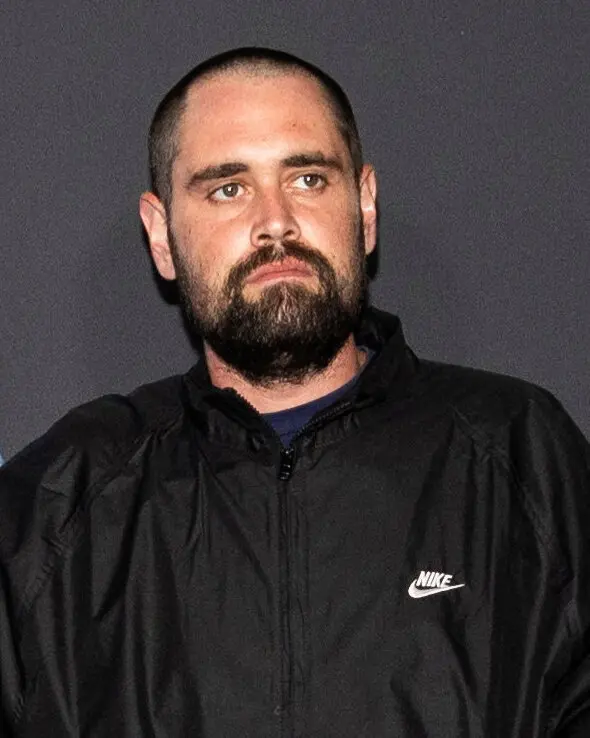 prosecutors accused Mr. Reiner of killing his parents, the Hollywood director Rob Reiner and Michele Singer Reiner.
The significant departure was announced during a hearing in Los Angeles Superior Court, where Mr. Reiner, wearing a brown jumpsuit, was set to be arraigned on two counts of first-degree murder. It may suggest that the Reiner family — Nick has two siblings — has distanced itself from Mr. Reiner and his legal case, at least financially.
Mr. Reiner, 32, did not enter a plea on Wednesday but spoke once in court, saying he agreed to delay his arraignment once again.
He had been represented by Alan Jackson, a well-known lawyer whose clients have included Harvey Weinstein and Kevin Spacey. Judge Theresa McGonigle rescheduled Mr. Reiner’s arraignment for Feb. 23 and assigned his case to Kimberly Greene, a lawyer in the public defender’s office.
Immediately after Mr. Reiner was arrested last month, lawyers for the Reiner family arranged for Mr. Jackson to take his case, said a person with knowledge of the situation who spoke to The New York Times on condition of anonymity to discuss sensitive information. The person emphasized that the change in Mr. Reiner’s representation had nothing to do with Mr. Jackson’s performance and said that he had been a professional throughout the process.
After conferring with the judge in her chambers, Mr. Jackson said in the courtroom that “we feel we have no choice” but to withdraw from the case, without elaborating.
In a statement to The Times, a spokesman for the Reiner family said, “They have the utmost trust in the legal process and will not comment further on matters related to the legal proceedings.”
Jan. 7
The Parnas Perspective, America in CRISIS as Walls Close in on Trump, Aaron Parnas, right, Jan. 7, 2026. Tonight, I come to you with a difficult but necessary update.
America is not just unsettled, it is in crisis. I hear it from you every single day, and today’s news cycle made it impossible to ignore. From reckless foreign policy decisions to instability and violence here at home, people across this country are struggling. They are anxious. They are afraid. And they are exhausted.
I understand that feeling.
That’s why tonight I’m sharing an important and deeply personal video. I sat down with Senator Mark Kelly and former Congresswoman Gabby Giffords on the 15-year anniversary of the day Gabby was nearly killed in a horrific act of gun violence. Fifteen years later, the questions we were forced to confront that day remain unanswered, and the chaos has only deepened.
As a journalist, I refuse to normalize this moment. I will not accept disorder, violence, and dysfunction as “just the way things are.” That kind of resignation is dangerous.
We must demand better from our leaders, our institutions, and ourselves. And I will continue fighting to ensure that every American has access to accurate, timely, and accountable journalism.
But I can’t do this alone. If you believe this work matters, I’m asking you to stand with me.
Here’s the news:
A woman fatally shot by an ICE agent in Minneapolis has been identified as Renee Good, 37; her mother says she had three children and was not involved in any ICE protest groups.
Video shared with the Huffington Post shows federal agents blocking a man who identified himself as a doctor from reaching the woman fatally shot by Immigration and Customs Enforcement in Minneapolis.
Witnesses told FOX 9 Minnesota that ICE agents blocked a doctor from aiding the woman they shot and later prevented an ambulance from reaching her for 10–15 minutes by occupying the street.
NBC News reports that neighbor Emily Heller, 39, witnessed an Immigration and Customs Enforcement agent shoot a woman as she tried to drive away, saying the killing happened in front of her home, will “change my life forever,” and that agents later blocked a man identifying himself as a doctor from checking the victim’s pulse.
Aerial footage shows large crowds of protesters and activists gathering at the Minneapolis site where Renee Nicole Good was killed in an Immigration and Customs Enforcement-involved incident, fueling widespread outrage across the United States.
Donald Trump said the shooting was complete self defense without calling for an investigation into what happened:
Vice President Kamala Harris called the Trump Administration’s explanation “pure gaslighting.”
Governor Walz has announced the state will ensure a fair investigation, and am grateful for his swift action. Many of us have seen the horrifying and painful video, which makes it clear that the Trump administration's explanation of this shooting is pure gaslighting. A full and fair investigation at the state level is absolutely necessary.
Tim Walz rejected the Department of Homeland Security claim that ICE agents acted in self-defense in the Minneapolis shooting, saying video evidence contradicts the account and vowing a full, fair investigation after Kristi Noem defended the agents’ actions.
The Guardian reports that shootings involving Immigration and Customs Enforcement have surged under Donald Trump’s immigration crackdown, with at least 14 firearm incidents linked to federal agents, alongside rising use of force, mass deployments, overcrowded detention centers, and a record number of deaths in ICE custody.
Alexandria Ocasio-Cortez rejected an invitation from Jesse Watters, telling a Fox News producer that Watters had sexualized and harassed her on air by accusing her of wanting to sleep with Stephen Miller, and challenging the producer on what they consider acceptable to say to a woman.
Ranking Member Robert Garcia just secured subpoenas for Les Wexner, billionaire businessman and a long-time benefactor of Jeffrey Epstein, and Darren Indyke and Richard Kahn, the executors of the Epstein estate. This just happened during tonight’s House Oversight Committee hearing. This morning I spoke with Jess Michaels, an Epstein survivor about where things go from here.
Colombian President Gustavo Petro and Donald Trump are reportedly speaking this evening by phone amid rising diplomatic tensions, according to Noticias Caracol.
Trump plans to put money that he will "personally control" from the sale of Venezuelan oil into "off-shore" accounts.
The Trump administration plans to put money raised from seizure of Venezuelan oil into bank accounts *outside* the U.S. Treasury, they told lawmakers today per multiple sources familiar. Sources said they understood these as similar or decidedly "off-shore" accounts. Asking the WH for clarification.'
Denmark warned it would “shoot first, ask questions later” if the United States invaded Greenland, according to Reuters.
Trump said he wants a $1.5 trillion military budget in 2027 to help build what he calls a “dream military.”
Trump said executives at U.S. defense contractors will be capped at $5 million in pay unless conditions are met, with dividends and stock buybacks banned until unspecified “problems are rectified.”
New U.S. dietary guidelines issued by Health and Human Services and the US Department of Agriculture, under Robert F. Kennedy Jr., urge less sugar and ultraprocessed food, higher protein intake, and greater emphasis on whole foods and “healthy fats” (including olive oil and beef tallow), sparking both praise and concern from health experts, CNN reports.
Donald Trump signed an executive order withdrawing the United States from 66 international bodies — including the UN Framework Convention on Climate Change and the UN population agency — sharply curtailing U.S. participation in global institutions, according to Associated Press and The Guardian.
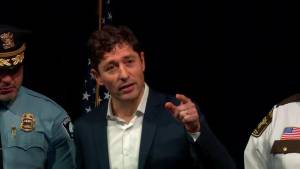
New York Times, Live Updates: Minneapolis Mayor Disputes Federal Account of Fatal ICE Shooting, Julie Bosman, Mitch Smith and Dan Simmons, Jan. 7, 2026. Immigration officers opened fire on a 37-year-old woman who a federal spokeswoman said was trying to kill the agents with a car. City officials disputed that account, describing the shooting as an overreaction.Here’s what to know.
A federal officer shot and killed a 37-year-old woman in Minneapolis during an immigration enforcement operation Wednesday, as the Trump administration intensified a crackdown on illegal immigration. Details of the shooting remained unclear, with conflicting accounts from local and federal officials.
Tricia McLaughlin, a Department of Homeland Security spokeswoman, said in a statement that an agent had opened fire after a woman “weaponized her vehicle” in an attempt to kill federal officers. Mayor Jacob Frey, shown above, called her account “bullshit” in a news conference, describing the shooting instead as “an agent recklessly using power that resulted in somebody dying, getting killed.”
Chief Brian O’Hara of the Minneapolis Police Department said there was “nothing to indicate that this woman was the target of any law enforcement investigation or activity.” He said she appeared to be using her car to block a street where immigration enforcement agents were present.
Here are the details:
Minneapolis was the site of some of the most destructive unrest in recent American history in 2020 after the police killing of George Floyd. Local officials have called for peace in the hours and days ahead. “People are going to be upset about what happened,” Chief O’Hara said, “and people are going to want to exercise their First Amendment rights. But please do so safely and lawfully, to ensure that we do not have any further tragedy in the city or destruction.”Mitch SmithJan. 7, 2026, 1:48 p.m. ET38 minutes ago
Chief O’Hara said the F.B.I. and the Minnesota Bureau of Criminal Apprehension had taken control of the crime scene. He said an investigation would take place, but it was unclear which agency would investigate, or whether both would.
The mayor said there “were dozens if not hundreds” of ICE agents at the shooting scene, and that Minneapolis officials tried to speed their departure. “Having them there was only causing more chaos,” he said. Frey, who is just days into his third term, said the Trump administration wanted an excuse to occupy the city. He called for residents to “show them something far more beautiful than the kind of division that they’re trying to stoke.”
White House advisor Stephen Miller, above left. Miller’s wife, Katie, dropped a post this week portraying Greenland with an American flag (below right).
New York Times, Stephen Miller Offers a Strongman’s View of the World, Katie Rogers, Jan. 7, 2026 (print ed.). President Trump’s trusted adviser is casting his hard-right gaze abroad, saying the world must be governed by “force.”
Stephen Miller has spent the bulk of his White House career furthering hard-right domestic policies that have resulted in mass deportations, family separations and the testing of the constitutional tenets that grant American citizenship.
Now, Mr. Miller, President Trump’s 40-year-old deputy chief of staff for policy and homeland security adviser, is casting his hard-right gaze further abroad: toward Venezuela and the Danish territory of Greenland, specifically.
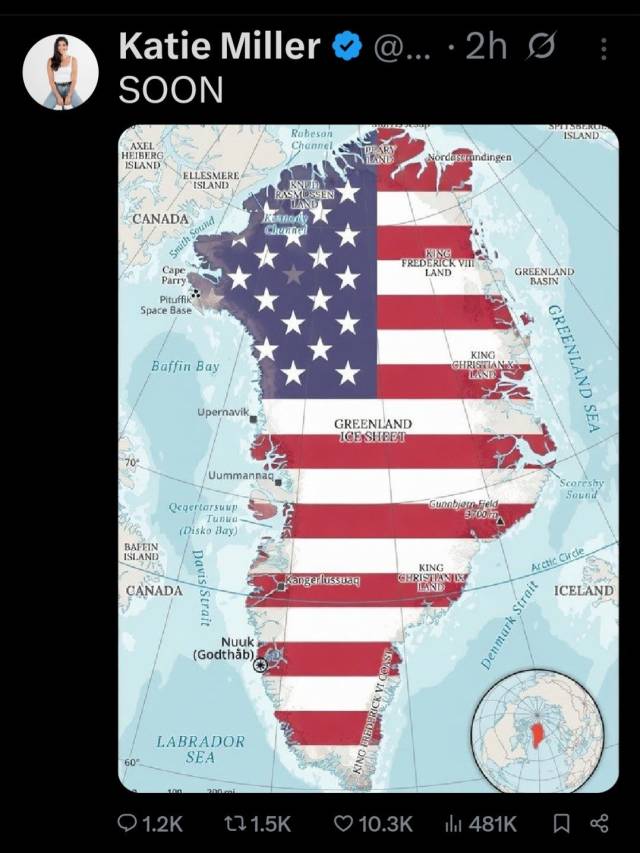 Mr. Miller is doing so, the president’s advisers say, in service of advancing Mr. Trump’s foreign policy ambitions, which so far resemble imperialistic designs to exploit less powerful, resource-rich countries and territories the world over and use those resources for America’s gain. According to Mr. Miller, using brute force is not only on the table but also the Trump administration’s preferred way to conduct itself on the world stage.
“We live in a world in which you can talk all you want about international niceties and everything else, but we live in a world, in the real world, Jake, that is governed by strength, that is governed by force, that is governed by power,” Mr. Miller told Jake Tapper of CNN on Monday, during a combative appearance in which he was pressed on Mr. Trump’s long-held desire to control Greenland.
“These are the iron laws of the world since the beginning of time,” he said.
This aggressive posture toward Greenland — and in turn, the rest of the world — is a perfect encapsulation of the raw power that Mr. Trump wants to project, even against Denmark, the NATO ally that controls Greenland. The moment also illustrates how people like Mr. Miller have ascended to the inner circle of a leader who has no interest in having his impulses checked, and how they exert their influence once they arrive there.
Shown below is a graphic posted by the Trump Administration's Department of State asserting its control not simply over Venezuela but the entire Western Hemisphere: North, South and Central.
New York Times, U.S. Operation in Venezuela Live Updates: U.S. Forces Intercept Oil Tanker That Defied Blockade of Venezuela, Paul Sonne, Julian E. Barnes, James Wagner and Stanley Reed, Jan. 7, 2026. The U.S. military had been pursuing the Russian-flagged tanker as part of its pressure campaign against Venezuela. The move deepens a confrontation with Russia after the U.S. ouster of Venezuela’s president.
Here’s the latest:

The oil tanker then-named Bella 1 at the Singapore Strait in March. Russia has dispatched at least one naval vessel to meet and escort the tanker, which the U.S. military has been pursuing and trying to seize (Reuters photo by.Hakon Rimmereid).
The tanker — known until recently as the Bella 1 and now called the Marinera — has been registered as a Russian vessel, and Russia has sent at least one naval vessel to meet and escort it, according to a U.S. official briefed on the operation. The United States has been chasing the tanker for weeks after it tried to evade a partial blockade around Venezuela, while Russia has taken increasingly conspicuous steps to protect it.
The tanker had been sailing in the Atlantic Ocean between Iceland and Britain with its location transponder active, according to ship-tracking data from MarineTraffic. Its destination was unclear, but from there, it could have been headed to the Baltic Sea or around Scandinavia to Murmansk, Russia’s ice-free Arctic port.
The Trump administration has put increasing pressure on Venezuela over its energy exports since American forces captured Mr. Maduro on Saturday. On Tuesday night, President Trump said that Venezuela would begin sending oil to the United States, in what would be a significant concession by Venezuela’s new leaders.
The Venezuelan government has not commented on Mr. Trump’s announcement that 30 million to 50 million barrels of oil — about two months’ worth of production — would be transferred. If confirmed, the move would be the start of the president’s plan to exploit Venezuela’s vast oil reserves. Mr. Trump said he would control the profits “to benefit the people of Venezuela and the United States.”
China, a major buyer of Venezuelan oil, strongly criticized Mr. Trump’s claim. In a briefing on Wednesday, Mao Ning, a spokeswoman for China’s foreign ministry, described American demands as “a classic act of bullying.”
U.S. forces captured Mr. Maduro on Saturday and flew him to the United States in an operation that has been condemned by many Latin American countries, as well as staunch American allies at the United Nations Security Council.
But the Trump administration has maintained its pressure on Venezuela’s government, now led by Delcy Rodríguez, the interim president. Mr. Trump has said he wants Ms. Rodríguez to give the U.S. “total access” to Venezuela’s oil industry. The American demands also include the expulsion of advisers from China, Russia and Cuba from Venezuela.
Though Ms. Rodríguez has raised the prospect of dialogue with the U.S., she has also struck a defiant tone. “The government of Venezuela runs our country,” she said. “No one else. There is no external agent governing Venezuela.”
Here’s what else to know:
Cuba: Losing its supply of Venezuelan oil could bring Cuba’s economy, long plagued by power outages, food shortages and a decades-long U.S. trade embargo, to the brink of collapse. Read more › New York Times, Depleted and Distracted, Justice Dept. Staff Fear Losing Focus on Potential Threats, Michael S. Schmidt, Devlin Barrett and Jonah E. Bromwich, Jan. 7, 2026. Rank-and-file prosecutors and agents have expressed serious concern that a hobbled work force hurts the government’s ability to identify and stop terrorist plots, cyberattacks, mass violence and fraud.
At the F.B.I. and Justice Department, a striking number of the most experienced investigators have quit or been fired.
Many of the agents and prosecutors who remain fear they will be dismissed for simply working on any case that draws unwanted attention from the leaders of their agencies.
In many offices across the country, the pace of new cases has slowed — the remaining work force has inherited too many open prosecutions and investigations from those who left, giving them little time to focus on new matters.
And personnel typically deployed to national security and fraud cases are being diverted to focus on other priorities, including the president’s demands for investigations into his perceived enemies and the congressionally mandated release of millions of documents about the convicted sex offender Jeffrey Epstein.
How vulnerable that leaves the department — and the country — to national security or criminal threats is difficult to quantify.
But across the Justice Department, rank-and-file prosecutors and agents have expressed serious concern that a denigrated, distracted and depleted work force hurts the government’s ability to identify and stop terrorist plots, cyberattacks, mass violence and fraud, putting the country in a weaker position.
The department declined to answer questions about staffing levels. But interviews with current and former officials, numbers tracked by a government advocacy group and a court filing offer a telling picture of a hobbled work force struggling to keep pace.
In major metropolitan areas across the country — including Miami, Houston and Denver — U.S. attorneys’ offices have lost at least a quarter of their work force, according to current and former officials.
The numbers in some key offices are particularly stark. In New Jersey — which was briefly run by a former personal lawyer to President Trump, Alina Habba — about 50 assistant U.S. attorneys departed the office last year out of roughly 150, including much of the office’s leadership.
The office has made about 15 new hires in recent weeks. But it will take years for new prosecutors to gain the kind of experience possessed by those who left in droves in 2025.
The Federal Bureau of Investigation had about 13,000 agents at the beginning of 2025 and it lost about 800 more over the past year. The losses are so significant that the bureau is trying to coax recent retirees to return.
Late Monday, the Justice Department told a federal judge that 400 of its lawyers from its criminal and national security divisions in Washington, as well as U.S. attorneys’ offices in Miami and Manhattan, would “dedicate all or a substantial portion of their workday” to preparing documents from the Epstein investigation for release. At the Southern District in New York, according to the Justice Department, that means assigning about 125 lawyers to the task, or roughly half of the department’s premier office that conducts some of its most complex and sensitive investigations.
The turmoil that Mr. Trump and his administration have wrought has led many current and former investigators, along with national security experts, to increasingly acknowledge the consequences of rapid attrition and diverted personnel.
“You’re making it more likely something is going to be missed,” said Samuel W. Buell, a professor of law at Duke University and a former federal prosecutor on the task force that investigated the collapse of the energy company Enron.
He added, “The first question that happens whenever something horrific happens, whether it’s 9/11 or something like Bernie Madoff, is, ‘What did the Department of Justice and F.B.I. know and why weren’t they in a position to stop this?’”
Overall, the advocacy group Justice Connection estimates that about 5,500 prosecutors, agents and other department employees left in 2025. In total, the department employs about 115,000, including F.B.I. agents, technical support staff and thousands of correction officers at the Bureau of Prisons.
But while the portion of departures is small when compared with the entire size of the department, those who left include a disproportionate number of highly experienced prosecutors, like the many who helped lead U.S. attorneys’ offices or contributed to the overall leadership of the department, and similarly experienced F.B.I. agents.
The department appears to have lost a lower percentage of its overall work force than other major federal agencies have. That may be partly because it was not subject to the degree of cuts from Elon Musk’s Department of Government Efficiency.
Instead, Mr. Trump’s political appointees at the department have purged its ranks of those they suspect are not loyal to the president’s agenda, including his pursuit of retribution against his rivals.ImagePresident Donald Trump stands at the lectern during a news conference in the Oval Office.The administration soon installed loyalists in many U.S. attorneys’ offices around the country and parts of the department are now run from the top down, as prosecutors have been warned that they must zealously embrace the president’s agenda. Credit...Doug Mills/The New York Times
Trump administration officials have repeatedly defended their management of federal law enforcement.
Natalie Baldassarre, a Justice Department spokeswoman, said the agency still had “over 10,000 attorneys committed to restoring public safety and upholding the rule of law.” She faulted Senate Democrats for the slow pace of approvals for U.S. attorneys, and blamed “liberal judges” for adverse rulings against the administration.
New York Times, A Jan. 6 Rioter Returned to the Capitol Seeking Forgiveness, Michael Gold, Jan. 7, 2026 (print ed.). Pamela Hemphill, who said she rejected President Trump’s pardon for her role in the Jan. 6, 2021, attack, apologized to a Capitol Police officer who was assaulted during the mayhem.
Five years ago, Pamela Hemphill forcibly entered the Capitol as part of an angry mob of protesters who, convinced of President Trump’s lie that the 2020 election was stolen, stormed the building on Jan. 6, 2021, in a violent effort to stop Congress from certifying his defeat.
On Tuesday, Ms. Hemphill, a retired addiction counselor from Idaho, entered the building again, this time to offer an emotional apology.
“Thank you for having me back to the Capitol today,” Ms. Hemphill told the panel of House Democrats who invited her to their event on the fifth anniversary of the riot. “I am deeply grateful for this chance to try to make amends.”
Ms. Hemphill, 72, served 60 days in federal prison after pleading guilty to a misdemeanor charge of entering the Capitol during the riot.
But in the years since, she has experienced a political reversal, turning away from Mr. Trump and now seeing the Jan. 6 attack as an insurrection. When Mr. Trump issued a sweeping grant of clemency to those charged in connection with the riot, Ms. Hemphill said she was rejecting it.
“Accepting that pardon would be lying about what happened on January the 6th,” she said on Tuesday. “I am guilty. And I own that guilt.”
Ms. Hemphill’s remarks came as Democrats worked to commemorate the brutal attack — which Representative Hakeem Jeffries, Democrat of New York and the minority leader, said “will be shameful always and forever” — and Mr. Trump’s role in provoking it. Across town at an event with House Republicans, the president continued his efforts to rewrite the history of the assault, condemning those who investigated him for it and playing down his responsibility.
Describing her participation in the riot, Ms. Hemphill grew emotional, at times pausing to collect herself as she tried to hold back tears.
Sitting feet away from a former Capitol Police officer who had been assaulted during the mayhem, Ms. Hemphill’s voice shook as she described marching into the building with the pro-Trump mob.
Ms. Hemphill credited the Capitol Police for protecting her when she was trampled by others who had stormed in. Then, she turned to the former officer, Winston Pingeon. Her voice shaking as she struggled to meet Mr. Pingeon’s gaze, Ms. Hemphill asked for his forgiveness for being part of a mob that attacked him.
“I can’t believe people are still disrespecting you and trying to lie about January the 6th,” Ms. Hemphill said. “I will do everything I can to stop the lies about our brave officers like you.”
Morning Shots via The Bulwark, Political Opinion: Trump’s ideologues want a smaller, meaner, whiter America, Bill Kristol, Andrew Egger, Will Saletan and Jim Swift, Jan. 7, 2026.
News Updates
The Parnas Perspective, United States Seizes Russian-Flagged Oil Tanker as Tensions Escalate Quickly, Aaron Parnas, right, Jan. 7, 2026. The United States has seized an oil tanker sailing under a Russian flag. President Trump says he will personally control the proceeds from the sale of Venezuelan oil. The United States is also keeping all options on the table regarding Greenland, including possible military action, and that is just the start of today’s developments.
I also have a full slate of interviews. This morning, I will be speaking with Jess Michaels, an Epstein survivor, to ensure that story remains front and center. This afternoon, I will head to Capitol Hill for a sit-down interview with Senator Mark Kelly and former Congresswoman Gabby Giffords. You will not want to miss it. Tonight, I will be speaking with James Talarico, who is running for Senate in Texas.
Here’s what you missed:
The U.S. has seized a Russian-flagged oil tanker linked to Venezuela after a weeks-long pursuit, despite nearby Russian naval vessels, marking a rare move that could escalate tensions with Russia, according to Reuters. This ship is an oil tanker but does not have any actual oil on it. The United States has been chasing it for weeks in the Atlantic Ocean, even as Russian naval assets were sent to escort the vessel to a port in Northern Russia.
The action is part of the Trump administration’s broader pressure campaign against Venezuela, following the capture of Nicolas Maduro and intensified enforcement against sanctioned Venezuelan oil shipments under Donald Trump’s policy.
Overnight, Donald Trump confirmed that Venezuela will “turn over” 30-50 million barrels of oil, and the oil will be sold by Trump, who will control the money. This statement from Trump implicates significant legal concerns as the President cannot personally control the income derived from selling this oil:
The White House is now praising CBS publicly after it ran a puff piece on Secretary of State Marco Rubio:

CECOT stands for Centro de Confinamiento del Terrorismo, which translates to Terrorism Confinement Center. It is a maximum-security "mega-prison" located in Tecoluca, El Salvador. Capacity: It is one of the largest high-security prisons in the world, initially designed to hold 20,000 detainees, but with a reported capacity later doubled to 40,000 inmates.
If you want to watch the puff piece run by CBS, here it is. As you watch it, remember that this same network is currently refusing to air a 60 Minutes special highlighting how the United States of America sent migrants to CECOT in El Salvador where they faced torture:
The White House has confirmed that it intends on annexing Greenland and is leaving the possibility of military intervention on the table. The latest statement from White House Press Secretary Karoline Leavitt:
“President Trump has made it well known that acquiring Greenland is a national security priority of the United States, and it’s vital to deter our adversaries in the Arctic region. The President and his team are discussing a range of options to pursue this important foreign policy goal, and of course, utilizing the U.S. Military is always an option at the Commander in Chief’s disposal,” White House press secretary Karoline Leavitt said in a statement to CNN.
France and its European allies are weighing a coordinated response to escalating rhetoric from Donald Trump about potentially seizing Greenland, with French foreign minister Jean-Noël Barrot confirming talks with Germany and Poland, Denmark warning that any U.S. military move against Greenland would effectively end NATO, and tensions partly eased after Marco Rubio told French officials he had ruled out an invasion—despite the White House saying “all options” remain on the table—prompting emergency meetings in Copenhagen and sharp rebuttals from Danish leaders, including Lars Løkke Rasmussen, who accused Washington of exaggerating Chinese and Russian activity in the region.
A federal judge ordered Trump ally Lindsey Halligan to explain within seven days why she continues to identify herself as U.S. attorney for the Eastern District of Virginia despite a prior ruling that her appointment was unconstitutional, with David Novak warning that her continued use of the title could be false or misleading and hinting at possible disciplinary action, after Judge Cameron McGowan Currie previously dismissed high-profile cases against James Comey and Letitia James, ruling that the Justice Department had violated the Constitution in appointing Halligan—a decision now under appeal but still binding on the district.
Béla Fleck, an 18-time Grammy winner, withdrew from three scheduled February concerts with the National Symphony Orchestra at the John F. Kennedy Center for the Performing Arts, saying the venue has become “charged and political” after its board voted to add Donald Trump’s name to the institution; Fleck said performing would alienate left-leaning fans while withdrawing would anger right-leaning ones, prompting criticism from Kennedy Center president Richard Grenell, and making him the latest high-profile artist—alongside figures like Stephen Schwartz—to step away from the venue amid growing cultural and political backlash.
Warner Bros. Discovery rejected an amended takeover bid from Paramount Skydance, saying the offer provided insufficient value and carried greater financial, regulatory, and execution risk compared with its already signed $82.7 billion merger agreement with Netflix; Chairman Samuel Di Piazza and CEO David Zaslav emphasized the Netflix deal’s clearer path to closing, stronger shareholder protections, and strategic fit, despite Paramount’s sweetened bid backed by Larry Ellison and led by David Ellison, as scrutiny from Donald Trump looms over whichever merger proceeds.
The Trump administration is suspending federal funding for programs supporting needy families in California, Colorado, Illinois, Minnesota, and New York, citing unspecified fraud concerns, with the US Department of Health and Human Services demanding additional documentation before releasing grants for child care, cash assistance, and social services.
U.S. authorities said the man accused in the Brown University shooting left behind video recordings, translated by the U.S. Department of Justice, in which he said he had planned the attack for years, detailing six semesters of preparation and expressing no remorse. The former Brown student, a Portuguese national with no current ties to Brown University, killed two students on campus, later fatally shot a professor from Massachusetts Institute of Technology at his home, and was found days later dead from a self-inflicted gunshot wound in New Hampshire, according to investigators.
New York Times, Venezuela Live Updates: U.S. Forces Seize Two Tankers; Rubio Lays Out Plan for Venezuela, Staff Reports, Jan. 7, 2026. The U.S. secretary of state unveiled a three-part plan for Venezuela’s near-future that gives Washington control over interim authorities, as the U.S. forces boarded a Russian-flagged tanker and a second ship.
Hours after the U.S. military seized two oil tankers on Wednesday, including a Russian-flagged tanker that had been evading American forces for weeks, the American secretary of state laid out a plan for Venezuela’s near-future that included the United States imposing its will over interim authorities.
The seizure of the tankers escalated a confrontation with Moscow after the ouster of its ally, President Nicolás Maduro of Venezuela. The U.S. military issued a statement saying that forces had “seized” the Russian-flagged vessel in the North Atlantic, between Scotland and Iceland, for violating U.S. sanctions. The ship, which was not carrying oil, had previously tried to sail to Venezuela to pick up crude and had been eluding U.S. forces for more than two weeks.
The military later said, in a separate statement, that it had “apprehended a stateless, sanctioned dark fleet motor tanker,” the M Sophia, in international waters in the Caribbean, where it was “conducting illicit activities,” and the ship was being escorted to the United States.
In Washington, Secretary of State Marco Rubio outlined a three-step plan for Venezuela, insisting to reporters that the administration was “not just winging it.” It includes stabilizing the country by seizing and selling some 30 million to 50 million barrels of oil — with the U.S., not interim Venezuelan leadership, controlling how the money would be dispersed.
The second step is to ensure that “American, Western and other companies have access to the Venezuelan market in a way that’s fair” and to reintegrate opposition forces, he said. The third step, which he did not elaborate on, is “one of transition,” including the integration of opposition parties.
“We feel like we’re moving forward here in a very positive way,” he added.
White House press secretary Karoline Leavitt, asked whether and how the U.S. will “run” Venezuela as President Trump has vowed, told reporters that the Trump administration was “in close coordination with” Venezuela’s interim authorities, and that “their decisions are going to be dictated by the United States of America.”
The Coast Guard boarded the Russian tanker after a roughly two-week pursuit, according to one U.S. official briefed on the operation. The Coast Guard encountered no resistance or hostility from the crew, the official said, speaking on the condition of anonymity to discuss a sensitive military operation.
Russia’s Ministry of Transport confirmed that U.S. forces had boarded the vessel in international waters, adding in a statement that contact with it had been lost. The Russian state-owned broadcaster RT published images of a helicopter approaching the Russian-flagged tanker being pursued by the Coast Guard and said it appeared that U.S. forces were attempting to board. The New York Times was not able to determine when the images were captured.
The tanker — known until recently as the Bella 1 and now called the Marinera — had been registered as a Russian vessel, and Russia had sent at least one naval vessel to meet and escort it, according to a U.S. official briefed on the operation. There were no Russian vessels in the vicinity of the tanker when the Coast Guard boarded the ship, averting the possibility of a standoff between U.S. and Russian forces, two U.S. officials said.
Russia’s Ministry of Transport said that under the 1982 U.N. Convention on the Law of the Sea, “no state has the right to use force against vessels duly registered in the jurisdictions of other states.” The U.S. has not ratified the convention but generally recognizes its provisions as customary law.
Venezuela’s most important research center, the Venezuelan Institute of Scientific Research, said on Wednesday that its facilities were severely damaged by two U.S. missiles during the raid on Saturday. In a social media post, it said its mathematics department, in Miranda state, “housed servers and essential equipment for our computer networks that were completely devastated," and its physics, chemistry, ecology and nuclear technology departments were also damaged. “This is an unprecedented act of imperial aggression,” the post said. “There is no justification to attack a sanctuary of science.” Alberto Quintero, the institute’s director, released a video identifying metal fragments as remains of one missile, an AGM-154C-1, a sophisticated, precision-guided glide bomb
Speaker Mike Johnson described the capture of Nicolás Maduro as a one-off military operation with the goal of having the Venezuelan people govern themselves. He added that, “We don’t anticipate boots on the ground.”
Moments later, Representative Nancy Pelosi, the former speaker of the House, left the classified briefing in Washington saying it was “not clear what comes next” for Venezuela. She added that she did not trust the Trump administration when top officials said the operation was about the defense of our country.
Here’s what else to know:
Morning Shots via The Bulwark, Political Opinion: The Spirit of Fascism, William Kristol, right, Jan. 7, 2026. MAGA is a vulgar, cartoonish, cultish, and incoherent movement.
So, a century ago, was fascism.
And as today’s MAGA more openly and explicitly embraces the spirit of yesteryear’s fascism, it’s perhaps worth noting that it is the era of the rise of fascism to which MAGA looks back with nostalgia and yearning.
In her most recent newsletter, the historian Heather Cox Richardson reminds us of this 2009 statement by Peter Thiel, who as much as anyone could be considered the theorist of Trumpism as an intellectual movement.
"I no longer believe that freedom and democracy are compatible. The 1920s were the last decade in American history during which one could be genuinely optimistic about politics. Since 1920, the vast increase in welfare beneficiaries and the extension of the franchise to women . . . have rendered the notion of “capitalist democracy” into an oxymoron."
The first sentence is a bit startling. But there is, to be fair, a long tradition of worrying about various tensions between freedom and democracy. Thiel, one could say, has simply adopted the radically pessimistic view that those tensions can no longer be managed or resolved.
Far more striking is the rest of Thiel’s statement, his yearning for the pre-welfare-state and pre-women’s-franchise 1920s, “the last decade during which one could be genuinely optimistic about politics.”
Thiel’s history is not striking just because it is wrong—the Nineteenth Amendment was ratified in the summer of 1920, making the general election that fall the first to feature the mass participation of women, though some states had granted women full suffrage even earlier.
It’s striking because we do now know, after all, what followed the decade of the 1920s: A 1930s that featured a worldwide Great Depression, and the rise of fascism—which, while unsuccessful in America, came closer here than we often remember, and was dominant overseas. All of that culminated in the horrors of World War II. The terrible events from 1929 to 1945 followed on—followed from—the economic and foreign policies of the decade for which Thiel is so nostalgic.
Thiel is an intelligent man. Yet his hatred of the modern world—a world characterized by the welfare state and the emancipation of women—is so great that it overwhelms all sensible political judgment.
If Peter Thiel is a MAGA theoretician, Stephen Miller is MAGA’s chief propagandist. On Sunday, in the wake of Trump’s Venezuelan intervention, Miller posted:
Not long after World War II the West dissolved its empires and colonies and began sending colossal sums of taxpayer-funded aid to these former territories (despite have [sic] already made them far wealthier and more successful). The West opened its borders, a kind of reverse colonization, providing welfare and thus remittances, while extending to these newcomers and their families not only the full franchise but preferential legal and financial treatment over the native citizenry. The neoliberal experiment, at its core, has been a long self-punishment of the places and peoples that built the modern world.
So Britain and France should not have dissolved empires and colonies, but rather have fought to hold countries like, say, India and Vietnam? And the United States’ openness to immigrants from, say, India and Vietnam, has been an exercise in self-punishment?
Apparently so. On Monday, Miller extended his critique of the modern world, going on television to decry “This whole period that happened after World War II where the West began apologizing and groveling and begging.”
Was that what characterized the last eighty years of world history—eighty years of Western success and dominance?
As the political scientist Nicholas Grossman remarked, “Imagine looking at the period after WWII and especially after the Cold War as an era of American weakness.” But Grossman sees what lies behind Miller’s complaint: “Unless, I suppose, if becoming the strongest, wealthiest country in history sounds bad to you because some brown people were a part of it, and you’d rather be weaker if it means being whiter.”
The more liberal nation and the liberal world order that we were able to construct after World War II made us stronger. Miller and Thiel—and MAGA—reject that.
So MAGA does not want to make America great again. MAGA does not simply want to correct some of the excesses of modern America or the modern world. MAGA embraces what was most illiberal about the old order. The theorists of MAGA look back longingly to, they yearn for, the ideas and policies that produced the worst of the 1930s.
Or to put it simply: It is fascism that they yearn for.
Don’t let the bastards grind you down. Join the best pro-democracy community around today:Subscribed
AROUND THE BULWARK

Above, a scene from the Trump-inspired insurrection riot at the U.S. Capitol on Jan. 6, 2021 planned to prevent the transition of power from then-President Trump to President-elect Joe Biden.
Letters from an American, Historical Commentary: January 6, 2026 [Trump: Erase Democratic Policies], Heather Cox Richardson, right, Jan. 7, 2026. “They say that when you win the presidency you lose the midterm,” President Donald J. Trump said today to House Republicans. “I wish you could explain to me what the hell is going on with the mind of the public because we have the right policy. They don’t. They have a horrible policy. They do stick together. They’re violent, they’re vicious, you know. They’re vicious people.”
“They had the worst policy. How we have to even run against these people—I won’t say cancel the election, they should cancel the election, because the fake news will say, ‘He wants the elections canceled. He’s a dictator.’ They always call me a dictator. Nobody is worse than Obama. And the people that surrounded Biden.”
And there you have it: in a rambling speech in which he jumped from topic to topic, danced, and appeared to mimic someone doing something either stupid or obscene, Trump explained the ideology behind his actions. He and MAGA Republicans have absorbed the last 40 years of Republican rhetoric to believe that Democratic policies are “horrible” and that only Republicans “have the right policy.” If that’s the case, why should Republicans even have to “run against these people?” Why even have elections? When voters choose Democrats, there’s something wrong with them, so why let them have a say? Their choice is bad by definition. Anything that they do, or have done, must be erased.
That is the ideology behind MAGA, amped up by the racism and sexism that identifies MAGA’s opponents as women, Black Americans, and people of color. In their telling, the world Americans constructed after World War II—and particularly after the 1965 Voting Rights Act protected Black and Brown voting—has destroyed the liberty of wealthy men to act without restraint. Free them, the logic goes, and they will Make America Great Again.
As tech entrepreneur Peter Thiel wrote in 2009: “I no longer believe that freedom and democracy are compatible.” He continued: “The 1920s were the last decade in American history during which one could be genuinely optimistic about politics. Since 1920, the vast increase in welfare beneficiaries and the extension of the franchise to women—two constituencies that are notoriously tough for libertarians—have rendered the notion of ‘capitalist democracy’ into an oxymoron.”
“Because there are no truly free places left in our world,” he wrote, Thiel called for escaping into cyberspace, outer space, or seasteading.
While tech leaders are focusing on escaping established governments, Trump’s solution to an expanded democracy appears to be to silence the voters and lawmakers who support the “liberal consensus”—the once-bipartisan idea that the government should enable individuals to reach their greatest potential by protecting them from corporate power, poverty, lack of access to modern infrastructure, and discrimination—and to erase the policies of that consensus.
Nowhere does Trump’s conviction that he, and he alone, has the right to run the United States show more clearly than in the White House’s rewriting of the history of the January 6, 2021, attack on the U.S. Capitol. The insurrectionists who stormed the Capitol were Trump supporters determined to overthrow the free and fair election of Democrat Joe Biden by more than 7 million votes in 2020, replacing him with Trump by virtue of their belief that no Democrat could be fairly elected.
But the official White House website reversed that reality today, claiming that the insurrectionists who beat and wounded at least 140 police officers, smeared feces on the walls of the Capitol building, and called for the hanging of Vice President Mike Pence were “peaceful patriotic protesters.” The real villains, the White House wrote in bold type, were “the Democrats who staged the real insurrection by certifying a fraud-ridden election, ignoring widespread irregularities, and weaponizing federal agencies to hunt down dissenters.”
In reality, modern Republican policies have rarely served everyday people, while the policies enacted by Democratic president Joe Biden demonstrably did. Biden rejected the ideology that called for cutting taxes, regulations, and social services in the name of liberty. Instead, he urged Congress to invest in public infrastructure, creating jobs, and he shored up the social safety net.
As Biden prepared to leave office in January 2025, Trump claimed that the U.S. was in freefall, “a disaster, a laughing stock all over the World!” But Peter Baker reported in the New York Times that the opposite was true: Biden and his administration were leaving behind a country that was in the best shape it had been since at least 2000.
There were no U.S. troops fighting in foreign wars, murders had plummeted, deaths from drug overdoses had dropped sharply, undocumented immigration was below where it was when Trump left office in 2021, stocks had just had their best two years since the last century. The economy was growing, real wages were rising, inflation had fallen to close to its normal range, unemployment was at near-historic lows, and energy production was at historic highs. The economy had added more than 700,000 manufacturing jobs among the 16 million total created since 2020.
Baker quoted chief economist of Moody’s Analytics Mark Zandi, who said: “President Trump is inheriting an economy that is about as good as it ever gets.”
Once in office, Trump set about dismantling the policies that had achieved those results. And now, after destabilizing the country at home, he is working to destroy the rules-based international order that has stabilized the world since World War II. In addition to an illegal attack on Venezuela to extract Venezuelan president Nicolás Maduro and his wife Cilia Flores, Trump is threatening Colombian president Gustavo Petro, saying “Cuba is ready to fall,” and warning Mexico to “get their act together.”
Although his sights are primarily on countries in the Western Hemisphere, Trump has also warned that if Iran starts “killing people like they have in the past, I think they’re going to get hit very hard by the United States.”
Trump has also threatened Greenland, which is a self-governing island that is part of Denmark, an ally in the North Atlantic Treaty Organization. As NATO allies, Greenland and the U.S. have cooperated on defense for decades, so Trump’s declaration that the U.S. needs Greenland for national defense makes no sense.
Danish Prime Minister Mette Frederiksen said in a statement Sunday: “The Kingdom of Denmark—and thus Greenland—is part of NATO and is therefore covered by the alliance’s security guarantee. We already have a defense agreement between the Kingdom and the United States today, which gives the United States wide access to Greenland. I would therefore strongly urge the United States to stop the threats against a historically close ally and against another country and another people who have said very clearly that they are not for sale,” she said.
On Monday, Fredriksen said: “If the United States chooses to attack another NATO country militarily, then everything stops. That is, including our NATO and thus the security that has been provided since the end of the Second World War.” Today, France, Germany, Italy, Poland, Spain, the United Kingdom, and Denmark issued a statement of support for Greenland, Denmark, and NATO.
In Venezuela, the U.S. took Maduro and Flores but rather than supporting the actual winner of the 2024 presidential election, Edmundo González, or opposition leader María Corina Machado, the administration left the Maduro government in place, led by former vice president Delcy Rodríguez, left.
María Luisa Paúl reported in the Washington Post today that in the hours since Maduro’s removal, the Venezuelan government has cracked down on those showing support for the U.S. operation. It detained at least 14 journalists, sent armed gangs into the capital, restricted protests, and arrested citizens who appeared to be “involved in promoting or supporting the armed attack by the United States of America.”
Machado said the government’s actions are “really alarming.”
Trump claims that the U.S. is “running” Venezuela, and he has dropped the pretense that he is concerned about drug traffickers or Maduro’s seizure of the presidency. Instead, he has made it clear that what he really wants is for the Venezuelan government to give him access to the country’s oil. In much the same way as he claims Democrats were responsible for January 6 because they honored the will of the voters and refused to give him the second term he wanted, Trump maintains that Venezuelans “stole” the American oil that sits under their own land.
Trump’s plan to tear up the rules-based international order and replace it with U.S. control over the Western Hemisphere will cost the world dearly, but using the U.S. military to threaten other countries and seize control of their resources does create big winners:
This evening, Trump’s social media account posted: “I am pleased to announce that the interim Authorities in Venezuela will be turning over between 30 and 50 MILLION Barrels of High Quality, Sanctioned Oil, to the United States of America. This Oil will be sold at its Market Price, and that money will be controlled by me, as President of the United States of America, to ensure it is used to benefit the people of Venezuela and the United States! I have asked Energy Secretary Chris Wright to execute this plan, immediately. It will be taken by storage ships, and brought directly to unloading docks in the United States. Thank you for your attention to this matter! DONALD J. TRUMP PRESIDENT OF THE UNITED STATES OF AMERICA.”
Emptywheel, Analysis: Stephen Miller Has Similar Plans for Colombia and Columbia, Emptywheel (Marcy Wheeler, right), Jan. 7, 2026. It's only day four in Trump's takeover attempt of Venezuela. We have yet to see how any of multiple interested parties will respond. And most of them have guns.
Laura Jedeed wonders whether Trump is testing out a new kind of colonialism, where you basically issued orders to the corrupt illegitimate authorities, rather than installing the opposition.
Trump and Rubio’s talking points combine into a message intended not for the people of America, but for the heads of state in Cuba, Columbia, [sic] and worldwide. The message itself is simple, elegant, and ugly: do exactly what we say or America will destroy you—not your country, or your economy, or your people, but you, personally. This strategy doesn’t just let America “run” Venezuela. It allows this administration to “run” any country unable to attack us on our home turf: extract their resources, dictate their domestic policy, force their leaders to resign. All by credibly threatening extreme personal violence against any head of state who pushes back.
Credit where credit is due: it’s an entirely new approach to colonialism. Here’s how it’s worked since Britain perfected the art: you invade the country, then place the opposition party in power. That party requires your support to maintain control (if they had enough force to do it themselves they’d already be in charge). In exchange for military backup, their leader will do anything you ask.
Trump, on the other hand, has endorsed Maduro’s Vice President, Delcy Rodríguez, allegedly because the opposition party “doesn’t have the support within, or the respect within the country.” This assertion is aggressive nonsense. Opposition party weakness is a feature, not a bug, for the reasons stated above. It’s also patently untrue in this case. Election monitors from several countries agree that candidate Edmundo González Urrutia beat Maduro in a landslide two years ago by as much as 51 percent. Trump and his allies know this—they’ve used Maduro’s election theft to justify invasion. It’s kind of perfect: the party doesn’t have the power to gain power by themselves, but they’re popular enough to minimize the danger of revolt. It’s the dream situation—so why isn’t the Trump administration going for it?
Most people seem to think Trump’s endorsement of the unpopular and hostile Rodríguez stems from bitterness towards María Corina Machado, the opposition party leader who received the Nobel Peace Prize that Trump wanted so badly last year. Machado seems to think so too; she’s offered to give the prize to Trump and spent ten minutes abasing herself before the Peace President on Hannity yesterday. It won’t help. Trump is petty to the core, it’s true, but Stephen Miller and the other ghouls actually running this country would never set the entire colonial playbook on fire just to appease some old queen’s ego.
The real reason, I suspect, is this: leaving Rodríguez in charge is the only move that does not require a full-scale invasion.
Unlike Machado, Rodríguez possesses a military and police force capable of holding Venezuela together. Under the old model, that force would have threatened our hegemony, but under Colonialism 2.0, she has a strong incentive to do exactly as she’s told regardless; she is, after all, one surgical strike away from losing her freedom or possibly her life. As long as she doesn’t call Trump’s bluff or get coup’d herself, it’s foolproof.
[snip]
And the administration was right: Rodríguez is already rolling over. “We consider it a priority to move towards a balanced and respectful relationship between the US and Venezuela,” she wrote on Telegram late Sunday. “We extend an invitation to the US government to work together on an agenda for cooperation that is aimed towards shared development.” So far, so good.
That’s certainly what Trump is trying to do.
But it’s wildly premature to assess whether it’ll work.
Before I explain how it may backfire, let me observe that this plan is precisely the same plan Trump (Stephen Miller, really) is attempting with the US.
What Trump plans for Colombia is little different than what he succeeded in doing with Columbia University: Make demands on the elected leader, extract tribute, change the rules to benefit the authoritarian state. Whether it will work long term has yet to be seen, but the lesson of New College in Florida shows where things may head in the medium term: with dramatically increased costs and noticeably decreased utility. Once DeSantis is out of power, the effort is likely to be abandoned, turning New College into a bigger shell than it is already is. Columbia might take longer to collapse, unless Stephen Miller doubles down on his demands.
Now consider what makes Venezuela (or Colombia) different from Columbia, starting with the guns, guns which might come from at least three different places.
 First, there are Russia, China, and some other Venezuelan patron states that are under assault as well. As we speak, the Trump Administration is carrying out a replay of the OJ [Simpson] White Bronco chase, but with an empty oil tanker headed for Russia.
Russia has sent a submarine and other naval assets to escort an empty, rusting oil tanker that has become a new flashpoint in U.S.-Russia relations, according to a U.S. official.
The tanker, formerly known as the Bella 1, has been trying to evade the U.S. blockade of sanctioned oil tankers near Venezuela for more than two weeks. The vessel failed to dock in Venezuela and load with oil. Although the ship is empty, the U.S. Coast Guard has pursued it into the Atlantic in a bid to crack down on a fleet of tankers that ferry illicit oil around the world, including black-market oil sold by Russia.
The vessel’s crew repelled an effort by the U.S. to board the vessel in December and steamed into the Atlantic. As the Coast Guardfollowed it, the crew sloppily painted a Russian flag on its side, changed its name to the Marinera and switched its registration to Russia.
Russia has been concerned by U.S. seizures of tankers that ferry its illicit oil around the world and power its economy, and it has made the unusual move of allowing the tanker to register in Russia without an inspection or other formalities, experts say.
Will this lead to some kind of direct conflict? I have no fucking clue and neither do you, because both Trump and Putin are fucking nuts. If Trump were rational, he’d retaliate not with direct confrontation in the North Sea, but by arming Ukraine and giving them the green light to up its attacks on Russia, but he’s not rational. Russia’s economy is actually close to collapse, and it wouldn’t take much to get it there. Russia, of course, has other means it might use to retaliate against Trump.
We shall see.
 China is another matter though. China not only is rational, but China kicked the shit out of Trump in his last attempt to demand obeisance, the tariffs. Trump thought he could achieve with tariffs what he is trying to achieve with Venezuela: obeisance and personal tribute. Not only have all the tariffs harmed the US, spiking small business bankruptcies and inflation (and in the process making Trump’s political support far weaker), but China used its near-monopoly on rare earths and ability to replace US soybeans to bring Trump to his knees instead.
In fact, the Venezuelan coup might be partly a response to China’s success at wielding the rare earth weapon. While there’s much I disagree with in it, this post argues the Venezuela invasion was not about oil, but about the rare earth China currently extracts.
Investigative reporting documented Chinese buyers operating directly at mining sites in Bolívar state. The Venezuelan government established official collection centers in Los Pijiguaos and Morichalito in 2023 specifically for cassiterite, coltan, nickel, rhodium, and titanium. The Maduro regime designated these as strategic resources for commercialization, meaning state control over extraction and export, with Chinese buyers integrated into official operations from the start.
The supply chain from Venezuelan mines to Chinese refineries operates through both formal and informal channels, with Chinese buyers exercising operational control at the extraction source. Minerals extracted in the Orinoco Arc move by river and air transport to Colombian border towns, then to Bogotá for smelting into refined bars. These materials are relabeled under incorrect tariff codes, transforming raw ore into processed ferro-tantalum or other classifications that obscure origin. Final export occurs through Colombian ports at Santa Marta and Buenaventura, destined for Chinese processing facilities.
Once Venezuelan minerals blend with Colombian or Brazilian ore in these intermediary steps, tracing origin becomes effectively impossible. This laundering mechanism allows Venezuelan minerals to enter legitimate global supply chains, including those feeding US defense contractors. The result is Pentagon weapons systems potentially incorporating materials extracted under Chinese buyer supervision in Venezuelan territory, then processed in Chinese refineries controlled by Beijing.
Chinese buyers do not operate at arm’s length through market transactions. They coordinate directly at the mining sites with both Colombian guerrilla groups (ELN, FARC dissidents) who control physical security and Venezuelan state security (SEBIN) who facilitate transport using official government vehicles. One miner described seeing Chinese operatives and ELN commanders “eating together, buying material together, and getting off the helicopter together.” This is not commercial activity. This is integrated operational control where Chinese buyers work directly with armed groups and state officials to extract strategic minerals.
Trump doesn’t need — indeed, the oil companies probably don’t want — Venezuela’s oil, at least not in the short term.
He does need rare earth deposits (which is also the stated purpose of usurping Greenlands).
It took us some months to understand how China responded to Trump’s threat of tariffs. It took less time to recognize China’s advance preparation for them (based on Trump’s trade war from the first term).
A lot of the coverage of the coup views it as a profound humiliation for China, not least because China’s Latin American envoy met with Nicolás Maduro, below, the day before the coup. That didn’t stop China (and Russia and Iran) from attending Rodriguez’ signing in, so there’s a distinct possibility they’re in at least as close coordination with Rodriguez right now as Marco Rubio.
But the most belligerent thing — the thing people expect — is that China will take Taiwan, as it was practicing to do even as Trump had a fifth of deployed assets in the Caribbean preparing to invade.
With all the attention on Venezuela, there has been too little attention on vacuums created with this extended deployment off the coast of Venezuela (the most immediate of which is probably in the Middle East). But it is clear that Trump keeps launching little wars with resources most of Congress believes should be used to counter China’s expansionary plans.
But as China showed with the tariffs, they likely have ways to respond that are less direct and at least as devastating.
But China and Russia aren’t the only ones who have guns here.
 So does, just as one example, Interior Minister Diosdado Cabello, right, who has been indicted in SDNY alongside Maduro since 2020. Reuters describes that the US already threatened Cabello.
In the meantime, they have communicated to Cabello via intermediaries that if he is defiant, he could face a similar fate to Maduro, the authoritarian leader captured in a U.S. raid on Saturday and whisked away to New York to face prosecution on “narco-terrorism” charges, or could see his life in danger, the source said.
But taking out Cabello could be risky, possibly motivating pro-government motorcycle groups, known as colectivos, to take to the streets, unleashing the chaos Washington wants to avoid. Their reaction may depend on whether they feel protected by other officials, however.
In one of her first decisions as acting president, Rodríguez appointed General Gustavo González López as new head of the Presidential Honor Guard and the Directorate General of Military Counterintelligence (DGCIM), state TV said late on Tuesday.
González López, who has been sanctioned by the U.S. and EU along with at least half a dozen other high-ranking officials for rights violations and corruption, served as Venezuela’s intelligence director until mid-2024, when he was replaced by Maduro in a reshuffle of his cabinet and security team.
Later that year, he began working with Rodríguez as head of strategic affairs and control at state oil company PDVSA.
González López was considered close to Cabello, but it was not immediately clear whether his appointment was a gesture of support from Rodríguez to the man considered the strongman of the ruling party, or, on the contrary, a sign of a rift.
The officer replaces General Javier Marcano, whose performance came under scrutiny after Maduro’s capture, according to analysts.
One thing I’ve seen no coverage of is why the US thinks Rodriguez will be secure within Venezuela now that Trump killed the 40 Cubans who were protecting Maduro. And the militias via which Cabello exercises some of his repression could carry out a deniable kind of violence.
But Cabello isn’t even the only one with guns in question. The purported purpose of this operation is about stopping drug trafficking. But unless Trump is doing what every other caudillo does — manage the trade while extracting tribute — there will, eventually, be a counter response from the cartels, which don’t take kindly to losing their markets and have the ability to exercise violence both on site — in Venezuela — but also closer to home, including in the United States. Stephen Miller has so much of US law enforcement snatching workers at Home Depot that certain kinds of crime are likely far easier to pull off.
Finally, there are the Venezuelan people. Maduro only remained in power with a great deal of repression, and Trump is tinkering with that system of repression. Meanwhile, Trump’s plans to expel much of the Chinese may exacerbate already dire economic conditions for Venezuelans, because Trump won’t subsidize soft power in the way China has been willing to (to say nothing of the expulsion of Cubans who were providing medical care). Where Stephen Miller’s authoritarianism has failed most dramatically in the US is the way the counter reaction to his goons has revitalized civil society in cities that stand up to the goons. And there’s already a practiced opposition in Venezuela that, as in the US, dramatically outnumbers the goons in charge.
It’s only day four. We have no fucking idea how this will turn out. While Delta Force and the CIA performed spectacularly, there’s really just a handful of people in charge, and most — like Stephen Miller, who thinks of Venezuela as an island surrounded by a US armada and therefore is likely forgetting about a porous border with Colombia — are utterly ignorant about Venezuela and childish about power.
Columbia University was easy to subjugate, because no one had guns. But even there it only happened by damaging the host. There are a lot of people with guns with an interest in Venezuela.
It’s just as likely, in my opinion, that this precipitates World War III as that it succeeds in Venezuela, much less produces the treasure Trump is demanding.
Lawfare Media, Analysis: Inside the Legal Battles Ahead for Nicolás Maduro, Anna Bower, Eric Columbus, Michael Feinberg, Natalie K. Orpett and Molly Roberts, Jan. 7, 2026. From extraterritorial arrest to head-of-state immunity, his case will test longstanding doctrines
Two drastically different stories emerged from the New York courtroom in which Nicolás Maduro appeared earlier this week to face criminal charges.
In one telling, the president of a sovereign state was forcibly kidnapped from his residence by a hostile nation’s forces, rendered a de facto prisoner of war, and whisked away to face an uncertain fate involving what his abductors’ attorney general referred to as “the full wrath of American justice.” The opposing narrative tells the story of a cruel dictator of a foreign nation, complicit in illegal drug trade and its associated crimes of violence against the United States, who is finally facing accountability for his transgressions. In that story, the dictator’s arrest was brought about by law enforcement agencies following long-established legal principles; the involvement of the military in his apprehension was solely for the protection of the arresting agents.
The sheer scale of the effort to apprehend Maduro could provide succor to either point of view. Many of the techniques and tools used by the units involved the incursion into Venezuela—the disabling of the region’s power supply and critical infrastructure, the deployment of armed drones and electronic warfare planes, and the use of half a dozen squadrons’ worth of fighter and bomber aircraft, and knowingly risked the lives of civilians who had nothing to do with Maduro’s alleged crimes—make clear that, extraterritorial or not, this was not a run of the mill arrest.
The conflicting interpretations of these events will unfold in the form of criminal litigation. The government’s indictment of Maduro provides the specifics of what it must prove to convict—and for its narrative to prevail. But Maduro can raise a variety of defenses. While each appears to face an uphill battle due to existing case law, there is reason to take the arguments seriously; the unprecedented nature of Maduro’s case may make it distinguishable from other quasi-analogous cases, of which there are few, some non-binding.
In other words, it’s a case ripe for creative legal argumentation. Whether the parties’ litigation strategies lean into that opportunity will play out in court.
The Charges
Maduro is charged in the Southern District of New York (SDNY) with four counts related to narco-terrorism, drug trafficking, and weapons possession. The 25-page indictment describes a decades-long campaign of corruption in which an “illegitimate government” leveraged its “power to protect and promote illegal activity, including drug trafficking”—and exploited the proceeds to enrich and entrench “the country’s political and military elite.” Maduro was originally indicted in March 2020; this superseding indictment was unsealed hours after his arrest.
The indictment names as co-conspirators Maduro’s wife, Cilia Flores; his son, also named Nicolás Maduro; two high-ranking Venezuelan officials, Diosdado Cabello and Ramón Rodríguez; and an alleged leader of the Tren de Aragua gang, Héctor Guerrero.
This conspiracy, the document claims, involved partnerships with U.S.-designated Foreign Terrorist Organizations (FTOs) such as the Fuerzas Armadas Revolucionarias de Colombia (FARC), Ejército de Liberación Nacional (ELN), Sinaloa Cartel, Zetas, and Tren de Aragua. The ousted Venezuelan president as well as top officials and family members are accused of assisting these groups in transporting “thousands of tons” of cocaine to the United States via waypoints in Central and South America.
The indictment includes a litany of alleged overt acts in furtherance of the conspiracy. Generally, prosecutors say, Maduro and his regime provided regular and repeated law enforcement and logistical support to drug traffickers. Specifically, they claim that Maduro sold diplomatic passports to drug traffickers to allow them to travel under diplomatic cover; arranged for the movement of private planes transporting drug proceeds also under diplomatic cover; worked with Flores, assisted by armed military escorts, to traffic drugs previously seized by Venezuelan law enforcement; and ordered kidnappings, beatings, and murders against those who owed them money or otherwise threatened their drug trafficking operation.
Potential Challenges on Grounds of Illegal Arrest and Transfer to U.S.
Maduro will likely raise legal challenges to his indictment on the grounds that his arrest and transfer to the United States were sufficiently unlawful as to warrant dismissal of his case. While those arguments will face an uphill battle—as further described below—they will undoubtedly be the subject of litigation. Indeed, Maduro’s counsel already indicated that he would raise defenses related to “the legality of [Maduro’s] military abduction.” While he didn’t specify what those might be, one can imagine a number of possible routes.
For one, Maduro may raise claims relating to the extraterritorial nature of his arrest—for instance, that he was forcibly abducted by the U.S. military from Venezuela, a foreign state, in apparent violation of the United Nations Charter and other international law. While the executive branch has long maintained that federal law enforcement may effectuate arrests overseas in pursuit of domestic criminal charges, Maduro will undoubtedly argue that even if such authority exists, it is limited—and that his arrest falls outside the bounds of what’s permitted.
Maduro may, for instance, point to the heavy involvement of U.S. armed forces to argue that his extraction from Venezuela was not an extraterritorial arrest as much as it was a military operation to depose a head of state. Here, Maduro may attempt a variation of the argument Gen. Manuel Noriega made in challenging his prosecution in the 1990s.
,,,,
As all of the above makes clear, each of the possible challenges that Maduro might raise will be an uphill battle. But the government’s audacious actions in apprehending Maduro are unprecedented—leaving ample room for Maduro to try to distinguish his case from negative past precedent and otherwise test the boundaries of existing law. Whether he pursues such an aggressive strategy—and whether courts find merit in his arguments—remains to be seen.
New York Times, U.S. Operation in Venezuela: Updates: Trump Says Venezuela Will Start Handing Over Some Oil to U.S., Staff Reports, Jan. 7, 2026 (print ed.). President Trump said Venezuelan officials had agreed to send millions of barrels. It would be their first major concession since the capture of President Nicolás Maduro.
President Trump said Tuesday night that Venezuela would begin handing over 30 to 50 million barrels of oil — about two months worth of daily production — to the United States.
If confirmed, it would be the first significant concession by Venezuela’s new leaders since U.S. forces seized the country’s president, Nicolás Maduro. It would be the start of Mr. Trump’s plan to exploit Venezuela’s vast oil reserves under threat of a naval blockade.
There was no immediate comment from the Venezuelan authorities.
Based on Mr. Trump’s claim and at current market prices, Venezuela would be relinquishing between $1.8 and $3 billion worth of oil. It is unclear if the country would receive anything in return.
In Venezuela, there have been signs of an intensifying crackdown by the government, with the so-called colectivos, or armed government militias, out in full force on the streets of Caracas, the capital, in recent days. Some citizens said the colectivos had been interrogating people and searching their phones for signs of support for the U.S. attacks. At least 14 journalists have been detained, and at least two people have been arrested for celebrating Mr. Maduro’s capture.
Mr. Trump, when asked by reporters on Sunday whether he had discussed with the Venezuelan government the release of political prisoners or the return of opposition politicians to the country, seemed to foreshadow his plans. “We haven’t gotten to that yet,” he said. “What we want to do now is fix up the oil.”
Even as the president asserted U.S. authority in Venezuela, the country’s interim leader, Delcy Rodríguez, struck a defiant tone, contradicting Mr. Trump’s claim and affirming that the regime Mr. Maduro had installed remained in power.
“The government of Venezuela runs our country,” she said. “No one else. There is no external agent governing Venezuela.”
A large crowd supporting Mr. Maduro marched through the streets of Caracas on Tuesday, demanding his release from an American jail. Some Venezuelan government officials took part in a rally that was broadcast on state television.
Diosdado Cabello, Venezuela’s interior minister, who is also under indictment in the United States, gave a defiant speech. “The voices in Venezuela are rising up, demanding that Nicolás and Cilia be returned to us,” Mr. Cabello said, referring to the ousted president and his wife, who is also in U.S. custody. “With you, we go to battle.”
U.S. Markets, Inflation, Scams, Regulation
Paul Krugman via Substack, Political-Economy Commentary: The Emperor’s New Oil Wealth, Paul Krugman, right, Jan. 7, 2026. The truth behind Trump’s black, sticky fantasy. When George W. Bush invaded Iraq in 2003, he claimed that the goal was to establish a democratic regime. Some members of his administration may even have believed that. But many leftist critics insisted that it was all about seizing Iraq’s oil.
Although I was an outspoken opponent of that war, and deeply cynical about the Bush administration’s motives, I never believed the “war for oil” story. The principal motivation for the war, I still believe, was to wag the dog — to use a showy military victory to secure Bush’s reelection. According to some political scientists, that was a mission the war did, in fact, accomplish.
Donald Trump’s Venezuela venture is a very different story. During his triumphalist press conference after the abduction of Nicolás Maduro, Trump never used the word “democracy.” He did, however, say “oil” 27 times, declaring, “We’re going to take back the oil that, frankly, we should have taken back a long time ago.”
Even so, whatever it is we’re doing in Venezuela isn’t really a war for oil. It is, instead, a war for oil fantasies. The vast wealth Trump imagines is waiting there to be taken doesn’t exist.
You may have heard that Venezuela has the world’s largest oil reserves — 300 billion barrels. You probably don’t know that Venezuela’s reported oil reserves tripled while Hugo Chavez was president. This increase, from roughly 100 billion to 300 billion barrels, didn’t reflect major new discoveries or exploration. Instead, it reflected the Chavez government’s decision to reclassify the country’s Orinoco Belt heavy oil as “proved” — oil that can be recovered with reasonable certainty under existing economic and operating conditions:
As Torsten Slok of Apollo, who recently made this point, notes, “Much of the oil is extra-heavy, which has low recovery and a high cost to produce.” This suggests that Venezuela’s claims to have immense usable oil reserves were politically motivated hype.
This view is supported by the fact that the huge increase in Venezuela’s reported oil reserves wasn’t followed by a surge in production. On the contrary, Venezuelan oil production soon plunged: A graph showing the price of oil production AI-generated content may be incorrect.
Plunging production was associated with a steady degradation of Venezuela’s oil infrastructure, which would take years and many billions of dollars in investment to restore. Given these costs as well as political instability, major oil companies clearly aren’t enthusiastic about the idea of sinking money into Venezuela.
On Monday Trump suggested that he might reimburse oil companies for investment in the nation he claims — with no basis in reality — to control, reimbursing them for their outlays there. That is, we’ve gone in a matter of days from big talk about huge money-making opportunities to a proposal to, in effect, subsidize oil-industry investments in Venezuela at U.S. taxpayers’ expense.
Which is not to say that nobody has profited from the abduction of Maduro. A few months ago Trumpist billionaire Paul Singer, above, bought Citgo, the former U.S.-based arm of Venezuela’s state-run oil company. Citgo owns three Gulf Coast refineries custom-built to process Venezuelan crude, refineries that have suffered from the U.S. embargo on imports of that crude. If Trump lifts that embargo, Singer will receive a huge windfall. But this windfall will have nothing to do with reviving Venezuelan production.
Singer has made huge political donations to Trump, raising questions about how much he has influenced policy. His purchase of Citgo was also remarkably well-timed. What did he know?
At a deeper level, Trump’s apparent belief that oil in the ground is a precious asset is decades out of date.
These days oil is cheap by historical standards. Here’s the real price of oil — its price adjusted for overall inflation — since 2000:
Oil prices are low mainly because of increased supply due to fracking, and the potential for more fracking is likely to keep them low for the foreseeable future. The breakeven price of fracked oil — the price at which it’s just profitable to drill a new well — is around $62 a barrel in the most important U.S. producing regions. While global oil prices fluctuate, they tend to return to that breakeven price after a few years: A graph showing the price of oil AI-generated content may be incorrect.
And $62 a barrel wouldn’t be high enough to make investing in the Orinoco Belt, where the estimated breakeven is more than $80, profitable even if there were no political risks.
In short, Trump’s belief that he has captured a lucrative prize in Venezuela’s oil fields would be an unrealistic fantasy even if he really were in control of a nation that is, in practice, still controlled by the same thugs who controlled it before Maduro was abducted.
The Atlantic Daily, The Polymarket bets on Maduro are a warning, Will Gottsegen, Jan. 6, 2026. As prediction markets continue to boom, the threat of insider trading is poised to get worse.
When U.S. Delta Force commandos slipped into Venezuelan airspace over the weekend, they did so in secrecy. And yet, in the hours before President Donald Trump gave the final order for the strike, someone bet more than $20,000 that Nicolás Maduro would be ousted as the country’s leader by the end of January.
On Polymarket, the online platform that lets people wager on almost anything, an anonymous trader somewhere in the world placed a series of suspiciously well-timed bets. Using a fresh account created last month, the individual made just a few bets in the days leading up to the raid, according to The Wall Street Journal—all on the possibility of imminent regime change in Venezuela—and appeared to come away with more than $400,000.
Perhaps the bettor just got phenomenally lucky. Or perhaps they knew about the raid ahead of time and leveraged it for a quick payout. We can’t know, because Polymarket, a so-called prediction market where people turn their idle hunches into real cash, allows some of its customers to remain anonymous. Traders place their bets using crypto, which could provide another layer of cover. The Maduro trade has generated a huge amount of speculation and controversy; the internet is now full of jokes that Barron Trump, hunched behind dual monitors in his NYU dorm room, may have been behind it.
This is not the first instance of a well-timed bet on Polymarket raising questions about insider trading. Just before María Corina Machado, a leader of Venezuela’s opposition to Maduro, was declared the winner of the 2025 Nobel Peace Prize, the probability that she would win the award began to spike on Polymarket (despite a highly secretive selection process). The Nobel Institute has said that it may have been a victim of espionage. Early last month, a trader made a series of bets related to Google’s most popular searches of 2025. Just before the company released its “Year in Search” report, the user bet on some of those top searches with uncanny accuracy. In the end, the account netted more than $1 million.
Traditional financial markets have clear-cut rules around insider trading: Capitalizing on nonpublic information is plainly illegal. Polymarket seems to have no such policies in its terms of use (although it does ban activity that violates “applicable laws”). The company’s CEO, Shayne Coplan, has also explicitly said that Polymarket creates a “financial incentive for people to go and divulge” new information. The thinking is that, if the function of these tools is to predict the future, then rewarding people for leaking information could be seen as a positive. When insiders push markets toward what’s actually going to happen, they can hypothetically turn prediction markets into a source of real-time unfiltered news. There are legal ways to find and divulge new information—say, in scraping publicly available data for an edge over other traders—but Coplan did not draw that distinction. (Polymarket did not respond to a request for comment.)
Not all prediction markets share this ethos. Kalshi, Polymarket’s biggest competitor, “explicitly prohibits insider trading of any form,” a spokesperson told me over email. But the concept of treating insider trading as a feature rather than a bug seems to be gaining traction. Brian Armstrong, the CEO of Coinbase—a cryptocurrency exchange that recently purchased a prediction-market firm—laid out this line of thinking at The New York Times’ DealBook Summit last month: “If your goal is actually for the 99 percent of people trying to get signal about what’s going to happen in the world—like, ‘Is the Suez Canal going to be reopened?’ or whatever—you actually want insider trading.”
Outsourcing privileged information to prediction markets in the name of “news” has some clear problems. Maduro’s ouster is a helpful example: Both the Times and The Washington Post reportedly learned of the plans for Saturday’s raid before it happened, and held off on publishing their stories to avoid endangering U.S. troops. No such editorial-judgment calls are being made across betting markets. The democratization of certain kinds of information can be a social good—but not like this.
As it becomes easier for people to bet on everyday phenomena, more opportunities will open up for insiders to leverage private information for fast cash. Hypothetically, the Deloitte employees who tabulate Grammy votes can bet on who might win Song of the Year, and the White House aide with a sense of the president’s mood can bet on whether he’ll publicly use the word fuck before the end of the month. It’s no secret that these markets can be gamed. Armstrong closed Coinbase’s most recent earnings call with a string of non sequiturs (“Bitcoin, ethereum, blockchain, staking, and Web3”) in a nod to the traders betting on whether those specific words would crop up during the call.
Polymarket has become enormously popular, even though its main platform isn’t meant to be accessed from within the United States. In 2022, the company shut down its domestic service as part of a settlement with the Biden administration over alleged regulatory violations. Still, American bettors have found an easy work-around in the digital trickery of VPNs, or virtual private networks. Polymarket is now gearing up for a U.S. comeback, with the support of the new White House. The company tapped a former Trump campaign manager to lobby on its behalf last year, and Donald Trump Jr. now serves as an adviser to both Polymarket and Kalshi. The Trump family’s media company is working on a prediction market too: Truth Predict.
Insider trading is frowned upon because it further slants an already uneven playing field, further enriching those in proximity to the biggest and most consequential decisions of the day and leaving the public at a disadvantage. This, at least, has been the prevailing view for much of the modern history of American commerce. Traditional financial markets aren’t always fair, but they at least purport to operate from a shared perspective. Among the central innovations of prediction markets is the idea that an unequal playing field might actually facilitate the truth. It’s a convenient line. But it obscures the fact that these are still very much also just markets. When insiders win, the rest of us lose.
New York Times, Analysis: Trump’s Venezuela Moves Pose a Challenge for G.O.P. in Congress, Robert Jimison, Jan. 7, 2026. Republicans have cheered the raid that ousted Nicolás Maduro but toiled to square their longstanding views with President Trump’s unclear and rapidly evolving strategy.
President Trump’s abrupt move to attack Venezuela, oust its leader and seize its oil has thrust Republicans in Congress into an awkward spot, leaving them with major unanswered questions and toiling to reconcile their positions with his rapidly evolving whims and messages about what should come next.
At issue is not whether capturing President Nicolás Maduro was the right move. Republicans have almost universally cheered Mr. Trump’s pressure campaign on Venezuela and welcomed the military raid that removed Mr. Maduro and his wife and sent them to the United States to face criminal charges.
But many Republicans have tied themselves in knots over the past few days to avoid contradicting or seeming to criticize Mr. Trump while confronting major questions about who should govern Venezuela, whether Washington is pursuing regime change there and how deeply involved the United States should be — and for how long — in shaping the country’s future.
“We are not at war,” Speaker Mike Johnson said on Monday. “We do not have U.S. armed forces in Venezuela, and we are not occupying that country.”
He rejected the suggestion that the United States was engaging in nation-building there. “This is not a regime change,” he said. “This is a demand for a change of behavior by a regime.”
Mr. Trump, though, made no such distinction.
Hours after the raid, he said at a news conference on Saturday that the United States would “run the country” until a “safe, proper and judicious transition” of power could be arranged, raising the prospect of an open-ended military commitment. He did not say whether U.S. forces would occupy Venezuela, although he added that he was not afraid of “boots on the ground.”ImageHours after the raid, President Trump said at a news conference on Saturday that the United States would “run” Venezuela.Credit...Tierney L. Cross/The New York Times
In an interview with The Atlantic, the president said that “rebuilding there, and regime change, anything you want to call it, is better than what you have right now. Can’t get any worse.”
The dissonance is unlikely to translate into a meaningful Republican break with the White House. Despite some misgivings about the administration’s messaging and uncertainty around its objectives, few Republicans appear poised to side with Democrats this week on a resolution that would require Mr. Trump to seek congressional authorization before any further military action in Venezuela.
But the conflicting messages are the latest and perhaps starkest example of how Republicans in Congress have labored to adapt to foreign policy in the age of Mr. Trump, when the party’s hawkish bent has been replaced by an “America First” aversion to overseas military action — except when the president decides otherwise.
In Mr. Trump’s Washington, foreign policy positions change quickly, and red lines can be erased or redrawn if the circumstances demand it. It has left some Republicans in Congress at pains to get on the same page with a White House that pivots quickly and seemingly without concern for whether the shifts could unsettle or alienate voters.
“MAGA loves it. MAGA loves what I’m doing. MAGA loves everything I do,” Mr. Trump told NBC News when asked about how his political base would respond to the moves in Venezuela. “MAGA is me. MAGA loves everything I do, and I love everything I do, too.”
Politico, Trump calls for record $1.5 trillion defense budget, a 50 percent jump, Paul McLeary, Connor O'Brien and Joe Gould, Jan. 7, 2026. The president offered few details few details in his post on Truth Social, other than to say the money would pay for his “Dream Military.”
President Donald Trump acknowledges the crowd as House Majority Whip Tom Emmer and House Speaker Mike Johnson applaud.
President Donald Trump acknowledges the crowd as House Majority Whip Tom Emmer (left) and House Speaker Mike Johnson applaud on Jan. 27, 2025 in Doral, Florida. | Joe Raedle/Getty ImagesBy 01/07/2026 06:25 PM EST
President Donald Trump on Wednesday declared he would ask Congress for a $1.5 trillion defense budget in fiscal 2027, a massive $500 billion increase from this year’s roughly $1 trillion Pentagon budget.
The huge increase likely reflects how expensive some of Trump’s military ambitions are, from the Golden Dome air defense effort to his call for a new battleship design. Neither of those programs could be fully funded under current spending levels.
The president provided few details in his post on Truth Social, other than to say the money would pay for his “Dream Military.”
Why it matters: While finding half-a-trillion dollars in new spending could be difficult, Trump and some congressional Republicans appeared confident they can get it done. The budget reached $1 trillion this year thanks to $150 billion in new money Congress voted to pour into Pentagon coffers via a reconciliation bill, though much of that will be spread out over the next five years on various long-term projects.
For this fiscal year, lawmakers haven’t yet completed a defense spending bill, though a final agreement is expected to increase Trump’s budget request by several billion dollars.
Some Republicans have long argued for significant annual increases in Pentagon funding, with a target topline total of around 5 percent of GDP, up from the current 3.5 percent.
Good news: Rep. Don Bacon (R-Neb.) called Trump’s aspirations “a good news story” after his administration proposed budgets defense hawks on Capitol Hill saw as lacking.
“We think we need a permanent 4 percent [of GDP] or better,” Bacon said. “That’s what it’s gonna take to build our Navy, our Air Force, our ICBMs, our bombers, and take care of our troops.”
The 2026 budget only reached $1 trillion due to that $150 billion added on by Congress. That one-time infusion gave a boost to Golden Dome as well as new initiatives to build more precision-guided munitions and air defense weapons, but that funding will need to be included in year-on-year spending legislation, something Trump’s new proposal appears to take into account.
Stocks drop: Trump’s surprise budget announcement came just hours after he sent defense stocks plunging by railing against the performance of major defense companies.
In another social media post, Trump said he would not allow defense companies to buy back their own stocks, offer executives large salaries and issue dividends to shareholders. He also slammed the companies for moving too slowly, and charging too much, for weapons.
“A lot of us are saying we want a commitment to a sustained spending [increase], not just a one-year,” Bacon said.
The White House and Republicans have left open the possibility of another party-line megabill that could be used to increase defense spending again this year. It is unclear if GOP leaders are willing to pursue the procedurally and politically arduous approach again while they still maintain control of both chambers of Congress.
Republicans would need to use that process again to accommodate even a portion of Trump’s request because Democrats are likely to balk at any move that slashes healthcare benefits, education and foreign aid in the ways Republicans have sought, said one defense lobbyist.
“Golden Dome and Golden Fleet are completely unaffordable without budgets of this size, so the Administration would need to come up with the numbers to back it up,” said the lobbyist, who was granted anonymity to discuss sensitive spending dynamics. “But my guess is that the extra money will have to be in reconciliation.”
GOP warms: House Appropriations Chair Tom Cole (R-Okla.) said overall defense spending “needs to go up,” but wouldn’t say if the massive increase pitched by Trump is realistic.
“I’ll take any request the president makes seriously, and we’ll see,” Cole said. Another senior House appropriator, Rep. Steve Womack (R-Ark.), hailed Trump as “absolutely right” in his own post.
“For too long, we have underfunded our defense apparatus—undermining our national security and benefiting our foreign adversaries,” Womack said. “A strong national defense is critical to our long‑term prosperity and to protecting our country against every emerging threat. I commend President Trump for his leadership and look forward to working to advance a $1.5 trillion defense bill.”
Media, Education, Culture, High Tech

New York Times, Warner Bros. Board Rebuffs Paramount’s Latest Buyout Offer, Lauren Hirsch, Jan. 7, 2026. The board said the blockbuster deal it reached with Netflix last month posed less risk.
Warner Bros. Discovery advised its shareholders on Wednesday to reject Paramount’s latest takeover offer, arguing that even a personal commitment from one of the world’s richest men is not enough to make up for the deal’s complex financing.
 The announcement raises another roadblock in the aggressive, monthslong effort by Paramount’s chief executive, David Ellison, and his billionaire father, Larry, to buy Warner Bros. Discovery to better compete with streaming giants like Netflix, Disney and Amazon.
Warner Bros. Discovery announced a deal in December to sell much of its business to Netflix for $83 billion, shocking much of the entertainment industry. Warner said Netflix’s offer, for its TV and movie studios, was a better deal than Paramount’s proposal to acquire the full company.
Paramount has since made a hostile bid, taking its case to shareholders. It has also proposed a deal for which Larry Ellison, a co-founder of Oracle, has personally guaranteed $40 billion in equity.
Paramount must now choose whether to raise its offer or continue to argue to Warner Bros. Discovery shareholders that its deal is better than Netflix’s.
 The Netflix deal would reshape Hollywood, giving the country’s largest subscription streaming service the HBO Max streaming service and the Warner Bros. movie and TV studio. But hanging over any deal for Warner Bros. is the question of how federal regulators, who must sign off, will respond. President Trump has said he plans to play a role in any decision.
The Warner board said Wednesday that it had lingering concerns about Paramount’s bid. Paramount, which has a market capitalization of around $13 billion, has said it plans to use about $54 billion in debt for the deal. It has also corralled billions from Middle Eastern sovereign wealth funds. Paramount has a credit rating a notch above junk level, whereas Netflix’s is investment grade.
Poynter Center, Florida billionaire takes control of Lee Enterprises, easing debt and reshaping its leadership, Angela Fu, Jan. 7, 2026. The deal cuts millions in annual interest payments, but what it means for the chain’s local papers remains uncertain.
Lee Enterprises — the newspaper chain holding storied dailies like The Buffalo News and St. Louis Post-Dispatch — announced last week that billionaire investor David Hoffmann had acquired a majority stake in the company.
Hoffmann, who is personally committing $35 million, will serve as the chair of Lee’s board of directors. Other investors are contributing $15 million to the deal, which Lee says will give it a much-needed boost and allow it to reduce its annual interest rate, saving the company millions of dollars. Kevin Mowbray, the company’s longtime president and CEO, has stepped down, and the board is looking for his replacement.
In the interim, chief operating officer Nathan Bekke will fill the CEO position, which under Mowbray had “direct responsibility for all aspects of the company’s operations, with special focus on digital growth, revenue expansion and business transformation.” As board chair, Hoffmann would have substantial power in shaping the company’s direction.
“This transaction strengthens the Company’s balance sheet and reflects the Board’s determination to take decisive action,” Hoffmann said in a Dec. 30 press release. “With improved financial stability and a clear governance framework in place, the focus can now be on disciplined execution and long-term value creation.”
Hoffmann, a Florida billionaire who founded executive search firm DHR Global, had been eyeing Lee for some time. In September 2024, he acquired several Lee papers, including the Napa Valley Register. The next month, he told The New York Times that he wanted a controlling stake in the company.
Hoffmann’s initial attempts at fulfilling that goal failed as Lee enacted a “poison pill” plan in March to prevent a takeover. (It used a similar measure in 2021 when notorious investment firm Alden Global Capital attempted to acquire the company.)
Lee’s ultimate decision to strike a deal with Hoffmann likely came about because it “had no real choice,” said media analyst and A Media Operator founder Jacob Cohen Donnelly. The company’s finances had been struggling for years, burdened by debt from a 2020 deal with billionaire Warren Buffett’s BH Media Group, as well as industry-level declines in print revenue. Lee ended the last fiscal year with a $36 million loss, and its last profitable quarter was the one ending December 2023.
“Business is contracting. It’s not expanding,” said Donnelly. As a result, Lee has spent the past few years making cuts. But the problem with making cuts, Donnelly said, is that “as you make cuts, the business becomes less compelling because you’re putting out a worse product, which means the audience is less satisfied with the product. And so it just becomes a spiral.”
When Lee acquired BH Media Group’s newspapers in 2020, it also took on $576 million in debt at 9% interest. More than five years later, Lee still owed $455 million.
Lee’s lender, BH Finance, offered last year to reduce its annual interest rate to 5% for the next five years if the company could raise $50 million. The deal with Hoffmann will thus allow Lee to save more than $18 million a year in debt payments.
It is not immediately clear what Hoffmann’s deal will mean for Lee’s local papers, which stretch across 72 markets. For years, many of them have suffered furloughs and layoffs. Last year, the company made $50 million in cuts.
Lee Enterprises spokesperson Tracy Rouch declined to comment.
Hoffmann did not respond to a request for comment, but he has spoken publicly about his interest in preserving local journalism, especially high school sports coverage. He told The Seattle Times in April 2025 that he wants to become the country’s largest newspaper publisher. In that interview, he called himself a “big believer in journalistic integrity and journalistic independence.” He also said that of the 21 newspapers he had bought at that point, he had not laid anyone off and that if he acquired Lee’s papers, he would be open to investing in them.
“I think that if you want to have a good newspaper you’ve got to have good reporters and journalists,” Hoffmann said at the time. “And so, yeah we do that, and we take a hard look at that, but we’re not fearful of investing in individuals and talent to make that happen. We don’t hesitate to do that.”
Dean Ridings — CEO and president of trade association America’s Newspapers, which counts Hoffmann’s papers among its members — said he was “delighted” when he heard about Hoffmann’s deal with Lee. Ridings said he interviewed Hoffmann during a panel at a conference in November, and Hoffmann told him that he still strongly believes in newspapers at a time when media owners are trying to offload their papers.
“David has made it clear that he values local newspapers and what they can do,” Ridings said. “He has made some acquisitions, including his hometown paper in Missouri, just because he believes that they are very important in the fabric of the community.”
The billionaire ownership model has proven to be a mixed bag in recent years, thanks to controversial, rightward swings at outlets like The Washington Post, Los Angeles Times and The Baltimore Sun. At the same time, other outlets have benefited from the stability and resources that such owners can bring.
Emptywheel, Analysis: Time to Ask if Stephen Miller Has Authorized Assault and Murder of Peaceful ICE Observers, Emptywheel (Marcy Wheeler), Jan. 7, 2026. I started my day intending to write about the details surrounding SEIU California President David Heurta’s assault in June revealed in a motion to dismiss and a motion to compel discovery filed yesterday.
And I’ve been meaning to do a post on what much coverage of the dismissal of the case against Carlitos Ricardo Parias, a TikToker ICE shot on October 21, has not said: Basically DOJ avoided giving Parias due process by stashing him in a GEO detention facility and preventing his criminal defense attorneys any access, effectively escaping accountability for the shooting that way.
But later in the day, a DHS officer shot and killed an ICE observer, Renee Good, in Minneapolis. Both the Star Tribune and MPR have a running threads of developments.
Here’s a tracker of all the people ICE have shot, including a guy in San Diego shot after he shot his own gun to celebrate the New Year only to have an off-duty ICE officer kill him.
And so instead I’m going to float a suspicion I’ve been nursing.
In Greg Bovino’s deposition for the Chicago Book Club lawsuit, plaintiffs counsel Locke Bowman asked whether Kristi Noem gave him direction on the use of force. She does not.
Q Do you report to Secretary Noem to receive direction as to the use of force in the course of Operation Midway Blitz?
A Are you asking if — if she gives me driection —
Q Yes, sir.
A –to use of force?
Q Yes. If she gives you direction as to how and when to employ force?
A No.
But when Bowman asked Bovino if he had spoken to Stephen Miller about use of force, the DOJ lawyer, Sarmad Khojasteh, instructed him not to answer.
Q All right. How about Mr. Miller, have you spoken with Mr. Miller on the subject of employment of force and the issues of crowd control that you were facing in Operation Midway Blitz?
Mr. Khojasteh: Object to form. I’m going to instruct the witness not to answer to the extent that it — doing so would implicate executive privilege.
Q Okay. So there has been an invocation of privilege, and you are not answering the question based on that invocation, correct, sir?
A That’s correct.
Q I will ask the same question generally. Other than the two individuals I have mentioned, have you spoken with any of your superiors in the executive branch with respect to the issue of crowd control and the application of force in the course of Operation Midway Blitz?
Mr. Khojasteh: Object to form. Lacks foundation. Vague as to superiors in the executive branch.
Q I’ll stand on the question. Could you answer, please?
A Sir, could you be more specific, please?
Q In what respect?
A Who in the executive branch?
Q I’m asking anyone in the executive branch.
Mr. Khojasteh: Then I’m — if you’re going to be that vague about it, Counsel, I’m going to instruct the witness not to answer to the — that to the extent that doing so would reveal executive communications.
Q All right. Without revealing executive communications, and my question didn’t ask for the revelation of communications, can you answer, please?
A Based on the advice of my lawyer, no.
Q I’m not sure — was there an instruction not to answer as to the last question that I propounded?
Mr. Khojasteh: I’m not even sure I understood the last question you propounded.
Q Well, so there was no instruction?
Mr. Khojasteh: Well, I think — I thought it was the same question that I had —
Q Okay.
Mr. Khojasteh: — given the instructions.
Bovino: That’s what I thought. That’s the way I thought.
Q. Okay. All right. So is it true, with respect to the application of force and crowd control, that you take your orders from the executive branch, whether that’s President Trump or Secretary Noem?
Mr. Khojasteh: Object to form. Lacks foundation. Asked and answered.
Bovino: Can you repeat that, please?
Q Yes. Is it true, with respect to the application of force and the matter of crowd control during the course of Operation Midway Blitz, that you take your orders from the executive branch, whether that’s President Trump or Secretary Noem?
Mr. Khojasteh: I’m going to instruct the witness not to answer to the extent that doing so would reveal communications between he and the President.
Q I didn’t ask to reveal communications. I asked if what I just read is a true statement.
Mr. Khojasteh: Yeah, but embedded in your question is the substance of the communication you’re asking, right?
Q This calls for a yes or no. Can you answer it, yes or no?
Mr. Khojasteh: I’m going to instruct you not to answer as with — as it relates to communications with President Trump or anyone in the White House.
Bowman also noted that in a TV appearance, Bovino said he took his instructions from the Executive Branch, whether Trump or Kristi Noem.
The implication is fairly clear: That Stephen Miller is the one instructing him on use of force.
Greg Bovino was present for today’s shooting.
In the wake of the shooting, Tricia McLaughlin, Kristi Noem, Stephen Miller, and Donald Trump all have told vicious lies about the shooting; their lies aren’t even consistent with each other, much less the video.
The shooting comes in the wake of the Supreme Court ruling that Trump can’t deploy the National Guard to cities unless he has first resorted to active duty troops.
It’s time to ask whether Stephen Miller ordered Greg Bovino to shoot those who document DHS’ invasions.
The New Republic, ICE Barbie Pushes Unhinged Defense for Minnesota ICE Shooting, Jan. 7, 2026. Stephen Miller was quick to jump on Kristi Noem’s claim, too.
Homeland Security Secretary Kristi Noem, shown above in a file photo, had a baffling excuse Wednesday for a federal agent shooting a U.S. citizen protesting an ICE operation in Minneapolis, Minnesota.
Speaking from Brownsville, Texas, Noem claimed that the officer had been responding to “an act of domestic terrorism.”
The secretary claimed that the victim had “attacked” a group of federal officers whose vehicle was stuck in the snow, attempting to “run them over and ram them with her vehicle.” An officer had “defensively shot to protect himself and the people around him” and killed the woman, Noem said.
Witnesses reported seeing something entirely different.
Emily Heller, a Minneapolis resident, claimed that the woman had been blocking traffic with her car as part of the protest earlier Wednesday. When the woman tried to turn her car around, an ICE agent standing in front of her car leaned over the hood and shot her in the face at least three times.
Another resident, Aidan Perzana, told Fox9 that he’d seen three ICE agents attempt to detain the driver. When the vehicle suddenly reversed and then pulled away from the officers, one of the agents shot through the driver’s side window three times.
Minnesota Representative Ilhan Omar indicated that the deceased victim was not only a U.S. citizen, but a legal observer.
A video of the incident appeared to show that the woman’s car did not move toward the ICE officers, but away from them.

Candidate Tina Peters speaks during a debate for the state leadership position, Feb. 25, 2023, in Hudson, Colo. (AP Photoby David Zalubowski, File).
Democracy Docket, Trump is punishing Colorado over Tina Peters, Matt Cohen, Jan. 7, 2026. President Donald Trump vetoed a bipartisan bill last week to fund a clean water pipeline in southeastern Colorado, citing the high price tag of the project as the reason in a message to Congress.
But some Colorado lawmakers and elected officials aren’t buying the president’s line.
Trump’s veto is just the latest move in a series of crucial funding cuts — along with a federal investigation into the state’s prison system — for Colorado that state leaders say is political payback over the incarceration of Tina Peters, the former GOP county clerk who’s currently serving a nine-year prison sentence for her role in a voting system data breach. Last month Trump issued a legally unenforceable “pardon” to Peters, since she was convicted on state, not federal charges.
Colorado Gov. Jared Polis (D) has repeatedly said he would not pardon Peters.
Attorneys for Peters, who’s become a cause célèbre among conspiracy-driven far-right activists, are trying to use Trump’s “pardon” to compel a court to release her. Her attorneys last week asked the Colorado Court of Appeals to consider if Trump’s pardon applies to “state court convictions.” On Tuesday, Peters asked a federal court to immediately release her while the state court considers her appeal, claiming she is “in great and immediate danger to irreparable injury” while she waits.
U.S. Politics, Governance
New York Times, One Year After the Fires: Los Angeles Tries to Heal, Shawn Hubler, Jill Cowan and Jesus Jiménez, Jan. 7, 2026. After wildfires destroyed much of Altadena and Pacific Palisades, residents are struggling with how to move forward and who is to blame.
In Pacific Palisades, schools in the burn scar have started to reopen. Debris by the ton has been trucked away. Where walls of flame reduced coastal mansions to ashes, morning carries the scent of lumber and the clatter of construction crews, hammering.
Thirty-five miles to the east in Altadena, the wooden frames of new homes have started to rise from among the weeds and wildflowers. There has been so much rain lately that you have to look hard for the spots where the San Gabriel foothills behind them were scorched black — the color has returned to a lush green.
It has been exactly one year since wildfires erupted on Jan. 7, 2025, across the Los Angeles region, claiming at least 31 lives, destroying more than 16,000 buildings and obliterating almost everything across nearly 80 square miles. Thousands of destroyed houses are being rebuilt or are in the planning stages. Los Angeles city and county officials have issued more than 2,600 building permits, more than five times the number issued at this point in the aftermath of the Camp fire, which destroyed a similar number of Northern California homes in 2018.
New York Times, President Expects Impeachment if G.O.P. Falters in Midterm Elections, Karoun Demirjian, Jan. 7, 2026 (print ed.). President Trump spoke to House Republicans during a member retreat at the Kennedy Center in Washington on Tuesday.
Five years after the Jan. 6, 2021, attack on the Capitol, several dozen rioters, including many who were jailed and later pardoned, gathered in Washington to retrace their steps and vow to keep fighting for payback, even against the Trump administration.
The “J6ers,” as they refer to themselves, have been emboldened by President Trump, who pardoned or commuted the sentences of nearly 1,600 people who planned or participated in storming the Capitol to protest the results of the 2020 election. During Tuesday's anniversary march, they praised Mr. Trump for setting them free, but were critical of his administration for not doing more for them.
New York Times, ‘It’s Hurting Minnesotans’: Tim Walz Says He Ended Run to Shield Residents From Trump, Ernesto Londoño, Jan. 7, 2026 (print ed.). “I don’t think any governor in history has had to fight a war against the federal government every single day,” Gov. Walz said after ending his re-election bid.
In the end, Gov. Tim Walz, right, said, his decision to end his bid for a third term as Minnesota’s governor came down to this: Facing a torrent of threats and taunts from the Trump administration over a fraud scandal that has plagued the state’s social services system, he concluded that abandoning his political campaign might shield his constituents from further harm.
The announcement came a few weeks after the White House began portraying Mr. Walz, a former vice-presidential candidate and member of Congress, as an avatar of Democratic misgovernance. In early December, federal agencies began threatening to cut funding for Minnesota programs in response to a sprawling criminal investigation into fraud in a Covid-19 program meant to feed children and other safety net programs overseen by the state. Federal prosecutors have asserted that as much as $9 billion might have been stolen.
The White House simultaneously launched an immigration crackdown in Minnesota as the president railed against the state’s Somali diaspora, noting that a majority of defendants charged in the fraud cases are of Somali origin. Last week, Republicans on Capitol Hill scheduled a hearing about Minnesota’s fraud scandal, and demanded that Mr. Walz testify.
Mr. Walz, who was first elected in 2018 and whose current term in office will end early next year, pledged to continue tightening oversight of safety net programs that proved easy to defraud. Speaking defiantly, he also said that his critics should not expect him to spend his remaining year in office being cowed.
“I have more energy today than I’ve ever had,” Mr. Walz, 61, told reporters at Tuesday’s news conference, where he and colleagues announced the rollout of a new paid family and medical leave program for the state, one of his signature legislative initiatives. “I am committed to this state more than I have ever been.”
Being unburdened from the constraints and demands of a campaign, he said, would allow him to focus on fighting fraud and protecting immigrants and L.G.B.T.Q. Minnesotans in the months ahead.
“The attacks on Minnesota are far beyond me, and it’s hurting Minnesotans,” said Mr. Walz, who called the president’s insults toward Somalis in the state “absolutely unconscionable.”
Asked to respond to the governor’s comments, a White House spokeswoman said the administration’s efforts to combat fraud and illegal immigration in Minnesota would continue.
“Dropping out of the race won’t shield him from the consequences of his actions,” the spokeswoman, Abigail Jackson, said in an emailed statement, which urged the governor to apologize for allowing “tax dollars to be misused so badly.”
The governor said that Republicans in the closely split Legislature should brace for a confrontational session in the coming weeks, adding that he intends to press them to vote on gun control bills and other measures he feels strongly about.
“Expect for the next 11 months for me to ride you like you’ve never been ridden, to make sure that you’re doing your job,” he said.
Mr. Walz said he had decided to drop out of the race over the holidays after conversations with members of his family. In a podcast interview recorded Monday, his daughter, Hope Walz, said that the federal scrutiny of Minnesota reflects that “Trump just hates” her father.
Part of the reason he stepped aside was his belief that doing so stood to “kind of get that target off of Minnesota,” she said in the show “One Hour Detours.”
Mr. Walz said little about widespread speculation that his exit from the race might pave the way for Senator Amy Klobuchar, a fellow Democrat, to run for governor. The two met on Sunday, and aides have said Ms. Klobuchar is considering a run.
Asked about his plans after leaving office in 2027, Mr. Walz, a former public-school teacher, said he intended to run marathons and perhaps return to the classroom.
“I’m a really good public-school teacher,” he said. “I think that’s something where I would find joy.”
MSNOW, Commentary: Low-income parents and children are the biggest casualties of a viral Minnesota video, Jennifer Bouek and Casey Stockstill, Jan. 7, 2026. While the U.S. economy was half asleep over the holidays, many parents still had to work and, thus, many child care centers were still open. Now, low-income families and the child care centers that provide care and education for their children have another stressor on their plate: the threat of funding cuts.
On Dec. 26, 23-year-old YouTuber Nick Shirley and conservative lobbyist David Hoch posted a video to YouTube claiming to surface evidence of a $100 million fraud scandal involving subsidized child care centers in Minnesota.
The duo’s video eventually resulted in President Donald Trump’s administration announcing a freezing of $10 billion in social services funds for five states led by Democrats, including Minnesota.
The authors of this piece take fraud seriously. Still, because we study the limited amount of affordable quality child care nationwide, we know that the ripple effects of Shirley’s video could lead to center closures and thousands of families across Minnesota losing access to child care.
When Deputy Secretary of Health and Human Services Jim O’Neill posted to X last week that he had “turned off the money spigot,” he was referring to the federal funding Minnesota uses to offer child care subsidies for low-income and moderate-income families. This “spigot” is more like a rusty watering can. The federal subsidy program is underfunded so severely that only 8% of the nation’s children who qualify for a subsidy are able to use one. That’s why efforts to freeze funding are so concerning.

New York Times, FEMA Staff Bracing for Dismissal of 1,000 Disaster Workers, Scott Dance, Jan. 7, 2026 (print ed.). The job cuts expected this month are part of a plan by the Homeland Security secretary, Kristi Noem, to remake the agency.
Federal Emergency Management Agency supervisors are advising their staff to prepare for the elimination of 1,000 jobs this month as part of changes that Kristi Noem, the secretary of the Department of Homeland Security, is overseeing at the agency, according to three people with knowledge of the discussions.
The dismissals would apply to contractual FEMA staff whose assignments, which typically last for two or four years, expire this month. The workers, known as FEMA’s Cadre of On-Call Response/Recovery Employees, or CORE, help facilitate disaster recovery and emergency preparedness in communities across the country and have historically made up nearly 40 percent of the agency’s work force.
Three FEMA employees, including senior officials and supervisors, all of whom requested anonymity because they were not authorized to speak to the news media, confirmed the dismissals.
A spokesman for FEMA did not immediately respond to a request for comment.
The dismissals are elevating fears among FEMA staff that more job cuts are on the way this year. A FEMA planning document obtained by The New York Times detailed potential cuts of more than 11,500 people from a work force of about 23,000. The existence of the document was first reported by The Washington Post.
Daniel Llargues, a FEMA spokesman, said the document was “a routine, pre-decisional work force planning exercise.” He said there was no “percentage-based work force reduction plan.”
The FEMA employees who spoke with The Times expressed concern that Ms. Noem appears to be deeply involved in work force changes at FEMA. Federal law enacted after Hurricane Katrina in 2005 bars the homeland security secretary from “significantly” reducing FEMA’s ability to perform its mission of preparing for, responding to and leading recovery from disasters.ImageHomeland Security Secretary Kristi Noem, in a dark navy suit, walks into a room.The homeland security secretary, Kristi Noem, has said she wants shift more of the responsibility and cost of disaster response and recovery from FEMA to states.Credit...Kenny Holston/The New York Times
Emails sent to senior FEMA officials in recent weeks, and reviewed by The Times, show that as of the end of 2025, agency officials could no longer renew CORE workers’ employment without Ms. Noem’s approval. A form, reviewed by The Times, that is required to be attached to any requests to renew CORE employment includes a space for a signature from the office of the homeland security secretary.
The CORE roles are “term-limited positions that are designed to fluctuate based on disaster activity, operational need, and available funding,” Mr. Llargues said.
The 2025 hurricane season in the United States was relatively quiet, with no tropical cyclones or storms making landfall. Still, recovery from disasters like the Los Angeles fires last January and Hurricane Helene in 2024 continues to require federal resources, which are moving more slowly to communities or being denied altogether.
More On U.S. Law, Crime, Courts, Justice

New York Times, Depleted and Distracted, Justice Dept. Staff Fear Losing Focus on Potential Threats, Michael S. Schmidt, Devlin Barrett and Jonah E. Bromwich, Jan. 7, 2026. Rank-and-file prosecutors and agents have expressed serious concern that a hobbled work force hurts the government’s ability to identify and stop terrorist plots, cyberattacks, mass violence and fraud.
At the F.B.I. and Justice Department, a striking number of the most experienced investigators have quit or been fired.
Many of the agents and prosecutors who remain fear they will be dismissed for simply working on any case that draws unwanted attention from the leaders of their agencies.
In many offices across the country, the pace of new cases has slowed — the remaining work force has inherited too many open prosecutions and investigations from those who left, giving them little time to focus on new matters.
And personnel typically deployed to national security and fraud cases are being diverted to focus on other priorities, including the president’s demands for investigations into his perceived enemies and the congressionally mandated release of millions of documents about the convicted sex offender Jeffrey Epstein.
How vulnerable that leaves the department — and the country — to national security or criminal threats is difficult to quantify.
But across the Justice Department, rank-and-file prosecutors and agents have expressed serious concern that a denigrated, distracted and depleted work force hurts the government’s ability to identify and stop terrorist plots, cyberattacks, mass violence and fraud, putting the country in a weaker position.
The department declined to answer questions about staffing levels. But interviews with current and former officials, numbers tracked by a government advocacy group and a court filing offer a telling picture of a hobbled work force struggling to keep pace.
In major metropolitan areas across the country — including Miami, Houston and Denver — U.S. attorneys’ offices have lost at least a quarter of their work force, according to current and former officials.
The numbers in some key offices are particularly stark. In New Jersey — which was briefly run by a former personal lawyer to President Trump, Alina Habba — about 50 assistant U.S. attorneys departed the office last year out of roughly 150, including much of the office’s leadership.
The office has made about 15 new hires in recent weeks. But it will take years for new prosecutors to gain the kind of experience possessed by those who left in droves in 2025.
The Federal Bureau of Investigation had about 13,000 agents at the beginning of 2025 and it lost about 800 more over the past year. The losses are so significant that the bureau is trying to coax recent retirees to return.
Late Monday, the Justice Department told a federal judge that 400 of its lawyers from its criminal and national security divisions in Washington, as well as U.S. attorneys’ offices in Miami and Manhattan, would “dedicate all or a substantial portion of their workday” to preparing documents from the Epstein investigation for release. At the Southern District in New York, according to the Justice Department, that means assigning about 125 lawyers to the task, or roughly half of the department’s premier office that conducts some of its most complex and sensitive investigations.
The turmoil that Mr. Trump and his administration have wrought has led many current and former investigators, along with national security experts, to increasingly acknowledge the consequences of rapid attrition and diverted personnel.
“You’re making it more likely something is going to be missed,” said Samuel W. Buell, a professor of law at Duke University and a former federal prosecutor on the task force that investigated the collapse of the energy company Enron.
He added, “The first question that happens whenever something horrific happens, whether it’s 9/11 or something like Bernie Madoff, is, ‘What did the Department of Justice and F.B.I. know and why weren’t they in a position to stop this?’”
Overall, the advocacy group Justice Connection estimates that about 5,500 prosecutors, agents and other department employees left in 2025. In total, the department employs about 115,000, including F.B.I. agents, technical support staff and thousands of correction officers at the Bureau of Prisons.
But while the portion of departures is small when compared with the entire size of the department, those who left include a disproportionate number of highly experienced prosecutors, like the many who helped lead U.S. attorneys’ offices or contributed to the overall leadership of the department, and similarly experienced F.B.I. agents.
The department appears to have lost a lower percentage of its overall work force than other major federal agencies have. That may be partly because it was not subject to the degree of cuts from Elon Musk’s Department of Government Efficiency.
Instead, Mr. Trump’s political appointees at the department have purged its ranks of those they suspect are not loyal to the president’s agenda, including his pursuit of retribution against his rivals.ImagePresident Donald Trump stands at the lectern during a news conference in the Oval Office.The administration soon installed loyalists in many U.S. attorneys’ offices around the country and parts of the department are now run from the top down, as prosecutors have been warned that they must zealously embrace the president’s agenda. Credit...Doug Mills/The New York Times
Trump administration officials have repeatedly defended their management of federal law enforcement.
Natalie Baldassarre, a Justice Department spokeswoman, said the agency still had “over 10,000 attorneys committed to restoring public safety and upholding the rule of law.” She faulted Senate Democrats for the slow pace of approvals for U.S. attorneys, and blamed “liberal judges” for adverse rulings against the administration.
New York Times, Opinion: The 92-Year-Old Judge in the Maduro Case Must Step Aside, Jeffrey Toobin, right, Jan. 6, 2026. Alvin K. Hellerstein, the judge assigned to conduct the trial of Nicolás Maduro, the ousted leader of Venezuela, has long been a widely admired member of the federal bench. The best way for him to honor the system to which he has devoted decades of his life would be to withdraw from the case because, at 92, he is simply too old, in my view, to preside over a matter of this magnitude.
On Monday, Judge Hellerstein conducted a brief arraignment of Mr. Maduro and his wife, Cilia Flores, in the federal courthouse in Manhattan, where they pleaded not guilty to a wide-ranging indictment on drug trafficking and other charges. This routine proceeding will be followed by pretrial hearings that will require Judge Hellerstein to decide a host of complex and even never-before-seen issues, including Mr. Maduro’s potential immunity as a head of state, the legality of the seizure of the two defendants in Venezuela, and the state of their health and ability to stand trial.
The case is so complicated that Judge Hellerstein did not even schedule the next conference, at which the parties will begin to address the hearing schedule, until March 17, more than two months from now. It’s almost inconceivable that a trial will begin until 2027, when Judge Hellerstein will be 93. The trial itself will then last many months, with the judge called upon to decide additional highly consequential issues under enormous public scrutiny.
President Bill Clinton appointed Judge Hellerstein to the federal bench in 1998, and he has been a distinguished jurist of the Southern District of New York. In his early years, he handled several important civil cases that emerged from the attacks of Sept. 11, 2001. In 2011, when he was 78, he could have retired at full pay, like all federal judges of his age and tenure, but, to his credit, he continued to assist his colleagues by hearing cases and conducting trials. As they do for all mortals, the years appear to have taken their toll on Judge Hellerstein.
Last year, the judge presided over the six-week trial of Charlie Javice, the chief executive of a start-up who was convicted of defrauding JPMorgan Chase of $175 million. The defense has sought a new trial in the case in part because, “during trial, at least one newspaper article reported that the presiding judge was sleeping, at times, during the proceedings.”Sign up for the Opinion Today newsletter Get expert analysis of the news and a guide to the big ideas shaping the world every weekday morning. Get it sent to your inbox.
 According to one person familiar with the case, prosecutors and defense lawyers conferred during the trial about how to address Judge Hellerstein’s episodes of sleep, especially during the afternoons, but they jointly decided, ultimately, to do nothing, out of fear of offending him. How will the American legal system look to the international audience following the Maduro case if the presiding judge starts to nod off in the afternoons?
To be sure, recent news reports have repeated the customary praise that sitting judges invariably receive from practicing lawyers, but the fact remains that 92 is 92 — and counting. It is true, too, that some federal judges, like Jack Weinstein in Brooklyn, served effectively into their 90s. But there is no precedent for a judge of such an age presiding over a case as complex, lengthy and high profile as Mr. Maduro’s.
There is no simple procedural mechanism for lawyers, or the public, to challenge the fitness of judges. A culture of deference — and the fear, especially among active lawyers, of courting retribution — limits most inquiries into the abilities of aging judges. The parties can ask a judge to recuse himself for bias, but that is not the issue here. What tends to happen, rather, is that peers tend to step in informally and gently encourage a judicial colleague to step aside. The chief judge of the Southern District of New York, Laura Taylor Swain, should make such an overture to Judge Hellerstein if he does not himself recognize the need to face reality.
If Judge Hellerstein were to withdraw now, the case would then be randomly assigned to one of the 30 or so eligible judges in the Southern District, who could start from scratch. If Judge Hellerstein were to keep the case, but then become unable to continue during the long run-up to trial — or during the trial itself — it would force a replacement judge to come up to speed on the many complexities of the case and probably cause a delay or even a mistrial.
Withheld Epstein Files, Cover-up
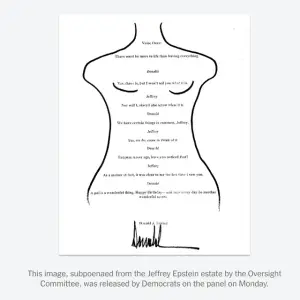
Trump Birthday Card To Epstein, above, released by Democrats from materials in the estate of Jeffrey Epstein, the deceased financier, sex trafficker and close friend of Donald Trump in the 1990s.
Popular Information, Accountability Journalism: DOJ admits it has still not released 99% of Epstein files, violating law, Judd Legum, right, and Noel Sims, Jan. 7, 2026. The DOJ said it is still reviewing millions of Epstein files, after previously claiming it completed the review in July.
In an extraordinary letter sent to a federal judge Monday evening, Attorney General Pam Bondi, left, admitted that the Department of Justice (DOJ) has not disclosed more than 99% of the files related to convicted sex offender Jeffrey Epstein — despite a federal law that required full disclosure by December 19, 2025.
According to the letter, the DOJ “has now posted to the DOJ Epstein Library webpage approximately 12,285 documents (comprising approximately 125,575 pages).” Meanwhile, “there are more than 2 million documents potentially responsive to the Act that are in various phases of review.” The number of undisclosed documents has nearly doubled since the last DOJ statement, on December 24, which claimed that one million Epstein-related documents had not been released.
The failure to release these documents is a violation of the Epstein Files Transparency Act, which was signed into law by President Trump on November 19. The law requires Bondi to “make publicly available in a searchable and downloadable format all unclassified records, documents, communications, and investigative materials in the possession of the Department of Justice” related to Epstein within 30 days.
The law allows the DOJ to redact records that “contain personally identifiable information of victims,” material depicting child sex abuse, and other sensitive information. Each redaction “must be accompanied by a written justification published in the Federal Register and submitted to Congress.” Many of the limited number of documents that have been released are heavily redacted. One document that was “released” is 100 blacked-out pages. But the DOJ has not provided a written justification for any redaction.
Further, 15 days after the release of the files, the DOJ is required to submit to Congress a report with a summary of all redactions and the legal justification for each redaction. Under the law, the report was due no later than January 3, 2026. The DOJ has not produced this report.
In the letter to the court, Bondi suggests that the DOJ is working as quickly as possible but there has simply not been enough time to review the Epstein files since the law was passed last year. Bondi stressed the “large volume of materials” and said that “over 400 lawyers across the Department will dedicate all or a substantial portion of their workday to the Department’s efforts” to review and release the Epstein files.
This mirrors previous statements from Deputy Attorney General Todd Blanche, Trump’s former personal attorney who is overseeing the process: Todd Blanche@DAGToddBlancheUpdate on our Epstein files review: DOJ lawyers from Main Justice, FBI, SDFL, and SDNY are working around the clock through the holidays, including Christmas and New Years, to review documents in compliance with federal law. It truly is an all-hands-on-deck approach and we're5:31 PM · Dec 31, 2025 · 479K Views1.95K Replies · 480 Reposts · 1.87K Likes
This directly contradicts Bondi’s previous claims that a review of the Epstein files — including the redaction of sensitive victim information — was initiated last February and was completed no later than July.
On February 27, 2025, Bondi released the “first phase“ of files related to Epstein. According to a press release, the DOJ said it was “committed to transparency” and would “release the remaining documents upon review and redaction to protect the identities of Epstein’s victims.” In a March 14 appearance on Fox Business, Bondi said she received a “truckload” of new documents and would “get out as much as we can, as fast as we can, to the American people.” In a March 23 appearance on Fox News, Bondi claimed “we are releasing all of these documents as soon as we can get them redacted to protect the victims.”
In an unsigned July 7 memo, the DOJ said the review of the Epstein files was complete. “As part of our commitment to transparency, the Department of Justice and the Federal Bureau of Investigation have conducted an exhaustive review of investigative holdings relating to Jeffrey Epstein,” the memo said. The DOJ described this review as exhaustive and included “digital searches of [FBI] databases, hard drives, and network drives as well as physical searches of squad areas, locked cabinets, desks, closets, and other areas where responsive material may have been stored.” As part of the review completed July 7, “[t]eams of agents, analysts, attorneys, and privacy and civil liberties experts combed through the digital and documentary evidence with the aim of providing as much information as possible to the public while simultaneously protecting victims.”
In an abrupt reversal, however, the DOJ said that “no further disclosure would be appropriate or warranted.” That remained the DOJ position until the passage of the Epstein Files Transparency Act.
On December 19, the deadline for the DOJ to release the files as required by the law, Blanche said in an interview on Fox News that the DOJ would not be meeting the deadline. “I expect that we’re going to release more documents over the next couple of weeks, so today several hundred thousand and then over the next couple weeks, I expect several hundred thousand more,” Blanche said. “There’s a lot of eyes looking at these and we want to make sure that… when we do produce the materials we’re producing, that we’re protecting every single victim.”
On December 23, Axios reported that Trump administration officials said that “about 750,000 records have been reviewed and disclosed by a team of about 200, and about 700,000 more records remain to be examined” and that “they expected to be done with the Epstein releases within a week.”
But on the following day, December 24, the DOJ posted on X that an additional million documents were uncovered. “The US Attorney for the Southern District of New York and the FBI have informed the Department of Justice that they have uncovered over a million more documents potentially related to the Jeffrey Epstein case,” the DOJ wrote. The DOJ promised to “release the documents as soon as possible,” noting that it “may take a few more weeks.”
Although the DOJ claimed in July that all Epstein-related documents were identified and reviewed, the number of unreviewed files continues to increase.Members of Congress considering contempt charges against Bondi
If the DOJ does not comply with the law and release all the Epstein files, Trump administration officials could face inherent contempt charges. Representatives Ro Khanna (D-CA) and Thomas Massie (R-KY), who introduced the Epstein Files Transparency Act, have said they are pursuing inherent contempt against Bondi, a rarely used method for Congress to “fine or arrest and then bring to trial officers who are obstructing legislative functions.”
“The quickest way, and I think most expeditious way, to get justice for these victims is to bring inherent contempt against Pam Bondi,” Massie said in a December 21 interview with CBS’ Face the Nation. Massie said that he and Khanna were “talking about and drafting that right now.” Khanna said he believed they would “get bipartisan support in holding her accountable.”
Khanna told the Washington Post that the measure would likely “give Bondi a 30-day grace period and then start fining her daily until she released all the records.” Congress has the authority to hold proceedings and cite people for contempt. The House could approve the measure with a majority vote, and would not need Senate approval. Inherent contempt has not been used since the 1930s, according to the American Bar Association.
Global News
New York Times, Cuba’s Long-Suffering Economy Is Now in ‘Free Fall,’ David C. Adams and Frances Robles, Jan. 7, 2026 (print ed.). With widespread power outages, medicine shortages and rising food prices, experts say Cuba’s economy has never been worse, with the crisis coming just as the supply of Venezuelan oil is threatened.
By all accounts, Cuba is enduring the worst economic moment in the 67-year history of its communist revolution.
While the island nation has endured periodic episodes of mass migration, food shortages and social unrest in decades past, never before have Cubans experienced such a wholesale collapse of the social safety net that the country’s leaders — starting with Fidel Castro — once prided themselves on.
“I, who was born there, I, who lives there, and I’ll tell you: It’s never been as bad as it is now, because many factors have come together,” said Omar Everleny Pérez, 64, an economist in Havana.
As Trump administration officials congratulate themselves on a triumphant military victory in Venezuela, in which President Nicolás Maduro was seized and the United States claimed control over the South American country, eyes have now turned to Cuba, which enjoyed a warm relationship with the jailed president and which depended on the oil he sent.
Of Cuba, “It’s going down for the count,” Mr. Trump said Sunday, dismissing the need for military action there, because he said the government was likely to collapse on its own.
Odalis Reyes can see evidence of Cuba’s decay with her own two eyes.
From the window in her cramped sitting room, Ms. Reyes, a seamstress in Old Havana, looks out at a relic of the country’s obsolete past, the rusting hulk of an electric power station that once provided electricity to her poor neighborhood on the edge of the popular tourist district of Cuba’s capital.
More On U.S. Foreign Affairs, National Security
New York Times, Rubio Tells Lawmakers Trump Wants to Buy Greenland, Edward Wong, Tyler Pager and Eric Schmitt, Jan. 7, 2026 (print ed.). President Trump has said since his first term that he wants to acquire Greenland, and he asked aides for an updated plan on Monday. European leaders reject the president’s assertions.
Secretary of State Marco Rubio, right, has told lawmakers that President Trump plans to buy Greenland rather than invade it, while Mr. Trump has asked aides to give him an updated plan for acquiring the territory, U.S. officials said on Tuesday.
Mr. Rubio made his remarks in a briefing on Monday with lawmakers from the main armed services and foreign policy committees in both chambers of Congress. The same day, Mr. Trump told aides to deliver an updated plan.
The congressional briefing was focused on Venezuela, but lawmakers raised concerns about Mr. Trump’s intentions on Greenland given aggressive remarks this week by the American president and a top aide, Stephen Miller, two officials said.
Mr. Rubio did not go into detail on what he meant by buying Greenland. Mr. Trump spent decades in New York as a real estate developer, and one of his top diplomatic envoys, Steve Witkoff, comes from the same background. Mr. Trump has coveted Greenland since his first term.
Greenland is a sparsely populated, autonomous territory that falls under the sovereign boundaries of Denmark, a member of NATO. Denmark established colonial control over Greenland in the 18th century, and allowed it to become autonomous in the 20th century.
On Tuesday, leaders of six NATO nations joined with Mette Frederiksen, the prime minister of Denmark, to issue a remarkable joint statement pushing back against Mr. Trump’s assertions that the United States should take over Greenland. The nations that aligned with Denmark were Britain, France, Germany, Italy, Spain and Poland, all of which are close allies of the United States.
New York Times, Aldrich Ames, C.I.A. Turncoat Who Helped the Soviets, Dies at 84, Tim Weiner (a former national security correspondent for The Times and the author of “Legacy of Ashes: A History of the C.I.A.”), Jan. 7, 2026 (print ed.). As chief of the counterintelligence branch of the C.I.A.’s Soviet division, he had access to some of the nation’s deepest secrets. He had been serving a life sentence since 1994.
 Aldrich Ames, left, the most murderous turncoat in the history of the Central Intelligence Agency, whose betrayal in working for the Soviet Union went undetected for almost a decade, died on Monday. He was 84 and had been a federal prisoner, serving life without parole, since 1994.
The death was recorded in the federal Bureau of Prisons inmate database. A spokesman said he died at the Federal Correctional Institution in Cumberland, Md.
 The son of an alcoholic C.I.A. officer, Mr. Ames failed upward through the agency ranks for 17 years until he attained a headquarters post of extraordinary sensitivity.
He became the chief of the counterintelligence branch of the C.I.A.’s Soviet division in September 1983. He had access to some of the nation’s deepest secrets: in particular, its clandestine liaisons with the Soviets, who worked in secret with American intelligence. These were a small cadre, barely a dozen all told, who were cultivated over the course of two decades and well-placed in Soviet government agencies and embassies around the world.
As the Cold War was cresting, Mr. Ames decided that he would change the course of history by upending a long-running game of nations, the contest of spy versus spy. He saw it as a charade. By his own account, he was fueled by a toxic cocktail of vodka, arrogance, delusions of grandeur and naked greed.
In April 1985, he took his first gamble. He hand-delivered an envelope addressed to the K.G.B. chief at the Soviet Embassy in Washington. He offered a smattering of C.I.A. secrets, and he requested $50,000 in return. He identified himself by name and rank. The relationship was sealed over a long, boozy lunch at an elegant hotel near the White House.
Then he bet the house. Mr. Ames feared that one of the C.I.A.’s Russians might betray him, so he decided to betray them all. He knew he would be paid a fortune.
“I panicked,” he said in a 1994 interview with The New York Times, conducted from jail. “Only by suddenly giving them everyone” would he be protected — and he knew in return that he would be paid “as much money as I could ever use, if I chose to do that.”
Mr. Ames put together hundreds of secret documents in a six-pound stack — a who’s who of Soviets working for the C.I.A. and an encyclopedia of American intelligence operations behind the Iron Curtain. He stuffed them in his briefcase, walked out of headquarters and delivered them to a contact at the Soviet Embassy.Editors’ PicksA Doctor Looks to His Past to Explain ‘Why We Drink Too Much’New Life Emerges Atop Boston’s South StationCan Walking Be My Whole Workout?
“I was delivering myself along with them,” he said in the 1994 interview. “I was saying, ‘Over to you, K.G.B. You guys take care of me now.’”
The K.G.B. took care of him — he was paid at least $2,705,000 — and it took care of its own turncoats. As many as 10 Soviet and Soviet-bloc spies were arrested, interrogated and executed for treason. One was imprisoned. At least two escaped, one step ahead of their pursuers. The network that had provided the United States with political, military, diplomatic and intelligence insights on Moscow was destroyed.
The K.G.B. did its best to fill that void with disinformation and double agents for the rest of the Cold War. These deceptions distorted the debate over policy and strategy toward Moscow at the highest levels of American government, John M. Deutch, the C.I.A.’s director in 1995, said at the time, and they subverted the C.I.A. in its central mission of the Cold War: understanding the Soviet threat. The falsehoods sustained the view that the Soviet Union was a superpower, even as it was collapsing.
Mr. Ames also revealed the identities of two dozen other U.S. intelligence officers and foreign agents working for the C.I.A. and exposed some 50 secret operations in Russia, Europe and Latin America, the agency concluded.
As the C.I.A.’s Russians disappeared, one by one by one, the agency began to fear that it had a traitor in its midst. But the search for the mole sputtered and ground to a halt.
In 1986, Mr. Ames went on a three-year assignment in Rome, where he devoted much of his time to rooting out secrets for the Soviets and drinking his lunch; he once passed out in the street after an American Embassy party.
More Global News
The oil tanker Bella 1 at the Singapore Strait in March. Russia has dispatched at least one naval vessel to meet and escort the tanker, which the U.S. military has been pursuing and trying to seize (Reuters photo by.Hakon Rimmereid).
New York Times, Russia Sends Naval Vessel to Escort Oil Tanker U.S. Is Pursuing, Adam Sella, Nicholas Nehamas and Christiaan Triebert, Jan. 7, 2026. The development deepens the confrontation over the tanker formerly known as the Bella 1, which the United States wants to seize but which Russia has sought to protect.
Jan. 6

Trump supporters storm the United States Capitol On Jan. 6, 2021.
Paul Krugman via Substack, Political-Economy Commentary: Day of Infamy, Paul Krugman, right, Jan. 6, 2026. I have to acknowledge this horrible anniversary.
Five years ago Donald Trump tried to overthrow an election he lost. He failed, and I assumed that the threat was over. Never in my worst nightmares did I imagine that he would make a comeback and return to the White House. But there he is. And he’s every bit as bad as his opponents and critics warned he would be.
I’m not going to talk today about how we got here and strategies for getting out. All I want to do right now is to say that we should be clear about what is happening. American fascism is on the march, and anyone who balks at saying that clearly, who makes excuses and pretends that Trump and the people he brought in aren’t monsters, is deeply unpatriotic. If we are to have a chance at saving democracy, our first duty must be clarity. No sanewashing, no bothsidesing. Only facing the horrible truth can set us free.
 Letters from an American, Historical Commentary: January 5, 2026 [How Insurrection, Vote-Rigging Went Mainstream], Heather Cox Richardson, right, Jan. 6, 2026. Five years ago, on January 6, 2021, more than 2,000 rioters stormed the U.S. Capitol to try to stop the process of counting the electoral votes that would make Democrat Joe Biden president of the United States.
They tried to hunt down House speaker Nancy Pelosi (D-CA) and chanted their intention to “Hang Mike Pence,” the vice president. They fantasized that they were following in the footsteps of the American Founders, about to start a new nation. Newly elected representative Lauren Boebert (R-CO) wrote on January 5, 2021: “Remember these next 48 hours. These are some of the most important days in American history.” On January 6 she wrote: “Today is 1776.”
In fact, it was not 1776 but 1861, the year insurrectionists who had tried to overthrow the government in order to establish minority rule tried to break the U.S. The rioters wanted to take away the right at the center of American democracy—our right to determine our own destiny—in order to keep Donald J. Trump in the White House, making sure the power of elite white men could not be challenged. It was no accident that the rioters carried a Confederate battle flag.
Since the 1980s, Republicans pushed the idea that a popular government that regulates business, provides a basic social safety net, promotes infrastructure, and protects civil rights crushes the individualism on which America depends. As cuts to regulation, taxation, and the nation’s social safety net began to hollow out the middle class, Republicans pushed the idea that the country’s problems came from greedy minorities and women who wanted to work outside the home. More and more, they insisted that the federal government was stealing tax dollars and destroying society, and they encouraged individual men to take charge of the country.
After the Democrats passed the 1993 National Voter Registration Act, more commonly known as the motor voter law, enabling people to register to vote at motor vehicle departments, Republicans increasingly insisted Democrats were cheating the system by relying on the votes of noncitizens, although there was never any evidence for this charge.
As wealth continued to move upward, the idea that individuals and paramilitary groups must “reclaim” America from undeserving Americans who were taking tax dollars and cheating to win elections became embedded in the Republican Party. By 2014, Senator Dean Heller (R-NV) called Nevada rancher Cliven Bundy and his supporters “patriots” when they showed up armed to meet officials from the Bureau of Land Management who tried to impound Bundy’s cattle because he owed more than $1 million in grazing fees for running cattle on public land.
The idea of reclaiming the country for white men by destroying the federal government grew, along with the idea that Democrats could win elections only by cheating. In 2016, Trump insisted that his female Democratic opponent belonged in jail and that he alone could save the country from the Washington, D.C., “swamp.” Other Republican leaders who had initially shunned him began to support him when it became clear that he could mobilize a new crop of disaffected voters who could put Republicans into office.
And they continued to support him, claiming initially that he could be kept in check by establishment Republicans like his first chief of staff, Reince Priebus, who moved from leading the Republican National Committee to the White House for the first six months of Trump’s first term. In his first months in office, Trump delivered the tax cut Republican leaders wanted, as well as the appointment of one out of every four federal judges, including three Supreme Court justices, who would protect the Republican project in the courts.
But the idea that Trump could be kept in check fell apart in September 2019, when it appeared he was trying to rig the 2020 election. A whistleblower revealed that Trump had called the newly elected president of Ukraine, Volodymyr Zelensky, in July 2019 to demand that Zelensky smear former vice president Joe Biden, who was beating Trump in most polls going into the 2020 election season. Until Zelensky did so, Trump said, the administration would not release the money Congress had appropriated to fund Ukraine’s fight against Russia, which had invaded Ukraine in 2014.
The attempt to withhold congressionally appropriated funds in order to tilt an election was a glaring violation of the 1974 Impoundment Control Act codifying the executive branch’s duty to execute the laws Congress passed. In the congressional investigation that followed, witnesses revealed that Trump’s cronies were running a secret scheme in Ukraine to undermine official U.S. policy and benefit Trump’s allies.
Republicans in 1974 had turned against President Richard Nixon for far less, but although Senator Ted Cruz (R-TX) said not a single Republican senator believed Trump, they stood behind him nonetheless. Senate majority leader Mitch McConnell (R-KY) told his colleagues: “This is not about this president. It’s not about anything he’s been accused of doing…. It’s about flipping the Senate.”
But once acquitted, Trump cut loose from any oversight. He sought revenge and insisted that “[w]hen somebody is President of the United States, the authority is total.” “The federal government has absolute power,” he said, and he had the “absolute right” to use that power if he wanted to.
As early as 2019, Trump had “joked” about staying in power regardless of the 2020 election results, and on October 31, Trump’s ally Steve Bannon told a private audience that Trump was going to declare that he had won the 2020 election no matter what. Trump knew that Democratic mail-in ballots would show up in the vote totals later than Republican votes cast on Election Day, creating a “red mirage” that would be overtaken later by Democratic votes.
“Trump’s going to take advantage of it,” Bannon said, by calling the election early and saying that the later votes were somehow illegitimate. “That’s our strategy. He’s gonna declare himself a winner.” Bannon continued: “Here’s the thing. After then, Trump never has to go to a voter again…. He’s gonna say ‘F*ck you. How about that?’ Because…he’s done his last election.”
Early returns on Election Night 2020, November 3, showed Trump ahead. But, more quickly than anyone expected, Democratic votes turned the key state of Arizona blue, and the Fox News Channel called the race for Biden. Furious, Trump took to the airwaves at about 2:30 the next morning and declared he had won, although ballots were still being counted and several battleground states had no clear winner. “We won’t stand for this,” he told supporters, assuring them he had won. “We’ll be going to the U.S. Supreme Court, we want all voting to stop.”
But it didn’t, and by the time all the ballots were counted, the election was not close: Biden beat Trump by more than 7 million votes and by 306 to 232 in the Electoral College.
Trump insisted a Democrat could not have won honestly. Over the next few months, his campaign demanded recounts, all of which confirmed that Biden won. Trump or his surrogates filed and lost at least 63 lawsuits over the 2020 election, most dismissed for lack of evidence.
As legal challenges failed, Trump pressured Georgia secretary of state Brad Raffensperger to “find 11,780 votes, which is one more than we have” to win the state of Georgia. Trump’s allies plotted for Trump supporters in seven battleground states to meet secretly and submit false slates of electors for Trump. Two slates would enable Vice President Mike Pence to refuse to count the electors from the now-contested states, so that either Trump would be elected outright, or Pence could say there was no clear winner and send the election to the House of Representatives, where each state gets one vote. Since there were more Republican delegations than Democratic ones, Trump would be president.
“This is a fight of good versus evil,” Trump’s evangelical chief of staff Mark Meadows wrote on November 24, 2020, to Supreme Court Justice Clarence Thomas’s wife, Ginni.
Determined to retain control of the government, certain congressional Republicans went along with the charade that the election had been stolen. Trump allies in the House began to echo Trump’s accusations and to say they would question the counts from certain states. Such challenges required a paired vote with a senator, and Josh Hawley of Missouri, who saw himself as a top 2024 presidential contender, and Ted Cruz of Texas, who didn’t want to be undercut, led 11 other senators in a revolt to challenge the ballots.
For weeks, Trump had urged his supporters to descend on Washington, D.C., for a “Stop the Steal” rally arranged for January 6, the day Congress would count the certified electoral ballots. Speaking at the Ellipse near the White House that morning, Trump and his surrogates told the crowd that they had won the election, and Trump warned: “We are going to have to fight much harder.”
Trump claimed that Chinese-driven socialists were taking over the country and told the crowd: “We’re gathered together in the heart of our nation’s capital for one very, very basic and simple reason: To save our democracy.” “You’ll never take back our country with weakness. You have to show strength and you have to be strong. We have come to demand that Congress do the right thing and only count the electors who have been lawfully slated, lawfully slated…. And we fight. We fight like hell. And if you don’t fight like hell, you’re not going to have a country anymore.
And, knowing they were armed, he told them to march to the Capitol.
As Trump’s supporters attacked, lawmakers from their hiding spots begged the president to call off his supporters, but he did nothing for more than three hours. After 5:40, when the National Guard had been deployed without his orders, thus making it clear the rioters would be overpowered before either taking over the government themselves or giving him an excuse to declare martial law, Trump issued a video statement.
“I know you’re hurt,” he said. “We had an election that was stolen from us. It was a landslide election, and everyone knows it, especially the other side, but you have to go home now…. We love you. You’re very special.” He tweeted: “Remember this day forever!”
When the House of Representatives voted to impeach Trump for a second time on January 13, 2021, for incitement of insurrection, only 10 Republicans voted in favor, while 197 voted no (4 did not vote). In the Senate trial, 7 Republican senators joined the Democrats to convict, while 43 continued to back Trump.
In a speech after his vote to acquit, McConnell said, “There is no question that President Trump is practically and morally responsible for provoking the events of that day,” but said he must answer for his actions in court. “Trump is still liable for everything he did while he was in office,” McConnell said. “We have a criminal justice system in this country. We have civil litigation. And former Presidents are not immune from being held accountable by either one.”
In November 2022, Attorney General Merrick Garland appointed special counsel Jack Smith to investigate Trump’s effort to overturn the 2020 election. On August 1, 2023, a federal grand jury indicted Trump for four felonies associated with his attempt to retain power illegally.
Trump fought back, arguing that he had presidential immunity for his actions. Smith asked the Supreme Court to decide the case immediately, but it waited until the last possible moment, on July 1, 2024, to decide Donald J. Trump v. United States, finding that presidents have “absolute immunity” from criminal prosecution for crimes committed as part of the official acts at the core of presidential powers. Trump himself had appointed three of the justices in the majority.
A second grand jury returned a new indictment stripped of the actions now immune, but by then it was too late: Trump was reelected president, and the Department of Justice has an understanding that it will not indict or prosecute a sitting president. And so, five years after the events of January 6, 2021, we are learning what it means to have a president who has demonstrated his determination to overthrow our democracy and who does not have to answer to the law.
Although he was elected with less than 50% of the votes cast, Trump claimed an “unprecedented and powerful mandate.” As soon as he took office in January 2025, the president and his henchmen flouted the 1974 Impoundment Control Act again, seizing Congress’s right to control the nation’s finances. Trump used emergency powers to ignore the Constitution and deployed troops in Democratic-led cities. When Congress required the Department of Justice to release the Epstein files, the administration largely ignored the law. Today, more than two weeks after the deadline, it had released less than 1% of the files. Ignoring the rights afforded to individuals by the Constitution, Trump is seizing people off the streets and prosecuting his perceived enemies.
Trump has taken on himself the right to go to war with another country in order to take its oil, and is openly working to destroy the rules-based international order that has stabilized the world since the 1940s. Today, White House deputy chief of staff Stephen Miller told CNN’s Jake Tapper: “We live in a world, in the real world, Jake, that is governed by strength, that is governed by force, that is governed by power,” he said. “These are the iron laws of the world since the beginning of time.”
That vision is a profound rejection of the principles of the rules-based international order, which was designed to use power for deterrence rather than domination. It is also a profound rejection of the principles of American democracy, a system of checks and balances to channel power into a government that could deliver stability and prosperity to all the people, not just a select few.
In 1863, when that system was unraveling under pressure from those who wanted to base society on a system of enslavement that enriched an elite, Republican president Abraham Lincoln asked Americans to remember those who had died to protect a nation “conceived in liberty, and dedicated to the proposition that all men are created equal.”
Lincoln asked Americans to “take increased devotion to that cause for which they here, gave the last full measure of devotion,” and to resolve that “these dead shall not have died in vain; that the nation, shall have a new birth of freedom, and that government of the people, by the people, for the people, shall not perish from the earth.”

U.S. Bombing In Venezuala, With 80 Reported Killed.
Shown below is a graphic posted by the Trump Administration's Department of State asserting its control not simply over Venezuela but the entire Western Hemisphere: North, South and Central.
New York Times, Venezuela Braces for Economic Collapse From U.S. Blockade, Anatoly Kurmanaev, Jan. 6, 2026. Venezuela could lose the bulk of its oil export revenues this year if the U.S. blockade stays in place, according to internal government estimates, a scenario that would set off a humanitarian crisis.
Even before American forces blasted their way into Venezuela’s capital and seized President Nicolás Maduro on Saturday, the nation was already facing dire economic prospects.
The partial blockade imposed by the United States on Venezuela’s energy exports was expected to shutter more than 70 percent of the country’s oil production this year and wipe out its dominant source of public revenue, according to people briefed on Venezuela’s internal projections compiled in December.
The Trump administration’s decision last month to begin targeting tankers carrying Venezuelan crude to Asian markets had paralyzed the state oil company’s exports. To keep the wells pumping, the state oil company, known as PDVSA, had been redirecting crude oil into storage tanks and turning tankers idling in ports into floating storage facilities.
This strategy merely bought the company some time before it ran out of storage for the pumped oil it was unable to sell. TankerTrackers, a shipping data firm, estimated late last month that Venezuela had enough spare storage until the end of January.
But production could collapse swiftly after that, the people briefed said.
If the blockade held, the Venezuelan government expected national oil production to collapse from about 1.2 million barrels per day late last year to less than 300,000 later this year, said the people briefed — a drop that would significantly reduce the government’s ability to import goods and maintain basic services. The people had access to the projections and discussed them on the condition of anonymity because they were not authorized to speak publicly.
Mr. Maduro’s capture has only added more uncertainty to these projections.
Oil tankers on a U.S. sanctions list will continue being blocked from leaving or entering until the Venezuelan government opens its state-controlled oil industry to foreign investment — presumably giving priority to American companies — Secretary of State Marco Rubio said Sunday on “Face the Nation” on CBS News.
“That remains in place, and that’s a tremendous amount of leverage that will continue to be in place until we see changes, not just to further the national interest of the United States, which is No. 1, but also that lead to a better future for the people of Venezuela,” Mr. Rubio said.
But Venezuela’s interim government already appears to be testing the seriousness of that threat. At least 16 oil tankers hit by U.S. sanctions seem to have made an attempt to evade the blockade and leave Venezuelan ports since Saturday, in part by disguising their true locations or turning off their transmission signals.
If they manage to breach the blockade and export the crude, Venezuela’s oil industry could buy itself some time to adjust to the new reality, the people close to the industry said.
But if the blockade holds, the country would face a catastrophe, they added.
In a worst-case scenario considered by Venezuela’s government, this year’s national oil production would be limited to only the fields operated by the American company, Chevron. It has a unique permit from the Trump administration to work in Venezuela, and is the only company regularly shipping oil from the South American nation since the start of the partial blockade on Dec. 11, shipping data shows.
This scenario would force PDVSA, Venezuela’s largest employer, to furlough tens of thousands workers and slash employee benefits, the people briefed said.
The Epstein Files
Lev Remembers, Commentary, They Want You Watching Maduro — While They Bury the Epstein Files, Lev Parnas, right,. Jan. 6, 2026. Epstein is Trump’s Achilles’ heel — the one weapon that unites MAGA, Democrats, and everyone in between, and the fastest path to pressure, hearings, and real accountability right now while Congress is back in session.
Yesterday, the Venezuelan people were celebrating in the streets. Headlines were flying. Pundits were triumphant. The image being sold was simple: Maduro is gone, justice is coming, something has changed. But today, reality is setting in. Because while the figure of Maduro is now here in the United States — paraded, processed, and weaponized for cameras — nothing has actually changed for the people of Venezuela or for those around the world who have suffered under that regime. The same power structures remain. The same players are still in place. And many are now realizing what I warned you about: this was never about justice or liberation. This was theatrics. A performance. A carefully timed distraction — designed to give the illusion of action while something far more dangerous was happening behind the scenes.Subscribed
Do not be distracted.
 The Maduro case is not the object. Maduro (shown blindfolded and handcuffed after seizure by the U.S. military) is not the point. Maduro is the distraction. And this is not accidental — it is deliberate. Donald Trump has always relied on chaos, spectacle, and noise to bury accountability. Every time he is cornered, something else suddenly dominates the headlines. Another “operation.” Another arrest. Another manufactured crisis for the media to chase while the real threat slips by unnoticed.
But here is what I need you to understand clearly: the danger is not one illegal act. The danger is the system of lawlessness Trump has normalized — at home and abroad. What we are witnessing with Venezuela follows the same exact playbook Putin used in Ukraine. Putin didn’t call it a war. He called it a “special military operation.” Trump doesn’t call what he’s doing an invasion either. He wraps it in language about corruption, stability, security. Different words. Same objective.
Ukraine was never about peace. Venezuela is not about democracy. In both cases, the justification is “corruption,” conveniently defined by the aggressor. In both cases, the goal is control — political, economic, strategic. Putin showed Trump how to do this: deny it’s a war, overwhelm the media, frame yourself as the solution, and dare the world to stop you. Trump didn’t just admire Putin — he learned from him.
And here is where the distraction becomes dangerous.
As I warned you, the moment Congress came back into session, the focus shifted — not toward accountability, not toward the release of more Epstein files, not toward impeachment questions surrounding Bondi, and not toward why the DOJ is still refusing to fully release what it has. Instead, all day long, the media and pundit class were regurgitating the same nonsense: Maduro’s prison conditions, what tactics he may or may not use, what filings may or may not happen. Wall-to-wall speculation. Endless chatter. Exactly what Trump wants.
Exactly what Stephen Miller wants. Because while you’re being pulled into that distraction, behind the scenes the real work is happening — the scrubbing, the burying, the cover-up. The real crime isn’t what’s being talked about on TV. The real crime is what they don’t want you looking at: the Epstein files.
After speaking with several of my sources, I can tell you this plainly: Stephen Miller and the Project 2025 leadership are in full damage-control mode. The push right now is to shift the narrative at all costs — away from the Epstein files, away from accountability, and away from what is being scrubbed and buried behind closed doors. That is why you’re seeing coordinated theatrics not just in Venezuela, but escalating threats and noise around Cuba, Greenland, Canada, and beyond. This is not coincidence. It’s a flood-the-zone strategy — overwhelm the media, fracture attention, and keep the public chasing new crises while the real cover-up continues. My sources are clear: the urgency inside Trump’s orbit isn’t about policy or security — it’s about distraction, because the Epstein files are the one thing they cannot survive if fully exposed.
And while the world argues, while Americans are divided, while families, parties, and institutions are torn apart, Trump keeps moving. That division is not a side effect. It’s the strategy.
Which brings me to the most important point in this letter.
The most powerful weapon we have right now is the Epstein files.
With all the division in this country — left versus right, Democrat versus Republican, MAGA versus anti-MAGA — there is one issue where there is no division. One issue where Americans agree. One issue that terrifies Donald Trump and the people protecting him.
Epstein.
The Epstein files cut through ideology. They cut through propaganda. They cut through party loyalty. MAGA voters. Independents. Democrats. Republicans. The world. Everyone understands this is about power, abuse, cover-ups, and accountability. This is where the truth lives. This is where the leverage is.
That is why the Epstein files matter more than any single new unlawful act Trump commits. Not because those acts aren’t serious — but because Epstein is the key that unlocks accountability. Epstein is how we apply real pressure. Epstein is how we force hearings, investigations, and yes — impeachment. Epstein is where the silence breaks.
And that is why I am asking you — no, I am urging you — do not let the focus drift.
Tomorrow, I will have Arick Fudali from the Bloom Group back on the show. He represents multiple Epstein survivors. Later in the day, I will be joined by Congressman Jamie Raskin. We will talk about the January 6th anniversary, the Epstein files, and what is really going on behind the Venezuela headlines.
As I promised you, I will not let them hijack the narrative. I will not let theatrics replace truth. I will speak for the survivors — because too many people with power still won’t — but I will also fight to save our democracy, even when that means pushing past comfort, silence, and hesitation inside our own institutions. Accountability does not happen because leaders allow it; it happens because people demand it. And that is why I need you with me right now. Stay focused. Make the phone calls. Send the emails. Post the message. Do not let the media drag you into another distraction while the Epstein files are buried and the cover-up continues. This is the moment where pressure matters — and only sustained action will force it.Subscribed
Tell Congress — while they are in session — that Epstein accountability must be front and center. Not tomorrow. Not next week. Now. Stop chasing distractions. Stop normalizing lawlessness. Stop letting Trump flood the zone while accountability gets buried.
This year is not about reacting anymore. This year is about action. That’s why our volunteer hotline is open. If you want to help, organize, and be part of the grassroots infrastructure we are building, email
Morning Shots via The Bulwark, Political Opinion:January 6th and the Never-Ending Coup, Bill Kristol, Andrew Egger and Jim Swift, Jan. 6, 2026. It’s now been nearly three weeks since the Justice Department was required, by law, to publish all the Epstein files in its possession.
And look, they’re getting around to it, okay? It’s just taking a bit longer than they’d thought. In a court filing yesterday, department lawyers said that 12,285 documents have already been released. Only 2 million or so more to go. Happy Tuesday.
More On U.S. Politics, Governance

Fox News, Workers install Donald J. Trump above the current signage on the Kennedy Center in Washington, Dec. 19, 2025. (Associated Press photo by Jacquelyn Martin).
Fox News, Trump rallies House GOP at Kennedy Center days after Maduro capture, Elizabeth Elkind, Jan. 6, 2026. Sources said they expect Trump to focus heavily on Venezuela Tuesday morning. Trump threatens second strike if Venezuela 'doesn't behave.'
 President Donald Trump is set to huddle with House Republicans on Tuesday morning, days after the U.S. government executed strikes in Venezuela and captured the country's leader Nicolás Maduro.
Trump will address GOP lawmakers at the newly renamed Donald J. Trump and John F. Kennedy Memorial Center for the Performing Arts, multiple sources told Fox News Digital.
A White House schedule released late on Monday said Trump will speak around 10 a.m., and that his remarks will be streamed live.
House Republicans will be at the Trump Kennedy Center for an all-day policy forum Tuesday aimed at discussing their agenda for 2026, according to an email obtained by Fox News Digital.
The John F. Kennedy Center for the Performing Arts, the official name enacted by Congress to memorialize the legacy of the assassinated president.
The Contrarian, Opinion: Words & Phrases? It will always be The Kennedy Center, Jennifer Rubin, right, Jan. 6, 2026.
Donald Trump’s pathetic and grammatically flawed attempt to affix his name to The John F. Kennedy Memorial Center for The Performing Arts (“The Donald J. Trump and The…”) is emblematic of his narcissism and compulsive reliance on the authoritarian playbook—not to mention his blithering stupidity in attaching his name to a memorial, which pays tribute to the deceased.
His latest cultural abomination should surprise no one. “The tightening control over artistic freedoms and content is common under autocratic regimes and aspiring authoritarian leaders, given that art and culture often allow opposition through political commentary,” the Brookings’ Institution’s Jonathan Katz and Samara Angel wrote. “Overreach of government powers to control boards and positions on cultural institutions is not a new tactic.”
Despots historically have recognized that monopolizing culture is essential to dictatorial control. As Katz and Angel explained, Goebbels’s Reich Chamber of Culture in the 1930’s sought to ban “degenerate art” and purged “a variety of cultural spaces, including theatrical and visual arts but also… the press, film, and broadcast media.” Viktor Orban’s 2019 Culture Law “censored art and free expression [and] made funding of cultural institutions conditional on the government having a say in appointments to senior positions.” Likewise, after the 1976 military coup, “the Argentine Public Information Secretary (SIP) issued directives aimed at the ‘reconstruction of the national being’ through films, theater, and other artistic productions. Specific plays were prohibited, and many artists were individually targeted.”
As much as fascists despise “cultural elites,” they crave the prestige and relevance the arts can bestow on its patrons. Moreover, they fear the arts community as a hotbed of irreverence, dissent, and nonconformism. (“Authoritarians have always tried to control the creative community and ruthlessly stamp out art contrary to their ideology,” the Southern Poverty Law Center, now the target of Trump repression, explained in July. “The symbolism of a culture the administration disdains, combined with the power of art to penetrate popular culture and influence opinion, threatens Trump.”)
Trump’s ham-handed effort to commandeer a beloved institution has backfired, drawing near universal condemnation. Only 18% of Americans approve of the renaming stunt, according to a recent YouGov poll. Board member Rep. Joyce Beatty (D-Ohio) (represented by Norm Eisen and the Washington Litigation Group) sued to prohibit the maneuver. The Kennedy family issued furious rebukes. And the American public has snubbed Trump with record-low viewership of the Kennedy Center Honors.
Performers also defied Trump, forcing The Kennedy Center to cancel its’ Christmas Eve program with Chuck Redd. So far, far, three other groups (the jazz group the Cookers set for two New Year’s Eve performances, New York City-based Doug Varone and Dancers, and folk singer-songwriter Kristy Lee) have bailed, despite threats of litigation. Stephen Schwartz, composer of the hit musical “Wicked,” backed out of hosting a gala. Earlier last year, “Hamilton” cancelled its run. The refusal to perform at the mad king’s behest powerfully reaffirms that the cultural community will not accept his defacement of an arts institution.
Delightfully, South Park alum writer Toby Morton grabbed the TrumpKennedyCenter.org URL to launch a laugh-out-loud parody site. (“Here, tradition is preserved, narratives are curated, and performances are elevated beyond mere art. What is remembered matters. What is omitted matters more,” Morton deadpans. “We invite you to experience culture as authority, pageantry as truth, and excellence as defined by those in power.”) Taunting the autocrat on the very ground he claims exemplifies why humorless despots like Trump fear an independent arts community. “We exist to preserve what must endure, to honor what must not be questioned, and to gather those who understand that greatness is not chosen, it is recognized,” Morton dryly intones.Subscribed
On a personal note, since this arts lover could never enter a building defaced by Trump’s name, I recently demanded and received a full refund for remaining tickets I held for a venue called “The John F. Kennedy Memorial Center for The Performing Arts.” After all, I never purchased anything for something bearing the name of an authoritarian, lawless, cruel, and racist (not to mention tasteless) wannabe dictator. I can attest that after the Trump takeover but prior to the faux renaming, well over half of the seats were empty for National Symphony concerts.
Meanwhile, the collapse of the venue under Trump’s reign attests to his regime’s utter incompetence in managing any institution it gets its mitts on. The New York Times reported in November (before the attempted name change):
Audiences are staying away. Internal sales figures obtained by The New York Times showed ticket sales down by about 50 percent from the same period last year during one typical week in October. Dozens of employees, many with decades of experience, have been fired or quit. Outsiders with few obvious qualifications aside from party loyalty were handed top jobs. The center’s head of human resources estimated that staffing was down 30 percent from before Mr. Trump took over. Others call that a conservative estimate.
Fortunately, most legacy media outlets recognize that Congress legally established the venue’s original name and, therefore, they refuse to refer to it as anything other than The Kennedy Center. (The media’s resistance to equally ludicrous attempts at renaming the Gulf of Mexico and the Defense Department has been uneven.) Trump can call it whatever he pleases, the rest of us can refuse to play along.
In short, only in Trump’s demented mind is the venue called anything but The Kennedy Center. Whatever compound name he puts on the building is illegitimate and should be disclaimed by anyone who’s not captive in the cult of personality. The cultural bellyflop is significant—and encouraging—for multiple reasons.
First, this serves as another example of the power of popular boycotts (e.g., Disney-ABC in the wake of Jimmy Kimmel; Target). Refusal to offer homage or dollars to Trump-deformed institutions denies him control over critical aspects of our lives. Those who comply with his edicts, be it CBS News or The Kennedy Center, cannot command our patronage. They thereby lose legitimacy. No one can force viewers to watch Bari Weiss’s laughable propaganda outfit, nor step foot in a building Trump has vandalized.
Second, refusal to knuckle under to Trump’s cultural assaults puts the spotlight back on spineless institutions (e.g., the Paul Weiss law firm, Columbia University, the Washington Post) that have self-censored. Cultural defiance reaffirms that universities, media outlets, and cultural venues can be authentic only if they maintain independence. That provides a brake on a regime trying to dominate every corner of our lives.
Third, Trump’s tone deaf and tasteless efforts at self-glorification (e.g., tearing down the East Wing, turning the Oval Office into an ungapatchka eye-sore) break through the noise in a way that political minutiae cannot. Trump winds up making himself the butt of jokes and inspiring Americans, as Kerry Kennedy put it, to “grab a pickax” to remove all vestiges of Trump from America. Now, that’s a 2026 resolution we can all adopt.
More On Pro-Trump Insurrection Anniversary
The Bulwark, Political Opinion: January 6th Never Ended, Andrew Egger, right, Jan. 6, 2026. Five years!
Half a decade ago today, Donald Trump summoned his angriest, most loyal fans from across America to Washington, D.C., with a call to arms and a fervent plea: They’re trying to steal the country from us, and they’ll get away with it, unless we stop them. They assembled on theNational Mall, their frustration and rage crackling in the air, waiting to be told what to do. Trump whipped them into a frenzy, sent them marching down to the Capitol, and waited.
Last week, an excellent New York Times editorial described the insurrection of January 6th as a riot that never ended—“a turning point, but not the one it first seemed to be.” To some, it felt like an ending, the final, violent death spasms of the cult of Trump—so much so that the Senate Republicans who could have slammed the door on him forever deluded themselves into thinking he would stay gone without their having to lift a finger.
Instead, it proved to be the dawn of Trump’s total liberation. He had stress-tested his own theory of his base: that they would swallow insane, ludicrous election lies simply because he asked them to, would march themselves into felonies because they thought he wanted them to, and would then sit in their jail cells, not disillusioned but unshaken in their faith in him, patiently awaiting the day of his return and their reward. Eventually, they got it.
Ever since, Trump has lived his life in accordance with the lessons he learned that day. There was no act of selfishness or vindictiveness too grotesque for him to survive, provided he kept his people adequately juiced in the belief that their enemies were worse—and provided he could claw his way back to actual, hard power.
So it’s true: We’ve never left the January 6th era. But what’s most staggering is how many people would prefer to pretend we never entered it in the first place. Outside the core of Trump’s zealot base, which celebrates the patriotic heroes of that day, sits a larger faction of more grudging GOP supporters, for whom the Capitol insurrection is an unpleasant memory repressed as a matter of mental hygiene. These people wouldn’t flat-out deny that January 6th happened, but they’ve mentally sequestered its memory and significance, refusing to allow it to force them into any uncomfortable conclusions. They’d laugh you out of the room for suggesting, for instance, that what happened just five years ago could plausibly happen again.
Three years from today, Donald Trump may well find himself in a familiar situation: asked to leave the White House and preferring not to. The strong odds are, of course, that he won’t be on the ballot himself. But if a Democrat wins the presidency in 2028, he’ll have far more compelling reasons not to let the transfer of power go ahead smoothly than he ever did in 2020. Back then, it was mostly a matter of arrogance and pride: He simply couldn’t accept that he’d lost to Joe Biden. This time, the personal stakes will be much higher. Wrapped in the powers of the presidency, he’s acted as a law unto himself for too long not to dread going back into private life, where long-delayed legal consequences might be lurking, waiting for him.
How might Trump’s strategic thinking run in such a moment? Look to his current handling of the situation in Venezuela. Trump has described Nicolás Maduro’s 2024 re-election as fraudulent—correctly, for a change—and explicitly compared it to his own defeat in 2020. But having plucked Maduro from power, Trump has not hastened to install that election’s rightful winner in his place. Instead, he has struck a deal with the politician of his choosing, Venezuelan Vice President Delcy Rodríguez, left, to serve as long as she continues to please him. And he has waved aside the idea that Venezuela should immediately hold new elections, as the country’s law demands in such cases. “We have to fix the country first,” he said. “You can’t have an election . . . We have to nurse the country back to health.”
Who’s to say Trump couldn’t try to pull the same thing here? That after a hotly contested 2028 election between, say, JD Vance and Gavin Newsom, in which he and his apparatus again spread elaborate rigged-election conspiracies among their followers, Trump might announce that the new president will be—temporarily, of course—neither? Trump himself would just have to stay on—just until they can get to the bottom of the election fraud that obviously took place.
Would such a move necessarily work? Of course not. But what it means to live in the January 6th era is to recognize that these scenarios are plausible. In fact, there’s only two things that stand between us and that reality. The first is the extent of Trump’s own presumption and hubris, against which it has been unwise to bet in recent years. And the second is the integrity of the men and women who make up the structures that restrain the will of a runaway president.
A lesson we learned in 2021—a lesson we keep learning over and over—is that these structures do not support themselves. The people entrusted with them have to choose to live up to their responsibilities, even when considerable pressure is on them not to. On and before January 6, 2021, enough of them did. And then, in the days, weeks, months and years after, Trump and Co. wore them all down into acquiescence and impotence. Here’s hoping the next batch will be as honorable. Three years from now, we may find we need them.
Popular Information, Accountability Journalism: Five years later, these 10 corporations still aren’t funding election deniers, Judd Legum, right, and Noel Sims, Jan. 6, 2026. Five years later, these 10 corporations still aren’t funding election deniers.
Five years ago today, on January 6, 2021, a violent mob stormed the Capitol building. Following the attack, over a hundred major companies released statements condemning the insurrection and promising to stop donating to the 147 members of Congress who voted to overturn the 2020 election, or to halt all political donations entirely.
Since returning to office, President Trump has continued to push false claims that the 2020 election was “rigged,” “stolen,” and filled with “fraud.” On Trump’s first day as president, he issued sweeping pardons and commutations for some of those involved in the Capitol insurrection. In a presidential action, Trump wrote that the pardons and commutations ended “a grave national injustice.”
The current members of Congress who voted to overturn the 2020 election have embraced Trump’s return to the White House. None has expressed any regret for their vote.
Nevertheless, most companies that pledged to stop donating to these lawmakers have broken their promise.

After January 6, 2021, for example, a Cigna spokesperson gave CNN the following statement:
There is never any justification for violence or the kind of destruction that occurred at the U.S. Capitol last week – a building that stands as a powerful symbol of the very democracy that makes our nation strong. Accordingly, CignaPAC will discontinue support of any elected official who encouraged or supported violence, or otherwise hindered a peaceful transition of power.
Cigna, however, has since donated hundreds of thousands of dollars to lawmakers who voted to overturn the election. In April 2021, a spokesperson for the company told the New York Times that resuming donations to members of Congress who voted to overturn the election did not violate its pledge because congressional voting is “by definition, part of the peaceful transition of power.” Cigna argued that its pledge only applied to “those who incited violence or actively sought to obstruct the peaceful transition of power through words and other efforts.”
 Comcast pledged to “suspend all of our political contributions to those elected officials who voted against certification of the electoral college votes” after January 6, 2021. In a statement at the time, the company wrote, “The peaceful transition of power is a foundation of America’s democracy.”
Comcast, however, has since broken its pledge and donated hundreds of thousands of dollars to lawmakers who voted to overturn the election. Comcast also donated $1 million to Trump’s 2025 inaugural fund and was among the donors to Trump’s new White House ballroom, according to a list released by the White House.
After January 6, 2021, a spokesperson for General Mills said it had “suspended contributions to any member of Congress who voted to override the results of the U.S. presidential election.” In January 2025, Popular Information reported that the company had thus far upheld its pledge. Last year, however, General Mills resumed donations to lawmakers who voted to overturn the election. On March 27, the company donated $1,000 to Representative Kevin Hern (R-OK). On June 12, the company donated $1,000 to Representatives Glenn Thompson (R-PA) and Adrian Smith (R-NE), and an additional $1,000 to Hern.
Popular Information is an independent newsletter dedicated to accountability journalism since 2018. It is made possible by readers who upgrade to a paid subscription.SubscribedThe promise keepers
While many companies have broken the pledges they made after January 6, 2021, some companies have kept their promises. Popular Information identified 10 companies that have upheld their promise to stop donating to members of Congress who voted to overturn the 2020 election.
Farmers Insurance
Following the Capitol insurrection, former Farmers Group CEO Jeff Dailey released a statement promising to suspend political donations. “Like many Americans, we were horrified by the acts of violence that took place in our nation’s capital. While we recognize and support all Americans’ right to peacefully protest and exercise free speech, we strongly condemn acts of violence and hateful rhetoric,” Dailey said in the statement, according to CNN. Since January 6, 2021, the insurance company has kept its promise and has not donated to any members of Congress who voted to overturn the election.
Unlike Farmers Group, several other insurance companies — including Blue Cross Blue Shield and Allstate — broke their promises to withhold their money from those who voted against certifying the 2020 election results.
Airbnb
After January 6, 2021, Airbnb released a statement promising to withhold donations from those who voted against certifying the election. “Airbnb strongly condemns last week’s attack on the US Capitol and the efforts to undermine our democratic process,” the company said. The company also released a safety plan for the 2021 inauguration, including canceling Airbnb reservations in Washington, D.C., made by those associated with a hate group and banning individuals involved in the Capitol insurrection from the platform. Since January 6, 2021, Airbnb has kept its promise and has not donated to any members of Congress who voted to overturn the election.Expedia Group
While Expedia Group and Airbnb have not given any money to election deniers since 2021, other travel and hospitality companies have reneged on their vows to do the same. Marriott International and Hilton Worldwide, for example, both donated to former Republican House Speaker Kevin McCarthy.
Nike
In January 2021, Nike released a statement promising to halt donations to members of Congress who voted to overturn the election. “Nike’s Political Action Committee (PAC) helps our employees support elected officials who understand our business and whose values align with our mission of serving athletes. These nonpartisan values rely upon upholding the principles of democracy,” the statement said. “Nike’s PAC will not support any member of Congress who ignores these principles, including those who voted to decertify the Electoral College results.” Since the Capitol insurrection, Nike has kept its promise and has not donated to any members of Congress who voted to overturn the election.
Clorox
Since 2021, Clorox has not donated any money to election deniers’ campaigns. Ecolab, a company selling similar products to Clorox’s, promised to stop donating to all congressional candidates, according to CNN. But during the 2024 election cycle, Ecolab donated thousands of dollars to Representative Steve Scalise (R-LA), Hern, and other members of Congress who tried to overturn the 2020 election.
Eversource Energy
On January 13, 2021, Eversource Energy, a large electricity provider in the Northeast, announced that it would not donate to any of the members of Congress who voted against certifying the 2020 election results. In a statement, Eversource’s Chief Communications Officer Jim Hunt said, “at Eversource, we were deeply disturbed by the intentional disruption of our democratic process and the violence that occurred at the Capitol last week.”
Eversource has kept its promise not to donate to any election deniers and has made few political contributions in general. NRG Energy, a competing electricity provider serving some of the same states as Eversource, also promised not to donate to any election deniers, but has since reneged.
Holland & Hart LLP
Holland & Hart, among the top 200 earning law firms in the world, has not donated to anyone who voted to overturn the 2020 elections. In contrast, Cozen O’Connor, an even bigger firm, reneged on its promise.
Qurate Retail
Unlike other retail brands like Amazon and Walmart that have not followed through on their vows not to give money to election deniers, Qurate Retail — which has since been rebranded as QVC Group — has kept its promise.
Lyft
Lyft has kept its promise to withhold donations to election deniers after January 6. While Uber never made such a promise, the company and its CEO donated $2 million to Trump’s inauguration fund.
Whirlpool
Whirlpool has not given any money to people who voted to overturn the 2020 election. The company terminated its political action committee in 2023.
More On Venezuela Reactions, Global Implications
 New York Times, Venezuela Updates: At U.N. Emergency Meeting, U.S. Allies Criticize Military Action in Caracas, Benjamin Weiser, Jonah E. Bromwich, Hurubie Meko and Farnaz Fassihi, Jan. 6, 2026 (print ed.). Some of the staunchest U.S. allies criticized the raid that captured Venezuela’s leader two days ago, using an emergency meeting of the United Nations Security Council to object to a military operation that landed the autocrat before a federal judge on Monday.
The U.N. secretary general, António Guterres, shown above in a file photo, said the Trump administration had violated the U.N. charter with the nighttime raid that used roughly 200 members of the U.S. military’s special forces to take the ousted leader, Nicolás Maduro, and his wife into custody. U.S. allies including France criticized the raid, while representatives from Russia and China demanded their release.
The meeting played out as Mr. Maduro and Ms. Flores pleaded not guilty to drug charges in a Manhattan courtroom, where he insisted that he was still his country’s president and had been “kidnapped” in the military raid.
The couple made a brief appearance before Judge Alvin K. Hellerstein on charges including narco-terrorism and conspiracy to import cocaine. “I’m innocent. I’m not guilty,” Mr. Maduro said through an interpreter when asked to enter his plea. He continued, “I am a decent man. I am still president of my country.”
Ms. Flores, who like her husband wore a short-sleeve navy shirt over an orange prison uniform, had a bandage on her forehead and what looked to be bruising near her right eye. She told the court that she was “not guilty, completely innocent.”
The arraignment followed a monthslong campaign by the Trump administration to drive Mr. Maduro from power. But it could be well over a year before he and his wife face trial. Mr. Maduro’s lawyer, Barry Pollack, told the judge there were questions about the legality of his client’s “military abduction.”
Even as the hearing was playing out in Lower Manhattan, the U.N. Security Council was gathered on Manhattan’s east side for an emergency session where member nations described the raid as a violation of international law.
Mike Waltz, the U.S. ambassador to the U.N., defended his country’s ouster of Mr. Maduro, saying that there was “no war against Venezuela or its people.” He called Mr. Maduro a narcotics fugitive and not a head of state, and insisted the raid was “a law enforcement operation.”American allies including France objected to the military incursion into a sovereign state and the capture of the Venezuelan president as a violation of international law.
 President Nicolás Maduro of Venezuela and his wife, Cilia Flores, were escorted off a helicopter and taken to the federal courthouse in Manhattan (New York Times photo by Vincent Alban).
New York Times, Venezuela Live Updates: Maduro Tells U.S. Judge He Was ‘Kidnapped,’ Benjamin Weiser, Jonah E. Bromwich, Hurubie Meko and Annie Karni, Jan. 6, 2026 (print ed.). Nicolás Maduro, the ousted Venezuelan leader, and his wife pleaded not guilty to drug trafficking and other federal charges. “I am still president of my country,” Maduro said.
Nicolás Maduro, the ousted Venezuelan leader, insisted on Monday that he was still his country’s president and had been “kidnapped” in the U.S. military raid on Caracas that captured him and his wife two days ago. Both pleaded not guilty to charges, including drug trafficking and other crimes, in a federal courtroom in Lower Manhattan.
“I’m innocent. I’m not guilty,” Mr. Maduro said through an interpreter after Judge Alvin K. Hellerstein, right, asked him for his plea. He continued, “I am a decent man. I am still president of my country.”
Mr. Maduro’s wife, Cilia Flores, who like her husband wore a short-sleeve navy shirt over an orange prison uniform, had a bandage on her forehead and what looked to be bruising near her right eye.
She told the court that she was “not guilty, completely innocent.”
At the conclusion of the hearing, a man stood up in the gallery and told Mr. Maduro in Spanish that he would pay for his crimes. Mr. Maduro responded that he would win his freedom and declared himself “a prisoner of war.”
Their arraignment, on charges including narco-terrorism and conspiracy to import cocaine, followed a monthslong campaign by the Trump administration to drive Mr. Maduro from power. But it could be well over a year before he and his wife face trial, and Mr. Maduro’s lawyer, Barry Pollack, told the judge there were questions about the legality of his client’s “military abduction.”
Earlier, during a meeting in Caracas of the Venezuelan National Assembly, Mr. Maduro’s son, Nicolás Maduro Guerra, who was also named in the indictment, delivered a defiant speech. He said that his father and “second mother” were “kidnapped” by the United States, adding that the world was facing a “dangerous regression” to imperialism. The younger Mr. Maduro, who has been a member of the assembly since 2021, called on the “people of the world” to show solidarity with his family and with Venezuela.
He pledged his support to Venezuela’s interim leader, Delcy Rodríguez, who had been Mr. Maduro’s vice president. Ms. Rodríguez offered on Sunday night to work with the United States “on a cooperative agenda,” even as President Trump reiterated his assertion that the U.S. government was “in charge.”
Mr. Trump also suggested that the United States could take action against more countries, including Colombia, Mexico and the semiautonomous Danish territory of Greenland. Asked whether that could mean a U.S. operation against Colombia, he said, “It sounds good to me.”
The remarks drew a mix of responses. The president of Colombia warned that any attempt to detain him would unleash popular fury, and the prime minister of Denmark, a NATO ally, urged Mr. Trump to “stop the threats.” But Mexico’s president, Claudia Sheinbaum, brushed aside the remarks. “This is just President Trump’s manner of speaking,” she said.
Here’s what else to know:
U.S. Law, Crime, Justice
The Bulwark, Political Opinion: Stephen Miller, Anti-American, William Kristol, right, Jan. 6, 2026. Even by the standards of the Trump administration, Stephen Miller is a distasteful figure.
One has the sense that even his colleagues shudder when forced to be in his spectral presence. Those of us who would like to preserve some measure of affection for the government of our country try to avert our eyes when he appears, not out of deference but disgust. And yet Miller is a top aide—perhaps the top aide—to the current president of the United States. Sadly, when he speaks, attention must be paid.
Yesterday, Miller informed CNN’s Jake Tapper that he believed the United States had the right and the power to take foreign territory and resources if we wished to do so. In particular, he refused to rule out using military force against our NATO ally, Denmark, to seize Greenland. After all, Miller explained, “We live in a world, in the real world, Jake, that is governed by strength, that is governed by force, that is governed by power. These are the iron laws of the world since the beginning of time.” And Miller dismissed international treaties—like the one establishing NATO—as “international niceties.”
You know who took international treaties seriously? Our Founders. One of the notable moments in George Washington’s presidency was the Treaty of Amity, Commerce, and Navigation, Between His Britannic Majesty and the United States of America, known as the Jay Treaty, signed by President Washington on November 19, 1794. It was duly submitted to the United States Senate and, after vigorous debate, ratified by the Senate on June 24, 1795, by a vote of 20–10, the minimum two-thirds vote necessary for passage.
Which reminds us that the Founders thought treaties important enough to deal with them in the United States Constitution.
In Article II, Section 2, the Constitution says the president “shall have Power, by and with the Advice and Consent of the Senate, to make Treaties, provided two thirds of the Senators present concur.”
In Article III, Section 2, we are told “the judicial Power shall extend to all Cases . . . arising under this Constitution, the Laws of the United States, and Treaties.”
And in Article VI, we are reminded that “This Constitution, and the Laws of the United States which shall be made in Pursuance thereof; and all Treaties made, or which shall be made, under the Authority of the United States, shall be the supreme Law of the Land.”
The Founders did not want or expect a world without treaties or a world in which our own government would view treaties with contempt. The point of the United States, one could almost say, was to move as much as possible beyond the world Stephen Miller relishes, a world simply “governed by force, governed by power.”
In response to the Trump administration’s bullying, the leaders of France, Germany, Italy, Poland, Spain, the United Kingdom and Denmark were compelled to put out a remarkable joint statement reminding the United States that it is a NATO ally and that Greenland “belongs to its people.” Danish Prime Minister Mette Frederiksen earlier was more explicit when she said:
If the United States were to choose to attack another NATO country, then everything would come to an end. The international community as we know it, democratic rules of the game, NATO, the world’s strongest defensive alliance—all of that would collapse if one NATO country chose to attack another.
It is a sad fact—but a fact nonetheless—that the prime minister of Denmark is closer to our Founders in her view of the world than the Trump administration in the White House.
It is a sad fact—but a fact nonetheless—that one can have more confidence in the government of Denmark to respect election results and the peaceful transfer of power than in the Trump administration in the White House.
It is a sad fact—but a fact nonetheless—that we have in the White House a fundamentally anti-American administration. But that is the world in which we live for now, and dealing with it is the task patriotic Americans face.
AROUND THE BULWARK
January 6 Was a Dress Rehearsal For Trump, Not a Finale… Five years on, BILL KRISTOL sits down with TOM JOSCELYN, the lead writer of the House January 6th Committee report, to assess where the country stands today.
Debunking MAGA Myths about the Economy… CATHERINE RAMPELL joins MONA CHAREN to discuss why the factory revival was always a myth, how tariffs backfired, and why chaos, favoritism, and attacks on the rule of law are making the United States a riskier place to do business.
MAGA Influencers Cheered Trump’s Venezuela War. Their Audience Said ‘WTF?!’ Plus, how an irate clarinetist became a Justice Department cause célèbre. Only in this edition of WILL SOMMER’s False Flag.
Why Mark Kelly’s Case Matters… The action against him is unwarranted and could chill legitimate—and invaluable—public speech by veterans, argues MARK HERTLING.
Trump’s Obsession With Latin America Is a Strategic Calamity… While Trump gloats about Venezuela, he ignores the real risks to American security, writes MATT JOHNSON.
Quick Hits
ANOTHER NAIL IN THE COFFIN: Boy, are you ready for a real shocker? Health and Human Services Secretary Robert F. Kennedy Jr. announced yet another forward march in his war against pediatric vaccines yesterday. Effective immediately, the Centers for Disease Control and Prevention—but let’s be honest, that “Prevention” part is getting pretty thin—is reducing its recommended schedule of routine childhood shots from seventeen to eleven. The CDC will no longer recommend immunizations against hepatitis A and B, rotavirus, flu, RSV, and meningitis for all children, but only for certain high-risk groups or if requested by parents in consultation with their physicians.
In explaining the change, HHS resorted to funhouse-mirror logic: that “loss of trust” in vaccines was pushing down uptake rates even of “consensus vaccines” like “measles, rubella, pertussis, and polio.” That these are “consensus vaccines” might be news to Kennedy himself, who along with a motley cadre of other antivax nutcases spent the last several decades agitating against many of these very shots. What contributed more to “loss of trust” in vaccine, one wonders—the fact that scientists had developed safe, effective shots to ward children against so many different serious diseases, or the fact that a group of malcontents went around scaring parents for years with lies that those shots were going to give their babies autism?
The reactions have been so predictable you probably could’ve written them yourself. Public health experts have been horrorstruck—“The abrupt change to the entire US childhood vaccine schedule is alarming, unnecessary, and will endanger the health of children in the United States,” University of Washington professor Dr. Helen Chu told NBC News—while Sen. Bill Cassidy (R-La.), the doctor whose assent allowed Kennedy to be confirmed in the first place, offered his latest way-too-late aw-shucks objection: “Changing the pediatric vaccine schedule based on no scientific input on safety risks and little transparency will cause unnecessary fear for patients and doctors, and will make America sicker.” No shit, Sherlock!
Leave a comment
THIRTY LASHES WITH A WET NOODLE: When Sen. Mark Kelly and a group of other Democratic lawmakers with military or intelligence backgrounds got together last year to cut a video publicly reminding troops of their obligation not to obey unlawful orders, the White House went berserk. Donald Trump had a lengthy Truth Social crashout, accusing the Democrats of “seditious behavior at the highest level” and “punishable by death.” Kash Patel’s FBI reached out to the lawmakers requesting interviews, and Defense Secretary Pete Hegseth—who dubbed them the “seditious six”—ordered a military investigation into Kelly’s involvement in particular.
Well, the results are in. Yesterday, Hegseth announced an official censure for Kelly, threatening a reduction in rank and a hit to his ongoing military pension. “Your pattern of conduct demonstrates specific intent to counsel servicemembers to refuse lawful orders,” Hegseth wrote in a censure letter. “You were not providing abstract legal education about the duty to refuse patently illegal orders. You were specifically counseling servicemembers to refuse particular operations that you have characterized as illegal.”
It’s a hilariously anticlimactic punishment for behavior Trump openly said deserved death, but it’s also about as much as Hegseth could do without trying to subject Kelly to a court-martial—an adversarial process in which Hegseth would have had to prove his ridiculous case. Still, Kelly isn’t taking it sitting down. In a statement, he said he would “fight this with everything I’ve got—not for myself, but to send a message back that Pete Hegseth and Donald Trump don’t get to decide what Americans in this country get to say about their government.”
I PLEAD . . . TRUMP!: A former Tennessee Republican operative and legislature convicted of fraud just got a get-out-of-jail-free card, all because Trump pardoned . . . someone else.
Former state Rep. Robin Smith was spared an eight-month prison sentence yesterday months after Donald Trump pardoned her co-conspirators. (Full disclosure: Smith used to be my representative in Nashville, I’ve met her a couple times, and our families are friendly.)
Smith pleaded guilty in March 2022 to honest services wire fraud and cooperated with the prosecution of former Speaker of the Tennessee House Glen Casada and his chief of staff, Cade Cothren. The trio conspired to defraud the state by creating a fake company, Phoenix Solutions, to provide constituent mailer services to Tennessee Republican House members using the state’s postage and printing allowance, which funds the printing and mailing of constituent communications.
Over the course of 2020, the group received approximately $51,947 from the state in payments through Phoenix Solutions and two other consulting firms controlled by Smith and Casada. During that period, Cothren paid Casada and Smith more than $35,000 in bribes and kickbacks.
Casada and Cothren were sentenced to multi-year prison terms for fraud, money laundering, and conspiracy in September. Smith cooperated with the government and received a much lighter prison sentence.
Then, in November, Trump pardoned Casada and Cothren—but not Smith.
In December, the prosecutors in the case filed a motion saying Smith should not go to prison in light of Trump’s pardons. They told the court they had “not identified another federal case in which a testifying conspirator reported to prison after an equally culpable conspirator was pardoned,” and recommended in place of prison time “one year of probation with no special conditions and no fine.” Which is exactly what the court ordered yesterday.

U.S. Department of Justice Special Counsel Jack Smith announces indictment of former U.S. President Trump on June 9, 2023.

Emptywheel, Analysis: January 6 Was a Violent Insurrection; It Was Also a Fraud Against the GOP Faithful, Emptywheel (Dr. Marcy Wheeler, right), Jan. 6, 2026. Republicans spent much of Jack Smith's deposition asking him about subpoenas targeted toll records. They asked no question about subpoenas targeting Trump's fraudulent grift.
The word “subpoena” appears 84 times in the Jack Smith deposition (see my more general post describing how Jim Jordan tried to bury his own cowardice disclosed in Smith’s deposition here):
Subpoenas to Jack Smith (by any party): 7 Subpoenas for GOP toll records (questions by GOPers): 55 Subpoenas for GOP toll records (questions by Dems): 2 Other subpoenas for GOP witnesses (questions by GOPers): 1 Subpoenas from the stolen documents investigation (asked by Dems): 19
As that tally makes clear, the vast majority of those references came during the GOP time, focused on the subpoenas for 10 members of Congress, one of two fake scandals that Chuck Grassley created in advance of Smith’s testimony.
There were no questions — zero — about the other scandal Chuck Grassley created, that Jack Smith had subpoenaed (Grassley falsely claimed) records, mostly financial, for 430 “targets”. Even Chuck Grassley, in a December 8 post laying out the “oversight” he plans to do in 2026, barely mentioned those subpoenas.
The closest the House GOP came in last month’s Smith deposition was this question about claims that right wingers were debanked (as if being an insurrectionist were not reason enough for a bank to cut ties with someone):
Q Where they’re basically told by their bank that they need to go find a different bank. And there is a long list of, you know, Trump allied, you know, officials that were subpoenaed for the grand jury, that were, you know, brought into your investigation that claim they had been debanked and that Capital One told them to go find a different bank and numerous other banks.
Do you know anything about that?
A No, I do not.
Q Okay. So your office didn’t have any communications with banks urging a bank to separate from any of their customers?
A I have no knowledge of that.
Q Are you aware of that allegations, or is this the first you’re hearing of it?
A I’m trying to think. I didn’t know what the term meant when you first said it, so, I mean, in the scheme of the world, have I heard of the word debanking? Maybe. But if you’d asked me to define it when you first said it, I don’t think I could have.
Q Okay. But have you — so you haven’t heard that allegation that some of the folks in President Trump’s inner circle have complained that they, you know, were kicked out of their bank?
As a result, the GOP did not invite (and Democrats did not think to invite) Jack Smith to explain a slew of subpoenas he sent out, subpoenas that constituted new prongs of the investigation and expanded prongs of work done in 2021 about finances.
 As I laid out here, those subpoenas clearly addressed known prongs of the investigation into how Trump raised tons of money based on false claims and later funneled the money to people who had remained loyal through the attack on democracy.
Five pages — which appear to match the title of the document, Arctic Frost Bank Record Subpoenas — show subpoena returns with dates long after the date of the summary, going through a subpoena pertaining to Jeffrey Clark and John Eastman to Fidelity completed on July 6, 2023. [Note: The release of this document exposes the banks of dozens of Trump associates, a fairly alarming privacy violation.]
The five pages of subpoenas focus on several topics, largely the following:
J6 $ Wire fraud Misappropriation Payments to lawyers Bogus investigations Obstruction Credit reports
Most of this traces several prongs of investigation that were publicly reported at the time — largely picking up efforts of the January 6 Committee — showing that Trump raised money in the guise of election integrity, but then paid it to people like Brad Parscale or Dan Scavino.
Based on dates, this appears to be a key focus of Jack Smith once he was appointed
After squawking loudly (and to a significant extent, inaccurately) about the subpoenas, after doxing great swaths of the Republican Party, congressional Republicans decided they didn’t want to talk about the lucrative grift Trump took them for, in which Republican faithful paid Trump to lie.
As a result, the closest the full day deposition came to explaining how Trump abused the faith of his supporters was this exchange.
Q So did you develop evidence that President Trump, you know, was responsible for the violence at the Capitol on January 6th?
A So our view of the evidence was that he caused it and that he exploited it and 8 that it was foreseeable to him.
Q But you don’t have any evidence that he instructed people to crash the Capitol, do you?
A As I said, our evidence is that he in the weeks leading up to January 6th created a level of distrust. He used that level of distrust to get people to believe fraud claims that weren’t true. He made false statements to State legislatures, to his supporters in all sorts of contexts and was aware in the days leading up to January 6th that his supporters were angry when he invited them and then he directed them to the Capitol. Now, once they were at the Capitol and once the attack on the Capitol happened, he refused to stop it. He instead issued a tweet that without question in my mind endangered the life of his own Vice President. And when the violence was going on, he had to be pushed repeatedly by his staff members to do anything to quell it.
And then even afterwards he directed co-conspirators to make calls to Members of Congress, people who had were his political allies, to further delay the proceedings.
Trump deliberately stoked distrust to get his supporters to attack democracy.
January 6 was a violent insurrection. Never forget that.
But it was also an enormous fraud on the Republican Party.
Media, Education, Culture
The Guardian, Venezuela detains journalists and seizes communication devices after Maduro’s removal, Sibylla Brodzinsky, Jan. 5, 2026. Thirteen of those detained were released according to the country’s National Union of Press Workers
At least 14 journalists and media employees, including 13 members of international media organisations, were detained in Caracas on Monday, according to the union representing Venezuelan reporters.
Thirteen of those detained were later released, one of whom was deported. One journalist remained in the custody of intelligence services, the National Union of Press Workers (SNTP) said in a post on X. Independent reporting inside Venezuela is severely restricted and authorities have declined visas for foreign journalists to enter the country.
The detentions come three days after a pre-dawn raid by US troops in Caracas captured the Venezuelan leader, Nicolás Maduro, and his wife. Both are facing multiple criminal charges in a federal court in New York.a court room sketch showing two defendants, a man and a woman, in court with their lawyers‘Soy inocente’: Maduro defiant in surreal New York courtroom spectacleRead more
Five of the detained journalists had been covering the opening session of the National Assembly, where they were banned from recording, transmitting the event live, or taking photos.
Others were detained by military intelligence officers and taken to the National Guard command post in the Assembly building, according to the union. Their phones were confiscated and thoroughly searched, the union said, including contacts, conversations, voice notes, Instagram accounts, emails, and documents.
“This type of action not only threatens the privacy and the security of sources but also is a pattern of criminalisation of journalism,” the union said.
The SNTP did not identify the detained journalists representing international outlets. It did name Daniel Álvarez, a reporter with the Venezuelan television station Televen, who was among those released.
On the border between Venezuela and Colombia, Univision journalist Juan Carlos Vélez said that he and his television crew were briefly detained by the Venezuelan National Guard just over the international bridge between the two countries. Vélez, a Colombian national, said the guardsmen seized their cameras and erased some videos. Two other Colombian news teams were also briefly detained at the border. It was unclear if any had valid journalist visas.
On Sunday, a Guardian journalist had her notes taken and was ordered to leave Venezuelan soil.
The National Association of Journalists recorded the arrests of 21 Venezuelan reporters in the first 11 months of 2025. Most face charges of “terrorism,” “conspiracy,” “incitement to hatred,” and “the dissemination of false information.”
Reporters Without Borders, an international press freedom group, has said that those charges are routinely used to persecute news coverage, critical opinions and reporting on crime or protests. In a recent report, the organisation said that short- and medium-term forced disappearances “have become an established tactic to facilitate the crackdown on Venezuela’s free press.”
Jan. 5
Delcy Rodríguez, who was Venezuela’s vice president under President Nicolás Maduro, was sworn in as interim president on Saturday, Jan. 3, 2026, the U.S. said. (Photo by Brittainy Newman for The New York Times).
New York Times, A Test for Venezuela’s New Leader: Solidifying Power, but Pleasing Trump, Simon Romero, Isayen Herrera and María Victoria Fermín, Jan. 5, 2026. Delcy Rodríguez is the torchbearer of a government whose revolutionary roots are in disarray. She must appease constituencies who loathe U.S. meddling while fielding Washington’s demands.
As the death toll climbs from the U.S. military raid to capture Nicolás Maduro, Delcy Rodríguez, Venezuela’s new leader, faces an immense challenge. As she tries to solidify control over her own government, she must also field the demands of President Trump.
On Sunday, Ms. Rodriguez struck a conciliatory tone. In a statement posted on social media, she offered to work on a “cooperative agenda” with the United States even as she asserted Venezuela’s right to sovereignty and to “live without external threats.”
Much of Venezuela appeared to be in a state of shock on Sunday following the U.S. military action. The streets of major cities were largely quiet as people tried to absorb what the United States had done and the sudden absence of Mr. Maduro, who as the country’s authoritarian leader for over a decade had been an inescapable part of their lives.
Some people combed through the debris at the sites of American airstrikes. In Caracas, the capital, families quietly gathered at the Bello Monte morgue to identify loved ones killed by the U.S. military. Some waited patiently for authorization to see the corpses. Others departed for Miraflores Palace, the office of the Venezuelan president, to collect the victims’ belongings.
Ms. Rodríguez’s top military official, Defense Minister Vladimir Padrino López, declared on state television that U.S. forces had killed a “large part” of Mr. Maduro’s security detail during the raid to seize him. Altogether, the death count is at least 80, a combination of civilians and military personnel, and could climb higher, according to a senior Venezuelan official. Cuban state media reported that 32 Cubans, among them members of the armed forces on a mission at the request of Venezuela, were also killed in the attacks.
Mr. Padrino López rejected any notion that the United States would now run Venezuela, as Mr. Trump has claimed, reflecting the pushback that is already building within Venezuela’s government to the idea that the country could turn into a U.S. client state.
The tensions in Venezuela over the capture of its head of state lay bare the struggle Ms. Rodríguez, who was Mr. Maduro’s vice president, faces. She inherits the leadership of a revolution whose mission-critical belief amounts to opposing American imperialism. At the same time, U.S. warships remain in the Caribbean prepared, as the Trump administration has made clear, to coerce her into bending to Mr. Trump’s will.
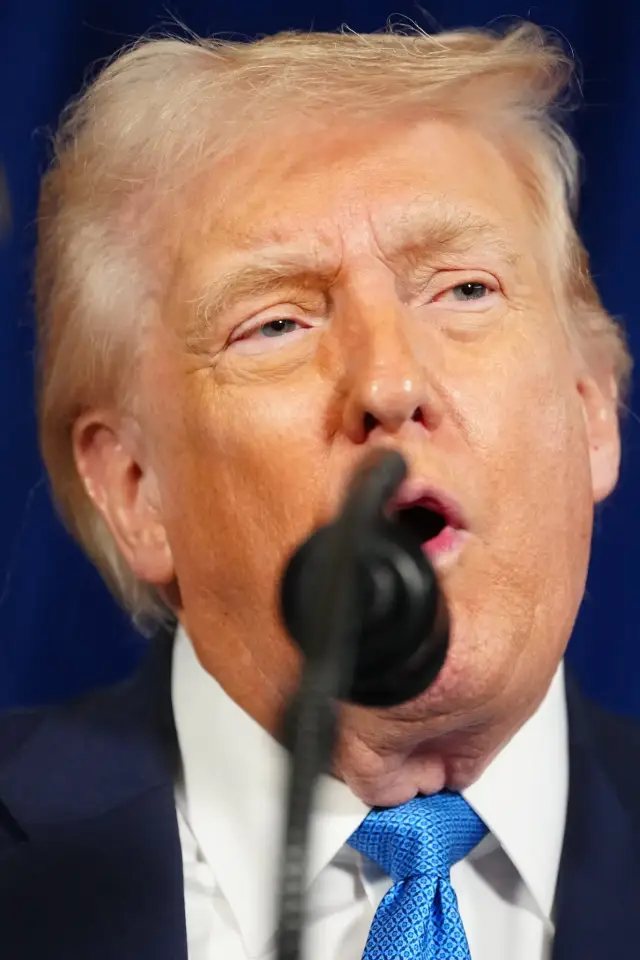
By declaring the hemisphere off limits to outsiders seeking its oil riches, President Trump is looking to guarantee that only U.S. companies will be able to exploit Venezuela’s vast reserves (New York Times photo by Tierney L. Cross).
New York Times, News Analysis: After Venezuela, Trump Offers Hints About What Could Be Next, David E. Sanger (David E. Sanger covers the White House and national security, and writes often on the revival of superpower conflict), Jan. 5, 2026. President Trump’s comments about Greenland, Colombia and Cuba offered a glimpse of how emboldened he feels after the quick capture of Nicolás Maduro.
Barely 48 hours after toppling the leader of Venezuela and asserting U.S. rights to the country’s oil, President Trump threatened Colombia with a similar fate, declared that Cuba was not worth invading because “it’s ready to fall,” and once again claimed that Greenland needed to come under American control as an issue of national security.
Mr. Trump’s claims, in interviews on Sunday and then a lengthy back-and-forth with reporters aboard Air Force One as it returned from his private club in Florida, offered a glimpse of how emboldened he felt after the quick capture of Nicolás Maduro, right, the strongman who was seized on narco-trafficking charges.
“We’re in charge” of Venezuela, Mr. Trump claimed, as he described his plans to breathe new life into the Monroe Doctrine, the 1823 foundational statement of U.S. claims over the Western Hemisphere.
Or, more specifically, he invoked a more recent update that he refers to, characteristically, after himself: the “Donroe doctrine.”
Mr. Trump never described his philosophy in detail, or whether it applied beyond the Saturday attack on Caracas. But he certainly suggested that he could use the forces amassed in the Caribbean for new purposes, this time aimed at Colombia and its president, Gustavo Petro.
The country, he claimed, was “run by a sick man who likes making cocaine and selling it to the United States.”
“He’s not going to be doing it for very long,” Mr. Trump told reporters on Air Force One. “He has cocaine mills and cocaine factories. He’s not going to be doing it.” Asked whether the United States would conduct an operation against Colombia, the president said: “It sounds good to me.”
It may have been an empty threat, an effort to use the swift precision of the snatching of Mr. Maduro from his well-protected bedroom to bring Mr. Petro to heel. But the core of Mr. Trump’s argument was about American power, and what the Maduro operation said about his willingness to use it.
“American dominance in the Western Hemisphere will never be questioned again,” Mr. Trump told reporters as he announced the Venezuela attack from Mar-a-Lago, his private club in Florida.
Mr. Trump talks in blunt declarations, which is why his secretary of state, Marco Rubio, right, spent much of Sunday gently walking back his boss’ declaration — which he had repeated multiple times — that the United States planned to “run” Venezuela for the foreseeable future. But a more nuanced position about the U.S. role in the Western Hemisphere is described on page 15 of the Trump administration’s recent National Security Strategy, a document that appears to have been written with this moment in American territorial adventurism in mind.
A close reading could point to what Mr. Trump is thinking about beyond Venezuela — from Colombia to Mexico to Cuba and Greenland, the ice-covered territory that Mr. Trump asserted again over the weekend must come under some form of U.S. control.
“The Monroe Doctrine is a big deal,” said Mr. Trump, who keeps a pensive portrait of the fifth U.S. president near his desk in the Oval Office, squeezed between Alexander Hamilton and Andrew Jackson. “But we’ve superseded it by a lot, a real lot.”
He appeared to be referring to what the National Security Strategy called the “Trump Corollary” of Monroe’s famous declaration that sought to stop European powers from meddling in the Americas.
The Trump Corollary asserts a U.S. right to “restore American pre-eminence in the Western Hemisphere” and to deny “non-Hemispheric competitors” — namely, China — “the ability to position forces or other threatening capabilities, or to own or control strategically vital assets.”
That last phrase, about taking command of “strategically vital assets,” has echoes of Mr. Trump’s explanation for why the United States is claiming rights to Venezuela’s vast oil reserves, the largest in the world. He referred to oil roughly 20 times in his remarks on Saturday, talking about the need to rebuild long-neglected facilities, control production and provide remedies for U.S. companies, because Venezuela’s leaders “stole our oil.”
“We built that whole industry there, and they just took it over like we were nothing,” Mr. Trump said of the oil sector.
“And we had a president that decided not to do anything about it,” Mr. Trump added, appearing to refer to his predecessor, Joseph R. Biden Jr. “So we did something about it. We’re late, but we did something about it.”
As Richard Haass, the president emeritus of the Council on Foreign Relations and a former national security and State Department official, put it: “This is the unvarnished essence of the Trump doctrine.”
It does fall far short of a global strategy. Mr. Trump has not said whether, if he claims the Western Hemisphere, China is free to do the same in Asia. But by declaring the hemisphere off limits to outsiders seeking its oil riches, Mr. Trump is looking to guarantee that only U.S. companies — some owned or operated by his supporters — will be able to exploit Venezuela’s vast reserves. (He did say, in response to a question from a reporter, that he expected to keep selling Venezuelan oil to China, which imports between half and three-quarters of the country’s paltry output.)
Mr. Trump’s intense focus on using Mr. Maduro’s overthrow to claim U.S. sovereignty over the oil reserve was predictable for a transaction-based presidency. But it was also revealing because he never once discussed promoting and restoring democracy in Venezuela as an American objective, even though the country had a decades-long tradition of democratic practices and freely conducted elections, until Hugo Chavez took power in 1999.
That omission was hardly a surprise: Even though the promotion of democracy was a staple of the national security strategies of Democratic and Republican presidents, including during Mr. Trump’s first term, it was largely missing from the November White House document.
And as Mr. Trump mused about a post-Maduro government, he notably did not call for the installation of Edmundo González as president, even though the United States, and other nations, recognized him as the legitimate winner of the 2024 election that Mr. Maduro falsely claimed to have won. Mr. González, now 76, was the proxy presidential candidate for the more popular opposition leader, María Corina Machado, who was barred from running.
“The omission causes an immediate problem for the political legitimacy of the Venezuelan government,” Richard Fontaine, the chief executive of the Center for a New American Security and a former aide to Senator John McCain, said over the weekend. “Many would-be supporters of the U.S. operation hoped for freedom, not just a different approach on drugs and oil.”
But, he added, “the restoration of democracy in Venezuela is not obviously among them.”
Mr. Trump seems perfectly happy to deal with the remnants of the Maduro government, as long as it follows his commands and gives him access to the oil — and compensation for nationalizing the assets of U.S. firms. That is a very different nation-building mission than, say, the types that George W. Bush pursued in Afghanistan and Iraq. Mr. Bush claimed, at least, that he was creating models of democracy in the Middle East. Mr. Trump is claiming nothing more than transactional rights to Venezuela’s underground riches.
While Mr. Trump and his allies are eager to revitalize the Monroe Doctrine, its intent two centuries ago was far different from the situation the United States faces today.
When the original doctrine was declared by Monroe, a friend and neighbor of Thomas Jefferson’s, the United States was a nation of roughly 10 million people. Its Navy was limited to a few dozen ships, manned by about 3,500 sailors and 500 officers — roughly a fifth of the size of the force the Pentagon massed offshore of Venezuela to oust Mr. Maduro.
And the context was entirely different, too. Latin American countries were shaking off their distant masters, Spain and Portugal. Monroe and his political allies were worried that the European powers would seek to make them colonies again. And so the declaration was an effort to block that avenue of influence. But there was reason to doubt whether Monroe, or his successors, John Quincy Adams, Andrew Jackson and Martin Van Buren, could stave them off, barely 35 years after the ratification of the Constitution.
It is unclear how much of this history is familiar to Mr. Trump. But as he revived the Monroe Doctrine on Saturday, he said: “We sort of forgot about it. It was very important, but we forgot about it. We don’t forget about it anymore under our new National Security Strategy. American dominance in the Western Hemisphere will never be questioned again.”
Presumably Mr. Trump was thinking about China and Russia. Those are certainly the two countries he has in mind as he renews his calls for Greenland to come under American rule, a topic that he raised at Mar-a-Lago during a news conference almost exactly a year ago, and then went quiet about for months. (He has also stopped discussing taking control of the Panama Canal and making Canada a 51st state.)
But the logic of this past weekend would suggest that Mr. Trump now believes the way is clear to claim resources that, in his view, the United States cannot live without. He is already setting up a parallel argument for Greenland which may — or may not — have substantial, recoverable rare earths.
“We need Greenland from the standpoint of national security,’’ Mr. Trump told reporters on Air Force One on Sunday night. “Greenland is covered with Russian and Chinese ships all over the place.”
“Denmark is not going to be able to do it,” he added. He said that to boost security for Greenland, “it added one more dog sled.”
Denmark’s prime minister, Mette Frederiksen, was clearly rattled earlier in the day by Mr. Trump’s renewed interest in the vast, if frozen, territory.
“It makes absolutely no sense to talk about the U.S. needing to take over Greenland,” Ms. Frederiksen wrote on social media. “The U.S. has no right to annex any of the three countries in the Danish Kingdom.”
Mr. Trump would not have the easy pretense to go after Greenland that he did in the case of Venezuela. And it is not clear the economic gains would be worth the breach with a NATO ally, in part because exploiting those resources would be wildly expensive.
But so will restoring Venezuela’s oil system.
“The infrastructure is rotten, rusty,” Mr. Trump told reporters on Air Force One on Sunday evening.
Yet despite Mr. Trump’s constant search for a good deal, the daunting price tags do not seem to matter much to him. Venezuela, Greenland, Gaza, maybe Canada: These are legacies that will, over time, pay for themselves, he believes.
In the meantime, he appears to be playing a bit of one-upsmanship with James Monroe.
News Roundups
Hopium Chronicles, PoliticaL Advocacy and Commentary: The Ridiculous Donroe Doctrine, Simon Rosenberg, right, Jan. 5, 2026. Trump Imagines Himself Emperor Of The Americas, Tomorrow is the 5th anniversary the insurrection Trump launched against the United States of America and his assault on Congress.
As we’ve been discussing January is going to be a very consequential month in American politics, and potentially a very hard one for Trump and MAGA. The Congress begins to return today from its Holiday break.
Here’s what I wrote to you a few days ago:
Congress returns from its break next week, and it is going to be a deeply consequential month ahead. If there is no fiscal year 2026 budget the government will run out of money again on January 30th.
Taken together, it’s all a very powerful rationale for [Trump] creating a grand diversion, waging the dog, doing a Hail Mary to get his terrible poll numbers up and restore his STRENGTH and MANHOOD, and re-asserting control over his fraying Congressional coalition.
Yesterday we reviewed the first post-invasion poll that showed Trump with only 34% support for the US running Venezuela after the seizure of Maduro. Today we have a new WaPo poll that dives a little deeper. Some highlights, and a caution for the flood of polls we are likely to receive in the coming days -- the wordings of the questions clearly matter right now.
In this poll, the country is pretty split on the capture of Maduro, but is firmly against Trump acting without Congress’ approval, and there is currently very little support for Trump taking control of Venezuela and deciding who will lead it.
Last night, once again, Trump asserted that he was in fact was running Venezuela now, that he was it’s leader:
In this same “gaggle” returning to DC on Air Force One, the madman running our country also threatened, according to Aaron Rupar: "Trump in a single gaggle on Air Force One just threatened...Venezuela...Cuba...Mexico...Colombia...Iran...Greenland"
The Parnas Perspective: ICE and DHS Furious as Hilton Hotel Cancels Reservations for Officers and Agents, Aaron Parnas, right, Jan. 5, 2026.
Federal agencies are openly clashing with a major hotel chain over canceled reservations for ICE officers, an anti-war protester has been arrested in Michigan with limited public explanation, Nicolás Maduro has appeared in court as Venezuelan authorities order the arrest of anyone who aided the U.S. strike, and developments are unfolding rapidly across Washington and abroad.
Here’s what you missed:
U.S. Department of Homeland Security said a Hilton hotel in Minneapolis canceled reservations made by Immigration and Customs Enforcement officers using official government emails and rates, citing an internal decision not to allow ICE or immigration agents to stay at the property; Hilton did not immediately respond, and its shares fell about 1.5% following the report.
The Department of Homeland Security followed up with this tweet: An organizer was arrested in Grand Rapids during a protest responding to a U.S. attack in Venezuela, with police stating the arrest was for obstructing a roadway and failing to obey a lawful command, according to reporting by WZZM-TV.
Pete Hegseth formally censured Mark Kelly and initiated rare proceedings that could strip the retired Navy captain and former astronaut of his 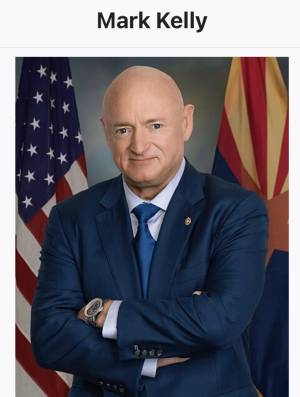 military rank and pension, accusing him of “seditious statements” after Kelly urged service members to refuse unlawful orders; Kelly denounced the move as intimidation and unconstitutional retaliation, while critics note military law already requires troops to disobey illegal commands and that courts have questioned the legality of some Trump-era domestic deployments.
According to CNN, the U.S. Department of Health and Human Services plans to significantly revise the childhood vaccine schedule by recommending fewer routine shots for most children—maintaining core vaccines like MMR and polio but limiting others (including RSV, hepatitis A and B, meningococcal, and flu) to higher-risk groups or shared decision-making—following a review ordered by Donald Trump and backed by Robert F. Kennedy Jr., a move public health experts warn could increase outbreaks of preventable diseases.
The U.S. State Department posted an image of Donald Trump declaring “This is OUR Hemisphere,” saying the president will not allow U.S. security to be threatened.
The Swiss Federal Council ordered the immediate freezing of all Swiss-based assets linked to Nicolás Maduro and his associates to prevent asset flight, stressing the measure does not target Venezuela’s current government and that any illicit funds identified would be returned for the benefit of the Venezuelan people.
Pete Hegseth said nearly 200 U.S. troops were deployed in downtown Caracas to seize Nicolás Maduro, claiming in a speech that Russian air defenses failed to stop the operation.
Venezuelan government ordered police to arrest anyone accused of promoting or supporting the U.S. attack that ousted Nicolás Maduro, publishing a decree enacted under a state of emergency that has been in force since Saturday, according to Reuters.
Lawyers for Cilia Flores said she is in good spirits and prepared for a lengthy legal fight, with attorney Mark E. Donnelly telling CBS News they plan to challenge the government’s evidence at the appropriate time in court.
Several countries condemned the U.S. at an emergency meeting of the United Nations Security Council, denouncing President Donald Trump’s decision to launch strikes in Venezuela and detain Nicolás Maduro and Cilia Flores as a “crime of aggression,” with representatives from countries including Brazil, China, and Russia warning it violated Venezuelan sovereignty, while U.S. ambassador Mike Waltz defended the action as a lawful enforcement of criminal indictments rather than an act of war.
A Reuters poll of U.S. adults found deeply divided views on U.S. military action to remove Nicolás Maduro, with 33% approving and 34% opposing, strong support among Republicans (65%) but little backing from Democrats (11%), and broad concern (72% overall) that the U.S. could become too involved in Venezuela.
According to Arizona Family, the Arizona Supreme Court was evacuated and closed after a suspicious package inside the building tested positive for possible homemade explosives, prompting a response from the Bureau of Alcohol, Tobacco, Firearms and Explosives and a bomb squad; no injuries were reported and the investigation remains ongoing.
The board of the Corporation for Public Broadcasting has voted to dissolve the organization, according to an internal notice circulated to stakeholders.
Chuck Schumer sharply criticized the U.S. Department of Justice for failing to provide Congress with an unredacted report naming politically exposed individuals referenced in the Jeffrey Epstein files, accusing the Trump administration of unlawfully delaying and obscuring disclosures required under the Epstein Files Transparency Act. Acting President Delcy Rodriguez meeting with top aides in Caracas on Sunday. (Vicepresidencia de Venezuela/Wikimedia Commons)
Senator Chris Van Hollen said Republicans removed his bipartisan amendment from a funding deal that would have required the U.S. Department of Justice to preserve and compile all records related to Jeffrey Epstein, calling the move an egregious reversal that blocks transparency for victims and the public.
The U.S. House of Representatives is set to vote Thursday on overriding two vetoes by Donald Trump of GOP-backed bills—one supporting the Miccosukee Tribe in Florida and another funding a Colorado water project—in what leaders expect could be a rare bipartisan rebuke, though Senate passage remains uncertain.
Danish Prime Minister Mette Frederiksen,left, warned that NATO would effectively cease to function if Donald Trump launched a military takeover of Greenland, saying that an attack on a NATO member would end the alliance’s security guarantees established after World War II; her remarks came after Trump renewed threats to seize the mineral-rich Arctic island as a U.S. “national security necessity,” refused to rule out force or coercion, and stoked European fears.
The House Ethics Committee is extending investigations into GOP Rep. Mike Collins and his chief of staff Brandon Phillips after the Office of Congressional Conduct cited allegations that Phillips hired his girlfriend as a paid intern who performed no work.
U.S. Constitution, Justice System Under Attack

Johnny Cash with "Ragged Old Flag" (Official Audio)
The Contrarian, Political Opinion: If We had a Functional Constitution, We Wouldn’t have an Illegal War, Jennifer Rubin, right, Jan. 5, 2026. MAGA stooges destroyed the rule of law.
Donald Trump’s unprovoked and unconstitutional war against Venezuela demolished any notion that we live in a rules-based, constitutional democracy. If the Constitution—which explicitly grants Congress the exclusive power to declare war—were operative, lawmakers would have been briefed before the operation, robust debate would have ensued, and Congress would have voted (or not) to go to war.
Instead, without legal justification, Trump blithely killed scores of civilians on boats, launched an illegal war on Venezuela (killing more civilians), kidnapped its president, and declared he wants to take its oil and “run” a sovereign country. (Aside from its constitutional defects, an unprovoked war to extract oil is a moral disgrace, depriving us of moral standing to contest others’ nations’ wars of aggression.)
While egregious, this is not an isolated assault on the rule of law. Under Trump’s regime, the Constitution has begun toresemble Swiss cheese, or perhaps the redacted Epstein files—displaying more blacked out sections than text. The sections in Article I that establish Congress’s powers have all but been eliminated. In the words of Speaker Emerita Nancy Pelosi, MAGA Republicans “have abolished the Congress.” She accurately observed, “They just do what the president insists that they do.”
Specifically, MAGA lackeys in Congress have allowed Trump to abscond with, among other things, the powers to declare war and make rules regulating the military (e.g., allowing Trump to violate the prohibition on murder of shipwrecked civilians), enact tariffs, establish uniform rules of naturalization (Trump now claims the power to “de-naturalize” enemies), and coin money (no pennies!). Trump’s stooges have also ceded the power to appropriate money from the Treasury (by condoning rescission), and to legislate for the District of Columbia (making a mockery of home rule).
The MAGA Senate gave away its power to confirm “officers of the United States” (e.g., U.S. attorneys), leaving it up to litigants such as James Comey and Letitia James to defend the Senate’s advice and consent role. As for Cabinet officials, MAGA senators have refused to render independent judgment on nominees they know to be unfit, including Pam Bondi, RFK, Jr., and Pete Hegseth. (In acquitting Trump for the insurrection that he staged 5 years ago, MAGA senators put a stake through the heart of the impeachment power.)
The erasure of the Framers’ handiwork does not stop there. The president’s Article II obligation to faithfully execute the law has been deleted as he repeatedly ignores court orders and now contemptuously rejects the notion that our obligations under the United Nations are binding on the U.S. He runs roughshod over First Amendment protections for speech, press, and association, and has attempted to brush aside the 14th Amendment (affirming birthright citizenship and disqualifying insurrectionists from federal office).
Certainly, the overthrow of our constitutional order could have been stopped by minimally responsible House and Senate Republican majorities. But we cannot ignore the Supreme Court’s responsibility for wrecking the Constitution.
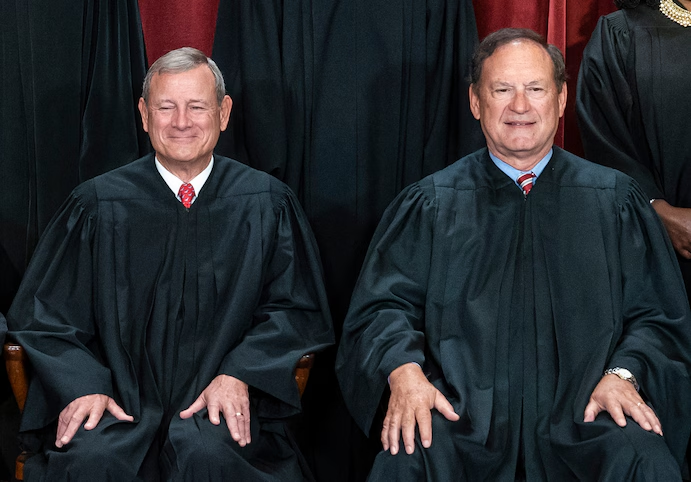
Chief Justice John G. Roberts Jr., left, and Associate Justice Samuel A. Alito Jr. sit for a group photo at the Supreme Court in 2022 (Washington Post photo by Jabin Botsford).
Despite Chief Justice John Roberts’s preposterous ode to the “rule of law” in his year-end report, he and fellow partisan hacks on the Supreme Court have made mincemeat of the Constitution. (In declaring our founding documents to be “firm and unshaken,” he reminds us that “hypocrisy is the compliment vice pays to virtue.”) Roberts’ 2024 majority opinion, devoid of textual or historical legitimacy, granted Trump immunity for virtually all crimes while in office, thereby ushering in his return to office, unprecedented executive overreach, reign of domestic terror, and now an unconstitutional and shameful war for oil. No chief justice has done more to destroy the “rule of law” than Roberts.
Since Trump’s return, Roberts and the other robed-MAGA functionaries have continued to hack away at Article I by bestowing on Trump unilateral power to destroy congressionally enacted departments and override statues (which, for example, establish independent regulatory bodies and mandate spending). Arrogantly disregarding the need for briefing or explanation, the MAGA justices summarily have overturned numerous decisions of lower courts to greenlight Trump’s executive overreach.
It would be useful if members and judges such as Roberts aligning themselves with the “Federalist Society” would actually read the Federalist  Papers, which cautioned about the very outcome Trump achieved. “The accumulation of all powers, legislative, executive, and judiciary, in the same hands, whether of one, a few, or many, and whether hereditary, self-appointed, or elective, may justly be pronounced the very definition of tyranny,” James Madison warned in Federalist No. 47. Madison’s notion that “the preservation of liberty requires that the three great departments of power should be separate and distinct” now sounds quaint, archaic and foreign.
Before the 2024 election, Protect Democracy warned:
Authoritarian projects cannot succeed without the cooperation or acquiescence of legislatures, courts, and other institutions designed to provide checks and balances. In some cases, authoritarians explicitly rewrite the rules to strengthen executive power and weaken legislatures, while in others they simply stack these competing institutions with lackeys and compliant allies or engage in “constitutional hardball” by manipulating existing loopholes or pushing boundaries of existing laws. Authoritarians also often justify the expansion of executive power with cults of personality and aggrandizement of the trappings of office, while denigrating checks and balances as corrupt obstacles to the popular will.
Put differently, the “Constitution” as drafted and amended over more than two centuries is unrecognizable, and concepts such as “rule of law,” “separations of powers,” and “checks and balances” have become meaningless platitudes. We are left with a wholesale obliteration of checks and balance, which in turn resulted in an illegal war with uncertain consequences.
However, while Trump and his MAGA acolytes certainly have made considerable headway in destroying the exoskeleton of our democracy (a written constitution in which power is divided to thwart tyranny), done incalculable damage to our democracy, ruined countless lives (e.g., fired civil servants, deported hard-working immigrants), endangered our troops, and destroyed our moral standing in the world, we should not conclude the Constitution is gone for good.
We can begin to restore constitutional order with sustained, robust, and peaceful protest to educate the public and hold Republicans responsible for serial outrages. Democrats should be encouraged to use every device to stop the slide into fascism and focus on Trump’s multiple outrages and broken promises. (Prices are up, corruption is at unprecedented levels, and a new illegitimate war is underway.)
With that predicate, Democrats then must run up the score in the midterms, the essential mechanism to halt further constitutional vandalism and set the predicate for democracy’s revival. The latter will require curtailing president powers through elections, legislation, constitutional amendment, and/or judicial decisions; electing a Congress that fulfills its constitutional obligations; and reforming an anti-constitutional Supreme Court by limiting justices’ terms, expanding the court, and shrinking its appellate jurisdiction.
In sum, we must be honest about the constitutional wreckage, the culprits responsible, and the work that we must undertake. If Americans rise to the occasion, they can deliver an historic rebuke to scads of Republicans, allowing the hard work of repair to begin. Our failure to do so would spell catastrophe for democratic recovery.
The study found that the Supreme Court has become deeply polarized in cases pitting the rich against the poor, with Republican appointees far more likely than Democratic ones to side with the wealthy. That is starkly different from the middle of the last century, when appointees of the two parties were statistically indistinguishable on this measure.
The general critique is not new, and it may figure in the drop in public confidence in the court in recent years, as opinion polls show.
In a 2021 book, Supreme Inequality, Adam Cohen, an author and former member of The New York Times’s editorial board, argued that “the court’s decisions have lifted up those who are already high and brought down those who are already low.”
In an interview, Mr. Cohen said the new study from the economists covered ground that “some of us have been observing for a long time.” He pointed to Supreme Court decisions amplifying the role of money in politics, weakening public sector labor unions and curtailing federal regulators.
“But it is great to see,” he added, “respected academics crunching the numbers and producing the data to show that this is exactly what has been going on.”
Law professors and political scientists have studied a related question, examining the rate at which businesses prevailed in various Supreme Court eras. They used a straightforward methodology, one that first identified cases with a business on one but not both sides and then examined how the court ruled. (The adversary might be an employee, job applicant, shareholder, union, environmental group or government agency.)
One such study, conducted by Lee Epstein of Washington University in St. Louis and Mitu Gulati of the University of Virginia, concluded that over the century ending in 2021 the court ruled for businesses an average of 41 percent of the time. But the court led by Chief Justice John G. Roberts Jr. since 2005 decided for businesses 63 percent of the time.
In contrast, businesses prevailed just 29 percent of the time before the liberal court led by Chief Justice Earl Warren from 1953 to 1969, that study found.
The new study — conducted by Fiona Scott Morton, of Yale, and Andrea Prat and Jacob Spitz, both of Columbia — relied on a more ambitious methodology, one that categorized the parties as rich or poor “according to their likelihood of being wealthy” and a justice’s vote as favoring the rich “if its outcome would directly shift resources to the party that is more likely to be wealthy.”
 Jan. 6 insurrection at U.S. Capitol in 2021 (José Luis Magaña photo via Associated Press).
New York Times, For Many Jan. 6 Rioters, a Pardon From Trump Wasn’t Enough, Alan Feuer and Dan Barry, Jan. 5, 2026. Some pardoned rioters have been rearrested. Others returned to poverty and mental health challenges. And many became consumed by resentment and demands for payback.
In the first hours of his second administration, President Trump sought to wipe away all trace of the attack on the Capitol by granting amnesty to nearly 1,600 people implicated in the riot stoked by his lies about a stolen election.
They answered with a collective cry of gratitude. And why not?
The pardon proclamation saved them, opening prison doors and ending all of the criminal prosecutions related to the Capitol attack. Even more, it gave a presidential stamp of approval to their inverted vision of Jan. 6, 2021: that those who assaulted the police and vandalized the historic building that day were victims, and those who spent the next four years using the criminal justice system to hold them accountable were villains.
But nearly a year after Mr. Trump’s sweeping proclamation asserted that he had cleared the way for “a process of national reconciliation,” many recipients of his clemency remain consumed by conspiracy theories, angry at the Trump administration for not validating their insistence that the Capitol attack was a deep-state setup and haunted by problems from both before and after the riot.
“Being pardoned doesn’t make these families whole,” Cynthia Hughes, a prominent advocate for the Jan. 6 defendants, wrote on social media recently. “Many are barely holding on mentally, emotionally, and financially. To pretend otherwise is a lie.”
In the five years since the Capitol was stormed, no new facts have emerged to undermine the basic findings of congressional and Justice Department investigators that many of the rioters acted in the misguided belief, pushed relentlessly by Mr. Trump, that he had been robbed of victory in 2020 — and that in attacking the Capitol they not only injured about 140 police officers but also struck at a cornerstone of American democracy: the peaceful transfer of presidential power.
Even so, Mr. Trump has long maintained that the rioters endured horrible, even illegal, mistreatment during their prosecutions.
And yet if that is true, some pardoned rioters are now asking, then why haven’t their persecutors been thrown in jail? And if the rioters are martyrs to a righteous cause, as the president and his allies have often said, then why haven’t they been made whole through financial reparations?ImageRioters enter the capitol building in riot gear.Rioters breaching the Capitol on Jan. 6, 2021. Calls for revenge among the pardoned rioters and their supporters remain loud and impatient.Credit...Erin Schaff/The New York Times
While this disillusionment is not universal, some so-called J6ers have even begun to ask why, after nearly a year in power, Mr. Trump’s law enforcement agencies have yet to provide any proof of the conspiracy theory they promoted to help him reclaim the presidency: that deep-state agents lured Trump supporters into storming the Capitol to derail the MAGA movement and justify political reprisals.
What J6ers rarely seem to acknowledge is the possibility that Mr. Trump’s government has failed to reveal the hidden truth about Jan. 6 because there is no hidden truth, no deep-state conspiracy, and therefore no legal reason to bring further charges related to the riot.
Still, their questions have nurtured new conspiracy theories from the old, focused not on the Biden administration, but on those in power now, Trump loyalists like the F.B.I. director, Kash Patel, and Attorney General Pam Bondi. The theories have intensified as the fifth anniversary of Jan. 6 has arrived — a milestone that many rioters believe marks the final chance to punish the shadowy government agents who supposedly entrapped them in what they have come to call the “fedsurrection.”
“If the true perpetrators of Jan. 6 aren’t held accountable before the statute of limitations expires on Jan. 6, 2026, count me OUT of the midterms,” Shane Jenkins, whose several felony convictions for Jan. 6 included assaulting law enforcement, wrote last month. “I’ll be running AGAINST the GOP.”
By feeding a steady diet of unfounded conspiracy theories not only to the J6ers but also to others in their base, Mr. Trump and his allies have spawned what some experts have likened to a zombie army of followers. And now, by failing to follow these theories to their logical conclusions, they are seeing that army begin to turn on them.
“When you’re told day after day that you’re a victim — when you’re told that for four years straight — it sinks in,” said Jon Lewis, a research fellow with the Program on Extremism at George Washington University. “They’ve become conspiratorial-minded people looking for the next thing to mobilize for.”
“There’s this zombie specter of Jan. 6 defendants who are just looking for that red meat,” Mr. Lewis added.
All of this was on display at the end of the year, when many pardoned rioters reacted in fury as competing solutions were offered to an enduring mystery arising from the Capitol attack: Who planted pipe bombs outside the Republican and Democratic Party headquarters on the night before Jan. 6?
The first answer was put forward in early November, when Steve Baker, one of the rioters, published an article in the right-wing news outlet The Blaze, saying he had found a “forensic match” between the hooded suspect caught on video prowling Capitol Hill that night and a former Capitol Police officer who had fought the mob on Jan. 6 and then went to work for the C.I.A. Mr. Baker’s report fit neatly into the “fedsurrection” narrative, linking the bombs to a former law enforcement official with ties to the country’s premier intelligence agency.
But The Blaze scoop fell flat. Federal officials, including Dan Bongino, the deputy director of the F.B.I. at the time, dismissed it as untrue, and the former officer’s lawyers said that when the suspect was supposedly setting the bombs, their client was home, playing with her dogs.
A couple of weeks later, Mr. Bongino, Mr. Patel and Ms. Bondi stood side by side at the Justice Department to announce their own break in the case — one that contradicted Mr. Baker’s. Federal agents, they said, had just arrested Brian Cole Jr., a Virginia man who would later tell the F.B.I. he had planted the bombs because he wanted to “speak up” for those who believed the 2020 election had been stolen.
Mr. Bongino, who led the bureau’s investigation, used the news conference to flatter Mr. Trump, saying the arrest would not have happened without the president’s demands “to go get the bad guys.”
But Mr. Bongino left out something important. He never mentioned that before joining the F.B.I., when he was a right-wing podcaster, he had embraced a view of the investigation that echoed the one promoted by Mr. Baker: that the pipe bomb case was an “inside job” that the bureau itself had obscured in a “massive cover-up” intended to stop Republicans from questioning the 2020 election.
Hours later, he minimized that contradiction when pressed on TV by the Fox News host Sean Hannity.
“I was paid in the past, Sean, for my opinions, that’s clear, and one day I will be back in that space — but that’s not what I’m paid for now,” said Mr. Bongino, who two weeks later announced his resignation from the F.B.I. “I’m paid to be your deputy director, and we base investigations on facts.”
But the arrest of Mr. Cole had already planted another conspiracy theory in the collective mind of the Jan. 6 community.ImageSurveillance footage of a person in a gray hoodie with a face mask and black gloves.
Several rioters quickly described the F.B.I.’s suspect as a patsy whose arrest was meant to distract from the truth that the real culprit, the former officer identified by Mr. Baker, was still at large. Some armchair anatomists argued that Mr. Cole’s legs were too short for him to have been the hooded suspect in the surveillance videos.
There was even talk of a government cover-up. A new cover-up, not the old one promoted by Mr. Bongino.
Pardoned rioters seized on the fact that the prosecutor managing the pipe bomb case, Jocelyn Ballantine, had also overseen another high-profile Jan. 6 case: that of Enrique Tarrio and other leaders of the far-right Proud Boys, who were convicted of seditious conspiracy, only to be granted clemency and freed by Mr. Trump.
This new conspiracy theory went viral enough to be featured days later at a media event with Mr. Trump at the White House. The president was asked about Ms. Ballantine by one of the White House press corps’ newest members, a correspondent for LindellTV, a company created by Mike Lindell, the election denier and founder of MyPillow.
Morning Shots via The Bulwark, Political Opinion: The Danger and Foolishness of Trump’s Foreign Policy, Bill Kristol, Andrew Egger and Jim Swift, Jan. 5, 2026. There are no grand designs, just vanity and vindictiveness.
Over the weekend, the president of the United States made a social media post accusing Minnesota Gov. Tim Walz of ordering the murder of former state House Speaker Melissa Hortman last year.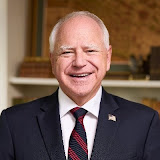 Too much happening in the news to really give that sentence the space it deserves, but that’s a thing that actually happened.
As we were about to press “send” on this newsletter, we got breaking news: Minnesota Gov. Tim Walz, right, announced this morning he will not seek re-election, a
s he weathers a major political crisis involving massive state fraud on his administration’s watch. It’s a remarkable fall from grace for a politician who was his party’s vice presidential nominee just over a year ago. We’ll be going live on camera to discuss. Head to our homepage or our YouTube page to watch. Happy Monday.
President Trump, Secretary of State Marco Rubio, left, and Secretary of Defense Hegseth (Press Conference on Jan. 3, 2026).
Letters from an American, Historical Commentary: January 4, 2026 [Explaining Trump's Goals], Heather Cox Richardson, right, Jan. 5, 2026. Secretary of State Marco Rubio took the administration’s message about its strikes on Venezuela to the Sunday talk shows this morning. It did not go well.
 Asked by George Stephanopoulos of ABC’s This Week under what legal authority the U.S. is going to run Venezuela, as President Donald J. Trump vowed to do, Rubio served up a lot of words but ultimately fell back on the idea that the U.S. has economic leverage over Venezuela because it can seize sanctioned oil tankers. Seizing ships will give the U.S. power to force the Venezuelan government to do as the U.S. wants, Rubio suggested. This is a very different message than Trump delivered yesterday when he claimed that the people standing behind him on the stage—including Rubio—would be running Venezuela.
When Stephanopoulos asked Rubio, left, if he was, indeed, running Venezuela, Rubio again suggested that the U.S. was only pressuring the Venezuelan government by seizing sanctioned oil tankers, and said he was involved in those policies. When Kristen Welker of NBC’s Meet the Press also asked if Rubio was running Venezuela, Rubio seemed frustrated that “People [are] fixating on that. Here’s the bottom line on it is we expect to see changes in Venezuela.” Historian Kevin Kruse commented: “Yeah, people are fixating on a Cabinet Secretary being given a sovereign country to run because the  president waged war without congressional approval and kidnapped the old leader. Weird that they’d get hung up on that.”
When Stephanopoulos asked why the administration thought it didn’t need congressional authorization for the strikes, Rubio said they didn’t need congressional approval because the U.S. did not invade or occupy another country. The attack, he said, was simply a law enforcement operation to arrest Maduro. Rubio said something similar yesterday, but Trump immediately undercut that argument by saying the U.S. intended to take over Venezuela’s oil fields and run the country.
Indeed, if the strikes were a law enforcement operation, officials will need to explain how officers managed to kill so many civilians, as well as members of security forces. Mariana Martinez of the New York Times reported today that the number of those killed in the operation has risen to 80.
Rubio highlighted again that the Trump administration wants to control the Western Hemisphere, and he went on to threaten Cuba. Simon Rosenberg of The Hopium Chronicles articulated the extraordinary smallness of the Trump administration’s vision when he wrote: “We must also marvel at the titanic idiocy of our new ‘Donroe Doctrine’ for it turns America from a global power into a regional one by choice. I still can’t really believe they are going through with this for it is so batsh*t f-ing crazy, and does so much lasting harm to our interests.”
Some people combed through the debris at the sites of American airstrikes. In Caracas, the capita
Shortly after Trump told reporters yesterday that Venezuela’s former vice president, now president, Delcy Rodríguez is “essentially willing to do what we think is necessary to make Venezuela great again,” Rodríguez demanded Maduro’s return and said Venezuela would “never again be a colony of any empire, whatever its nature.” Indeed, U.S. extraction of Maduro and threats to “run” Venezuela are more likely to boost the Maduro government than weaken it.
In a phone call today with Michael Scherer of The Atlantic, Trump threatened Rodríguez, saying that “if she doesn’t do what’s right, she is going to pay a very big price, probably bigger than Maduro.” Tonight on Air Force One, Trump told reporters that the U.S., not Rodríguez, is in charge of Venezuela.
Trump also told Scherer that he does indeed intend to continue to assert U.S. control in the Western Hemisphere, telling Scherer that “we do need Greenland, absolutely. We need it for defense.” Greenland is part of the North Atlantic Treaty Organization (NATO), meaning it is already part of U.S. national defense.
Although he ran for office on the idea of getting the U.S. out of the business of foreign intervention, Trump embraced the idea of regime change in Venezuela, telling Scherer: “You know, rebuilding there and regime change, anything you want to call it, is better than what you have right now. Can’t get any worse.” He continued: “Rebuilding is not a bad thing in Venezuela’s case. The country’s gone to hell. It’s a failed country. It’s a totally failed country. It’s a country that’s a disaster in every way.”
At Strength in Numbers, G. Elliott Morris noted that military intervention in Venezuela is even more unpopular with the American people “than Trump’s tariffs and health care cuts.” In September, only 16% of Americans wanted a “U.S. invasion of Venezuela,” with 62% against it. A December poll showed that 60% of likely voters opposed “sending American troops into Venezuela to remove President Maduro from power.” Only 33% approved. Even support for strikes against the small boats in the Caribbean could not get majority support: 53% opposed them while only 42% approved.
“By the time American forces touched Venezuelan soil early Saturday morning,” Morris writes, “Trump had already lost the public.”
But officials in the administration no longer appear to care what the American people want, instead simply gathering power into their own hands for the benefit of themselves and their cronies, trusting that Republican politicians will go along and the American people will not object enough to force the issue. The refusal of the Department of Justice to obey the clear direction of the Epstein Files Transparency Act seems to have been a test of Congress’s resolve, and so far, it is a gamble the administration appears to be winning.
Morris notes that a December CBS poll showed that 75% of Americans, including 58% of Republicans, correctly believed a president must get approval from Congress before taking military action against Venezuela. The president did not get that approval. By law, the president must inform the Gang of Eight before engaging in military strikes, but if an emergency situation prevents that notification, then the president must inform the Gang of Eight within 48 hours. The Gang of Eight is made up of the top leaders of both parties in both chambers of Congress, as well as the top leaders from both parties on the House and Senate Intelligence Committees.
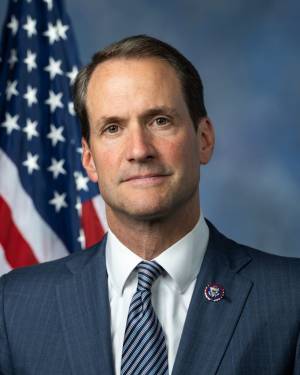 Representative Jim Himes (D-CT), right, who as ranking member of the House Intelligence Committee is a member of the Gang of Eight, told CBS’s Margaret Brennan this morning that neither he nor House minority leader and fellow Gang of Eight member Hakeem Jeffries (D-NY) had been briefed on the strikes. Himes said: “I was delighted to hear that Tom Cotton, chairman of the Senate Intelligence Committee, has been in regular contact with the administration. I’ve had zero outreach, and no Democrat that I’m aware of has had any outreach whatsoever. So apparently we’re now in a world where the legal obligation to keep the Congress informed only applies to your party, which is really something.”
Senate minority leader Chuck Schumer (D-NY)—also a member of the Gang of Eight—told reporters that he hadn’t been briefed either and that the administration had deliberately misled Congress in three classified briefings before the strikes. In those briefings, officials assured lawmakers that the administration was not planning to take military action in Venezuela and was not pursuing regime change. “They’ve kept everyone in the total dark,” he said.
Nonetheless, Himes told Brennan that he thought Trump’s Venezuelan adventure would not go well: “We’re in the euphoria period of…acknowledging across the board that Maduro was a bad guy and that our military is absolutely incredible. This is exactly the euphoria we felt in 2002 when our military took down the Taliban in Afghanistan in 2003, when our military took out Saddam Hussein, and in 2011, when we helped remove Muammar Gaddafi from power in Libya. These were very, very bad people, by the way, much, much worse than Maduro and Venezuela, which was never a significant national security threat to the United States. But we’re in that euphoria phase. And what we learned the day after the euphoria phase is that it’s an awful lot easier to break a country than it is to actually do what the president promised to do, which is to run it…. [L]et’s let my Republican colleagues enjoy their day of euphoria, but they’re going to wake up tomorrow morning knowing what? My God, there is no plan here any more than there was in Afghanistan, Iraq, or in Libya.”
Representative Ted Lieu (D-CA) was more direct: “The U.S. attack on Venezuela is illegal,” he posted. “Congress never authorized this use of military force. I will vote to stop it. This is insane. Health care costs and food prices are surging. Trump’s response is we’re going to run another country. Batsh*t crazy.”
U.S. Military, National Security, Foreign Affairs
President Trump, Secretary of Defense Peter Hegseth, left, and Secretary of State Marco Rubio discuss the capture of Venezuelan Nicolás Maduro on Jan. 3, 2026 (White House Photo by Molly Riley).
Morning Shots via The Bulwark, Military Analysis: The Belly-Button Rule, Mark Hertling, shown at right in a 2011 photo, retired Army general whose commands over U.S. personnel included Europe and Iraq, Jan. 5, 2026. On Saturday, at his press conference after American military forces attacked Caracas and apprehended Nicolás Maduro and his wife for arraignment in New York, President Donald Trump announced that the United States was going to “run” Venezuela.
He was then asked who oversaw U.S. actions in Venezuela and what the plan was. Rather than describing the details of what was going to happen and the myriad tasks associated with removing a foreign leader, or naming a single accountable official, he gestured behind him toward a group of senior advisers—Secretary of Defense Pete Hegseth, Secretary of State Marco Rubio, CIA Director John Ratcliffe, and Deputy Chief of Staff Stephen Miller—suggesting collective responsibility.
From a leadership standpoint, that answer should concern anyone who understands how complex operations succeed or fail. As I wrote just before the Caracas operation, regime change demands a whole-of-government approach with objectives that have extraordinary clarity, unity of effort, and sustained accountability across every element of national power. Even when carefully planned, regime change is among the most difficult undertakings a nation can attempt. When it is improvised, ill defined, or politically fragmented, it almost always ends badly.
Regime change fails less often from a lack of resources than from a lack of both planning and responsibility. Over decades of command, I learned what I call the “belly-button rule” for assigning responsibility: When a task is truly hard—complex, risky, politically sensitive, or strategically consequential—a senior leader in government, business, or on the battlefield must be able to point to one person and say, “You’re in charge.” One person. One belly button.
Every serious operation requires three things to be unmistakably clear: what must be done, by when (or under what conditions), and who is in overall charge of making it happen. If any one of those is ambiguous, execution suffers. If responsibility is diffuse, accountability disappears—and so does disciplined decision-making and follow-up by the strategic leader.
Assigning responsibility does not mean dictating how a task must be accomplished. In fact, it means the opposite. Assigning responsibility empowers initiative. Once a subordinate leader owns the mission, they gain the authority to coordinate, adapt, innovate, and make tradeoffs. The strategic leader sets the objective and the boundaries. The responsible leader determines the method.
The kind of diffuse responsibility President Trump handed out on Saturday reminds me of what I saw in post-invasion Iraq. In the early days after the 2003 invasion, postwar stabilization was fragmented. Lt. Gen. Jay Garner was initially placed in charge of reconstruction and governance, but his authority was limited, contested, and ultimately undermined. He clashed with Amb. Paul Bremer, who replaced him, while major decisions were pulled upward to Secretary of Defense Donald Rumsfeld and operational commander Gen. Tommy Franks. No single leader was clearly empowered—and held accountable—for aligning political objectives with post-invasion security realities on the ground.
The result was not merely bureaucratic friction. It was strategic incoherence and chaos.
Regime change magnifies every leadership failure. It requires synchronized diplomatic messaging, economic pressure, intelligence operations, security forces, and post-conflict governance planning. When responsibility is shared, decisions slow. When outcomes falter, blame disperses. When reality intrudes—as it always does—no one has both the authority and obligation to adjust course decisively. The tasks aren’t accomplished and the mission fails.
The belly-button rule is not about hierarchy for its own sake. It is about seriousness. It forces leaders to confront whether they truly understand what they are asking others to do. It requires trust in the person in charge to execute a plan to meet their objective, and it requires that person’s trust in their superiors that they will be supported when friction and failure inevitably arise.
Most of all, clearly assigned responsibility signals credibility. To allies, it shows unity. To subordinates, it provides clarity. To adversaries, it communicates resolve.
Complex operations do not fail primarily because they are hard. They fail because responsibility is blurred. If the strategic leader—in this case the president—doesn’t put his finger into the belly button of the person he is placing in charge, he’s not leading. He’s just hoping things magically work out.
And hope, as every commander learns, is not a method or a plan.
New York Times, Denmark Tells Trump to ‘Stop the Threats’ About Greenland, Amelia Nierenberg, Jan. 5, 2026. The Danish prime minister told President Trump to back down after he repeated his threat to acquire Greenland in the wake of the U.S. military raid in Venezuela.
Denmark’s prime minister urged President Trump to “stop the threats” to take over Greenland after Mr. Trump reiterated his interest in controlling the semiautonomous territory of Denmark, following the U.S. military raid on Venezuela.
Prime Minister Mette Frederiksen of Denmark said on Sunday that the United States had “no right to annex” Greenland, an island in the North Atlantic. “I would therefore strongly urge the United States to stop the threats against a historically close ally,” she said in a statement, adding that Greenlanders “have said very clearly that they are not for sale.”
Prime Minister Jens-Frederik Nielsen of Greenland also rejected Mr. Trump’s comments, writing on social media that the president’s rhetoric was “utterly unacceptable” and that connecting Venezuela with Greenland was “wrong” and “disrespectful.”
The two leaders were addressing comments Mr. Trump made to The Atlantic magazine just hours after the military raid in Venezuela, in which he repeated his desire to control Greenland and claimed that the island was “surrounded by Russian and Chinese ships.”
Hours later, after the leaders of Greenland and Denmark responded to his comments, Mr. Trump doubled down.
“We need Greenland from the standpoint of national security,” Mr. Trump told reporters on Air Force One, adding that he thought Denmark was not doing enough to safeguard the territory.
Ms. Frederiksen’s statement noted that Denmark was a member of NATO and that a defense agreement with the United States already gave Washington “wide access to Greenland.”
The statements from the leaders of Denmark and Greenland also followed a separate American provocation: a post on social media from Katie Miller, the wife of Stephen Miller, one of Mr. Trump’s top advisers. “SOON,” she wrote, with a map of Greenland shaded in by the American flag.
Jesper Moller Sorensen, Denmark’s ambassador to the United States, responded with a “friendly reminder” that Denmark expected “full respect for the territorial integrity of the Kingdom of Denmark.”
Several of Denmark’s European neighbors, as well as the European Union, have repeated their longstanding support following the rhetorical exchanges between Mr. Trump and the leaders of Denmark and Greenland.
Morning Shots via The Bulwark, Political Opinion: A Foreign Policy of Failure and Dishonor, William Kristol, right, Jan. 5, 2026. Rudyard Kipling was a conservative, even a reactionary. He was certainly no anti-imperialist. Yet in his 1897 poem “Recessional,” written at the height of the British empire, Kipling warns his countrymen against becoming “drunk with sight of power” and indulging in “frantic boast and foolish word.”
Needless to say, there’s no chance that Donald Trump will attend to this warning. Trump has always been drunk on fantasies of power. His entire rhetorical repertoire consists of frantic boasts and foolish words. He’s not suddenly going to heed Kipling’s advice.
He won’t, but we should. Trump is our president. He’s acting in our name. Unfortunately, we won’t be able to undo all the dangerous mistakes he’s already made. And we won’t be able to stop him from continuing to indulge in frantic boasts. But an awful lot depends on whether we can limit the damage that he seeks to bring about over the next three years, and whether we can at least hold out hope of a responsible road ahead.
The case against Trump’s foreign policy isn’t a difficult one, and it can be made by a broad coalition of people. They may differ on what a responsible foreign policy would look like going forward—whether it should be more or less interventionist, more or less democracy-promoting, more focused on Europe or Asia, more reliant on hard or soft power, etc. But judging from public opinion polls and congressional support for, for example, aid to Ukraine, a broad coalition opposes a foreign policy based on bullying and greed, and would support a foreign policy of strength used responsibly, in line with American principles, and on behalf of both our own well-being and that of others.
The case against Trump’s foolish foreign policy is easy to make. It’s pretty obvious that boasting that we “we are going to run” Venezuela, as Trump did on Saturday, doesn’t mean we are in fact going to be willing or able to run Venezuela. Repeating last night on Air Force One that “we’re in charge” of Venezuela doesn’t in fact put us in charge. Claiming American oil companies are soon going to reap great profits from Venezuela won’t make that unlikely eventuality a reality (about which more below).
But Trump’s empty boasting and self-congratulatory bullying aren’t cost-free. They have consequences. Either they can lead us into reckless actions that will ultimately weaken us, or they can make us look weak when we back off from doing what Trump has said we’re going to do.
Last night, on Air Force One, Trump threatened military action against Colombia, Mexico, and Greenland. There is no legal or prudential case for military action in any of these instances. But the case of Greenland—a semiautonomous territory of our NATO ally Denmark, with whom we’ve had a very cooperative and constructive security relationship—is most instructive.
“We need Greenland from the standpoint of national security,” Trump said last night. A couple of weeks ago, Trump said, “We have to have it.” And in a phone call earlier yesterday with Michael Scherer of the Atlantic, Trump said that “we do need Greenland, absolutely. We need it for defense.”
While we’re all just saying things: You need a Bulwark+ subscription from the standpoint of national security. Sign up today!Subscribed
This is a bizarre fantasy. But the danger that Trump’s vanity and grandiosity will lead him to try to seize Greenland is real. Early yesterday, before Trump’s latest comments, I received a text from a friend and occasional Bulwark contributor, Michael Wood: “Dark horse prediction for 2026: US will shoot at or seriously threaten to shoot at Danish troops.” I don’t know that Wood is wrong. And this would of course mark yet another sign of the end of an already tottering NATO, and of an alliance system that is the basis of any international order somewhat friendly to liberal democracy.
I’m tempted to close by denouncing Trump’s hubris. But to use that term would be to dignify him too much. Hubris implies a certain grandeur of purpose. Trump has no great ambitions to shape a better world or even a better hemisphere. With him, it’s all boasting and bullying and lying, greed and narcissism and vanity. If we permit Trump to go down his chosen path—if we permit him to lead us down this path—the legacy will be one not just of policy failure but of national dishonor. That will be Trump’s legacy. But it will be ours too—unless we stop it.
AROUND THE BULWARK
Quick Hits
PUTIN’S HUMILIATIONS: Four days in, 2026 has already presented a string of humiliations for Vladimir Putin. On New Year’s Eve (which was already 2026 in Russia), U.S. intelligence shot down (as it were) his complaint to Donald Trump about being targeted by Ukrainian drones. The much-hyped, evidence-free Russian claim about 91 drones headed for Putin’s residence near the town of Valdai was a remarkably clumsy excuse for the Kremlin to back out of peace negotiations it apparently sees as tilting against it.
The next shoe dropped on January 2. The recently reported death of Denis Kapustin, commander of a pro-Ukraine Russian volunteer force, was revealed as a fake—staged by Ukrainian intelligence to thwart the Russian special services’ hit on Kapustin, whom Putin is said to view as a “personal enemy.” Kapustin, a self-styled “traditionalist” with alleged far-right ties, isn’t exactly a good guy; even so, this was a brilliant Ukrainian maneuver which not only exposed Russian operatives but, hilariously, netted a $500,000 bounty from the Russian government.
For whatever else it means and portends, the U.S. raid on Venezuela and the capture of dictator Nicolás Maduro is a huge slap in the face to Maduro’s Kremlin pal. Was there talk between Putin and Trump in 2019 of a Ukraine-for-Venezuela spheres-of-influence trade? Maybe. But in 2026, the United States took less than three hours to grab Maduro. Meanwhile, Putin’s army is stuck in Ukraine trying to take ghost towns in the Donbas while Volodymyr Zelensky—notably un-kidnapped, despite Putin’s best efforts—makes pointed jokes about the next dictator the United States could take down. No wonder Russia’s war-hawk bloggers are beside themselves.
Putin’s string of embarrassing bad luck probably won’t make Trump more inclined to help Ukraine. But a headache for Putin is always a silver lining.
U.S. Bombing In Venezuala, With 80 Reported Killed.
Paul Krugman via Substack, Political-Economy Commentary: The Real Donroe Doctrine, Paul Krugman, right,Jan. 5, 2026. Seeking cash and an ego boost, not regime change.
For Americans of a certain age, the snatch and grab abduction of Nicolás Maduro, Venezuela’s president, brings back memories of the 2003 invasion of Iraq, in some ways with good reason.
Almost everyone now sees Iraq as a cautionary tale about the lies of the powerful: We were taken to war on false pretenses. Almost everyone also thinks of Iraq as a prime example of the power of delusional thinking on the part of the powerful themselves. Slogans of the time — “We will be welcomed as liberators”; “Mission Accomplished” — are now routinely used ironically, to denote foolish projects doomed to catastrophic failure. And Donald Trump’s Venezuela adventure is another tale of lies and delusion.
But in other ways the Trump/Venezuela story is very different from the Bush/Iraq story.
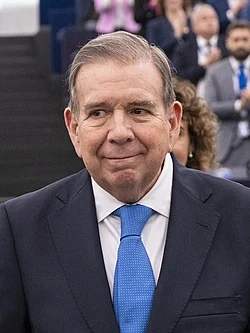 Two days after the abduction, it’s clear that Trump wasn’t seeking regime change, at least not in any fundamental way. He’s more like a mob boss trying to expand his territory, believing that if he knocks off a rival boss he can bully the guy’s former capos into giving him a cut of their take.
If that sounds harsh, bear in mind that before Trump stepped in, Maduro and his fellow Chavistas — the movement founded by Hugo Chavez — faced strong opposition from domestic pro-democracy forces led by María Corina Machado. Edmundo González, right, a Machado ally, clearly won Venezuela’s 2024 election, only to have Maduro steal it. So, if Trump wanted regime change he would be supporting Machado and her movement.
But in his triumphal Saturday press conference, Trump sneeringly dismissed Machado, declaring that “it’d be very tough for her to be the leader, she doesn’t have the support. She doesn’t have the respect.”
Instead, he appeared eager to support Maduro’s second-in-command, Delcy Rodriguez, left, implying that she was ready to cooperate with his designs. Indeed, during the press conference and afterward Trump repeatedly declared that he was already “running” Venezuela.
But it took only a few hours for Rodriguez to make him look like a fool: Later that day she and other leading members of the Maduro government denounced U.S. actions and declared on TV that Maduro is still president of Venezuela.
Oops. By Sunday Trump was threatening to punish Rodriguez for her defiance.
How did Trump make such a big miscalculation? Trump has surrounded himself with sycophants like Pete Hegseth, who has repeatedly described him as “the greatest president of my lifetime.” He lives in a self-aggrandizing fantasy world — a world in which he has a 64 percent approval rating and is a contender for the Nobel Peace Prize.
The Washington Post reports that Trump turned on Machado because she committed the “ultimate sin” of accepting her genuine Nobel prize.
Anyway, the core of Trump’s fantasy involves imagining that he really is the character he played on The Apprentice, a master of the Art of the Deal.
Given Trump’s belief that he can always out-deal, out-bully and out-cheat everyone else, it’s easy to see how he interpreted some conciliatory conversations with Rodriguez as a signal that she would be his obedient puppet.
Trump’s self-image as the ultimate dealmaker explains why he was so ready to believe, falsely, that he controlled Venezuela. It also explains his insistence that by, as he imagined, seizing Venezuela, he had gained a valuable prize in the form of its oil. “We’re going to be taking out a tremendous amount of wealth out of the ground.” Many Trump critics share his view that there’s a lot of money to be made from Venezuelan oil and condemn his intervention as an attempt to steal that money.
But you know who doesn’t think there’s a lot of money to be made in Venezuela? Oil companies. They see a dilapidated infrastructure that would cost billions to repair. They don’t see a stable political environment above ground. And while Venezuela has large oil reserves, much of its oil is “extra heavy, making it polluting and expensive to process.”
So, why did Trump have Maduro abducted? There were surely multiple motivations. Fantasies of dominance and control and dreams of oil-soaked riches played their part. So did ego. The snatch gave Trump an opportunity to strut, and assuage his Obama envy: Trump’s minions set up a “war room” at Mar-a-Lago that looks as if it was designed to let him emulate the famous photo of Obama and his officials tracking the killing of Osama bin Laden.
Obama’s team did not, however, have X/Twitter on the screen behind them.
Trump also surely hoped that abducting Maduro would help him politically. The abduction pushed the Epstein files out of the headlines for a few days. And Trump is definitely trying to wag the dog, seeking a boost in popularity as the nation rallies around the flag. However, he’s almost certain to be disappointed. Before the abduction, Americans overwhelmingly opposed military action in Venezuela. Early polling since the abduction remains highly unfavorable: A screenshot of a survey AI-generated content may be incorrect.
Note that three times as many independents strongly oppose the U.S. running Venezuela as strongly support it. And these numbers will get worse as the public realizes how little was achieved.
In any case, it’s important to understand that the confrontation with Venezuela has nothing to do with the national interest. It’s all about Trump’s self-aggrandizing delusions. And it will accomplish nothing except to make America look even less trustworthy and weaker than it did before.
Musical CODA:https://www.youtube.com/watch?v=UDfAdHBtK_QThe Who - Won't Get Fooled Again (Shepperton Studios / 1978).
U.S. Politics, Governance
New York Times, Tim Walz Drops Re-election Bid, and Amy Klobuchar May Run Instead, Tyler Pager, Reid J. Epstein and Ernesto Londoño, Jan. 5, 2026. Mr. Walz said a growing scandal over fraud in social services programs led him to abandon his run for a third term as governor of Minnesota.
Gov. Tim Walz of Minnesota said on Monday that he was abandoning his bid for re-election to a third term, and Senator Amy Klobuchar, a fellow Democrat, is considering seeking the office, two people briefed on conversations between the two politicians said.
Mr. Walz and Ms. Klobuchar met on Sunday in Minnesota, where he informed her of his plans and she confirmed her interest in running to succeed him. For Mr. Walz, the Democratic nominee for vice president in the 2024 election, the departure caps a brief rise in national politics.
Mr. Walz said a widening scandal over fraud in social services programs in Minnesota had persuaded him to drop out of the race. Mr. Walz had been criticized for his administration’s oversight of the programs and its failure to prevent widespread fraud.
“I came to the conclusion that I can’t give a political campaign my all,” Mr. Walz said in a statement. “Every minute I spend defending my own political interests would be a minute I can’t spend defending the people of Minnesota against the criminals who prey on our generosity and the cynics who prey on our differences.”
Mr. Walz has scheduled a news conference on Monday where he is expected to discuss his decision.
Ms. Klobuchar did not respond to requests for comment on Monday morning.
Mr. Walz’s decision jolts a race that had drawn an unusually large and strong slate of Republican candidates, including the speaker of the Minnesota House, Lisa Demuth, and Mike Lindell, the chief executive of MyPillow and an ally of President Trump. Republicans have not won a statewide race in Minnesota since 2006, but they have expressed confidence that this year’s governor’s race would be different.
Democrats in the state had voiced concern in recent weeks that Mr. Walz’s presence on the ticket might lessen the chances for other Democrats in November.
Mr. Walz’s exit comes amid national scrutiny of his handling of the welfare fraud scandal, which Mr. Trump and other top Republicans have assailed him for in recent weeks.
Mr. Walz, 61, a former public-school teacher who served in Congress for 12 years before becoming governor, had signaled ambivalence last year about seeking a third term. During the summer, shortly before announcing he would run again, the governor said in an interview that he had been trying to gauge whether Minnesotans wanted him to stay in office.
“I think you need to think through: Well, do you have the ability to do the job? Have you done well?” Mr. Walz said, describing questions he was wrestling with.
In September, Mr. Walz announced that he did intend to run again. At the time, he said he was proud of a legacy that included passing numerous bills that pushed the state to the left in 2023, when Democrats had majorities in both chambers of the state legislature.
Soon after he announced that decision, the fraud scandal began dogging his candidacy.
Later in September, federal prosecutors announced that an investigation into fraud in a Covid-19 program meant to feed children had broadened to include other safety net programs administered by Mr. Walz’s administration. Federal prosecutors have asserted that as much as $9 billion may have been stolen over a period of years when Mr. Walz’s administration was overseeing state programs.
More than 90 people have been charged with felonies in the federal fraud cases to date and at least 60 have been convicted. The vast majority of defendants are of Somali origin.
New York Times, Hegseth Starts Proceedings Against Sen. Mark Kelly Over His Remarks, Greg Jaffe, Jan. 5, 2026. Defense Secretary Pete Hegseth blasted the senator for “seditious” remarks. Mr. Kelly said he had done nothing wrong and cited similar comments by Mr. Hegseth.
Defense Secretary Pete Hegseth, right, said the military had started administrative actions against Senator Mark Kelly, Democrat of Arizona, that  could result in a reduction in his retirement rank and military pension.
In November, Mr. Kelly and five other Democratic lawmakers who served in the military or the intelligence community released a video reminding their still-serving counterparts that they were obligated to refuse illegal orders.
In a social media message issued on Monday, Mr. Hegseth called the video “seditious” and criticized Mr. Kelly for a “pattern of reckless misconduct” aimed at undermining good order and discipline in the ranks.
Mr. Kelly and his lawyers maintained last month that the senator was simply articulating a fundamental principle of military law. They noted that Mr. Hegseth had made similar statements in the past.
“If you’re doing something that is just completely unlawful and ruthless, then there is a consequence for that,” Mr. Hegseth said in a speech to the Liberty Forum of Silicon Valley in 2016. “That’s why the military said it won’t follow unlawful orders from their commander in chief.”
In the video that prompted Mr. Hegseth and President Trump’s ire, Mr. Kelly said: “Our laws are clear. You can refuse illegal orders.”
Mr. Kelly, who retired from the Navy as a captain, flew 39 combat missions as a naval aviator and four spaceflights as an astronaut.
As a retired naval officer, Mr. Kelly is subject to the Uniform Code of Military Justice and therefore can be recalled to active duty and disciplined. The other Democratic lawmakers in the video did not serve long enough to retire and do not receive a pension or fall under military law.
Mr. Hegseth also said he had issued a “formal Letter of Censure” that will be entered into Mr. Kelly’s permanent personnel file. The decision on whether to reduce his retirement rank and pension will be made over the next 45 days, Mr. Hegseth wrote in his message on social media.“Captain Kelly’s status as a sitting United States Senator does not exempt him from accountability, and further violations could result in further action,” Mr. Hegseth wrote.
As proceedings against Mr. Kelly moved forward last month in the Navy, 12 Democratic senators issued a letter denouncing the Trump administration’s push to punish him as “a purely political exercise seeking to threaten the legitimate and lawful actions of a duly elected senator and politicize our military justice system.”
A lawyer representing Mr. Kelly similarly wrote to Navy Secretary John Phelan last month calling the proceedings an “unprecedented and dangerous overreach.”
“There is no legitimate basis for any type of proceedings against Senator Kelly, and any such effort would be unconstitutional and an extraordinary abuse of power,” Paul J. Fishman, the lawyer, wrote in mid-December.
More On U.S. Politics, Governance
New York Times, Opinion: Trump Is Unleashing Forces Beyond His Control, David French,  right, Jan. 5, 2026. “War,” the Prussian military thinker Carl von Clausewitz wrote, “is a mere continuation of policy by other means.”
If there is one line that virtually every Army officer learns from Clausewitz’s posthumously published 1832 book, On War, it’s that description of the purpose of armed conflict.
Those words were among the first that popped into my head when I woke up Saturday morning to the news that the American military had attacked Venezuela; seized its dictator, Nicolás Maduro; and brought him to the United States to face criminal charges.
The reason those words occurred to me was simple: The attack on Venezuela harks back to a different time, before the 19th-century world order unraveled, before two catastrophic world wars and before the creation of international legal and diplomatic structures designed to stop nations from doing exactly what the United States just did.
One of the most important questions any nation must decide is when — and how — to wage war. It’s a mistake, incidentally, to view Clausewitz as an amoral warmonger. He wasn’t inventing the notion he describes; he was describing the world as it was. His statement is a pithy explanation of how sovereign states have viewed warfare for much of human history.
When a strong state operates under the principle that war is just another extension of policy, it is tempted to operate a bit like a mob boss. Every interaction with a weaker nation is tinged in some way with the threat of force: Nice little country you have there — shame if something happened to it.
This is not fanciful. In a telephone conversation with The Atlantic’s Michael Scherer, President Trump threatened Venezuela’s new leader, Delcy Rodríguez, who served as Maduro’s vice president. “If she doesn’t do what’s right,” Trump said, “she is going to pay a very big price, probably bigger than Maduro.”
Diplomacy and economic pressure are almost always still a first resort for powerful nations, but if they fail to achieve the intended results, well, you can watch footage from the American strike in Venezuela to know what can happen next.
But the Clausewitzian view isn’t the only option for nations and their leaders. There is a better model for international affairs, one that acknowledges the existence of evil and the reality of national interests but also draws lines designed to preserve peace and human life.
Carl von Clausewitz, meet Thomas Aquinas.
In Summa Theologica, written in the 13th century, Aquinas outlined three cardinal requirements of what came to be known as just war theory.
One way to think about the shifting patterns of warfare is that humanity seesaws between Clausewitz and Aquinas. Strong nations impose their will on the weak and then — eventually — try to impose their will on one another. When catastrophe results, as it invariably does, they turn back to Aquinas.
You can actually see the results of this shifting approach across the sweep of history. An analysis of global deaths in conflict shows that war is always with us, but its intensity waxes and wanes. Periods of extreme suffering and death are followed by periods of relative quiet, followed again by an age of horror.
New York Times, JD Vance’s Ohio Home Is Targeted in Vandalism Attack, Ali Watkins, Jan. 5, 2026. U.S. Secret Service agents detained a man early Monday after the vice president’s home in Cincinnati was damaged. No injuries were reported.
A man was detained outside Vice President JD Vance’s home in Cincinnati early Monday after damaging the property while Mr. Vance and his family were away, officials said.
 The man is accused of causing property damage, including breaking outside windows at the home, which is one of Mr. Vance’s personal residences, according to a statement from the U.S. Secret Service. The statement did not identify the man.
“The residence was unoccupied at the time of the incident, and the Vice President and his family were not in Ohio,” the statement said. No injuries have been reported.
The man was detained by the Secret Service just after midnight on Monday and then taken into custody by the Cincinnati Police Department, the statement said.
The Cincinnati Police Department did not respond immediately to a request for comment. The Secret Service said it was working with the local police and the U.S. attorney’s office to determine whether charges would be filed against the man.
U.S. Wealth, Inflation, Jobs, Economy
New York Times, Dimon’s $770 Million Windfall Shows How Banking Is Great Again, Rob Copeland, Jan. 5, 2026. Regulations are lifting, and deal-making is heating up. For Jamie Dimon, being JPMorgan Chase’s chief executive was more lucrative in 2025 than ever.
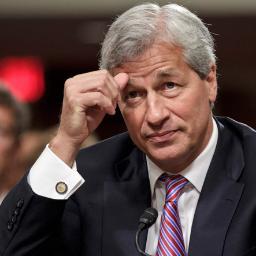 For nearly 15 years, Jamie Dimon, the bank chieftain, has carried around what might as well be a talisman when he sees regulators, elected officials and journalists.
At just the right time in meetings, he breaks out a single-page printout that he calls a “spaghetti chart.” On it, Mr. Dimon’s underlings have crammed, in tiny type, a comically complicated flowchart meant to represent the various laws and regulations to which his company, JPMorgan Chase, is subject.
The theatrics have finally worked.
The Trump administration is not just taking apart regulations but attacking whole regulatory agencies that date back to the 2008-9 financial crisis and were meant to keep banks from giving in to their worst impulses. Regulators have also made it easier for banks to peddle in risky assets again, like cryptocurrency, and President Trump paused enforcement of foreign anti-bribery rules.
The deregulatory bonanza alone makes it the best time in a generation to be a banker.
But there’s more! Falling interest rates and a permissive set of antitrust overseers are helping reverse a lull in the lucrative business of arranging mergers and acquisitions, as the $100 billion bidding war between Netflix and Paramount for Warner Bros. Discovery shows. Once imperiled real estate loans look steadier, thanks to the rebound of in-office work. Stocks are near record levels, the bond market had its best year since 2020, and gold and silver have soared — all of which feeds the trading businesses that keep Wall Street’s profit machine humming.
In other words, as analysts at Keefe, Bruyette & Woods recently put it, there is “something for everyone.” Big bank stocks rose 29 percent in 2025, almost doubling the gain of the U.S. market overall. Smaller lenders and community banks, which tend to have a narrower focus on areas such as residential mortgages and consumer checking accounts, also gained, but performed considerably less well.
More Reactions To U.S.-Venezualen Crisis
Robert Reich via Substack, The Quagmire of Trump's Venezuela, Robert Reich, right, Jan. 5, 2026. Apologies for another intrusion on your inbox today, but the story of what’s happening in Venezuela is unfolding quickly and big questions are mounting. The immediate danger in Venezuela (and potentially in Columbia and Cuba) is chaos.
Trump said, “We are going to run the country until such time as we can do a safe, proper and judicious transition,” and that “we can’t take a chance that somebody else takes over.” He also said the United States was “ready to stage a second and much larger attack if we need to do so,” adding: “We are not afraid of boots on the ground if we have to.”
What the hell does this bluster really mean?
U.S. troops are not prepared to occupy Venezuela. Trying to do so would be a disaster.
Maduro was entrenched there. His system of oppression still is. It includes the national guard, the army, the national police, the intelligence service, and the Colombian guerrilla group ELN. All remain intact.
Maduro’s top lieutenants also remain there, including several who were involved in his alleged crimes. Not to mention Maduro’s thugs and narco-traffickers who have been controlling Venezuela through violent repression and stealing elections.
Venezuela has roughly 28 million people. There’s no way to determine the emerging balance of power between pro- and anti-Maduro camps, but it’s a safe bet that any power void will be filled with violence.
Today, secretary of state Marco Rubio spoke of “coercing” the Venezuelan government to make policy changes over its oil reserves, rather than “running” the country. American forces will prevent oil tankers from entering and leaving Venezuela until the government opens up the state-controlled oil industry to foreign investment — presumably giving priority to American companies.
But since August, America has had an arsenal of warships, jet fighters, and some 15,000 troops on Venezuela’s doorstep, which hasn’t stopped all oil shipments. How big must the arsenal be? How long will it remain there? At what cost? Will we bomb Russian and Chinese tankers?
Rubio emphasized that “the national interest of the United States … is No. 1.” But what exactly is the “national interest” of the United States? Just Big Oil? Hell, Chevron has been in Venezuela for years. Do we declare victory when Exxon-Mobil is there, too? Do we insist that Venezuela not charge America oil companies any extraction fees? How profitable must this business be for U.S. Big Oil?
Rubio says Trump hasn’t ruled out troops on the ground. But does anyone remember what happened in Iraq after the U.S. invasion there? Libya? Syria? How many failed states do we need to create before we understand their danger to the stability of an entire region of the globe?
Worse yet, we’re now fanning the flames of anti-Americanism, both in Venezuela and elsewhere in Latin America. In Delcy Rodriguez’s first remarks after Trump made her interim president, she condemned Maduro’s capture. “What is being done to Venezuela is a barbarity,” she said,” adding that Maduro is Venezuela’s “only president.”
Trump said today that if Rodriguez doesn’t cooperate, “she is going to pay a very big price, probably bigger than Maduro.”
Trump won’t consider anyone who “doesn’t cooperate.”
On Saturday, he spoke dismissively about Maria Corina Machado, who recently left Venezuela to accept the Nobel Peace Prize. "I think it'd be very tough for her to be the leader,” Trump said, even though international election experts say a candidate she supported, Edmundo González, beat Maduro by a wide margin in 2024. “She's a very nice woman but she doesn't have the respect."
For Trump, “respect” means the power to bully. “America is respected again,” he gloated in his address to the nation on December 9. “Our nation is strong, and America is BACK.”
Wrong. Gunboat diplomacy is back.
White House advisor Stephen Miller, above left
Emptywheel, Analysis: Stephen Miller and Plans for Post-Decapitation, Emptywheel (Marcy Wheeler, Ph.D), right, Jan. 5, 2026. Stephen Miller is perfectly happy to get in bed with proud socialists, it turns out, so long as he can appropriate their authoritarian tools to his own ends.
Stephen Miller’s breeding partner created a worldwide scandal by posting a picture of Greenland as an American flag.
The map from a far right podcaster, however well-connected, was actually less important than that the US President, the same day, told Michael Scherer, “we do need Greenland” because it was “surrounded by Russian and Chinese ships,” a sentiment Trump repeated on Air Force One yesterday.
During our call, Trump, who had just arrived at his golf club in West Palm Beach, was in evident good spirits, and reaffirmed to me that Venezuela may not be the last country subject to American intervention. “We do need Greenland, absolutely,” he said, describing the island—a part of Denmark, a NATO ally—as “surrounded by Russian and Chinese ships.”
Of course, since both Katie Miller and Donald Trump largely parrot what they’ve recently heard, both comments likely reflected the views ofStephen Miller.
Meanwhile, this passage of a story describing how Trump really hasn’t (yet) committed regime change, but instead decapitated the Venezuelan state only to leave Maduro’s cronies in place (for now), attracted a flood of confirmation bias.
Two people close to the White House said the president’s lack of interest in boosting Machado, despite her recent efforts to flatter Trump, stemmed from her decision to accept the Nobel Peace Prize, an award the president has openly coveted.
Although Machado ultimately said she was dedicating the award to Trump, her acceptance of the prize was an “ultimate sin,” said one of the people.
“If she had turned it down and said, ‘I can’t accept it because it’s Donald Trump’s,’ she’d be the president of Venezuela today,” this person said.
I have no doubt Trump was pissed María Corina Machado got the Nobel Prize and he did not. But a Miami Herald story published just six days after Machado’s recognition described that Delcy Rodriguez had been pitching a Madurismo without Maduro via back channels for months.
A group of senior Venezuelan government officials, led by Vice President Delcy Rodríguez and her brother Jorge, who is president of the National Assembly, have quietly promoted a series of initiatives in recent months aimed at presenting themselves to Washington as a “more acceptable” alternative to Nicolás Maduro’s regime, according to people with direct knowledge of the talks.
The proposals, funneled through intermediaries in Qatar, sought to persuade sectors of the U.S. government that a “Madurismo without Maduro” could enable a peaceful transition in Venezuela—preserving political stability without dismantling the ruling apparatus.
According to the sources, Qatari mediators presented to the U.S. two formal proposals this year, one in April and another in September. Both outlined potential governing mechanisms without Maduro in power. In those scenarios, Delcy Rodríguez would serve as the institutional continuity figure, while retired Gen. Miguel Rodríguez Torres, who is currently in exile and is not related to the Rodriguez siblings, would head a transitional government.
The central argument, the sources said, was that the Rodríguez siblings represent a “more palatable” version of so-called chavismo — the socialist ideology named for deceased leader Hugo Chávez — for Washington, since neither has been indicted on narcotrafficking charges by U.S. courts. However, former regime officials— whose accounts have been used by U.S. prosecutors in cases linked to the so-called Cartel of the Suns—have implicated both siblings in logistical support and money laundering operations.
Delcy Rodriguez is also the person who, according to the indictment charging Marco Rubio’s old roomie, former Congressman David Rivera, with acting as an unregistered agent of Venezuela (for which he is due to stand trial next month) who ordered CITGO to serve as a front for the contract. As part of the contract, Rivera lobbied Rubio in 2017 on a Maduro succession plan.
Delcy Rodriguez has been in the thick of such efforts from the moment Trump first became President.
So while the attribution of Trump’s sidelining of Venezuela’s democratic opposition — by a single person “close to the White House” — to the President’s narcissism surely has some truth, I’m more interested in that same story’s report that Stephen Miller may actually take on some of the duties of Viceroy that Trump initially assigned to the Miami-raised Spanish speaking Marco Rubio, not least because that may explain why Trump chose decapitation — retention of the oppressive Maduro regime — over regime change, replacement with a democratic one.
Having dismantled much of the U.S. foreign policy infrastructure since he came to power, Trump depends on a small number of trusted personnel and business associates to handle core issues such as his peace plan in Gaza, negotiations between Ukraine and Russia, and now Venezuela.
The National Security Council staff has been gutted and the administration has yet to nominate an assistant secretary of state to handle the Western Hemisphere.
The White House is weighing giving Stephen Miller, Trump’s deputy White House chief of staff and homeland security adviser, a more elevated role in overseeing post-Maduro operations in Venezuela, according to one person with knowledge of the conversations, who, like others, spoke on the condition of anonymity to discuss sensitive dealings.
Miller has been the architect of the administration’s anti-immigration and border policy, and took a central role in the effort to remove Maduro. He was among the handful of top administration officials flanking the president during the news conference Saturday at Trump’s Mar-a-Lago Club.
War on the Rocks argues that too many people are trying to read Trump’s decision to invade Venezuela as a statement of his ideology, rather than the result of the chaotic fight for influence within his White House.
Many observers of this administration underestimate the power struggle inside the administration and how it scrambles the output. Venezuela has been an interesting case of this. My hypothesis here is that Venezuela has been an outlet of sorts for the hawks, especially Secretary of State Marco Rubio but also others. There has been no sustained appetite for confrontation with Russia or China, and only limited room to maneuver on those fronts without significant escalation risks. Iran and Venezuela, by contrast, offered arenas for hawkish foreign policy.
[snip]
When it comes to predicting the president’s next move, too many politicians and analysts assume coherence where there is division, chaos when there is improvisation, and restraint where there is only selectivity. Trump’s foreign policy behavior emerges not from doctrine but from friction. Venezuela offered a target that felt weak, morally disreputable, geographically proximate, and manageable.
Under Trump, foreign policy outcomes are less the product of grand strategy than of episodic alignment. Observers should stop asking whether a given action is consistent with Trump’s supposed beliefs and start asking whether it is legible to him as fast, dominant, and containable. They should pay closer attention to intra-administration dynamics and to how ideas persist even when not immediately acted upon. Otherwise, the failure to predict Venezuela will not be an outlier.
Given the WaPo report (which came after Viceroy Rubio bombed on the Sunday shows) that Miller will be playing in a key role in America’s new colony, I want to situate the Venezuelan coup in Miller’s own history.
It is my belief — this is a hunch based entirely on observation, not any insider reporting — that Miller made himself indispensable when he helped Trump pull himself together after the Butler assassination attempt. Trump was completely dysfunctional after the near-death experience (I don’t blame him — everyone would be floored by that trauma). I would argue that Trump has never actually reclaimed his poise since then — throughout the campaign, he was already surpassing all decency on his political attacks, and he frequently got lost on the campaign trail, including his sundowning episode on the campaign trail. Everything people point to now as proof that he is unfit to be President was evident on the campaign trail. But Trump buried his collapse under ever grandiose fascist theater, much of it orchestrated by Miller, leading up to Trump’s fascist rally at Madison Square Garden, and shortly after, to election victory.
Whether or not that’s the case, it is clear that in the same period, Miller started laying the groundwork to use Venezuela as a propaganda foil for his assault on democracy, which I documented here.
2023: Miller decides invoking the Alien Enemies Act will be a nifty way to deport people without due process. September 2024: right wing propagandists stoke claim that Aurora, CO has been invaded by Tren de Aragua. October 11, 2024: Miller stages a hate fest in Aurora. October 18, 2024: After Tim Walz and others debunk Miller’s lies, he accuses them of defending gang members. February 9, 2025: One of Miller’s earliest high profile raids targets Aurora but nets just a single TdA member. February 26, 2025: The IC debunks Miller’s false claims about TdA. March 14, 2025: Trump nevertheless relies on those lies while invoking the Alien Enemies Act. March 16, 2025: DHS unloads planes of mostly innocent Venezuelan men in defiance of order from Judge James Boasberg. March 21, 2025: Trump claims he’s not the one who signed the AEA invocation. April 2025: WaPo reports that the NIE also debunked Miller’s false claims about TdA. April 10, 2025: SCOTUS rules Trump has to make some effort to get Kilmar Abrego back. April 14, 2025: Performance art with Nayib Bukele in Oval Office. April 19, 2025: SCOTUS halts an AEA deportation order in process.
But then, on July 18, 2025, Trump swapped Venezuelans from CECOT for 10 Americans in Venezuela, seemingly dealing Stephen Miller a major defeat in his plan to rely on AEA.
I questioned why that happened here. And on the same day, NYT provided what is in retrospect even more critical background, a batshit insane story I glossed here. As the entire CECOT drama was proceeding, Trump was dicking around the Miami Hispanic community, which was clamoring to pressure Maduro, first halting then renewing Chevron’s Venezuela license.
January 31: Maduro makes a deal with Grenell. February: Cuban-American Members of Congress (CAMC) pressure Trump to pull the Chevron license, which he does in late February (possibly between the time Rubio signs the deal with Bukele and the day 200 mostly-innocent men are loaded on planes?). Chevron CEO Mike Wirth notes that if Chevron can’t export Venezuela’s oil, China will do so. CAMC learn that Trump might reverse his decision, so threaten to vote against the Big Ugly Bill. Stephen Miller pitches Trump on murderboats. Trump lets Chevron license expire on May 27. CAMC vote to pass Big Ugly. Around the same time Trump considers a pardon for convicted drug kingpin Hernández, Marco Rubio sells Trump on a claim that Maduro is a drug kingpin. July: Based in part on Wirth’s China argument, Trump reverses course, again, on Chevron license, Maduro accepts the CECOT prisoners and releases 10 Americans, including a triple murderer.
Trump’s flip-flopping oevr the Chevron license would lead up to Trump’s command, ten days before the actual invasion, that oil companies prepare to invest in Venezuela if they want compensation for equipment Maduro seized.
But we know that, after Miller first pitched Trump on drone strikes in Mexico, and then he and Rubio (Miller to support his fascist project including hopes to return to using the AEA declaration, Rubio to cater to Miami’s Cuban-American desires) pitched Trump to instead attack Venezuelan-related drug trafficking. On July 25 — a week after returning the hundreds of mostly innocent men to Venezuela — Trump signed an order to begin the murderboat campaign, with murderboat strikes beginning in September. That same day, Marco Rubio pretended this was all about the election Maduro stole last year.Another week later, Pam Bondi, right, upped the reward to help capture Maduro — $50 million we don’t yet know whether has been claimed.
This would have been the period when CIA and Delta Force started practicing the snatch of Maduro.
According to a new WSJ story, it wasn’t yet a foregone conclusion that Trump would approve the attack. Maduro remained dancing in videos that reported inflamed Trump, and dancing in negotiations to leave peacefully (even as Delcy Rodriguez was working back channels to assume power in his wake).
October 7: CNN reveals Trump has a covert finding authorizing strikes on cartels. October 10: Machado wins Nobel Prize. October 15: Trump confirms he has signed a finding authorizing strikes on cartels. October 16: Alvin Holsey announces his retirement. November 16: Ford carrier group arrives in the Caribbean. December 1: Trump pardons Juan Orlando Hernández, whose crimes include shipping drugs originating in and protected by Venezuela. December 10: Trump starts seizing oil tankers; Machado arrives in Oslo just after the prize is awarded. December 23: Maduro rejects offer to exile in Turkey. Roughly December 25: Trump orders oil companies to prepare to invest in Venezuela. December 29: CIA strikes a loading facility in Venezuela. Unknown date: DOJ supersedes existing indictment against Maduro, shifting emphasis (without much substantiation) from Cartel de Soles to Tren de Aragua, and including Maduro’s wife and son. January 3: Trump snatches Maduro.
And immediately after Trump’s Administration imagined that they had proven their concept of decapitation without regime change, Trump started listing other places he would attack, including Cuba — high on Rubio’s list — but also Mexico (which Miller had had to defer earlier), Colombia, and Greenland.
If Marco Rubio had unilaterally won these battles, the chances would have been greater for genuine regime change; and his failure to deliver may soon sour his constituency on the snatch.
That this was, at least for the moment, decapitation, suggests Miller presided in the end.
After all, Trump also immediately likened the snatch operation to Miller’s domestic efforts to subjugate both civil society, including universities, law firms, and hospitals treating trans children, but also entire blue states, with paramilitary invasions launched in the name of deportation.
Miller’s goals are to demand subservience from everyone on threat of invasion, if not death, the stated means of keeping Delcy Rodriguez on track.
In the end, Stephen Miller is perfectly happy to get in bed with proud socialists, it turns out, so long as he can appropriate their authoritarian tools to his own ends.
U.S. Law, Courts, Crime, Justice
New York Times, Supreme Court Increasingly Favors the Rich, Economists Say, Adam Liptak, Jan. 5, 2026. A new study found that the court’s Republican appointees voted for the wealthier side in cases 70 percent of the time in 2022, up from 45 percent in 1953.
Supreme Court justices take two oaths. The first, required of all federal officials, is a promise to support the Constitution. The second, a judicial oath, is more specific. It requires them, among other things, to “do equal right to the poor and to the rich.”
A new study being released on Monday from economists at Yale and Columbia contends that the Supreme Court has in recent decades fallen short of that vow.
The study, called “Ruling for the Rich,” concludes that the wealthy have the wind at their backs before the justices and that a good way to guess the outcome of a case is to follow the money.
The study adds to what Justice Ketanji Brown Jackson, in a dissent in June, called “the unfortunate perception that moneyed interests enjoy an easier road to relief in this court than ordinary citizens.”
The study found that the Supreme Court has become deeply polarized in cases pitting the rich against the poor, with Republican appointees far more likely than Democratic ones to side with the wealthy. That is starkly different from the middle of the last century, when appointees of the two parties were statistically indistinguishable on this measure.
The general critique is not new, and it may figure in the drop in public confidence in the court in recent years, as opinion polls show.
In a 2021 book, Supreme Inequality, Adam Cohen, an author and former member of The New York Times’s editorial board, argued that “the court’s decisions have lifted up those who are already high and brought down those who are already low.”
In an interview, Mr. Cohen said the new study from the economists covered ground that “some of us have been observing for a long time.” He pointed to Supreme Court decisions amplifying the role of money in politics, weakening public sector labor unions and curtailing federal regulators.
“But it is great to see,” he added, “respected academics crunching the numbers and producing the data to show that this is exactly what has been going on.”Editors’ PicksWant to Party With Rock Stars? How Many Miles Do You Have?Someone Made Anonymous Accusations About My Friend. What Should I Do?Help! Bedbugs Attacked Us, and Our Luxury Hotel Won’t Admit It.
Law professors and political scientists have studied a related question, examining the rate at which businesses prevailed in various Supreme Court eras. They used a straightforward methodology, one that first identified cases with a business on one but not both sides and then examined how the court ruled. (The adversary might be an employee, job applicant, shareholder, union, environmental group or government agency.)
One such study, conducted by Lee Epstein of Washington University in St. Louis and Mitu Gulati of the University of Virginia, concluded that over the century ending in 2021 the court ruled for businesses an average of 41 percent of the time. But the court led by Chief Justice John G. Roberts Jr. since 2005 decided for businesses 63 percent of the time.
Got a news tip about the courts? If you have information to share about the Supreme Court or other federal courts, please contact us.See how to send a secure message at nytimes.com/tips
In contrast, businesses prevailed just 29 percent of the time before the liberal court led by Chief Justice Earl Warren from 1953 to 1969, that study found.
The new study — conducted by Fiona Scott Morton, of Yale, and Andrea Prat and Jacob Spitz, both of Columbia — relied on a more ambitious methodology, one that categorized the parties as rich or poor “according to their likelihood of being wealthy” and a justice’s vote as favoring the rich “if its outcome would directly shift resources to the party that is more likely to be wealthy.”

Uvalde, Texas 2022 fatal shooting victims.

New York Times, Trial Begins for Former Officer Over Response to School Shooting in Uvalde, Edgar Sandoval, Jan. 5, 2026. Families of the victims and survivors of the 2022 elementary school shooting in Texas are expected to testify.
Three years after AJ Martinez was shot in his right thigh as he hid under a pile of backpacks at an elementary school in Uvalde — the Texas city that suffered one of the nation’s deadliest school shootings — his road to recovery remains arduous and long.
Currently 13 and in eighth grade, he continues to endure daily pain from the shrapnel embedded in his right leg, the back of his shoulders and the rear of his head. Now, his mother said, the families of the victims, including the 19 students and two teachers who were killed, are mentally preparing for another phase of the tragedy: the first of two criminal trials over the much-derided police response at Robb Elementary School.
On Monday, jury selection is set to begin in Corpus Christi, Texas, for the trial of Adrian Gonzales, one of the first officers to arrive at the scene of the massacre where a teenage gunman killed 19 children and two teachers. In October, a judge approved a change of venue, after lawyers for Mr. Gonzales argued that it would be nearly impossible to find an impartial jury in Uvalde.
Kassandra Martinez, AJ’s mother, said she and her son expected to attend part of the trial and were praying for some sort of accountability.
“If not, it would be a slap to his face, because he survived this and that officer did not go in,” said Ms. Martinez, 35, referring to Mr. Gonzales. “His friends and his teachers might still be here.”
Pete Arredondo, the former school district police chief, who was identified in various investigations as the effective incident commander on scene, is expected to be tried next.
Two years after the shooting, a grand jury indicted the two officers — there were more than 370 who were involved to one degree or another in the police response that day — on charges of abandoning and endangering a child. They were the only criminal charges to stem from the shooting and its aftermath. Many other officers have resigned or been fired.

All Rise News, Legal Commentary: Maduro's Indictment: What to Look Out for in Court, Adam Klasfeld, right, and Mitchell Epner, Jan. 4-5, 2026. On Saturday afternoon, former federal prosecutor Mitchell Epner and I discussed our quick reactions to Maduro's arrest and prosecution.
Live federal court coverage of the prosecution of Nicolás Maduro begins on Monday.
!When Nicolás Maduro faces arraignment in a New York federal court on Monday afternoon, his plea will initiate a process that will shine a spotlight on the secrets of two governments.
During a half-hour conversation recorded on Saturday, former federal prosecutor Mitchell Epner and I discussed some of our immediate thoughts following the military raid leading to the arrest and rendition of Maduro.
Here are some of the topics we discussed:The raid and the lawUnder the U.S. constitutional order, Congress has the power to declare war, and most legal experts agree that the raid violated the U.N. charter’s prohibitions against the use of force against “the territorial integrity or political independence of any state.”
The strongest defense of its legality, by conservative attorney Jack Goldsmith, bemoaned the fact that the intent of the Constitution’s Framers had been dulled and diluted over the years to allow it.
“This is not the system the Framers had in mind, and it is a dangerous system for all the reasons the Framers worried about,” wrote Goldsmith, who served as an attorney for the Justice Department’s Office of Legal Counsel under George W. Bush. “But that is where we are—and indeed, it is where we have been for a while.”
Defenders are quick to point out that Panamanian strongman Manuel Noriega was brought to the United States to face similar charges under George H.W. Bush, but the Noriega-controlled National Assembly had declared war on the United States at the time.
Noriega’s convictions for drug trafficking, racketeering and money laundering were upheld largely because, like Maduro, he wasn’t recognized as the country’s legitimate leader.
“I’m virtually certain that this question will be litigated — of whether or not the capture of Maduro is legal,” Epner said.After elections in 2018 and 2024 widely regarded as shams, Maduro held onto power, and more than 50 countries to refuse to recognize him, the indictment notes.
The judge presiding over the prosecution of Maduro, his wife Cilia Flores, and others in the sprawling indictment is U.S. District Judge Alvin Hellerstein, right, who has treated Donald Trump’s claims about Venezuela skeptically as recently as last May.
Trump justified his invocation of the wartime statute, the Alien Enemies Act, on the allegation that the gang Tren de Aragua was engaged in an invasion of the United States as a de facto arm of the Venezuelan state.
Hellerstein rejected that claim in a ruling denouncing Trump’s government for sending more than 200 people to El Salvador’s Terrorism Confinement Center (CECOT), a “notoriously evil prison.”“Judge Hellerstein is a fiercely independent individual,” Epner said. “He is supremely confident. He is very, very smart, and he, I am quite confident, feels no compunction about contradicting Donald Trump.”
Prosecutors charged the leader of Tren de Aragua in the indictment, testing the premise behind Trump’s immigration policy.
The indictment
The latest superseding indictment against Maduro accuses him of spearheading a narco-terrorism conspiracy transporting “thousands of tons of cocaine to the United States.” Prosecutors say that Maduro used that money to fund guerrilla groups and gangs designated by the United States as terrorist organizations.
After Maduro’s first indictment in 2020, prosecutors added his wife as a co-defendant and secured guilty pleas from two co-conspirators.
“As a federal practitioner, former federal prosecutor, somebody who’s been a criminal defense attorney for decades now, one of the first questions I have is whether those individuals will seek to reduce their sentences by cooperating against Maduro,” Epner said.
Other pressing questions:
By press time, Maduro’s attorney of record wasn’t listed on the public docket. It remains to be seen whether a major law firm will risk Trump’s ire by defending the principle that the most despised defendant deserves zealous representation. “This is going to be an interesting test of the system to see whether or not Donald Trump has effectively bullied people from the biggest and most prominent law firms in America out of the criminal defense business if Donald Trump really cares about a case,” Epner noted.There’s also the question of what competent evidence the United States has amassed to convict Maduro of the crimes charged. Whatever the politics surrounding the case, that’s an issue of great interest to the people of Venezuela, the United States, and the international community. Proceedings are expected to begin before Judge Hellerstein at noon Eastern Time.
U.S. Media, Culture, Education

U.S. Rep. Marjorie Taylor Greene, Republican of Georgia, a MAGA firebrand (portrayed above) who resigned her congressional seat as of Jan. 6 as a protest, was outspoken over the weekend in opposing the U.S. actions in Venezuela, which she described as a betrayal of the MAGA movement's "America First" mantra.
Status, MAGA Media Goes to War, Natalie Korach, Jan. 4-5, 2026. Donald Trump’s Venezuela operation, and his open discussion of oil as a motivation, has become a stress test for MAGA Media and the movement’s long-standing rejection of foreign intervention.
 This weekend, following Donald Trump’s surprise military operation in Venezuela, some of the loudest voices in MAGA media backtracked on years of railing against U.S. intervention abroad, tying themselves into knots to defend—or at least avoid directly criticizing—Trump’s unilateral action.
Laura Loomer, the far-right "proud Islamophobe" who generally raises fierce objections to foreign intervention, praised the “genius” of Trump’s “geopolitical synchronicity,” framing it as a necessary counterterrorism strike, and repeatedly citing the alleged presence of Hezbollah inside Venezuela as an extension of Iran’s influence in the Western Hemisphere.
Within MAGA Media circles, there was little public reflection as to how the legally questionable operation to remove dictator Nicolás Maduro that left several American soldiers injured, contradicts its longstanding anti-war posture.
Rather than condemning the intervention outright, Loomer focused instead on procedural grievances, questioning why Maduro was indicted in New York, “a liberal hell hole,” and not Florida.
Roger Stone chimed in to agree, writing, “Why Maduro was not charged in Miami is a mystery.” Despite the knee-jerk reaction by many in the MAGA media ecosystem to support Trump without reservation, the news served as a litmus test, forcing some of the movement’s biggest boosters to question what Trump’s promise of “America First” foreign policy actually looks like in practice.
Extremist Candace Owens rejected the intervention, declaring that Venezuela had been “liberated” in the same way Syria, Afghanistan, and Iraq were. Casting the operation as another CIA-backed regime change, Owens denounced it as a “hostile takeover” driven by globalist interests, something that would inherently contradict an “America First” agenda.
Overall, though, there was little immediate pushback, or acknowledgement of the dissonance—and hypocrisy—at work. Those contortions underscored a broader MAGA media dilemma: How to reconcile Trump’s long-standing “America First” rhetoric with a military action that looks strikingly similar to the kind the base has spent years attacking. S
ome elected officials on the right were more direct than the pro-Trump mouthpieces. Rep. Thomas Massie warned that the intervention risked American lives not for national security, but to benefit oil companies. “It’s not American oil. It’s Venezuelan oil,” Massie wrote in a social media post, arguing that U.S. soldiers were being put in harm’s way to make private companies more profitable. The weekend’s events could also add another layer to the ongoing civil war ushered in by Charlie Kirk’s death and U.S. support of Israel that has already fractured the base.
Raheem Kassam, editor-in-chief of the far-right The National Pulse, argued to Status that Trump’s openness about his economic goals in Venezuela does not undermine “America First,” but rather enhances it. Unlike the Bush-era interventions that cloaked Middle East wars in moral language to avoid public backlash, Trump dispensed with the pretense. Kassam contended that the majority of the MAGA base will view the intervention as a foreign offensive undertaken in their best interests. “The American public have now repeatedly elected a businessman,” he said. “And they’re getting what they voted for.”
But that interpretation was far from universal. Marjorie Taylor Greene, who has distanced herself from MAGA over, among other things, foreign policy—a rift that saw her resign from Congress—framed the operation as a further betrayal of the movement’s core promise. “Americans' disgust with our own government’s never ending military aggression and support of foreign wars is justified because we are forced to pay for it,” she wrote in a lengthy X post. “This is what many in MAGA thought they voted to end,” Greene argued, adding, “Boy were we wrong.”
Even Steve Bannon, the Trump loyalist who praised the operation itself as “bold and brilliant,” raised alarms about what comes next. On his “War Room” podcast, Bannon questioned whether the administration had adequately considered the consequences of extracting Maduro without dismantling the rest of his regime, warning of potential civil conflict and regional instability. “So is this part of overall Hemispheric Defense, and we're going to clean up this mess in Latin America? Or is this just the neocons talking him into it?" Bannon wondered aloud on his show. That unease underscored how Trump’s escalation in Venezuela left even the architects of MAGA struggling to reconcile what appears to be an impressive military feat with potential uncertainty ahead.
Notably silent during the initial debate was Tucker Carlson, who has spent years positioning himself as an anti-interventionist MAGA warrior, repeatedly warning against regime change conflict. In October, Carlson argued that Maduro’s Venezuela was “one of the most conservative countries” in the Western Hemisphere, which he said should be a factor in whether intervention is necessary. Carlson couldn’t be reached Sunday.
As some within MAGA Media circles noted, even those who oppose Trump’s policies and actions have been reluctant to criticize him, fearing a backlash from the faithful who have steadfastly stuck with him through past controversies.
In that sense, commentators are likely hedging their bets out of reluctance to potentially alienate their most engaged listeners and viewers, anticipating the power vacuum Trump will leave after his second term. “There’s this horrible fissure, and nobody can figure out which way the movement is going,” one MAGA Media figure told Status. “All these guys are just flapping around trying to capture an audience.”
But regardless of the motivation, a divide within the base is starting to emerge, and legitimate questions about the defining characteristics of Trumpism are taking hold. With Trump’s Venezuela move, it appears his application of “America First” functions less as a restraint on U.S. military action than a justification for wielding it for financial gain—pledging to dispatch oil companies to “start making money for the country”—a dynamic, as Democrats were quick to assert, which seems fraught with potential for corruption.
Whether MAGA Media can reconcile that distinction remains an open question, but Trump, for his part, appears uninterested in waiting for consensus.
The NYT and The WaPo both learned in advance about the U.S. raid in Venezuela, but they held off on publishing stories to avoid endangering military personnel, Max Tani and Shelby Talcott reported. [Semafor] Marco Rubio praised the outlets that held the sensitive information until after the raid, saying, “We thank them for doing that or lives could have been lost.” [Mediaite]
The WaPo Editorial Board raised some eyebrows by endorsing the military operation, calling it a “major victory for American interests.” That stood in stark contrast to The NYT Editorial Board calling the attack “illegal and unwise.” The NYT detailed how plans came together to scrap the planned front page on Saturday to feature coverage of the Venezuela operation. Reporter Tyler Pager also explained how he got Trump on the phone just moments after the U.S. captured Maduro.
Bret Baier disclosed that he was in the middle of booking an interview with Nicolás Maduro when U.S. forces moved in.
[Mediaite] CBS Evening News” anchor Tony Dokoupi, right,l said in a social media video that the network’s pivot to cover the U.S. invasion of Venezuela—as opposed to aplanned 10-city tour—was “a better launch than anything else we could have come up with.”
Dokoupil devoted much of Saturday’s introductory broadcast to an interview with Defense Secretary Pete Hegseth, without dissenting voices from outside the administration. CNN’s Brian Stelter reported that Hegseth was “booked by Bari Weiss personally.” [Reliable] Weiss, the new CBS News editor-in-chief, had chartered a private plane to facilitate Dokoupil’s rollout “Live From America” tour, Justin Baragona reported. [The Independent] Dokoupil engaged critics on social media over the weekend, which included a vow that he would be “more transparent than [Walter] Cronkite or any one else of his era.” That prompted additional criticism, with veteran media reporter and critic Bill Carter calling it “a truly foolish thing to say.”
HuffPo, Corporation For Public Broadcasting Is Dissolved After 58 Years Of Service, Jennifer Bendery, The Corporation for Public Broadcasting was dissolved Monday by its board of directors, ending its 58 years as the primary funder for PBS, NPR and local TV and radio stations.
 The board of CPB, which was created by Congress to oversee the federal government’s investments in public broadcasting, didn’t have much choice. Trump and Republicans in Congress last year stripped the organization of its $1.1 billion in federal funding, which represented the full amount it was set to receive over two years.
Trump’s White House claimed NPR and PBS shouldn’t get federal money because they produce “woke propaganda.” But both are reputable news sources, and the reality is Trump simply wants to shut them down because they don’t report on him in flattering ways. Public radio stations are also a lifeline to rural communities, where plenty of Trump’s supporters are now being hurt by the loss in services.
 The effort to defund CPB was led by Office of Management and Budget director Russ Vought, right, who has been downright gleeful about haphazardly slashing billions from federal programs.
In a statement, CPB board members said the combination of lost federal funding and sustained political attacks “made it impossible” for it to continue operating.
“What has happened to public media is devastating,” said Ruby Calvert, chair of CPB’s Board of Directors. “After nearly six decades of innovative, educational public television and radio service, Congress eliminated all funding for CPB, leaving the Board with no way to continue the organization or support the public media system that depends on it.”
Patricia Harrison, the president and CEO of CPB, said public media still remains “essential” to a healthy democracy.
“Our hope is that future leaders and generations will recognize its value, defend its independence, and continue the work of ensuring that trustworthy, educational, and community-centered media remains accessible to all Americans,” she said.
The Wrap, Versant Stock Plunges 13% in Nasdaq Debut, Lucas Manfredi, Jan, 5, 2026. The company, which houses USA Network, MS NOW, CNBC and more, completed its spinoff from Comcast on Friday.
Shares of Versant fell more than 13% during its first day of “regular way” trading on Monday, closing at $40.57 apiece after opening at $45.17.
The company, which houses cable networks USA Network, CNBC, MS NOW (formerly MSNBC), Oxygen, E!, SYFY and Golf Channel, as well as digital assets Fandango, Rotten Tomatoes, GolfNow and SportsEngine, trades on the Nasdaq under the ticker symbol VSNT.
“Today marks a defining moment as Versant becomes an independent, publicly traded media company,” Versant CEO Mark Lazarus said in a statement. “As a standalone company, we enter the market with the scale, strategy and leadership to grow and evolve our business model.”
“This milestone reflects the financial strength and readiness of Versant as a standalone public company,” chief operating and financial officer Anand Kini added. “With a strong balance sheet, substantial cash flow, and clear capital allocation framework, we are well positioned to execute with discipline to drive long-term value.”
In 2025, Versant expects to generate $6.7 billion in revenue, with 62% coming from linear distribution, 23% from advertising, 13% from its digital platforms and 3% from content licensing & other. It also expects $2.3 billion in EBITDA and $1.5 billion in free cash flow in 2025. It will debut with $3 billion in gross debt, $750 million in cash on hand and 1.5 billion in total liquidity.
Looking ahead, the company expects 2026 revenue of $6.15 billion to $6.4 billion, a 3% to 7% decline and EBITDA of $1.85 billion to $2 billion, a 7% to 14% decline. It also plans to allocate 20% of its free cash flow for a dividend payment and seek board authorization for an up to $1 billion share repurchase.
Over the next several years, half of Versant’s revenue is expected to come from its new growth areas, while the other half will come from the pay TV business. Over half of the company’s pay TV subscriber base are covered by distribution agreements through 2028 and beyond.
New York Times, At Middlebury, She Hoped to Start Fresh. In Trump’s America, It Seemed Impossible, Juliet Macur, Jan. 5, 2026. Lia Smith was a senior at Middlebury College, a transgender woman and, for a time, an athlete on the school’s diving team. But she struggled to feel accepted, and in October, she took her own life.
For several days, including overnight when the vast sky in rural Vermont turned black hole dark, hundreds of people searched the campus of Middlebury College, walking atop fallen leaves the color of cranberries and pumpkins, desperately examining every inch of ground.Listen to this article with reporter commentary
They combed through classrooms, dormitories and the athletic center. And then doubled back to them, again and again.
 Fellow students. Close friends. Townsfolk. The police. All looking for a missing senior, Lia Smith.
She was a college diver who sang as she flipped and twisted before hitting the water, a friend who showed up with a traveling tea set, someone whose laugh reverberated down campus hallways.
And one Friday night in mid-October, without leaving any clues, she disappeared.
“Lia are you alright?” texted Julia Nerenberg, a friend who graduated from Middlebury in 2025. “Idk if something’s wrong but whatever is happening i will do anything i can to help you through it.”
The police found Lia’s body six days later. They ruled her death a suicide.
She did not leave a note.
An Unsettling Year
Lia, a transgender woman who was 21 when she died, struggled to feel comfortable in her body and in the world, according to interviews with more than a dozen people who knew her, though no one knows exactly why she killed herself. The reasons for suicide are complex, and multiple factors — including mental disorders, brain chemistry and destabilizing life events — almost always play a role.
s a trans woman on a women’s team, she was a target from several directions. Looming over her was an ongoing, intense debate about the fairness of trans women participating in women’s competitions. In some cases, people consider it unsafe.
In this case, her friends said, Lia believed that someone at school had fed the site her information. She felt betrayed. And despite the social media post’s assertion, Lia had not returned to competing on the diving team, her coach said and records show. It had been three years since she last dove for Middlebury.
A selfie of Lia Smith in a black long-sleeve T-shirt.Lia Smith, in a selfie.
Lia had, however, just finished a season of only practicing with the team, and her teammates knew she was transgender.
Less than a week later, on the day Mr. Trump returned to office, he issued an executive order declaring that there are only two sexes, male and female, determined at conception and unchangeable.
A subsequent order barred trans women from women’s sports at federally funded institutions, with the N.C.A.A. announcing the very next day, in February, that it would follow the president’s lead.
The online criticisms of Lia were becoming so brutal that Middlebury removed Lia’s bio from its athletics website. Through it all, she began losing focus in her classes, even failing one, said her father, Greg Smith. She had been a straight-A student the semester before.
“One of the concerns she shared with me was that, because of her identity as a trans person, people just didn’t want her to exist,” said Edy Cruz, Lia’s housemate and a senior at Middlebury.
‘I Think I’m a Girl’
Lia’s childhood bedroom remains as she left it. Plaques from diving. Trophies from soccer and Little League Baseball. A book from the Japanese young adult series, “The Mimosa Confessions,” about a trans girl searching for love and acceptance.
Not long ago, Mr. Smith walked through their house outside of San Francisco with tears in his eyes, stopping by family photos — Lia hugging him, Lia at their vacation home in Mexico, Lia posing next to Middlebury’s panther mascot. When she died, he had to endure merciless online comments, including one on his Facebook page saying that her death was no loss. But he thought she was perfect, he said, adding that she just couldn’t handle all the hate in the world.
More Global News

French President Emmanuel Macron, his wife Brigitte Macron, at left, walk with U.S. President Joe Biden and First Lady Jill Biden to commemorate the World War II invasion of Normady to defeat Nazis (New York Times photo by Evan Vucci June 6, 2024).
New York Times, France’s Political Turmoil: 10 Are Convicted of Cyberbullying France’s First Lady, Ségolène Le Stradic, Jan. 5, 2026. The defendants made false claims about Brigitte Macron, the wife of President Emmanuel Macron of France. The Macrons have often been the subject of misinformation since Mr. Macron successfully ran for the presidency in 2017.
Ten people who falsely claimed that Brigitte Macron, below, France’s first lady, was born male were found guilty on Monday of online harassment.
 The eight men and two women — three of whom were tried in absentia — were given a range of sentences. One received a six-month jail sentence. Other punishments stretched from mandatory online harassment awareness training to an eight-month suspended jail sentence.
The court also fined each 600 euros and ordered them to contribute to a total of 10,000 euros — about $12,000 — in compensation to Ms. Macron.
Five of those convicted were also barred from using the social media platform involved in the case, X, for six months.
They were tried after posting messages and photos on social media that wrongly suggested that Ms. Macron — the wife of President Emmanuel Macron, right, of France — was born a boy called Jean-Michel Trogneux, the name of her older brother. The seven  defendants tried in person denied wrongdoing, variously saying their posts were either meant in jest or constituted legitimate debate. Only one apologized.
The case was seen as a symptom of a toxic online culture in which growing numbers of internet users, driven by resentment of mainstream leaders and distrust in mainstream news media, are increasingly drawn to conspiracy theories and false information. Mr. Macron has cited the case to amplify a broader campaign against misinformation, which includes a contentious proposal to issue certifications that differentiate professional news networks from other websites.
 The Macrons have often been the subject of such misinformation since Mr. Macron successfully ran for president in 2017, in part because of their 24-year age gap. Ms. Macron, 72, met her husband when he was 15 and she was his 39-year-old drama teacher, married with three children. She later divorced her first husband and married Mr. Macron in 2007.
The claims, once a feature of fringe discourse, received global prominence last year after being circulated by an American right-wing podcaster, Candace Owens. Her posts were among those shared by the people convicted on Monday. Ms. Owens, who has repeatedly stood by her claims, is not a party to the French proceedings.
 The Macrons are separately suing Ms. Owens, right, for slander in the United States, in the second of five lawsuits that the couple or their relatives have filed against people who have spread rumors about their family.
The 10 people convicted at the Paris trial were aged 41 to 65, according to evidence read out in court during the trial. Some of their comments suggested that the Macrons’ relationship amounted to “pedophilia,” prosecutors said before the trial.
Three of the defendants had been identified by prosecutors as the main instigators because of their large social media followings. Delphine Jégousse, 51, who was also sued for slander by Ms. Macron and her brother in a separate case, received a six-month suspended sentence, as did Bertrand Scholler, 56, the owner of an art gallery in Paris. Aurélien Poirson-Atlan, 41, a former publicist turned novelist who had tens of thousands of followers before his account was disabled, was given an eight-month suspended sentence. All three were also ordered to undergo online harassment awareness training and were barred from using X for six months.
During the trial, most of the defendants said they had no idea that what they considered lighthearted banter about the presidential couple could land them in court. They insisted that the debate over Ms. Macron’s identity and the nature of the couple’s relationship was legitimate.
Ms. Macron did not appear during the trial. In an interview with the police in 2024, read out in court, she spoke of the negative impact that the bullying had on her and her relatives, and said that she felt the claims were intended to hurt the president.
Her daughter Tiphaine Auzière said during the trial that the bullying had seriously affected her mother. “Not a week goes without someone talking to her about it,” Ms. Auzière said. “That means she can’t ignore what people say about her, not even for a day.”
Speaking in November, Mr. Macron said he and his wife had felt “helpless” when targeted by cyberbullies. “It goes on and on, people see it, there are fools who think it’s true, and then it wears you down,” he said.
New York Times Magazine, In the past year, drone warfare in Ukraine has undergone a chilling transformation, C.J. Chivers, Dec. 31, 2025. This story was reported over the course of 18 months and multiple trips to Ukraine.
Most drones require a human pilot. But some new Ukrainian drones, once locked on a target, can use A.I. to chase and strike it — with no further human involvement.This is the story of how the battlefield became the birthplace of a powerful new weapon.
On a warm morning a few months ago, Lipa, a Ukrainian drone pilot, flew a small gray quadcopter over the ravaged fields near Borysivka, a tiny occupied village abutting the Russian border. A surveillance drone had spotted signs that an enemy drone team had moved into abandoned warehouses at the village’s edge. Lipa and his navigator, Bober, intended to kill the team or drive it off.
Another pilot had twice tried hitting the place with standard kamikaze quadcopters, which are susceptible to radio-wave jamming that can disrupt the communication link between pilot and drone, causing weapons to crash. Russian jammers stopped them. Lipa had been assigned the third try but this time with a Bumblebee, an unusual drone provided by a secretive venture led by Eric Schmidt, the former chief executive of Google and one of the world’s wealthiest men.
Bober sat beside Lipa as he oriented for an attack run. From high over Borysivka, one of the Bumblebee’s two airborne cameras focused on a particular building’s eastern side. Bober checked the imagery, then a digital map, and agreed: They had found the target. “Locked in,” Lipa said.
With his right hand, Lipa toggled a switch, unleashing the drone from human control. Powered by artificial intelligence, the Bumblebee swept down without further external guidance. As it descended, it lost signal connection with Lipa and Bober. This did not matter: It continued its attack free of their command. Its sensors and software remained focused on the building and adjusted heading and speed independently.
Another drone livestreamed the result: The Bumblebee smacked into an exterior wall and exploded. Whether Russian soldiers were harmed was unclear, but a semiautonomous drone had hit where human-piloted drones missed, rendering the position untenable. “They will change their location now,” Lipa said. (Per Ukrainian security rules, soldiers are referred to by their first name or call sign.)
Throughout 2025 in the war between Russia and Ukraine, in largely unseen and unheralded moments like the warehouse strike in Borysivka, the era of killer robots has begun to take shape on the battlefield. Across the roughly 800-mile front and over the airspace of both nations, drones with newly developed autonomous features are now in daily combat use. By last spring, Bumblebees launched from Ukrainian positions had carried out more than 1,000 combat flights against Russian targets, according to a manufacturer’s pamphlet extolling the weapon’s capabilities. Pilots say they have flown thousands more since.
Bumblebee’s introduction raised immediate alarms in the Kremlin’s military circles, according to two Russian technical intelligence reports. One, based on dissection of a damaged Bumblebee collected along the front, described a mystery drone with chipsets and a motherboard “of the highest quality, matching the level of the world’s leading microelectronics manufacturers.” The report noted the sort of deficiencies expected of a prototype but ended with an ominous forecast: “Despite current limitations,” it declared, “the technology will demonstrate its effectiveness” and its range of uses “will continue to expand.”
That conclusion was prescient but understated, for the simple reason that Bumblebees hardly fly alone. Under the pressures of invasion, Ukraine has become a fast-feedback, live-fire test range in which arms manufacturers, governments, venture capitalists, frontline units and coders and engineers from around the West collaborate to produce weapons that automate parts of the conventional military kill chain. Equipped with onboard proprietary software trained on large data sets, and often run on off-the-shelf microcomputers like Raspberry Pi, drones with autonomous capabilities are now part of the war’s bloody and destructive routine.
How Chevron Aims to Tap More Oil Below Kazakhstan’s Grassy Plains, Stanley Reed, Photographs and Video by Desiré Van Den Berg, Updated Jan. 5, 2026. After spending nearly $50 billion to expand the country’s Tengiz oil field, the American oil giant and its partners encounter more uncertainty.
More than two miles below the windswept steppe of western Kazakhstan, porous rocks composed of the skeletons of coral and other ancient marine life form the matrix for one of the world’s most prolific oil fields.
Tengiz, as the field is known, has been producing oil for more than three decades, helping to nurture Kazakhstan, Central Asia’s largest economy.
The oil field has also contributed handsomely to the earnings of Chevron, the American oil giant, which owns 50 percent of the company that operates Tengiz, known as Tengizchevroil, or TCO.
The participation of Chevron and Exxon Mobil in TCO and other projects in Kazakhstan also provides the country, which shares a 4,750-mile border with Russia, with an important tie to the United States.
These days, those relationships are being tested just as Chevron and its partners have completed a $48 billion expansion of Tengiz.
Recently, Ukraine has attacked the main oil export route from Kazakhstan through Russia, a 940-mile pipeline that includes flows from the Tengiz field, as part of an effort to crimp Moscow’s earnings from energy. Chevron and the Kazakhstan government are also beginning what could be difficult negotiations to extend their agreement on the oil field, which is set to expire in 2033.
These talks are important for Chevron, which has built relationships in Kazakhstan over decades, and whose free cash flow, a profit metric, from Tengiz is likely to be around $4 billion for 2025.
The negotiations also come as the American oil giant’s pivotal role in Venezuela, where it is the largest private oil producer, is gaining widespread attention.
Jan. 4
U.S. Bombing In Venezuala, With 80 Reported Killed.
Foreign Policy, Analysis: Trump Sets a Devastating Precedent in Venezuela, Michael Hirsh, Jan. 3-4, 2026. By attacking Venezuela, seizing its president, and  promising to “run” the country indefinitely—all without any congressional or United Nations authorization—U.S. President Donald Trump may well have shredded what little is left of international norms and opened the way to new acts of aggression from U.S. rivals China and Russia on the world stage, some experts say.
In return, Trump probably achieved little in the way of stopping narcotics flows into the United States, even as he asserts what he calls the “Trump corollary” to the Monroe Doctrine in his new National Security Strategy, which aims “to restore American preeminence in the Western Hemisphere.”
While it’s true that much of the world and, by most accounts, a majority of Venezuelans did not see President Nicolás Maduro as legitimate—and Maduro has been indicted in the United States on charges of being a drug trafficker—Trump has now set a potentially devastating precedent, some critics and experts say.  Beijing and Moscow could decide to act in similar fashion against regional leaders whom they deem to be threats—especially in Ukraine and Taiwan—all without worrying about the legitimacy of such actions...
Current and former U.S. officials told the reporter that the next phase of Trump’s operation in Venezuela is full of risks and the potential for blunders.
New York Times, Analysis: Trump Plunges the U.S. Into a New Era of Risk in Venezuela, David E. Sanger and Tyler Pager, Updated Jan. 4, 2026. President Trump opened a new chapter in American nation building as he declared that the United States had toppled Venezuela’s leader and would “run” the country for an indefinite period.
President Trump’s declaration on Saturday that the United States planned to “run” Venezuela for an unspecified period, issuing orders to its government and exploiting its vast oil reserves, plunged the United States into a risky new era in which it will seek economic and political dominance over a nation of roughly 30 million people.
Speaking at his Mar-a-Lago private club just hours after Nicolás Maduro, the leader of Venezuela, and his wife were seized from their bedroom by U.S. forces, Mr. Trump told reporters that Delcy Rodríguez, left, who served as Mr. Maduro’s vice president, would hold power in Venezuela as long as she “does what we want.”
Ms. Rodríguez, however, showed little public interest in doing the Americans’ bidding. In a national address, she accused Washington of invading her country under false pretenses and asserted that Mr. Maduro was still Venezuela’s head of state. “What is being done to Venezuela is a barbarity,” she said.
Mr. Trump and his top national security advisers carefully avoided describing their plans for Venezuela as an occupation, akin to what the United States did after defeating Japan, or toppling Saddam Hussein in Iraq. Instead, they vaguely sketched out an arrangement similar to a guardianship: The United States will provide a vision for how Venezuela should be run and will expect the interim government to carry that out in a transition period, under the threat of further military intervention.
Even after Ms. Rodríguez contradicted Mr. Trump, Marco Rubio, right, the secretary of state and national security adviser, said he was withholding judgment.
“We’re going to make decisions based on their actions and their deeds in the days and weeks to come,” he said in an interview with The New York Times. “We think they’re going to have some unique and historic opportunities to do a great service for the country, and we hope that they’ll accept that opportunity.”
Mr. Trump suggested on Saturday that while there were no American troops on the ground now, there would be a “second wave” of military action if the United States ran into resistance, either on the ground or from Venezuelan government officials.
 “We’re not afraid of boots on the ground,” Mr. Trump said. Asked who, exactly, would be running Venezuela, he said “people that are standing right behind me, we’re going to be running it,” pointing to Secretary of State Marco Rubio, Defense Secretary Pete Hegseth, and the chairman of the Joint Chiefs of Staff, Gen. Dan Caine.
Mr. Trump paired that with a declaration that a key American goal was to regain access to oil rights that he has repeatedly said had been “stolen” from the United States. With those statements, the president opened a new chapter in American nation building.
It is one in which he hopes to influence every major political decision in Venezuela by the presence of an armada just offshore, and perhaps to intimidate others in the region. He repeated a warning to the president of Colombia, another country targeted by the administration for its role in drug trafficking, to “watch his ass.”
Mr. Trump’s actions on Saturday cast America back to a past era of gunboat diplomacy, when the United States used its military to grab territory and resources for its own benefit.
A year ago this week, he openly mused, also at Mar-a-Lago, about making Canada, Greenland and Panama parts of the United States. Now, after hanging in the White House a portrait of William McKinley, the tariff-loving president who presided over the military seizure of the Philippines, Guam and Puerto Rico, Mr. Trump said it was well within the rights of the United States to wrest from Venezuela resources that he believes had been wrongly taken from the hands of American corporations.
The U.S. operation, in seeking to assert control over a vast Latin American nation, has little precedent in recent decades, recalling the imperial U.S. military efforts of the 19th and early 20th centuries in Mexico, Nicaragua and other countries.
Mr. Trump and his aides claimed they had a legal basis for the immediate action he ordered on Friday, the extraterritorial rendition of Mr. Maduro (shown blindfolded and handcuff on a U.S. ship). An indictment that dates to 2020 charged the Venezuelan leader with a series of acts related to drug trafficking. A refreshed indictment was published Saturday, one that included Mr. Maduro’s wife, Cilia Flores.
But that indictment only deals with Mr. Maduro’s alleged crimes. It did not provide a legal basis for taking control of the country, as the U.S. president declared he was doing.
Mr. Trump was unapologetic about taking that step, and in his justification, he showed he had given much thought to the oil industry.
“Venezuela unilaterally seized and sold American oil, American assets and American platforms, costing us billions and billions of dollars,” he said of resources that were being pumped out of Venezuelan bedrock. “They did this a while ago, but we never had a president that did anything about it. They took all of our property.” He added: “The socialist regime stole it from us during those previous administrations, and they stole it through force.”
Now, he made clear, he was taking it back, and Americans would be compensated before Venezuelans became, he predicted, “rich.”
But that left many open questions. Will the United States need an occupying military force to protect the oil sector while the Americans and others rebuild it? Will the United States run the courts, and determine who pumps the oil?
Will it install a pliant government for some number of years, and what happens if a legitimate, democratic election is won by Venezuelans with a different vision for their country?
All of these questions, of course, could enmesh the United States into exactly the kind of “forever wars” which Mr. Trump’s MAGA base has warned against.
 When pressed on that point, Mr. Trump dismissed it. He noted that he had been successful in killing the leader of the Iranian Quds force, Gen. Qassim Suleimani, right, in January 2020. He cited the success for his attack on Iran’s major nuclear sites, burying its uranium stockpile.
But those were largely one-and-done attacks. They did not involve running a foreign nation, or dealing with the resistance that almost always accompanies an effort like that.
For much of the 20th century, the United States intervened militarily in smaller countries in the Caribbean and Central America. But Venezuela is twice the size of Iraq, with challenges that may prove just as complex.
“Any democratic transition will require the buy-in of pro-regime and anti-regime elements,” John Polga-Hecimovich, a Venezuela scholar at the U.S. Naval Academy, said in an interview.
One crucial test, he said, is how the Venezuelan armed forces react. “If it splinters, with some backing a transition and others not, things could get violent,” he said. “On the other hand, a unified force would help legitimize whatever government comes next."
Going Deep With Russ Baker, Commentary: Isn’t Trump’s Obvious Mental Illness a National Emergency? Russ Baker, right, (Founder, CEO, and Editor-in-Chief, WhoWhatWhy), Jan. 4, 2026.  Also: AI counterattacks, coincidence theorists, and our mission in 2026.
It took us way too long to acknowledge Joe Biden’s age-related problems. And it’s taking way too long to publicly  address the volatile nature of Donald Trump for what it really is — a national emergency.
True, many articles have been written about his mental illness, albeit mostly by a comparative handful of people in the mental health field. And yes, comedians joke about it all the time, which provides welcome relief from a situation that is not funny.
However, without getting too clinical about it, pretty much every psychological or medical professional I speak with who closely studies Trump agrees: Aside from a recent, possibly age-related mental decline, he suffers from a lifelong, severe personality disorder. And the combination is deadly — more, somehow, than the sum of its parts.
Trump is dangerous, and most of us know it. But, as we also know, the Trump-controlled major media will continue laundering the emperor’s new clothes.
It almost certainly will not call out Trump’s brazen invasion of Venezuela and abduction of its president for what it actually was about. I’m reminded of Trump’s thinking in Bob Woodward’s book, Fear: Trump in the White House:
There was only one path forward: escalation on all fronts. Maximize aggression to conceal vital weaknesses.
Trump has so many things to fear, the latest being the massive dump of files on Jeffrey Epstein and special counsel Jack Smith’s full December 17 testimony to a House committee (deliberately released on New Year’s Eve when few paid attention) — in which he laid out evidence of Trump’s criminal behavior.
But here’s the thing: It’s not just about Trump’s mental state, it’s about the mental state of his entire entourage. Because malignant narcissists cannot tolerate authentic, healthy people, Trump has surrounded himself with a coterie of the deranged. In fact, if one looks closely at his team, it’s evident that multiple top figures exhibit a variety of specific personality disorders, in addition to their spectacular incompetence and appalling lack of honor.
Trump and his team — not to mention many of those who eagerly embrace him — represent a mental health catastrophe for America and the world.
I’ll say more about this in the coming weeks.
Justice Department Special Prosecutor Jack Smith, left, and former President Donald Trump, shown in a collage.
Meidas Touch Network, Jack Smith Dismantles Republican Talking Points, Allison Gill, Jan. 4, 2026. Watch a curated collection of important exchanges in which former Special Counsel Jack Smith debunks dangerous Republican propaganda about January 6th and the classified documents case.
As the co-host of the Jack podcast, I’ve read and reported on every word written by Special Counsel in the criminal investigations into Trump, along with all the pleadings and rulings from the District, Appellate, and Supreme Courts in both cases.
 I’ve spent the past few days reading and re-reading the full transcript of the testimony of Jack Smith before the House Judiciary Committee, and I’ve chosen what I believe to be the most important exchanges. Our team at MSW Media in partnership with the Meidas Touch Network have been working to bring this curated presentation of those important moments.
I look forward to the possibility of Jack Smith testifying again, hopefully in a public setting.
More Reaction To U.S. Attack On Venezuela
President Trump, flanked by Secretary of State Marco Rubio, left, and Secretary of Defense Peter Hegseth. describes the U.S. invasion of Venezuala and the capture by U.S. troops of the nation's president and his wife (White House photo on Jan. 3, 2026).
MeidasTouch Network, Commentary: Sunday Afternoon News Updates, Ben Meiselas, right,  Jan. 4, 2026. Trump wanted Sunday morning to be a victory lap. Instead, it turned into a public unraveling.
As the reality of his administration’s actions in Venezuela ricocheted across the globe, the response was swift and brutal. From Latin American leaders to faith figures to communities here in the United States, people made clear what they think of a president who openly talks about seizing another country’s oil, sidelining democratic opposition, and cutting deals with authoritarians.Subscribed
Trump’s own words are what lit the fuse. Over and over at his press conference, he said the quiet part out loud: he wants Venezuela’s oil. Not to support will of the Venezuelan people and help free them from regime rule. Oil.
The plan, as it has come into focus, appears to leave the machinery of Nicolás Maduro’s regime largely intact, while excluding democratically elected leaders and transferring control of the country’s wealth to American corporations aligned with Trump’s interests.
That reality has shocked Venezuelan communities, especially in places like South Florida. In Miami, where Venezuelans gathered for celebrations, many initially assumed Trump must have misspoken. Surely, they thought, he didn’t mean he would work with figures still loyal to Maduro. Surely, he didn’t mean to throw the democratic opposition under the bus. But the more Trump talked, the harder it became to deny what was happening.
Trump didn’t misspeak. He meant it.
For months, some of Trump’s most vocal supporters insisted he would install María Corina Machado and usher in democracy. Machado, thecountry’s leading opposition figure, backed Edmundo González in the July 2024 election, which most observers believe González won decisively (Maduro’s regime had banned Machado herself from running). Machado went out of her way to curry favor with Trump, praising him, echoing his election-fraud rhetoric from the United States, and more. None of it mattered.Indictments Aren’t Victory Laps Indictments Aren’t Victory LapsMichael Cohen and MeidasTouch Network · 5:04 PMRead full story
Trump fixed on a different option: Delcy Rodríguez, Maduro’s vice president and one of the regime’s most powerful figures. U.S. officials reportedly viewed her as more “pliable,” someone who could stabilize the economy while accommodating American oil interests. In other words, someone Trump believed he could work with.
Machado was discarded.
When Trump was asked directly about her, he dismissed her as “a very nice woman” who “doesn’t have the respect” of the Venezuelan people. But that claim simply does not add up. Machado’s backing of González is widely seen inside Venezuela as central to the opposition’s electoral victory. You can criticize her recent conduct. You can debate her political strategy. But pretending she lacks public support is a convenient fiction that allows Trump to justify dealing with Maduro’s inner circle instead.
Within hours, Rodríguez herself issued a statement affirming that Maduro remains Venezuela’s only president. The New York Times described her response as swift defiance, showing that Trump’s fantasy of swooping in and “running” the country faces immediate obstacles.
Headlines abroad describe “America on the warpath,” portraying a United States led by a president acting like a colonial strongman. The Pope weighed in as well, calling for respect for Venezuela’s independence and human rights and warning against occupation.
Trump’s official accounts circulated imagery invoking the Monroe Doctrine, which he has transformed into what he calls the “Donroe Doctrine,” depicting Trump looming over Canada and South America as if getting ready to choose which country he will takeover next.
Trump then dispatched Marco Rubio to TV defend the indefensible. Rubio’s media appearances only made things worse. Asked whether Cuba might be next, Rubio didn’t deny it. He talked openly about the Cuban government as a “huge problem” and suggested more action could be coming. When pressed on whether Congress had approved further operations in Venezuela, Rubio waved the question away, insisting no authorization was needed because this wasn’t a war, just a “precise operation.”
Meanwhile, congressional Republicans gave their typical deflections. Jim Jordan deflected to talking points about a Chinese spy balloon during the Biden administration, ignoring the fact that more such incursions occurred during Trump’s first term and were quietly covered up. When asked how Trump could claim to be cracking down on narco-terrorists after pardoning Juan Orlando Hernández, a convicted drug trafficker tied to massive cocaine shipments, Jordan shrugged it off.
Pressed on what comes next, Jordan’s response was that he trusts whatever Donald Trump decides. So much for a co-equal branch of the government.
Trump lies. A lot. But when h president tells you exactly who he is and what he intends to do, believe him. Trump said he wants Venezuela’s oil. He said he wants to work with strongmen who will give it to him. And he has shown, once again, that he is willing to trample democratic values at home and abroad to get his way. The world is watching. So are the American people.
Letters from an American, Historical Commentary: January 3, 2026 [Trump's Legal Deadlines, Responses], Heather Cox Richardson, right, Jan. 4, 2026. Today was the legal deadline for the Department of Justice to submit to Congress a written justification for any documents from the Epstein files that the department had redacted or withheld.
But it seems unlikely the Justice Department met this deadline because it has missed the December 19 deadline for releasing the files themselves. Both of those deadlines were established by the Epstein Files Transparency Act, passed overwhelmingly by Congress on November 19, 2025.
Information from those files continues to trickle out. Those that have been released suggest the Department of Justice considered charging “co-conspirators” and that Trump traveled on Epstein’s private plane with Epstein and his associate Ghislaine Maxwell, along with alleged victims, on several occasions. Mar-a-Lago routinely sent employees to perform massages and other spa services at Epstein’s home, where he exposed himself to those employees. According to Daniel Ruetenik of CBS News, video released on December 23 and 24, 2025, contradicts previous statements about the surveillance system in the prison in which sex offender Jeffrey Epstein was found dead in August 2019.
Trump has taken a hit on his domestic policy lately, as well. After the Supreme Court on December 23, 2025, rejected the administration’s argument that it had the power to deploy federalized National Guard troops in and around Chicago, Trump announced on December 31 that the administration is removing National Guard troops from Chicago, Los Angeles, and Portland. Then he claimed that the troops had “greatly reduced” crime in those cities and vowed to “come back, perhaps in a much different and stronger form, when crime begins to soar again—Only a question of time!”
“Donald Trump’s lying again,” Democratic Illinois governor J.B. Pritzker, right, posted on social media. “He lost in court when Illinois stood up against  his attempt to militarize American cities with the National Guard. Now Trump is forced to stand down.” “If President Trump has finally chosen to follow court orders and demobilize our troops,” said Democratic Oregon governor Tina Kotek, “that’s a big win for Oregonians and for the rule of law.”
And then, on New Year’s Eve, Republicans on the House Judiciary Committee released a 255-page transcript of former special counsel Jack Smith’s December 17 closed-door testimony before the committee. The fact they chose to release it at a time when most Americans are not paying attention to the news tells you all you need to know about what Smith said. Republicans have insisted that Smith’s indictments of Trump were a sign that former president Joe Biden’s Justice Department was “weaponized” against Trump and MAGA supporters, but in his testimony—under oath—Smith said Trump was guilty.
As Parker Molloy covered in The Present Age, Smith said that his office had “developed proof beyond a reasonable doubt that President Trump engaged in a criminal scheme to overturn the results of the 2020 election and to prevent the lawful transfer of power. Our investigation also developed powerful evidence that showed that President Trump willfully retained highly classified documents after he left office in January of 2021, storing them at his social club, including in a ballroom and a bathroom. He then repeatedly tried to obstruct justice to conceal his continued retention of those documents.” Smith told the committee that the evidence for the indictment came not from the president’s enemies, but from Republicans who had worked for Trump, campaigned for him, and wanted him to win in 2020.
It is against this backdrop that the Trump administration launched a strike against Venezuela in the early hours of Saturday, January 3. Without consulting Congress, officials ordered the military to seize president Nicolás Maduro and his wife, Cilia Flores, flying them to New York City to face federal charges newly announced by the Southern District of New York.
Trump insists that Maduro is working with the Venezuelan gang Tren de Aragua to attack the U.S. with illegal narcotics. This has been the justification for U.S. strikes on small boats, apparently from Venezuela, that the administration claims have been trafficking drugs to the U.S. The administration has implied the deadly drugs it claims the boats are trafficking are illicit fentanyl, although it has told Congress they were transporting cocaine, which it has now indicted Maduro for trafficking.
But aside from drugs, Trump and his cronies have also increasingly emphasized their conviction that Venezuela “stole” oil from the U.S. and must return it. This appears to be a reference to the loss of U.S. rigs, pipelines, and other facilities when Venezuelan president Carlos Andrés Pérez nationalized the oil companies operating within its borders on January 1, 1976, although Trump might mean the expansion of those seizures under president Hugo Chávez starting in 2007.
This morning, Trump informed the American people of what had happened in Caracas by calling in to Fox & Friends on the Fox News Channel from Mar-a-Lago to describe the strikes and the extraction of Maduro and Flores. He praised the team and boasted that no other country could have done what the U.S. did. “I mean, I watched it literally like I was watching a television show. And, uh… if you would’ve seen the speed, the violence—you know they say that, ‘the speed, the violence,’ they use that term—it’s uh, just, it was an amazing thing, an amazing job that these people did.”
In a midday press conference, members of the administration fleshed out the story of what they are calling “Operation Absolute Resolve.” Although Secretary of State Marco Rubio tried to emphasize that the attack and extraction of Maduro and Flores were a law enforcement mission, Trump made it clear the goal was regime change in order to gain control of Venezuela’s oil. The administration acted unilaterally, without consulting Congress, and in apparent violation of international law.
Slurring his words and repeating himself as he read from a script and occasionally wandered off it, Trump called the operation “an assault like people have not seen since World War II” and said it was “one of the most stunning effective and powerful displays of American military might and competence in American history.”
Trump said the U.S. will “run the country until such time as we can do a safe, proper, and judicious transition,” evidently not interested in supporting Edmundo González, the former diplomat who beat Maduro in the 2024 presidential election.
Trump turned immediately to Venezuela’s oil industry, saying that it had been “a total bust…pumping almost nothing by comparison to what they could have been pumping.” He explained that “We’re going to have our very large United States oil companies, the biggest anywhere in the world, go in, spend billions of dollars, fix the badly broken infrastructure, the oil infrastructure, and start making money for the country.” “This partnership of Venezuela with the United States of America,” he said, “will make the people of Venezuela rich, independent, and safe.”
If such a mission required U.S. troops on the ground in Venezuela, he said, the administration was not afraid of such deployment.
The president launched into the language of his rally speeches—rote by now—before returning to oil. Although international law is clear that countries own the natural resources within their own territories, he claimed that Venezuela had “unilaterally seized, and sold American oil, American assets and American platforms, costing us billions and billions of dollars…. They took all of our property. It was our property. We built it…and they stole it through force. This constituted one of the largest thefts of American property in the history of our country, considered the largest theft of property in the history of our country.”
And then he hit on the larger foreign policy principle his attack on Venezuela is designed to establish. “America will never allow foreign powers to rob our people and drive us back into and out of our own hemisphere,” he said. He said that the U.S. has now replaced the 1823 Monroe Doctrine—which he called “a big deal” that we “forgot” without explaining that it warned foreign countries from colonizing South America—with the “Donroe Document”: American dominance in the Western Hemisphere.
After World War II, the United States and its allies and partners put in place a rules-based international order to prevent future world conflicts. Under that order, the members of the United Nations agreed they would not threaten or attack another country. Russian president Vladimir Putin has sought to replace that rules-based order with the idea that powerful countries will create spheres of influence in their regions. That new world order would justify Russia’s invasion of Ukraine. Now the U.S. invasion of Venezuela with the promise that the U.S. is going to “run” the country from now on, as part of its quest to dominate the Western Hemisphere, means the U.S. has abandoned the post–World War II international order and is siding with Russia’s vision.
“By proceeding without any semblance of international legitimacy, valid legal authority or domestic endorsement, Mr. Trump risks providing justification for authoritarians in China, Russia and elsewhere who want to dominate their own neighbors,” wrote the New York Times editorial board. That justification seems to be the point.
 Trump warned Colombia’s president Gustavo Petro, left, that he has to “watch his ass,” said “Cuba is going to be something we’ll end up talking about,” and warned that “something will have to be done about Mexico.” “American dominance in the Western Hemisphere will never be questioned again,” he said. Katie Miller, wife of White House deputy chief of staff Stephen Miller, posted an image of Greenland covered with an American flag and the caption “SOON.”
When Maduro arrived in New York City tonight, official White House social media channels, including that of the president, showed him on his perp walk.
By afternoon, though, the triumphal story seemed to be sagging.
The New York Times reported that at least 40 civilians and military personnel were killed in the attack, which hit a three-story apartment building.
Although Trump told reporters that Venezuelan vice president Delcy Rodríguez had been sworn into the presidency and that she seemed willing to work with the U.S. “to do what we think is necessary to make Venezuela great again,” Rodríguez insisted in a televised address to Venezuelans today that Maduro is the rightful president of Venezuela and must be released, and said the U.S. had “launched an unprecedented military aggression.” “If there is one thing that the Venezuelan people and this country are clear about,” she said, “it is that we will never again be slaves, that we will never again be a colony of any empire, whatever its nature.”
Ben Lefebvre, Zack Colman, and James Bikales of Politico reported that oil companies are leery of Trump’s plan that they will invest billions of dollars in rebuilding Venezuela’s oil industry. Two sources told the journalists that while oil companies would like reimbursement for the equipment and infrastructure they left behind in Venezuela when its government nationalized the oil fields, they are unenthusiastic about Trump’s demand that they invest heavily in rebuilding Venezuela’s destroyed petroleum industry in order to recoup their losses.
They say they have no idea how badly the infrastructure has decayed, and little interest in investing when it is not clear who will be running the country in the future. The administration has failed to reach out to oil executives with a long-term plan, experts told the journalists. One source said “it feels very much a shoot-ready-aim exercise.”
That lack of preparation appears to be in keeping with the overall post-raid planning. Trump told reporters today that administration officials were “designating various people” to “run” Venezuela, “and we’re gonna let you know who those people are.” Tonight Robbie Gramer and Juan Forero of the Wall Street Journal said the administration is “racing to assemble an interim governing structure for Venezuela” but noted that “[t]he lack of details about what comes next led some U.S. officials to question why there was no detailed plan in place well before deposing Maduro.”
Gramer and Forero noted that Venezuela is twice the size of California and has 28 million people in it, millions of whom continue to support Maduro, whose government remains largely intact. Those supporters include armed cocaine-trafficking groups, some of whom fought as guerillas in Colombia, and an army of more than 100,000 soldiers.
Current and former U.S. officials told the reporter that the next phase of Trump’s operation in Venezuela is full of risks and the potential for blunders.
Donald Trump and Vlladimir Putin (meeting in Hamburg, Germany at the G20 Summit on July 7, 2017).
Lance's Substack, Putin Offered To “Swap” Venezuela For Ukraine In 2019 With Trump, According To Fiona Hill, Lance F. Rosen, right, Jan. 4, 2026. Venezuela And The Global Geopolitics of Empire.
According to a report this morning, Russia expert and Putin biographer Fiona Hill, left, who served in Trump’s first State Department and National Security Council and testified in the first impeachment trial, said in her testimony that the  Russians made a strange offer to Trump in 2019.
Russia of course has been a strategic ally and trade partner of Venezuela, also a kind of guarantor of theirs and the Maduro regime’s security and stability in the western hemisphere. Putin’s lackeys approached Trump with an offer...to “trade” Venezuela in exchange for them taking Ukraine. A swap involving two “spheres of influence.”
This says a lot in itself. First, dictators who lead imperial regimes don’t recognize the sovereignty of nations, nor do they respect the cultural or historic identities and basic economic rights of the people living within them. Their raw materials, food, possessions, technology, even their labor, are nothing other than loot which is to be extracted by the militarily stronger empire which asserts its hegemony.
Second, the fact that this revelation is on the record is explosive. The coverage of Hill’s 2019 testimony omits that Trump began operations to overthrow Maduro in 2019, when they ran a keystone cops “Bay Of Pigs” type coup attempt with the help of Erik Prince, former CEO of Blackwater Security and brother of Betsy DeVos. It was named “Operation Gideon,” and it obviously failed when they tried it in 2020.
Analysts looking back at this might then conclude that Trump was signaling to the Russians that he was favorable to making the proposed “trade,” and that he was, in effect, telling Putin that if he did something similar in his sphere to topple Zelenskyy he had a green light.
Remember that Trump’s extortion demands for dirt on the Biden family in exchange for US military aid to Ukraine is what got him impeached the first time, and Trump was agitating strongly on behalf of US withdrawal from NATO, which of course was a major reason the Russians cultivated him as their asset for years to do just that. Fiona Hill’s testimony back then never stated that directly, but the fact that Russia was confident enough in their ability to manipulate Trump that they would dare to make such an offer is more than revealing.
For years, Trump has foisted the lie on his supporters that had he not had his re-election stolen in 2020, Putin would never have dared invade Ukraine. Based upon this reported offer, (and Hill has been nothing but credible, I’ve known and followed her co-author on the Putin bio Cliff Gaddy of Brookings personally since 1980) Trump actually was amenable to letting the Russians take the whole thing, and would have, had his January 6th coup plot succeeded.
 Russian Agent Trump Traveling To Alaska To Meet His Handler, story by Lance F. Rosen, Aug. 9, 2025 (New York Times photo).
Thirdly, I take the existence of this proposed swap as reaffirmation of our assessment from last year on the implications of Trump’s summit with Putin in Alaska (shown above in a New York Times photo by Doug Mills), and of the policy content laid out in Trump’s announced new national security strategy doctrine released a few weeks ago.
They are working on a redivision of the globe into new spheres of geopolitical influence. Trump himself has taken Putin’s cue by offering to make other similar trades, like trading Puerto Rico to Denmark in exchange for Greenland, and half of Ukraine in exchange for a cut of the rare earth minerals, that sort of thing. Trump loves making deals. Putin loves playing chess and trapping his opponents, and personally enjoys taking his serial bankruptcy case and sometimes asset to the cleaners.
Many people persist in making the superficial simple-minded claim that Trump’s coup of this week, and the continuing war crimes against Venezuela, are “just about the oil.”
It’s not. Those who insist on it are being myopic and blocking like a truck. It is about the entire western hemisphere, and ceding control of the rest of the planet to Russian-Chinese hegemony, and most of you just don’t get it.
Trump says he intends to “run” Venezuela, and of course he will seize their oil, then sell it to countries like China. He will also bury the US in a bloody quagmire of insurgency and chaos.
 But has it occurred to anyone that they also intend to occupy Venezuela and build US bases there under their “Department Of War” in order to conduct similar operations against Brazil, to oust President Lula (left) and restore the jailed traitor Bolsonaro? The amount of raw material wealth and timber in the Brazilian Amazon just sitting there waiting to be stolen is vast.
Also, are they planning a permanent presence intended as a staging ground to topple Colombia’s government, seize Ecuador’s Lithium deposits for EVs, expropriate the huge mining industry of Bolivia, to invade and partition the Northern part of Mexico along the border, to retake Cuba, seize the Panama Canal, etc? If you read the regime’s policy documents, one can only conclude that this is the plan.
Trump’s plan is to surround and isolate Mexico with fascist regimes which serve as US puppets. Economic looting is the obvious benefit of their doing it, but the expansion of a new American Empire is the all-encompassing strategic objective.
They are inaugurating a “new order,” and are starting with Venezuela to launch a “War Of The Americas” scenario, modeled on Vladimir Putin’s operations to subjugate the nations surrounding Russia which they term their “near abroad.”
It is about everything, not just oil. And this is what the unbelievably thoughtless, nihilistic, cynical jerks who stayed home in 2024 and wouldn’t vote for Harris because of reasons x, y, z, have brought us. This is the result of the corrupt both-sides media legitimizing Trump’s candidacy after January 6th. This is the consequence of Merrick Garland’s foot-dragging bureaucratic sabotage of Jack Smith’s prosecutions, which should have resulted in Trump being convicted and disqualified from running two years ago. It is the debris left behind by the train wreck which was the strategy of the DNC which lost both houses of Congress to a group of Russian influenced fascist Neanderthals.
Yes, we have some MAGA fascist dragons to deal with. But we need to confront many others whose blindness, rage, and cynicism have sabotaged our democracy and handed so much power to these monsters.
Let’s get with it, we are already into 2026 and the days will be flying by.
(For reader reference, here are links to pieces on Substack, each of which are sourced with links, where we spelled out exactly where the Putin-Trump secret agreements would lead. Coverage of the Fiona Hill testimony on the Russian proposed swap in 2019 from the European Policy Center, whose analysis of these events echoes mine almost exactly, is posted as the last link.)
President Trump, Secretary of State Marco Rubio, left, and Secretary of Defense Hegseth (Press Conference on Jan. 3, 2026).
Hopium Chronicles, Political Advocacy: Underwater In Initial Venezuela Poll, US Oil Industry Not Rushing To Return, Chaos Reigns This Morning, Simon Rosenberg, right, Jan. 4, 2026. This week Democrats must remind the world that we are still fighting for freedom, democracy, and rule of law here and everywhere.....
We got our first poll on Trump’s claim of seizing Venezuela and like almost every other major initiative of this first year he starts out underwater:
As you can see there are still many, 25% of adults, who, unsurprisingly, have not yet made up their minds as we are in the early days of whatever the f-ck is happening in Venezuela right now. I think it is unlikely that Trump gets a rally around the flag boost for his seizing of Maduro for 1) it didn’t happen with his invasion of cities or his attack on Iran 2) the country just isn’t on board some kind of extended military campaign in Venezuela 3) this morning it increasingly feels like Trump has no real plan for what comes next in Venezuela, and like Putin’s invasion of Ukraine, thought the government would just fall and he could waltz into the Capital.
We also must remember that with the flood of Epstein releases just before the holidays Trump’s job approval began falling again, and it was clear he needed to do something dramatic to change the national narrative. Here is what I wrote on December 23rd -
Over the past weeks here in the US Trump had seen a 2-5 point rise from his November lows in some reliable polls. But I am now wondering whether the Epstein scandal, his disturbing speech to the nation last week, and all this other recent ugliness has started to drag him back down again. We got these two polls yesterday each with interviews from last week (Trump job approval) that are among the worst he’s seen this year:
36%-59% (-23) Gallup
35%-62% (-27) ARG
The just released Economist/YouGov weekly track found Trump dropping 6 points from last week -- a huge drop -- from 42%-54% (-12) to 39%-57% (-18). This is one point from Trump’s lowest reading this year.
This morning’s Civiqs daily track, which does not often see sharp movements, found Trump dropping 2 points and also coming in at 39%-57% (-18). This is the lowest reading of the year for Trump in this poll.
Taken together the last few days of polling for Trump have been arguably his worst set of polls this year. Movement against him, new lows, closing 2025 ugly the orange guy is!
Despite a recent flurry of right-leaning polls Trump’s job approval today appears is at or near the lowest so far this term in FiftyPlusOne’s tracker:
G. Elliott Morris has a new comprehensive look this morning at recent polling of Venezuela, Americans do not want war with Venezuela: military intervention in the country is even more unpopular than Trump’s tariffs and health care cuts (link). It contains this helpful summary chart
It is hard to see this morning, and things may change of course, how this Venezuelan lunacy is going to help Trump improve his standing with the public. It is also clear that those opposing Trump’s illegal and dangerous actions are on very firm ground with the American people, and should be aggressive and loud in the coming days. I think this early line coming from Congressional Dems -- that Trump can’t run this country why do we think he can run another - is a good, Day 1 starting place. Here is Rep. Swalwell yesterday on CNN:Subscribed
Yesterday I offered some initial thoughts about Trump’s reckless, illegal adventurism and this desperate attempt to restore his STRENGTH, POWER, and MANHOOD; and followed it with a post exploring whether Trump had delusionally imagined himself in charge of Venezuela given that the current government there made it very clear yesterday they believe they are in charge.
This morning I want to focus on the oil, and whether American oil companies actually want in.
Here’s The Wall Street Journal this morning: From the Journal article:
For months, the U.S. sold its pressure campaign against Venezuela as a way to curtail drug trafficking. Now, it’s about getting American energy companies access to one of the world’s largest oil bounties.
The Trump administration’s move to oust Venezuelan strongman Nicolás Maduro in a surprise military operation early Saturday will pave the way for U.S. oil companies to regain a foothold in the South American nation, President Trump said at a Mar-a-Lago press conference.
“We’re going to have our very large United States oil companies, the biggest anywhere in the world, go in, spend billions of dollars, fix the badly broken infrastructure, the oil infrastructure, and start making money for the country,” he said.
But getting foreign companies to flock back to Venezuela will be a massive challenge. Chevron is the only major U.S. oil company there and is the country’s largest foreign investor. Other oil executives will be forced to gauge the stability on the ground in a country where the industry has fallen into disarray after more than two decades of mismanagement and corruption.
The other obstacle facing Trump’s effort to put more of Venezuela’s viscous crude into the global market is that the world doesn’t have much of an appetite for more oil. U.S. oil prices are languishing below $60 a barrel, a level that discourages investment for most American producers. Global supplies are expected to continue rising this year.
“One thing that works against it is the price of oil,” said Ali Moshiri, the former head of Chevron’s operations in Latin America and Africa. “In the environment we’re in, if you’re going to invest, do you put it in the Permian [Basin in the U.S.] or do you put it in Venezuela? That’s going to be a tough choice.”
And this, I am sure the Trump team has thought of all this…..
Orlando Ochoa, a Caracas-based economist and a visiting fellow at the Oxford Institute for Energy Studies, described the Herculean task of jump-starting the moribund energy industry, which has seen tens of thousands of trained professionals flee the country under Maduro’s authoritarian rule.
He said that includes drafting a broad economic stabilization plan to attract the financing Venezuela badly needs from multilateral lenders to rebuild infrastructure and rusted oil-field installations. Local laws need to be modified to allow private energy firms to operate without state overreach, he added. And the government has to restructure some $160 billion in debt and settle pending arbitration cases with foreign companies to convince them to come back.
“What the U.S. needs to do is to implement a form of a Marshall Plan,” said Ochoa, referring to the economic program that helped rebuild Europe after World War II. “This is about much more than coming into the oil and gas sector just to extract crude from the ground.”
Imagine Trump announcing a multi-year hundreds of billions investment plan for Venezuela as he makes draconian cuts here at home.
We cannot forget for a moment that the idiocy is very strong with MAGA, and that is possible that no one really thought any of this through and there isn’t really a plan…..
Here’s more from Politico:
American oil companies have long hoped to recover the assets that Venezuela’s authoritarian regime ripped from them decades ago.
Now the Trump administration is offering to help them achieve that aim — with one major condition.
Administration officials have told oil executives in recent weeks that if they want compensation for their rigs, pipelines and other seized property, then they must be prepared to go back into Venezuela now and invest heavily in reviving its shattered petroleum industry, two people familiar with the administration’s outreach told POLITICO on Saturday. The outlook for Venezuela’s shattered oil infrastructure is one of the major questions following the U.S. military action that captured leader Nicolás Maduro.
But people in the industry said the administration’s message has left them still leery about the difficulty of rebuilding decayed oil fields in a country where it’s not even clear who will lead the country for the foreseeable future.
“They’re saying, ‘you gotta go in if you want to play and get reimbursed,’” said one industry official familiar with the conversations.
The offer has been on the table for the last 10 days, the person said. “But the infrastructure currently there is so dilapidated that no one at these companies can adequately assess what is needed to make it operable.”
And…..
Initial thoughts among U.S. oil industry officials and market analysts who spoke to POLITICO regarding a post-Maduro Venezuela focused more on questions than answers.
The administration has so far not laid out what its long-term plan looks like, or even if it has one, said Bob McNally, a former national security and energy adviser to President George W. Bush who now leads the energy and geopolitics consulting firm Rapidan Energy Group.
“It’s not clear there’s been a specific plan beyond the principal decision that in a post-Maduro, Trump-compliant regime that the U.S. companies — energy and others — will be at the top of the list” to reenter the country, McNally said. He added: “What the regime looks like, what the plans are for getting there, that has not been fully fleshed out yet.”
A central concern for U.S. industry executives is whether the administration can guarantee the safety of the employees and equipment that companies would need to send to Venezuela, how the companies would be paid, whether oil prices will rise enough to make Venezuelan crude profitable and the status of Venezuela’s membership in the OPEC oil exporters cartel. U.S. benchmark oil prices were at $57 a barrel, the lowest since the end of the pandemic, as of the market’s close on Friday.
Finally, as I’ve written, I think we should concerned that there was a furious set of talks between the Trump regime and Russia at the same time they were preparing their assault on Venezuela, as if they were somehow linked. Analyst Dave Troy found this nugget from career Russian expert Fiona Hill’s 2019 Congressional testimony.
Congress returns tomorrow my friends, and we need to be very, very loud. Plan on calling you Rep and 2 Senators and let them know you expect them to both fight Trump’s insane attempt to take possession of Venezuela, and to work to pass the Russian sanctions bill that has been introduced in both the House and Senate.
The Parnas Perspective, Important Venezuela Update: United States Sets Sights on Cuba for Regime Change, Aaron Parnas, right, Jan. 4, 2026. More than 24 hours after U.S. strikes in Venezuela, the situation remains defined by uncertainty rather than strategy.
The administration has offered no coherent plan for what comes next, even as Marco Rubio openly signals Cuba as a potential next target for regime change. At the same time, deep fractures are emerging within the Republican Party over Venezuela’s future, exposing the absence of a unified or credible post-strike vision from Donald Trump.
I am working around the clock to get you realtime updates. If you have not yet, please consider subscribing to support this work
In a television interview Sunday morning, Marco Rubio suggested that Cuba may be the next target of U.S. pressure for regime change, accusing Havana of propping up Nicolás Maduro by controlling Venezuela’s internal security and intelligence services. Rubio offered no specifics on future actions but made clear that Washington’s posture toward Cuba is openly hostile.
Rubio characterized the U.S. operation in Venezuela as a limited law enforcement and counternarcotics action rather than a war. Speaking on Meet the Press with Kristen Welker, he argued that no prior congressional authorization was required, even as Donald Trump publicly left open the possibility of deploying ground troops.
That framing drew immediate bipartisan criticism on Capitol Hill. Hakeem Jeffries rejected Rubio’s characterization, warning that the administration had failed to demonstrate any imminent threat. Jeffries said the action amounted to an unauthorized act of war rather than a routine counternarcotics mission.
On ABC’s This Week, George Stephanopoulos pressed Rubio repeatedly on the legal authority behind Trump’s declaration that the United States would “run Venezuela.” Rubio declined to cite any statute or authorization, instead referring vaguely to “court orders” while reframing the mission as humanitarian assistance to the Venezuelan people.
When questioned about accountability and precedent, Rubio attempted to deflect scrutiny by contrasting Maduro’s indictment with the jury conviction of Juan Orlando Hernández. He then distanced himself from any discussion of pardons, repeatedly stating that he had not reviewed the matter, was not involved in the decision-making process, and had not had time to assess it.
Confusion also persists over who currently governs Venezuela. Rubio said recent Venezuelan elections had been stolen by Maduro’s allies and described an ongoing power struggle following Maduro’s capture. Trump, however, claimed that Maduro’s vice president, Delcy Rodríguez, had been sworn in and was communicating with U.S. officials. That assertion directly conflicts with Rodríguez’s public statements demanding Maduro’s release and declaring him Venezuela’s only legitimate president.
Rubio rejected calls for an immediate transfer of power to the opposition, including María Corina Machado. He said U.S. officials expected faster cooperation from Rodríguez and described Trump’s statement that the United States would “run” Venezuela as a temporary measure. According to Rubio, Washington’s short-term priorities include curbing drug trafficking, dismantling gangs, and limiting foreign influence from Iran, Russia, Hezbollah, China, and Cuba before pursuing a democratic transition.
Separately, Tom Cotton, the Republican chair of the Senate Intelligence Committee, said he hoped Venezuela’s next leadership would allow opposition figures Edmundo González and Machado to return and would permit new elections that are free and fair.
The operation has also fractured Republican unity. Marjorie Taylor Greene denounced the capture of Maduro as another failed Washington intervention, arguing on Meet the Press that it betrayed the “America First” agenda and diverted attention from domestic priorities. Trump defended the move as necessary for regional stability and U.S. access to Venezuela’s vast energy resources.
Republican Representative Brian Fitzpatrick offered a blunt rebuke, saying, “The only country that the United States of America should be running is the United States of America.”
A plane believed to be carrying Maduro and his wife, Cilia Flores, landed in New York on Saturday evening. Maduro was taken into custody by the Drug Enforcement Administration and is believed to be held at the Metropolitan Detention Center.
According to CBS News, Maduro arrived at the detention center at approximately 8:52 p.m. Eastern Time. Video posted by the White House’s official rapid response account showed him handcuffed and escorted by agents in a corridor marked “DEA NYD.” Wearing a black hooded sweatshirt and hat, Maduro can be heard saying “Goodnight” and “Happy New Year.”
A newly unsealed indictment from the U.S. Department of Justice accuses Maduro of leading a corrupt and illegitimate government sustained by a massive drug trafficking enterprise that allegedly funneled thousands of tons of cocaine into the United States.
What began as a tightly framed counternarcotics operation has rapidly expanded into an open-ended assertion of U.S. control over a sovereign nation, with no legal clarity, no defined leadership structure, and no stated endpoint.
As senior officials float new regime change targets and lawmakers warn of escalation, the administration has yet to explain how this intervention avoids the failures of past wars sold on vague authority and shifting goals. Until that question is answered, Venezuela stands not at the start of a transition, but at the center of a dangerous experiment in power without strategy.
Emptywheel, Analysis: DOJ’s Politically Illegitimate Basis for Political Illegitimacy in Nicolás Maduro Indictment, Emptywheel (Marcy Wheeler, right), Jan. 4, 2025.
As I’ll explain below (and mapped in this table), the superseding indictment against Nicolás Maduro and his wife unsealed yesterday is a more political document than the one that first charged Maduro in 2020. One important difference lies in how DOJ attempted to claim Maduro is not the leader of Venezuela, which will be a key element required to overcome any immunity claim Maduro will surely invoke.
Before I explain the differences between these indictments, let me stress that both are real indictments, documenting decades of corruption and cooperation with drug traffickers and terrorists. Prosecutors worked hard to pull them together and investigators (in the US and around Latin America) and sources no doubt risked their lives to make it possible.The charges remain the same as in 2020
Both indictments charge the same four crimes:
Narco-Terrorism Conspiracy (21 USC 960a) Cocaine Important Conspiracy (21 USC 963) Two counts of use of machine guns or destructive devices in furtherance of the conspiracies (18 USC 924)
The latter charges, charging Maduro for possessing machine guns, have attracted some mockery, including from me. DOJ is at the same time arguing that DC must allow semi-automatic weapons and at the same time charging a foreign leader with possessing machine guns. The charges are there (and were put there years ago) because they’re a way to get significant sentencing enhancements for other crimes. The presentencing memo for Hugo Armando Caraval-Barrio, who was charged with Maduro in 2020 and pled guilty in June, added so many sentencing enhancements they’re having a multi-day hearing later this month to fight about which ones apply. But given the evolution of gun prohibitions in the US since Bruen (issued in 2022), Maduro may try to challenge this charge, though Caraval-Barrio pled to those same charges in June.
DOJ includes Sinaloa, los Zetas, and Tred de Aragua for reasons that likely have to do with Stephen Miller’s fever dreams
In addition to adding overt acts that happened since 2020, the Narco-Terrorism Conspiracy charged in the newly unsealed indictment is interesting — and may have further significance — because it added several new cartels that have been deemed terrorist organizations last year. The 2020 indictment focused on FARC, the left wing Colombian terrorist organization that trafficked drugs, and Cartel de Soles (the vague name used for Maduro’s corruption). But in the last year, the Trump Administration has, for the first time (and controversially), designated drug cartels that engage in extreme violence as terrorist organizations. So the new indictment names not just FARC and ELN — Colombian terrorists whom Maduro gave shelter — but Sinaloa and the Zetas, along with Tren de Aragua.
24. It was a part and an object of the conspiracy that NICOLAS MADURO MOROS, DIOSDADO CABELLO RONDON, and RAMON RODRIGUEZ CHACIN, the defendants, and others known and unknown, would and did engage in conduct that would be punishable under Title 21 , United States Code, Section 841 ( a), if committed within the jurisdiction of the United States, to wit, the distribution of, and possession with the intent to distribute, five kilograms and more of mixtures and substances containing a detectable amount of cocaine, knowing and intending to provide, directly and indirectly, something of pecuniary value to a person and organization that has engaged and engages in terrorism and terrorist activity (as defined in Title 8, United States Code, Section 1182(a)(2)(B)), or terrorism (as defined in Title 22, United States Code, Section 2656f(d)(2)), to wit, the following organizations that have been designated by the United States Secretary of State as FTOs pursuant to Section 219 of the INA, during times relevant to this Superseding Indictment: FARC, FARC-EP, Segunda Marquetalia, ELN, TdA, the Sinaloa Cartel, CDN, also known as the Zetas, and each organization’s members, operatives, and associates, having knowledge that such organizations and persons have engaged and engage in terrorist activity and terrorism, in violation of Title 21, United States Code, Section 960a. [my emphasis]
This is one of the things I view as political. There’s far more substance behind the FARC allegations than the Sinaloa and Zetas ones. The Zetas allegation relies on the Zetas’, working with unnamed Columbian traffickers, use of Venezuelan ports from 2003 to 2011. The Sinaloa allegation relies on Caraval-Barrio’s protection of Chapo Guzmán in 2011. Both those allegations took place long before Marco Rubio included the Mexican cartels in his new designations. But by including them in this indictment, DOJ makes this application of such crimes applicable in Mexico, an ominous inclusion given Trump’s overt threats to pull the same kind of invasion in Mexico next.
The Tren de Aragua is likewise thin. In the 2020 indictment, two FARC leaders were included as co-conspirators, but that reflected a sustained relationship with Maduro as laid out in the overt acts. The TdA inclusion here relies on a similar move, including its leader, Hector Ruthsenford Guerrero Flores as a co-conspirator. But his inclusion relies on two overt acts that don’t involve Maduro: Guerrero’s actual trafficking with someone not alleged to be part of this conspiracy, and comments made in a Venezuelan prison in 2019. (These may be the comments that US intelligence services have deemed to be unreliable.)
f. Between approximately 2006 and 2008, HECTOR RUSTHENFORD GUERRERO FLORES, a/k/a “Nifio Guerrero,” the defendant, worked with one of the largest drug traffickers in Venezuela, Walid Makled. Members of the Venezuelan regime helped protect Makled’s cocaine shipments that were transported from San Fernando de Apure, Venezuela, to Valencia, Venezuela, and were then sent by plane from the Valencia international airport to Mexico and other locations in Central America for eventual distribution to the United States. Between in or about 2008 and in or about 2009, GUERRERO FLORES also provided another major Venezuelan drug trafficker with protection for cocaine shipments moving through Venezuela, including by providing armed men who carried, among other automatic weapons, AK47s, MP5s, and AR-15s, as well as grenades. At times, GUERRERO FLORES personally accompanied large cocaine loads as they were guarded by the teams of armed men, en route to airports or airstrips for transport north and eventual distribution to the United States. GUERRERO FLORES was paid a fee per kilogram of cocaine transported or received and he sometimes received an interest in portions of these massive cocaine shipments in lieu of payment. The traffickers that GUERRERO FLORES worked with moved thousands of kilograms per shipment, multiple times per month, resulting in the distribution of hundreds of tons of cocaine to the United States. In or about 2009, Makled was charged with narcotics offenses in this District and is a fugitive.
[snip]
o. In or about 2019, TdA’s leader, GUERRERO FLORES, discussed drug trafficking with an individual he understood to be working with the Venezuelan regime. Over multiple calls, GUERRERO FLORES offered to provide escort services for drug loads, explaining that GUERRERO FLORES and TdA had control of the coastlines of Venezuela’s Aragua State. GUERRERO FLORES, speaking from TdA’s base of operations in Tocor6n Prison, explained that TdA could handle the logistics of every aspect of the drug trade, including the use of storage compartments that GUERRERO FLORES called “cradles” located on a beach in Aragua State. In doing so, GUERRERO FLORES confirmed TdA’s ability to protect over one ton of cocaine.
That is, neither is TdA necessary to substantiate the narco-trafficking charges, which are well-substantiated based on protection of FARC, nor is the substance of TdA’s inclusion all that convincing.
At all.
But no doubt Stephen Miller (shown below) will use this — a grand jury finding probable cause tying TdA to Maduro — to attempt to renew his Alien Enemies Act deportations.

Adding the family, leaving behind the key co-conspirator
On top of swapping FARC co-conspirators for a TdA one, the newly unsealed indictment adds Maduro’s wife and son as co-conspirators.
The inclusion of Maduro’s son is better substantiated. The indictment alleges that his plane was used to ship drugs, he shipped drugs to Miami, and he met with FARC (though neither he nor his mother are included in the narco-trafficking charge).
The inclusion of Cilia Maduro — who was shipped to SDNY along with her husband — rests on her allegedly accepting a bribe in 2007 to broker a meeting between a trafficker and Venezuela’s corrupt top anti-drug cop.
b. In approximately 2007, CILIA ADELA FLORES DE MADURO, the defendant, attended a meeting in which FLORES DE MADURO accepted hundreds of thousands of dollars in bribes to broker a meeting between a large-scale drug trafficker and the director of Venezuela’s National Anti-Drug Office, Nestor Reverol Torres. The drug trafficker later arranged to pay a monthly bribe to Reverol Torres, in addition to approximately $100,000 for each flight that was transporting cocaine to ensure the flight’s safe passage, a portion of which was then paid to FLORES DE MADURO. In or about 2015, Reverol Torres was charged with narcotics offenses in the Eastern District of New York and is a fugitive.
But prosecutors likely included Maduro’s family — and snatched Cilia along with her spouse — to acquire leverage against him.
One more point about alleged co-conspirators. In the wake of yesterday’s invasion, Diosdado Cabello Rondón, who is incorporated into the narco-trafficking charge and was already in 2020, was the first person to call for calm, calling the Americans terrorists.
At the crack of dawn, Diosdado Cabello, right, the regime’s second-in-command, appeared on state-run Venezolana de Televisión, clad in tactical vest and helmet and surrounded by members of the political police. Cabello called the U.S. attack “treacherous and vile” and urged his supporters “not to lose their composure, to avoid despair.” “Avoid situations that favor the invading enemy,” he said. Cabello questioned the role of “international organizations” in this crisis, accusing them of being “complicit in a massacre of civilians.” The leader addressed his men on camera with the two central slogans of the regime’s security forces: “Always loyal, never traitors” and “To doubt is treason.”
This analysis of the aftermath notes that you’d have to take out more of Maduro’s aides, including Cabello, to defeat his government.
For more than a decade, real power in Venezuela has been held by a small circle of senior officials. Analysts and officials say though that the system depends on a sprawling web of loyalists and security organs, fueled by corruption and surveillance.
Within the inner circle, a civilian-military balance reigns. Each member has their own interests and patronage networks. Currently Rodriguez and her brother represent the civilian side. Padrino and Cabello represent the military side.
This power structure makes dismantling Venezuela’s current government more complex than removing Maduro, according to interviews with current and former U.S. officials, Venezuelan and U.S. military analysts and security consultants to Venezuela’s opposition.
“You can remove as many pieces of the Venezuelan government as you like, but it would have to be multiple actors at different levels to move the needle,” said a former U.S. official involved in criminal investigations in Venezuela.
A big question mark surrounds Cabello, who exerts influence over the country’s military and civilian counterintelligence agencies, which conduct widespread domestic espionage.
“The focus is now on Diosdado Cabello,” said Venezuelan military strategist Jose Garcia. “Because he is the most ideological, violent and unpredictable element of the Venezuelan regime.”
Donald Trump conducted a months-long operation to carry out an arrest, he claims. But somehow they left behind someone alleged to be just as culpable in the headline charges of the indictment, Cabello.
Disavowing democracy in attempting to negate Maduro’s immunity claim
Delcy Rodríguez, who was Venezuela’s vice president under President Nicolás Maduro, was sworn in as interim president on Saturday, Jan. 3, 2026, the U.S. said. (Photo by Brittainy Newman for The New York Times).
Yesterday, Trump and Marco Rubio claimed that Maduro’s Vice President, Delcy Rodriguez, would do as she was told. Then she went on TV and said Maduro was still the president and Venezuela would never again be the colony of an empire. It’s unclear whether she’s misleading Marco Rubio or the Venezuelan people, or simply trying to find middle ground.
But her claim to authority only comes through Maduro.
 And that’s important because, as Oona Hathaway, right, explained this in an interview with Isaac Chotiner, whether or not Maduro is and was a head of state is central to what will surely be an attempt to claim he is immune from all this.
What do you mean, exactly, about his “seizure and indictment”? Venezuela had an election. It was not a free election. He declared himself President, and he’s broadly recognized as the President of Venezuela, but, again, he was not freely elected by the people of Venezuela. That could justify his indictment in an American court?
I should back up. As part of this military operation, at least one of the key goals seems to have been the capture of Maduro and his wife, who have been indicted for criminal charges in the Southern District of New York. The only way they can do that is if they’re claiming that he’s not a head of state, because heads of state get immunity and heads of state are not subject to criminal prosecution in the domestic courts of other states. That’s just a basic rule of international law. The United States has long recognized it.
So you were not saying that the fact that he stole an election per se means you can grab him and try him in an American court but, rather, that if he were not a head of state, that would at least allow for trying him in an American court, which normally would not be the case?
Right. So if he’s not actually a head of state, then head-of-state immunity doesn’t apply. And it’s connected to this broader question of the use of military force in that it may be that they would make a claim—although I haven’t yet seen this—that because he’s not the legitimate head of state that somehow they have a legal authority to use force to grab him. But, again, the two don’t connect. So the problem is that merely saying that he’s not head of state doesn’t then justify the use of military force in Venezuela.
[snip]
So if Maduro goes to trial in an American court, is this going to be a contested legal issue about whether he can even be tried based on whether he is the head of state of Venezuela? Is that something that American courts are going to have to weigh in on?
Yes, it is something that the American courts are going to have to weigh in on. It definitely is the case that his lawyers will make the argument that he’s a sitting head of state at the time that he was seized and that he remains the sitting head of state and therefore, under international law and under U.S. law, he should be given immunity, which means that he’s not subject to the jurisdiction of U.S. courts and can’t be criminally charged. This has come up once before with the criminal indictment of Manuel Noriega, the former leader of Panama, when the U.S. invaded Panama in 1989 and seized Noriega and then brought him back to the United States and indicted him for drug smuggling and money laundering.
Back then, Noriega argued that he enjoyed head-of-state immunity, and the executive branch argued that he didn’t because the United States had not recognized him as a legitimate leader of Panama. That gives us a hint as to what is likely to happen in this case. My guess is that the United States will argue that it’s never recognized Maduro as a legitimate leader of Venezuela and therefore he doesn’t receive immunity. And the courts are going to be in the position of having to decide whether they defer to the executive branch’s determination that he’s not head of state or whether they make an independent assessment of his legitimacy as a leader of Venezuela.
How did the Noriega case play out?
In the Noriega case, the courts deferred to the executive branch. They said they were going to accept that the executive branch said that he’s not a constitutional head of state, and therefore he can, in fact, be prosecuted.
Seems quite possible they will do so again now.
It seems likely they’re going to do the same thing. I mean, this is a weaker argument on the part of the executive branch.
Both indictments attempt to deal with this issue. The 2020 one does so by pointing to the US’ 2019 endorsement of Juan Guaidó.
In or about 2018, MADURO MOROS declared victory in a presidential election in Venezuela. In or about 2019, the National Assembly of Venezuela invoked the Venezuelan constitution and declared that MADURO MOROS had usurped power and was not the president of Venezuela. Since in or about 2019, more than 50 countries, including the United States, have refused to recognize MADURO MOROS as Venezuela’s head of state and instead recognized Juan Guaidó as the interim president of Venezuela. In or about January 2020, the United States Department of State certified the authority of Guaidó, as the interim president of Venezuela, to receive and control property in accounts at the United States Federal Reserve maintained by the Venezuelan government and the Central Bank of Venezuela.
The Trump Administration went all-in on declaring Guaidó interim president and … that went nowhere.
This equivalent paragraph in the newly unsealed indictment doesn’t say who runs Venezuela.
5. NICOLAS MADURO MOROS, the defendant, a Venezuelan citizen, was previously the President of Venezuela, and is now, having remained in power despite losses in recent elections, the de facto but illegitimate ruler of the country. MADURO MOROS also previously held a seat in Venezuela’s National Assembly between in or about 2000 and in or about 2006, acted as the Venezuelan Minister of Foreign Affairs between in or about 2006 and in or about 2013, and acted as the Vice President of Venezuela in or about 2013. MADURO MOROS succeeded to the Venezuelan presidency after former President Hugo Chavez died in or about 2013 and, during MADURO MOROS’s own presidency, continued to participate in cocaine trafficking with drug dealers and narco-terrorist groups. In or about 2018, MADURO MOROS declared victory in a disputed and internationally condemned presidential election in Venezuela. In or about 2019, Venezuela’s National Assembly invoked the Venezuelan constitution and declared that MADURO MOROS had usurped power and was not the legitimate President of Venezuela. Nonetheless, MADURO MOROS continued to exercise the powers of the Venezuelan presidency, causing more than 50 countries, including the United States, to refuse to recognize MADURO MOROS as Venezuela’s head of state. In or about 2024, Venezuela held another presidential election that was again widely criticized by the international community, in which MADURO MOROS declared himself the winner despite widespread condemnation.
Most independent observers believe Edmundo González won last year’s election. María Corina Machado, shown above, just won a Nobel Prize as the leader of the opposition (though she claims González is the rightly elected President).
Yet not only doesn’t this indictment name either of them, yesterday Trump said of Machado, “She’s a very nice woman, but she doesn’t have the respect.”
I’ll leave it to experts like Hathaway to unpack whether Trump’s explicit denial of those with a real democratic claim to power has any impact on an immunity claim that Maduro is sure to mount. Her observation that SCOTUS, especially this SCOTUS, will likely defer to the Administration.
I’m simply observing that this indictment was designed, from the start, to rely on illegitimate claims about the lawful president in Venezuela. It had puppet power built into it.
Again, none of this says that the guts of this indictment are suspect. They’re not.
But it’s the packaging of it — a shift that occurred since Trump last indicted Maduro in 2020 — that could have significantly broader repercussions.
The Real Michael Cohen, Indictments Aren’t Victory Laps, Michael Cohen, right, Jan. 4, 2026. Trump celebrates Maduro's capture, but federal court reality looms, constitutional guardrails tighten, and Judge Hellerstein reminds presidents that indictments begin cases, not victories.
Don’t be shocked if this doesn’t go the way Donald Trump is already high-fiving himself over on Truth Social.
On Monday, when Nicolas Maduro and his wife, Cilia Flores, are wheeled into a federal courtroom in the Southern District of New York, they will do the least cinematic thing imaginable: they will plead not guilty to every single count. No confession. No dramatic collapse. No instant justice montage for Fox News. Just the beginning of a very long, very complicated federal case; one that Trump and his chest-thumping administration appear to fundamentally misunderstand.
I know something about that courtroom. I know something about that judge. And I know something about what happens when prosecutors overestimate theatrics and underestimate the Constitution.
Maduro, improbably, could not have landed in a better courtroom if he spun the wheel himself.
The case is assigned to Judge Alvin K. Hellerstein, right, a senior U.S. District Judge appointed by President Bill Clinton in 1998. A serious jurist. A constitutional hawk. A man with zero patience for executive branch arrogance masquerading as law enforcement. He’s also the same judge who, in July 2020, looked at what the Trump administration and Bill Barr did to me; remanding me back to prison because I planned to publish Disloyal, and called it exactly what it was: retaliation.
Judge Hellerstein ruled that the government violated my First Amendment rights, imposed an unprecedented and unconstitutional gag order, and attempted to silence speech as a condition of release. He said, flatly, that in over two decades on the bench he had never seen conditions like that. Then he ordered my immediate release.
So when I say Judge Hellerstein doesn’t scare easily, I’m not speaking theoretically. I’m speaking from lived experience.
That matters here. Because while the indictment against Maduro reads like a narco-terrorism horror novel, drug trafficking, machineguns, terrorist organizations, decades-long conspiracies, the legal burden remains the same. Evidence. Jurisdiction. Due process. Credibility. And restraint.
Yes, the indictment alleges that Maduro leveraged government power to facilitate cocaine importation, protect violent narco-terrorists, and enrich himself and his family. It accuses him of coordinating with FARC, ELN, Tren de Aragua, the Sinaloa Cartel, and the Zetas. It paints a picture of Venezuela as a cocaine superhighway funneling 200 to 250 tons of drugs annually toward the United States.
But read it carefully; and lawyers will. In many places, the indictment offers thin connective tissue. Passing references. Broad allegations. Assertions of coordination without granular detail. This is not unusual in superseding indictments meant to secure custody and preserve leverage; but it becomes very relevant once discovery begins and motions start flying.
And they will.
Maduro and Flores are charged with narco-terrorism conspiracy, cocaine importation conspiracy, possession of machineguns and destructive devices, and conspiracy to possess the same. If convicted, the sentencing exposure is astronomical; multiple life terms. But convictions are not automatic, no matter how politically satisfying the arrest may be.
There are also serious legal questions hovering around the capture itself. Whether Trump had authority to remove a foreign head of state without congressional authorization. Whether labeling the operation “law enforcement” rather than military withstands scrutiny. Whether holding Maduro and his wife aboard a U.S. Navy vessel before arraignment raises jurisdictional or due process issues.
Judge Hellerstein will care about those questions. A lot.
He has presided over post-9/11 terrorism cases. He has handled Trump’s own attempts to drag state convictions into federal court. He understands national security claims; and he also understands when they’re being weaponized.
And let’s talk about the hypocrisy elephant in the room.
Trump invaded Venezuela, effectively or otherwise, to capture a leader accused of drug trafficking and machinegun conspiracies. Yet he pardoned Honduras’s former president, Juan Orlando Hernández, after Hernández was convicted in Manhattan federal court of conspiring to import over 400 tons of cocaine into the United States, using automatic weapons, and working hand-in-glove with traffickers.
A forty-five year sentence. Gone. Because Trump felt he was treated “unfairly.”
Judges notice that kind of thing; especially a Judge like Hellerstein.
So do defense lawyers.
This case will not be decided by press conferences at Mar-a-Lago or chest-thumping rhetoric about “illegitimate rulers.” It will be decided motion by motion, evidentiary hearing by evidentiary hearing, under the watchful eye of a judge who has already demonstrated he will not allow the executive branch to trample constitutional boundaries; no matter how politically popular the target.
Maduro will plead not guilty. His wife will plead not guilty. And then the real work begins.
Trump may have wanted a trophy. What he got instead was Judge Hellerstein.
And trust me; having been on the receiving end of his rulings when the government overreaches, that’s not the outcome this administration thinks it is.
 Greg Palast Investigates, When Venezuela’s President Delcy Rodriguez banged on my door at 2AM, Greg Palast, Jan. 3-4, 2026. It was 2002 when Delcy Rodriguez, sworn in today as President of Venezuela [sic], came to my apartment in London well after midnight to tell me, a BBC television reporter, that the US was planning to kidnap, and likely assassinate, the then-president of Venezuela, Hugo Chavez.
The coup, Rodriguez said, was planned for March, but I could not get the BBC to send me there on the basis of Rodriguez’s inside info. In fact, there was no coup in March. Chavez was seized on April 2.
President Chavez, 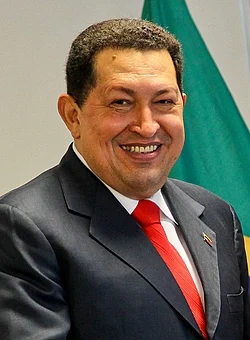 shown in a 2011 photo, was kidnapped and flown by helicopter to a prison on Margarita Island off the Venezuelan coast. But President George W. Bush had let Venezuelan plotters operate the coup, and they were incompetent.
Chavez, the first Black and Indian president in Venezuela’s history, was guarded by a young soldier who was the same color as Chavez. He handed Chavez his cell phone. Chavez reached his Air Force generals who made it clear to the plotters — most of them white (race matters here) — that they would be bombed into oblivion unless Chavez were returned in 48 hours to his desk. The coup leaders brought back Chavez within hours.
But today it’s clear that President Donald Trump took no chances, ordering US troops to kidnap Chavez’ successor, President Nicholas Maduro.
I knew Maduro well, and I have to be straight about the fact that he is not the brightest bulb in the socket. Unlike Chavez, who was elected and re-elected in model democratic polling, Maduro won his re-election only by manipulating the count.
And, unlike the late President Chavez, Maduro does not understand that there is a limit to how much one can taunt Uncle Sam’s oil companies.
The late president Chavez knew that, saying, “Greg, I’m a very good chess player.”
Maduro is not.
The excuse for seizing the president of another country is that Maduro was supposedly some type of “drug kingpin” according to Trump. But the United Nations annual drug trafficking report says that Venezuela neither produces nor is a transit point for drugs going to the US.
So what’s it about? Venezuela has the world’s largest reserve of oil. Venezuela has four times the reserves of Saudi Arabia.
The night President Rodriguez came to my home, she also told me that Chaves refused to give Pat Robertson, the Right-Wing televangelist, a gold mining concession. (Most Americans think of Robertson as the guy who made his money fleecing his born again flock with vitamin Ponzi schemes and huge fees for speaking directly to the Lord on behalf of the Christian coalition schmucks who bought his hoodoo.)'
Robertson’s big money came from diamond mining, but Chavez wouldn’t give him a gold mine concession. So Robertson, on his popular cable show, unashamedly called for Chavez’s assassination, pointing out that Venezuela had parked itself on top of “our” oil.
President Rodriguez understands what Maduro does not. You can’t eat or drink your own oil. The US embargo has literally forced 7 million hungry Venezuelans to emigrate because of the siege stopping Venezuela from selling its oil.
President Rodriguez, who is actually to the left of Maduro, has told Trump that he can, as Trump demands, “run” Venezuela because that’s the reality to stop the starvation.
Maduro foolishly blocked British Petroleum from taking over the French oil concession, allowing the UK to seize $10 billion in Venezuela’s cash reserves. The US then seized Venezuela’s assets here, all Citgo gas stations and refineries.
How does this end?
I fear that President Rodriguez will also be overthrown and replaced with Trump’s puppet Maria Corina Machado, who just won the Nobel Peace Prize. (A weird choice for a peace prize. Machado called for the invasion of her own country, which could’ve led to Civil War, costing the lives of thousands of your countrymen. And that may still happen.)
And I have one more warning. It’s not a prediction, just a warning. Trump’s overthrow of Venezuela’s government may just be practice for the overthrow of America’s government. The date? How about January 6, 2029.
Global Politics
 Ultra-right MAGA influencer Curtis Yarvin, 2023 portrait.
The Independent, Commentator who reportedly influenced JD Vance’s politics calls Trump admin a ‘failure’ and ‘tragedy,’ Ariana Baio, Jan. 2, 2026. In a lengthy Substack post, Curtis Yarvin accused the Trump administration of not doing enough to overhaul democracy.
 Curtis Yarvin, a right-wing political commentator whose philosophy on government has reportedly influenced Vice President JD Vance, criticized the Trump administration for failing to overhaul the U.S. government to end democracy.
In a lengthy Substack post published on December 27, Yarvin declared the second Trump administration “a tragedy” for not utilizing its energy in early 2025 to consolidate power to begin forming a more one-party system.
“The administration failed, collectively, to realize that (a) the excitement of potential real change was how all its crackling political energy was generated, and (b) the energy would stop if the offensive stopped moving,” Yarvin wrote.
Yarvin, who rose to prominence in the 2010s by writing under the pen name Mencius Moldbug, has long called for conservatives to rise to power and shape the government system away from democracy and toward a form of monarchy run by a national CEO of sorts.
The political commentator said the Trump administration had the trappings to do this, but instead fell back into the traditional system of checks and balances, while also allowing Democrats to maintain positions of power.Vice President JD Vance has previously cited Curtis Yarvin’s political philosophies while discussing how conservatives can reshape the governmentVice President JD Vance has previously cited Curtis Yarvin’s political philosophies while discussing how conservatives can reshape the government (Reuters)
“Last winter’s shock-and-awe Trump is vanished now,” Yarvin wrote. “The administration is simply too well-integrated with the permanent government. This marriage is terrible, but it is still a marriage.”
Yarvin went on to explain how the Trump administration’s initial sweeping overhaul generated energy among like-minded individuals, but said that energy has died down and only a “very sharp conflict or crisis” could regenerate it.
Yarvin’s philosophy on democracy is that it is “pointlessly stimulating the human power instinct” and that only real change can occur when a single individual is in charge. While his ideas are contradictions of the current U.S. system, they are nothing new.
While Yarvin’s prominence in conservative media has grown, with appearances on Tucker Carlson’s former Fox News show and “The Charlie Kirk Show,” he has also maintained an arms-length distance from major administration figures.
Notably, Yarvin has brushed off claims that he influenced Vance. In a July 2024 Substack post, Yarvin said he had “barely even met” Vance, whom he referred to as a “random normie politician.”
In 2021, Vance mentioned Yarvin’s political philosophy on a “Jack Murphy Live” podcast episode – though the then-Ohio Senate candidate claimed it was “too pessimistic.”
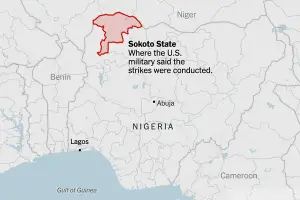
New York Times, Days After U.S. Strikes in Nigeria, Gunmen Kill Dozens of Villagers, Saikou JammehIsmail Alfa and Eric Schmitt, Jan. 4, 2026. The attackers also abducted an unspecified number of people, including students from a Catholic school where over 300 people were kidnapped in November.
Dozens of people were killed and several abducted when unidentified gunmen attacked two neighboring villages in Nigeria, government officials said on Sunday. It was the first large assault on civilians since the U.S. military bombed targets in the West African country on Christmas Day, claiming it was protecting Christians from Islamist militants.
 The villages had been under siege for at least the past week, forcing some residents to abandon their homes and sleep in nearby bushes, residents said. A police spokesman, Wasiu Abiodun, said that “over 30” had been killed and that “some persons” were kidnapped in one of them, Kasuwa Daji. Residents said that at least 37 were killed in that village, and five in the other, Kaima.
It is not clear how many people were taken hostage, but some of those abducted attended St. Mary’s Catholic School in the village of Papiri, where more than 300 students kidnapped in November were released a few weeks ago.
“For the past one week, they have been coming out of the forest and angrily attacking communities at free will because there is no security presence here,” said one resident, Abraham Peter. “The government and security agencies should come to our aid.”
No group has so far claimed responsibility for the killings, though one known as the Lakurawa, which was targeted by the U.S. strikes, is considered to be one of the main armed groups active between Nigeria’s northwestern communities and the neighboring country of Niger.
The Nigerian government said on Sunday that the attack had been carried out by “terrorists suspected to be fleeing from Sokoto and Zamfara following the United States’ airstrike on Christmas Eve,” according to a statement from Bayo Onanuga, special adviser to President Bola Ahmed Tinubu.
The Rev. Stephen Kabirat, a Catholic priest in the Kontagora Diocese, said the church in Papiri was attacked three days ago by gunmen. They destroyed some religious items inside and stole about $250 and two motorbikes, he said.
“They were looking for the priest, but luckily he escaped,” he said. “But they abducted some villagers including children.”
Wayne Madsen Report via Substack, Commentary: Will there be a huge worldwide celebration in 2026? Let's hope so! Wayne Madsen, right, Jan. 2-4, 2026.  From ancient Rome to modern times, when a figure widely perceived as a tyrant dies public reactions often fall into a few recognizable patterns: spontaneous street celebrations, symbolic rituals, satire, and vows that such despots must never again arise.
After the death of the Roman emperor Tiberius in 37AD, crowds reportedly shouted “Tiberius into the Tiber!” and offered prayers of thanks to the earth itself. Romans engaged in public chanting, held mock funerary rites, marked public spaces with satirical graffiti and recited satirical poems, and engaged in ritual cleansing of public spaces associated with the ruler.
When the English monarchy was restored under King Charles II in 1660, the body of Protectorate dictator Oliver Cromwell, who had died on September 3, 1658, was exhumed, hanged, beheaded, and his head was displayed on a pike outside Westminster Hall. Royalists across the realm celebrated in the restoration of the monarchy and the desecration of Cromwell’s corpse.
When Adolf Hitler died on April 30, 1945, news of his death spread globally the next day and the reactions were immediate, emotional, and jubilant. At the BBC in London, Karl Lehmann recalled,“The whole building cheered.” Newspapers around the world reported the death as a moment of universal liberation. The Lancashire Daily Post declared that “a terrible scourge and force of evil has been removed.”
Throughout the United Kingdom, Allied troops, along with British civilians, celebrated Hitler’s death with parades, drinking and singing in pubs, and holding spontaneous street parties. The same scenes played out in France, where church bells in towns around the country rang and Allied troops and French civilians celebrated for hours. Nazi flags were burned, mock funerals for Hitler were held, and the Marseillaise was sung in public spaces around France.
Across major Canadian cities — Toronto, Montreal, Vancouver, Winnipeg, Halifax — people poured into the streets as soon as news of Hitler’s death spread. Canadians gathered around radios in shops, street loudspeakers, and newspaper offices anxious for more details on the death of the German dictator. In Newfoundland, still a British dominion and not yet part of Canada, bells ringing in St. John’s, crowds gathered on Water Street, and soldiers and civilians celebrated together into the wee hours of the morning.
In South Africa, cheers erupted from spontaneous crowds in city centers in Johannesburg, Cape Town, and Durban. Church bells rang throughout the country. South African troops, serving with British, Canadian, and other Allied troops in Egypt, Italy, and the Middle East, broke out in singing and drinking with their comrades. Among Afrikaner nationalists and their Nazi supporters, the latter including Joshua and Wyn Haldeman — the transplanted Canadian pro-Nazi grandparents of Elon Musk — the news about Hitler was met with stony silence.
In the United States, cheering broke out in newsrooms and public spaces. Time magazine placed a large red X over Hitler’s face. The Daily Herald in the Chicago suburbs ran a caricature of a burning Nazi emblem with the caption “WAStika.” Hitler’s effigy was burned in subsequent Victory in Europe (VE) celebrations in several Allied nations.
In Italy, where Milan and Turin had been liberated on April 25, crowds gathered in piazzas in Rome, Milan, Florence, and Bologna singing partisan songs like Bella Ciao. Church bells rang out throughout Italy but not in Vatican City. Partisans and civilians raised the Italian tricolore on public buildings, and paraded with Allied troops. Civilians and partisans burned Fascist insignia, destroyed portraits of Mussolini and Hitler, and tore down remaining Fascist banners. On April 28, Italians had celebrated the executions of Benito Mussolini and his mistress, Clara Petacci. Their bodies were hung upside down from a metal girder above an Esso service station at Piazzale Loreto in Milan. A “large angry crowd” gathered to insult and physically abuse the corpses. From Milan to Cities like Turin, Genoa, and Bologna, Italians erupted into celebration. Fascist symbols were torn down throughout the country.
Not every reaction to Hitler’s death was celebratory. Undoubtedly, at a certain residence located at 175‑24 Devonshire Road in the Jamaica neighborhood of Queens, New York, a wretched and despondent German-speaking real estate businessman and former Klansman and German-American Bundist was considering how to whitewash his involvement with white supremacist and fascist causes during the pre-war years.
Upon learning of Soviet dictator Joseph Stalin’s death on March5, 1953, while the USSR declared an official state of mourning, the reaction in the Soviet gulags was much different. Political prisoners in camps around the country reacted with quiet, intense celebration. One witness recalled, “The bastard is dead!” and noted that “every camp inmate was joyful.”
On November 20, 1975, Spanish fascist dictator Francisco Franco’s death was met with a period of national mourning by the Spanish state. However, Catalans, Basques, and pro-democracy activists celebrated privately in homes, bars, and student circles. There were also celebrations among Spanish exiles in France, Mexico, Argentina, and the UK.
After Romanian tyrant Nicolae Ceausescu’s execution in 1989, along with that of his wife, Romanians poured into the streets, cheering, waving flags, and tearing down symbols of his rule. In Timișoara, where the protests against Ceausescus’ rule first broke out, people gathered in Piața Operei (Opera Square), Piața Maria (where the revolution began), and the Reformed Church where protest leader László Tőkés had spoken out. There and in Bucharest and other cities and towns, Romanians celebrated the riddance of the tyrant by chanting “Libertate!” (“Freedom!”) and burned Communist Party banners.
Albanians had to wait six years to celebrate the 1985 death of dictator Enver Hoxha. After the fall of the Communist government, statues of Hoxha were toppled and his mausoleum (the Pyramid) was defaced. Hoxha’s name was removed from institutions and crowds chanted anti‑Hoxha slogans in what became known as the “second death of Hoxha.”
The mortal demise of several tyrants have resulted in such symbolic acts as the ringing of church bells, burning effigies, removing statues, renaming buildings and streets, singing satirical songs, congregating in spontaneous gatherings in central squares, and holding communal meals with toasting the death of the despot. Could such a celebration be in the cards for the United States and the rest of the world in 2026? The signs, political and medical, are looking very good.
Jan. 3

The Independent, Trump-Venezuela live updates: President says US will run country until peaceful transition and details the capture of Maduro, Rhian Lubin and Athena Stavrou, Jan. 3, 2026. Venezuelan president charged with narco-terrorism in New York, U.S. attorney general says.
President Donald Trump said the United States will run Venezuela until there is a peaceful transition of power following the capture of its president Nicolas Maduro.
The Venezuelan president and his wife are currently aboard a U.S. warship en route to New York, where they have been indicted with several offenses, including Narco-Terrorism Conspiracy.
“We are going to run the country,” Trump vowed at a press conference Saturday at his residence in Mar-a-Lago. “We are going to run the country until such time that we can do a safe, proper and judicious transition.”
At least seven explosions and low-flying aircraft were seen in Venezuela’s capital in the early hours of Saturday, as its government said the U.S. had attacked civilian and military sites in multiple states.
In a phone call with Fox News Saturday morning, Trump told how he watched the capture of Maduro unfold in real-time from his residence in Mar-a-Lago.
“If you would've seen the speed, the violence, it was an amazing thing,” Trump told the network, adding that he had “never seen anything like it.”
The military operation has drawn widespread condemnation around the world, but members of Trump’s administration, including Vice President JD Vance and Secretary of State Marco Rubio, defended the action and denied questions of illegality.
Venezuela shaken by series of explosions in capital CaracasVenezuela shaken by series of explosions in capital Caracas
Key Points
New York Times, Venezuela Live Updates: Trump Says U.S. Will ‘Run the Country’ After Capture of Maduro, Staff Reports, Jan. 3, 2026. Captured Leader’s Government Is Defiant as He Is Flown to New York; Here’s the latest:
President Trump said the United States would “run” Venezuela “until such time that we can do a safe, proper and judicious transition,” following the U.S. military operation that captured the country’s president, Nicolás Maduro, and his wife.
Mr. Trump put no time limit on the American occupation and offered no details about what it would look like. But he said American oil companies would “start making money for the country,” which has 17 percent of the world’s known reserves.
Mr. Trump said Mr. Maduro, who had led the country since 2013, and his wife were being taken to New York to face drug and weapons charges. A newly unsealed indictment of Mr. Maduro and his wife is similar to one handed up against the Venezuelan leader in 2020.
“We were prepared to do a second wave” after the first attack, Trump said but ultimately it was not necessary because of the success of the first. He added that the United States was ready to do so in the future if needed.
White House reporterTrump put no time limit on the American occupation. It would be up to the United States to decide when to return the country to Venezuelan control. And then he turned to oil, saying that American companies would fix the infrastructure, “and start making money for the country.”
White House reporter“We are going to run the country until such time that we can do a safe, proper and judicious transition,” Trump said, suggesting an occupation. The United States has done this before, in Germany, in Japan, and of course Iraq. But the history is checkered.
'What comes next in terms of Venezuelan leadership is unclear, Trump said, the United States would be in charge until there is a clear safe transition. He emphasized it three times.
“We are going to run the country,” Trump said of Venezuela. He said he did not want the Maduro regime to continue with another leader.
“They knew we were coming,″ Trump said, arguing the Venezuelan military was quickly overwhelmed. “Not a single American service member was killed,″ he said, though earlier he suggested there were casualties.
Trump suggested the United States turned off the power in Caracas, Venezuela’s capital. He didn’t say how, but either a direct physical attack on the grid, or a cyberattack, would be the most likely method.
White House reporterTrump opens by saying “overwhelming American military power” was used, from “air, land and sea” to seize Maduro, and he also compared it to other operations he ordered, including the attack in June on Iran’s nuclear sites. He contends that “no other nation” could pull off this kind of operation.
Delcy Rodríguez, who was Venezuela’s vice president under President Nicolás Maduro, was sworn in as interim president on Saturday, Jan. 3, 2026, the U.S. said. (Photo by Brittainy Newman for The New York Times).
New York Times, Venezuela’s Interim Leader Defies Trump and Calls Maduro the ‘Only President,’ Jack Nicas, Jan. 3, 2026. President Trump said that Venezuela’s new leader, Delcy Rodríguez, would help the United States run Venezuela. She quickly said the opposite.
President Trump said Delcy Rodríguez was sworn in as Venezuela’s interim president and would act as a partner in letting the United States run the country.
“She’s essentially willing to do what we think is necessary to make Venezuela great again,” he said.
Less than two hours later, Ms. Rodríguez — who was Nicolás Maduro’s vice president — delivered a televised address to Venezuela that made clear she viewed the United States as an illegal invader that must be rejected.
“We are determined to be free,” she said. “What is being done to Venezuela is a barbarity.”
Her swift defiance of Mr. Trump made clear that his plans to swoop into the South American nation and run it as his own faced many more hurdles than he suggested in his Saturday news conference declaring victory in Venezuela.
“We had already warned that an aggression was underway under false excuses and false pretenses, and that the masks had fallen off, revealing only one objective: regime change in Venezuela,” she said. “This regime change would also allow for the seizure of our energy, mineral and natural resources. This is the true objective, and the world and the international community must know it.”
Significantly, Ms. Rodríguez delivered her address alongside what she called Venezuela’s National Defense Council, which included the nation’s defense minister, attorney general and the heads of the country’s legislature and judiciary. That unified front directly contradicted Mr. Trump’s claim that the United States would run Venezuela, especially given that White House and Pentagon officials had said that U.S. aircraft and extraction forces had returned to the U.S.S. Iwo Jima.
Venezuela’s defense minister and attorney general also both publicly criticized Mr. Trump and the U.S. military action on Saturday.
In his news conference, Mr. Trump said that Venezuelan leaders must comply with the United States or else. “All political and military figures must realize that what happened to Maduro can happen to them,” he said.
Ms. Rodríguez’s speech also made clear that Mr. Maduro’s supporters — including her — still see him as the nation’s legitimate leader.
She repeatedly said that Mr. Maduro was Venezuela’s “only president” and even the text on Venezuelan state television labeled her as vice president. When she ended, the state broadcaster said that Ms. Rodríguez was the vice president who had just stated that Mr. Maduro was
Meidas Touch Network, Commentary: Trump’s Venezuela Press Conference Goes Off the Rails After U.S. Invasion, Ben Meiselas, right, Jan. 3, 2026. First, thank you for tuning in to our late-night coverage as this shocking story broke. MeidasTouch was the first network to go live with the breaking news of the United States’ invasion of Venezuela, and we have been tracking the developments minute by minute.
This is a historic escalation with massive legal, geopolitical, and humanitarian consequences.
Here’s what we know so far, and then I’ll break down the disastrous press conference Donald Trump just held at Mar-a-Lago. Before I even dive in and give you updates, I think we all know the real reason for this invasion: oil.
Trump said Saturday that the United States captured Venezuelan President Nicolás Maduro and that he is being taken to New York to face criminal charges. Attorney General Pam Bondi posted that Maduro and his wife, Cilia Flores, had been indicted on drug and weapons charges and “will soon face the full wrath of American justice.”
I thought the American justice system was supposed to be about “due process” and not “wrath,” but I digress. The administration has long pointed to a 2020-era U.S. indictment and has repeatedly labeled Maduro the head of a so-called “narco-terrorist” state. This all comes, ironically, just one month after Trump pardoned the former Honduran President who was convicted in a U.S. court of drug trafficking. MeidasTouch has obtained a copy of the new superseding indictment filed by the DOJ against Maduro, his wife, and others, in the Southern District of New York (SDNY).
According to reporting and accounts from people briefed on the operation, U.S. special operations forces captured Maduro with the help of a C.I.A. source inside the Venezuelan government who had been monitoring his location. Trump posted an image of Maduro in custody aboard the U.S.S. Iwo Jima, noting that both Maduro and Flores would be transported to New York.
Trump also suggested there were injuries on the U.S. side, telling Fox News that some troops may have been hurt when a helicopter was hit, even as he claimed no American troops were killed. Venezuelan officials, meanwhile, said Venezuelan citizens had been killed and that the death and injury toll is still being assessed. A state of emergency was declared and Venezuelan authorities denounced the operation as military aggression while calling for mobilization.
Venezuela’s inner circle appears to have survived. Delcy Rodríguez, Maduro’s vice president, was reportedly sworn in as interim president in a secret ceremony in Caracas. She went on state television calling the operation “a brutal attack,” though Trump later claimed she spoke to Secretary of State Marco Rubio and was “essentially willing to do what we think is necessary.” That claim, like so much of what Trump says, raises more questions than it answers.
After the invasion, Trump appeared at Mar-a-Lago and held what can only be described as an unhinged, reckless press conference.
He declared, “We’re going to run the country until such time as we can do a safe, proper and judicious transition.” The President of the United States is openly claiming the U.S. will “run” a sovereign nation of roughly 28 million people, with no clear plan, no defined timeline, and no meaningful explanation of the authority to do so.
When pressed on whether that means U.S. troops would be on the ground, Trump responded, “We’re not afraid of boots on the ground if we have to,” and then admitted, “We had boots on the ground last night at a very high level, actually.”
A reporter asked the obvious: if the U.S. is going to “run” Venezuela, who is in power right now? Trump’s answer was incoherent. He claimed the U.S. would run it “with a group” and then gestured vaguely to people behind him, saying, “The people that are standing right behind me, we’re going to be running it.”That “group” included Marco Rubio and Defense Secretary Pete Hegseth. During the presser, Hegseth delivered rambling lines meant to sound tough. “He f—ed around, and he found out,” Hegseth said about Maduro. Trump appeared to be dozing off while military details were being presented.
Trump repeatedly framed the invasion as a resource grab, often dropping his pretext regarding drugs. He said the reason the U.S. invaded is because Venezuela “took” American oil and that now “our big, beautiful oil companies” will control Venezuelan oil infrastructure.
He bragged about sending U.S. oil companies to “go and spend billions of dollars,” “fix the badly broken infrastructure,” and “start making money for the country.” Then he insisted this “won’t cost us anything,” because oil companies would front the bill and be reimbursed through the operation itself.
At another point he complained Venezuela “stole our oil,” pointing to the nationalization of Venezuela’s oil industry, and characterized it as “one of the largest thefts of American property in the history of our country.” His comments are frankly Putin-esque.
Rubio tried to wave away the constitutional issues by calling it essentially an arrest operation. He described it as “largely a law enforcement function,” saying “at its core, this was an arrest of two indicted fugitives,” and suggested notifying Congress would be risky because “Congress has a tendency to leak.”
That is not how any of this works. Toppling or detaining foreign leaders and declaring you’re going to run the country isn’t the same as a police officer arresting someone on the street. These are the acts of a lawless administration.
Trump also used the press conference to threaten other countries. When asked about Colombia’s President Gustavo Petro, Trump said Petro “does have to watch his ass.” He floated Cuba as another target, calling it a “failing nation” and signaling the U.S. would be “talking about” it next. Earlier on Fox, he said, “Something is gonna have to be done with Mexico.”
He invoked the Monroe Doctrine, saying that it should now be called the “Donroe Doctrine,” adding that “American dominance in the Western Hemisphere will never be questioned again.”
These are the words of imperialism.
Then, in a shocking moment, Trump addressed María Corina Machado, Venezuela’s main opposition leader. Despite that fact that she celebrated the mission, and wrote in a statement that “the hour of freedom has arrived,” Trump said the U.S. had not been in contact with her and then undercut her publicly: “I think it would be very tough for her to be the leader. She doesn’t have the support within or the respect within the country. Very nice woman. But she doesn’t have the respect.”
Trump also rambled bizarrely from topic to topic, in one breath talking about Venezuela, and in the next, bragging about how he “saved Los Angeles.” Trump told reporters, “If the federal government didn’t come in, we would’ve lost Los Angeles.” It’s all just so deranged and detached from reality.
So here we are… Trump invades Venezuela, claims the U.S. will run it, and then dismisses the primary opposition leader who, by all accounts, would be the obvious person to elevate. That’s because Trump isn’t focused on democracy. He’s focused on control. He’s focused on oil. And Wall Street is already lining up to reap the spoils of this invasion. Per Brian Schwartz of the Wall Street Journal, “About 20 business leaders, including those from some of the top hedge funds and asset managers, are preparing to go on a March trip to Venezuela to look at investment opportunities there incl in energy and infrastructure.”
The Atlantic, The Venezuela attack hands Russia and China a road map, Tom Nichols, Jan. 3, 2026. The Trump administration has given Russia, China, and anyone else who wants to give it a try a road map for invading countries and capturing leaders who displease them.
But first, here are three more stories about the U.S. attack in Venezuela:
David Frum: Trump’s critics are falling into an obvious trap. Trump’s risky war in Venezuela Making sense of the Venezuela attack
President Donald Trump has launched not a splendid little war, but perhaps a splendid little operation in Venezuela. He has captured a dictator and removed him from power. So far, Trump seems to have executed a bad idea well: The military operation, dubbed “Operation Absolute Resolve,” seems to have been flawless. The strategic wisdom, however, is deeply questionable. And the legal basis, as offered by the president and his team, is absurd. Some Americans, and some U.S. allies, are appalled.
Russia and China claim to be appalled, too, but to use a classic diplomatic expression, the leaders in Beijing and Moscow should be invited, with all due respect, to shut their traps.
“We firmly call on the U.S. leadership to reconsider this position,” the Russian foreign ministry said this morning, “and release the lawfully elected president of a sovereign country and his wife.” The Russians then shamelessly turned all the sanctimonyknobs to supernova levels: “Venezuela must be guaranteed the right to determine its own future without destructive external interference,particularly of a military nature.”
You don’t say. Perhaps we might generalize that principle to other nations, such as Ukraine, where Moscow’s forces are murdering people every week—in part because the Russians failed to kill or capture the “lawfully elected president of a sovereign country” four years ago.
The Chinese, too, are absolutely shocked that a great power is menacing a small neighbor and inflicting regime change by military force. China, the foreign ministry in Beijing said, “is deeply shocked”—at least it wasn’t shocked and stunned—“and strongly condemns the use of force by the U.S. against a sovereign country and the use of force against the president of a country.”
Noble words. And then, like the Russians, the Chinese dared the world to laugh out loud: “China firmly opposes such hegemonic behavior by the U.S., which seriously violates international law, violates Venezuela’s sovereignty, and threatens peace and security in Latin America and the Caribbean. We urge the U.S. to abide by international law and the purposes and principles of the UN Charter and stop violating the sovereignty and security of other countries.”
Only two days ago, however, China engaged in military exercises that included surrounding Taiwan and then firing missiles in the waters around the island. A giant nation regularly running war games aimed at invading its tiny neighbor—and threatening Japan, for good measure—counts as “hegemonic behavior” that threatens the “peace and security” of a region, and China knows it.
The more stinging irony here is that Russian President Vladimir Putin and Chinese President Xi Jinping probably approved these public statements with a chuckle. The United States has now given Russia, China, and anyone else who wants to give it a try a road map for invading countries and capturing leaders who displease them, with a lawlessness that by comparison makes the 2003 invasion of Iraq seem as lawyered up as a bank merger.
Let us all stipulate that Venezuelan President Nicolás Maduro is a bad guy. He deserved to be driven from power, perhaps with American help. An operation rooted in support from the international community and approved by Congress would be a tough sell because Venezuela presented no threat to the United States or anyone else, but it would have been the right way to go. (Drugs don’t count as an imminent danger.) Instead, the president declared the “Donroe Doctrine,” another moment that will stand for ages as an embarrassment to the United States and raises the question yet again of whether the commander in chief is cognitively stable enough to be ordering the invasion of other nations.
Trump and his team didn’t even try creating a coalition either at home or abroad. By simply landing troops in another nation and decapitating its leadership, Trump has done Russia and China a great service by trashing, yet again, guardrails that limit other nations from running amok.International law? Pointless.
The United Nations? Never heard of it. The Congress of the United States? Well, they’re good folks, but according to Secretary of State Marco Rubio, they couldn’t be told ahead of time, for security reasons. (He said this while standing next to Secretary of Defense Pete Hegseth, a fountain of security violations.) Putin and Xi must have watched Trump’s presser while nodding and taking notes.
Hypocrisy, the French nobleman François de La Rochefoucauld once said, is the tribute vice pays to virtue. In this case, there is little virtue to be found; the Russian and Chinese statements are vice paying tribute to vice. They already know that the president of the United States is helping to clear the way for their adventures—and they should keep their faux outrage to themselves.
New York Times, U.S. Military Action in Venezuela: Democrats Raise Alarms After Trump Avoids Congressional Approval for Maduro’s Capture, Annie Karni, Jan. 3, 2026. Democrats raised constitutional concerns and said the Trump administration had misrepresented its goals in Venezuela, while most Republicans cheered the action.
Republicans in Congress on Saturday cheered the Trump administration’s dramatic military action to capture President Nicolás Maduro of Venezuela, but top Democrats sounded alarms about the legality of the operation and said they would seek a quick vote to halt hostilities without express authorization.
The surprise nighttime operation — and President Trump’s declaration on Saturday that he planned to “run” Venezuela and use the U.S. military to guard its oil resources — all but guaranteed that lawmakers returning to Washington next week would instantly confront an intense debate about the situation.
That promised the latest test of whether the Republican-controlled House and Senate, which have deferred constantly to the president, would try to reassert any of their power in an election year.
Senator Chuck Schumer, Democrat of New York and the majority leader, said he would push for a vote next week on a war powers resolution to limit Mr. Trump’s ability to take further military action without explicit authorization by Congress.
Senator Andy Kim, Democrat of New Jersey, said Secretary of State Marco Rubio and Defense Secretary Pete Hegseth had “blatantly” lied to Congress in recent briefings when they said the administration’s objective in Venezuela was not regime change.
Mr. Kim, a former national security official in the Obama administration, called the move to oust Mr. Maduro “disastrous,” arguing that it would further isolate the United States on the global stage.
“Trump rejected our Constitutionally required approval process for armed conflict because the Administration knows the American people overwhelmingly reject risks pulling our nation into another war,” he wrote on social media.
At a morning news conference in Palm Beach, Fla., the president indicated that he had purposefully skipped informing members of Congress before taking action in Venezuela because he did not trust lawmakers to keep his plans confidential.
“Congress has a tendency to leak,” Mr. Trump said.
And after Mr. Trump said at the same news conference that the United States would now “run” Venezuela, Mr. Schumer warned that such an idea “should strike fear in the hearts of all Americans.”
He called on the administration to immediately brief Congress on its plan “to prevent a humanitarian and geopolitical disaster that plunges us into another endless war or one that trades one corrupt dictator for another.”
Representative Hakeem Jeffries, Democrat of New York and the minority leader, also called for a briefing, demanding that the Trump administration immediately present to Congress “compelling evidence to explain and justify this unauthorized use of military force.”
The House and the Senate are set to return to Washington next week after a long holiday break.
But Mr. Schumer said on Saturday afternoon that the administration had not responded to any request from congressional leaders for an immediate briefing.
More Reaction To Invasion
 Vladimir Putin, Donald Trump, Xi Jingping, left to right.
Robert Reich via Substack, Commentary: Thugs, Robert Reich, right,Jan. 3, 2026. A new world order.
In the first year of Trump’s second term, he imposed his thuggery on the United States. In the second year, apparently he will impose it on the hemisphere.
America’s takeover of Venezuela — because it’s in our “backyard” and we didn’t like its leader — strengthens Putin’s claim over Ukraine, Xi’s over Taiwan, and Netanyahu’s over the West Bank and Gaza.
The postwar order was supposed to stop thugs who use aggression to take over their “backyards,” as Hitler had done in Europe and Japan in East Asia.
But Trump is now reverting back to the pre-World War II, might-makes-right, spheres-of-power, order.
For more than eighty years, America’s moral authority has rested on our claim to be on the side of democracy. That claim was often belied by American aggression that bolstered dictators — in Vietnam in the 1960s, in Latin America in the 1970s, and more recently in Afghanistan, and Iraq — but it at least gave a patina of legitimacy to our alliances and to our “soft power” through USAID and the United Nations.
Now we’re back to the rawest form of neo-imperialism.
“We’re going to have our very large United States oil companies, the biggest anywhere in the world, go in, spend billions of dollars, fix the badly broken infrastructure, the oil infrastructure, and start making money for the country,” Trump explained early this morning.
Let’s be clear: When it comes to Venezuela’s giant oil reserves, America’s oil companies will be making money for themselves. During the 2024 campaign they made a deal with Trump on which they’re still cashing in.
 Trump is out to carve up the world into three large power blocs — one under the thuggery of Putin, the second under the thuggery of Xi, andthe third under Trump’s thuggery (allied with sou-thugs like Israel’s Netanyahu and Hungary’s Orban, right).
To be a “neighbor” of a thug is to surrender to the thug’s wishes or the thug’s direct control. Within Putin’s thuggery fall Ukraine and quite possibly Estonia, Latvia, Lithuania, and the rest of the former Soviet bloc.
Within Xi’s thuggery fall Taiwan, Tibet, Mongolia, and possibly Nepal.
Within Trump’s thuggery fall the rest of Latin America, including Mexico, and possibly even Greenland and Canada.
Beware. The Trump world order makes the world safe only for tyrants.
The Independent, Opinion: Trump’s invasion of Venezuela and capture of its president mark the end of the West as we know it, warns world affairs editor Sam Kiley, Sam Kiley, Jan. 3, 2026.
American Chinook aircraft and Apache gunship escorts clattered through the night sky over Caracas, which was splashed orange with explosions as missiles attacked military sites across the country.
A few hours later, Donald Trump announced that Venezuela’s president, Nicolás Maduro, and his wife had been “captured” and flown out of their country.
High fives, no doubt, in the Oval Office – and more praise poems for Trump from his henchpeople, like Peter Hegseth, the secretary for defence/war, who puts more effort into public pull-ups than he does operational security, let alone strategic thought.
What no one in the White House can see is that this invasion, this apparent political decapitation, this violation of international law, is strategically mad. Outside the White House and Magaland, the only cheering will be in the Kremlin and in Beijing.
In Nato there will be horror. But one can be sure that the supine grovelling that has characterised the behaviour of Nato’s leadership towards Trump and Hegseth will continue.
Doing otherwise would be to acknowledge that Donald Trump has swung America first from being a friend, then to being an unreliable ally, and now, in the dawn of 2026, Trump’s America is a threat.
He said he would attack Venezuela’s mainland, and he has.
His claim to be knocking over a narco-terrorist state that has exported vast quantities of opiates to the US, and killed hundreds of thousands of its citizens, is nonsense. Opiates get into the US from Mexico, not Venezuela.
As a premise for regime change and invasion, it is as false as the claims that Saddam Hussein was making a nuclear weapon. The invasion of that nation set off decades of pain and murder, terror and mayhem, and gave birth to Isis. It also tore at the fabric of Western democracies, as some ripped up ethics and their own laws to hunt down alleged terrorists.
Now, Trump has attacked a neighbour without any international support. He has aped the behaviour of his great hero and friend, Vladimir Putin.
He has also, like Putin, politicised the military and intelligence services, tried to shatter judicial independence and feathered the nests of select oligarchs.
The Russian president invaded Ukraine in 2014. He falsely claimed that Russian speakers were being oppressed in that country. The Kremlin wants to take over all of its neighbour, and Trump is supporting its efforts to carve out the 20 per cent it has already captured.

Xi Jinping at Party Congress in October, 2022 (Reuters photo by Thomas Peter).
In his new year’s speech, China’s leader Xi Jinping renewed threats against Taiwan, saying: “The reunification of our motherland, a trend of the times, is unstoppable.”
And China held massive war games off the coast of Taiwan at the same time. In the age of Trump, the “trend of the times” is that might is always right.
He has repeatedly said that Canada should be annexed. He has not ruled out the use of force to take over Greenland, for its mineral riches. He has insisted that “sooner or later” it will be part of the US.
These are Nato countries (Greenland is part of Denmark).
His weird threats against his neighbours and allies could have been dismissed as the ramblings of a demented man-child or sarcastic asides from a diplomatic disruptor.
But they are no joke. For all his lies and bluster, Trump makes good on his threats and ambitions. His fantasy of turning Gaza into a Gaz-a-Lago seaside resort may yet be manifest.
His National Security Strategy says that four Nato nations are soon to be overwhelmed by “non-Europeans”. Aside from being a racist trope from “Great Replacement” conspiracy theorists (latter-day Nazis), it is also flat wrong.
But he now sees the world in three spheres: the western hemisphere is his to control; Russia can have Europe; and China the rest.
Hopium Chronicles, Commentary:Is Trump In Charge Of Venezuela? The Maduro Government Say No. What The F-ck Is Going On? Simon Rosenberg, right, Jan. 3, 2026. Did Trump just invent, confabulate, wishcast on global television this morning that he was in charge of Venezuela?
I offered my initial thoughts on these extraordinarily dangerous set of developments early today. Now for Round 2…..
In this press conference this morning Trump The Terrible told us he was now in charge of Venezuela. His words and meaning were very clear. This afternoon the Venezuelan government, still very much in charge of the country, disputed Trump’s claim. Here is the NYT (gift link):
President Trump said Delcy Rodríguez was sworn in as Venezuela’s interim president and would act as a partner in letting the United States run the country.
“She’s essentially willing to do what we think is necessary to make Venezuela great again,” he said.
Less than two hours later, Ms. Rodríguez (shown in a file photo at left) — who was Nicolás Maduro’s vice president — delivered a televised address to Venezuela that made clear she viewed the United States as an illegal invader that must be rejected.
“We are determined to be free,” she said. “What is being done to Venezuela is a barbarity.”
Her swift defiance of Mr. Trump made clear that his plans to swoop into the South American nation and run it as his own faced many more hurdles than he suggested in his Saturday news conference declaring victory in Venezuela.
Did Trump, in another one of his delusions and confabulations, just imagine himself as the new ruler of Venezuela this morning? How does someone get something like this so wrong? And if Trump did invent something of this import, how can he be allowed to keep running the country?
 Trump’s shocking throwing of the Nobel Peace Prize winning opposition leader, María Corina Machado, right, under the bus this morning may have encouraged the remnants of the Maduro regime to decide to fight it out today. For Trump, in all of his idiocy, just kneecapped the global face of the opposition movement, claiming somehow she had no support despite her party winning the last election. Here’s the NYT just now, same gift link:
President Trump said on Saturday that it would be “very tough” for Venezuela’s leading opposition figure, MaríaCorina Machado, to take control of her country, claiming in his televised speech that she was a “very nice woman” but “doesn’t have the support” in Venezuela to lead.
It was a dramatic shift from the Trump administration’s assessment of Ms. Machado’s movement in recent months, in which Washington officials have asserted that her surrogate, Edmundo González, is the country’s rightful president, after his election victory in 2024. Secretary of State Marco Rubio had called Ms. Machado “the personification of resilience, tenacity and patriotism.”
Rubio also directly threatened the Cuban government today. Finally, Stephen Miller’s wife, Katie, dropped this wonderful post this afternoon [portraying Greenland with an American flag]. So, yes, this is all another very Trumpian shitshow, as unhinged as his diseased mind is, and a reminder that desperate men do desperate things.
Hopium Chronicles, Pro-Democracy Advocacy, Venezuela - Illegal, Destabilizing, A Desperate Way To Make An Ailing And Unpopular Leader "STRONG" Again, Simon Rosenberg, right, Jan. 3, 2026. Some initial notes from me and around the Internet. Trump will speak to the country at 11am EST.
So we’ve taken Maduro, the illegitimate, Putin-allied Venezuelan leader. News is breaking fast so sending along some initial notes from me and around the Internet.
Why now? As we discussed yesterday, January is shaping up to be a very consequential month in Washington and around the country, and Trump needed to do something dramatic to keep wavering Republicans, increasingly weary of defending the indefensible, on his side. Was it the right move? I am doubtful. It feels far more desperate than strategic right now, a wild Hail Mary for an ailing, failing, and unpopular leader needing to find his STRENGTH, POWER, and MANHOOD again. But we will see.
Invading Venezuela is wildly unpopular.
19% support, 60% oppose.
Only 11% are OK - 11%!!!!! - with Trump going ahead without Congress. 74% want him to get Congressional approval.
Watch my recent interview with prominent Mexican-American journalist Leon Krauze for an in depth look at why pro-democracy forces in Latin America are so supportive of María Corina Machado’s courageous efforts to bring democracy to Venezuela. This is a critical perspective to understand in the days ahead for my friends in South Florida tell me that the seizing of Maduro is being very well received this morning in the emigre communities there.
Here’s what I wrote to you a few days ago in my post, Trump’s Staggering Betrayal Of The Great American Project:
What remains so hard to believe this morning is that Trump and his team have somehow convinced themselves, and are working to convince us, that a world without the American-led, rules-based global order is somehow better for us. That carving up the world: Venezuela/the Americas, Greenland, and Gaza for us; Ukraine/Eastern Europe/All of Europe? for Putin; the Middle East for the Gulf Arab states and Israel; much of the rest of the world, including Taiwan, for China - will somehow be better for the United States rather than just an extraordinary and world altering own goal, one benefiting our adversaries and dramatically weakening us.
For without our allies we are less safe. Without the global trading system we will be less prosperous. Without Pax Americana we will all - every person in the world - be less free. And yet, somehow, in all of his insatiable greed, Olympian corruption, and titanic idiocy, here we are…..
Trump is failing to defend Ukraine from Moscow’s dangerous advances. He is blowing apart the global system as we know it by attempting to seize Greenland and Venezuela’s oil. Last week the Wall Street Journal reported on an astonishing development - “Project Sunrise” - a plan to seize Gaza, and have America fund the building of a modern “Rivera,” and implicitly establish the Trump family as the new Emirs of this new polity (gift link). For the Trump, Kushner, and Witkoff families, all real estate developers, it would be the deal of a lifetime……
It’s pretty clear that the Trump, Kushner, and Witkoff families are approaching the world now the way New York real estate families approach real estate development in The City. We get our stuff, others - in this case the Gulf Arab states, Israel, the Russians, and the Chinese - get theirs, and everyone prospers.
Except, of course, we don’t. We and the world become less prosperous, less safe, and less free. The corruption, the betrayal, the greed, the clear compromise, the War Crimes, and the profound and dangerous idiocy we are witnessing right now demands a far greater response from our leaders, and from all of us. For things are being broken that will be very, very hard - if not impossible - to repair.
New York Times, Editorial Opinion: Donald Trump’s Attack on Venezuela Is Illegal and Unwise, Editorial Board, Jan. 3, 2026. Over the past few months, President Trump has deployed an imposing military force in the Caribbean to threaten Venezuela. Until now, the president used that force — an aircraft carrier, at least seven other warships, scores of aircraft and 15,000 U.S. troops — for illegal attacks on small boats that he claimed were ferrying drugs. This weekend, Mr. Trump dramatically escalated his campaign by capturing Venezuela’s President Nicolás Maduro as part of what he called ”a large scale strike” against the country.
Few people will feel any sympathy for Mr. Maduro. He is undemocratic and repressive, and has destabilized the Western Hemisphere in recent years. The United Nations recently issued a report detailing more than a decade of killings, torture, sexual violence and arbitrary detention by henchmen against his political opponents. He stole Venezuela’s presidential election last year. He has fueled economic and political disruption throughout the region by instigating an exodus of nearly eight million migrants.
If there is an overriding lesson of American foreign affairs in the past century, however, it is that attempting to oust even the most deplorable regime can make matters worse. The United States spent 20 years failing to create a stable government in Afghanistan and it replaced a dictatorship in Libya with a fractured state. The tragic consequences of the 2003 war in Iraq continue to beset America and the Middle East. Perhaps most relevant, the United States has sporadically destabilized Latin American countries, including Chile, Cuba, Guatemala and Nicaragua, by trying to oust a government through force.
Mr. Trump has not yet offered a coherent explanation for his actions in Venezuela. He is pushing our country toward an international crisis without valid reasons. If Mr. Trump wants to argue otherwise, the Constitution spells out what he must do: Go to Congress. Without congressional approval, his actions will violate United States law.
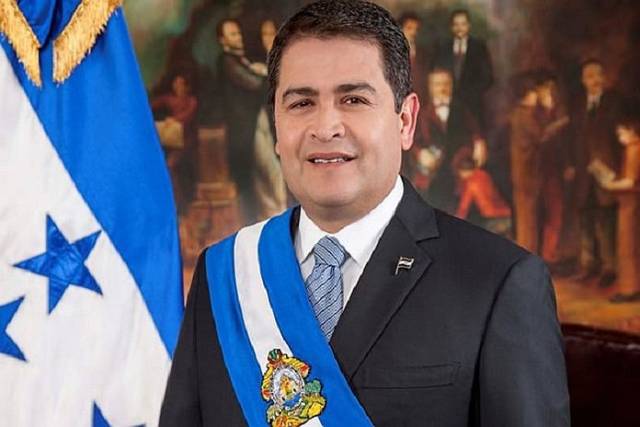 The nominal rationale for the administration’s military adventurism is to destroy “narco- terrorists.” Governments throughout history have labeled the leaders of rival nations as terrorists, seeking to justify military incursions as policing operations. The claim is particularly ludicrous in this case, given that Venezuela is not a meaningful producer of fentanyl or the other drugs that have dominated the recent epidemic of overdoses in the United States, and the cocaine that it does produce flows mostly to Europe. While Mr. Trump has been attacking Venezuelan boats, he also pardoned Juan Orlando Hernández, above, who ran a sprawling drug operation when he was president of Honduras from 2014 to 2022.
Lev Remembers, Commentary: The Maduro “Capture” Is Theater—Here’s What It’s Covering Up, Lev Parnas, right, Jan. 3, 2026. The headlines are bait. The real operation is bigger— While Venezuela explodes in headlines, Russia pounds Ukraine and China tightens around Taiwan.
What you’re watching right now is not chaos.
It’s choreography.
Yes, real people are dying. Yes, real lives are being destroyed. That part is real and horrific. But for men like Putin and Trump, human suffering is not the point—it’s a byproduct. What matters to them is optics, leverage, and control.
This has been planned and discussed for weeks.
Let’s start with the facts we can state plainly.
That emotion is understandable.
But it’s not the full story.
What you are seeing play out now is largely theater.
Donald Trump’s sudden confidence about Maduro did not come from nowhere. It came after weeks of quiet coordination.
And I want to be crystal clear about this part, because I put it in writing: in my New Year’s Day letter, I reported that there were secret conversations on January 1st involving Jared Kushner, Steve Witkoff, and Kirill Dmitriev. That wasn’t just about Ukraine—and it definitely wasn’t about peace or democracy. I’m told these discussions were about positioning, leverage, and coordinated moves, including what you’re now seeing in Venezuela and the Maduro “capture” narrative being pushed into the headlines.
I’ve also been telling you for a long time that Putin has used Maduro as a pawn—a pressure point and a bargaining chip—not because he cares about Venezuela, but because he knows exactly how to play Trump. Publicly, Russia condemns and postures. Privately, they use these pieces on the board to shape outcomes and trade leverage across regions.
I’m told this scenario was discussed directly—long before the headlines, long before the condemnations, long before Trump went public.
While Russia publicly condemns and postures, behind the scenes Maduro was effectively handed over. That’s why Trump spoke with such certainty. That’s why the move came when it did. The outrage you see on camera is for public consumption.
At the same time, Russia continues bombing Ukraine without pause.Even when dealing with dictators, there is a right way and a wrong way to act. That’s why international law exists. We don’t kidnap leaders. We don’t strong-arm sovereign nations. We don’t normalize extrajudicial power grabs just because the target is unpopular.
Because once you accept that logic, there are no guardrails left.
And I want you to understand something else, and I don’t say this lightly: I am risking a lot by bringing you this information. The media isn’t reporting it. Most people won’t touch it. But I know what I’m talking about because I’ve been inside these rooms before. During the first Trump administration, I was the point person in negotiations involving Venezuela.
I was directly involved in discussions around oil contracts—deals tied to more than two billion barrels. I’ve spoken with Maduro. I’ve spoken with Guaidó. I’ve dealt with the intermediaries, the fixers, the power brokers who never make the headlines. I know the players, I know how these deals are structured, and I recognize the patterns because I’ve lived them. That’s why I’m telling you this isn’t random and it isn’t new—it’s the same playbook, just on a bigger, more dangerous scale. If this information matters to you, I need you to help spread it, bring more people into this platform, and help us build the core of what comes next. We are only getting started—and the more they try to bury this, the more important it is that it’s heard.
The Real Michael Cohen, Commentary: The Precedent Trump Just Set, Michael Cohen, right, Jan. 3, 2026. Trump’s audacious seizure of Maduro shatters norms, legitimizes leader snatching, and risks unleashing a global doctrine where power replaces law, restraint evaporates, and war begins quietly.
I’ve spent enough years inside Donald Trump’s warped moral universe to recognize the telltale signs of what happened last night. Shock first. Applause second. Questions never. And now, the world wakes up to something that would have once been unthinkable: the United States allegedly sent Delta Force into the heart of Caracas, captured a sitting head of state, Venezuelan President Nicolás Maduro, and his wife, Cilia Flores, and flew them out of the country. Precision. Silence. Extraction. If this is true, it is one of the most audacious military operations in modern history.
Let’s be clear about the “how” before we confront the far more dangerous “why.”
According to U.S. officials speaking to CBS News, the operation was carried out by Delta Force. No lumbering invasion. No rolling tanks. No shock-and-awe spectacle. Just a surgical strike so clean that, as of this writing, we don’t even know where Maduro and his wife are being held. Caracas residents described their hearts pounding, their legs shaking, as explosions lit the sky. Smoke rose over the city. Venezuela declared a national emergency and demanded immediate proof of life. Colombia rushed forces to the border, bracing for refugees. This is the biggest U.S. military buildup in the Americas since the Cold War.
From a purely tactical standpoint, it’s extraordinary. Brilliant. Extracting a heavily guarded head of state from a hostile capital without conventional ground forces is the kind of operation military planners study for decades. This wasn’t brute force. It was mastery.
And that’s exactly why it’s terrifying.
President Trump is now bragging that Maduro will “stand trial” in the United States. Secretary of State Marco Rubio, according to Senator Mike Lee, anticipates no further action against Venezuela. As if removing a president at gunpoint were a tidy, self-contained errand. As if history works that way.
I’ve seen Trump mistake audacity for wisdom before. Many times. He confuses “I can” with “I should.” The question isn’t whether this operation was impressive. It definitely was. The question is whether it just detonated the last remaining guardrails of international order.
Because once you normalize the idea that a powerful country can simply snatch another nation’s leader and put him on a plane, the precedent doesn’t stay neatly confined to Caracas.
Does Vladimir Putin look at this and nod? Does he now feel newly legitimized to “extract” Volodymyr Zelenskyy under the banner of criminality, national security, or historical grievance? Does Xi Jinping watch this unfold and quietly consider whether the president of Taiwan, Lai Ching-te, might someday be labeled a destabilizing force who needs to be “removed” for regional peace?
That’s the door Trump just kicked open.
Supporters will rush to the Noriega comparison. Yes, in 1989, U.S. special forces captured Manuel Noriega after a short war in Panama. But even that operation followed an overt invasion, a declared conflict, and days of open fighting. Noriega hid in the Vatican embassy while U.S. troops blasted rock music until he surrendered. It was messy, loud, and unmistakably a war.
This was different. If the reports are accurate, there was no war; just a warrant, a strike, and a disappearance. That’s not regime change by invasion. That’s regime change by abduction.
Trump’s defenders will argue Maduro had it coming. They’ll point to the narco-trafficking allegations, the sham 2024 election, the economic devastation, the oil. And let me be clear, Maduro is no innocent. But international law doesn’t bend to Trump’s appetite for dominance. Senator Mike Lee himself raised the uncomfortable question: what, exactly, constitutionally justifies this in the absence of a declaration of war or authorization for the use of military force?
That question won’t interest Trump. It never has.
What happens next inside Venezuela is anyone’s guess. Optimists imagine a clean transition to the opposition; Maria Corina Machado, Edmundo González, a democratic sunrise. Realists know better. Maduro’s power rested not just on elections but on military loyalty and paramilitaries who don’t vanish because their leader is gone. Destabilization is not a side effect; it’s the likely outcome.
And beyond Venezuela, allies of Maduro are now watching nervously. So are adversaries of the United States. Trump didn’t just send a message to Caracas. He sent one to Moscow, Beijing, Tehran, and beyond: sovereignty is optional if you’re strong enough.
Inside Trump’s head, this is a victory reel. Bold. Decisive. Historic. In reality, it’s a rupture. An incredible operation that may prove catastrophically unnecessary. Power used without restraint doesn’t deter chaos; it invites imitation.
I know how Trump thinks. He believes force equals legitimacy. He believes spectacle equals strength. Last night, he may have proven how far American reach extends.
What he also proved, dangerously, is how fragile the rules become once you decide they no longer apply.
The Hill, Who are the key Venezuelan political players after Maduro’s capture? Elliott Davis, Jan. 3, 2026. The Trump administration’s move to  capture and remove from power Venezuelan President Nicolás Maduro on Saturday has sparked a political crisis in the South American country after more than a decade under the strongman’s rule.
Maduro, whom the U.S. government views as an illegitimate leader, and his wife were taken to New York to face charges, and reportedly arrived in the state late Saturday afternoon.
President Trump said earlier in the day that Venezuelan Vice President Delcy Rodríguez was sworn in as Venezuela’s new leader, but she later appeared to dismiss that remark by saying Maduro is the country’s “only president.” She told citizens in a televised address that the U.S. military’s attack was “barbarity” and demanded the U.S. release Maduro and Cilia Flores.
“We had already warned that an aggression was underway under false excuses and false pretenses, and that the masks had fallen off, revealing only one objective: regime change in Venezuela,” Rodríguez said, according to The New York Times. “This regime change would also allow for the seizure of our energy, mineral and natural resources. This is the true objective, and the world and the international community must know it.”
Regardless of her stance, Rodríguez has now entered the political spotlight in Venezuela, along with two notable opposition leaders.
Here are three key players in Venezuela after Maduro’s ouster:
Delcy Rodríguez
She has been Maduro’s vice president since 2018, with the strongman leader at the time describing her as “a young woman, brave, seasoned, daughter of a martyr, revolutionary and tested in a thousand battles,” according to Reuters. Rodríguez, 56, left, was previously the country’s foreign minister from 2014 to 2017.
A Caracas native, she has also been called a “tiger” by Maduro due to her fierce defense of his socialist government. In August 2024, Maduro added the country’s oil ministry to her portfolio, where she has been tasked with managing escalating U.S. sanctions on the country’s most important industry, per Reuters.
Rodríguez said on Saturday that she is willing to talk and “have respectful relations” with the Trump administration.
“It is the only thing we will accept for a type of relationship after having attacked [Venezuela],” Rodríguez said, The Associated Press reported.
María Corina Machado
Venezuelan opposition leader María Corina Machado, above, received international attention in October when she won the Nobel Peace Prize for promoting democratic rights for the people of her country. Among her efforts include certifying Venezuela’s 2024 presidential election and aiming to prove that another opposition figure, Edmundo González, was the rightful winner of the contest amid allegations of widespread election fraud.
Machado has been in hiding and, in December, appeared in public for the first time in 11 months when she emerged from a hotel balcony in Norway’s capital and waved to a crowd of supporters celebrating her Nobel Peace Prize win, according to the AP.
After news of Maduro’s capture broke on Saturday, Machado wrote on X that “the hour of freedom has arrived.” She has also been supportive of the Trump administration’s strikes on alleged drug boats in the Caribbean Sea, placing blame for deaths from the U.S. attacks squarely on the shoulders of Maduro.
But Trump on Saturday hesitated to back Machado as Venezuela’s next leader, telling reporters that “it would be very tough” for her to take power.
“She doesn’t have the support within or the respect within the country,” Trump said.
Edmundo González
Edmundo González is recognized by the United States and other foreign countries to be the rightful winner of Venezuela’s presidential election held in July 2024, even though Maduro was ultimately declared the winner. Machado herself on Saturday put her support behind González, saying he must now be “recognized as Commander in Chief of the National Armed Forces by all officers and soldiers.”
Venezuela’s National Electoral Council, stacked with government loyalists, had named Maduro the winner of the 2024 election, according to the AP. But unlike in previous contests, electoral authorities did not provide detailed vote counts to back the announced result.
But the opposition collected tally sheets from 85 percent of electronic voting machines and posted them online, showing González had won by a more than a two-to-one margin. United Nations experts and the U.S.-based Carter Center, both invited by Maduro’s government to observe the election, said the tally sheets published by the opposition were legitimate.
Maduro, nonetheless, was sworn in for another term last January.
González fled Venezuela for asylum in Spain in September, less than a week after a local judge ordered his arrest. His departure was part of a negotiated deal with Maduro’s government, the AP reported.
French President Emmanuel Macron said in a Saturday statement on X that he wished for González to “swiftly ensure” a transition of power in Venezuela.
 Russian dictator Vladimir Putin greets President Trump (2017 file photo at G20 Summit)
The Hartmann Report, Political Opinion: Trump’s invasion of Venezuela & kidnapping of President Maduro is following the Putin Doctrine, Thom Hartmann, right, Jan. 3, 2026. Well, that sure ended discussion of the Epstein files: welcome to the Putin Doctrine.
Trump’s invasion of Venezuela and kidnapping of President Nicolás Maduro and his wife is the latest example of his following the explicit doctrine of his mentor. In this new multipolar world order — what we might call the Putin Doctrine — the great powers no longer pretend to follow a single rules-based international system but instead openly carve out regional spheres of influence, each claiming the right to dominate its own neighborhood.
In this model the United States treats Venezuela as part of its unquestioned backyard, Russia asserts a claimed historic right to absorb Ukraine and the rest of Eastern (and eventually Western) Europe, and China prepares to reclaim Taiwan, all under the logic that geography and power outrank international law, democratic self-determination, or global norms.
Putin has repeatedly called for this “multipolar world” and his assault on Ukraine embodies a return to a 19th-century great-power carve-up where might makes right and each empire polices its own hemisphere. What we’re seeing now is not random chaos but a coordinated erosion of the post-WWII order, replaced by a world where the strong take what they want, the weak endure what they must, and democracy everywhere is left in tatters.
From the CIA-engineered coups in Iran and Iraq in the 1950s, through Vietnam, Laos, and Cambodia in the 1960s and 70s, the invasions of Grenada and Panama and the covert wars in Central America in the 1980s, the bombings and occupations in the Balkans and the Persian Gulf in the 1990s, to the catastrophes in Afghanistan, Iraq, Libya, Syria, Yemen, and across the Horn of Africa since 2001, Americans have watched presidents of both parties lie, rush, and swagger their way into foreign bloodshed only to leave chaos behind while democracy at home gets progressively more and more hollowed out.
Grabbing a foreign head of state after bombing a sovereign capital without Congress’s approval is the behavior of a wannabe emperor drunk on his own power. That Trump’s bragging about Venezuela having the world’s largest stash of oil that he claims was “stolen” from American oil companies who are huge Trump donors adds another dimension that’s impossible to ignore, just like Trump not seeking the approval of Congress or even notifying the so-called Gang of Eight for an act of war.
This isn’t about democracy or drugs or enforcing the law, it’s about America embracing the Putin Doctrine while grabbing trillions of dollars worth of oil for Trump’s fossil fuel industry donors. As he told Fox “News” this morning: “We have the greatest oil companies in the world – the biggest, the greatest – and we’re going to be very much involved.”
Regime change operations rarely turned out as planned, and there’s a good chance this particular train is also being driven by Marco Rubio, who lied for years that his parents were Cuban refugees (they came to the US two years before Castro took power) and his goal is to end Venezuelan aid to that country. This is getting very dangerous, and Trump appears to be reveling in how successfully he’s ignored and violated the Constitution and international norms of behavior as he tries to turn America into Russia.
— And then there’s Iran: so much for the “peace president.” Is Trump going full “emperor of the world” or is he just trying to help his fellow war criminal and Kushner family friend Netanyahu (with whom Trump met last week) start another Middle East war to insure the Israeli Prime Minister’s political survival? Yesterday Trump issued a threat against the Iranian regime, writing on his Nazi-infested social media site: “If Iran shots (sic) and violently kills peaceful protesters, which is their custom, the United States of America will come to their rescue. We are locked and loaded and ready to go.” Across the political spectrum and around the world, commentators of all stripes are noticing and pontificating, wondering if it’s a hollow threat or how he’d carry it out, although the one observer whose opinion always carries the largest weight with Trump — Putin, who’s explicitly allied with Iran — has yet to speak on the issue. Stay tuned.
— Surprised? Trump goes shopping for Italian marble as health insurance rises 114% and he freezes all childcare money to all states. Congressional Republicans, who’ve fought against any sort of a national healthcare system ever since FDR and Truman first proposed them in the 1940s, refused to renew the Obamacare/ACA subsidies so insurance prices spiked this week on over 20 million Americans, some by hundreds of percent.
 This will cause millions of younger, healthier people to drop out of the system and, since their payments underwrite and stabilize our jerry-rigged healthcare system’s ability to pay for sicker people, rate increases will spread across the entire health insurance marketplace. (To the extent it is a marketplace: there’s really no logical reason for primary health insurance to exist.It doesn’t control or reduce costs, cover every American, expedite delivery of healthcare, or serve the nation’s needs; instead, it’s a wealth extraction scheme supported by bought-off politicians whose bribes were authorized by Clarence Thomas and four other on-the-take Republicans on the Supreme Court.)
Meanwhile, in a shockingly tone-deaf moment, Trump decided to take the day Saturday to go to Arc Stone & Tile to shop for Italian marble to refurbish floors in his White House residence and armrests at the newly- and illegally-renamed Trump Kennedy Center. As millions of Americans are cutting pills in half or postponing chemotherapy and struggling to pay the rent, Trump’s going all gold-and-marble. Grifters, after all, gotta grift, sometimes even with gilt and marble…
Speaking of grifters, a racist 20-something MAGA YouTube influencer showed up at a bunch of Somali-run daycare centers in Minneapolis, leading Trump to cut off all childcare funding to all 50 states. You can’t make this stuff up. This kid shows up at daycare centers when they’re closed and says their being closed is a sign of fraud. He shows up at others that are open but refuse to let some random man in off the street to ogle the children and that’s more “proof” of fraud in daycare. Rightwing media amplifies the message because it vilifies their their two most hated groups, immigrants and Black people, provoking Emperor Trump to declare he’s cutting off all congressionally-mandated funds for childcare all across the country. It seems like every six months or so the racists and haters on the right require a new moral panic, and the outcomes always seem to hurt poor people or racial/religious/gender minorities. But they make billions for the billionaire families that own Fox “News” and other rightwing media (now officially including CBS) and crank up the GOP’s base, so it’s all good from the point of view of Congressional Republicans.
— Is “Tax the rich” coming soon…let’s hope so! As any European can tell you, taxing rich people not only generates revenues that improve the standard of living of the entire country but also doesn’t much hurt the rich people themselves. Most would argue, as a German businessman once said on TV, that they pay taxes because, “I don’t want to be a rich man in a poor country.”
A handful of greedy, OCD/hoarding-syndrome billionaires in America, however, have captured so much of our media and bought off the entire GOP, that whenever “taxing the rich” gets mentioned they all hysterically threaten to leave the state or the country. Massachusetts, for example, put a 4% “millionaires surtax” on incomes over a million bucks two years ago and billionaires and rightwing media freaked out, but nobody appears to have left the state; instead, as Bostson NPR affiliate WBUR reports: “[T]he number of ultra-wealthy residents in Massachusetts — those with at least $50 million or more — has actually grown since 2022, from 1,954 to 2,642 in 2024. The millionaires' tax also greatly surpassed its projections in the first year, generating S2.46 billion for the state in 2023 alone.”
California is now contemplating something similar, only with a tax on wealth rather than income, and already rich sociopaths are squealing, threatening to leave the state. Billionaires in his district are threatening to pay to primary Congressman Ro Khanna, a regular guest on my SiriusXM/Free Speech TV program who represents Silicon Valley. Billionaire Jeff Bezo’s Washington Post editorialized: “Many progressives think of taxation the way teenage boys think about cologne: If some is good, more must be great. California, already reeks of overtaxation, but it’s thinking about trying out its most potent scent yet: a wealth tax. Just a whiff has some of the state’s wealthiest residents fleeing.” How condescending.
But if history is any guide, it’s all bluster. Meanwhile, American billionaires (who generally pay less than 4% income tax already thanks to Republican loophole legislation) are doing great. As Jessica Corbett reported for Common Dreams: “Led by Big Tech billionaires including Jeff Bezos, Larry Ellison, and Elon Musk, the world’s 500 richest people added a record $2.2 trillion to their collective wealth in 2025, Bloomberg reported as the year ended on Wednesday.”
— How’s Project 2025 going? The billionaire-founded and -funded Heritage Foundation famously handed Reagan his “Mandate for Leadership” in 1981, calling for massive tax cuts for the morbidly rich, gutting federal support for colleges to drive up tuition and student debt, cutting social programs, and kneecapping anti-discrimination efforts. They did it again with Trump’s second term with their Project 2025, which recommended gutting programs that supported women, queer people, racial and religious minorities, education, and pretty much anything else that must be paid for with taxes on billionaires.PBS did a good summary, and it looks like Trump’s about halfway through his neofascist punchlist with more to come. Having oligarchs write policy for governments invariably produces a single predictable outcome: oligarchy for our nation, leading to increased poverty, a gutted middle class, and a spectacular eruption, a virtual geyser, of wealth for the morbidly rich. When Trump was lying to his voters during the election by denying he even knew what Project 2025 was, it nonetheless became remarkably unpopular. Will voters punish Republicans for their fealty to America’s billionaires this fall? Or will Republicans succeed in preventing enough people from voting that it won’t matter?
— Billionaire Trump is destroying Social Security on behalf of his billionaire peers and the 13 billionaires in his Cabinet. First, he laid off around 8,000 employees of the Social Security Administration, throwing wait times for phone calls to be answered or appointments made into hours and sometimes even days. Now they’re shutting down field offices as 12,000 Americans age out and become eligible for benefits every day while the SSA website is browning out with greater frequency. The GOP’s goal in this first-ever serious assault on Social Security is to make so many Americans pissed off with its lousy service (the result of the layoffs and closures) that they’ll accept Republican legislation to transfer Social Security’s trillions in assets and functions to the largest Wall Street banks, who generously slather those same Republican politicians with cash every election. Given that the average age of a Fox “News” viewer is 71, it’s surprising Trump and his billionaire and bankster buddies are getting away with this, but reporters who watch Fox for a living point out the network only rarely reveals uncomfortable truths like this.
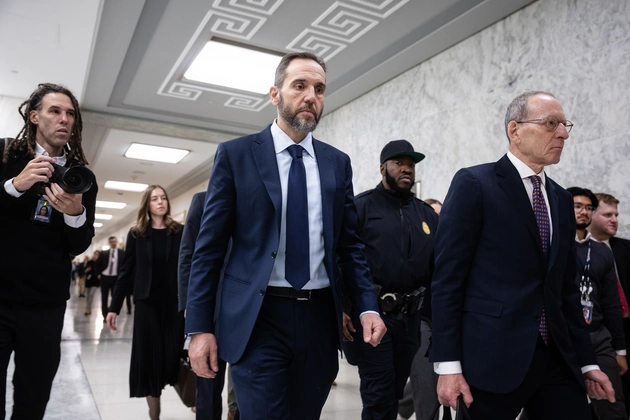
— What you need to know about Jack Smith’s deposition. Jack Smith (shown above before his Congressional testimony on Dec.17, 2025) wanted his testimony before Congress to be public, and now much of it has finally been released. He was unequivocal: Donald Trump committed multiple prison-level felonies while trying to overturn the 2020 election and stealing top-secret documents, and Smith still thinks he can be successfully prosecuted, along with multiple criminal co-conspirators. He didn’t back down at all in the face of extremely hostile Republican questioning. If a Democrat is elected president in 2028, he or she damn well better make this guy our next Attorney General.
— Geeky Science: Want to know what a longevity expert eats in a day? A group of researchers who specialize in aging, working at the Scripps Research Translational Institute in Southern California, have been following 1,400 adults between 85 and 105 for years and have discovered, to pretty much everyone’s astonishment, that, as The Washington Post noted, “genetics played almost no role in their exceptionally good health and longevity.” While there are several major variables they’ve found — regular easy exercise like walking a mile or two a day, good sleeping habits, family and friend support networks — the biggest one is diet. And the optimal way to eat, they’ve found, is the Mediterranean Diet with its emphasis on daily fresh fruits, fresh vegetables, nuts, seeds, olive oil, and the occasional fatty fish while avoiding red meat, sugar, salt, processed foods, and chemical additives. Not only do these four simple lifestyle changes produce a longer life, they also dramatically increase the odds that quality of life will extend, too, and chronic diseases like diabetes, cancer, and hypertension are less likely to arise. This is spectacularly good news for anybody interested in a longer, healthier, happier life.
Epstein Scandal, Trump Cover-up
 The Independent, Eight Epstein survivors call for Trump to be impeached over handling of file release, Shaheena Uddin, Jan. 2, 2026. After reading heavily-redacted documents which appear to break the law, the survivors of the convicted pedophile, Jeffrey Epstein, are demanding accountability from the president.
Eight Jeffrey Epstein survivors are calling for the impeachment of Donald Trump, as well as demanding an investigation into Attorney General Pam Bondi and FBI boss Kash Patel, over the government’s handling of the Epstein files release.
Since the Epstein files were released on 19 December, survivors of the convicted pedophile have been critical of the heavy redactions of the documents.
One of the survivors, Haley Robson, has spoken out publicly in an exclusive interview to reporter Sabah Choudhry from Channel 5 News in the UK.
She called Trump’s actions “illegal” after some files were still withheld despite the December 19th deadline, demanding the full release of the documents.
Robson said: “It’s important we push for impeachment of President Trump after 20-plus years of trying to find a resolution with our abuser and enablers.”An email discussing Jeffrey Epstein's private jet flight records mentioned Donald Trump in this image released by the Department of Justice in Washington, D.C, US on December 23, 2025An email discussing Jeffrey Epstein's private jet flight records mentioned Donald Trump in this image released by the Department of Justice in Washington, D.C, US on December 23, 2025 (DOJ
Robson said she was a Trump voter and supporter of the GOP, but has now since retracted her support - “I retract all support for Donald Trump, the Attorney General, and the head of the FBI that were involved in breaking the law that this administration put into law, which is releasing all the Epstein files. I would like to see No. 47 impeached.”
During the 2024 presidential campaign, Trump promised to release the files. Still, he has since done a U-turn, claiming that the documents are a distraction from his own party’s achievements. Trump said, “What this whole thing is with Epstein is a way of trying to deflect from the tremendous success that the Republican party has,” Trump said in December.
Robson added, “Trump campaigned with promises of transparency, specifically regarding the Epstein files. I believed in that and in him. He lied to us.”
“I watched Pam Bondi and Patel’s congressional hearing on TV…They both lied and said there was no credible evidence. It’s simply false. All the survivors including our attorneys have given loads of important supporting evidence and proof.”
“In addition, Pam Bondi said she had them on her desk, another lie. Not one of them can be trusted.”Ghislaine Maxwell and Donald Trump are shown in this image released by the Department of Justice in Washington, D.C., U.S., on December 23, 2025Ghislaine Maxwell and Donald Trump are shown in this image released by the Department of Justice in Washington, D.C., U.S., on December 23, 2025 (DOJ)
“Accountability is holding the head of our FBI and our attorney general in contempt and leading an open investigation into both,” Robson also said.
She reiterated: “There’s no room in society for the destruction of humanity through sexual violence. Our mothers our sisters, our children are off limits. They are our future, without children, there’s no future.”
Another anonymous survivor told 5 News: “It’s truly disheartening to see Kash Patel and Pam Bondi fall short in their roles at the Department of Justice. As public servants, they’re supposed to protect and serve the people, but their failures—like fabricating documents and mishandling sensitive information—have let us all down.”
“It’s important to remember that survivors are the true heroes in this fight for justice. We, the survivors, deserve transparency and honesty, not misleading actions. It’s a heavy disappointment that these officials have let us down, and it’s clear that for trust to be restored, they need to step aside. The American people deserve leaders who truly prioritize justice and transparency.”
This comes after Andrew Mountbatten-Windsor and Trump have been called into question over their connection to Epstein.
U.S. Tariffs, Inflation, Economy, Jobs
New York Times, Why Haven’t Trump’s Tariffs Had a Bigger Impact? Ana Swanson, Jan. 3, 2026. Steep import taxes have raised prices and affected U.S. businesses, but not quite as much as expected. A new report offers some reasons.
President Trump raised the taxes that the United States charges on imports last year to levels not seen in a century.
Prices of goods have increased as a result, and businesses that depend on imported products and supplies have struggled, with some closing their doors. Still, the effects have not been felt as strongly as some experts predicted after early April when Mr. Trump announced double-digit tariffs on imports from countries worldwide.
A new working paper from economists at Harvard and the University of Chicago helps explain why. It shows that the tariff rate importers have paid is significantly lower than the tariff figures that Mr. Trump announced. The reasons include exemptions for certain countries and industries, rates that were lowered for some goods by the time they arrived in the U.S. and evasion of the rules by some companies.
By analyzing the government’s tariff revenue and the value of imports, the economists concluded that the actual U.S. tariff rate was 14.1 percent at the end of September.
The figure is about half the tariff rate that the administration had officially announced. The average trade-weighted tariff rate for the United States was nominally 27.4 percent in September, the authors estimated, down from a peak of 32.8 percent in April.
“The actual tariffs are much lower than what were announced, and that is one of the reasons why the effects have not been as big as feared,” said Gita Gopinath, a Harvard economist and former first deputy managing director of the International Monetary Fund.
One factor was an exemption for products that were on boats en route to the United States when tariffs were announced. Shipping goods by ocean to U.S. ports often takes weeks, meaning the tariffs that businesses paid rose more slowly than what Mr. Trump announced throughout the year.
The exemptions for products and countries included semiconductors and some products containing them, a move widely seen as a favor to tech executives. Though officials said they would announce more tariffs on chips and electronics, those have not come.
As a result, companies paid an actual tariff rate of 9 percent on chips brought into the United States, the authors calculated, far below the tariff level for other commodities. And exports from places that make a lot of semiconductors, like Taiwan, faced a far lower actual rate (8 percent) than the official one (28 percent).
Canada and Mexico also received significant exemptions from the nominally high tariffs that Mr. Trump put on them last year. Many goods that are mostly made in North America qualify for zero tariffs under the U.S.-Mexico-Canada Agreement, which Mr. Trump signed in his first term.
Because U.S. tariffs were low overall in the past, many companies had not bothered to declare that their goods were compliant with the trade pact when filing customs forms. But in 2025, roughly 90 percent of goods coming from Canada and Mexico were declared to be compliant, up from less than 50 percent the previous year.
Tariff evasion has also reduced the actual tariff rate that companies pay. Companies can pursue a variety of strategies, many of them illegal, to alter the information on customs forms about a product’s content, value or origin and pay a lower tariff than they are supposed to.
As concerns about affordability grow, the Trump administration may offer more exemptions and delays to planned tariffs. On Wednesday, Mr. Trump issued an executive order to delay a planned increase in tariffs on vanities, kitchen cabinets and upholstered furniture for one year. The Commerce Department has also pulled back on a preliminary plan to impose tariffs on some Italian pasta imports, saying some pasta makers had addressed U.S. concerns about unfair practices. A final decision is expected in March.Who pays the tariff?
This phenomenon does not mean that tariffs don’t burden U.S. companies and consumers. The researchers demonstrated that Americans were bearing the cost of Mr. Trump’s tariffs, in contrast to what he and his advisers have claimed.
U.S. Media, Culture Wars, Education, High-Tech
The Independent, Private jets, armed security and ‘Bari pitches’ including jet-skiing with DJ Khaled: Inside Weiss’ chaotic ‘CBS Evening News’ reboot, Justin Baragona, Jan. 3, 2026. The new CBS News editor-in-chief has chartered private flights for her armed security detail, made last-minute logistical changes and fired off ‘Bari Pitches.’ Weiss is once again accused of creating behind-the-scenes turmoil with her decision-making ahead of CBS Evening News’ latest reboot.
As part of a promotional rollout ahead of taking up the legendary CBS Evening News anchor chair, Tony Dokoupil posted a video message this week where he claimed that legacy media has ignored the views of the “average American.”
Meanwhile, CBS News’ editor-in-chief Bari Weiss is scoping out a private jet and a troop of armed guards to facilitate her participation in a multi-million dollar tour of the country.
The co-host of CBS Mornings since 2019, Dokoupil was officially named the new face of CBS Evening News last month, replacing the short-lived co-anchor team of John Dickerson and Maurice DuBois. His tenure is set to begin Monday. Dokoupil’s promotion came after Weiss failed to poach a big name from another network to headline the ratings-challenged nightly news program.
In an effort to make a splash and gain some publicity for his debut, the network is sending Dokoupil out on a 10-city “Live From America” cross-country kickoff tour during his first two weeks in the chair. Throughout his swing through the nation, CBS Evening News will broadcast from cities such as Miami, Dallas, Detroit, Cincinnati before wrapping things up in Pittsburgh.
According to three sources with knowledge of the matter, Weiss is planning on chartering a private plane to fly to each location for the “Live From America” tour this month. Besides taking Dokoupil and CBS Evening News executive producer Kim Harvey on the flights, Weiss’ personal security detail of five armed bodyguards will also be on board.
The increased involvement from Weiss on the CBS Evening News reboot in recent days has raised eyebrows over her desire to be on location for each telecast.Sources told The Independent that Bari Weiss is planning to charter private flights to fly her, Tony Dokoupil and her security detail to CBS Evening News’ “Live From America” tourSources told The Independent that Bari Weiss is planning to charter private flights to fly her, Tony Dokoupil and her security detail to CBS Evening News’ “Live From America” tour (Getty)
That potential additional expense comes after the news network laid off roughly 100 employees and is preparing for more crippling cost cuts from owner David Ellison and Paramount. It also seems to fly in the face of Dokoupil’s anti-elite mission statement for the show, according to sources who spoke to The Independent.
“Nothing says ‘meeting Americans where they are’ by flying around the country on a private jet costing millions of dollars,” one network staffer said.
“And if her security detail is such a huge concern, why is she going? She could watch from the control room or on an actual TV like everyone else,” the source added. “Instead CBS News has to foot the bill for her five security guards, private jet, and more guards with heavy weapons. Does she not understand how much journalism could be made with the money we’re instead spending on perks for her?”
As Weiss has continued to propose last-minute changes to the logistics for the “Live From America” tour for the show, which has included her own pitches and demands for location changes, staffers on the show have grown increasingly concerned that the relaunch will be a “car crash.” The plummeting morale on the show, according to sources, has landed at the feet of Harvey.
“She is a yes person that is not just drinking the Bari Kool-Aid, but like injecting it in her veins, because that's how she survives,” one network insider noted.
The potential booking of expensive charters for the 10-day tour of American cities - which sources said could cost as much as $2 million in total - comes as Weiss has caused behind-the-scenes turmoil at the show with last-minute logistical changes for the tour. This has included requests to switch some of the outdoor locations to indoors for her own personal safety.
This latest flareup within CBS News comes less than two weeks after Weiss came under fire for the 11th-hour spike of a 60 Minutes story that was critical of President Donald Trump’s administration, sparking a possible “revolt” among the show’s staff.
Since her arrival at the network three months ago, the self-described “radical centrist” - with minimal broadcast news experience - Weiss has drawn criticism from staff and media observers alike over many of her editorial decisions, which many have claimed is part of the new corporate ownership’s efforts to push CBS News in a “MAGA-friendly” direction.
According to CBS News insiders, who spoke to The Independent, Weiss – who is currently planning to be on location for each broadcast of the CBS Evening News relaunch tour – has requested additional security for the telecasts, including heavily-armed guards.
A veteran media executive explained to The Independent that it would not appear to be uncommon for a broadcast network to charter a private plane for one of its primetime news anchors and upper-end management to fly to a news broadcast, especially as part of a promotional tour that involves a number of different cities across the country in a short period of time. In fact, many news organizations have rules in place dictating which talent and leadership figures are entitled to chartered flights or first-class accommodations.
At the same time, production staffers on the show have had to scramble over the holidays to book different locations for the 10-city tour while network producers are being tasked with hand-selecting audience members to be in attendance.
Amid the rush to finalize the new logistics, sources said, Weiss came back on Christmas Eve and “blew it up” by adding specific locations for individual cities that she wanted to film at – which apparently includes places that aren’t fully associated with the areas they are hoping to represent. According to network sources, some of the locations Weiss has requested include restaurants that appeal to tourists and upscale private schools.
Representatives for CBS News and Weiss did not respond to multiple requests for comment.
Network staffers told The Independent that “morale is really bad” at CBS Evening News and was made worse by a production meeting on December 30, where Harvey made it clear to the show’s staff that “this is all about Tony and Bari.”
“This really feels like the end of CBS Evening News,” one network staffer said. ”Honestly, it’s so depressing.”
On a CBS Evening News production call sheet, shared with The Independent, the segments pitched for Dokoupil’s first stop in Miami this Monday, January 5, include a discussion with Florida Gov. Ron DeSantis on the state’s school phone ban, a piece on the “loss of trust” in the media, and why Miami’s Venezuelan population has turned on Trump amid the administration’s mass deportations.
The show is also planning on light and fun segments known as “bon bons” that will be spotlighted on social media. In a dizzying array of options, Dokoupil will either play soccer with Inter Miami CF co-owner David Beckham; ask locals if they call it the “Gulf of America” or “Gulf of Mexico,” after the Trump administration’s name change; party at one of the city’s exclusive nightclubs (either Club Space or LIV) or join a boat party that will see the anchor jet skiing with rapper DJ Khaled.
The editorial plans for Miami and the other cities are still in flux and certain planned segments could still change or be removed altogether.
The production sheet also lists planned segments for Minneapolis on January 13, and specifically outlines “Bari Pitches,” which would spotlight “characters” such as Minneapolis Mayor Jacob Frey, former Democratic Sen. Al Franken and ex-Minnesota Gov. Jesse Ventura, as well as stories on health care and the Mayo Clinic.
As of publication, the “Minnesota episode”/Jan. 13 show will have a lead segment on the “Minnesota Fraud Scandal,” which centers on the yearslong Justice Department investigation of multimillion dollar fraud schemes targeting federal assistance programs. The story has blown up in conservative media in recent days due to the number of Somali Americans charged in the probe and a right-wing YouTuber’s viral video of daycare centers that made unverified claims of fraud.
It is also planned to ask Frey “why doesn’t rent control work,” referring to the Democratic mayor’s longstanding opposition to rent control policies while twin city St. Paul has enacted a rent stabilization ordinance, and a segment on political violence focusing on the recent assassinations of Minnesota House Speaker Melissa Hortman and her husband Mark Hortman.
In a January 14 broadcast from Chicago, according to the call sheet, the main focus is planned to be on a “Bari Pitch” to bring on former President Barack Obama and former Chicago Mayor Rahm Emanuel on to discuss “how the Dems lost touch and how to regain the working class trust.”
The other story ideas include Dokoupil riding the L Train with Illinois Gov. JB Pritzker and asking him about the racial life expectancy gap in Chicago; a piece on crime rates falling in the Second City “but do residents feel safer,” and another “Bari Pitch” on the city’s “abysmal schools.”
Network staffers have also questioned the marketing and promotional strategy ahead of Dokoupil’s Monday debut. This past Wednesday, the network posted a video on its social media accounts of the anchor approaching random travelers at Grand Central Station in New York and asking if they knew how to pronounce his last name.
“Quite the humiliating ritual,” one CBS News employee said. “This is just embarrassing. Bari went from wanting Anderson Cooper to sending her handpicked Evening News anchor -- who has no name recognition -- to do man-on-the-street interviews about the fact that he has no name recognition? Make it make sense.”
U.S. Crime, Courts, Law, Justice, Immigration
WhoWhatWhy, Investigation: #Fabricated Outrage, Sean Ogden, Jan.3, 2026. The manufactured Minnesota outrage campaign did not arise organically. It was amplified across social media platforms owned, funded, and heavily influenced by right-wing power brokers and figures known to be extreme Zionists, turning a years-old, already-prosecuted case into a politically motivated media event.
This entire debacle was admittedly directed by Republican Minnesota House Speaker Lisa Demuth, orchestrated by anti-Muslim registered lobbyist David Hoch, and amplified by right-wing YouTuber and charlatan journalist Nick Shirley. This coordinated action caused real-world crimes by portraying even the legitimate facilities as fraudulent, filming during nonoperating hours, at inactive backdoors, or when denied uncredentialed entry.
The goal was apparently to use this previously exposed corruption to spark new political controversy and federal probes to boost Demuth’s gubernatorial campaign, not uncover wrongdoing.
Ironically, Paul and Brooke Shirley (Nick Shirley’s parents), along with Brooke’s sister Amy Hall, were defendants in a 2018 Utah bankruptcy case marked by fraud allegations, a dispute that lingered for years before being jointly dismissed in 2021.
The Minnesota fraud originated years earlier with Feeding Our Future and its CEO, Aimee Bock, an American-born, white US citizen, not a person of Somali descent.
The situation is further tainted by the fact that the Netanyahu administration has used operations like the “Esther Project,” run by Bridge Partners in Washington, DC, to pay US influencers — exactly like Nick Shirley — $7,000 per post, to influence Americans for Israel’s benefit. This is a federal crime if they haven’t registered under the Foreign Agents Registration Act (FARA).
Could demonizing Somalis in the US possibly align with Israeli intelligence objectives?
 Israel recently became the only country to recognize Somaliland, a self-declared state separate from Somalia, after it reportedly agreed to host an Israeli military base, join the Abraham Accords, and to take Palestinians from the Gaza genocide.
This narrative casts Somalis negatively while effectively creating Somaliland as a cooperative partner, shaping US perceptions of Israel’s regional goals.
Somaliland sits on the Gulf of Aden, one of the world’s most important shipping routes, giving Israel a strategic military foothold and a new regional ally and a place to send displaced Palestinians.
On top of this, in the US two far larger criminal conspiracies, each dwarfing the Minnesota fraud by an order of magnitude, are also being ignored amid all this GOP fraud frenzy.
Trump’s COVID-19 relief programs saw over $280 billion (that’s billion with a ‘B’) siphoned through fraudulent claims.
 US Senator Rick Scott (R-FL), left, led the massive hospital chain Columbia/HCA as CEO when the company engaged in the largest fraud in US history. Under Scott, the company systematically overbilled the government, inflated diagnoses, charged for unnecessary procedures, and misclassified marketing costs as educational expenses.
Scott invoked the Fifth Amendment 75 times during a legal deposition to avoid self-incrimination, abruptly resigned from Columbia/HCA in July 1997 just days after federal raids, and still walked away with $10 million in cash and $300 million in stock.
Despite all this, he continues to falsely claim political targeting, even though the case was settled under President George W. Bush in 2003, not Clinton.
Columbia/HCA pleaded guilty to 14 felonies but paid just $1.7 billion — a fraction of what was stolen. Despite presiding over this record-breaking fraud, Scott absurdly became Florida governor twice and now even serves as the state’s US senator, feigning ignorance of his crimes.
The contrast is stark. Respectively small, fully investigated state-level fraud in Minnesota is recycled through viral videos and amplified by GOP operatives and illegal foreign agents on social media to manufacture outrage. Meanwhile, massive federal fraud under Trump and committed by Scott is downplayed or ignored.
This is not about accountability or fraud. It’s selective outrage designed to manipulate narratives, advance partisan agendas, and shield powerful actors from scrutiny.
Real accountability happens in courtrooms, with indictments, convictions, and penalties, not through manufactured media spectacles filmed at closed buildings while far larger crimes go unpunished.
Emptywheel, Analysis, Trump's Selective Drug Enforcement in Latin America, Emptywheel (Marcy Wheeler, right), Jan. 3, 2026. Given his pardon of Juan Orlando Hernández, Trump's kidnapping of Nicolás Maduro cannot be regarded as a legitimate fight against drug trafficking. Rather, it's about getting a piece of the action.
Donald Trump conducted a military invasion of Venezuela purportedly in service of arresting Nicolás Maduro to stand trial in the US.
The indictment against him (I assume it has been superseded since he was added in March of 2020) alleges that he personally was involved in negotiating FARC-sourced cocaine shipments.
5. While pursuing these and other objectives, NICOLÁS MADURO MOROS, the defendant, negotiated multi-ton shipments of FARC-produced cocaine; directed that the Cártel the Los Soles provide military-grade weapons to the FARC; coordinated foreign affairs with Honduras and other countries to facilitate large-scale drug trafficking; and solicited assistance from FARC leadership in training an unsanctioned militia group that functioned, in essence, as an armed forces unit for the Cártel de Los Soles.
Maduro’s former military intelligence head, Hugo Armando Carvajal Barrios, pled guilty in June. There’s no sign, at least not public, that Carvajal Barrios is cooperating (they’re holding a hearing this month before Judge Alvin Hellerstein because he claims not to have pled to the individual elements of the offense from which SDNY crafted an onerous sentence).
Meanwhile, I have already pointed to this excellent Bloomberg piece on the similar efforts SDNY made to bring former. President of Honduras Juan Orlando Hernández to justice. It describes how JOH’s family pitched Trump on a pardon in part by promising that with his pardon (and the return of his party to power, as has happened), Honduras would return the autonomous zones Trump allies like Peter Thiel have championed.
By July, the family and their lawyers had written an 18-page draft outlining some of the ways they might appeal to Trump’s pardon czar, Alice Marie Johnson. From Trump, they’d learned the language of modern political grievance: “Just like President Trump, President Hernández is a victim of lawfare, waged by the Biden administration.” If pardoned, Hernández would return to Honduras and dedicate himself to building a political movement in Latin America aligned with Trump’s foreign policy ambitions. The memo noted that Hondurans would go to the polls on Nov. 30 to elect a new president, and it suggested a timely pardon could energize conservatives in a region threatened by “radical left” regimes, including China and Venezuela. (Johnson didn’t respond to a request for comment.)
But it wasn’t only Trump who could benefit from a pardon. Castro, Hernández’s successor, repealed the legal framework that had established the country’s semi-autonomous economic development zones, including Próspera. That led the Honduran supreme court to declare those zones unconstitutional, triggering still-unresolved lawsuits from their investors. (Próspera continues to operate.) The memo asserted that Castro’s administration “has effectively stolen billions” from the financial backers of Próspera. The memo named Peter Thiel (“a longtime collaborator of Vice President J.D. Vance”) and Marc Andreessen (“who also donated millions to ensure that Trump’s policy goals could be achieved”).
A timely pardon—especially one delivered before the election—might remedy all that. It could also give Trump one more regional ally against the “narco-dicatorship” in Venezuela, where the Trump administration in September would begin launching military strikes against boats suspected of carrying drugs.
This kidnapping of Maduro is not about drug trafficking, though the indictment against him is real.
It’s about getting a piece of the action.
Update: Here’s the final paragraphs of a 1989 OLC opinion that then- OLC head and future AG when Maduro was first indicted Bill Barr signed to rationalize the Panama invasion, on which this was surely modeled.
IV. Conclusion This Office concludes that at the direction of the President or the Attorney General the FBI may use its statutory authority under 28 U.S.C. § 533(1) and 18 U.S.C. § 3052 to investigate and arrest individuals for violations of applicable United States law, even if those actions depart from customary international law or unexecuted treaties. Moreover, we conclude that the President, acting through the Attorney General, has inherent constitutional authority to deploy the FBI to investigate and arrest individuals for violations of United States law, even if those actions contravene international law. Finally, we conclude that an arrest that is inconsistent with international or foreign law does not violate the Fourth Amendment.
35 There is some doubt whether the Fourth Amendment standard includes a requirement of domestic law authority to arrest. The 1980 Opinion concluded that it does 4B Op O L C at 553-54. That Opinion relied principally on United States v. D i Re, 332 U S 581, 589-92 (1948), a case involving exclusion of evidence obtained incident to an unauthorized arrest by federal officials. But it is not clear that Di Re was a Fourth Amendment decision, and it is also unclear that the-Constitution requires statutory or other authonty to arrest. See 1 Wayne R. LaFave, Search- and Seizure § 1 5(b) at 107 (2d ed. 1987) (concluding that D i Re is not a Fourth Amendment case but “simply an instance of the court utilizing its supervisory power to exclude from a federal prosecution evidence obtained pursuant to an illegal but constitutional federal arrest”). Cf George E Dix, Fourth Amendment Federalism: The Potential Requirement of State Law Authorization for Law Enforcement Activity, 14 Am J. Crim L. 1, 10 (1987) ( “There is considerable doubt. as to whether the Court has . . committed itself to the position that the fourth amendment reasonableness of an arrest depends upon the existence of state Jaw and the arrest’s validity under that law.”). In any event, as we have previously stated, we believe that authority exists for the Executive to authorize the FBI to make arrests in foreign countnes 3r’As to an arrest in a non-public place, there are circumstances in which an arrest warrant is required. Payton v New York., 445 U S 573, 576 (1980). While presumably an arrest warrant often could be obtained, there are limitations to the extraterritonal junsdiction of the magistrate’s writ See 18 U.S C §§ 3041-3042 Commentators have questioned, however, whether the warrant requirements of Payton and other cases should apply overseas. See Saltzburg, supra, 20 Va J Int’l L. at 762; Stephan, supra, 20 Va. J Int’l L at 792 n.44 37 We note that fear that our agents will be extradited for violations of foreign law during an enforcement operation authonzed by the President or the Attorney General is not a warranted concern The Secretary of State always has discretion to refuse to extradite, even if the offense is covered by an extradition treaty entered into with another country See 18 U S C. § 3186 (Secretary of State “may” extradite the person committed under section 3184); Stndona v Grant, 619 F.2d 167 (2d Cir 1980), Wacker v. Bisson, 348 F.2d 602, 606 (5th Cir 1965). 183
WILLIAM P. BARR
Assistant Attorney General
Office of Legal Counsel
New York Times, 2 Navy Service Members Accused of Entering Sham Marriages With Chinese Nationals, Pooja Salhotra, Jan. 3, 2026 (print ed.). Federal prosecutors say two female service members are facing fraud charges after having accepted thousands of dollars for the marriages.
Two U.S. Navy service members are facing federal fraud charges after accepting thousands of dollars as payment for entering sham marriages with Chinese immigrants, according to federal prosecutors in Florida.
Prosecutors accused Morgan Chambers and Jacinth Bailey, both female members of the Navy, of participating in a scheme in which American citizens would marry Chinese nationals to help them obtain green cards. According to the charging documents, filed on Dec. 23 in U.S. District Court for the Middle District of Florida, the plot dated back to September 2024 and involved several other unnamed individuals whom the prosecutors referred to as “conspirators.”
Ms. Chambers and Ms. Bailey are charged with conspiracy to commit marriage fraud, which carries a maximum sentence of five years. Neither has appeared before a judge nor entered a plea. It was not immediately clear which Navy base they belonged to or what titles they held.
They both waived their right to be formally indicted, a move sometimes used to expedite the legal process and obtain a more favorable plea. Lawyers for Ms. Chambers and Ms. Bailey declined to comment on the case on Friday.
The court filing for Ms. Chambers said she was recruited in September 2024 to enter a sham marriage. She was offered $35,000, including $10,000 in upfront cash, another $20,000 when the Chinese national whom she married obtained a green card and then $5,000 when the couple’s divorce was settled. Ms. Bailey was recruited around the same time to enter a sham marriage for a payment of $45,000 in total, the court filing said.
Last year, two men with ties to the Navy were charged in a fraudulent marriage scheme that includes dates and details that matched those in the plot that Ms. Chambers and Ms. Bailey are accused of joining.
Raymond Zumba, a Navy reservist, was arrested in February on suspicion of bribing a public official to get military identification cards that could allow Chinese immigrants onto a military base. He pleaded guilty to the charge in July. Mr. Zumba, who married a Chinese national, was later accused of recruiting Americans to marry Chinese immigrants for payment.
Brinio Urena, a former U.S. Navy recruiter, was charged in August with entering a sham marriage and recruiting a service member in the scheme. Mr. Urena also pleaded guilty last year. Neither Mr. Zumba nor Mr. Urena was named in the charging documents for Ms. Chambers and Ms. Bailey.
The men, who were also charged in the U.S. District Court for the Middle District of Florida, are scheduled to appear before judges for sentencing this month.
On Oct. 4, 2024, Ms. Chambers traveled to Las Vegas, where she met her nominal husband for the first time, married him and then accepted $10,000 in cash in a restaurant bathroom, the charging documents said. The same day, Mr. Zumba traveled to Las Vegas to join Mr. Urena and a service member identified in court documents as “Conspirator D” for a sham wedding.
Ms. Bailey was recruited by an unnamed conspirator and flew to New York City on Jan. 1, 2025, where she met her groom. She married the Chinese man the next day in a Connecticut courthouse, prosecutors said.
To make the marriages seem legitimate, the prosecutors said, the newlyweds would take photos together to be used for the immigration application.
U.S. Politics, Governance

Karen Budd-Falen, the No. 3 at the Interior Department, didn’t disclose a $3.5 million water-rights contract between her husband and the developers of a Nevada mine, records show. (AP 2017 file photo).
New York Times, The Trump Administration Approved a Big Lithium Mine. A Top Official’s Husband Profited, Lisa Friedman, Jan. 3, 2026.
A high-ranking official in the Interior Department is drawing scrutiny from ethics experts because she failed to disclose her family’s financial interest in the nation’s largest lithium mine that had been approved by her agency, according to state and federal records.
In 2018 Frank Falen sold water from a family ranch in northern Nevada to Lithium Nevada Corp., a subsidiary of Lithium Americas, for $3.5 million. The company was planning a $2.2 billion lithium mine nearby called Thacker Pass, and lithium mining requires significant amounts of water.
The mine needed a permit from the Interior Department, where Mr. Falen’s wife, Karen Budd-Falen, worked as the deputy solicitor responsible for wildlife from 2018 until 2021. She returned to the agency last year and is now the associate deputy secretary, the third highest-ranking position.
Mr. Falen’s sale of his water rights also depended on the mine getting a permit from the Interior Department. Without it, Lithium Nevada Corp. could have terminated its deal with him.
In November 2019, about two years before the agency approved the mine, Ms. Budd-Falen met with Lithium Americas executives over lunch in the cafeteria at the Interior Department.
Tim Crowley, a spokesman for Lithium Americas, said executives did not discuss the mine or pending environmental reviews with Ms. Budd-Falen. “We haven’t worked directly with Karen Budd-Falen related to Lithium Americas,” he said in an email, “nor have we ever met with her in a formal capacity regarding our project.”
Ms. Budd-Falen did not respond to questions for this article. Her husband, who was not at the lunch, characterized it in a telephone interview as a social occasion, not a work meeting. He said his wife knew few details about the water contract and may not have known that the company was seeking approval from the Interior Department.
“They just happened to mention to me they were going to D.C., and I was like ‘Well, my wife is back there.’” Mr. Falen said, about executives from Lithium America. “It was my fault because I just said, ‘Yeah, you should stop by and say hi to my wife.’” He said the lunch was the “only time Karen has ever talked to anybody from Nevada Lithium.”
Just before President Trump’s first term ended, the Interior Department approved Thacker Pass, using a “fast track” process to bypass typically lengthy environmental reviews.
New York Times, Mamdani Acts on Vow to Protect Renters With Move Against a Big Landlord, Emma Goldberg, Jan. 3, 2026. Mayor Zohran Mamdani said New York City would intervene in the Pinnacle Group’s bankruptcy case. Tenants have long complained about living conditions in the company’s properties.
 As Mayor Zohran Mamdani, right, told the crowd at his inauguration ceremony outside City Hall about his ambitious plans to make life better for renters, Nadege Romulus was miles away in Brooklyn feeling, as she does every day, frustrated with her cracked-tiles, pipes-rusting apartment.
Ms. Romulus, 48, lives in a Flatbush studio with two young adult sons, a teenage daughter and the children’s father. Their rent-stabilized unit, which costs $965 a month, is owned by the Pinnacle Group, which declared bankruptcy in May after years of being dogged by complaints of disrepair and poor maintenance.
Ms. Romulus said she cries every day about neglect in her home. A pipe in the bathroom is rusting. The kitchen and bathroom floors are cracked. Recently, she said, a chunk of ceiling plaster fell onto her daughter while she was lying in a top bunk covered in stuffed animals.
“They’re always calling me for rent money, and I say, ‘Y’all have a ceiling about to fall on my daughter’s head,” Ms. Romulus said. “I feel like this place is not a home anymore.”ImageA Black woman with close-cropped hair and glasses who is wearing a dark tank-top sits in a chair and leans against another piece of furniture.Nadege Romulus, whose family lives in a studio apartment in the building, accused Pinnacle of neglecting the property. “I feel like this place is not a home anymore,” she said. Credit...Dave Sanders for The New York Times
On Thursday, not long after Mr. Mamdani delivered his inauguration speech, he visited Ms. Romulus’s building, at 85 Clarkson Avenue, and announced that the city would dive into the legal battle between Pinnacle and its tenants at that property and others. The landlord has racked up more than 5,000 violations and 14,000 complaints in 83 buildings, the mayor’s office said. Now, Pinnacle has put more than 5,000 of its rent-stabilized units up for auction as part of the bankruptcy case, which the city said it would intervene in to protect its interests and the tenants’.
The bankruptcy and auction put tenants in a risky position, uncertain who the new owner will be and whether that owner will deal with the decrepitude.
The auction is set for Thursday, and the deadline for objections to the winning bid is Jan. 11. Summit Properties USA has already bid more than $400 million for the units. Cea Weaver, the director of the newly revived Mayor’s Office to Protect Tenants, said the city planned to ensure that whoever buys Pinnacle’s portfolio treats the needed repairs as a priority and complies with rent-stabilization laws.
The units are “in a precarious situation,” said Ms. Weaver, a tenant organizer who is a member of Mr. Mamdani’s inner circle.
The Pinnacle bankruptcy, detailed in legal documents, offers a window into some of the complex and delicate trade-offs that Mr. Mamdani will encounter as he tries to fulfill his promise of making living in New York more affordable, especially by protecting renters while striving to increase the city’s housing stock.
Pinnacle’s owners argue that they have been squeezed by the rising cost of maintenance, utilities and interest-rate adjustments while being hamstrung in making those costs up from rent because of rent-stabilization laws, especially changes adopted in 2019. Pinnacle reported having “no cash on hand” when it filed for bankruptcy in May.
But court documents suggest Pinnacle has not been transparent about its finances during the bankruptcy, including by possibly prioritizing spending on administrative and legal fees over addressing problems at its properties.
“Debtors do not detail the basis or rationale for the budget, nor the necessity or benefit or reasonableness of their proposed expenditure,” wrote Judge David S. Jones, of the Southern District of New York. “Both experts observed that debtors’ reported payroll expenses are unusually high.”
Ms. Weaver said it was unfair for Pinnacle to blame rent-stabilization laws for the disrepair.
“Pinnacle has a long track record — far before 2019 — of egregiously treating renters in their buildings,” she said, adding that the company’s business model “relied on pushing people out of their homes and rent hikes that were untenable when you consider the affordability challenges that our city has.”
First News Reports Of Venezuelan Invasion
New York Times, Live Updates: U.S. Captures Venezuelan Leader, Anatoly Kurmanaev and Tyler Pager, Jan. 3, 2025. Trump Says President Trump announced that U.S. forces had carried out “a large scale strike against Venezuela” and were flying President Nicolás Maduro and his wife out of the country. The Trump administration had been building pressure on Mr. Maduro for months.
President Trump said on Saturday that the United States had captured the Venezuelan president, Nicolás Maduro, right, and was flying him out of Venezuela, in what would be a stunning culmination to a monthslong campaign by Mr. Trump’s administration to oust the authoritarian leader.
Mr. Trump made the announcement on Truth Social, his social media platform, and said that the United States had carried out “a large scale strike against Venezuela” in an operation that was conducted “in conjunction with U.S. law enforcement.” He said that Mr. Maduro’s wife had also been captured.
In a brief phone interview with The New York Times after the announcement, Mr. Trump celebrated the success of the mission to capture the Venezuelan president. “A lot of good planning and lot of great, great troops and great people,” he said. “It was a brilliant operation, actually.”
When asked if he had sought congressional authority for the operation or what is next for Venezuela, Mr. Trump said he would address those matters during a news conference at 11 a.m. at Mar-a-Lago, his private club and residence in Palm Beach, Fla.
Venezuela’s vice president, Delcy Rodríguez, speaking on a state-run television station after Mr. Trump’s announcement, said that Mr. Maduro’s location was unknown and asked Mr. Trump for proof of life.
Earlier on Saturday, the government of Venezuela accused the United States of carrying out military attacks in the capital, Caracas, and other parts of the country after large explosions were reported at a military base in the city.
The Venezuelan government declared a state of emergency in response to the attacks and said they had occurred in Caracas and in the states of Miranda, Aragua and La Guaira, according to a statement from the Venezuelan communications ministry.
Venezuela “rejects, repudiates and denounces” U.S. military aggression, the statement said. It also called on “on all social and political forces in the country to activate mobilization plans and repudiate this imperialist attack.”
For months, Mr. Trump issued threats, warnings and accusations of drug smuggling against Mr. Maduro, whom the State Department has branded the head of a “narco-terrorist” state.
U.S. officials have called Mr. Maduro, a self-described socialist who has led Venezuela since 2013, an illegitimate leader and have accused him of controlling criminal groups tied to drug trafficking, charges he denies.
Since late August, the Pentagon has amassed troops, aircraft and warships in the Caribbean. The U.S. military has attacked many small vessels that U.S. officials maintained were smuggling drugs, killing at least 115 people. And the C.I.A. conducted a drone strike on a port facility in Venezuela last month, according to people briefed on the operation.
A broad range of experts on the use of lethal force have said that the strikes on small vessels amount to illegal extrajudicial killings, but the Trump administration has asserted they are consistent with the laws of war because the United States is engaged in an armed conflict with drug cartels.
In recent weeks, the United States has also carried out a campaign against tankers carrying Venezuelan crude, throwing the country’s oil industry into disarray and jeopardizing the government’s main source of revenue.
The United States seized one sanctioned tanker carrying oil as it sailed from Venezuela toward Asia. It intercepted another oil vessel that was not under U.S. sanctions. And the U.S. Coast Guard tried to board a third tanker as it was on the way to Venezuela to pick up cargo.
Here is what else to know:
Jan. 2
Johnny Cash with "Ragged Old Flag" (Official Audio)
Morning Shots via The Bulwark, Political Opinion: Five Paths for America in 2026, Bill Kristol, Andrew Egger and Jim Swift, Jan. 2, 2026. This could be the year when the tide turns against Trump . . . or drowns liberal democracy. More analysis and predictions below
Well, we made it! We hope 2026 is off to a good start for everyone. We’ve got a nice, modest hope for the year: that it at least it will be better than the last one. Happy Friday.
Donald Trump's Self-Image As Warrior Santa Claus
The Contrarian, Opinion: The Worst Foreign Policy Blunders of 2025, Jennifer Rubin, right, Jan. 2, 2026. And the competition was fierce...
No president has understood less about what makes America great than Donald Trump (shown above at a White House press conference); none has been more ignorant of the post-WWII international framework that allowed America to remain the premier superpower. In systematically weakening alliances, frittering away our moral authority, aligning himself with international dictators, trashing multilateral organizations, hollowing out the State Department and showing himself to be a feckless, corrupt bully, he has weakened America’s standing around the world to a degree no foreign enemy could have achieved. He always puts America Last.
Climate change denial: Withdrawing from the Paris Accords undermined the effort to slow the planet’s destruction and the multifaceted dangers climate change poses to national security (from instability/mass migration to promoting violence to increasing humanitarian disasters). But that was just the start of the Big Oil bonanza. Trump’s termination of government investment in job-creating, innovative industries means we have ceded leadership in key technologies to rivals. Specifically, Trump handed China dominance in the electric car business. This is one of many gifts to our main geopolitical rival. Meanwhile, opening up federal lands to oil drilling, cutting back on gas mileage standards, leading a full-out assault on wind power, and fixating on coal could be a roadmap for climate disaster—but also a recipe to lose prestige, influence, and competitiveness on the world stage.
Israel: Trump gave the rightwing Israeli government a green light to drag out a futile war to destroy Hamas (which is now up and functioning in Gaza) and indulged Prime Minister Benjamin Netanyahu for far too long in his policy of deliberate starvation. That immeasurably damaged Israel’s standing in the world, undermined bipartisan support for Israel, and eroded our standing to question other countries’ human rights records. Meanwhile, we have seen little sign the “peace deal” will move forward. The overhyped strike on Iran did not accomplish the goal of eliminating Iran’s nuclear weapons program, but rather left us with less insight into Iran’s nuclear program and less leverage to block its quest for a nuclear weapon.
Russia: Trump seems to have done everything possible to strengthen Russia’s hand in Ukraine and thereby show the world we are a feckless ally. He compulsively reveals his utter naivete and ignorance about foreign policy; and has blithely damaged the most successful alliance in history (NATO). Putting real estate mogul Steve Witkoff (“ill-informed, credulous, and utterly unfamiliar with the history and character of those he deals with,” as Eliot Cohen describes him) in charge of a Russia-Ukraine deal (among others) makes an acceptable outcome virtually impossible.
Caribbean: An illegal, unauthorized, unnecessary, and morally noxious policy of extrajudicial killings (which are not remotely necessary for cocaine interdiction) combines bad policy with bad politics. Trump seems to be driving us into open-ended war in the Western Hemisphere, where he imagines America can dominate like a 19th century colonial power. (Remember the Maine?) This venture helps advance Trump’s authoritarian project to attain unlimited executive power in violation of our Constitutional system. His “might makes right” thinking mar’s America’s image and leads to interminable conflicts.Subscribed
Tariffs: Tariffs, both an economic and foreign policy disaster, create animosity among centuries old allies, give China new openings (e.g. India), and ignore real national security issues (such as allowing NVIDIA to sell its H200 AI chips to China). It also deprives America of a key soft power tool we can apply selectively to further our national interests. Moreover, tariffs “make it more expensive to meet national defense requirements. …[D]efense companies of all sizes are beginning to report higher costs, from the defense conglomerate RTX to a ball bearing manufacturer in New Hampshire,” the Council on Foreign Relations explains. “Tariffs on steel and aluminum are particularly confounding.” The Supreme Court may save Trump (and the U.S.) from his economic stupidity.
National Security Strategy: As Brian O’Neill (writing for The Contrarian) and countless other experienced national security veterans have said, the NSS is a petulant, incoherent, amateurish non-strategy that reads like a MAGA wish-list of domestic impulses (e.g., White Christian nationalism, anti-trans hysteria, anti-immigrant venom) without grounding in the real world. Lacking even a hint as to how to achieve its twisted aims, it’s precisely what you would expect from a bombastic former Fox News host. Described by The Economist as a “dog’s breakfast” (apologies to our canine loved ones), this document “[s]horn of the enlightened values that have long anchored foreign policy…becomes a naked assertion of power that owes more to the 19th century than the world that America built after the second world war. And that leads to a document riven by contradictions.” All you need to know: Vladimir Putin applauded wildly (he could have written it!), and our allies condemned it.
Corruption: From FIFA to the UAE, foreign organizations and autocracies have proven they know how to manipulate Trump. Give him a phony prize or a shiny plane. Flatter him. And if they reward him financially with crypto purchases or real estate deals, he will be putty in their hands. This mob boss mentality (nice chips deal ‘ya got there, give me a cut and nothing will go wrong) places Trump’s interests ahead of national interests and sullies America’s reputation as model of decent government and fair business practices. To make matters worse, he has stopped enforcing foreign anti-corruption laws and foreign agents registration.
Immigration: From South Korea to Central and South America, our cruel, illogical, and counterproductive mass deportation program has made us an international pariah. Trump has reduced our ability to gain cooperation on immigration (as well as other matters) where we need it. In closing our doors, we have sent scientists and other high-skilled workers back to other countries, to their advantage and our detriment. It amounts to foreign policy and economic self-sabotage.
USAID: Trump blew up a relatively inexpensive program that saves millions of lives, combats terrorism, and keeps malicious state actors out of developing countries. In unilaterally dismantling it, Trump committed the worst “own goal” in American foreign policy history. Moreover, its destruction has already killed hundreds of thousands of people including more than 450,000 children. The competition is stiff, but qualifies as one of Trump’s most morally repugnant moves.
Personnel: If “personnel is policy,” we know why our Defense Department, State Department, and intelligence community come out with one inane decision after another. Under this crew, we lurch from one embarrassing debacle to another, destroying the national security infrastructure and human capital we need to defend ourselves. Far from a “meritocracy,” this is affirmative action for irresponsible, ignorant, and mediocre suck-ups. Who can rely on what comes out of these once respected institutions? It’s hard to image self-respecting professionals wanting to work under Tulsi Gabbard, Marco “Sink into the Couch” Rubio, and the absolute bottom of the barrel, Pete Hegseth.

Shown above, the Watergate office-residential complex in Washington, DC that housed the Democratic National Committee and a related office that was burglarized in 1972 by Republican-linked operatives shown below affiliated with members of the President Nixon's cabinet and 1972 presidential re-election campaign. President Nixon resigned under pressure because of his and others role in leading a cover-up even though historians continue to dispute who ordered the burglary and why.

New York Times, News Analysis: After Watergate, the Presidency Was Tamed. Trump Is Unleashing It, Matthew Purdy, Jan. 2, 2026. In the 1970s, Congress passed a raft of laws to hold the White House accountable. President Trump has decided they don’t apply to him.
A power-hungry president had twisted the government into a tool for his personal political benefit. His aides kept an “enemies list” of opponents to be punished. His cronies ran the Justice Department and he made puppets of other agencies that were meant to be independent. Corporations that wanted favorable treatment from the White House were pressured to make illegal contributions to the president’s political coffers.
As revelations of rot in the Nixon administration tumbled out through the 1970s, Senator Lawton Chiles, Democrat of Florida, captured the alarm of the Watergate era: “Nothing will bring the Republic to its knees so quickly as a bone-deep mistrust of the government by its own people,” he said. “We have seen other democracies fall within our own lifetime. Fall through internal corruption rather than outside invasion.”
The Watergate scandal had convulsed the nation. Coming near the end of the disastrous war in Vietnam, the scandal sent trust in the presidency into a tailspin. The sense of shock and shame prompted an extraordinary period of bipartisan congressional activism to impose checks on the power of the presidency.
Nearly all corners of the government were touched by the reforms, which included new ethical safeguards, strengthened protections for federal workers against political pressure, restrictions on the president’s power to unilaterally declare war. And a succession of attorneys general  established rules to block White House involvement in Justice Department prosecutions.
The aim was not just to excise what one aide to President Richard M. Nixon, right, described as “a cancer,” but to prevent a recurrence. “Watergate reform is not for the past or for the present,” Senator Lowell P. Weicker Jr., a Connecticut Republican, wrote in a 1976 addendum to a Senate report. “Our memories may indeed keep us free today. It is for unborn generations who will never know firsthand how close a democracy came to oligarchy.”
From the opening days of his second term, President Trump took aim at Watergate’s ethical checkpoints as if in a shooting gallery. First, he fired 17 inspectors general, a job established in the Watergate era to ferret out waste, fraud and abuse in government. He also fired the head of the Office of Special Counsel, an independent agency created by legislation in 1978 to protect government whistle-blowers. Then he fired the director of the Office of Government Ethics, created around the same time to guard against financial conflicts of interest by top government officials. And he has used the Justice Department and the F.B.I. as political tools, roles they worked to shed after Watergate.
A strain of conservative legal thinking has been aiming to reassert the president’s powers ever since they were curbed in the post-Watergate era. But while Mr. Trump’s lawyers successfully make the case for expanding presidential authority based on a high-minded Constitutional argument, there is a raw political result. He has removed barriers that might slow his pursuit of a highly personal presidency — punishing opponents and rewarding allies and financial backers while also reaping profits for family businesses that intersect with his powers as president.
Senator Richard Blumenthal, left, a Connecticut Democrat who was a young Senate aide in the 1970s, said “what we never foresaw was a leader who was so totally defiant and shameless.”
“He essentially decimated all the watchdogs that had been established post-Watergate,” Mr. Blumenthal said of Mr. Trump.
John Yoo, a Berkeley law school professor and veteran of the George W. Bush Justice Department who is a critic of post-Watergate constraints on the presidency, nonetheless acknowledges that weakening those protections can cut two ways.
“Every time you pull down one of them, you pull down one of those meant to control presidential morality,” Mr. Yoo said.
Pro-Democracy Advocacy
 President Trump addresses about 800 U.S. generals and admirals in a political-rally-style speech at Quantico, VA on Sept. 30, 2025, preceded by Secretary of Defense Pete Hegseth, a former National Guard officer who prefers to call himself "Secretary of War" instead of the congressionally mandated term "Secretary of Defense."
Senior military leaders look on at Marine Corps Base Quantico on September 30, 2025 in Quantico, Virginia.
Emptywheel, Analysis: Where We Go from Here, Emptywheel (Marcy Wheeler, right), Jan. 2, 2026. Here are ten things we can do in 2026 to hold Trump accountable.
Back before everyone checked out for the holidays, I did an inventory of the progress we’ve made in four ways to fight fascism (in comments ApacheTrout reminded I should have the courts in there too).
I wrote it intending to kick off the new year with a post of things we can do, or do better.
Here we are!
But first, let me explain where I’m coming from. Much of what follows builds on my belief that we’ve been fighting Donald Trump wrong.
Polarization is his superpower. It’s how he has gotten out of every single one of his political jams in the past: by turning his own scandal into a polarizing pivot, thereby turning his own failures and crimes into a matter of tribalism. Once he has done that, he invents some new bullshit story (usually stoking grievance), and getting right wingers to believe it because of that polarization.
This is why I’m such an asshole about the way people serve as data mules for Trump’s tweets: because those damn things are little polarization machines, which always serve to make him the center of attention around which society is re-polarized.
The way to combat someone whose superpower is polarization is not to exacerbate that polarization. It is to use his own tools — grievance and conspiracism — against him.
Back in May, before the Epstein files had created a full-blown crisis for the Trump Administration, Phil Bump and Mike Rothschild wrote about how conspiracism can undermine someone with power (which I added to here).
Think of how important conspiracism and grievance were to (at least per the Robert Draper profile) Marjorie Taylor Greene’s turn against Trump:
• Realizing Trump never returns loyalty• Discovering Trump was the villain of the Epstein scandal in which she had an unshakeable belief• Opposing Gaza (probably for horrible Jewish space laser reasons) and crypto currency (for justifiable reasons inflamed by conspiratorial thinking)• Seeing Trump mock affordability• After all that (but while she still had her courage), being targeted by Trump mobs• Packaging that in a morality tale, Christianity, whence she derived moral value.
Simplifying and ignoring her potential political ambitions, Trump became the thing everyone suspected was being hidden in the Epstein files, and that led to cognitive dissonance that led MTG to revisit a lot of her other differences with Trump.
So some of my logic, below, is simply to focus on the things that are likely to get Trump supporters or sympathizers to feel betrayed by him including by holding people close to him accountable for shitty things we are pretty sure are going to occur. It includes:
- Treat Epstein as the base layer
- Focus on the Broligarchs and AI
- Emphasize Trump’s loser stench
- Visualize Trump’s corruption
- Brand Trump as the criminal he is
- Hold Stephen Miller accountable for his failures
- Visualize how Stephen Miller took money for cancer research and veterans care to pay for a goon army snatching grandmothers
- Discredit Key Spokespeople
- Use Trump’s claimed opposition to antisemitism against him
- Reclaim disinformation research
One more point about this. This post is not a To Do list for the DNC (though some people on Bluesky will undoubtedly treat it as such). It’s a To Do list for myself, most of all, but one that others can borrow if they find it useful. Many of these things are attentional activities that are about repetition and focus as much as congressional oversight or electoral politics.These are meant to be stories we can tell, regardless of what someone in Congress or some candidate in Iowa does.
________________________________________
Treat Epstein as the base layer
Remember that Marc Caputo column — it was published on December 23 — stating that the Epstein releases could last a whole ‘nother week? On the day that would mark that week, December 30, Devlin Barrett published a story saying that, “The document review” of what is now believed to be 5.2 million documents “is expected to take until at least Jan. 20, according to a person familiar with the matter.” Even if they could finish it by January 20 (they won’t), that’ll just be the first go-around. DOJ has not done what they need to do to document the redactions, so there’ll be demands from Congress for them to do that (with obvious areas — including DOJ names and some deliberative documentsspecifically included in the law, where they’re in violation), they’ll need to repeat the entire process over again, Congress will begin to bring more legal pressure, and all the while survivors will be pointing out things they missed.
A week, Marc Caputo, right,  reported, as if that were credible!
This will go on for some time. This will go on for a very long time.
Still, while the Epstein scandal has been absolutely instrumental in losing Trump’s grip on things, people are naive in thinking that will be enough. “My friends will get hurt,” Trump predicted, but what does it really mean for Trump’s power that Les Wexner has been implicated in the Epstein scandal as a co-conspirator? What is the use of creating right wing cognitive dissonance about Les Wexner, when Wexner is not the oligarch currently helping Trump destroy the country?
In my opinion, the Epstein scandal is a tool. It undercuts Trump’s ability to grab and redirect attention. It can create moments of cognitive dissonance, as it did for MTG. It is a way to turn Trump’s conspiracism and populism against him and may make other related narrative lines more salient. And if there’s a surprise disclosure — perhaps about Melania’s origin story — all the better. But as you keep the focus on Epstein, remember that there needs to be a direction beyond Epstein as well, a direction which incorporates the oligarchs who are still key players in Trump’s network of power.
Focus on the Broligarchs and AI
Elon Musk, a leader among the 'Broliarchs' -- The Tech Bros Who Are Oligarchs
Top Tech Titans and Authoritarians (Source: The Authoritarian Stack).
The Broligarchs who’ve been a key part of Trump’s power are one way to do that (and that’s before we’ve really gotten into Steve Bannon and Peter Thiel’s ties to Epstein).
Tesla Takedown was one of the most successful campaigns of 2025. At a time when Tesla faced cheaper competitors worldwide, the protests incurred a cost on Musk for his DOGE depredations.
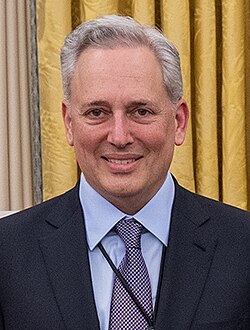 Elon was installed in the White House in significant part by fellow South African “alien invader” David Sacks, right, who is even more conspiratorial and even more pro-Russian than Musk. Sacks was installed in the White House as a Special Government Employee (who, Elizabeth Warren suggests, has overstayed his welcome) to force a bunch of policy decisions that suck for America but ensure that Broligarchs won’t pay any consequences for their rash business deals. When one or both of crypto and AI crash (this is a really good story on how and why AI will burst), he’ll be there to ensure the government bails them out, as he did after playing a role in the failure of Silicon Valley Bank.
And even as Trump sheds support based on his mockery of affordability, even as MTG split with Trump over that and his support for crypto, Sacks is trying to brand Democrats as being more populist than even Zohran Mamdani is.
Fine. You want Democrats to be the party attending to the needs of working people? You’ve just made the GOP the party of “alien invader” billionaires who got tax cuts as millions lost their health care.
This happened even as AI has become a political liability. It has happened as local groups successfully stave off new data centers. It has happened as more instances of AI-inflamed suicide, murder, and porn — including porn exploiting children — appear. And it happens before the aforementioned crash.
Sacks and the other Broligarchs are going to do something for which they’ll try to dodge accountability. Now is the time to make sure his name comes up as people look for culprits.
Emphasize Trump’s loser stench

Demonstrators, including Nadine Siler, of Waldorf, Md., dressed in a pink frog costume, hold up signs at a designated protest point in front of the John F. Kennedy Memorial Center for the Performing Arts on Dec. 20, 2025, a day after a Trump-appointed board voted to add President Donald Trump's name to the Kennedy Center in Washington, DC (AP photo by Julia Demaree Nikhinson).
Another thing that will lead people to defect is to realize that Trump is a loser. He has done things — like the takeover of the Kennedy Center — that makes it easy to demonstrate he’s a loser in tangible fashion. Better still, every time Trump attaches his name to something, it provides an opportunity to hijack that brand, as comedian Toby Morton auspiciously managed to do by anticipating Trump’s most venal instincts and buying the domain.
The same is true of his businesses. Trump and his entire family is getting rich off the presidency 2.0. But his businesses are built as cons, sometimes Ponzi schemes. The idea is to leverage the loyalty of MAGAts to get them to invest in something, run up its value, only to collapse, leaving the most vulnerable screwed. In the past, at least, the cult effect was such that even MAGAts bilked by Trump associates, as with Steve Bannon’s Build the Wall graft, were reluctant to turn on the fraudsters; that may change. But at the very least, the volatile nature of Trump’s frauds makes it easy to show that as a businessman, he’s a loser.
Visualize Trump’s corruption
While there has been good reporting on Trump’s corruption — see, for example, NYT’s nifty visualization from New Year’s Eve — there has not been a systematic effort to take on his corruption.
Nevertheless, possibly because of the Epstein scandal, a majority of the country does think Trump is corrupt.
That may actually not be in a bad place to be as we move into 2026. That’s because Democrats can make Republican inaction in the face of Trump’s corruption a campaign issue (and then, if it leads to a Democratic sweep in midterms, the electoral buy-in will be in place to do a lot of oversight and defunding of Trump’s corruption).
Trump’s pardons are similar. There’s actually a solid stream of reporting on how corrupt they are, without yet any political direction to it. Democrats running against Republican incumbents — especially in the Senate — should state as presumed that it is the job of Senators to respond to the kind of naked corruption Trump is engaged in.
Where activists can magnify the good reporting on both Trump’s corruption and his pardons is to focus on the victims. This is actually showing up in the reporting on both topics. 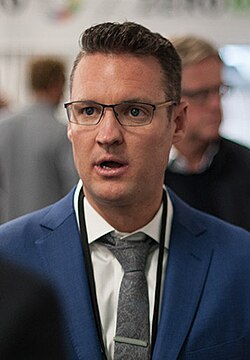 WaPo focused on the victims of Trevor Milton, right, who might have gotten restitution had Trump not pardoned him. LAT similarly focused on the victims fucked over by Trump’s pardon of David Gentile.
Rosenberg, a retired wholesale produce distributor living in Nevada, has supported Trump since he entered politics, but the president’s decision in November to commute the sentence of former private equity executive David Gentile has left him angry and confused.“I just feel I’ve been betrayed,” Rosenberg, 68, said. “I don’t know why he would do this, unless there was some sort of gain somewhere, or some favor being called in. I am very disappointed. I kind of put him above this kind of thing.”
Trump’s decision to release Gentile from prison less than two weeks into his seven-year sentence has drawn scrutiny from securities attorneys and a U.S. senator — all of whom say the White House’s explanation for the act of clemency is not adding up. It’s also drawn the ire of his victims.
“I think it is disgusting,” said CarolAnn Tutera, 70, who invested more than $400,000 with Gentile’s company, GPB Capital. Gentile, she added, “basically pulled a Bernie Madoff and swindled people out of their money, and then he gets to go home to his wife and kids.”
This superb Bloomberg story on the extent to which the Juan Orlando Hernández pardon unraveled years of work starts with a murder arranged by the network.
Five minutes later, González was circling a roundabout when a gray van braked in front of him. At the same time, a green SUV crowded his rear bumper. A motorcycle carrying two men emerged on his left. A man on the back of the bike fired six shots through the driver-side window. González’s head slumped toward his shoulder, and he tilted forward, held upright by the seatbelt. He died instantly.
More than a dozen men streamed out of the two vehicles that had sandwiched his Nissan. They scrambled to collect the spent shell casings on the ground, then scattered other casings across the pavement—decoys to complicate ballistics tracing. They jumped back into their vehicles, circled the roundabout and took the same road Julián had just driven down.
When they approached the Slaughterhouse, the gates opened to let them in, then closed behind them.
Every one of these pardons has a victim — and that’s before you get into the people newly victimized by people who’ve been pardoned by Trump, which NYT covered in November and others are tracking as well.
A New Jersey fraudster who was pardoned by President Trump in 2021 was sentenced to 37 years in prison this month for running a $44 million Ponzi scheme, one of a growing number of people granted clemency by Mr. Trump only to be charged with new crimes.
The man, Eliyahu Weinstein, was pardoned by Mr. Trump in 2021 and was re-indicted by the U.S. attorney’s office in New Jersey three years later. He was accused of swindling investors who thought their money was being used to buy surgical masks, baby formula and first-aid kits bound for Ukraine, and a jury convicted him in April of several crimes, including conspiracy to commit securities and wire fraud.
[snip]
Some of those pardoned for their role in the Jan. 6, 2021, riot at the U.S. Capitol have quickly drawn new attention from law enforcement. The group Citizens for Responsibility and Ethics in Washington said in June that at least 10 of the more than 1,500 who were pardoned had been rearrested and charged, and the number has only grown since then.Earlier this month, a man who was pardoned after having participated in the Jan. 6 attack was charged with sex crimes against two children. Another man whose original sentence Mr. Trump commuted in 2021 was recently sentenced to 27 months in prison after convictions on physical and sexual assault, among other crimes.
These stories provide an important way to explain the costs of Trump’s corruption.
Brand Trump as the criminal he is
Hold Stephen Miller accountable for his failures
White House advisor Stephen Miller, above left
I focused on Stephen Miller — and the import of making his failures clear — last week.The import of shifting how we speak of Miller’s considerable power is clear. That’s true because he frankly has done huge damage, even to Trump’s goals, and well more so to average Americans. He’s someone that people, including Republicans, can scapegoat for Trump’s failures (and they’ll be right). And if we don’t sure that happens, then he’ll scapegoat brown people.
Again, are Somali day care workers or billionaires systematically defrauding average people the problem? One easy to way to drown out Miller’s case that it’s the former is to make it clear how much he personally has harmed average Americans.
Visualize how Stephen Miller took money for cancer research and veterans care to pay for a goon army snatching grandmothers
Relatedly, particularly as the huge injection of funding Republicans approved last year starts landing at DHS, it will become increasingly necessary to tie the goon squads in the streets to the loss of benefits elsewhere.
We need to make it clear that this is a direct trade. 50,000 ICE goons in, 300,000 other government employees out, including people who cure cancer, help learning disabled kids get through school, protect our National Parks, ensure your Social Security comes on time, and care for veterans.
Christopher Ingraham did a handy graphic to show the trade-off.
Stephen Miller’s dragnet is unpopular in the abstract and wildly unpopular in the lived sense, even — if meekly — among local Republican leaders.
But it still retains support of a big chunk of the population, probably because Trump officials routinely blame their own failures to address American problems on migrants, when as often as not, Trump’s response to immigration is the source of the problem.America can’t have nice things, like cures for cancer and welcoming public schools, because Republicans in Congress took the money used to pay for those things and gave it to Stephen Miller to use to invade America’s neighborhoods.
Discredit Key Spokespeople
Right wingers like Jonah Goldberg and David French, right, have expressed alarm by an old promo for a 60 Minutes piece (the piece itself was from October) that an influencer reposted yesterday, describing dozens of times when the government lied in court filings.
Judges have caught Trump’s DOJ in several major lies since then. In Chicago, Judge Sara Ellis wrote a 233-page opinion documenting the many lies DHS has told about their Chicago invasion.
And in December, judges in both Kilmar Abrego’s case caught the government obfuscating. In the criminal case, on December 30, Judge Waverly Crenshaw unsealed a December 3 opinion describing how Nashville’s US Attorney lied about how centrally involved Todd Blanche’s office was in demanding Abrego face trial.
The central question after Abrego established a prima facie case of vindictiveness is what information in the government’s control sheds light on its new decision to prosecute Abrego, after removing him from the United States without criminal charges. These documents show that McGuire did not act alone and to the extent McGuire had input on the decision to prosecute, he shared it with Singh and others. (Doc. No. 178-1). Specifically, the government’s documents may contradict its prior representations that the decision to prosecute was made locally and that there were no outside influences. For example, Singh contacted McGuire on April 27, 2025, to discuss Abrego’s case. (See Doc. No. 229 at Abrego-Garcia000001). On April 30, 2025, Singh asked McGuire what the potential charges against Abrego would be, whether the charging document would reference Abrego’s alleged MS-13 affiliation, and asked for a phone call before any charges were filed. (Id. at Abrego-Garcia000007–000008). In a separate email on April 30, 2025, Singh made clear that Abrego’s criminal prosecution was a “top priority” for the Deputy Attorney General’s office (Blanche). (Id. at Abrego-Garcia000037). He then told McGuire to “sketch out a draft complaint for the 1324 charge [making it unlawful to bring in and harbor certain aliens].” (Id.). On May 15th, McGuire emailed his staff that “DAG (Blanche) and PDAG would like Garcia charged sooner rather than later.” (Id. at Abrego-Garcia000060).
And as I’ve already noted, Judge Paula Xinis cataloged the many deliberately ignorant declarations DOJ filed about whether DHS had deportation plans for Abrego when she ruled that he must be released.
Respondents showcased Cantú’s ignorance about the content of his Declaration pertaining to Costa Rica. As the pointed questions of Respondents’ counsel made clear, Cantú’s lack of knowledge was planned and purposeful.
Counsel: So paragraph 4, final sentence [of the Cantú Declaration], do you see where it says the word—the words “certain understandings”?
Cantú: I found it. Yes, I do. I see it.
Counsel: What are the certain understandings referenced in the last sentence?
Cantú: I don’t know . . .
Counsel: What are the “contingencies” referenced in the last sentence?
Cantú: I do not know . . .
Counsel: What are the “interim developments” referenced in paragraph 5?
Cantú: I don’t know.
ECF No. 107 at 26:8–27:12 (counsel for Respondents, Jonathan Guynn (“Guynn”), questioning Cantú). See also id. at 53:8–9 (Guynn, at sidebar with Court, stating “I’ll just say I told you this was exactly what was going to happen,” regarding the witness’ ignorance on Costa Rica as a viable country of removal).
Ultimately, Respondents’ calculated effort to take Costa Rica “off the table” backfired. Within 24 hours, Costa Rica, through Minister Zamora Cordero, communicated to multiple news sources that its offer to grant Abrego Garcia residence and refugee status is, and always has been, firm, unwavering, and unconditional.
It’s a problem that, after huge scoldings like these, right wing critics of Trump don’t understand how much Trump’s people lie — not least because the Supreme Court still credits the most outlandish claims Trump makes, even after they’ve been thoroughly debunked by lower court judges.
Many of these lies are coming from the same people: Stephen Miller, Todd Blanche’s office, DHS spox Tricia McLaughlin, and Greg Bovino, right.
It is remarkable that so many of these people have been caught lying to courts (or publicly, about people before courts). But it needs to become common knowledge for everyone, so every time Tricia says something, they start from the assumption she’s lying, because she almost always is.
There comes a time when the credibility of systematic liars not named Trump collapse entirely such that every utterance they make discredits the claims they try to sell. Tricia McLaughlin, at least, is close to those levels of propaganda, and Stephen Miller is not far behind.
Use Trump’s claimed opposition to antisemitism against him
Within days of his inauguration last year, Trump signed an EO — adding to one he signed in 2019 — claiming to oppose antisemitism. There has been some discussion about the bad faith of this EO and a DOJ lawyer implementing it, Michael Velchik, once wrote a paper from Hitler’s perspective. While it is explicitly targeted at universities (and has been a key tool to attempt to takeover universities), it nevertheless claimed to oppose antisemitism everywhere.It shall be the policy of the United States to combat anti-Semitism vigorously, using all available and appropriate legal tools, to prosecute, remove, or otherwise hold to account the perpetrators of unlawful anti-Semitic harassment and violence.
This is the kind of statement of principle that can form the basis of political pressure — particularly as the MAGAt movement splinters around the overt antisemitism of people like Nick Fuentes and Candace Owens, left, and as political opportunists like Ted Cruz attempt to exploit that splinter.
We’re going to have to fight this battle in any case. As part of the revocation of everything Eric Adams did after he was indicted for bribery yesterday, Zohran Mamdani revoked an EO that gave Israel preferential treatment, which Israel is using to stoke division; yet  Mamdani preserved the office Adams opened to combat antisemitism.
We need to call out the dripping antisemitism of Trump’s team, from top (at least JD Vance, who refuses to disavow Fuentes) to bottom.
There are two key Trump aides who should be targeted. Most notably, Paul Ingrassia, right, who had to withdraw his nomination to be Special Counsel after Politico exposed texts in which he confessed to a Nazi streak been installed at GSA instead. In addition, Kingsley Wilson became DOD spokesperson in spite of Neo-Nazi comments. NPR has done good work unpacking these ties.
Reclaim disinformation research
Republicans plan on exporting fascism via US tech platforms.
That’s not new. I’ve been talking about Elon’s plans to use Xitter as a machine for fascism for some time.
But since then, Trump’s minions worked it into the National Security Strategy.
And, in the wake of the EU’s sanctions against Elon Musk for — basically — lying about why I have a blue check, Marco Rubio stripped the visas of five people, including US Green Card holder Imran Ahmed, a long-time adversary of Elon’s.
But there are several developments that suggest it is time to renew efforts to defend disinformation research, not least the White House’s absurd effort to attack real journalism, what is sure to be a snowballing failure on Bari Weiss’ part to make propaganda popular, and the meltdown the head of DOJ’s Civil Rights division, Harmeet Dhillon, had over the holidays about right wing “misinformation” targeting Pam Bondi, right.
The right wingers are doing what they themselves established is unlawful. And that presents both political and legal opportunities to demonize their propaganda.
Which in turn cycles back to the increasing problem of AI propaganda, including Grok’s flagrant willingness to nudify children in recent days.
Some people write short resolutions. I guess I write 4,000-word To Do lists. Join me in my efforts!
More On U.S. Politics, Governance
New York Times, Trump Super PAC Raised More Than $100 Million in Recent Months, Kenneth P. Vogel and Karen Yourish, Jan. 2, 2026. The haul highlights how the president’s team has continued aggressive fund-raising from donors with interests before the administration. The biggest donors to a super PAC devoted to President Trump have ties to artificial intelligence and cryptocurrency.
President Trump’s team raised more than $100 million for a super PAC in the second half of 2025, with much of the money coming from wealthy people and corporations with issues before the administration.
The haul by MAGA Inc., detailed in a campaign finance report filed on Thursday night, reveals how aggressive fund-raising has continued for a political operation that revolves around Mr. Trump, giving the organization over $300 million ahead of this year’s midterms, it said. The donor list highlights the eagerness of deep-pocketed interests to endear themselves to a lame-duck president who has demonstrated a keen interest in fund-raising and a willingness to use his office to reward financial supporters and punish critics.
The biggest donations were $12.5 million each from Greg Brockman, a co-founder of the artificial intelligence firm OpenAI, and his wife, Anna Brockman; and contributions totaling $20 million from the parent company of Crypto.com, a cryptocurrency trading platform that has lobbied the administration. Leaders of the fast-growing A.I. and crypto industries have courted Mr. Trump and gotten favorable treatment.
Other donors included a nursing home entrepreneur seeking an ambassadorship, a vape-maker, a pro-cannabis group and a woman whose father was seeking a deal from prosecutors to settle charges that in 2020 he bribed Puerto Rico’s governor at the time.
Second-term presidents, barred by the Constitution from running again, usually begin winding down their own fund-raising after their inaugurations, focusing instead on boosting their parties’ committees and candidates ahead of the midterms and other elections. While Mr. Trump has often mused about seeking a third term, he seemed to acknowledge this fall that he could not.
But emboldened by the record-breaking sum of nearly $240 million raised by his inaugural committee, he tasked his associates with raising money for other groups and causes dear to him. Those include not only MAGA Inc. and an affiliated political nonprofit group called Securing American Greatness, but also the construction of a new White House ballroom, nonprofits organizing festivities for the 250th anniversary of U.S. independence and a presidential library.
Some Republicans have expressed concern that Mr. Trump’s continued fund-raising will siphon money from party campaign spending vehicles and give his allies too much sway.
MAGA Inc. said in a statement that the group “will have the resources to help candidates who support President Trump’s America First agenda,” including on border security, crime reduction and trying to lower prices for consumers.
Matt Van Epps, backed by MAGA Inc., celebrated after winning a special House election in Tennessee.Credit...Brad J. Vest for The New York Times
MAGA Inc. spent $1.7 million supporting Matt Van Epps, a Republican former state official and Army veteran, in his successful campaign for a U.S. House seat in Tennessee in a special election last month, according to Thursday’s filing.
MAGA Inc. said it finished the year with $304.3 million in the bank, meaning that the group raised about $10 million in the final week of last year, which was not covered by the filing.
Liz Huston, a White House spokeswoman, rejected any suggestion that Mr. Trump’s decisions in office were shaped by donations.
“President Trump is grateful for the support he receives, but unlike politicians of the past, he isn’t bought by anyone,” Ms. Huston said in a statement. “President Trump makes decisions based solely on what’s best for the country, which is why America is the hottest country in the world right now.”
Some of the donors whose contributions to MAGA Inc. were revealed in Thursday’s filing have benefited from actions of Mr. Trump or his administration or are in industries that have. Many have received invitations to exclusive events and meetings with Mr. Trump, including official White House functions. Several have also given to the inauguration or the ballroom.
Kris Marszalek, the chief executive of Crypto.com, was among the attendees at a black-tie dinner for Crown Prince Mohammed bin Salman of Saudi Arabia at the White House in November. The dinner came in the weeks after Crypto.com’s parent company made two separate $10 million donations to MAGA Inc., as its gifts to the organization totaled $30 million for the year. It also donated $1 million late last year to Mr. Trump’s inaugural committee.
A spokeswoman for Crypto.com did not respond to a request for comment about the donations.
The crypto industry has benefited from Mr. Trump’s cheerleading, as well as his championing and signing into law a bill creating the first federal rules for stablecoins, a popular form of digital currency.
The super PAC received $1.05 million from the American Rights and Reform PAC, a pro-cannabis political committee that previously donated $1 million to MAGA Inc., amid an intense influence campaign by the burgeoning industry.
Last month, Mr. Trump signed an executive order to downgrade cannabis from the most restrictive category of drugs, easing some limitations and allowing for more research, a major victory for the industry.
Morning Shots via The Bulwark, Political Opinion: Happy New Year (Maybe?), William Kristol, right, Jan. 2, 2026. Happy New Year!
But will 2026 be a happy year for the republic?
It will be a crucial one. I don’t think it’s much of an exaggeration to cite Alexander Hamilton in Federalist No. 1: In “the crisis at which we are arrived,” a “wrong election of the part we shall act” would “deserve to be considered as the general misfortune of mankind.”
So what will 2026 be? A year of fortune or misfortune? Well, as the pitcher Joaquín Andújar once said, “You can sum up the game of baseball in one word: ‘You never know.’” What’s true of baseball is true of politics.
The year will be important and its outcome indeterminate. So I thought it might be helpful to very briefly sketch out five possible paths for the year ahead.
1. Very good news: We turn the corner.
Trump’s popularity continues to decline as he loses his grip and his administration becomes more chaotic. Republicans on the Hill increasingly desert him, and so Congress begins to act as a check on his administration. The Supreme Court steps up and mostly supports lower courts trying to sustain guardrails. Accommodating elites begin (finally!) to jump ship.
Abroad, Trump fumbles and bloviates, but we avoid disaster. Europe helps Ukraine, and Putin’s weaknesses are increasingly exposed.
November is a wave election, as in this 250th anniversary year, the public rallies to the principles of the Declaration and against nativism, extremism, and authoritarianism. Democrats win both the House and the Senate. Trump becomes a true lame duck.
This turn of events is unlikely but not impossible. Indeed, if things start to go in the right direction early in the year, we could see a happy snowball effect.
I’m going to (optimistically, but hey, it’s the new year) give this scenario a 20 percent chance of happening.
2. Good news: We see light at the end of the tunnel.
This is a more modestly upbeat scenario. The balance of power moves somewhat against Trump, and the authoritarian hold within and beyond government weakens. Democrats win the House easily and come close in the Senate. All in all, at the end of the year, there is less of a sense than there is now that Trump and Trumpism have a grasp on the future, let alone the mandate of heaven.
The year will be a tough slog in the right direction—but it will be the right direction.
I give this scenario a 20 percent chance as well.
3. So-so news: The status quo holds.
The forces of liberty and democracy hold their own, but only just. Things stand at the end of 2026 about where they were at the beginning. Democrats win the House narrowly but the Senate remains comfortably Republican, the Supreme Court remains an unreliable weathervane, and while elite accommodation may not intensify, it doesn’t reverse. Ukraine and for that matter NATO are able to hang on, but barely. So the fight continues.
Normally, one would think a more-of-the-same scenario the most likely of all, but I’m doubtful. The present balance of power in both the nation and the world seems precarious. I think it more likely than not that things break in one direction or another.
So I give this a 15 percent chance of happening.
4. Bad news: The slide continues.
Things continue to move downhill. Public support for Trump stabilizes and even ticks back up a bit. And so the Republican party and the Court continue to duck, ICE continues to grow and increasingly becomes a Praetorian guard acting without much of a check outside the law, Hegseth moves ahead with reshaping the military, and the Justice Department gets away with an Epstein coverup. The Trumpist movement continues to radicalize even as elites keep on going along, and things like the Trump-Kennedy Center, the “Arch of Triumph,” and other grotesqueries get normalized.
The prospects for a reversal of political momentum in 2027 and 2028 seem daunting. The transformation of U.S. foreign policy from global leadership to self-interested bullying continues. Ukraine’s future is grim.
I give this unhappy prospect a 25 percent chance of taking place.
5. Very bad news: The lights begin to go out.
Trumpism is ever more ascendant, and liberalism flailing and failing. The authoritarian momentum of the first year of Trump’s second term doesn’t merely continue but builds. The takeover at the power ministries—DHS and DOJ and DOD—continues apace. The Insurrection Act is invoked, the Alien Enemies Act is upheld, the administration’s assault on opposition voices becomes more sustained and effective, and support for ignoring the Twenty-Second Amendment grows. It becomes ever clearer that the Trump administration has no intention of handing over power in 2028—and it becomes increasingly unclear whether pro-democracy forces can rally successfully against this.
Meanwhile, Ukraine is forced into a Munich-like deal. Trump launches an unauthorized war against Venezuela, and Congress does nothing. And the administration is increasingly bold in helping authoritarian parties come to power in Europe and elsewhere.
Chance: 20 percent.
So, be alarmed! The odds aren’t terrific. But they’re not terrible. The fight is winnable. And as Thomas Paine reminded our forebears in December 1776, “Tyranny, like hell, is not easily conquered; yet we have this consolation with us, that the harder the conflict, the more glorious the triumph. . . . Heaven knows how to set a proper price upon its goods; and it would be strange indeed, if so celestial an article as Freedom should not be highly rated.”
Tell us which scenario you think is most likely and why—even if it’s not the one we want.
Paul Krugman via Substack, Political-Economy Commentary: Notes on New York, Paul Krugman, right, Jan. 2, 2026. The Big Apple had a pretty good 2025, but …
It’s a new year and a new mayor here in New York. So I’m going to be parochial today and talk about the state of America’s biggest city.
Here’s what you should know: New York is doing remarkably well on several fronts. Crime is down, and the city is as safe as it has ever been. The city’s economy has defied predictions of doom and staged a strong recovery. And the major policy experiment of 2025, the congestion charge on vehicles entering lower Manhattan, has been a huge success.
Yet there is a big problem afflicting New Yorkers: affordability. Not surprisingly, it’s the issue that Zohran Mamdani won on.
So let’s talk about what has gone right for the city some of us think of simply as “The City” and the challenges Mamdani faces.
Welcome to the hellscape — not
Many Americans, especially but not only on the right, have an apparently unshakable belief that New York is a crime-ridden hellscape. For example, two years ago you-know-who asserted that MURDERS & VIOLENT CRIME are hitting UNIMAGINABLE RECORDS.
Given this widespread perception, it’s startling to look at the facts. Murders in New York City, which were already low by historical standards, fell 20 percent in 2025. And here’s what they look like over the long term: Murders are down to 1950s levels. Because the city’s population has grown, the murder rate per 100,000 people is even lower than it was in the 50s.
Once you factor in New York’s relatively low number of auto accidents per capita — because so many people take public transit, which is much safer — it becomes clear that New York has a lower rate of violent death than almost anywhere else in America.
This low death rate, in turn, contributes to New York’s high life expectancy, which according to provisional data reached 83.2 years in 2024, about 4 years higher than the national average. That’s a complete reversal from the situation as recently as 1990, when New York’s life expectancy was 4 years less than the national average. This is a huge achievement if you believe, as I do, that not being dead is an important element in the quality of life.
Both low crime and high life expectancy can be attributed in part to immigration. New York’s foreign-born population hit a low point in 1970, when immigrants were only 18 percent of the city’s residents, a share that rose to almost 40 percent by 2010, where it remains. Contrary to everything MAGA says, there’s overwhelming evidence that immigrants are less likely to commit crimes than the native born, even when, like many New Yorkers, they come from what Trump calls shithole countries.
In case you’re wondering, that spike in murders in the late 1980s didn’t come from immigrants, it was caused by the crack cocaine epidemic.
Immigrants also have higher life expectancy than the native-born, partly reflecting the fact that healthy people are more likely than the less healthy to migrate. So New York’s large foreign-born population raises its average life expectancy.
Foreign-born workers have also buoyed New York’s economy — an economy that has staged an impressive post-pandemic recovery.
What’s really remarkable, and contrary to many predictions that high taxes and regulation would lead the financial industry to decamp to Florida or Texas, is the recovery in demand for office space in New York’s central business district (lower Manhattan).
Nationally, office vacancy rates are still elevated thanks to the rise of remote work, and that’s true of New York too. But vacancies have declined much more rapidly in New York than in other major cities. As a report from New York’s comptroller’s office says, “Manhattan has clearly pulled away from the pack.”
What’s the secret to New York’s economic durability? Probably it has to do with the reason Manhattan is the nation’s financial center in the first place: The importance of face-to-face interaction. Financial firms have their offices in lower Manhattan, even though it has the nation’s highest rents, so they can easily hold meetings with other financial firms. And because New York’s business model is all about face-to-face meetings, it’s less easily replaced with Zoom calls than, say, business in Houston.
I wrote in November about the example of Trump supporter Ken Griffin’s Citadel, which made a big splash by moving from Chicago to Miami, but has now rented a lot of space in lower Manhattan.
True, there were a number of Wall Street voices proclaiming that they would flee the city if Zohran Mamdani were elected mayor. Strange to say, those voices mostly went quiet after he was.
Econ 101 works
On January 5, 2025, New York finally did what economists and urban planners have been urging for many years and imposed a fee on vehicles entering lower Manhattan.
Contrary to what many people seem to believe, congestion fees aren’t a left-wing idea or an attack on The American Way of Life. They’re straight Econ 101.
The logic runs as follows: Someone who chooses to drive into a congested area makes traffic worse and thereby imposes a cost on everyone else driving in that area. Yet potential drivers have no incentive to take these costs imposed on other people into account. Charging a fee helps align private and public interests, inducing people who have good alternatives to driving to use those alternatives, while making traffic faster for those who must drive.
In fact, New York’s $9 fee is very low compared with estimates of the social costs imposed by driving into lower Manhattan, which can run to $100 or more.
Despite this clear logic, the prospect that New York would actually implement textbook economics inspired hysterical opposition, with claims that it would create huge hardships and destroy the city’s economy. The Trump administration has repeatedly attempted to kill the program, and is still trying, even though it’s really hard to see why New York’s traffic policy should be a matter of federal concern. But as Curbed put it, “one  thing [Trump] loves is the opportunity to stick it to anyone who’s earnest about activist good government.”
Indeed, back in October Trump announced that he had “terminated” the long-delayed project to build a new rail tunnel under the Hudson River, although this assertion — while it helped Democrat Mikie Sherrill, right, win the New Jersey governor’s race — may have been empty showboating.
It will be hard to kill the congestion fee now, however, because it has been a striking success. Traffic speeds have increased. Pollution is down. The fee is generating a large amount of revenue for the city’s transit system. And predictions that it would be bad for business have proved completely wrong. Foot traffic in lower Manhattan is up, and so is overall spending in the city.
So New York’s congestion fee has been a big win for the city and also a win for policy driven by economic analysis over policy driven by knee-jerk opposition to government.
Affordability
There’s a lot of good news about New York, which offers a remarkably good quality of life these days — if you can afford a place to live. Which is, of course, the city’s biggest problem. Last summer the West Side Rag ran an article titled “The Upper West Side: A Neighborhood for Independent Minds.” My immediate thought was “Yeah, independent minds who can afford to pay $1700 a square foot for housing.” Other neighborhoods are cheaper, but no place in New York is affordable for typical families.
Mamdani is pro-housing-construction, surrounding himself with YIMBYs (yes in my backyard.) Several changes to the city charter that will effectively liberalize home construction also passed in November. The City Journal declared that the election marked the rise of the “left-YIMBY.”
Policy aside, one good omen is that developers have figured out a number of “architectural hacks” that are enabling a boom in conversions of office buildings to residential use.
Will New York start to become affordable again for the middle and working class? We’ll find out over the next few years.
U.S. Health Care, Environment
New York Times, With Obamacare’s Higher Premiums Come Difficult Decisions, Reed Abelson, Jan. 2, 2026. As enhanced subsidies expire, many Americans covered under the Affordable Care Act are having trouble paying for insurance.
Renee Rubin Ross is facing the stark reality of having to pay much more for her health insurance this year, now that Congress has ended 2025 without extending the enhanced federal tax credits that brought down the cost of her coverage under the Affordable Care Act.
“I don’t even know how to get my mind around it. It’s the opposite of affordable,” said Ms. Ross, who relies on Obamacare to cover her family of four in California. Staying on the same plan for 2026 will cost about $4,000 a month, $2,700 more than the roughly $1,300 per month she had been paying.
Since the subsidies were first expanded in 2021, allowing more people to qualify and lowering their payments, millions of Americans have benefited. A record 24 million people enrolled in Obamacare for 2025, with a vast majority receiving some tax credits. Many were self-employed or worked for small businesses that did not offer health insurance.
But without the enhanced subsidies, many people are seeing the cost of coverage more than double, increasing by hundreds or even thousands of dollars a month, because the tax credits are now in line with what they were before.
In some cases, people may no longer be eligible for subsidies because they make more than four times the federal poverty level — about $63,000 annually for an individual. In other cases, they will have to pay much more of the total premium, even if they get tax credits.
These higher costs are forcing many people to make hard choices. Some are deciding to go without health insurance; others are choosing a less generous plan that has lower premiums but requires them to pay thousands of dollars more in out-of-pocket expenses.
Still others say they plan to limit what they will make this year so that they can continue to qualify for the remaining subsidies. And like Ms. Ross, some are likely to dip into savings to pay the higher premiums.
In many states, including those that rely on the federal marketplace, healthcare.gov, the deadline for enrolling in an Obamacare plan for Jan. 1 has now passed. People can generally sign up in January for a plan that starts Feb. 1.
New York Times, A Study Is Retracted, Renewing Concerns About the Weedkiller Roundup, Jan. 2, 2026. Problems with a 25-year-old landmark paper on the safety of Roundup’s active ingredient, glyphosate, have led to calls for the E.P.A. to reassess the widely used chemical.
In 2000, a landmark study claimed to set the record straight on glyphosate, a contentious weedkiller used on hundreds of millions of acres of farmland. The paper found that the chemical, the active ingredient in Roundup, wasn’t a human health risk despite evidence of a cancer link.
Last month, the study was retracted by the scientific journal that published it a quarter century ago, setting off a crisis of confidence in the science behind a weedkiller that has become the backbone of American food production. It is used on soybeans, corn and wheat, on specialty crops like almonds, and on cotton and in home gardens.
 The Environmental Protection Agency still considers the herbicide to be safe. But the federal government faces a deadline in 2026 to re-examine glyphosate’s safety after legal action brought by environmental, food-safety and farmworker advocacy groups.
The E.P.A. has also faced pressure to act on glyphosate from the Make America Healthy Again movement, led by supporters of the health secretary, Robert F. Kennedy Jr., who once served as co-counsel in a lawsuit against Monsanto over exposure to Roundup.
The 2000 paper, a scientific review conducted by three independent scientists, was for decades cited by other researchers as evidence of Roundup’s safety. It became the cornerstone of regulations that deemed the weedkiller safe.
But since then, emails uncovered as part of lawsuits against the weedkiller’s manufacturer, Monsanto, have shown that the company’s scientists played a significant role in conceiving and writing the study.
In the emails, Monsanto employees praised each other for their “hard work” on the paper, which included data collection, writing and review. One Monsanto employee expressed hope that the study would become “‘the’ reference on Roundup and glyphosate safety.” The pharmaceutical giant Bayer acquired Monsanto in 2018 for $63 billion.
In retracting the study last month, the journal, Regulatory Toxicology and Pharmacology, cited “serious ethical concerns regarding the independence and accountability of the authors.” Martin van den Berg, the journal’s editor in chief, said the paper had based its conclusions largely on unpublished studies by Monsanto.
There were indications that the authors had received financial compensation from Monsanto for their work, he said. There was no disclosure of a conflict of interest on the part of the authors beyond a mention in the acknowledgments that Monsanto had provided scientific support. As a result, Dr. van den Berg said, he “had lost confidence in the results and conclusions of this article.”
Brian Leake, a spokesman for Bayer, said Monsanto’s involvement with the 2000 paper “did not rise to the level of authorship and was appropriately disclosed in the acknowledgments” and that the listed authors “had full control over and approved the study’s manuscript.”
He said that glyphosate was “the most extensively studied herbicide over the past 50 years” and that “the vast majority of published studies had no Monsanto involvement.”
The sole surviving author of the 2000 article, Gary M. Williams, who is a professor at New York Medical College, did not respond to requests for comment.
U.S. Immigration, Law, Courts, Crime
Letters from an American, Historical Commentary: January 1, 2026 [U.S. Immigration Tradition], Heather Cox Richardson, right, Jan. 2, 2026. On January 1, 1892, seventeen-year-old Annie Moore walked down the gangway from the steamship Nevada with her two brothers Anthony, eleven, and Philip, nine, and into history as the first person processed through the newly opened Ellis Island Immigrant Station.
Between 1892 and 1954, when Ellis Island closed, more than 12 million immigrants would come through the facility on their journey to the United States.
The establishment of a federal facility for processing immigrants was a long time coming.
Before the Civil War, states processed immigrants to the U.S. on the docks as they came off boats. The system was haphazard and left immigrants bewildered at the bustle and noise of their new country and at the mercy of swindlers who took their money with promises to find them housing and jobs. Cities and states tried to regularize immigration both to protect the newcomers and to make sure they did not end up homeless and starving, a charge on the city.
The 1840s and the 1850s brought an influx to the East Coast of Irish immigrants fleeing the Potato Famine and Germans fleeing economic hardship and the failed 1848 revolutions and of Chinese and Mexicans migrating to California to pan and dig for gold.
In 1855 the state of New York turned the site of a former U.S. Army fort on the southern tip of Manhattan into the Emigrant Landing Depot, more popularly known as Castle Garden. Between its opening on August 3, 1855, and December 21, 1889, the date of the last recorded data for the site, Castle Garden processed 8,280,917, or 75%, of the 10,956,910 immigrants who entered the United States.
When immigrants arrived at Castle Garden, officials divided them into two lines: English speakers and non-English speakers who would need translators. Officials recorded the names of the newcomers, the ship they arrived on, where they were going, and how much money they had. The new arrivals could buy train tickets from licensed agents, contact relatives, and rest, wash, and exchange money without fear of swindlers. An elaborate system for what was essentially a head tax paid by ship masters for each immigrant funded the operations.
But the coming of the Civil War slowed immigration as foreign men wondered if they would end up on the front lines.
In his third annual message on December 8, 1863, President Abraham Lincoln asked Congress to get involved in the process by establishing “a system for the encouragement of immigration.” Like other Republicans, Lincoln believed immigrants contributed mightily to the nation’s economy. He wrote: “there is…a great deficiency of laborers in every field of industry, especially in agriculture and in our mines, as well of iron and coal as of the precious metals,” while “tens of thousands of persons, destitute of remunerative occupation, are thronging our foreign consulates and offering to emigrate to the United States if essential, but very cheap, assistance can be afforded them.”
“[T]he nation is beginning a new life,” he wrote, and “[t]his noble effort demands the aid and ought to receive the attention and support of the Government.”
Republicans agreed. In their 1864 platform they resolved that immigration “should be fostered and encouraged by a liberal and just policy.” Under their leadership, Congress passed the 1864 Contract Labor Law permitting immigrants to borrow money against their future homesteads to finance their voyage to the U.S. and promising that immigrants would not be drafted. Lincoln signed it on July 4, 1864. Immigration picked up again.
But just a decade later, in the midst of the depression that followed the Panic of 1873, California workers angry at what they saw as competition from Asian contract labor prompted federal regulation of Asian immigration to the U.S. In 1875 the Page Act prohibited the migration of contract laborers and alleged sex workers to the U.S. The Page Act did not require the inspection of ships for such people, though, and provided no way to enforce its provisions.
Driving federal immigration more significantly was the 1876 Henderson v. Mayor of New York Supreme Court decision that outlawed all state head taxes on immigrants, thus leaving facilities like Castle Garden and other institutions designed to help poor immigrants without financial support.
Shipping interests and businesses liked the end of the head taxes, but reformers worried that the collapse of immigrant services would make immigrants vulnerable again to swindlers and abusers. They called for federal regulation of immigration. At the same time, agitation against Chinese and Pacific Island immigration in the West continued, and legislators in eastern states worried that the end of the head taxes would stick them with impoverished immigrants in their borders.
Congress didn’t fast-track any such regulation because immigration was falling after the Panic of 1873. But as it began to rise again in 1879, and as Republicans realized they had to court anti-Chinese votes in California after a razor-thin loss there in 1880, lawmakers turned back to the issue.
In 1882, Congress passed the nation’s first sweeping federal regulations of immigration, with not one law, but two. The Chinese Exclusion Act prohibited the immigration of Chinese workers, although not scholars, diplomats, or businessmen. Three months later, the Immigration Act of 1882 imposed a 50-cent head tax on arriving immigrants and prohibited the entry of convicts, mentally ill individuals, and “any person unable to take care of him or herself.”
Nine years later, in 1891, Congress modified the 1882 Immigration Act to expand government control of immigration and to authorize and fund a federal immigration bureau that would both process legal immigrants and enforce immigration restrictions against those deemed unable to enter the U.S. The new law expanded the reasons that individuals could be rejected from the U.S, including physical illness with contagious diseases. The law made it clear that the federal government would have to replace Castle Garden with its own facility.
Officials turned to Ellis Island in upper New York Harbor offshore from Castle Garden, expanding the former site of oyster beds with landfill until eventually it came to cover about 27.5 acres. On the site, the government built a two-story structure as a main receiving building, then added a hospital, utility plant, laundry, offices, and a detention center.
Immigrants arrived at Ellis Island after a two-week journey from Europe. After entering New York Harbor, they sailed by the nearby Statue of Liberty on Liberty Island, dedicated just six years before the facility at Ellis Island opened. A gift to the people of the United States from the people )of France, Lady Liberty stood on a broken chain and shackle that symbolized the abolition of slavery in the U.S., and held up a torch to the newcomers. She held a tablet that represented the law. It was engraved with “July IV MDCCLXXVI”—July 4, 1776, the date of the Declaration of Independence.
When the immigrants’ ship anchored in New York Harbor, healthy first-class and second-class passengers, who had received a brief examination aboard ship, did not have to undergo the inspections the third-class passengers did. Those passengers, along with any people who were sick, boarded a barge or a ferry for the inspection station on Ellis Island. Once they arrived, they could expect to wait three to five hours for what would be an inspection of just a few minutes if they were in good health. Doctors would examine them for obvious illness, and officials would try to make sure they would be able to support themselves. Because steamship companies had to pay for the return trip of anyone who couldn’t pass inspection, as well as a fine for bringing those folks ineligible for immigration, they performed their own inspections in Europe, prescreening the people who arrived at Ellis Island.
On June 15, 1897, the wooden buildings of the original Emigrant Landing Depot burned to the ground, taking with them all immigration records held there since 1855. The government rebuilt, this time making the buildings fireproof. The new facility’s Registry Room, known as the Great Hall, served as many as 5,000 people a day. After arrival, the newcomers sat on benches under the huge arched windows and the spectacular Gustavino tiled ceiling, waiting to be called. After medical inspectors determined their physical fitness, legal inspectors asked the immigrants’ name, home town, occupation, destination, and how much money they had.
Once through their inspection, immigrants proceeded to the “Stairs of Separation.” Those bound for New York or New England moved down the left stairs. Immigrants headed anywhere else went down the stairs on the right. The middle stairs were for immigrants headed for the hospital or to dormitories to wait for a special board of inquiry hearing on their case. Those detained made up about 20% of those arriving, but ultimately only about 2% of them were denied entry.
From Ellis Island the newcomers rejoined family and friends or made their way to other states to work in factories or mines, or on farms. In 1965, Ellis Island became part of the Statue of Liberty National Monument, formalizing its connection to Lady Liberty and the poem inscribed on the base of the statue in 1903. Emma Lazarus turned away from the old Colossus of Rhodes, the giant statue of the Greek sun god Helios that stood at the entrance to the harbor of the island of Rhodes and was one of the Seven Wonders of the Ancient World, to offer the world “The New Colossus,” a woman, Lady Liberty, the “Mother of Exiles.”
“Keep, ancient lands, your storied pomp!” cries she
With silent lips. “Give me your tired, your poor,
Your huddled masses yearning to breathe free,
The wretched refuse of your teeming shore.
Send these, the homeless, tempest-tost to me,
I lift my lamp beside the golden door!”
Venezuela’s president.
WLBT-TV (Gray Television, Channel 3, Jackson, MS), Former wrestler’s trial in Mississippi welfare scandal set to begin next week, C.J. LeMaster, Jan. 2, 2026. Ted DiBiase Jr. faces uphill battle as all co-conspirators cooperate with prosecutorsThe U.S. Government will reveal what it has taken years to piece together beginning next week: Mississippi’s largest public embezzlement scheme and the conspiracy that ensnared nearly a dozen people.
Jury selection for the trial of Ted DiBiase Jr. is set to begin in four days. The former wrestler is the only person indicted in the scandal who decided to fight charges of money laundering, theft, wire fraud, and conspiracy.
DiBiase could still take a plea deal before the trial begins.Charges and allegations
DiBiase is accused of pocketing nearly $4 million in welfare dollars, concealing the money through fake contracts, and then using that money for his own benefit.
He will walk into a courtroom where every other person connected to this conspiracy has already pleaded guilty, admitted what they did, and decided to help federal investigators fill in the gaps in their investigation.
“It’s much more difficult because everybody else that they’ve pointed a finger at is prepared to show up in court and make the government’s case,” said Matt Steffey, Mississippi College School of Law professor. “If they had no cooperating witnesses, the case is much more difficult [to prosecute]. When it’s just you standing, I think from the outside looking in, it looks hard to defend.”Key figures in the conspiracy
The only person sentenced for his crimes is former Department of Human Services Head John Davis. A judge sentenced him to 32 years for state charges, but he has yet to be sentenced for his federal crimes.
Davis, the highest ranking individual indicted in the scandal and central figure in the conspiracy, made sure tens of millions of dollars flowed to certain nonprofits which then converted that money for personal use.
 Nancy New, head of the nonprofit organization which received most of the welfare money, pleaded guilty to state and federal charges three years ago, but her sentencing remains delayed. Her son, Zach (shown together above in file photos), also pleaded guilty but has not been sentenced. Both have been out on bond since their plea deals.
The News were accused of embezzling millions of dollars in public assistance funds, investing a large chunk of it in private businesses. Funds also went to pay for drug rehab services in California.
Nancy New was the founder of the popular New Summit School in northeast Jackson and was the owner of the Mississippi Community Education Center, a nonprofit responsible for distributing TANF funding to families on behalf of DHS.
Ted DiBiase Jr.’s brother, Brett, pleaded guilty to state and federal charges but has not been sentenced.
Christi Webb, former director of another nonprofit involved in taking the money, also has not received a sentence.
The case for Latimer Smith, a former DHS employee, is under seal and it’s unclear whether that case remains active.Impact on sentencing
What takes place during the first trial will also determine how those who have already pleaded guilty will be punished.
Steffey said he doesn’t think their fates will hinge on whether DiBiase is convicted.
“I think what matters more is how the prosecutor feels about their level of cooperation,” Steffey said. “If they cooperate in a way that satisfies the prosecutor, even if, for example, the jury hangs or acquits Mr. DiBiase, I would not expect and I would certainly hope it does not have a significant impact on the cooperating witnesses. You know, everybody’s got to do their part. And then we leave the results to somebody else.”
It remains unclear whether any other information sought by prosecutors from cooperating witnesses implicates anybody else to the point where more charges could come.
In the nearly six years since this scandal first became public, text messages and speculation from co-conspirators have suggested that former Governor Phil Bryant and former NFL great Brett Favre could have played a criminal role. But neither individual has been criminally charged, and both have sued media outlets for implying they are guilty.
U.S. Education, High-Tech, Media, Culture
New York Times, Tech Giants Are Racing to Embed A.I. in Schools Around the Globe, Natasha Singer, Jan. 2, 2026. More governments are rolling out chatbots in schools. Some experts warn the tools could erode teaching and learning.
In early November, Microsoft said it would supply artificial intelligence tools and training to more than 200,000 students and educators in the United Arab Emirates.
Days later, a financial services company in Kazakhstan announced an agreement with OpenAI to provide ChatGPT Edu, a service for schools and universities, for 165,000 educators in Kazakhstan.
Last month, xAI, Elon Musk’s artificial intelligence company, announced an even bigger project with El Salvador: developing an A.I. tutoring system, using the company’s Grok chatbot, for more than a million students in thousands of schools there.
Fueled partly by American tech companies, governments around the globe are racing to deploy generative A.I. systems and training in schools and universities.
Some U.S. tech leaders say A.I. chatbots — which can generate humanlike emails, create class quizzes, analyze data and produce computer code — can be a boon for learning. The tools, they argue, can save teachers time, customize student learning and help prepare young people for an “A.I.-driven” economy.
But the rapid spread of the new A.I. products could also pose risks to young people’s development and well-being, some children’s and health groups warn.
A recent study from Microsoft and Carnegie Mellon University found that popular A.I. chatbots may diminish critical thinking. A.I. bots can produce authoritative-sounding errors and misinformation, and some teachers are grappling with widespread A.I.-assisted student cheating.
Silicon Valley for years has pushed tech tools like laptops and learning apps into classrooms, with promises of improving education access and revolutionizing learning.
Still, a global effort to expand school computer access — a program known as “One Laptop per Child” — did not improve students’ cognitive skills or academic outcomes, according to studies by professors and economists of hundreds of schools in Peru. Now, as some tech boosters make similar education access and fairness arguments for A.I., children’s agencies like UNICEF are urging caution and calling for more guidance for schools.
Steady, Political Commentary: It’s Been a Long Time Coming, Dan Rather, Jan. 2, 2026. Jack Smith finally talked...and he had a lot to say.
It may be the biggest irony in the history of American politics – if not the history of our country — that if Donald Trump wasn’t elected to a second term, he probably would be serving time in prison right now.
Instead, the president flat out got away with it. And now he will never face federal criminal charges for trying to overturn the 2020 presidential election or removing highly classified documents from the White House and hiding them at his Palm Beach resort.
We’ve waited a long time for former special counsel Jack Smith to tell us what evidence he amassed against Trump. And now we know at least part of that picture. His recent matter-of-fact recounting of his comprehensive investigations only whets the appetite for the whole story.
The famously tight-lipped Smith, who led two investigations into Trump and secured two indictments, testified before the House Judiciary Committee on December 17. Surprise!
Smith’s deposition, a robust defense of his investigations, was reported in the media. But The New York Times, for example, ran its piece on page A19 of the print edition of the paper, because the closed-door hearing was free of reporters and no video recording or transcript of the exhaustive eight-hour testimony was made available. Until December 31.
After ignoring calls from Smith’s lawyers to release the transcript, Rep. Jim Jordan, the chairman of the committee, decided to dump the 255-page transcript after everyone had gone home for the New Year.
Smith, who was subpoenaed to appear, asked for a public hearing. Surprisingly, so did the president. “I’d rather see him testify publicly, because there’s no way he can answer the questions.” Actually, he did – at least all the questions he was not barred by a Trump-appointed judge from answering.
The reason for the closed session was that Republicans were concerned Smith would use the hearing as a platform to divulge heretofore unreleased information.
Smith withstood a barrage of questions from both Republicans and Democrats. Republicans, doing Trump’s bidding to go after those who went after him, tried to trip him up. Democrats hoped to bait him into revealing details of his investigations. Neither side succeeded, though that doesn’t mean the testimony was without revelations.
Smith, a career prosecutor, who served under Democrats and Republicans, spoke with confidence and candor.
“The decision to bring charges against President Trump was mine, but the basis for those charges rests entirely with President Trump and his actions, as alleged in the indictments returned by grand juries in two different districts,” he said in his opening statement.
He went on to explain what he and his team discovered about Trump’s attempts to overturn the 2020 election:
“Our investigation developed proof beyond a reasonable doubt that President Trump engaged in a criminal scheme to overturn the results of the 2020 election and to prevent the lawful transfer of power.”
And Trump’s mishandling of classified documents:
“Our investigation also developed powerful evidence that showed that President Trump willfully retained highly classified documents… then repeatedly tried to obstruct justice to conceal his continued retention of those documents.”
Smith revealed that he planned to rely on Trump allies as witnesses, saying he thought they would be more credible than partisan ones.
“We had numerous witnesses who would say, ‘I voted for President Trump. I campaigned for President Trump. I wanted him to win,’” Smith testified. “Our case was built on, frankly, Republicans who put their allegiance to the country before the party.”
When asked if Trump ever admitted that he knew he lost the election, Smith answered yes. He went on to say the president made statements about it to several people.
“One is that, ‘It doesn’t matter if you won or lost the election. You still fight like hell.’ And then the other was, ‘Can you believe I lost to this f’ing guy?’ referring to Joe Biden.”
Smith laid out his evidence like, well, a prosecutor.
“[Trump], in the weeks leading up to Jan. 6, created a level of distrust. He used that level of distrust to get people to believe fraud claims that weren’t true. He made false statements to state legislatures, to his supporters in all sorts of contexts and was aware, in the days leading up to Jan. 6, that his supporters were angry when he invited them and then he directed them to the Capitol.”
As Trump is trying to downplay and distort what happened at the Capitol on January 6, Smith did not whitewash the violence perpetrated by the rioters. “Cracked ribs, traumatic brain injuries, smashed spinal disks and heart attacks as rioters used bats, poles, chemical sprays, stolen police shields and batons.”
That violence, Smith said, was “foreseeable” to the president and Trump exploited it.
When Republican committee members suggested Trump’s statements about the 2020 election were protected speech, Smith pushed back, hard. “Fraud is not protected by the First Amendment.”
Smith had far less to say about the classified documents case because Judge Aileen Cannon, a Trump appointee who slow-walked the original case and then tossed it, is now deciding if Smith’s report of the investigation will ever be released. She blocked the release for more than a year, though ruled last week she would lift the order on February 24, if Trump doesn’t challenge the ruling. What are the odds?
In the meantime Smith is barred from speaking about it, including to the House Judiciary Committee.
When asked if he could draw any conclusions about Trump’s refusal to return the classified documents despite being given multiple opportunities, Smith responded, “I don’t think I can answer that question because it may involve nonpublic facts that are a part of the final report that is currently under an injunction.”
He gave a similar answer to most questions posed about the documents.
In Trumpworld, Jack Smith is Public Enemy No. 1. There is no doubt Trump’s allies in the House were hoping Smith’s testimony would give the president some viable legal avenue to use against him. Though he didn’t give them one, Smith is not naive about his future.
He said he wouldn’t be surprised if Trump directs the Department of Justice to indict him. “I believe that President Trump wants to seek retribution against me because of my role as special counsel.”
Which brings us to another great irony: The man who the government believed committed one of the greatest crimes in our nation’s history now has the ability to seek revenge against those who tried to hold him accountable.
Steady is free, but to support my team’s efforts to protect our democracy through the power of independent journalism, we’d appreciate it if you
No matter how you subscribe, I thank you for reading.
Stay Steady, Dan
New York Times, Stephen Schwartz Criticizes Kennedy Center, Saying He Won’t Host Gala, Matt Stevens and Adam Nagourney, Jan. 2, 2026. The Washington National Opera said the “Wicked” composer was scheduled to host its annual event at the center this spring. “There’s no way I would set foot in it now,” Stephen Schwartz said of the Kennedy Center, which has seen many changes during the second Trump administration.
Stephen Schwartz, the composer of “Wicked,” said on Friday that he would no longer host a gala at the John F. Kennedy Center for the Performing Arts, becoming one of the most high-profile artists to criticize changes at the arts center under the Trump administration.
In a statement to The New York Times, Mr. Schwartz cited his long history collaborating with the Kennedy Center, saying that it “was founded to be an apolitical home for free artistic expression for artists of all nationalities and ideologies.”
“It is no longer apolitical and appearing there has now become an ideological statement,” he said. “As long as that remains the case, I will not appear there.”
Mr. Schwartz, who also composed the Broadway musicals “Godspell” and “Pippin,” said that at the end of 2024, he had been asked by Francesca Zambello, the artistic director of the Washington National Opera, to participate in an event at the Kennedy Center this May.
He said he had agreed, but added that he had last communicated with the opera about the event almost a year ago, in February 2025. That month, President Trump purged and replaced members of the Kennedy Center’s board, which has since voted to add Mr. Trump’s name to the building.
Ms. Zambello confirmed in a brief interview on Friday that Mr. Schwartz had long been scheduled to be a host of the opera’s gala on May 16. She declined further comment.
Roma Daravi, the Kennedy Center’s vice president for public relations, said in a statement that “Stephen Schwartz was never discussed nor confirmed and never had a contract by current Trump Kennedy Center leadership.”
Richard Grenell, the president of the Kennedy Center, wrote on social media that “the Stephen Schwartz reports are totally bogus,” saying that the composer “was never signed and I’ve never had a single conversation on him since arriving.”
The Kennedy Center had promoted Mr. Schwartz’s involvement in the gala on its website since last spring, but his name was no longer included on Friday evening. A brochure advertising Washington National Opera events for the 2025-26 season said Mr. Schwartz would curate and host the gala.
Meidas Touch Network, Opinion: My Latest Letter to CBS, Ben Meiselas, right, Jan. 2, 2026.
Dear CBS News Editor Bari Weiss,
This is the second letter I am writing you and the third letter I have sent CBS warning about the dire consequences of the actions being taken. We previously wrote when Stephen Colbert’s contract was not renewed and when you killed the 60 Minutes episode on Trump torturing people in CECOT in El Salvador. I am writing again based on the recent videos and posts made by CBS announcing that the “new CBS” is launching in 2026.Subscribed
According to the recent videos and posts, the new CBS will not focus on experts, scholars, scientists, and facts, but will instead be driven by the voices of its perceived audience. You have previously described the voices of your audience as resembling Trump’s lawyer, Alan Dershowitz. That is very odd and dangerous, in my opinion.
The recent posts announcing the “relaunch” of CBS have been widely mocked. Your viewership appears to be down massively. In record time, you’ve destroyed the legacy of a great news institution that I admired my entire life until recently. This is all the more ironic, given that you built a successful Substack before others joined this platform, only to cause serious harm to your Substack community and destroy a legacy media brand like CBS.
Your loss is our gain. Your “relaunch of CBS” is only leading to more people subscribing to this MeidasTouch Substack. If you want to know where your audience is going, Bari, they are coming here to the MeidasTouch Substack and to our YouTube channel.
Although your failures and destruction of CBS have resulted in further accelerating the growth of MeidasTouch, I still hate to see CBS fall this badly. I still hope one day that it can be restored to operating with integrity and not whatever it’s doing now.
As 2026 kicks off, it is a responsibility I take seriously that the MeidasTouch Network is now watched significantly more than CBS. We have a bigger audience because our reporting is fact-based and we are not afraid of this regime. Whereas CBS has bent the knee, MeidasTouch will report fearlessly in 2026. I guess we will see you on the other side of this, CBS. You do you, and Meidas will keep on growing.
New York Times, Tech Giants Are Racing to Embed A.I. in Schools Around the Globe, Natasha Singer, Jan. 2, 2026. More governments are rolling out chatbots in schools. Some experts warn the tools could erode teaching and learning.
In early November, Microsoft said it would supply artificial intelligence tools and training to more than 200,000 students and educators in the United Arab Emirates.
Days later, a financial services company in Kazakhstan announced an agreement with OpenAI to provide ChatGPT Edu, a service for schools and universities, for 165,000 educators in Kazakhstan.
Last month, xAI, Elon Musk’s artificial intelligence company, announced an even bigger project with El Salvador: developing an A.I. tutoring system, using the company’s Grok chatbot, for more than a million students in thousands of schools there.
Fueled partly by American tech companies, governments around the globe are racing to deploy generative A.I. systems and training in schools and universities.
Some U.S. tech leaders say A.I. chatbots — which can generate humanlike emails, create class quizzes, analyze data and produce computer code — can be a boon for learning. The tools, they argue, can save teachers time, customize student learning and help prepare young people for an “A.I.-driven” economy.
But the rapid spread of the new A.I. products could also pose risks to young people’s development and well-being, some children’s and health groups warn.
A recent study from Microsoft and Carnegie Mellon University found that popular A.I. chatbots may diminish critical thinking. A.I. bots can produce authoritative-sounding errors and misinformation, and some teachers are grappling with widespread A.I.-assisted student cheating.
Silicon Valley for years has pushed tech tools like laptops and learning apps into classrooms, with promises of improving education access and revolutionizing learning.
Still, a global effort to expand school computer access — a program known as “One Laptop per Child” — did not improve students’ cognitive skills or academic outcomes, according to studies by professors and economists of hundreds of schools in Peru. Now, as some tech boosters make similar education access and fairness arguments for A.I., children’s agencies like UNICEF are urging caution and calling for more guidance for schools.
New York Times, In China, A.I. Is Finding Deadly Tumors That Doctors Might Miss, Vivian Wang, Photographs by Andrea Verdelli, Jan. 2, 2026. A tool for spotting pancreatic cancer in routine CT scans has had promising results, one example of how China is racing to apply A.I. to medicine’s tough problems.
Three days after Qiu Sijun, a retired bricklayer in eastern China, went for a routine diabetes checkup, he received a call from a doctor he hadn’t met before. The doctor, the head of the hospital’s pancreatic department, wanted him to come in for a follow-up.
“I knew it couldn’t be anything good,” Mr. Qiu, 57, recalled.
He was partly right. The bad news was that Mr. Qiu had pancreatic cancer. But there was good news, too: The tumor had been detected early. The doctor, Zhu Kelei, was able to remove it.
This was possible only because of a new artificial-intelligence-powered tool that the hospital was testing, which had flagged Mr. Qiu’s routine CT scan before he had any symptoms. The tool is one example of how Chinese tech companies and hospitals are racing to apply A.I. to some of medicine’s most stubborn problems.
Pancreatic cancer is one of the deadliest forms of cancer, with a five-year survival rate of around 10 percent, largely because early detection is so hard. Symptoms often do not appear until the cancer has advanced.
More Global News
New York Times, Trump Says U.S. Is ‘Locked and Loaded’ if Iran Kills Protesters, Abdi Latif Dahir, Sanam Mahoozi and Leily Nikounazar, Jan. 2, 2026. Mr. Trump’s remarks that he was ready to come to the protesters’ “rescue” are a sharp escalation as protests over economic hardship turned deadly.
President Trump said on Friday that the United States would come to the aid of protesters in Iran if the government there used lethal force against them, in a sharp escalation of remarks after days of widespread demonstrations against the Iranian government.
The comments came a day after reports from Iranian state media and activists said that at least one person had been killed in clashes between protesters and security forces, as officials tried to contain protests incited by economic distress. Since then at least two more people have been reported as dead.
The demonstrations, which began among business owners and university students in major Iranian cities, have also spread to smaller towns. Several security officers have been injured in the protests, the authorities said. Semiofficial news outlets and a human rights organization reported clashes and fatalities during protests in the western city of Lordegan on Thursday, though the accounts could not be independently confirmed.
If Iran “violently kills peaceful protesters, which is their custom, the United States of America will come to their rescue,” Mr. Trump said in a post on Truth Social early Friday morning. “We are locked and loaded and ready to go.”
It was not possible to tell whether there had been any planning for such a move or whether the administration would actually follow through on Mr. Trump’s threat.
Mohammad Bagher Ghalibaf, the head of Iran’s Parliament, said in a post on X that “all American bases and forces across the entire region will be legitimate targets” if the U.S. interferes with Iran.
Ali Larijani, the head of Iran’s Supreme National Security Council, said in a post on social media on Friday that Mr. Trump “should know that U.S. interference in this internal matter would mean destabilizing the entire region and destroying America’s interests.”
New York Times, Live Updates: Swiss Authorities Say Sparklers Probably Caused New Year’s Fire, Ségolène Le Stradic, Amelia Nierenberg, Jenny Gross and Aurelien Breeden, Jan. 2, 2026.  An official said the sparklers were attached to bottles of champagne held too close to the ceiling. Forty people died and more than 100 were injured, many fighting for their lives. Many of the victims were teenagers.
Beatrice Pilloud, the attorney general of the Valais canton in Switzerland, where the fire occurred, said at a news conference on Friday that evidence suggested that the sparkler-topped bottles were held too close to the ceiling in the basement of the bar, Le Constellation.
More On New York City's New Mayor
New York Times, New York’s New Mayor: Mamdani Revokes Executive Orders That Adams Signed to Support Israel, Liam Stack, Jan. 2, 2026. Former Mayor Eric Adams and some conservative-leaning Jewish leaders criticized the revocation of his executive orders, one of which he signed just last month.
Zohran Mamdani signed an executive order in his first day as mayor on Thursday revoking all orders issued by former Mayor Eric Adams after his indictment on federal corruption charges, including two that he had touted as support for Israel.
One of the revoked orders, signed last month by Mr. Adams, barred city agencies from boycotting or divesting from Israel. Another that the  former mayor signed last June adopted an expansive definition of antisemitism that equates some forms of anti-Israel criticism, like opposition to Israel’s ethnically Jewish character, with antisemitism.
Mr. Mamdani did not revoke the creation of the city’s office to combat antisemitism, which Mr. Adams created in May.
Still, the former mayor and some conservative-leaning Jewish leaders, who had opposed Mr. Mamdani’s candidacy and have been wary of his intentions as mayor, criticized the new mayor’s actions.
Inna Vernikov, a Republican councilwoman from Brooklyn, attacked the mayor on Thursday night, saying on social media that one of the revoked orders “protects from discrimination Jews who believe in self determination.” A little more than an hour later, she added that “the pro-Hamas antisemites emboldened by” the mayor “are coming!”Want to stay updated on what’s happening in Israel? Sign up for Your Places: Global Update, and we’ll send our latest coverage to your inbox.
Mr. Adams’s orders were controversial at the time that he signed them, and were seen by many as an effort to stymie his successor.
“Both of those orders appeared to be last-ditch attempts to suppress viewpoints that the mayor and his benefactors disagreed with, especially since one of them was issued just in the last few weeks,” said Donna Lieberman, the executive director of the New York Civil Liberties Union. “It is no surprise and it is good news that our new mayor has revoked them.”
Ms. Lieberman said the orders, and others like them, “have a chilling effect on speech that is protected by the First Amendment.”
“The right to free speech does not depend on your viewpoint, and that is true for speech about Israel or Gaza, it is true about political activism about that conflict, and it is true about any other political issue that we face,” she said.Editors’ Picks8 Books We Love This WeekSolve the January Bonus PuzzleNew Rules for the New Year
Mr. Mamdani’s victories in the Democratic primary for mayor and the general election alarmed many Jews who were concerned by his outspoken criticism of Israel. He also won the votes of many other Jewish New Yorkers who said they were inspired by his campaign and unbothered by his views on the Middle East.
Mr. Mamdani has criticized Israel in ways that were once seen as unthinkable for an elected official in New York, which is home to America’s largest Jewish population. He has decried Israel as an apartheid state, said it should ensure equal rights for followers of all religions instead of favoring Jews in its political and legal system, and has supported the movement that seeks to economically isolate it, known as Boycott, Divestment and Sanctions.
Often, Jewish voters who supported him said his views on Israel, and his vocal opposition to its treatment of Palestinians, echoed their own. But others have remained worried about his approach to Israel and the concerns of Jewish New Yorkers.
That unease was only exacerbated by the revelation of antisemitic statements posted more than a decade ago on social media by Catherine Almonte Da Costa, a senior Mamdani adviser who resigned amid an uproar last week. Now 33, she is married to a deputy city comptroller who is Jewish.
But throughout his campaign, Mr. Mamdani has repeatedly vowed to protect the security and celebrate the contributions of Jewish New Yorkers. That was a vow he made again at a news conference on Thursday, when he pointed to “the continued incorporation of the Office to Combat Antisemitism.”
“That is an issue that we take very seriously and as part of the commitment that we’ve made to Jewish New Yorkers: to not only protect them, but to celebrate and cherish them,” Mr. Mamdani told reporters.
New York Times, Chants of ‘Tax the Rich’ Fuel a Brooklyn Rave for Mayor Mamdani, Jesse McKinley, Visuals by Nina Westervelt, Jan. 2, 2026. Democratic Socialists gathered at a Bushwick dance club to celebrate as one of their members began to govern New York City.
Hours after the culmination of their biggest electoral victory in recent history, the socialists of New York City were ready to party.
The locale was the checkerboard-floored dance club called Paragon in Bushwick, Brooklyn, where hundreds of young New York City leftists gathered on Thursday night to celebrate the inauguration of Zohran Mamdani as mayor with a kind of low-key rave.
It was an event that combined thumping house music, a cash bar and low-budget swag with some very real hopes for the next four years.
“What are we going to do? Say it with me: tax the rich, tax the rich, tax the rich!” said Eon Huntley, a socialist candidate for a State Assembly seat from Brooklyn, leading the crowd in a chant, adding, “That never gets old.”ImageCouncilmembers Alexa Avilés, left, and Tiffany Cabán.Image
Jan. 1
New York Times, Investigation: Trump’s Tangled Web of Deal-Making, Policy and Riches, Lazaro Gamio and Amy Schoenfeld Walker, Jan. 1, 2026 (print ed.). Since his return to office, President Trump and his family have engaged in a moneymaking campaign like none in modern American history (as shown above in an interactive chart by the New York Times).
It is enriching the family, as well as important officials and business partners.
The president’s family and allies are benefiting from their proximity to power, retaining or building stakes in industries that the government oversees and that Mr. Trump’s policies have boosted.
And several are negotiating deals with foreign governments, raising questions about the administration’s diplomatic priorities.
This tangled web is a hallmark of the president’s second term, where the lines between U.S. interests and those of Mr. Trump’s inner circle are blurred.
Mr. Trump re-entered the White House without agreeing, as he did in his first term, not to start any new international business deals. As his sons have shifted the focus of the family business from real estate to financial deals that monetize the Trump name, questions about conflicts of interest have multiplied. This visualization of those deals and projects is based on the past year of New York Times reporting on the subject.
Mr. Trump, once a skeptic of cryptocurrency, is now its champion. He has rolled back Biden-era restrictions, promoted crypto investments from the Oval Office and signed a bill to advance crypto priorities.
But Mr. Trump is also an industry player who stands to gain from these policies. His family’s crypto empire is now its most lucrative venture. And the Trump crypto firms have given private enterprise and governments unprecedented access to the president’s sphere.
 Convicted sex trafficker Ghislaine Maxwell with her co-trafficker and co-rapist of underage girls and sometime boyfriend Jeffrey Epstein (Getty images).
Wall Street Journal, The Incident That Prompted Trump to Ban Epstein From Mar-a-Lago’s Spa, Joe Palazzolo, RebeccaBallhaus and Khadeeja Safdar, Dec. 31, 2025 (print ed.). Mar-a-Lago sent an 18-year-old spa worker on a house call to Jeffrey Epstein in 2003. She complained to her bosses that Epstein pressured her for sex. Employees at the Mar-a-Lago club warned each other that Epstein sometimes exposed himself during in-home spa appointments.
Jeffrey Epstein wasn’t just a frequent visitor to Donald Trump’s Mar-a-Lago club in the late 1990s and early 2000s. The club was also sending spa employees—usually young women—to Epstein’s nearby mansion for massages, manicures and other spa services, according to former Mar-a-Lago and Epstein employees.
The house calls went on for years, even as spa employees warned each other about Epstein, who was known among staff for being sexually suggestive and exposing himself during the appointments, according to the former Mar-a-Lago employees.
The spa occasionally provided house calls for members. Epstein wasn’t a dues-paying member of the club, but Trump told staff to treat him like one, the employees said.
Epstein had an account at the spa where his companion, Ghislaine Maxwell, booked appointments on his behalf.
They came to a halt in 2003, after an 18-year-old beautician returned to the club from a house call to Epstein and reported to managers that he had pressured her for sex, former employees said.
A manager sent Trump a fax relaying the employee’s allegations and urged him to ban Epstein, some of the former employees said. Trump told the manager it was a good letter and said to kick him out.
The beautician disclosed the house call to the club’s human resources team, one of the former employees said. The incident wasn’t reported to Palm Beach police, according to the former employees and police.
White House Press Secretary Karoline Leavitt, right, said Tuesday that the Journal was “writing up fallacies and innuendo in order to smear President Trump.”
“No matter how many times this story is told and retold, the truth remains: President Trump did nothing wrong and he kicked Jeffrey Epstein out of Mar a Lago for being a creep,” Leavitt said in a text message.
Representatives for the Trump Organization didn’t respond to requests for comment
New York Times, Justice Dept. Is Now Said to Be Reviewing 5.2 Million Pages of Epstein Files, Devlin Barrett, Updated Dec. 31, 2025. The number represents a more precise, and potentially much larger, figure than earlier estimates. The department is seeking to enlist about 400 lawyers to help in the review.
The Justice Department is seeking to enlist about 400 lawyers to review roughly 5.2 million pages of Epstein files documents, an effort that is drawing in prosecutors who work on national security and criminal cases, and in U.S. attorneys’ offices in New York and Florida, according to people familiar with the matter.
The number of documents represents a more precise, and potentially much larger, figure than previous estimates provided by the department.
Congress required the Justice Department to release its files related to the investigations of the convicted sex offender Jeffrey Epstein by Dec. 19. The department released about 100,000 pages on that date, and said in the days that followed that at least a million more documents still needed to be reviewed.
Since late November, the department has assigned nearly 200 lawyers from the national security division to review the documents and remove any information about victims, or anything that would compromise continuing investigations or national security. Now, Justice Department officials have told employees that they need more help to accomplish the task.
The document review is expected to take until at least Jan. 20, according to a person familiar with the matter. The Trump administration had already drawn the ire of Democrats and a few Republicans in Congress for appearing to break the law setting the deadline to release the documents.
The Justice Department has defended its handling of the matter. “We have lawyers working around the clock to review and make the legally required redactions to protect victims, and we will release the documents as soon as possible,” the department said on social media.
But the disclosure that only a fraction of the documents have been released has only added to the troubles surrounding the rollout of the material. After the initial release on Dec. 19, some photographs were removed from the online collection because of what the department described as concerns about them possibly containing information about victims.
One image showed a credenza with an open drawer containing other photos, including at least one of Mr. Trump. Todd Blanche, the deputy attorney general, said the image was removed not to protect the president but because of concerns about whether that image contained any victims. The image was later restored to the collection.
The Steady State, The Staffing of Trump 2.0; Creating his own Personal Swamp - And One Day We'll Have to Drain it, Charles A. Ray, Jan. 1-2,2026. The oath of allegiance taken by George Washington while encamped at Valley Forge, due to a Congressional Resolve of Feb. 3, 1778, that directed ‘every officer who holds or shall hereafter hold a commission or office from Congress’ to take such oath. (National Archives 12043370)
 In his first administration (2017-2021), Donald Trump vowed to ‘drain the swamp,’ which, in retrospect, appeared to be a euphemism for “replace as many qualified career government employees as possible with individuals loyal to Donald Trump.’ New to the Washington bureaucracy, though, he was late getting started.
In 2020, near the end of his first term, he issued Executive Order 13957, establishing a new federal employee category, Schedule F, which reclassified thousands of civil servants as political appointees, which allowed him (or any other president) to fire them without cause, and without notice or right to appeal. He would then have been able to replace them with loyalists who might not meet the qualifications for the job, despite being required to do so under federal law. He didn’t get the chance to implement the order and it was rescinded by Joe Biden (2021-2025) when he took office in January 2025.
On the first day of his second term, January 21, 2025, Trump issued Executive Order 14171, reinstating Schedule F. This time, the excuse of needing the ability to ‘remove poorly performing employees quickly’ was not even used. Trump described Schedule F as ‘restoring the President’s authority to remove rogue bureaucrats.’ In other words, the 1883 Pendleton Act, which ended the spoils system, has been effectively nullified. And, in the first year of his second term, he has implemented the new order with a vengeance. Instead of ‘draining the swamp,’ he has elevated his war on ‘the deep state’ to a massive development project, creating his own swamp, populated by creatures loyal only to him.
The lack of transparency and the proliferation of misinformation and disinformation in the current administration make it difficult to track its progress in implementing the new policy. For one thing, according to reporting, the plan involves firing as many as 50,000 federal workers and replacing them with people who are ideologically aligned with Trump. During the first three months of the new administration, some 14,000 federal jobs were lost due to various cuts. Some of those have been replaced, but information on who and how many is difficult to obtain.
There have, though, been some hires that are publicly known, and they are a warning sign of the chaos that lies ahead for the next three years.
In addition to eliminating the legislative protections for career government employees, the administration also seems to be ignoring the qualification standards required by law to ensure the country has a competent, apolitical workforce that serves the American people.
The following are some of the first-year ‘career’ hires that illustrate a lack of regard for qualifications or suitability.
Tom Homan. Thomas Douglas Homan, right, a member of a family of police officers, served as a police officer in West Carthage, New York. He j oined the U.S. Immigration and Naturalization Service (USINS), now Immigration and Customs Enforcement (ICE), in 1984. In 2013, he was appointed Executive Associate Director of ICE during the Obama administration. During the first Trump administration, Homan served as acting director of ICE from 2017 to 2018. After his election to a second term in 2024, Donald Trump designated Homan as his border czar, in charge of ‘policing and controlling the nation’s borders.’
One would think that, after campaigning on the ‘drain the swamp’ issue and selecting people who were politically loyal, he would’ve been sensitive to the optics of anyone selected for such a high-profile position on one of his key campaign issues. In Homan’s case, you would be off the mark. Homan’s background is rife with potential land mines.
During Trump’s first administration, when he appointed Homan to be director of ICE, he ignited controversy with his harsh views on undocumented parents of American citizen children and his statement on Fox News that the DOJ should consider prosecuting city officials who limit local cooperation with ICE. When his nomination to head ICE stalled in the Senate, he retired.
From 2018 to 2024, he was a Fox News commentator, actively participated in right-wing political events, launched a border project in collaboration with an anti-Muslim hate group, and repeatedly espoused deportation operations of the type that are currently being conducted.
But the thing that should’ve disqualified Homan from his current job was a report that he accepted $50,000 in cash from undercover FBI agents in a public corruption investigation that the DOJ later closed without official explanation. According to The New York Times, Homan was recorded on audiotape meeting with the agents, posing as businessmen interested in securing future government contracts related to border security. The investigation was shut down when Trump took office, reportedly because it could not prove to a jury that Homan, not in government at the time, had promised specific acts in exchange for the money. At no time has Homan denied receiving the money, only saying in a Fox News interview that he ‘did nothing criminal.’

Paul Ingrassia, right. Another New Yorker, a far-right lawyer and radical-right podcaster, Paul Ingrassia, was tapped to lead the Office of Special Counsel at DHS in the second Trump administration. That nomination failed amid Republican opposition in the Senate after reports that he’d sent a series of racist text messages (as shown above). After a situation that would likely have ended any chance of a government job for the average person, Ingrassia, who has voiced unwavering support for Trump, has been appointed Acting General Counsel at the General Services Administration (GSA), overseeing 100 GSA lawyers.
His co-workers at GSA are less than thrilled at the presence of this 30-year-old with little legal experience in their midst. An unidentified GSA official said to Politico on December 30, 2025, “What are we? A halfway house for bigots who can’t find jobs anywhere else in this administration?” Another person familiar with GSA said that Ingrassia “basically won’t be given anything meaningful because leadership doesn’t really want him.’
Next Up: The above-mentioned individuals likely represent only the tip of the iceberg of government employees who have not been adequately vetted and could pose serious security risks. More to come!
Charles A. Ray served 20 years in the U.S. Army, including two tours in Vietnam. He retired as a senior US diplomat, serving 30 years in the U.S. Foreign Service, with assignments as ambassador to the Kingdom of Cambodia and the Republic of Zimbabwe, and was the first American consul general in Ho Chi Minh City, Vietnam. He also served in senior positions with the Department of Defense and is a member of The Steady State.
Zohran Mamdani, with his wife Rama Duwaji by his side at right, was officially sworn in as mayor of New York City by New York State Attorney Gen. Letitia James at the old City Hall subway station early Thursday, Jan.1, 2026 (New York Times photo by Amir Hamja).
New York Times, Zohran Mamdani Is Sworn In as Mayor of New York City, Dana Rubinstein, Updated Jan. 1, 2026. Zohran Mamdani, the left-leaning populist who deployed a mix of charm, social media savvy and an unyielding focus on affordability to catapult him to political stardom, was officially sworn in as mayor of New York City early Thursday, just after the New Year’s Eve ball dropped in Times Square.
The ceremony, held underground at an abandoned showpiece of a subway station by City Hall, caps Mr. Mamdani’s yearlong rise from obscure state lawmaker to international figure, embodying the hopes of New Yorkers and Americans across the country who were enthralled by his journey to becoming the city’s first Muslim and first South Asian mayor.
Four minutes before midnight, Mr. Mamdani, 34; his wife, Rama Duwaji; and Letitia James, the state attorney general, disembarked from a No. 6 train into the grimy, dimly lit, and yet stunning subway station. They promptly took their places on the steps beneath a dramatic archway emblazoned with the words, “City Hall.” And then they waited, a bit awkwardly, a bit jovially, for the arrival of the appointed hour.
There was discussion of New Year’s resolutions. Ms. James began to sing “Volare,” with the mayor’s name swapped in.
And finally, after an impromptu countdown to midnight and cries of “Happy New Year,” Mr. Mamdani placed his left hand on two Qurans held by his wife, raised his right hand and recited the oath of office (one Quran belonged to his grandfather, the other belonged to Arturo Schomburg, the Black historian and writer). Ms. James swore in Mr. Mamdani as a smattering of family, allies and reporters looked on.
“Congratulations, Mr. Mayor,” Ms. James said, to cheers.
Mr. Mamdani then signed the oath of office, handed the requisite $9, in cash, to the city clerk, Michael McSweeney, and signed a leather-bound book so the clerk can attest to the validity of his signature on future city documents.
The swearing-in ceremony took all of 10 minutes. The mood was understated, and the crowd intentionally intimate, with roughly 20 people in attendance, including the parents of Mr. Mamdani and Ms. Duwaji.
“He has led people ever since he could, I think, so it doesn’t seem like out of the blue, it seems very much in the river of things,” Mr. Mamdani’s mother, the film director Mira Nair, said after the brief ceremony. “But this was unimaginable, but I think quite beautiful.”
A public inauguration will take place at 1 p.m. on Thursday on the steps of City Hall, an event that will feature two of Mr. Mamdani’s most powerful colleagues on the left: Senator Bernie Sanders of Vermont, who will administer a ceremonial oath of office; and Representative Alexandria Ocasio-Cortez, who will make opening remarks.
The earlier swearing-in was held in a long-shuttered relic from New York City’s past, an artifact from an era when leaders sought to merge beauty with utilitarian needs: The old City Hall subway station, which, with its tiled arches, chandeliers and vaulted ceilings, opened in 1904 as a showcase destination among New York’s 28 original subway stations.
Mr. Mamdani, who, as a state legislator, helped bring free buses to parts of the city, is both an unabashed champion of transit and inordinately skilled at the cinematic optics of political messaging.
Much about the event was freighted with symbolism, starting with the choice of Ms. James, the New York attorney general and arch-antagonist of President Trump, to administer the oath of office.
The ornate station itself embodied a belief that New York leaders could elevate life for millions of New Yorkers by creating a grand subterranean vascular system. It is, Mr. Mamdani said after midnight, “a testament to the importance of public transit, to the vitality, the health, and the legacy of our city.” Then Mr. Mamdani invited his newly minted transportation commissioner, Michael Flynn, to stand by his side.
Mr. Mamdani made only limited remarks after his midnight swearing-in. He is expected to be more expansive on Thursday afternoon, when he is likely to embrace a message of hope and possibility for ordinary New Yorkers.
The day after he won the general election, Bhairavi Desai, a labor leader born in the Gujarat state of India, where some of Mr. Mamdani’s family traces its roots, found herself crying.
“All I could think was as someone who grew up poor, was raised by parents who died poor, that for the first time in my lifetime I was going to see a mayor that loved poor people — that loves the poor and despises their poverty,” Ms. Desai said.
She added that the corruption that surrounded Mayor Eric Adams and his administration, as well as what she called “the blatant racism” of President Trump, has caused a lot of cynicism. “I think with Zohran, what you see is what feels like this endless capacity of compassion and a real honestness,” she said.
New York Times, Investigation: How Russia’s War Machine Brutalizes and Exploits Its Own Soldiers, Paul Sonne, Anton Troianovski, Milana Mazaeva, Nataliya Vasilyeva and Alina Lobzina, Jan. 1, 2026 (print ed.). President Vladimir V. Putin of Russia has built a war machine in Ukraine with an insatiable demand for men.
Underpinning that machine is a pattern of brutality and coercion in which commanders dole out abuse as punishment while exploiting soldiers — even the gravely ill or injured — to keep them on the battlefield, an investigation by The New York Times has found.
Mr. Putin has hailed the troops fighting his war of attrition as sacred heroes, and Russian society as the most important weapon in his forces’ advance on the battlefield. But more than 6,000 confidential complaints about the war reviewed by The Times show that anger and discontent simmer beneath the surface as the Russian leader’s methods for sustaining the war destroy countless military families.
“We’ve been living in fear for three years, keeping silent about everything,” the wife of a soldier from Saratov, a city in southwestern Russia, wrote in one complaint. “I’m being torn apart on the inside from the injustice!”
Thousands of those petitioning the Russian government struggle to get answers about their missing or imprisoned loved ones. More than 1,500 of them describe wrongdoing in the ranks that is largely hidden from the Russian public because of a ban on criticizing the military and the eradication of independent media.
The complaints of severe abuse appear to be most concentrated in units with troops recruited from prisons and pretrial detention. The Kremlin relies on such soldiers to avoid a broader draft that could generate opposition to the war.
Allegations of a vast array of abuses are laid out in the documents:
The confidential complaints were submitted to the Russian human rights ombudsman, Tatyana N. Moskalkova, who reports to Mr. Putin. After a mistake by her office, complaints filed between April and September were made accessible online, according to Maxim Kurnikov, the founder and editor of Echo, an online Russian news outlet in Berlin. He and his team collected the files and provided them to The Times.
Ms. Moskalkova’s office did not respond to a request for comment. The Kremlin and the Russian Ministry of Defense did not respond to multiple requests for comment.
The Times took extensive steps to confirm the overall authenticity of the documents. First, reporters contacted more than 240 of the complainants. While most did not respond or refused to talk, 75 confirmed that they had filed a petition. Dozens gave additional details. Email addresses, phone numbers and publicly available information were also used to confirm the identity of complainants.
Second, The Times conducted detailed interviews in a number of cases to confirm the veracity of the claims made in the filings. In attachments to filings and in interactions with The Times, the petitioners often provided corroborating materials such as videos, photographs, voice memos and text messages from the front, as well as medical reports, court files and internal military documents. In many cases, The Times was unable to corroborate the claims within filings.

Wall Street Journal, As Signs of Aging Emerge, Trump Responds With Defiance, Annie Linskey, Josh Dawsey, and Meridith McGraw, Jan. 1, 2026. In an interview, the president says he has eschewed some advice from his doctors and regrets getting advanced imaging.
President Trump is taking more aspirin than his doctors recommend. He briefly tried wearing compression socks for his swelling ankles, but stopped because he didn’t like them. And he regrets undergoing advanced imaging because it generated scrutiny of his health.
New York Times, Minnesota Families Are Rattled by Threat to Cut Federal Aid for Child Care, Ernesto Londoño, Jan. 1, 2026. After the federal government threatened to withhold funds for Minnesota’s child-care program, citing fraud concerns, parents and providers warned that the effects could be dire.
Minnesota day-care providers and parents are warning of severe consequences if federal health officials carry out plans to withhold funds for a program that makes child care affordable for thousands of families.
The Department of Health and Human Services said on Tuesday that it was freezing funds for all Minnesota child-care centers that it was supporting under the program, citing concerns about fraud.
Day care center owners said that they could go out of business in a matter of weeks. Parents said they feared the move could force them to quit jobs or put off studies so that they could care for their children.
“Many families in Minnesota are living paycheck to paycheck as it is,” said Maria Snider, who runs a day care center in St. Paul. If parents have to quit work to care for children, she said, families could end up homeless.
The consternation came a day after Jim O’Neill, the deputy secretary of the Department of Health and Human Services, announced that the federal government had “frozen all child care payments to the state of Minnesota.”
In a post on social media, Mr. O’Neill cited a viral video produced by Nick Shirley, a conservative content creator who claimed to have exposed widespread fraud in day care centers run by people of Somali origin. The video — which does not conclusively prove malfeasance — led to accolades from top officials in the Trump administration.
“We believe the State of Minnesota has allowed scammers and fake day cares to siphon millions of taxpayer dollars over the past decade,” Mr. O’Neill said in his own video announcing the funding freeze.
LeAndra Estis, 42, a state employee, said a cutoff in federal funds for child care would be devastating to her family. Her two adult children, who live with her, work at day care centers. Her youngest child, who is 4, attends a subsidized one that still costs several hundred dollars per week.
“I don’t have a family I am able to depend on to watch my kids,” said Ms. Estis, who works for the agency that issues driver’s licenses. “Without the funding, I would be forced to quit my job or be terminated.”
News Roundup
MeidasTouch Network, Thursday Afternoon News Updates on New Year's Day, Ben Meiselas, right, Jan. 1,2026. I hope the first day of the New Year is off to a good start for you. I wanted to check in with a midday update because a lot happened over the past 24 hours.
Let’s start with New Year’s Eve at Mar-a-Lago. Footage from the event shows a president who looked unwell and unsteady. While Americans across the country were worrying about rent, food prices, and health insurance premiums that rose sharply as of January 1, the scene at Mar-a-Lago was a parade of tacky excess and bad taste. Vanilla Ice performed “Ice Ice Baby.” Cabinet members and senior Trump loyalists like Stephen Miller and Kristi Noem danced along. It was surreal, almost dystopian, watching officials tied to mass deportations and federal crackdowns partying amidst what appeared to be a sad, pathetic nostalgia tour.
Against that backdrop, The Wall Street Journal published a new report on Trump’s declining health. The piece described growing concern among people around him about visible signs of aging. Trump responded in his usual way, with rambling explanations and excuses that only raise additional questions
He claimed, for instance, that the bruising and bandages frequently visible on his hands are the result of taking far more aspirin than doctors recommend because he wants his blood to be “nice, thin blood pouring through my heart.” He also insisted that he routinely applies makeup to his hands when he gets “whacked.” The Journal reported on an incident when Trump’s hand abruptly began to bleed when a ring worn by Attorney General Pam Bondi made contact with it. The bleeding “alarmed” some who witnessed the incident.
Trump also denied falling asleep during cabinet meetings, despite the fact that we’ve seen him do so repeatedly with our own eyes.. According to him, reporters are simply catching him mid-blink. “They’ll catch me with the blink.” Again, this was presented as an explanation meant to calm fears. To me, it’s only done the opposite. But you can let me know your thoughts in the comments.
The Journal report also revisited Trump’s contradictory statements about advanced imaging. Over the past few months, Trump has publicly bragged about getting an MRI as part of his physical and claimed a doctor told him it was the best result ever seen. Now, he says he never had an MRI at all, and that the imaging was actually a CT scan. When the Journal asked if they could interview Trump’s doctor, Sean Barbabella, to get more details, the White House refused.
That was just the physical side of things. Mentally and emotionally, Trump rang in the New Year in a full-blown meltdown on social media. Instead of a message wishing Americans well, or even silence, he posted a series of angry, erratic rants. He Jared Polis, and told his enemies to “rot in hell.” He reposted images claiming U.S. windmills were killing bald eagles, even though the photo he posted depicted a dead falcon in Israel in 2017.
He also announced the withdrawal of National Guard deployments from cities like Chicago, Los Angeles, and Portland, while simultaneously threatening to return in “a much different and stronger form” if crime supposedly surged again. Never mind the fact that Trump had to give up his National Guard takeover after losing in various courts, including a 6-3 Supreme Court ruling last week that stated Trump’s justification for sending National Guard personnel to Chicago was not sufficient. California Governor Gavin Newsom’s press office responded to Trump, writing, “We won in court and forced him to [remove the Guard]. Trump’s rambling here is the political version of “you can’t fire me, I quit.”
Meanwhile, the Department of Justice has acknowledged that roughly five million additional Epstein-related documents exist beyond what has already been disclosed. Less than five percent of the total material has been produced so far. House Oversight Democrats called this a blatant violation of federal law and raised fresh questions about what is being hidden and why.Happy New Year Meidas Mighty!!! Happy New Year Meidas Mighty!!!Ben Meiselas and MeidasTouch Network · 6:10 PMRead full story
At the same time, reporting detailed how Mar-a-Lago employees were sent to Jeffrey Epstein’s home for so-called “house calls” during the years when Epstein was a fixture around Trump’s club. According to the reporting, Epstein was not even a member, but Trump instructed staff to treat him like one. Employees warned each other about Epstein’s behavior, yet the practice continued for years.
Add to that Trump’s decision, just before the New Year, to terminate the long-standing lease held by the National Links Trust to manage public golf courses in Washington, D.C. The administration provided no clear plan for what comes next, even as it demanded the nonprofit continue operating the courses for the time being. Renovations were halted, workers were left in limbo, and the message was that contracts mean nothing if Trump wants to put his name on something and profit from it.
Economically and politically, the numbers are moving in the wrong direction for Trump as well. Polling shows a dramatic collapse in his approval among independents over the past year, with especially steep declines on the economy and immigration, the very issues he claimed would anchor his second term. That context matters even more as we watch Trump spending New Year’s Eve auctioning off artwork at his private club, dismissing multimillion-dollar bids as “peanuts,” while millions of Americans are bracing for higher costs and fewer protections.
Then there’s the ongoing fiasco of the U.S. military’s failed attempts to seize another oil tanker. This has been going on for two weeks now, and it keeps getting worse for the administration. The tanker, known as the Bella 1, shad been on its way to pick up oil in Venezuela when U.S. forces tried board and seize in the Caribbean Sea. And failed. The Bella 1 evaded U.S. seizure and sailed back toward the Atlantic Ocean, and the chase has been ongoing. And now, Russia is claiming protection over the tanker, and the ship’s crew has painted a Russian flag along its side. Now Russia is formally demanding the U.S. stay away. It’s an international crisis that in normal times would be getting far more attention.
And in other news, Zohran Mamdani has officially been sworn in as Mayor of New York City. MeidasTouch and Legal AF host Karen Friedman Agnifilo was in attendance covering the event, and grabbing interviews with attendees such as New York Attorney General Letitia James. We’ve been streaming the inauguration ceremony all morning on the MeidasTouch YouTube channel.
Thanks for being here with me on the first day of the year. We’ve got a whole lot of work ahead of us. I look forward to fighting for our democracy alongside each and every one of you.
Meidas+ is a reader-supported publication. To receive new posts and support our work, consider becoming a free or paid subscriber.
Revelations Into Special Counsel Smith's Investigation Into Trump
Legal AF Substack, DEVASTATING Jack Smith DEPOSITION Video RELEASED, Michael Popok, Dec. 31, 2025-Jan. 1, 2026. Michael Popok reports on the MAGA Judiciary Committee, fearful that the Democrats would beat them to the punch, finally released the almost 9 hours of Special Counsel Jack Smith video testimony, and Smith issues a knock out blow to MAGA and Trump. You won't want to miss it.
Justice Department Special Prosecutor Jack Smith, left, and former President Donald Trump, shown in a collage.
Politico, 7 takeaways from Jack Smith’s congressional testimony, Kyle Cheney, Hailey Fuchs and Jordain Carney, Dec. 31, 2025. Former special counsel Jack Smith defended his investigations in a closed-door deposition on Dec. 17 in front of the House Judiciary Committee. The New Year’s Eve transcript release buries details from the former special counsel’s investigation into Donald Trump.
House Republicans decided to publicly release the transcript of special counsel Jack Smith’s Dec. 17 closed-door deposition on New Year’s Eve — while most of Washington was tuned out for the holiday.
Smith used the day-long grilling before the House Judiciary Committee to mount a robust defense of his investigation into Donald Trump for seeking to subvert the 2020 election.
He forcefully rebutted claims that his work was tainted by politics and delivered a granular defense of his office’s tactics and prosecution strategy — all while repeatedly restating his view that Trump was guilty of a historic crime. He also revealed some new information about his witness list, and gave Judiciary Republicans a new opening to attack Cassidy Hutchinson’s infamous testimony.
Here’s what we learned from the 255-page transcript:Smith built his case around Trump’s allies
Some of Smith’s most substantive testimony centered on his never-implemented trial strategy: using Republicans who believed in Trump to make the case against him.
“The president was preying on the party allegiance of people who supported him,” Smith said. “The evidence that I felt was most powerful was the evidence that came from people in his own party who … put country before party and were willing to tell the truth to him, even though it could mean trouble for them.”
Smith repeatedly drew on diehard Republicans to make the case against the man they wanted to become president but who they acknowledged had been defeated. Smith said former Vice President Mike Pence and several of the GOP elector nominees — like Pennsylvania’s Lawrence Tabas — would have fit that bill and made strong trial witnesses.
“That witness, Mr. Tabas, was of a similar group of witnesses who — these are not enemies of the president. These are people in his party who supported him,” Smith continued. “And I think the fact that they were telling him these things … would have had great weight and great credibility with a jury.”
Smith said he came to believe that Trump’s Jan. 6, 2021, tweet attacking Pence while he was at the Capitol “without question” exacerbated the danger to Pence’s life.Smith hadn’t made his final charging decisions
The former special counsel said he never officially decided whether to bring additional charges against the figures he alleged were Trump’s co-conspirators — including attorneys Rudy Giuliani, Sidney Powell, Kenneth Chesebro, John Eastman and Boris Epshteyn.
“I had not made final determinations about that at the time that President Trump won reelection, meaning that our office was going to be closed down,” Smith said.
Smith said he had no plans to call Eastman — an architect of Trump’s last-ditch bid to stop Joe Biden’s Electoral College certification in January 2021 — as a trial witness but said he would have welcomed Trump calling Eastman to the stand as a defense witness.
Smith noted he interviewed Epshteyn, Giuliani and other alleged co-conspirators in the course of the investigation. Lawmakers failed to knock Smith off his game
The former special counsel repeatedly leaned into the defense of his probe and expressed confidence that a jury would have convicted Trump if the case went to trial.
He refused to take Democrats’ bait to attack Republicans for refusing, so far, to give him a public hearing. And he avoided straying into discussions that might have forced him to reveal subjects still protected by grand jury secrecy or a federal judge’s order that barred him from disclosing details of his second investigation into President Trump’s hoarding of classified documents at Mar-a-Lago after leaving office in 2021.
“Did you have the opportunity to interview Mr. Pence as part of your investigation?” a staffer asked Smith at one point.
“I think the answer to that question might involve [grand jury information], and so I’m not going to answer that,” Smith said.
When Rep. Dan Goldman (D-N.Y.) pressed Smith about the structure of his classified documents report, Smith again demurred.
“I don’t think I should even talk about that. I don’t want to have any — any implication that I gave some sort of insight about how that report is constructed,’ he said.
Smith repeatedly reminded lawmakers that he’s open to sharing the results of his classified documents investigation, but was restricted by the ruling from a federal judge in Florida who maintained Smith’s report must stay under seal. The day of Smith’s deposition, the Department of Justice also sent an email to Smith’s team emphasizing the court order prevented him from sharing nonpublic information with Congress.
At one point, a staffer questioning Smith suggested it would be far more difficult to retrieve materials from Mar-a-Lago compared to elsewhere.
“I mean, a person can’t just walk into Mar-a-Lago and try to abscond with these materials, right?” the person, whose identity was redacted, asked.
“I would very much like to answer that question, but I cannot answer that question due to the final report,” Smith responded.
Smith forcefully rejected any hint of political bias
Republicans and Democrats repeatedly teed it up for him: Did politics influence Smith’s decision to become special counsel or the way he handled his investigation? Did the White House ever lean on him or senior Justice Department officials like former Attorney General Merrick Garland and his deputy Lisa Monaco?
Each time Smith was unequivocal: Not for a moment.
Smith maintained he never communicated with Biden or White House staff before or during his investigation. He also said the timing of Trump’s announcement for president, his crowded calendar of criminal cases leading up to the 2024 election and the sensitivity of certain allegations were nonfactors in his decisions. He emphasized that he regularly consulted with Justice Department officials to ensure he abided by its guidelines.
“We certainly were not in any way intending to affect the outcome of the election. And to make sure we complied with the policy, we met with Public Integrity to make sure we were doing that,” Smith said.
Multiple people also asked Smith if he would be surprised if Trump directs his Department of Justice to target him. The former special counsel responded no.
“I have no doubt that the president wants to seek retribution against me,” Smith said.
Lawmakers also pressed Smith about the executive order against his legal representation, Covington & Burling, in which Trump suspended security clearances for firm employees who had worked with Smith. It was one of several major law firms hit with penalties in the beginning of the second Trump administration.
“I think it’s to chill people from having an association with me,” Smith said.Smith didn’t pursue ‘uncooperative’ witnesses
Though there were few new details in Smith’s testimony, he disclosed that he didn’t pursue interviews with three figures close to Trump: Steve Bannon, Roger Stone and Peter Navarro. The reason, he said, was they were relatively uncooperative with congressional investigators and were unnecessary for his team to discern the details of Trump’s bid to subvert the 2020 election.Most ReadPresident Donald Trump addresses a dinner for donors who have contributed to build the new ballroom at the White House, Wednesday, Oct. 15, 2025, in Washington.
Trump says construction of the ‘Triumphal Arch’ to begin in ‘2 months’ 7 takeaways from Jack Smith’s congressional testimony The plot to redraw America 16 Predictions for American Politics in 2026 Trump ends National Guard deployment in 3 cities after Supreme Court loss
“Given the highly uncooperative nature of the individuals you talked about, I didn’t think it would be fruitful to try to question them,” Smith said. “And the sort of information that they could provide us, in my view, wasn’t worth immunizing them for their possible conduct.”
But Smith also described a text exchange between Bannon and Epshteyn on the evening of Jan. 6 in which Bannon described Trump as “still on fire” — an exchange he said was evidence that Trump did not see the riot as the end of his effort to prevent his defeat in the election.Smith defends pursuit of lawmakers’ phone records
Republicans and Democrats pressed Smith extensively about his pursuit of the phone records of Republican lawmakers who Trump and his allies contacted during the days and weeks before Jan. 6, 2021.
Smith said he wanted former Speaker Kevin McCarthy’s records because he knew McCarthy spoke to the White House as violence unfolded that day. He also said the records they pursued were limited and intended to shore up the case if it went to trial — and all were obtained in accordance with DOJ policies governing the handling of investigations that touch on congressional records.
Smith also emphasized he was not special counsel when Justice Department investigators obtained a two-year batch of House Judiciary Committee Chair Jim Jordan’s phone records.
The former special counsel displayed detailed knowledge about the way the Constitution’s Speech or Debate clause protects legislative activity from federal investigators and said he sought to comply with those limits. He noted that his office litigated Speech or Debate issues related to Pence and Rep. Scott Perry (R-Pa.) during the course of the probe.
“My office and I personally take the protections of the Speech or Debate Clause seriously,” he said. “They’re an important part of separation of powers.”House GOP revel in Smith comments on Cassidy Hutchinson
In the aftermath of the transcript’s release, the Judiciary Republicans pointed to Smith’s comments about Cassidy Hutchinson, the former White House aide who in 2022 testified against Trump in a dramatic hearing before the Democratic-led Jan. 6 committee.
Hutchinson famously said another Trump aide told her that a furious Trump lunged for the wheel after learning the vehicle he was in was headed for the White House instead of the Capitol after his incendiary Jan. 6 speech. Trump has long denied the incident.
Smith told congressional investigators his office spoke to at least one officer who was in the SUV for Trump’s return to the White House that day.
“[M]y recollection with Ms. Hutchinson, at least one of the issues was a number of the things that she gave evidence on were secondhand hearsay, were things that she had heard from other people and, as a result, that testimony may or may not be admissible, and it certainly wouldn’t be as powerful as firsthand testimony,” Smith said.
“The partisan January 6th Committee’s ENTIRE case was just destroyed by… Jack Smith,” the Judiciary GOP posted on X. “Star witness completely unreliable!”
The Jan. 6 committee grilled Hutchinson in part because Mark Meadows, her direct boss, declined to sit for an interview. Though Hutchinson’s story was among the most explosive aspects of its public hearings, the case the committee made — that Trump systematically attempted to sow doubt about the 2020 election results and lean on state and federal officials to subvert it — was the product of hundreds of interviews, many from Trump’s closest aides and allies.
Emptywheel, Analysis: Jeanine Pirro Has a Black Powder Problem, Emptywheel (Marcy Wheeler, Ph.D), right, Jan. 1, 2026. Jeanine Pirro rushed out to party last night without first complying with an order to file her excuse for forgetting to indict the pipe bomber before the Federal grand jury went home for the holidays.
At the hearing in accused pipe bomber Brian Cole’s case the other day, Magistrate Judge Matthew Sharbaugh ordered both sides to file their views about whether the indictment DOJ obtained against Cole from a Superior Court grand jury was valid; he ordered those filings to be posted to the public docket by end of business yesterday.
MINUTE ORDER as to BRIAN J. COLE, JR.: As discussed during today’s proceedings, the Court was presented yesterday afternoon with a two-count indictment in this case that was returned by a D.C. Superior Court grand jury, rather than a federal court grand jury. The indictment included the same two counts charged in the criminal complaint, namely 18 U.S.C. 844(d) and 844(i). In asking the Court to accept the indictment, the government invoked D.C. Code § 11-1916(a), which provides that “[a] grand jury serving in the District of Columbia may take cognizance of all matters brought before it regardless of whether an indictment is returnable in the Federal or District of Columbia courts.” The Court recognizes that Chief Judge Boasberg recently upheld the propriety of this approach based on that statute, concluding that Section 11-1916(a) authorizes local D.C. grand juries to return indictments in U.S. District Court (and vice versa). United States v. Stewart, 2025 WL 3237833 (Nov. 20, 2025). But Judge Boasberg then stayed that ruling pending appeal, stating in part that “the public interest lies in letting the Court of Appeals decide this issue before the Government moves forward both on this case and in similar fashion on other cases.” See Stewart, No. 25-mj-225, Order (Dec. 9, 2025).
The Court yesterday deferred a decision on whether to accept the indictment pending further briefing from the parties on the question of whether Judge Boasberg’s stay order extends to the circumstances here. The parties were directed to submit briefing on that question, and the Court intends to issue a decision in short order on whether to accept the indictment as proposed.
Meanwhile, the Court ORDERS that both sides shall file their respective briefs on the public docket by close of business on December 31, 2025. Either side may request redactions to their briefs the extent they believe it necessary, provided that the filing is accompanied by an appropriate motion to seal. SO ORDERED. Signed by Magistrate Judge Matthew J. Sharbaugh on 12/30/2025. [my emphasis]
According to Cole’s response, the government may have filed something under seal (I’m confused about the date here, because Cole’s response bears yesterday’s date, which would make the government filing, filed “yesterday,” on December 30).
Defendant Brian Cole Jr. respectfully submits this response in opposition to the government’s memorandum, filed late yesterday, December 29, 2025, asking this “Court [to] accept the indictment return,” referencing a document returned earlier that day not by a grand jury of this Court but rather by a grand jury organized by, and sitting at the behest of, the D.C. Superior Court. (Gov. Mem. at 7.)
But Jeanine Pirro, below left, went out partying last night before actually filing whatever they filed publicly.
 And given the panic that Cole’s response describes, it suggests there may be real problems with the case.
The response provides the back story to their December 28 filing seeking to clarify that Tuesday’s hearing would include a probable cause inquiry.
On Christmas Eve, Cole’s attorneys asked prosecutors whether the December 30 hearing or whether they would indict before then.
We also need to know whether the government plans on holding a probabl[e] cause hearing on Tuesday [December 30, 2025]. We have received no information regarding an indictment and thus would like to know the government’s position on this. Please let us know by December 27, 2025.
Cole’s exasperated filing translated that inquiry this way: “Are you going to indict this case before next Tuesday?” [italics original].
The government used the holiday to stall almost two days, after which they asserted that the hearing would deal only with detention.
Tuesday’s hearing is a detention hearing under 18 U.S.C. § 3142(f). The government will be proceeding by proffer.
As Cole’s filing describes, nothing about that response made sense.
In this context, two options seemed likely: (1) the government had tried and failed to secure an indictment; or (2) it was still planning to obtain an indictment from the federal grand jury on Monday. To that end, Mr. Williams quickly wrote back:
Also, please tell us whether the government has sought an indictment before a grand jury on the charges against Brian Cole Jr. If an indictment was sought before a grand jury, we are requesting all documents demonstrating the outcome of the grand jury. For example, if a “No Bill” was rendered by the grand jury on Brian Cole Jr’s charges, please provide us with that. Please provide us with this documentation prior to this Monday.
On December 28 (that is, the day Cole’s attorneys filed that motion to clarify), AUSA Charles Jones responded that no grand jury was sitting after December 19, which surely he knew in real time.
As John [Shoreman] indicated below, the parties have not yet scheduled a Rule 5.1 preliminary hearing given the defense’s request to continue the December 15 detention hearing (at which we would typically have scheduled the preliminary hearing). Please let me know if you have a view on when to schedule that hearing.
Had there been a “no bill” in this matter, we would have promptly reported it to the Court pursuant to FRCP 6(f).[2] The government has not yet sought a grand jury indictment in this case given the defense’s request to continue the detention hearing and your agreement to exclude time under the Speedy Trial Act’s 30-day indictment deadline. Additionally, there are no sitting grand juries in D.C. District Court between 12/19 and 1/5.
Which Cole’s attorneys used to note that the FBI was surveilling Cole for a good deal of time before they arrested him.
2 The government must only make the report of a “No True Bill” under Fed. R. Crim. P. 6(f) “[i]f a complaint or information is pending against the defendant,” so the government’s response does not say whether it sought (and failed to receive) such an indictment prior to Mr. Cole’s arrest. From discovery, the defense team is aware that federal agents had placed the defendant under surveillance for a long period of time before his arrest, suggesting again that they had plenty of time to seek an indictment.
Cole’s team wonders whether they tried and failed to indict Cole; I repeat my observation that they did this last minute, in such a way that they would be unable to prosecute others.
This is when the filing gets a bit comical.
They translate what this means, again.
In turn, defense counsel finally had the answer to the question they had asked four days earlier: No, the government is not going to indict this case before next Tuesday. This meant, based on a plain reading of the relevant federal Rules and statutes, that there would have to be a preliminary or Mr. Cole would be released without conditions. [italics original, again]
In real time, Cole’s lawyers offered to forgo the probable cause inquiry if prosecutors would release him on bail.
(1) “We can exchange dates for the preliminary hearing;” and (2) “[W]ould the government be interested in waiving the preliminary hearing in exchange for bail under a strict set of agreeable conditions placed on Mr. Cole?”
That’s when Jones got obstinate: No release, no probable cause hearing until January 7.
23. About 20 minutes later, the government responded on these two points by writing: (1) “Would the afternoon on January 7 or January 8 work for a preliminary hearing?”; and (2) “We’re not willing to agree to release under conditions in exchange
Cole’s lawyers were not that stupid, as they describe.
Given that a federal grand jury would reconvene on January 6, 2025, it would have been malpractice for defense counsel to agree to delay the preliminary hearing again until a date as late as January 7, 2026.
Jones went silent, so Cole’s lawyers flew out a witness who — they reportedly said during the hearing the other day — would have testified that the pipe bombs would not have exploded. They also noted what I did: neither the arrest affidavit nor the detention memo presented any evidence that Cole bought black powder or the potassium nitrate that he allegedly told them he used to make it.
If these weren’t bombs, they might not be able to charge Cole under the existing statute, and if they can’t, then the statute of limitations might run before a grand jury is seated to indict Cole with something else.
And in the government’s (apparently still sealed) filing, they try to blame Cole for adhering to Federal Rules of Criminal Procedure.
34. This is not hyperbole. The government admits as much, stating that it “would have sought [] an early indictment from a federal grand jury panel had there been any indication that the defense, contrary to all indications, intended to pursue a preliminary hearing on December 30, 2025.” In other words, the government expected defense counsel to drop the ball.3 That is not “changed circumstances.”
3 The government does not proffer any reason why competent defense counsel would agree to forego a preliminary hearing in the absence of receiving some benefit, such as an agreement to release the defendant from custody. That is because there is none—making the government’s purported reliance on this “indication[]” entirely unreasonable.
For what it’s worth, I think the government’s location data is also likely to be aggressively challenged.
But it sounds like the government also understands they’ve got a hole in their case where the actual explosives are supposed to be.
 Emptywheel, Analysis: Jim Jordan Buries His Own Cowardice in a Cowardly Document Dump, Emptywheel (Marcy Wheeler, Ph.D), right, Jan. 1, 2026.
Jim Jordan [Republican congressman from Ohio, above, who chairs the House Judiciary Committee) tried to bury the Jack Smith deposition in a News Years Eve document (and video) dump.
Perhaps that’s because the funniest answer Smith gave (after already explaining why he had obtained subpoenas for the phone records of members of Congress, which was, in part, because Boris Ephsteyn and Rudy Giuliani were using two phones that day) was that Jim Jordan’s toll records were important because Jordan called the White House on January 6 because he was scared.
Q The toll record subpoena for the chairman of the committee.
A Well, I can tell you that, for example, there were — there was contact on, for example, January 6. But, again, another example for you is Mark Meadows, when he interviewed, when we interviewed him, he referenced the fact that that afternoon Chairman Jordan had been in contact with the White House. And, like Congressman McCarthy’s contact with the White House, it was relevant because, again, Meadows stated this, that these were supporters. These were credible people that the President relied on.
And what I recall was Meadows stating that “I’ve never seen Jim Jordan scared of anything,” and the fact that we were in this different situation now where people were scared really made it clear that what was going on at the Capitol could not be mistaken for anything other than what it was.
And it goes back to that sort of information from someone who is a credible source to the President, proving that that actually happened and that there’s actually a record of that call and exactly when it happened and what actions happened after that or didn’t happen after that, extremely probative to our case.
Meanwhile, after Republicans complained about Smith’s gag order on Trump,
Q Did you- — you sought gag orders in both the Florida case and the D.C. case.
Is that correct?
A We sought an order in the D.C. case under a rule — I think it’s 57.2 — and we did that because Donald Trump was making statements that were endangering witnesses, intimidating witnesses, endangering members of my staff, endangering court staff.
As you might remember, in the — right around when the indictment was released, he issued a tweet saying: “If you come after me, I’ll come after you.” He called — in a tweet he called General Mark Milley a traitor and mentioned that what he’d done in olden times people would be put to death. As a result of the things he was saying, the judge in this case was put — received vile death threats.
And with respect to D.C., both the district court and the court of appeals, a panel of judges, found that his actions were, in fact, causing what we said they caused. They were causing witnesses to be intimidated and endangering people.
And I believe it was the court of appeals also found that in addition to intimidating or chilling witnesses who existed, it would chill witnesses who had not yet come forward because they were afraid that they would be next.
So, yes, we did file that and I make no apologies for that.
Q Which witnesses do you think he would have intimidated? I mean, are there any specific witnesses that you could identify for the court?
A We did a filing. I don’t recall the specifics in that filing right now. But as I said, one of the issues from my perspective was not only the witnesses who he had specifically called out and caused threats to be issued, this phenomena that was found by both courts, it was the result of that is that a rational witness who maybe had not come forward would be completely afraid to because they would see that they would be next.
And I think the courts — both courts agreed with that.
Here’s how Smith answered Jasmine Crockett’s question about threats to Smith specifically.
Ms. Crockett. And, just to kind of finish up on this point, you, yourself — I’m not sure if this was discussed by the majority, but have you, yourself, been intimidated as a result of the actions that you took in this case.
The Witness. I’m not going to be intimidated.
Ms. Crockett. Have you been threatened.
The Witness. Yes.
Much later, Smith declined to get into the threats against him because they would endanger his (and he did not specify, but implied, his family’s) safety.
Q Do you feel like you have a target on your back?
A I believe that President Trump wants to seek retribution against me because of 15 my role as special counsel.
Q Would you be surprised if President Trump directs the DOJ to indict you?
A No.
Q Are you concerned about the safety of people who associate with you, like your former colleagues and your attorneys here today?
A I would prefer, if it’s all right, not to talk about my safety, because I think doing so could, in fact, endanger my safety and those of people around me.
Q Understood.
Though Smith did later confirm that Trump tried to retaliate against Covington & Burling because they represented him.
Regarding Smith’s investigation, one of the more interesting insights was his explanation of why he did not try to interview Steve Bannon, Peter Navarro, or Roger Stone.
Ms. Lofgren. Can I ask — we attempted in the January 6th Committee to question 12 Peter Navarro as well as Steve Bannon, and they were both prosecuted and spent time in jail. Roger Stone appeared but took the Fifth.
Were you able to provide — to get information from any of those three individuals 15 and in the case of Mr. Stone provide use immunity so that he would have to testify?
The Witness. We did not.
Ms. Lofgren. Why not?
The Witness. We pursued the investigative routes that we thought were the most fruitful. We pursued those that we thought were necessary to get a complete understanding of the scope of the conspiracy. And given the highly uncooperative nature of the individuals you talked about, I didn’t think it would be fruitful to try to question them.
And the sort of information that they could provide us, in my view, wasn’t worth immunizing them for their possible conduct.
In addition to Ephsteyn, he also interviewed Rudy. Smith repeatedly said that prosecutors would have welcomed if Trump called any of his co-conspirators as witnesses.
Q Were you planning on calling John Eastman as a witness?
A I do not believe we would have, but we would have welcomed if the defense called him.
Q Okay. It gets tricky, though, for the defense to call him because the people like Eastman and Clark and, you know, Rudy Giuliani and Sidney Powell, I mean, you know, they were shrouded by the special counsel as, you know, co-conspirators one through six.
And so they all feared that they were going to be prosecuted if they said anything. Isn’t that fair?
A Well, they were co-conspirators. I can’t get into what was in their mind or not. can tell you some of the co-conspirators met with us in proffers and did interviews with us.
And so the idea that someone like Rudy Giuliani, who sat with a proffer with us, he was available as a witness, and we would have welcomed President Trump calling him as a witness.
Boris Epshteyn sat for an interview with us. We would have welcomed calling him as a witness.
Kenneth Chesebro. We would have welcomed it.
They probably had material lies all had made to either prosecutors or courts.
That comment led immediately to Republicans (who surely were trying to obtain evidence to support criminal charges against Smith) to ask why he hadn’t worked his way up through co-conspirators.
Q Why didn’t you charge any of those?
A I’m sorry?
Q Why didn’t you charge any of those, those co-conspirators?
A As we stated in the final report, we analyzed the evidence against different co-conspirators. We — my staff determined that we did have evidence to charge people at a certain point in time. I had not made final determinations about that at the time that President Trump won reelection, meaning that our office was going to be closed down.
Q Right. You’re a — you’ve had a 30-year career as a prosecutor. You prosecuted gang members, right?
A Yes.
Q You prosecuted organized crime members, right?
A Not as much.
Q But surely one of the fundamental principles of prosecutorial work is you work from the bottom up and you try to get as many fact witnesses to work with you. And a lot of times those fact witnesses have criminal liability.
And a lot of times those lower fact witnesses, the smaller fish, almost always they’re — they’re either prosecuted or they are given an immunity because they fear they’re going to be prosecuted. But here you didn’t — you know, you kept laser focused only on President Trump.
A Two points.
One, as I said, we were considering prosecutions of these people, and I think — I don’t want to say what the ultimate conclusion of that would have been, but that was something that was being considered.
The second thing I think to understand contextually is this was a case where the issue was how to present it in a concise way.
We had so many witnesses, again, so many witnesses who were allies of President Trump available to us to testify. This was not a case where we needed more witnesses, it was a case where we needed to be able to present the case in a streamlined way because there was so much evidence.
That led to Smith explaining why he focused on Trump: because none of the crime would have happened without him. It was all done for his benefit.
A All of that is false, and I’ll say a few things.
The first is the evidence here made clear that President Trump was by a large measure the most culpable and most responsible person in this conspiracy. These crimes were committed for his benefit.
The attack that happened at the Capitol, part of this case, does not happen without him. The other co-conspirators were doing this for his benefit.
So in terms of why we would pursue a case against him, I entirely disagree with any characterization that our work was in any way meant to hamper him in the Presidential election.
Aside from the two phones revelation or a detail about texts between Bannon and Ephsteyn in which Bannon told Ephsteyn that Trump was “still on fire,” there were almost no new disclosures.
Indeed, staffers from both parties were painfully unaware of all the public filings that could have supported some questioning there, including about Kash Patel’s testimony.
Meanwhile, staffers of both parties wanted to know why Trump stole the classified documents, which Smith declined to answer this way when responding to Democrats,
Q Okay. Can you draw any conclusions about his motive for refusing to return these documents?
A Unless you can point me to a filing, a public filing on that issue, I don’t want to run any risk of running afoul of the injunction. And so without a public filing on that issue, I don’t think I can answer that.
Q Just one last question. Did you come across in the course of your investigation any evidence about why President Trump took those documents in the first place?
A Again, I don’t think that’s in the indictment here, and unless you have a public filing, that given the current state of the injunction, I don’t think that’s a question I can answer.
And he responded this way when Republicans tried to offer up a stupid excuse for Trump.
Q Uh-huh. Do you know if he was intending to save those materials for his 12 Presidential library?
A You mean the classified documents?
Q The items in the boxes, all of them.
A Well, if he — if his defense were that he was intending to take classified documents that he had no authority to take and he did it intentionally because he wanted to start a Presidential library and keep these documents in the locations that we talked about today, that’s a crime.
Q No, but my question was, all the items in the boxes, the shirts and the, you know, mementos, were they being saved for a Presidential library, to the extent you were able to develop that in the course of your investigation?
A You know, I mean, there were newspaper clippings in there, there were, I think, you know, different sorts of things that I wouldn’t — wouldn’t, to me, seem like the sort of things that would be in a Presidential library. I — to be honest, I’ve never been to a Presidential library, so — but if I were starting one, I don’t think that’s the sort of things I would put in it.
Q Okay. But you didn’t develop any evidence during the course of your investigation that the materials were intended to be saved for a Presidential library?
A I don’t recall that.
Notably, Smith was uncertain whether the report discloses whether they got all the stolen documents back.
Q  Do you think that the FBI was able to retrieve all the classified documents that 20 President Trump improperly retained after he lost the 2020 election?
A I’m struggling because I can’t recall if that is in the final report. And because I’m not sure of whether it’s in there, I don’t think I should answer that question.
In any case, Aileen Cannon, right, is officially withholding information that both Democrats and Republicans want to know; perhaps that can be used to force her to release the report.
More On U.S. Law, Justice, Crime, Courts
BIG, Gatekeepers of Law: Inside the Westlaw and LexisNexis Duopoly, Tom Blakely, right,  Dec. 31, 2025-Jan. 1, 2026. Ever since a spate of mergers in the 1990s, Westlaw and LexisNexis have dominated legal research. And that might be why searching legal cases is so costly, even in the age of AI.
Introduction
Hi there! My name is Tom Blakely, I’m a federal judicial law clerk and attorney. I previously worked in big law and the United States Department of Justice. You might remember me from last year, when I wrote about the US v. Google ad tech antitrust trial at Big Tech on Trial. I’m excited to be writing a guest piece for BIG, this time on a particular competition problem I (and nearly every lawyer) deals with on a daily basis: the Lexis/Westlaw duopoly.
The law in America does not belong to lawyers, it belongs to all of us. As citizens, we must be able to read the law, understand it, obey it, and bring complaints against those who wrong us. That is the basis for a coherent political order, and why the rule of law is such a foundational aspect of a democratic system. Moreover, it would be hard to find a technological era more suited to the democratization of law than the one  we’re in today. The computer lets anyone query instantly, the internet lets anyone do it from anywhere, and generative artificial intelligence can decipher and explain complex legal questions if it has access to credible databases.
And yet, today, two powerful companies dominate and restrain access to key aspects of our legal order, from case opinions to legislative history. To give you a sense of what I mean, Lexis, left, one of two dominant legal research platforms, charges up to $469 for a single search. That’s the equivalent of a Google query, for almost $500. Moreover, beyond LexisNexis and its rival Westlaw, right,  the Federal judiciary itself has used its privileged position to charge high fees for court records that should be available to all. Today, the law is hidden behind paywalls.
But it wasn’t always this way.
In this piece, I’m going to explain how and why America keeps the law from its citizens, and what we can do about it.
The Origins of Legal Research
The stereotype of a lawyer’s office was traditionally that of a well-manicured desk, with ornate and intimidating shelves of books somewhere in the background. And there’s a reason for the imagined massive quantity of books. The practice of law in the United States relies on them.
We use a system that came from England, called the common law tradition. In that system, there is the legal rule that is written down, known as statute. But then there is also a lot of interpretation of that statute, through cases. And those interpretations are often binding. To know what the law is beyond what statutes say, you must research the case law.
U.S. federal courts publish cases in “Federal Reporters” and each case is identified by a case cite. An example of what this looks like would be “United States v. Alcoa, 148 F.2d 416 (2d Cir. 1945).” Prior to today’s day and age, to read this case, you would have to physically go to a law library, find the 148th print volume of the 2nd Series of the Federal Reporter (what the “148 F.2d” stands for) on the shelf, and turn to the 416th page to read the 1945 opinion of the United States Court of Appeals for the Second Circuit in United States v. Aluminum Co. of America (Alcoa).
It is a cumbersome if necessary system, and the early companies in the space made it easier to manage. In the late 1800s, the West Publishing Company was founded to meet the pressing need in the American legal profession for timely and accessible print compilations of the latest court decisions.
Over time, West developed two complementary systems that would become the foundation of the legal information industry for the next century: the National Reporter System and the Key Number system.
But throughout most of the 1900s, West was not the only participant in the market for legal information.
The Computer Age Changes the Game
In 1977, there were about 23 legal publishers of considerable size, each separately owned.
In the 1970s, universities, the government, and large organizations were beginning to use computers more widely. Law libraries were becoming burdened with cumbersome case texts that rapidly became obsolete with the passage of time, as new case law was created and old case law was overturned or supplanted.
West’s Page Number Monopoly Erodes and an M&A Spree Begins
Lexis and Westlaw came into legal conflict in the 1980s—over Lexis’ appropriation of West’s vaunted page number system. Page numbers are the heart and soul of legal citation, and up until the end of the 20th century, comprised much of the engine of West’s business model. While court cases are technically in the public domain, by presiding over the National Reporter System and its proprietary page numbers, in an industry that runs on precise citation to authority, West had effectively built a moat around itself.
While theoretically anyone could mass publish court opinions, without West’s authoritative page numbers, any such reporter would be mostly useless.
Prior to 1991, U.S. copyright law actually held that West’s business of putting page numbers over compendiums of public domain court cases was eligible for copyright protection, and that Lexis, by using West’s page numbers, had committed copyright infringement. It seems strange today to think that merely adding page numbers and minor edits to public records was sufficient to create a work eligible for copyright protection, but this was the law of the land at the time.
Pagination presented an enormous source of leverage for West. Because the Bluebook (the citation stylebook for lawyers), court rules, and nearly all fora of legal writing require keyed pinpoint citations to page numbers in official reporters (in other words, West’s reporters), West had the market cornered.
But after the Supreme Court’s decision in Feist Publications, Inc. v. Rural Telephone Service Co., in 1991, which found that merely publishing compilations of non-original records (in that case phone books but in West’s case, court cases) is not protected by copyright, the United States District Court for the Southern District of New York would later hold, applying Feist, that the changes West made to the cases it compiled were “trivial” under the Feist standard, and therefore no longer subject to copyright protection.
This is key for many reasons. As the quasi-official publisher of American judicial opinions, West’s page numbering, at least to a certain extent, was as much of its business as the ho-hum task of compiling and printing the decisions themselves. If competitors could reference West’s page numbers, it represented a substantial loss of a main proprietary component of West’s business model. It is also key as the timing of the Feist decision coincided with the commencement of, as detailed below, a decade of mergers and acquisitions that, by the 2000s, would leave two main market participants left standing—Westlaw and Lexis. The 1991 Feist ruling was the starting gun.
The Thomson-West Acquisition is Allowed Under a Cloud of Corruption and the Lexis-West Duopoly is Born
These facts are primarily reported in (and adapted below from) the 2009 book Free the Market!: Why Only Government Can Keep the Marketplace Competitive by Gary Reback, a famed antitrust litigator well known for his role in spearheading the efforts that lead to the antitrust suit against Microsoft in the 1990s, and who also represented Lexis at the time.
Thomson’s proposed acquisition of West prompted outrage, with state bar associations, news outlets, law librarians, and public interest groups sounding the alarm on how the inevitable and astronomical increase in legal research fees that would ensue would raise the cost of legal services.
Despite the antitrust problem of one company buying its only significant publishing competitor, and despite Reback’s zealous advocacy on behalf of Lexis, the deal somehow sailed through the Justice Department without challenge.
Reback explains in his book that using nearly any approach to analyze the anticompetitive effects of the proposed Thomson/West acquisition that was allowed by the then current DOJ/FTC merger guidelines would have condemned the tie up. In other words, on the merits, there is simply no way this merger should have gone through.
Reback details receiving a call one morning from a CNN reporter, seeking his comment on a story they were working on, that the former owner of West pledged more than $150,000 in campaign contributions to Democrats while the Thomson deal was pending approval from Bill Clinton’s Justice Department.
One does not need to be much of a cynic to connect the dots between these backroom political dealings on the one hand, and how the merger seemed to glide through regulators—against the balance of the law—on the other.
Higher Costs and a Dearth of Innovation Follows in the Decades Since
In the 30 years since, while Lexis and Westlaw might have glossier looking websites and the internet might load faster than it did back then, the market for legal research services is not much different than the one Reback and others warned about in the 1990s.
The lack of competition facing the Lexis/Westlaw duopoly has removed pressure for these firms to innovate their product offerings or prices.
To simply search for cases (which are public records), a small law firm with only 10 attorneys can expect to pay around $2,100 per month for Westlaw. Lexis meanwhile charges $1163 per month for just 3 attorneys for its “Professional” plan. Organizations of larger size (so most organizations) must individually contact the sales departments of these companies for black box pricing which is orders of magnitude higher. Indeed, trying to reconcile any kind of “ballpark” number for what using these services ultimately cost in the course of legal practice is all but impossible. Certain kinds of searches and documents present a broad array of hidden upcharges and widely varying fees. As I noted above, Lexis charges up to $469 for a single search.
Lexis also publishes discount rates for monthly search bills of up to $180,000. We’re talking about bills of nearly $200k per month (!) just for searching public domain court cases.
There are also quality issues. Lexis and Westlaw still require wonky and outdated search operators that were last in regular use by search engines at the time of these services’ inception, are not nearly as intelligent or predictive as other search services, and no serious competitor has ever emerged.
And what of generative AI? These companies only recently rolled out rudimentary AI tools. On this count, I have used both ChatGPT and Lexis’ AI tool. They are mediocre for legal research at best. For one, ChatGPT does not have access (by design) to Lexis and West’s ocean of case law straight from the courts. Lacking access to legal cases that are putatively considered to be in the public domain, but in reality are locked firmly behind Lexis and West’s paid research systems, Large Language Models cannot discover them the way they do with other information, and AI frequently “hallucinates”—plugging the gaps with made up cases that do not exist—to disastrous results. Even Lexis and West’s own AI tools struggle to make more-than-basic levels of inferences about whether or not a case helps answer your question, beyond the fact it includes relevant keywords.
PACER—the Federal Government’s Docket Monopoly Is a Problem, Too
 This brings me to my last point: the government’s role. As a law clerk to a federal judge, I have access to the full suite of not only research services, but powerful tools the federal courts use to manage cases.
As my colleague Lee Hepner has pointed out, the government’s own case tools, chiefly PACER (standing for “Public Access to Court Electronic Records”) have long been sclerotic, antiquated, and overpriced.
PACER is used to access full case dockets (to view motions, orders, and filings, not just the judicial opinions you find on Westlaw and Lexis.) CM/ECF (standing for Case Management/Electronic Case Files) is similar to PACER but is used by attorneys to file materials with courts.
The U.S. government—specifically the federal judiciary, manages PACER and CM/ECF.
In addition to PACER’s ancient interface (here is the link to see the D.C. District Court’s PACER page for yourself) it has security problems, which were highlighted recently when it was apparently hacked by Russia, compromising sealed documents. Its costs are also outrageous.
PACER is a somewhat rare example of a government monopoly—where instead of a sole private corporation controlling a market to ill effects, the government does. Usually, that makes sense after all. The government has a monopoly per se on many things, like criminal prosecution, military forces, road improvement, etc.
But what’s unique in this case is the federal government is using its position as a monopolist over access to dockets to extract monopoly rents.
The fees the federal government charges for court documents are significant. PACER charges users $0.10 for every page users search and access, and $30 per name or item searched plus $0.10 per page per document per month, albeit with a max of $3 per individual document.
While to some, these might not seem like large numbers, consider the fact filings are hundreds of pages long, there can be numerous documents per ECF docket entry, hundreds of entries per docket, and infinite dockets to browse. If you do not know exactly what ECF number and case you are looking for, and you need to browse more than a handful of pages, these fees add up quickly every month, particularly for those not at big law firms with large corporate clients who can foot the bill.
Conclusion
Unlike most competition problems, this one is unique in that the government is in fact the source of the goods in the market (i.e. courts produce the opinions and orders that are then given to Lexis and Westlaw to publish). As such, the government has tremendous leverage over the companies and the ability to fix the problem, much like the Justice Department once tried to do with its JURIS service before shuttering it in the 1990s in favor of a contract with West.
By making case law freely accessible to anyone, insurmountable barriers to entry would be removed, and new market entrants could create far more cost effective and innovative solutions than what Lexis and Westlaw offer.
So beyond the obvious dump trucks of lobbying cash Lexis and Westlaw would throw at preventing any such solution, in a similar way to how tax prep companies lobby against a free online IRS tax prep tool for the public, what are the obstacles?
Well for one, this issue is just not attractive to elected officials. It’s boring, non-ideological, won’t grab many headlines in mainstream media, and it doesn’t affect those outside the relatively narrow legal industry in the way another competition problem, like Live Nation/Ticketmaster does for example.
But what if it has a bigger impact than we realize? By inflating research costs (a significant source of overhead) for lawyers, legal services cost the public more money. Those who can’t afford big legal bills are forced to either forgo access to justice (along with their rights) or go with lower caliber legal services.
Moreover, transparency is reduced, as while trials and the records they produce are putatively considered open to the public, if you don’t have monopoly money to pay to access them, they simply are not.
Opening case records to the public domain for free—like the vast majority of public government records—would allow new competitors to Lexis and Westlaw to create innovation and lower costs. This, in turn, would reduce expenses for legal organizations (significantly helping public interest and legal aid groups), improve access to justice and transparency, and allow for a better-functioning legal system—with higher-quality legal representation for all.
At least in theory, this is the case. But like solving nearly any antitrust problem, the market cannot be fixed overnight. While the competition problem in this market is undeniable, it would take time for the competitive landscape, innovation, and prices to improve. Taking a crowbar to the Lexis/Westlaw duopoly however, is the first step, and an important one.
Tom Blakely is a federal judicial law clerk who served in the United States Department of Justice, practiced at an international law firm and is a contributor at Young Voices. Tom writes about issues of constitutional law, technology & competition and antitrust & regulation, including the book "Goliath: The 100-Year War Between Monopoly Power and Democracy." Tom serves on the board of Boston College Law School where he hosted the Just Law Podcast.

U.S. Justice Department headquarters in Washington, DC (DOJ Photo).
Democracy Docket, Something's rotten in the Department of Justice, Jacob Knutson, Jan. 1, 2026. Happy New Year! We’re starting off 2026 by taking a look at the Department of Justice’s (DOJ) haphazard release of the Epstein files. Rather than complying with federal law, the department appears to be more concerned with protecting President Donald Trump.
Staying with the DOJ, a new court document indicates that high-ranking department officials likely sought criminal charges against Maryland man Kilmar Abrego Garcia to punish him for successfully suing to reverse his illegal removal to El Salvador.
Attorney General Pam Bondi, right, this week also previewed Trump’s next moves in his sprawling retribution campaign against his enemies.
The DOJ appears to be playing defense for the president with the release of documents related to financier and convicted sex offender Jeffrey Epstein.
From suddenly removing and re-releasing images of Trump to preemptively rejecting accusations against him within the documents, the DOJ is acting less like the nation’s chief law enforcement agency and more like Trump’s personal law firm.
Meanwhile, Trump, after again calling Epstein’s decades of abuse a “hoax,” publicly called on the DOJ to only release files pertaining to prominent Democrats in order to “embarrass them.”
The DOJ’s noncompliance with the law, its blatant political defense of Trump, and the president’s recent statements about the release are all extremely abnormal. After all, for years Trump has claimed he had no involvement in or knowledge of Epstein’s sex-trafficking operation.
Rather than quelling suspicions, the department’s haphazard handling of the Epstein files is fueling accusations of a cover-up, especially as new details about Trump and Epstein’s relationship come to light.
For example, Epstein wasn’t just a frequent visitor to Trump’s Mar-a-Lago club in Florida. Rather, the club for years had sent employees — usually young women — to Epstein’s nearby mansion for massages and other spa services, the Wall Street Journal reported.
What is certain is that the department is now in violation of a bipartisan law mandating that it release all of its Epstein-related documents, and those officials could face contempt or impeachment charges in the near future.
Quote of the week
 This week’s quote comes from Mary McCord, right, a former DOJ official who recently spoke with Democracy Docket about Trump’s ongoing corruption of the department and the death of the presumption of regularity — the commonsense idea that courts should assume that federal officials and the DOJ attorneys who represent them follow the rules and tell the truth.
“We’ve seen so many judges in open court say not only, ‘There is no more presumption of regularity,’ but saying, ‘You have misrepresented facts to me.’ We’ve had judges saying, ‘I can’t just take your word for this anymore.’
“I can’t really think of hardly any examples of that occurring before this administration.”
Resistance, Pro-Democracy Advocacy
Robert Reich via Substack, 10 Crucial Things You Can Do in 2026, Robert Reich, right, Jan. 1, 2026. Your activism will be even more important this year.
Trump 2.0’s second year may be even worse than the first. That’s because Trump, his sycophants, and the billionaires behind him know that with the coming midterm elections, 2026 could be their last unconstrained chance to suppress democracy and siphon off America’s wealth for themselves.
So, what can you do? Here are the 10 most important actions you can take in 2026:
1. Protect vulnerable immigrant communities.
2. Protect LGBTQ+ members of your community.
3. Demand that your Democratic and Independent senators block Trump nominations, require quorum calls, object to unanimous consent, and keep the public aware of the terrible things Trump and his regime are doing.
4.  In November’s midterms, help Democrats and Independents take back control of Congress.
5. Make the upcoming 250th Anniversary of America about our duties to the Constitution and the world rather than loyalty to Trump or nativist bullshit.
6. Join with others to take progressive initiatives in your community and state.
7. Demonstrate against Trump’s tyranny.
8. Organize or participate in boycotts of companies that are enabling the Trump regime and/or treating their workers like sh*t.
9. To the extent you are able, fund groups that are litigating against Trump.
10. Spread the truth.
America has deep problems, to be sure. Which is why we can’t give up on it — or give up the fights for social justice, equal political rights, equal opportunity, democracy, and the rule of law. The forces of repression and neofascism would like nothing better than for us to give up. Then they’d win it all. We cannot allow them to.
We will never give up — not in 2026. Not in 2027 or 2028. Not ever. We are winning. We will prevail.
Michael Cohen, Political Commentary: 2026: The Year Power Stops Obeying Trump, Michael Cohen, right, Jan. 1, 2026. A new year strips away slogans and spectacle, exposing how chaos governs poorly, power erodes quietly, and consequence arrives without asking permission or caring who once controlled the noise.
It’s January 1, 2026.New Year’s Day.
No champagne haze. No sentimental rewind. Just the quiet, sobering clarity that comes when the calendar flips and the consequences don’t reset with it.
We’re supposed to wake up today talking about fresh starts. Clean slates. New chapters. But that’s the lie we sell ourselves every January; especially in Trump’s America, where yesterday’s mess is always tomorrow’s crisis, and accountability never makes the guest list.
“Success is not final, failure is not fatal: It is the courage to continue that counts,” Winston Churchill said. Donald Trump loves quotes like that because they sound like resilience without requiring any. Courage, in Trump’s universe, means never admitting error, never conceding ground, and never acknowledging that reality exists independent of his ego.
So let’s begin 2026 the honest way.
Donald Trump enters this year weaker than he pretends, louder than he should be, and more boxed in than he has ever been; by math, by law, by history, and by time. And no amount of red hats or YMCA rally music can change that.
First, the government funding clock is already ticking. Again. January opens with another budget impasse because Trump governs the way he negotiates leases: threaten collapse, blame everyone else, and call chaos “leverage.” The January 30 deadline isn’t a policy disagreement; it’s a test of whether Republicans can govern without burning the house down. History suggests they can’t. And voters are done romanticizing shutdowns when SNAP benefits, veterans’ services, and basic government functions are used as props in a loyalty contest.
Second, health care is about to punch Americans square in the face. Obamacare subsidies expired yesterday. Premiums are doubling for millions right now, not hypothetically. Families didn’t wake up to a “new year, new you”; they woke up to higher bills and fewer choices. Republicans keep offering talking points instead of solutions, and Trump keeps pretending cruelty is fiscal discipline. It isn’t. It’s political malpractice, and it will be weaponized against them in every competitive district.
Third, foreign policy refuses to bend to Trump’s branding strategy. Ukraine doesn’t end because Trump wants a headline. Gaza doesn’t stabilize because he declares victory. Putin doesn’t compromise because Trump flatters him. Netanyahu doesn’t demilitarize Hamas with a photo op. Trump wants peace deals the way he wants trophies; fast, flashy, and disconnected from human cost. But wars don’t care about optics, and 2026 is going to expose just how thin his “strongman peacemaker” persona really is.
Fourth, Congress is barely functioning. Sixty-one laws passed last year; an embarrassment disguised as polarization. Republicans hold power by a thread, and that thread frays further every time Trump demands obedience over competence. Midterms are ten months away, and history is merciless: presidents lose seats when voters feel broke, unsafe, and lied to. Trump won’t be on the ballot, but his fingerprints are on everything; and Democrats know exactly how to frame that.
Fifth, the Epstein documents aren’t going away. They’re oozing out, batch by batch, discovery by discovery, like a slow leak Trump can’t plug. A million more files didn’t just magically appear; they were found. That word matters. Trump may not be charged with anything, but politically, the drip is devastating. Every press conference becomes a minefield. Every policy push gets drowned out by questions he can’t bully away. Transparency delayed is damage amplified.
Sixth, and this one terrifies him, the Supreme Court may gut his tariffs. The very foundation of his economic chest-thumping hangs on a legal thread. If the Court rules against him, the “LIFE OR DEATH” rhetoric collapses into impotence. If it doesn’t, the overreach still stands exposed. Either way, the myth that Trump bends institutions to his will takes a hit. And Trump cannot survive long without myths.
So what should we be doing on January 1, 2026?
We should be embracing this moment, not with panic, not with despair, but with discipline. This is the year when exhaustion works against Trump, not for him. When chaos stops looking edgy and starts looking dangerous. When voters realize the problem wasn’t a phase; it was a philosophy.
Trump’s greatest weakness has never been Democrats, judges, or journalists. It’s predictability. He always escalates. He always blames. He always doubles down. And now, more Americans than ever can see the pattern.
This year isn’t about whether Trump survives politically. He probably will; he always does. This year is about whether the rest of us finally stop confusing survival with success.
The courage Churchill talked about isn’t Trump’s to claim. It belongs to those willing to confront the mess honestly, reject the noise, and continue pushing back; not because it’s easy, but because it’s necessary.
January 1, 2026 doesn’t offer a reset.
It offers a reckoning. And this time, we should be ready for it.
More On U.S.Politics, Governance
Reuters via Yahoo!, Trump tells WSJ he is taking more aspirin than doctors recommend, Jasper Ward, Jan. 1, 2026. U.S. President Donald Trump said in an interview with the Wall Street Journal that he is taking a larger daily dose of aspirin than his doctors recommend.
"They say aspirin is good for thinning out the blood, and I don’t want thick blood pouring through my heart," Trump told the paper in an interview published on Thursday. "I want nice, thin blood pouring through my heart. Does that make sense?"
Trump, 79, is the second-oldest person to ever hold the presidency, following his Democratic predecessor President Joe Biden, who dropped his 2024 reelection bid amid questions about his fitness for the job and was aged 82 when he left office a year ago.
Trump's health has been in the spotlight in recent months due to bruises that have been spotted on his hands and an MRI (magnetic resonance imaging) exam that he was reported to have undergone in October, as well as instances where the Republican president closed his eyes during public events.
Daily use of aspirin can lower the chances of heart attack or stroke for people over the age of 60, according to the Mayo Clinic, which says a low dose of aspirin is most commonly 81 milligrams.
The president's doctor, Sean Barbabella, told the Journal that Trump takes 325 milligrams of aspirin daily for cardiac prevention.
The bruising is the result of him shaking so many hands, according to the White House, which said last month the MRI was preventative.
When asked about the MRI, Trump and Barbabella told the Journal that the president actually got a CT scan.
Barbabella said Trump's doctors had initially said they would perform either an MRI or a CT scan but decided to do the latter "to definitively rule out any cardiovascular issues."
It revealed no abnormalities, according to Barbabella.
New York Times, Mamdani Names Transportation Chief With Job of Making Buses Fast and Free, Stefanos Chen and Dana Rubinstein, Jan. 1, 2026. As commissioner of New York City’s Department of Transportation, Michael Flynn will seek to implement one of the new mayor’s central campaign planks.
Zohran Mamdani, right, more than any recent New York City mayoral candidate, made improving the city’s embarrassingly slow bus system central to his election campaign. His clarion call: Make buses fast and free.
To accomplish those goals, Mr. Mamdani announced shortly after midnight on Thursday that Michael Flynn, a longtime transit official and consultant, would be the next commissioner of the Department of Transportation.
Mr. Flynn’s appointment was expected — his name began circulating as a favorite for the role on Wednesday — but his presence at Mr. Mamdani’s intimate swearing-in early Thursday was surprising.
Just after the new mayor took his oath of office in the old City Hall subway station, he introduced Mr. Flynn, who was among a group of two dozen family members, friends, supporters, and reporters and photographers who attended the underground ceremony.
The station’s faded grandeur spoke to “the importance of public transit, to the vitality, the health and the legacy of our city,” Mr. Mamdani said before he invited Mr. Flynn to stand by his side. We “will take seriously the responsibility and the opportunity we have to make this streetscape and the public transit of the city we call home the envy of the world.”
Mr. Flynn, 46, who worked at the Transportation Department for nearly a decade before joining an urban transportation consulting firm, echoed the sentiment. “I know firsthand that New York City D.O.T. has some of the most passionate, talented and committed public servants in the country, if not the world, and they’re ready to think big and deliver big on our ambitious agenda,” he said.
The new commissioner will be closely watched. The Mamdani administration has made a number of promises on road safety, many of which involve public transit.
New York’s buses travel at roughly 8 miles per hour, on average, and are among the slowest of any major American city, while serving largely lower- and middle-income residents, especially in the boroughs beyond Manhattan.
One of Mr. Mamdani’s goals — making buses free — is outside Mr. Flynn’s purview.
The Transportation Department does not control the cost of bus fare, which will rise to $3 in January, up from $2.90. To make buses free, City Hall would have to broker a deal with Gov. Kathy Hochul, who controls the transit system and would most likely have to raise taxes to finance the plan. The Metropolitan Transportation Authority, the state agency that runs the buses, has signaled its reservations about free buses.Editors’ Picks10 Fitness Tips to Help You Get Moving in 202615 Ways to Break Free of Your PhoneWant to Be a Better Friend? Read These Books.
But Mr. Flynn will have significant power to make the service faster, by changing roads and building more protected bus and bike lanes. Both are goals that transit advocates had hoped Mayor Eric Adams would champion.
Mr. Adams was required by law to help carry out a plan to create 150 miles of bus lanes with barriers or camera enforcement and 250 miles of protected bike lanes over five years, a task that now falls to Mr. Mamdani.
Corey Johnson, the former City Council speaker who helped pass legislation requiring that plan, said Mr. Flynn was key to developing it as a consultant for the city.
Former Mayor Eric Adams’s administration missed the mark every year. In the last four years, the city installed about 28 miles of bus lanes and 95 miles of protected bike lanes, according to the Transportation Department.
Critics of Mr. Adams’s track record on street projects cite a number of abandoned or revised bus and bike lane projects, one of which was mired in claims of corruption.
In August, Ingrid Lewis-Martin, a top aide to Mr. Adams, was accused of participating in a conspiracy to block bike lane changes on McGuinness Boulevard in Brooklyn, in exchange for a relatively small sum of money and a role on a television show. She pleaded not guilty.
On Wednesday, several transit advocates cheered Mr. Flynn’s appointment.
Lincoln Square Media, U.S. Political Commentary: Purity Tests and Political Reality, Kristoffer Ealy, right, Jan. 1, 2026. Demanding total purity from candidates isn't moral seriousness—it’s a misunderstanding of how power works.
I want to start this by being clear about something that should not be controversial, but often is online: political scientists are not all experts in the same things.
Like most scholars, I have specific areas of focus. Mine are political behavior, political psychology, American government, and the First Amendment. That’s where I live intellectually — where I teach, research, and write most comfortably. And like every political scientist, I have working knowledge of foreign policy — you don’t get through a Ph.D. program without it — but that does not mean international relations is my primary specialty.
Anyone who has spent time in academia knows how this actually works. Departments don’t magically produce interchangeable experts like some sort of intellectual Costco bulk pack. Most of us have lanes. And yes, I’ve taught international relations before — but if I’m being honest, it was usually because the professor who normally taught it got sick, went on sabbatical, or the department was short on instructors that semester and started walking the halls asking, slightly panicked, “Does anyone here technically have a political science degree?” That’s not an indictment of the field. It’s just how universities actually function.
In fact, entire books have been written about how consistently bad the United States is at foreign policy once you zoom out and look past the victory speeches.
I ask a very basic question: which American president has actually been good at foreign policy? Because from my vantage point, the bar appears to be set somewhere between “didn’t start a catastrophic war” and “managed to leave office without accidentally destabilizing an entire region.”
And when I say good, I actually mean good — not “least bad,” not “better than the other guy,” and not “history will be kind because the alternative was worse.” I mean foreign policy that produces stability rather than blowback, reduces human suffering rather than redistributing it, and doesn’t require a decade of revisionist op-eds to explain why it was actually a success if you squint hard enough.
That question matters because it frames how we should think about the expectations we place on political actors today — especially those who are nowhere near the centers of foreign policy power.
 Which brings me to Jasmine Crocket, right (a Democrat running this year for the U.S Senate to represent Texas).
If it feels like I’ve written about Crockett a lot lately, that’s because I have. In the last week alone, I’ve probably written about her more than any other Senate candidate — including candidates from my own state of California.
What is worth examining is the sudden scrutiny she has faced over foreign policy — particularly Israel and Palestine.
Over the past week, Crockett has been accused of taking AIPAC money. That claim is false. She has also been criticized for supporting pro-Israel funding, which is true — but that criticism is almost always stripped of the most important context. Those votes were part of broader foreign-aid packages that included substantial humanitarian assistance directed toward civilians in Gaza, the West Bank, Ukraine, Sudan, Yemen, and other conflict zones through food aid, medical supplies, refugee assistance, and emergency relief programs.
In other words, these were not blank-check endorsements of Benjamin Netanyahu’s government, but bundled votes reflecting the messy, imperfect reality of U.S. foreign policy. The media, predictably, has done a poor job explaining this distinction — perhaps because nuance doesn’t travel well online, especially among the “foreign policy is actually very simple” wing of the Cenk Uygur–Ana Kasparian fan club.
So rather than rehashing those details yet again, it’s worth stepping back to explain why this issue becomes so distorted — and why Democrats like Crockett are judged so differently than Republicans on it.
I’ve seen this movie before. It always starts with a “new kind of Democrat” — an outsider, a disruptor, a shiny reboot of Hope and Change — and it always ends with the same rolling credits: Regret, disillusionment, and a party rummaging through the rubble asking, “How did we get conned again?”
Years ago, when I was still a teaching assistant, I learned this lesson the hard way. I was young, optimistic, and genuinely believed that teaching political science would be mostly about calmly exchanging ideas.
One day, while covering the Middle East around 2009 or 2010, the topic of Palestine came up. A Palestinian student stood up and said, plainly, that Israel was responsible for what had happened to his people. Almost immediately, an Israeli student stood up and responded by asking how many rockets had been fired into Israel, how many bombings his family had lived through.
Voices rose. Chairs moved. At some point I realized this was no longer a discussion — it was about to become a fight. I physically stepped between them. Eventually, cooler heads prevailed, they shook hands, and the class moved on. But the lesson stuck with me.
A few weeks later, I ran into the Palestinian student and told him that I imagined this issue must be incredibly tense for his family. He agreed — and then told me something I’ve never forgotten. His father had been a lifelong Democrat, but when Al Gore selected Joe Lieberman — a Jewish man — as his running mate in 2000, his father voted Republican for the first time in his life.
Not because of policy or ideology, but because of what that choice symbolized to him. That moment crystallized something fundamental about this issue: Israel and Palestine are not debated as abstract foreign policy questions. They are experienced through identity, trauma, memory, and symbolism — which is why nuance is so often the first casualty.
This brings me to the political psychology at work here.
What we are seeing play out with Crockett is a combination of asymmetric moral accountability and expectation–violation theory. Democrats are held to stricter moral standards precisely because they are perceived as persuadable, ethically serious, and capable of growth. Republicans are not judged as harshly because their positions are assumed to be fixed — not forgiven, but written off.
When a Democrat supports an ally, it’s framed as betrayal. When a Republican does the same thing — often with far fewer reservations and far more enthusiasm for leaders like Benjamin Netanyahu — it barely registers. Some of this outrage is genuine, some of it is amplified, and some of it is almost certainly manufactured by bots, bad-faith actors, and engagement-driven media ecosystems. That doesn’t mean the suffering in Palestine isn’t real; it means the outrage is selectively distributed.
Crockett has said something that should be uncontroversial in Political Science 101: the United States supports its allies. That statement is not radical or immoral — it is descriptive. Somehow, that basic acknowledgment has been translated into the claim that Crockett must therefore be an unapologetic cheerleader for Benjamin Netanyahu. That leap is not just absurd; it is intellectually dishonest.
Supporting an alliance is not the same thing as endorsing a leader, excusing atrocities, or abandoning moral judgment. Alliances exist for strategic reasons, often persist despite deeply flawed leadership, and rarely conform to the moral clarity activists wish they had.
Supporting an ally is not the same thing as endorsing every action taken by that ally’s leadership. Strategic alignment is not moral absolution. You can condemn Netanyahu’s atrocities while still understanding why Israel occupies a unique position in U.S. foreign policy. Explaining that reality is not the same as celebrating it.
And to be clear, I am not saying Crockett is a staunch Israel supporter, nor am I saying the United States should be. I am saying there are reasons that relationship exists — and pretending those reasons don’t matter does not make them disappear.
At some point, we also have to confront a more basic question. Crockett is a congresswoman. When she was running in Texas’s 30th District, how often do we honestly think foreign policy came up?
Look at her actual issue priorities. They are overwhelmingly domestic — healthcare, civil rights, economic justice — the things members of Congress are actually expected to deliver for their constituents. Foreign policy rarely decides local congressional races, and it’s not much better at the state level.
People do not enter local or state politics because they are itching to weigh in on geopolitics. They enter to fix problems in their communities. To pretend otherwise is disingenuous.
This matters even more when we talk about Black voters. Polling consistently shows that foreign policy — including Palestine — rarely cracks the top tier of issues driving Black voter behavior in 2025. That doesn’t mean Black voters don’t care; it means they are making rational choices about what most directly affects their lives.
Again, this is not how things should be. It is simply how they are.
And if we are suddenly going to impose foreign policy purity tests on candidates like Jasmine Crockett or Kamala Harris — a woman who has repeatedly been forced to absorb political costs for decisions she did not make — we need to be honest about what we’re doing.
Palestine is not the only place where innocent people are being bombed. It never has been. American foreign policy has been entangled in civilian suffering across regions and decades. Singling out one issue and weaponizing it selectively against Democrats does not create justice — it creates confusion and fragmentation.
So no, I am not shrugging off what is happening in Palestine, nor am I indifferent to innocent people being killed. What I am saying is that moral outrage without institutional realism leads to misplaced accountability — and misplaced accountability does not change foreign policy. It just weakens the coalitions most capable of changing anything at all.
Foreign policy is hard. History proves that. Pretending otherwise may feel righteous, but it doesn’t make it true.
I also want to be clear about something that seems to get lost in all of this: I have no doubt that Jasmine Crockett cares about Palestinians and about human suffering abroad. But she is running for the Texas State Senate, and that distinction matters.
Whoever ultimately holds that seat will not be setting U.S. foreign policy, negotiating ceasefires, or directing arms transfers — they will be legislating on behalf of Texans. And while foreign policy may animate online discourse, campaigns are won by speaking to the lived realities of voters: jobs, healthcare, civil rights, education, infrastructure, and economic stability. Expecting a state-level candidate to center her campaign on issues she will not control is not moral seriousness; it is political unseriousness. Crockett is doing what candidates are supposed to do — running to represent the people who will actually elect her — and confusing that with indifference is not only wrong, it’s a misunderstanding of how democracy works.
Kristoffer Ealy is a political science professor who teaches at California State University Fullerton. He writes The Thinking Class Substack is the author of the upcoming book, Political Illiteracy: Learning the Wrong Lessons.
More Global News

 New York Times, News Analysis: How Two Powerful U.S. Allies Came to Blows in Yemen, Vivian Nereim, Jan. 1, 2026. Tensions between Saudi Arabia and the United Arab Emirates burst into the open this week with an unusually direct confrontation that has global implications.
 As Saudi Arabia’s crown prince, Mohammed bin Salman, right, rose to power a decade ago, officials and pundits in Washington sometimes compared him to the de facto ruler of the neighboring United Arab Emirates, Sheikh Mohammed bin Zayed, below left.
Both royals presented themselves as authoritarian reformers. In 2015, they teamed up in Yemen, launching a disastrous  military intervention to beat back Iran-supported rebels, and later joined forces in a bitter political dispute against their neighbor Qatar.
But today, the two men are increasingly at odds, leading their oil-rich Persian Gulf countries into confrontation and competition with each other in the Middle East, Africa and beyond.
On Tuesday, long-simmering tensions burst into the open as a Saudi-led airstrike targeted an Emirati shipment as it arrived in Yemen, with the accusation that the Emirates was sending weapons to a separatist group.
It was the dramatic climax of a spat between the onetime partners, who now support opposing groups in Yemen and Sudan, have pursued differing oil policies and acted against each other in economic and trade matters.
Because of the vast global influence of Saudi Arabia and the Emirates — as major energy exporters, with enormous sovereign wealth and diplomatic sway — the rift has the potential to move markets, derail investments and disrupt sensitive negotiations around the world.
For Washington, the rupture has the makings of a serious headache. Secretary of State Marco Rubio spent Tuesday working the phones with his Saudi and Emirati counterparts.
Both countries have made extravagant promises to pour money into the United States, and they are key players from whom President Trump hopes to win support for his Middle East policies, including in Israel and Gaza.
“No one in the Gulf wants to see another Gulf crisis, so everyone has an interest in containing this,” said Yasmine Farouk, director of the Gulf and Arabian Peninsula project for the International Crisis Group.
Still, a fundamental schism remains.
 In his early years, Prince Mohammed pursued an aggressive foreign policy, mounting the bombing campaign in Yemen within months of being appointed defense minister. But he has since looked to subdue regional conflicts in pursuit of his economic agenda at home.
In contrast, the Emirates has become a regional maverick with what appear to be imperial ambitions. During the first Trump administration, it helped engineer a series of agreements through which the Emirates, Bahrain and Morocco  normalized ties with Israel, shattering a longstanding policy among many Arab countries.
The Emirati government has also taken an increasingly active role outside the region and has invested heavily in Africa.
In recent months, the country has faced international outcry over its alleged role in Sudan. It has been accused of backing the Rapid Support Forces, a paramilitary force that is fighting the Sudanese military in a devastating civil war.
Emirati officials previously denied that they provided support to the group, though the evidence is well documented. Saudi Arabia has backed the Sudanese military and hosted peace talks between the two sides.
New York Times, Live Updates: Dozens Believed Dead After Fire at New Year’s Party in Switzerland, Police Say, Christopher F. Schuetze and John Yoon, Jan. 1, 2026. The fire broke out around 1:30 a.m. local time at a bar at the Crans-Montana ski resort. Roughly 100 people were also injured in the overnight blaze, the Swiss police said.
Dozens of people were “presumed dead,” and about 100 were injured, many gravely, after a fire in a bar at a ski resort in southern Switzerland during a New Year’s celebration early Thursday, the Swiss police said.
The blaze broke out in the early morning hours at Le Constellation, a bar in Crans-Montana in the canton of Valais, a French-speaking area in the Swiss Alps, the police said. Officials said they were still investigating the cause of the fire and a resulting explosion at the site, but they ruled out the possibility of a terrorist attack.
The upmarket destination caters to a mostly wealthy, sometimes famous, clientele. The region offers views of the Matterhorn, a mountain considered Switzerland’s most famous landmark, and other peaks like Mont Blanc. The town is home to roughly 10,000 people and has around 2,800 hotel beds.
New York Times, Ukraine Did Not Target Putin’s Home, C.I.A. Finds, Julian E. Barnes, Eric Schmitt and Tyler Pager, Jan. 1, 2026 (print ed.). The assessment rebutted a claim that the Russian leader made to President Trump in a phone call this week.
The C.I.A. has determined that Ukraine did not target President Vladimir V. Putin of Russia or one of his residences in an attack this week, according to U.S. officials, rebutting an assertion Mr. Putin made in a phone call to President Trump on Monday.
John Ratcliffe, the C.I.A. director, briefed Mr. Trump on the finding, a person familiar with the matter said.
Mr. Trump has not directly acknowledged the intelligence, but on Wednesday, he posted on social media a link to a New York Post editorial thatblamed Mr. Putin for standing in the way of a peace deal with Ukraine and cast doubt on the veracity of his claim that he was the target of an attack. On Monday, he had said he was “very angry” about the purported attack when Mr. Putin told him about it.
The C.I.A. declined to comment, and the White House referred questions to Mr. Trump’s social media post.
Russia had used the claim to threaten to harden its stance in negotiations as thorny issues already appear to be hampering talks to end the war. But it has not presented any clear-cut evidence of the purported drone attack, which it said was aimed at Mr. Putin’s residence in the Novgorod region, a rural part of the country.
Instead, the finding by U.S. intelligence officials, which was reported earlier by The Wall Street Journal, aligns with the Ukrainians, who adamantly denied the Russians’ allegations.
In a post on social media, President Volodymyr Zelensky of Ukraine called the claim “a complete fabrication intended to justify additional attacks against Ukraine, including Kyiv, as well as Russia’s own refusal to take necessary steps to end the war.”
On Monday, even as Mr. Trump said he was angry about the purported attack, he conceded that he had no independent confirmation and that it was “possible” it had not happened.
“It’s a delicate period of time,” he said. “This is not the right time. It’s one thing to be offensive because they’re offensive. It’s another thing to attack his house.”
The episode came shortly after Mr. Trump and Mr. Zelensky met at Mar-a-Lago, the president’s private club and residence in Florida. The two leaders appeared upbeat on Sunday after meeting, though they appeared to make little progress on two of the biggest obstacles to lasting peace: security guarantees for Ukraine against future Russian aggression and Russia’s demands for Ukraine to cede significant amounts of territory.
Steve Witkoff, Mr. Trump’s special envoy, said on Wednesday that he and other senior administration officials had spoken with Rustem Umerov, a top Ukrainian national security official, and other European national security officials about their efforts to end the war.
New York Times, Another New Year at War: Ukraine’s Troops Doubt It Will Be the Last, Cassandra Vinograd and Oleksandr Chubko, Jan. 1, 2026. After a year of Russian advances, the goal for 2026 is simply to survive, said one officer in eastern Ukraine. “It’s hard to make any plans,” he said.
As midnight neared and the New Year’s countdown began, the Ukrainian officer kept his eyes trained on a wall of screens with video feeds.
He had multiple drones in the air, scanning for Russian forces and ready to strike.
It may have been the start of a new year, but for those on the front line, the officer said in the first moments of 2026, this was simply another day.
For many soldiers in his battalion, known as the “Da Vinci Wolves,” this was not the moment to make big resolutions. Russian forces are advancing, recent rounds of peace negotiations have sputtered, and they do not see the war ending anytime soon. The goal for the coming year, one soldier said, was simply to survive.
“It’s hard to make any plans,” agreed the officer, who goes by the call sign Sam, when asked what 2026 would hold.
This year will be Ukraine’s fourth under Russia’s full-scale invasion. Few soldiers fighting in eastern Ukraine seem to think it will be the last.
At the start of 2025, then-President-elect Donald J. Trump was boasting that he could end the war in 24 hours. In February, President Trump was berating President Volodymyr Zelensky of Ukraine in the Oval Office, threatening to cut off aid and exhibiting what many Ukrainians saw as sympathies with Moscow.
The months that followed featured many twists and turns. Negotiations were on, then off. The U.S.-Ukraine relationship ran from hot to cold and back.
In the meantime, the war itself was changing. Drones came to dominate the battlefield, making troop movements far more dangerous. Russian forces switched from large-scale assaults to using smaller groups of soldiers. Ukraine, ever outmanned, was also forced to adapt and stayed on the defensive.
New York Times, Russia Asks United States to Stop Pursuit of Fleeing Oil Tanker, Nicholas Nehamas, Edward Wong and Tyler Pager, Jan. 1, 2026. The tanker, which had been sailing to Venezuela to pick up oil, has claimed Russian protection, although the U.S. authorities say it is a stateless vessel.
The government of Russia has made a formal diplomatic request that the United States stop its pursuit of an oil tanker that had been sailing for Venezuela and is now fleeing the Coast Guard in the Atlantic Ocean, according to two people with knowledge of the matter.
The request was delivered late on New Year’s Eve to the State Department, said the people, who discussed the diplomatic message on the condition of anonymity. It was also sent to the White House’s Homeland Security Council, one of the people said.
The dispute over the tanker comes as President Trump is trying to negotiate a peace deal between Russia and Ukraine and has repeatedly complained about his inability to end the war. Earlier this week, Mr. Trump hosted President Volodymyr Zelensky of Ukraine at Mar-a-Lago, his private club and residence in Florida, and the two leaders expressed optimism about ending the war even as they appeared to make little progress on the thorny issues of security guarantees and territory swaps.
Russia’s request that the United States stop chasing the vessel could add a new wrinkle to the negotiations.
American forces have been tracking the tanker, known as the Bella 1, for nearly two weeks. The ship, which started its journey in Iran, had been on its way to pick up oil in Venezuela when U.S. forces tried to stop and board it in the Caribbean Sea. The U.S. authorities said the ship was not flying a valid national flag, making it a stateless vessel susceptible to boarding under inte
More On U.S. Media, High Tech, Culture
Status with Oliver Darcy, 26 Questions for 2026, Oliver Darcy, right, Jan. 1, 2026. From Donald Trump’s  continued assault on the press to the open war for Warner Bros. Discovery—and A.I.’s disruption of everything—these are the big questions hanging over media in 2026.
How will Donald Trump continue to use the powers of government to attack the Fourth Estate? And what will media executives and press advocates do to combat the assault on their newsrooms? Will the parent companies of news giants have the backbone to stand up to Trump in a major way—or will most continue to look for ways to appease him?
What lies ahead for Warner Bros. Discovery? Will David Ellison succeed in his hostile bid to take over the company? Or will the deal that David Zaslav and the board struck with Netflix hold? And regardless of who prevails, what will regulators say?
What does the future hold for CNN? Will the Mark Thompson-led network be spun off this year and fall under notorious cost-cutter Gunnar Wiedenfels’ purview? Or will it prepare to slide under Ellison’s control?
How will CBS News fare under new editor-in-chief Bari Weiss, left, and Ellison’s ownership? Will staffers revolt against her meddling? Will any of the famed “60 Minutes” correspondents exit in protest? Will the network continue drifting into more Trump-friendly waters? Will Gayle King remain at “CBS Mornings”? And will Weiss’ programming changes hurt or help ratings that have been mired in third place for years?
How many more major journalists will choose to leave legacy newsrooms and go independent? And at what point does the newsletter/subscription market become oversaturated?
What is the fate of Smartmatic’s $2.7 billion lawsuit against Fox News? Will the right-wing network settle, or will the case barrel toward trial—potentially as soon as this year?
Will the MAGA Media civil war come to an end or get even uglier? Will major figures like Tucker Carlson, Ben Shapiro, and Megyn Kelly find a way to make peace, or will they keep feuding?
What happens to Trump’s growing slate of lawsuits against news organizations? He is currently suing The New York Times, The Wall Street Journal, and the BBC. Will he file additional suits—and how might the WSJ litigation affect his relationship with Rupert Murdoch?
How will MS NOW and CNBC fare after being cleaved off Comcast and placed under the leadership of Versant chief Mark Lazarus? Will the newsrooms be able to chart a successful path forward to succeed not only on linear, but in the evolving digital landscape?
How will Jeff Bezos and Will Lewis attempt to turn around The Washington Post’s fortunes? Do they have a meaningful vision. If so, what exactly is it and when will it bear fruit?
What lies ahead for the Los Angeles Times under red-pilled owner Patrick Soon-Shiong? Will the paper continue to decline and cut costs? And will Soon-Shiong proceed with preparations for a 2027 IPO?
How will TikTok’s divestment of its U.S. entity unfold? Will the short-form app’s fortunes fade amid competition from Instagram and YouTube?
Will Elon Musk announce any surprises or make any changes at X? Or will he continue serving as the platform’s shitposter-in-chief?
Will Google surpass OpenAI in the A.I. race? And how will Sam Altman’s behemoth fend off its well-equipped rival?
Will the A.I. boom continue, or will the bubble pop? How will we see the technology further integrated into our daily lives—for better or worse?

Tony Dokoupil (Screen grab via CBS News).
Tony Dokoupil recorded a message as he prepares to take over the "CBS Evening News," telling viewers that they are his priority: "You come first. Not advertisers. Not politicians. Not corporate interests. And, yes, that does include the corporate owners of CBS. I report for you.” [Deadline]
Dokoupil, however, made some comments in the remarks that are sure to please David Ellison & Co. The anchor weighed in on legacy media losing the trust of audiences and panned outlets for having put too much focus on "academics" and "elites."
Megyn Kelly, who has been feuding with CBS News boss Bari Weiss, weighed in on the changing of the guard: “Nothing will happen at CBS. Nothing. Legacy media is dead and evening news has been totally irrelevant for a long time. CBS has not had evening viewers in any competitive way in more than a decade. It’s not reversible.” [Mediaite]
Making TV is hard: CBS’ New Year’s Eve special was knocked off the air for nearly an hour after the network suffered tech issues. [Deadline]
The New York Post received a wave of criticism on social media after publishing paparazzi images of a “distraught” Jack Schlossberg entering his sister’s residence after her tragic deathThe WSJ published a story on Donald Trump's health, reporting that he "is showing signs of aging in public and private." The piece, of course, comes after the Emma Tucker-led paper received criticism for questioning Joe Biden's health, but largely not subjecting Trump to the same treatment. [WSJ]
Charlie Sykes said he asked MS NOW to let him out of the final year of his contributor contract so that he can double down on his newsletter and YouTube channel. [To the Contrary]
MAGA civil war continues: Candace Owens closed out 2025 appearing to take jabs at Erika Kirk, Ben Shapiro, Tim Pool, and more. [Mediaite]
George Clooney responded after Trump targeted him in one of his unhinged Truth Social posts. The actor said in a statement, “I totally agree with the current president,” Clooney said. “We have to make America great again. We’ll start in November.” [THR]
"Avatar: Fire and Ash" continued to inch closer to $1 billion at the box office, which it is expected to cross this weekend. The James Cameron picture has now printed more than $250 million at the domestic box office, and more than $600 million internationally, totaling about $860 million. [Box Office Mojo]
The 2025 box office ended with $8.9 billion in domestic ticket sales, a 1.5% increase from 2024. [Variety].
New York Times, Venezuela Live Updates: Trump Says U.S. Will ‘Run the Country’ After Capture of Maduro, Staff Reports, Jan. 3, 2026. Here’s the latest:
President Trump said the United States would “run” Venezuela “until such time that we can do a safe, proper and judicious transition,” following the U.S. military operation that captured the country’s president, Nicolás Maduro, and his wife.
Mr. Trump put no time limit on the American occupation and offered no details about what it would look like. But he said American oil companies would “start making money for the country,” which has 17 percent of the world’s known reserves.
Mr. Trump said Mr. Maduro, who had led the country since 2013, and his wife were being taken to New York to face drug and weapons charges. A newly unsealed indictment of Mr. Maduro and his wife is similar to one handed up against the Venezuelan leader in 2020.
“We were prepared to do a second wave” after the first attack, Trump said but ultimately it was not necessary because of the success of the first. He added that the United States was ready to do so in the future if needed.
White House reporterTrump put no time limit on the American occupation. It would be up to the United States to decide when to return the country to Venezuelan control. And then he turned to oil, saying that American companies would fix the infrastructure, “and start making money for the country.”
White House reporter“We are going to run the country until such time that we can do a safe, proper and judicious transition,” Trump said, suggesting an occupation. The United States has done this before, in Germany, in Japan, and of course Iraq. But the history is checkered.
'What comes next in terms of Venezuelan leadership is unclear, Trump said, the United States would be in charge until there is a clear safe transition. He emphasized it three times.
“We are going to run the country,” Trump said of Venezuela. He said he did not want the Maduro regime to continue with another leader.
“They knew we were coming,″ Trump said, arguing the Venezuelan military was quickly overwhelmed. “Not a single American service member was killed,″ he said, though earlier he suggested there were casualties.
Trump suggested the United States turned off the power in Caracas, Venezuela’s capital. He didn’t say how, but either a direct physical attack on the grid, or a cyberattack, would be the most likely method.
White House reporterTrump opens by saying “overwhelming American military power” was used, from “air, land and sea” to seize Maduro, and he also compared it to other operations he ordered, including the attack in June on Iran’s nuclear sites. He contends that “no other nation” could pull off this kind of operation.
The Independent, Trump-Venezuela live updates: President says US will run country until peaceful transition and details the capture of Maduro, Rhian Lubin and Athena Stavrou, Jan. 3, 2026. Venezuelan president charged with narco-terrorism in New York, U.S. attorney general says.
President Donald Trump said the United States will run Venezuela until there is a peaceful transition of power following the capture of its president Nicolas Maduro.
The Venezuelan president and his wife are currently aboard a U.S. warship en route to New York, where they have been indicted with several offenses, including Narco-Terrorism Conspiracy.
“We are going to run the country,” Trump vowed at a press conference Saturday at his residence in Mar-a-Lago. “We are going to run the country until such time that we can do a safe, proper and judicious transition.”
At least seven explosions and low-flying aircraft were seen in Venezuela’s capital in the early hours of Saturday, as its government said the U.S. had attacked civilian and military sites in multiple states.
In a phone call with Fox News Saturday morning, Trump told how he watched the capture of Maduro unfold in real-time from his residence in Mar-a-Lago.
“If you would've seen the speed, the violence, it was an amazing thing,” Trump told the network, adding that he had “never seen anything like it.”
The military operation has drawn widespread condemnation around the world, but members of Trump’s administration, including Vice President JD Vance and Secretary of State Marco Rubio, defended the action and denied questions of illegality.
Venezuela shaken by series of explosions in capital CaracasVenezuela shaken by series of explosions in capital Caracas
Key Points
The Independent, Opinion: Trump’s invasion of Venezuela and capture of its president mark the end of the West as we know it, warns world affairs editor Sam Kiley, Jan. 3, 2026.
American Chinook aircraft and Apache gunship escorts clattered through the night sky over Caracas, which was splashed orange with explosions as missiles attacked military sites across the country.
A few hours later, Donald Trump announced that Venezuela’s president, Nicolás Maduro, and his wife had been “captured” and flown out of their country.
High fives, no doubt, in the Oval Office – and more praise poems for Trump from his henchpeople, like Peter Hegseth, the secretary for defence/war, who puts more effort into public pull-ups than he does operational security, let alone strategic thought.
What no one in the White House can see is that this invasion, this apparent political decapitation, this violation of international law, is strategically mad. Outside the White House and Magaland, the only cheering will be in the Kremlin and in Beijing.
In Nato there will be horror. But one can be sure that the supine grovelling that has characterised the behaviour of Nato’s leadership towards Trump and Hegseth will continue.
Doing otherwise would be to acknowledge that Donald Trump has swung America first from being a friend, then to being an unreliable ally, and now, in the dawn of 2026, Trump’s America is a threat.
He said he would attack Venezuela’s mainland, and he has.
His claim to be knocking over a narco-terrorist state that has exported vast quantities of opiates to the US, and killed hundreds of thousands of its citizens, is nonsense. Opiates get into the US from Mexico, not Venezuela.
As a premise for regime change and invasion, it is as false as the claims that Saddam Hussein was making a nuclear weapon. The invasion of that nation set off decades of pain and murder, terror and mayhem, and gave birth to Isis. It also tore at the fabric of Western democracies, as some ripped up ethics and their own laws to hunt down alleged terrorists.
Now, Trump has attacked a neighbour without any international support. He has aped the behaviour of his great hero and friend, Vladimir Putin.
He has also, like Putin, politicised the military and intelligence services, tried to shatter judicial independence and feathered the nests of select oligarchs.
The Russian president invaded Ukraine in 2014. He falsely claimed that Russian speakers were being oppressed in that country. The Kremlin wants to take over all of its neighbour, and Trump is supporting its efforts to carve out the 20 per cent it has already captured.
In his new year’s speech, China’s leader Xi Jinping renewed threats against Taiwan, saying: “The reunification of our motherland, a trend of the times, is unstoppable.”
And China held massive war games off the coast of Taiwan at the same time. In the age of Trump, the “trend of the times” is that might is always right.
He has repeatedly said that Canada should be annexed. He has not ruled out the use of force to take over Greenland, for its mineral riches. He has insisted that “sooner or later” it will be part of the US.
These are Nato countries (Greenland is part of Denmark).
His weird threats against his neighbours and allies could have been dismissed as the ramblings of a demented man-child or sarcastic asides from a diplomatic disruptor.
But they are no joke. For all his lies and bluster, Trump makes good on his threats and ambitions. His fantasy of turning Gaza into a Gaz-a-Lago seaside resort may yet be manifest.
His National Security Strategy says that four Nato nations are soon to be overwhelmed by “non-Europeans”. Aside from being a racist trope from “Great Replacement” conspiracy theorists (latter-day Nazis), it is also flat wrong.
But he now sees the world in three spheres: the western hemisphere is his to control; Russia can have Europe; and China the rest.
The Independent, Private jets, armed security and ‘Bari pitches’ including jet-skiing with DJ Khaled: Inside Weiss’ chaotic ‘CBS Evening News’ reboot
EXCLUSIVE: The new CBS News editor-in-chief has chartered private flights for her armed security detail, made last-minute logistical changes and fired off ‘Bari Pitches.’ Weiss is once again accused of creating behind-the-scenes turmoil with her decision-making ahead of CBS Evening News’ latest rebootJustin Baragona in New York, https://www.independent.co.uk/news/world/americas/bari-weiss-tony-dokoupil-cbs-evening-news-b2893712.htmlSaturday 03 January 2026 02:35 GMT
As part of a promotional rollout ahead of taking up the legendary CBS Evening News anchor chair, Tony Dokoupil posted a video message this week where he claimed that legacy media has ignored the views of the “average American.”
Meanwhile, CBS News’ editor-in-chief Bari Weiss is scoping out a private jet and a troop of armed guards to facilitate her participation in a multi-million dollar tour of the country.
The co-host of CBS Mornings since 2019, Dokoupil was officially named the new face of CBS Evening News last month, replacing the short-lived co-anchor team of John Dickerson and Maurice DuBois. His tenure is set to begin Monday. Dokoupil’s promotion came after Weiss failed to poach a big name from another network to headline the ratings-challenged nightly news program.
In an effort to make a splash and gain some publicity for his debut, the network is sending Dokoupil out on a 10-city “Live From America” cross-country kickoff tour during his first two weeks in the chair. Throughout his swing through the nation, CBS Evening News will broadcast from cities such as Miami, Dallas, Detroit, Cincinnati before wrapping things up in Pittsburgh.
According to three sources with knowledge of the matter, Weiss is planning on chartering a private plane to fly to each location for the “Live From America” tour this month. Besides taking Dokoupil and CBS Evening News executive producer Kim Harvey on the flights, Weiss’ personal security detail of five armed bodyguards will also be on board.
The increased involvement from Weiss on the CBS Evening News reboot in recent days has raised eyebrows over her desire to be on location for each telecast.Sources told The Independent that Bari Weiss is planning to charter private flights to fly her, Tony Dokoupil and her security detail to CBS Evening News’ “Live From America” tourSources told The Independent that Bari Weiss is planning to charter private flights to fly her, Tony Dokoupil and her security detail to CBS Evening News’ “Live From America” tour (Getty)
That potential additional expense comes after the news network laid off roughly 100 employees and is preparing for more crippling cost cuts from owner David Ellison and Paramount. It also seems to fly in the face of Dokoupil’s anti-elite mission statement for the show, according to sources who spoke to The Independent.
“Nothing says ‘meeting Americans where they are’ by flying around the country on a private jet costing millions of dollars,” one network staffer said.
“And if her security detail is such a huge concern, why is she going? She could watch from the control room or on an actual TV like everyone else,” the source added. “Instead CBS News has to foot the bill for her five security guards, private jet, and more guards with heavy weapons. Does she not understand how much journalism could be made with the money we’re instead spending on perks for her?”
As Weiss has continued to propose last-minute changes to the logistics for the “Live From America” tour for the show, which has included her own pitches and demands for location changes, staffers on the show have grown increasingly concerned that the relaunch will be a “car crash.” The plummeting morale on the show, according to sources, has landed at the feet of Harvey.
“She is a yes person that is not just drinking the Bari Kool-Aid, but like injecting it in her veins, because that's how she survives,” one network insider noted.
The potential booking of expensive charters for the 10-day tour of American cities - which sources said could cost as much as $2 million in total - comes as Weiss has caused behind-the-scenes turmoil at the show with last-minute logistical changes for the tour. This has included requests to switch some of the outdoor locations to indoors for her own personal safety.
This latest flareup within CBS News comes less than two weeks after Weiss came under fire for the 11th-hour spike of a 60 Minutes story that was critical of President Donald Trump’s administration, sparking a possible “revolt” among the show’s staff.
Since her arrival at the network three months ago, the self-described “radical centrist” - with minimal broadcast news experience - Weiss has drawn criticism from staff and media observers alike over many of her editorial decisions, which many have claimed is part of the new corporate ownership’s efforts to push CBS News in a “MAGA-friendly” direction.
According to CBS News insiders, who spoke to The Independent, Weiss – who is currently planning to be on location for each broadcast of the CBS Evening News relaunch tour – has requested additional security for the telecasts, including heavily-armed guards.
A veteran media executive explained to The Independent that it would not appear to be uncommon for a broadcast network to charter a private plane for one of its primetime news anchors and upper-end management to fly to a news broadcast, especially as part of a promotional tour that involves a number of different cities across the country in a short period of time. In fact, many news organizations have rules in place dictating which talent and leadership figures are entitled to chartered flights or first-class accommodations.
At the same time, production staffers on the show have had to scramble over the holidays to book different locations for the 10-city tour while network producers are being tasked with hand-selecting audience members to be in attendance.
Amid the rush to finalize the new logistics, sources said, Weiss came back on Christmas Eve and “blew it up” by adding specific locations for individual cities that she wanted to film at – which apparently includes places that aren’t fully associated with the areas they are hoping to represent. According to network sources, some of the locations Weiss has requested include restaurants that appeal to tourists and upscale private schools.
Representatives for CBS News and Weiss did not respond to multiple requests for comment.
Network staffers told The Independent that “morale is really bad” at CBS Evening News and was made worse by a production meeting on December 30, where Harvey made it clear to the show’s staff that “this is all about Tony and Bari.”
“This really feels like the end of CBS Evening News,” one network staffer said. ”Honestly, it’s so depressing.”
On a CBS Evening News production call sheet, shared with The Independent, the segments pitched for Dokoupil’s first stop in Miami this Monday, January 5, include a discussion with Florida Gov. Ron DeSantis on the state’s school phone ban, a piece on the “loss of trust” in the media, and why Miami’s Venezuelan population has turned on Trump amid the administration’s mass deportations.
The show is also planning on light and fun segments known as “bon bons” that will be spotlighted on social media. In a dizzying array of options, Dokoupil will either play soccer with Inter Miami CF co-owner David Beckham; ask locals if they call it the “Gulf of America” or “Gulf of Mexico,” after the Trump administration’s name change; party at one of the city’s exclusive nightclubs (either Club Space or LIV) or join a boat party that will see the anchor jet skiing with rapper DJ Khaled.
The editorial plans for Miami and the other cities are still in flux and certain planned segments could still change or be removed altogether.
The production sheet also lists planned segments for Minneapolis on January 13, and specifically outlines “Bari Pitches,” which would spotlight “characters” such as Minneapolis Mayor Jacob Frey, former Democratic Sen. Al Franken and ex-Minnesota Gov. Jesse Ventura, as well as stories on health care and the Mayo Clinic.
As of publication, the “Minnesota episode”/Jan. 13 show will have a lead segment on the “Minnesota Fraud Scandal,” which centers on the yearslong Justice Department investigation of multimillion dollar fraud schemes targeting federal assistance programs. The story has blown up in conservative media in recent days due to the number of Somali Americans charged in the probe and a right-wing YouTuber’s viral video of daycare centers that made unverified claims of fraud.
It is also planned to ask Frey “why doesn’t rent control work,” referring to the Democratic mayor’s longstanding opposition to rent control policies while twin city St. Paul has enacted a rent stabilization ordinance, and a segment on political violence focusing on the recent assassinations of Minnesota House Speaker Melissa Hortman and her husband Mark Hortman.
In a January 14 broadcast from Chicago, according to the call sheet, the main focus is planned to be on a “Bari Pitch” to bring on former President Barack Obama and former Chicago Mayor Rahm Emanuel on to discuss “how the Dems lost touch and how to regain the working class trust.”
The other story ideas include Dokoupil riding the L Train with Illinois Gov. JB Pritzker and asking him about the racial life expectancy gap in Chicago; a piece on crime rates falling in the Second City “but do residents feel safer,” and another “Bari Pitch” on the city’s “abysmal schools.”
Network staffers have also questioned the marketing and promotional strategy ahead of Dokoupil’s Monday debut. This past Wednesday, the network posted a video on its social media accounts of the anchor approaching random travelers at Grand Central Station in New York and asking if they knew how to pronounce his last name.
“Quite the humiliating ritual,” one CBS News employee said. “This is just embarrassing. Bari went from wanting Anderson Cooper to sending her handpicked Evening News anchor -- who has no name recognition -- to do man-on-the-street interviews about the fact that he has no name recognition? Make it make sense.”The Hartmann Report, Commentary Hopium Chronicles, Commentary
The Hartmann Report, Political Opinion: Trump’s invasion of Venezuela & kidnapping of President Maduro is following the Putin Doctrine, Thom Hartmann, Well, that sure ended discussion of the Epstein files: welcome to the Putin Doctrine.
Trump’s invasion of Venezuela and kidnapping of President Nicolás Maduro and his wife is the latest example of his following the explicit doctrine of his mentor. In this new multipolar world order — what we might call the Putin Doctrine — the great powers no longer pretend to follow a single rules-based international system but instead openly carve out regional spheres of influence, each claiming the right to dominate its own neighborhood.
In this model the United States treats Venezuela as part of its unquestioned backyard, Russia asserts a claimed historic right to absorb Ukraine and the rest of Eastern (and eventually Western) Europe, and China prepares to reclaim Taiwan, all under the logic that geography and power outrank international law, democratic self-determination, or global norms.
Putin has repeatedly called for this “multipolar world” and his assault on Ukraine embodies a return to a 19th-century great-power carve-up where might makes right and each empire polices its own hemisphere. What we’re seeing now is not random chaos but a coordinated erosion of the post-WWII order, replaced by a world where the strong take what they want, the weak endure what they must, and democracy everywhere is left in tatters.
From the CIA-engineered coups in Iran and Iraq in the 1950s, through Vietnam, Laos, and Cambodia in the 1960s and 70s, the invasions of Grenada and Panama and the covert wars in Central America in the 1980s, the bombings and occupations in the Balkans and the Persian Gulf in the 1990s, to the catastrophes in Afghanistan, Iraq, Libya, Syria, Yemen, and across the Horn of Africa since 2001, Americans have watched presidents of both parties lie, rush, and swagger their way into foreign bloodshed only to leave chaos behind while democracy at home gets progressively more and more hollowed out.
Grabbing a foreign head of state after bombing a sovereign capital without Congress’s approval is the behavior of a wannabe emperor drunk on his own power. That Trump’s bragging about Venezuela having the world’s largest stash of oil that he claims was “stolen” from American oil companies who are huge Trump donors adds another dimension that’s impossible to ignore, just like Trump not seeking the approval of Congress or even notifying the so-called Gang of Eight for an act of war.
This isn’t about democracy or drugs or enforcing the law, it’s about America embracing the Putin Doctrine while grabbing trillions of dollars worth of oil for Trump’s fossil fuel industry donors. As he told Fox “News” this morning: “We have the greatest oil companies in the world – the biggest, the greatest – and we’re going to be very much involved.”
Regime change operations rarely turned out as planned, and there’s a good chance this particular train is also being driven by Marco Rubio, who lied for years that his parents were Cuban refugees (they came to the US two years before Castro took power) and his goal is to end Venezuelan aid to that country. This is getting very dangerous, and Trump appears to be reveling in how successfully he’s ignored and violated the Constitution and international norms of behavior as he tries to turn America into Russia.
— And then there’s Iran: so much for the “peace president.” Is Trump going full “emperor of the world” or is he just trying to help his fellow war criminal and Kushner family friend Netanyahu (with whom Trump met last week) start another Middle East war to insure the Israeli Prime Minister’s political survival? Yesterday Trump issued a threat against the Iranian regime, writing on his Nazi-infested social media site: “If Iran shots (sic) and violently kills peaceful protesters, which is their custom, the United States of America will come to their rescue. We are locked and loaded and ready to go.” Across the political spectrum and around the world, commentators of all stripes are noticing and pontificating, wondering if it’s a hollow threat or how he’d carry it out, although the one observer whose opinion always carries the largest weight with Trump — Putin, who’s explicitly allied with Iran — has yet to speak on the issue. Stay tuned.
— Surprised? Trump goes shopping for Italian marble as health insurance rises 114% and he freezes all childcare money to all states. Congressional Republicans, who’ve fought against any sort of a national healthcare system ever since FDR and Truman first proposed them in the 1940s, refused to renew the Obamacare/ACA subsidies so insurance prices spiked this week on over 20 million Americans, some by hundreds of percent.
This will cause millions of younger, healthier people to drop out of the system and, since their payments underwrite and stabilize our jerry-rigged healthcare system’s ability to pay for sicker people, rate increases will spread across the entire health insurance marketplace. (To the extent it is a marketplace: there’s really no logical reason for primary health insurance to exist.It doesn’t control or reduce costs, cover every American, expedite delivery of healthcare, or serve the nation’s needs; instead, it’s a wealth extraction scheme supported by bought-off politicians whose bribes were authorized by Clarence Thomas and four other on-the-take Republicans on the Supreme Court.)
Meanwhile, in a shockingly tone-deaf moment, Trump decided to take the day Saturday to go to Arc Stone & Tile to shop for Italian marble to refurbish floors in his White House residence and armrests at the newly- and illegally-renamed Trump Kennedy Center. As millions of Americans are cutting pills in half or postponing chemotherapy and struggling to pay the rent, Trump’s going all gold-and-marble. Grifters, after all, gotta grift, sometimes even with gilt and marble…
Speaking of grifters, a racist 20-something MAGA YouTube influencer showed up at a bunch of Somali-run daycare centers in Minneapolis, leading Trump to cut off all childcare funding to all 50 states. You can’t make this stuff up. This kid shows up at daycare centers when they’re closed and says their being closed is a sign of fraud. He shows up at others that are open but refuse to let some random man in off the street to ogle the children and that’s more “proof” of fraud in daycare. Rightwing media amplifies the message because it vilifies their their two most hated groups, immigrants and Black people, provoking Emperor Trump to declare he’s cutting off all congressionally-mandated funds for childcare all across the country. It seems like every six months or so the racists and haters on the right require a new moral panic, and the outcomes always seem to hurt poor people or racial/religious/gender minorities. But they make billions for the billionaire families that own Fox “News” and other rightwing media (now officially including CBS) and crank up the GOP’s base, so it’s all good from the point of view of Congressional Republicans.
— Is “Tax the rich” coming soon…let’s hope so! As any European can tell you, taxing rich people not only generates revenues that improve the standard of living of the entire country but also doesn’t much hurt the rich people themselves. Most would argue, as a German businessman once said on TV, that they pay taxes because, “I don’t want to be a rich man in a poor country.”
A handful of greedy, OCD/hoarding-syndrome billionaires in America, however, have captured so much of our media and bought off the entire GOP, that whenever “taxing the rich” gets mentioned they all hysterically threaten to leave the state or the country. Massachusetts, for example, put a 4% “millionaires surtax” on incomes over a million bucks two years ago and billionaires and rightwing media freaked out, but nobody appears to have left the state; instead, as Bostson NPR affiliate WBUR reports: “[T]he number of ultra-wealthy residents in Massachusetts — those with at least $50 million or more — has actually grown since 2022, from 1,954 to 2,642 in 2024. The millionaires' tax also greatly surpassed its projections in the first year, generating S2.46 billion for the state in 2023 alone.”
California is now contemplating something similar, only with a tax on wealth rather than income, and already rich sociopaths are squealing, threatening to leave the state. Billionaires in his district are threatening to pay to primary Congressman Ro Khanna, a regular guest on my SiriusXM/Free Speech TV program who represents Silicon Valley. Billionaire Jeff Bezo’s Washington Post editorialized: “Many progressives think of taxation the way teenage boys think about cologne: If some is good, more must be great. California, already reeks of overtaxation, but it’s thinking about trying out its most potent scent yet: a wealth tax. Just a whiff has some of the state’s wealthiest residents fleeing.” How condescending.
But if history is any guide, it’s all bluster. Meanwhile, American billionaires (who generally pay less than 4% income tax already thanks to Republican loophole legislation) are doing great. As Jessica Corbett reported for Common Dreams: “Led by Big Tech billionaires including Jeff Bezos, Larry Ellison, and Elon Musk, the world’s 500 richest people added a record $2.2 trillion to their collective wealth in 2025, Bloomberg reported as the year ended on Wednesday.”
— How’s Project 2025 going? The billionaire-founded and -funded Heritage Foundation famously handed Reagan his “Mandate for Leadership” in 1981, calling for massive tax cuts for the morbidly rich, gutting federal support for colleges to drive up tuition and student debt, cutting social programs, and kneecapping anti-discrimination efforts. They did it again with Trump’s second term with their Project 2025, which recommended gutting programs that supported women, queer people, racial and religious minorities, education, and pretty much anything else that must be paid for with taxes on billionaires.PBS did a good summary, and it looks like Trump’s about halfway through his neofascist punchlist with more to come. Having oligarchs write policy for governments invariably produces a single predictable outcome: oligarchy for our nation, leading to increased poverty, a gutted middle class, and a spectacular eruption, a virtual geyser, of wealth for the morbidly rich. When Trump was lying to his voters during the election by denying he even knew what Project 2025 was, it nonetheless became remarkably unpopular. Will voters punish Republicans for their fealty to America’s billionaires this fall? Or will Republicans succeed in preventing enough people from voting that it won’t matter?
— Billionaire Trump is destroying Social Security on behalf of his billionaire peers and the 13 billionaires in his Cabinet. First, he laid off around 8,000 employees of the Social Security Administration, throwing wait times for phone calls to be answered or appointments made into hours and sometimes even days. Now they’re shutting down field offices as 12,000 Americans age out and become eligible for benefits every day while the SSA website is browning out with greater frequency. The GOP’s goal in this first-ever serious assault on Social Security is to make so many Americans pissed off with its lousy service (the result of the layoffs and closures) that they’ll accept Republican legislation to transfer Social Security’s trillions in assets and functions to the largest Wall Street banks, who generously slather those same Republican politicians with cash every election. Given that the average age of a Fox “News” viewer is 71, it’s surprising Trump and his billionaire and bankster buddies are getting away with this, but reporters who watch Fox for a living point out the network only rarely reveals uncomfortable truths like this.
— What you need to know about Jack Smith’s deposition. Jack Smith wanted his testimony before Congress to be public, and now much of it has finally been released. He was unequivocal: Donald Trump committed multiple prison-level felonies while trying to overturn the 2020 election and stealing top-secret documents, and Smith still thinks he can be successfully prosecuted, along with multiple criminal co-conspirators. He didn’t back down at all in the face of extremely hostile Republican questioning. If a Democrat is elected president in 2028, he or she damn well better make this guy our next Attorney General.
— Geeky Science: Want to know what a longevity expert eats in a day? A group of researchers who specialize in aging, working at the Scripps Research Translational Institute in Southern California, have been following 1,400 adults between 85 and 105 for years and have discovered, to pretty much everyone’s astonishment, that, as The Washington Post noted, “genetics played almost no role in their exceptionally good health and longevity.” While there are several major variables they’ve found — regular easy exercise like walking a mile or two a day, good sleeping habits, family and friend support networks — the biggest one is diet. And the optimal way to eat, they’ve found, is the Mediterranean Diet with its emphasis on daily fresh fruits, fresh vegetables, nuts, seeds, olive oil, and the occasional fatty fish while avoiding red meat, sugar, salt, processed foods, and chemical additives. Not only do these four simple lifestyle changes produce a longer life, they also dramatically increase the odds that quality of life will extend, too, and chronic diseases like diabetes, cancer, and hypertension are less likely to arise. This is spectacularly good news for anybody interested in a longer, healthier, happier life. Independent
The Independent, Eight Epstein survivors call for Trump to be impeached over handling of file release, Shaheena Uddin, Jan. 2, 2026. After reading heavily-redacted documents which appear to break the law, the survivors of the convicted pedophile, Jeffrey Epstein, are demanding accountability from the president.
Eight Jeffrey Epstein survivors are calling for the impeachment of Donald Trump, as well as demanding an investigation into Attorney General Pam Bondi and FBI boss Kash Patel, over the government’s handling of the Epstein files release.
Since the Epstein files were released on 19 December, survivors of the convicted pedophile have been critical of the heavy redactions of the documents.
One of the survivors, Haley Robson, has spoken out publicly in an exclusive interview to reporter Sabah Choudhry from Channel 5 News in the UK.
She called Trump’s actions “illegal” after some files were still withheld despite the December 19th deadline, demanding the full release of the documents.
Robson said: “It’s important we push for impeachment of President Trump after 20-plus years of trying to find a resolution with our abuser and enablers.”An email discussing Jeffrey Epstein's private jet flight records mentioned Donald Trump in this image released by the Department of Justice in Washington, D.C, US on December 23, 2025An email discussing Jeffrey Epstein's private jet flight records mentioned Donald Trump in this image released by the Department of Justice in Washington, D.C, US on December 23, 2025 (DOJ
Robson said she was a Trump voter and supporter of the GOP, but has now since retracted her support - “I retract all support for Donald Trump, the Attorney General, and the head of the FBI that were involved in breaking the law that this administration put into law, which is releasing all the Epstein files. I would like to see No. 47 impeached.”
During the 2024 presidential campaign, Trump promised to release the files. Still, he has since done a U-turn, claiming that the documents are a distraction from his own party’s achievements. Trump said, “What this whole thing is with Epstein is a way of trying to deflect from the tremendous success that the Republican party has,” Trump said in December.
Robson added, “Trump campaigned with promises of transparency, specifically regarding the Epstein files. I believed in that and in him. He lied to us.”
“I watched Pam Bondi and Patel’s congressional hearing on TV…They both lied and said there was no credible evidence. It’s simply false. All the survivors including our attorneys have given loads of important supporting evidence and proof.”
“In addition, Pam Bondi said she had them on her desk, another lie. Not one of them can be trusted.”Ghislaine Maxwell and Donald Trump are shown in this image released by the Department of Justice in Washington, D.C., U.S., on December 23, 2025Ghislaine Maxwell and Donald Trump are shown in this image released by the Department of Justice in Washington, D.C., U.S., on December 23, 2025 (DOJ)
“Accountability is holding the head of our FBI and our attorney general in contempt and leading an open investigation into both,” Robson also said.
She reiterated: “There’s no room in society for the destruction of humanity through sexual violence. Our mothers our sisters, our children are off limits. They are our future, without children, there’s no future.”
Another anonymous survivor told 5 News: “It’s truly disheartening to see Kash Patel and Pam Bondi fall short in their roles at the Department of Justice. As public servants, they’re supposed to protect and serve the people, but their failures—like fabricating documents and mishandling sensitive information—have let us all down.”
“It’s important to remember that survivors are the true heroes in this fight for justice. We, the survivors, deserve transparency and honesty, not misleading actions. It’s a heavy disappointment that these officials have let us down, and it’s clear that for trust to be restored, they need to step aside. The American people deserve leaders who truly prioritize justice and transparency.”
This comes after Andrew Mountbatten-Windsor and Trump have been called into question over their connection to Epstein.
The Independent, Commentator who reportedly influenced JD Vance’s politics calls Trump admin a ‘failure’ and ‘tragedy,’ Ariana Baio, Jan. 2, 2026. In a lengthy Substack post, Curtis Yarvin accused the Trump administration of not doing enough to overhaul democracy.
Curtis Yarvin, a right-wing political commentator whose philosophy on government has reportedly influenced Vice President JD Vance, criticized the Trump administration for failing to overhaul the U.S. government to end democracy.
In a lengthy Substack post published on December 27, Yarvin declared the second Trump administration “a tragedy” for not utilizing its energy in early 2025 to consolidate power to begin forming a more one-party system.
“The administration failed, collectively, to realize that (a) the excitement of potential real change was how all its crackling political energy was generated, and (b) the energy would stop if the offensive stopped moving,” Yarvin wrote.
Yarvin, who rose to prominence in the 2010s by writing under the pen name Mencius Moldbug, has long called for conservatives to rise to power and shape the government system away from democracy and toward a form of monarchy run by a national CEO of sorts.
The political commentator said the Trump administration had the trappings to do this, but instead fell back into the traditional system of checks and balances, while also allowing Democrats to maintain positions of power.Vice President JD Vance has previously cited Curtis Yarvin’s political philosophies while discussing how conservatives can reshape the governmentVice President JD Vance has previously cited Curtis Yarvin’s political philosophies while discussing how conservatives can reshape the government (Reuters)
“Last winter’s shock-and-awe Trump is vanished now,” Yarvin wrote. “The administration is simply too well-integrated with the permanent government. This marriage is terrible, but it is still a marriage.”
Yarvin went on to explain how the Trump administration’s initial sweeping overhaul generated energy among like-minded individuals, but said that energy has died down and only a “very sharp conflict or crisis” could regenerate it.
Yarvin’s philosophy on democracy is that it is “pointlessly stimulating the human power instinct” and that only real change can occur when a single individual is in charge. While his ideas are contradictions of the current U.S. system, they are nothing new.
While Yarvin’s prominence in conservative media has grown, with appearances on Tucker Carlson’s former Fox News show and “The Charlie Kirk Show,” he has also maintained an arms-length distance from major administration figures.
Notably, Yarvin has brushed off claims that he influenced Vance. In a July 2024 Substack post, Yarvin said he had “barely even met” Vance, whom he referred to as a “random normie politician.”
In 2021, Vance mentioned Yarvin’s political philosophy on a “Jack Murphy Live” podcast episode – though the then-Ohio Senate candidate claimed it was “too pessimistic.”
Wayne Madsen Report via Substack, Commentary: Will there be a huge worldwide celebration in 2026? Let's hope so! Wayne Madsen, Jan. 2, 2026. From ancient Rome to modern times, when a figure widely perceived as a tyrant dies public reactions often fall into a few recognizable patterns: spontaneous street celebrations, symbolic rituals, satire, and vows that such despots must never again arise.
After the death of the Roman emperor Tiberius in 37AD, crowds reportedly shouted “Tiberius into the Tiber!” and offered prayers of thanks to the earth itself. Romans engaged in public chanting, held mock funerary rites, marked public spaces with satirical graffiti and recited satirical poems, and engaged in ritual cleansing of public spaces associated with the ruler.
When the English monarchy was restored under King Charles II in 1660, the body of Protectorate dictator Oliver Cromwell, who had died on September 3, 1658, was exhumed, hanged, beheaded, and his head was displayed on a pike outside Westminster Hall. Royalists across the realm celebrated in the restoration of the monarchy and the desecration of Cromwell’s corpse.
When Adolf Hitler died on April 30, 1945, news of his death spread globally the next day and the reactions were immediate, emotional, and jubilant. At the BBC in London, Karl Lehmann recalled,“The whole building cheered.” Newspapers around the world reported the death as a moment of universal liberation. The Lancashire Daily Post declared that “a terrible scourge and force of evil has been removed.”
Throughout the United Kingdom, Allied troops, along with British civilians, celebrated Hitler’s death with parades, drinking and singing in pubs, and holding spontaneous street parties. The same scenes played out in France, where church bells in towns around the country rang and Allied troops and French civilians celebrated for hours. Nazi flags were burned, mock funerals for Hitler were held, and the Marseillaise was sung in public spaces around France.
Across major Canadian cities — Toronto, Montreal, Vancouver, Winnipeg, Halifax — people poured into the streets as soon as news of Hitler’s death spread. Canadians gathered around radios in shops, street loudspeakers, and newspaper offices anxious for more details on the death of the German dictator. In Newfoundland, still a British dominion and not yet part of Canada, bells ringing in St. John’s, crowds gathered on Water Street, and soldiers and civilians celebrated together into the wee hours of the morning.
In South Africa, cheers erupted from spontaneous crowds in city centers in Johannesburg, Cape Town, and Durban. Church bells rang throughout the country. South African troops, serving with British, Canadian, and other Allied troops in Egypt, Italy, and the Middle East, broke out in singing and drinking with their comrades. Among Afrikaner nationalists and their Nazi supporters, the latter including Joshua and Wyn Haldeman — the transplanted Canadian pro-Nazi grandparents of Elon Musk — the news about Hitler was met with stony silence.
In the United States, cheering broke out in newsrooms and public spaces. Time magazine placed a large red X over Hitler’s face. The Daily Herald in the Chicago suburbs ran a caricature of a burning Nazi emblem with the caption “WAStika.” Hitler’s effigy was burned in subsequent Victory in Europe (VE) celebrations in several Allied nations.
In Italy, where Milan and Turin had been liberated on April 25, crowds gathered in piazzas in Rome, Milan, Florence, and Bologna singing partisan songs like Bella Ciao. Church bells rang out throughout Italy but not in Vatican City. Partisans and civilians raised the Italian tricolore on public buildings, and paraded with Allied troops. Civilians and partisans burned Fascist insignia, destroyed portraits of Mussolini and Hitler, and tore down remaining Fascist banners. On April 28, Italians had celebrated the executions of Benito Mussolini and his mistress, Clara Petacci. Their bodies were hung upside down from a metal girder above an Esso service station at Piazzale Loreto in Milan. A “large angry crowd” gathered to insult and physically abuse the corpses. From Milan to Cities like Turin, Genoa, and Bologna, Italians erupted into celebration. Fascist symbols were torn down throughout the country.
Not every reaction to Hitler’s death was celebratory. Undoubtedly, at a certain residence located at 175‑24 Devonshire Road in the Jamaica neighborhood of Queens, New York, a wretched and despondent German-speaking real estate businessman and former Klansman and German-American Bundist was considering how to whitewash his involvement with white supremacist and fascist causes during the pre-war years.
Upon learning of Soviet dictator Joseph Stalin’s death on March5, 1953, while the USSR declared an official state of mourning, the reaction in the Soviet gulags was much different. Political prisoners in camps around the country reacted with quiet, intense celebration. One witness recalled, “The bastard is dead!” and noted that “every camp inmate was joyful.”
On November 20, 1975, Spanish fascist dictator Francisco Franco’s death was met with a period of national mourning by the Spanish state. However, Catalans, Basques, and pro-democracy activists celebrated privately in homes, bars, and student circles. There were also celebrations among Spanish exiles in France, Mexico, Argentina, and the UK.
After Romanian tyrant Nicolae Ceausescu’s execution in 1989, along with that of his wife, Romanians poured into the streets, cheering, waving flags, and tearing down symbols of his rule. In Timișoara, where the protests against Ceausescus’ rule first broke out, people gathered in Piața Operei (Opera Square), Piața Maria (where the revolution began), and the Reformed Church where protest leader László Tőkés had spoken out. There and in Bucharest and other cities and towns, Romanians celebrated the riddance of the tyrant by chanting “Libertate!” (“Freedom!”) and burned Communist Party banners.
Albanians had to wait six years to celebrate the 1985 death of dictator Enver Hoxha. After the fall of the Communist government, statues of Hoxha were toppled and his mausoleum (the Pyramid) was defaced. Hoxha’s name was removed from institutions and crowds chanted anti‑Hoxha slogans in what became known as the “second death of Hoxha.”
The mortal demise of several tyrants have resulted in such symbolic acts as the ringing of church bells, burning effigies, removing statues, renaming buildings and streets, singing satirical songs, congregating in spontaneous gatherings in central squares, and holding communal meals with toasting the death of the despot. Could such a celebration be in the cards for the United States and the rest of the world in 2026? The signs, political and medical, are looking very good.

Page 18 of 37

Click below to watch, share and like the latest interview at these sites or others (via audio or video), and sign up for future shows!
District Insiders on YouTube @districtinsiders, Amazon, Apple Podcast, PodBean, Spotify

Andrew Kreig
JIP Editor
The Justice Integrity Project (JIP) researches official misconduct

Broadcast and lecture audiences can count on the Project's director to deliver blunt, entertaining and cutting-edge commentary about public affairs, with practical tips for the millions of Americans caught up in unfair litigation or regulation.
Based in Washington, DC, Andrew Kreig is an accomplished fighter for the public interest. Learn from his decades of reporting, analysis and advocacy:
• Shocking tales of recent corruption, deception and cover-up by both parties in communities ranging from small towns to world capitals; and
• Practical how-to tips for reformers on action that brings real-world results.
To book guest broadcast appearances on your station, write:
Advertisements
(adsbygoogle = window.adsbygoogle || []).push({});
© Justice-Integrity Project LLC. All rights reserved.

